Tag Archives: Museum artwork

Days 40-41: Keeping Clean at the Hygiene Museum

After all the racy operas and design porn I’ve been posting, I’m not sure how to outdo myself and keep things clean. A trip to the Hygiene Museum in Dresden today, however, sent my senses to the cleaners. It seems that ditching the art world for science isn’t such a bad venture, at least for an afternoon.

I was enraptured with a series of well-presented exhibitions that included sex (well, sort of), the brain (neuroscience and scanning techniques), health, DNA, and lots of peripherals about the history of science education in the DDR and Germany. The Hygiene Museum was famous for the “first transparent man”, where you could see all the innerds reproduced through clear plastic. All of the above were a fascinating foray out of the world of art and architecture and into the other end of the spectrum.

While I consider myself decently informed on technology but low on science, this experiment in seeing how the other half of the world lives (into science and out of art) was pretty promising. I can truthfully thank the Dresden Hygiene Museum for this exposure. I have to confess that neither the Exploratorium nor the Lawrence Hall of Science in the Bay Area did it for me. My kids loved both, but my ADD never allowed me to concentrate on anything. I think that this visit has changed my perspective on science museums.

Other than a few NOVA episodes or a Long Form broadcast on how a tongue disease kept someone from from being able to speak (my daughter forced me to listen to the episode during our drive from Berlin to Amsterdam in January), I confess that I zone out on scientific explanations of the world.

Two seminal experiences on this trip have changed my attitude, thankfully. One was the Naturkundes Museum in Berlin (the Natural History Museum), where I finally learned how the earth’s crust functions, and today’s post, the Hygiene Museum. Maybe it’s the aura of being in Germany that has worked wonders on my appreciation of science. Whatever it is, it’s working!

The Hygiene Museum has a somewhat checkered history. I gathered that from the first introduction poster that tactfully explained how all subject matter was voluntary or approved to the extent possible.  No knowing pain or agony was inflicted on the part of subjects used in research experiments. I took this as a moment of truth and trusted the claim, at least for now.

That having been said, the history of the museum itself featured prominently in displays. The museum either presented research from or collaborated with other institutions (like the Max Planck Institute or Deutsches History Museum in Berlin) to develop displays. I found these very curious as the information was apt to talk about its past, frank, and very unique from the way Americans would present information.

Here are a few examples:

Photos Above, top to bottom, left to right:
1. Display on Food and input from visitors on what they think should be done to improve healthy eating habits
2. Effect of MacDonalds on humanity and the iconic image of Ronald MacDonald
3. Overall Display
4. World Map of Life Expectancies in Selected Countries: Germany, US, Canada are high, but not the highest. Can you guess the country with the highest life expectancy? The lowest? Some of the statistics are surprising.
5. An explanation of PET technology: you can slide the red bar horizontally in each image to see the slices in the brain scans (if you’re like me, you always wanted to manipulate these images but never could do it unless you found a museum like this one).

Displays below are about childbirth and delivery:

1. top left: birthing chair, that was popular in the 19th century. It was portable and used by midwives who carried the chair to their patients, who delivered at home; or families owned a chair that was handed down within generations in the family. It was not until the latter half of the 20th C. that the prone position in hospitals became a more accepted way of delivery. The stool was used by the woman delivering as a counterbalance. Now, the chair is coming back, using gravity as the assistant to natural delivery. (ed. note: why didn’t I know this??)

2. video of a baby going through the birth canal (ed note: why didn’t I see this before??)

3. The different stages of a baby going through the birth canal as the cervix dilates (ed. note: why didn’t I know or see this before??? Do you know how many women have gone through this without a visual image of what happens??)

The displays below will not format into a gallery for some reason. Perhaps it’s just as well. See explanations below or in captions.

IMG_3311IMG_3327IMG_3304IMG_3303IMG_3321IMG_3318

1. This first cartoon character that everyone knew in the DDR was used to keep all kids clean and healthy. The character made sure that all kids did not run around with snotty noses and carried out unclean or unhealthy practices. By time kids got reprimanded by this character, they got the picture pretty fast. It was a form of social control and clean living habits. The character was abandoned after reunification.

2. The windflower was used to help children who were dying of a terminal illness and their families. It was a form of hospice used at the Charity Hospital in Berlin. It helped children and their families understand the nature of dying and death, and to accept the inevitable. I thought this was a very thoughtful way of raising the issue and showing how hospice programs help. The four pictures are by a 10-year old boy who drew pictures about his younger sister dying from a disease.

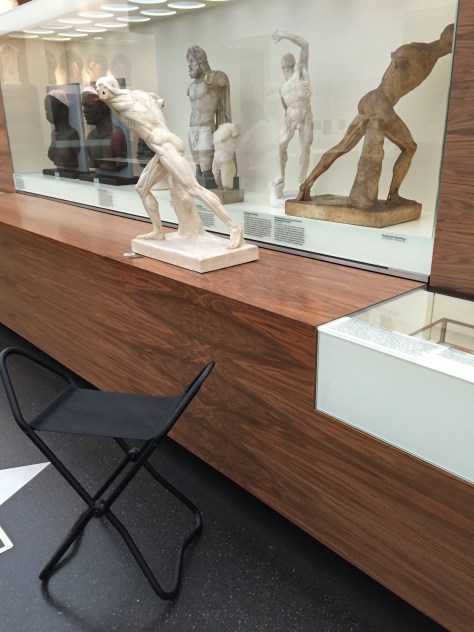
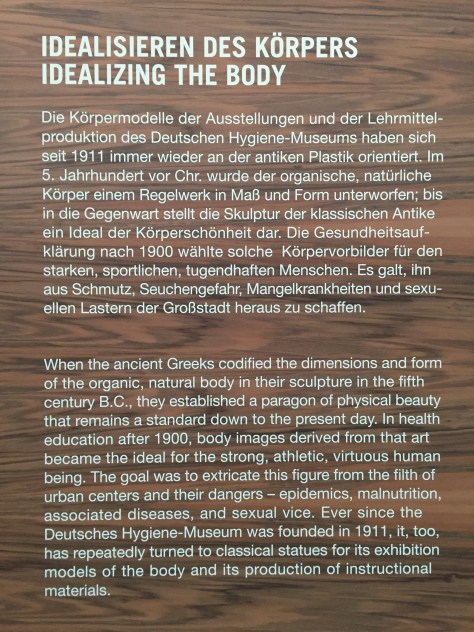
3. and 4: these two pictures show how the human body was idolized and idealized since classical times and the text that went with the display.

PS. The photo with the sculptural casts of the human body also show a chair. These stadium chairs were available in large supply for anyone going through the museum who wanted to listen to audio guides and needed to sit while doing so. What a great idea!! I loved it and took advantage of this free service. (ed. note: why don’t they have this in other museums all over the world??)

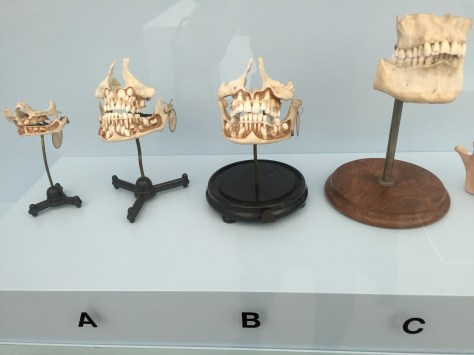
5. A display showing the development of teeth in human development, from childhood to old age. Children’s teeth are already poised for discharge, to be filled in by permanent teeth already formed or forming above their baby teeth (ed. note: Why didn’t I know or see this before??)

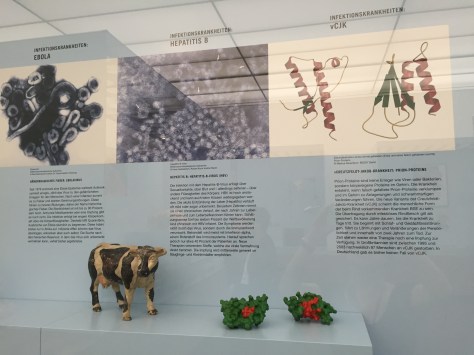
6. A typical poster display explaining the different common diseases, such as malaria, tuberculosis, and hepatitus (ed note: why didn’t I know this or see this before??)

There were many other interesting displays that I haven’t included, such as a transparent model of the human body, how the reproductive system works, and a really good explanation of death and dying. There were also excellent displays about health and healthy eating. These were too numerous to cover, but the bottom line is…get to a place where you can see these types of displays to educate yourself, and if you are lucky enough, come here to the Hygiene Museum in Dresden.

Not all displays are translated in English, but there are enough cues to inspire a neophyte like me and to make it a fascinating and inspirational experience. You can read more about this delightful museum here: http://www.dhmd.de/index.php?id=204

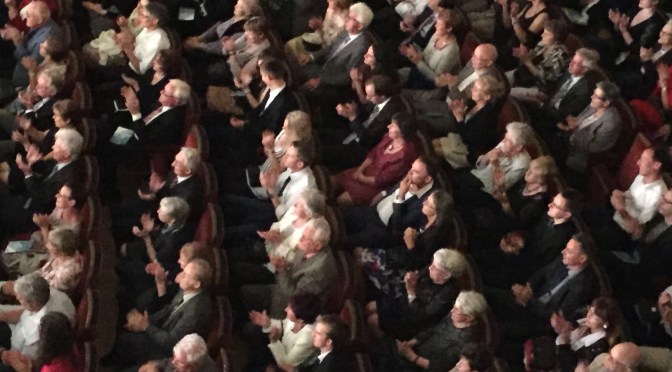
A final gasp in my Dresden pit stop before leaving Europe was a lovely opera at the Semperoper, “Liebestrank”. Little did I know that this translation was for the delightful Donizetti comedy, “Elixir of Love”! It was a stellar production, and in typical German fashion, the audience clapped politely. The performers deserved a lot more than they got (not even the raucous foot stomping). Maybe the nudity was missing, but the audience did stay awake (see the featured photo at the top for proof: they clapped).

Alas, to all: I am leaving Germany and all the wonderful experiences I have had in the past month behind. My next venture will be a big change from 24 degree warm weather with frisches Luft and no sunscreen in Dresden to 30 degree heat, humidity, and pollution in Beijing. I have no idea about the connectivity…so don’t be surprised if I go AWOL for awhile. Some of you may remember this from past trips through China. Until then…hang tight, and read my lips….
Days 37-38: 48 Hours in Berlin

For the next two to three days, I am indulging in completely free and independent personal pleasures. After a month of military-style training and discipline during  my German class, I am free from academic obligations. I am racing around to the last few spots that I missed on my own, then the final 24 hours will be a day trip to Dessau. I’ll be visiting the historic Bauhaus Workshop, School and Houses there, and I will make a separate post for that.

Hours 1-24: Berlin Free Day 1

The Berlin Biennale has been in full swing this month. To catch up, I made a pilgrimage to Fasanenstrasse, a small, elegant street near the Zoological Gardens and Uhlanstrasse Station. A few of the galleries promoted in the Art Forum “picks” are located here, including the Galerie Kornfeld, that was showing “The End of Flags” by Hubert Scheibl.

The Bucholz Gallery, where Melissa and I visited in January, presented the work of Wolfgang Tillmans. He was born in Remscheid in 1968. His work covered photographs of his studio and the accumulation of paper.

Not particularly inspiring, but I found the gallery itself much more exciting. It is a historic, protected building with beautiful Art Nouveau tendrils on the ceiling, panels over doorways, and in the carved oak staircase in the vestibule.

Contrasted with the stark white walls, it was easy to appreciate the delicacy and the artistry in the original building decoration. Contrary to my altbau where I am staying, this is what I would consider a classy version. There are also some really elegant auction houses and galleries promoting collector books and Asian antiques, gorgeous art nouveau jewelry and beautiful period silver by Georg Jensen and Henry Van de Velde.

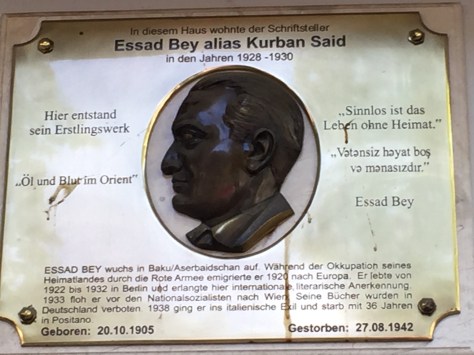
After walking down the street and looking for a memorial plaque for Essad Bey or Nussibaum, I was very happy to discover it directly across the street from the Cafe for Literature and the adjacent Museum for Kathe Kollwitz. The Berlin literati must have hung out in this neighborhood. It felt like the Montparnasse area of Paris, except more compact.

IMG_3047

Essad Bey was a journalist who was both Jewish by birth and Muslim by election. He had a fascinating life history that is chronicled in the New York Times bestseller by Tom Reiss, “The Orientalist”. I was surprised that my German teacher had read the book when I told him it was my favorite book . Some of you have heard from me already about how much I loved this book.

Born in Lake Baku, where one of the first oil discoveries was made, Bey lived an early riches to rags life. His family escaped after the Bolshevik Revolution to Turkey, then Paris, and eventually he was educated in Germany.  He became a journalist, was writing histories of Hitler and Mussolini, fell out of grace, and then died a tragic death. It’s a fascinating book where fiction and reality are often obscured.

Later in the morning, I walked about a mile east to KDW, Berlin’s version of Harrods or Galeries Lafayette. The top floor is devoted to gourmet food, with stations that offer a variety of seafood, meat, and a host of regional specialties. Up until now, I haven’t put much (or any) focus on eating. This was my opportunity to catch up.

The cases proudly presented cheese, sausages, and brot (bread). I looked for anything unique from the other gourmet food halls, but could only find wiener schnitzel and kartoffel stations. If you are into German food, you can get the gourmet version here. I succumbed to the bratwurst, senf (mustard) and sauerkraut, just as a show of loyalty. While this wasn’t exactly a pilgrimage to the annals of gourmet dining, I could still enjoy the German culinary ernestness. I bought a sample of Niederegger’s marzipan from Lubeck after hearing about it in my German class.

Hour 25-48: Berlin Free Day 2

The Bauhaus Archive in Berlin was high on my list of places to visit. The exterior was odd, with the north-facing skylights a prominent feature of the design of the building. Thankfully,  a new museum is underway. After 883 international entries, a Spanish architect won the competition and beat out an American. You can see the entries, if you are interested, here: http://c4c-berlin.de/projekte/bmd-de/

The existing exhibition still contained all of my favorite things: design philosophy and principles from inception to reality; creative thinking; and highest quality craftsmanship. I was thoroughly engrossed and listened to every post on the audio guide (not a small feat, especially since it was in the afternoon!). Again, it reinforced my passion and dedication to good design.

The Ninth Annual Berlin Biennale, as mentioned earlier, is underway this summer. In addition to the KW Center for Contemporary Art, the main anchor is at the Academy for Art, just inside the Brandenburg Gate. The exhibition in combination with the interior of the building was crazy beautiful and disgustingly fascinating. I couldn’t decide which photos to include, so here is a mix-match of both exhibits and building features (renovated by Beynisch Architects from Stuttgart in 2005):

Click on the photos above for captions.  You can also increase the images by clicking on the series.

The terrace featured a virtual reality presentation. I stood in line for the 3-4 minute scene that was pretty entertaining and worthwhile. The scene showed the view from the top of Brandenburg Gate, fogged up, then dove to an underwater sequence. The person in the lower left photo is bending over to look through the viewer underwater.

The evening was topped off with a final opera. The Deutsche Oper unveiled a new production of the “Die Entführung aus dem Serail” by Mozart. If you remember what a rogue and rock star Mozart was in his day (drinking, women, and wild living), this production really conveyed that. They brought the days of Mozart to contemporary status, complete with nudity, sniffing cocaine, and searching for home (a la ET).

Initially, I didn’t want to go, as I had seen an old video of this opera. It was very hoaky and racist. One of the opera students in the GI had seen a preview of the preview and recommended it to me. She emphasized that it had been updated and was worth seeing. She was right, but there were still a few questionable moments in the opera left over from Mozart that were hard to accept or eradicate.

The bare naked bodies were less surprising to me, as “Tristan und Isolde” earlier had unveiled their own version of nudity. I’m not sure it’s becoming a trend for opera, but I wondered how the old ladies at the opera took these scenes in. They didn’t seem to raise any eyebrows, from what I could decipher. Everyone, including me, stayed WIDE AWAKE. If that’s one way to get a more alert audience, it definitely worked.

The story line is simple–a group of young people get captured by an extra terrestrial and are sent to a far away land. They try to find their way back. In the mean time, they are living a fast and senseless life with sex, drugs and videotapes. They search for a way back. It was a great production, very hip, and very well received. Look for this updated opera with fantastic music and even a few “Queen of the Night” arias sprinkled in for extra amusement.


Note: look for the curtain call with the scantily clad girls–some of them only put on underwear in the final scene!!

Days 35-36: People and Dinosaurs

It’s nearly half-way through my third world-wind trip. By Day 42, I will be heading to Beijing, to the other side of the great Eurasian continent. I’ll be meeting “mein Mann” Gee Kin there, where we will gather our senses for our flight to Ulan Bator (Mongolia). After a week-long private tour there, we’ll complete our Trans-Siberian Express train trip from last year. We’ll go from Ulan Bator to Irkutsk and Lake Baikal, then over to Vladivostok to the East Coast of Russia. Our last stop will be Japan, but more about that later.

After a month in Berlin, I haven’t mentioned the many individuals and connections I have made during my stay here. The Goethe Institute has been my anchor. Students in my class came from Israel, Iraq, Sweden, Mexico, Hong Kong, and the U.S. Two of the American students are budding opera students, so it has been fun learning more about their world of opera that is so different from being in the audience. Other friends I have made included two German language teachers from India and Finland; two gentlemen from New Zealand; and another pair of Ph.D students, one from Sardinia in Architecture and one from Tennessee in German History.

Attending nearly every extra-curricular activity has given me the opportunity to chat with a combination of these individuals as well as others. The common question everyone asks is “why are you learning German?”. Most are learning for their current or future job prospects, but few have my intentions. I tell everyone I am learning to increase my understanding of opera.

Most people find that puzzling, but if you are an opera junkie like I am, some of the best translations of opera are subtitles in German! Reading dual supertitles in German and English at the Deutsche Opera put me in rhapsody. I get the chance to follow what is being sung (also keeps me awake) and get a German language course at the same time!

Coming to Germany for the past five years to see opera and hear music reinforce my interest in learning the language. In addition to a real, primary purpose to keep my brain exercised, I am investing in a much deeper appreciation of the culture through speaking, reading and writing. I am definitely going to continue this affair and make learning German a life-long pursuit.

For my GI (that’s Goethe Institute, not Gastro-Intestinal) friends, snippits of typical exercises we did every day are below. We shuffled the tags around in groups until they lined up.

The Institute’s last and final activity to Deutsche Welle was cancelled due to illness. I love watching the broadcasts in the US, so I was very disappointed. I made alternative plans to visit the Natural History Museum, where the Guinness Book of Records’ largest dinosaur resides. I wouldn’t have gone there, had I not been introduced to the dinosaur bones at the Natural History Museum in New York City. Ross (David Schwimmer) from “Friends” played a paleontologist, and that always amused me.

The museum turned out to be a thrill. I didn’t realize that the tall head of the Brachiosaurus could only allow it to eat leaves from the canopies of trees. Dinosaurs lumbered around town due to their huge size and weight. It took a huge bio-engineering effort to move, nourish, and keep alive such a large mechanism.

Other dinosaurs in the same display could only eat things near the ground because they could not lift their heads very high. Their tails were needed as counter-weights for their elongated, skinny heads! You can read more about the Brachiosaurus and what they ate in the text below, for those interested.

Day 32: Jewels and Other Gems

The Scharf-Gerstenberg Collection across from the Charlottenburg Palace is dedicated to Surrealism, fantasy, or disturbing ideas of the mind. Many famous painters, such as Picasso, Modigliani, Magritte, Max Ernst, and Klee are displayed in this beautiful gallery.

Photos above:

  1. Upper left: Chapel Quaking, Paul Klee, 1924: This painting shows ominous, other-worldly elements in the sky about to attack the chapel and loosen its foundations
  2. Upper Middle:  the dome of the gallery
  3. Our guide, Dr. Barbara Hofmann, animated in her passionate interpretation of the surrealist art. I couldn’t help but wonder if she knew she was mirroring her subject (Olympia, by Jean Dubuffet, 1950). The body is a rendition of Manet’s Olympia. The artist challenged the regimented standards of the Academy of Arts. Artists at the time rebelled against the Academy, who determined what was or wasn’t considered art.
  4. Carceri, by Piranesi, 1760
  5. A description of Surreal Spaces

In the afternoon, Rainer Jaeshke (from the Potsdam weekend tour) led us to Kreuzberg, one of the popular, East side districts of Berlin. Because it was taken over in the Sixties by squatters, the bourgeois buildings from the turn of the century went into demise. As the housing deteriorated, it became a cheap area where immigrants and the rapidly expanding population could afford to live. The area has become a battleground between developers hoping to make return on investments and neighborhood activists who want to keep the housing affordable and community intact.

Photos above,  from left to right:

  1. Oberbaum Bridge, 1895
  2. Modern day high density housing built over a road
  3. Jewish brass tiles found on a neighborhood street, indicating Jewish presence from the past
  4. An overview of the dividing line between East and West Berlin and canal that is now a park

image

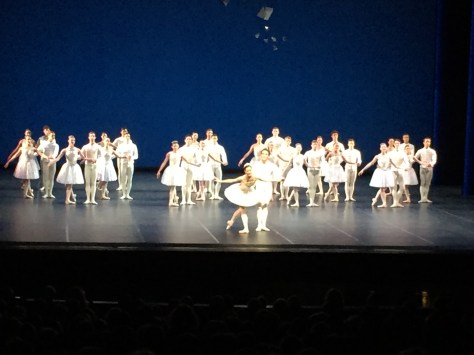
A photo from “Jewels” by Choreographer George Balanchine, who created a ballet in the neoclassical style with music from Tchaichowsky and Stravinsky.

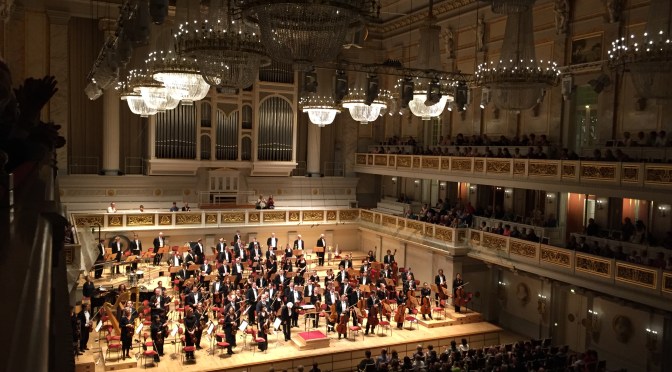
The Concert House presented a lovely program of music by Darius Milhaud, “The Creation of the World”; Prokofiev’s “Symphony No. 7 in C Major”; and Mussorgsky’s “Pictures from and Exhibition”. Under guest conductor Dmitri Kitajenko’s direction, every piece was stirring, uplifting and good enough to want to hear again.

Days 27-29: Deutsches Reichstag and Pergamon Museum

Our day began with a tour of the Reichstag Building. Angela Merkel meets regularly with the German Parliament here. Designed by Norman Foster, the building contained many symbolic elements: the preserved inscriptions by Russian soldiers who arrived on May 5, 1945; the cases of each Parliament member including Hitler, Himmler, and Angela Merkel; and a non-denominational meditation room that is used by members of Parliament before major discussions or decisions. Models of the building and the city helped to orient us.

Three parties sit in the chambers: the CDU (majority), the SPD, and the Green Party. Other representatives of committees attend the sessions, and the public inside the chambers is able to comment on discussions or decisions. Angela-Baby sits at the very front behind the table for four members. The seating is generally open and does not designate fixed locations for Parliament members.

IMG_2682

This was my second opportunity to photograph the impressive dome of the Reichstag. It has a historic display at the base, a view of the city, and a circular path to the top. Our guide explained to us that the building was 80% efficient for energy purposes, but the ventilation system had not performed as expected. Our last visit was proof that the dome can be an oven. It was stifling inside and we felt like we were being cooked in a George Forman grill!

It was much more climate-friendly this time.  Overall, the building provided necessary and significant symbolic features that help visitors to capture their understanding and appreciation of the new German parliamentary process.

The Pergamon Museum featured two major installations: the Ishtar Gate and the Hellenistic Facade. The Ishtar Gate is a reconstruction of the original approach in Babylon. The older, worn tiles are original, but the brighter blue ceramic tiles are reproductions. The scale of the original approach and beautiful animal reliefs were impressive.

Since the museum is under construction, many of the artifacts were not available. The museum focuses on ancient history.

Days 20-21: Neues Museum, Berlin

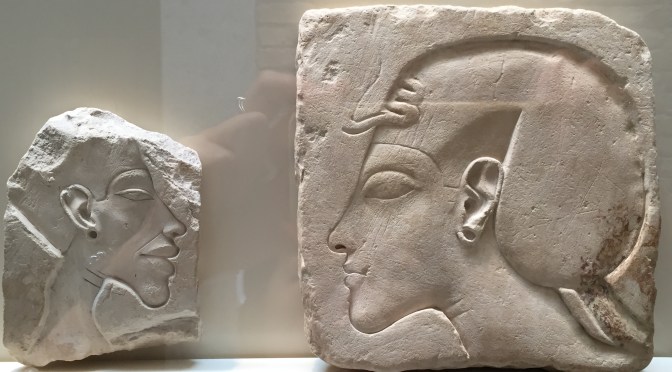
What can I say, except that this exhibition blew me away! Mostly from 2400-1200 B.C (Middle and Late Kingdoms). Queen Nefertiti’s head is here, but not reproducible. Exquisitely beautiful. Figures were lively and not as stiff as most representations of Egyptian art. They spark the curiosity and desire to learn and understand more. Enjoy the photos and captions where available.

Addenda: Deutsche Bank Modern Art Installation and Marx/Engels Statue, from two separate tours.

Day 11: Lively in Leipzig

The weekends in Leipzig are filled with musical activity, not only in the Concert Hall and Opera House, but everywhere in the street. Students and aspiring musicians and performers try their luck at attracting tourists and locals, in a town that welcomes crowds and causes.

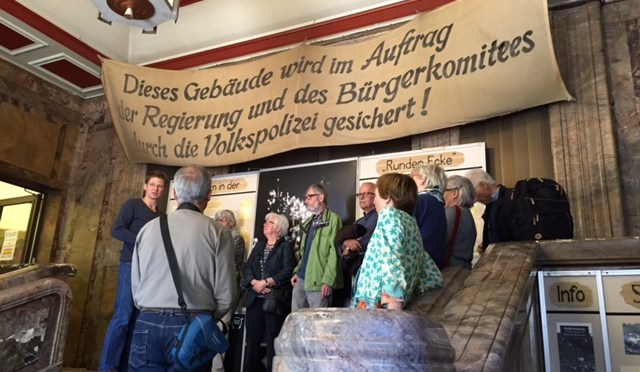
The Stasi Museum depicted life just as it was before the Reunification and explained the course of events that led up to it. It was a fascinating unfolding of momentous days in 1989, from the first peace protests, to the burning of evidence as the tides turned, to the final decision point on November 9, when the Berlin wall fell. It’s an easy date to remember as it is the reverse of 911.

The translation to the sign above reads “On behalf of the government of the Citizen’s Committee, this building will be secured by the National Police”.

I imagined all the legal papers that were needed to draft the new laws and how  the East German economy was shot into the modern world overnight. It seemed so simple, yet it must have been an overwhelming undertaking.  It took the will and determination of every German. My faith in humanity was restored and I felt grateful that such a human event could occur in my lifetime.

IMG_2128
The Grassi Jugendstil atrium reinterpreted

An afternoon at the Grassi Museum was a shift back to the familiar yet unusual. There was an excellent exhibition of Flemish and Dutch glass and ceramic pieces, inspired by Asian ceramics. The incredible use of light, color and design seemed to be ingrained in the area’s artistic traditions.

While limited, the museum had an excellent display of Asian ceramics and figures. They reminded me of similar pieces I saw in Northwest China.

A collection of artifacts from Iran intrigued me. I marveled over the many pieces that I had not ever seen. I resolved to continue my comparative history studies of countries along the Silk Road. The blue porcelain pieces were reminiscent of those in China, but the metallic colors and designs were much more vibrant and intricate.

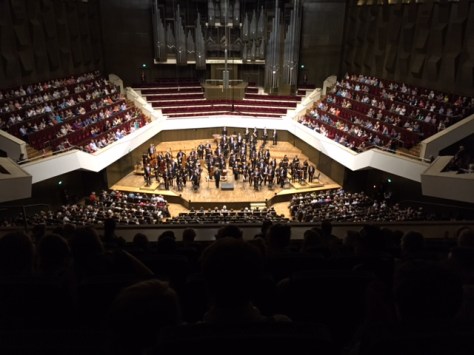
The end of the day was capped with two classical music performances. The first was a family concert at the Gewandhouse Orchestra. Herbert Blomstedt, who led the San Francisco Symphony for many years, conducted the orchestra with the Beethoven Pastorale Symphony.

IMG_2211

The second of the two concerts was held at the Schumann House, where Robert and Clara Schumann lived. A pianist performed many pieces from Beethoven, Clara Schumann’s own pieces, and those by Schumann. They were very lively and spirited pieces and a contrast to the earlier, much duller performance.

IMG_2221
Entry staircase

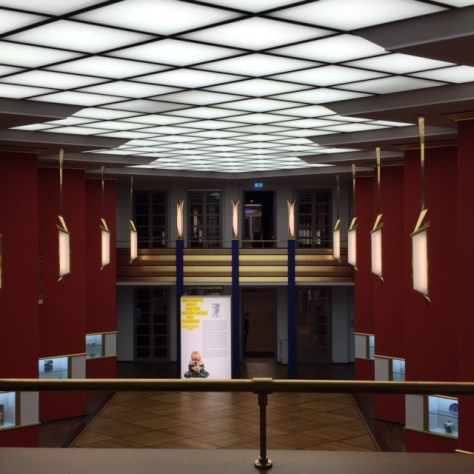
The simple yet elegant stairway at the entrance to the Schumann house was a lovely reminder of the integration of good design and construction in German homes. The museum is now linked with other musical sites such as the Mendelsohn and Wagner houses in Leipzig into a “Music Trail”.

IMG_2213
Community Room with motion sensitive instruments in ceiling

During the performance break, the announcer invited us to a community room and shared the research that is being done with electronic instruments generated by motion detectors. Each “spot” was keyed to an instrumental sound, such as clinks on porcelain, horns, keys, drums and bells. Using motion detectors and people walking between objects mounted in the ceiling, a series of sounds were generated. The more people moved, the more each sound was created.  The innovation could produce symphonic sound with audience participation. It was an exciting demonstration that everyone enjoyed.

Day 9: Goethe’s House and Garden House

Goethe’s House in Weimar is one of the two major attractions in this historic city (the other being Schiller’s House). Goethe’s holistic approach to philosophy, art, nature, and writing may have influenced the Bauhaus movement a hundred years later. (See yesterday’s post on the Bauhaus).

Goethe’s famous novel, “The Sorrows of Werther”, is a story about his affection for Charlotte Ernster (nee Buff). It sparked a viral interest in love stories in his day and may have caused a string of suicides mimicking the author’s drastic solution to a spurned love affair. Goethe was known to have had affairs with Charlotte von Stein among others. He eventually married a commoner Christiane after having a child out of wedlock with her.

Love is a featured topic of the Goethe Museum. Idealized, romantic love and even forbidden and erotic love were themes in Goethe’s writings. Goethe captured and explored human emotions that previously were suppressed or seldom expressed. Read some of the written explanations below.

Goethe was quite the Renaissance man. In addition to writing plays, poems, and about philosophy, Goethe was also an artist. He had a curiosity about the natural world, and became an anatomist, geologist, and horticulturalist.

Goethe’s home gives a glimpse into his personal life and work environment. Goethe paid particular attention to storage of artifacts and documents.  The custom-designed cases kept collections organized and accessible.  Books, coins, geological samples, and artwork were stored so they could be quickly presented and shared with visitors.

I could imagine being very satisfied and happy working there. Following Goethe’s perfect schedule, I would power through emails and blog posts in the morning, tinker a bit in the garden, have the main meal around 2pm, and cap each day with a nap in the afternoon!  Below are some of the enticing rooms and garden perspectives.

In the Park along the Ilm River, the Garden House served as Goethe’s getaway where the writer could escape his social and administrative responsibilities and focus on writing. Not too shabby either.

The “high horse” chair was custom designed so he could sit and write for long hours. The tall yoke rested his ample belly, and could easily support other elephants in the room. As a craftsman cum designer, he would have been an ace at the Bauhaus.

Day 8: Anna Amalia Library and Weimar City Castle

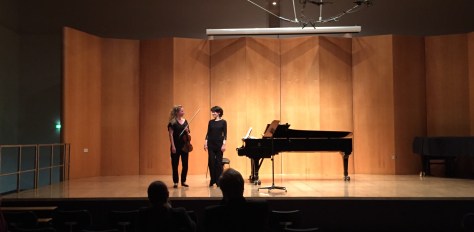
Weimar was once the hub of intellectual and political life in Germany. It still captures much of the imagination of aspiring writers, musicians, architects and playwrights. On my return visit to the Musikhochschule (High School for Music) last night, I savored an array of passionate violin student performances.

image

Stumbling into the National Library in Vienna last year was a thrilling experience. Naturally, I was curious to compare the Anna Amalia, a research library in Weimar for German literature from the Enlightenment to the late Romantic Period. While much smaller, this Rococo design was equally exciting, but more intimate.

You can watch a video of the library here:

The next stop on a day-long tour of local sights was the former residence of the Grand Duchy of Saxony-Weimar-Eisenach. Known as the Weimar City Castle, it now houses a collection of Cranachs, German Impressionists, and painters from the Weinar Art School.

Dinner with the locals:

image

Day 6-7: From Bauhaus to Your House

If there ever were a sacred place of pilgrimage for me, it would be the Bauhaus in Weimar. Created by Walter Gropius around 1921, this school combined the best of internationally recognized artists with master craftsmen in Germany. The school was intended to teach design and architecture rather than fine art. The artists taught form, shape, and color, and the craftsmen trained students to technically perfect their designs and products.

In the following photographs and explanations from the exhibit, you will get a sense of the development of graphic design and architecture that still feels applicable and relevant today. These photos are just a small sampling of the my favorite exhibits. A new museum is planned in the future.