Tag Archives: Museum artwork

Day 54: Dunhuang City Museum


The Dunhuang Museum was an exciting experience, because the museum provided the history and the context for what we were seeing in the ruins the previous couple of days. Most of the development of Dunhuang occurred during the Han Dynasty, when the emperor sent troops and their generals to protect the frontier of China. At that time, Dunhuang and the area around it was the outer edge of the country. The Han general finally defeated the Hsiung Nu raiders from the North.

Following this major victory, trade needed to be controlled and taxes charged. So it stood to reason that Dunhuang occupied a very strategic position in the future success of China. As a matter of fact, the heavy control over the trade and passage through the Silk Road allowed the Han Dynasty relative peace and prosperity. The country advanced in many areas during that time.

After a period of turmoil and disorganization, the Tang Dynasty continued to maintain strong control over the passages. We visited the Mogao Grottoes in the afternoon, and while there are no photos to share the experience, the Buddha sculpture, paintings, and architecture were a clear expression of the flourishing of encounters with the outside world. Trade, language, art, and religion were being introduced, explored, challenged, and absorbed between many cultures during this time (600AD-900AD).

I am posting a few pieces from the museum that I particularly liked and found quite unusual. They seemed to be very robust and expressive, similar to the style of the better known horses of the Tang period. The Photos of Han and Tang (200BC-900AD) Museum pieces, from top, left to right:

1. Celadon plate
2. Pair of Cocks
3. Arabic lettering
4. Bronze Turtle
5. Pair of men pulling a strap
6. Expressive Figure

The new museum itself was surprisingly beautiful and excellent in its presentation of material. It was very thoughtfully and clearly laid out, and spanned everything from early neolithic implements to planning for the future generations. It will be interesting to compare pieces as well as the building with the Arab Museum of the World that I visited in Paris in July. I am inserting a couple of photos to show you how the new building interior courtyard looks. I would highly recommend this museum to anyone intending to visit this area.

Photos:

1. Slanted Door detail to match building geometry
2. Atrium Roof
3. Interior Courtyard, applying small gridded windows similar to those used in the beacon towers in Gaochang and Jiaohe

Day 37: Military History Museum

image image image image image

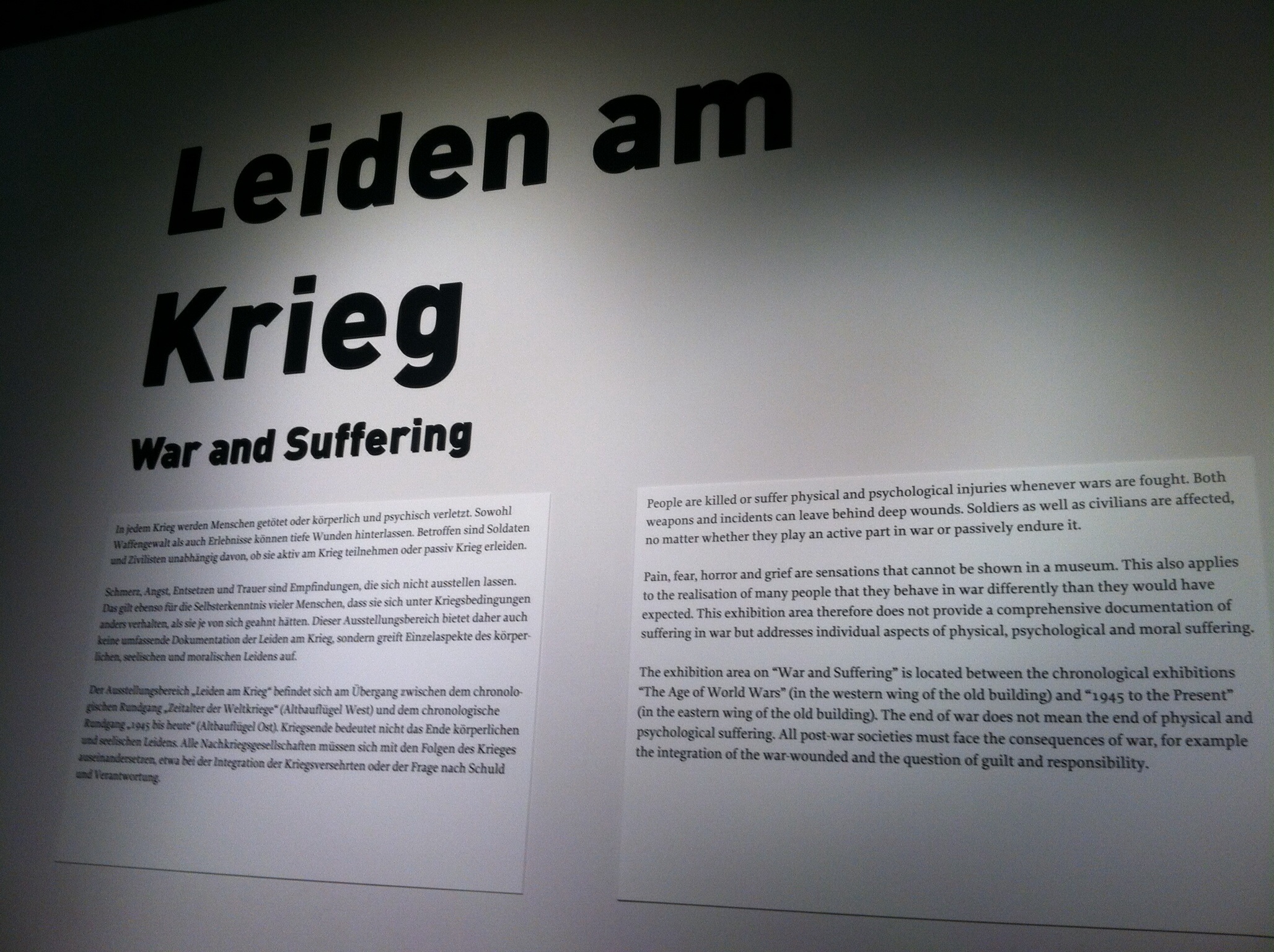
The Military History Museum is one of the most interesting museums in the world, not only for its collection and the building design, but for the message it brings. It tries to tackle the prickly issue of war and its consequences and uses displays to teach how everyone loses in wars.

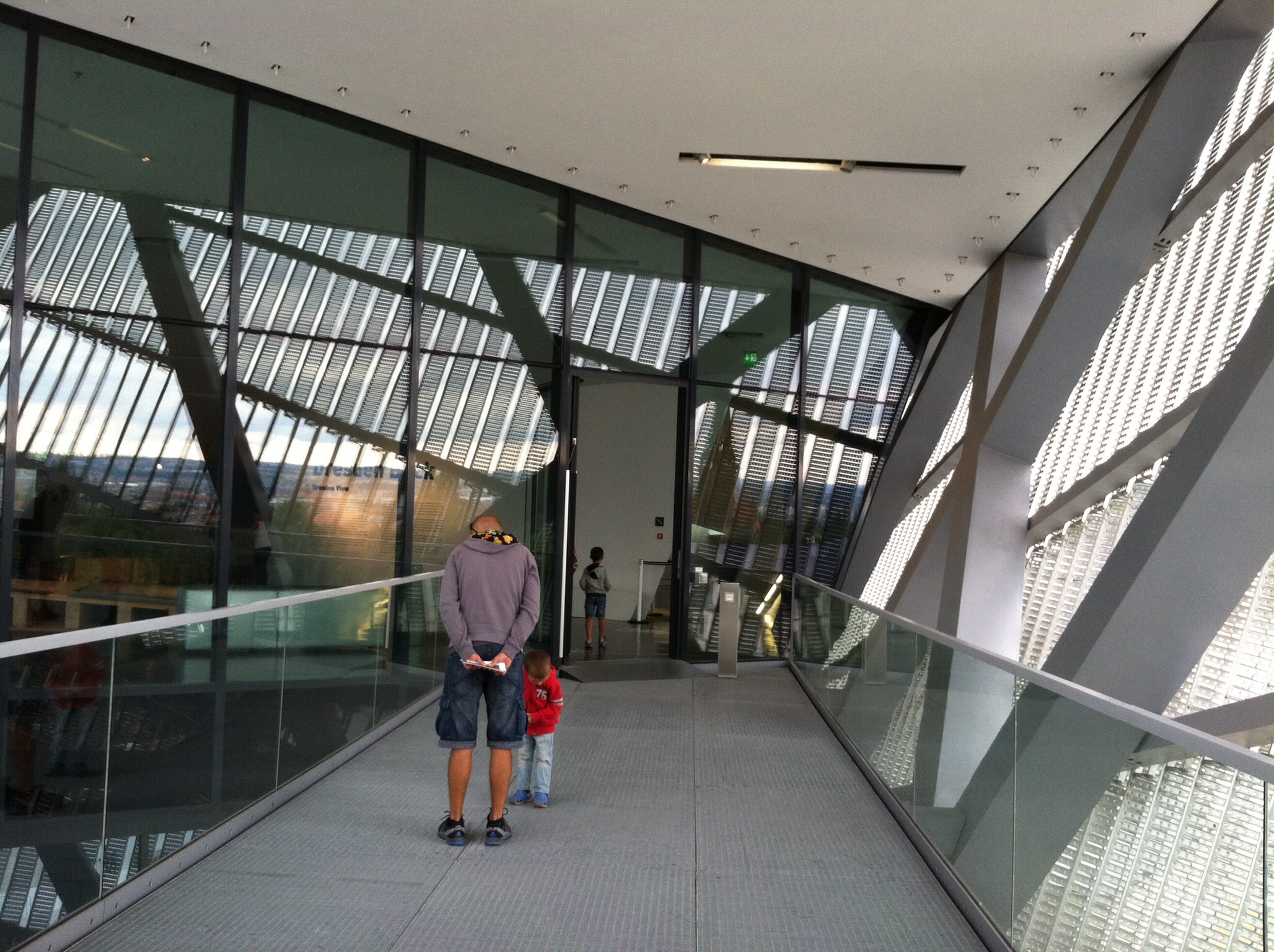
Daniel Liebeskind designed and finished this building in 2011. The exterior of the neo-classical building is truncated by a metal shard that points to the spot where Dresden was targeted. While both sides of the building are devoted to traditional armaments, the new building tries to confronts visitors with the human impacts of war.

Photos above, from top to bottom:

1. Exterior of the building, located in a former military area.
2. Overview of Building interior on the top floor.
3. Exterior terrace inside the metal point. From here you can see a view of Dresden Old City. The open metal walkway can be a harrowing experience but is appropriate with the entire building and what it conveys.
4. Beautiful stairs and custom designed lighting built into the handrails.
5. Custom designed horizontal panel for the elevator controls.

Photos below, from top to bottom:

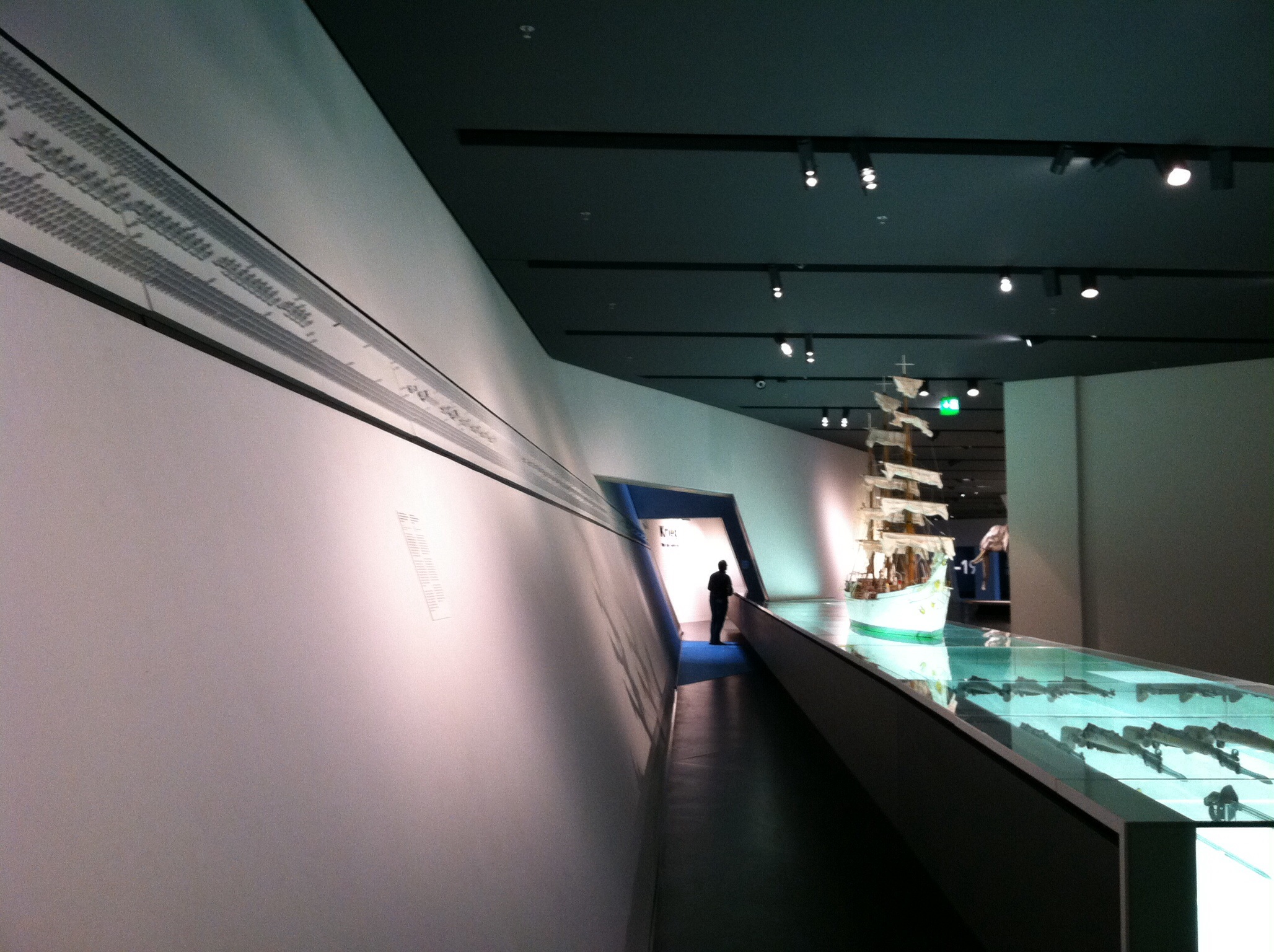
1. Wall to the left shows a regiment of 10,000 troops in formation heading to war at a miniature scale.
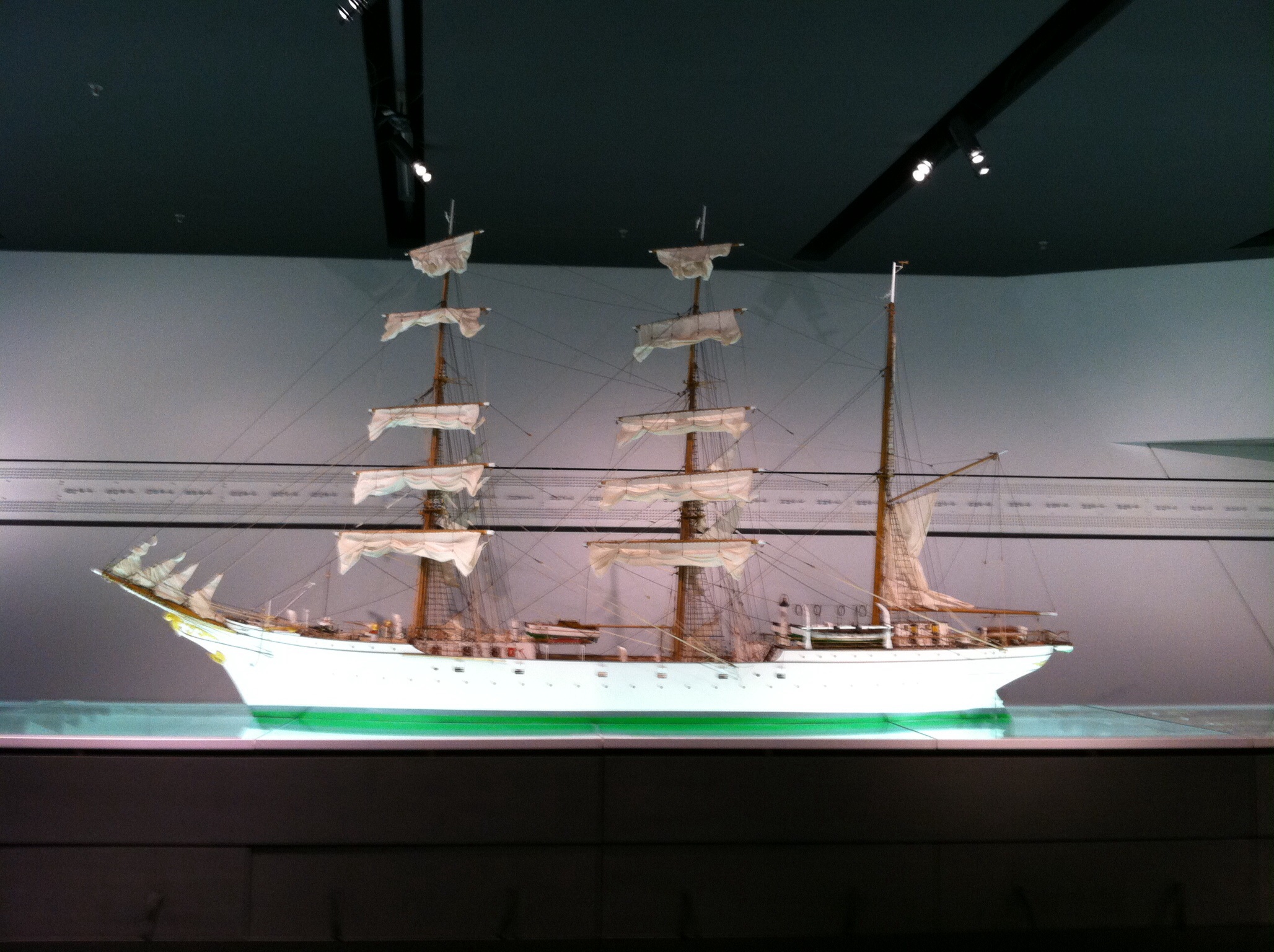
2. A scale model warship, with a view of the formation in the background
3. A full scale display of animals
4. Typical text explaining the consequences of war. (Tap to scale up)
5. Another text display.(Tap to scale up)

imageimage
imageimageimage

For more information, see http://en.m.wikipedia.org/wiki/Bundeswehr_Military_History_Museum.

Day 26: Sommerfest

image image image

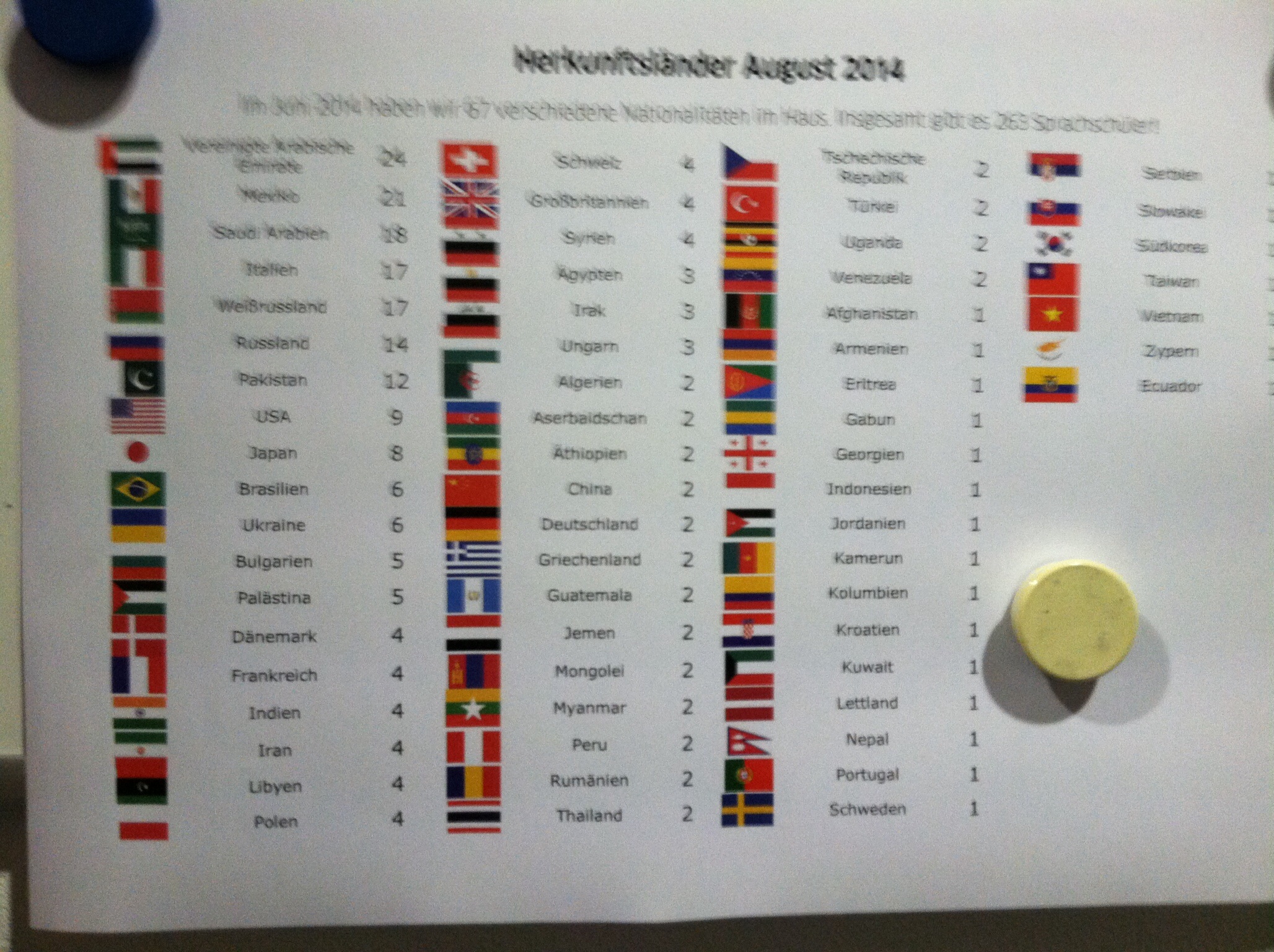
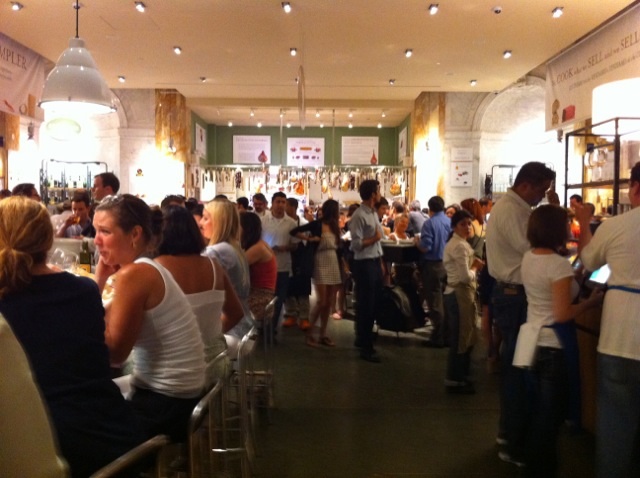
Last night was our class get together at the GI. The list of countries gives you a good idea of how varied the population is here–virtually one of each. The interesting point is that there are few Americans and a healthy contingent of Mexican students learning German for some reason. I heard that this might have to do with fewer students liking the U.S., but for whatever that means I like being in the minority here.

In case you are unable to see the list, there are 67 countries represented at the GI since June 2014. 21 from Mexico and 9 from the US. The largest group comes from the Union of Arab Emirates (24). It feels like the Eurovision version of American Idol–much more internationally oriented and with plenty of opportunities on both sides to either reinforce or dispel stereotypes.

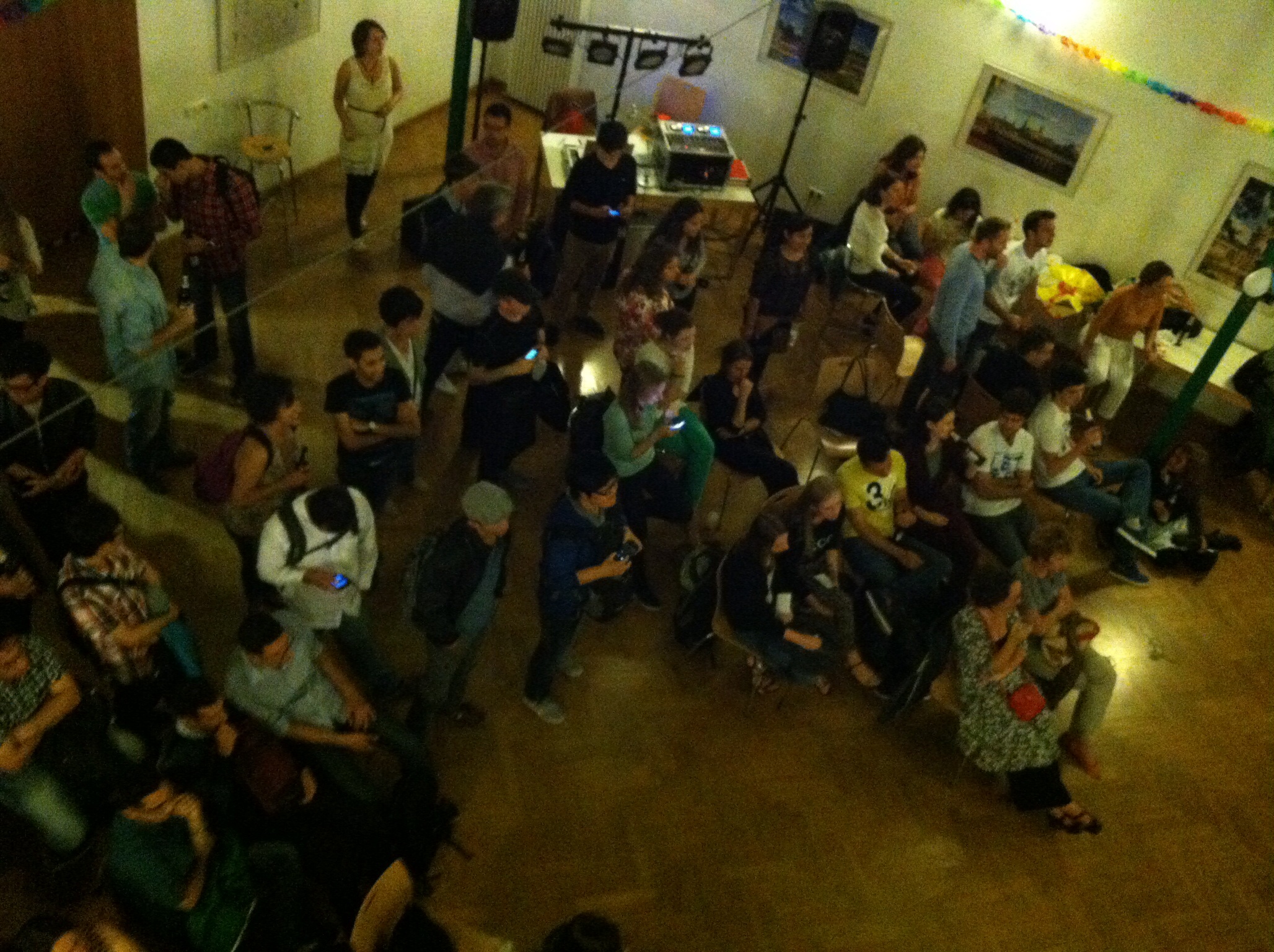
The evening began with wine for 2€ and Goulash, the specialty meal and top of the line for 3€. I burned a hole in my pocket paying 5€ for dinner. The program included songs sung by students, a Jeopardy game, and dancing. I enjoyed chatting with a German woman who has been hosting students for many years. (The older crowd in the picture is not representative of the age of students in the program!) She asked me to join her at the table  where she was sitting.

Day 13: Trier, Germany’s Oldest City

image image image

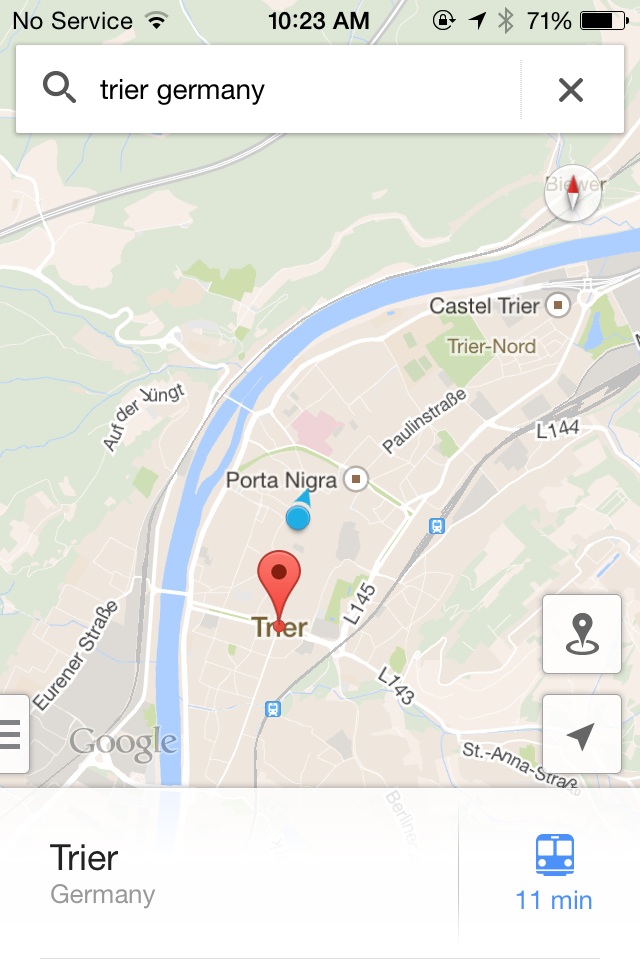
Trier’s history is one of the most fascinating stories in Europe. Beginning with the rule of Julius Caesar in 50 BC when he ordered Roman walls to be erected to protect its soldiers and citizens to destruction in World War II, it transcended the presence of Constantine, who held court in the reception hall in 300 AD; the monk who lived in medieval times in the Porte Negra; the rape, pillage and trading of the Vikings; and the arrival of Napoleon.

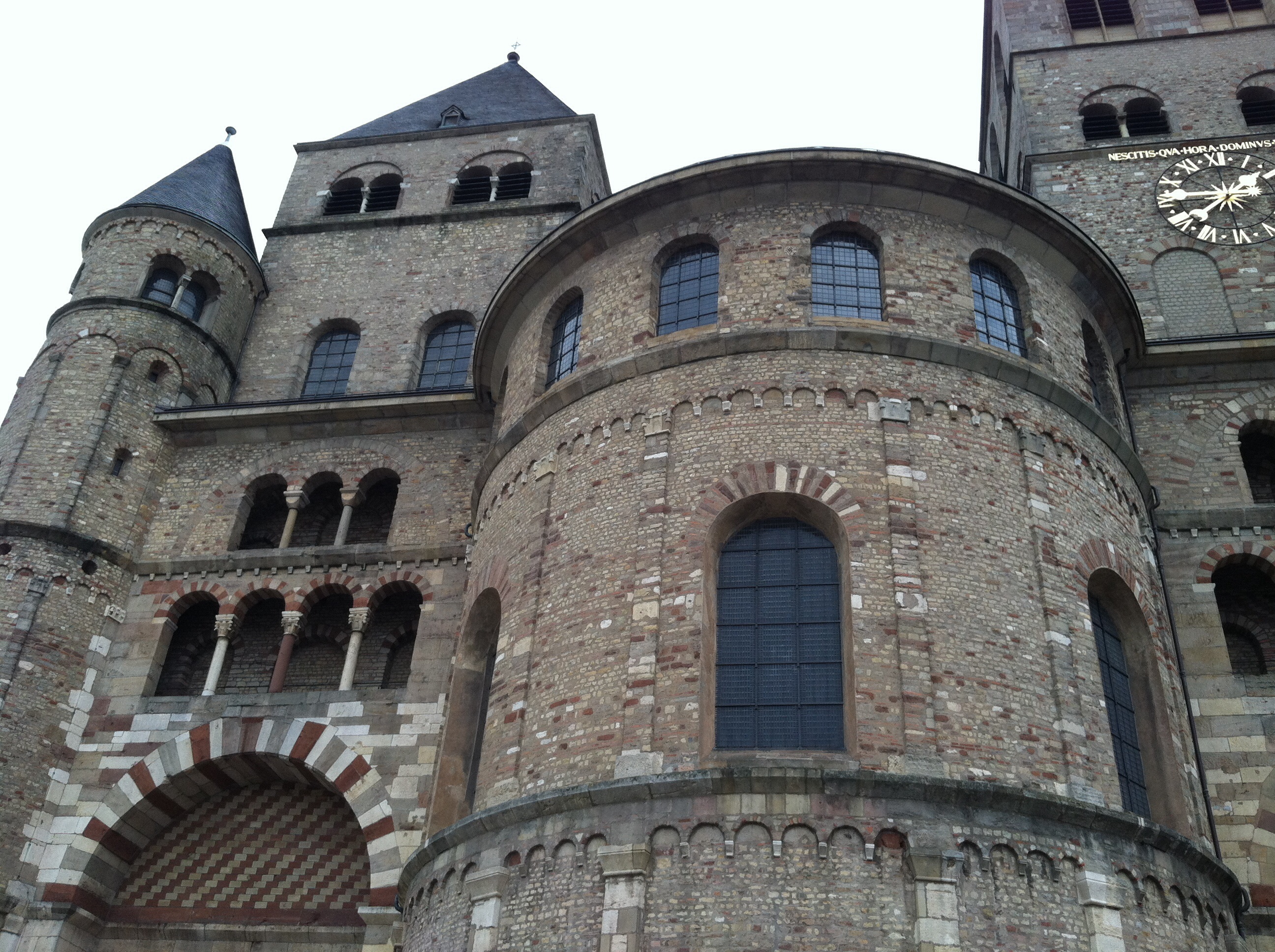
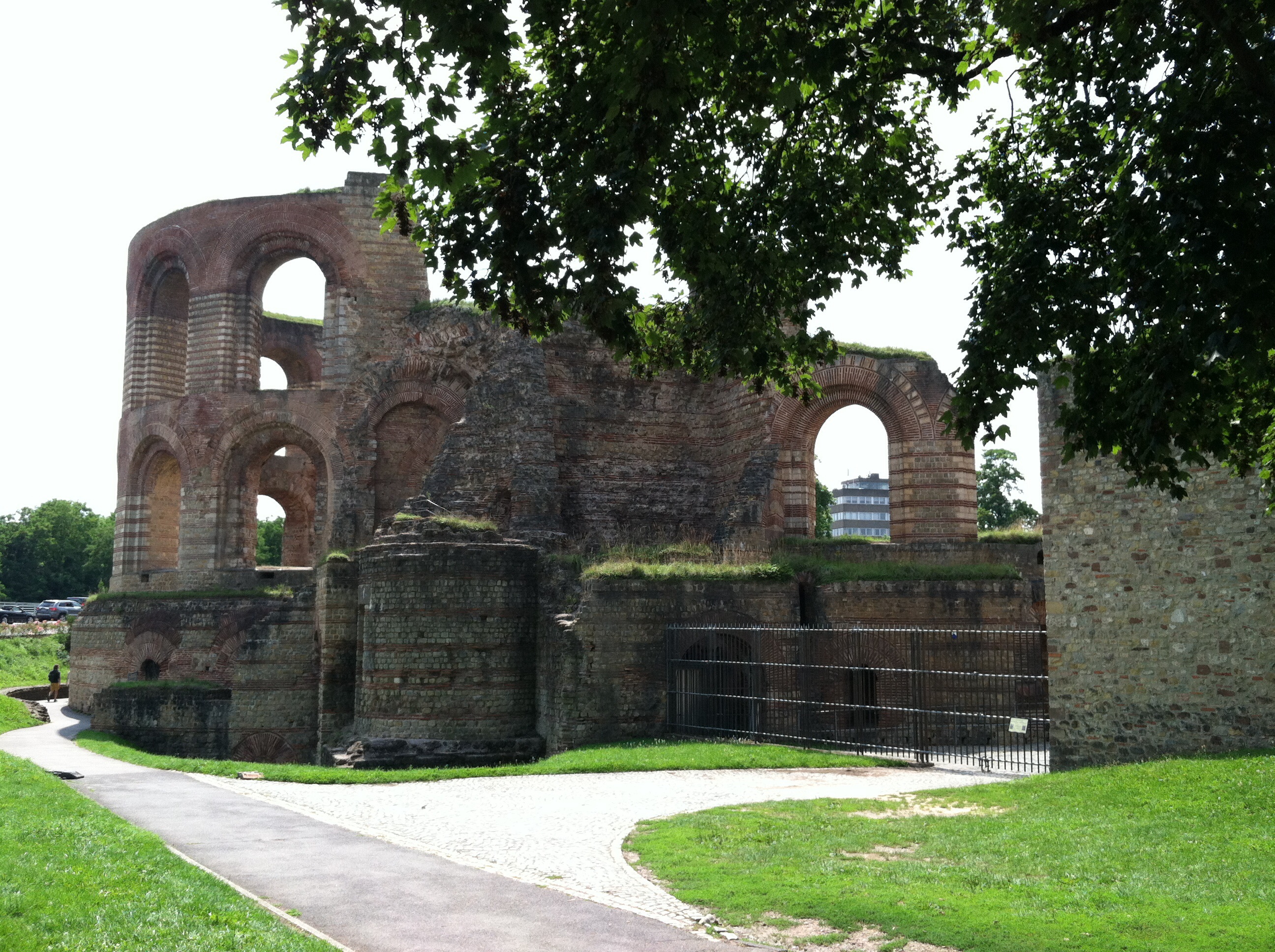
The major buildings include the Porte Negra, the only remaining Roman wall today; the Basilica, where it served as a pilgrimage church during the Crusades; and the Reception Hall where Constantine met his guests.

Photos from top:

1. Map of Trier, with the Moselle River inning through it;
2. The Basilica
3. The Konigstherme

Day 9: Musee du Monde Arabe (Paris)

imageimageimageimage

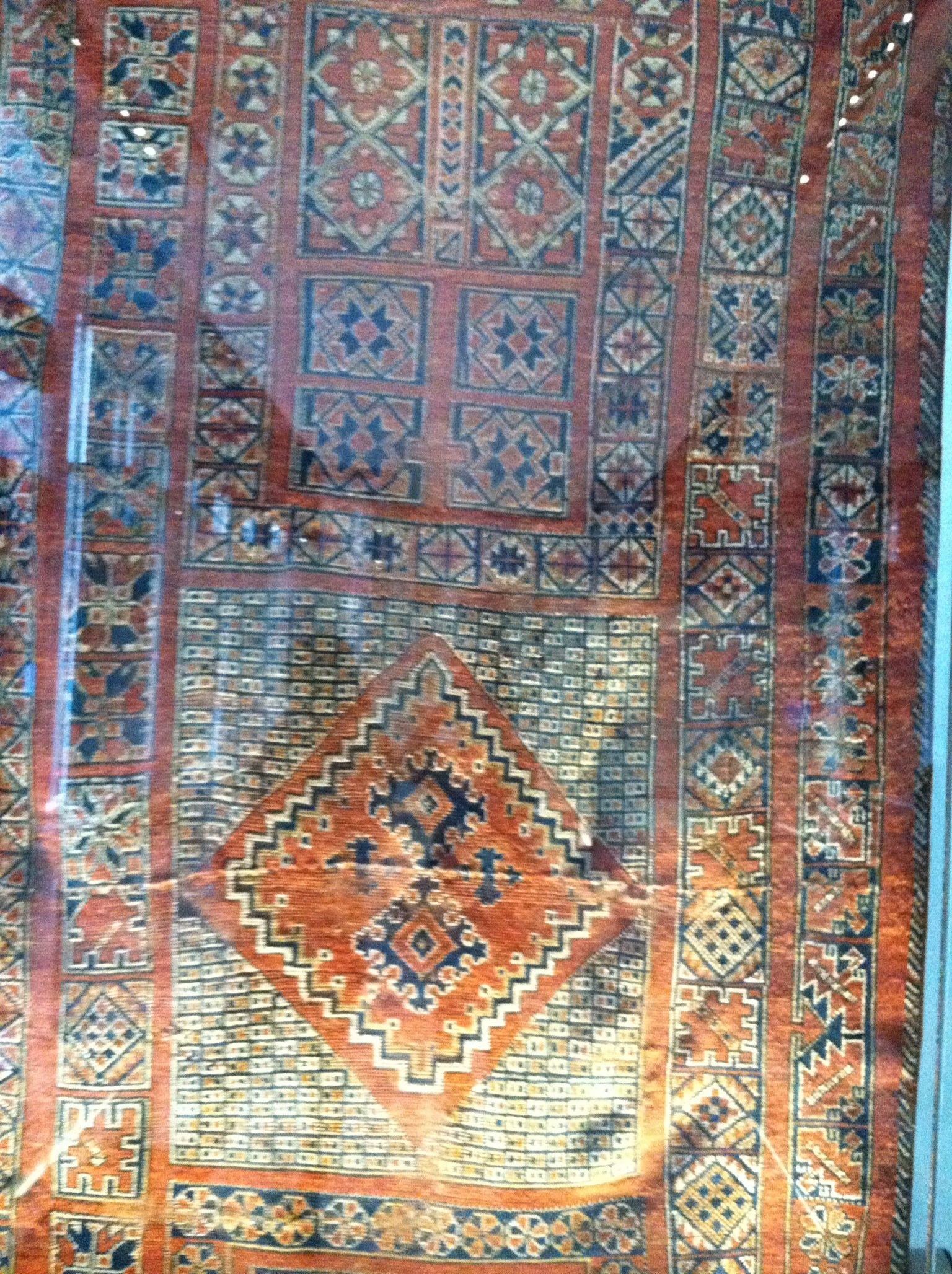
This is one of the few places in the Western World where I have seen a museum devoted to the Arab World. Despite there being limited English text, the museum is worth visiting due to reminders that math and science are largely attributed to Arab inventions and discoveries.

Treasured silk was traded from Asia used to convert into garments and fabrics. The beautiful draped clothing takes advantage of the light that casts iridescent hues, and the geometric patterns found in many carpets and tapestries are reflective of the mathematical mind that developed in the Arab World. Other decorative patterns come from foliage and nature and often are in symmetrical, orderly arrangements.

One of my pursuits for this trip is to connect the dots between Western and Eastern cultures. The Arab World as well as Persia played a huge part in bridging this gap through trade and education.

Photos, clockwise:

1. Detail of aperture on the facade of the museum.  Apertures are purported to adjust to the exterior light conditions but did not appear to have any consistency..

2. Intricate  woven garment

3. Chest with geometric and foliate patterns

4.  Carpet with geometric patterns

Day 3: Ai-Wei Wei (Brooklyn)

imageimageimageThe Ai-Wei Wei exhibit at the Brooklyn Museum was thought-provoking and raised many issues about Chinese policies towards its own people. Many photographs of the artist revealed his early years living in New York
and his father’s background as a poet and artist. AWW is still very much from the genre of crude and glaringly graphic artists who emerged after the fall of the Gang of Four–use of nudity and human existence ( did I really need to see video clips of his barfing?) leave you nowhere to avoid his messages.

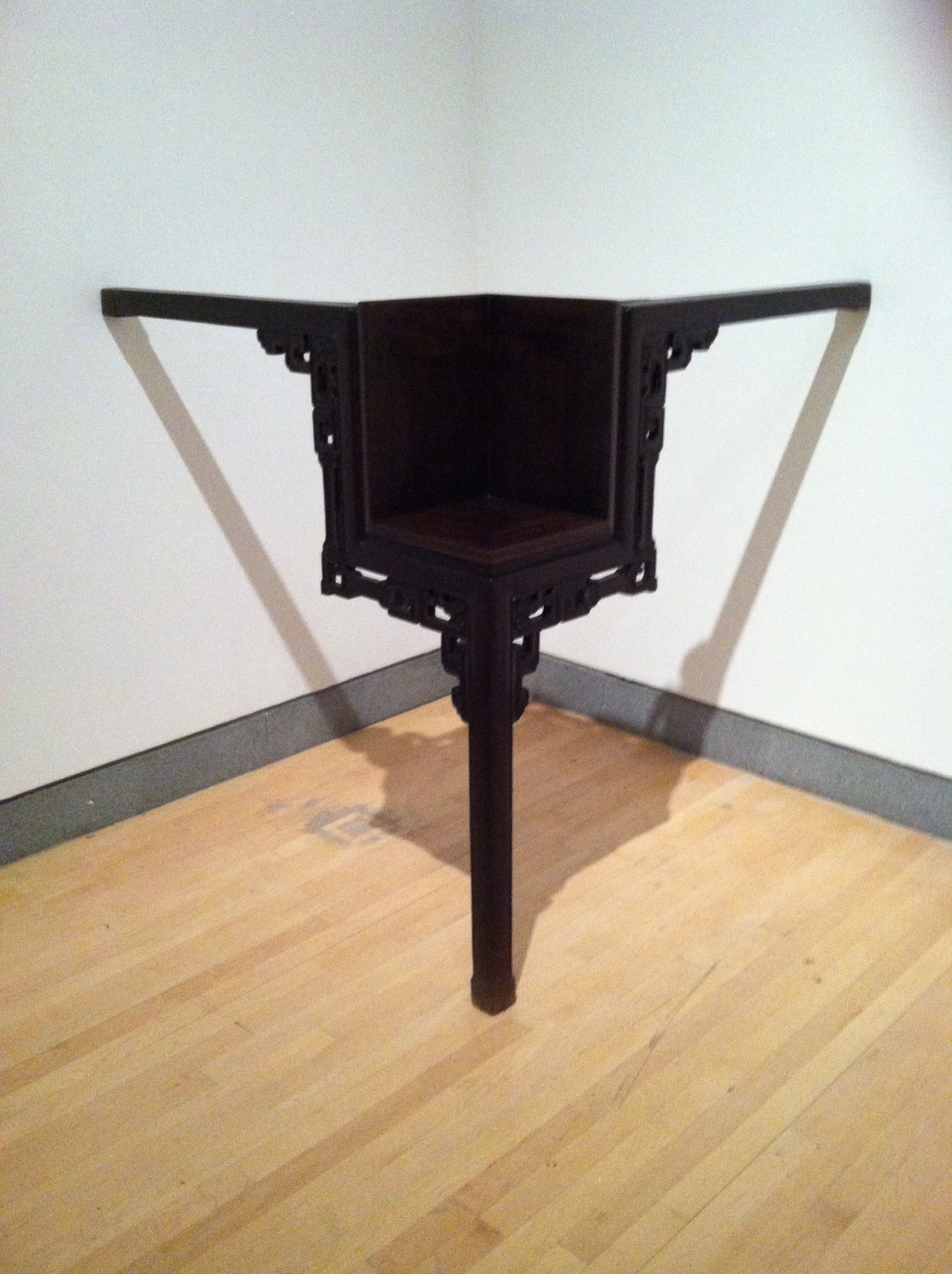
At the same time the use of everyday materials is clever and resourceful and often beautiful. For example, a traditional piece of furniture is cut to create a new appreciation of the craftsmanship and design of a familiar object (photo 3).

Photos, from top:

1. Common kitchen stools
2. Backpacks sewn together representing those from student killed in schoolhouse in Szechuan. Apparently there was no accounting of construction methods or whether rebars were installed in original building.
3. Traditional Chinese furniture put in a different dimension and respective.