Tag Archives: Sights

Day 28: Schonbrunn to Apfel Strudels

Today’s adventure was to Schonbrunn Palace, the summer residence of the Hapsburgs. The featured image above is the SIDE of the palace, not the main elevation. That’s about 5 times the width of this view. As mentioned earlier, this tops Versailles in my mind. The Austrians, in the tour guide’s words: are “crazy”. The palace tour provided proof of the royalty’s propensity towards personality disorders. There were numerous amusing stories and morbid details. The guide repeated several times “don’t believe what you see in the palace—it’s all an illusion”, referring to the wooden chandeliers painted to look like solid gold, pictures of important dignitaries who were not present at an event, and elaborate settings that even the royalty couldn’t hack.


Among the many amusing stories were those about hygiene and infestation. Thanks to the Catholic Church, the priests promoted the idea that bad men smaller than the eye could see existed in the water. They could get into your pores through water and make you die. For thats reason alone and for 400 years no one wanted to wash. They only took baths once or twice a year. Slowly through a catholic edit they were able to wash once a month.

For that reason, so much death and dying occurred. Infant mortality was very high; the queen and women spent many years bearing children, many of whom died in infancy. Out of 15-20 children, only 2-4 would survive. During this time, someone you knew either died of smallpox, influenza, or the plague before 35. The fact that some people, let alone royalty, lived to 50 years old would be considered our present-day octogenarians or older.

The concept of the “flea Market” comes from one of the few activities that both rich and poor engaged in. During that time, monkeys were used to deflea and delouse inhabitants. All people were living and breathing biosystems infested with organisms that bred on the human body. The average person’s idea of a spa day was going to the market where they could get deloused or be rid of fleas in public. The monkeys ate the lice and fleas, and everyone was entertained in the process. The royalty didn’t do it in public venues, but had their own monkeys trained to do the same for them. It made me itching to watch someone I know partaking in this purging and richly satisfying event.

The pompadours and hair styles of the royalty often weighed more than several pounds, as they were from many years of growth from their own hair. In order to wash their hair, it took a lot of planning, help from others and a full day’s activity. Like washing, this was another once-to-twice a year event, because of the difficulty in organizing the cleaning (there were plenty of other distractions and more interesting things to do than this). They also had to wait an entire day for the hair to dry—sorry, no Vidal Sassoon dryers were on hand.

Obviously, I was inspired and paid more attention to this tour than others in the past. I guess this one of gore and filth really appealed to me and reminded me that I didn’t want to be one of the royalty anyway. I gave the tour guide 5 stars, though.


I’m attaching a few off-the beaten track photos I took while cruising the grounds.
image
I indulged in apple strudel at lunchtime and had that AHA moment. The dough is stretched like pizza to make it chewy, and they add breadcrumbs to the apples to soak up the liquid. I was reading the recipe from a cookbook I bought for that purpose and realized that I was eating what I was reading. So here it is to share with you. I am also attaching a recipe for Salzburger Nockerl for those of you who were wondering what I was talking about.


A few of VV’s Random, Spur-of-the-Moment World-Wise Travel Tips:

1. The supermarket is your friend. Find the nearest one as soon as you can, and buy fruits and vegetables for salads to maintain your diet. It can at least balance the rich foods you will be pigging out on in the restaurants. Eating out is often cheaper than eating healthy, so you have to swim upstream on this.
2. Do your own laundry. After not having any options in Russia, I finally started washing my own laundry. I managed to avoid this for a long time, even on all my travels. But now I am borrowing Gee Kin’s tips to use bath gel or shampoo to wash my underwear and even my designer jeans. I finally resolved that it takes less time to do this on Day 1 of a five-day hotel stay and have plenty of time for the items to dry out, than searching for and going to a laundry. You will find creative ways to hang garments on clothes hangers, such as any door knobs or projections in the hotel room—even on lamp shades!
3. Take public transit. Forget taxis, unless you are in a jam. I love cracking the entire bus and mass transit system if there is one.
4. Stay cool. Stay in the shade whenever you are at those palace grounds, walking 3 miles to the gazebo. Wear a wide brimmed hat and check your path before you move. Don’t follow tourists who are notoriously stupid about these types of things.
5. Save a screen shot of your arrival point to the hotel. Its often easy to forget. If you are taking public transit your phone is not often connected to wifi at the train station or airport. You can also show these at tourist information counters where you want to go, and point to it if you don’t speak the language.
6. Get a phrase guide for the country you are visiting off-line on your phone. Use it to practice while you are on the road.
7. Use wi-fi only in the hotels and turn off your cellular phone coverage. Check your provider in advance for options to cellular access but only if needed.
8. Bring bandaids for sore feet.
9. Find the biggest, flattest royal grounds to walk or run 3 miles every chance you can get.
10. Can’t make it to 10, so it’s the Top Nine.

Some are obvious, some are not. The ones at the top are from the fact that I have battled with these for years as a world traveler, tried to avoid them, and then finally resigned myself to facing the music. No magic bullets. Some learn faster than others.

Days 24-26: Salzburger Knockouts

I’ve been trying to get my dose of Salzburger Nockerl, a famous local dish made from pure egg white meringue. Unfortunately, it has eluded me so far. I either wasn’t in the right cafe that serves it, or didn’t have the 20 minutes it takes to prepare it.

Despite this oversight, I finally struck gold in many other ways on my last couple of days here. I got it all and what I love about traveling: quality architecture, quality museums, quality music, quality food, and of course, quality people! The tag posts seem to tell it all.

I’m trying to reduce and concentrate the number of posts to only a few a week (Wednesdays and weekends) so I don’t flood your email boxes. Unfortunately, it makes the posts longer.

Here’s a spread of what this richly, well-endowed, and now much appreciated little city of Salzburg has to offer. To make it a little easier, I’m including a summary so you can skip to the parts that interest you:

1. Salzburg Fortress (Festung)
2. Mozart Houses (Birthplace and Living Quarters)
3. Performances (my raison d’etre for being here, but not necessarily the most exciting)
4. Food and People


1. The Salzburg Festung, or fortress, was very informative and an excellent excursion today. Gee Kin would be proud of me-I trooped up the hill and partook of the view from the top. Because Salzburg is so overrun with tourists, the city has managed to take tourists’ needs to heart. They provide excellent displays and explanations in English (for those of us brain-dead in German). They even had a electronic kiosk soliciting feedback at the end of the tour.

There were many architectural or design features I had not seen before. Those listed are not in any particular fashion. Follow the captions for specific items. You can hover over the photos now to see the captions.


1. Stone columns honed in a fashion the way wood is turned on a stile;
2. Matching metalwork
3. Torture elements–aha! can anyone venture a guess what this contraption is?? (see below)
4. A wooden threshold that was so old and worn that it exposed the “knuckles” of the knots from the tree, like aged knuckles on a centogenarian
5. A section of real arches that shows how they were constructed.
6. A display of how they created cranes to haul stonework up the mountain.
7. A latrine that was one of the first of its kind
8. Romanesque arch construction displayed

And a few morbid items from the torture storeroom to remind us of our mortality.

Since the fortress was built in the 11th century and over a period of hundreds of years, the museum was able to trace its construction history. It was an exciting architectural exhibition of walls, innovations and construction methodology. While most of the fortress was reinforced and expanded in the 15th century, it captures the various early periods from Romanesque beginnings to High Renaissance.
2. Mozart’s Birthplace and House:


3. Performances:

The star quality of these performances have been a bit mind-boggling. The interesting point is that my favorite opera star, Jonas Kaufmann, was not at the top of his game in Fidelio. The music was deep and entrancing, but his performance was weak. The opera performances shown here were much better. These performers can really deliver full-bodied voices and their skill and dedication really shows. Audiences were very responsive and clapped heartily.


4. Food and People: On my last day here, I decided to go for the two-hour lunch instead of the evening dinner option. My lunch was celebrated at the Heimer Specery. I took my time, had a small antipasti plate of eggplant, sun dried tomato and roasted red pepper with Prosecco, followed by the house specialty, a succulent full bodied pork chop that comes from the establishment’s own piggery. Along with a glass of rose, this was the chef’s recommendation so it had better be good. And it schmecked, or tasted delicious! I had just told Gee Kin that I thought pork was often disappointing as a dinner entree. I often found it dry and uninspiring. After your third bite you wish you had ordered the branzino. Well, I wasn’t disappointed this time. This little restaurant around the corner from the Festival Hall delivered to demanding regulars and I was a beneficiary.

The night before, I took my place at another restaurant (the one I went to for lunch today was fully booked 2 nights in a row, thus the lunch decision). As I was about to hog a table for four all by my lonesome, another gentleman was looking for a single at the same time. He asked if he could join me, the very exact same time another woman came along and did the same! I was very flattered, and didn’t mind the company at all. I was even more delighted when I learned that neither of them spoke English!

The three of us ended up with a very friendly conversation, and I had a chance to practice my elementary German. It was frustrating as I could ask basic questions but never “got” the answers. They drifted to fairly complex conversations about what the two dinner partners thought of the Greek Crisis, Angela Merkel, and the operas they were seeing. The gentleman’s nephew was performing in the opera we were about to see (Angela Georghiou in Werther). He was a baritone and did very well.

What I like about traveling is connecting the dots. I was flashing on how non-English speakers must feel when they are asked questions. After a few pleasantries, a zero-tolerance policy toward any non-English speakers seems to drift into the picture. Native English speakers tend to expect everyone to speak English, even in non-English speaking countries!

Well, the tables were definitely turned here. I felt stupid, unable to respond to simple political and economic questions. While it made me more determined to learn German, it made me reflect on how hard it is for many people in many countries to master English. I certainly came to that conclusion as I realized I could only sit and muse as the two native German speakers became very engaged and animated in their conversation. Sadly, I could only plaster a smile on my face and pretend that I understood everything.

German women seem to like short spiky hair, blow-dried behind the ears. Subtle platinum highlights, or jet red. Less Gothic these days. The woman who joined me was of the subtler version, and very svelt. She worked for a pharma company in Regensburg, and drove two hours each way to come to the performances this week. The gentleman from Innsbruck was a retired German teacher. It was, despite my misgivings, really fun trying out my German with no English back-talk.

Here are a few random street shots. The urban planning and insight for local Salzburgers and tourists alike are appreciated and well used in high density pedestrianized areas borne out of necessity. Delivery trucks and taxis drive right over the fountains and gutters, and everyone shares the paths in a symbiotic way.

Day 23: The Hills are Alive…

Yesterday’s travel ended me in Von Trapp land. Out of curiosity, I googled it and got not only the history of the family from the Sound of Music fame, but also its website for their mountain resort in Vermont. I was just researching some places to stay for my upcoming Fall Foliage tour of New England and thought I’d check it out. The rooms start at $399, so I decided to pass this time around.

Back to the ranch in the Austrian Alps. Salzburg is jammed with tourists, not just for the festival, but for its stunning beauty. This small little town around the size and shape of Sausalito is having a hard time keeping up with demand. Nevertheless, it draws a huge crowd every year for this annual musical event. It is laden with big names for opera and classical music. All my favorites are here, and I can see Jonas Kaufmann, the new Andrea Bocelli-like opera divan (is that the male version of a diva?!?)

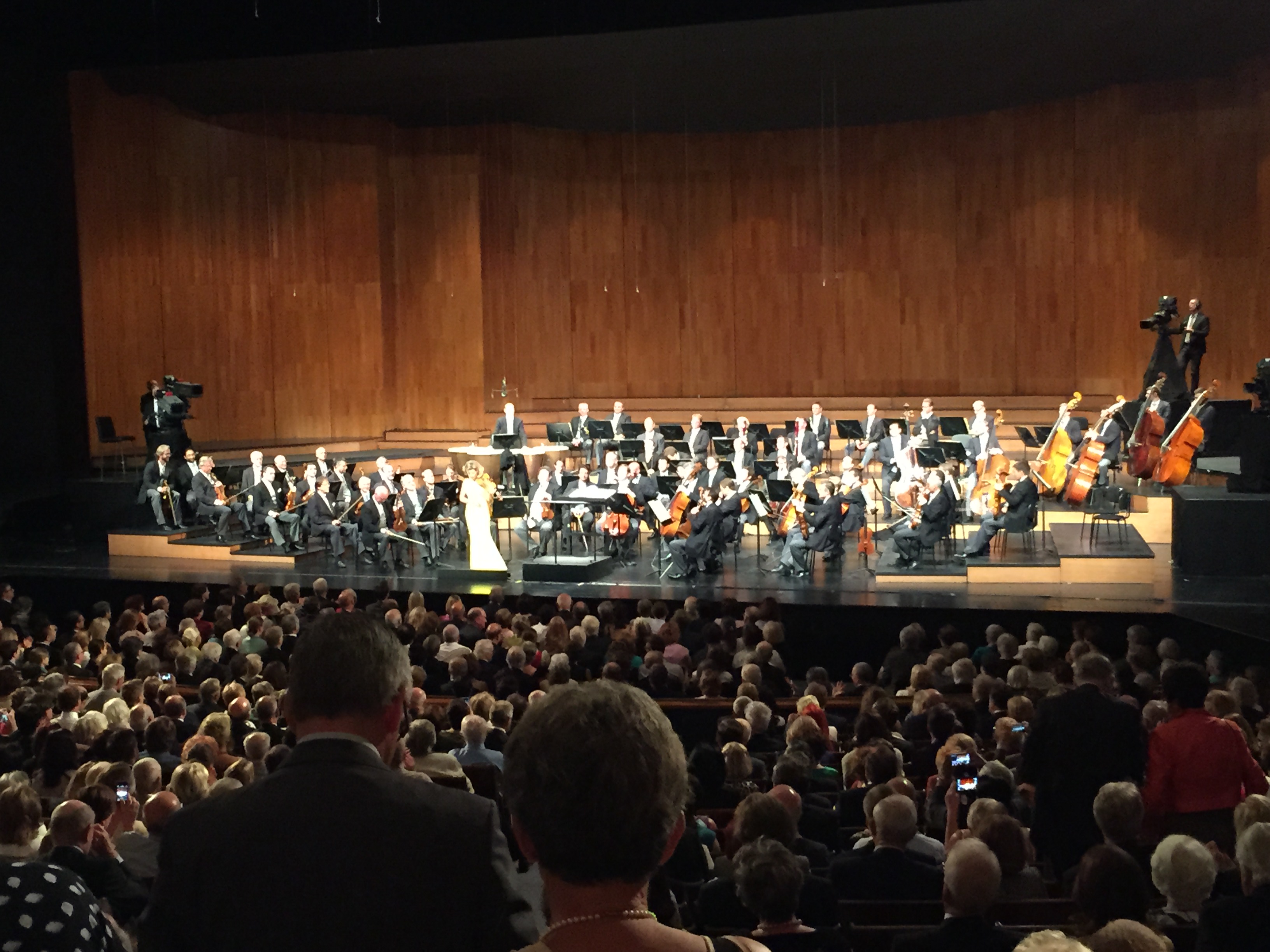
Today, the Vienna Philharmonic, Ricardo Muti and Anne Sophie Mutter are sold out. The program includes Tsaichovsky’s Concerto for Violin and Orchestra, and Brahms Symphony #2. I felt very smug to have ordered tickets before they were issued last year. It was so thrilling to see Mutter. Like others, I was sweating from holding my breath at the end. She was enrapturing and you could hear a pin drop as she reached a series of crescendos. She partnered with Muti to lead the orchestra as well as play beyond perfection.

IMG_7761She eventually earned a standing ovation, but not because the audience wasn’t sure. In true European style, the audience very deliberately withheld letting her know that they approved of her performance. And, in reply, she responded with a delayed second piece. Do you know how hard it is to get European audiences out of their seats? Unlike the Americans who are easy to please, the Europeans are very grudging with their compliments. You have to really earn your stars here.

Well, the well-healed (no typo, I mean there is alot of spa time going into this crowd) got up on their feet and gave her an ovation you would not believe. Maybe that was the reason for the delay. But that’s after they spend three minutes stamping their Bruno Maglis on the hard floor. Anne was lovely and gracious as could be. This was her kind of crowd, honed to perfection themselves. You could tell this was a huge honor to her.

Other observations of this thrilling performance…there are strictly Tattinger-sponsored champagne breaks here…no beer and pretzels. The Austrians tastefully dress to convey their age-appropriate super-wealthy reserved style. I think of myself as reasonably self-aware in my black concert dress but I felt like a slob. The 11:00am Sunday performance (ok let’s miss church today) gave the older crowd (hey, that’s me too) at least 12 hours sleep beforehand to stay awake, so everyone was frisky.


The aftermath of the concert consisted of weaving my way through the fleet of 30+ Audi S8s in front ready to whisk patrons away to an after-event. I looked for my name but they were only by number. Unfortunately, I had forgotten to retrieve the code beforehand.

Days 20-22: Planes and Boats and Trains

Such has been our busy week of flying from Moscow to Berlin, taking a hydrofoil to Peterhof from Moscow, and the train from St Petersburg to Moscow. We enjoyed the Sapsan train the best, which turns out to be the same as the ICE train I am taking from Berlin to Salzburg. We assumed the Russian premier long distance train was its opportunity to showcase Russian engineering, but it looked suspiciously similar to the German trains.
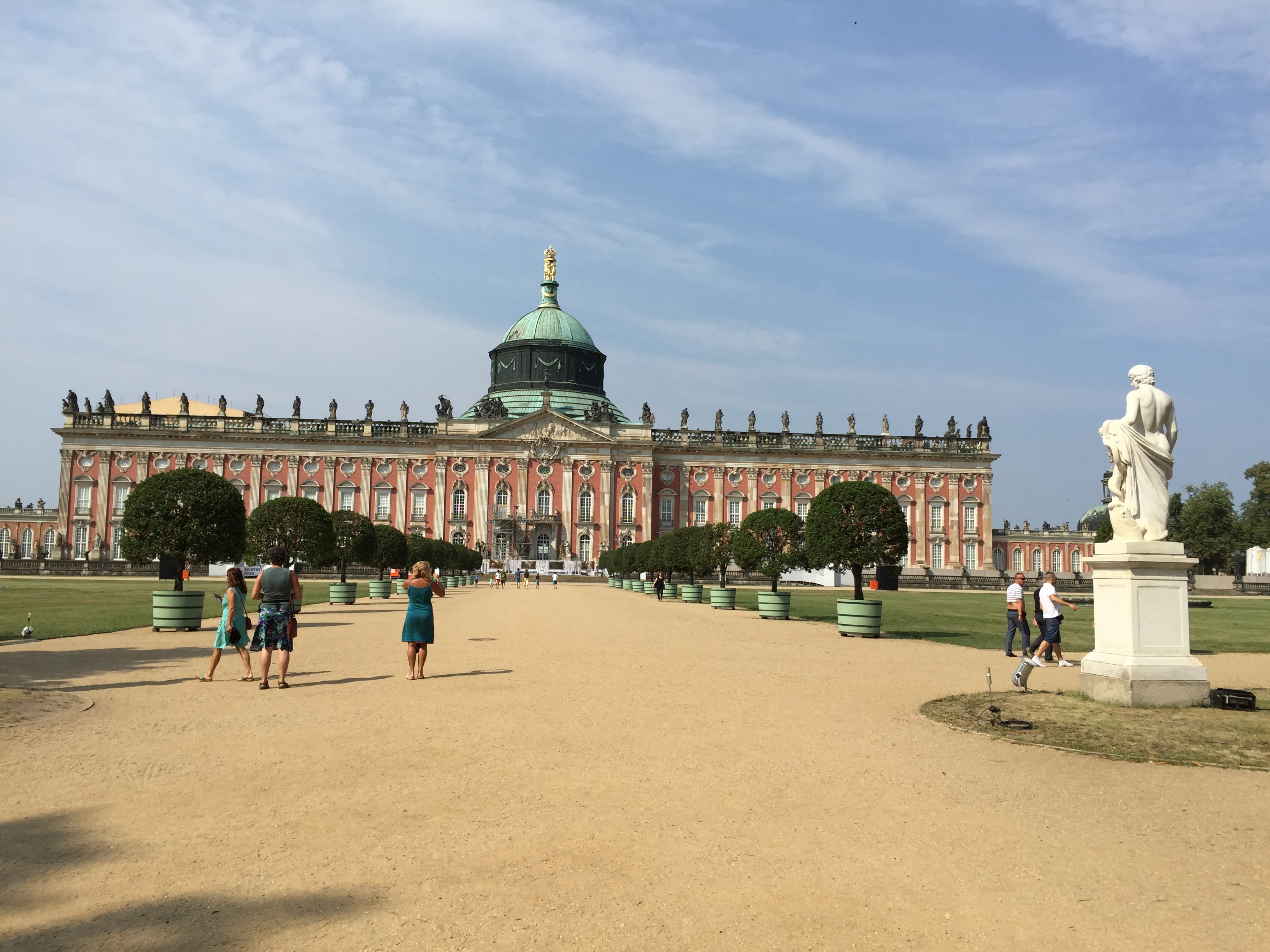
IMG_7686Yesterday, on Gee Kin’s last full day in Berlin, we took a day excursion by local train to Sans Souci Palace in Potsdam. We didn’t visit the palace as most visitors do, but took a three-mile walk between Sans Souci and Charlottenborg Palaces in the scant shade of 99 degree weather. A UNESCO world heritage site, Potsdam was the chosen site for the summer palace of King Friedrich. Here’s a Wiki link: https://en.wikipedia.org/wiki/Sanssouci

The event planners were preparing for the Sommernacht at the palaces the following day. It sounded like a wonderful celebration of German classical music in a beautiful venue, but unfortunately we were leaving. It would be worth coming back one day for the festivities and fireworks in this elegant location.

In our 36 hours in Berlin, we had launched our stay with a leisurely walk in the neighborhood of Potsdamer Platz, through the zoological garden in the middle of the city. It was calming and provided time for us to reflect on all the Siberian landscapes we had just traversed.

Those of you who know us are aware that we like long urban walks, 5-10 miles a stretch. This was yet another “walk in the park”. (For the curious, I have a website, http://www.crazyladywalks.com, that provides detailed information on Bay Area walks). It may seem pricey to go halfway around the world for a walk, but these are the most memorable and enjoyable ones to us.

We managed to balance the rest of our three days with local tours and attractions. We found a good Turkish restaurant in the more local area around the Zoo. Gee Kin slugged out on the museum track so we did a Young European concert with the Kiev Orchestra last night.

Sandwiched in between our morning walk and the evening concert, we visited the Reichstag dome. Being one of the hottest days ever in Berlin, we wondered how we got ourselves into this predicament. Masses of local tourists had come from all over the world to the Reichstag for their German civics lesson, on this one day. We not only fried at every pit stop, but then we were sous-vide under the dome, which resembled the George Forman griller.


Nevertheless, it was still fun to see and experience Norman Foster’s masterpiece. Luckily for you, the photos can never effectively convey temperature. But I guarantee you, the open vents in the building were insufficient ventilation for the once-in-a-hundred years heat wave. My dead straight hair went curly and the wood on our paper fans are permanently warped from this day at the Bundestag.

Three activities in one day’s 99-degree weather may be asking for trouble. Gee Kin’s alternative was to go to some delightfully soothing, air-conditioned art museum and he picked this?? Granted, the tour to Reichstag was pre-booked. We had failed to do this a few years back on our first trip to Berlin around 2012. And I was a day off on the booked date. Being our last day, we were not going to forego these paid-in-advance commitments so we had no choice but to go. So our last day was a bit of a marathon but it was penance for our lethargy the first 48 hours.

As mentioned, we went to a concert at the Konzerthaus Berlin, in a renovated building in a lively area in the middle of the city. But that’s not saying much, as everything seems to be in the middle of the city. Rome and San Francisco feel intimate like this, but not Moscow or Paris. Those are honking huge BIG cities, that dwarf your existence. That may be due to the six-plus-lane wide ribbons of thoroughfares used for pomp and circumstance.


I am at this very moment passing through Bamberg, where Gee Kin and I first discovered Cameron Carpenter. He is an amazing Curtis-trained contemporary organist who can do both classical and popular music. Some of you saw his performance at the SF Symphony Hall last year. He is one of our favorite new artists.

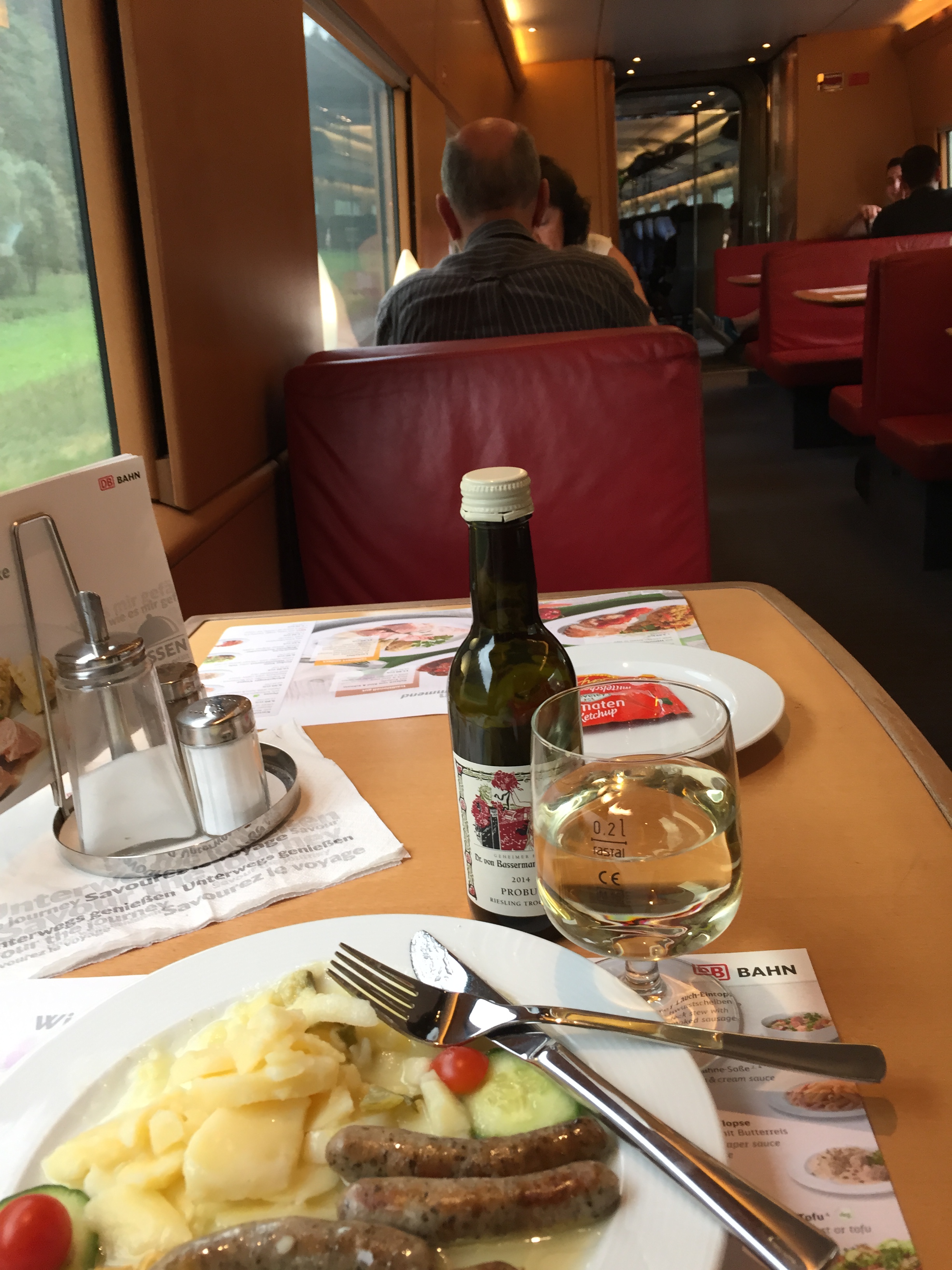
I am sitting in the dining car for lunch, noshing on bratwurst and cold potato salad. (See photo). IMG_7743The quality of food is less important to me thanthe total experience–environment, ambience, and PEACE. This was it, enough for me to write all of this discreetly in a maple-veneer and leather-lined carriage. Prices were reasonable by American standards. I had my .2ml wine (a bit more from the split bottle but you can measure if you want from the mark on the glass), entree and dessert with coffee, with a priceless view and free opera music via my IPhone to boot! To me, this beats a table at French Laundry.

Am heading to the Salzburger Festival and will post from there in a few days. Til then, stay wet (not dry
for SFers) and cool (for Deutschers). Clouds on the horizon.

Day 19: Day of Reckoning

We’re leaving Moscow today, heading for Berlin and the Western World as we know it. Russia feels more Eurasian and part of the Asian Continent than Europe in many ways. It has been a fascinating foray into the Russian culture, environment, and history.


I am posting a few miscellaneous views of Moscow from the Kremlin Armoury and from on our last day here. Gee Kin has finally mastered his fourth word, uttering Hello! and Good bye! in one conversation. We are now aware of what it takes for foreigners to say “Ni Hao!” in Chinese, and the tables are turned. I am sure the Russians are wincing as we did when others spoke to us in elementary Chinese greetings.


Photos, above:
1. View of State Historical Museum, where some of the relics below are located.
2. GUM Department Store, a shining example of restored buildings in Moscow Center
3. View of Red Square from shopping street

Photos below, from inside the State Historical Museum:

We are sad to leave and feel woefully lacking in knowledge about any of Russia’s cultural treasures. Other than what we read in the local paper or magazine articles, we never pursued any information beyond the information we were fed. I suddenly discovered Wikipedia and Biography.com on this trip and have been using it regularly to search for all the Russian writers and composers that have been mentioned in guides.

I am passing a few on for those of you who are also curious: For Tsaichovsky:
http://www.biography.com/people/pyotr-ilyich-tchaikovsky-9503375#synopsis
It is interesting to note that Tsaichovsky was also a music critic. While he considered Beethoven a worthy composer, he was critical of Brahms, Schumann and Wagner. Anna Netrebko often sings in and promotes Tsaichovsky’s “Eugene Onegin” opera around the world.
For Pushkin: https://en.m.wikipedia.org/wiki/Alexander_Pushkin
For Borodin (remember “Stranger in Paradise” from Kismet?):
https://en.m.wikipedia.org/wiki/Alexander_Borodin
Dostoyevsky:https://en.m.wikipedia.org/wiki/Fyodor_Dostoyevsky
Prokofiev: https://en.m.wikipedia.org/wiki/Sergei_Prokofiev
I asked our guide about Baryshnikov. He made a face as if I mentioned a pariah. He is a persona non-gratis. Remember, he defected while on tour with the Bolshoi? Oops. No monuments to him, unfortunately.

The next chapter of my travels will focus on Germany, Austria and Switzerland until the end of the month. Now that the uncharted portion of my trip is over, I’ll be posting every few days instead of daily. If you are getting too many emails, you can adjust your settings to unsubscribe, and you can always check in after that by going directly to http://www.travelswithmyselfandothers.com. Please continue to send me your comments when something strikes you! I love hearing from you!

Day 18: Snippits of St. Petersburg

As we leave St.Petersburg, I thought you might like to hear my impressions of this well-endowed city of approximatly 6,000,000 people (10,000,000 in the metropolitan area). Its jewels and pageantry are not lacking, and the glory of the Russian empire are embodied here. It feels distinctly Scandinavian in climate and culture, due to its position on the Baltic Sea. The city is perfect at this time of year.

Today, we took a break from the many museums and escaped from the city for a day by hydrofoil to Peterhof, the summer residence of Peter the Great. Peter chose this site around 1704 as a convenient location for his travels to and from other countries. Similar to Versailles, it has extensive gardens and palace buildings.

Gee Kin got a break from museum sickness, since it was a Monday and the palace buildings were closed. However, I did wrangle a quick, one-hour or less visit to the Treasury building. It was open and we were the only visitors in the tiny museum. Many of the gifts to and from other royalty were kept here.

It was a lovely bright, clear and breezy day. Many families were in the Palace grounds spending the day together (along with the tour groups). On the way back, Gee Kin and I enjoyed the fresh marine air along the harbor, and stopped for a drink in the park near the hotel. We sat and watched local St. Petersburgers.

We found the Russian people very tidy, well-behaved and a very handsome people. Most of the young people dressed well, with just enough flair to be noticed. We couldn’t help but prefer their tailored look with the casual one in the States. But obesity is also a problem here, due to alot of bread and beer in the diet.

I still wonder why I hadn’t made a point to come here before. It is a long way to come, and unless you join a tour it can be expensive and the visa process is prickly. But it’s such a widely misunderstood country. There needs to be more direct interaction between the US and Russia. While this problem is also the case for China, it seems oddly apparent that more people have traveled to China and have greater awareness of its culture than Russia’s. Perhaps the sheer distance between the Russia and the U.S. has caused this poor link.

The other night, we went to a Russian folk dance performance. We were very surprised that we hadn’t seen one like this before. Their costumes, style of dancing, and mannerisms were new and intriguing to us. I vaguely remember seeing some dance troupe like this on the Ed Sullivan Show when I was growing up! How could I have missed exposure to this deeply ethnic and well-preserved culture my entire life?!?

In planning for this trip, I’ll admit that I was focused on the Trans-Mongolian Express and the journey more than the two end points (Beijing and Moscow). I wasn’t fully prepared for what I was going to experience at each end. It caught me by surprise, but in a very positive way. The Russian experience was very special, since I had not been here before.

The tourist industry is still relatively undeveloped. Despite the language barrier, the Russians were very friendly and polite to us.

Many local people do not speak English so it puts the onus on the traveler to communicate in the local language. Learning the Russian alphabet and survival words are somewhat essential. You won’t get English flipped back in your face if you struggle to utter a few words in the local language. This is a place where they really appreciate your efforts, so you will be warmly rewarded.

The Russian language is based on the Cyrillic alphabet, developed by the Bulgarians. They are very proud of it. It combines letters from the Roman alphabet, Greek letters, and a few of their own doing. I kept wondering why I felt like I was on Sorority Row in Berkeley. Gee Kin and I had a blast trying to decipher words in Russian. Here are a few to amuse you. See if you can guess what the words are. I’ll give you the answers in the next post.

1. PECTOPAH
2. NHTEPHET
3. MNHNMAPKT
4. CNTNbAHK
5. HYTOPNYC
(Note: I haven’t figured out how to add the Cyrillic Alphabet to my Keyboard yet. The N is written backwards).

All in all, I have thoroughly enjoyed our visit here. I hope you will consider coming and make a point to visit this fascinating country.

Day 13: Moscow Camera Roll Continued

Yesterday’s events yielded far too many photos to post. I have chosen among my favorite children and am posting them for your viewing pleasure below. Moscow has been an amazingly inspirational visit–far too few Americans have been here to partake in its rich history and treasures. I feel badly that I didn’t come sooner.

And for Moscow by Night, here are a few shots of Moscow after a brilliant performance of “La Traviata”, the ballet, we caught. Moscow is totally safe in the tourist areas we walked at night, in beautifully balmy summer, late light weather. The lights really showcase the architectural detailing of each building in its pride and splendor.

And finally, for the foodies, our dinner menu. We tried the Holodet, an aspic of chicken and duck with dill that was delicious! Apparently, it is a local creation. You can read about its history on the menu page.

It’s probably worth mentioning that I have been revising and cleaning up the early Day 1-10 posts. I renumbered the days in successive order from the beginning, added photos that should have been in the posts, and fixed typos or information that was incorrect.

If you see any major bloopers, please email me and let me know! The website should be more stable going forward, once I am in Europe and the States, so hopefully you won’s see the fits and starts from the beginning of the trip. Once again, my apologies to those who may have been confused by incomplete information.

Thanks to all for the comments and support. Once Gee Kin returns to the US, I will be traveling on my own. It feels like you are all traveling with me, especially when I hear from you! It keeps me motivated and I keep you in mind when I am looking for interesting things to post. I hope they capture your attention too!

Day 12: Moscow Tour Time

Red Square
Red Square
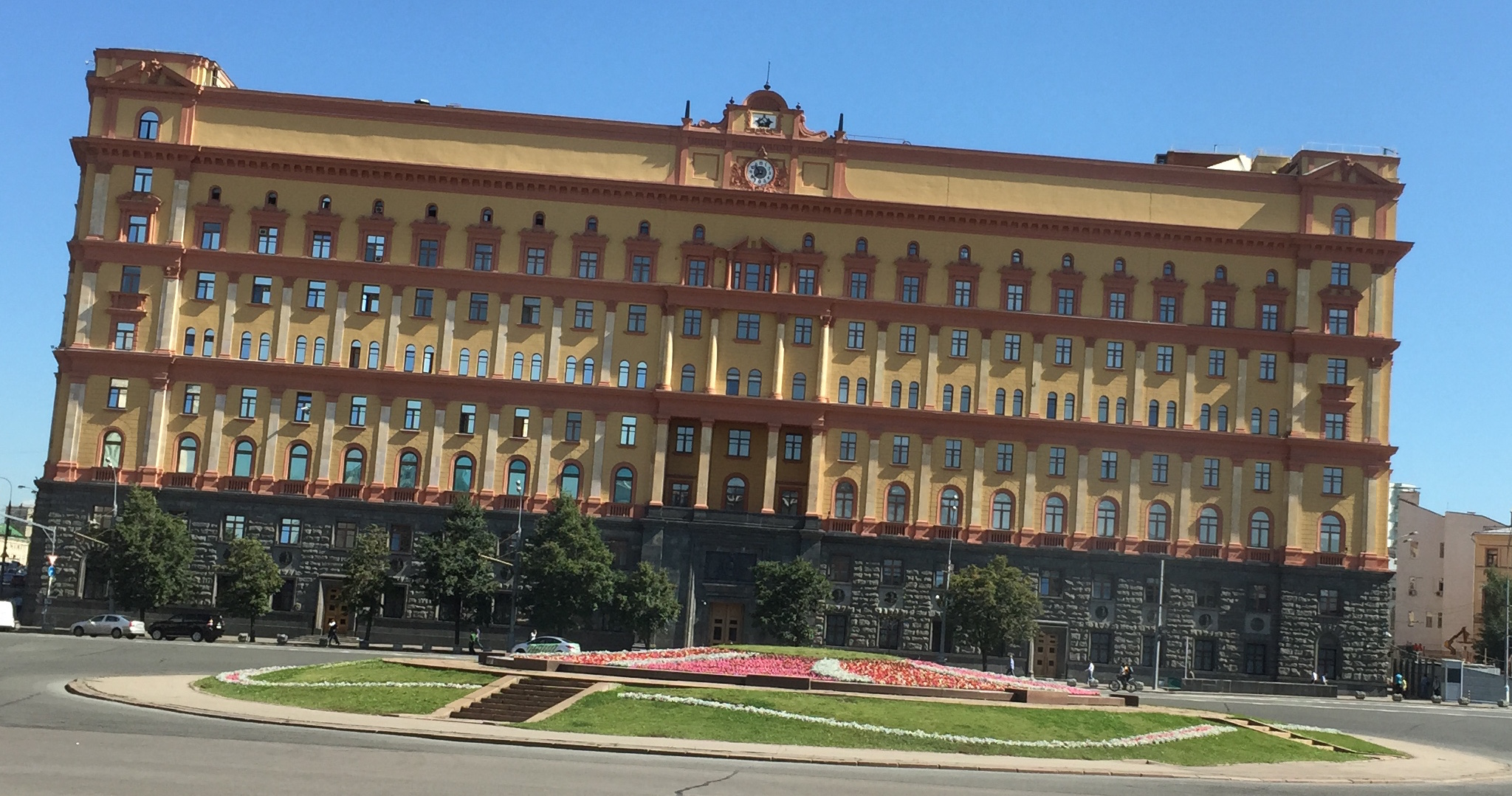
KGB after a bottle of vodka

Yesterday was a busy “play tourist” day, covering most of Red Square including the Eastern Orthodox St. Basil’s Cathedral, with its colorful onion domes; one of the most beautiful parks in the world just outside the Kremlin walls (see header if it is current); and Tym Department Store with its turn-of-the-century splendour (it has an enclosed galleria like the one in Milano).


Meals have been incredibly exciting and contrary to stereotypical notions of Russian food. Like most big cities around the world, you can find state-of-the-art contemporary food for nouvelle tastes. We found a great lunch place near the hotel called “Fresh”, with inventive vegetarian dishes. I had a salad of quinoa, avocado and greens, and Gee Kin had one with buckwheat, tomatoes, grilled spinach, sweet potatos, and mung bean sprouts. Both were served with olive oil and a delicious miso/rice vinegar, soy sauce, and mint dressing.

For dinner, we ventured into the Arbatskaya area and landed on an original crab-and-caviar menu with Prosecco for under $50! From Kamchatka, the crab is Russia’s equivalent of the Alaskan King Crab. Gee Kin thinks perhaps the oil boom brought on alot of high end quality food demands but the ruble devaluation has made the prices here a bargain. Come soon while Russia is on sale.

See pop-up captions above to sights we visited today.

Follow up to my own question the other day: why does it seem so long to lunch time on the TME and always an hour away?

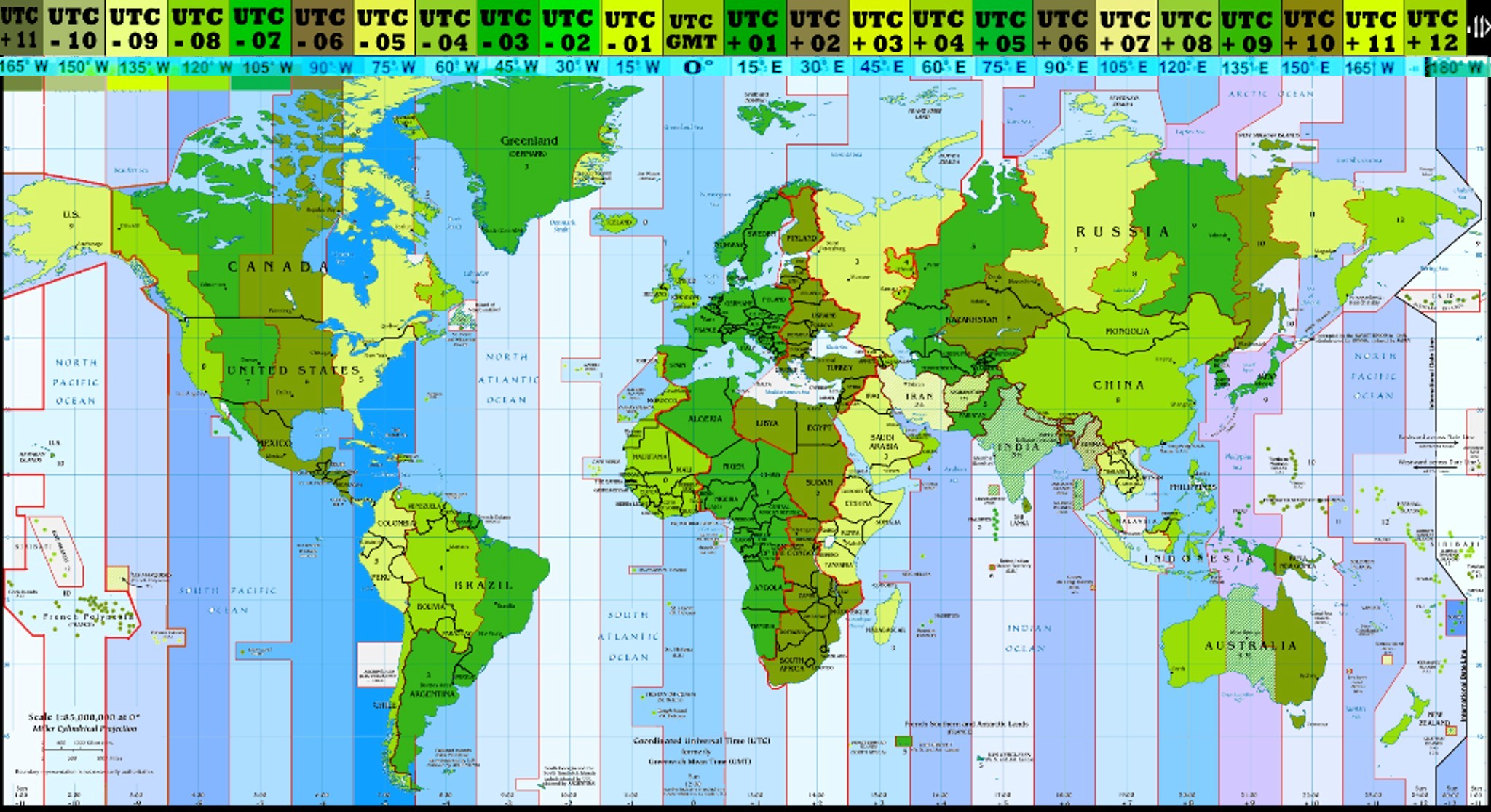
Take a look at the up to six time zone changes, from Beijing to Ulan Bator in Mongolia, then across Siberia to Moscow. Many of the westernmost cities such as Kirov, Novgorod, and Ekaterinaburg along the train trip follow Moscow time to avoid confusion. However, as the crow flies westward, the time zones are less dramatic on a train than those when flying. Jet lag is reduced, but the time warp messes with your brain and metabolism like a slow drag. Also notice how tidy (and tiny) our US times zones are compared to those in Russia. Russia visually looks and feels alot like Canada somehow when you compare the two countries on the map.

World Time Zones
World Time Zones

Day 10: Time on TME or Stop the World…

I wanted to get off…so was it worth doing the TME (Trans-Mongolian Express) from Beijing to Moscow? I explained in an earlier post about my pursuit of trains and train travel initiated by a stint at the Hong Kong Mass Transit Railway Corporation. Sir Edmund Hillary, when asked why he was climbing Mt. Everest, said, “Because it’s there”. While this obviously cannot compare to climbing Everest, taking the TME is certainly an achievable goal by any able bodied individual with a penchant for the absurd. In a good way.

For starters and the curious, the best intelligence on this venture is through the website http://www.seat61.com. The author, whom I believe is British, has mastered every angle of all the trains throughout Russia. He gave me all the information needed to help me decide that this was worth it…for me and Gee Kin.

OK, so pros and cons.

First and foremost, you get to spend time with someone. Five and a half days of dedicated time will flush out your true selves and your relationships, good or bad. That’s a good thing.

Secondly, you get to put things in perspective. Food and pooping are important. Seeing early sunrises out the window with the sun and the moon at the same time with the world whipping by. In Chinese. In Mongolian. In Russian. Giving yourself time to look at colors of the sky when you never bothered to before. Making time of time.

Third, it’s a curiosity satisfied. The vast continent linking Asia and Europe caused and enabled human migrations and wars to be fought. Humans have stepped where I am stepping to create this civilization as we know it. The German traveler we met informed us that Ghenghis Kahn had traveled from Beijing to today’s Steiglitz in Germany. That’s a lot of horseback riding. The TME is a pretty good way to trace his tracks. Ghenghis-baby got the benefits of belonging to all of the above too.

Cons, well can’t think of too many for the big picture. A lot of small stuff, but why sweat it?
Yeah, there’s a few weird cultural inconveniences and this is not for anyone. Themanincar61 best describes these.
In the final analysis, I heard myself uttering more than once, “this trip is already halfway there?” And “I don’t want it to end!” We are already talking about Vladivostok to Ulan Bator via Korea or Japan. Overall, it must have been a good decision.

Photos above:

1. Birch woods along the Trans-Siberian-Mongolian Express
2. Endless birches by moonset

Day 9: Scenes from a Marriage of Landscapes

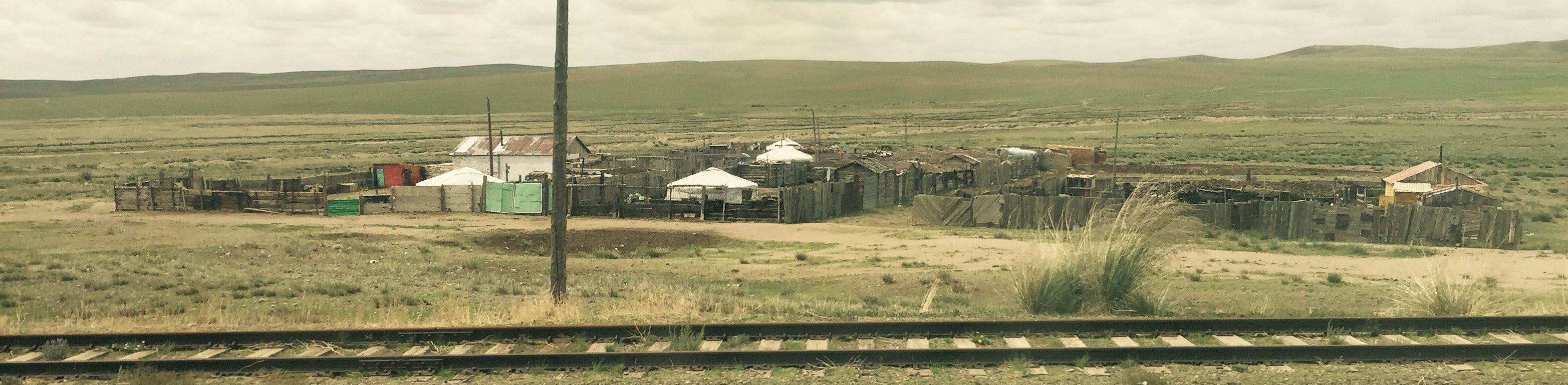
Mongolian yurt tracks

Photos, above:

1. Mongolian Yurts near Train Tracks
2. Yurt Ghetto
3. Russian Landscape
4. Russian Rural Housing

Those of you who have been choking over the number of museum visits on my blog this past year are going to get relief from the trudges through repositories of art and culture. Along the Trans-Siberian, there are few renown cultural centers, and no places to get off, at least on our itinerary. At pit stops, we haven’t wandered far from the train car, tethered to it by the time. We figure out where we can get a wi-fi signal (50% hit rate so far), and worry about missing the train. The attendants told us that there are no bells or whistles to warn us that the train is due to depart like there might be in the States. I’m not sure there are any there either. As the attendant looked at us, he cocked one eye against the sun and scornfully told Gee Kin that they dump the personal effects of missing trippers at the next police station. That thought deterred us from taking any risks.

Aside from stretching our legs at stopovers of 10-30 minutes, we have found plenty of amusement on the train. Heading out of the halfway mark along the line (technically the Trans-Mongolian Railway), we found ways to exercise: I walked the equivalent of 3 miles, or 3×5280 ft/the length of a train car of 50-60’x6=1 football field or 300’x18=100 times, or approximately an hour); Gee Kin used the hand rail for a ballet bar for his yoga and stair stepping, and I brought my PT stretchy band for muscle toning. We even danced to the Beegee and Beach Boys today  on hand-held music in our own private Idaho! It was great fun trying to come up with new ways to entertain ourselves.

The scenery has been a very good backdrop for these types of activities. We could listen to classical music with intent on our phones, learn survival Russian alphabet and phrases, and stare into the horizon for minutes on end. To describe the scenery…well let me see. After getting away from the smog of Beijing in the first four hours, the hilly mountains and picturesque terraces of Hebei Province and Inner Mongolia finally appeared. That quickly led to magnificent and stunningly clear plains and steppes of Mongolia. The pastoral views of horses, cattle, goats, sheep and camels were dotted with white puffy marshmallow yurts. The expanse of space was soothing and impressive. It gave us a reason to return to learn more about the Mongolian way of life. We hope that its nomadic lifestyle won’t disappear before we have a chance to return.

The Russian countryside first looked bleak and impovershed. Most countries don’t showcase their best along railway lines, but what I noticed was the prevalent neglect of structures. It seems that once a building was constructed, it was left to deteriorate and to let nature take its course. Many buildings looked rusted out or in need of repair. The one-story houses on flat terrain eventually gave way to more affluent, two-story Alpine style chalet buildings along the slopes of mountains.  They too seemed prone to being run down. We noticed people walking along unpaved roads with few cars. This vast country (4800 miles from Beijing to Moscow, 1.5 times the width of the US, and more than 6,000 miles on the Moscow-Vladivostok route, or 2 times the US width) would have a hard time keeping its transportation network maintained, for so few people. It is so spread out that there seems to be logistic problem in paying for its infrastructure and upkeep.

Cities are much more well endowed with mid-rise buildings, and few high rises so far. As part of my crane-spotting interest throughout the world, I was pleasantly surprised to find cranes populating the denser areas of the big Russian cities, but only a handful at best. This cannot be compared to the crazy building boom in China that I witnessed in my travels over the past year. Every major city I visited was benefitting from the internet revolution, except perhaps Russia. Everyone seems to live very simply and have to live with less. These are only impressions, and without validation from local people. Hopefully we will be able to get some perspective on this when we visit Moscow.

Our tour of train stations yielded some depressing results. A few over the top showcase-style buildings, but they were too over-articulated, with massive bulky shapes and proportions for a Western-trained eye. Wood was used for all rural and low-rise city housing and some brick, but very little or no stone or concrete structures existed. The massive woods of birch trees along the entire railway line are attractive to look at, but the only variation of the landscape is an occasional field of wheat, corn or hay. 

We turned our attention to the environment inside the train and found plenty of activity to occupy our time. I finally set up my new Macbook filing system and felt superior achievement after a few hours’ effort today. Aside from preparing my blogs (they take about an hour or so each day), posting them at station stops (results are highly unpredictable and with high drama), and an occasional short nap, we have not been bored at all. Gee Kin tells me he likes traveling with me, but I know he needs to go home to recover. He says he has work to do, but I know he is just being kind to say that.


Photos, Above, left to right: Krasnoyarsk, Mariinsk, and Novosibirsk Train Stations