Tag Archives: Sights

Day 76: Chicago to Santa Fe, NM and the Amtrak vs. TME Report


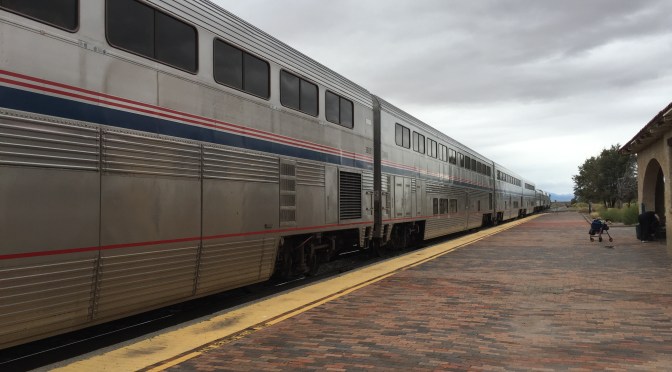
After setting off from Chicago late in the afternoon, we enjoyed an idylllic train ride plying the Midwest from Illinois through Missouri, Kansas, Colorado, and New Mexico. We passed the Mighty Mississippi and wheat fields to enjoy a peaceful sunset.

On arrival, we had a look around the city and enjoyed a sunset the following evening from our hotel roof deck. See view above.

Preliminary Evaluation of the Amtrak vs. Trans-Siberian Express (TSE)

As for the evaluation between Amtrak and the Trans-Siberian Express (TSE) a la Trans-Mongolian Express portion (TME), here’s my interim report below.

If you recall, on Day 71 I established a self-inflicted competition between the American Amtrak system and the Trans-Siberian Express (TSE). You may be confused when I refer to the Trans-Mongolian Express (TME). The TME is a significant portion of the TSE, and differs only in the start point. the TSE begins in Vladivostok on the eastern coast of Russia. The TME begins in Beijing and traverses through Mongolia to Moscow, where both the TSE and TME meet. See map below.

Transsiberianmap

If you are not particularly interested in either, skip this post as it will be a bit long-winded, self-admittedly, and only for those die-hard train afficinados.

Here are comments based on the original criteria I established:

1. On Time Record

So far, the two long haul trips we have taken on Amtrak (Philadelphia to Chicago, Chicago to Santa Fe (Lamy), NM) have been on time or early, and the shorter legs through New England have been on time or slightly delayed. Trains on the TME were either on time or early, but we were not able to verify the arrivals or departures due to fuzzy time zone changes (!!)

2. Comfort (Bed strength, ability to rock a baby to sleep and keep them there; access to lights, camera, action; no annoying overhead PA system used at free will for the comfort of the system and not the passenger; and good padding and ergonomics for blogging)

Beds on Amtrak are comfortable, non-formed foam pads over two seats pushed together in the roomettes, with an overhead bunk that does not allow you to sit up straight. One passenger complained about the pillows and beds being too flat, but seating ergonomics and padding seem fine in both systems. Beds on Amtrak are in the direction of travel, whereas the TME beds were perpendicular to the direction of travel. Not sure either makes much difference in terms of rockability, but the Amtrak trains definitely sway more at the top due to the double-height cars. Most of the sleepers were on the upper level so more passengers would experience the sway, so I’d give Amtrak a negative point for this.

There are more stops at night on Amtrak due to the higher population along the route, so it may appear to be slightly more disruptive at night. However, the train starts and stops are smoother on Amtrak compared with the Chinese bump-and-grind at each stop. The Chinese trains did not appear to have any or much cushioning between cars so they slammed into each other when the trains departed or arrived at each station.

Lighting and controls were sufficient on both systems so no particular comments. In contrast, the use of the PA system was notable on Amtrak. The dining car made repeated comments about availability, MIA’s, and hours of operation; there were none on the Chinese cars (perhaps because there were so few or no passengers! or the multiple languages spoken by passenger on the train would render the effort fruitless). We did take a Chinese train on a different trip last year that piped overly loud and annoying announcements and music on their PA system. At one point, the speakers were disconnected (i.e. ripped out) to our car by a passenger and it seemed to take care of the problem.

3. Service (attentive staff, no back talk or attitude–i.e. Courteous; visible but not obtrusive; professional but not hollow friendly delivery of information)

As you know, we found the service on the Chinese trains to be very good, but that’s because we spoke Chinese. I am not sure foreigners would find the staff as friendly. Surprisingly, the Amtrak staff have been generally friendly and attentive. They must have improved their customer service training since we took the trains a generation ago. There are still vestiges of the long-timer staff person here and there who crack canned jokes every now and then, or a raspy voice yelling out instructions by someone who cumulatively earned the distinctive voice quality. Overall, both appear to be genuine in intent and concern.

4. Cleanliness (no spit on counters; toilet paper unfailingly in supply; Windows you can see through; stainless upholstery and carpets)

Well, can’t say I went looking, so I didn’t find any gross evidence in either system. In general, the toilets in the Chinese trains were not well attended, but in defense of the system, we were only 2 of 3 passengers in our car. There were four toilets available in one Amtrak sleeper car for some 24 rooms; only one toilet and one washroom per car on the Chinese train. You can do the math.

Toilet supplies were plentiful on Amtrak, nada on the Chinese trains. Bring your own.

Windows were a little soiled on Amtrak. Hard to see through some windows on Chinese cars.

Upholstery on Chinese cars were old but clean; no carpeting in rooms.
I noticed a few stains on the blankets of the Amtrak, and maybe on the carpeting. The concierge announced that shoes are required on all Amtrak trains.

5. Food (real food; reasonable prices; no cheap shots using lots of salt and sugar; no bar codes on wrapping; cold beer; wine list; nuking; no plastic, polystyrene, or jewel boxes)

Food to date on Amtrak was decent, and better than I remembered. When you book a sleeper you get free meals. Dinner options included salmon fillet, steak, chicken, or pasta. The only disappointing aspect were the frozen vegetables.


Hard to compare the food from the Russian dining car. The food appeared to be freshly cut and prepared, and although small portions, the food was fresh, tasty and healthy. Gee Kin’s vote for the staff’s home-cooked pasta and meat buns unfortunately do not qualify for this evaluation of customer-consumed food. Interestingly, I asked Sean, our Amtrak attendant, what he did for food. He immediately remarked that the food on the train was unhealthy for service staff. Assuming that they ate it frequently, the food would take a toll on your weight and BMI. The food is included in their benefits, but he mentioned that he beats it over to Whole Foods whenever he gets in to Seattle. Staff stock up on their own food but are not allowed to bring anything requiring refrigeration. That poses some limitations, but he said they work around it (wink, wink). Occasionally the house chefs make family meals for the staff and they really appreciate it.

I am copying and pasting the earlier post comments for convenience and adding any additional notes or changes.

Pros of the Trans Mongolian Express:
1. Decent food in the Russian dining car at reasonable price
2. Service in the sleeping car was very good and attentive by the two attendants assigned to our car (even though we and one other woman were the only passengers in the car after Ulan Bator!)
3. The compartment was tidy and toilet at the end of the car was adequate.


Cons for the Trans Mongolian Express (TME)
1. The tracks are not universal in Mongolia thereby requiring wheels to be changed on every car going between China and Russia through Mongolia
2. The trains do not have Internet access
3. The schedule and arrival times at any station were a mystery due to fluctuating time zones

Pros for Amtrak trains
1. The trains are very comfortable
2. The trains have Internet access (10/7 correction: none on the long hauls!!)
3. The information for time, stops and scenic opportunities is helpful (10/7 update: excellent handouts available at every seat)


Cons for Amtrak
1. Service staff are surly (10/7 update: I would delete this comment that was based on historical experience)
2. Stations are antiquated (10.7 update: true, but they have installed First and Business Class lounges with internet access that overnight passengers can use)
3. Seating is not reserved (10/7 update: all seats are reserved on the long-hauls)

This report includes two long hauls:
1. Washington DC to Chicago on the Capitol Ltd.;
2. Chicago to Santa Fe, New Mexico on the Southwest Chief;

The last report will include the third and final leg:
Santa Fe to Los Angeles (continuation of the Southwest Chief), then the Coast Starlight train from LA to San Francisco.

Day 73: Chicago Art Institute and Millenium Park

Yesterday was spent at the Art Institute of Chicago, admiring the extensive Impressionist Collection. Among them:

Here are a few of my favorite pieces: Tang Dynasty expressive figurines and exquisite Northern Sung glazed pottery pieces:

And an architectural exhibition by David Adjaye and Associates, London

Views of the Millenium Park and City:

Second City Curtain Call:
IMG_9902

Day 58: Pause to Refresh

This is a good time to recap the first two-thirds of my 80 days around the world, since I am about to leave Germany to fly back to the US. In the past two months, I have traveled on the Trans-Mongolian Express (TME) from Beijing to Moscow, visited the Russian capital and St. Petersburg, and several cities in Austria, Switzerland, and Germany.

The next segment will be a stay in New York City and a short trip by car to see the Fall Foliage. The final leg will be the counterpart to the TME: a cross-country trip via Amtrak to Philadelphia, Chicago, Santa Fe, New Mexico, and finally back home to San Francisco.

Join me in the next few weeks as I compare cross-country trips between the U.S. and Russia!! I also look forward to seeing old friends and family.

Below is a glimpse of each stop. You can find the posts by searching the city or in the archives for July-September 2015.

Beijing: Best Hotel Experience in a traditional Chinese Hutong (Courtyard) Hotel

The Trans-Siberian (Mongolian) Express:

The Trans-Mongolian Express travels from Beijing to Moscow and is part of the Trans-Siberian Express. It connects to the Trans-Siberian Express in Ulan Bator and picks up the route that begins in Vladivostok.

Transsiberianmap

Mongolia and Ulan Bator:

Moscow and St. Petersburg:

Berlin:

Salzburger Festival Performances:

Vienna and Linz, Austria

Switzerland

For Schwabisch Hall, see recent posts.

And a few earlier posts organized by my favorite topics:

Architecture:

Food:

Artwork:

Photos may be repeated from earlier posts.

Day 55-57: Schwishin’ Schwäbisch

After the end of the Language and Cultural Program, it is difficult to come off a “high” from having made several new friends in a short time span. While others were packing their bags and moving home or elsewhere today, I decided to stay behind another day to savor a town I have called “home” for the past two weeks.

A morning walk refreshed my first senses of this sweet little town. A river runs through it, where people can still fish from it. Walks are everywhere that meander along the river and trace the town’s history. A community that cares about its environment and each other. And specialty local produce and products are made with purpose and don’t cost an arm and a leg.

Here are a few recordings of my walk this morning:

The Saturday Market was just getting ready for a big weekend celebration.

IMG_9259
Our class mascot, “Goethle” with specialty products Bratwurst, Bio-Blutwurst, and Schaschlik Guwürzsalz.

Our last two days were a little sad as friends got together for dinner and said our good-byes. While we didn’t exactly master the German language, we made some good friends, shared and learned alot from each other, and thoroughly enjoyed a successful two-week stay in Schwabisch Hall.

Day 52-54: Week Two, Schwäbisch Hall

The Goethe Institute students in our class are already embarking on the second week of the two-week language and cultural program at Schwäbisch Hall. It has flown by, with many activities, new friends, and mind busting German classes that test our memories and expectations of ourselves. It feels as if we are on the same boat, cruising down the river of life together.

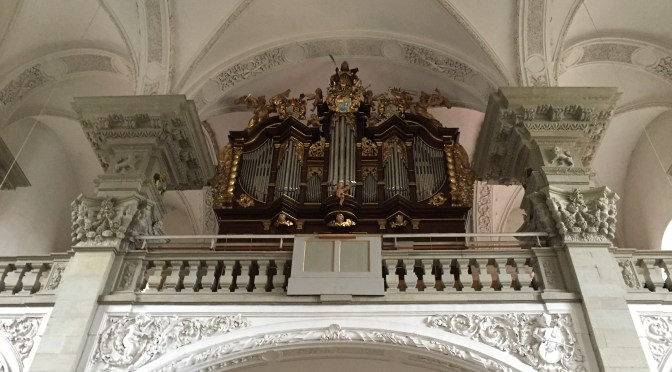
The Kloster Großcomburg and the Kirche St. Nicholas contains a rich collection of beautiful stone sculpture and elegant interiors. Clad with stone columns and capitals, plain ribbed walls and ceiling, and handsomely crafted wood pews, the Church interior and its materials seemed very modern and soothing to the eye. A beautiful stately organ was perched in the balcony ready to beckon its congregation. The church is at the top of a double-walled fortified hill, similar to the one at Schwäbisch Hall.

The ecclesiastical and royal stone figures possessed an air of confidence and stately manner. The king stands on the lions, a sign of royalty, but the queen is only allowed to stand on a dog as a sign of subordination. A stone knight looked poised, and ready to prance into the room. Its crisp, ribbed clothing was beautifully honed to perfection.

The day before, we took a full day excursion to Stuttgart and saw examples of historic buildings in the Altstadt area as well as modern, stately residential buildings with a strong Corbusier influence. With a population of 500,000, the city is built along a river and has steep hills with spectacular views similar those in San Francisco. Originally known as Bad Cannstatt, Stuttgart has a wine-growing region on the opposite side of the residential area and it was the impetus for Stuttgart’s growth. The city was bombed severely in World War II, so many of its original buildings no longer exist. Bosch, Porsche, and Mercedes-Benz are a few of its top companies.


In the afternoon we visited the Mercedes Museum. Daimler merged with Benz to create the world-wide brand of Mercedes-Benz. The classic three-pointed logo stands for the company’s products for land, sea, and air. The nine-floor, museum-quality ramped building was designed by Netherland’s Ben van Berkel and Caroline Bos’s UNStudio and features a timeline and modern history of the world since the development of the first Mercedes-Benz. Many of the classic automobiles, trucks and buses are also on display there.

In an outing the day before, a few of us were able to break into a small group and enjoy walking on one of the several Wanderwegs, or paths through and beyond Schwäbisch Hall. Despite drippy weather and overcast skies, our group encountered a field of sunflowers that brightened our day. It was a near-perfect day–only a rainbow was missing.

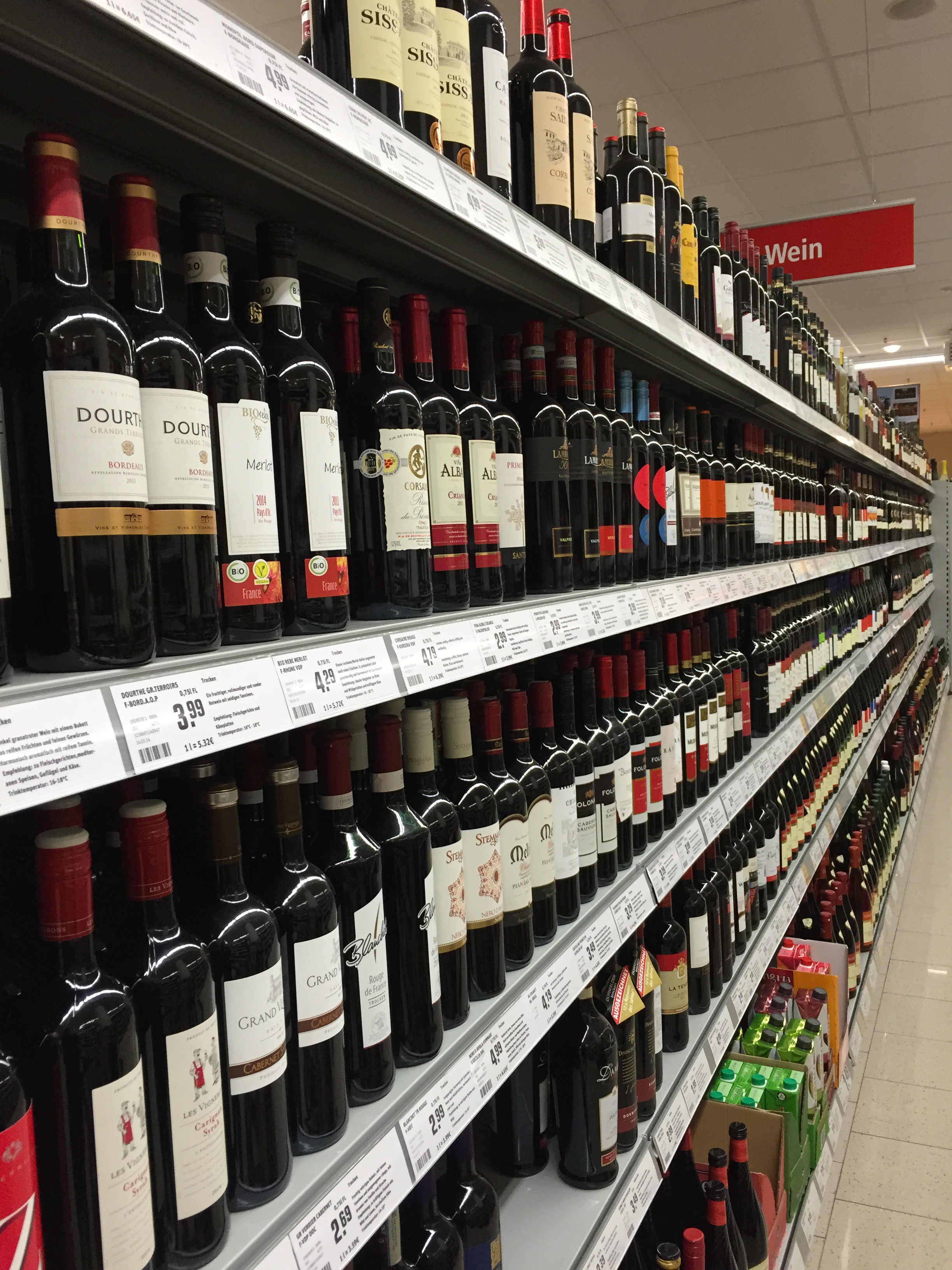
On a trip later to the supermarket, I found that wine is plentiful, with none over 6 Euros! The shelves were lined with a variety of locally produced wine. After a long search and at the end of the shelving in a “premium” section, I finally landed on a bottle of Hohenlohe Fürst Oehringen 2013 Lemberger Trocken (dry) for 9 Euros!! I tried, but I couldn’t find much for over 10 Euros.
IMG_8934

Day 51: Schwäbisch Sonntag

In preparation for my departure at the end of the week, I took a stroll through the town on my own in the afternoon. I savored the time alone, with no rushing through museums and tours. There are so many interesting paths, side streets and alleys lined with historic architecture, from medieval to modern. The city’s double walls and independent status allowed it to be spared from many battles and sieges. Thus its buildings and city were preserved.

A festival with music in the market plaza served free food and beer. Here are a few more shots that I took today.

A return to the Hällisch-Fränkische Museum gave me an opportunity to study the geology, early history of the area, and other exhibits. The city gained its prosperity and fame from the salt deposits along the river. The area was occupied by Celts and later Romans. One of the area’s well-known sculptors was Leonhart Michael, who created the moving stone relief sculpture shown below of Christ’s Crucifixion.

On a Sunday afternoon and for 90% of the time, I was alone in this beautifully crafted and presented museum. The scale models of the city and buildings reinforce how much the towns appreciate their history, architecture and planning.

A wig gallery allowed me to inspect them closely. Having heard about all the hygiene problems until the recent past, I’m sure that the wigs were developed to hide all those lice and growies on one’s head. After trying one, I was left to my own devices and was forced to take selfies of myself in drag. Sorry, you’ll never get to see them publicly.

Day 49-50: Ein Schönes Wochenende

Our “Beautiful Weekend” has begun! We started on Friday afternoon with a visit to the modern art museum, the Kunsthalle Würth. It’s a private gallery, with special exhibitions for Op Art and silver from the Victoria and Albert Museum in London. The building was designed by Danish architect Henning Larsen.

We strolled back to the main market plaza in town, past the Globe Theater, a replica of the one in England, and through the wooden bridge over the Kocher River.

On Saturday, we had an ambitious schedule for the entire day. A bus took our group of about 20 students first to Marbach am Neckar, Schiller’s birthplace. The house where Schiller was born was tiny but gave us an impression of life in this small town. Schiller was considered the “Poet of the Nation”, as he promoted freedom and the unification of the various states in today’s Germany.

If you remember, Goethe and Schiller were close friends. Much of their life’s work took place in Weimar, where we stayed for a few days earlier this year during the Dresden Music Festival. Statues of Schiller and Goethe are located in San Francisco’s Golden Gate Park.

In the afternoon, we visited the baroque town of Ludwigsburg and the Ludwigsburg Palace. As a young student, Schiller lived in Ludwigsburg. Each town has its own markets, but this one surrounded by Baroque buildings was particularly enjoyable.

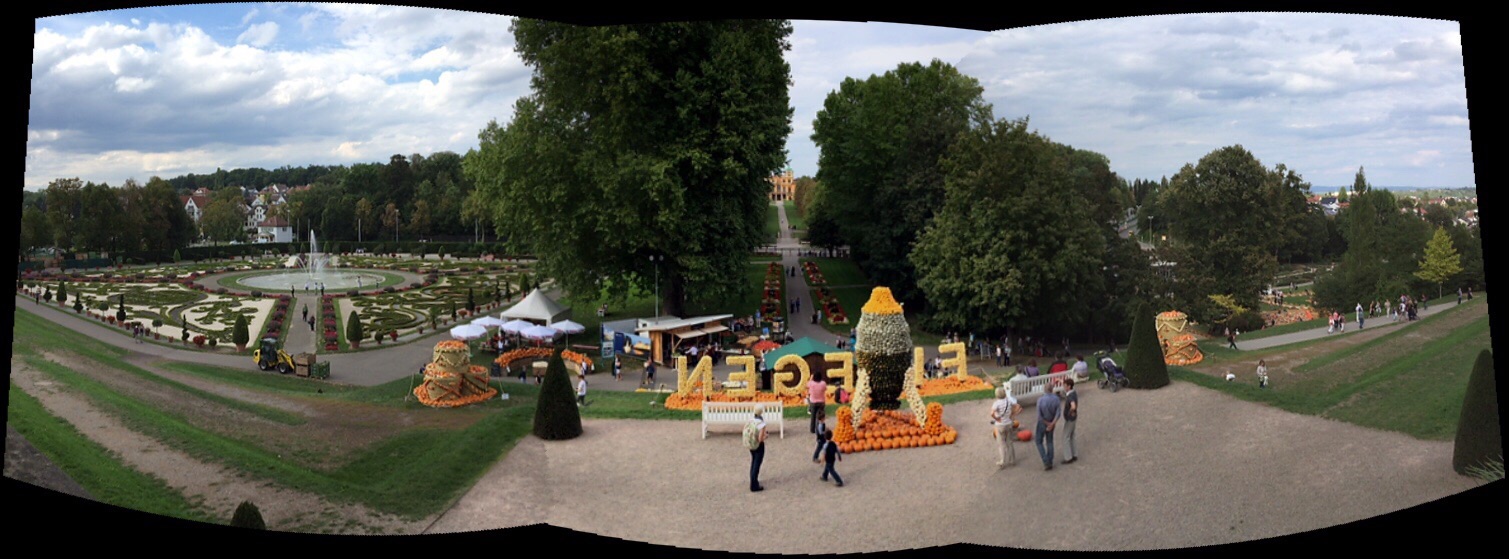
Germany has a strong sense of community, and each town has its special celebrations for young and old alike. This pumpkin festival, although small, reiterates the care and thought that is put into planning and implementation of each event for its citizens. It’s something I really respect and appreciate about the German culture.

I took a similar picture of the pumpkin display for a graceful older lady standing near me. When I noticed that she was struggling a bit, I asked her if she wanted me to take a picture for her. She was happy that I offered, but she was also very specific about how I should take the picture–make sure the edge of the balcony didn’t show in the picture, and get the building in the background. She declined when I asked her if she wanted a picture of herself.


image

Day 47-48: Hohenlohe Lo and Behold

We were taken on an excursion this afternoon to Kirschberg, a medieval town in the outskirts of Schwabisch Hall. In typical fashion, the buildings were beautifully preserved, as Germany really appreciates the historical value and cultural significance of its past.

Our second stop was a visit to one of Germany’s model farms. It grows the maize and the hay to feed the cattle, and the cattle are grown for meat. It is cheaper to import beef from other countries to Germany, but the farmer can sell his meat at a higher price because of its flavor.

The farm used to produce alcohol but it became too expensive to produce. They have a new operation that processes methane for bio-fuel. Nearly every sloped roof I could see in the farming areas were packed with solar panels, and windmills are also located in the area to create electricity.

The second part of our excursion outside of town was at the Freilandmuseum of Schwäbisch Hall. Located in Hohenlohe, it is one of the seven open-air museums in the area. It is similar to Williamsburg, where period buildings are shown in their natural environment. Buildings were moved here from elsewhere to preserve them. We saw an early medieval farm house and a more recent one from the 19th century. We also visited a school house, where our instructor gave us a lesson on the present tense. He read us what the teachers would tell the students to discipline them. Corporal punishment was the name of the day–see “the White Ribbon”, a chilling film about a family in rural Germany by award-winning film director Michael Haneke.


The buildings showed the construction of the walls. Twigs were carefully cut and sorted to be consistently equal in size, and then they were placed between the posts and studs. The straw and mud plaster was used to fill in the gaps, and then plaster and paint was added over the walls. Early buildings were built of stone to avoid the eternal fear of fire, but eventually the materials were organized better to concentrate the use of stone in the basement for cooling and storage of food over the winter, and then placing the living quarters over the stone level to keep the house warm. Stone and iron were used in the cooking or hearth area to protect it from catching on fire.

If it wasn’t fire, the next greatest fear of any family was poor health. Of 15 children, half or more died in the 19th Century. Families had to live together for economies of scale and to look after the children. As mentioned in other historical tours, hygiene was very poor and people did not wash for a year. There was very poor sanitation and waste treatment. Like in the Rothenburg-ob-der-Tauber Midnite Watchman tour, Schwabisch Hall had its alleys full of waste that was thrown out the windows of the houses. Wealthier people lived at the top of the steep hill so all the waste washed or slid down the hill to the river. So the poor got the worst of the lot. This contributed to the disease and infestation that baffled and plagued generations of farmers and city dwellers alike. I woke up just in time to notice that tour attendees tend to get pretty lethargic, until the stories about gore and horror get mentioned. Everyone perks up and pays attention intently. It must be trick the tour guides use to give everyone a jolt and reminder to achtung. Unfortunately, I’d heard it before.

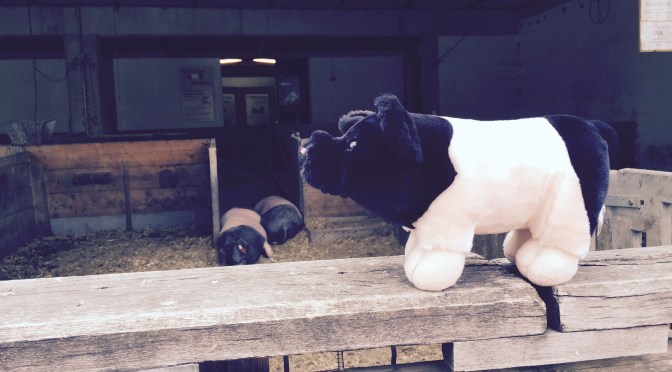
We were treated to a specialty of the area known as “Wibele”, tiny tiny waffle-like coated snacks that look like mini macaroons. I confess that they were more delicious than they look. Our teacher told us it was a highlight that he remembers as a child. The schwein shown in the picture below is also known to be a specialty of the area. Its black head indicates that it was bred from another pig and it yields a distinct and delicious pork flavor.

I’m trying really hard not to overeat, so I am buying food from the supermarket and even tried cooking in the guest house kitchen tonite. I buy the usual fruit, granola and yogurt for breakfast, and conjured up some twistee noodles with garlic, olive oil, and tomatoes for a tasty home-cooked meal. I have been making sandwiches for lunch with delicious aromatic schinken ham and Swiss cheese and arugula on a fresh brot. Sorry foodies, no pictures to brag about for awhile. You’ll probably have to wait until I get to New York.

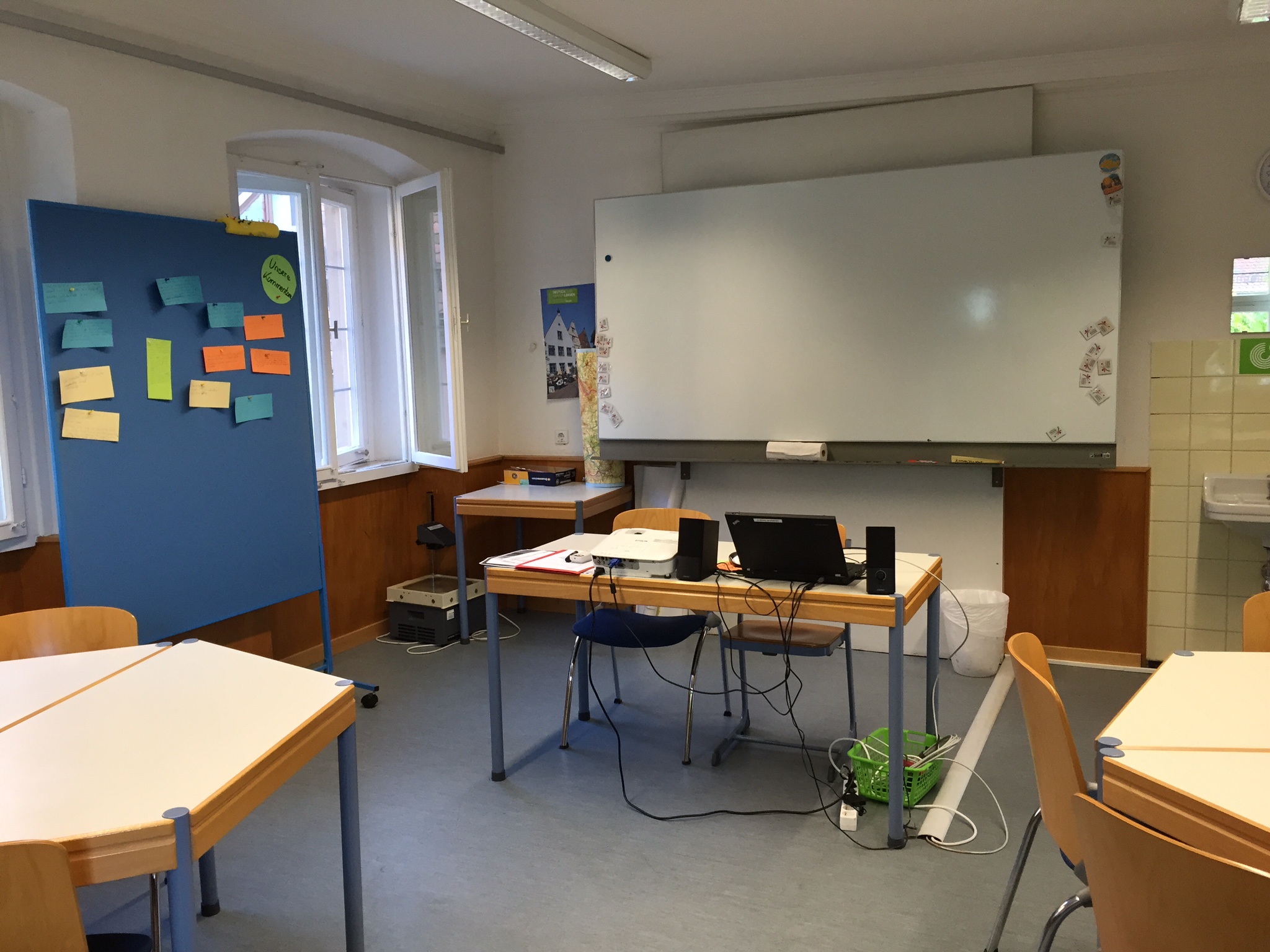
Finally, here’s a stray photo of our classroom, for those contemplating doing this program in the future:
IMG_8353

If you are the adventurous type, like meeting people, and living a spartan life, I highly recommend this program to you. You also get to learn a delightful language that is full of grace, elegance, and structure.

(Featured Photo, above: our class Mascot “Goethie”, from the Schwabisch pig shown in the background. They have black heads and bottoms, just like the stuffed one shown.)

Day 44-46: Schwäbisch Hall

My 2015 80 Days Around the World are already over half-way completed. As I look back at the titles and featured photos of this blog, I can’t help but be amazed at all the incredible sights and sounds of each unique environment. It does restore my faith in humanity when I think about all the efforts and decisions that have taken place to advance mankind in the world. And it goes without saying that meeting friends and making new ones are the highlight of any city.

So why I am traveling so much and so far? For a few newcomers, I thought I should take a minute to explain the purpose of my travels. It’s the same rationale behind the trip I took around the world this time last year, only in the opposite direction.

The fundamental reason for my traveling each year is to get to and from Germany to study German. I studied German in high school, and like an instrument that hadn’t been touched for a long time, I decided to dust off the creaky machine and make use of it. Having taken a couple of non-contiguous courses in San Francisco at the Goethe Institute got me jump-started. And a growing new interest in German writers, opera, and music motivates me to read Thomas Mann, librettos for the Zauberflote by Mozart and books about musicians like Schumann and Beethoven.

The means of getting to and from Germany form my itinerary. Last year, I went to Dresden for a month. This time, I am spending two weeks in Schwäbisch Hall in a language and cultural program.

This year, I traveled on the Tran-Mongolian Express from Beijing to Moscow with my husband, Gee Kin, visited Russia (also with Gee Kin), and tapped into German-speaking countries for a couple of weeks on my own. At the end of my course, I’ll fly to New York, spend some time in New England with my college friend Karen, then take the train cross-country back home with her. We’ll stop in a few cities across the US along the way.

Last year, I rolled in my curiosity about the old Silk Road and Central Asian cities with carpets named after them, like Samarkand, Bokhara, and Kiva. I traveled in a one-way direction eastwards instead of a round-trip to and from Germany. You can read more about these in the summaries for 2014 and 2015.

Of course, having the pure and intrepid lust for travel doesn’t hurt. It makes travel planning fun and challenging. Along with a fully supportive and understanding husband and family, I am free to go as far as I can, wherever I want. I try really hard to keep things affordable, interesting, but varied to match my interests.

So, back to what I have been doing for the past few days.

On arrival at Schwãbisch Hall, I was happy to finally unload EVERYTHING from my bags for two weeks. Despite traveling light, I still accumulated more brochures, historical materials, and a few CD’s than I had planned on collecting. I’ll have to make some hard decisions at the end of this stay as to whether I will continue to tow these in my bags. I slogged my carry-on, nearing the 14.6 kilo limit for the German Wings flight we took from Moscow to Berlin, and my backpack off three trains and a remote bus link to the Goethe Institute guest house where I am staying.

As it was overcast, threatening to rain and nearing the end of the day, I beat it over to the main guest house to retrieve my keys and card. It was exhilarating to get in the door after nearly two hours of juggling all my paraphernalia. The room was perfectly adequate, with a half-size refrigerator, plenty of storage, and a private bath. There were other students milling around, but everyone seemed pretty mellow and ready to start class.

The first day of class is always exciting. Direktor Herr Schmidt of the GI gave us an introduction about the city, its history and economic activities. We were split into classes after a written exam to determine our level and ability. I was not disappointed to be placed in the middle of the pack, along with 11 other students.

Our teacher has been teaching at the GI for ten years. After introductions and playing some getting-to-know-you games, we all felt comfortable. The nationalities in my class included students from the UK, US, Denmark, and Japan. Each person had an interesting background, but we also had similar interests in art, music, and history.

The GI is located in a former hospital that has been renovated completely. A “kirche”, or church, was part of the original building and where we were greeted in the beautiful, large meeting hall. Other modern facilities included a media library, cafeteria, and classrooms.

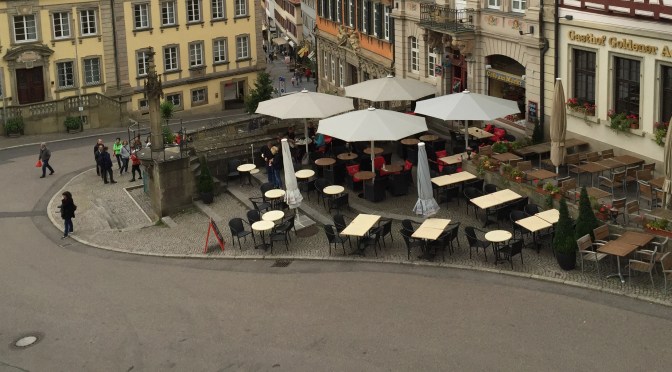
Schwabisch Hall is situated in South Central Germany between Frankfurt and Munich, near Stuttgart. It is a lovely, small city of about 40,000 people and a welcoming environment for its visitors. The Goethe Institute serves as an anchor for the city’s activities and Schwabisch Hall offers a wealth of celebrations, cultural events, and historical architecture. Within the Market Plaza are examples of medieval, Gothic, Renaissance, Baroque, Rococo and modern architecture! You can get an overview of history just by turning 360 degrees!

The town is peppered with a network of pedestrian passages, stairs, and cobbled streets that make this a delightful environment for visitors and residents alike. The town planners showed how modern architecture, open landscaping, and transportation can work together to form a compatible, balanced machine for living.

Day 40-42: Swiss Whirlwind

This week I traveled across the beautiful country of Switzerland, from Brunnen on the shore of the Vierwaldstättersee near Lucerne to the French speaking area of Valais near Sion .
IMG_8583
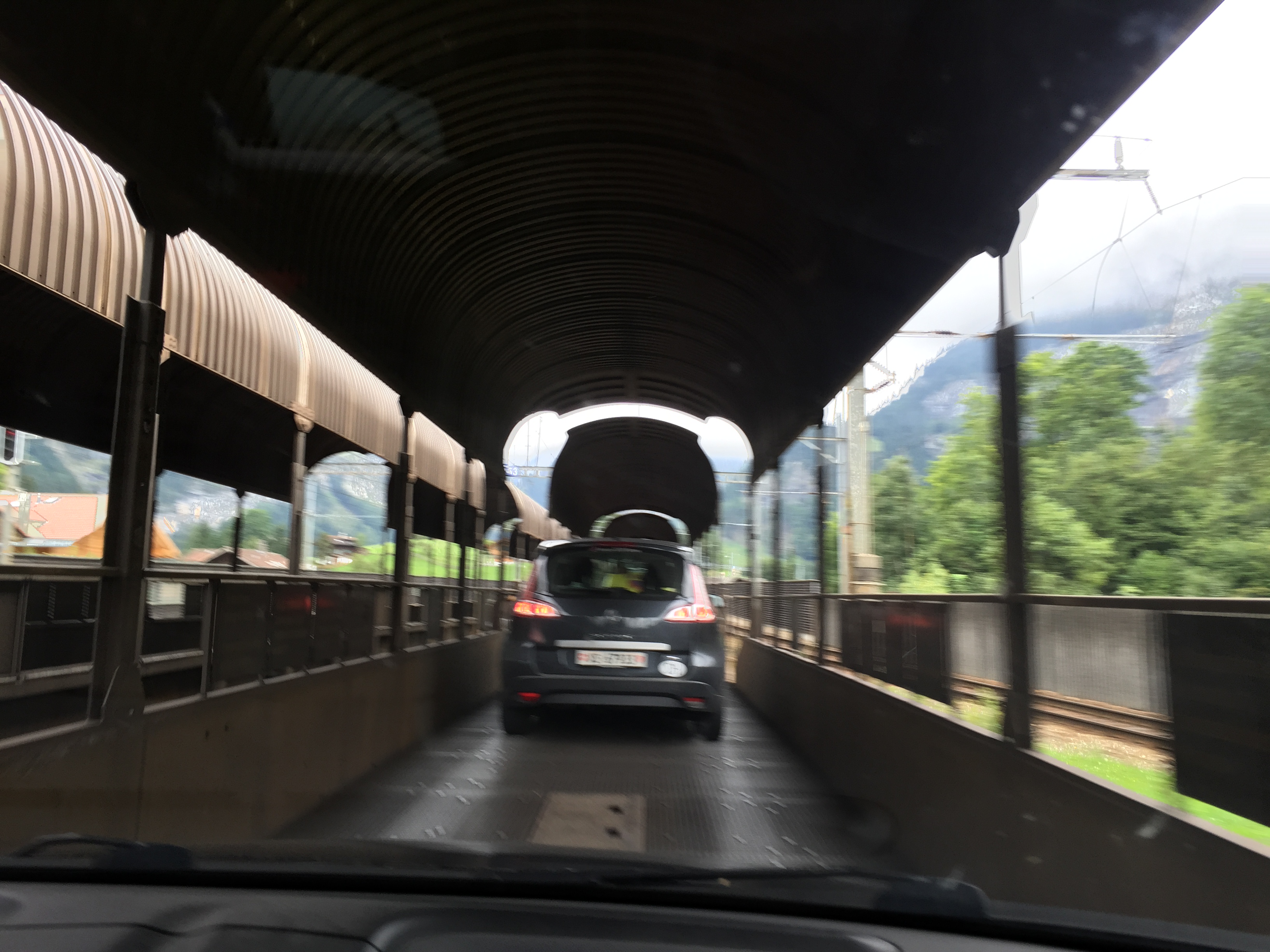
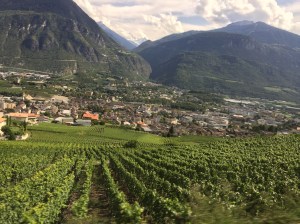
We took a car train through a deep tunnel in the mountains to the valley. Also known as Wallis in German, Valais is a serious wine growing region with a patchwork of vineyards etching the south-facing sides of the valley and flatter terraces of the north side. It was in the middle of the Autumn harvest, and the carpet of vineyards provided a lush green for the eyes and sheer pleasure for the palette.
IMG_8630After a much appreciated day “at home” at my friend’s home built with straw walls for insulation, I met another friend who was working in the French speaking area. Marie had a friend visiting from Der Wolf in Belgium, and together we went to the medieval castle on the hilltop in Sion. Afterwards, we had a delicious lunch al fresco at Restaurant L’Enclos de Valère. Upon returning to Sierre, I took the bus back to where I was staying halfway up the hill from Sierre and near the resort area of Montana.


IMG_8612

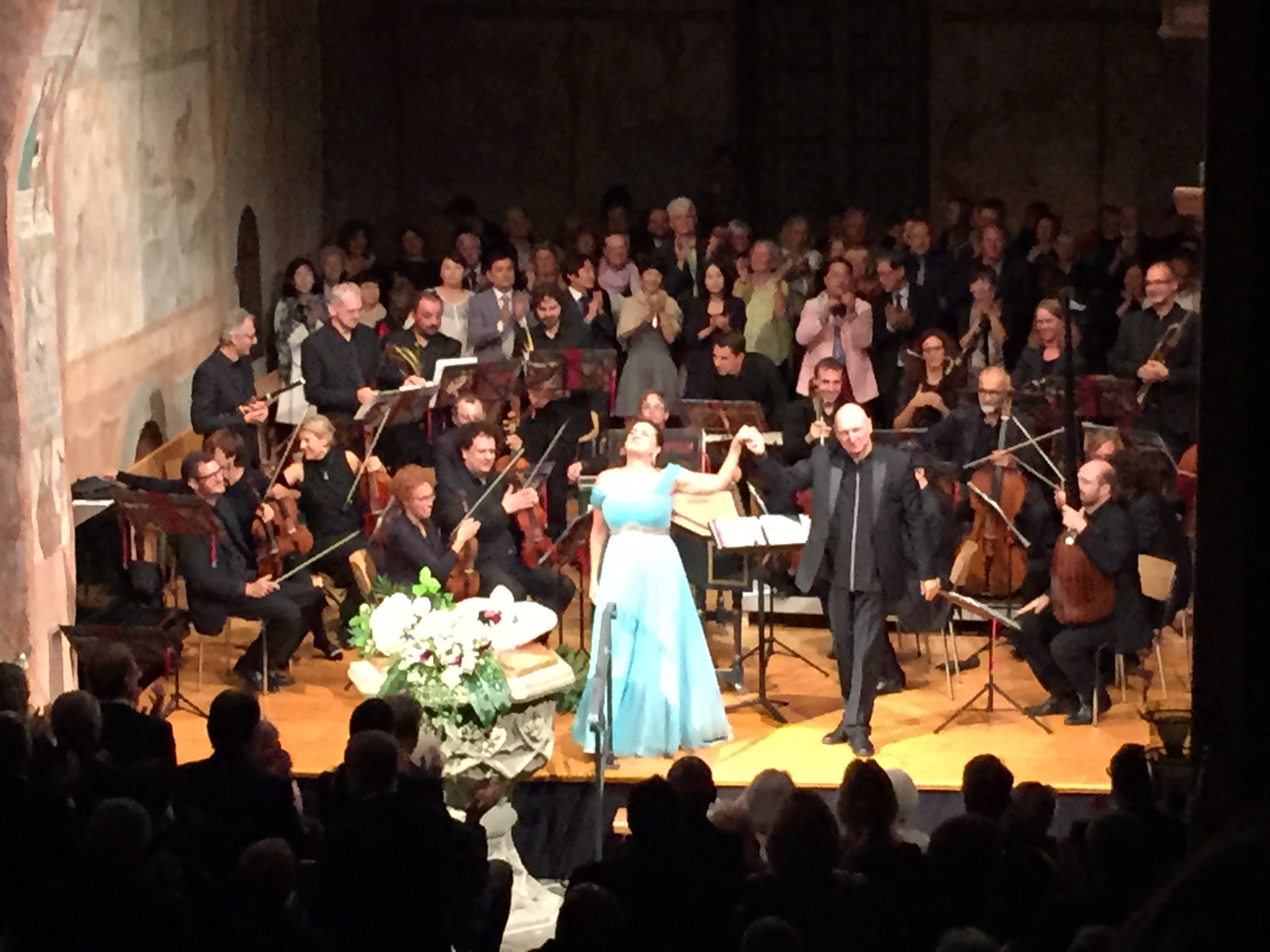
Later that evening, Hans, Helena and I attended a performance by world-famous opera diva Cecilia Bartoli in a small church in Gstaad. It was a two-hour ride by car to get there, but well worth the intimate venue and Cecilia’s delivery of beautiful baroque music by Vivaldi and others. It was performed by I Barocchisti, an orchestra specializing in this type of music, using original instruments from that period. Both Cecilia Bartoli and I Barocchisti performed in Iphigenie en Tauride, an opera I saw recently in Salzburg.
IMG_8650