Tag Archives: Sights

Day 10: Time on TME or Stop the World…

I wanted to get off…so was it worth doing the TME (Trans-Mongolian Express) from Beijing to Moscow? I explained in an earlier post about my pursuit of trains and train travel initiated by a stint at the Hong Kong Mass Transit Railway Corporation. Sir Edmund Hillary, when asked why he was climbing Mt. Everest, said, “Because it’s there”. While this obviously cannot compare to climbing Everest, taking the TME is certainly an achievable goal by any able bodied individual with a penchant for the absurd. In a good way.

For starters and the curious, the best intelligence on this venture is through the website http://www.seat61.com. The author, whom I believe is British, has mastered every angle of all the trains throughout Russia. He gave me all the information needed to help me decide that this was worth it…for me and Gee Kin.

OK, so pros and cons.

First and foremost, you get to spend time with someone. Five and a half days of dedicated time will flush out your true selves and your relationships, good or bad. That’s a good thing.

Secondly, you get to put things in perspective. Food and pooping are important. Seeing early sunrises out the window with the sun and the moon at the same time with the world whipping by. In Chinese. In Mongolian. In Russian. Giving yourself time to look at colors of the sky when you never bothered to before. Making time of time.

Third, it’s a curiosity satisfied. The vast continent linking Asia and Europe caused and enabled human migrations and wars to be fought. Humans have stepped where I am stepping to create this civilization as we know it. The German traveler we met informed us that Ghenghis Kahn had traveled from Beijing to today’s Steiglitz in Germany. That’s a lot of horseback riding. The TME is a pretty good way to trace his tracks. Ghenghis-baby got the benefits of belonging to all of the above too.

Cons, well can’t think of too many for the big picture. A lot of small stuff, but why sweat it?
Yeah, there’s a few weird cultural inconveniences and this is not for anyone. Themanincar61 best describes these.
In the final analysis, I heard myself uttering more than once, “this trip is already halfway there?” And “I don’t want it to end!” We are already talking about Vladivostok to Ulan Bator via Korea or Japan. Overall, it must have been a good decision.

Photos above:

1. Birch woods along the Trans-Siberian-Mongolian Express
2. Endless birches by moonset

Day 9: Scenes from a Marriage of Landscapes

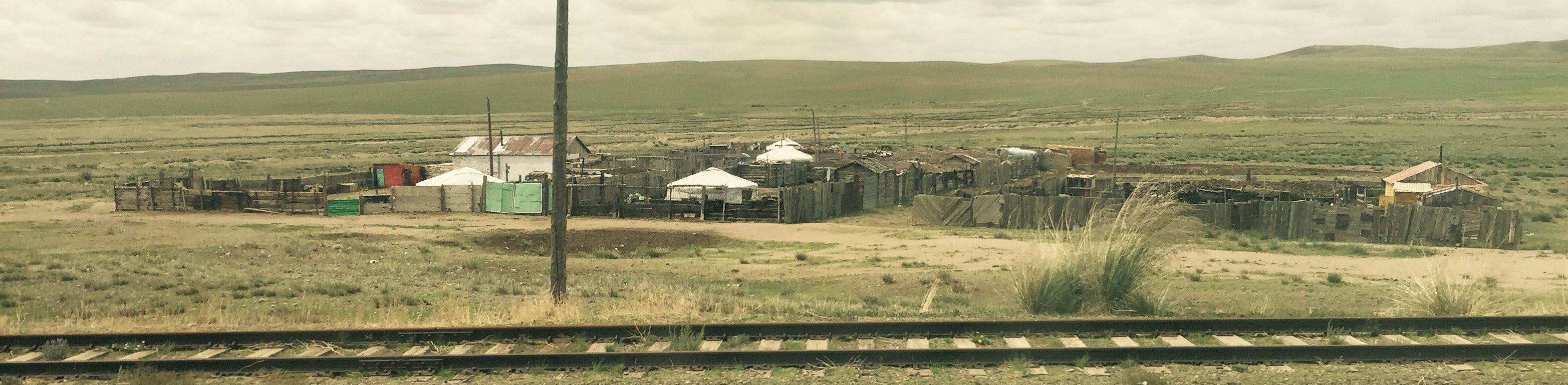
Mongolian yurt tracks

Photos, above:

1. Mongolian Yurts near Train Tracks
2. Yurt Ghetto
3. Russian Landscape
4. Russian Rural Housing

Those of you who have been choking over the number of museum visits on my blog this past year are going to get relief from the trudges through repositories of art and culture. Along the Trans-Siberian, there are few renown cultural centers, and no places to get off, at least on our itinerary. At pit stops, we haven’t wandered far from the train car, tethered to it by the time. We figure out where we can get a wi-fi signal (50% hit rate so far), and worry about missing the train. The attendants told us that there are no bells or whistles to warn us that the train is due to depart like there might be in the States. I’m not sure there are any there either. As the attendant looked at us, he cocked one eye against the sun and scornfully told Gee Kin that they dump the personal effects of missing trippers at the next police station. That thought deterred us from taking any risks.

Aside from stretching our legs at stopovers of 10-30 minutes, we have found plenty of amusement on the train. Heading out of the halfway mark along the line (technically the Trans-Mongolian Railway), we found ways to exercise: I walked the equivalent of 3 miles, or 3×5280 ft/the length of a train car of 50-60’x6=1 football field or 300’x18=100 times, or approximately an hour); Gee Kin used the hand rail for a ballet bar for his yoga and stair stepping, and I brought my PT stretchy band for muscle toning. We even danced to the Beegee and Beach Boys today  on hand-held music in our own private Idaho! It was great fun trying to come up with new ways to entertain ourselves.

The scenery has been a very good backdrop for these types of activities. We could listen to classical music with intent on our phones, learn survival Russian alphabet and phrases, and stare into the horizon for minutes on end. To describe the scenery…well let me see. After getting away from the smog of Beijing in the first four hours, the hilly mountains and picturesque terraces of Hebei Province and Inner Mongolia finally appeared. That quickly led to magnificent and stunningly clear plains and steppes of Mongolia. The pastoral views of horses, cattle, goats, sheep and camels were dotted with white puffy marshmallow yurts. The expanse of space was soothing and impressive. It gave us a reason to return to learn more about the Mongolian way of life. We hope that its nomadic lifestyle won’t disappear before we have a chance to return.

The Russian countryside first looked bleak and impovershed. Most countries don’t showcase their best along railway lines, but what I noticed was the prevalent neglect of structures. It seems that once a building was constructed, it was left to deteriorate and to let nature take its course. Many buildings looked rusted out or in need of repair. The one-story houses on flat terrain eventually gave way to more affluent, two-story Alpine style chalet buildings along the slopes of mountains.  They too seemed prone to being run down. We noticed people walking along unpaved roads with few cars. This vast country (4800 miles from Beijing to Moscow, 1.5 times the width of the US, and more than 6,000 miles on the Moscow-Vladivostok route, or 2 times the US width) would have a hard time keeping its transportation network maintained, for so few people. It is so spread out that there seems to be logistic problem in paying for its infrastructure and upkeep.

Cities are much more well endowed with mid-rise buildings, and few high rises so far. As part of my crane-spotting interest throughout the world, I was pleasantly surprised to find cranes populating the denser areas of the big Russian cities, but only a handful at best. This cannot be compared to the crazy building boom in China that I witnessed in my travels over the past year. Every major city I visited was benefitting from the internet revolution, except perhaps Russia. Everyone seems to live very simply and have to live with less. These are only impressions, and without validation from local people. Hopefully we will be able to get some perspective on this when we visit Moscow.

Our tour of train stations yielded some depressing results. A few over the top showcase-style buildings, but they were too over-articulated, with massive bulky shapes and proportions for a Western-trained eye. Wood was used for all rural and low-rise city housing and some brick, but very little or no stone or concrete structures existed. The massive woods of birch trees along the entire railway line are attractive to look at, but the only variation of the landscape is an occasional field of wheat, corn or hay. 

We turned our attention to the environment inside the train and found plenty of activity to occupy our time. I finally set up my new Macbook filing system and felt superior achievement after a few hours’ effort today. Aside from preparing my blogs (they take about an hour or so each day), posting them at station stops (results are highly unpredictable and with high drama), and an occasional short nap, we have not been bored at all. Gee Kin tells me he likes traveling with me, but I know he needs to go home to recover. He says he has work to do, but I know he is just being kind to say that.


Photos, Above, left to right: Krasnoyarsk, Mariinsk, and Novosibirsk Train Stations

Day 8a: Success and Failure in One Felt Swoop

My first glimpse waking up this morning through the window was a view of a mountain-wrapped, dead flat valley with waterways feeding Lake Baikal. Villages sprinkle the edges with single story, detached houses and proper 5’-high wooden fences succinctly staking out each owner’s territory. Its clean air and water is disrupted by a parade of toilet paper shreds populating the railway line. The pieces were all dried out, caught in the brambles, and sadly waving from neglect.

You could say it’s the Siberian town you would expect to see, somewhat bleak and tragic. Unfortunately, we are only passing through and have no impression of the liveliness or livelihoods of the people who live here. It could be completely different from surface impressions.

Yesterday produced a winner and a loser. Some of you may have already noticed my one-hour escape to Wi-Fi Heaven at the Ulan Bator Railway Station. I sang my Hallelujahs as I sent my three latest posts and added images to those that wouldn’t behave in Beijing. It was exhilarating to walk into a dead railway coffee shop and ask for Wi-fi Access, and “You can alway get what you want”, contrary to Mick Jagger. Just ask.

Immediately after our return to the train, the car attendant informed us that all the first class 2-berth compartments were fully booked out by a Chinese tour group that just embarked. So no upgrade. Wah!! That took the wind out of my buoyancy from a few minutes beforehand. What an emotional roller coaster!

Without any option, Gee Kin and his optimism kicked in. He loves to dig into the “toughing it out” adventure he had always imagined. I was grumpy. No toilet to ourselves, only the single grungy one for the car.  OK, so we were the only ones in the entire car except a late-bake single woman who mysteriously appeared in Ulan Bator. She had the nerve to occupy “our” car.

As I continued to pout, the car attendants (2 for each) tried to convince us how fun it would be to have access to the entire car (except for the invader). What’s the difference between sharing a toilet in the first class, polished wood compartments with Chinese carpet runners along the corridor and ours, anyway? 

We had carpet runners too, and even the first class ones had stretchy lumps that you tripped over predictably on the way to the dining car. And we had our “shared” toilet, full access to the shaver outlets in the wash room for recharging our devices, and hot hot hot water for tea on demand from an urn. Bedding was fine, and not much difference in quality to the embroidered upholstery. But I was sure I liked the goopy gold filigree on red version than the flat blue-on-blue plain jane in ours.

In the end, like the crazy horse that grows mature and gets tamed, I resigned myself to the fact that we are stuck in the second class compartment. Although it was not our choice by design, it is growing (more) hair fondness on my chest. Live like the locals (except no local in their right mind is doing this). Get to like taking a half-bath in the railway station mop sink (which I did). Eating doses of Instant Oatmeal packets and Chinese Noodles is perfectly tolerable for 5 days. Packaging is fun when you can rip the tops off with your teeth. 

Waiting for the customs and immigration officials to embark and do their thing certainly wasn’t any different. Between first and second class you get treated equally. After being forewarned at the border between China and Mongolia (remember the dry-docking of the cars?) between 10pm and 1am, this one should be a piece of cake. A two hour stopover from 8-10pm according to one schedule should be plenty of time for the crack team to do its thing.

Instead, we didn’t have to re-wheel. Mongolia and Russia had their act together, but China must have missed this detail on track standardization. We skimmed right through any workshop in the station straight to the barbed-wire lined border station (Naushki). Hefty drug-sniffing Russian Shepherds glazed past us, then the Brunhilde-like inspector came in. 

She did a good job investigating each and every compartment in our car. She adeptly and impressively mounted every ledge or protrusion to scale and anchor her Doc Martins to reach the ceiling of each room. She found every architectural piece of hardware used to close or hinge metal ceiling or wall panels and either opened them herself or had the compartment attendants do it. We heard her for half an hour commanding, “KAI!” for “OPEN!”. And yes, each and every one was opened and the empty space behind was thoroughly inspected.

Meanwhile, her cohort looked down below. Empty compartments were already prepared for this customs search, so lower bunks were tipped up in order for space underneath to be visible. We got to see the show for our compartment, since we had been sleeping until the border patrol arrived. The agents were courteous, but made us get up out of bed so they could “look at us”, full-height (clothing not essential) against our visa photos.

After this “interesting” experience, we were grateful that border patrol was completed. Gee Kin got his adventure, and me my experience to share.

For the foodies out there, our food improved with the Mongolian dining car. It was attached during the dry-docking, and the bad Chinese food left for the next gig. We had beef and onions, rice, and pickled carrots. Perfectly decent. Looks like a Russian dining experience is next.  The only thing we can’t figure out is when lunch is. There is six hours’ time difference between Moscow and Ulan Bator. We are traveling west. Every time we check the time, it seems to be an hour away to lunchtime. Can anyone figure this out???

Day 7: Ulan Ude (Russian Border) to Mariinsk via Irkutsk

A traveler we met at the hotel in Beijing asked us, “Why the Trans-Siberian?” It took us aback. After all this planning, it seemed an achievement just to execute. We were stunned. Hmm. A good question. So we dug deep into our memory tool chest. Surely there must be a reason that had crossed our minds decades ago. I found myself one, after some digging. “Oh”, I finally blurted. “I like trains” …”and I am going cross country on Amtrak”. It was pretty weak, until I later remembered that I worked for Hong Kong’s Mass Transit Railway System for three years during the time it was under construction. I became somewhat a railway nut during that time. Working in the monastic order can make you do strange things, like want to be like the big boys. So my railway brothers talked shop about British Railway and the London Tube like it was the state of the art. BART wasn’t exactly either, but at least it was new at the time. The British Civil Engineer who hired me told me, “we’re all guests here”, referring to the ex-pats in Hong Kong. My director, a Midlands engineer who had never been abroad before going to Scotland, found himself in Hong Kong with his wife and three kids. they could live like royalty in the Mid-Levels, send their kids to public schools in the UK, and take annual trips back home on the QE2. He reminded me that “we’re all basically “Wrailwray” men here, as a gesture of camaraderie. But despite the fogies, I did enjoy transportation planning. A recent UC Berkeley grad at MTR taught me about trip headways, modalities, and methods of predicting number of passengers. I even started to learn about all the railways in the world, both heavy gauge and light rail, and their special features. I still remember that rubber tires like the ones used in the Montreal system were quieter but prone to fires, whereas the squeaky steel wheels were more reliable. BART was never discussed because it was too new to evaluate, and there certainly was a bias toward British colonial interests. So, such is my explanation about taking the Trans-Siberian. It’s another reason for my hopeless love and fascination for wandering the world. Trains are soothing, and help you to think and reflect on life. It helps you to stop the world and get off the internet. PS. Another explanation is due: the Chinese system shut down my ability to post using Google and my WordPress hosting site. Apologies to those of you who were disappointed and could not view the images. I was unable to see the images on my end, so that was very frustrating for me. But I will repost them as soon as I get chance. Thursday, July 30, 7:30am

Day 6: Erlian to Ulan Bator

The first day ended at the border between China and Mongolia, and not Ulan Bator. It’s still another eight hours from now (6am local time) to the Mongolian capital. The customs and border patrol took only a short expected amount of time with passport inspections, but a disruptive night from 10pm to 1am was caused by the need for each train car to be retrofitted with wider gauge wheels to fit the Mongolian track system! During the stop, each car was disengaged, Chinese wheels removed, and Mongolian wheels installed. While this might sound unbelievable and hideous, it happened. The car attendant explained to Gee Kin that the tracks are 2 inches wider in Mongolia.The three hour stop allowed just enough time for 30 workers to descend on each car systematically, pound the hell out of each connection between wheel and car, move each car to the Mongolian track, and reconnect everything (about 15 cars) again!

The landscape has changed to a wide plain with beautiful, seductive lighting at this time of the early morning. As I was about to take a few shots, I saw a herd of camels! It reminded me of the Silk Road trip last year. I wondered whether these noble animals originated here or were transported from some central Asian steppe or further beyond. A good Wiki question if only I had internet.

Now about the “I” word. If you ever get this post before Moscow, it will be another miracle. (the first one was the train reconfiguration). We had heard rumors that there was internet on the train…but that was the Russian train. We are on a Chinese train. Not that there should be that big a difference, but to be honest, we chose the Chinese-run train Beijing-Moscow for chauvinistic reasons and for nominally better (or possibly worse) food. So much for that thought.

But before I talk food, let’s get to the heart of the matter. What were we thinking??? A Sunday ride through Silicon Siberia? I had forgotten how I had the shakes checking into my guest house in Dresden last year. It took a rocket scientist (oh, OK, a lab scientist) to set me up with a modem connection that he figured out was cheaper to buy at the local Fry’s for 25E than to pay 100E deposit for one through the housing agent. After that momentary fear of being off the grid, my mind lapsed. No internet, no bloggie.

So if I emerge from this trip after five days of going dark, I will be a new woman. Damn the torpedos and the internet. We are one.

The free first night’s dinner (whoo-whoo!) consisted of one bowl of rice, cauliflower, and 2 huge Chicken meatballs. The best part was sitting with 2 other travelers, German brothers from Hamburg and Frankfurt. The physicist had just been to San Francisco and the other was a marketing director for big-name brands, so we had plenty to talk about. They had interesting views of the Greek crisis and how Germany was going to deal with it.

Looking back at yesterday’s posting, I felt saddened by my draining optimism. Everything on first blush always looks good, right? A few slight technicalities… the toilets are closed during station stops, so you have to plan your peeing strategy. I knew this from the first time we traveled cross-country Beijing to Hong Kong with the kids a generation ago. Still the same. The outlet is just outside our compartment over a fold-out bench, so it would be very handy to babysit the devices as they are being charged. Oops, the outlet doesn’t work. But let’s not get cynical. We had a decent meal gratis, and there’s still hope abound for getting upgraded. Stay tuned.

Thursday, July 30, 2015, 6:40am

Day 5: Beijing to Ulan Bator

We are four hours into the first day’s adventure and I just saw the first yurt of the trip! At the same time, the Beijing smog has finally disappeared. It was indeed very ominous during the entire stay in the city, and the sky only just became decipherable as we know it. The initial mountains and abundant tunnels outside Beijing lasted for about an hour, until lush terraced fields and valleys of corn and wheat took over. The first yurt led to a wide valley and truncated concrete piers were telltale signs of a high-speed rail line underway.

The valley also reflected sparse yurt-shaped graves and modern human settlements attached to farmland. Cows, horses, goats and sheep begin to appear in small herds and power lines string the landscape as far as the eye can see. Huge stretches of flat farmland are indicative of future scenery.

Despite our four-berth compartment not being air conditioned, there are only two of us so far. From Beijing to Ulan Bator, it looks like we will be alone. Our near-disaster plan to book through Travelchinaguide left us without tickets five days before the trip, with everything booked on both ends! While there are a number of ways to book the Trans-Siberian, we chose to use the Chinese service. This may not have been the wisest, but we did. As Gee Kin discovered that the pinch point was between Beijing and Ulan Bator, we are hoping that we can upgrade from a four- to a two-compartment with a shared toilet. So far the train itself has been very comfortable and with all the amenities necessary—a Western toilet in each train car, an electrical outlet, lights, hot water, and bedding. We were given complimentary tickets for a lunch and dinner each, but haven’t ventured outside the compartment yet.

As the sun sets, we will check out dinner service and the big “I” word…whether internet service is available or not. Farewell for now.

JULY 29, 2015, 16:37.

Day 2: Beijing First Impressions

We are staying in the Northern Hutong District (Gulouyuan) of Beijing in one of the hotels preserving the traditional courtyard style residences.

A few pictures are being posted here:

1. and 2: Shop facades with spun sugar pinwheels and one-of a kind fans;

3. A contemporary noodle shop where we had our casual dinner, with “graffiti” Chinese style–neatly written post-it notes on a laundry line, notes in English and Chinese on the gyp bd.
4. Two tea cups, high-rise fashion to hold more tea, and the cutesy happy faces.
5. A beautiful retro-1930’s era entryway.

Updated: 8/6/15

A Lazy Day in Pine Valley

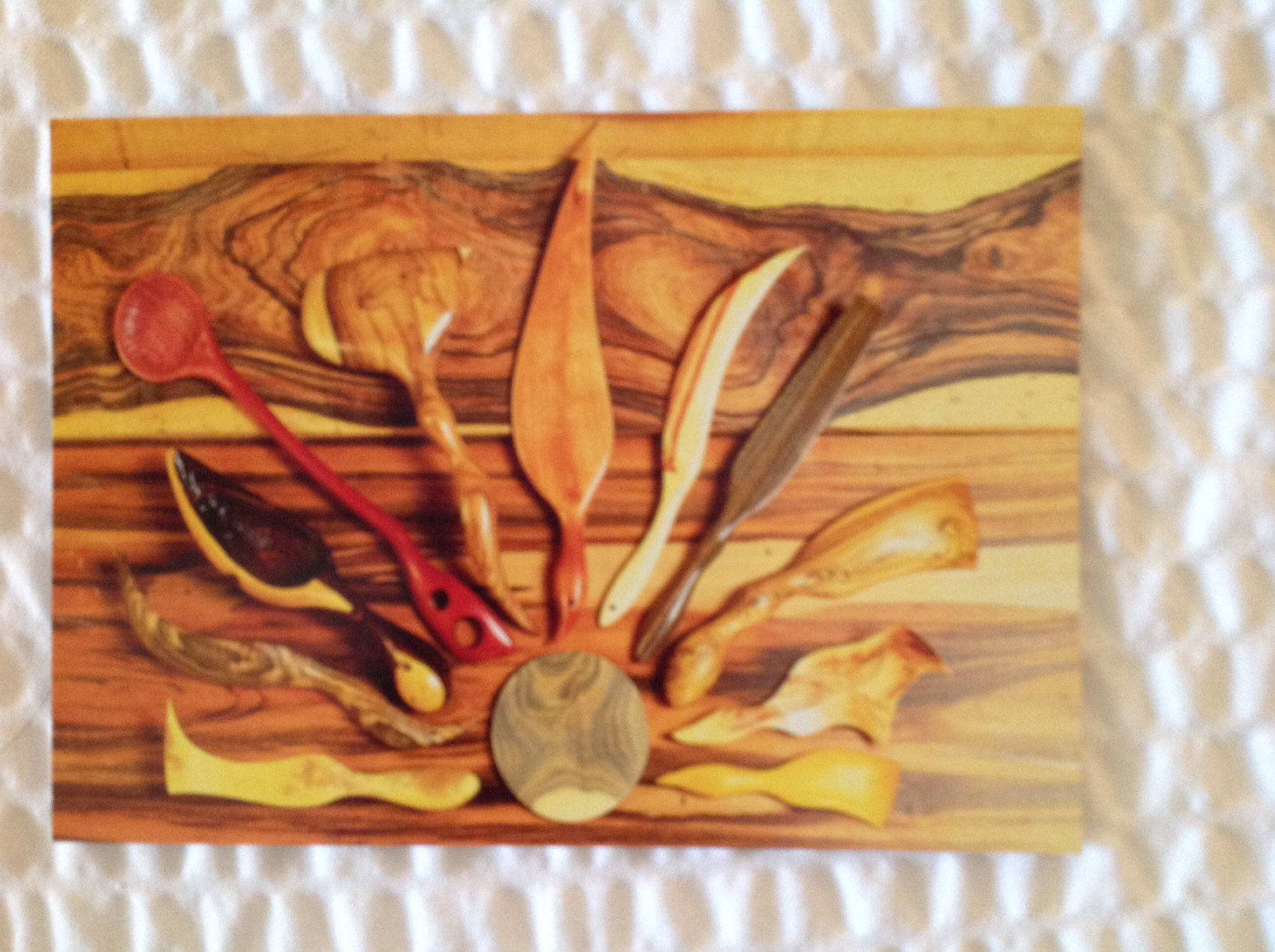
We took it easy this morning. After a leisurely cup of cappuccino, we walked to the corner of town to visit Tryyn Gallery, where the owner, Bill, hones beautiful pieces of wood into spoons. He finds the inherent beauty in each piece of exotic wood and turns each piece into both functional items as well as works of art.
imageWe got into an extended conversation about the huge bamboo section that was inside the glass display cabinet. Bill explained that the roots at the outside tip of the piece had been cut and sanded down, and that the tip was the bottom of the root. We had a difference of opinion and believed that the tip pointed up and outside. Which way do you think the tip faced–up or down? Our initial research only confused us more.

Later in the morning were taken on a breathtaking tour of Pine Valley. It is deep in the Cleveland National Forest. We followed an old fire lane up into the hills of manzanita, live oaks, sage and agave plants. The hillsides were laden with thick growth from two weeks of rain, an unusual occurrence this late in Spring season. You can see the panoramic view of the valley in the header above.

After our venture into the hills where we had walked the previous day, we made a stop for lunch at a local saloon. Not too much was going on, except that the counters were made of shellacked half-logs and the seats were even bigger sections of logs. Sorry, guys, no foodie shots available here (you are being spared). A couple of relics served (or didn’t serve) us, in an area where you could hunt, if you used a bow and arrow.

The Salk Institute, La Jolla, CA

I don’t normally like to follow raves on buildings by architects, but I am glad to succumb to this one. The Salk Institute is one of the icons of architecture and considered a sacred site by many. You can see why from the setting, the restraint of materials, and the pure forms that are executed with absolute skill and perfection.

I’ve cut and pasted the text from the website below so you can understand its mission and beginnings.

The Salk Institute was established in the 1960s by Jonas Salk, M.D., the developer of the polio vaccine. His goal was to establish an institute that would explore questions about the basic principles of life. He wanted to make it possible for biologists and others to work together in a collaborative environment that would encoura them to consider the wider implications of their discoveries for the future of humanity.

History of the Salk

Jonas Salk had a distinct vision for the Salk Institute as he worked with scientists and architects to create a new paradigm for research and collaboration. Pictured above the early 1960s, Salk worked closely on many of the construction details of the Institute.

In December 1959, Salk and architect Louis Kahn began a unique partnership to design such a facility. Salk summarized his aesthetic objectives by telling the architect to “create a facility worthy of a visit by Picasso.” Kahn, who was a devoted artist before he became an architect, was able to respond to this challenge.

For San Diego mayor Charles Dail, a polio survivor, bringing the Salk Institute to San Diego was a personal quest. Dail showed Salk 27 acres on a mesa in La Jolla, just west of the proposed site for the new University of California campus then planned for San Diego. In June 1960, in a special referendum, the citizens of San Diego voted overwhelmingly to give the land for Salk’s dream. With initial financial support from the National Foundation/March of Dimes, Salk and Kahn were able to proceed.

Groundbreaking took place in 1962, and soon thereafter the Salk Institute for Biological Studies became a reality. A few key researchers were invited to work in temporary buildings which were used while construction was under way. When the first laboratory was opened in 1963, there were five senior scientists and their research teams. This distinguished group of fellows formed members of Salk’s first faculty group and in addition to Jonas Salk included Jacob Bronowski, Melvin Cohn, Renato Dulbecco, Edwin Lennox, and Leslie Orgel. The first Nonresident Fellows selected were Leo Szilard, Francis Crick, Salvador Luria, Jacques Monod, and Warren Weaver.

During the next few years, as the Salk expanded, resident fellows (now generally regarded as professors) and nonresident fellows (appointed scientists from other institutions) together advised Dr. Salk about future scientific directions. The organization of the Institute has evolved with time to its present structure, consisting of a board of trustees, a president and CEO, an academic council, and a chairman of the faculty.

Today the major areas of study at Salk are: molecular biology and genetics, neurosciences, and plant biology. Salk research provides new understanding and potential new therapies and treatments for a range of diseases—from cancer, AIDS and Alzheimer’s disease, to cardiovascular disorders, anomalies of the brain and birth defects. Discoveries by plant biologists at the Salk pave the way to improving the quality and quantity of the world’s food supply and to addressing pressing environmental problems, including global warming.

The Institute has been supported over the years by funds awarded to its members in the form of research grants, most from the National Institutes of Health, and from private foundations and individuals. Especially important has been the continued support of the March of Dimes which, in addition to funds for the original structure, has contributed significantly every year to the Institute’s financial needs.

For more details about the history of the Salk Institute, check the website http://www.salk.edu for information about the “Genesis of The Salk Institute”. Written by Suzanne Bourgeois, Professor Emerita and Founding Director of the Regulatory Biology Laboratory at the Salk Institute.


image

Liszt-less in Weimar?

One of the true pleasures of coming to Germany is to hear great classical music, not only by inspired young musicians, but to hear performances in the composers homes where they lived. We had such an opportunity yesterday, when we attended a performance by the Hoch Schule for Musik Franz Lizst (Franz Lizst Music High School). Seven advanced piano students performed pieces by Chopin and Lizst.

Their performances were passionate and stirring. The very room where Lizst trained his students was where these students played these masters’ compositions. (See drawing room photo above, left, and dining room adjacent to drawing room, right)

Liszt Hochschule for Musik

Earlier yesterday and this evening, we attended performances at the Hoch Schule around the corner across the back alley to our hotel. We could slip into free performances by a guest harpsichordist from Prague and other Hoch Schule cello students. What a treat it was to hear high quality music so conveniently located–virtually in the back yard–and for free! Photo above shows Festival Hall where performances are held)

This morning before our activities in town, we took a brisk walk 4 km. to the Belvedere Castle outside of town and back. The bus easily could have taken us there, but we decided to get some exercise and see the countryside. We walked through the Park Ilm, another historic UNESCO world heritage site. There are about a dozen sites in Weimar that form a collection of UNESCO-recognized cultural treasures.

Later in the day, we visited the Schiller House. Although Schiller wrote the stories about Don Carlo and William Tell, we are more familiar with the music set for them by Verdi and Rossini. Beethoven also wrote his Ode to Joy based on the poem by Schiller. An exhibition at the Schiller House showed how instrumental the Artist Lucas Cranach and his son were in promoting the teachings of Martin Luther through their woodcuts, graphic arts, and paintings.

Our evening was topped off by a performance at the Weimar Hall with a solo pianist performance. (see header and photo below). It was a full day that filled our brains with deep thoughts, our ears with beautiful music, and our eyes with inspiring visions. We were definitely not bored or looking for amusement today.

Lizst Hochschule Festival Room