Category Archives: 2015

Day 17b: An Impressionistic Kiss and Make-up with the Hermitage

Something was amiss in our visit to the Hermitage. We were told that the Impressionist paintings had been moved to another building. After the unpleasant visit on the first day, we were discouraged from going any further.

We decided to return today. The newly renovated building, in all its splendor, contained works from the Shchukin collection that included most of the French Impressionists and many more. The experience was completely different. We could take our time, enjoy each piece of work at our own leisure, and be among very few tourists or other visitors.

The General Staff Building is outside the Hermitage complex and was opened in June this year. They are still trouble shooting the building, so few people seem to have any information on what it is. This worked to our advantage, although there were no audio guides available. A visitor center was being prepared to handle a much larger volume of visitors, but it had not been implemented in the Hermitage complex yet. We appeared in the middle of this transition.

Here are a few of my favorite Matisses and Picassos from the Shchukin collection. They are absent titles and dates, except for those where I made notes.


You can read more about the collection here: https://en.wikipedia.org/wiki/Sergei_Shchukin.

Period interiors were impeccably detailed and displayed:

A separate Art Nouveau exhibition displayed gifts to the Russian Royal Family:


IMG_7535

Day 17a: Natives Sons and Daughters of St. Petersburg

Based on comments I received about Shostakovich and Dostoyevsky, I became curious about other famous people from this historic city.

Here’s a Jeopardy Quiz for you on a few other famous people born in St. Petersburg. Do you know the questions to these answers?

1. As a prima ballerina, her signature performance was the Dying Swan.
2. Founder of the New York City Ballet
3. This political leader served under Vladimir Putin and succeeded him as president of Russia in 2008
4. Author of the Fountainhead and Atlas Shrugged, she promoted the philosophy of objectivism
5. A Russian novelist and critic known for such novels as Lolita

Doesn’t this give you a better perspective on these individuals and how they accomplished such remarkable achievements?

Bonus Answer: he was born in Leningrad, today’s St. Petersburg, on October 7, 1952.
image

Day 16: St. Petersburg Architecture

Let’s take a look at St. Petersburg’s finest offerings. You can click on photos to view full-size images, and hover over each to read captions.

Above photos: St. Petersburg’s first and foremost flagship department store, similar to Harrods in London, with Art Nouveau Interiors

Photos, below: Original Singer Store (from US Singer Sewing Machine fame), now a book store, with Art Nouveau traces*

Photo, below: DLT Department Store, St. Petersburg’s newest and flashiest shopping center, ca. 2014
IMG_7442
And a potpourri of street scenes, below. For Julianne and Melissa from Dostoyevsky’s 19th C. apartment building, “Here’s lookin’ at you kids”.

*excerpt from Wikipedia
The famous Singer House, designed by architect Pavel Suzor, was built in 1902–1904 at Nevsky Prospekt in Saint Petersburg for headquarters of the Russian branch of the company. This modern style building (situated just opposite to the Kazan Cathedral) is officially recognized as an object of Russian historical-cultural heritage.

Day 15: The Hermitage is not for Hermits

The Hermitage is the revered museum in the world. There was always this nagging voice in the background after you’d “done” the Louvre, that there was another bigger and better collection somewhere east. For having acquired and displaying all the famous Western schools of art, from the Dutch Landscapes to Spanish portraiture to Italian Renaissance masters and beyond, the Hermitage is the big Kahuna.

Here are a few of the best. This is totally subjective, so you are in my hands.

Dresden Neumarkt, Bernardo Bellotto, 1720

Next… the rooms.


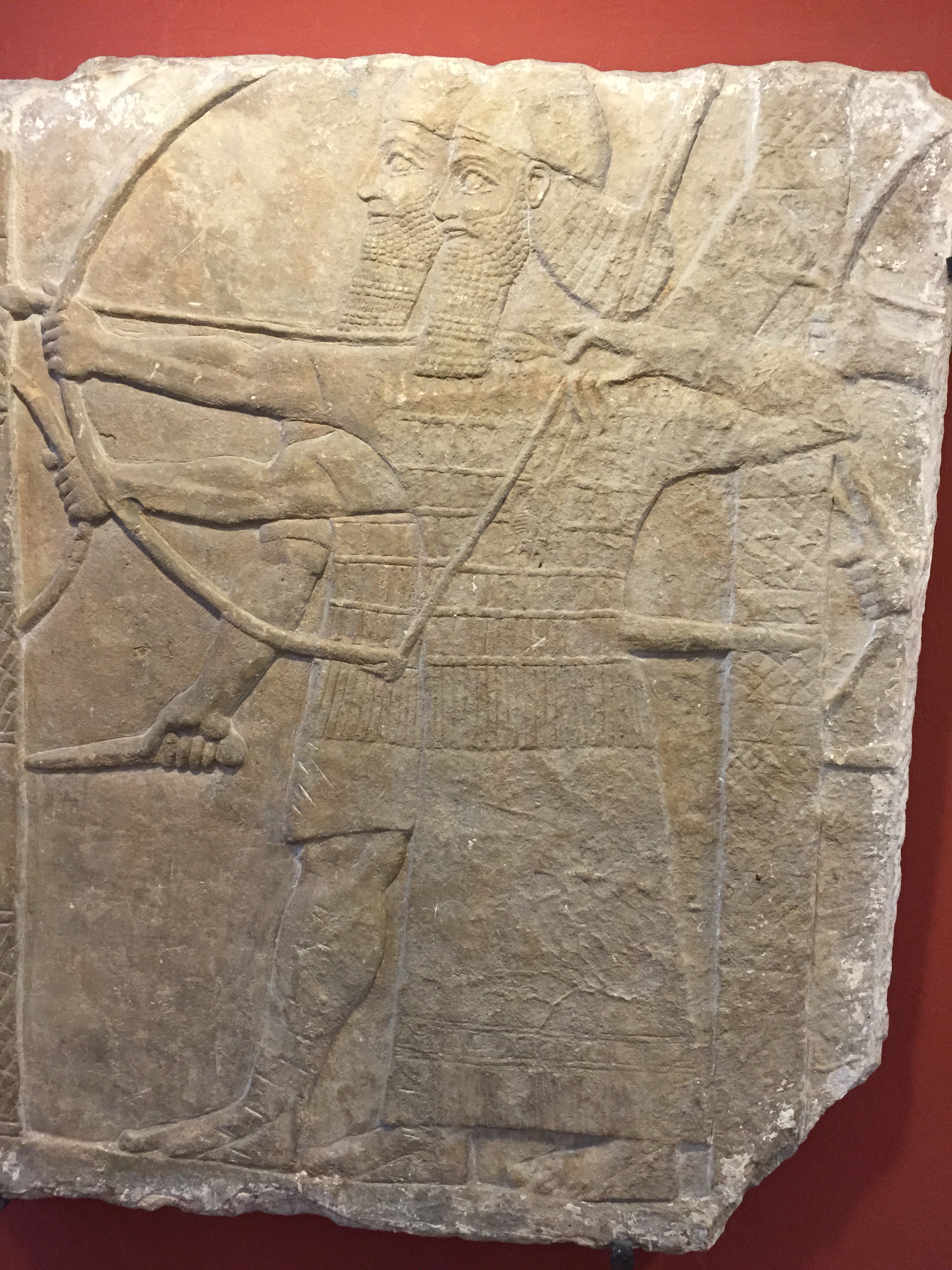
Then…my favorites. These have nothing to do with what’s important in history, but more to do with what I find unique from other museums I have seen. The only one I can relate to is the Pergamon Museum in Berlin. It had the replica of the Ishtar Gate there. It reminded me of the early beginnings of Western Art and examples of pre-European Art that I had never seen before.


IMG_7397
For me, museum visits can be a religious, sublime experience. On the less raptured end, they can be pleasant visits where you come out feeling more informed or better connected to a particular culture. Once in awhile, it can be totally hideous. Our visit to the Hermitage unfortunately was in the latter category.

Gee Kin and I tried our best to tackle the Hermitage in a respectable way. However, the huge volume of cruise ship and foreign tour groups made it nearly impossible to see and enjoy the collection. There were more people taking selfies and photos in front of paintings than I can remember. I used to be annoyed by those using audio guides and standing in front of paintings as they listened to commentary. And I was one myself.

But these swarms of tourists take museum going to a new level. It makes you rethink your entire education and reason for going to museums in the first place. I have been to plenty of museums by now, and know that the quiet times are the best for viewing. But we failed to plan out our strategy, and at a moment of weakness decided to go in the afternoon instead of waiting for the following day.

And as for the experience….well, here are a few photos of what we went through to battle the crowds for a piece of the pie. Not pretty. These were were the forged battles that took place to see and appreciate the revered art I had learned as an undergrad. The pictures trace our experience– innocuous beginning, then quickly deteriorating to life in hell. H-E-L-P!!!!


In the end, I was satisfied with four hours and 4 miles (calculated on my Apple Watch) in the museum to see the pieces I did. As usual, Gee Kin had more questions than answers. His favorite piece was indicative of his experience at the museum.(See image below)

IMG_7395

Aside from his getting chronic museum sickness, he continues to battle his problem without medication. Gee Kin thinks there are definitely better ways to give tourists without art training a quality experience.

When we took the kids through the Louvre a generation ago, I decided the best way for them to really see the voluminous collection was to focus on a few pieces that they could remember. I made a “scavenge hunt” of sorts for them. I seem to recall that one of the earliest and amazing internet sites was the material at the Alexandria Library in Egypt and the extensive art works that were catalogued there and available to the public. Remember Netscape and Mosaic, anyone?

On arrival at the Louvre, we broke into two teams and set a time limit and meeting point. Find the Venus of Milo, the Mona Lisa and a handful of other notable pieces. Gee Kin and I led our teams, ripping through the museum, literally racing. It didn’t matter what others thought of us. We wanted to win! Once we could find the handful on the list, we were exhilarated. Our girls vividly remember the fun we had at the Louvre, and the pieces they saw. Thankfully, they have each taken proper art history classes and got an understanding of the artwork they needed than from their schlocky mother. Melissa even majored in art history, so it couldn’t have been that bad an experience!

Day 14: Moscow Drum Roll: Market and Modern Art

Dorogomilovsky Market early in the morning was Gee Kin’s pick today, followed by mine–the Tretyakovskaya Modern Art “Gallery”. We managed to take the subway three stops to our first destination without getting lost. The subway had a dizzying amount of subway names–all in Cyrillic–so you have to master the alphabet or you are “TOCT”. Gee Kin showed rapid improvement from his initial blundering, “What’s that alphabet called–Acrylic?”. I’m including the subway station menu, that requires good eyesight in addition to calisthenic tongue skills.

As a “wrailwray” kinda gal, I love cracking the system. We stepped into the huge escalator tubes of travelers, stretching endless miles deep down into the bowels of the Moscow River and beyond. These were the longest escalators we have seen anywhere–they felt like at least 3 to 5 times any of the deepest tube station in London. The Russian engineers liked doing things bigger and better, and this was another showcase opportunity. We sliced and diced the station names like a Benihana master chef would, and deconstructed each one letter by letter. We followed every sign religiously. We even avoided going down one-way streams and didn’t make elbow contact with anyone.

The cars were spotless, not a crumb or grungy morning coffee spill in sight. Like all good citizens, the Moscovites rushed swiftly, politely and silently. Gee Kin noticed that commuters zoned out with fewer hand-held devices and opted more for books and magazines than their Beijing or San Francisco counterparts.

As expected, the market was also a bustle of activity, with carts being swung and navigated every which way down aisles beyond safe speed limits. You can see our fascination with an array of some familiar but also new sights: furry rabbit’s feet good luck charms, Korean kimchee specialties (a note about that later), racks of lamb and carcasses, 8 piglets without blankets, bottled and pickled everything (including grass mushrooms Gee Kin loves), and on and on. It reminded me of the bigger but less varied market in Tashkent from last year.

Next, our day was traumatized by a trip to the Modern Art “Gallery”–along the Moscow River. That was the only bearing point for the humongous site. The monumental museum (and I mean MONUMENTAL…the size of an Olympic stadium…was so big and dwarfed human context so much that it became a nightmarish experience. We dragged and slogged our way though miles of artwork. Despite the noble effort to catalogue modern art in the Soviet Union from pre-Bolshevik days to today, the museum and its fascinating history was lost and unappreciated due to the vastness and lack of selectivity of the material. Its attempt to show “everything in the warehouse” (purportedly 170,000 pieces) made it mind-numbing and exhausting.

This frustration may have been caused by sensory overload from the earlier market visit. Just getting to the building from street to front door was a chore. The gallery literally looked like a stadium complex. We weren’t quite prepared for this mental and physical workout. If you go there, be sure to dedicate one entire day for a visit. Better yet, a week. Bring your camp stove and tent but don’t get caught.

Don’t misunderstand my message. I did love the artwork. I was inspired by the sculpture more than the paintings, though. They all cried for attention. Because there were fewer pieces of sculpture, you could focus on them more easily. I found the predominance of woman’s bodies depicted in real, human ways very moving. They weren’t idealized as Venuses. They were reflections of real women, of mothers, sisters, workers. I even found a few that looked like me! Their bodies “hung out”, but their faces spoke volumes.

I couldn’t help but think about the stunning ballet performance by the prima donna from the night before. She could perform so flawlessly, and so dramatically. Her face and body spelled all the agony and torture of the dying Violetta. The sculpture of woman and child spoke to me in the same way, as did the other pieces that were chiseled and sparked to life from stone.

Aside from a few Chagall pieces that I could detect, it was difficult to find any recognizable names. We were on the lookout for a cache of Matisses, but these were all Russian artists (Chagall was a Belorus-born French artist). The French Impressionists are elsewhere in Moscow, not here, in this national repository.

And of course, near and dear to my heart, design. See my favorite pieces of artwork in the entire stadium: calligraphy on beautifully crafted plates.

Note regarding Korean community in Moscow: some came here before WWII. They were later purged to Uzbekistan, and a small population still lives there.

Day 13: Moscow Camera Roll Continued

Yesterday’s events yielded far too many photos to post. I have chosen among my favorite children and am posting them for your viewing pleasure below. Moscow has been an amazingly inspirational visit–far too few Americans have been here to partake in its rich history and treasures. I feel badly that I didn’t come sooner.

And for Moscow by Night, here are a few shots of Moscow after a brilliant performance of “La Traviata”, the ballet, we caught. Moscow is totally safe in the tourist areas we walked at night, in beautifully balmy summer, late light weather. The lights really showcase the architectural detailing of each building in its pride and splendor.

And finally, for the foodies, our dinner menu. We tried the Holodet, an aspic of chicken and duck with dill that was delicious! Apparently, it is a local creation. You can read about its history on the menu page.

It’s probably worth mentioning that I have been revising and cleaning up the early Day 1-10 posts. I renumbered the days in successive order from the beginning, added photos that should have been in the posts, and fixed typos or information that was incorrect.

If you see any major bloopers, please email me and let me know! The website should be more stable going forward, once I am in Europe and the States, so hopefully you won’s see the fits and starts from the beginning of the trip. Once again, my apologies to those who may have been confused by incomplete information.

Thanks to all for the comments and support. Once Gee Kin returns to the US, I will be traveling on my own. It feels like you are all traveling with me, especially when I hear from you! It keeps me motivated and I keep you in mind when I am looking for interesting things to post. I hope they capture your attention too!

Day 12: Moscow Tour Time

Red Square
Red Square
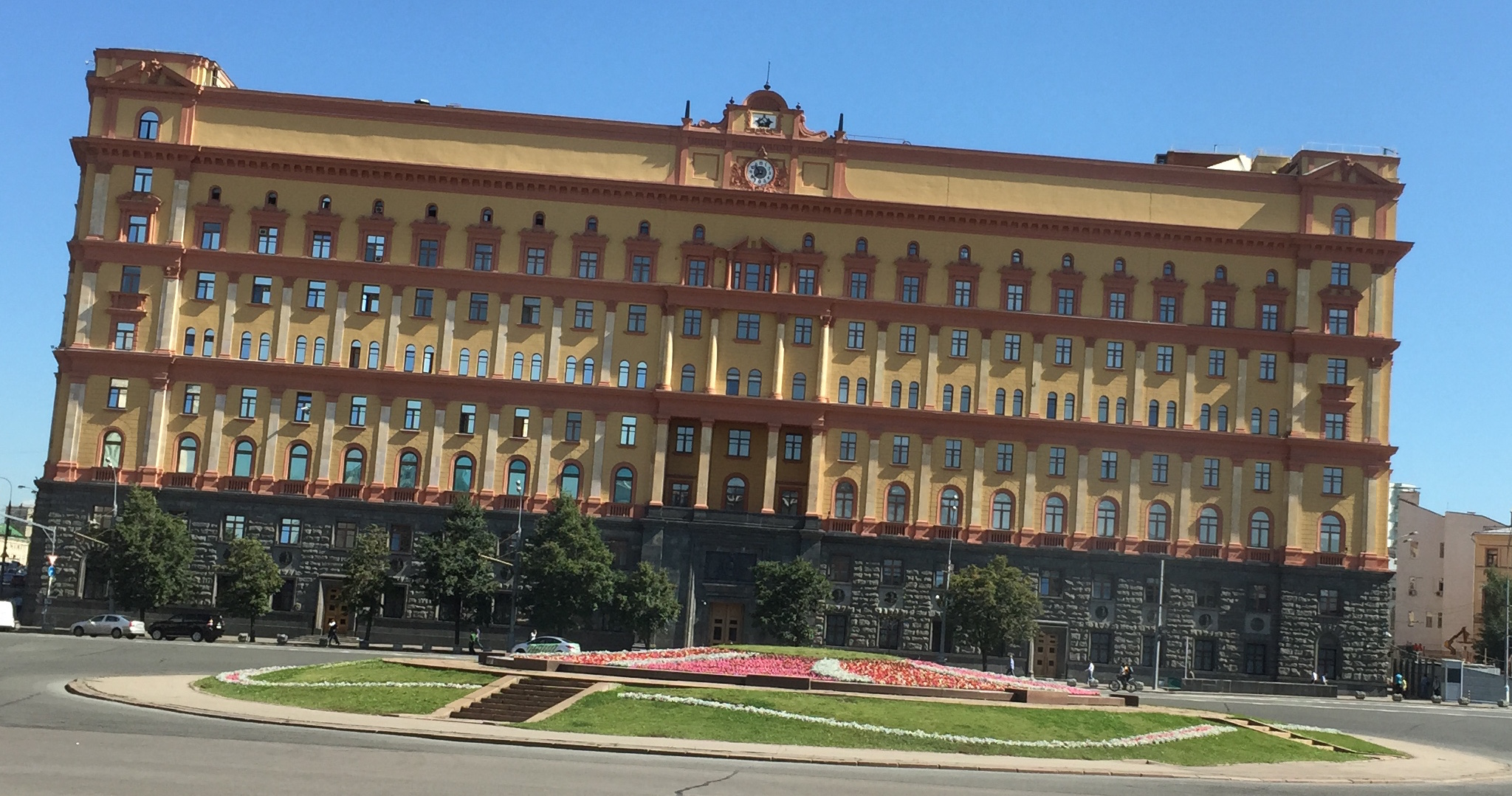
KGB after a bottle of vodka

Yesterday was a busy “play tourist” day, covering most of Red Square including the Eastern Orthodox St. Basil’s Cathedral, with its colorful onion domes; one of the most beautiful parks in the world just outside the Kremlin walls (see header if it is current); and Tym Department Store with its turn-of-the-century splendour (it has an enclosed galleria like the one in Milano).


Meals have been incredibly exciting and contrary to stereotypical notions of Russian food. Like most big cities around the world, you can find state-of-the-art contemporary food for nouvelle tastes. We found a great lunch place near the hotel called “Fresh”, with inventive vegetarian dishes. I had a salad of quinoa, avocado and greens, and Gee Kin had one with buckwheat, tomatoes, grilled spinach, sweet potatos, and mung bean sprouts. Both were served with olive oil and a delicious miso/rice vinegar, soy sauce, and mint dressing.

For dinner, we ventured into the Arbatskaya area and landed on an original crab-and-caviar menu with Prosecco for under $50! From Kamchatka, the crab is Russia’s equivalent of the Alaskan King Crab. Gee Kin thinks perhaps the oil boom brought on alot of high end quality food demands but the ruble devaluation has made the prices here a bargain. Come soon while Russia is on sale.

See pop-up captions above to sights we visited today.

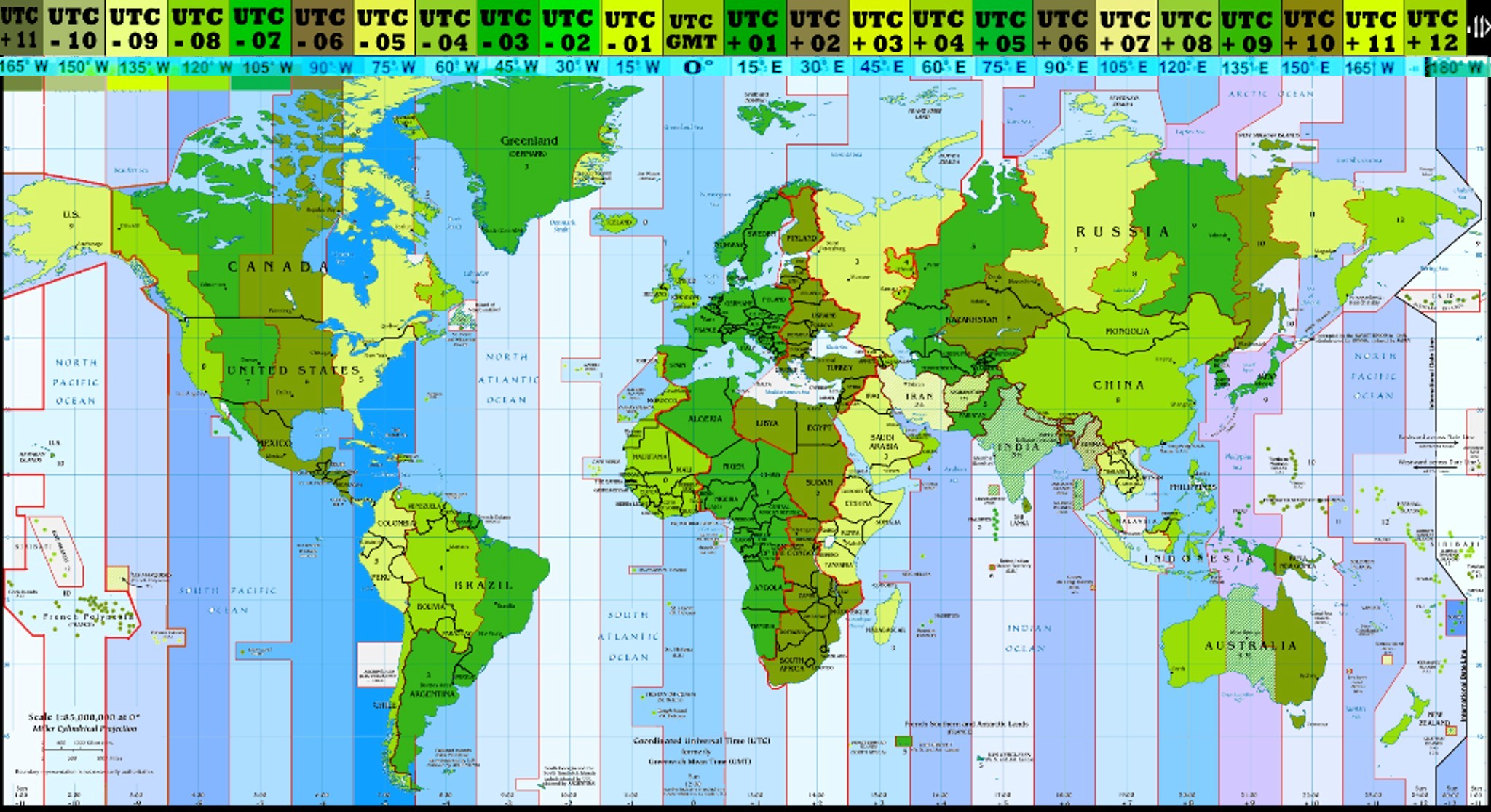
Follow up to my own question the other day: why does it seem so long to lunch time on the TME and always an hour away?

Take a look at the up to six time zone changes, from Beijing to Ulan Bator in Mongolia, then across Siberia to Moscow. Many of the westernmost cities such as Kirov, Novgorod, and Ekaterinaburg along the train trip follow Moscow time to avoid confusion. However, as the crow flies westward, the time zones are less dramatic on a train than those when flying. Jet lag is reduced, but the time warp messes with your brain and metabolism like a slow drag. Also notice how tidy (and tiny) our US times zones are compared to those in Russia. Russia visually looks and feels alot like Canada somehow when you compare the two countries on the map.

World Time Zones
World Time Zones

Day 11: Moscow Smackers

I am posting a few photos of our first half-day arrival in Moscow. The food photos were taken near the Bolshoi Theatre along Tsverskaya and Bolshaya Dmitrovka.

For the foodies:

Photos, above:

1 and 2: Our dinner at a nearby cafe, yielding yummy fettucine versions with tomatoes, pine nuts and arugula, and eggplant, tomatoes, and crab;

3. Blackberry mousse with chocolate and strawberry/kiwi/truffle tartlets along with dinner reading;

4 and 5: Pastry shop with blackberry deep dish pies and piggie rolls with apple filling (my breakfast pick)

6. Chilled caviar on tap with black sturgeon (6000 rubles–you work out the exchange rate) and red salmon roe for about 2000 rubles

For the curious:

Day 10: Time on TME or Stop the World…

I wanted to get off…so was it worth doing the TME (Trans-Mongolian Express) from Beijing to Moscow? I explained in an earlier post about my pursuit of trains and train travel initiated by a stint at the Hong Kong Mass Transit Railway Corporation. Sir Edmund Hillary, when asked why he was climbing Mt. Everest, said, “Because it’s there”. While this obviously cannot compare to climbing Everest, taking the TME is certainly an achievable goal by any able bodied individual with a penchant for the absurd. In a good way.

For starters and the curious, the best intelligence on this venture is through the website http://www.seat61.com. The author, whom I believe is British, has mastered every angle of all the trains throughout Russia. He gave me all the information needed to help me decide that this was worth it…for me and Gee Kin.

OK, so pros and cons.

First and foremost, you get to spend time with someone. Five and a half days of dedicated time will flush out your true selves and your relationships, good or bad. That’s a good thing.

Secondly, you get to put things in perspective. Food and pooping are important. Seeing early sunrises out the window with the sun and the moon at the same time with the world whipping by. In Chinese. In Mongolian. In Russian. Giving yourself time to look at colors of the sky when you never bothered to before. Making time of time.

Third, it’s a curiosity satisfied. The vast continent linking Asia and Europe caused and enabled human migrations and wars to be fought. Humans have stepped where I am stepping to create this civilization as we know it. The German traveler we met informed us that Ghenghis Kahn had traveled from Beijing to today’s Steiglitz in Germany. That’s a lot of horseback riding. The TME is a pretty good way to trace his tracks. Ghenghis-baby got the benefits of belonging to all of the above too.

Cons, well can’t think of too many for the big picture. A lot of small stuff, but why sweat it?
Yeah, there’s a few weird cultural inconveniences and this is not for anyone. Themanincar61 best describes these.
In the final analysis, I heard myself uttering more than once, “this trip is already halfway there?” And “I don’t want it to end!” We are already talking about Vladivostok to Ulan Bator via Korea or Japan. Overall, it must have been a good decision.

Photos above:

1. Birch woods along the Trans-Siberian-Mongolian Express
2. Endless birches by moonset

Day 9: Scenes from a Marriage of Landscapes

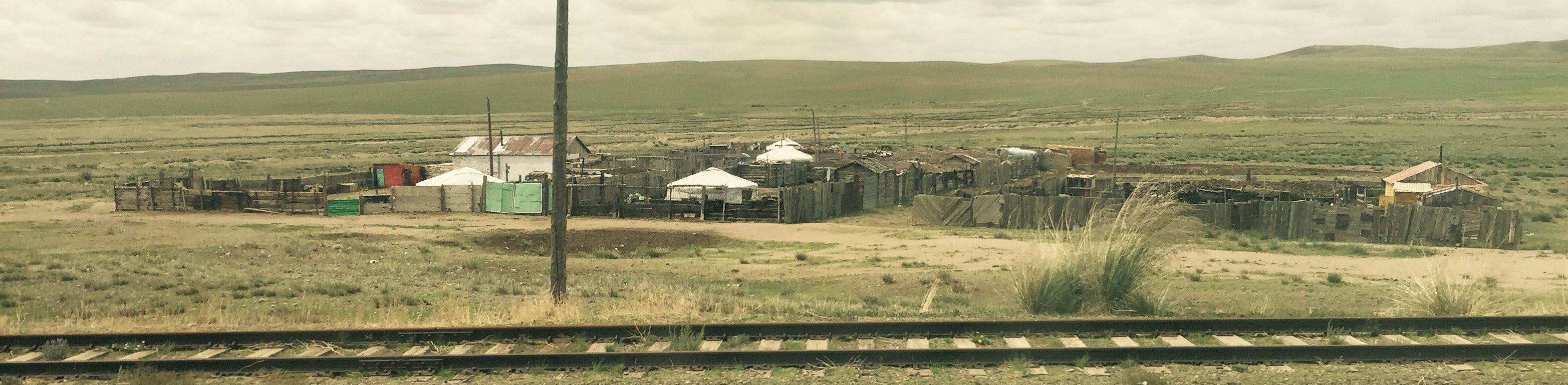
Mongolian yurt tracks

Photos, above:

1. Mongolian Yurts near Train Tracks
2. Yurt Ghetto
3. Russian Landscape
4. Russian Rural Housing

Those of you who have been choking over the number of museum visits on my blog this past year are going to get relief from the trudges through repositories of art and culture. Along the Trans-Siberian, there are few renown cultural centers, and no places to get off, at least on our itinerary. At pit stops, we haven’t wandered far from the train car, tethered to it by the time. We figure out where we can get a wi-fi signal (50% hit rate so far), and worry about missing the train. The attendants told us that there are no bells or whistles to warn us that the train is due to depart like there might be in the States. I’m not sure there are any there either. As the attendant looked at us, he cocked one eye against the sun and scornfully told Gee Kin that they dump the personal effects of missing trippers at the next police station. That thought deterred us from taking any risks.

Aside from stretching our legs at stopovers of 10-30 minutes, we have found plenty of amusement on the train. Heading out of the halfway mark along the line (technically the Trans-Mongolian Railway), we found ways to exercise: I walked the equivalent of 3 miles, or 3×5280 ft/the length of a train car of 50-60’x6=1 football field or 300’x18=100 times, or approximately an hour); Gee Kin used the hand rail for a ballet bar for his yoga and stair stepping, and I brought my PT stretchy band for muscle toning. We even danced to the Beegee and Beach Boys today  on hand-held music in our own private Idaho! It was great fun trying to come up with new ways to entertain ourselves.

The scenery has been a very good backdrop for these types of activities. We could listen to classical music with intent on our phones, learn survival Russian alphabet and phrases, and stare into the horizon for minutes on end. To describe the scenery…well let me see. After getting away from the smog of Beijing in the first four hours, the hilly mountains and picturesque terraces of Hebei Province and Inner Mongolia finally appeared. That quickly led to magnificent and stunningly clear plains and steppes of Mongolia. The pastoral views of horses, cattle, goats, sheep and camels were dotted with white puffy marshmallow yurts. The expanse of space was soothing and impressive. It gave us a reason to return to learn more about the Mongolian way of life. We hope that its nomadic lifestyle won’t disappear before we have a chance to return.

The Russian countryside first looked bleak and impovershed. Most countries don’t showcase their best along railway lines, but what I noticed was the prevalent neglect of structures. It seems that once a building was constructed, it was left to deteriorate and to let nature take its course. Many buildings looked rusted out or in need of repair. The one-story houses on flat terrain eventually gave way to more affluent, two-story Alpine style chalet buildings along the slopes of mountains.  They too seemed prone to being run down. We noticed people walking along unpaved roads with few cars. This vast country (4800 miles from Beijing to Moscow, 1.5 times the width of the US, and more than 6,000 miles on the Moscow-Vladivostok route, or 2 times the US width) would have a hard time keeping its transportation network maintained, for so few people. It is so spread out that there seems to be logistic problem in paying for its infrastructure and upkeep.

Cities are much more well endowed with mid-rise buildings, and few high rises so far. As part of my crane-spotting interest throughout the world, I was pleasantly surprised to find cranes populating the denser areas of the big Russian cities, but only a handful at best. This cannot be compared to the crazy building boom in China that I witnessed in my travels over the past year. Every major city I visited was benefitting from the internet revolution, except perhaps Russia. Everyone seems to live very simply and have to live with less. These are only impressions, and without validation from local people. Hopefully we will be able to get some perspective on this when we visit Moscow.

Our tour of train stations yielded some depressing results. A few over the top showcase-style buildings, but they were too over-articulated, with massive bulky shapes and proportions for a Western-trained eye. Wood was used for all rural and low-rise city housing and some brick, but very little or no stone or concrete structures existed. The massive woods of birch trees along the entire railway line are attractive to look at, but the only variation of the landscape is an occasional field of wheat, corn or hay. 

We turned our attention to the environment inside the train and found plenty of activity to occupy our time. I finally set up my new Macbook filing system and felt superior achievement after a few hours’ effort today. Aside from preparing my blogs (they take about an hour or so each day), posting them at station stops (results are highly unpredictable and with high drama), and an occasional short nap, we have not been bored at all. Gee Kin tells me he likes traveling with me, but I know he needs to go home to recover. He says he has work to do, but I know he is just being kind to say that.


Photos, Above, left to right: Krasnoyarsk, Mariinsk, and Novosibirsk Train Stations