Tag Archives: Architecture

Day 48-49: …They’re Taking Me to Marrakech…

When we were ferried out in a bus to the flight to Marrakesh at the Frankfurt Airport, I already sensed that the trip was not going to be a run-of-the-mill commuter. Instead, we ended up outside a hangar where planes were being repaired, and the lone plane outside looked as if it had been grounded for bad behavior.  The airport stretched for miles as far as the eye could see, between the Baltic and the Alps. I never realized that an airport could be THAT big, but Frankfurt was, like all German things, serious business.

We took off and landed three hours later to an another immense airport. The new Menara Airport, next to its old one, was so vast and empty that you wondered if they hadn’t put several square miles of the three largest airports in the world together and renamed it Menara. It was indeed a beautiful architectural masterpiece. Hopefully by a local architect. Regardless, it was impressive and ready to compete with Hong Kong, Paris or New York for tourists.

If you are in interesting places, it won’t be surprising to find that you are in a UNESCO world site without knowing it. That’s what happened here. Without trying, I discovered that the Medina of Marrakesh is indeed on the list. The history, the Islamic significant buildings (madrassas, mausoleums and mosques) and souks, or markets, all contribute to its status.

On an initial walk around the neighborhood of the hotel where we stayed, here were a few of the sights and sounds:

The Madrassah Ben Yousef was one of the earliest institutions of higher learning established in Marrakesh, where the doctors, lawyers and mullahs were trained.

The guilds within the market area preserve traditional crafts such as tanning, carpet weaving, metalwork, woodwork, and making argan oil and other pharmaceuticals for remedies.

The doorways are significant entry points through walls and into private spaces. Beautiful courtyards lie beyond reach for the public pedestrian. My guide explained, that after you arrive at someone’s home, you announce your presence. If they do not answer, you are never allowed to enter beyond the doorway, even if the place is accessible. That would be considered a breach of trust.

After a walk around the neighborhood on my own and a guided tour of the souk (market area later in the morning, I participated in a hands-on cooking class at the Clock Restaurant all afternoon. Its famous camel burger was on the menu, but we learned how to make tame versions of traditional dishes that included harisa soup, chicken tagine, eggplant caviar, and biscuits with dates.

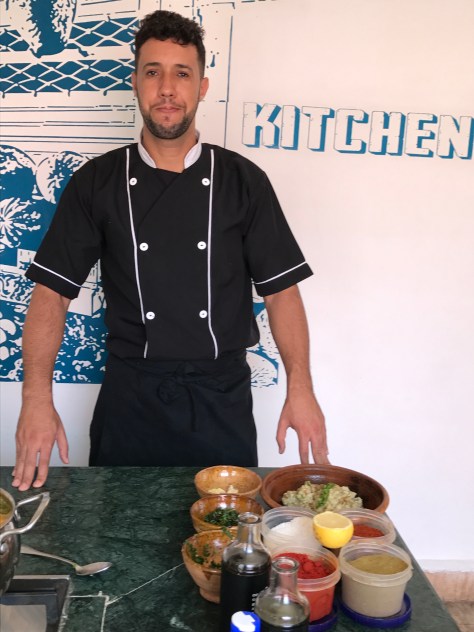
And the Chef de Cuisine:

IMG_8204

At the end of a very busy day, I could escape to my suite in the historic Riad Dar Mouassine (also photo featured above)

Tomorrow: On to the Drawing Boards!!!

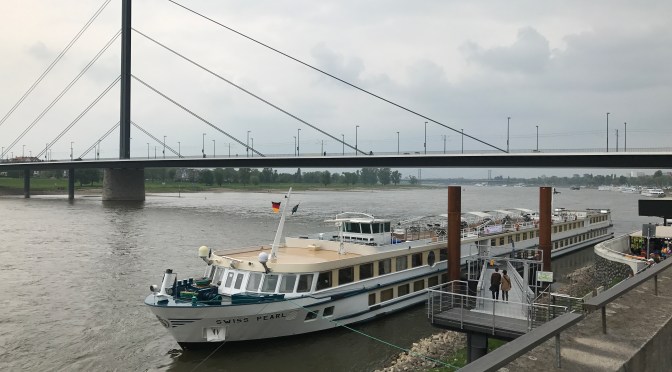
Day 39-43: Dwarfed in Düsseldorf

IMG_7673
Frank Gehry’s Media Hafen along the Rhine

After learning about all the fairy tales in class to conjugate the past tense in German, I was wondering if I hadn’t shrunk myself. At the place where I am staying, the owner trains horses and is about 6′ tall. She fitted out the apartment to suit her height. The kitchen table is at my chest height. Standing up (because there are no chairs this high, not even bar stools), I can slurp soup directly from the bowl on the table top without having to lift it.

I also need a stool to get to the bottom shelf of the overhead kitchen cabinets. I wonder if I’m not going to face an avalanche of dishes stored over my head every time I reach for one. It’s a pretty funny scene after the third or fourth time around when I try to cut corners. I really feel like a dwarf.

Speaking of dwarves, we learned all about Grimm’s Fairy Tales, Snow White, Sleeping Beauty, and Little Red Riding Hood in my German class. Don’t forget that these stories all come from Germany. The Schwarzwald, or Black Forest, isn’t far from here either. I always thought that the stories had a dark and ominous tone to them. I never understood why little kids were always getting lost in the forest. But not to worry. Walt Disney borrowed them, sanitized them, and made them safe harbors for the Disney Empire.

S-L-O-W Living

We talk a lot about slow food but not slow living. I have spent a lot of time meandering through parks here, partly because you run into one in any direction before you know it. The city parks are incredibly accessible, well-maintained, and beautiful here. Because Dusseldorf is along the banks of the Rhine River, it is relatively flat. A lot of bikes travel at a reasonable pace and share the footpath with pedestrians. It reminds everyone to slow down. Maybe it’s time to think about slow living.

Here are some views of one of the beautiful parks in the heart of the city.

I’m blasting a series of shots of buildings, sights, and details here:

Below: Daniel Liebskind’s masterpiece of the Ko and Shadow-Arkaden, a mixed use office and retail complex. The exterior on the Nordliche Dussel (a small lake) side is mesmerizing. The rear wavy-gravy houses Apple and Tesla, and has a great plaza for people-watching. I even managed to break out pen and paper to do some sketching.

Now I know and agree why Düsseldorf is deemed one of the ten most livable cities in the world.

PS. For those of you in San Francisco, you can see “Young Goethe in Love”, a great movie classic, at the Goethe Institute Thursday, May 25! It’s not too late! Check it out!

Day 26-31: Do So in Düsseldorf

I’m finally getting around town and am starting to like this place. There’s a reason for it being in the top ten livable cities in the world: a vibrant economy, clean streets, energetic people, and lots of historic and cultural sites to visit. What’s not to like?!?

Sunday Strolling along the Rhine is a Dusseldorf must-do, and a beautiful one at that. Its promenade is one of the longest and prettiest that I have seen anywhere. Here’s a snippet of the casual ambience, combined with a Sunday afternoon book fair. Of course everyone reads books here!

Many of my friends are astounded by my staying power for German culture. It could be regarded as passionless rather than passionate, dry as opposed to juicy, tired instead of energetic. To me, they are all the positive words I used.

My deep respect for the technical foundation of Germany was obvious to our family friend in Bath.  He knew exactly why I come here, and cited the Bauhaus before I could claim the catch phrase. Even though he can’t claim to be as obsessed as I am, he’s close to being an architect in mind and practice. Judging from his beautiful home in Bath, he already manifests an architectural way of thinking and living.

I’ve written about this in great detail in the past, but for newcomers, I’ll summarize three reasons, well actually, four, why I come to Germany every year:

1. To learn the second language I started in high school, fell in love with (after 5 years of loving French), but never had enough time to pursue;

2. To develop my love for art and science in architecture, and to savor Germany’s application of art history and technical ability together;

3. To learn and follow opera in German.

4. An extremely understanding husband, who lives with a crazy woman and gets a month off every year to recover from the other 11 months of being with her.

That’s my reason for being in and doing Germany. As for Dusseldorf, it’s in the top ten of liveable cities in the world, so why not? It’s the fourth in a series where I have chosen to study in Germany, after Dresden, Schwabisch Hall, and Berlin, in that order. Some of you may have missed earlier posts.

Yesterday, our German teacher explained that up until the Soccer World Cup win in Germany in 2014, Germany had never openly displayed the German flag. We were just learning the word for flag, and it was her teachable moment.

Miscellany:

Here’s a quick shot of the curtain call from our class evening at the opera, “Tosca”. The stage presentation wasn’t as impressive as those in larger cities, but the performance was still very good.  A group of students were invited to go free of charge, so we were delighted to attend and enjoy an evening getting to know each other.

A quick overview of our German class postings is below. Our teacher is great. She keeps us on our toes during the entire four hours of class each day!

Köln Cathedral: The last posting showed the interior of the cathedral as I breezed through it on the way to the opera performance. It’s situated directly opposite the train station, and therefore hard to muss.

A UNESCO World site, the cathedral is probably one of the top 50 buildings in the world, and yes, one of our classic architectural history gems.

I’m attaching the Wikipedia link to those who might want to learn more about this impressive Gothic Cathedral. It is one of the tallest during its time, with two rows of columns on the exterior to support the vaulted ceiling. Gerhard Richter was tapped to design the stained glass windows!!

https://en.wikipedia.org/wiki/Cologne_Cathedral

Be sure to click on photos if you want to see enlargements or captions.

Days 17-18: Asian-American in London Sees An American in Paris

Blenheim must be one of those architectural gems featured in An Outline of European Architecture  by Nicholas Pevsner. I wanted to run to my tattered and worn copy on my shelf at home to see if it was. The book got me through most of my Architectural History classes, just at a time when I wondered why studying palaces like these were useful endeavors in life.

A rare English Baroque palace, Blenheim was built by John Vanbrugh. He was a controversial pick over Christopher Wren, who designed and built St. Paul’s Cathedral. Van Brugh managed the project poorly and he himself had to be managed during the process. In the end he left the project in disgrace. It’s funny, but I’m sure I didn’t learn the project management details in architectural history, but it figured prominent in the storytelling about Blenheim.

Van Brugh was probably better known for his layout of the rooms. He originally designed an entire length of the building intended as a picture gallery. It didn’t work out. Maybe there weren’t enough portraits of the family. The walls were converted for use as a library. One of the photo shows how it looks like…well, an afterthought.

The Duke of Marlborough, an original Churchill, lived here. He was granted the property after winning the war against France and Prussia around 1704. The battle took place in Blindheim, Bavaria with 50,000 troops on each side.

Sir Winston Churchill was also born in Blenheim–I didn’t realize that he was born with a silver spoon in his mouth, as they say. Sadly,  I didn’t find this palace very impressive, even though it is now an UNESCO World Heritage Site,

To reach Blenheim by public transportation, it takes a side trip from London through Oxford by train, then by bus to Woodstock. We stayed overnight in Woodstock (half an hour from Oxford) to visit the Palace early the next morning. Woodstockers are proud to claim their namesake that preceded Blenheim by about 500 years, and  ‘way before the piddly little NY town claimed the name. It’s famous for glove-making.

IMG_7322.JPG

Before the palace was open, we took an early stroll through the grounds. The rolling hills were fun to navigate among the pastoral sheep and a stray pheasant here and there. Not much going on except extensive stretches of green lawn as far as the eye can see and shady trees as shown above. No one was in sight, until we arrived back at the entrance where the tour buses were just unloading the hoards. It started to feel a little bit like St. Petersburg again so we hustled our way out of the throngs quickly.

Our friends in Bath had recommended the Ashmolean Museum in Oxford, so we stopped there after Blenheim on the way back to London. The museum has an impressive ancient art and archaeological  collection and many representative pieces I had not seen elsewhere. I could also continue pursuing Silk Road connections and learn more about the string of cities along it.

From what I recall,  art history seems to formally begin around 3000 BC, when Egyptian civilization became established.  One of the earliest pieces in the museum was from as early as 8000 BC, during the Neolithic period in Metsopotamia. Here are a few of my favorite pieces from later periods:

On return to London, I planned a special return visit to Fez Mangal, an “authentic” Turkish restaurant in the Ladbroke Grove neighborhood. I craved its fresh mezzes and kebabs as much as those in Istanbul. Friend and fellow traveler Karen will remember this restaurant from our 2014 visit to London. While we waited for a table SRO, we ordered our sea bream and mixed grill (with lamb, chicken, and mixed lamb kebabs) dishes in advance of being seated.

An American in Paris (see curtain call in featured photo above)

Unfortunately, despite excellent dancers and singers, the confusing and dated dialog from the original production couldn’t be improved. Save your money and watch the movie.

By the way, I forgot to mention in my previous post that Bath is also a world UNESCO site.

In keeping with my celebration list, I’d like to wish dear Dresden friend Hannelore, who keeps me motivated and learning German, a “Happy Birthday” or “Alles Gute zum Geburtstag!”

Pretty Philharmonie, Pretty Cities and Pretty Yende

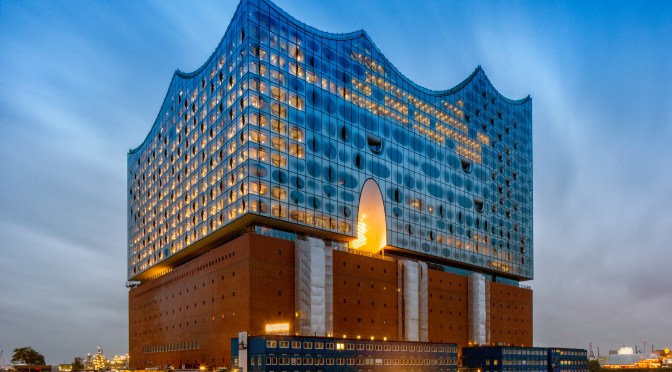
The fantastic Hamburg Elbphilharmonie is a newly minted symphony hall by Herzog and DeMeuron, one of our favorite starchitects. Costing nearly a Billion dollars (nur ein Milliarde auf Deutsch, to make it sound like less in classic German humble pie) and three times the original cost, it better klingt gut! It may seem unconscionable at that price, but…at least I wasn’t the project manager for that one!?! Whew!!

Nevertheless, I’m sure that it will take your breath away if you see it live. Perched high on a six-level parking podium, this building guards the Hamburg harbor.  Looking like a gigantic, dry-docked cruise ship, the interior is equally impressive.  Notice the scale of the building next to adjacent existing low rise buildings along the harbor. This building will change the face and pace of future symphony halls. More and younger crowds will attend to be seen and heard in these exciting venues that must include creative new productions and innovative performers in order to survive.

You can read all about it here: https://en.m.wikipedia.org/wiki/Elbphilharmonie#

Five German Speaking Cities Ranked Top in Quality of Living Survey

A recent survey tracked the most liveable cities in the world. Of eleven top cities, five are German speaking (Munich, Frankfurt and Dusseldorf are in Germany; Zurich is in Switzerland; and Vienna is in Austria). San Francisco was the only American city ranked in the top ten aside from NYC. Berlin was #11.

The cities — 230 in total — were evaluated on 39 factors including political, economic, environmental, personal safety, health, education, transportation and other public service factors. Cities were compared to New York City which was given a base score of 100. Mercer, who conducted the survey, is one of the largest human resources companies in the world based out of New York City.

Here’s the (updated) link: https://www.mercer.com/newsroom/2017-quality-of-living-survey.html

This survey may explain why I devote so much time and effort in learning German and spending a good proportion of my travels in Germany. The clues are based on the key factors cited above. They are the same reasons why I live and breathe in San Francisco. Now you know where I’d be if I hadn’t left my heart here.

Pretty Yende Pretty Amazing

April 30 will be a big day for me, when I see Pretty Yende in Dusseldorf. She has a pretty strange and curious name, but once you see her perform, you will completely understand why she us called that.

Out of (South) Africa, Pretty started learning and doing opera from Age 13. Apparently enough time on the clock to soar to one of the Met Opera’s youngest divas–performing in the Barber of Seville, Romeo and Juliette, and pinch hitting a few years earlier in Comte Ory. She’s gorgeous, powerful, energetic, and a heavenly sensation.

She’s planning to learn Wagner next, so get ready for some more fireworks. Don’t walk but run* to the nearest operahouse where she is performing. She’s slated to sing Lucia de Lamermoor and Elixir of Love next season, and I am already getting in line for tickets at the Met!

Watch the trailer for her new album here:

Incidentally, if you are a new opera lover like me, check out http://www.operabase.org for a database of all performances, opera companies, and performers throughout the world. For instance, if you search for Pretty Yende under Artists, you will see all her past, current,  and future performances. It’s an awesome site that I use regularly for trip and personal event planning.

A friend spotted Rufus Wainwright at the Zuni Cafe at lunchtime yesterday! There’s still time to catch his performance at the Uptown in Napa tonight.

My next post will be the start of Year 4 for Travels with Myself and Others ….so fasten your seat belts…

*Strange visual as some people attending the opera require canes to get around, but that’s changing!

Wishing a happy birthday this month to sister Muriel!

Day 64-66: Nakasendo Highway and Matsumoto Castle

After traveling for over two months in Europe and Asia, the culminating event was walking along the Nakasendo Highway in Japan. An ancient highway for over 400 years to provide communication between Kyoto and Edo (present-day Tokyo), this route was used by messengers, tradesmen, and government officials.

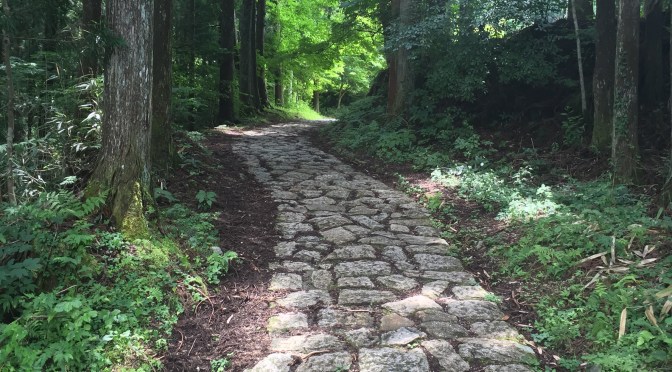
Between postal stations and forest paths, much of the route is annotated with historical features. Literary references to famous Japanese writers and haiku poems about the physical environment were identified along the path, as well as religious shrines, military battles and scenic spots.

After scant Japanese and English translations at railway stations, the information transfer magically yielded maps and schedules. We were handsomely rewarded with instructions for a 500-meter change in elevation, three-hour walk through Magome Pass from Tsumago to Magome. We traverse gorgeous lush pine, maple and bamboo forests, deep glades and gushing river streams, and gently seductive waterfalls for an exhilarating experience.

We fell in love with this area surrounding Matsumoto. Although we had never heard about it before, it is famous for trekking, skiing, soba and sake. They all seem to fit well together.

I have been in such awe of the natural beauty of this area that it tempers my entire voyage to date. While my travels have been unabashedly Euro-centric to date, I am being severely challenged by this newly rediscovered Asian culture.

The Japanese have a deep, rich history and its status as an advanced industrialized country is impressive. Together, Japan has a lot going for it.

See the gallery below for a random assortment of shots in Magome and Tsumago, both prosperous villages at the time of their development and renovated, and the delightful walk between.

At the end of a day of hiking, we stayed at a ryokan in the lovely hilltop village of Magome.

Matsumoto

Our day was packed with three hours of  travel and three trains between Kusatsu Hot Springs to Matsumoto Castle.

Not being a Japanese speaker, I find that traveling in Japan is challenging. However, with a wealth of information available on line and at tourist information counters at stations, one can manage. Good travel skills like speaking slowly, waiting for stilted English to emerge, and a lot of body language and gestures definitely help.

The castle was built over 400 years ago in the Bunraku Period (1593-1594) and is Japan’s oldest existing castle tower. It is designated as a national Treasure. Take a look at the impressive stone foundations.

There were three moats surrounding the castle to slow down invaders. Shelves were constructed to release stones against soldiers attacking the castle. Guns eventually replaced bows and arrows used as weapons from the towers.

You can climb up steep steps to the top of the sixth level for a view of the Japanese Alps.  The castle and grounds  are impeccably preserved.

image

The sleek and elegant Bullet trains have transported us seamlessly between points, making it a pleasure to travel in Japan. Little English is (admittedly) spoken outside of Tokyo, but there are enough minimal signs to direct you to the right trains. Patience and fortitude pay off in one of the safest, most courteous countries in the world.

Days 61-63: Kusatsu Hot Springs, Japan

I’ve been following a few blogs every now and then. Not often, rather infrequently, just out of curiosity, and to see the style of postings. Mine tend to be pretty straightforward, while I find many blogs pontificate, pyschoanalyze, or philosophize about the meaning of life. I am not trained to do any of those, so I try to steer clear. However, today brought new meaning to life. Staying in a real ryokan, or Japanese style inn, has renewed my ability to appreciate and understand life. That’s a pretty tall order, considering the whirlwind of activities that I have thrust myself into over the past couple of months. But slowing down and being in an exquisitely beautiful area has given me cause to pause and reflect.

Good things come to those who wait. I guess it’s hard to see all the offerings life has before each of us. As we grow older, we are able to differentiate and discriminate. Many think that growing old is a sad process but I am finding it to be uplifting–not always, but the quality of what we see is so different. Once you have perspective on many experiences, you draw from them and can detect what is bitter and what is sweet.

We should have realized what an occasion coming to Kusatsu Hot Springs was going to be. Once we arrived at the bus terminus from the train station (3 hours travel west from Tokyo by 2 bullet trains), we asked the information counter how to reach our hotel. All I had was an address in Japanese. We asked if we could walk there. “Of course,” said the receptionist. “But I can call the hotel and they will come to pick you up. Just have a seat in the lounge and they will find you shortly”. Sure enough, within 5 minutes an older gentleman appeared to whisk us in a van to the hotel about 5 minutes away. Now that’s what I call service.

From the arrival at the entrance to the ryokan, we knew it was going to be special. Soft voices, infinite courtesies, and true hospitality catch our attention. Maybe after Russia and even Mongolia we are sensitive to the manner in which humans greet each other. Not so much the degree of warmth as the presence or absence of it.

The Japanese have the hospitality covered. In this case, it’s a business. But so are the Marriotts and the Goyo Travels (our guide company in Mongolia) and the Zemzuchinas (our hotel in Vladivostok). Everyone makes the effort, but no one knows respect for the customer like what we are getting here.

We were shown to our Japanese style room. Every detail in the room is exquisite–from the carved and lacquered wooden post that trace the inherent knots and wood grain, to the miniaturized proportions and tea service in the room. Every detail is taken into consideration. I don’t know where I heard this before but the thought of “economy, purpose and delight” come to mind.

After casing out every joint (literally, the choice of thickness for wood trim, the depth of niches, the size off doors, the thinness of wood recess handles, etc etc, we tore ourselves out of the room and to the house baths. The hot springs eternal here. As one of the many features, you go to separate quarters for men and women to wash down , then soak in tepid splendor.

Our dinner, with the complete set (see menu), was another version of perfection. I’m not sure how you can produce and consume every item on a menu but they produced and we consumed. They only thing we could do afterwards was roll over and flop into bed from overconsumption. Bad for the heart but great for the head. Anthony Bourdain was right to say the best food in the world is Japanese.

The early morning concert of birds reminded me of how Japan is or was, a tropical island. The wide leafed bamboo, lotus roots, and array of bird life are evidence. The Japanese not only have nature in their DNA, but in their history. It leaves me very envious that the Chinese were not as able to inhale the environment the way the Japanese have. Despite the disarming blight everywhere, the shibui or exquisite beauty seems to well compensate for the shortcomings.

Finally, a brief visit to the art gallery adjacent to the hotel reinforced Japanese compatibility with the sublime modern:

A Note on Travels with Myself and Others

I have been pondering my recent travels. They seem to gravitate on the 38th parallel north or somewhere between 35-40 degrees latitude. It’s not an accident that the San Francisco Bay Area (I was born in Oakland, across the bay), lies on this imaginary line. I probably mentioned that a year or two ago when I traveled along the Silk Road in Uzbekistan, and how everything felt so natural and comprehensible to me.

The beets, carrots, peas and potatoes were reminiscent of home. The Mediterranean climate is easy to get hitched to, but people do not associate it with further flung places like Beijing or Tokyo. The 38th parallel traces through of course Greece, Italy and Turkey, but also parts of China and Japan, Iraq, Iran, and Uzbekistan.

Granted, the culture and weather are different, but I still regard these environments as hospitable and liveable. You can read more about the countries along the 38th degree north here:
https://en.m.wikipedia.org/wiki/38th_parallel_north.

The Japanese have an infinite respect and appreciation of the environment. It is highly cultivated, but created for the enjoyment of all. They are natural at landscape design, architecture, and planning. Nothing less than awesome is what I’ve just witnessed on a brief morning walk behind the ryokan. This post is for you, Sara and Jim (my professors at Berkeley, to whom I am eternally grateful), and all my Japanese friends).

I have been contemplating what’s next. I’ve toyed with the idea of visiting countries along the ring of fire, but I haven’t convinced myself just yet. Alternatively, I considered tackling the countries along the 38th parallel south. To my dismay, it touches two countries where I have already been: Australia and New Zealand. That leaves Chile and Argentina on the list.

For a video on Vladivostok, click here:https://youtu.be/_i4E0wh-b9k

Day 59: Vladivostok, Russia

Here are some first views of Vladivostok coming from the north by train on arrival at sunset the night before:

Dinner at Three Brothers across from the hotel, complete with live American jazz music for $30 for both of us with wine

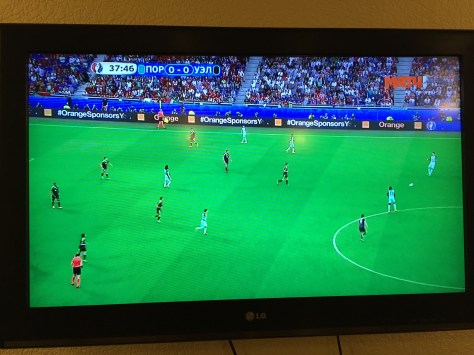
Evening Entertainment: Portugal vs. Wales with Rinaldo scoring 1 of 2 goals

IMG_4475

If you were visiting Vladivostok for the first time like we were, you could start an early morning walk at the Friday morning Central food market:

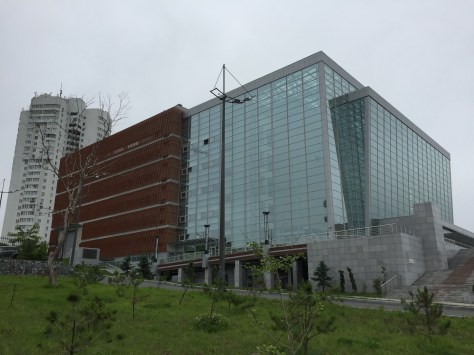
You can take a minibus to the new Mariinskiy Opera and Ballet Theatre. It is hosting the first International Piano Competition at the end of this month. I predict that it will be a great draw for concerts, ballet and opera in the future. You might consider taking a trip to attend this magnificent new venue and the emerging new productions and stars that will perform here!

After that, you can catch a bus back to the city and stop at the Lookout Point over the new Golden Bridge completed in 2012. Does the design look familiar to you?

IMG_4541

Later in the day, get your cultural brains in gear and visit the Primorie Art Gallery. When we attended, it was showing an exhibition of Russian Art from 1700-1900. We were intrigued with the very personal touches of each painting, that may have reflected or imitated more famous Western paintings of the same era. Sargent, Picasso, and Matisse came to mind.

There were also a number of startling paintings that represented new subjects seldom seen in paintings of the same era. Chinese or Muslim figures were represented in historical settings that required more context and explanation. Unfortunately, all paintings were titled in Russian or limited English.

At the end of the day, kick back and have dinner at the Three Brothers for evening meal. This was our return visit from the night before. The outdoor dining was perfect for the cool balmy weather of Vladivostok. The city is very similar to San Francisco, with hills, coastal fog, city views everywhere, and a lively ambience. We’re in love with this city of 2 Million!! This city is destined to be a big tourist destination in the next 10 years, so come soon.

Day 53-54: One Degree of Engagement (Lake Baikal, Russia)

Looking back at our week in Mongolia, it has been exhilarating and life-changing. I try to think of similar experiences, and although the trip we took to Montana came to mind, it seemed to be a far cry in comparison. Imagine Montana being the size of the US with the same density of population and that would give you an impression of what Mongolia is like.

I am attaching the Wikipedia reference for those who are curious: https://en.wikipedia.org/wiki/Mongolia. In this quick search, I learned that Mongolia is in fact the most sparsely populated country in the world. It’s no wonder that we felt the impact (or lack thereof) of human habitation on the planet here. We wondered if this wasn’t a good place to start if you wanted to live on the moon.

The low density means that people who live in Mongolia depend on each other. Gee Kin explained some of the details in the last post. For me, it was a reassuring vote for humanity. You learn to trust and rely on those around you. Just like the herder family in the video, you do everything for each other. We had a beautiful day and authentic experience with the herder family and our guides.

I am reposting the video from yesterday for those of you were unable to view it. I inserted the punchline in the back, so hope you will enjoy this revised version.

And…just to close out a few stray thoughts on Mongolia, here is a copy of the map of the Mongol Empire, showing Genghis Khan and Family’s Conquests in a few fell swoops:

FullSizeRender 71.jpg

Onward to Irkutsk, Russia

Our 18 month Russian visas from last year made it easy to take another trip into Russia this year. We hadn’t really planned on it, but coming to Mongolia made it irresistible to continue through Russia east to Vladivostok. We came north first by train from Ulaan Bataar (see spiffy Mongolian train above), then in a few days will be heading to the East Coast to on the last leg of the Trans-Siberian Express.

We heard that there were 19th Century wooden buildings in Irkutsk, so went towards an area for dinner that reminded me of Cannery Row in Monterey or Jack London Square in Oakland. It was an easy walk on a Saturday afternoon and many locals were heading in the same direction toward the mall.

We found a pretty decent restaurant with equal flair to any Bay Area restaurant:

Dinner with wine was only $40.00!

Listvaynka Village, Lake Baikal

Our main adventure the following day headed us in the direction of Lake Baikal, the oldest and deepest (about a mile deep) fresh water lake in the world. After gawking at the seaside crowd, we had pilaf and smoked fish for lunch in Listvaynka Village. It was refreshingly cool and a little bit of Sausalito in Eastern Russia.

The Sunday Weekend market in Lake Baikal featured smoked fish.

The bus back to Irkutsk put is in front of the city’s Sunday Market. It was very similar to the huge market that I saw two years ago in Tashkent, Uzbekistan. Uzbekistan produces much of the fresh vegetables and fruits for Russia, Mongolia, and other Central Asian and Asian countries.

On the way to Lake Baikal, about an hour outside Irkutsk, we met two Canadian travelers. They were a sturdy pair–active seniors who were working as educators in Doha and traveling throughout the world. In case you were wondering what’s happened to baby boomers, they are out of the woodwork and into the world again. Maybe not on the $5 a day like we did in the late 60’s, but resilient as ever.

They can do a mean Ritz Carlton on demand as easily as a backpacker’s hostel–for a few days, at least. I like to think of myself as being able to do both, but I tend to be more of a middle-of-the-roader. Our trip to Mongolia, on the other hand, was certainly a safari of sorts, but with fewer wild animals.

Our new-found friends told us a story about someone they met in Mongolia who was on a Guinness Book of Records pursuit for the most number of countries visited in the shortest amount of time. The 27-year old female traveler had already been to 130 of the 196 countries and is taking three years to complete the task. She spent most of her time obtaining visas and on the internet and had company endorsements.

I calculated that it would take about five days per country. At the minimum, all she had to do was to record the GPS point at the airport on her phone and get a visa stamp. I’m sure that she is doing more than that, but regardless, what a journey! It captured my imagination. I decided that I had met her through one degree of separation.

Days 50-51: Mongolia 4

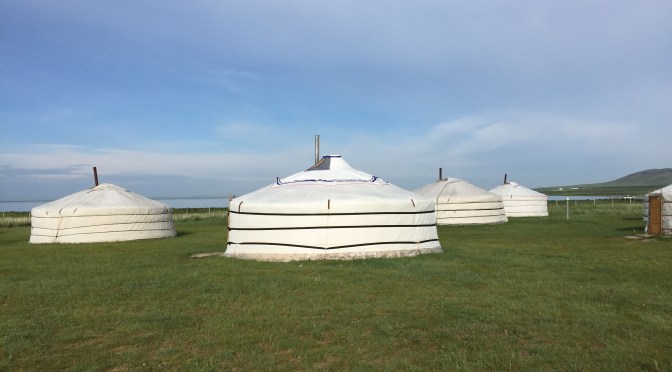
We are in Day 5 of ger living. Despite its challenges, the variety of gers has allowed us to get a full flavor of ger living. Our last ger included a stay along one of the largest fresh-water lakes in Mongolia. While rudimentary, it gave us a feeling of staying at Lake Tahoe, Mongolian style.

The many incredible, pristine pastoral landscapes we encountered traveling off-road by Land Cruiser included frequent herds of sheep, goats, horses and cattle. These are free-range animals, owned by herders who live in nearby gers, and have no fences. The animals get rounded up at the end of the day and know who and where their friends and family are. We had a full court press of the domestic animal world with a few wild ones and migrating birds for flavor.

The Erdene Zuu Monastery was founded in 1586 and is the first Buddhist monastery in Mongolia. The religion came from India and Tibet in the 12th Century. The grounds of the Monastery are preserved as a museum. The adjacent complex is a working temple. The temple was built over the palace built by Ugudei Khan, and materials were taken from the ruins.

The Kharkhorin Museum presented a fascinating series of maps showing the the history of Mongolia. If you are curious, please click on these to see more; if not, skip this section.

The Chinese Han Dynasty successfully fought back the Xiong Nu empire in Northwest China, and early portions of the Great Wall were built to deter the Xiong Nu from advancing further. (Remember Mu Lan? She was fighting the Xiong Nu!) You can read more about the ruins of the early Great Wall in my posts from Turpan in August 2013.

In the following series, you will learn more about the history of the great Chinggis Khan (1162-1227), one of his sons Ugudei Khan (1186-1241), and his grandson Kubilai (1215-1294). The maps attached are in some ways easier to read than the ones above, as they show the flow of conquests. Take a look at the arrows and dates on the maps and the extent of their conquests in the span of a century! The influence of the Mongols reached as far west as Iran, Iraq and Turkey.

In the same museum where early 8th Century Turkic memorials were preserved, a tomb for servants contained miniature figures similar to those found in Xian. They had Han Dynasty characteristics similar to the figures we enjoyed seeing in Dunhuang Museum in Northwest China. They had unique, expressive faces and lively gestures in their bodies. Apparently these were not created in a tomb for any noble, but were offerings by servants. The size of the figures, gold, and ceramic pieces were not large enough to represent those that were buried with those a leader.