Tag Archives: Architecture

Shimmering Shiraz and Perceptions of Persepolis

Tehran

After a few days of jet lag, weather changes, and internet hell, we resparked our curiosity and thirst for the unknown. We visited museums, mosques, and even a madrassah, but no mausoleums yet. The last three m’s were the order of the day for Islamic architecture during my visit to Uzbekistan, but there no indications of that being the same here.

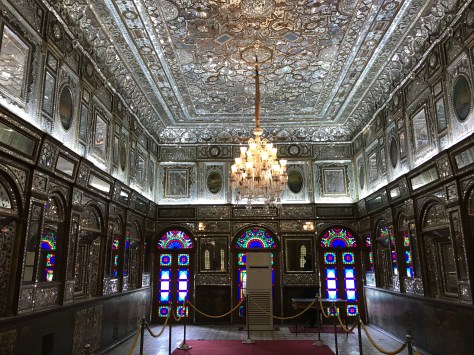
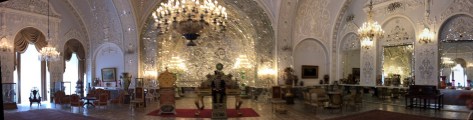
At the Golestan Palace in Tehran, a World Heritage Site, the pre-Pahlavi royalty (within the last 150 years) displayed their wealth and were over-the-top ornate. Most of the public rooms including the ceilings were covered with intricate mirror mosaics and made you feel like you were inside the Hope Diamond.
IMG_1800
Interior with Mirrored Ceilings

IMG_2640

The exteriors demonstrated the integration of gardens and fountains that are
famous in Iranian architecture and design, as well as the intricate mosaic work and marble carving on doors and walls.

The National Museum of Iran contained some of the most precious relics of the ancient world. The statue of Darius I (Xerxes I, from which an opera is based!)  and a panel from the Achaemenid Period in Persepolis are shown below. For those interested, you can scale up the text included in the adjacent photos.

The bazaars in both Tehran and Shiraz contained endless boutiques in a Walmart-sized atmosphere with limited and inexpensive goods from copperware to aromatic spices.

Shiraz

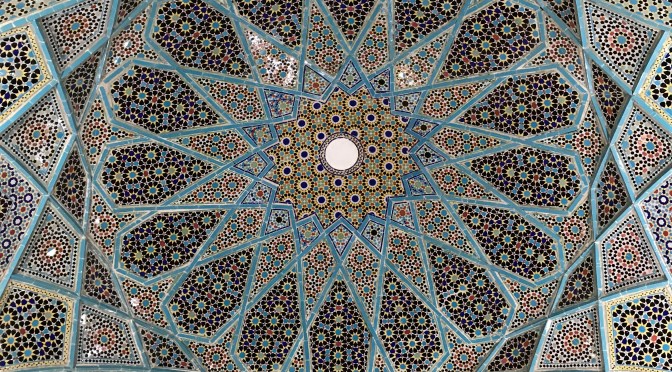
We bonded with our local guide from Shiraz after he passionately described Iran’s native son and poet, Hafez. His elegant poems are beloved by all Iranians and transcend cultures. F. Scott Fitzgerald and Goethe were known to quote his poetry. It was enough for me to determine to read some when I get home.

As we stood in the garden of the tomb of Hafez, Abdullah, our guide, explained that Shiraz is known for its wine, women, and roses. Many of us will recognize the famous wine namesake that comes from this region.

In the evening light, Abdullah pointed out the abundance of young couples strolling in the park, with flowers intoxicating the warm breezes. Knowing a little or a lot about the poetry of Hafez is enough to start amiable conversations and the start of a promising relationship, Abdullah surmises (maybe from experience?)

While Abdullah waxed poetic, we observed that families were out selfying just like any other society, enjoying a delicious evening, and lingering among crowds of friendly visitors.

There seems to be tremendous respect for fellow humans in Iran. So far, we have found the urban environment remarkably quiet. We stayed on busy streets in two cities and found the traffic unusually quiet. Being highly sensitive to noise, I am finding the calm, lack of noise shattering to my ears.

People glide about the streets, smiling at one another with eyes and lips, and salaam each other without exception. I’m not sure our guide has coopted us, but we sense the immense pride and confidence in the people.

Persepolis:

Just outside of Shiraz, on a wide open plain, lies the ceremonial center of Darius. Before him, Cyrus the Great created and led an impressive empire. The wooden ceilings of buildings and both palaces of Darius and his son built around 518 BC were later razed to the ground by Alexander the Great (around 330 BC), but the massive stone structures with priceless carvings remain.

After just having seen the great empires of Rome, Greece, Inca at Macchu Picchu and Aztec in Teotihuacan, it’s hard not to be impressed by the volume and quality of artwork in situ at Persepolis. We could not believe how much of its splendor is still present for the whole world to appreciate.

Were it not from my earliest art history lessons on ancient civilizations and curiosity on its context and meaning, I would not have made this trip.

Everything begins to fall into place, as the pieces of the puzzle assemble. My scant preparation for this trip, thanks to Francopan’s Silk Roads, a New History of the World, captures the whirlwind tour through the rise and fall of Eurasian civilizations. Iran, and more fondly, Persia by the same name, stands prominently at the helm of the Silk Road.

The artwork at Persepolis chronicles the peaceful arrival and acceptance of the local inhabitants to the new ruler. Darius followed shortly after Cyrus (within 40 years), and while not a direct descendant, they were related. Although the local Medians were conquered by Cyrus and the Archimineads, he managed a peaceful settlement and was respected for his accomplishments as a capable ruler. Darius culminated the dynastic rule with his grandiose and impressive complex at Persepolis.

Within the ceremonial entrance and grand reception areas are magnificent stone reliefs of warriors supporting the king on his throne. Rows of roundheaded conquerees alternating with the conquerors proceed to meet the king, hand in hand. Offerings from 23 nations include food, treasures and animals from surrounding areas and those as far as India.

Other friezes demonstrate the high quality of craftsmanship that preceded the Greek and Roman periods revered in history. In a splendid exemplary frieze, a bull and cow signify the end and beginning of the new year.

The symbolic meanings of birds, rings and flowers stem from the ancient monotheistic Zoroastrian and Mithras religions. They did not have a concept of God as a human, but that he lies within each of us.

Individually the symbolism of the characters presented are less significant than the collective splendor of the human mind that is left behind for all of us living creatures today to ponder.

(This post is now formatted as intended. It was created on April 17, 2018 and edited April 22, 2018).

Nippy in NewYork

Coming to New York in the middle of the winter sounds like a crazy thing to do, but we did. It started as a nippy 18 degrees in New York, but so far it didn’t deter any plans or ability to walk outdoors. In fact, the noticeably fewer tourists, being able to get into restaurants and museums easily, and bargain hotel rates were all incentives for risking unpredictable weather. I came with my sister to show her all my favorite sights that include the Highline, the Mighty Mets (Metopera and the Metropolitan Museum) and the Museum of Modern Art (MOMA).

We power-walked the first morning from Midtown Manhattan and bee-lined down Third Avenue to Balthazar (shown on previous posts) for a brisk three-mile stretch, then made a quick stop to see the 911 Memorial. The fountain, a bottomless pit, was a sobering reminder of that fateful day that changed America and the world forever.

The new highrise developments in the area are stunningly beautiful, including Calatrava’s Transportation Center (also in header above). We headed over to the Highline afterwards for another short walk from 23rd to 34th Streets. Being able to walk everywhere is heaven, and staying in Midtown Manhattan makes everything all the more accessible. We clocked an average of 5-7 miles per day, so felt alert and energized.

My dear friends Lisa and Dick, who have been residents of NYC for over 35 years were ready to assist with event planning.  We started with dinner at Le Bateau Ivre downstairs from the Pod Hotel, tasted wine from the Chef & Sommelier glassware they brought to show us, then met the next evening for opera. Lisa was a bit skeptical of long, drawn-out operas that last well into the night, but the two short, hour-long verismo operas Cavallera Rusticana and Pagliacci were perfect to convince her that opera is a worthy investment.  The music is among some of the most beautiful in opera, so there wasn’t much convincing to do.

Starring Roberto Alagna in both operas, they were emotionally satisfying and the music was glorious. His performance was bright and powerful.  The story about a vaudeville troupe is a play within a play. Canio, the clown, whose wife is in love with another man, must perform his comedy act for the audience even though he is heartbroken inside. In an interview with Roberto Alagna, he commented on how relevant the story is to opera performers, but how unique it was to be sharing the lead roles with his real-life wife, Aleksandra Kurdak. (She played Nedda, Canio’s wife).

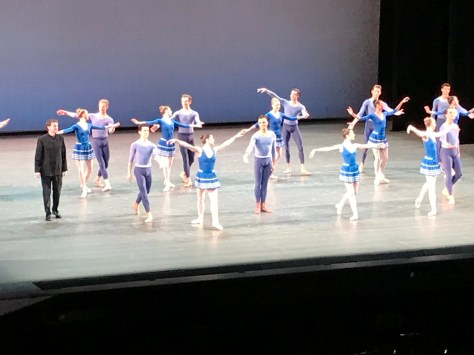
Later in the short week, we were also treated to a performance by the New York City Ballet. This time it was my turn to experience and appreciate dance through the joy of physicality combined with artistic talent.IMG_1537

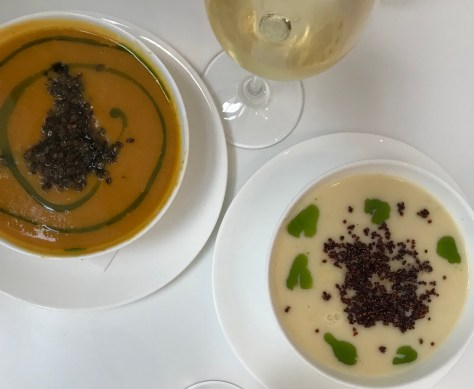
In addition to Balthazar and Ess-a-Bagel, our dining events include Bar Boulud and the Smith (both conveniently next to Lincoln Center), and Pastrami Queen at 1125 Madison Avenue on the Upper East Side. Some creative soups at the MOMA cafe filled both our eyes and appetites.

IMG_8927

When you can park yourself at one of New York’s best kept secrets–the Pod Hotel (at 230 E. 51st Street, between 2nd and Third Avenues) for $75 a night for two in bunk beds with a shared bath down the hall, mingle with international visitors of all ages, and spare the rest for all the food and entertainment in the Big Apple–what’s not to like? I normally do not mention hotels in my posts, but for variety and voracious urban consumers like me, this is it. Originally called the Pickwick Arms, we’ve stayed in this location in NYC off and on for over 30 years. To top it off, the Pod serves Ess-a-Bagels and Balthazar almond croissants in their cafe!!

The extensive Metropolitan Museum’s exhibition of Michelangelo’s Drawings, culled from over 23 sources throughout the world, was my primary purpose in coming to New York City. The private tour I took will follow in a separate post.

…On State Street, that Great Street, I Just Want to Say…

A return visit to the Chicago Cultural Center, just down the street from State, gave us additional time to devote and absorb the energetic and inspirational Chicago Architectural Biennial submittals from architects around the world.

Here are a few of the three-dimensional models and miniaturization of the world on display:

Here’s a link to the Bamboo House (my favorite model above) if you are interested:
http://archi.ocean-site.com/bamboo.html

And the “Supermodels”, 16′ high models of the 1922 Chicago Tribune competition reinterpreted:

An endless array of aesthetic and architectural textures, patterns and rhythms to explore and adore:

Real World great rooms with views inside and from the Chicago Cultural Center (formerly the Chicago Public Library):

Earlier in the morning, a six hour tour of the S.C. Johnson Wax Research Building and Laboratories in Racine, Wisconsin gave us a glimpse of one of Frank Lloyd Wright’s major clients. Johnson produced some of the most prolific household products, including Raid, Deet, Kiwi Shoe Polish, and Pride Furniture Polish. Wingspread, the 14,000 sf private home of S.C. Johnson and the last major residence designed by Frank Lloyd Wright, was also a featured stop on the tour.

Here are a few of the highlights of the company facilities. We were only allowed to take photos of exteriors of buildings and grounds:

The alien landing of the Company Reception Center was designed by Lord Norman Foster:

Needless to say, everything in the original buildings was meticulously designed by Architect Frank Lloyd Wright, including all details and finishes for flooring, ceiling, walls, and furniture.

At Wingspread, the interior of the private home was also highly controlled by Wright.

He had many disagreements with his client H.C. Johnson and his third wife Irene Purcell, a former Hollywood actress. Although he often tripled the cost of construction, Wright designed and built many quality homes applying his innovative concepts of horizontal lines that blended in with the landscape, use of natural materials, and attention to detail.

The dining table was designed to move on wheels into the servant’s area so staff did not have to be seen by guests. Whenever the roof leaked, the clients and staff often had to bring buckets out to catch the rain.

At an important state dinner held at the Johnson residence on a rainy evening  the roof leaked again, but this time directly on the owner’s bald head at the table. He immediately summoned Wright in Arizona and asked what should be done. Wright simply retorted: “You should move your chair!” Wright’s ego was seldom matched by his clients’.

In the final analysis, Chicago is a must see if: (1) you are contemplating a career in architecture; (2) need to be reminded of why you became one in the first place; and (3) need another fix for the architectural addiction you always had.

Fong & Daughter’s 72-hours in Chicago  achieved our desire for at least two of the three. We also succeeded in pursuing and understanding architecture as craft. I hope you enjoyed traveling here with us on this whirlwindy weekend. Chicago has great streets with great people in a great city.

My Kind of Town, Obama Town

A few days before coming to Chicago, I listened to a few of the Obama Foundation Summit live stream broadcasts by young upcoming community activists. As a reminder, Obama began his career here in this city. His legacy is present and inspires a whole new generation of future leaders, not only in Chicago, but throughout the world. He is committed to helping communities lift themselves through positive shared efforts.

One of the great achievements is the community created by sculptor, artist, and entrepreneur Theaster Gates. He purchased a neglected bank building in South Chicago from the city for $1. He raised money and developed the Stony Island Arts Bank, a library, media archive and community center for Rebuild’s archives and collections. He used recycled materials from other sites as well as those in the building. Members of the community come to this center to preserve, access, reimagine, and share their heritage. See photos of the center below.

An early morning visit to the University of Chicago campus enabled us to get a bonus tour of the Robie House on campus. Originally for a wealthy patron, this residence was also used by UIC students. It has finally been restored to its residential charm and glory (see captions).

Sandwiched in between Downtown Chicago and UIC is the Illinois Institute of Technology (IIT) campus. Designed by Ludwig Mies van der Rohe, the strictly Modernist approach for the campus buildings was stiflingly evident.

Little seemed out of place in Crown Hall, the Architectural Building (see the lobby chairs), except for the people and the architectural work underway. The huge open space predates current “collaboration space”. The vacuous interior without walls masked unwanted noise brilliantly. Julianne and I wondered how we would have survived an architectural training in what seemed like such a limiting environment.

The Student Services Center was the counterpoint to the collection of Miesian buildings on the IIT campus. Designed by OMA in Rotterdam, the firm broke all the International-style rules (thanks to recommendations and commentary support from architect/daughter).

And finally, we made it back to the Chicago Cultural Center to see displays of models, drawings, and photographs of numerous architectural projects throughout the world. A few that caught my attention were:

“A Room of One’s Own”–Sketches of Rooms of Famous People

Models of Architectural Houses

And Miscellany:

Whimsical Plays on Skyscrapers by a Belgian Photographer cum Architect

Random shots of Millenium Park, the Bean, and City skyline

I can safely say that I satisfied my architectural curiosity today. I even paid attention to what I saw this time.

Reflections of a World-Class City

Arriving in Chicago in the rain did not daunt our spirits in this wholesome, energetic and magnificent city. I continue to marvel at the clean lines of the high-rises, the prominence and respect for each building as they stand proudly on each piece of property, and the intriguing entryways and lobbies at the ground floor as they beckon you.  As soon as we were able to check into the hotel, we hit the pavement and powered our way down past Millennium Park to the Chicago Cultural Center to orient ourselves to the host of activities connected to the Architectural Biennale.

Following the tracks of the Venice Biennale, this bi-annual event in Chicago showcases exhibitions from architectural firms around the world. Sadly, San Francisco is not only poorly represented, but not represented at all! Many of the exhibitions are from firms that seek international recognition. More about the presentations and activities will follow in the next few days.

We bypassed Happy Hour at Joy District, free pizza at 10 Pin Bowling Lounge, and chicken wings at Hooters and decided to take advantage of the late hours on Thursdays at the Art Institute of Chicago. What a decision! The museum is only a short walk from the Cultural Center past the Bean to the new Piano and Rogers’ wing.

These representative paintings somehow made me think about our presence in Chicago.  Can you recognize the work of one of my favorite artists (shown in an entire room dedicated to him)?

Or these ridiculously signature paintings sitting modestly in galleries waiting to be identified?

And these works that are a joy to see?

Finally, a few miscellaneous shots (see captions by clicking on photos)

After an inspiring and entertaining evening in the contemporary, modern, impressionist and architectural galleries to satiate our minds, we hoofed it over to Eataly for big pasta paparadelle and linguine mit vino to fill our bellies.

*Works shown: Gerhard Richter (series); Rainy Day in Paris by Caillebote (1877); Sunday Afternoon on the Island of Grand Jatte by Seurat (1884-86); Giacometti sculptures, Portraits/Painting by Miro, Renoir, and Picasso.

Try to Remember…

When was the last time you were in San Francisco in September with the temperature over 100 degrees?  With the advent of Labor Day and subsequent heat waves, San Francisco experienced record temperatures (over 106 degrees reported downtown??). The freak weather sparked a lot of unusual behavior–like packed parks with… what!?! people in them (See featured sketch above, at noon on 9/5/17 at the 100 First Street roof terrace).

Girls flung their normally conservative city modesty to the winds and were wearing skin-tight and flimsy almost see-through dresses. And surfers surfing at Ocean Beach without wetsuits!?! It must be an indication of the positive effect that weather has on our foggy Bay Area brains–and that we’re actually and finally capable of adaptation!

The Fall Semester has also descended. I finally consolidated my myriad choices for classes. As always, I pick more things from the buffet line than I can eat. San Francisco’s City College is free for residents starting this year, so I can gluttonize myself even more. I decided to forego the German classes this term. Instead, I opted for a purely hedonistic art and music program. I am continuing my figure drawing classes with the fantastic Ms. Diane Olivier. You may remember her from my incredible Moroccan sketching adventure in June. She continues to teach at the Fort Mason site where all the lifelong art students congregate.

As part of our class assignment in Art, we are expected to sketch daily. One of the better ways I accomplish this is joining Meet-ups for Sketchers. We draw in various parts of the city (Nob Hill, office buildings, events in the Park, etc). There seems to be a spontaneous combustion of happenings thanks to the internet. I can join several in one week if I choose to.  There are similar meet-ups worldwide, so I am really excited about these prospects in the future. Sketching outdoors has been great art therapy for me and a memorable way to view and record the city other than with a camera. Click on images below for captions.

Places

I’m making my ginger foray into Music in two directions. First, I toyed with both introductory piano and violin. Yes, I took lessons many years ago and only enough to allow me to play in solitary confinement. The incentive for the piano class was a fleet of brand-new digital Yamaha pianos.

I decided to forego the equipment upgrade and a cast of 20+ students for a beginning violin class of only 15 students (20-15=5x more attention from the instructor). My old violin that had been left unattended for decades was finally in the money again. You can imagine the delight from the poor violin’s standpoint.  It was dripping with sound from its inner belly and oozing through the curly-que slits to the world.  I could barely remember how to tighten the bow and prep it with rosin. Forget tuning and blowing up the rest pad–I had to rely on the instructor’s help for both.

Second, my next musical class is about music awareness.  We will learn more about opera using Elektra, Turandot, and La Traviata from the San Francisco Opera season. We have access to orchestra seats for $35! This is almost as good as being a Goethe Institute student in Berlin. I thought this class would be a pushover until I had to write two papers. I discovered that I had no music theory, background, or ability to explain anything in proper musical terms. Hopefully this class will improve my musical awareness!!

People

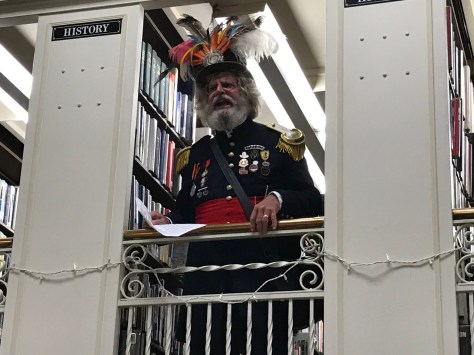
Last but not least…Emperor Norton found in the stacks of the Mechanics Library in Downtown San Francisco…during a treasure hunt. You can join the private library for a nominal fee with access to many up and coming books and their authors.

IMG_2527

In a couple of weeks, I plan to travel to Peru and Chile.  I’ll be visiting Macchu Picchu and Easter Island. Please join me for a bit of fun and adventure! As usual, my focus will be on art, architecture, anthropology, and food!  If you want to opt out of email notifications, you can change your settings in WordPress. Until then…

Sunset over the Southwest

I’ve heard that foreign visitors to the U.S. often yearn to see the wide open spaces that are unique to America, like Yosemite, the Grand Canyon, and Yellowstone. As Americans, we often overlook those magnificent expanses of space that we take for granted in our own back yard.

On a weekend visit to Santa Fe, New Mexico, we caught some of the excitement over such vistas that seem to go on forever. We spent the first day exploring the mesas and pueblos of the Southwest. Located about an hour northeast of Santa Fe, the Puye Cliffs and area inhabited by the Santa Clara Tribe thrived here between 800 AD until the 16th Century.

The mesas were formed by tuff, or volcanic ash that covered this area (and made fossils out of alot of plants and animals), then eroded over time to form dramatic cliffs. The pueblos are Native American villages dotted throughout numerous reservations in New Mexico. The Santa Clara originally lived in these cliff dwellings and then later, in pueblos. (Click on Photos to see captions).

The kivas, or ceremonial roundhouses in each village, were used for male rites of passage, important decisions, and festivals. When the Spaniards arrived, they burned the kivas and built Catholic cathedrals over the sites.

The cliff dwellers protected themselves from invaders in the caves. Later, they created pueblo dwellings that were two-story structures on open land. The dwellings had no doors, but they used ladders to lower levels of the dwellings from the rooftops. These entries protected residents from invaders.

At our neighbors’ recommendation, we made a special day trip the following day to Ghost Ranch. An hour’s drive north of Santa Fe just beyond the Puye cliff dwellings, Ghost Ranch is a retreat cum camp for writers and artists. The ranch offers weekly programs, seminars and workshops in the high desert.

Georgia O’Keefe’s home is near here, so there’s plenty of creative inspiration and history in this area. The landscape alone is breathtaking, with wide open views of mesas in the distance as far as the eye can see. The ranch is nestled in an oasis with a precious lake nearby.

There are archaeological excavations that date back to the Triassic Period on the ranch. You can even participate in digs. From having taken three Anthro classes in college, I became interested in Anthropology and even contemplated majoring in it.

cropped-img_9341.jpg

I immediately fantasized about joining a dig until I saw real-time photos of volunteers in the program, posing on their shovels during a break. The exposed skin on their faces and arms looked as parched as old shoes and as cracked as the pottery shards they were digging up! I decided to relinquish the idea as I was reminded not to forget my nightly skin regimen.

The main purpose of our excursion to Santa Fe, however, was to attend a premiere performance of the opera, the (R)evolution of Steve Jobs. It’s the complicated, contemporary, and tragic story of Steve Jobs. While the place names were immediately discernible to those of us living in the Bay Area (Stanford, Cupertino, Los Altos), the story of this one-of-a-kind genius gives everyone a perspective on where we have been, where we are, and where we are going.

The Santa Fe Opera was an ideal venue for this premiere, with its dramatic open-air stage, setting, and architecture. Everything was perfect, including the weather, production, and food!

Here’s the final curtain call, with Edward Parks (an international Operalia Competition winner), who played Steve Jobs, the librettist Mark Campbell, and composer Mason Bates. (apologies for the overlighting).

This production was sponsored by the San Francisco, Seattle, and Santa Fe Operas. When you get a chance, see it, or check it out here:

https://www.santafeopera.org/operas-and-ticketing/the-revolution-of-steve-jobs

Back in Santa Fe, art is ubiquitous and a reminder that beauty can, and should be everywhere. There are art galleries galore and tourist shops selling turquoise, carpets and pottery to numb the mind, but if you look beyond those, there are many treasures outdoors to be found. Here are a few examples of fanciful sculpture and mindful landscaping that you will encounter on a walk through town. (BTW, you can see more artwork from the Day 77-78 stop in Santa Fe from my October 2015 Amtrak trip).

Turquoise and terra cotta are the trademarks that define the American Southwest. They even use this palette to paint the overpasses along freeways so you always know where you are. As our weekend wound down, I managed to capture the mood, signature colors, and the remains of the day at the Albuquerque Airport.

Happy Celebrations to Pam C., Pam C., Karen M., and Jens U-B!!

Days 65-68 Lives of Others in Guangzhou, China

Like in Hong Kong, searching for old remains in Guangzhou has been puzzling. Many of the vestiges of the arcaded colonial city have been erased and replaced by newer, taller buildings. We headed to the area where Gee Kin’s relatives live, and what used to be the West Gate. It has been subsumed by modern development and is now considered part of the inner city.

IMG_8162

Yet activity in the area carries on like it did a hundred years ago or before. You see both men and women pushing or pulling hand carts along the road, scurrying and balancing the goods adeptly and efficiently at a pace more like a gallop than a prance. I watched for awhile in fascination, as social consciousness doesn’t seem to inhibit delivering goods this way and better, faster, cheaper.

The neighborhood shops may seem mundane to tourists, but the local market economy appeared to fully support the array (mixed used at its fullest: nuts and bolts fabricators next door to pastry shops, electrical repair next to fast food–you get the drift) of products and services offered.

Each shop relies on street for light and ventilation. That gave me plenty opportunity to poke my curious and annoying head inside. For some reason this reminded me of  Amsterdam’s red light district. The curtainless windows of the Dutch tidy “shops” openly invited customers to have a peak just like these shops in West Gate (Ximen Kou) did.

Shop assistants check their WeChat accounts frequently in between serving customers. You get a distinct impression that it’s not a bad system for the full employment act, even if the shopkeepers are bored and inattentive at times. The use of cell phones to combat boredom is nothing new throughout the world, but it’s remarkable if you look at the regularity and density of shopkeepers with cell phones staked in this area.

Earlier in the week, we visited one of my star architecture students who now lives and works in his home town of Guangzhou. Lam is a talented designer who is a partner in his own firm. It has been furiously designing shopping malls and theme parks all over China.

Lam’s “industrial chic” office could outdo any firm in the States as a showcase for innovative design. The office contains an experimental kitchen and full pig roaster. Rest and eating areas, conference rooms, and a library are all available to staff. The work areas are divided into manageable rooms or suites and therefore do not follow the pattern of open office design of most architectural firms. Large murals depicting the rebellion against the Qing Dynasty is provided by one of the partners.

As part of continuing research on my family’s history, I asked our friend Susan to accompany us to various institutions throughout the city. The new Guangzhou Book Store is one of the largest in the country. It was filled with floors of books and periodicals scattered between boutiques for Chinese calligraphy brushes and inkstands, tea ware, and books for sale.

Our second stop at the also new Guangzhou Library was another fascinating glimpse into the future of Guangzhou. With such excellent facilities, the hearts and minds of the students and researchers are captured. The north west reference room at the top where we were directed contained scholar’s rosewood furniture and fretwork screens. It was a noble nod to China’s classical examination system and its history and dedication to education.

Everywhere throughout China, you feel that it is a country on the move. There isn’t much time to stop and reflect on the speed and delivery of everything, from data to food to train tickets (they arrived at our hotel as promised). It’s exciting to witness, explore, and engage in the collective spirit.

Day 62-64: Hunkering Down in Hong Kong

Returning to Hong Kong has a romantic flair to it, as this is the city where Gee Kin and I met. I was a young architect starting in the profession, and Gee Kin was reinitiating his career as a structural engineer. There’s no doubt we were impressed with each other, particularly with our mutual sense of humor. While our relationship developed slowly by today’s standards, it gave us sufficient time to think about who we were and whether we wanted to spend the rest of our lives together or not. It must have worked, because we are still together over 35 years later.

Shortly after arrival in Hong Kong we encountered a typhoon. Known as Merbok, it was the first of the year. Everyone scurried to get groceries and head home at the end of the day. It was quiet and the streets were dead empty by early evening. It felt like Chinese New Year’s but without the festive atmosphere where shops are closed and everyone is at home with family celebrating.

After a couple of days of torrential rain, I was able to head outdoors. My first exploration was to the art studio downstairs, where I learned how to copy a Chinese flower pattern and paint with watercolors for the first time ever. It reminded me of second daughter Julianne’s brush painting from her high school days. I felt a bit awkward at painting in water colors, but the instructor was very kind and explained everything very clearly in Cantonese. It gave me a chance to reuse the lively language I learned while living in Hong Kong.

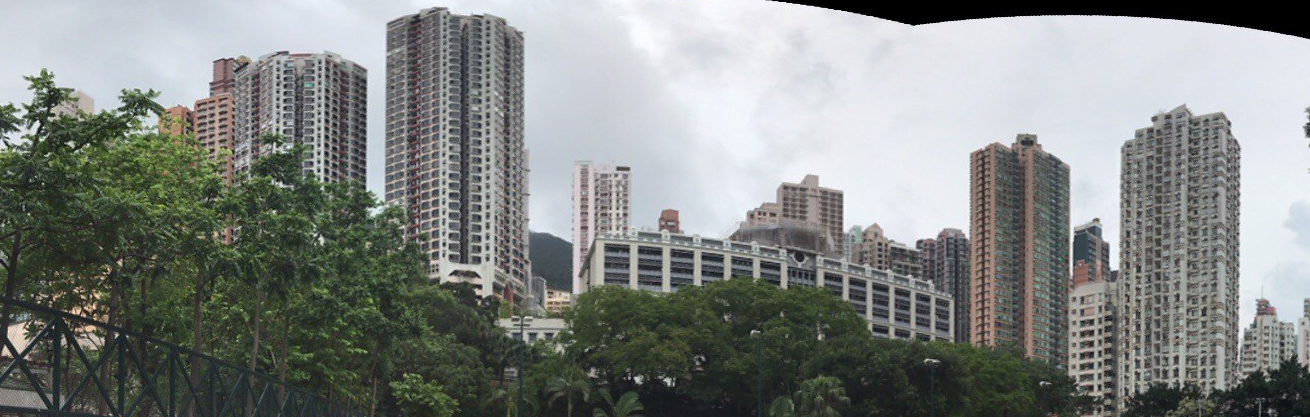
We decided to visit Fulham Garden in Pokfulam, where I lived when I worked for Hong Kong Mass Transit Railway. It wasn’t far from Central, but I had trouble remembering where the bus stop was located. The buildings are taller and there are more of them. Fortunately, there are still pockets that reflect and preserve old Hong Kong. After a quick look, we walked back to Central.

img_8718.jpg

IMG_8702

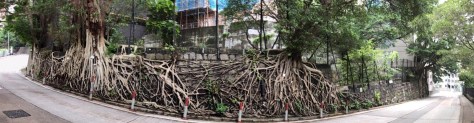
There are public parks such as Blake Garden tucked into the hillside, as well as many of Hong Kong’s prestigious private and parochial schools. The narrow roads provide relief for old banyan trees that have lived there for centuries. They cling to sides of walls like stubborn old centurions and continue to gasp for air and suck water.

img_8723.jpg

Many new trendy boutiques and cafes line the pockets above Sai Ying Pun and Sheung Wan. These shops are dotted throughout the area where we are staying and are immersed between many staircases such as Ladder Street and the escalators that ascend from Central to Midlevels. The manual stairs are not as nice as our tiled steps in Golden Gate Heights, but purposeful. Finally, we scaled our Air BNB in the five-level walk-up after plenty of exercise on the hilly side streets.