Tag Archives: Museum artwork

Brooklyn Fashion at the Legion of Honor

Being a contributing member of the Fine Arts Museums not only gives you reciprocal membership at the Asian Art Museum in San Francisco, but over 100 other museums throughout the U.S. So if you intend to hit major museums like I am within one year, it’s a worthwhile membership. It includes the MOCA in LA other key museums in lesser traveled cities.

Last night we attended the opening of the new exhibition at the Legion of Honor. Sponsored by the Brooklyn Museum, it featured fashion from the 20th century. Here were a few of the displays:

The well attired attendees were worth seeing and viewing, along with one of the room collections in evening splendor.

The American Museum of Natural History (AMNH), New York City

image

Until you’ve been to the American Museum of Natural History in NYC, you won’t really have a good grasp or perspective on dinosaurs and the age in which they proliferated. The extensive displays, educational material and timelines were fascinating. Embarrassingly, it was my first time there, but I’m glad I finally made it up to myself and others.

While dinosaurs were found throughout the world, I had only heard about the dinosaur fossils and bones that were discovered in North America. Many of the intact fossils were found in swampy areas where the dinosaurs got stuck in the mud (literally). After the mud solidified to stone over millions of years and their bodies disintegrated, the dinosaurs became fossils. This enabled paleontologists to access many complete sets of bones for research. One of the early elephants, known as a mammut, was found locally in Newburgh, NY, in the back yard of Vassar!

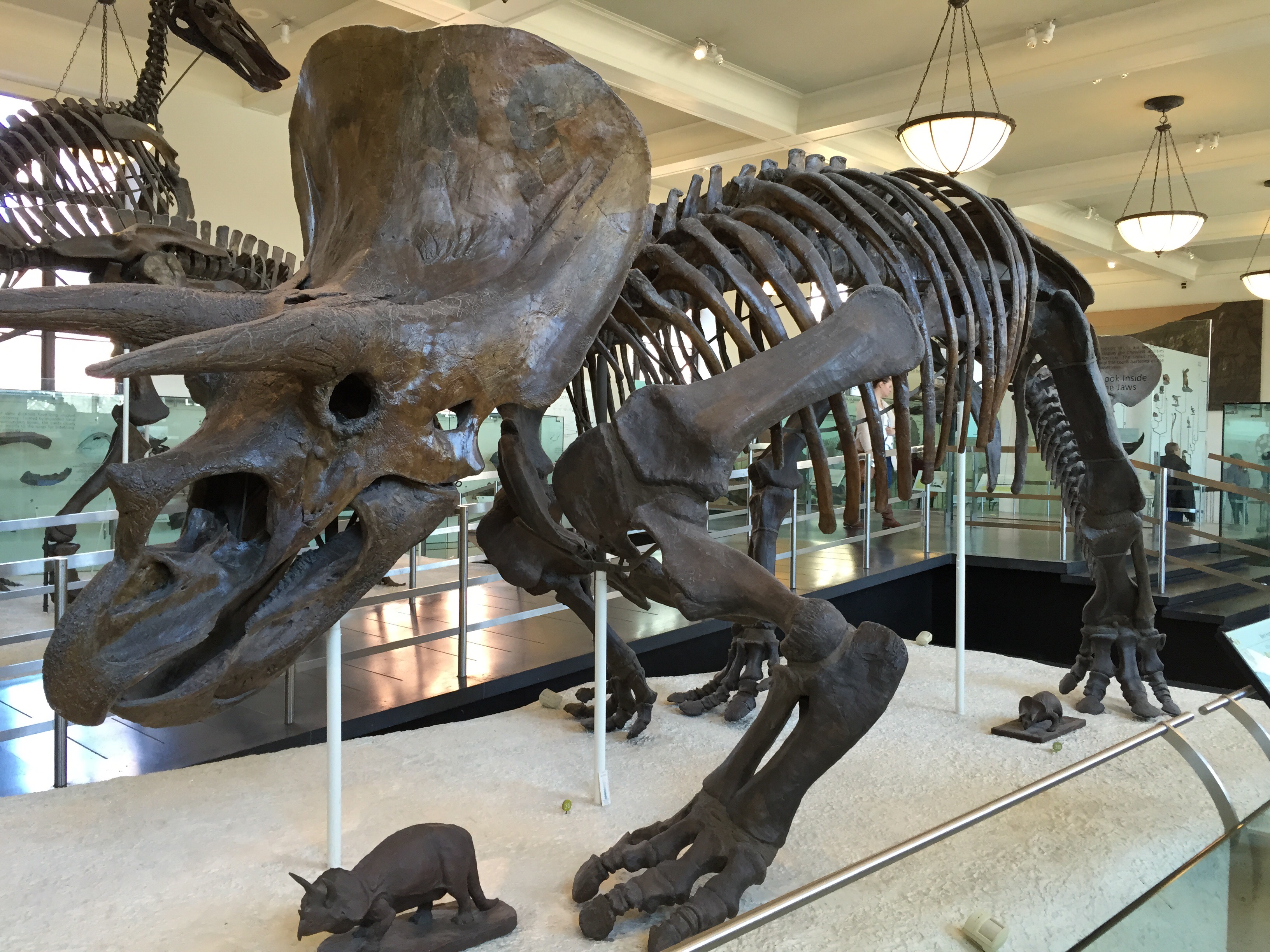
The above photo shows a early rhino-like dinosaur. Below are photos of the mammut (with the elephant tusk), an early moose-like dinosaur and other pretty creepy looking animals. It seems that a huge meteor that hit somewhere in the Yucatan caused the extinction of dinosaurs around 65 million years ago. Only the birds that could fly were among the survivors, yet they too met an eventual decline.

Many of you familiar with San Francisco’s Golden Gate Park may not realize that it was designed by landscape architect Frederick Law Olmsted. He also designed New York’s Central Park. There are many similarities in shape and proportion, but Golden Gate Park is actually 20% larger. At the same time, the Academy of Sciences in San Francisco must have modeled the displays of animals after those in the AMNH. The displays of taxidermy (“stuffed animals”) reminded me the ones we took our kids to sketch in the Academy. (Kids can now stay overnight at the AMNH, just like in Ben Stiller’s “Night at the Museum” movie).

It’s no wonder that Teddy Roosevelt was so awed by the scale of these living creatures and initiated the National Parks so more people could see them. The Alaskan Brown Bear, bison and Alaskan moose were among my favorite exhibits, shown below.

I’m in a NY State of Mind…

Although Billy Joel has been performing at Madison Square Garden, I wasn’t able to see him because he’s off during the time I’m here. Nevertheless, the weather, cultural riches, and access to all forms of public transportation have sucked me in to see it, do it, and think it just like a local New Yorker.

On a recommendation from New Yawka Peter (who lives in HK), I was inspired to head back down to Nolita’s neighbor, Chinatown. The new Museum of Chinese in America was recently coined by Maya Lin, the young architect who designed the Vietnam Vets Memorial in Washington, DC. Tracing Chinese American history and seeing the Chinese diaspora felt like going home to an old but familiar story. Just like popular Italian operas, you recognize the tunes, the stories, the characters. Only the comedic element was missing.

Nevertheless, the timeline was well presented. The history of the railroads, promises of gold, through days of war, Nationalism, and Communism in the home country were captured efficiently. I learned about the achievements of many Chinese Americans whose names were not familiar to me. They included an astronaut, a prominent AIDS researcher, and a female pilot. Maya Lin and the museum curators did a decent job highlighting the right amount of information for visitors.

Photos, from top, left to right:
1. Display area
2. Restored storefront of Chinese shop
3. Sign that bears a chilling similarity to the anti-Islamic protests currently in Germany

This museum is worth a visit, for content and the Maya Lin oeuvre. You can see and hear her talk about it at https://m.youtube.com/watch?v=976o62w45zg.

On a lighter note, the rest of my afternoon was devoted to seeing another theater production, “It’s Only a Play”, with Martin Short, Stockard Channing, and Matthew Broderick. Sorry to say, (to friend David, who was anxious to hear), that despite the big names, the script failed to keep the audience engaged. The actors were skilled at their craft, particularly my favorite Stockard Channing (from Grease and Six Degrees of Separation), but the story of the failure a Broadway play felt weak and contrived. It’s sad to think that the talents of so many were put to the task of delivering an uninspiring story, that ironically was the topic of the play.

The highlight of the evening was having a delightful dinner at Blue Hill on Washington Square with fellow architect Rik. We shared stories of being in the “order”, keeping up with the new techies, and fast-forward Chinese students. The food and service were impeccable, so definitely worth the cost of being entertained. Highly recommended.

Photos, from top, clockwise:
1. Thousand Year-old Egg and Pork Congee, Chinatown lunch
2. Mustard Relish for Bread, radishes from Stone Barn, and kohlrabi with cheese at Blue Hill;
3. Blue Hill dessert, sponge cake , apple crisp and ice cream

Coming up: Natural History Museum, Manon, and maybe the Neue Galerie on the final day in The Big Bad Apple.

The Mighty Mets

My focus for the Metropolitan Museum was to see the Central Asian and Silk Road related items to reinforce my understanding of the intercourse between East and West.

(You can tap on one photo to get full screen views in a slide show. Give time for them to upload.)

These are examples of Central Asian Art, beginning with the establishment of Islamic religion around 700AD through the reign of Timur or Tamarlane around 1350. If you remember from my travels in Samarqand and Bokhara, Timur’s base was there but he and his descendants conquered Iran, India, and everything in between.

image

At the museum, huge scale entry gates, temple facades, and rooms or courtyards installed in large rooms or areas help visitors understand the architectural scale and context of various cultures. Above is the neo classical facade of a U.S. Bank from Wall Street. Below is the description and view of Assyrian entry gateposts. The map shows the location of various products traded throughout the world, including slaves from Africa, spices from East Indies, and chocolate from Mexico.

Here are a few selected Chinese items from the extensive Asian wing (only the first item is Silk Road related):


1. Horses and camels were coveted from Tang period when they were first traded from the Ferghana Valley, the narrow passage between China and Today’s Uzbekistan. The woman wears headgear to protect her from sand and dust.
2. Ming scholar’s room displaying furniture from period.
3. Bronze wine vessel that depicts serpent on cover and handle. Steam comes out of mouth when wine is hot.

Another “MET” addendum, from the Metopera: curtain call for Don Giovanni by Mozart. 19th century writers admired Mozart as one of the first musicians to tackle deeper psychological aspects of human triumph and tragedy in the main characters.
image
Photo: Opera cast with Kate Lindsey and Peter Mattei, and Guest Conductor Alan Gilbert congratulating his orchestra.

Sorry, sports fans, I didn’t make it to any NY Mets baseball game, as the season hasn’t opened yet (Or that I am aware of; unless they are training elsewhere I don’t think they schedule games on snow-covered baseball fields!). Otherwise I coulda hit a triple!

Holy MOMA!

The Museum of Modern Art (MOMA) is and was overwhelming, so it required an advanced tactical maneuver (I was trained over twenty years ago during visits to Disneyland with kids). I had been here a few times before so I was prepared for the onslaught. I spent the better part of the day at the museum, from first arrival at 10:30 opening to a German film at 4pm, honoring this high Temple of Art.

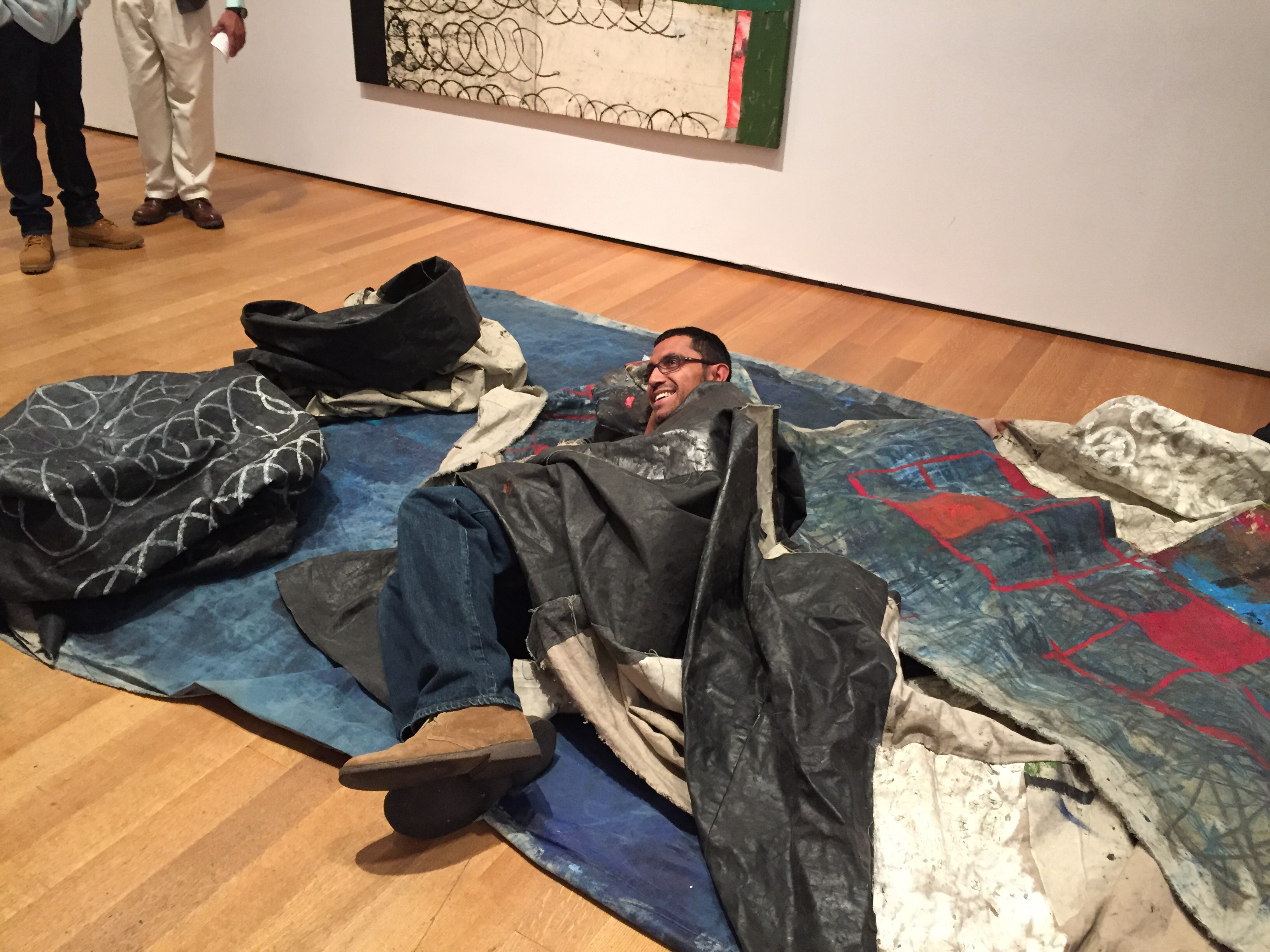
As recommended by the museum to visitors, I duly focussed on two exhibitions only. One was the special exhibition entitled “The Forever Now: Contemporary Painting in an Atemporal World”. Pretty vague title, but it basically tackled how artists are pretty eclectic, borrow from various sources such as the Internet and art history, and make art. In the photo below, you can see a pretty amusing pile of canvasses on the floor. The artist invites viewers to touch it and interact with it in ways you aren’t allowed to when it is displayed on the wall. A visitor got pretty creative with it, using the canvasses as a blanket!

image

Below is a painting I like by a black artist, Rashid Johnson. He painted a canvas entirely in black, showing his moods as he made strokes on the canvas. The black color also depicted the historical moment in Berlin when Europe decided to colonize Africa.image

The second exhibition and tour at the Design and Architecture Gallery was exhaustive and addressed “Uneven Urbanization” in four major cities: Hong Kong, New York, Istanbul and Rio. Mega cities are defined by having a population over 8 million. HK and NYC are considered one of the smaller cities in the spectrum of mega cities. The exhibit was put together by various consultants who tried to come up with small-scale solutions that people could do themselves. Building urban gardens and small cafes are examples to reduce alienation. Obviously this was a very tall order to try solving, but the exhibition was very thought-provoking. The tour guide, who teaches city planning, was very informative and packed a lot into a one-hour tour.

To recover from the heavy morning’s brain dump, I decided to lunch at the Modern, a Michelin-star rated restaurant at the MOMA. You can see the white glove service in the pictures and the menu below.

1. Main Course: Branzino steamed in spinach with trumpet mushrooms and orange zest
2. Starter: Grilled Fois Gras with quince
3. Starter: lobster and turnip

Starters were prefaced by an acorn squash soup with roasted almonds and sabayon. I chose a nice glass of French Chablis to complement my selections, after the wine steward failed to convince me to try a California Chardonnay or a NZ Riesling!

The finale at the MOMA was punctuated by a film “Left-Handed Woman” by Wim Wenders, a well-known German director (he did Wings of Desire and Paris, Texas). The most amazing part is that HE was actually at the film showing as part of a retrospective on his work and HE presented the film! This is what NYC gets that little specs like SF don’t. Thus my title for today’s posting.

Here’s a fuzzy picture of THE man on the left in front of the podium…

image

If this weren’t enough, I dashed over to Bouchon at the Time-Warner Center for a quick dinner of warm olives, broccolini and salmon terrine (all appetizers), then hiked my way over to Lincoln Center for my first opera evening. Despite already seeing a half-dozen opera movies filmed from here this past season, I still felt excited to be at the MET in the skinny, particularly at a sold-out performance of Carmen.

Sadly, however, Jonas Kaufmann, my favorite performer who was scheduled to sing, was sick tonite. He was replaced by Yonghoon Lee, who did a pretty decent job as his understudy. Fortunately, I’ll have another chance to see Jonas, a German version (with a real operatic voice) of Andrea Bocelli in August.

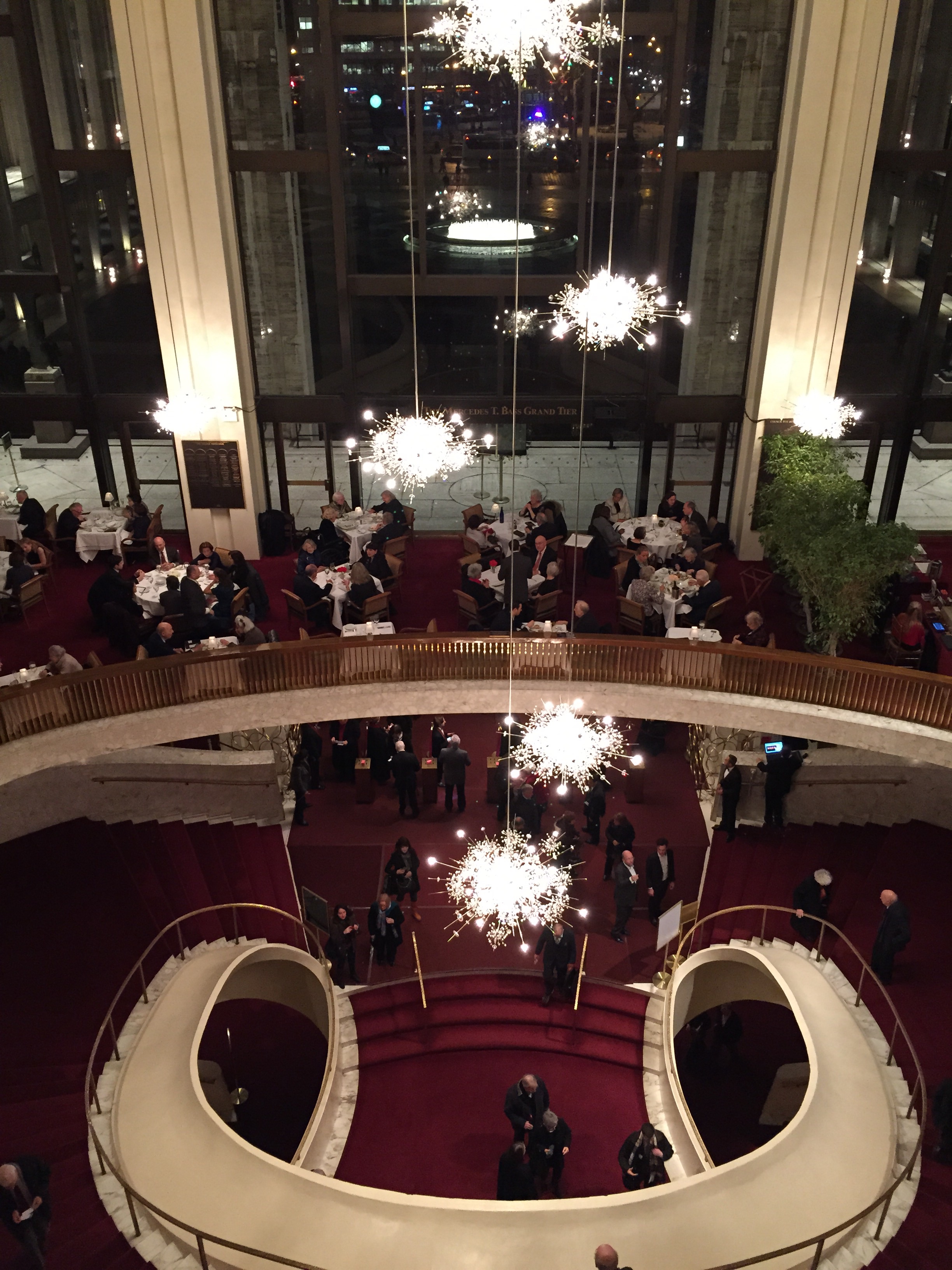
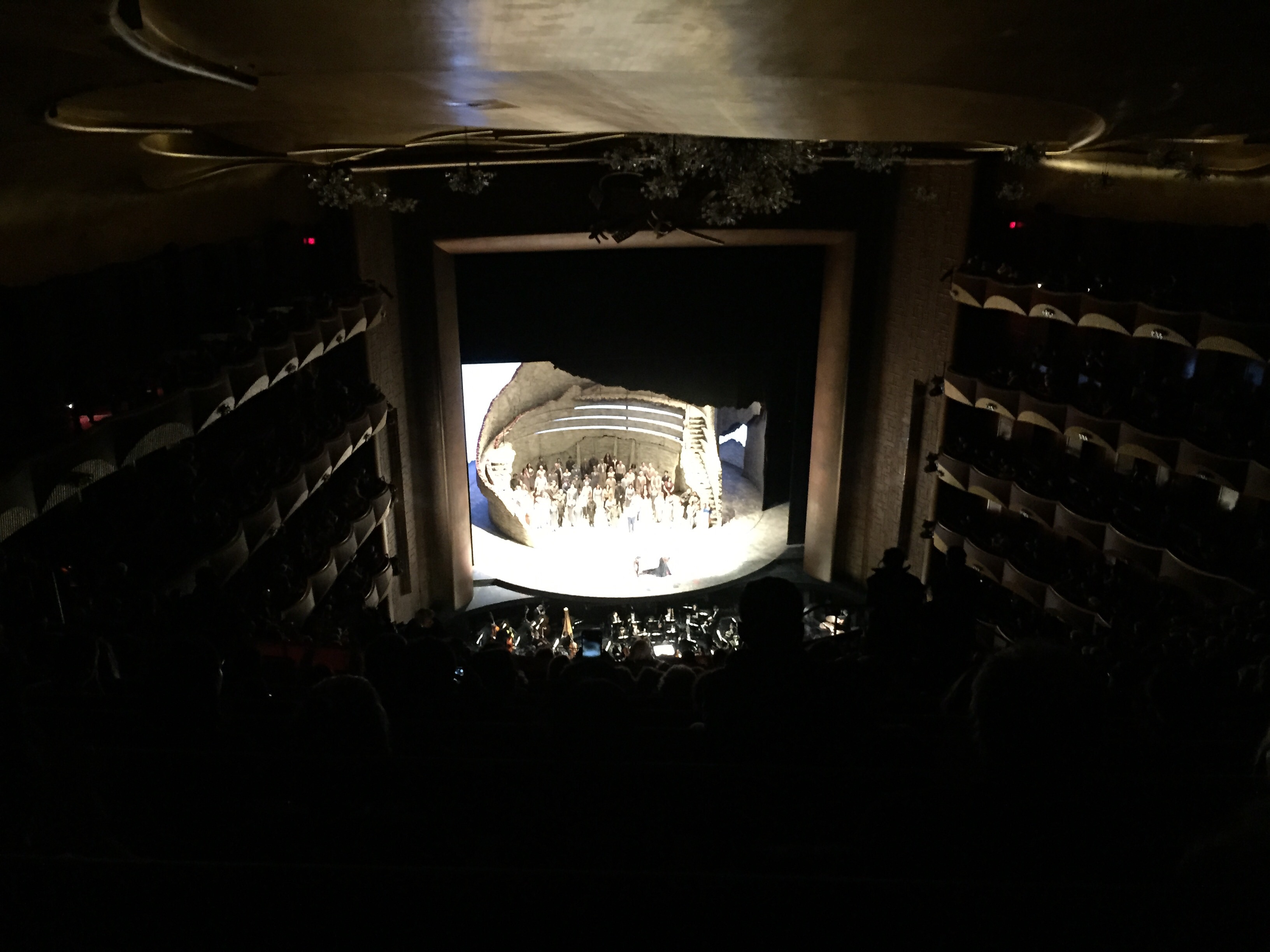
The opera only had limited seating in the rafters (dead top of the stadium, last row). It wasn’t the best experience, but I was able to witness a signature performance at the MET. Below are a couple of shots of the dated lobby interior and the opera house. The chandeliers inside the opera hall move up to the ceiling automatically when the lights dim so they are out of the way–well appreciated for the bleacher seats where I was located.
image

image

image

Photos above:
1. Lobby of the Metopera
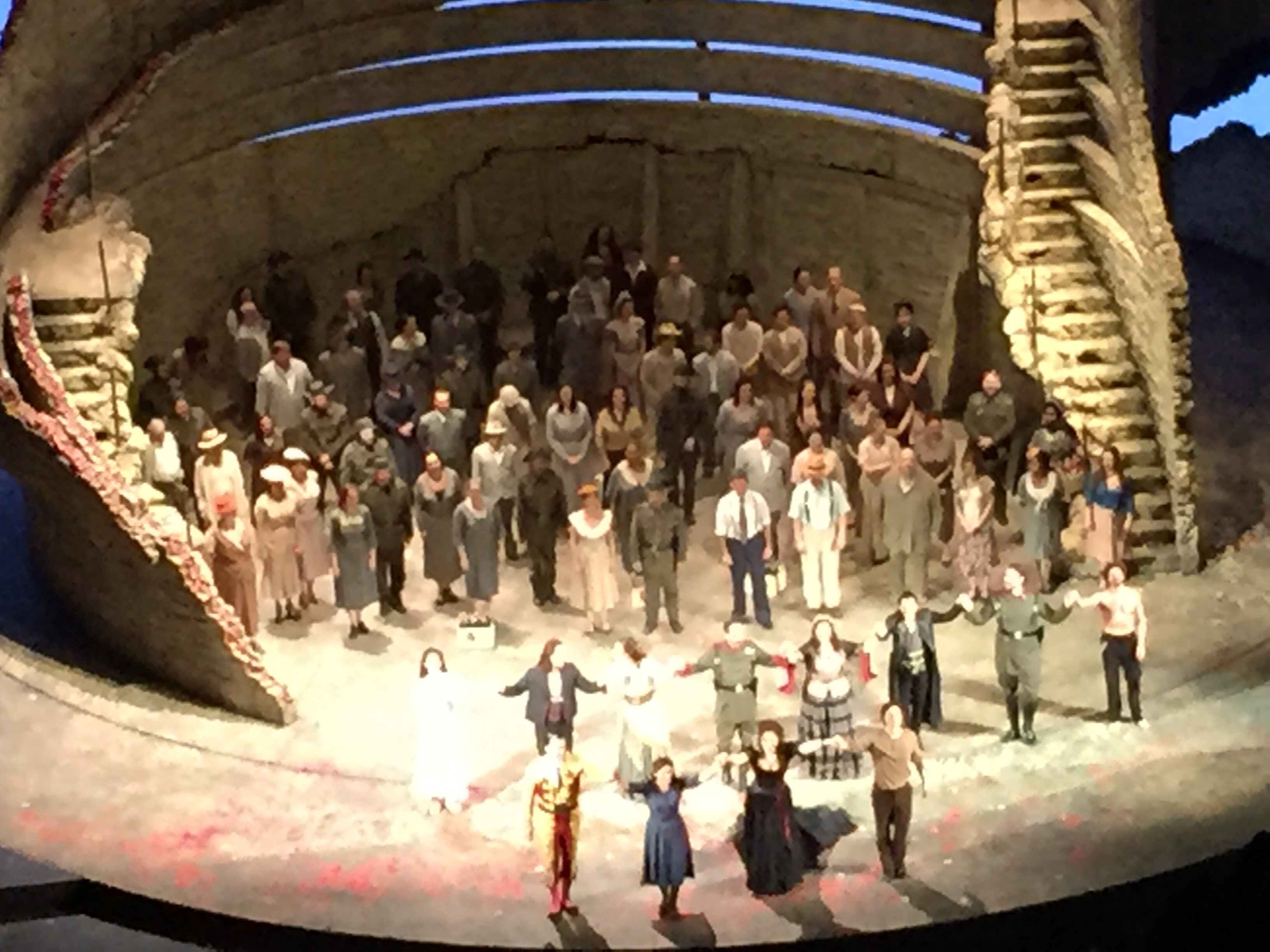
2. Stage from very tippy top (opera glasses are useless from up here– you need a telescope)
3. Curtain Call with Elina Garanca (Carmen) and Yonghoon Lee (Don Jose)

Good Night!!

Up Next: Serafina and the Audience

Resource Tips

You can find more MOMA news on their awesome website at moma.org. When you visit MOMA, you can track your path and send emails of items you like to study further to yourself! The site also allows you to search and copy images of many items in the MOMA collection architectural models. Ordering tickets online in advance is also a timesaver.

You can book Bouchon (the inexpensive cafe related to Thomas Keller from French Laundry) and the Modern (very expensive) on opentable.com.

100 Hours in San Francisco

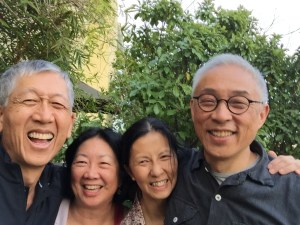
Those of you who have been checking my blog might be noticing a dry spell. I am planning a few upcoming trips this year, but I thought I would share a few recent activities with you. This weekend, we hosted some very good friends from Vancouver. Bennett and Colleen were arriving with some very serious dining plans that included Delfina, Mourad (the new Moroccan restaurant where Melissa works) and Nopa. We were to fill in the gaps between dinners, with epic walks, sights, and activities to justify the indulging among San Francisco’s best eateries.

The long weekend began on Thursday am, with a pickup at the airport. If you are coming from Canada like our BC friends, beware of the confusion between domestic and international airport locations. Customs and immigration might occur in Canada, but the airlines might still arrive in international or domestic, depending on the airline.

After hugs and greetings, we eventually set off on a specific shopping pursuit. At Bennett’s request, we ventured to Noe Valley to the Union Made store where Bennett and Gee Kin have bought elegant and hip men’s clothing. It didn’t hurt to have a 40% off January sale. Gee Kin likes to shop there (on Bennett’s recommendation) to keep up with the techie world, even if the prices are a bit steep. He found a great jacket there with super long arms that suited his proportions and was flattering for his next step out into Techie SF.

After this purely hedonistic venture, we recovered at Kasa on Eighteenth Street. Regarded as one of the best meals in town under $15, the home headquarters version on the food truck, this spartan shop eventually served a line out the door after we purviewed the menu of Indian specialties and ordered.  Three of us ordered a “Thali” lunch special of pork or lamb and three sides for $11.50.  I had the “Kati” roll with lamb. You can check out the menu at http://www.kasaindian.com/indianrestaurantsf/kasa-menu/.

We drove our guests home via the upper Market area and made a quick stop at Twin Peaks for a view of the city. Being a perfect day of 65 degrees, we had no problem with the usual windy bluff it normally is at the top. To top it off, it was reasonably clear and we could see Mt. Diablo in the East Bay, 50 miles away.

After a nap back at the ranch, we headed back to the same neighborhood in Noe Valley for dinner at Delfina.  We enjoyed the banter with the waiter over the descriptions of wine and food we eventually ordered, and the meal was predictably delicious.
image
Day 2 started off with a morning walk down through the Inner Sunset to the DeYoung Museum to see the Keith Haring exhibit. While not particularly my thing, Haring had a following in New York and used spontaneous, street art to make his political statements. He covered many contemporary issues, including the Aids Crisis, racism, and world hunger.

We brought a picnic lunch to enjoy in Golden Gate Park in the unseasonably warm January weather. In the backs of our minds were the worries about the lack of rain that gives us beautiful guilt-ridden days of summer in the middle of winter. We skipped the wine but toasted our friendship on tofu and cloud’s ears, an ethnic dish, beet salad, sauteed kale, and fresh bread from Tartine (earned the night before).

After breezing past the adjacent Academy of Sciences, we headed over to Green Apple Books in the Richmond District. Another venerable local institution, this bookstore has expanded its footprint to the Inner Sunset where it shares space with LeVideo. It helped to bail out another well-loved service that has seen better days from a bygone era of VCRs and DVDs. I bought another used copy of “The Orientalist”, one of my favorite books, and a signed copy of a dessert book by the pastry chef at Chez Panisse for Melissa.

Our dinner that evening was a stunning introduction to Mourad. This new restaurant by Mourad Lahlou at 140 New Montgomery in the renovated AT&T building, is where Melissa works as pastry chef. We were lavished with new menu items produced by Mourad’s new Chef de Cuisine, Chris Kajioka, and our own Melissa. After being warmly greeted by Mourad, we were treated to a back-of-the-house tour of the kitchen. It was exciting to see this new venture long in the planning stages come to fruition, and we are so proud of Melissa’s dedication and success to her craft.

Day Three on Saturday was occupied by a walk from home to the North Side of the city to Chestnut Street. Gee Kin led our guests through Golden Gate Park. By pure accident, they found the sculptured heart painted by their friend Hung Liu perched along the Broderick steps leading to the Marina. You’ll hear more about this artist momentarily.

We regrouped just before dinner to drive over to the East Bay via the San Francisco Oakland Bay Bridge. We could still see the remnants of the former Bay Bridge alongside the spanking new version, to explain the reason for another bridge. Being seismically compromised, SF Bay Area residents recognized the importance of sustaining this vital transportation link between two major cities in California. While it was originally estimated at $1 Billion, it ended up costing $6.4 Billion and several years longer than anticipated.  Oh well, a bit off.

Our dinner with Hung Liu, a Chinese artist living in Oakland, was very illuminating. She and her husband Jeff shared with us their experience doing and selling art in the US. She is an accomplished artist and was teaching at Mills College until recently. You can see a sample of her work here, that represents a young Chinese bride with a bird in a cage superimposed on the image. We visited her studio in East Oakland after a classic meal at the Bay Wolf Restaurant on Piedmont Avenue.
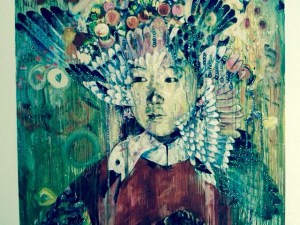
image

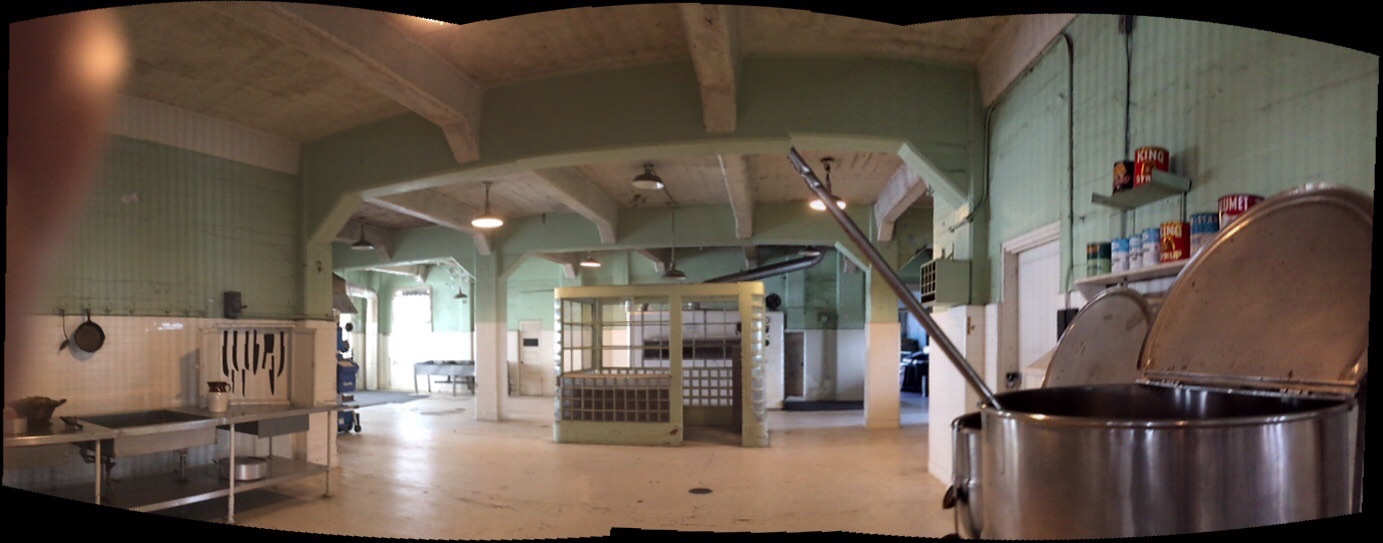
Day Four started with an early morning tour of Alcatraz Island, with a featured exhibition of Ai Wei-wei’s work. While the location may have been perplexing to many, it was a fitting venue for highlighting the issue of political dissidents and the importance of activism. Ai Wei-Wei used his expertise and talents as an artist to convey this message to many who would not otherwise attend an art museum nor a prison. He cleverly and adeptly combined the two experiences into one to convey an important message. Below is a picture of the kitchen at Alcatraz.

The kitchen at Alcatraz

Believe it or not, this day was capped by SuperBowl Sunday! No, we were not above succumbing to social influence. After lunch at Nopa on Divisadero and a quick tour of the neighborhood market, we hunkered down for the afternoon and pigged out on beer, guacamole and chips, finger food, and split pea soup. What more could you ask for on a lazy Sunday afternoon?

Our final day of the endless weekend was topped by a final walk from home to Hayes Valley via Upper Market. We shot past UCSF at Parnassus to Seventeenth Street, and then down the hill. Bennett and Colleen did some serious shopping on Hayes Street. I managed to get them to the Glen Park Station to head to the airport at the end of the day just in time for my final German conversation class on time!
image

A few notes:

Urban walking is one of my passions! You can find out more about 5 day sagas from San Francisco to Napa or San Jose and more at http://www.crazyladywalks.com

You can see some of Melissa’s amazing desserts on Instagram at _melissachou.

For followers: Look for new postings in Early March for a week in New York City visiting museums and the New York Metropolitan Opera (Carmen, Don Giovanni and Manon). Another trip to Germany for the Dresdenmusikfestspiele in May is upcoming, and another world trip is in the works for late Summer. Stay tuned!

Day 56(b): Szechuan Provincial Museum

The museums we visited are incredibly rich and excellently curated. They brought to life a renewed respect and deep appreciation for the continuity of the Chinese culture. This particular museum focused a great deal of attention on Szechuan’s formative period between the Chou and the Han periods, which were much earlier than those of other cities. The museum was laid out in sections of calligraphy, painting, pottery and bronzes.

Photos, from top to bottom, left to right:
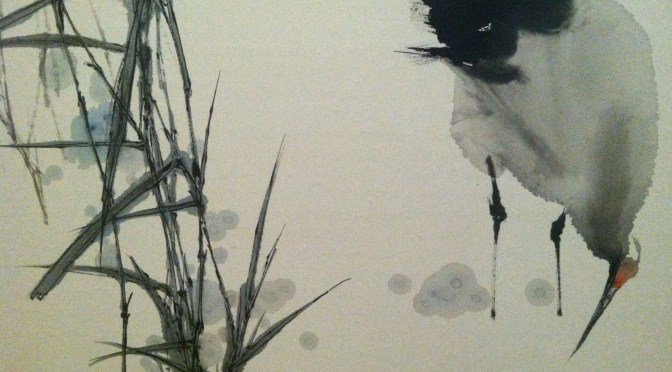
1. Contemporary painting, Red Crane
2. Contemporary Calligraphy
3. Bronze sculpture, Chou Dynasty
4. bronze bells, Chou Dynasty
5. Pottery making process
6. Han Dynasty Figurine
7. Han Dynasty Figurine
8. Han Dynasty Horse and Horseman
9. Celadon bowls
10. Museum Exterior


Day 54: Dunhuang City Museum


The Dunhuang Museum was an exciting experience, because the museum provided the history and the context for what we were seeing in the ruins the previous couple of days. Most of the development of Dunhuang occurred during the Han Dynasty, when the emperor sent troops and their generals to protect the frontier of China. At that time, Dunhuang and the area around it was the outer edge of the country. The Han general finally defeated the Hsiung Nu raiders from the North.

Following this major victory, trade needed to be controlled and taxes charged. So it stood to reason that Dunhuang occupied a very strategic position in the future success of China. As a matter of fact, the heavy control over the trade and passage through the Silk Road allowed the Han Dynasty relative peace and prosperity. The country advanced in many areas during that time.

After a period of turmoil and disorganization, the Tang Dynasty continued to maintain strong control over the passages. We visited the Mogao Grottoes in the afternoon, and while there are no photos to share the experience, the Buddha sculpture, paintings, and architecture were a clear expression of the flourishing of encounters with the outside world. Trade, language, art, and religion were being introduced, explored, challenged, and absorbed between many cultures during this time (600AD-900AD).

I am posting a few pieces from the museum that I particularly liked and found quite unusual. They seemed to be very robust and expressive, similar to the style of the better known horses of the Tang period. The Photos of Han and Tang (200BC-900AD) Museum pieces, from top, left to right:

1. Celadon plate
2. Pair of Cocks
3. Arabic lettering
4. Bronze Turtle
5. Pair of men pulling a strap
6. Expressive Figure

The new museum itself was surprisingly beautiful and excellent in its presentation of material. It was very thoughtfully and clearly laid out, and spanned everything from early neolithic implements to planning for the future generations. It will be interesting to compare pieces as well as the building with the Arab Museum of the World that I visited in Paris in July. I am inserting a couple of photos to show you how the new building interior courtyard looks. I would highly recommend this museum to anyone intending to visit this area.

Photos:

1. Slanted Door detail to match building geometry
2. Atrium Roof
3. Interior Courtyard, applying small gridded windows similar to those used in the beacon towers in Gaochang and Jiaohe

Day 37: Military History Museum

image image image image image

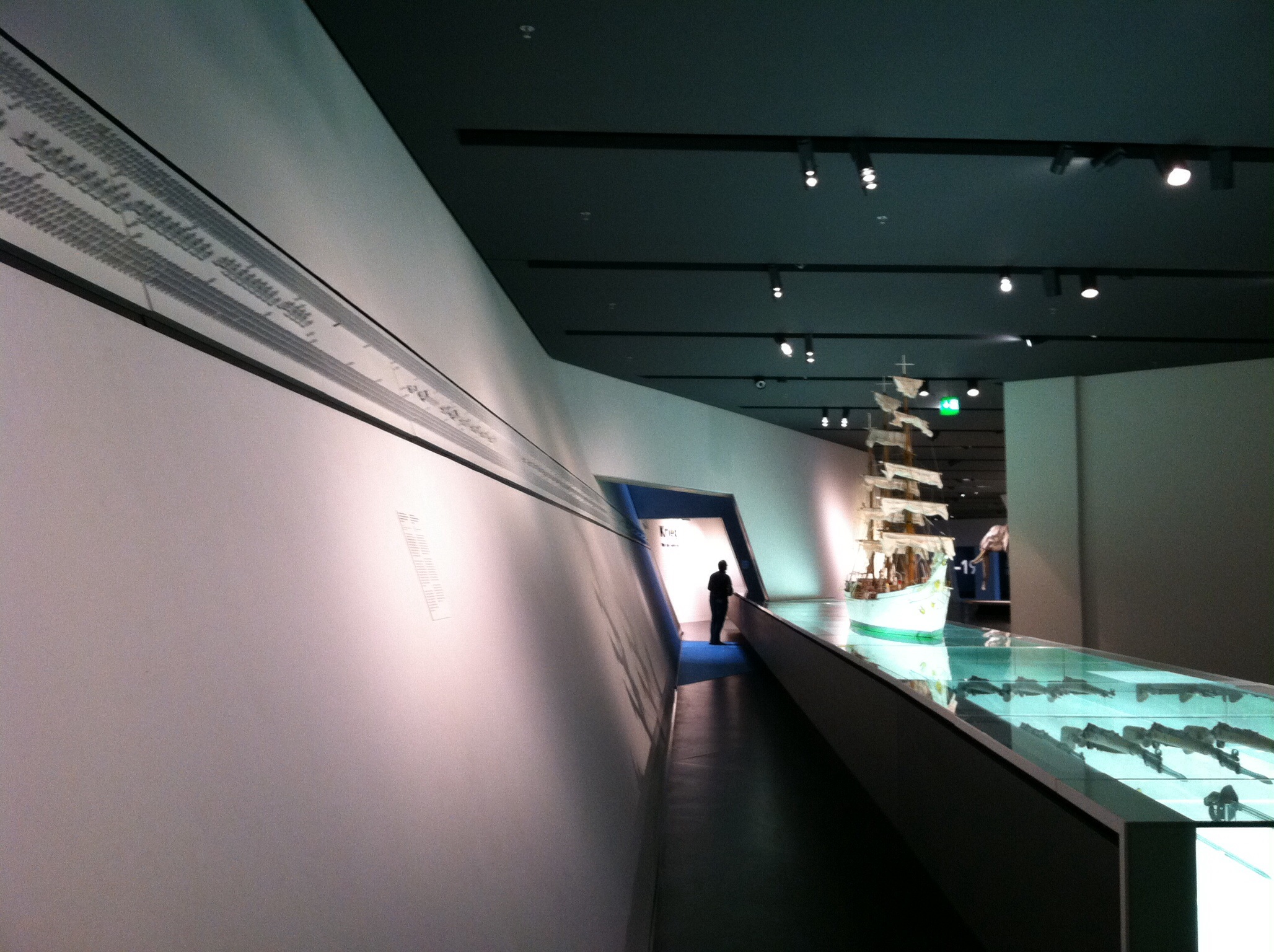
The Military History Museum is one of the most interesting museums in the world, not only for its collection and the building design, but for the message it brings. It tries to tackle the prickly issue of war and its consequences and uses displays to teach how everyone loses in wars.

Daniel Liebeskind designed and finished this building in 2011. The exterior of the neo-classical building is truncated by a metal shard that points to the spot where Dresden was targeted. While both sides of the building are devoted to traditional armaments, the new building tries to confronts visitors with the human impacts of war.

Photos above, from top to bottom:

1. Exterior of the building, located in a former military area.
2. Overview of Building interior on the top floor.
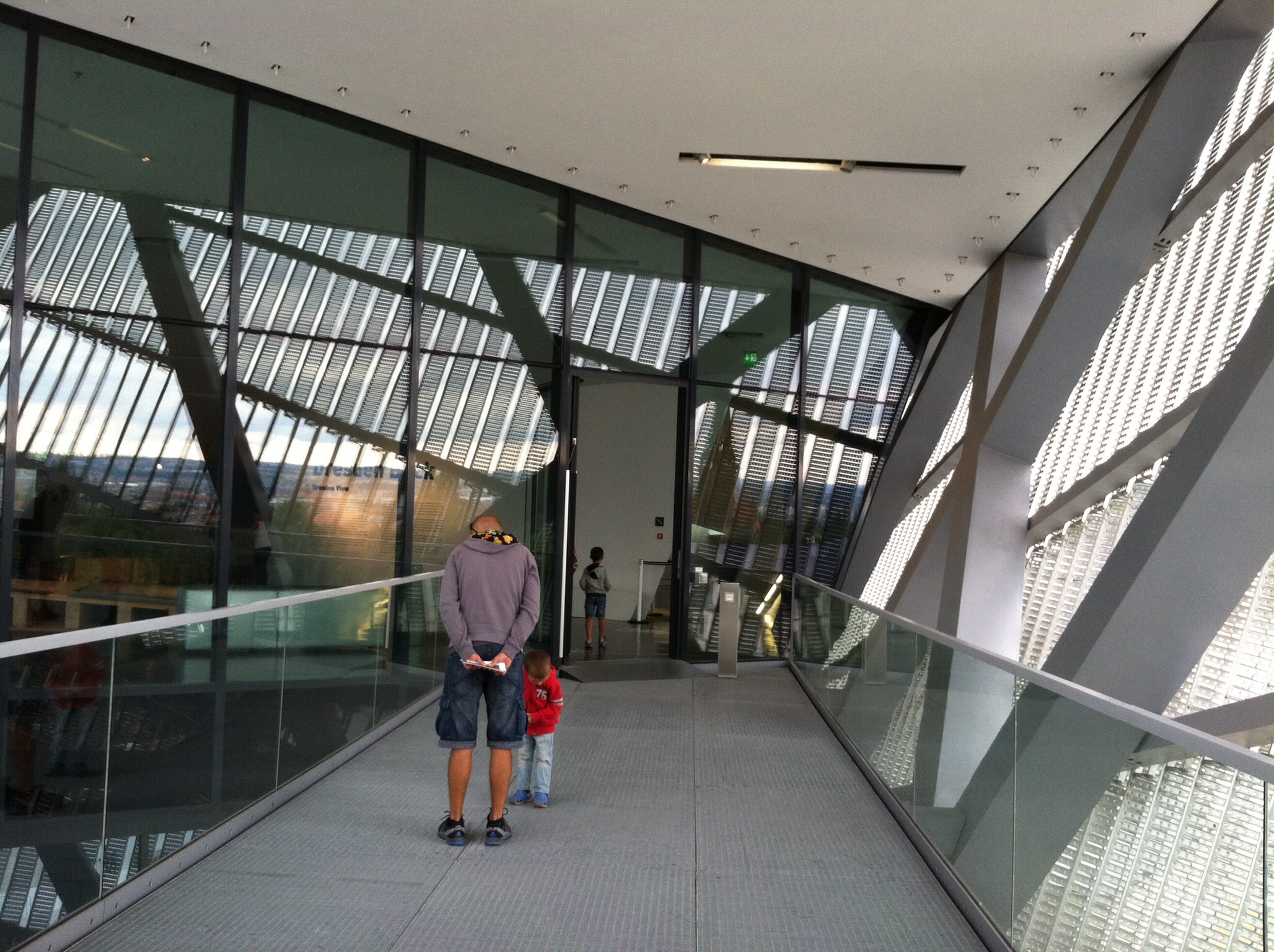
3. Exterior terrace inside the metal point. From here you can see a view of Dresden Old City. The open metal walkway can be a harrowing experience but is appropriate with the entire building and what it conveys.
4. Beautiful stairs and custom designed lighting built into the handrails.
5. Custom designed horizontal panel for the elevator controls.

Photos below, from top to bottom:

1. Wall to the left shows a regiment of 10,000 troops in formation heading to war at a miniature scale.
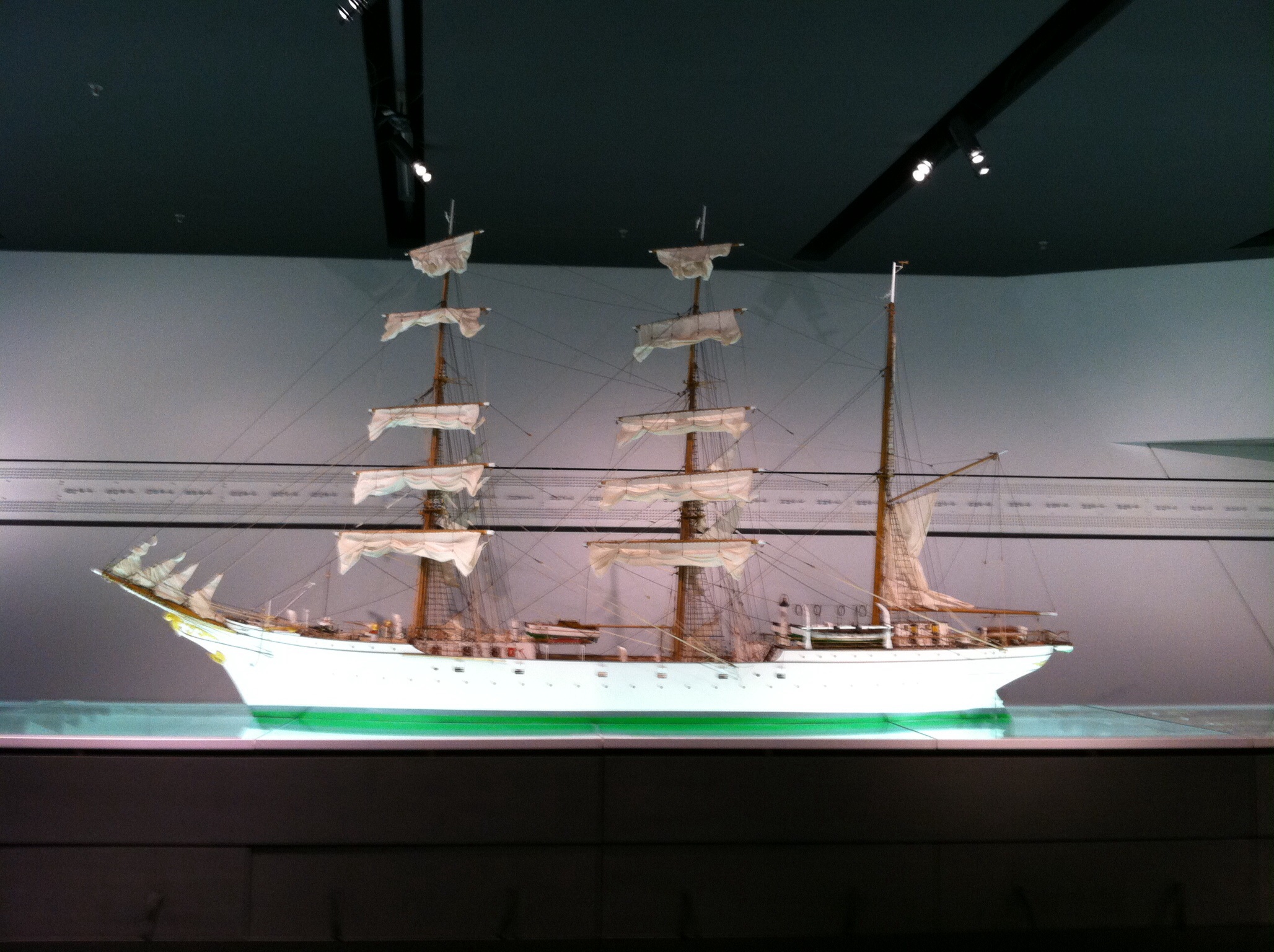
2. A scale model warship, with a view of the formation in the background
3. A full scale display of animals
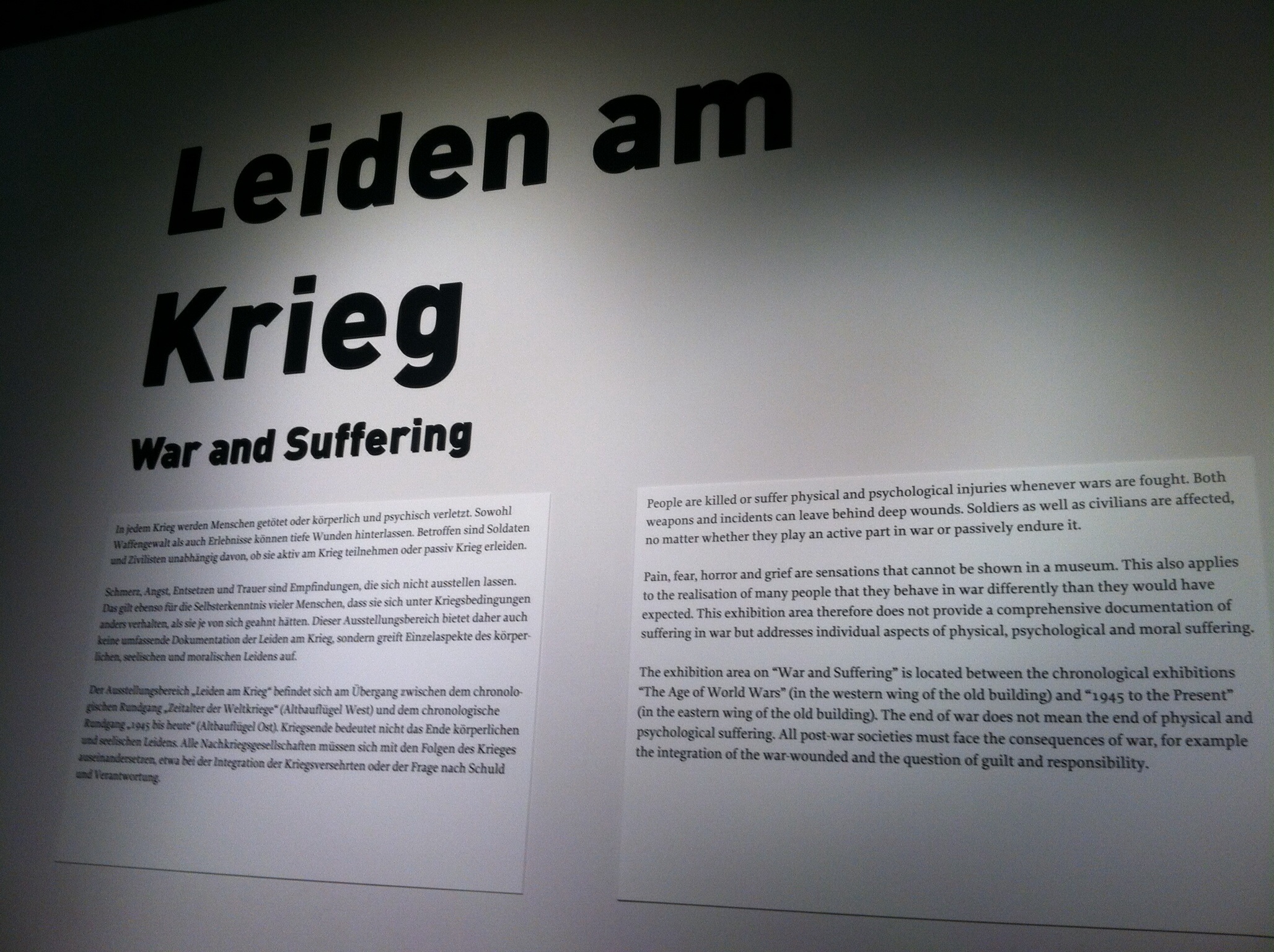
4. Typical text explaining the consequences of war. (Tap to scale up)
5. Another text display.(Tap to scale up)

imageimage
imageimageimage

For more information, see http://en.m.wikipedia.org/wiki/Bundeswehr_Military_History_Museum.