Day 34 (a): Hellerau Garden City

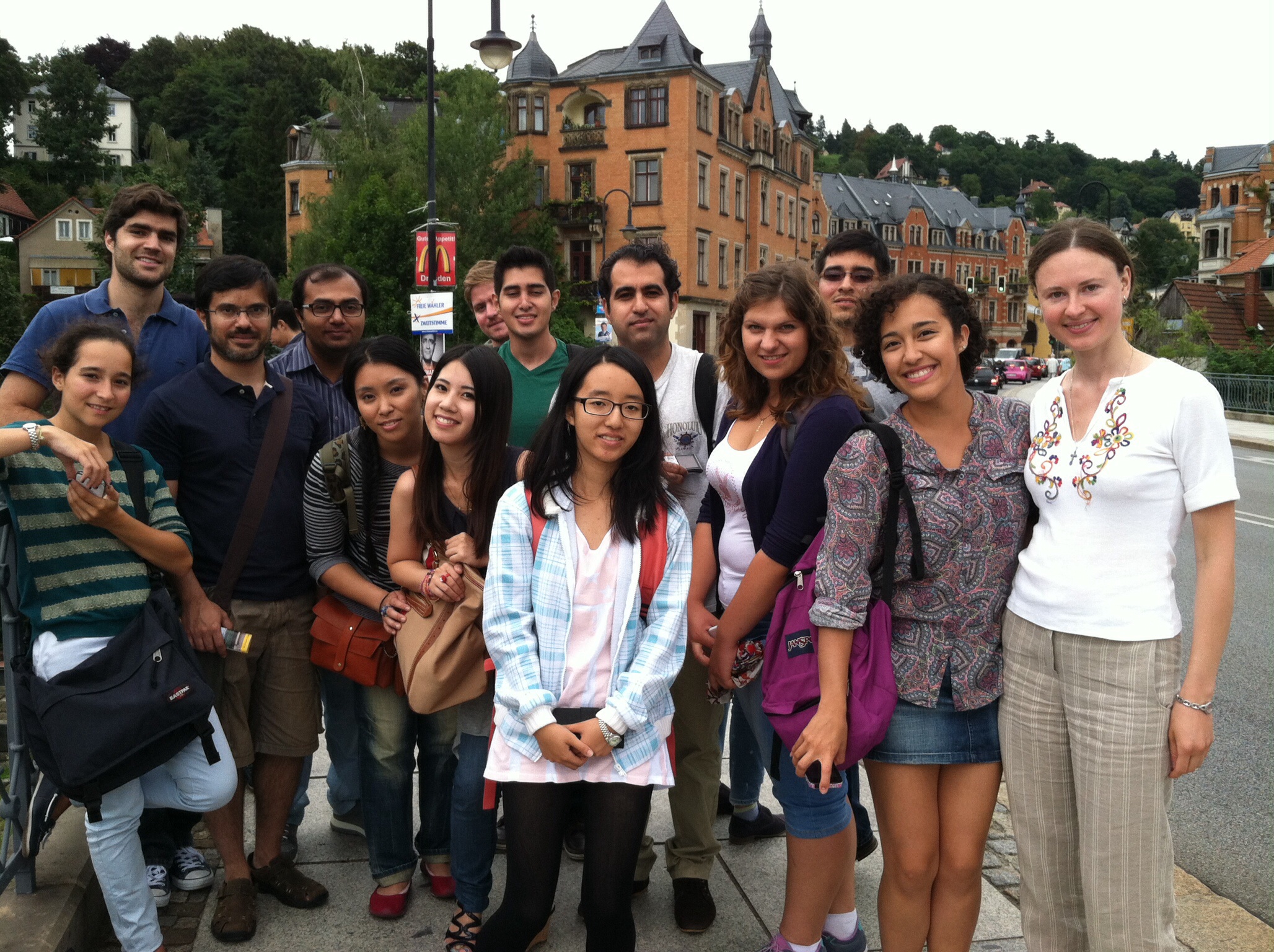
image imageHellerau has always been a romantic notion to me, but I finally was able to see it with a small group of students sponsored by the GI. It was based on an English town planning concept developed around 1910 in this idyllic “Dorf” a mere 15 minute ride along my tram line 8 north of Dresden.

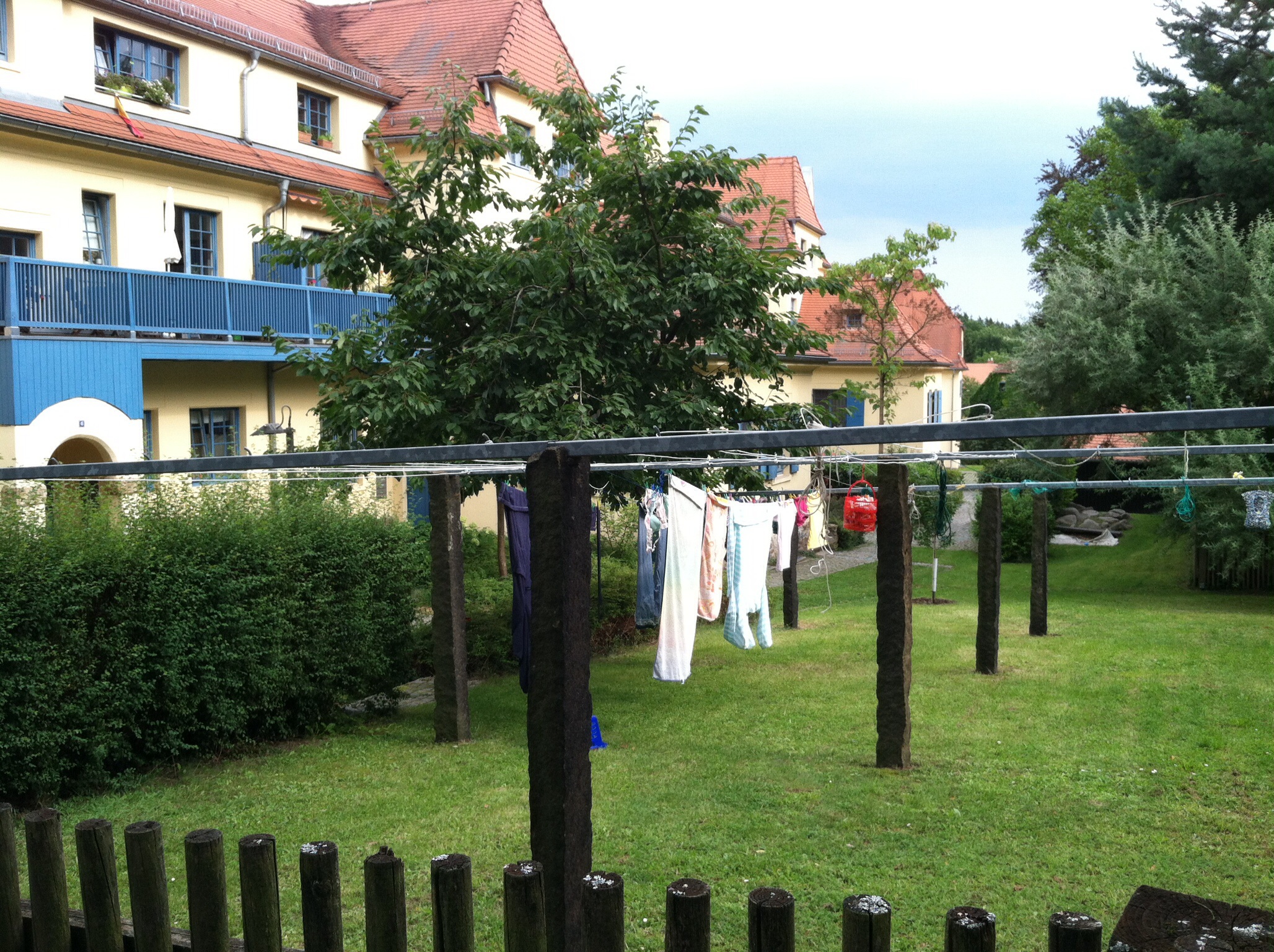
It felt a little bit like Marin or wooded Montclair, but of course, in the German tradition, extremely tidy. Everyone was entitled to a well designed unit, with plenty of open space, gardens for every unit, and community space. The buildings were well built and conceived, as evidenced by its condition today. There is the line connection to the city, but it looked like most people had cars to get back and forth.

The Werkstatt was intended to provide a community for Live-Work, obviously not a new concept. A furniture shop served as one of the mainstays for income. Today, it has been repurposed for artists and designers. Local temporary dance companies work in the community center and musical performances connected with the Dresden Music Festival are held here annually.
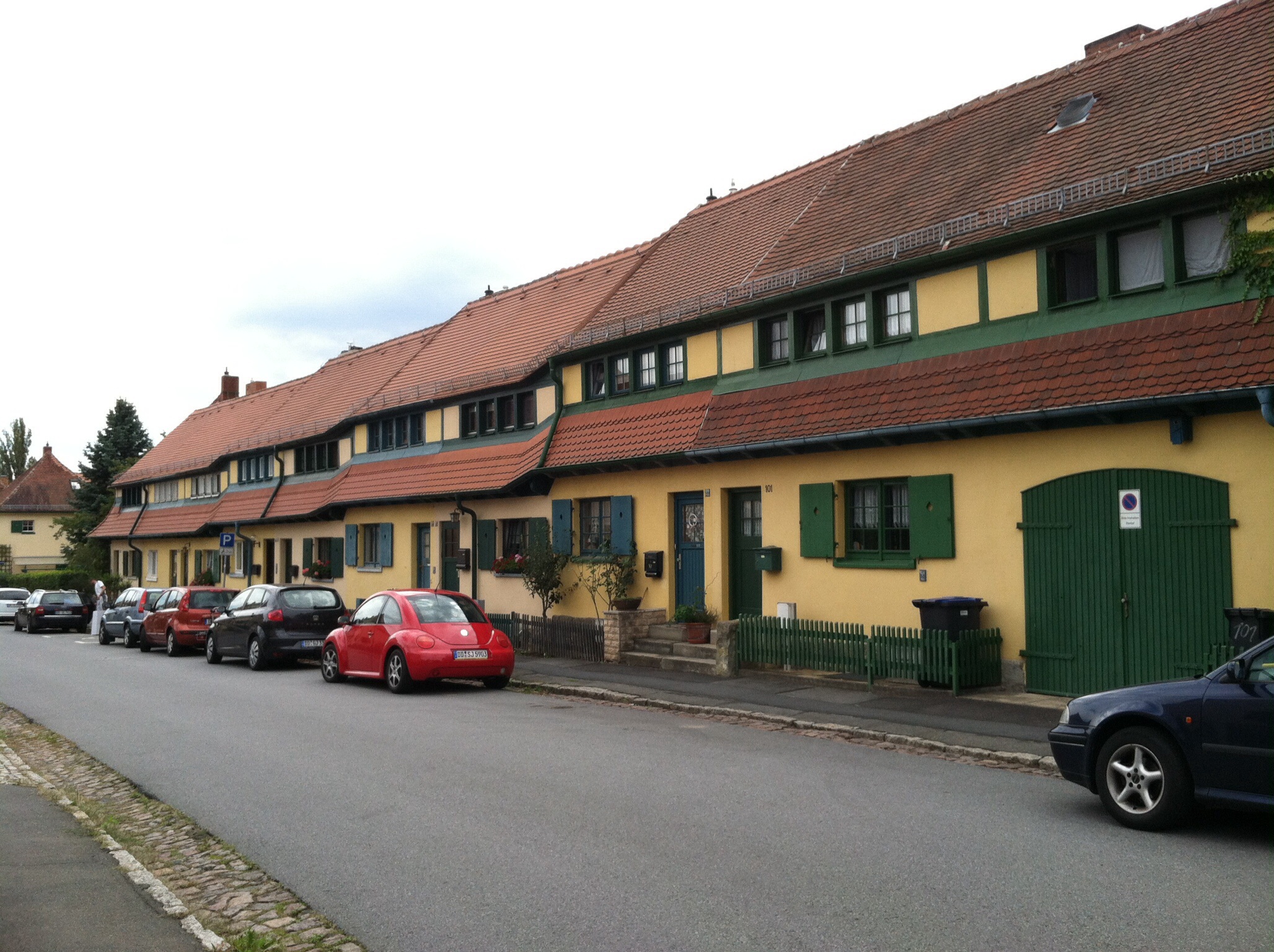
image image image

Photos, from top, down:

1. The new spin on what Germans coined for Kindergartens. They are, needless to say, well planned stages of life, with a lot of attention and loving care. These are still excellent models to emulate across the world.
2. Sustainability in action. This hasn’t changed from when the development was first built. Time for us to rethink our priorities.
3. The first row housing development on a small scale, taken from the British, with more color
4. The Art Nouveau influence at that time is evident from the graphic lettering used on the Workshop for Furniture.
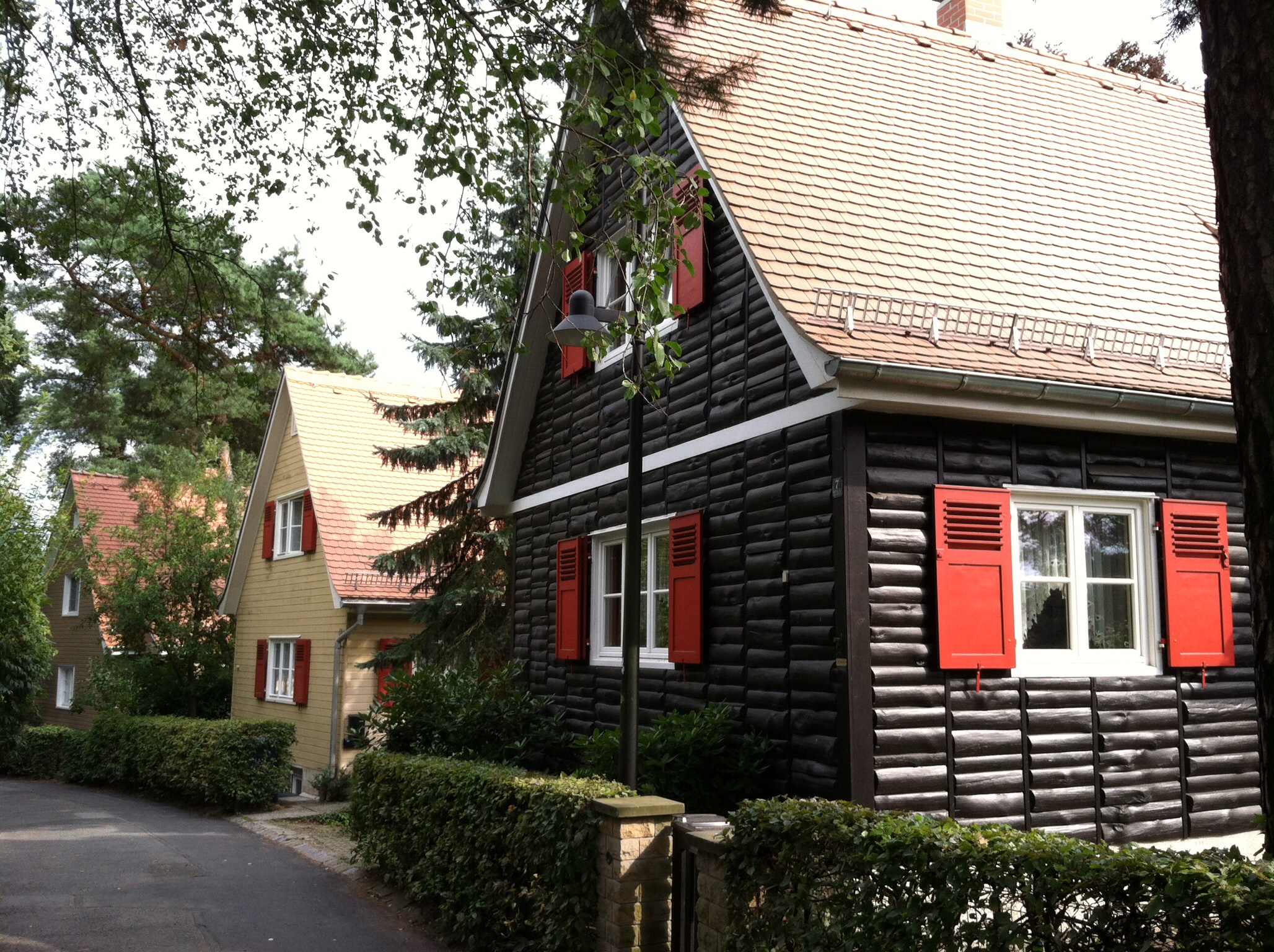
5. Individuality was allowed on buildings. While most were stucco plaster, this one utilized a log cabin concept with tapered logs, but stacked in smaller lengths in metal channels. This could have been a very efficient way to construct the exterior, and it still looks durable and easy to maintain.

For more information on Hellerau, check out http://www.hellerau.org/english/hellerau/history/the-garden-city/

Day 33: Radeberger Beer Factory

image image image image image

The gold letters of the Radeberger Beer Factory gleamed against the Dresden frequently gray summer clouds and reminded us where we were. The GI has done a good job taking us to some pretty diverse spots in Dresden and schedules morning and afternoon tours. Unfortunately the interest has dwindled and we had only 12 students attending this tour. It surprised me, since there are so many young people in the program. Could there be a loss of interest in beer, even though our tour guide asserted that beer is healthy for you and won’t cause bier bauchs? (Contrary to common belief). I think she forgot to explain that you won’t get a beer belly if you don’t drink beer–it got lost in translation.

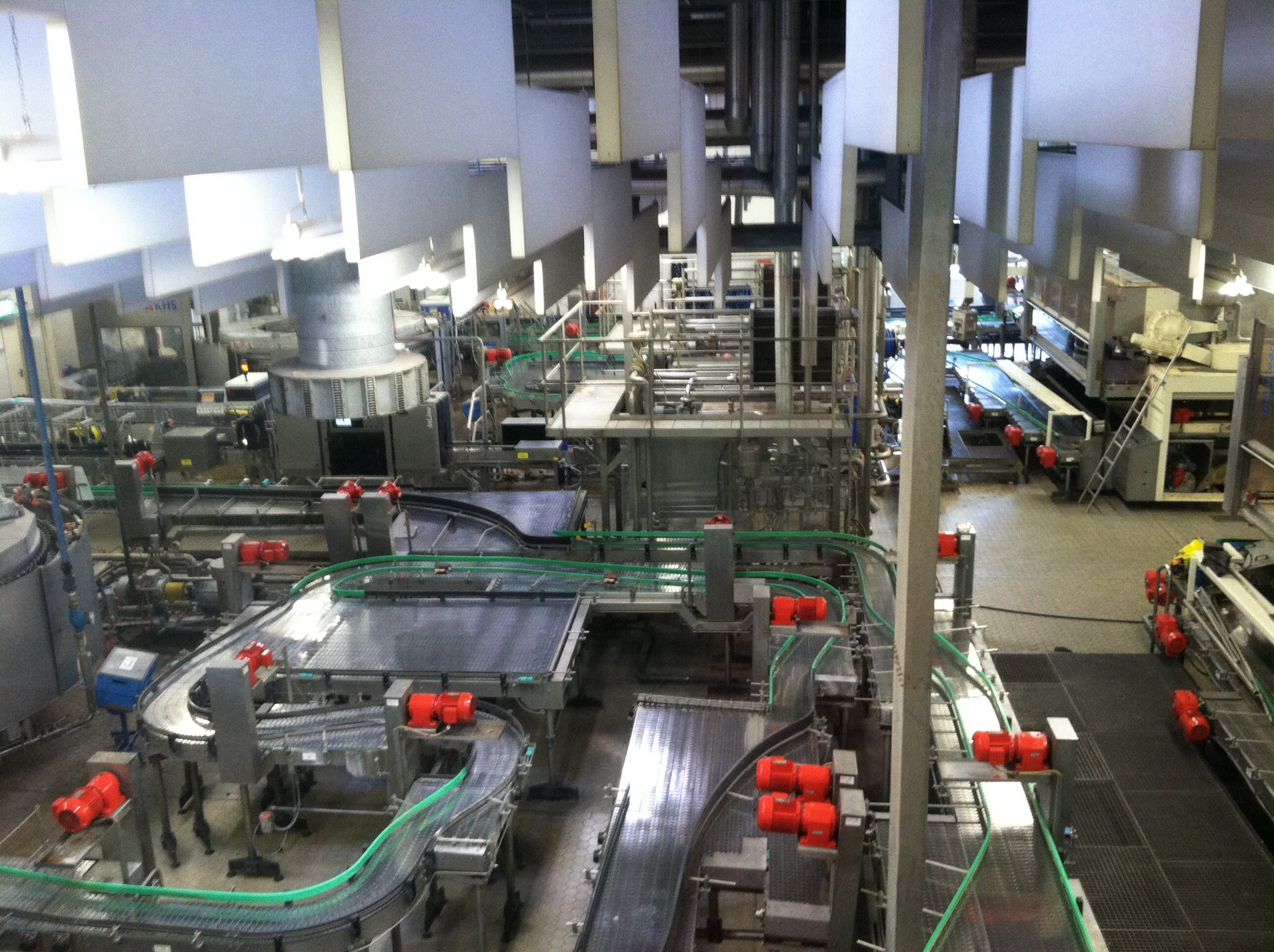
Anyway, the facility was, needless to say, spic and span. The scale and size of it was mind-boggling, not to mention the claim that a million liters are bottled here every day. About 80% is bottled and the rest is stored in kegs. The main ingredients of yeast, hops, malt and water from underground wells were shown to us, and then we were offered brot with a generous tasting of three glasses each of their Pilsner. We even got to keep the glasses at the end!

Photos, top to bottom:

1. Entrance to the Beer Factory.
2. The facility functions more like a high tech lab, with lots of technicians checking that everything is running smoothly.

3. There is almost an aesthetic to the amount of piping and mixing that goes on in the brewery.

4. Detail of the stainless steel piping–a beauty to behold

5. The production area that bottles the beer.

Day 32: Close Encounters of the Third Kind

Ok, so my pieces have been pretty light and general, just to keep things flowing from both ends (my brains to those who are receptors of this material). But today I feel compelled to write about an encounter of the Third Kind.

Picture this: I’m standing at a tram station with one of my fellow students and starting up a conversation.

“Do you know how to get back to the Goethe Institute from the VW Factory?” I innocently ask.

“Oh yes, it’s the same way we came”.

Not being very good with directions, I squint my eyes at the sun breaking through the clouds and determine that we are facing west. Well, it seemed like we were going in the opposite direction. I scan the stop and see a few locals huddling nearby.

“Excuse me, but do you know how to get to Albertsplatz?” A few garbled answers, but generally confirming that we were headed in the right direction.

“Why didn’t you trust me?!?” retorted the student back to me, as soon as I returned.

“Oh, I’m sure you knew how to get back, I just wasn’t sure. Besides, I like trying to engage with Germans to practice speaking and listening.”

Silence.

In an earlier conversation, this young man had told me that he was a week late getting to the course. At his parents’ insistence, he tried transferring to the GI in Munich. The thought was that it would spare this young individual’s fertile mind from any possibility of Communist East German influence. Who know, maybe there are vestiges of the Russian military still lurking around these parts. Our guesthouse was only just converted and maybe I could inhale the fumes from the bed sheets that naughty Russians slept on and catch the fever.

Anyway, he came back to Dresden after he realized what a deal he was getting in the city that had the cheapest courses in Germany. And so what, the Reds in E. Germany may not be so bad after all even if they are swarming in his own country. And yeah, the risk he took to transfer to Munich cost him a week, but nothing ventured, nothing gained. Those Munchkiners take learning German too seriously and made hppim feel stupid. So back to the sidelines.

Meanwhile, he did the usual number on me.

“Where are you from?”

“Oh, do you speak Chinese?”

“Oh, ABC!!!” (“I knew it! I knew it! I could hear him cackling in the back of his mind. His glee was hard to hide”.)

He turns to our fellow GI companion on the tour. He compliments her when he learns that she is a Double E from IIT. “Oh, you are smart”, says he, definitively.

Day 31: VW Factory Tour

imageimageimageimageimage

Photos, from Top, left to right:

1. the Exterior of the VW Factory, designed by Gunter Henn at the end of 1998. While not necessarily the first of its kind to showcase the production of vehicles in Germany, the building is representative of the pride that Germany takes in one of its signature products and namesakes.

2. By using primarily glass curtain wall, the facility brings incredible light into the facility for its occupants. Located in the area around a major green space (Grosser Garten), however, presented different issues. Birds cannot detect the building due to its transparency. Special sound effects were added so birds think that the territory of the building is already claimed.

3.The conveyor belt for the “assembly line”. These cars were pre-assembled in other parts of Germany. Cars are transported here for final finishing to showcase the most interesting visual effects of the production line for customers. Unfortunately, we were not able to see the actual movement of the line due to the scheduled 3-week “Urlaub”. The maple butcher block flooring from Canada covered the entire ground floor area and is engineered perfectly with no gaps to the mechanical conveyor system. Work stations move with the line.

4. The showroom, where customers can test out and order custom made Phaetons.

5. How did VW know that black was my favorite color? 60% of the others who buy this car think it’s tolerable too. It’s only a cool 135,000€.  I couldn’t understand why so many people were taking pictures of me.

Day 30: I Get by with a Little Help from My Friends


image image image image

image

Do you see anybody?….you know? I’m rolling into the halfway mark and thought that I should pause and reflect on those who have helped me get to where I am today. It can be a bit lonely out here. I suppose those on the space shuttle count their minutes, while most of us rip through years without noticing where the time went.

So here are some of the key people who have made my trip outstanding so far, from the top down. They made the Society Page today.

1. Meeda and me; Ms Chou plans to make a major gift of $50 million to the Chou/Fong Gallery, to be launched in the next Millenium.

2. Karen Mori, college roommate and friend who intends to donate her inheritance to the Food Fund for French Foraging;

3. GI class of emerging scientists, artists and young professionals who are gathering to develop a world fund for Better Understanding of the German People before the Next World Cup;

4. Helena Shang, classmate of Gee Kin’s from Beijing, who is contemplating a major gift of $1 billion to the Schema Therapy Project between Switzerland and the U.S.;

5. Hanne Rätze and Hans-Uwe Berlin, friends in Dresden, who are raising substantial interest in a sanctuary for preservation of elephants in Thailand.

We thank all donors for their respective causes and the kind attention devoted to the recipient of the Travel Fund of the Year Award.

Day 29: Lovin’ Loschwitz

imageimageimage

Helena and I spent our afternoon taking a long walk from the Carnival scene at Altstadt and Neustadt areas to Loschwitz. We strolled at a leisurely pace along the Elbe and stopped twice for lunch and a water break at restaurants with outdoor dining. We were able to catch up on a few years’ work and play between us.

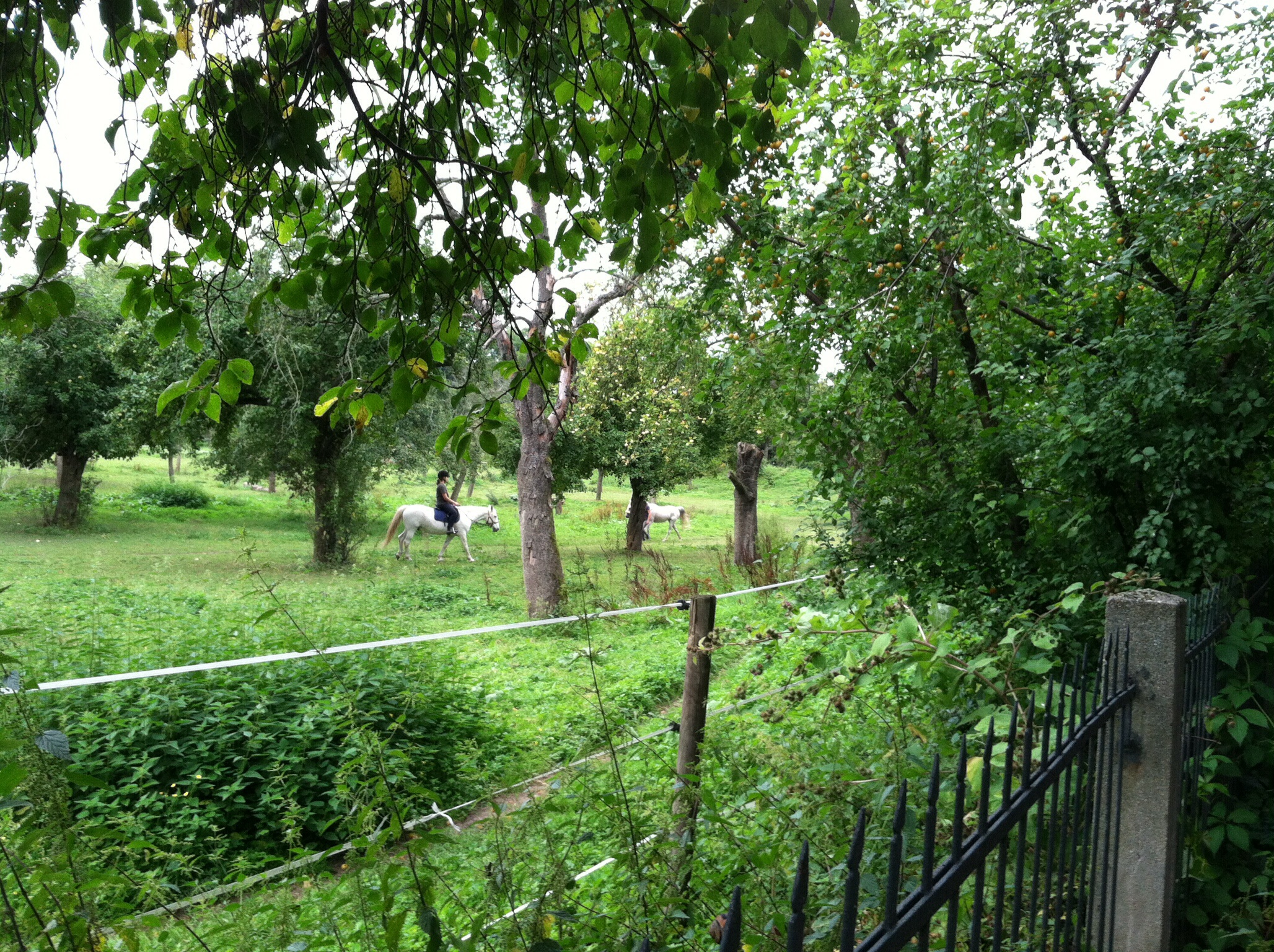
Along the way we passed a paddock not far from the riverside where horses are trained. It was amazing to see such a large yard along the river, not far from town. The lush green was reflective of large open spaces and extensive open spaces for the city’s residents.

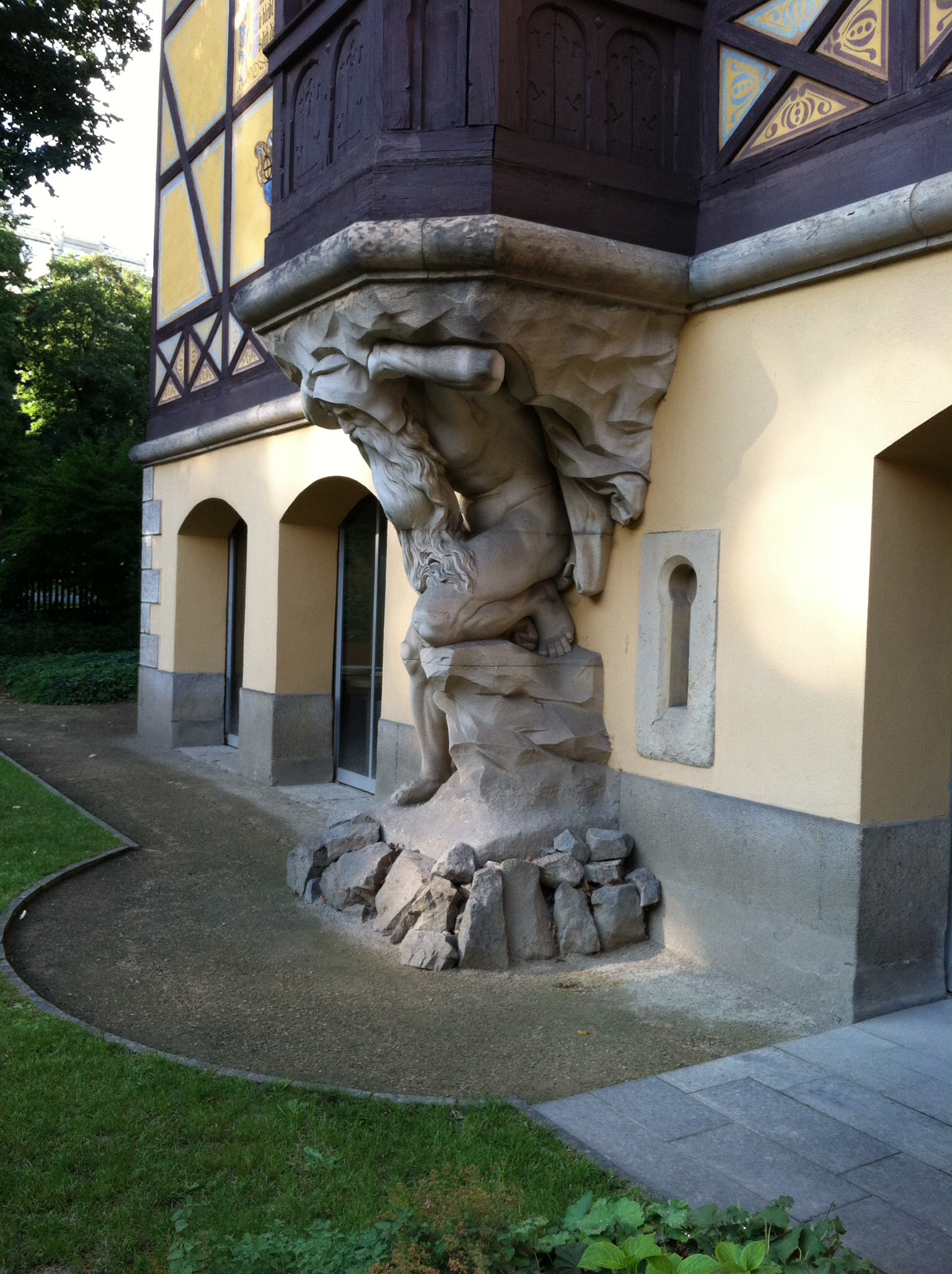
We even managed to take in a cultural highlight of the Loschwitz area. The building in which the Leonardi museum is located was originally owned by a landscape painter. He wanted artists to be able to live and work together and dedicated the building to this cause. It was used for this purpose initially, but eventually the plan did not survive. The building has been turned into a museum for artists’ work.

If you are interested in reading more about this museum, please see http://www.leonhardi-museum.de/index.php?option=com_content&view=article&id=13&Itemid=12.

Photos, from top:

1. View of paddock near the Blue Wonder Bridge and Schillerstrasse.

2. Front facade of Leonardi Museum, with extensive German script used to decorate exterior of building. There are other examples of titles, sayings and poetry used on buildings in this neighborhood.

3. Detail of support.

Day 28: What’s the Point?

image

image

image

Here are a couple of Jeopardy-type questions for those of you Trivia fanatics out there:

1. Why is the statue of the Golden Reiter facing away from the Elbe River?

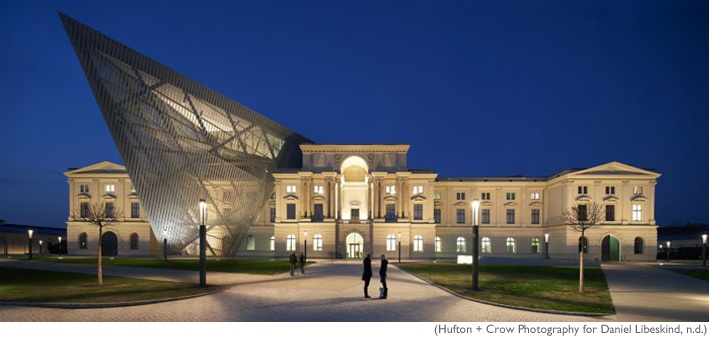
2. What does the sharp point of the Historical Military Museum designed by world-famous architect Daniel Liebskind face?

Photos, from top:

1. The Golden Reiter, King Augustus.

2. Design of the Dresden Historical Military Museum.

3. My friend Helena from Zurich making a point at one of the museums we visited

Day 27: Dresden City Festival

image

imageimage

The  City Festival, between  Friday and Sunday  August 15-17, was launched in earnest, casting a whole new dimension to the city I had never before seen.  Most events occurred late at night around 11pm, drawing huge crowds of young people to rock events, carnival rides and cheap food. Plenty of security police were around to maintain civil order despite lots of beer consumption.

The theme this year is the Canaletto Festival. Dresden is known as the Florence of the Elbe. Canaletto was known to have painted a famous scene of the Elbe River, and the scenery is forever tied to the romantic view of Dresden.  Naming the festival after the Canaletto painting pays homage to the city’s cultural and artistic heritage.

In our class Friday we were asked to work in groups to describe three recommended events for the festival. We had to defend our position on why we thought our recommendations were the best. My group recommended a rock band, Tai Kwon Do exhibition, and a rubber ducky competition between two teams. Natürlich auf Deutsch.

My friend Helena arrived from Zürich for the weekend.

Day 26: Sommerfest

image image image

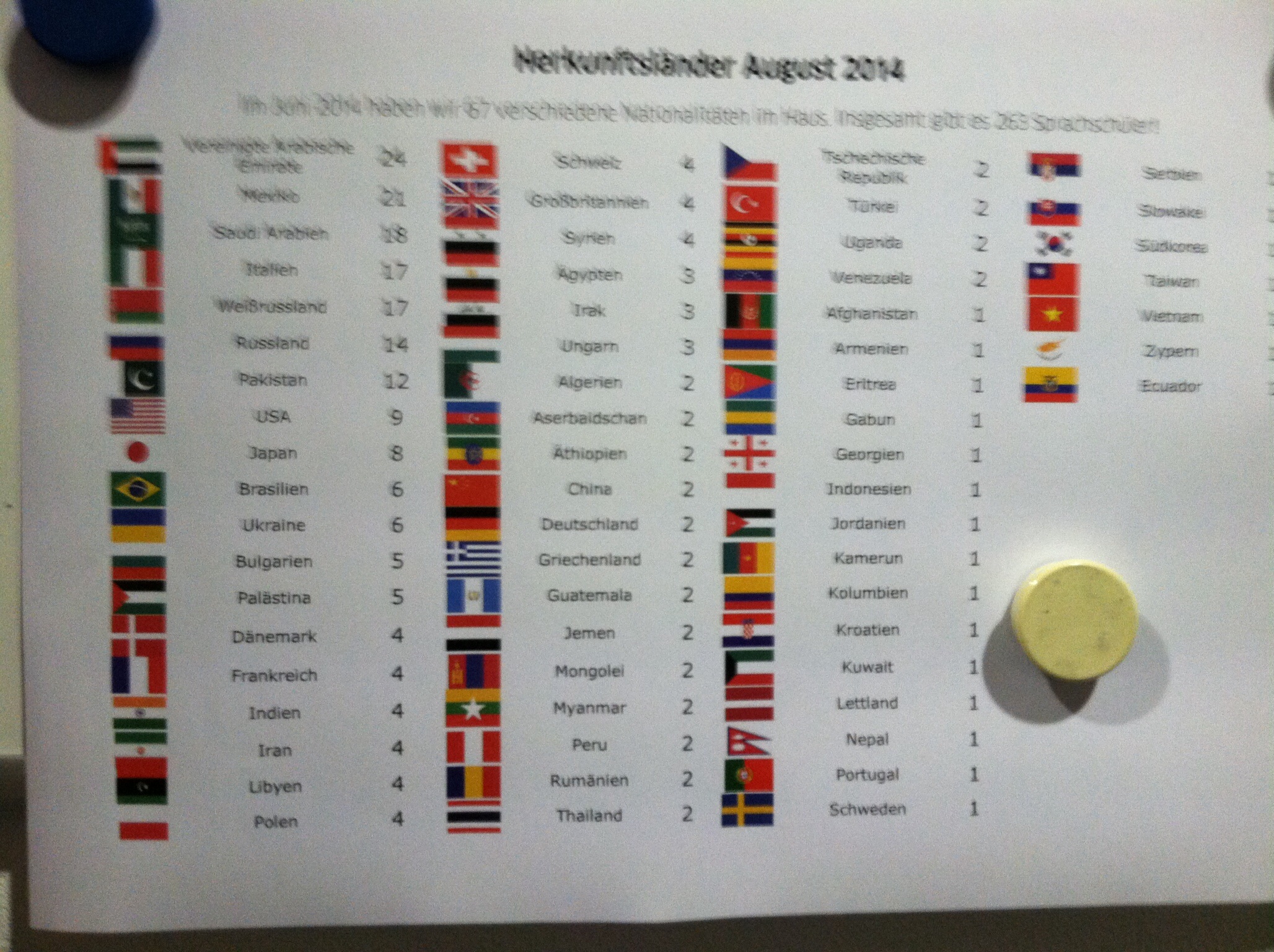
Last night was our class get together at the GI. The list of countries gives you a good idea of how varied the population is here–virtually one of each. The interesting point is that there are few Americans and a healthy contingent of Mexican students learning German for some reason. I heard that this might have to do with fewer students liking the U.S., but for whatever that means I like being in the minority here.

In case you are unable to see the list, there are 67 countries represented at the GI since June 2014. 21 from Mexico and 9 from the US. The largest group comes from the Union of Arab Emirates (24). It feels like the Eurovision version of American Idol–much more internationally oriented and with plenty of opportunities on both sides to either reinforce or dispel stereotypes.

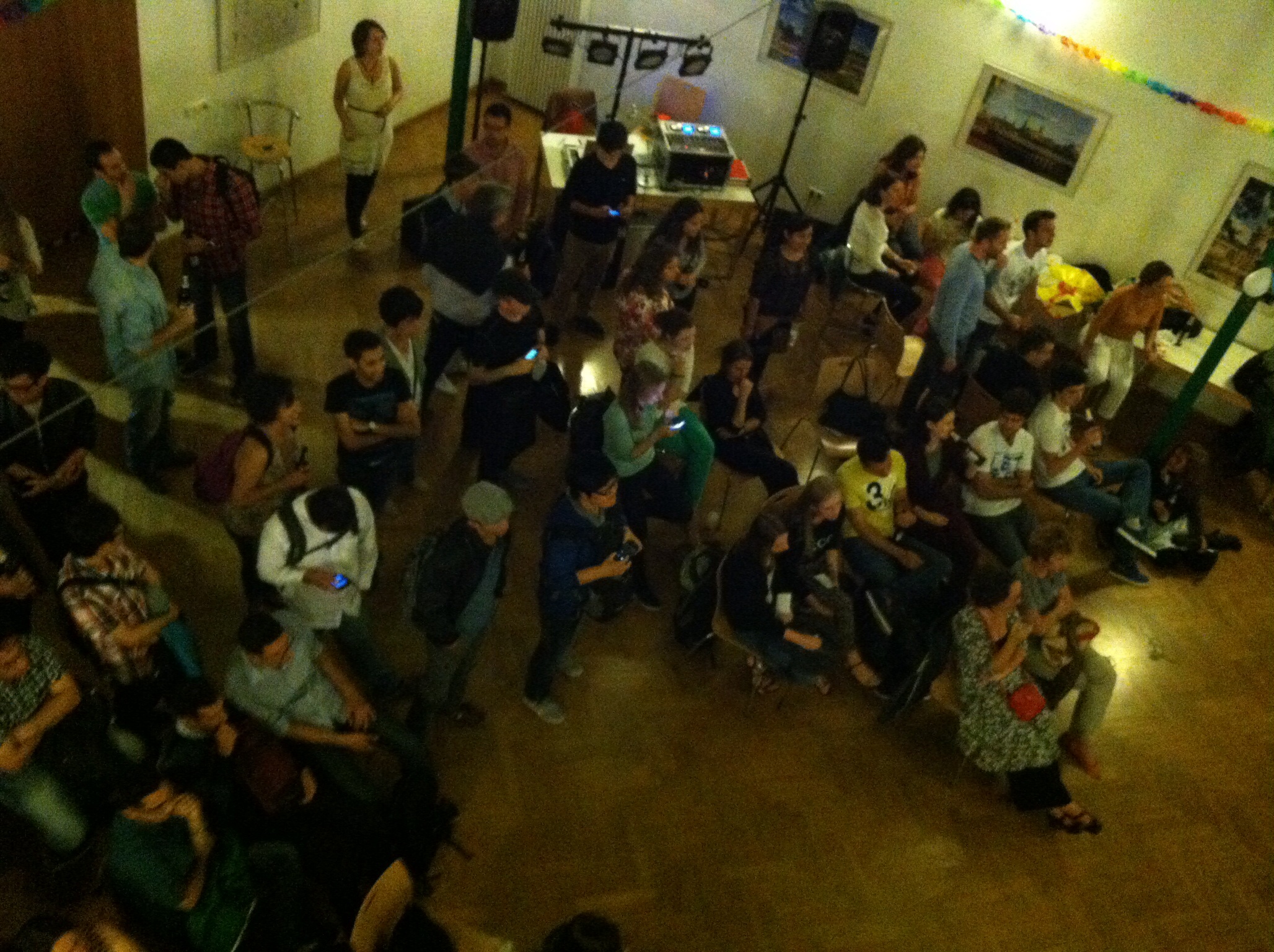
The evening began with wine for 2€ and Goulash, the specialty meal and top of the line for 3€. I burned a hole in my pocket paying 5€ for dinner. The program included songs sung by students, a Jeopardy game, and dancing. I enjoyed chatting with a German woman who has been hosting students for many years. (The older crowd in the picture is not representative of the age of students in the program!) She asked me to join her at the table  where she was sitting.

Day 25: On the Back Street Where I Live

image image image image image image

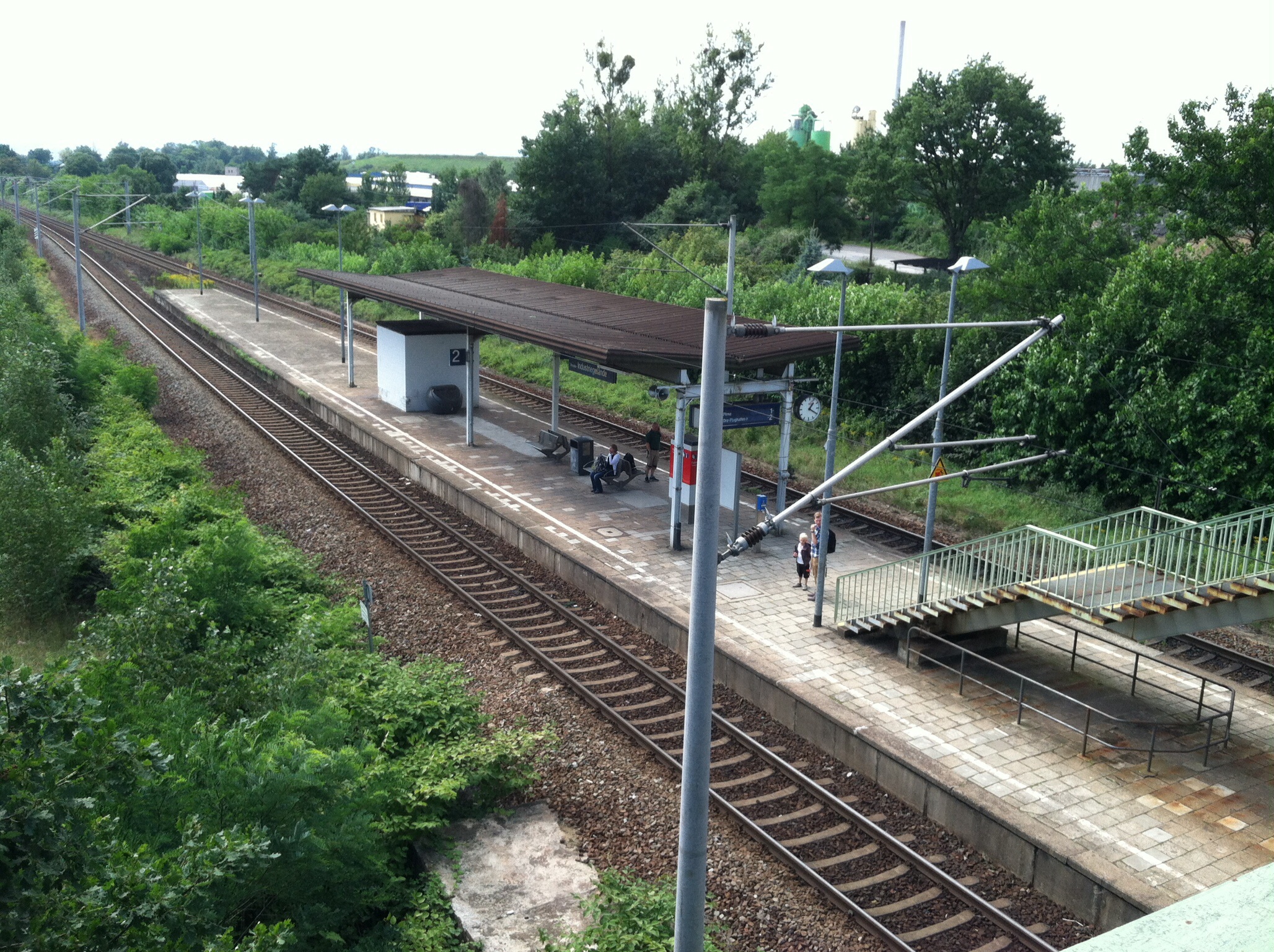
This isn’t sexy stuff, but I’ve been running around the neighborhood early in the morning and noticing a few things. The back street where I run is aligned with the railway line to the airport, a mere two or three stops away. Dresden is pretty small, so you can get from the center of town to the airport in about 20 minutes by train. My guesthouse is about halfway between stops.

I had noticed a lot of East German-like structures when I first rolled into town a few years back. They were pretty sorry and depressing. Well, they are finally being renovated. Thanks to my friend Hanne and the firm she worked for, they built the street where I run! The government also renovated the staunch old buildings–you can compare the before and after pictures. The buildings stand side by side with each other: one fully re-plastered with new storm windows, doors and foundations repaired, the other waiting for its turn. It’s an interesting historical comparison of two eras.

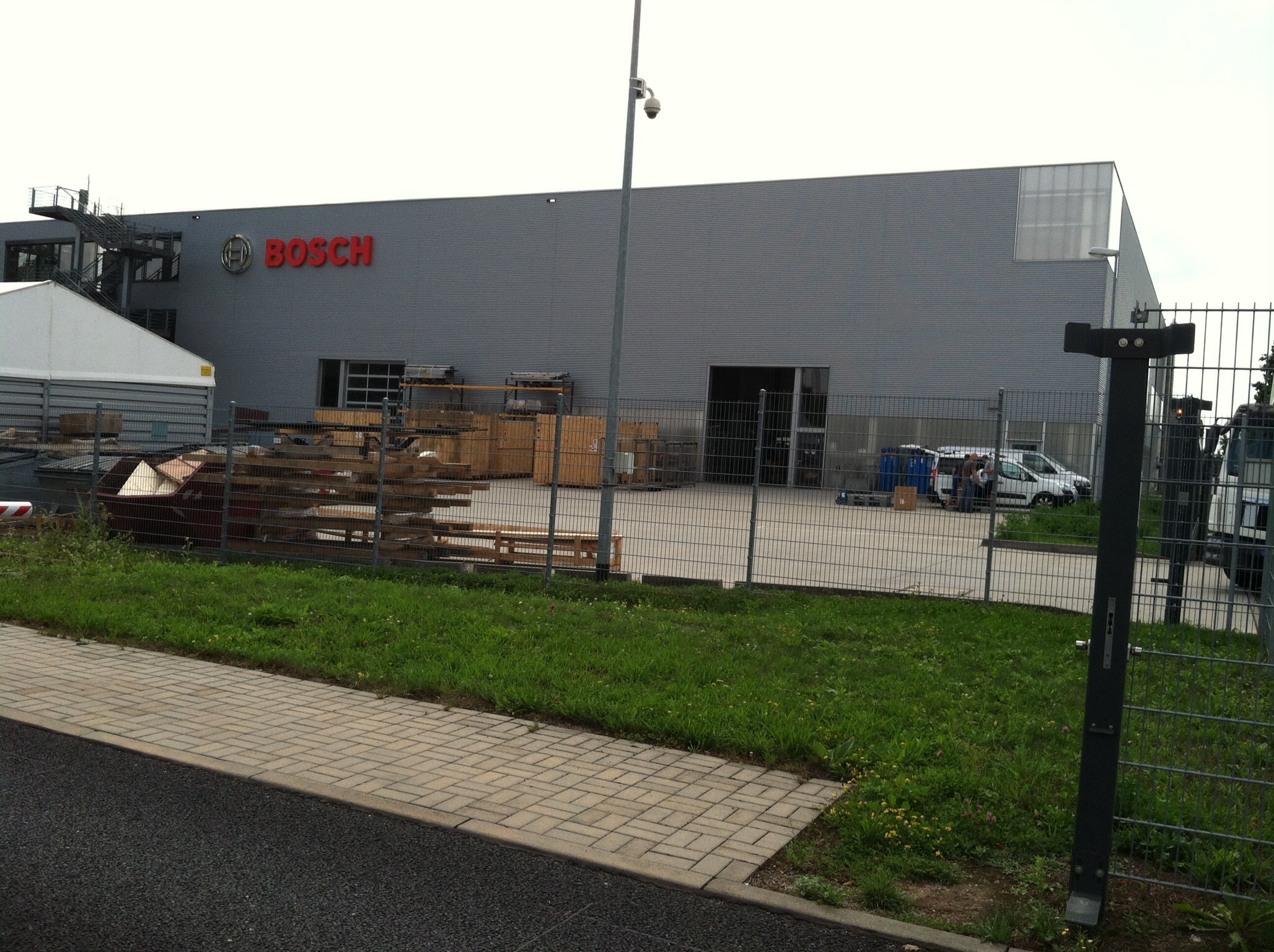
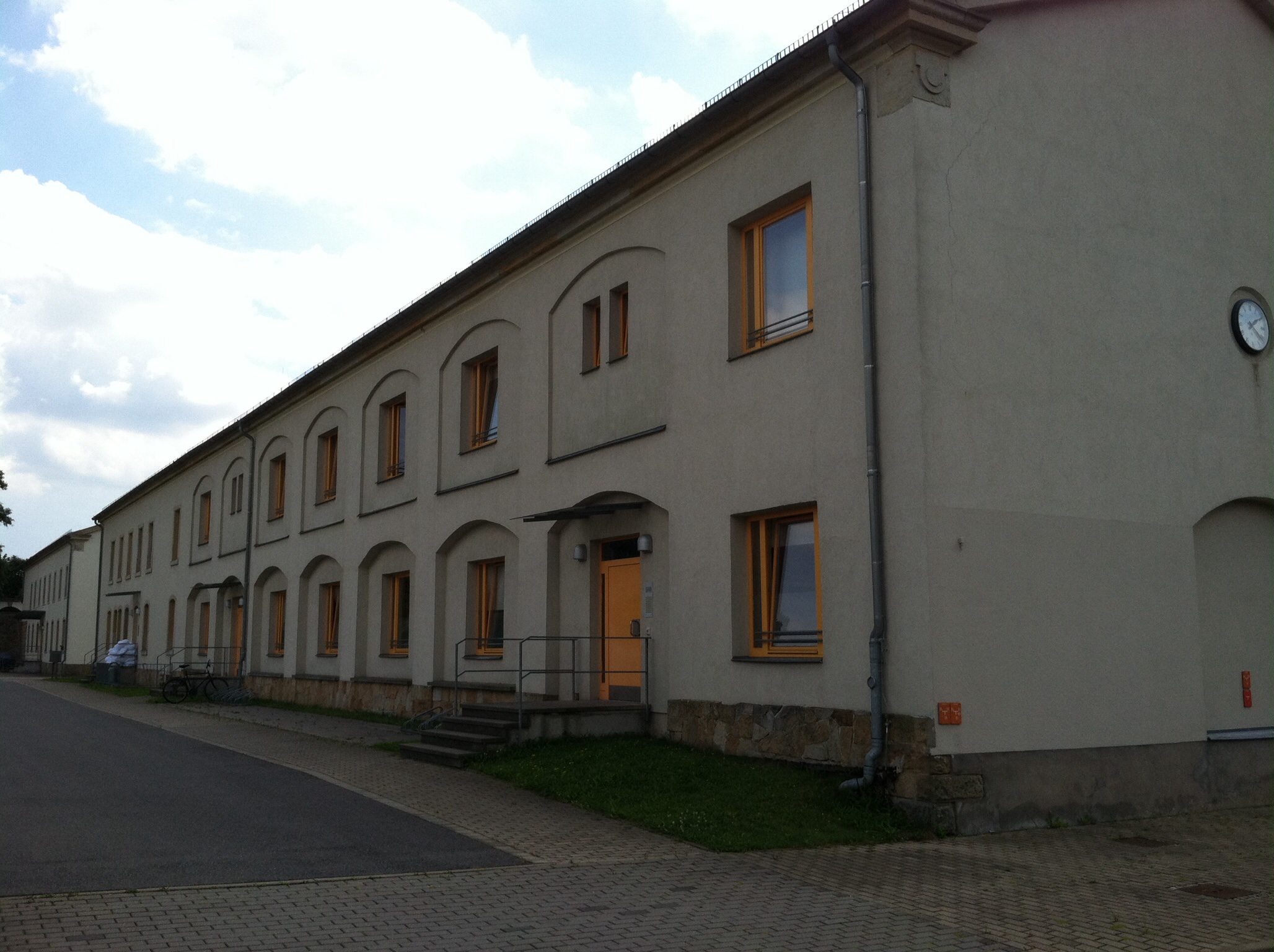
This industrial area includes new manufacturing and production facilities such as the Bosch pharmatech building adjacent to our guesthouse. The exterior to the guesthouse was renovated at the same time as the other buildings in (4).

Photos, from top:

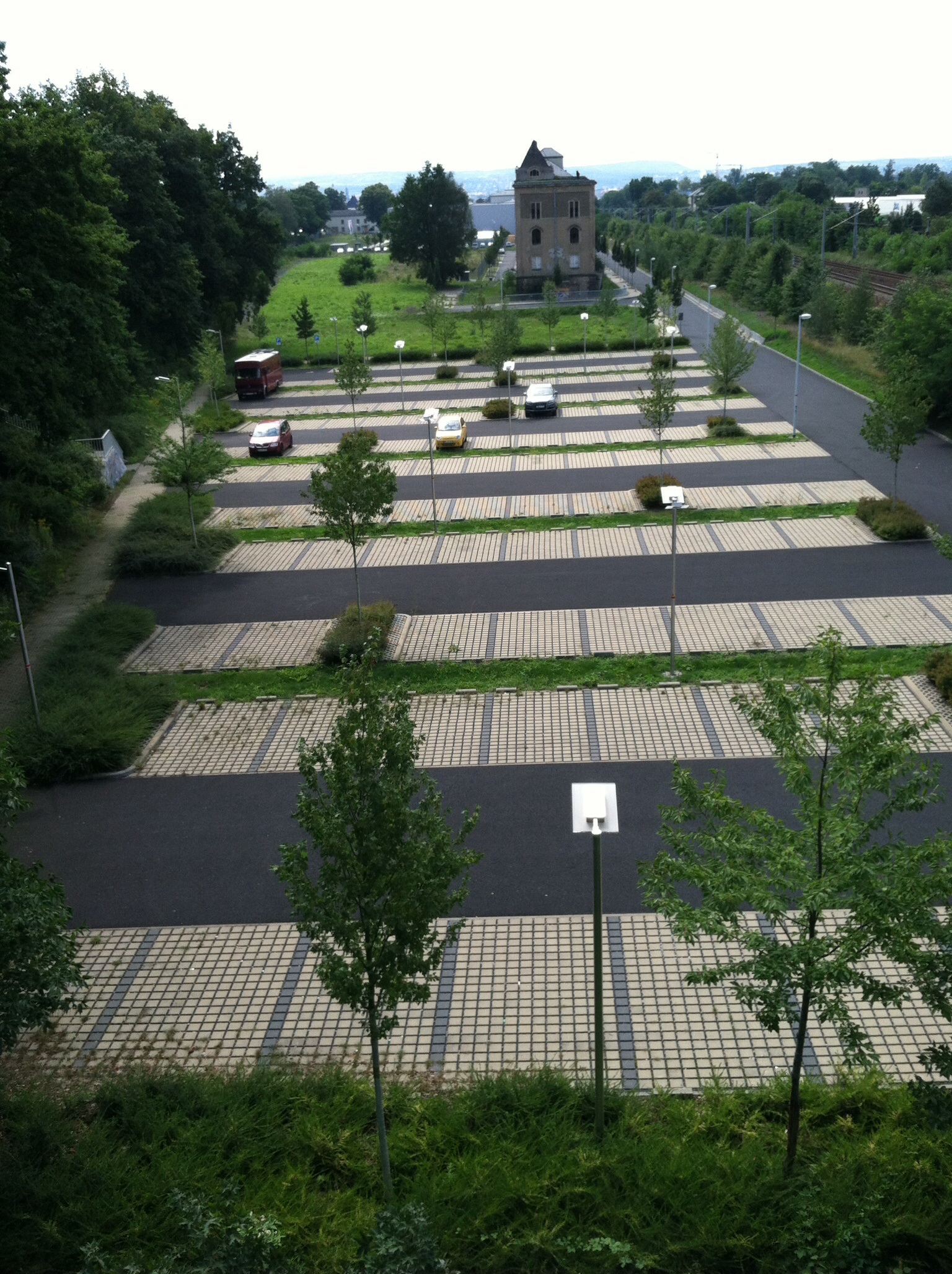
1. The parking lot for the Industriegelände stop. Germans are good at putting their words into actions. They provide means for water runoff and drainage in parking lots under the car park areas to reduce storm drainage problems. While we are trying in the US, there’s still a lot of lip service and no action. While this solution doesn’t provide full absorption across a large area, at least the runoff is reduced. The roadways still seem to need asphalt, the most economical and durable material.

2. The Industriegelände train station. I didn’t think the noise was acceptable at first until I realized it was the route that I had taken from the airport to the city. It seems to pass every 15-30 minutes along with other night trains. I actually find the whirr comforting now.

3. The “Before” of a delapidated and unoccupied building, waiting for funding and a purpose.

4. The “After” version, ready for another 50 years of use. Buildings have good bones in Germany. In the book “the Orientalist” that I am reading now, the Germans were reknown for building solid cellars in their colonial holdings. This is a good example of the building’s stoutness and longevity.

5. The Bosch Pharmatech facility next to our guesthouse.

6. The Former Russian Military buildings used by the Goethe Institute for students.