Tag Archives: street scenes

Days 42-44: Beijing Bites

I went out looking for water and accidentally found this pedestrianized area around the corner from the hotel. It’s in Wangfujing and just next to the Imperial Palace in Central Beijing.  (You can click on photo for captions).

Above, see the variety of food from street vendors.

Below, the vendors where I bought items to sample and the food repackaged for dining at the hotel apartment (chestnuts, sticky rice in Coconut, Tripe, and refried mini-pork buns).

The next day, I took an afternoon stroll in the neighborhood at the “Forbidden City”, or Imperial Palace. Having been here multiple times, I could finally absorb and appreciate its grandness and scale. From the outer to the inner courtyards, each progressive complex of buildings paced you from the formal to more intimate parts of imperial life.

Details and interiors of the latter half of the Imperial Palace are below. I did my best to allow the hoards of tourists from deterring my own personal enjoyment. It did flash across my mind, however, about the last encounter with the floods at the Hermitage in St. Petersburg last year. I couldn’t excuse the cruise ships for unloading here this time. I gave way to the primarily Chinese tourists who may have come from the outer reaches to finally see the centuries of human capital used to build the empire, or maybe like me, were just taking a stroll around the block.

In the evening, we made our obligatory stop to the Peking Duck Restaurant, again, only steps from the hotel on Wangfujing:

After Dresden as a pit stop, Beijing was a rallying point to meet husband Gee Kin and travel partner for the rest of the trip.  We leave for Ulan Bator (Mongolia) on Friday morning, so the highlight of the second half of this 80 day adventure is about to begin.

Days 33-34: Berlin Dome and Comic Opera in Berlin

The Berliner Dome, like the Berlin TV Tower, shares a prominent place in the city’s skyline. And, like the Tiergarten, this visit gave me a chance to slow down and absorb its inherent beauty . While it is a “Protestant” Church and not a “Catholic” church, it nevertheless was highly ornate in its presentation. In 1905, it was a last gasp for the Prussian monarchy. It was restored in the 1990s.

The main chancel apse had three impressive panels showing the birth, cruxifiction, and resurrection of Christ. A large organ in the niche to the left made me want to return to hear it one day. The basement was a bit creepy as it held the crypts of many of the Hollenzollern lineage, including that of King William Friedrich (1861).

I subjected myself to an adventure at the Comic Opera, where I saw Massenet’s “Cedrillon”. It was loosely based on the story of Cinderella, so a bit of a ho-hum with nice music. The cast was subtly baudy (if that’s possible). It reminded me of the opera-goers’ version of Beach Blanket Babylon in San Francisco. The chorus or corps de ballet definitely provide the tongue-in-cheek comic element. Despite top-notch singing and a pretty good stage set, it’s not everyone’s cup of tea.

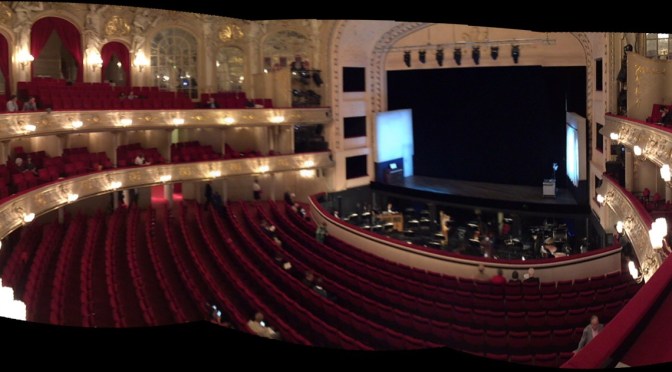
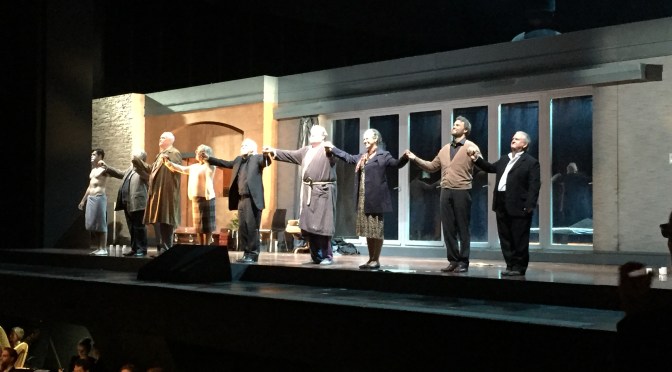
The opera house itself was worth seeing. It still conveyed the grandeur and aura of the past,  but sadly was a bit shabby and in need of a face lift. A surprise inspiration were large video screens in the lobby, that show current performances and cast lists. Cedrillon is replicated here. The last photo below shows the actual evening’s cast and curtain call.

In keeping with the comic opera theme, I found a few amusing moments in my month’s travels in Berlin:

Photos, above:

1. Upper Left: Temporary repair work in front of a subway elevator: An example of solid German engineering and construction????

2. Upper Right: A vending machine in Alexander Platz that sells books. Either this is wishful thinking (although 9-10 Euros not a bad deal) or the rest of the world hasn’t caught on yet. It does give me reassurance that Germany is a unique country and its tradition of the the printed page endures. Long live Gutenberg, the Bible, and romance novels spearheaded by Goethe!!

By the way, vending machines do not mean markup. For convenience, the Ritter wafer packets are only .90 Euros in the machine, but 1.10 Euros in shops. You can often find what you need, when you need it, without getting ripped off.

3. Lower Left:  Fußball and all its trappings are the rage here, especially this month during the Euro Cup finals. It’s hard not to get excited about teams like Spain, Portugal, Slovakia, Ireland, Turkey, Belgium and Germany, of course.

4. Lower Right:  Y-U-C-K!!!! I’ve had to stare at this every day in my U-tube station. They finally censored it this week with tasteful black and white, wordless Annie Lebowitz-type photo panels, but I strangely found myself missing the former grossness.


Day 32: Jewels and Other Gems

The Scharf-Gerstenberg Collection across from the Charlottenburg Palace is dedicated to Surrealism, fantasy, or disturbing ideas of the mind. Many famous painters, such as Picasso, Modigliani, Magritte, Max Ernst, and Klee are displayed in this beautiful gallery.

Photos above:

  1. Upper left: Chapel Quaking, Paul Klee, 1924: This painting shows ominous, other-worldly elements in the sky about to attack the chapel and loosen its foundations
  2. Upper Middle:  the dome of the gallery
  3. Our guide, Dr. Barbara Hofmann, animated in her passionate interpretation of the surrealist art. I couldn’t help but wonder if she knew she was mirroring her subject (Olympia, by Jean Dubuffet, 1950). The body is a rendition of Manet’s Olympia. The artist challenged the regimented standards of the Academy of Arts. Artists at the time rebelled against the Academy, who determined what was or wasn’t considered art.
  4. Carceri, by Piranesi, 1760
  5. A description of Surreal Spaces

In the afternoon, Rainer Jaeshke (from the Potsdam weekend tour) led us to Kreuzberg, one of the popular, East side districts of Berlin. Because it was taken over in the Sixties by squatters, the bourgeois buildings from the turn of the century went into demise. As the housing deteriorated, it became a cheap area where immigrants and the rapidly expanding population could afford to live. The area has become a battleground between developers hoping to make return on investments and neighborhood activists who want to keep the housing affordable and community intact.

Photos above,  from left to right:

  1. Oberbaum Bridge, 1895
  2. Modern day high density housing built over a road
  3. Jewish brass tiles found on a neighborhood street, indicating Jewish presence from the past
  4. An overview of the dividing line between East and West Berlin and canal that is now a park

image

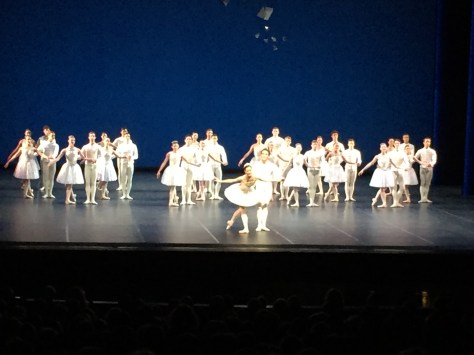
A photo from “Jewels” by Choreographer George Balanchine, who created a ballet in the neoclassical style with music from Tchaichowsky and Stravinsky.

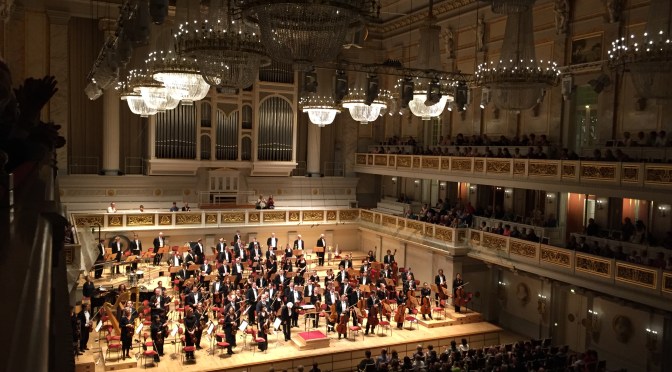
The Concert House presented a lovely program of music by Darius Milhaud, “The Creation of the World”; Prokofiev’s “Symphony No. 7 in C Major”; and Mussorgsky’s “Pictures from and Exhibition”. Under guest conductor Dmitri Kitajenko’s direction, every piece was stirring, uplifting and good enough to want to hear again.

Day 31: Jewish Life in Berlin

Berlin is starting to recognize its Jewish history and the part it plays in understanding the city today. Friday morning’s tour was led by our guide, Matthias Rau, from the Prenzlauer Berg and Berlin Mitte tours. We started at one of three Jewish cemeteries in Berlin. A reproduction of the headstone of Moses Mendelssohn is located in the cemetery (see photos below, upper left). He was one of the major leaders of the Jewish community in Berlin in the 18th Century. If you are interested, you can read more about Moses Mendelssohn here: https://en.wikipedia.org/wiki/Moses_Mendelssohn

Only some of the stonework with inscriptions were salvaged at the cemetery. The grave sites are covered with ivy.

Photos above:

1. Upper Middle Left: The site of the “missing house” is used to identify Jews who had lived in the building. Tags on adjacent buildings indicate where each family lived and are stark reminders of the lives that disappeared.

2. Upper Middle, Right: Brass plated tiles with inscriptions of names of Jewish people who lived in the area are found throughout Berlin. Organized by a private foundation, this effort identifies individuals, their birthdates, where they died, and when. Most of the inscriptions we saw identified Auschwitz as the place of death. (We later noticed plates in Kreuzberg.)

3. Upper right: A tribute to Regina Jonas, the first woman rabbi in Berlin. She was part of the Jewish liberal sector.

4. Lower Left and Lower Middle: The New Jewish Synagogue (1866, Oranienstrasse 30) was the center of the Jewish community (also wooden doorway from Entrance) .

5. Lower Right: Augustus Strasse, where the Jewish School (shown in photo on the left) was located. It now is used for community space, the Kennedy Center, and other public facilities (Pauly Saal Restaurant and Mogg, a cafe, are located in the building).


Day 30: Tiergarten and Tosca

A walk in the park doesn’t sound very exciting, except that it was very calming and soothing. After many days on the go, this small guided tour was a refreshing green window into another discovery of Berlin’s treasures.

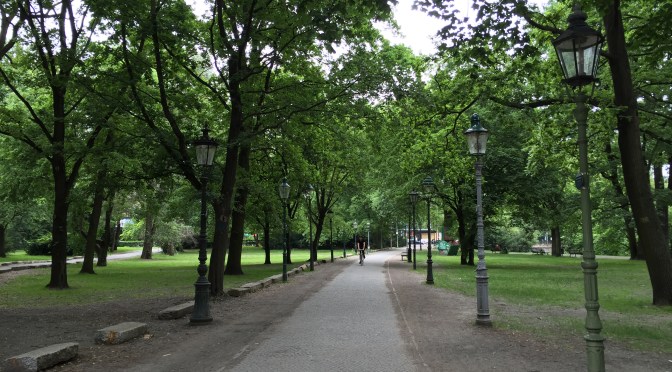
The path at the entrance from the Tiergarten subway stop displayed the many variations of gas lanterns donated to Berlin from other cities (featured image at top). Each one was unique, and I was delighted to find Dresden’s contribution. Each city was proud to showcase its industrial development skills. Sadly, vandalism and limited funds have caused the historic elements to deteriorate.

Although the park is known as “Tiergarten” for “Animal Park”, there are no animals here. They reside in the adjacent Zoological Park. The Tiergarten was originally the private grounds for King Friedrich’s hunting pleasure. The garden was a pit stop between Charlottenburg Palace and the king’s residence in the center of Berlin.

cropped-img_27201.jpg

Among the many monuments and statues in the park, there was a tribute to the King’s hunting days (see photos and header reposted above). Gee Kin and I had discovered this curious pair of statues last year on our visit to the Tiergarten. The park was, and is, a welcome respite to the unbearable heat that can surprise the city. Another pair of statues made tribute to the king and queen. The king was clad in street clothes rather than in his official military regalia. The “street cred” represented his love of the casual, private retreat of the park .

Photos, in gallery, above:

  1. Upper Left: One of the many extensive and romantic paths in the park, designed by landscape designer Peter Joseph Lenne. He created the grand Prussian master plan for the park. He was so successful, that he was able to live on a street in the park named after him in his own lifetime!
  2. Upper Right: A stele monument to the cities that donated trees grown in the park. The park was damaged in WWII and wood was chopped down for firewood.
  3. Middle Photo: The Spanish Embassy is one of the few buildings located in the park. Many other embassies are located along the park but not inside. Spain was one of the few countries with a strong relationship with Germany (along with Austria, Italy, and Japan)
  4. Lower Left: Monument to Victoria: the “Big Star” (Große Stern) was  strategically placed along the 300 year-old east-west axis. The road through it was intended to emulate the Parisian boulevards and widened in the Third Reich.
  5. Lower Right:  This view of the park is a completely man-made version of nature. The images of Claude Lorraine’s paintings and other Romanticists were popular at the time, and this was Lenne’s golden opportunity to do his client good. He even built an artificial island (in the distance in the middle of the photo). The lakes were designed as “mirrors” to reflect the sky and land around it. He did a pretty good job. I wouldn’t be surprised if Frederick Law Olmsted didn’t use this as a model for Golden Gate Park. The German designer followed and copied English landscape design, however, so I don’t know which chicken or egg came first.

A lakeside beer garden is a place where both Berliners and tourists can enjoy a leisurely day in the park. They even have dancing here, but I don’t think they have discovered Tai Chi yet.

IMG_2713
Lakeside Bier Garten


A pretty decent performance of Tosca at the Deutsche Oper was hard to beat for 15 Euros, thanks to being a student of the Goethe Institute.

IMG_2744

Day 25-26: Berlin in 24 Hours+

I opted out of a boat trip on the Spree and a tour of Potsdam Babelsberg with the Goethe Institute this weekend for my own individualized tour. Here’s the daytime version of my itinerary on Saturday:

10:00: Meet friends from the Goethe Institute for Brunch at Sud Bloc, a Turkish Restaurant in Cottbus Tor.

12:00: Attend The International Design Festival. It was a tough choice between the 9th Berlin Art Biennale and this one, but my priorities and practicality surfaced simultaneously. Besides, the Biennale is here for another couple of weeks. It shows what a fantastic city this is for art and artists. Below are a few of the displays that were presented at Kraftwerk, a huge warehouse/industrial building in Berlin Mitte near the Heinrich-Heine Station.

14:30: Walk through trendy streets in the Mitte near Rosenthaler Platz. The KW Institute for Art, one of the Biennale centers, is located on Augustus Strasse. It parallels another delightful alley, Linienstrasse, that is sprinkled with cafes, one-of-a-kind handmade items, and art galleries. I had a red lentil and avocado sandwich with a German rose wine across the street at the old Jewish school. Melissa and I saw the Kennedy Exhibition there in January this year.

IMG_2593

16:00: Stop at my Air BNB on Brunnenstrasse for a cake and coffee break.

17:00: Visit the Bernauer Strasse wall exhibit (see posting from last week)

18:00: Alexanderplatz pit stop, with a Afrikaner Festival food and entertainment in high gear.IMG_2594

19:45: Performance of the Return of Tobias, an Oratorium by Joseph Haydn at the Elizabeth Church around the corner from where I am staying.

This was a bonus performance. Since I was so tired, I was debating about whether to go. The performance was sold out, but seating behind the orchestra was available for 5 euros! I could enjoy the full choir, orchestra, and professional quality opera singers and kick my shoes off at the same time. The performance began with actors at the cemetery a couple of blocks away, setting the stage for the story. Everyone returned to the church, where the full story, singing, and beautiful music in an intimate setting unfolded. A delightful close to an exhausting day.

The following day’s activities started with alot of guilt-laden German studying, but in the afternoon I treated myself to a brilliant performance of “Tristan und Isolde” by Richard Wagner at the Deutsche Oper. The marathon performance lasted 5 hours, from 4pm until 9pm. (Only the Meistersinger at the SF Opera was longer at 6 hours). Needless to say, the German stiff upper lip in me kicked in. In classic behavior, when in Berlin, do as the Berliners do.

The opera was very moving and emotionally draining–one of the best I have ever seen. To top it off, there was a standing ovation. That was a thrill. First to see a heart-pounding performance, then to witness genuine, never-ever inflated gratitude offered by a hard-core, German audience.

By purchasing student rush tickets an hour before, I am able to procure the best seats available (5th row from the stage, 9th seat in from the end) for 15 euros (thanks to the Goethe Institute). The only minor inconvenience being so far forward is having to tilt my head up to read the double subtitles in German and English. That’s hardly a problem or complaint for what I am getting! At these prices, the immense difference in cost of opera tickets pays for my four-week German class!!

Days 18-19: Berlin Street Art

We were treated to a leisurely afternoon walk through Kreuzberg and adjacent Friedrichshain area where a solid core of artists live and work in Berlin. The river divides East and West and served as a natural boundary in the city, so it was natural for many political and artistic statements to be expressed on both sides of the divide.

Its easy to lose one’s bearings in Berlin. Streets swirl around in circles, crooked alleys, and curvy swerves around bumps. The Berlin wall never seems to be far from sight or presence, and the irregular shape of the boundary keeps you guessing which side you are on. Both today and yesterday are often spoken in the same breath, and for that it makes living here fascinating.

The guide who gave us the architectural tour of Potsdamer Platz shared a very balanced view of the rights and liberties taken by the street artists. While not all were political in nature, they certainly were aware of the limits of their art and how to perform. Street art is different from graffiti art. It is planned and presented for others to enjoy or experience, whereas graffiti is intended for groups within a circle or group.

Graffiti art is illegal by nature and therefore must be executed very quickly, without being caught or discovered in the act of the execution. Teams plan and execute the art, so HOW it is done is part of the excitement and danger. Art placed at the tops of buildings require complicated suspension systems, mirrors, bravado, and skill by artists.

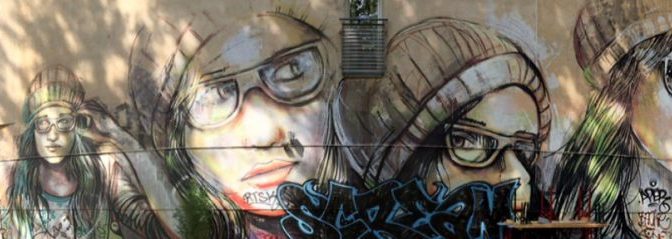
While onlookers marvel at the daringness of graffiti artists, street art is much more deliberate and varied. As shown in the photos, there can be paint, stencils, applied images, and many other creative forms on buildings. In either case, the government and building owners have a say in whether the art stays or goes. For political and aesthetic statements, artists have to consider whether public opinion will be swayed to support their cause, or if it will suffer its own demise by being painted over or cannibalized by graffiti over it.

This tour enlightened me to public art. It may not be everyone’s cup of tea, but it certainly gave me more reason to appreciate the courage and abilities of the artists who choose this medium for expression.

IMG_2414

At the end of the tour, we ended up near Warschauer Strasse, a flea market and large industrial zone with old warehouses was buzzing with locals. It was a very “hip” place with innovative food and drinks offered both inside and outside. I was glad that I carry a map everywhere I go now. It’s easy to let the guides lead you, but that blocks any sensitivity training and ability to keep your bearings!

Yesterday’s tour to Potsdam and Sans Souci Palace was more tame but just as challenging. We spent the better part of a day in the blazing sun and walked over 6 miles from the local train station to the town center, the new chambers of King Friedrich the Great, and surrounding gardens.

The end of the day was capped with a Deutsche Oper performance of “Il Troubadour” (more commonly known as “Il Trovatore”). Got the best seats in the house for 15 Euros, compliments of the Goethe Institute. Below is a view of the attendees enjoying the summer-like weather before the performance at the outdoor terrace.

IMG_2387

Days 16-17: “Mr Trump: Tear Down that Wall!!

After posting “Ich bin eine Berlinerin” in January this year, I have renewed my vows for this thrilling city. This time, I am even more emphatic and feeling that I have come to greater respect and appreciation of this vibrant, active, and considerate city. I suppose you can find the opposite in any city, but at the moment I am insatiably intoxicated by Berlin and all the human effort that makes a great city livable.

The week has been packed with German lessons, getting to know other students, and walking tours of neighborhoods nearby. I comprehend about half of the commentary since they are in German, but the visual experience provides the other half. There are so many new elements of the city that I had never seen or understood in the past three visits.

After the walking tour of Berlin Mitte from the day before, the same flamboyant guide escorted us to Prenzlauer Berg. Located on the East German side, it started off as a fairly respectable residential neighborhood, with classic Parisian style facades. Our guide pointed out a few vestiges of Jewish life still visible today–a school with a synagogue behind it and some serious security bollards in front.

If you are interested in the artist honored in the sculpture above, here’s a link to Kathe Kollwitz: https://en.wikipedia.org/wiki/K%C3%A4the_Kollwitz

The later, mind-numbing residential blocks were created in the Sixties (not shown). To support the residential areas, schools were provided. The renowned and advanced development of German schools was a feature of the tour. One current-day school we stopped at has an “adult-free zone” to reduce stress for kids! Schools and a good education seemed to be a tradition and pride of former East German society.

By the Eighties, Prenzlauer Berg deteriorated to a point of neglect. No families lived in the area because the housing was outdated. The big blocks built previously were designed with only one bathroom and communal kitchen per floor. Twenty years later, no one would tolerate that standard of living. No one could afford to renovate either, so families moved elsewhere.

The guide continued to spin a story for us about how the area was rejuvenated, literally. After the fall of the Berlin Wall, everyone was so euphoric. People in the newly reunified city squatted and held parties in these abandoned buildings. Exactly nine months later…

…and now Prenzlauer is considered one of the most livable and desirable areas for families in the cities! From what was a shelled-out, deteriorated, and abandoned neighborhood, schools and other services were re-established to serve the residents. It’s transformed from what was once today’s version of Kreuzberg to Berlin’s Upper West side.

A tour of Potsdamer Platz gave another completely different dimension to my impression of the area. We had stayed there last year (after the Beijing-Moscow-St. Petersburg Trans-Siberian Express), but spent most of the time in the Tiergarten due to the scorching heat at the time.

This tour focused on the architecture of Modern Berlin, after 1989. The trail meandered through Leipziger Square and the southern end of Potsdamer between the Berlin Philharmonic and Kreuzberg. The guide explained the endless debates about how to weave the east and west portions of the city together. The debate isn’t over, but city planners, architects, and the general public exhausted themselves discussing this issue.

Some of the planning was brilliant and some dismal. What has to be appreciated is that the land was repurposed in a No Man’s Land in the middle of the city. The hype today gives faint pulse rates of a Hong Kong or Shanghai tilted on its side. I was grateful that this tour was offered as a “general” tour, even though it would have been a “specialty” tour elsewhere.

The buildings included the Arkaden, a huge modern shopping mall and fully integrated mixed use development. Residential, office, retail, entertainment are all concentrated in one place. Anchored by the Sony Center and the old Daimler site, these buildings claim WFA (world-famous architects) Helmut Jahn for the Sony Center, Renzo Piano Workshop for the Daimler site, and Richard Rogers for adjacent buildings. It’s a lively place intended for all citizens of Berlin to enjoy.

After missing the Berlin Wall tour departure today by a half an hour, I decided to do my own tour. The Mauer Park and Bernauer Strasse exhibit was literally at the next corner to my accommodation, and I had been meaning to go there. With free time on my feet, I discovered a very moving experience. Not only were the exhibits a reminder of the amazing power of humankind to solve its own problems, but the physical development and energy it took was very reassuring. Once again, I could witness modern history in a very immediate way.

IMG_2331

Trump should come to learn the history of the Berlin Wall and all its trials and tribulations before considering building one himself. I don’t think he would do what he says after he saw what it took to undo one. He should listen to one of his cronies, Reagan, to “Tear down that Wall”.

Some of the information from the displays on the Berlin Wall.

And last, but not least, a few of the ethnic shops just north of where I live. I went into one of the Arabic markets and bought cherries, loquats, poufy dried figs the size of your palm (almost, OK, maybe a fat baby’s), spargel, carrots and celery for soup for 12.75 euros.

My first and last adventure the day before with Currywurst, a national institution, was a bomb. Yucky tasteless frankfurter cut into bite-size pieces (good for the convenience and service), smothered with ketchup (bad), dusted with “curry powder” (bad), and served by Germans (what happened to the “ethnic charm”?!?). FLOP. I usually think of myself as tolerant of any fast food, but this takes the prize for low point in human culture.

Day 10: Hypezig Leipzig

A first reminder of Leipzig’s political history was evident at the main entrance to the Markt. The banner read: “Love Football. Hate Racism”. They continue to extend an open hand to refugees and warn against Neo-Nazi tendencies. Despite the loudspeakers and full police reinforcements nearby, it appeared to be a quiet, orderly, and reassuring demonstration.

Today’s demonstration was a faint reminder of the city’s history. In 1989, Leipzig sparked a series of demonstrations at the Nicholai Church that led to Reunification of Germany. You can read more about Leipzig here: https://en.wikipedia.org/wiki/Leipzig

Leipzig doesn’t have the appeal and cultural taste of Weimar, but it has music to make up for its visual shortcomings. There are a wealth of classical and rock concerts, performances, plays, and revues, and the Gewandhaus and the Leipzig Opera are world-renown. As a major trading town and international fair promoter, Leipzig seems to have picked up economically since I was last here. Many new malls, museums, and building developments have surfaced, and the economy seems to be booming.

There are still many lovely Baroque-like buildings to appreciate everywhere you turn. Intricate passageways connect positive and negative spaces to each other. The decorative elements and sturdy, well-maintained buildings are reminiscent of Prague. Newer buildings are well integrated into the urban, pedestrianized fabric of the city.

The famed Auerbach’s Keller is where Goethe purportedly wrote “Faust”. The cellar and dark interior of the restaurant spins the mind into believing that Goethe himself must have made a deal with the devil there. A couple of bronze statues at the entrance add to the dramatic air.
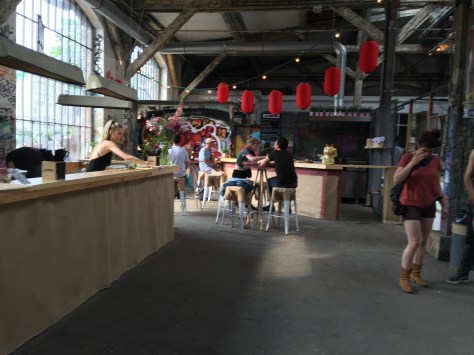
The Friday Market was also in full tilt and it wasn’t hard to find seasonal spargel, or asparagus. Every vendor was selling some, and it dropped dramatically from 6 Euros in the morning to only 2 Euros per kilo by midday. Fresh meat, cheese and cakes tempted the eye as well as the palate.

And, the Thomas Kirche offered a moment of peaceful reflection at the end of the day.

image.jpeg

If you want to see an experimental short film on a Leipzig mural in one of the passageways: https://www.youtube.com/watch?v=yi5GPovC2Vc. Set volume if you want to hear the Thomaskirche organ.


SF Victoriana v.2

Local friends and family know I like taking cross-town walks, so a planned lunch downtown was another excuse to make a quick 5 mile, zero-carbon footprint (except on my soles) hoof from home to table. My usual 100-minute exercise was interrupted by several scenes along the way, extending the time another 30 minutes!

My first distraction was a tiny, delicious little custom sewing shop. Laden with love and care, this local shop presented itself with a cute storefront and encourages you to peek inside. The treasure trove of lovely ingredients sparks the imagination and reminds you to think about art and what you wear.

Further along McAllister Street, between Masonic Avenue and the Civic Center, are a potpourri of beautiful Victorian homes. These are well known in San Francisco as “Painted Ladies”. They continue to mature into beautiful streetscapes that can only be fully appreciated by foot.

The heavy timber buildings were built at the turn of the century, when San Francisco was flush with wealth from the “Rush” of the Gold Rush. Local craftsmen, who must have been trained as carpenters in Europe, and artisans detailed and built custom one-of a kind residences for the nouveau riche. The gentle weather in the Bay Area allows these incredible structures to survive beyond a natural lifespan, along with the healthy, inherently bug-resistent redwood bones.

The beautiful entryways, frontages and detailing are definitely “look at me” attractions. I have driven along this route many times, but have only just come to notice and appreciate these buildings recently by walking through the neighborhood.

If you remember from last month’s February posting, I showed pictures of a house with a giant Valentine dangling outside (shown to the left below). Intrigued with the artwork at the time, I didn’t make a mental note of where it was. This time, as I walked on the same street and the block before the house, I wondered where the Valentine house had been located. No sooner had I pondered this question, when it appeared!  A new outdoor greeting for Easter was proudly displayed.

The re-discovery of the hanging artwork brought a sheer feeling of glee to me. In addition, a tiny toy mailbox was perched on the garden wall just outside the house. There were colorful sheaves of paper hanging next to it, with a dog-chewed pencil attached. A sign invited comments to the artwork! I was so inspired and delighted by this opportunity. I showered the artist with kudos for caring and sharing and stuffed my note into the pumpkin-colored mailbox.

I was late to lunch, but  glowed all day.

PS. Plans for this summer’s travels are being finalized, so stay tuned!