Tag Archives: Sights

Unplugged in Prague

imageAfter our initial determination to attend a performance at Prague Castle, we discovered the Lebkowicz Palace where the afternoon concert was held. Rather than hitting the more popular Castle grounds, we learned that the Lebkowicz Family had a fascinating history, tracing from the Spanish King Philip of the Spanish Armada and New World fame to a modern day American family. They lost their inheritance twice, first to the Nazis in WWII and then to the Communists.

It wasn’t until the Velvet Revolution in 1989 that the Lebkowicz family fully recovered its properties in Prague. The Palace boasts the largest private collection of artwork in Central Europe that includes paintings by Bruegel, Velasquez, Cranach, and Canaletto. We followed the history in a fascinating audio guide narrated by Martin Lebkowicz himself, the American heir to the Lebkowicz family. The history transcends many historic events in European history, particularly the Thirty Years’ War.

A Chinese wedding booked part of the Palace, and this entry was decorated for the affair. The musical performance in the main room included classical hits featuring flute, piano and viola solo and trio performances. The room was recently renovated as part of the Lebkowicz Palace.
Sights and sounds around the city included views of Prague Castle, St. Vitus Cathedral exterior and interior Stained Glass Window detail, and fine examples of local Baroque architecture. The panoramic view in the header above shows the Vlatava River, Dresden’s equivalent to the Elbe River (both painted by Canaletto).
Street musicians played classical, Blue Grass and Bolivian tunes. Music in Prague is eclectic and non-judgmental. Whatever you want to hear will be here, from Pop to Classical, high-brow to low. It demonstrates the vibrancy of the city and the arts that permeate society from the past to the present.

Some initial comparisons between Dresden and Prague:
1. Both are located along a winding scenic River with many bridges.
2. Both have a historic and active musical tradition.
3. Both have a strong respect and patronage for the arts.

These are only first day impressions, more to come.

The news of the day is focused on Cameron and the Conservative Party winning the most seats in the British election!

LA Dinner and a Cruise

I’m on a long weekend to La-La Land, with planned visits to a couple of galleries and museums.

After locating a cozy restaurant in the neighborhood (see photos of our focaccia bread with tapenade and ahi tuna appetizer) and delighting in a meal of watercress, pine nuts and parmesan salad, angel hair pasta, and hazelnut ice cream in a waffle tart, my next venture was “cruisin’ along Wilshire by foot the following day.

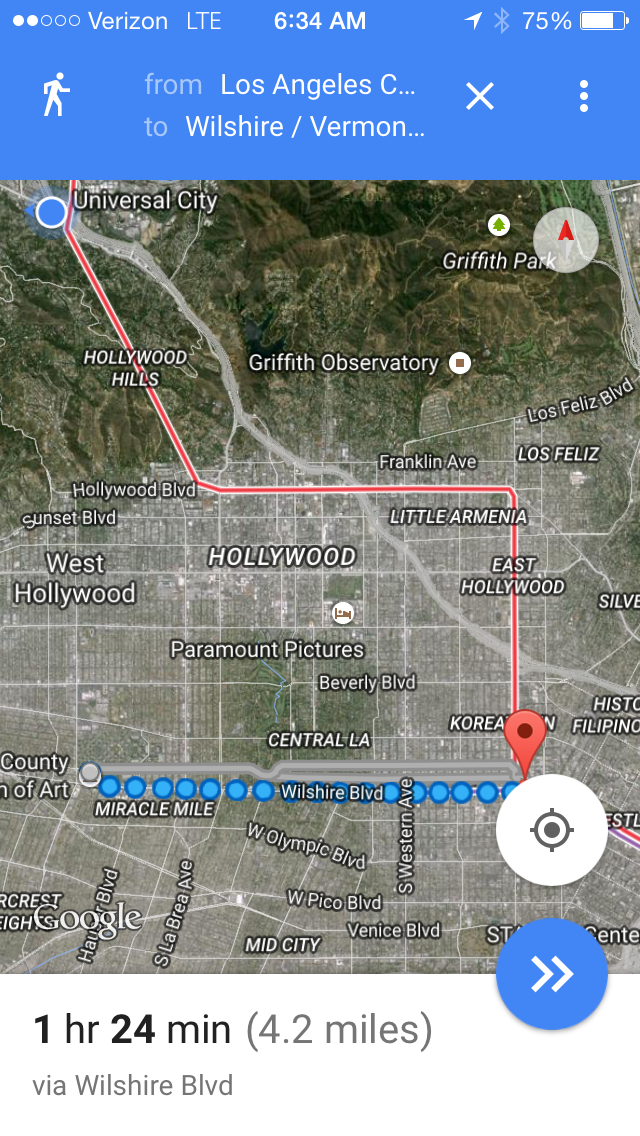
The LA Metro, located within one block of our hotel near Universal Studios, turned out to be a great option and asset. It allowed us to maintain our public transit-first approach to travel. Gee Kin took it to his business meeting and I took the red and purple line to the museum. The La Brea Tar Pits and the LACMA are located along the Museum Mile on Wilshire Avenue. The 3-4 mile walk from the Wilshire-Western Station to these destinations got me back in the groove of getting exercise while “cruisin’ along” plenty of new shops and sights. The screen shot shows the Metro route in red (without the purple extension that I took one way); the blue dotted line is what I walked.

IMG_5412

The Metro in LA, while a fairly new invention, is very accessible and easy to use. Most tourists would not consider using it, but it in fact does its job in a very modern, non-LA sort of way. It may not be your first thought, but if you give it a try you will find it’s a pretty good solution to getting around LA. While it’s still not a natural thought and takes work, it gets everyone out of their cars! So, why not??

Starting my walk with Korea town, I traversed the residential area of Wilshire Park, where the golden 30’s era chateaux and mini mansions seemed frozen in time and space. All the stars of yesteryear felt at home here. Amidst tree-lined streets (reminiscent of those in Sacramento from my November post last year), stripped palm fronds lay at the foot of stately trees like abandoned children torn from their parents. Similarly, stumpy, sagging and dated Art Deco buildings bleated for love but got little attention.


Just as I wondered if anyone had the uncool nerve to carry an umbrella in LA for sun shading, I suddenly saw someone doing exactly that. Finally, I thought, some practical minds at work. You wouldn’t be caught dead doing that in San Francisco with its perpetual foggy bottoms and rare temperature highs. The irony is that I dived into a Rite-aid to buy an umbrella but not for this purpose. I had lost an umbrella last year and heard from Gee Kin that the coveted little device came from Rite-aid. The design, size, sturdiness, and all features were priceless. (Tip for today: get one of these in your travel repertoire!) So much so that I beat it to the first Riteaid I have seen in 9 months (which happened to be in LA on this walk), faced the wrath of the cashier who stared at me like I was a stark raving idiot, and carried it around for a day in 90 degree weather (with no intention of using it for sun shading–I’m from San Francisco, after all!)

But I digress. See the next post for what I really did.

100 Hours in San Francisco

Those of you who have been checking my blog might be noticing a dry spell. I am planning a few upcoming trips this year, but I thought I would share a few recent activities with you. This weekend, we hosted some very good friends from Vancouver. Bennett and Colleen were arriving with some very serious dining plans that included Delfina, Mourad (the new Moroccan restaurant where Melissa works) and Nopa. We were to fill in the gaps between dinners, with epic walks, sights, and activities to justify the indulging among San Francisco’s best eateries.

The long weekend began on Thursday am, with a pickup at the airport. If you are coming from Canada like our BC friends, beware of the confusion between domestic and international airport locations. Customs and immigration might occur in Canada, but the airlines might still arrive in international or domestic, depending on the airline.

After hugs and greetings, we eventually set off on a specific shopping pursuit. At Bennett’s request, we ventured to Noe Valley to the Union Made store where Bennett and Gee Kin have bought elegant and hip men’s clothing. It didn’t hurt to have a 40% off January sale. Gee Kin likes to shop there (on Bennett’s recommendation) to keep up with the techie world, even if the prices are a bit steep. He found a great jacket there with super long arms that suited his proportions and was flattering for his next step out into Techie SF.

After this purely hedonistic venture, we recovered at Kasa on Eighteenth Street. Regarded as one of the best meals in town under $15, the home headquarters version on the food truck, this spartan shop eventually served a line out the door after we purviewed the menu of Indian specialties and ordered.  Three of us ordered a “Thali” lunch special of pork or lamb and three sides for $11.50.  I had the “Kati” roll with lamb. You can check out the menu at http://www.kasaindian.com/indianrestaurantsf/kasa-menu/.

We drove our guests home via the upper Market area and made a quick stop at Twin Peaks for a view of the city. Being a perfect day of 65 degrees, we had no problem with the usual windy bluff it normally is at the top. To top it off, it was reasonably clear and we could see Mt. Diablo in the East Bay, 50 miles away.

After a nap back at the ranch, we headed back to the same neighborhood in Noe Valley for dinner at Delfina.  We enjoyed the banter with the waiter over the descriptions of wine and food we eventually ordered, and the meal was predictably delicious.
image
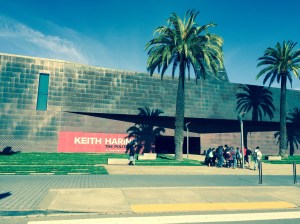
Day 2 started off with a morning walk down through the Inner Sunset to the DeYoung Museum to see the Keith Haring exhibit. While not particularly my thing, Haring had a following in New York and used spontaneous, street art to make his political statements. He covered many contemporary issues, including the Aids Crisis, racism, and world hunger.

We brought a picnic lunch to enjoy in Golden Gate Park in the unseasonably warm January weather. In the backs of our minds were the worries about the lack of rain that gives us beautiful guilt-ridden days of summer in the middle of winter. We skipped the wine but toasted our friendship on tofu and cloud’s ears, an ethnic dish, beet salad, sauteed kale, and fresh bread from Tartine (earned the night before).

After breezing past the adjacent Academy of Sciences, we headed over to Green Apple Books in the Richmond District. Another venerable local institution, this bookstore has expanded its footprint to the Inner Sunset where it shares space with LeVideo. It helped to bail out another well-loved service that has seen better days from a bygone era of VCRs and DVDs. I bought another used copy of “The Orientalist”, one of my favorite books, and a signed copy of a dessert book by the pastry chef at Chez Panisse for Melissa.

Our dinner that evening was a stunning introduction to Mourad. This new restaurant by Mourad Lahlou at 140 New Montgomery in the renovated AT&T building, is where Melissa works as pastry chef. We were lavished with new menu items produced by Mourad’s new Chef de Cuisine, Chris Kajioka, and our own Melissa. After being warmly greeted by Mourad, we were treated to a back-of-the-house tour of the kitchen. It was exciting to see this new venture long in the planning stages come to fruition, and we are so proud of Melissa’s dedication and success to her craft.

Day Three on Saturday was occupied by a walk from home to the North Side of the city to Chestnut Street. Gee Kin led our guests through Golden Gate Park. By pure accident, they found the sculptured heart painted by their friend Hung Liu perched along the Broderick steps leading to the Marina. You’ll hear more about this artist momentarily.

We regrouped just before dinner to drive over to the East Bay via the San Francisco Oakland Bay Bridge. We could still see the remnants of the former Bay Bridge alongside the spanking new version, to explain the reason for another bridge. Being seismically compromised, SF Bay Area residents recognized the importance of sustaining this vital transportation link between two major cities in California. While it was originally estimated at $1 Billion, it ended up costing $6.4 Billion and several years longer than anticipated.  Oh well, a bit off.

Our dinner with Hung Liu, a Chinese artist living in Oakland, was very illuminating. She and her husband Jeff shared with us their experience doing and selling art in the US. She is an accomplished artist and was teaching at Mills College until recently. You can see a sample of her work here, that represents a young Chinese bride with a bird in a cage superimposed on the image. We visited her studio in East Oakland after a classic meal at the Bay Wolf Restaurant on Piedmont Avenue.
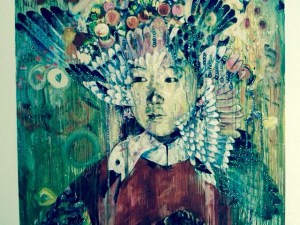
image

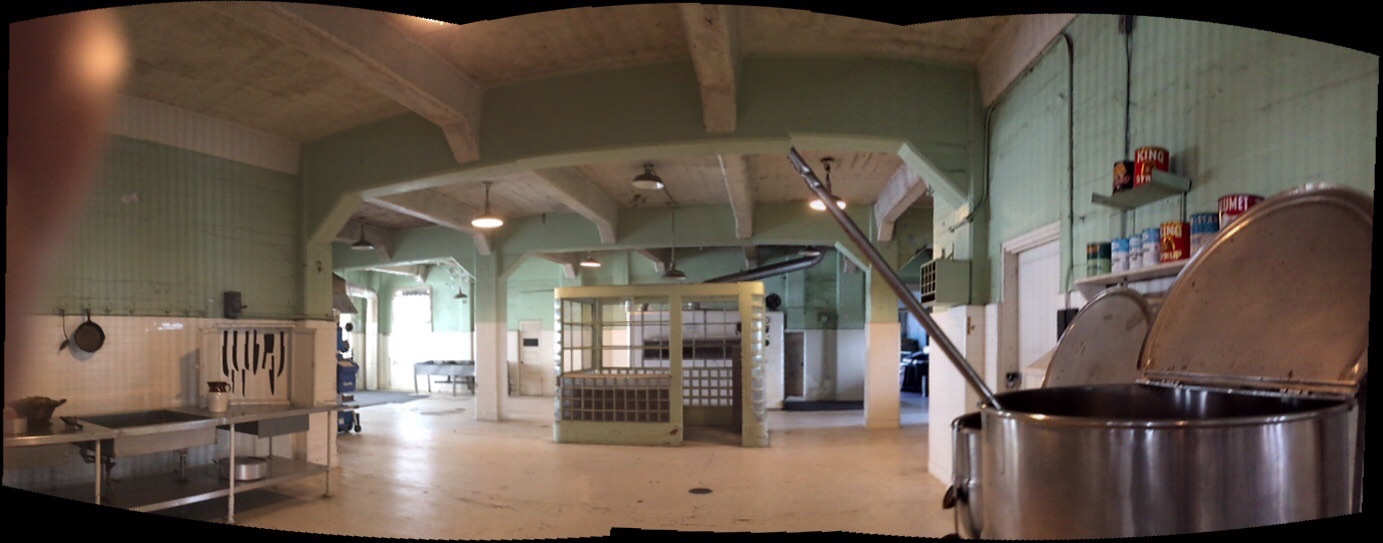
Day Four started with an early morning tour of Alcatraz Island, with a featured exhibition of Ai Wei-wei’s work. While the location may have been perplexing to many, it was a fitting venue for highlighting the issue of political dissidents and the importance of activism. Ai Wei-Wei used his expertise and talents as an artist to convey this message to many who would not otherwise attend an art museum nor a prison. He cleverly and adeptly combined the two experiences into one to convey an important message. Below is a picture of the kitchen at Alcatraz.

The kitchen at Alcatraz

Believe it or not, this day was capped by SuperBowl Sunday! No, we were not above succumbing to social influence. After lunch at Nopa on Divisadero and a quick tour of the neighborhood market, we hunkered down for the afternoon and pigged out on beer, guacamole and chips, finger food, and split pea soup. What more could you ask for on a lazy Sunday afternoon?

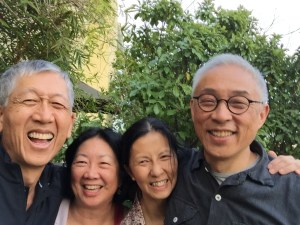
Our final day of the endless weekend was topped by a final walk from home to Hayes Valley via Upper Market. We shot past UCSF at Parnassus to Seventeenth Street, and then down the hill. Bennett and Colleen did some serious shopping on Hayes Street. I managed to get them to the Glen Park Station to head to the airport at the end of the day just in time for my final German conversation class on time!
image

A few notes:

Urban walking is one of my passions! You can find out more about 5 day sagas from San Francisco to Napa or San Jose and more at http://www.crazyladywalks.com

You can see some of Melissa’s amazing desserts on Instagram at _melissachou.

For followers: Look for new postings in Early March for a week in New York City visiting museums and the New York Metropolitan Opera (Carmen, Don Giovanni and Manon). Another trip to Germany for the Dresdenmusikfestspiele in May is upcoming, and another world trip is in the works for late Summer. Stay tuned!

Day 78+2: Summary of Segment IV: China

Segment IV, while a continuation of China, was the Non-Silk Road portion of the trip. Gee Kin and I stayed in Szechuan 5 days with an overnight in Emei Shan. Gee Kin returned to the US after that, and I traveled solo overnight on a rail journey from Chengdu to Guangzhou. After that, my final destination was Hong Kong before heading back to San Francisco via Vancouver.

The photos are in triplets, three for each city. Most of our earlier trips to China focused on the heavily populated cities of the East Coast, namely Beijing, Shanghai and Qingdao. It was a completely different experience visiting Western China, where the food, character of the people, dialects, and temperament were distinctive.

The rapid growth of Chengdu and Guangzhou were astounding. I felt as if portions of Putong District in Shanghai were airlifted there. The noticeable presence of cranes was unavoidable, and I felt a bit like a country bumpkin trying to navigate around big complexes, malls, and huge underground systems.

Hong Kong had always had this buzz, but relative to these other cities it too felt behind in some respects. There are fewer sites to develop so the other cities appeared to be amassing more square foot on a pure volume basis. But clearly in the lapse since I had last been there (a span of perhaps 3-5 years), there had already been extensive infill projects, more electronic advertising on sides of buildings, and several new mass transit lines added.

Going back to Chengdu, it’s clearly a city on the rise. People seemed to be excited that this inland city was getting its share of development. The malls were filled with local tourists who worked hard so they could spend money. There were very few foreigners in this part of China. Even atop Emei Shan there were only a handful of foreigners among the scant groupings of local Chinese tourists. For that, it made going up the mountain a worthwhile adventure.

Guangzhou shot me into the twenty-first century. The cultural buildings near my hotel in Tian He were impressive in size and scale, but the design and quality were questionable. These buildings completed in the last few years included the Library by Japanese architects Nikken Sekkei, the Guangzhou Provincial Museum by Rocco Designs from Hong Kong, and the Guangzhou Opera House by Zaha Hadid. Clearly Guangzhou’s Bureau of Architecture was intent on putting the city on the world map and has managed to do so virtually overnight.

Taking from the concept of two pebbles, the Opera House has sweeping angles and swoops to make the spaces in between buildings dynamic. But the building already looked prematurely worn and wrinkled. The museum was a vacuous building that didn’t seem to have enough material on display and lacked any kind of soul due to its monumental size. Materials were poorly assembled and chosen. The exterior of the building, with a wavy podium ramp to the side, did not make any sense supporting a very rectilinear box with slits and window cut outs. The library seemed to have the most promise, but I was not able to spend any time inside.

At last, arriving in Hong Kong felt a bit like a Homecoming. Three sets of friends from my earlier days working in Hong Kong kept me informed and entertained during my five day visit. The protests against the government were unsettling but did not occur until the day after I left. A good proportion of the Hong Kong people felt betrayed by the British government and by the Chinese, who promised to allow free elections for leaders chosen by the people. The complaint is that the Chinese government changed the terms of the agreement.

Food of course dominated my attention in Hong Kong. Food continues to maintain a very high standard and the innovative touch was evident. While I can’t speak for HK stocks or property speculating, this is one place to bet your money. It’s a winner every time, despite everything else around you never staying the same.

I’ll leave here to allow time for you to ponder my comments. In the next couple of days, I will close out my blog. As mentioned previously, I’d be happy to hear from you and provide details of each segment if you are interested.

Day 77+3: Summary of Segment III : China and the Northern Silk Road

Northern Silk Road

The missing link between the two major urban areas of Tashkent, Uzbekistan and Urumqi, China (see my post: a Thing for Thina) is very perplexing. With a flight time of just less than 2 hours, the distance over the Ferghana Valley and the Tian Shan mountains was indeed very short. Google maps had no discoverable routes between the two cities. Even Kashgar, the far outer reaches of Xinjiang Province accessible by train, had no published routes between these two cities in Google. You can go to Kashgar but there was no train to go beyond into Uzbekistan, and there were no flights from Tashkent to Kashgar. This was a Catch-22 for me.

There was probably a way to go via road locally, but I did not see any reliable method that could be planned in advance. Thus my itinerary and decision was to fly from Tashkent to Urumqi, where Gee Kin and I successfully rendezvoused. It was somewhat miraculous that both of our flights arrived in Urumqi, his from San Francisco via Beijing, and mine direct from Tashkent, within ten minutes of each other. And we actually found each other in this far-flung, highly sensitive part of the world!

We know that this minor link had to exist overland, but it seems to have been forgotten and virtually decommissioned as the Silk Road declined over time. There were a number of other options, but they too have drifted by the wayside. We learned that the caravans traveled from oasis to oasis in the desert, where ground water was available. It seems so obvious once you are in the desert, staring at each grain of sand, that this was essential for survival and success of the Silk Road.

The camels could pack enough food for 2 months and water for 2 weeks. Other animals and men could go for 4 days, so the caravans timed their journeys so they would have enough provisions and wouldn’t get caught in between. From Dunhuang, on the outskirts of the Gobi Desert, there were two basic routes to the next watering hole: one took seven days and was easier, and another took four days but was riskier. Doing the hop-skip made so much sense!

The other aha moment came when our guide explained the history of the two major outposts in China. Both Turpan and Dunhuang were major Silk Road trading points. Turpan contained one of the early walls from the 1st C. BC that preceded the Great Wall outside Beijing. And both the ruins of Gaocheng, a Han Dynasty city, and Jaio He, a fortress, were worth seeing but very remote from the current day town of Turpan.

The Han emperor sent the generals to fight the Hsiung Nu invaders from the North. When they finally won, a period of stability and civil order allowed the Han Dynasty to flourish. Trade and intercourse between the Chinese and the Sogdians, who were settling and trading in China, developed during this time. The Sogdians, if you recall, were the people who inhabited Bokhara and Samarkand! This period of prosperity lasted through the Tang Dynasty until the Mongols came down again from the dreaded north and ruined everything for the Tangs.

As soon as a sea route was discovered by Chang He in the Ming Dynasty, the party was over. It was better, faster, cheaper to go by sea to all the Middle East points. And sadly, the Silk Route diminished in its importance. While trade continued, the difficulty in going between desert and mountains became impractical and the cities like Dunhuang lost their significance.

After staring at the map for quite some time, I realized that all of the cities I visited were only within a few degrees’ latitude of each other: Tashkent, Samarkand, Bokhara, Kiva, Turpan, and Dunhuang were nearly on the same latitude by a range of only 5 degrees. Amazingly, San Francisco lies in this zone of 38-42 degrees. There must have been something in the air or water that made me feel so at home in all of these locations. Maybe the wind direction had something to do with why the ancients chose to move eastward, or the water flow below fed the streams and wells in one horizontal line….

It was amazing that amidst the Turpan desert were extensive grape vineyards. They really gave the lush impression of the oasis. It was a little bit of Napa Valley in the middle of the Gobi! The wells and water sources were precious and more important than gold. To this day, they are maintained carefully as a national resource. The government has big plans to harness the desert’s solar and electrical power capabilities. A high-speed train is under construction and will be in operation next year. That’s when development and tourism will be inevitable, and will kick in big-time.

Both the Southern and Northern Silk Road segments were the highlights of my travels. If you are interested in details, please let me know, and I will be happy to share my plans with you.

Photos, revisited

1. Simplified map showing cities I visited on both Northern and Southern Routes: Kiva, Bokhara, and Samarkand in the south (Uzbekistan); and Turpan and Dunhuang in the north (China)
2-3. Ruins of Gaocheng and Jiao He
4-5. Ruins of Dunhuang Palace

Day 76+4: Summary of Segment III: Uzbekistan and the Southern Silk Road

The three UNESCO world sites I visited are: Samarkand, Bokhara, and the inner city of Kiva. Timur, or Tamarlane, who reigned in 1400, conquered India and was known to be one of the most powerful rulers in history. He was responsible for developing many of the building complexes in Samarkand.

He conquered India when Alexander the Great tried many centuries before and failed. Timur knew about the use of elephants in the campaign that beat Aexander. Timur released rats and mice against the elephants in his successful battle. The elephants were so scared that they fled, so the story goes.

The flowering of the Islamic culture occurred between 700-1300 AD, when Europe slumped from the Middle to the Dark Ages. Mathematics, science, and medicine flourished at this time. It wasn’t until Ghenghis Khan swept down from Mongolia and obliterated everything in his path when Central Asia declined.

The mosques, madrasahs (academic institutions) and the mausoleums were built during this golden period. The sites were renovated or new buildings were rebuilt on the original sites. The ongoing renovations resulted in varying degrees of success, but the beauty and magnificence of the original concepts of Islamic Architecture are still evident and being protected under the UNESCO umbrella.

At the time these buildings were built, their beauty was never allowed to be perfect. There was always a degree of incomplete construction by intent. Layouts of building sites or facades were asymmetrical, building beams were left uncut and projected from the eaves, or tiles were unfinished from the surface to reflect the imperfect nature of the human endeavor in paying respect to respect to Allah.

Visitors to these sites often find these conditions curious and strange. I found that it made you study and look at the buildings more closely. They didn’t seem so static and were more alive. It felt as if something was going to be corrected on the building in the next day, even it if it took centuries!

Coming to Central Asia helped me to understand the beginnings of the trade along the Silk Road, and the innovative people it took to forge their way into China. The environment, culture, and abilities of the Sogdians (originally from Persia) provided the tools and desire for them to seek the intercourse with other lands and people. They will surface again as we traced their steps along the Northern Silk Road.

Day 75+5: Summary of Segment II: Dresden

August signaled a month of doing and learning German at the Goethe Institut in Dresden. I picked Dresden because this was my fourth year there attending one of the best music festivals in Europe. Being in the former East Germany, Dresden has some of the best musicians and the tickets are very reasonably priced. You even get a discount for a series of three events.

So there was no question where I wanted to spend time in Germany. Dresden’s beautifully restored buildings to its Baroque magnificence and the wealth of art treasures are not to be underestimated. Its gentle climate and beautiful geography made the decision easy. With a few beginner’s classes behind me in San Francisco, I felt ready to tackle a four-week intensive class, with 5 hours a day of immersion style, no English-spoken cold turkey training.

Within three minutes of the start of the class, we were asked to introduce ourselves and identify 1. Who we were, 2. What we did, an 3. How old we were. I rattled my brain trying to decide how I was going to finesse the last answer. If I could answer in French, I could say “plus que soixante ans”, but as pressure was building up, I couldn’t remember the simple equivalent for “more than” in German. As answers were winding around the circle towards me and ready replies spewed out “23”, “18” “oh, I’m one of the older ones, 32”, all eyes eventually focused squarely on me.

“I’m Victoria. I’m an architect. And I am 66”, in my spastic German. Everyone gasped.
After a pregnant silence, normal breathing resumed. Eventually, everyone got used to me, just being myself. We bonded and played tricks behind the teacher’s back, cheated on tests, and enjoyed the language games the teacher tossed us to keep the ennui to a minimum.

At the end, I passed the exam with “good” marks, only 1 point off “very good”. No grade inflation in Germany, and no “excellent” exists in the grading vocabulary. I was happy.

But I do sorely miss the comraderie from the class. You inevitably bond with each other, no matter what the generation, nationality, or the cultural difference. It was a fantastic reminder of humanity and how we are all in this place together, getting through life and its challenges, tragedies, and ecstasies. I guess I’m gonna like it here.

My favorite photos from August:

1. Guest house room, my home for a month in Heeresbackerei, the old bakery for the Russian army and military quarters
2. My favorite hotel in Dresden, the Aparthotel Neumarkt just around the corner from the Frauenkirche
3.  View of the “Florence on the Elbe” near Konigstein
4. The Goethe Institute, a great place to learn and do German for all
5. A delicious home made care package from German friends Hanni and Jens, who took good care of me. everything was home grown, and even the jam was home made!
6. Winking eyes on the rooftop in Loschwitz got me intrigued with rooflines in Germany, and how they deal with lighting deep attic spaces. My friend Pam asked if they winked at night when the shades were pulled. (See the post for “third Eye Blind”).
7. The train tracks behind my complex. I became very fond of the whooshing of the trains every evening and found the known sounds both frightening and calming at the same time.
8. The interior of the Frauenkirche, where Music Festival performances are held. This building was fully restored to its original splendor with the help of the City of Coventry, England, after it was bombed by the Germans in WWII.
9. My Swiss friend Helena, who came to Dresden while I was there.
10. Moritzburg, hunting lodge for the king with beautiful paths for walking
11. My signature German class, with friends from Mexico, Bulgaria, Algeria, Indonesia, Hungary, Japan, Thailand, India, Korea, and Portugal. I was the only American.


Day 74+6: Summary of Segment 1 (San Francisco to Dresden)


As my blog winds down with 80 days around the world (OK, so I’m cheating on the last 12 days as an after-thought, but why not?), I am becoming nostalgic about all the planning and implementation for the trip. So pardon my indulgence in recapping each of the four original segments and the extra spoiler at the end.

First of all, I had no problem leaving home without one…extra birthday. For Segment 1, Karen and I left on the night of my birthday, on a red-eye bound for New York Sit-Tay. After our early urban walk down Fifth Avenue and a stop at Balthazar, we went the other direction in the late afternoon for the Big Apple Store, designed by BCJ, the firm Julianne worked for in Seattle over the summer.

We made it to the Ai-Wei Wei exhibit in Brooklyn, had dinner with friends at the Bateau Ivre, and bunked at the Pod. We scooted over to London for whirlwind tours of St. Paul’s Cathedral, The Tower of London, Tate Gallery and Buckingham Palace as an introduction for Karen’s first trip there. I managed to savor my old digs on Torrington Place in Bloomsbury, Byng Place, and Gerrard Street, and we stayed in a great location off Euston Station.

After taking the Eurostar, we arrived in St. Germaine des Pres and tracked down nearly every chocolatier that exists in Paris. Melissa met us after her etage stint in Ghent, Belgium, learning how to bake bread at the Superette. We ate our way to heaven via Roseval, Septime and Clown Bar, and managed to refresh our brains at the Musee du Monde Arabe.

Two quick stops at Reims to see the cathedral and take a champagne tour was followed by a visit to Trier to see what the Romans were doing there so early in Germany’s history. We bee-lined for Dresden just in time for my German class to start the following day. Karen stayed at my absolutely favorite accommodation, Aparthotel Neumarkt, before returning to the US via Berlin on Norwegian Air.

Day 72+8: the Opera Norma

image

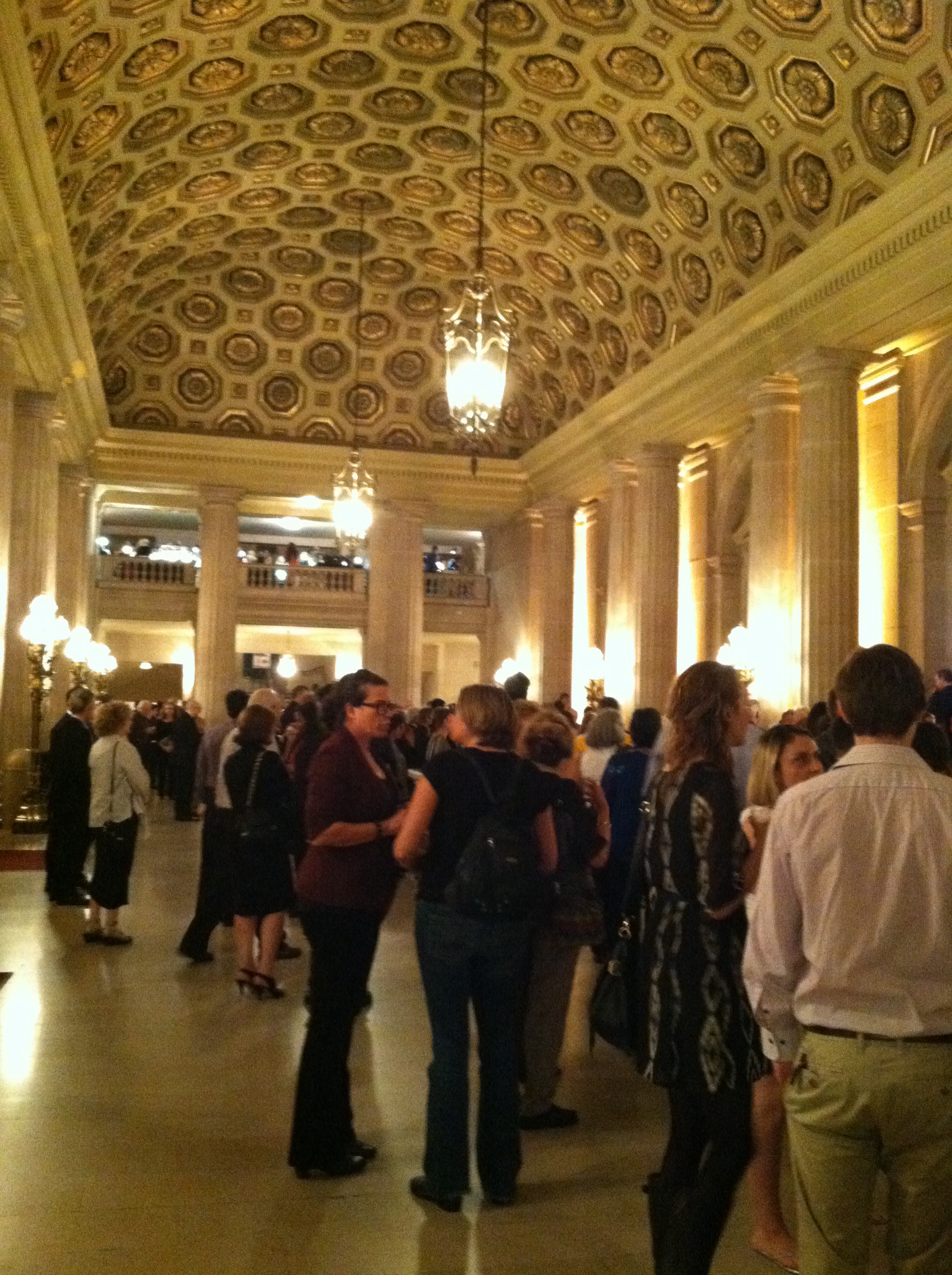
Above is the interior of the Opera House, and an interior shot of the lobby. You can read an excerpt of the opera I attended tonite below.

ACT I

Gaul, 50 BCE, during the Roman occupation.

In a forest at night, the priest Oroveso leads the Druids in a prayer for revenge against the conquering Romans. After they have left, the Roman proconsul Pollione admits to his friend Flavio that he no longer loves the high priestess Norma, Oroveso’s daughter, with whom he has two children. He has fallen in love with a young novice priestess, Adalgisa, who returns his love. Flavio warns him against Norma’s anger. The Druids assemble and Norma prays to the moon goddess for peace. She tells her people that as soon as the moment for their uprising against the conquerors arrives, she herself will lead the revolt. At the same time, she realizes that she could never harm Pollione. When the grove is deserted, Adalgisa appears and asks for strength to resist Pollione. He finds her crying and urges her to flee with him to Rome. She agrees to renounce her vows.

Norma tells her confidante Clotilde that Pollione has been recalled to Rome. She is afraid that he will desert her and their children. Adalgisa confesses to Norma that she has a lover. Recalling the beginning of her own love affair, Norma is about to release Adalgisa from her vows and asks for the name of her lover. As Pollione appears, Adalgisa answers truthfully. Norma’s kindness turns to fury. She tells Adalgisa about her own betrayal by the Roman soldier. Pollione confesses his love for Adalgisa and asks her again to come away with him, but she refuses and vows she would rather die than steal him from Norma.

ACT II

Norma, dagger in hand, tries to bring herself to murder her children in their sleep to protect them from living disgracefully without a father. She changes her mind and summons Adalgisa, advising her to marry Pollione and take the children to Rome. Adalgisa refuses: she will go to Pollione, but only to persuade him to return to Norma. Overcome by emotion, Norma embraces her, and the women reaffirm their friendship.

The Druids assemble at their altar to hear Oroveso’s announcement that a new commander will replace Pollione. Oroveso rages against the Roman oppression, but tells the Druids that they must be patient to ensure the success of the eventual revolt.

Norma is stunned to hear from Clotilde that Adalgisa’s pleas have not persuaded Pollione, and in a rage she urges her people to attack the conquerors. Oroveso demands a sacrificial victim, and just then Pollione is brought in, having profaned the sanctuary. Alone with him, Norma promises him his freedom if he will leave Adalgisa and return to her. When he refuses, Norma threatens to kill him and their children, and to punish Adalgisa. She calls in the Druids and tells them that a guilty priestess must die, then confesses that she is referring to herself. Moved by her nobility, Pollione asks to share her fate. Norma begs Oroveso to watch over her children, then leads her lover to the pyre.

And the introduction by David Gockley, General Manager:

http://sfopera.com/Season-Tickets/2014-15-Season/Norma.aspx#media-audio

And an excerpt if you are interested:

http://sfopera.com/Season-Tickets/2014-15-Season/Norma.aspx#media-videos