Marco Polo’s father and brother set off from Italy in 1260 on their first adventure through the massive conjoined continents of Europe and Asia most likely along the Silk Road, then a common highway overland. They traveled through Bokhara, one of my Silk Road stops described earlier. Later, on return to Italy, they organized a second trip with Nicolo’s son, Marco.
The second trip took a different course through Persia to join Kublai Khan’s court in Beijing. Marco Polo was gone from Italy for 26 years, and when he returned, he was barely recognizable or believed to be Marco Polo himself. His clothes were worn and tattered, and he barely could speak his native language.
Before March 17 this year, we were able to go to Italy much easier without having to devote half a lifetime to getting there. Hopefully we won’t have to wait as long as Marco did! While the COVID-19 Pandemic still rests heavily on our minds, these reposts hopefully inspire us to look to future travels and savor the past.
In early 2019, we took advantage of Pastry Chef/daughter Melissa’s winter work break and hit the food scene in Italy. We stayed in the Testaccio neighborhood in Rome as our base and traveled to Matera and Naples from there. Here are two posts in case you missed it last year, condensed into one.
Sassi di Matera Hill Town
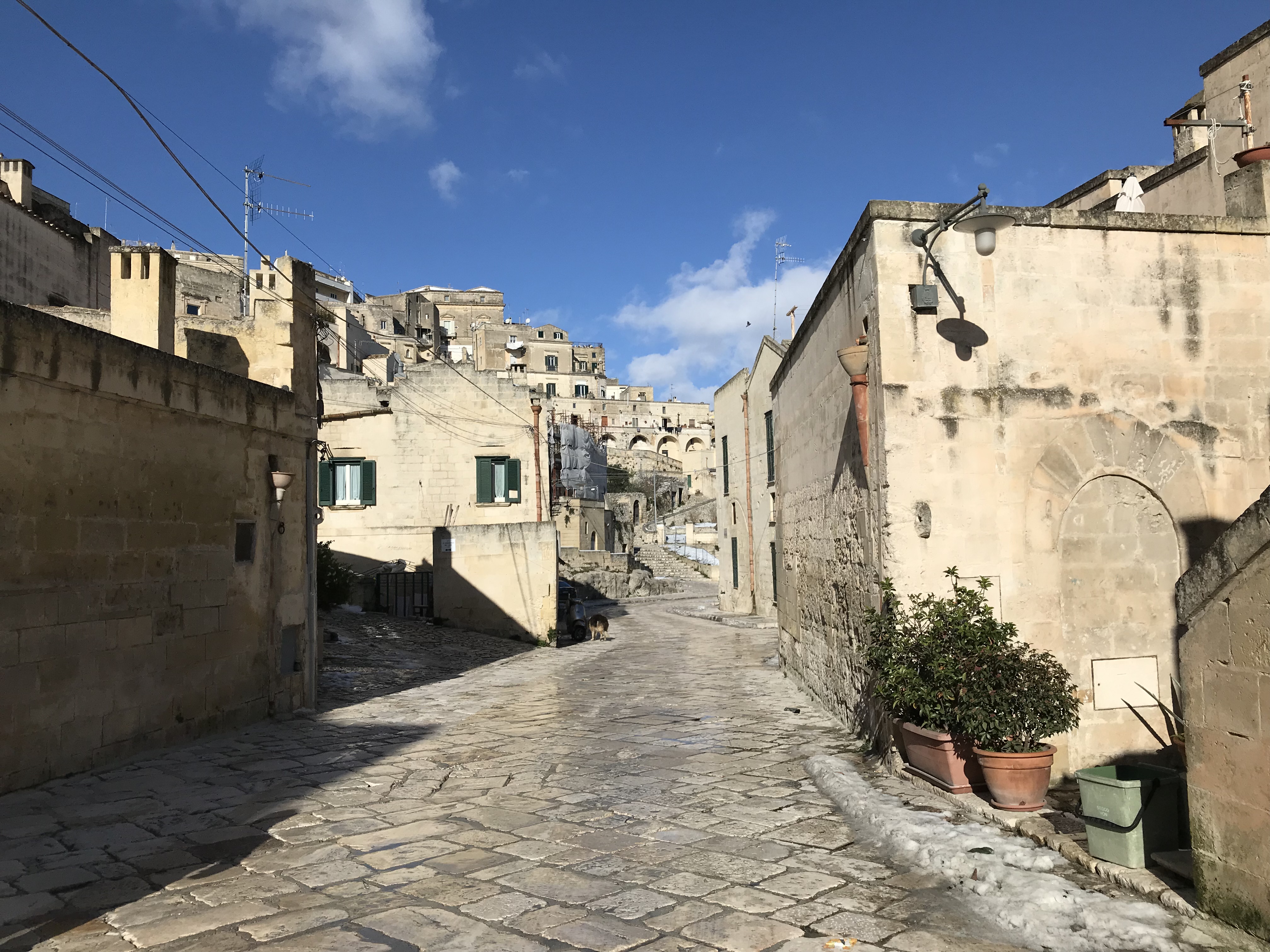
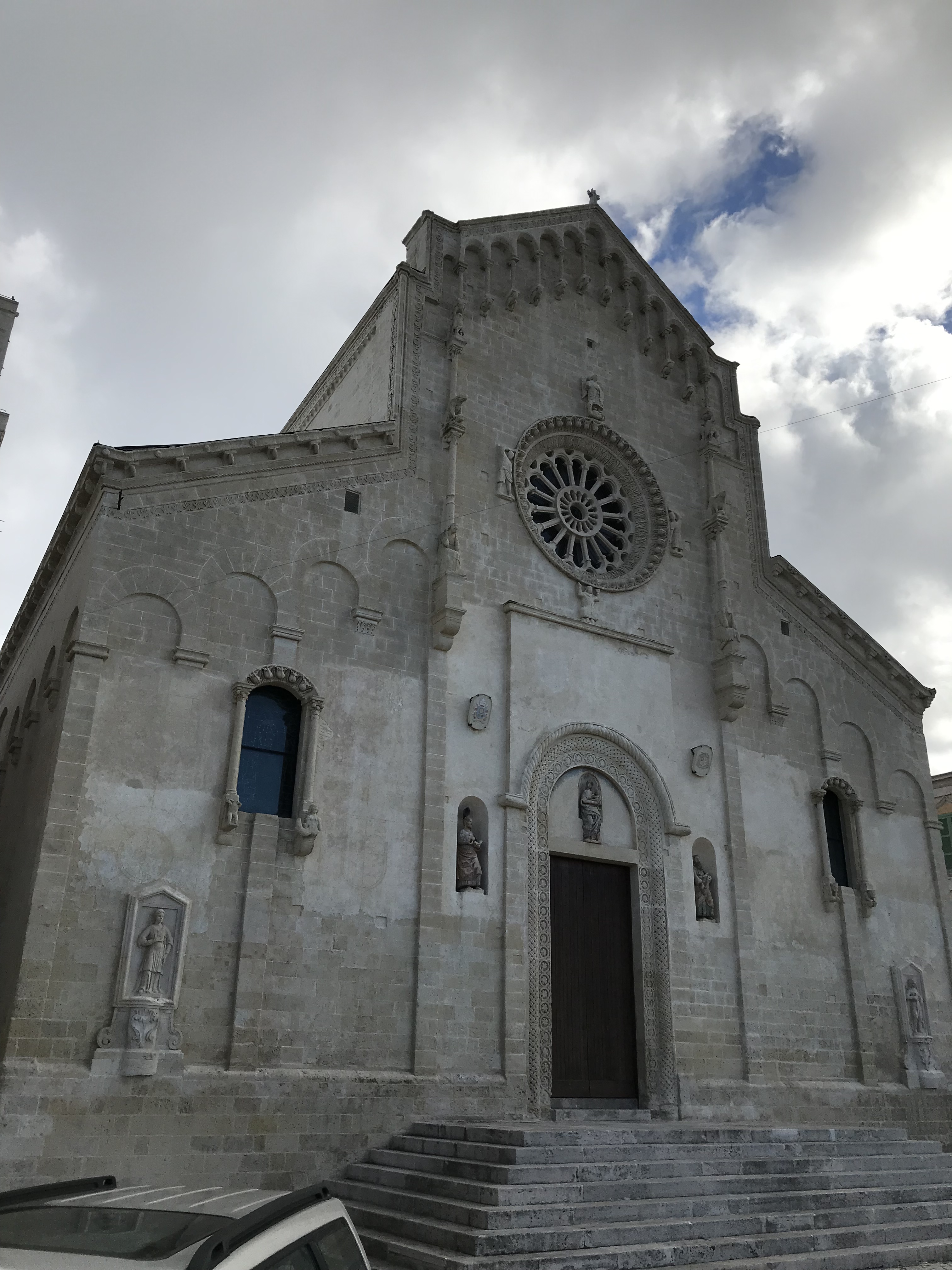
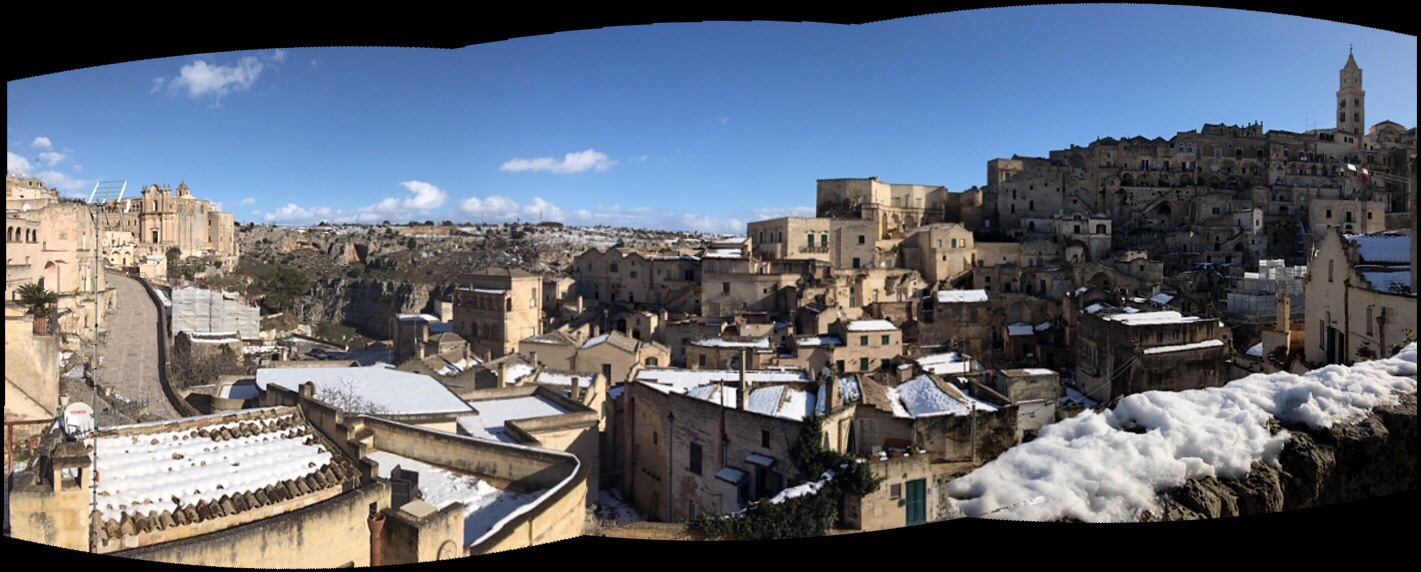
An inexpensive flight to Bari at the heel of Italy enabled us to visit Matera in a dawn-to-dusk trip. After a one-hour drive from Bari, we reached Sassi, two ancient hill towns straddling a deep valley. This UNESCO area was designated a major destination in 2019, to showcase sustainable tourism and environmental protection of treasured and not-to-be forgotten settlements.
Timeless Dali
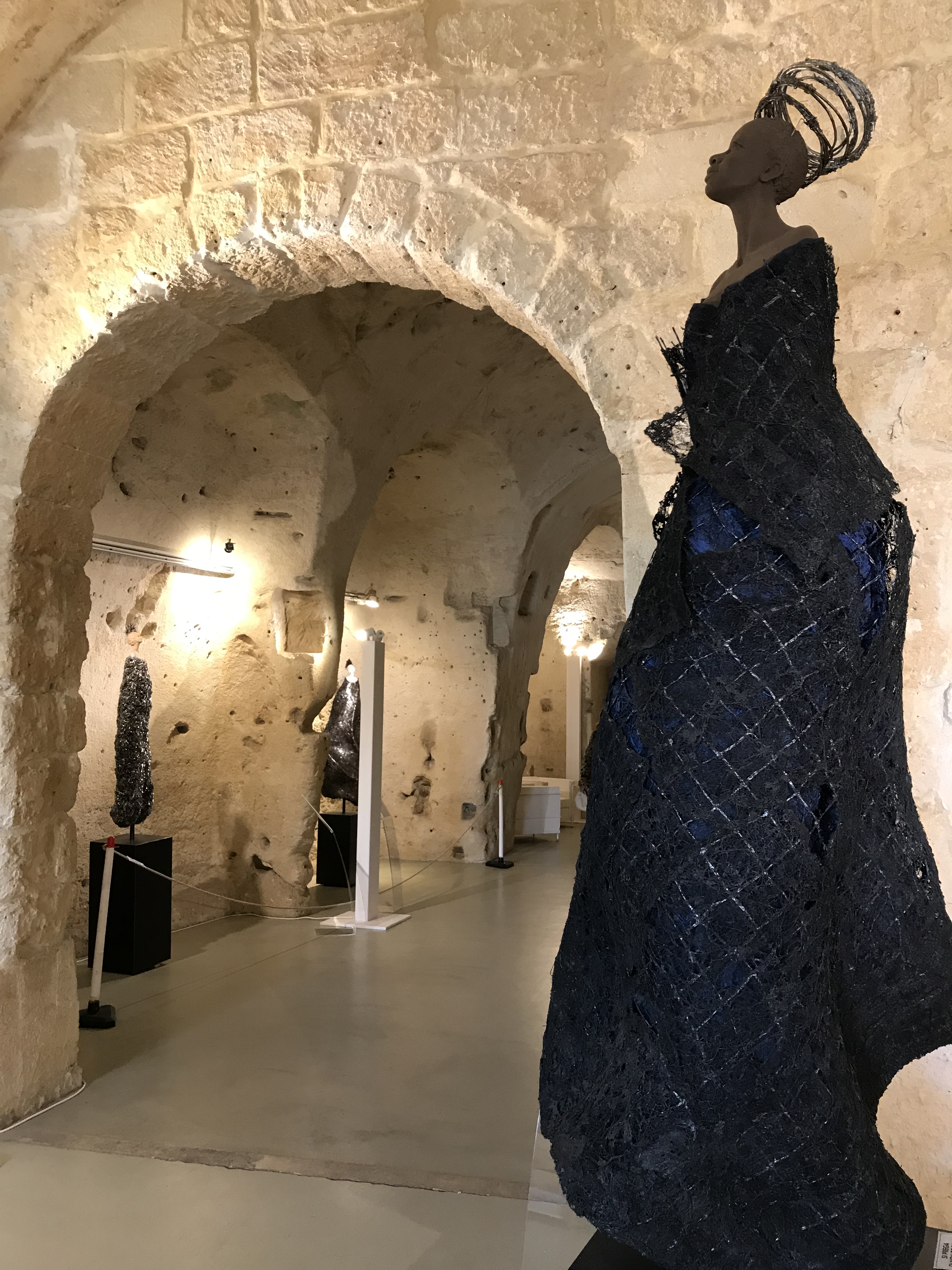
Cave Museum
Matera in the Snow
A World UNESCO site dedicated to restoring hill towns with little or no environmental impact
Elena Ferrante’s Napoli
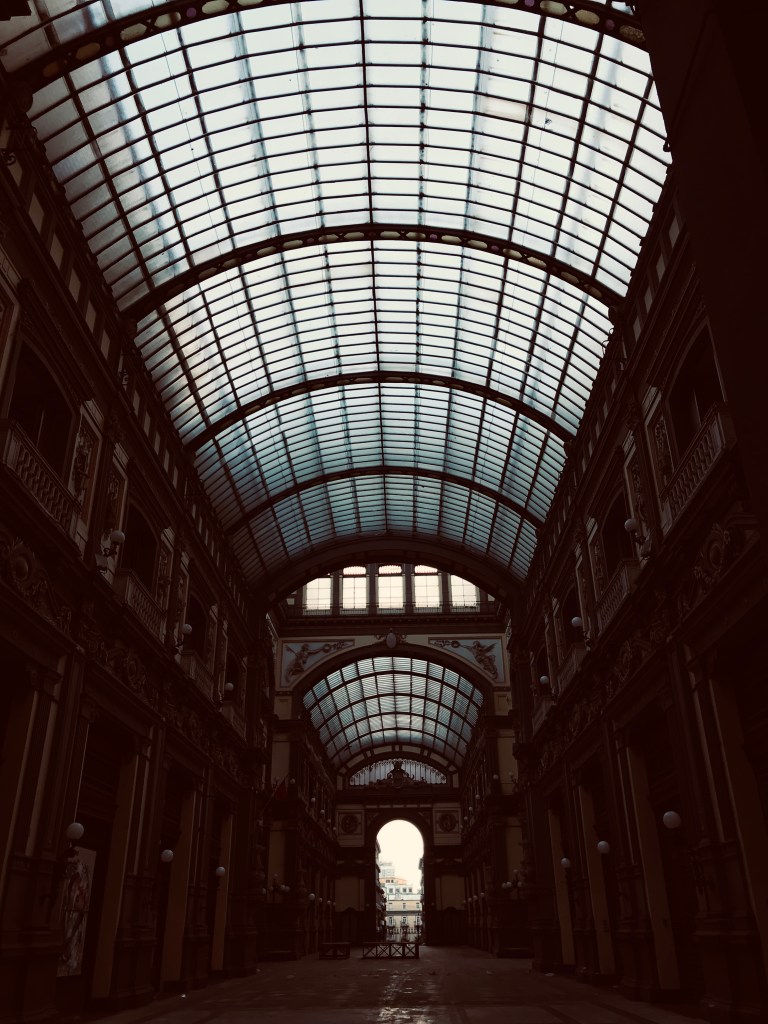
Defunct Galleria
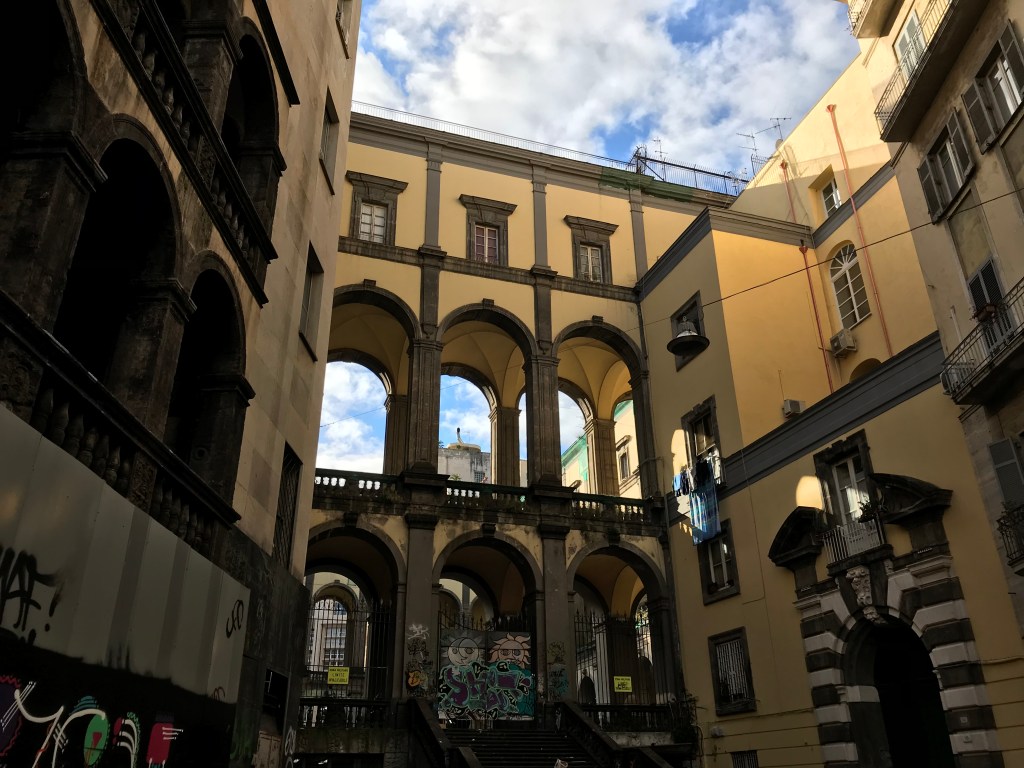
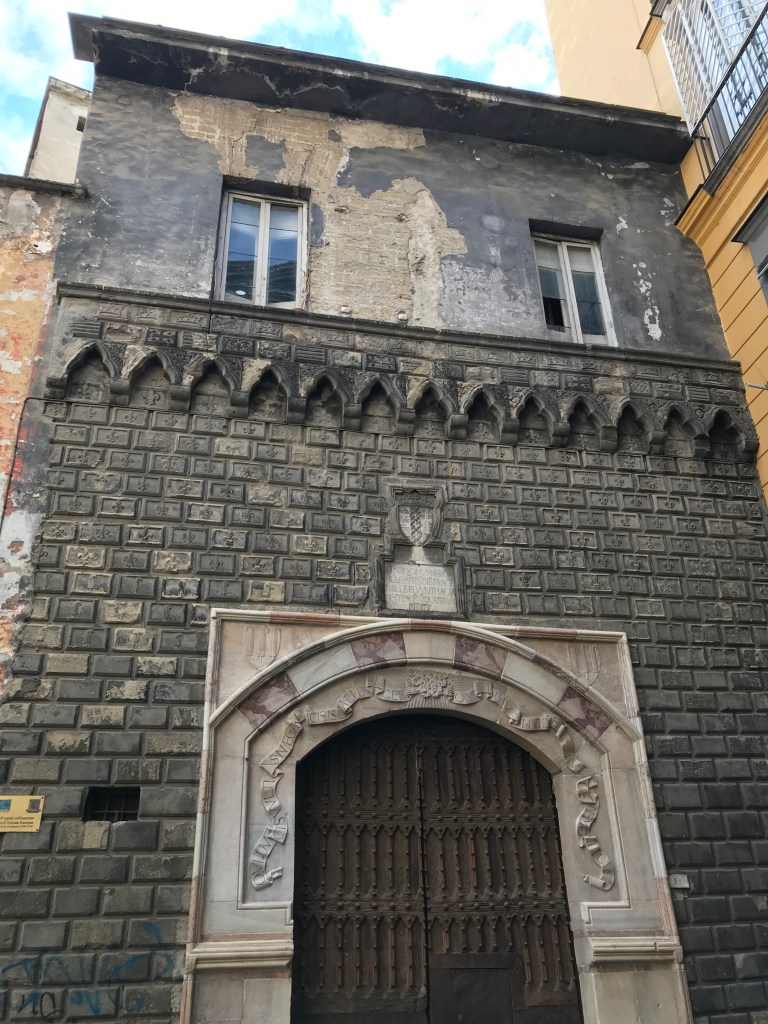
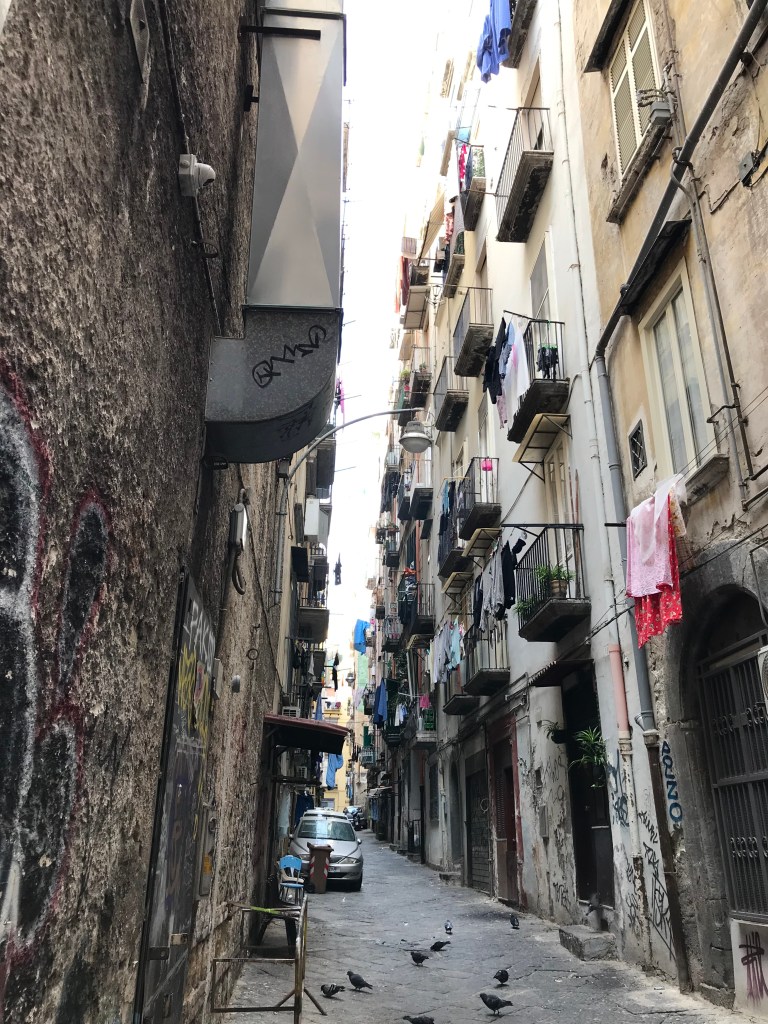
Typical Street
Toupees and Mustaches
Mt. Vesuvius from Port of Napoli
Famous Pizza and the Opera House drove us to Naples, but we couldn’t help but think about the stories written by Elena Ferrante in her four book series about scrappy Neapolitan life. (She has a new book out!)
We stopped at the Archaeological Museum, one of the country’s top sites holding treasures from Ercolano and Pompeii. Porn was thriving in Pompeii, as witnessed in this museum, along with other artifacts that are no longer available at the sites. Between the museum and a Nutcracker at the historic Teatro di San Carlo, the local food won hands down. (See below)
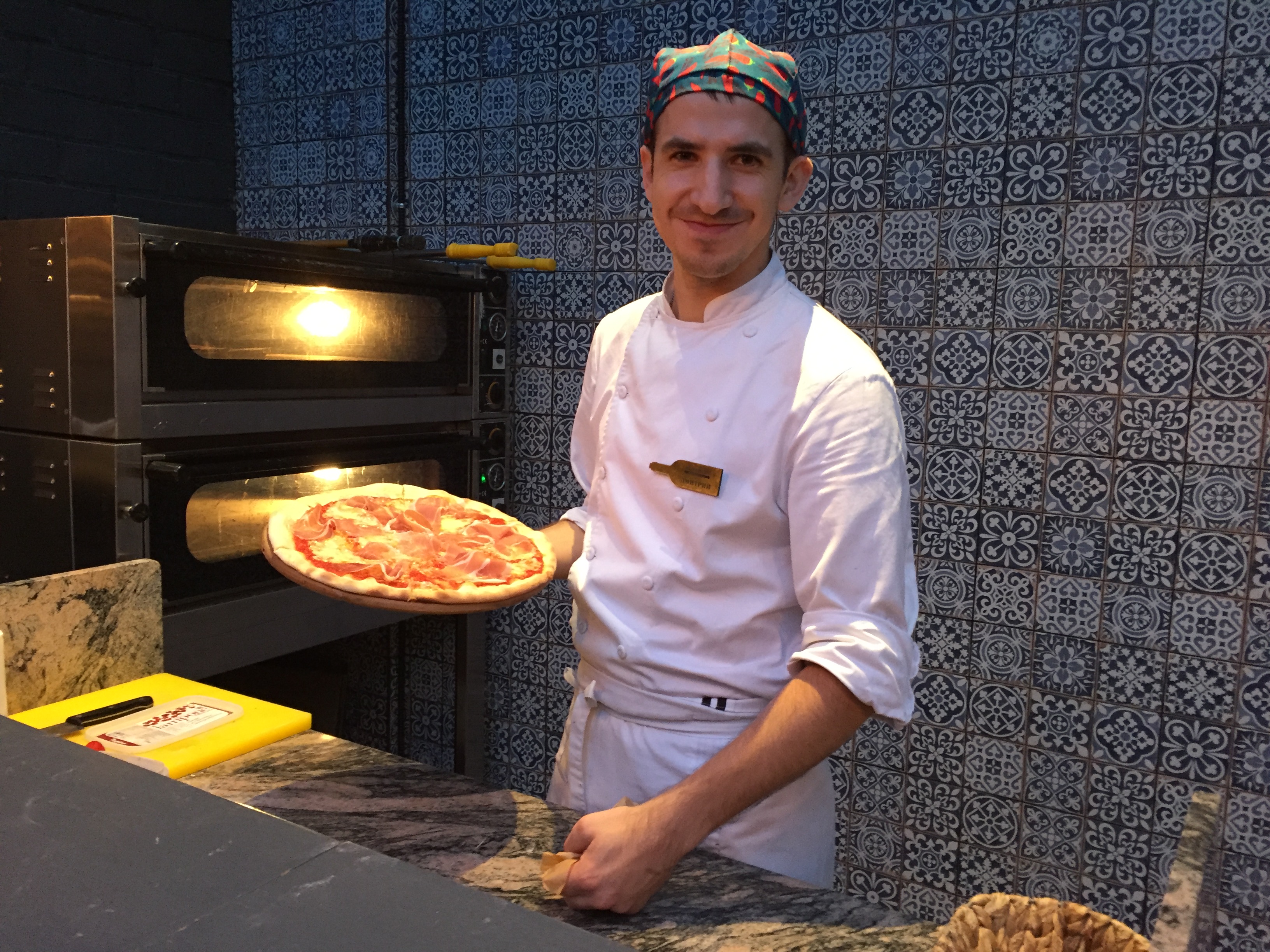
Famous Pizzeria da Attilio, Napoli: Pure, straight, and to the Oven
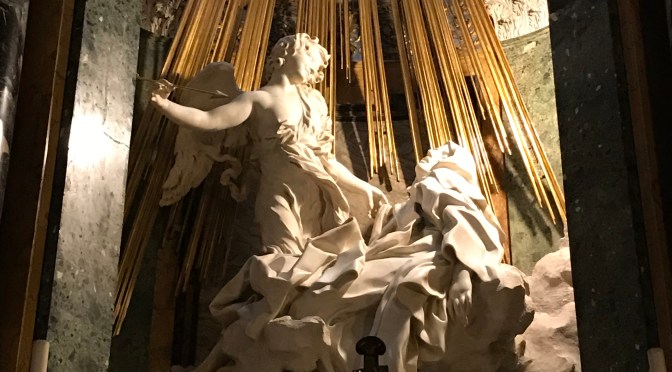
High Renaissance Rome
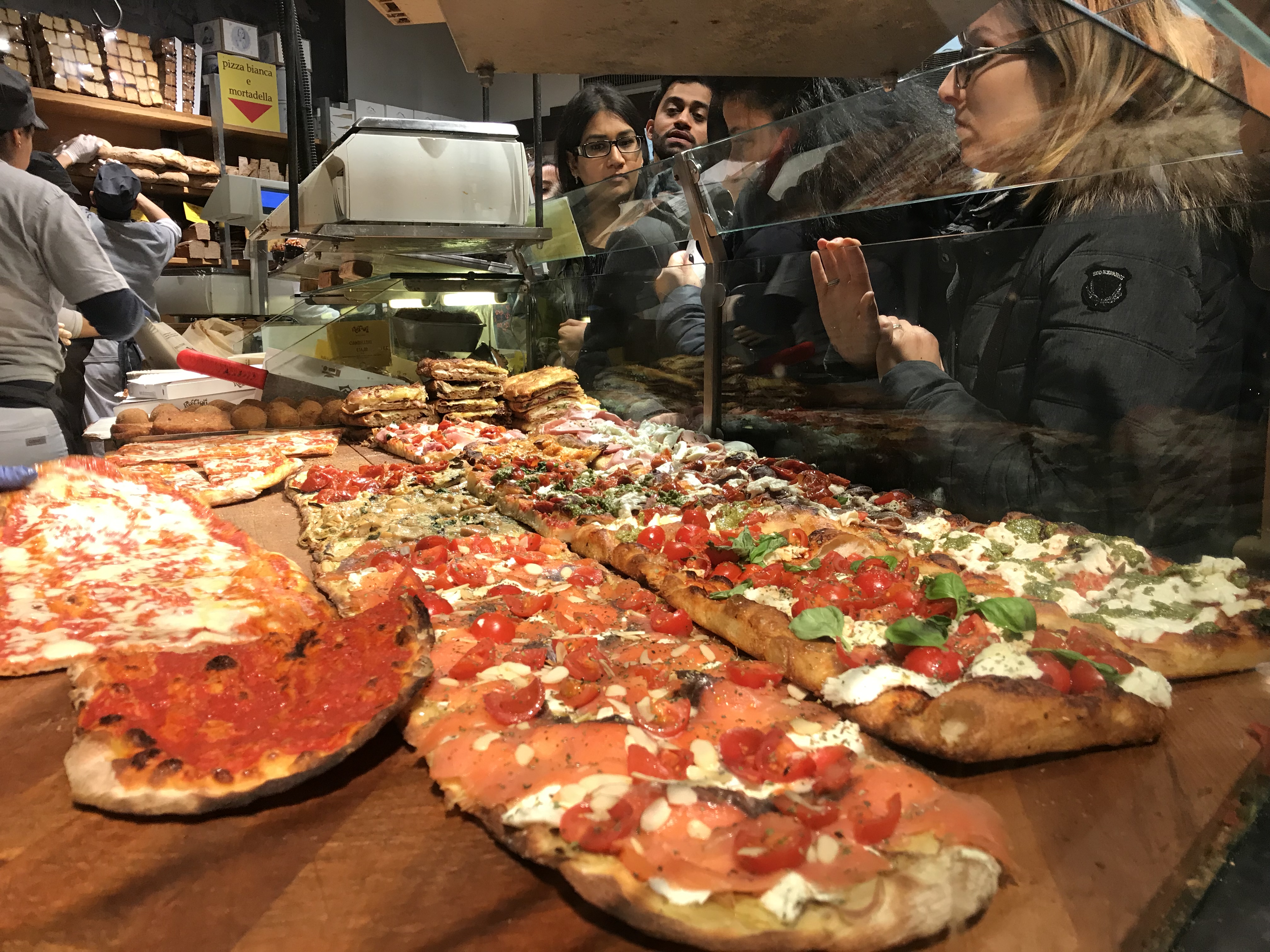
The food and the architecture are self-explanatory, right?!?
Salumeria Volpetti
Salumeria Volpetti Proscuitti
Jewish Ghetto Pizzeria
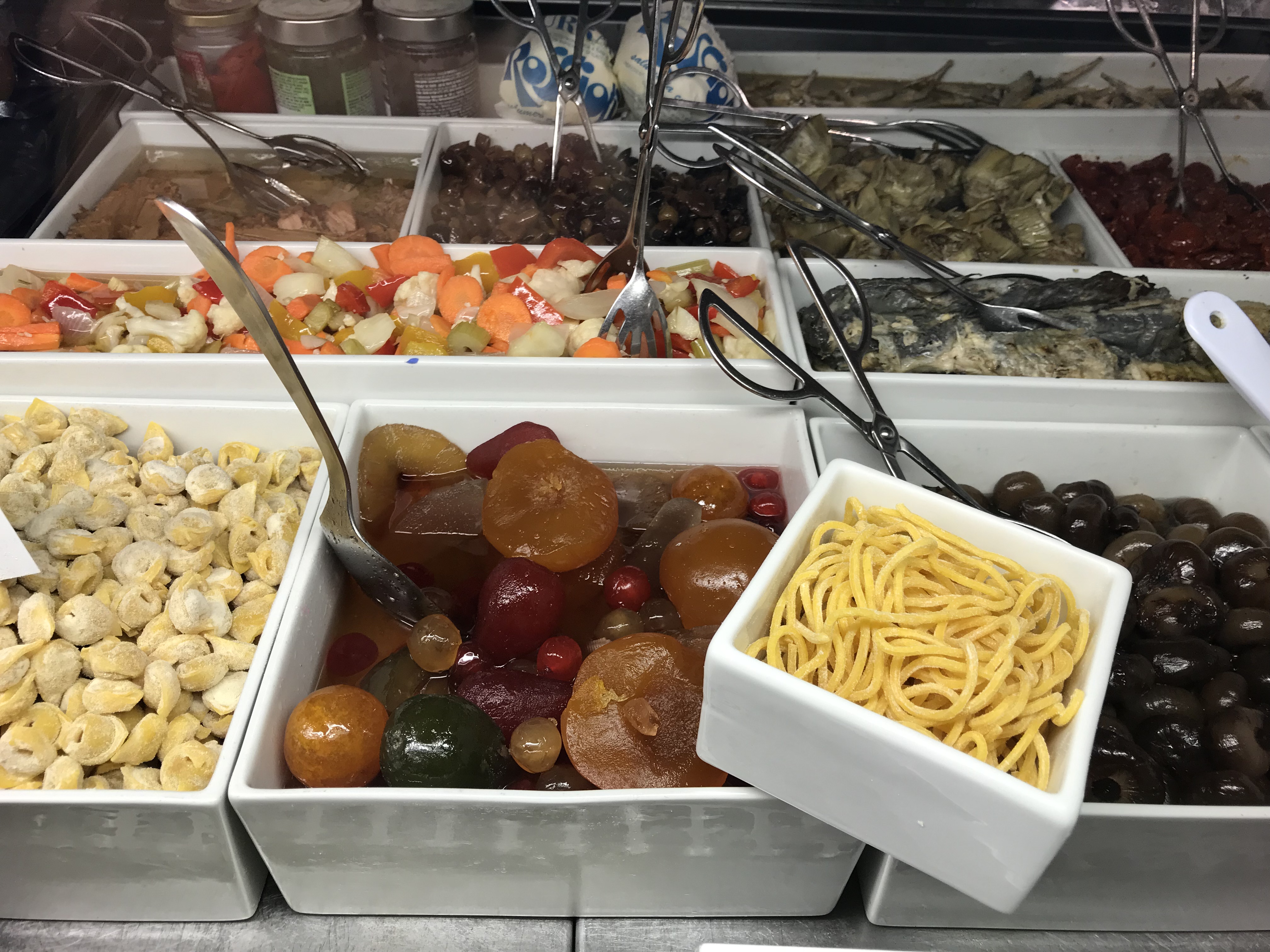
Roscioli
Roscioli
Bonci Bakery
Tesstaccio Market
Taverna Volpetti
Jewish Ghetto Pizzeria
Roscioli
Testaccio Market
Testaccio Market
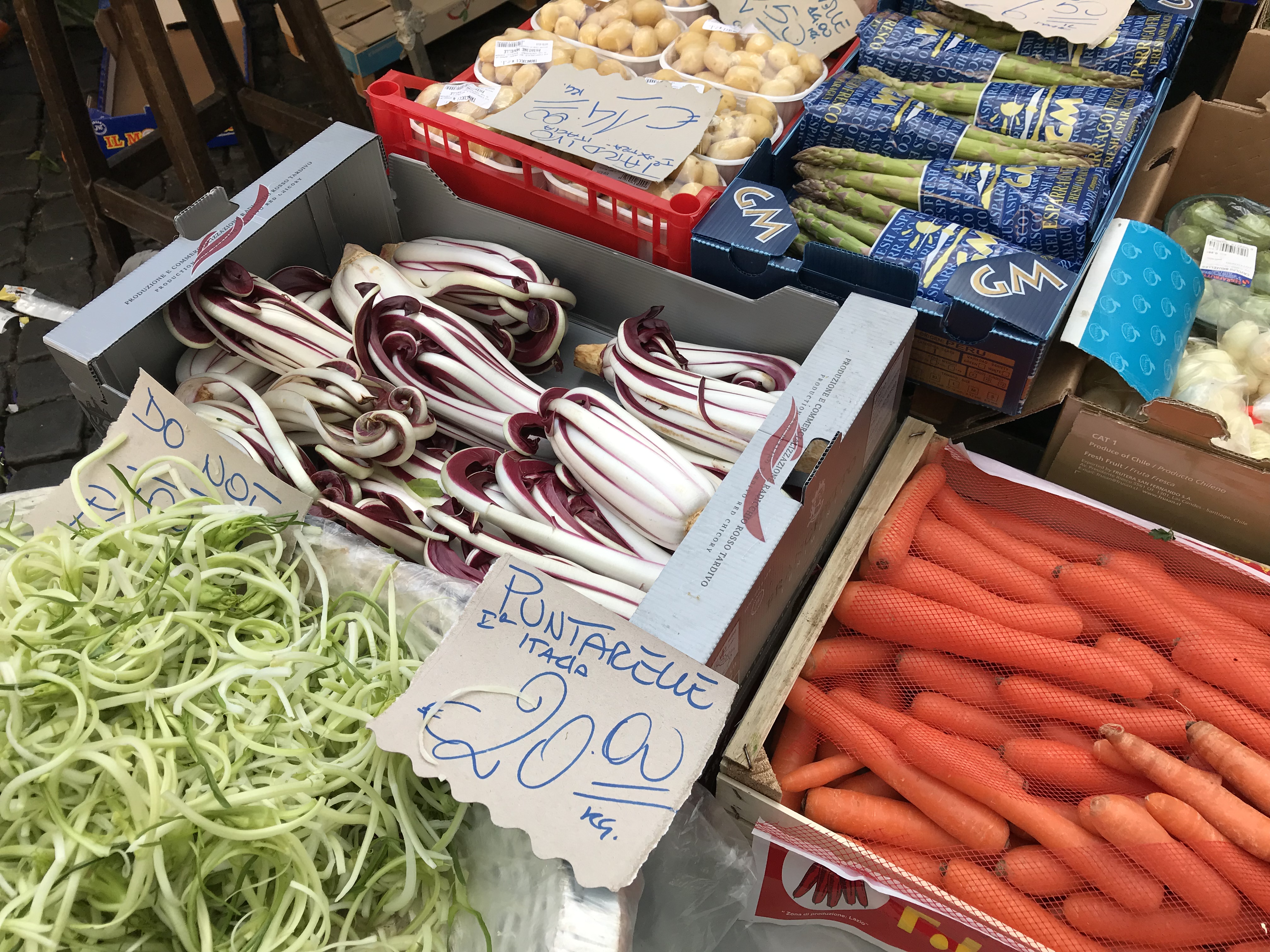
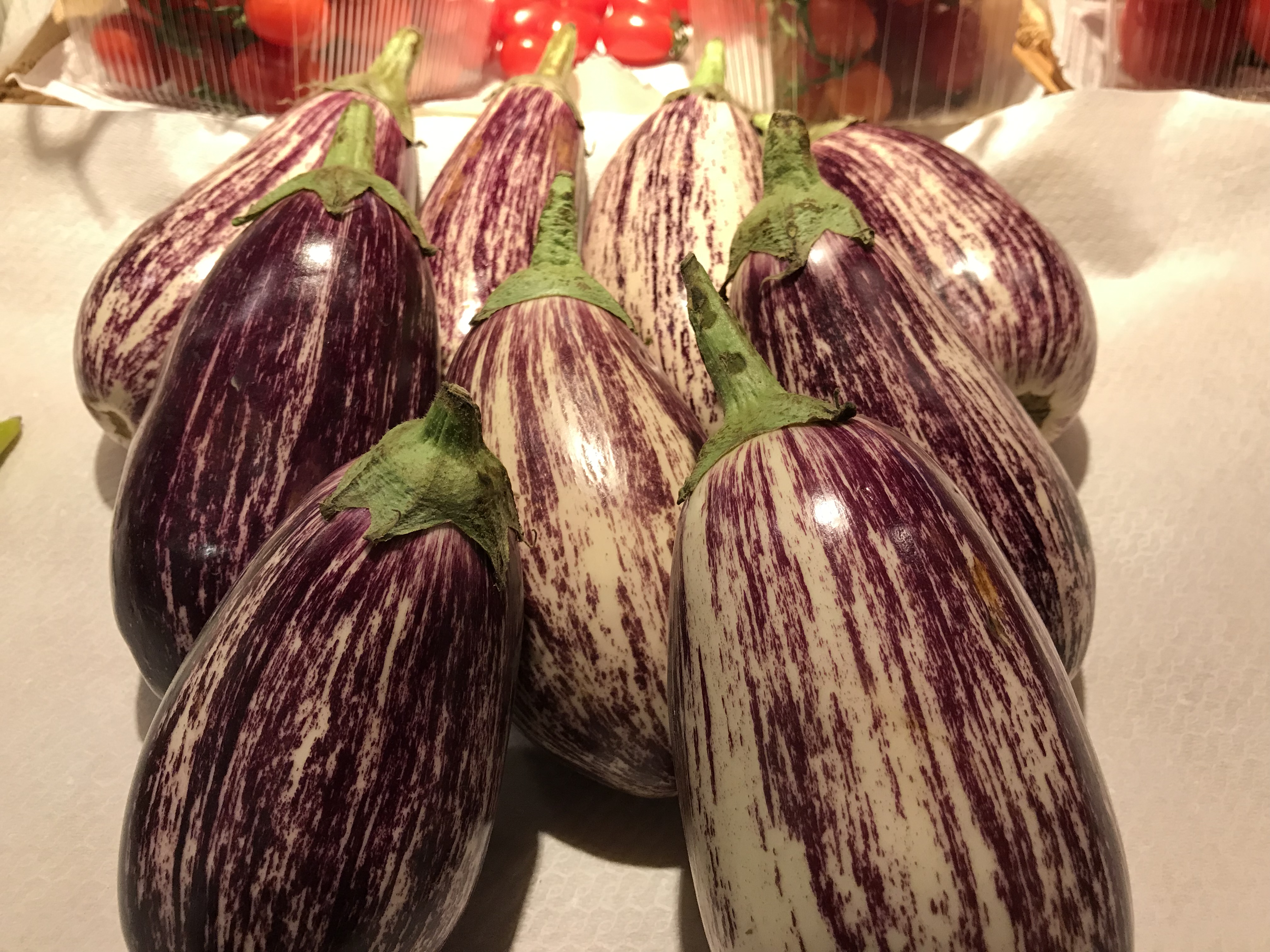
Giant Eggplants
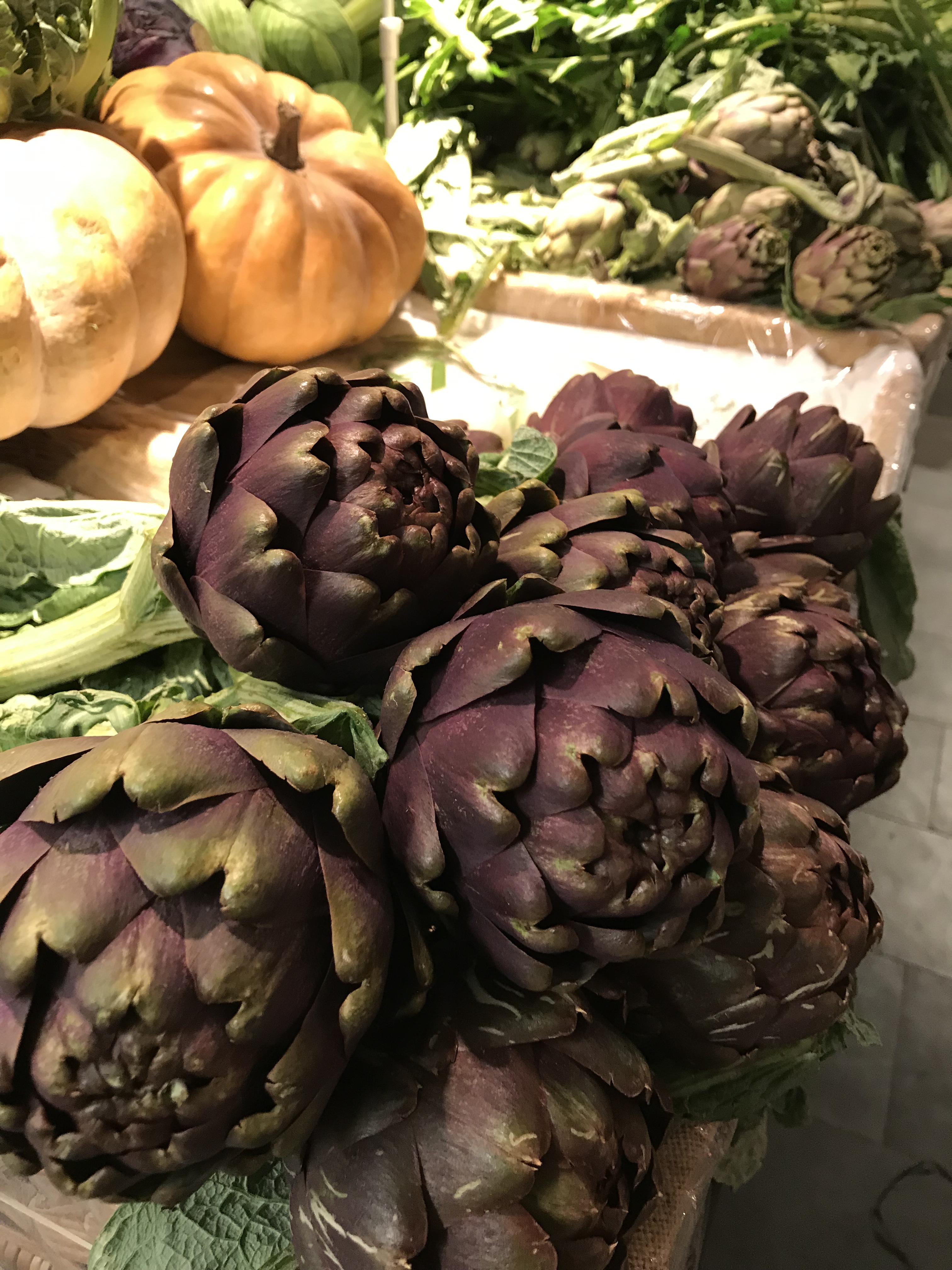
Exquisite Artichokes in Season
Bonci Pizzeria
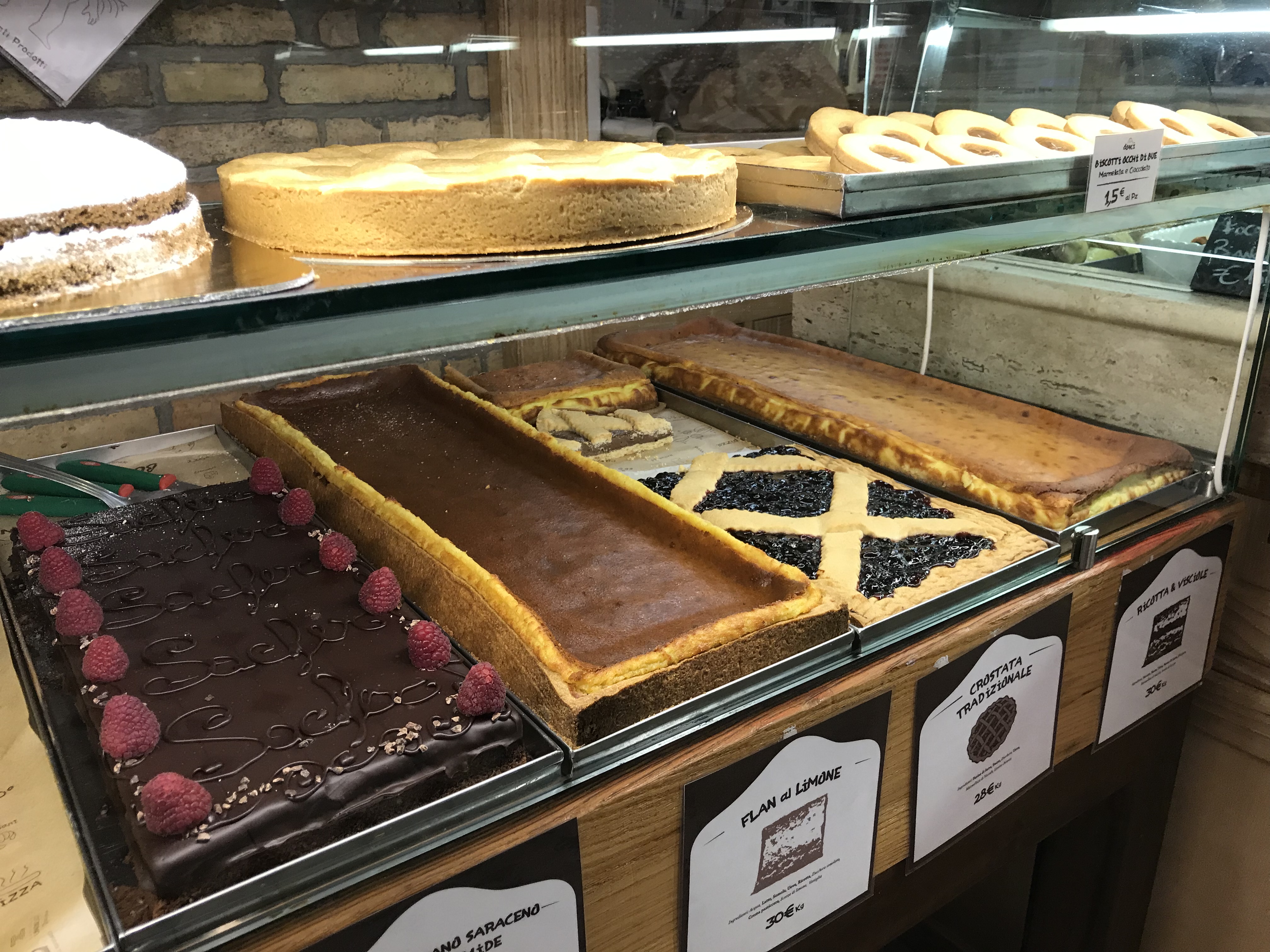
Bonci Bakery
St. Peter’s Baldacchino by Bernini and Michelangelo’s Dome, in the most magnificent interior space in the world
Grand opera is closed during the Christmas season, but we were able to catch holiday favorites Swan Lake Ballet in Rome, and the Nutcracker in Naples at the local opera houses.
Delightful Swan Lake Ballet at the Opera Theater of RomeFirst Night in Rome with Daughter Melissa at Trappazino, Rome
Next week we will continue this European Series, linking Europe to the transcontinental Silk Road from Asia. It’s a compilation of travels with myself and others from the last six years. I hope you will enjoy revisiting these treasured moments with me! There will be another post on Lucca and Elba in the next post, followed by trips to German-speaking countries. Don’t forget to send your thoughts and comments!
Two posts are consolidated here and were originally posted in January 2019.
Turkey may seem like the end of the line for the Silk Road, but it certainly was a crossroads between the Near East and Europe. Traders probably traveled from city to city along the route, rather than along the entire length of the Silk Road. The Turkic people came from the steppes of Central Asia and settled in this part of the world after traveling westwards, so their links eastwards were often refreshed and renewed.
We came to Istanbul twice, and stayed in a great Air BNB near the Pedestrian shopping street, Istikal Caddesi, where we could find plenty of restaurants. One of our favorites was a simple schwerma fast food hangout. We knew something was afoot when we saw savvy Asians making their way to this establishment, toting the insider guide “Istanbul Eats”.
For the price of a Macdonald’s burger, you could get freshly grilled meet, chopped to fit each bite in your mouth perfectly, with sensations of cabbage and lettuce lightly sprinkled with spiced sauce and evenly distributed into a grilled pocket. Perfect taste and texture to delight the tongue and the palette!
The food is so delicious and inspiring that it overshadows tourist attractions like the Grand Bazaar, the Blue Mosque or Hagia Sophia. Each meal is a discovery of familiar foods cooked with alot of creative flair. The Baklava may seem too sweet, but when it is made with fresh honey it does not have the dry intensive sugary taste as much as it is a saucy complement to the fresh flaky pastry and nuts.
A classic building on the shopping street
Evening view of shoppping street
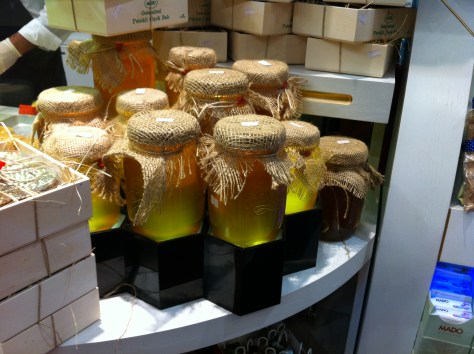
Jars of Honey for Melissa
Mesmerizing Whirling Dirvishes
One evening, we indulged in a performance of whirling dervishes that at first seemed a bit touristy but it was totally fascinating. The ancient Sufi religion promoted this form of spiritual cleansing and aspires those to reach the ultimate. You can read more about them here: https://en.wikipedia.org/wiki/Sufi_whirling
Cappodocia
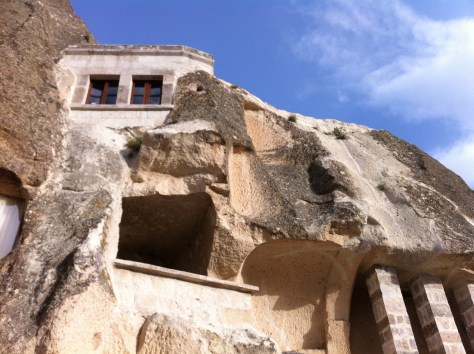
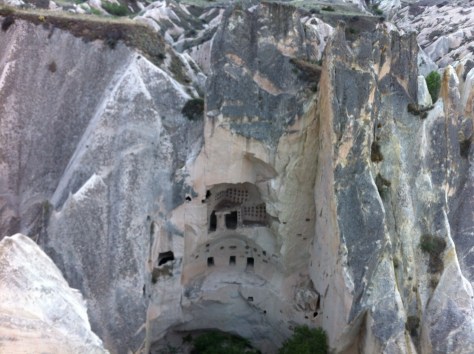
Cappodocia was so captivating that I came here twice. A UNESCO World Heritage site in the middle of the country and a couple hours’ flight from Istanbul, Cappodocia has some of the most unique and bizarre land formations anywhere in the world. The fairy tale cave dwellings have been occupied since early Christian times when believers fled the cities to be able to worship and escape persecution. They lived in the tufa cave dwellings and prayed in the mountain hideaways.
We discovered from our trip to Georgia that Nino was born in Cappodocia around 320, so the secret churches we first saw in Goreme suddenly became relevant and inspiring. You can read further about her here: https://en.wikipedia.org/wiki/Saint_Nino. You can see the entire area in a hot air balloon, providing you are willing to get up at 5am in the morning and brave the traffic jam of baskets.
Goreme is the small town that is used as the base camp for travelers to this area. It includes an outdoor national park that houses many of the cave dwellings. Hotels are in the park so you can wander around the neighborhood easily yourself.
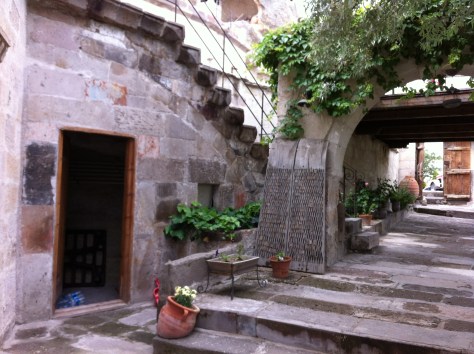
We stayed in the boutique cave hotels Kolubek, or Butterfly Hotel. The tufa rooms have pitched roofs and other buildings are built of stone organically around the sloping hillsides. You can’t help but wonder in the back of your mind whether the dust particles from the tufa might affect your lungs, but it was still worth the short-term risk.
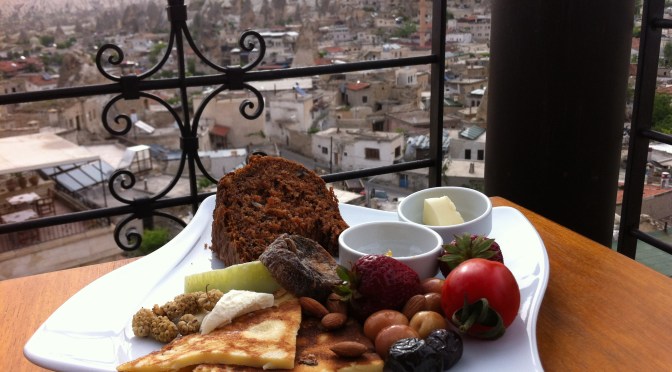
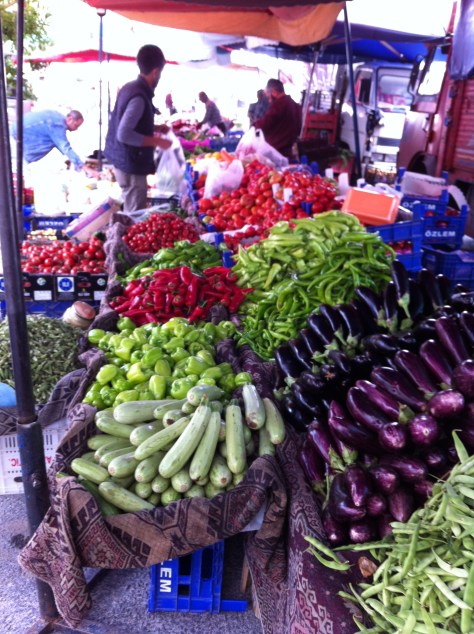
The food in the hotel was delightful–a refreshing spread of fruit, nuts, cheese, bread and vegetables. We were inspired to take a cooking class in town. The hotel helped us to arrange a guide to take us shopping before joining a mature woman, who taught us how to prepare a Turkish meal in her own home. We then ate the food that we prepared with her for lunch and invited the guides to join us.
Ismir and Ephesus on the Western Coast
Our visit to the ancient city of Ephesus in January, 2020 required an overnight stay in Izmir. Although we had a chance to get acclimated, we immediately took to the streets in search of lunch. Thanks to Pastry Chef and Daughter Melissa, her intrepid search for the tastiest food in any country and her Googling skills, we traipsed through the town’s nearby grand bazaar and after numerous twists and turns, tracked down a renowned locanta populated by Turkish locals.
Izmir Locanta
Izmir Bazaar Favorite among locals
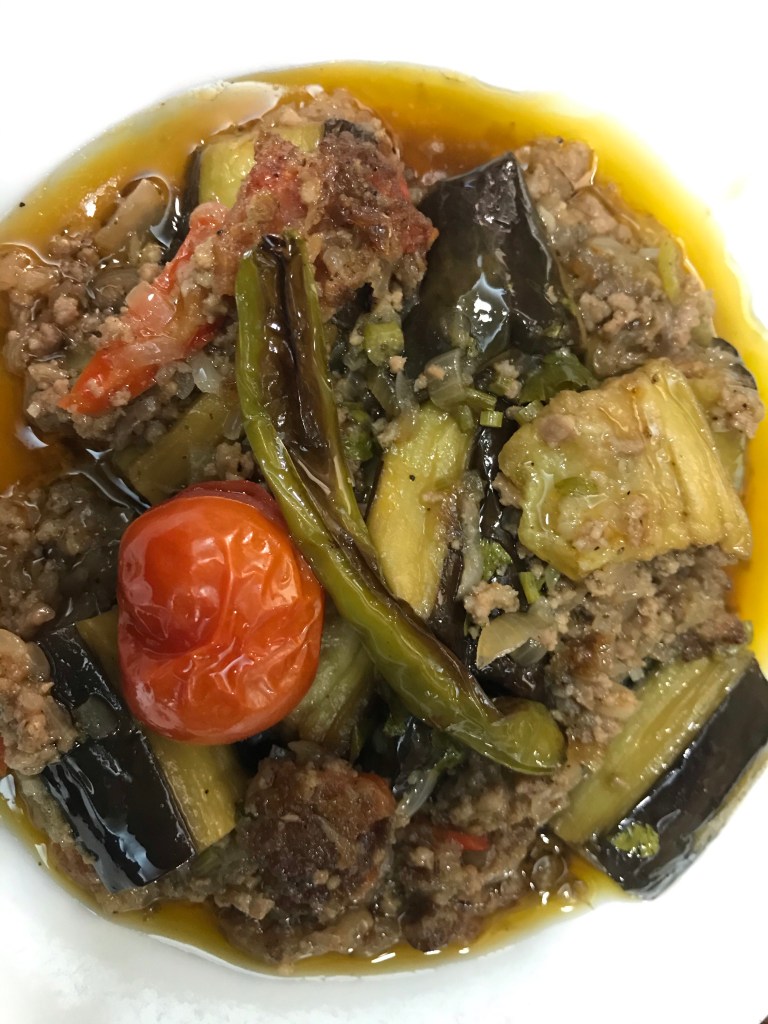
Locals dine regularly here on some of the heartiest meals made with the freshest ingredients. We savored the sardine soup recommended by the gentleman sitting across from us. It’s one of those diners where you point to the big vats of steaming concoctions or decorated casseroles in order to get your meal put in front of you quickly!
Stewed Eggplant
Ephesus
The short 40 minute drive from Izmir to Ephesus jolted us into realizing how ancient the land in which we were traveling is. From biblical figures like John the Baptist, Mother Mary, and their pilgrim followers, to the largest civilization outside of Rome at its peak, it was hard not to be impressed by the significance and grandeur of Ephesus.
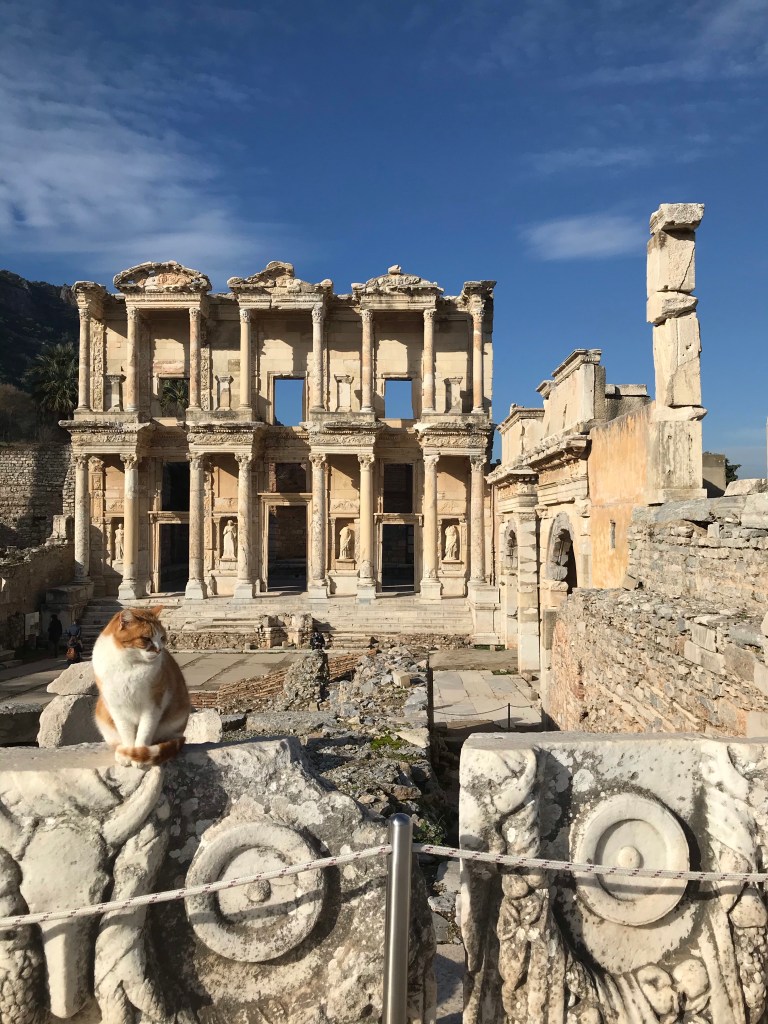
Once inhabited by 250,000, Ephesus is a UNESCO world heritage site and was carefully restored and brought to life. It is a relatively late-bake on the list, as its discovery is fairly recent and only a fraction of it has been uncovered.
The library at Ephesus
Highlights include the odeon, a theatre; an amphitheater, an agora, terrace houses, and a library. You can download Rick Steves’ Audio Europe app for free and use it as you walk the site. All the details of what we saw were based on his excellent instructions. I highly recommend trying it out, and he certainly covers the major features. This fascinating site was once a thriving port city before the Persians, Alexander the Great, and the Goths each had their go at destroying it!
We decided to hire a car for a day to get from Izmir to Ephesus and Ephesus to Bodrum, our final destination. The only catch was making certain that we could call the driver after he dropped us off at the carpark at the top of the entrance to Ephesus. He was to meet us at the bottom of the hill at the exit 90 minutes later. Minor details: he had our bags in the boot!!
We needed a backup just in case we could not find the driver. After a bit of cell phone finagling, conversations with hotel personnel, and a lot of good faith—we managed. Where we spent on the driver, we saved on time and the cost of a tour and guide. Just a reminder on how you can travel the way you want, with just a few creative tricks and determination to be a traveler and not a tourist.
Boviera
Known as “Boviera”, sparkling Aegean resort towns along the Western Turkish coast include Bodrum. It’s off-peak and chilly presently, but well worth the quiet solitude and even threats of rain to avoid the throngs of English-speaking tourists.
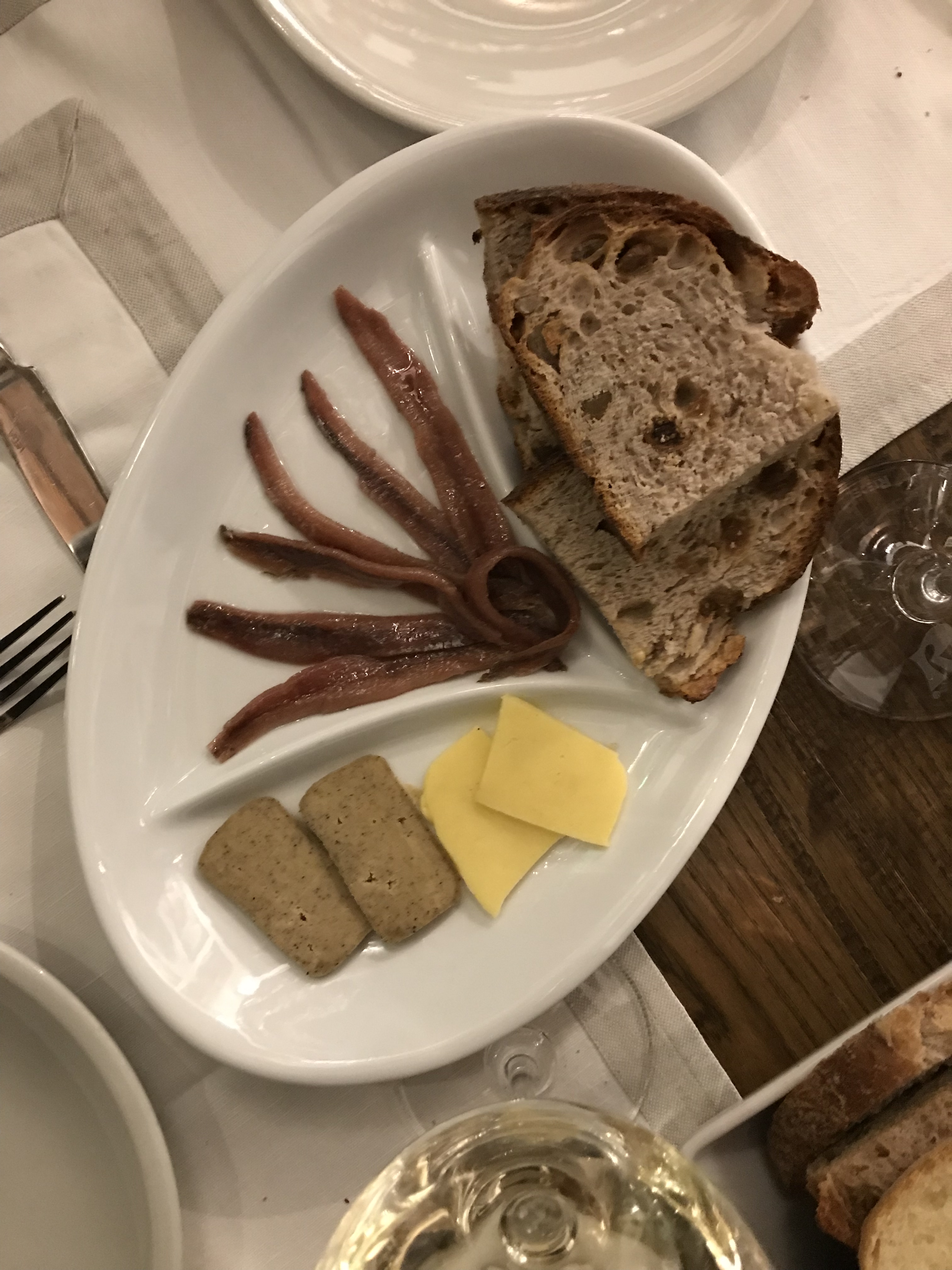
As close as you can get to the creatures being served at your table before they are caught! Anchovies, artichokes with pineapple, cheese and walnuts, and squash in yogurt
Note: due to traveling light and leaving my Macbook at home for this brief trip, I am using my Iphone to compose and post photos. The capabilities are limited, but I hope you will still enjoy the material the same as regular posts!
More Turkish Food! Food! Glorious Food!
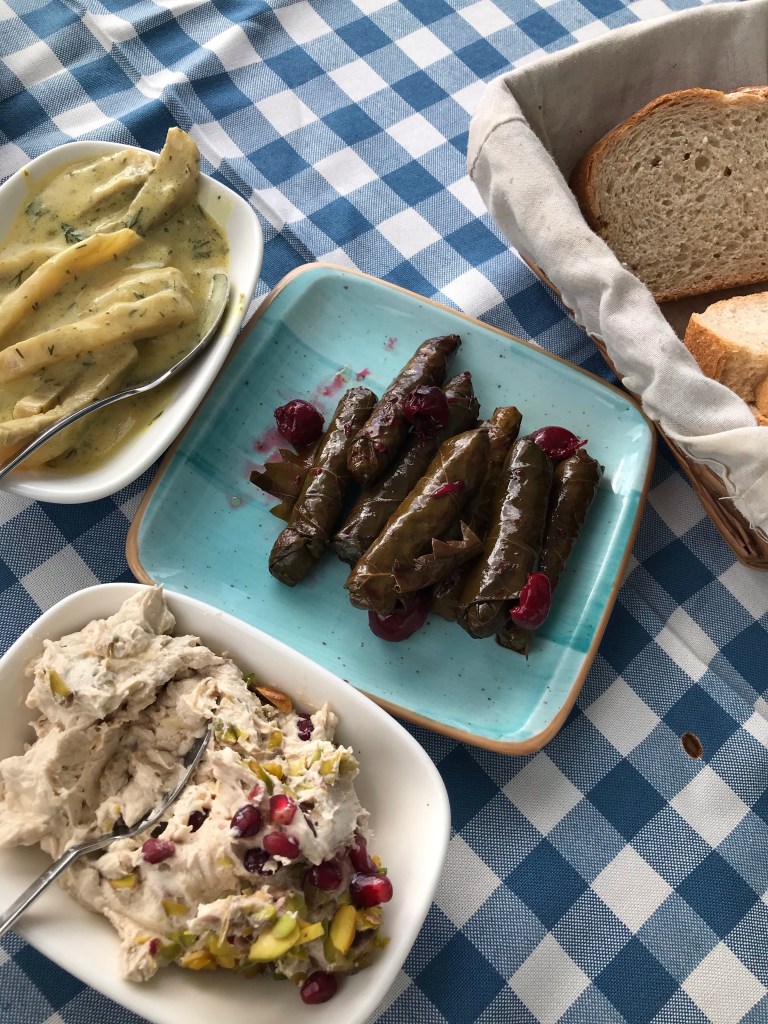
Delicate bits of chopped morsels are packed with texture, flavor, and color to delight the senses. You swear you could eat like this every day, convinced of the variety and healthy ingredients.
Dolmas, eggplant spread with pomegranate and pumpkin seeds, and artichoke with mustard sauce
Bodrum to Izmir
The four hour public bus from to Izmir to Bodrum followed the coast, was a safe and comfortable trip, and cost us each a hefty $6. In true Turkish hospitality, they even served tea and cookies! We gazed at the stark countryside, lit by the low winter sun behind turbulent clouds, as olive and tangerine groves slid past.
View of Mountains and farmland from bus
Bizim Lokanta
On arrival back in Izmir, we couldn‘t resist returning to the lokanta in the Bazaar where we had eaten earlier in the week.
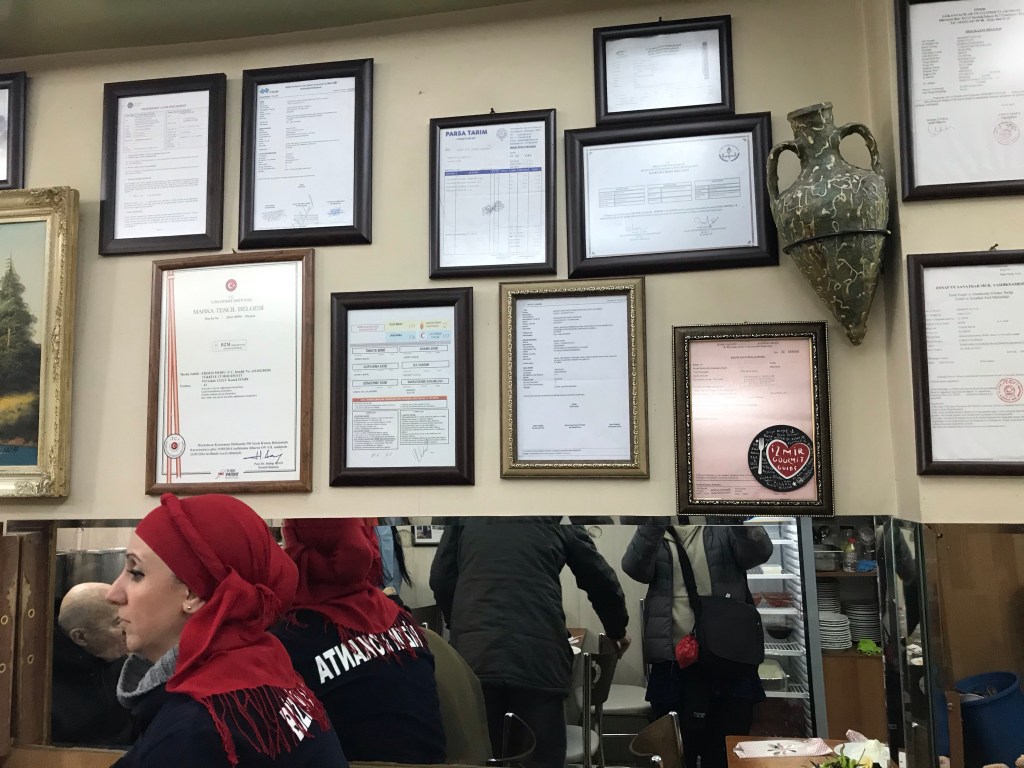
Tongue soup, bulgar with fava beans, and cabbage rolls with thick, creamy yogurtKudos on two walls of this vest-pocket diner were self-explanatory
Bazaar Fun
It‘s a Wrap!
(Meatless) Kale and Cheese Wraps for a pittance
It‘s always bittersweet leaving a country, especially after such a short visit. But the food focus, imperial demands, abundance of land, and Mediterranean climate requires one to succumb to Turkey‘s finest features.
As this Silk Road Series draws to a close, look for the Fall Series, which will feature Italy, Germany, and the U.K. in the final paths of the Silk Road! Let me know your thoughts and comments about both series!
Sandwiched between Turkey, Armenia, Azerbaijan, and the Russian Federation lies the country of Georgia. We nearly crossed the entire country in a day trip east to west, stopping in a couple of significant Georgian Orthodox churches and towns along the way.
Gelati Academy
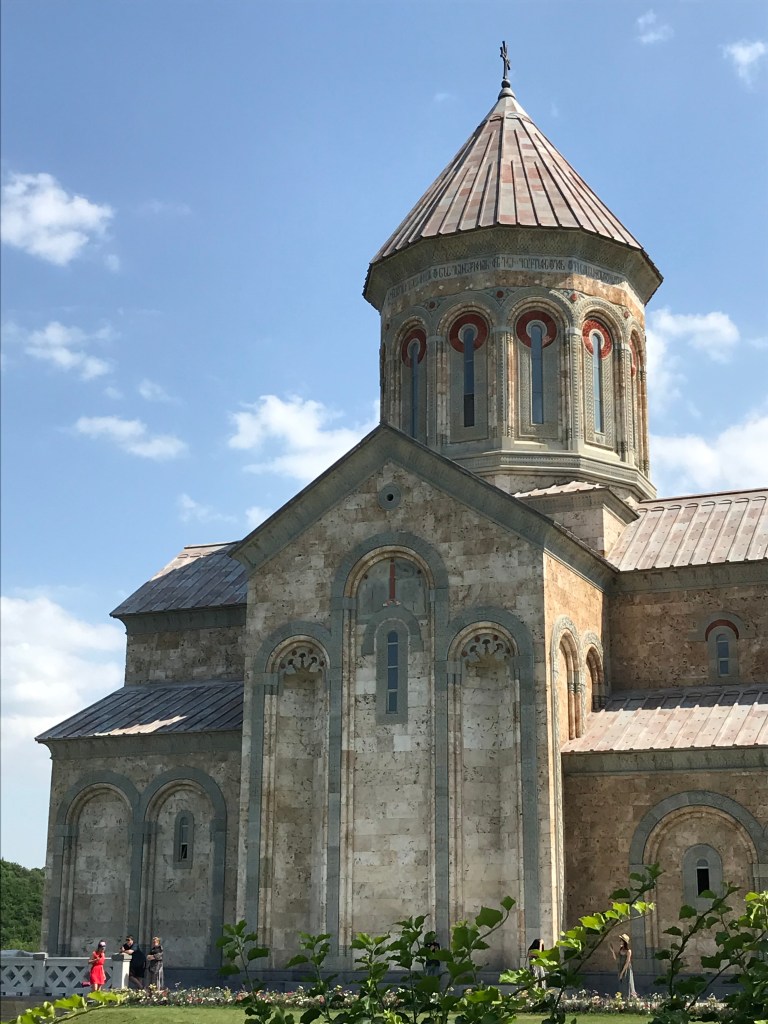
Built by King David the Builder in the 12th Century, this UNESCO protected pilgrimage site served as a scientific and spiritual life in Georgia. The church has been rebuilt with private funds after the earthquake.
New Church
Dome
Bell Tower
Christian Orthodox worshippers at the tomb of King David
Mtskheta Cathedral
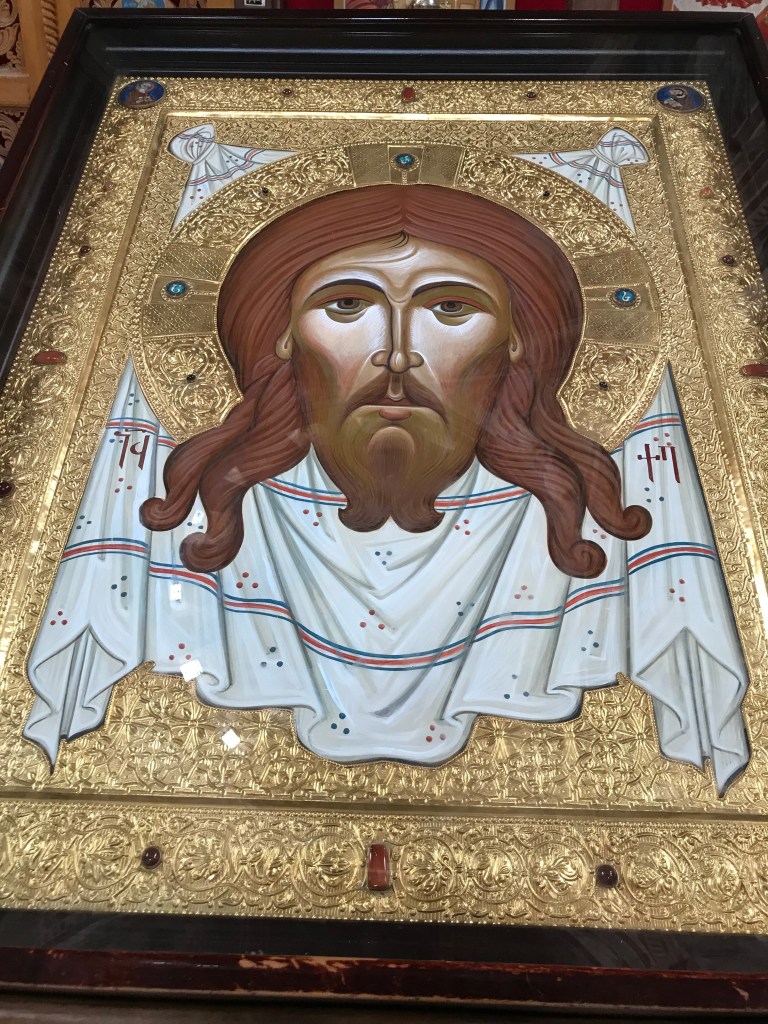
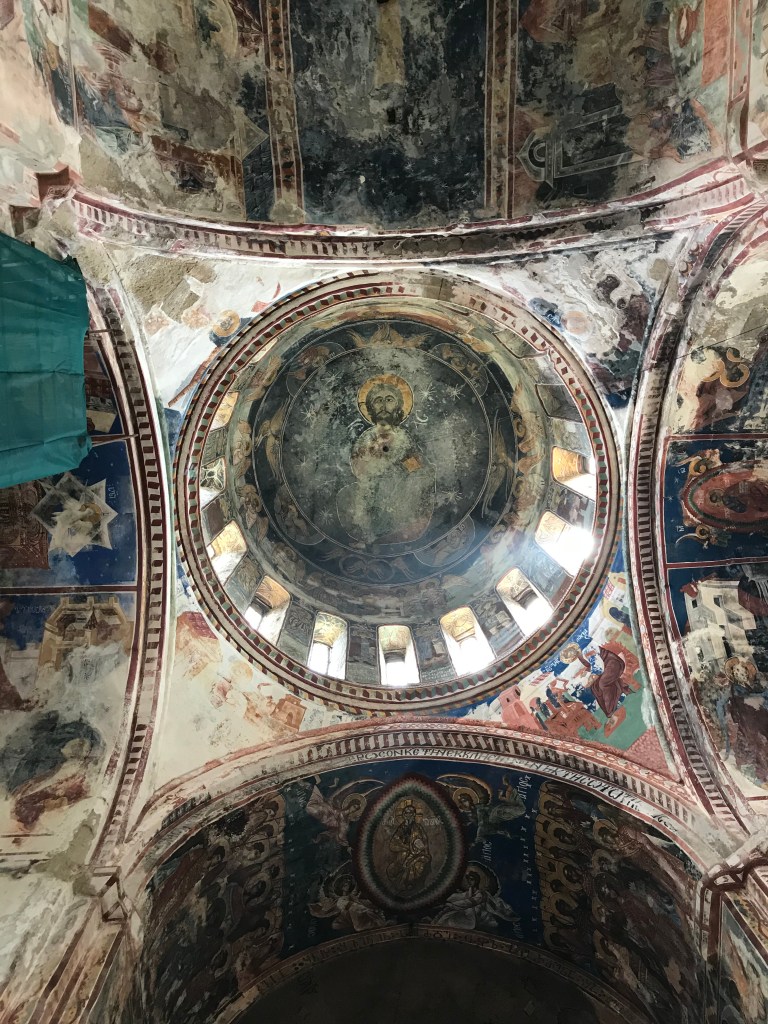
The robe of Christ is purported to be buried here, after a Jewish monk purchased the garment and brought it to Georgia. Many pilgrims come here to worship and consider this 12th Century Cathedral a sacred place. The impressive Byzantine frescoes told the story of Jesus and his disciples on the walls of the main apse. The Mtskheta religious buildings are designated a UNESCO world heritage site.
Entrance to Fortress and Church
Church Interior
Dome
Worshippers
Jesus
Main Dome
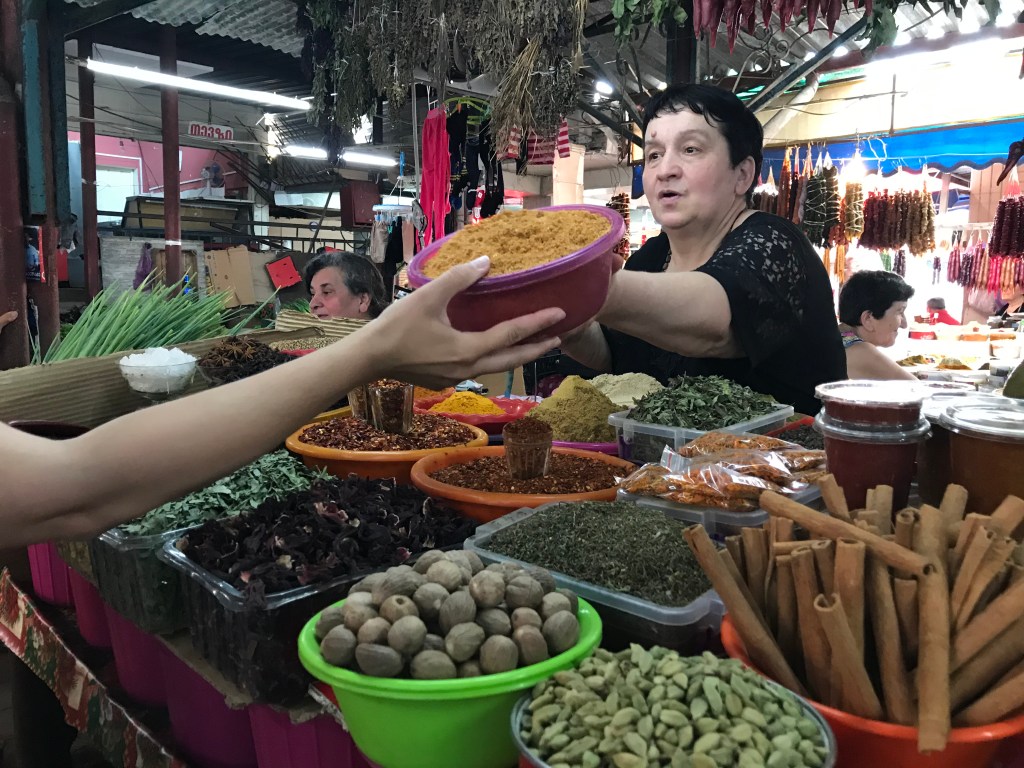
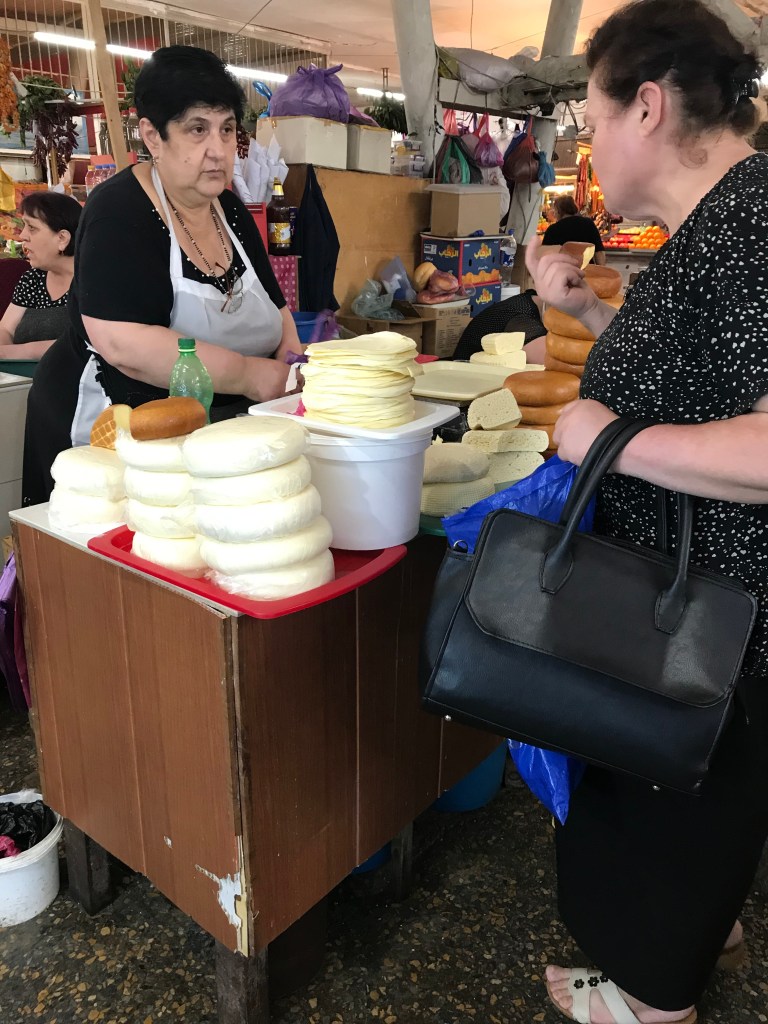
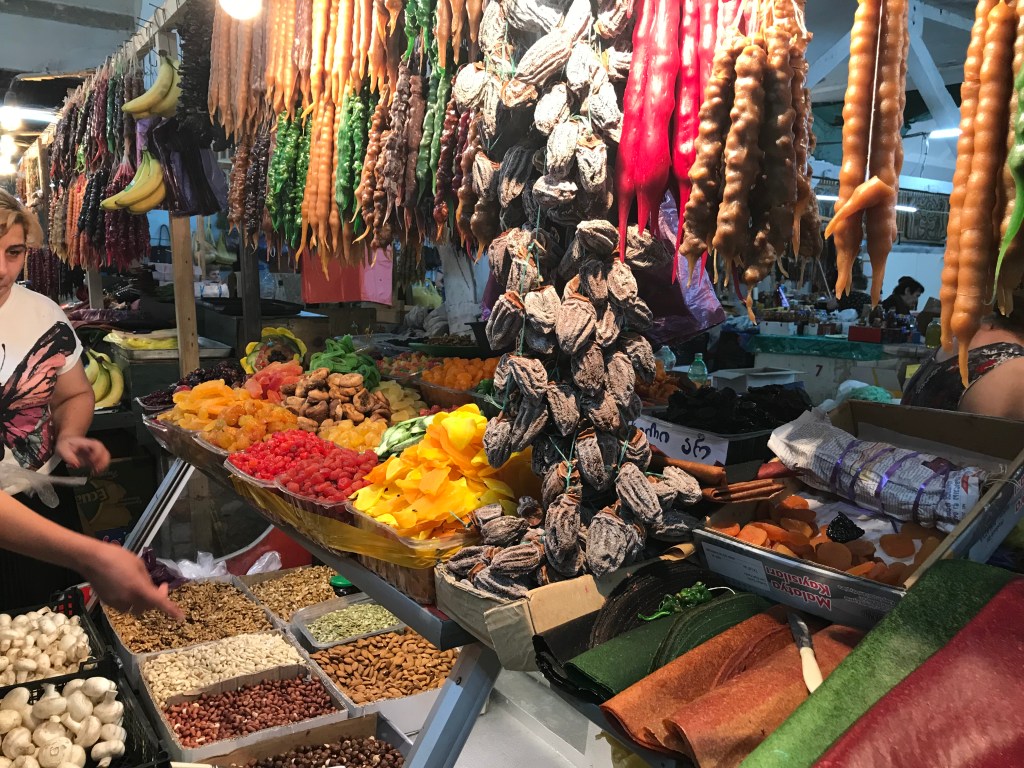
Kudaishi Market
Sandwiched between a visit to the local food market, we were able to stop along the highway to try Georgian homemade bread and cheese. Earlier, we tasted wine in the famous Georgian wine at Khareba Winery in the massive valley that bisects the country.
Soviet era mural outside the market
taxi Brigade
Dried Herbs
Bartering
Sheep’s Cheese Wheels
Dried Fruit
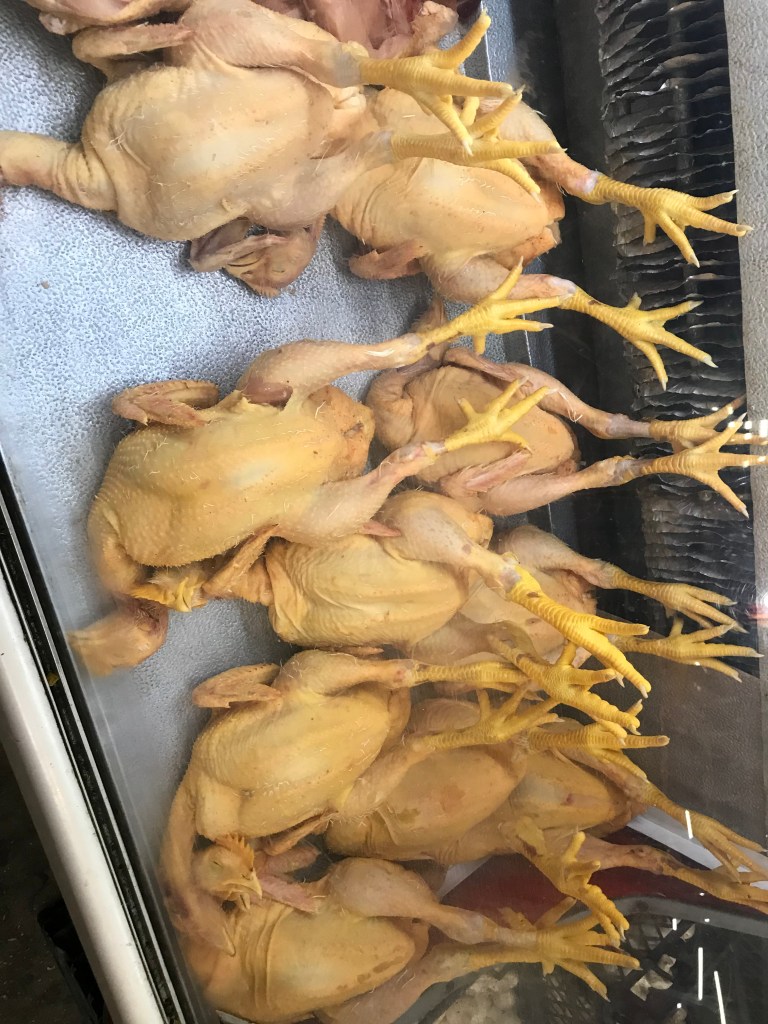
Rubber Chickens
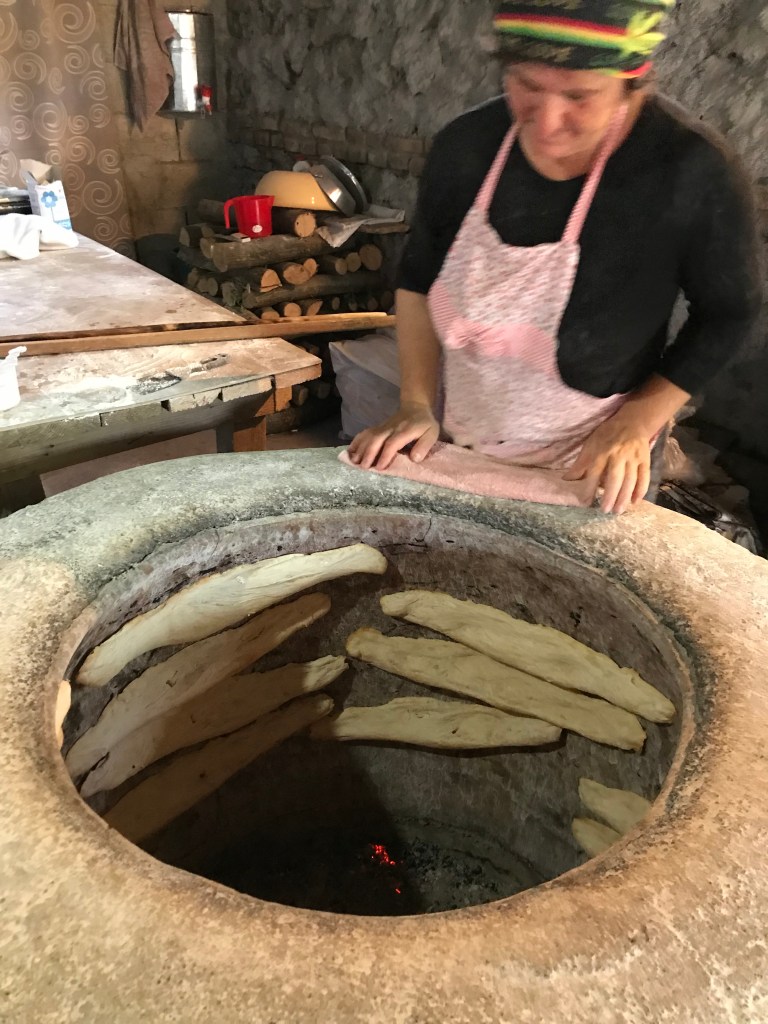
Our car slammed its brakes to stop in time for bread and cheese being sold along the highway. Bread stuck on the sides of concrete ovens took about 15 minutes to cook. Wheels of fresh sheep’s cheese were wrapped in plastic bags ready for purchase. Our second roadside stop was another version brushed with honey and egg before it was covered with an old coat and blanket and cooked.
Roadside Cheese
Ads for Roadside bread
Happy Campers
Slabs of Bread in Oven
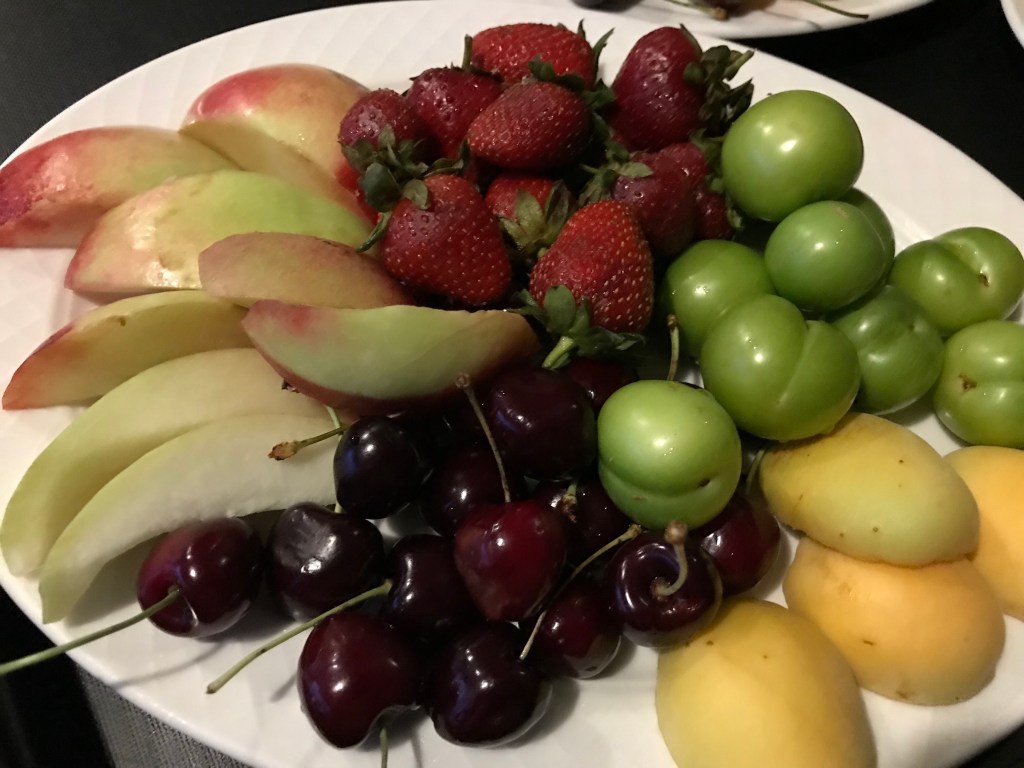
Georgian Dishes may leave the culinary skills behind flowery English descriptions. Our order for “Mushrooms in Clay Pan” was….mushrooms in clay pan. Fruit plates are….fruit plates. No inflated language necessary.
Mushrooms in Clay Pan
Fruit Plate
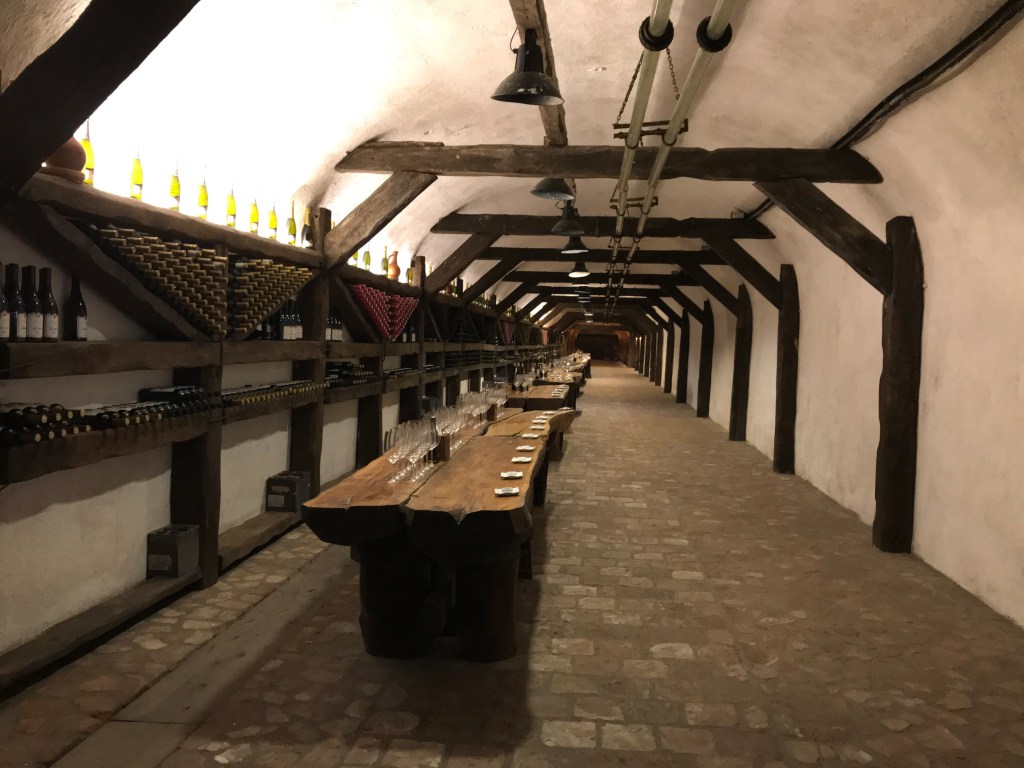
Wine Tasting
Wine Cellar
Master Cooking Class in Tbilisi
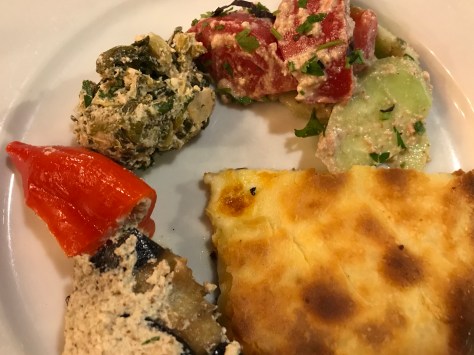
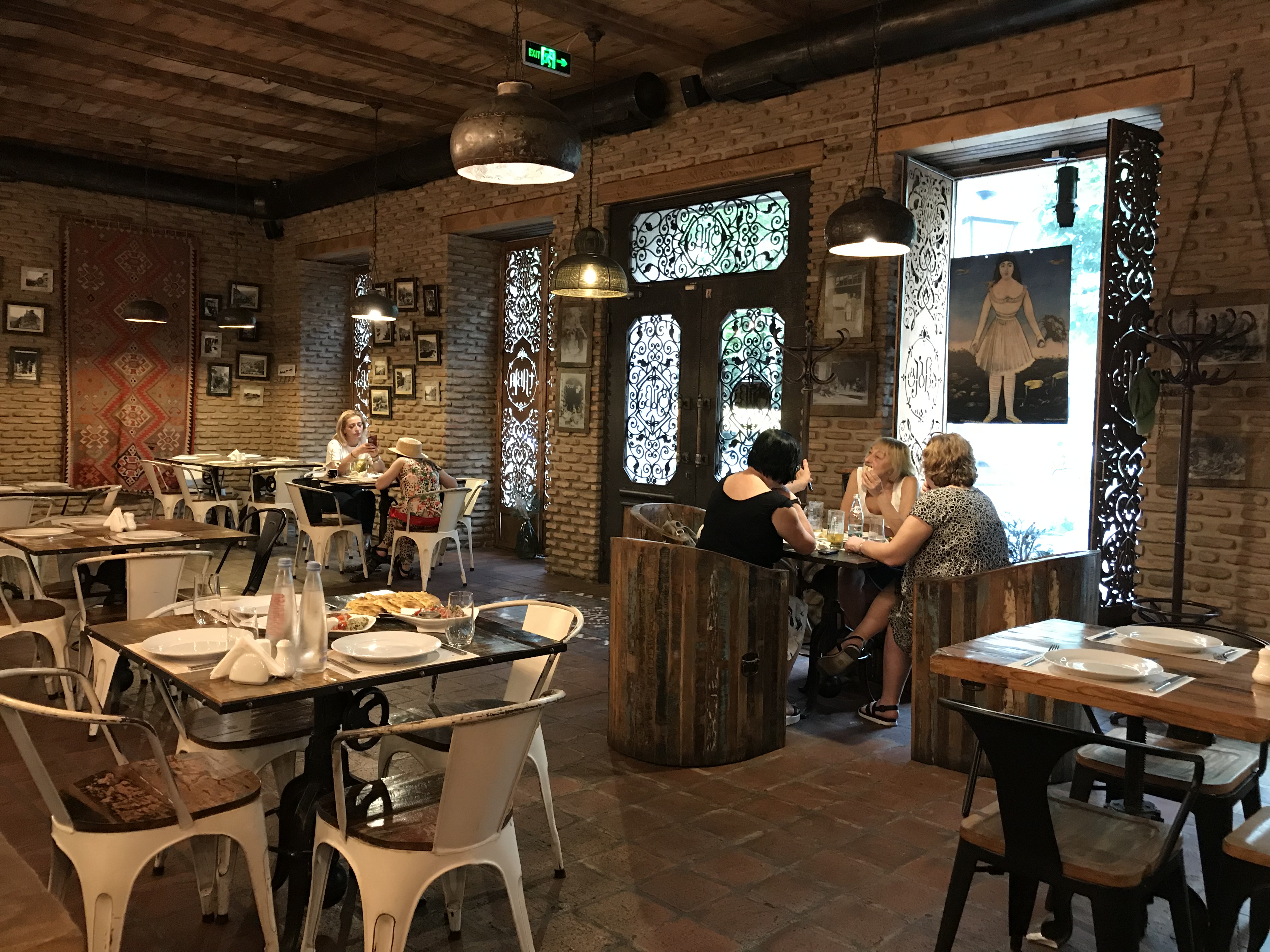
Our master cooking class at the Tabla Restaurant introduced us to a few classic Georgian dishes that we had already tried. Starters with walnut paste rolled in red pepper and eggplant were supplemented by walnut paste patties mixed with beet leaves, leeks, and spinach
Spices used for walnut appetizers
Ingredients for Appetizers
Finished Dish
Pizza dough and 2 cheeses
Rolling out Pizza bread
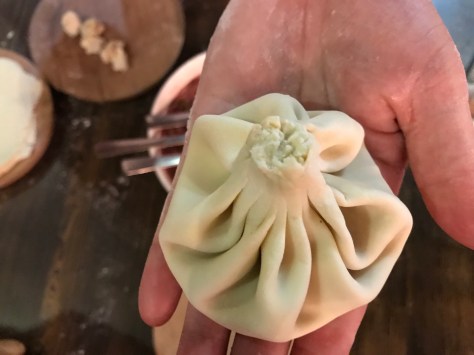
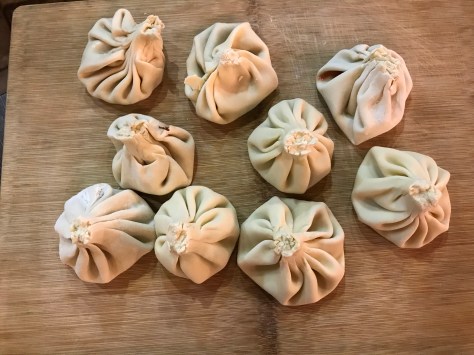
Preparing the dough for dumplings
One Dumpling at a time
Finished Product!
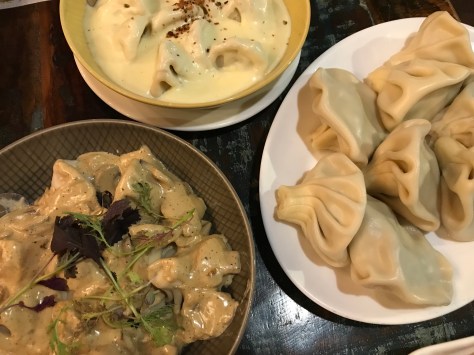
Large Dumplings, and small dumplings with Mushroom and Cheese Sauces
Serving of Appetizers and Pizza bread with cheese
Architecture and the Streets of Tbilisi
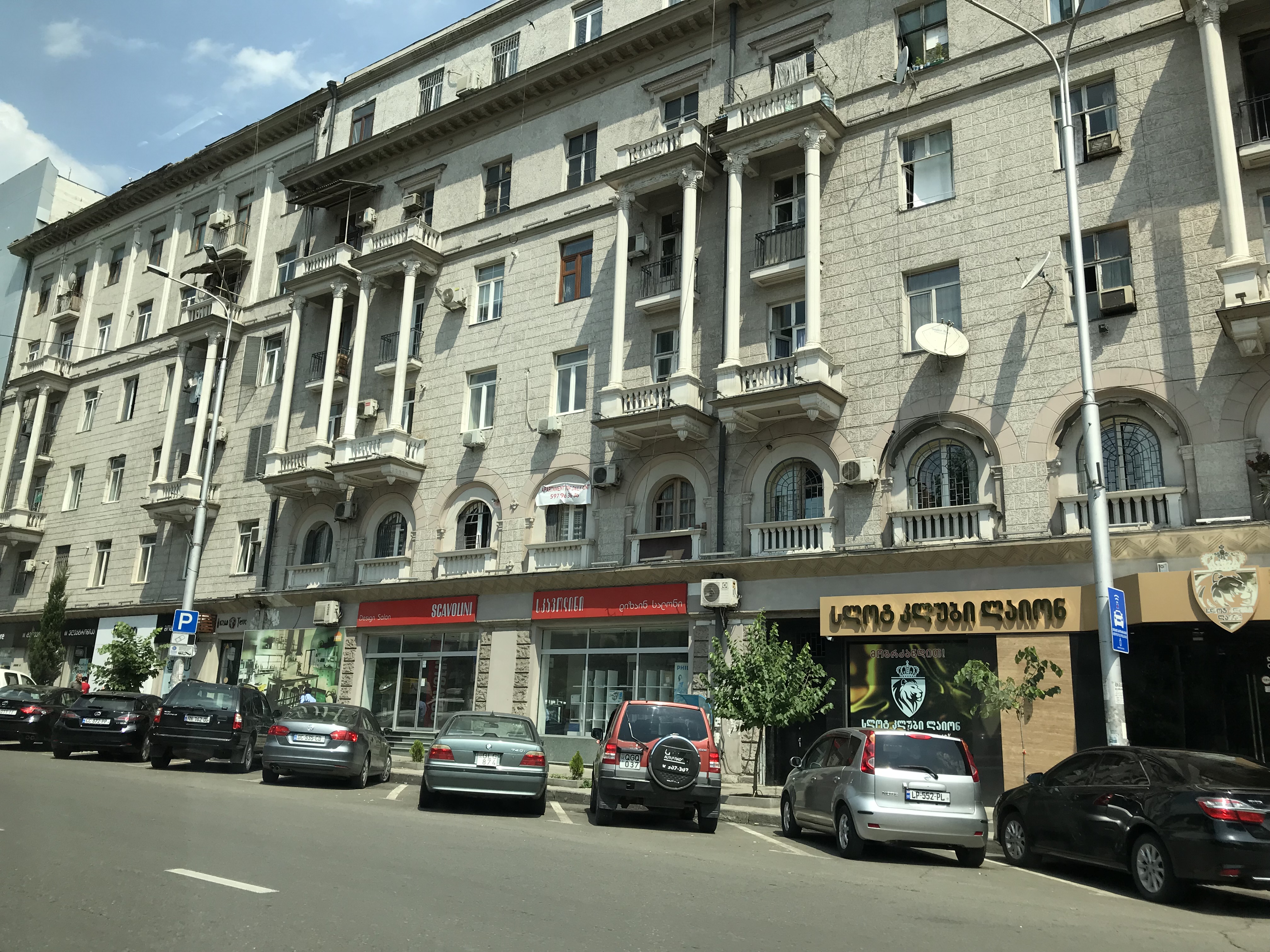
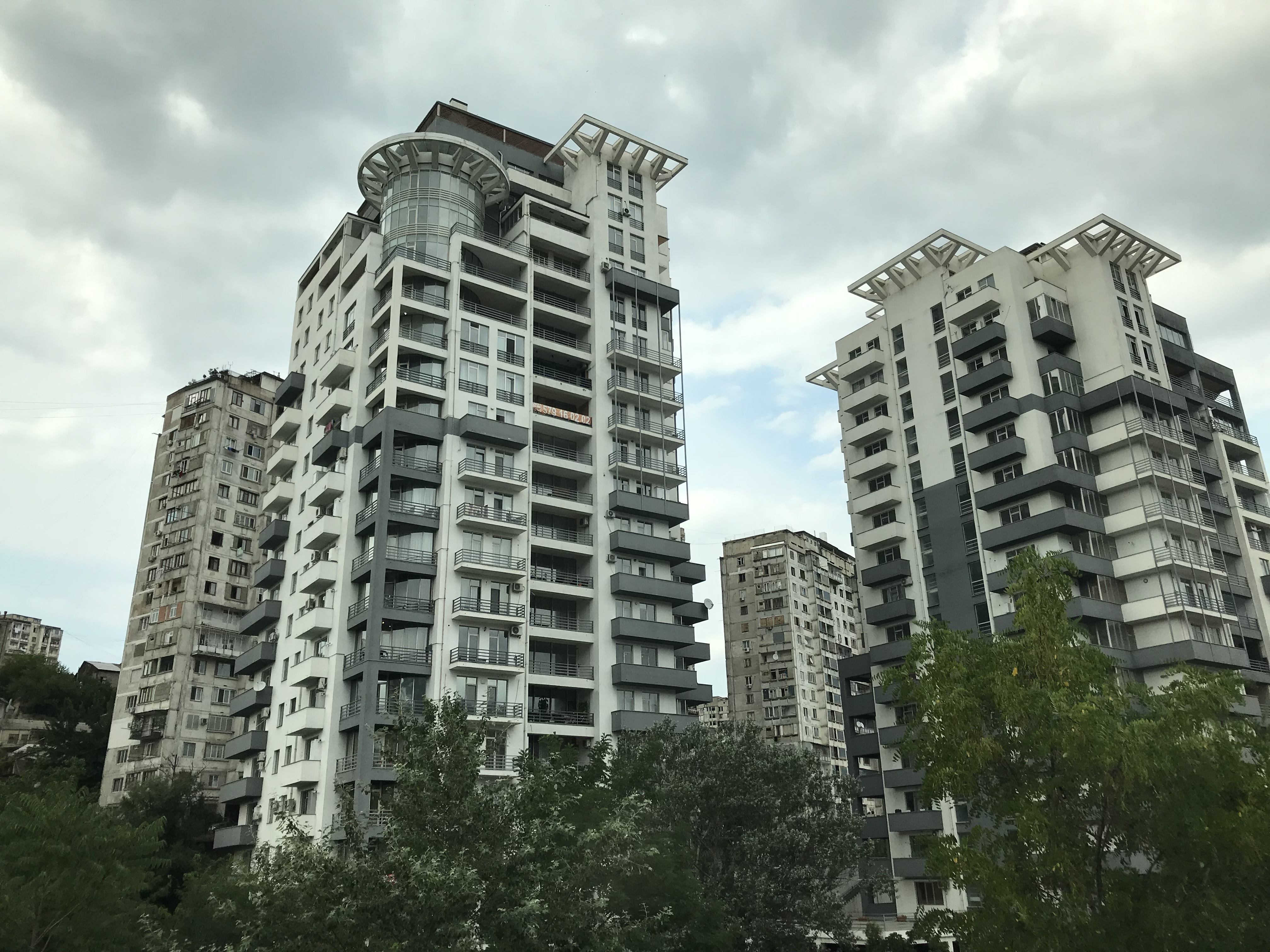
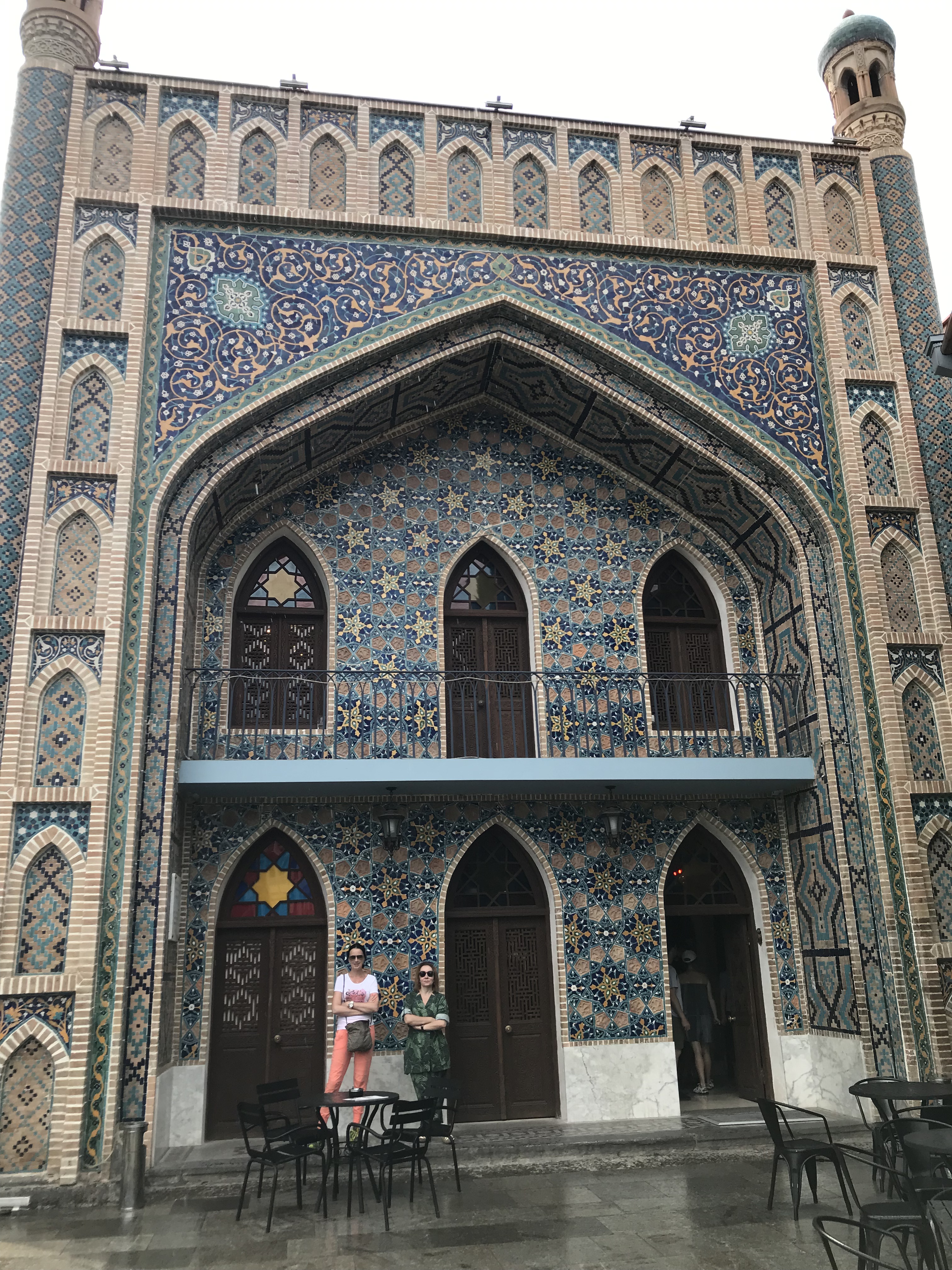
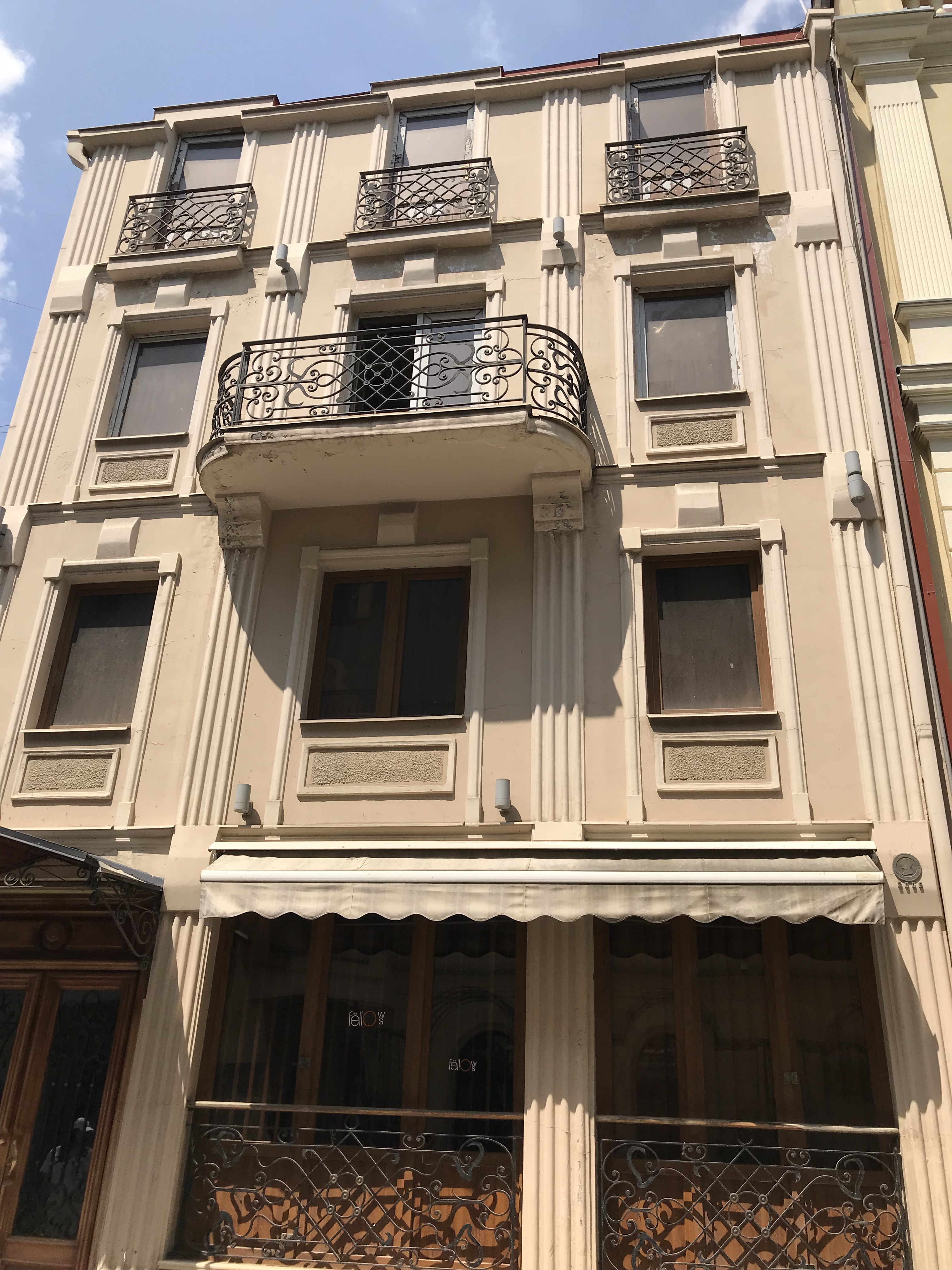
The huge time expanse transcends everthing from the 4th C. BC to the present-day, so many buildings appear to be dilapidated, neglected, or poorly maintained. There are a healthy addition of modern buldings that are flamboyant and daring to contrast with the crumbling old ones.
It didn’t help that there was a major earthquake of about 7.0 in 2003, leaving many of the cracked brick structures in the Old City crumbling and in dire need of attention. Owners and their descendants hold out for the big hotel developer to make them an offer to make them rich for the rest of their lives. In the mean time, the neighborhood suffers with blight and tenants who continue to risk their lives for cheap rent.
With over 1 million people, Tbilisi is home to nearly one quarter of the country’s population of 4 million people. There’s much work to be done to develop the city, and I remind myself not to expect all the conveniences and solutions of more well-developed countries.
We are able to see the country before major developments take over. And yes, there are still many evident flaws and cracks in the system such as broken sidewalks, collapsed structures, and traffic accidents. The Georgians have suffered from failed and impovershed governments.
Georgia has been bombarded with invasions and systemmatic loss of its borders at the whim of leaders inside and outside the country. It is a small country that has been used as a political football for its neighbors. The capital city of Tbilisi has been sacked 27 times since it was moved from Mtskheti. Despite that, its people look to its future and hope that Georgia can soon join the EU and NATO. You can read more about this fascinating country in https://en.wikipedia.org/wiki/Georgia.
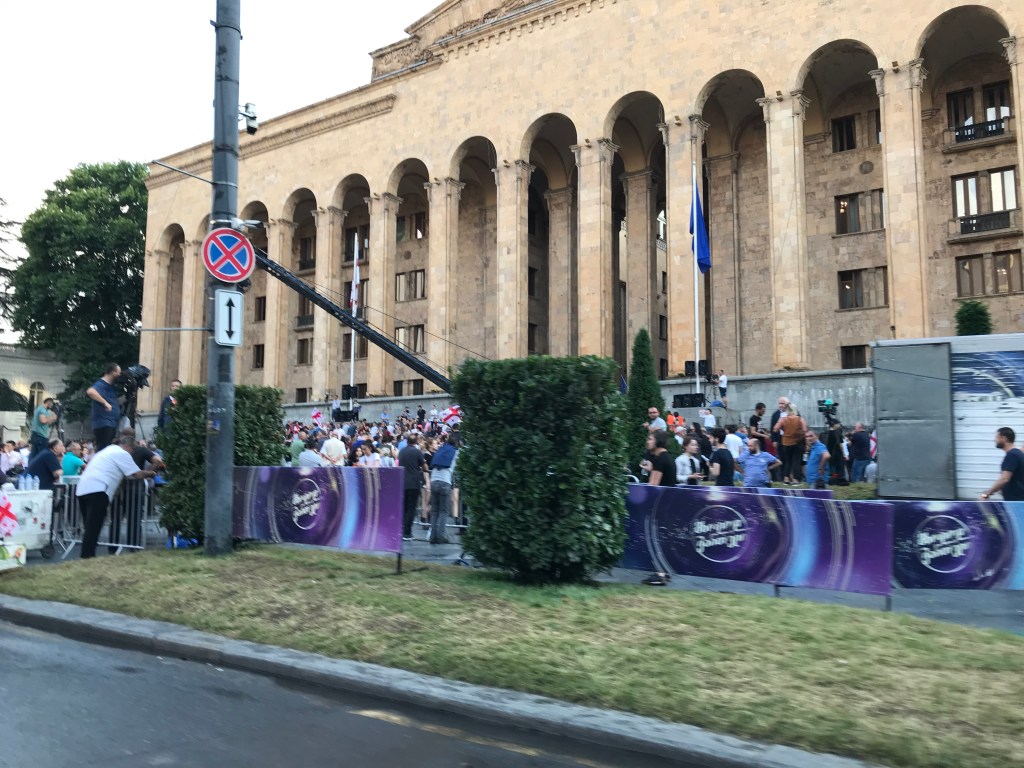
Addendum: We had been hearing about the active protests against the government after the Chairman of Georgia’s Parliament allowed a Russian MP to sit in his seat and deliver a message in Russian. Georgians were protesting the government for succumbing to Russian influence.
If you were traveling along the ancient Silk Road from Samarkand or Bokhara to Istanbul, you would undoubted stop in Tehran, Iran.
Our itinerary, in case you missed it on the map and on the World Travels 2018 page of https://travelswithmyselfandothers.com, started with our guide in Tehran, then south to Shiraz. From there, we plied our way north by car with our guide through Yasd to Isfahan, and back to Tehran. There is so much to see! I am splitting the adventure into two parts for this Silk Road series. This is the first part (A), to be followed by the wrap-up (Part B) of Iran in the next post.
Tehran
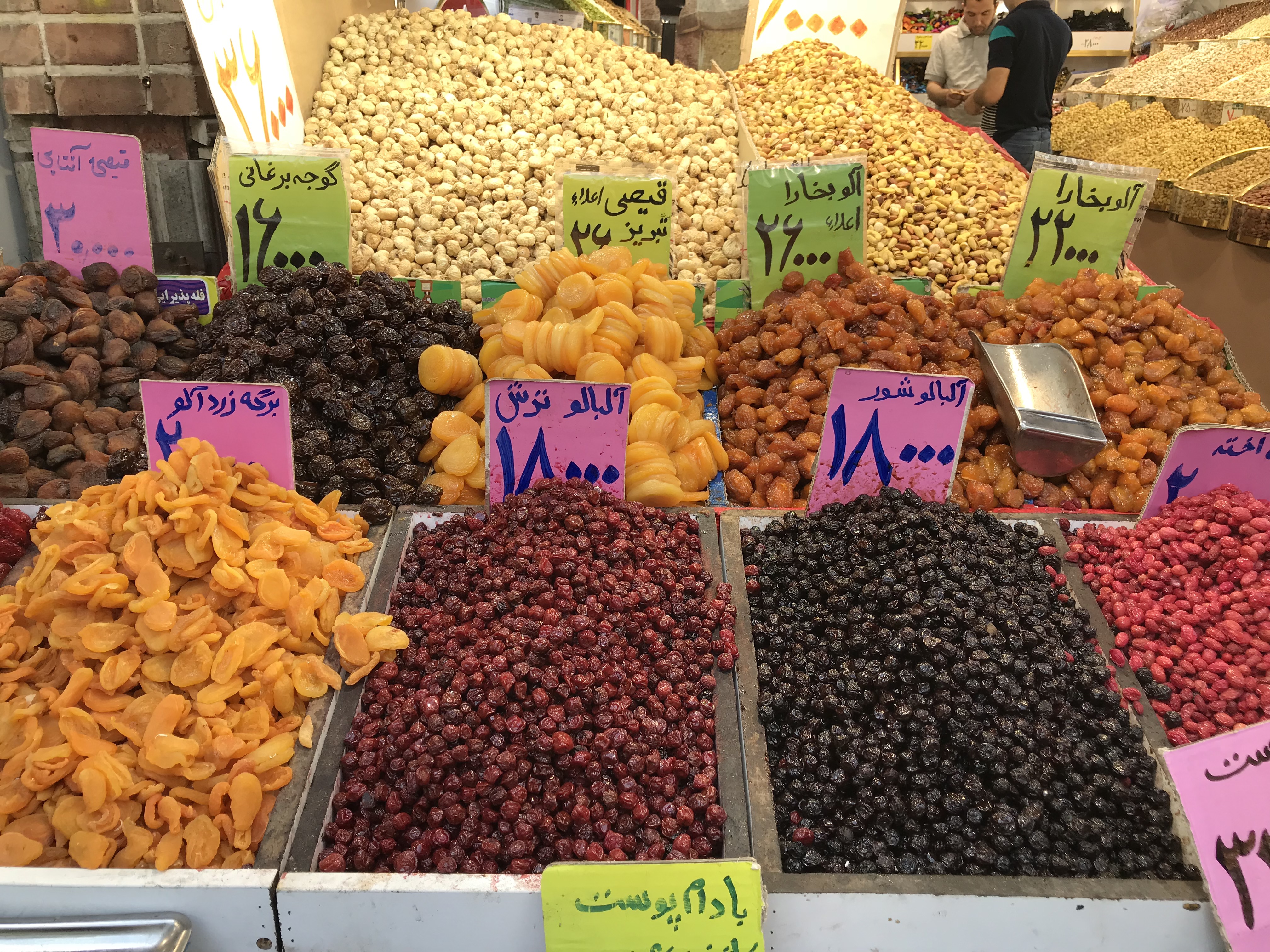
With all my worldly possessions-and a precious visa to visit in tow, husband Gee Kin and I have just arrived in Tehran, the capital of Iran. We left behind the globalized world of Starbucks, KFC and Macdonalds, to one with brewed tea, fast food chicken legs roasting on an open fire, and lamb kebabs with bread made with pebbles for dimples. We passed tantalizing corner stores filled with pistachios and dry fruits that you buy to take to a friend’s house. Hospitality means alot here, and we can already feel it in the air.
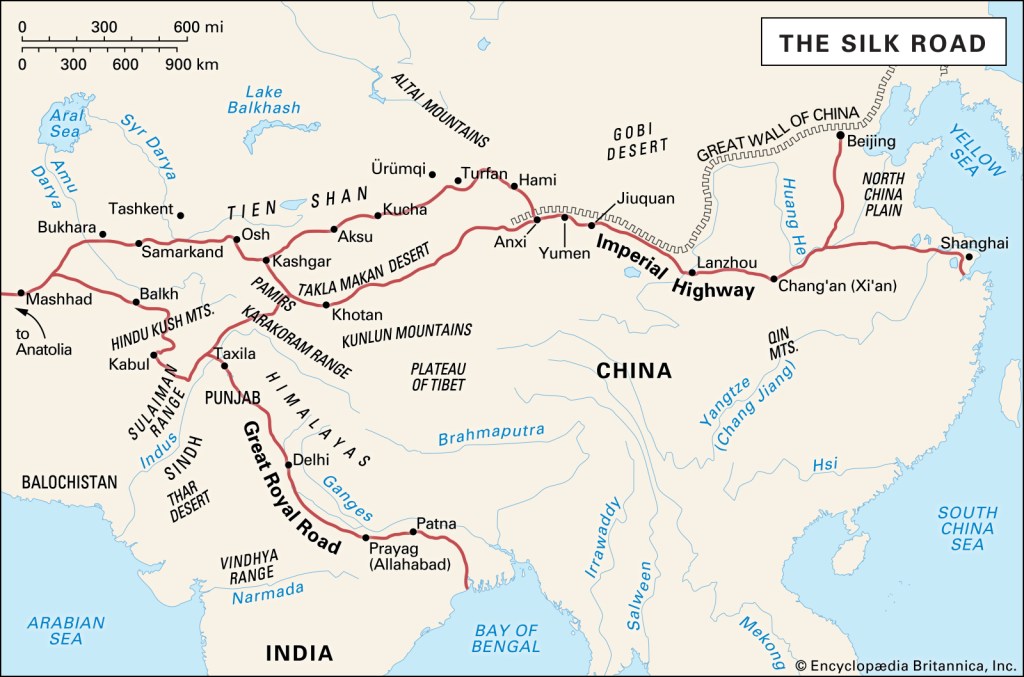
Our hypothetical Silk Road route started westwards from the outer reaches of Mongolia and Beijing, China, past the outpost of Turpan in Northwest China through Samarqand, Bokhara and Khiva ( today’s Uzbekistan). But in actuality, I took this segments was undertaken in 2018 separate from this route. Here is the post.
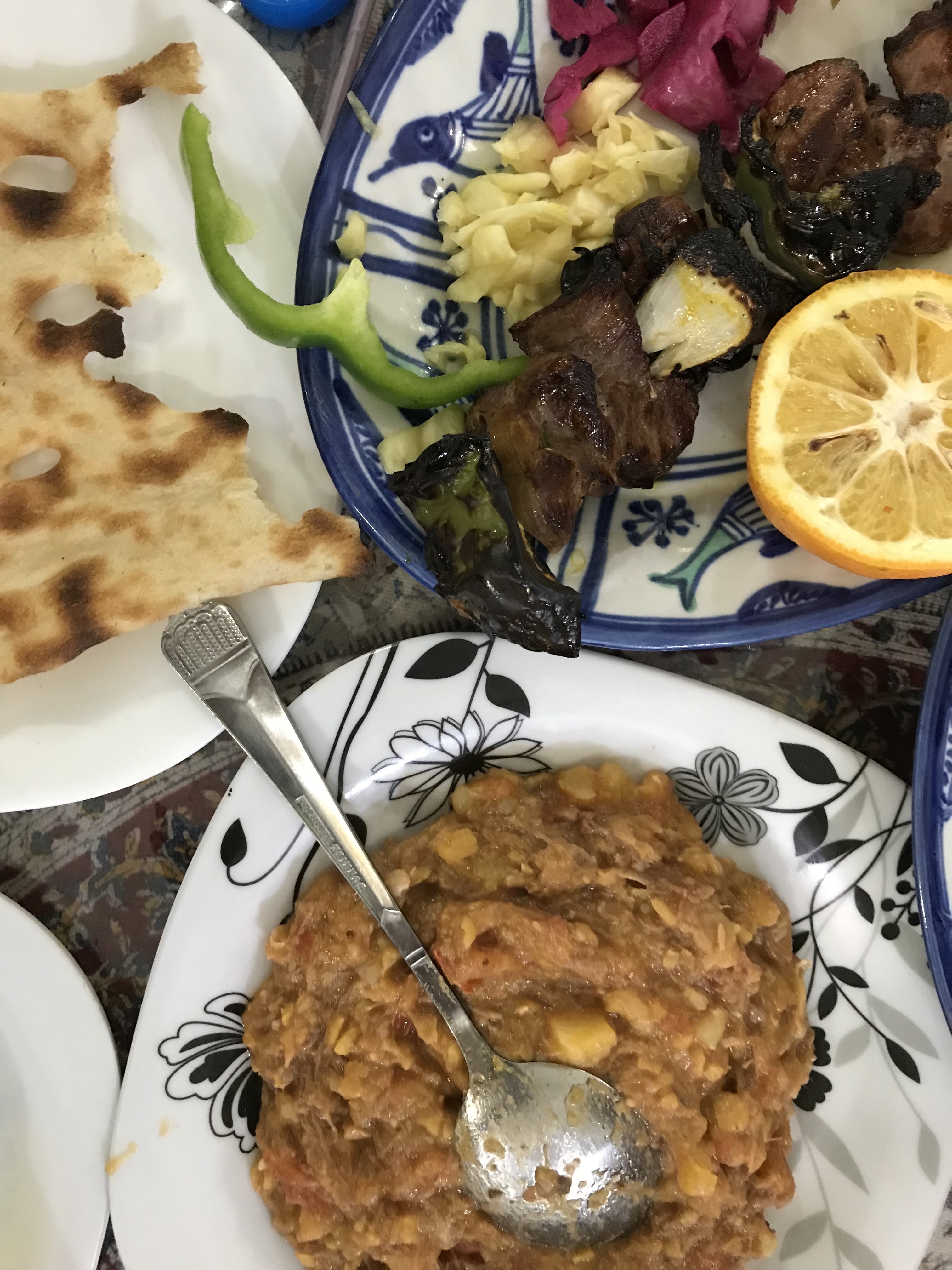
Having just completed a marathon flight in 19 hours (San Francisco-Washington DC-Vienna-Tehran, I was glad to hit the end of the day with a hearty meal of lamb stew macerated at the table and mixed into a tomato based soup, with chicken and lab kebobs, saffron rice, yoghurt dressing, a vinegar-based eggplant sauce on the side, and bread.
First Meal in Iran
After a few days of jet lag, weather changes, and internet hell, we resparked our curiosity and thirst for the unknown. We visited museums, mosques, and even a madrassah, but no mausoleums yet. The last three m’s defined Islamic architecture during my visit to Uzbekistan, but each building type was not fulfilled until we saw Hafez’ tomb or “mausoleum” in Shiraz.
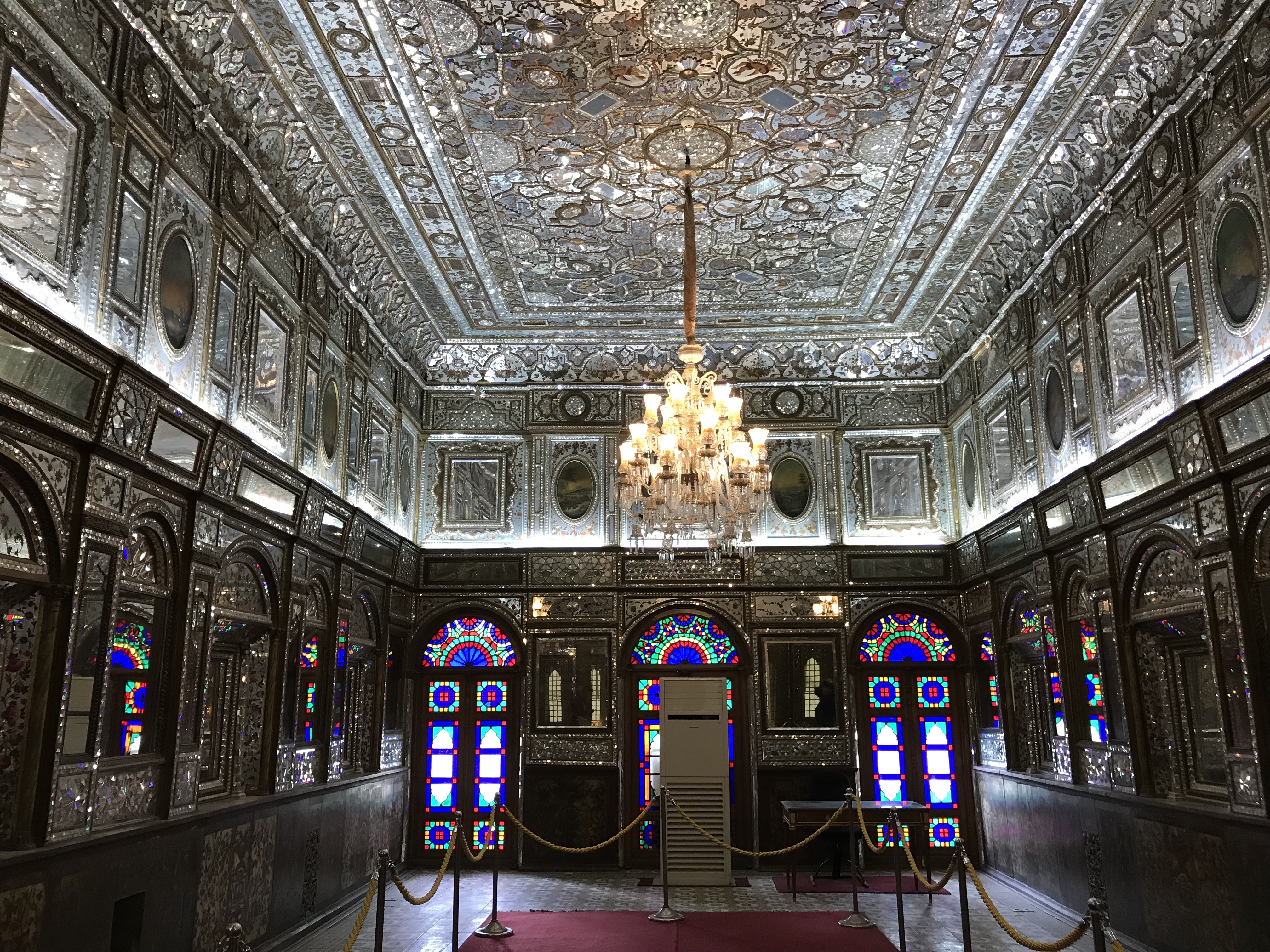
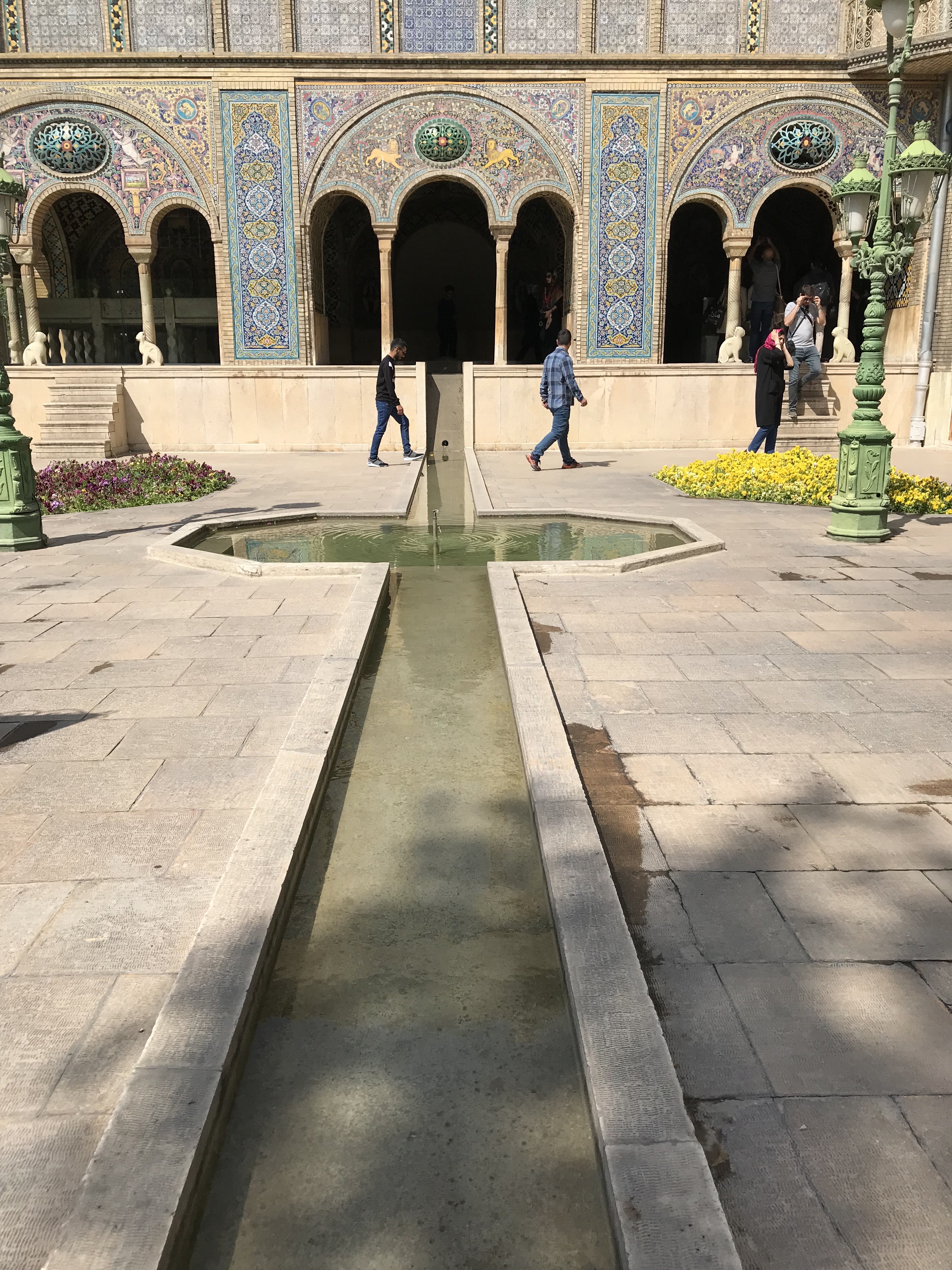
At the Golestan Palace in Tehran, a World Heritage Site, the pre-Pahlavi royalty (within the last 150 years) displayed their wealth and were over-the-top ornate. Most of the public rooms including the ceilings were covered with intricate mirror mosaics and made you feel like you were inside the Hope Diamond.
Interior with Mirrored Ceilings
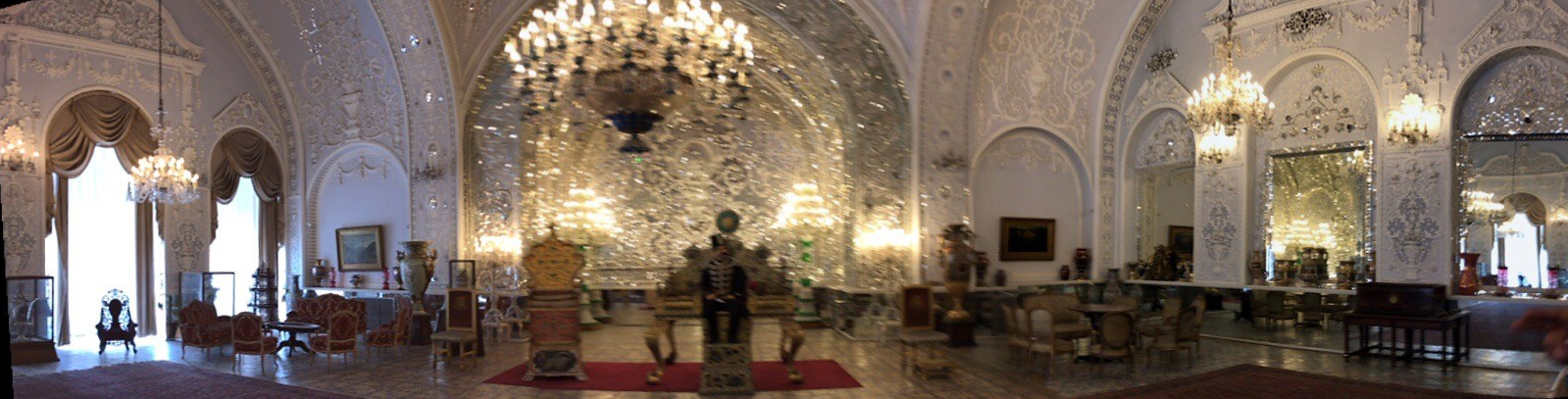
The exteriors demonstrated the integration of gardens and fountains that are famous in Iranian architecture and design, as well as the intricate mosaic work and marble carving on doors and walls.
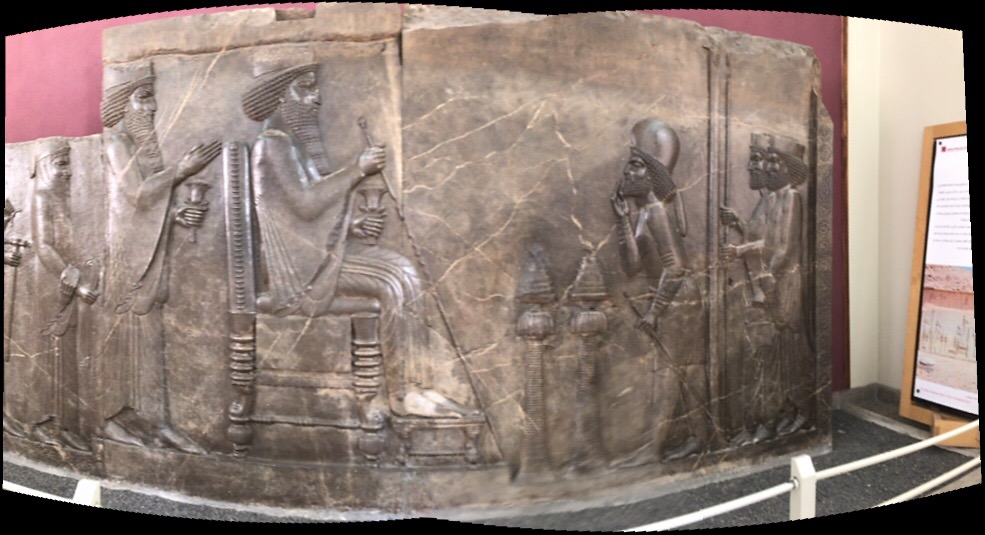
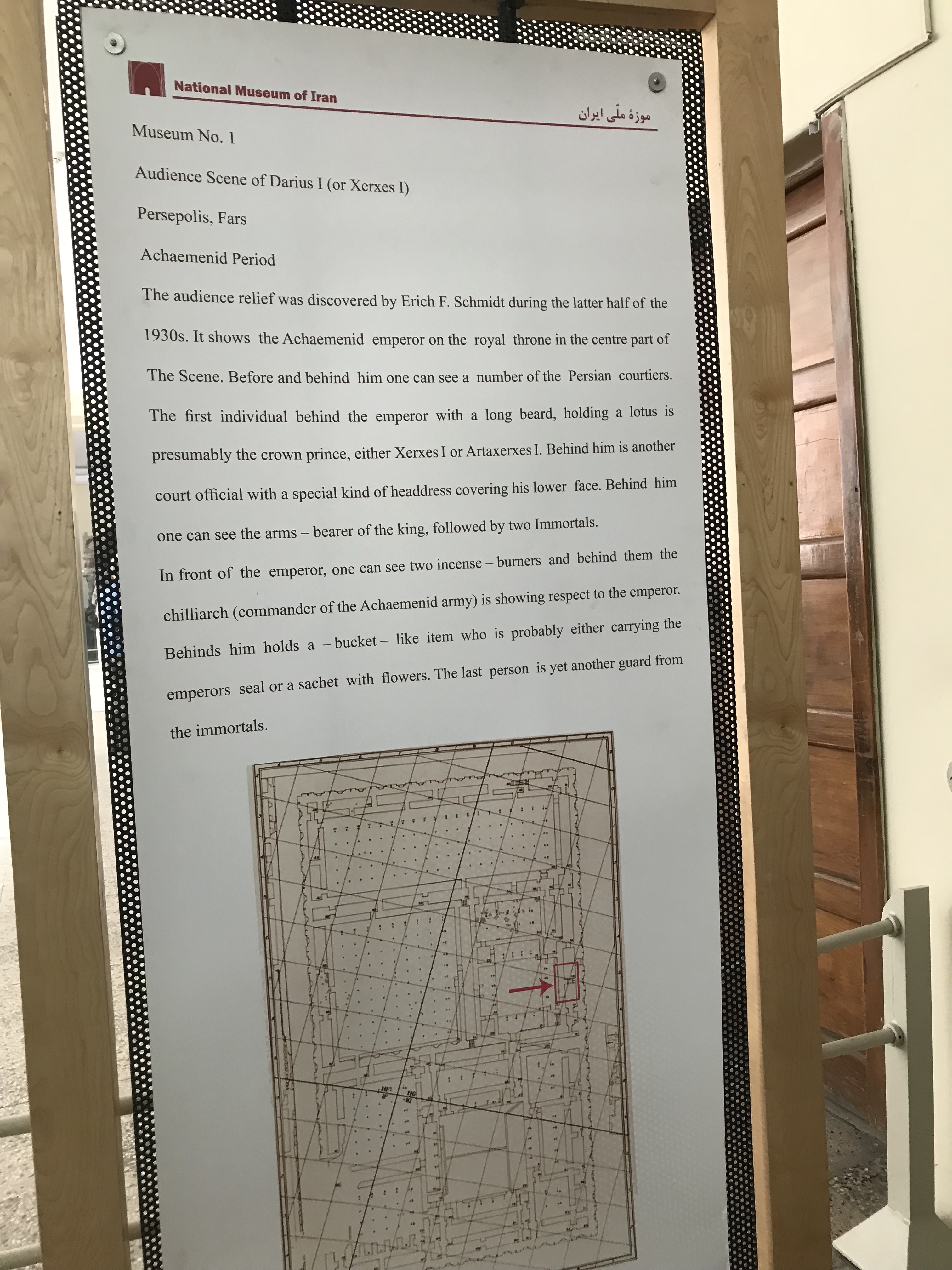
The National Museum of Iran contained some of the most precious relics of the ancient world. The statue of Darius I (Xerxes I, from which an opera is based!) and a panel from the Achaemenid Period in Persepolis are shown below. For those interested, you can scale up the text included in the adjacent photos.
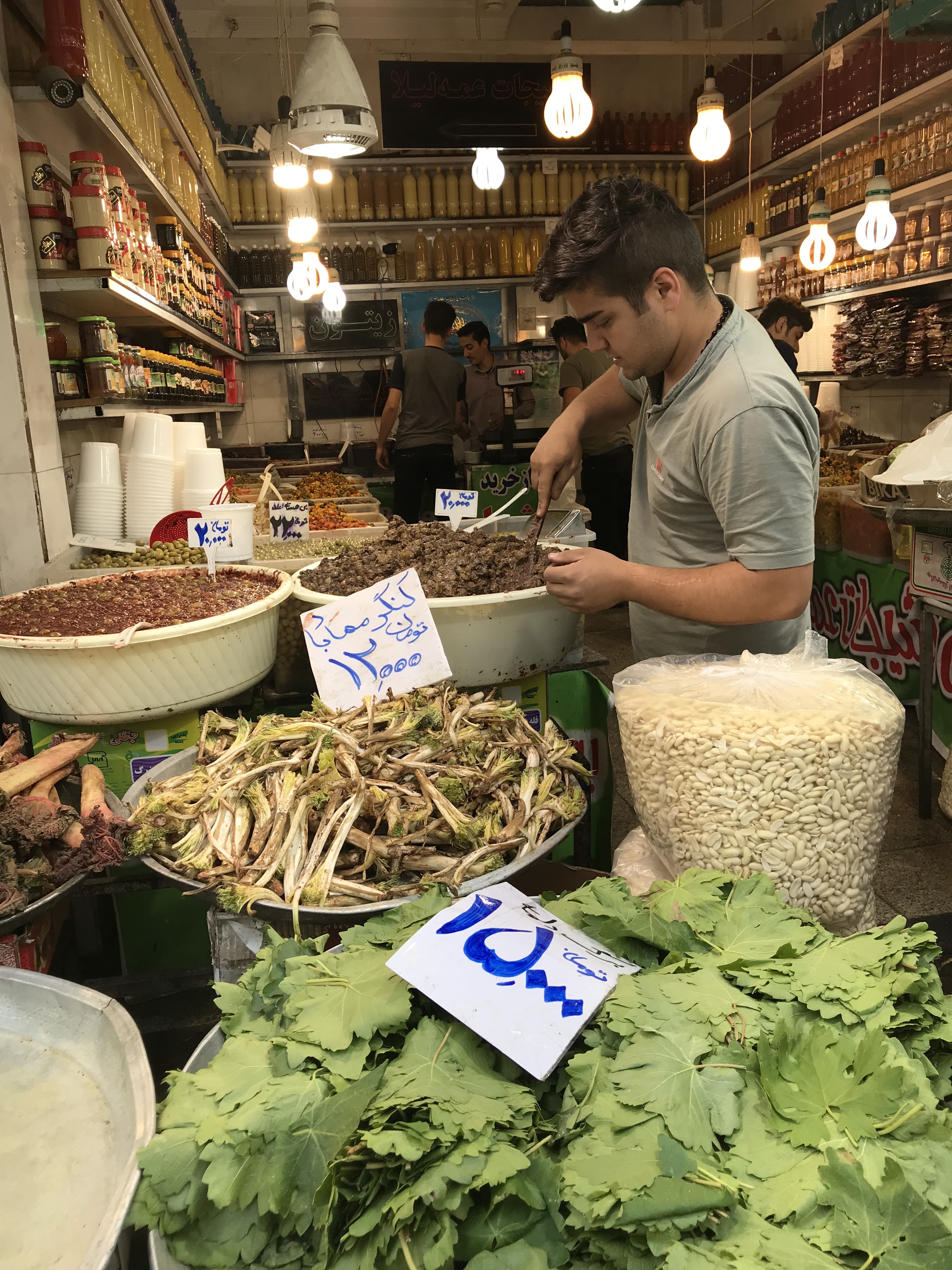
The bazaars in both Tehran and Shiraz contained endless boutiques in a Walmart-sized atmosphere with limited and inexpensive goods from copperware to aromatic spices.
Shiraz
We bonded with our local guide from Shiraz after he passionately described Iran’s native son and poet, Hafez. His elegant poems are beloved by all Iranians and transcend cultures. F. Scott Fitzgerald and Goethe were known to quote his poetry. It was enough for me to determine to read some when I get home.
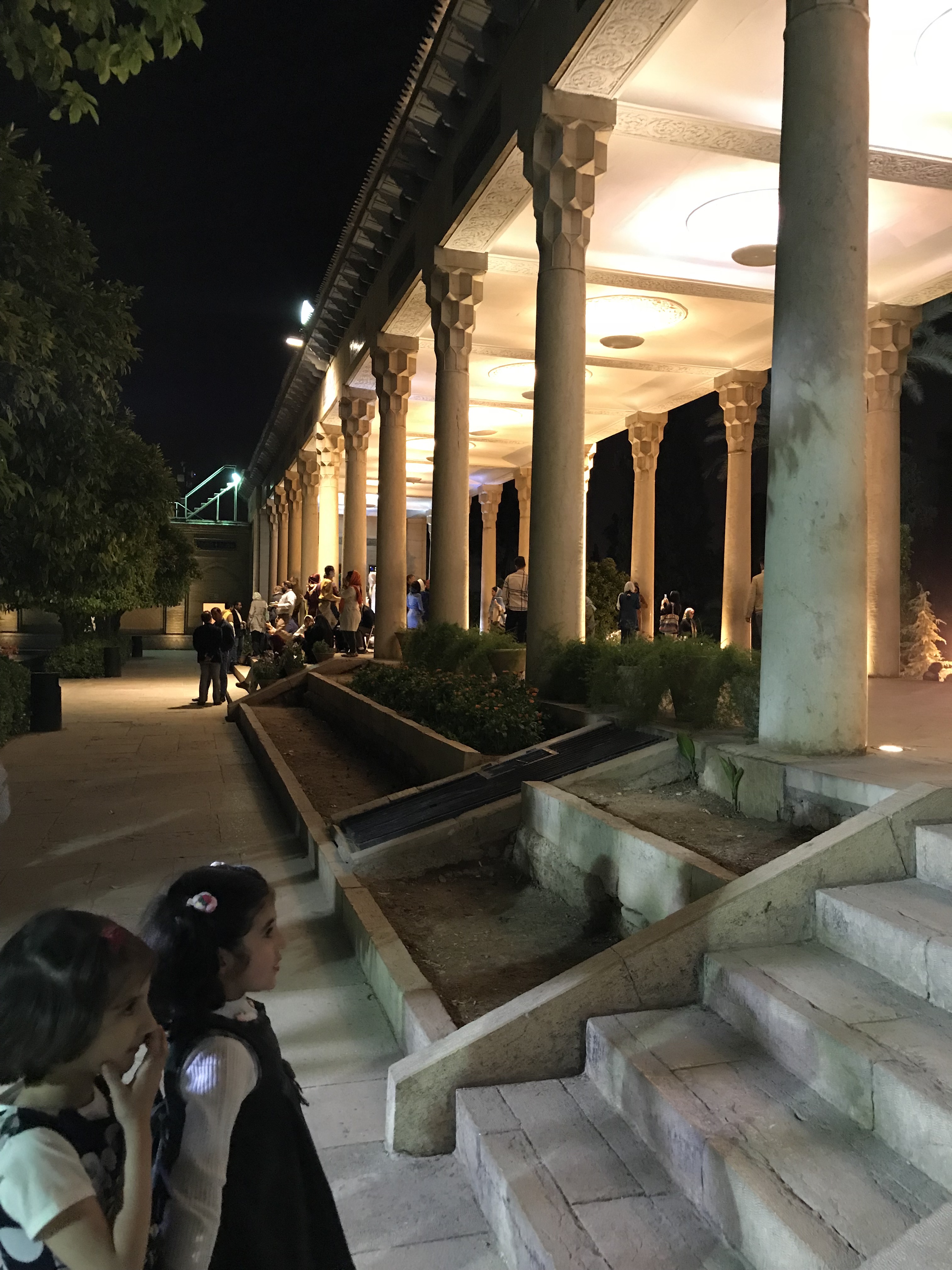
As we stood in the garden of the tomb of Hafez, Abdullah, our guide, explained that Shiraz is known for its wine, women, and roses. Many of us will recognize the famous wine namesake that comes from this region.
In the evening light, Abdullah pointed out the abundance of young couples strolling in the park, with flowers intoxicating the warm breezes. Knowing a little or a lot about the poetry of Hafez is enough to start amiable conversations and the start of a promising relationship, Abdullah surmises (maybe from experience?)
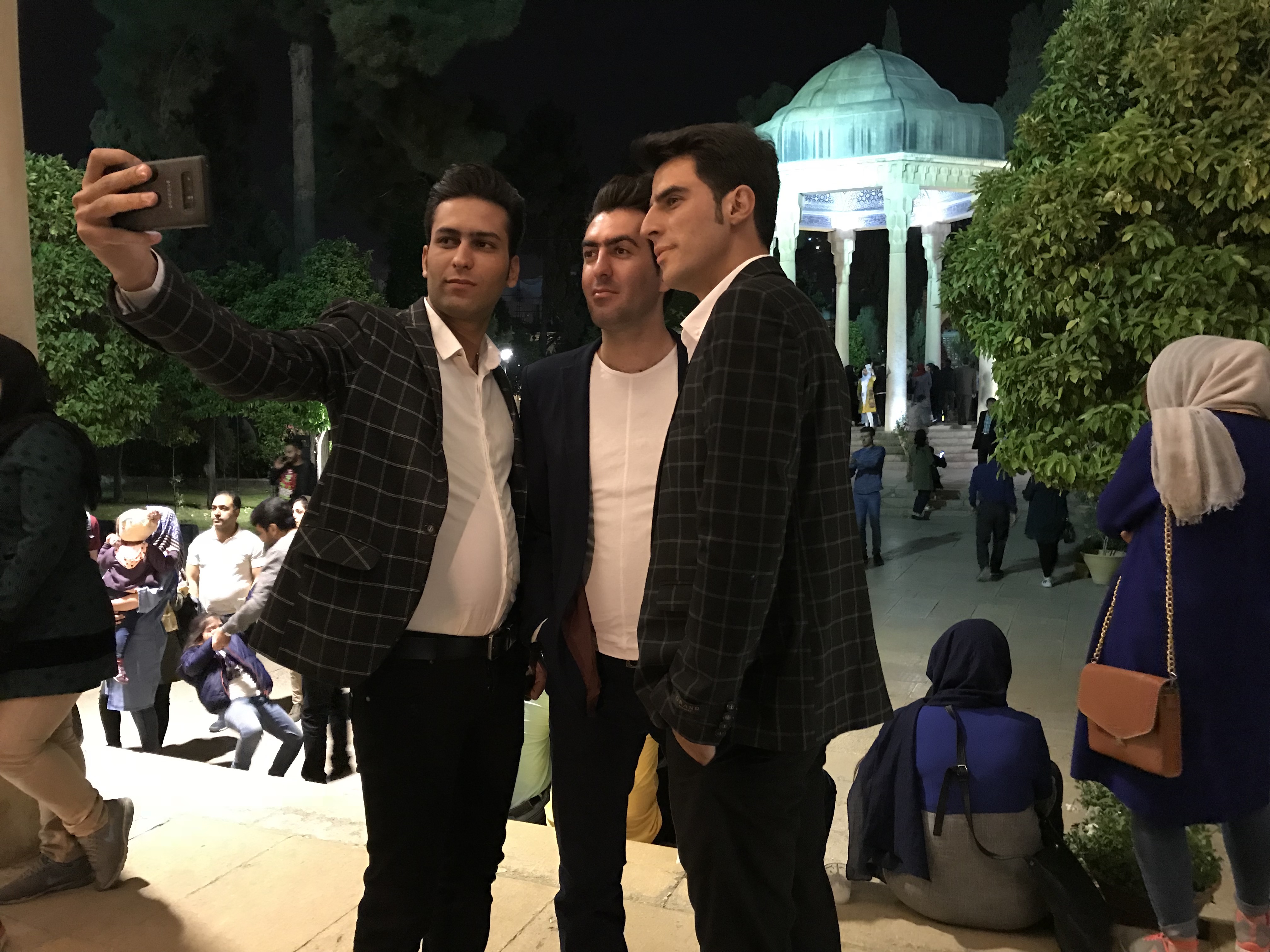
While Abdullah waxed poetic, we observed that families were out selfying just like any other society, enjoying a delicious evening, and lingering among crowds of friendly visitors.
There seems to be tremendous respect for fellow humans in Iran. So far, we have found the urban environment remarkably quiet. We stayed on busy streets in two cities on and found the traffic unusually quiet. Being highly sensitive to noise, I am finding the calm, lack of noise shattering to my ears.
People glide about the streets, smiling at one another with eyes and lips, and salaam each other without exception. I’m not sure our guide has coopted us, but we sense the immense pride and confidence in the people.
Persepolis
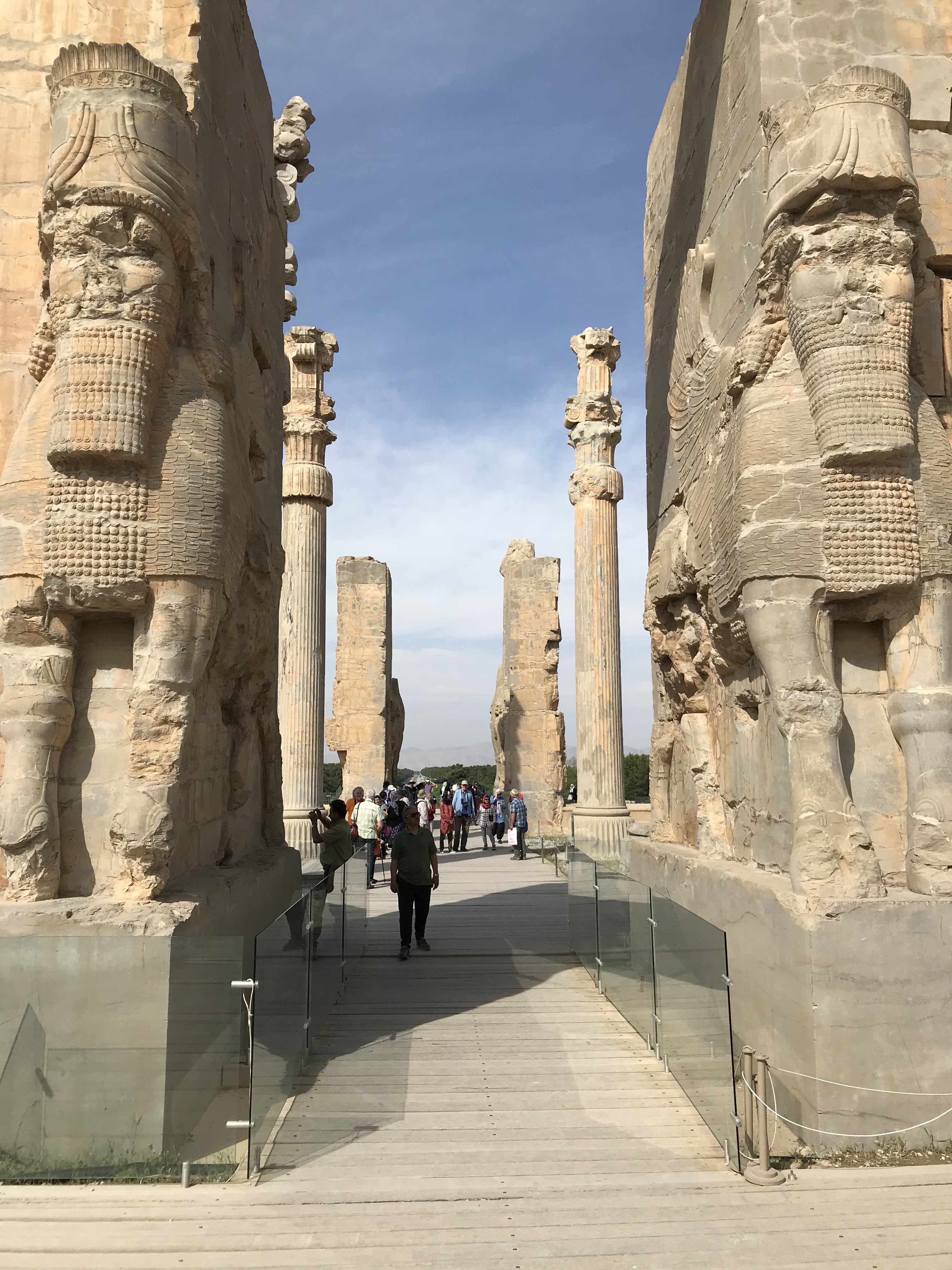
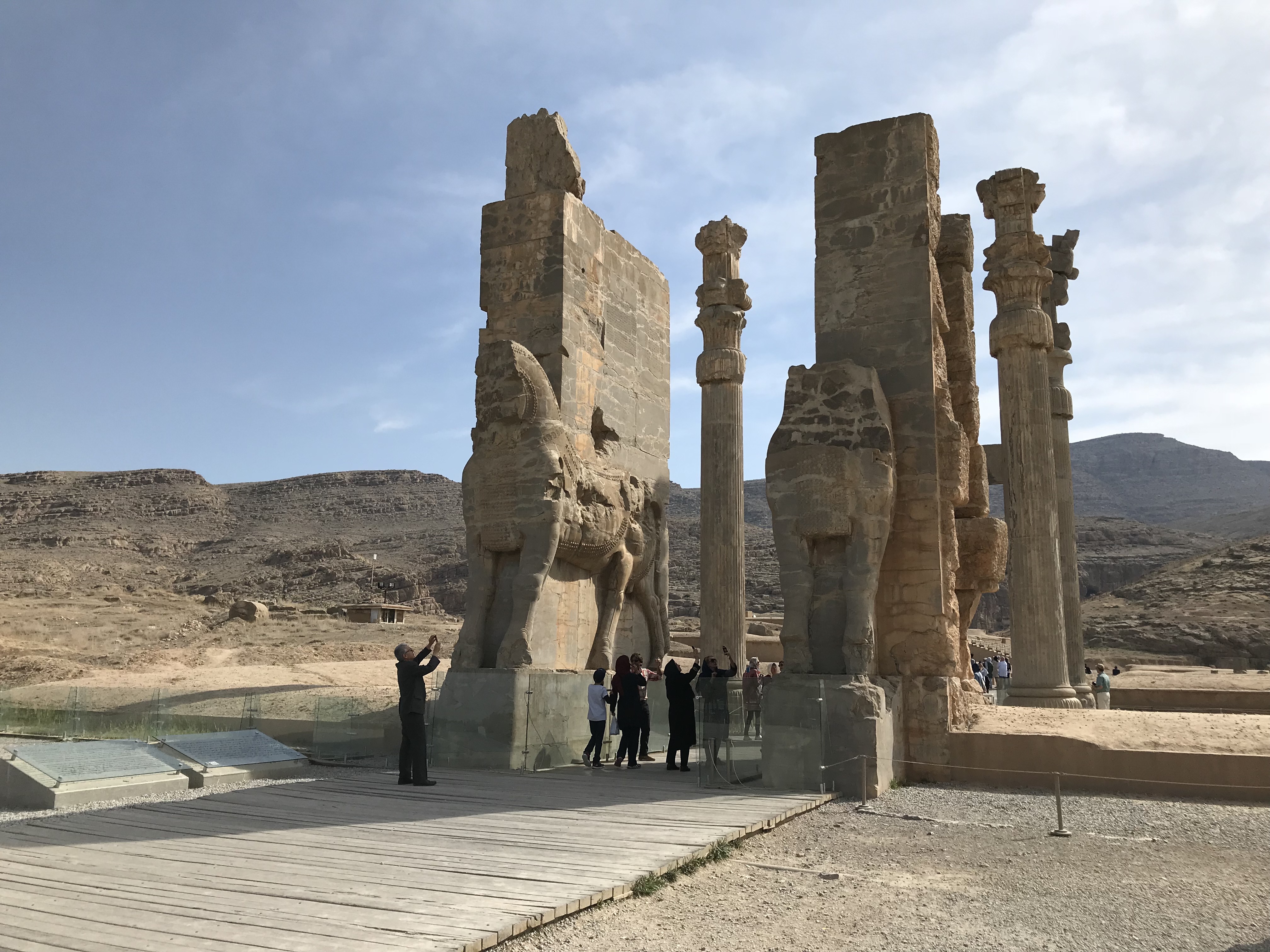
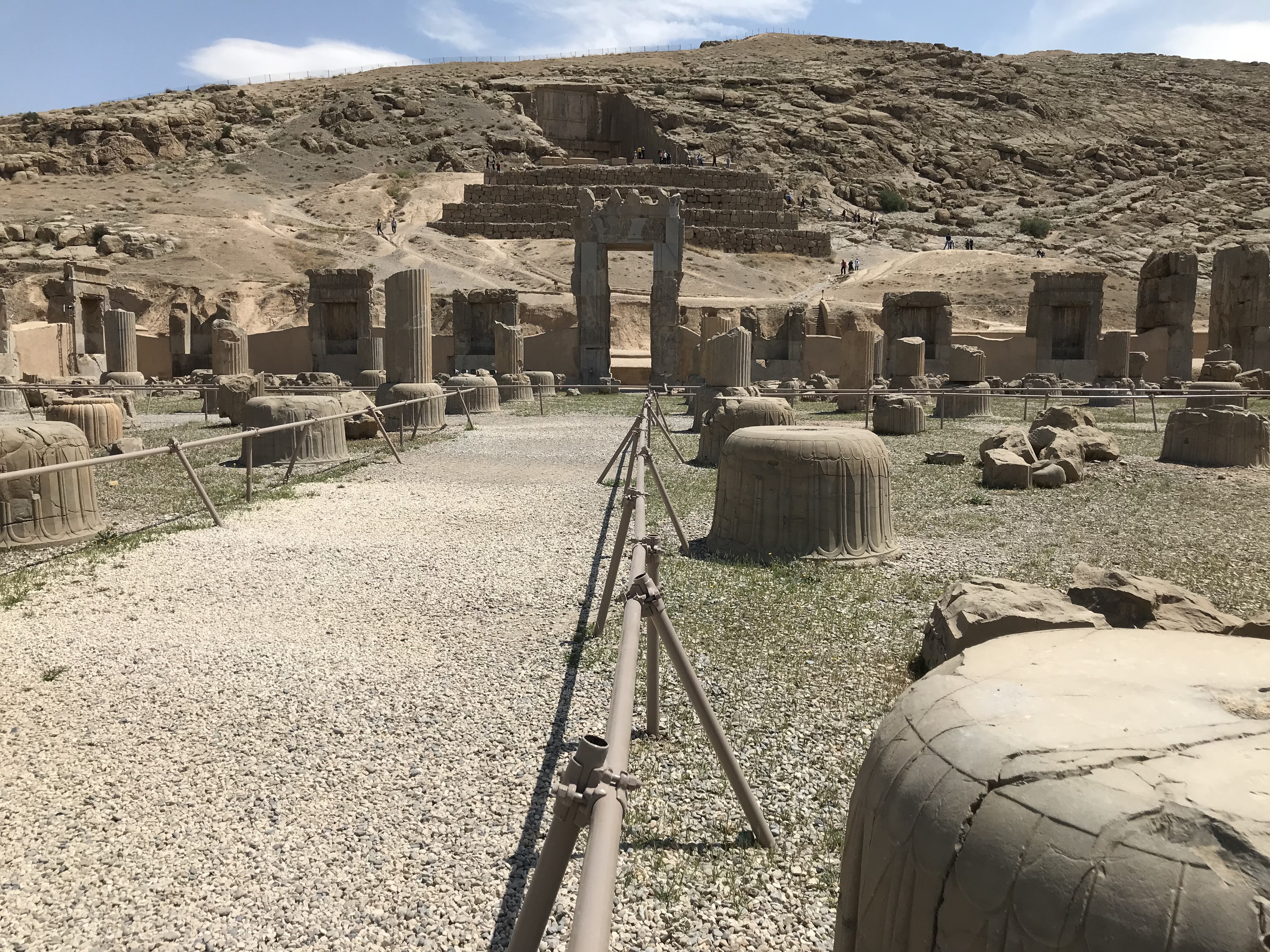
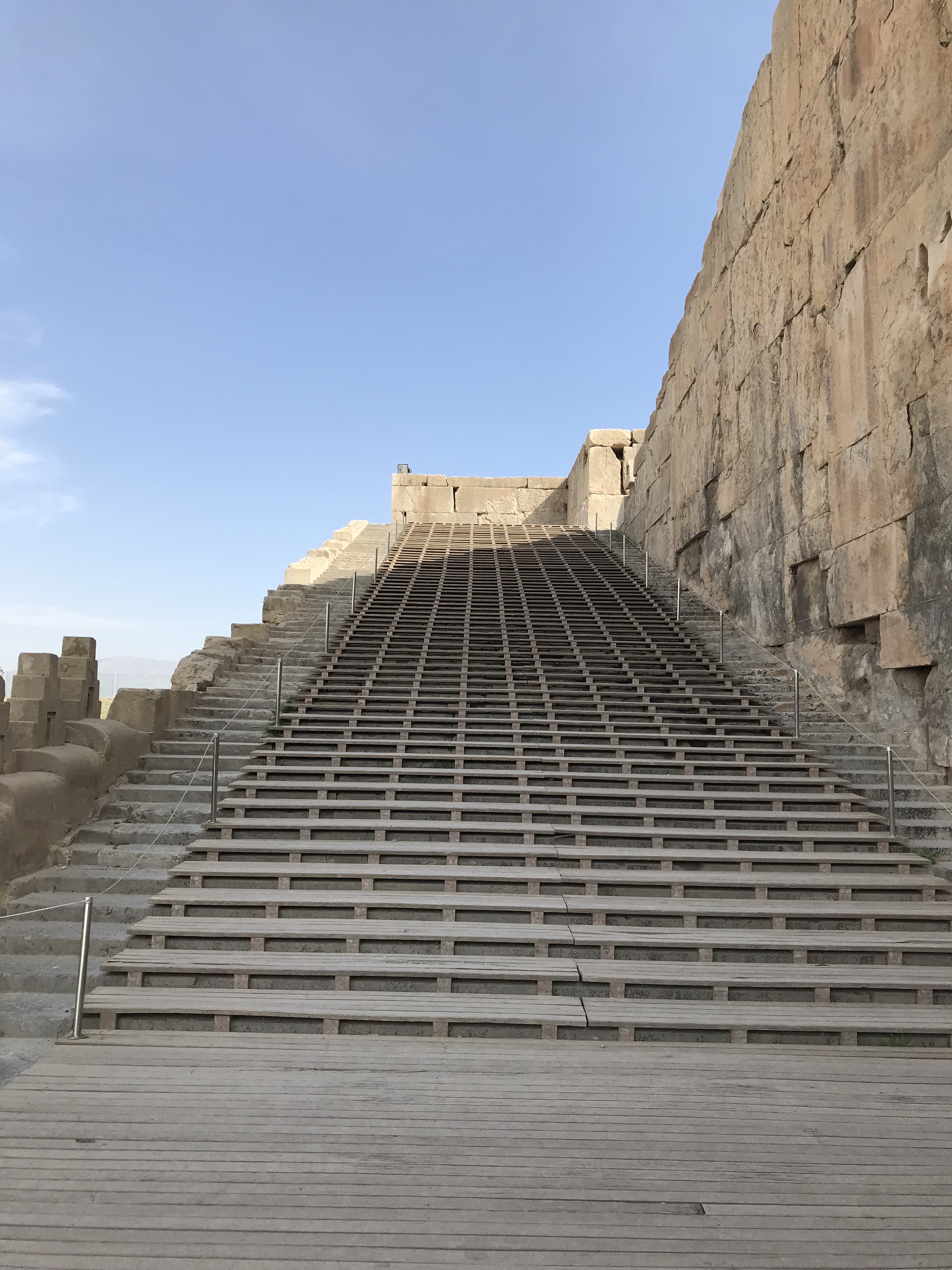
Just outside of Shiraz, on a wide open plain, lies the ceremonial center of Darius. Before him, Cyrus the Great created and led an impressive empire. The wooden ceilings of buildings and both palaces of Darius and his son built around 518 BC were later razed to the ground by Alexander the Great (around 330 BC), but the massive stone structures with priceless carvings remain.
After just having seen the great empires of Rome, Greece, Inca at Macchu Picchu and Aztec in Teotihuacan, it’s hard not to be impressed by the volume and quality of artwork in situ at Persepolis. We could not believe how much of its splendor is still present for the whole world to appreciate.
Were it not from my earliest art history lessons on ancient civilizations and curiosity on its context and meaning, I would not have made this trip.
Everything begins to fall into place, as the pieces of the puzzle assemble. My scant preparation for this trip, thanks to Francopan’s Silk Roads, a New History of the World, captures the whirlwind tour through the rise and fall of Eurasian civilizations. Iran, and more fondly, Persia by the same name, stands prominently at the helm of the Silk Road.
The artwork at Persepolis chronicles the peaceful arrival and acceptance of the local inhabitants to the new ruler. Darius followed shortly after Cyrus (within 40 years), and while not a direct descendant, they were related. Although the local Medians were conquered by Cyrus and the Archimineads, he managed a peaceful settlement and was respected for his accomplishments as a capable ruler. Darius culminated the dynastic rule with his grandiose and impressive complex at Persepolis.
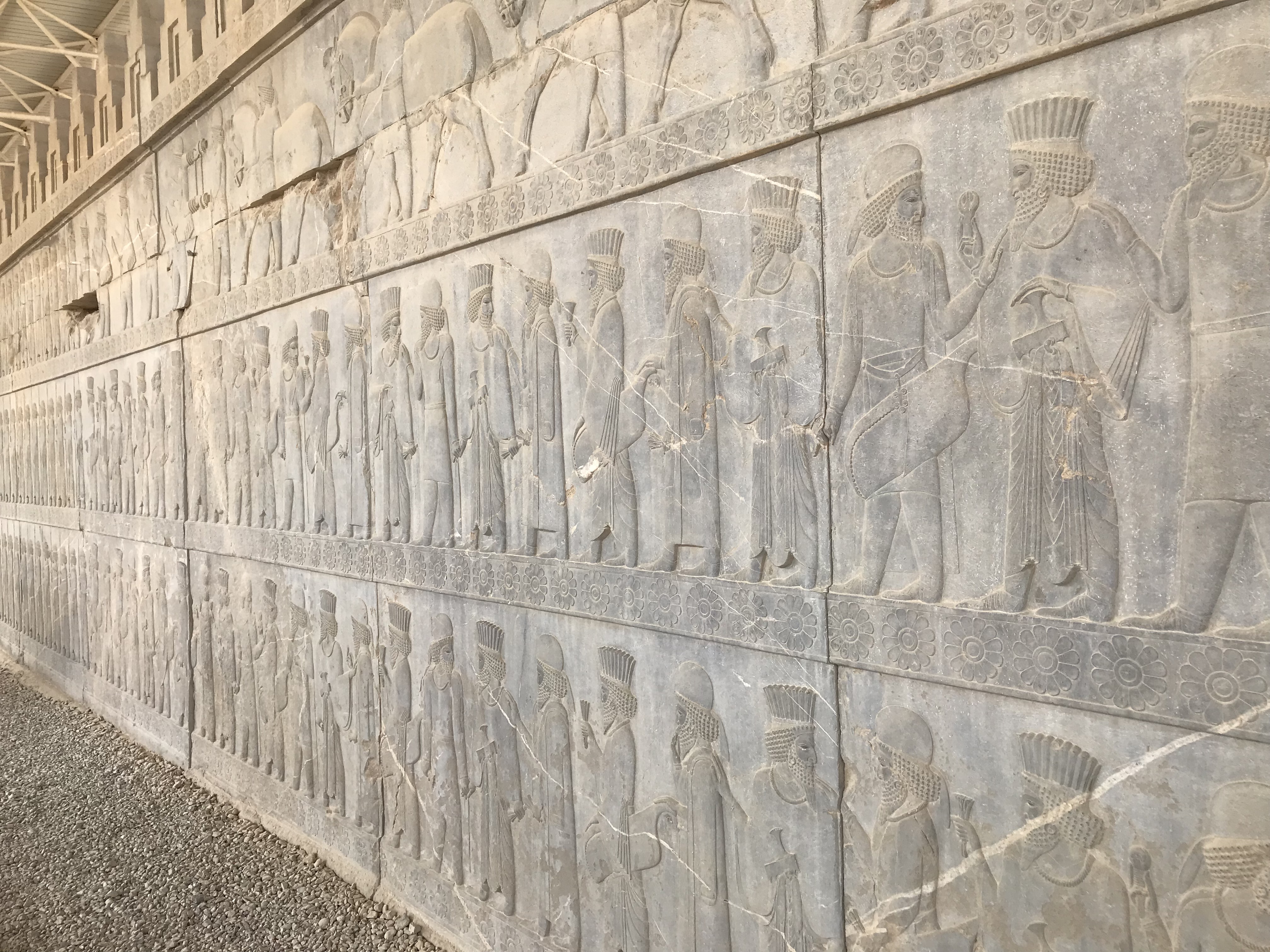
Within the ceremonial entrance and grand reception areas are magnificent stone reliefs of warriors supporting the king on his throne. Rows of roundheaded conquerees alternating with the conquerors proceed to meet the king, hand in hand. Offerings from 23 nations include food, treasures and animals from surrounding areas and those as far as India.
Other friezes demonstrate the high quality of craftsmanship that preceded the Greek and Roman periods revered in history. In a splendid exemplary frieze, a bull and cow signify the end and beginning of the new year.
The symbolic meanings of birds, rings and flowers stem from the ancient monotheistic Zoroastrian and Mithras religions. They did not have a concept of God as a human, but that he lies within each of us.
Individually the symbolism of the characters presented are less significant than the collective splendor of the human mind that is left behind for all of us living creatures today to ponder.
(This post was created on April 17, 2018 and edited April 22, 2018).
Map of Uzbekistan. My route is Tashkent-Samarqand-Bokhara-Khiva-Tashkent
Samarkand
From Northwest China you can take the high-speed train from Dunhuang through Hami and on to Urumqi. From there, you can fly direct to Tashkent. My real Time travel comments are included below, along with newly added site descriptions.
—-
The first day of this segment has overwhelmed me with history, jogging my brain and challenging all of those connections between Alexander the Great, the Mongols, and Tamir. Some of you may know this better, but for me, it’s learning on the job.
Lets start with Tamir and work back. Tamir was from Samarqand and made a campaign to conquer India. His grandson was the scientist and developed an observatory and promoted a lot of concepts developed by the Arabs and and the Chinese. I now can connect the mythical opera “Turandot” to its history, where the Chinese iron princess met and fell in love with Timur’s son, Calef who sang “Nessun Dorma” to her.
When the Mongols struck in the 13th Century, they basically burned every town and village they encountered to the ground. Many of the relics predates this period, but the buildings are no longer standing. Alexander the Great conquered this area, but there is still some debate where and how long he ruled. He was physically here in the area with his army.
There are magnificent, UNESCO World Heritage sites completely restored but unnoticed. Only the curious and far-flung will seek out these treasures that defy architectural history. It’s shocking how little we in the Western world know about the treasures of the Non-Christian world. Islamic architecture had its interpretations of religion and certainly rivals the European and Asian counterparts in grandeur, functionality, and organization.
I trained myself to differentiate the three M’s: madrassah (an educational institution), mosque (for religious purposes), and the mausoleum (monuments to the prominent).Registan Square-Monument to Medieval Architecture
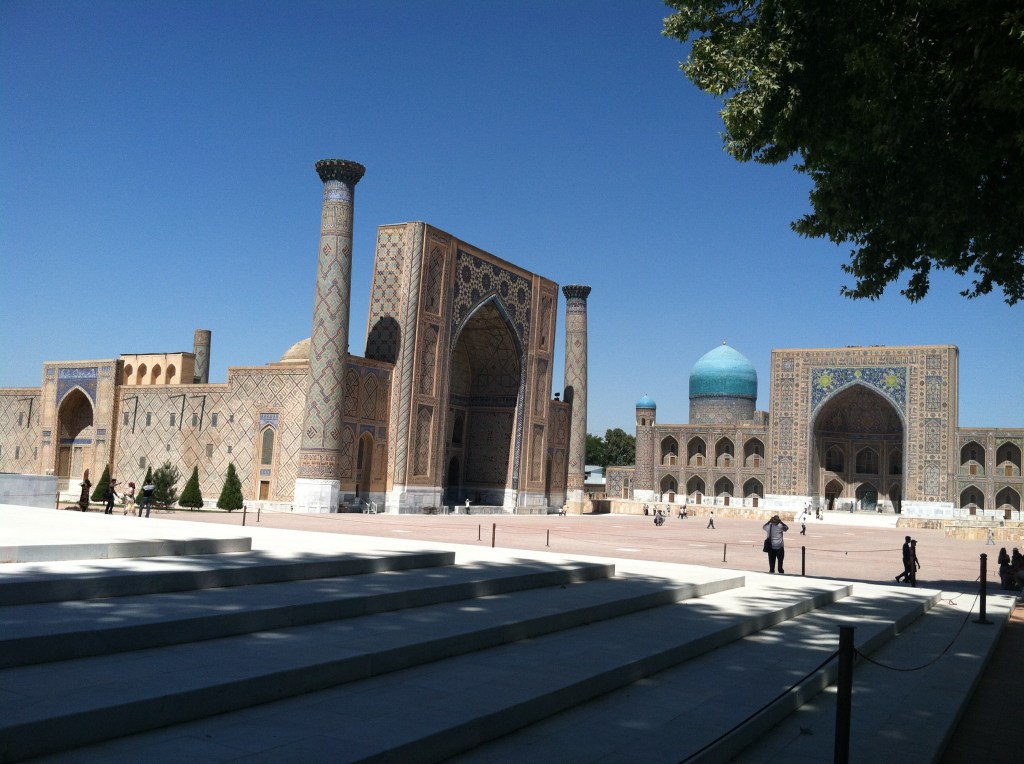
The most impressive buildings in Samarkand are the complex of educational institutions in Registan Square. The three separate buildings surround a courtyard and each included a library, classrooms and a place of worship (the “Mosque” is included in the madrassah complexes.)
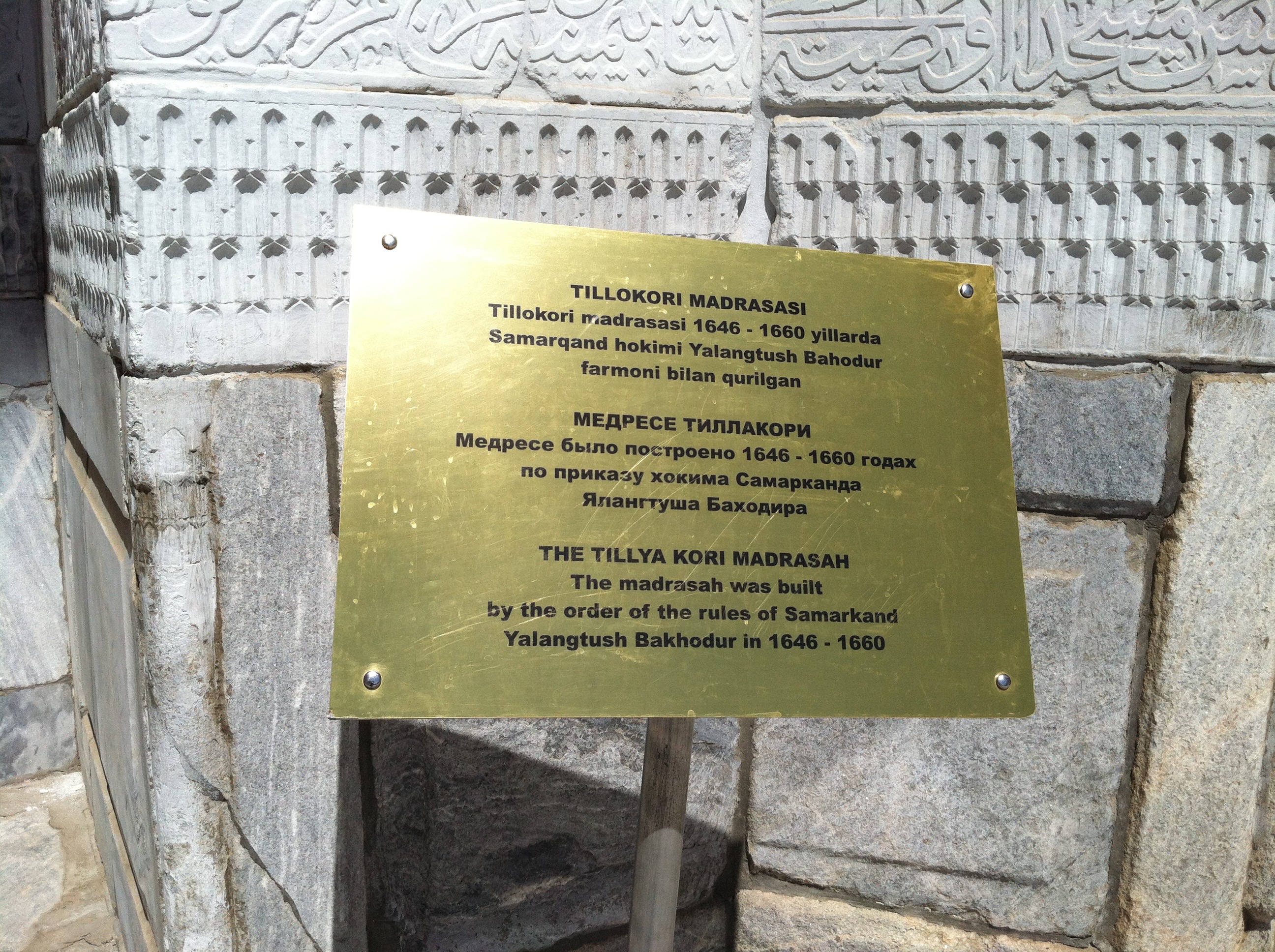
The madrassahs were built in two different periods: the Ulugbek Madrassah, with the two towers, was completed in 1420 and the Sher-Dor and Tilla-Kori Madrassahs from around 1660. The two later buildings were intended to form a symmetrical triad of buildings, but the domes are not symmetrically placed. Architects during this period played alot with balancing symmetrical and asymmetrical elements. The visual site elements are much more interesting and challenging to deciper that way.
Overview of the Madrassah Complex
View of the Ulughbek Madrassah Complex
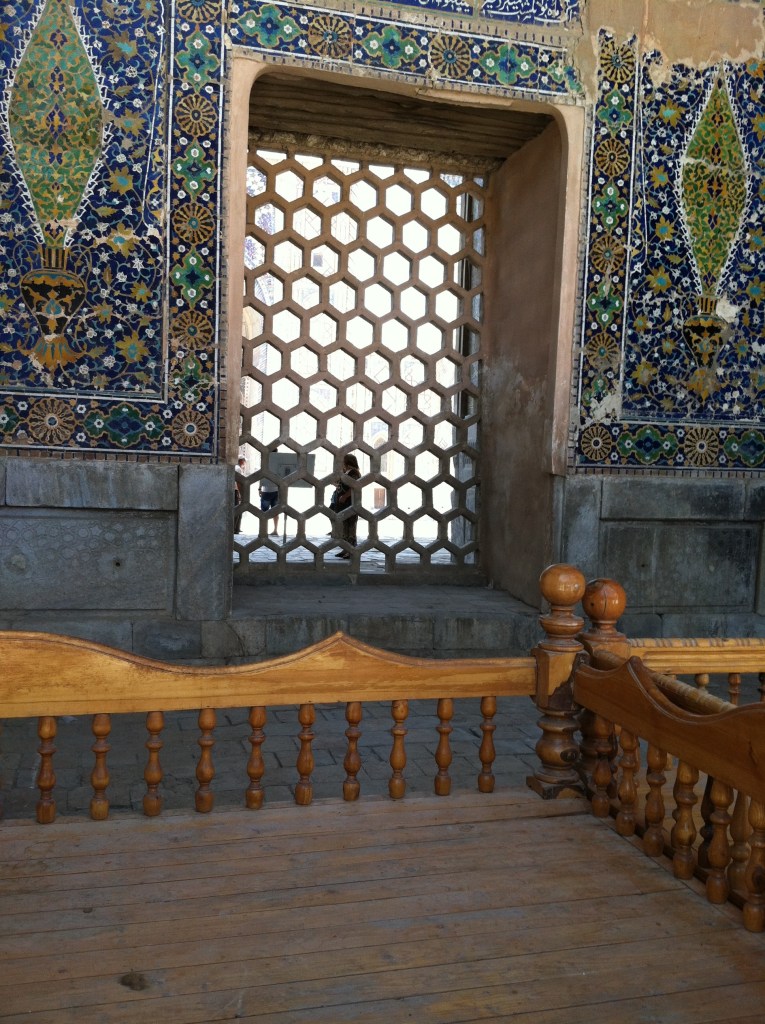
Window Fretwork
Entrance to Ulughbek Madrassah
During that time, Christian, Hindu, Muslim and Judaic religions parallel-played. Sayings in Arabic on the entries to the building welcome all religions but only believers. These were sacred places of education held in high regard, and the eight major faculties each had their own rooms. And believe it or not, in those days women were encouraged to learn in these institutions.
Entrance to Tilli-kori Madrassah
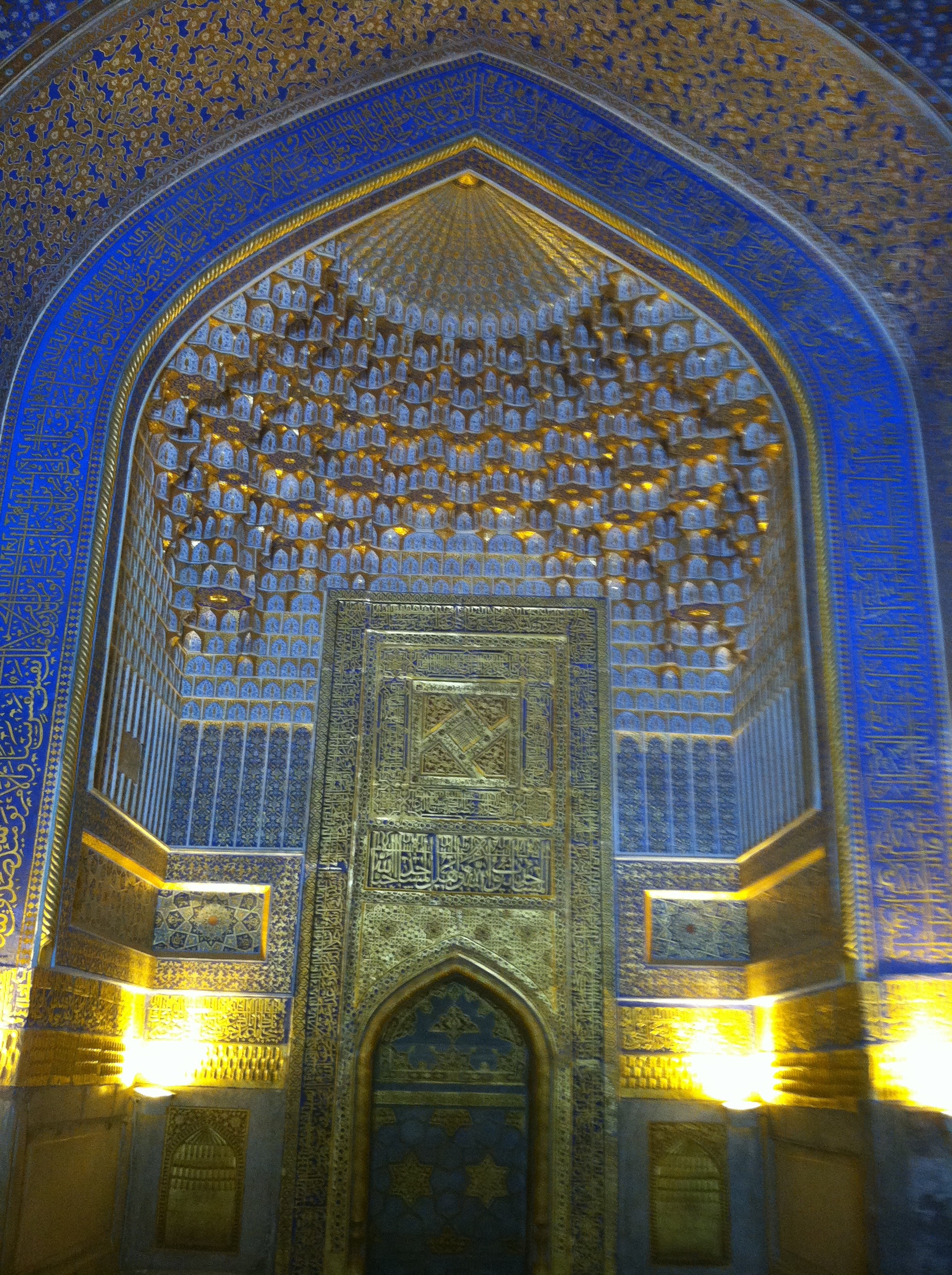
Interior Niche
Plaque for Tilli-kori
Entrance Mosaic
Ulughbek Madrassah
Ulughbek Plaque
Entry Mosaic
Stonework and Mosaic inserts
Golden dome flattened to enhance prayer
Extensive reconstruction of the tile work and buildings were made in the last few years to enhance its UNESCO classification. A bazaar that used to be in the courtyard has been relocated to preserve the structures.
The Shakhi Zinda Necropolis
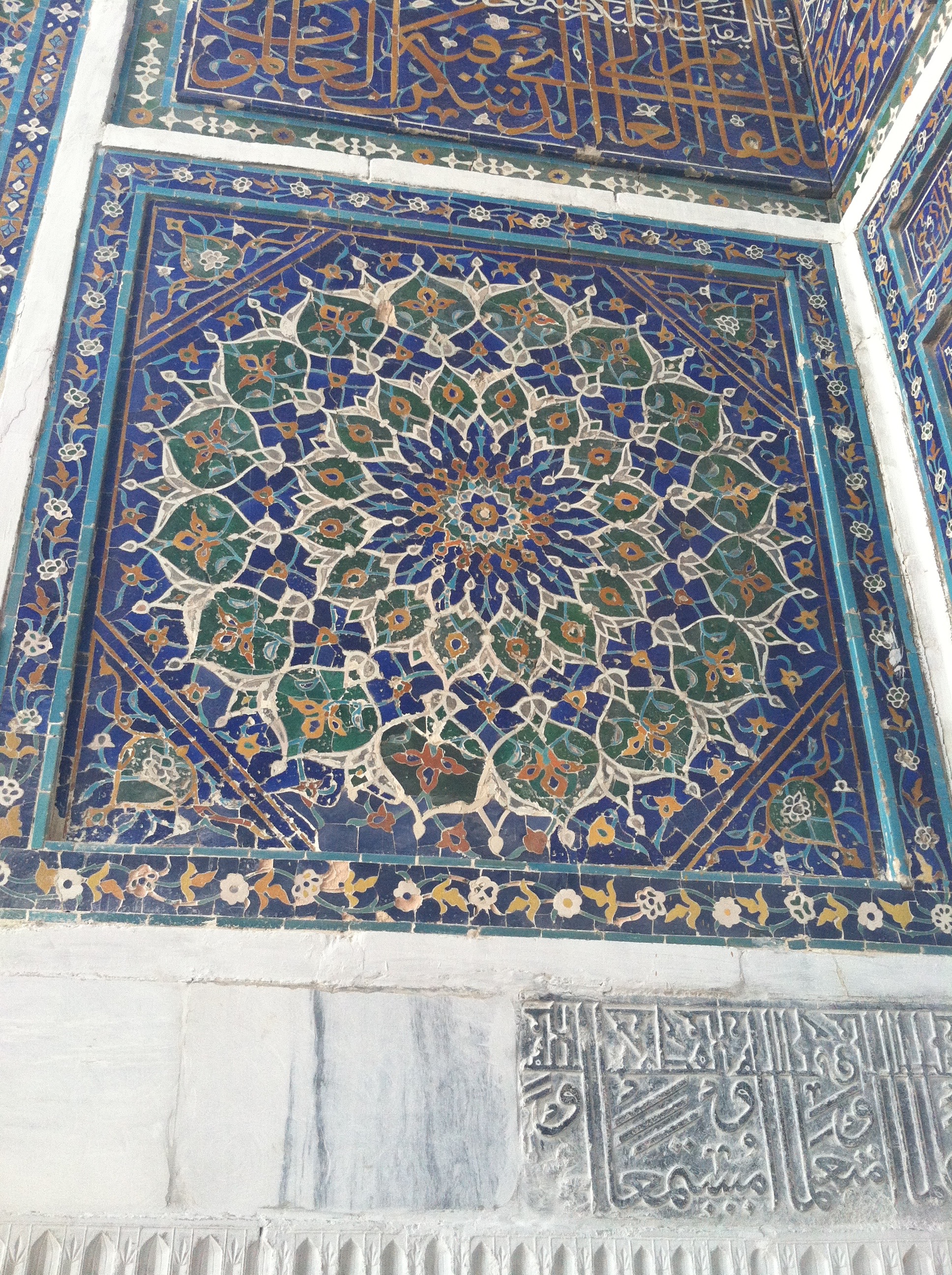
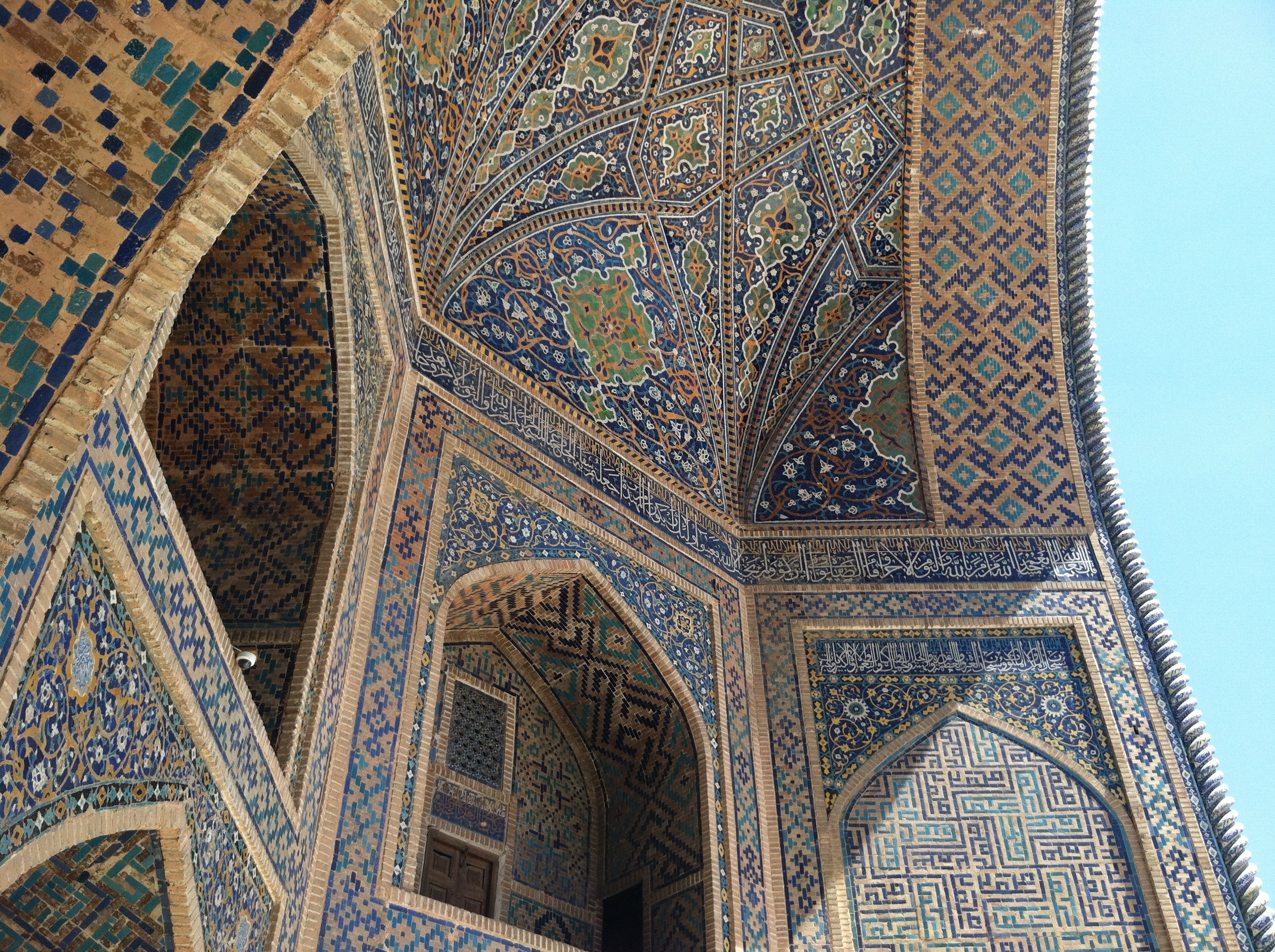
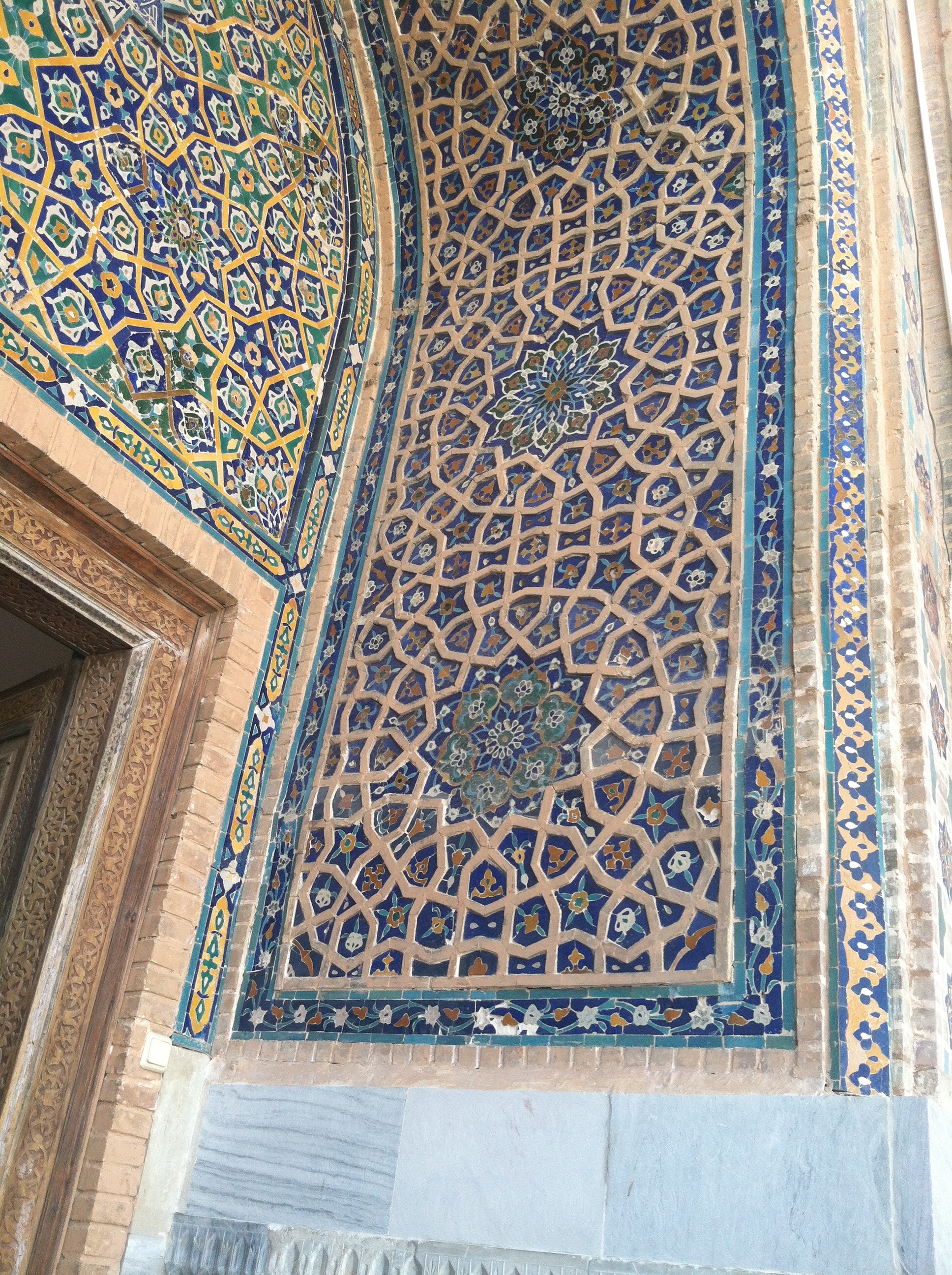
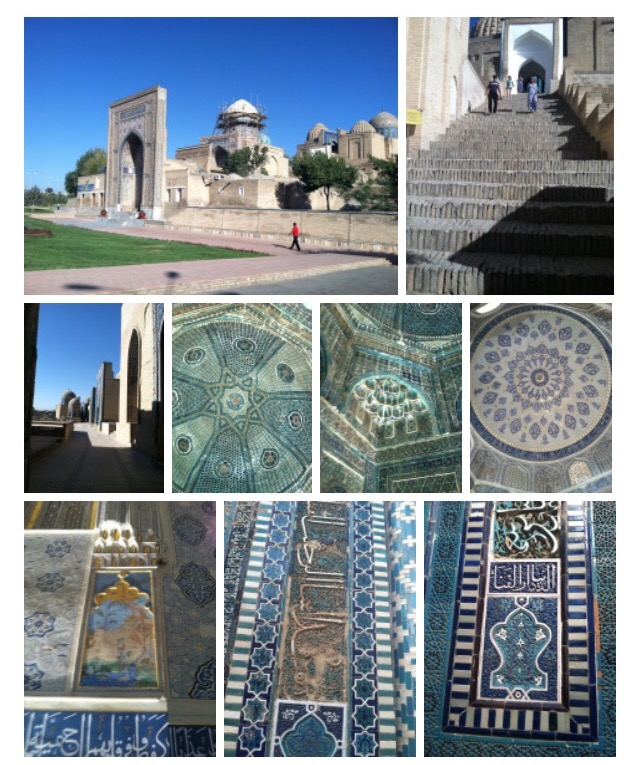
The steps leading to a series of mausoleum complex helped to increase the drama and anticipation of peeking into each prominent family’s tribute to one of their dearly departed. Separate buildings align either side of the stepped pathway. While much more harmonious and magnificent, these buildings reminded me of mini-monuments I remember seeing in a Catholic Philippine graveyard, where families could spend the day while displaying the family’s wealth and prominence.
Needless to say, the architecture and mosaic work were intricately designed and worth marveling over the skill and craftsmanship.
Afro-Sayib Museum
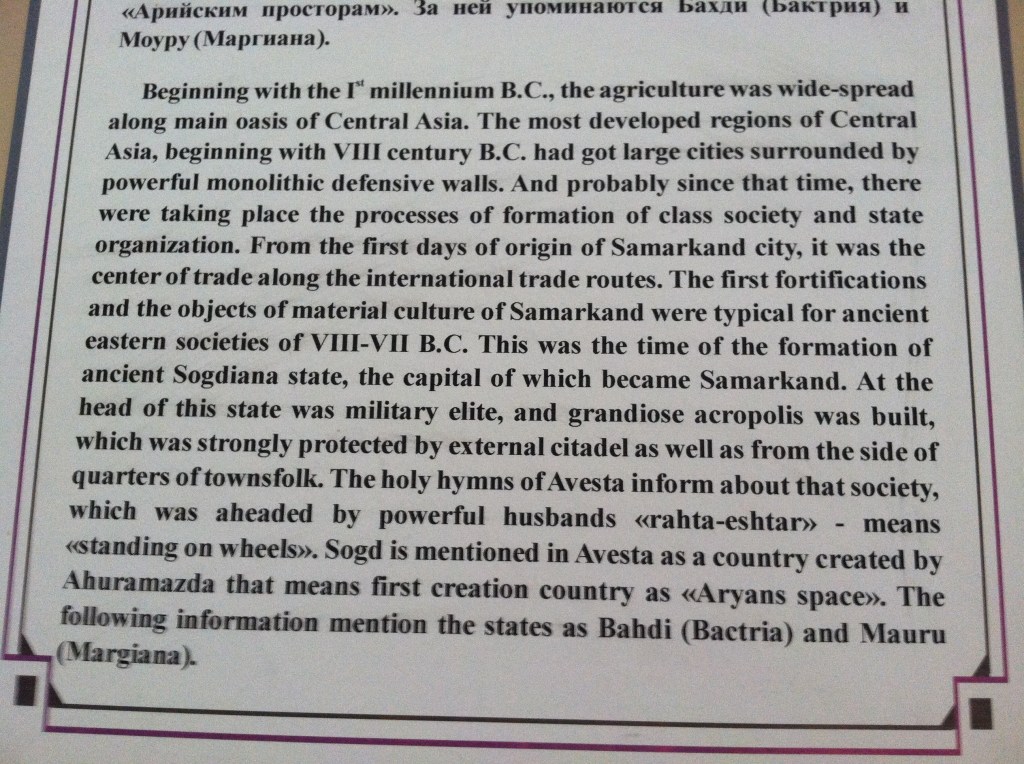
You can read about the Sogdians, the original inhabitants that helped to form the Silk Road as traders, and the history of Samarkand here:
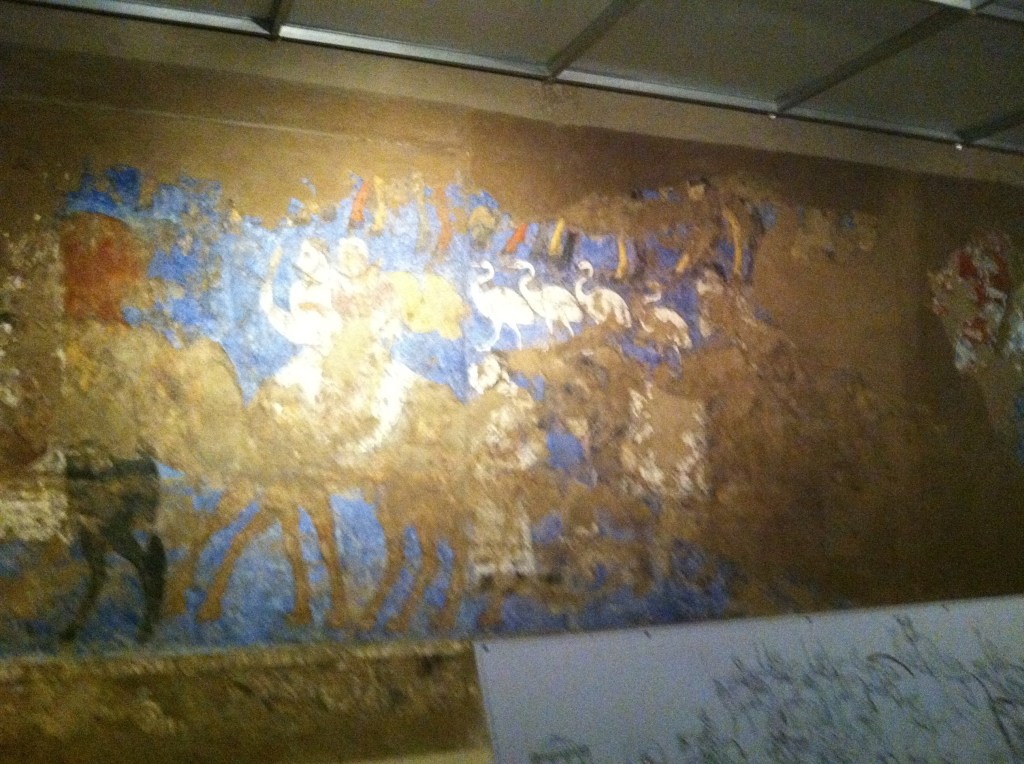
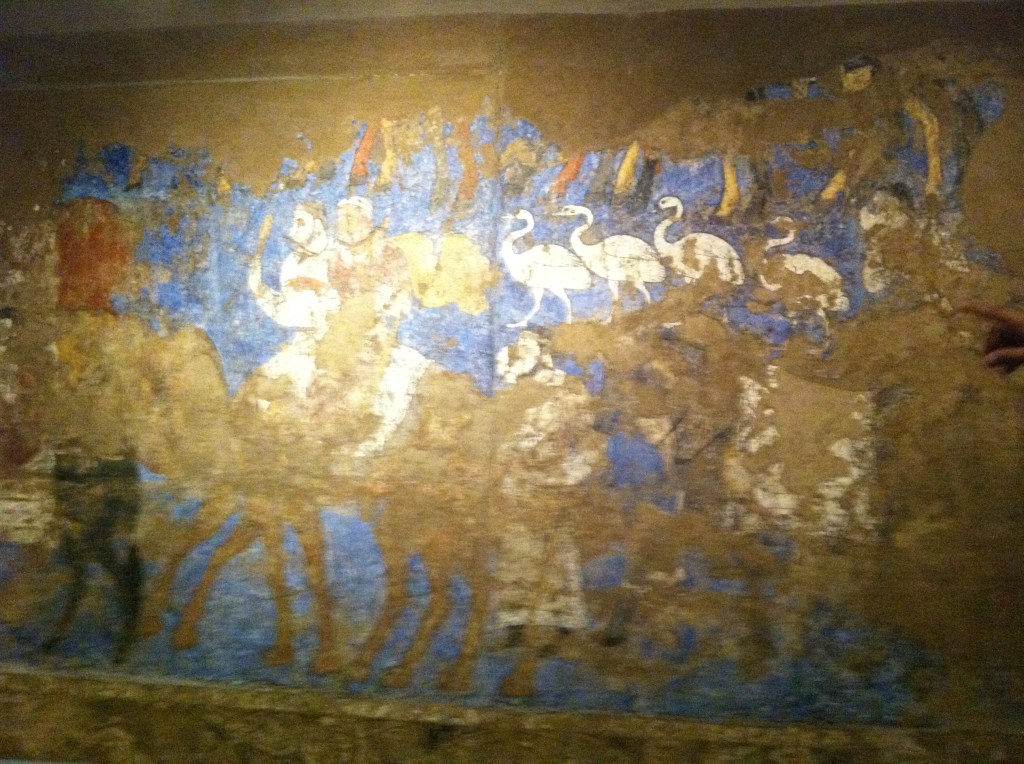
The museum was contained an original mural of the Silk Road traders who came from China through Sogdiana. This treasure is in the process of being further restored. It outlined the figures as a guide and was a moving display of travelers and traders plying the Silk Road.
Afro-Sayib Museum Murals
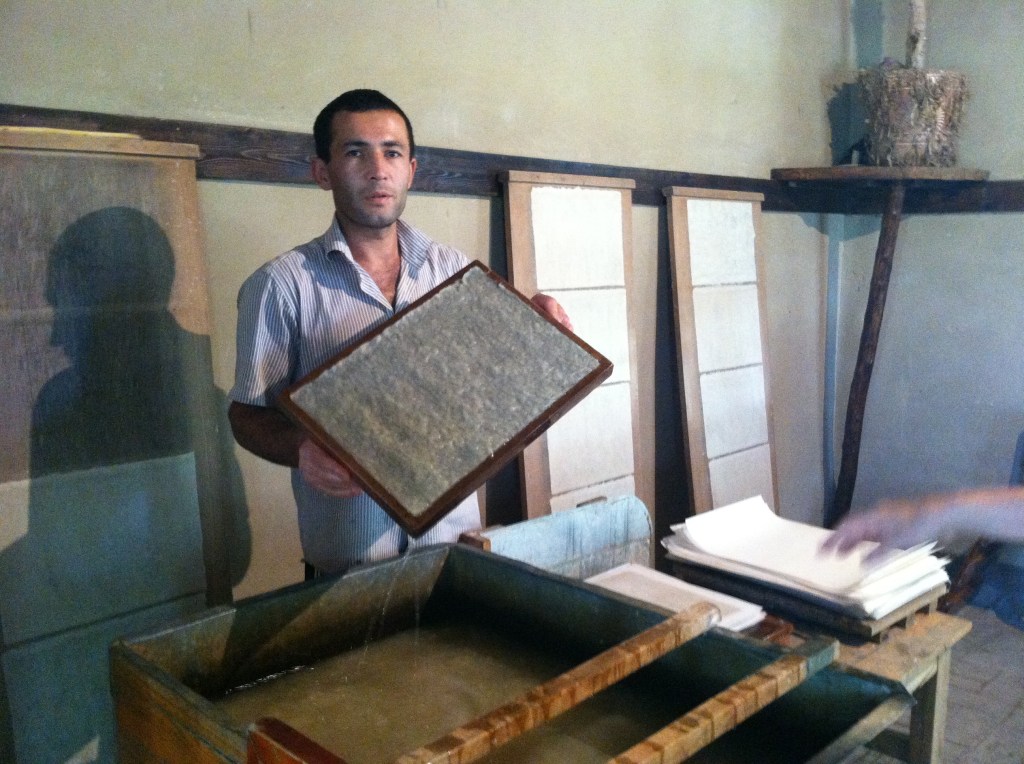
Paper-Making
Bokhara
So what am I thinking? It’s hard to squeeze it out when (traveling solo) you can keep your thoughts to yourself, private and without judgment. Since we are social animals, we have the need to share and communicate, so here are a few of my thoughts:
Looking back, I regret not taking the History of Architecture class on Islamic Architecture. There are so many things to learn–not just the types of buildings (madrasah, mosque, and mausoleums) and their functions, but many of the basic universal design principles come from this part of the world: presence and soothing effect of water, gardens for life, and patterns for texture and interest. On top of that, you get the confluence of all religions here–an encyclopedic understanding of Islamic, Judaic, Christian, and Buddhist principles, not to mention the sub-religions such as Sufi (remember the Whirling Dervishes), Zorastrian, Baha’i, Jehovah’s Witnesses, Sunni, Shi’ite, etc. need to be readily available for this type of travel.
The Sufis had a major center here and while they professed to not ever promote religion for material gain, they were highly intellectual and sought to purge themselves of all materialism. They strived to reach the point of connection with God analogous to becoming a drop of water sprayed into the ocean, as my guide informed me. At that point of annihilation, they become one with God. All the battles, campaigns and failed attempts are enough to remind you how interconnected the world has been. The winners and losers needed to visit the Dresden Military History Museum to be reminded that everyone loses in war. Keeping track of the huge expanse of time is disorienting, so I am concentrating on three periods to keep myself straight: Alexander the Great, around 300 AD; the Mongol Invasions that swept through and destroyed everything in its path around the 12-13th Centuries, and the Timur Reign around 1400. That is helping me to put events and building design in perspective. I am satisfying my curiosity, and if anything it has raised a huge list of further reading and to-do lists. If anyone is interested or knows something about any of the above, let’s talk! On money changing: no need to count your Soums( the local currency, called that for a reason); the locals will automatically calculate it for you in USD. If you don’t trust them do the math: (1 Soum=0.00043USD). I had to bring a briefcase in the local currency to pay for lunch today.
Dinner Bill
Weather is manageable, but need all of the following before stepping out of the hotel: A. Sunscreen 50 count, thanks to good German biotechnology. I hate the stuff as Gee Kin will attest on my behalf, but it’s needed for the scorching heat that hit over 100 deg. F. Midday). B. Shawl for mosque but also needed for Early and late evening Mistral-like breezes) C. Sunhat for low angle sun in early morning D. Sunglasses E. Umbrella for unshaded walks–despite my black umbrella not to be found elsewhere on the street, it was a lifesaver. Needed to contend with gusty winds. F. Lots of band aids for blisters, again compliments to the German supply system. G. Map Once I was prepared, fumbling around with all of this paraphernalia was the next challenge. Had to think hard to avoid a Bridget Jones moment. oh, and of course I had to take pictures on top of it all! The people of Bokhara are known to be warm and friendly. Best of all, everyone has black hair! No bleached hair in sight. Girls like wearing their hair long, straight, and shiny or tied up in buns. The young women look very svelt and have beautiful dark eyes. Seeing swarms of students in uniform at their first day of school on Tuesday after the National Holiday reminded me what Russians brought to this country: education for all.
As for languages, if you speak a second language, it’s probably Russki. English was for the Colonials, remember? Food service: when ordering a pizza, step back. They will roll it out, let the yeast rise, and fire up the oven. It’s fresh, you just gotta wait.
Samanids Mausoleum
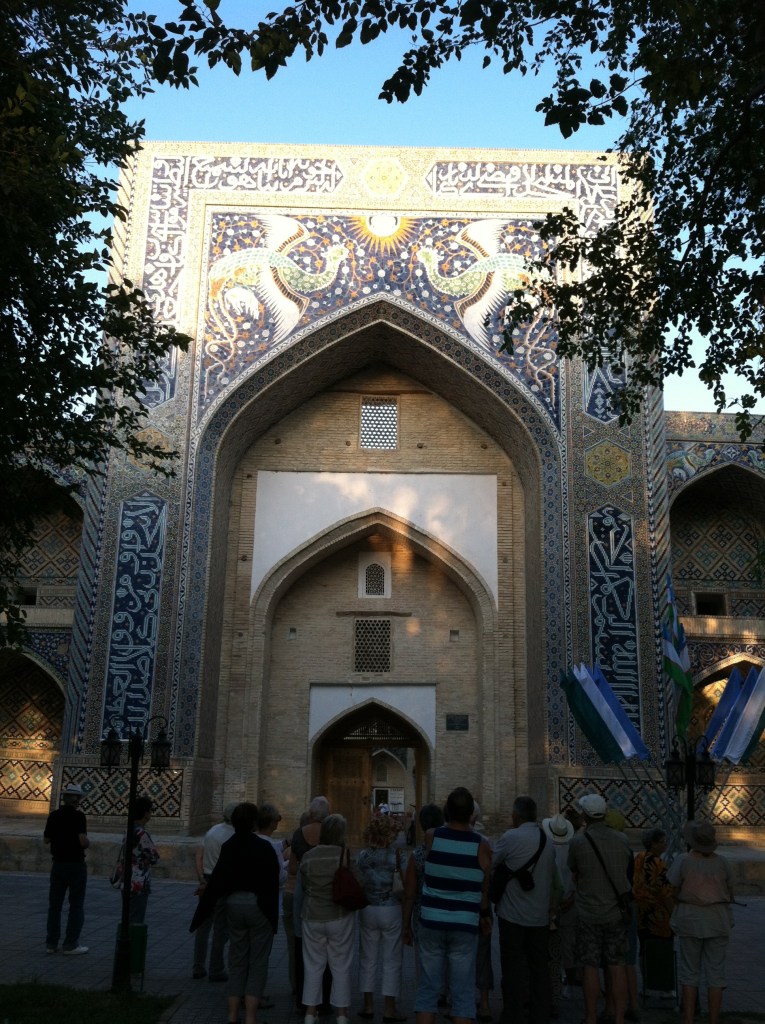
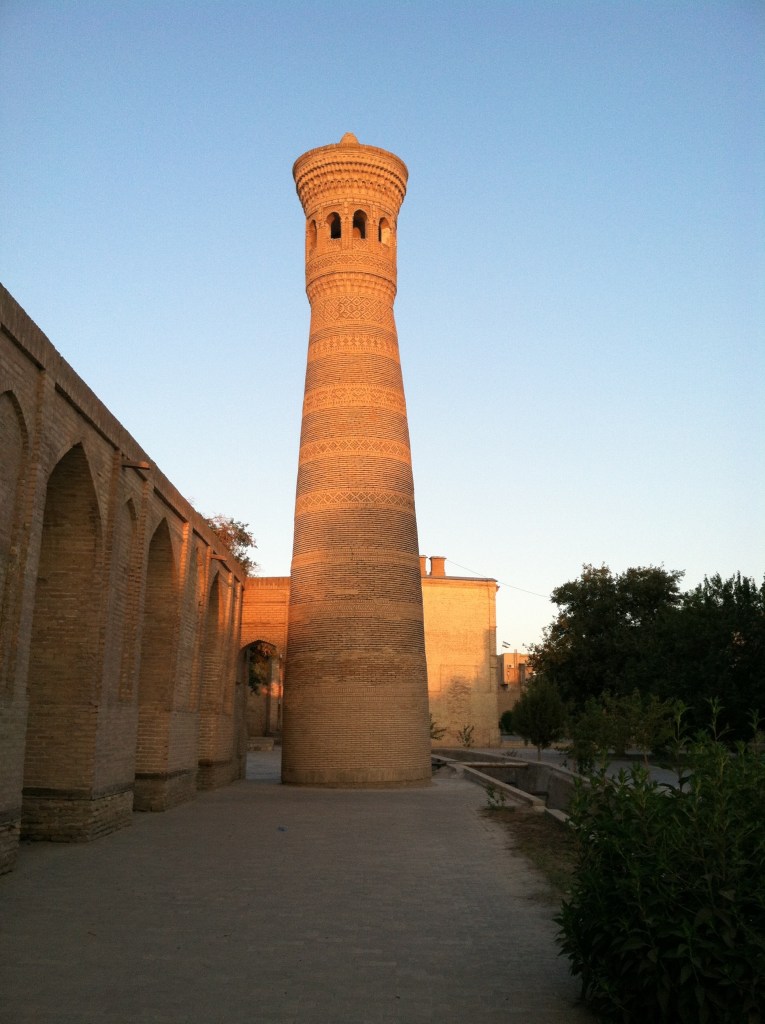
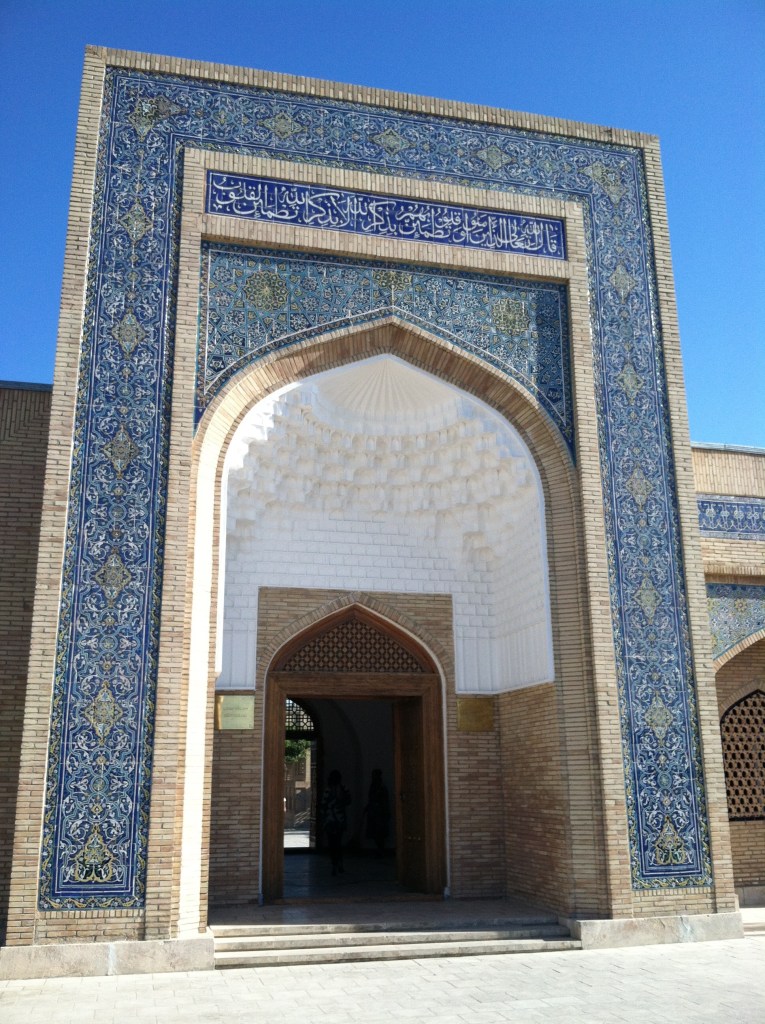
This tiny gem of a building was built at the end of the Ninth Century as a crypt to the Samani family. Islam did not allow later monuments to be built over Muslim tombs, but the caliph at the time made a special exception to the rule so others followed suit. Fired brickwork was just introduced to the building industry so the designer went wild experimenting with different methods of shape and form.
Kiva
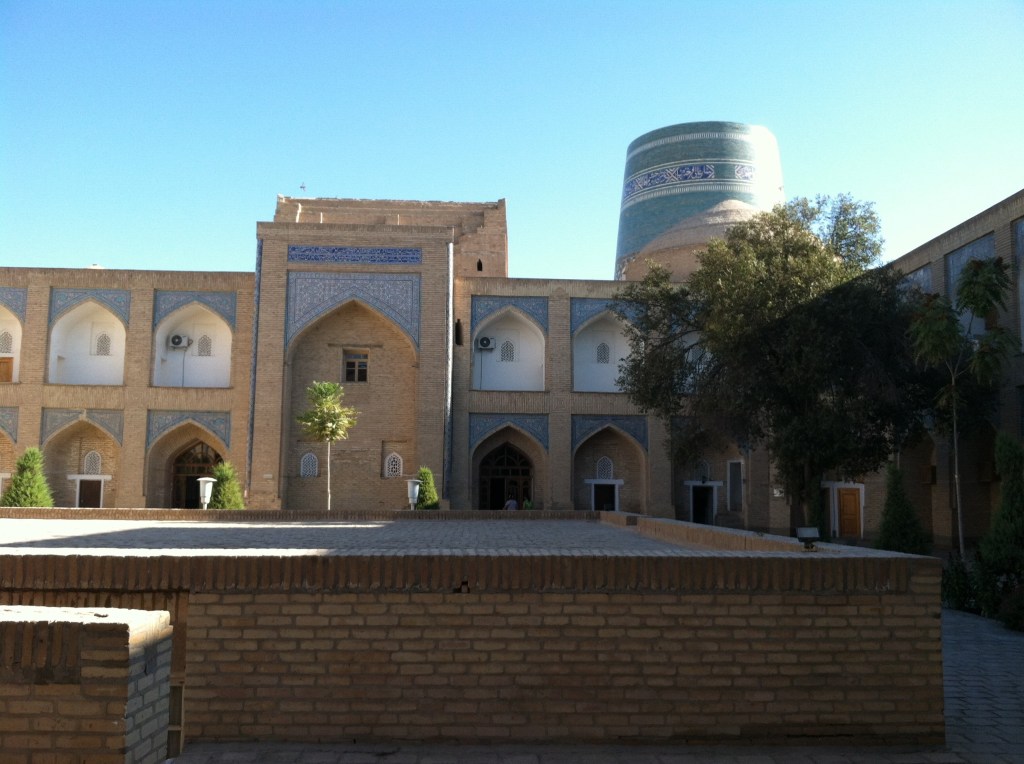
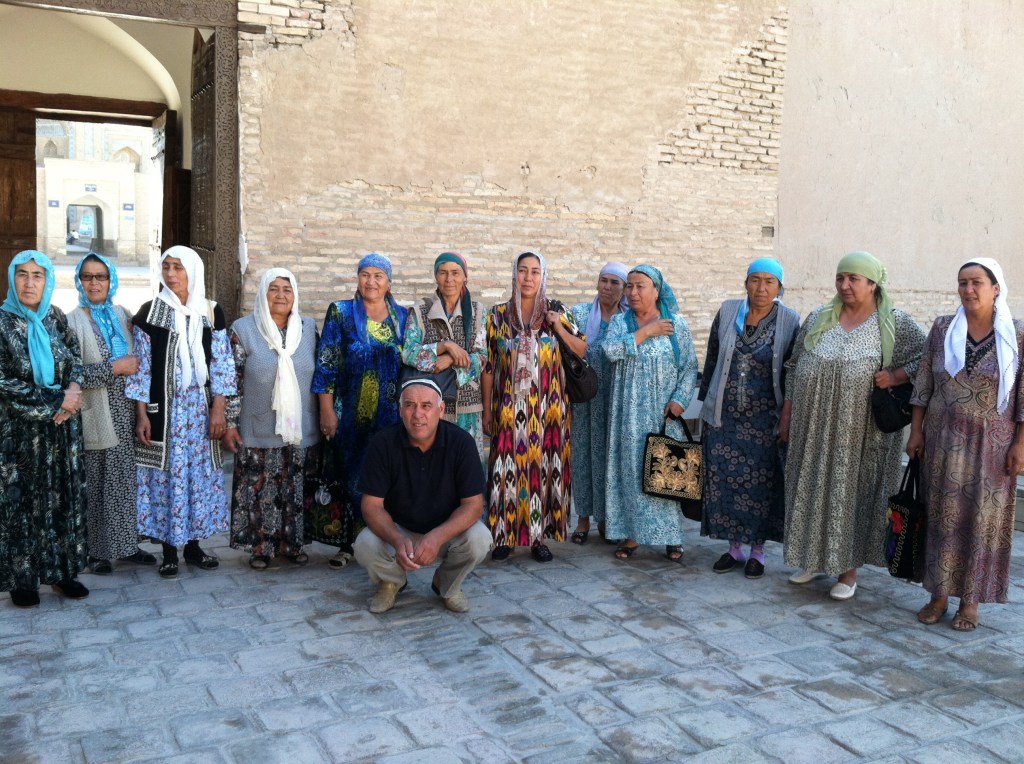
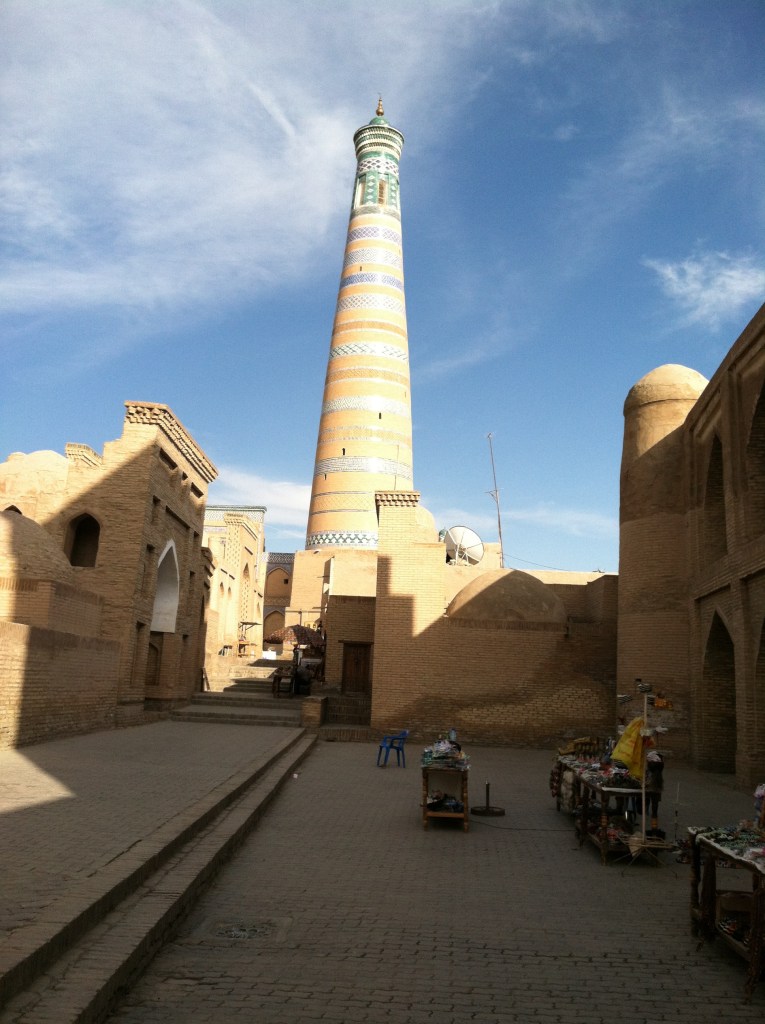
Kiva is an ancient fortress city surrounded by walls that is now part of the open air State Historical Archaeological museum. About 300 families live there to promote local crafts. One of the more intriguing experiences was a group of tourists from the Ferghana Valley near the narrow passage between Uzbekistan an Tajikistan. They still wore their traditional dress and are a Persian tribe distinct from local residents in Uzbekistan.
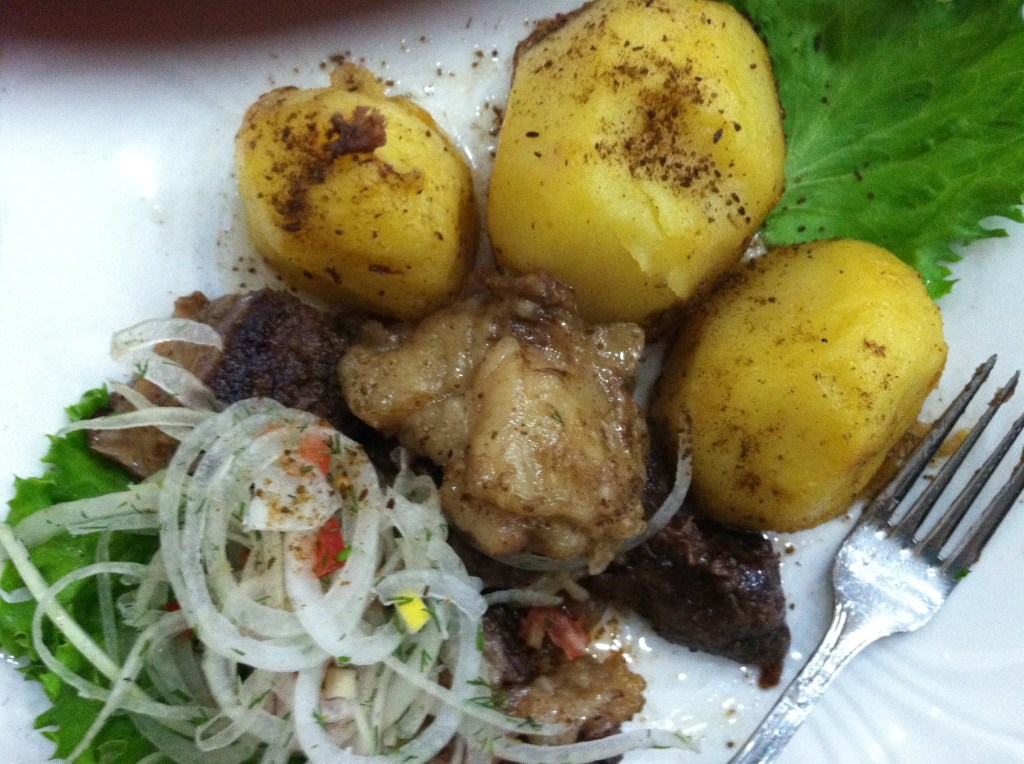
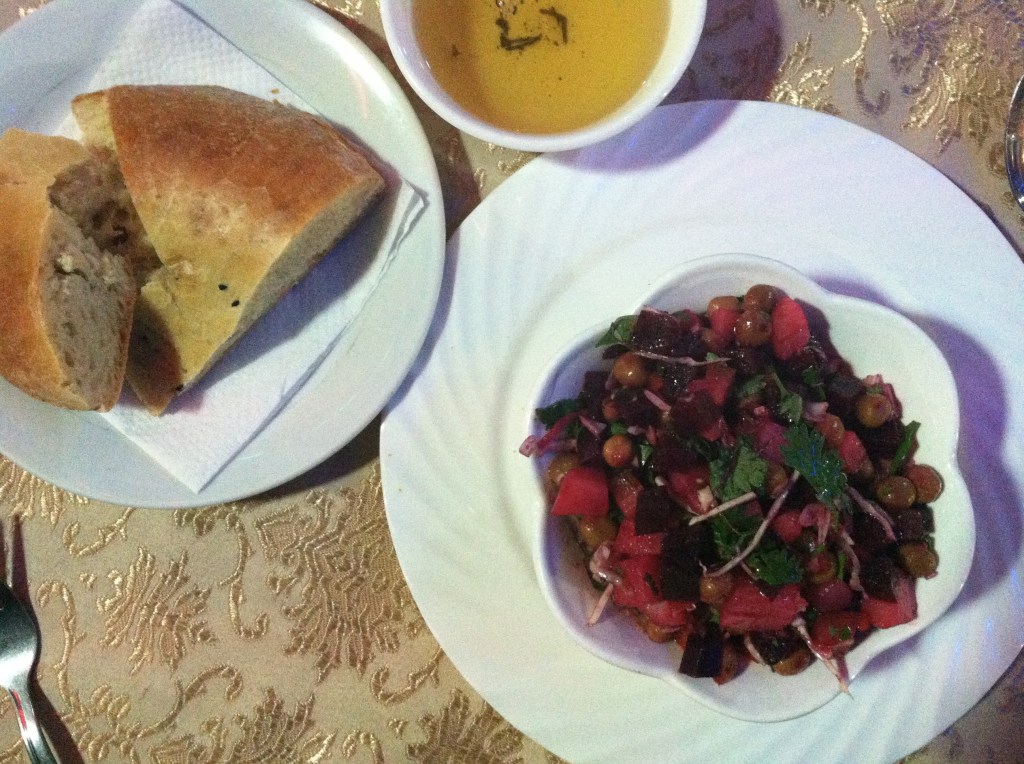
Uzbeki Food
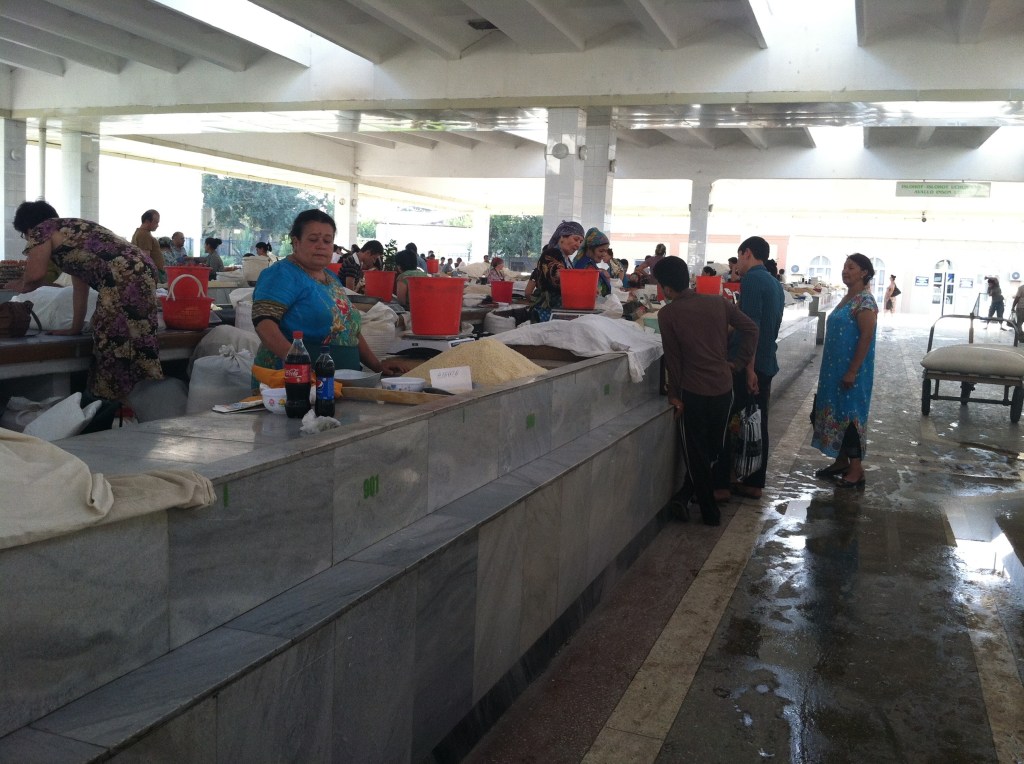
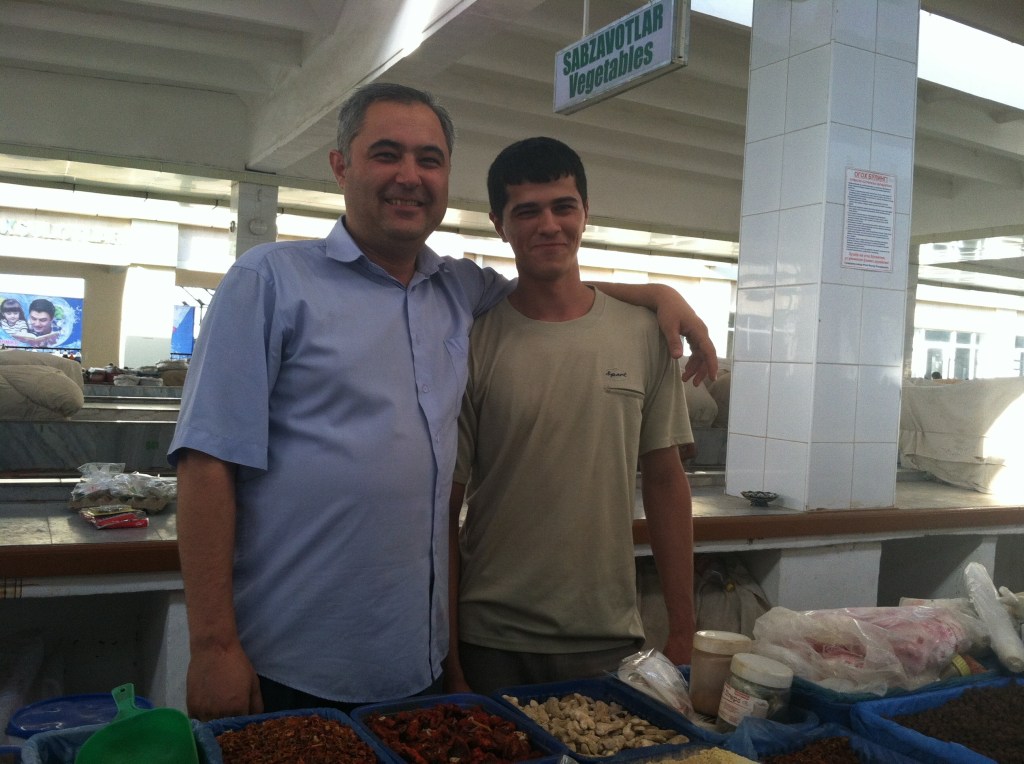
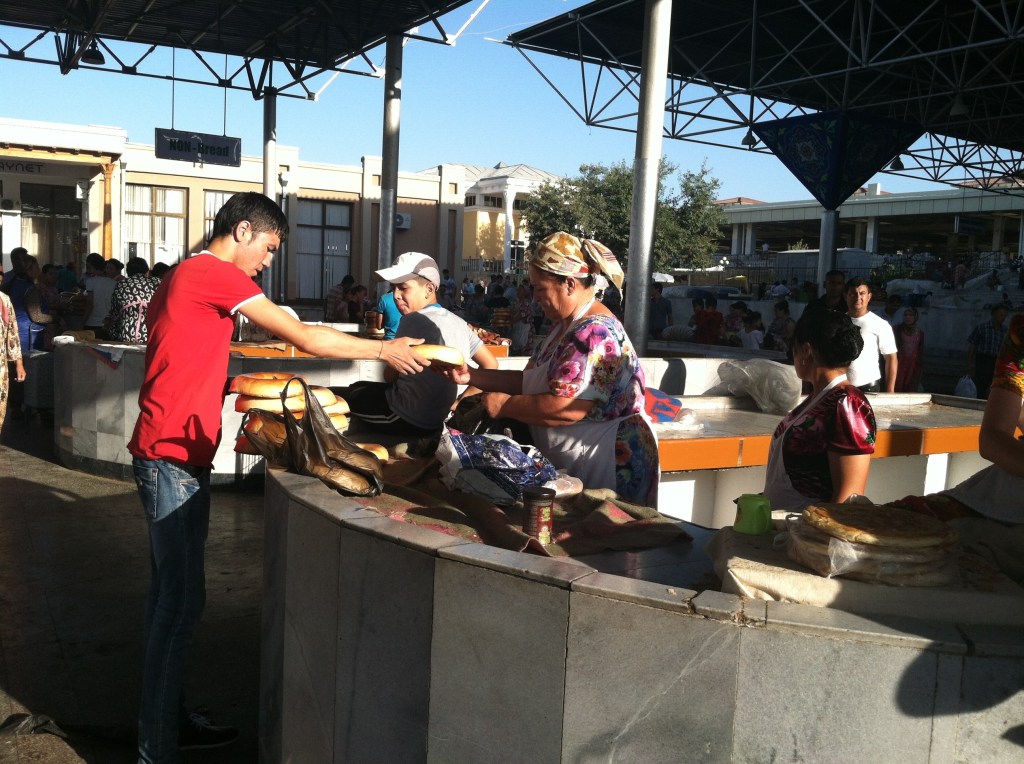
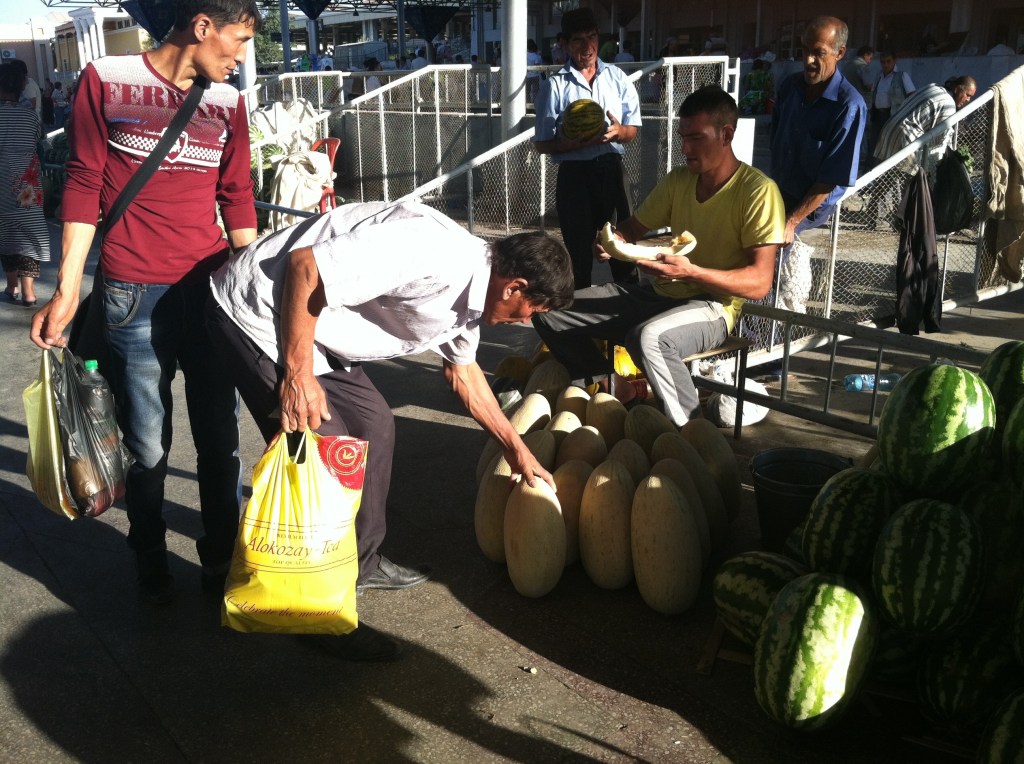
Very refreshingly simple but tasty would be my description of Uzbeki food. As the bread basket of Europe, Uzbekistan grows fruits and vegetables in a Mediterranean climate similar to California’s Central Valley. The Tashkent Market was one of the largest in the world.
Market aisle
Vendors
Can you believe the size of these figs!?!
More vendors outside market
Uzbeki customers
Chopped Veggies and Soup starters
Wedding Banquet
Beefy potatos
Delicate Beets, carrots, and Potato Salad
Lavash on the side
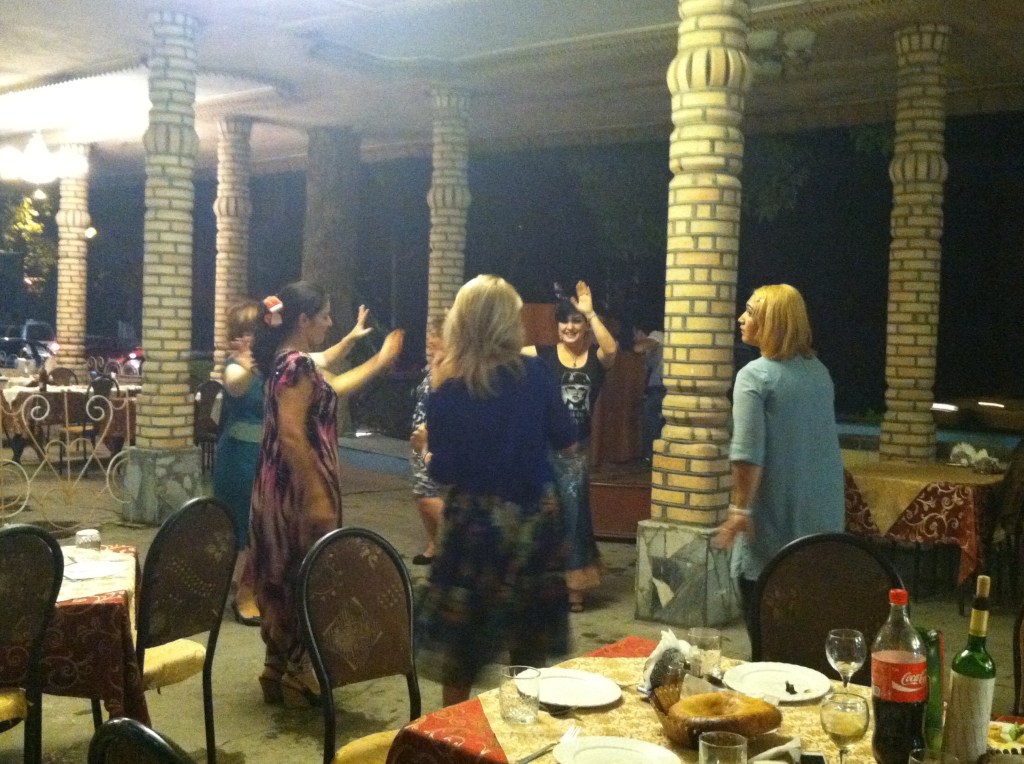
Private Dance Party in Samarkand
After my travels to Uzbekistan, I discovered an Uzbeki restaurant perched on the outskirts of New York City. I couldn’t resist going and even enticed world traveler and NYC resident David Craig to follow our find in Brooklyn. It is probably the only Uzbeki restaurant in the U.S. He and his family agreed it was unique and delicious! You can find his guest review of the restaurant here:
Rail travel is really ramping up, with deluxe and tourist level accommodations along the route of the Silk Road
There were far more sights visited, but too numerous to include in this post. If you are interested in exploring this wonderful country, please by all means get in touch with me for details.
This post is revised and culled from Uzbekistan travels in 2014.
We’ll be moving onto the highight of the Silk Road, Iran next.
POP-UP ZOOM MEETING!! If you are interested in joining a Zoom Party to share a conversation on Beijing with me and a former Beijing resident on Sunday, July 12, at 10:00am (PST), cut and paste the link here:
Depending on when you were traveling from Ulan Baator, Mongolia to join the Silk Road in Northwest China, you would probably travel via Beijing. We assume that you would take the train connection from the Trans-Siberian Express through Lake Baikal and Irkutsk, Russia, to the border at Ulan Ude, and then on to Beijing, unless, of course, you are flying.
From there, you would take a high speed rail train to the Northwest gateway to the Silk Road. If you were a Chinese citizen, you would probably opt to fly. Locals can fly internally at deep discounts over the next six months, and some travel agents even offer packages with unlimited travel! With many, many beautiful and breath-taking scenic spots in China, it all sounds very tempting. Unless, of course, you are unqualified to be in China and have a few other hesitations.
So here are the Beijing posts from previous trips in 2016 and 2017, again in reverse order, to simulate travels on the Silk Road. Technically, Beijing, like Mongolia, is not on the official route. The map shows the important connection that probably led Marco Polo to travel from Kharkourum, the capital of Genghis Khan, to grandson Kublai and his new digs in Beijing.
Regardless, it is a key starting point for any travel in China, so we will take the map for its worth and include Beijing as a starting point.
Some of you may not find food in Beijing as appetizing these days after the COVID-19 pandemic started in a food market in Wuhan, but it would be odd to NOT focus on food when in China. This city visit was pretty much a pit stop, so we didn’t organize any official tourist spots.
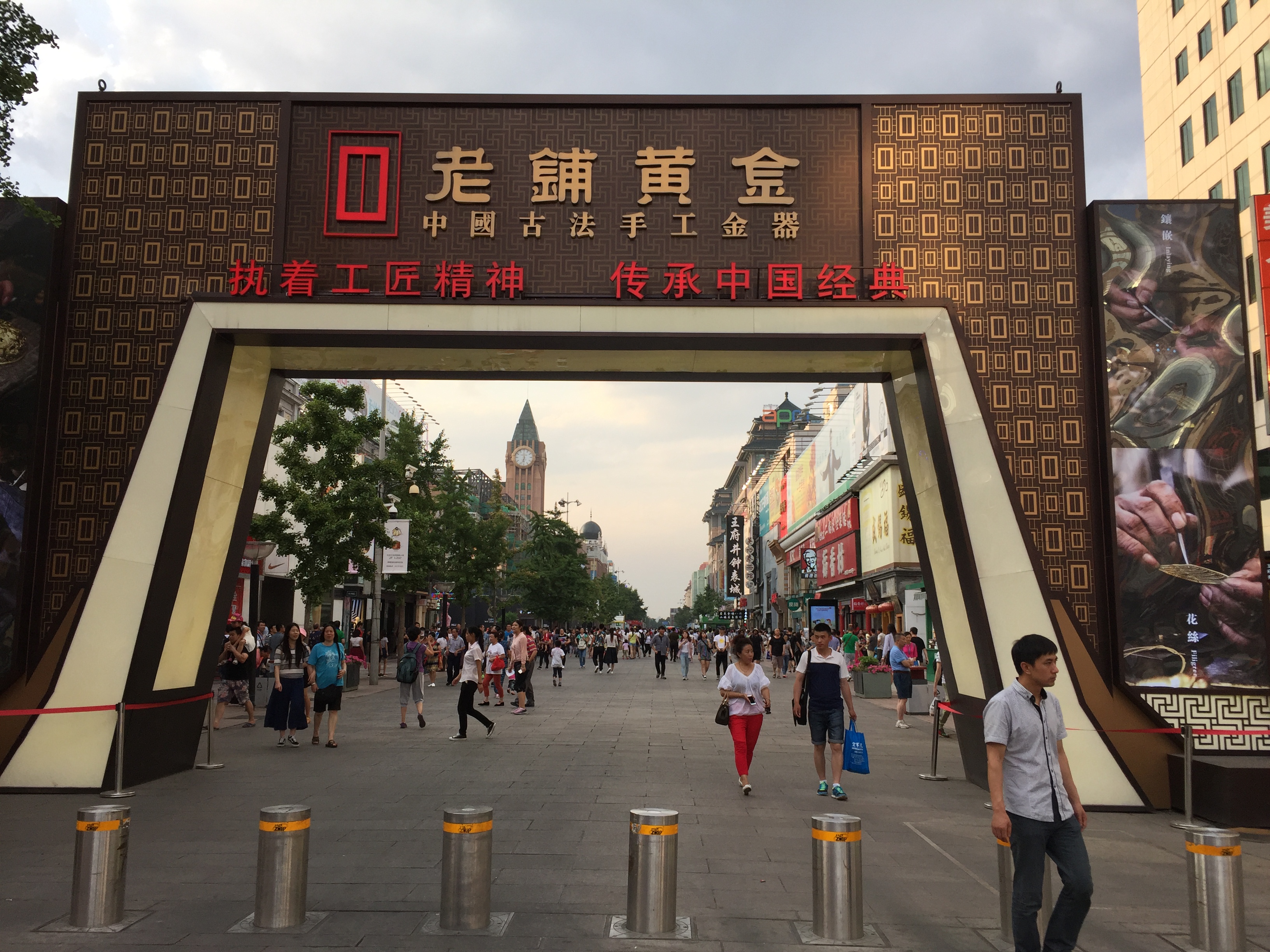
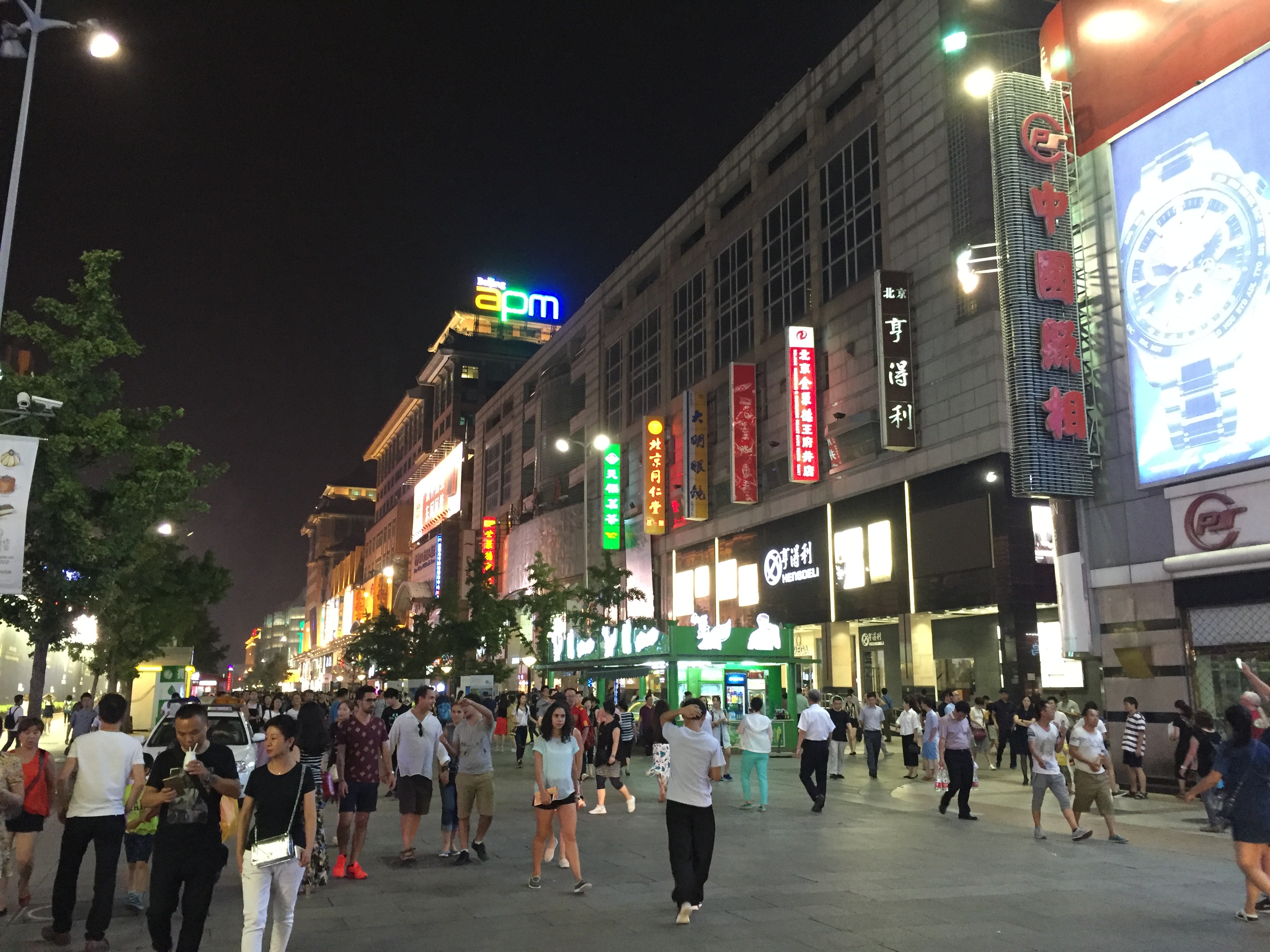
Pedestrian Street
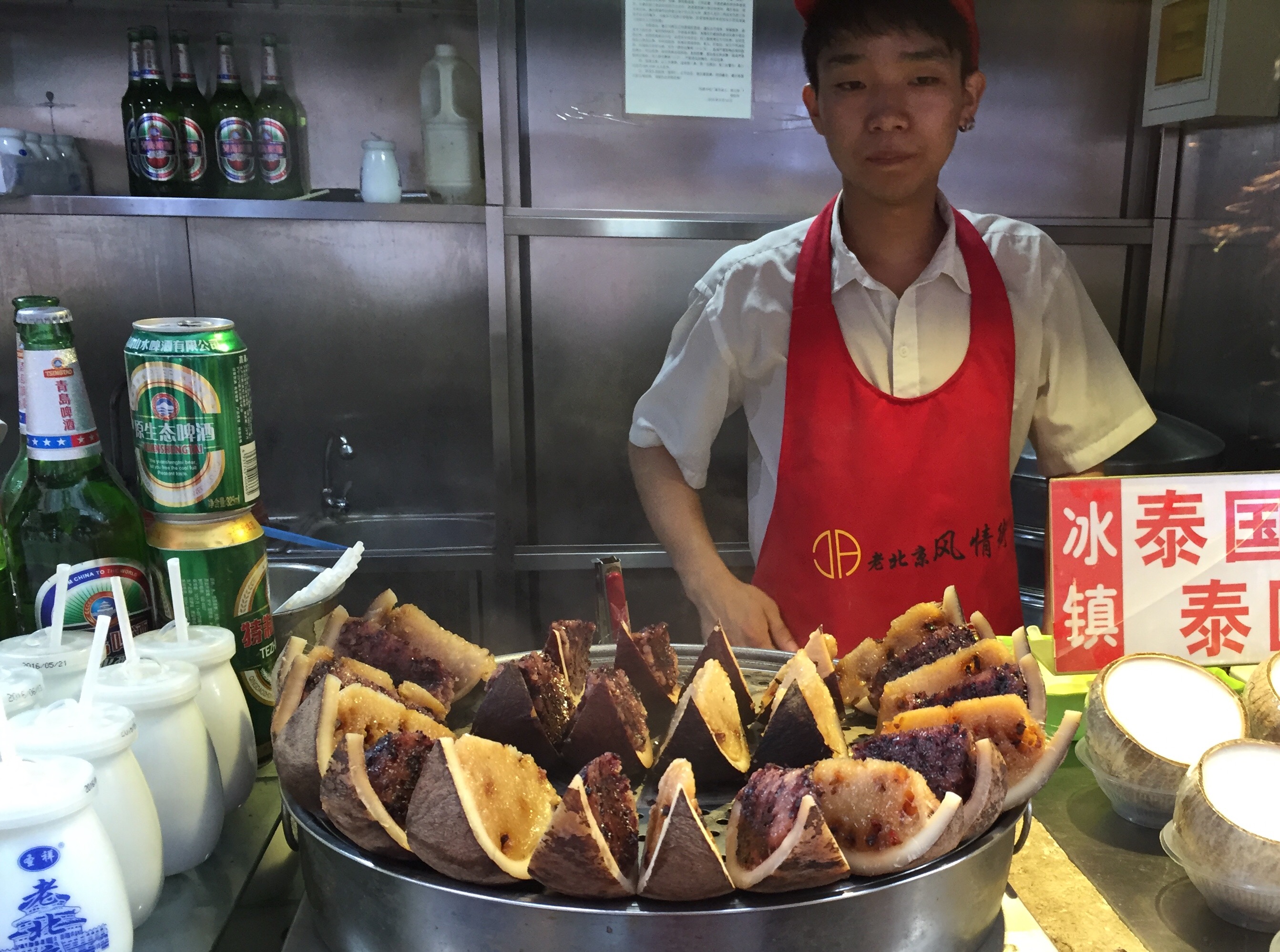
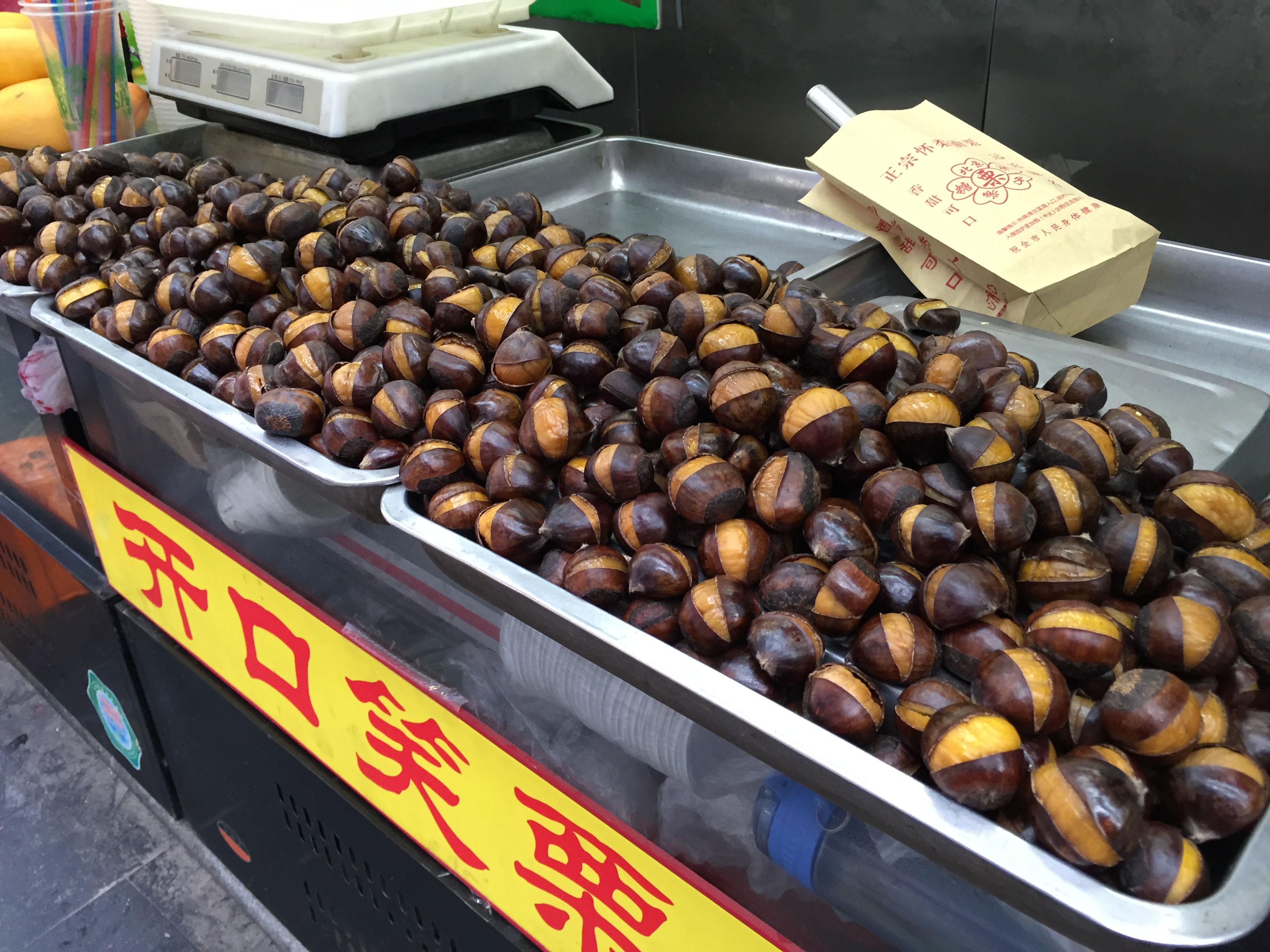
I went out looking for water and accidentally found this pedestrianized area around the corner from the hotel where we stayed. It’s in Wangfujing and just next to the Imperial Palace in Central Beijing. (You can click on photo for captions).
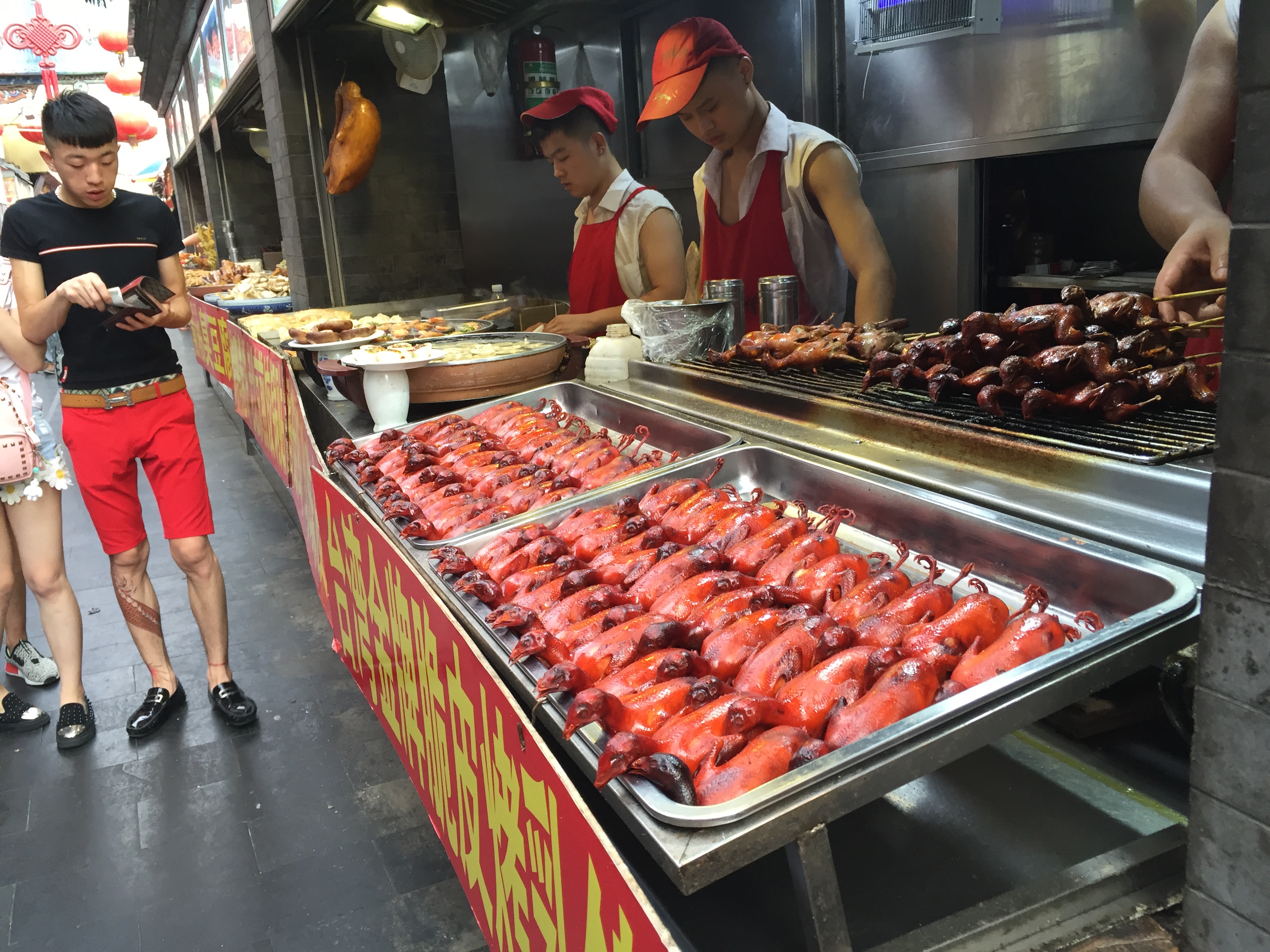
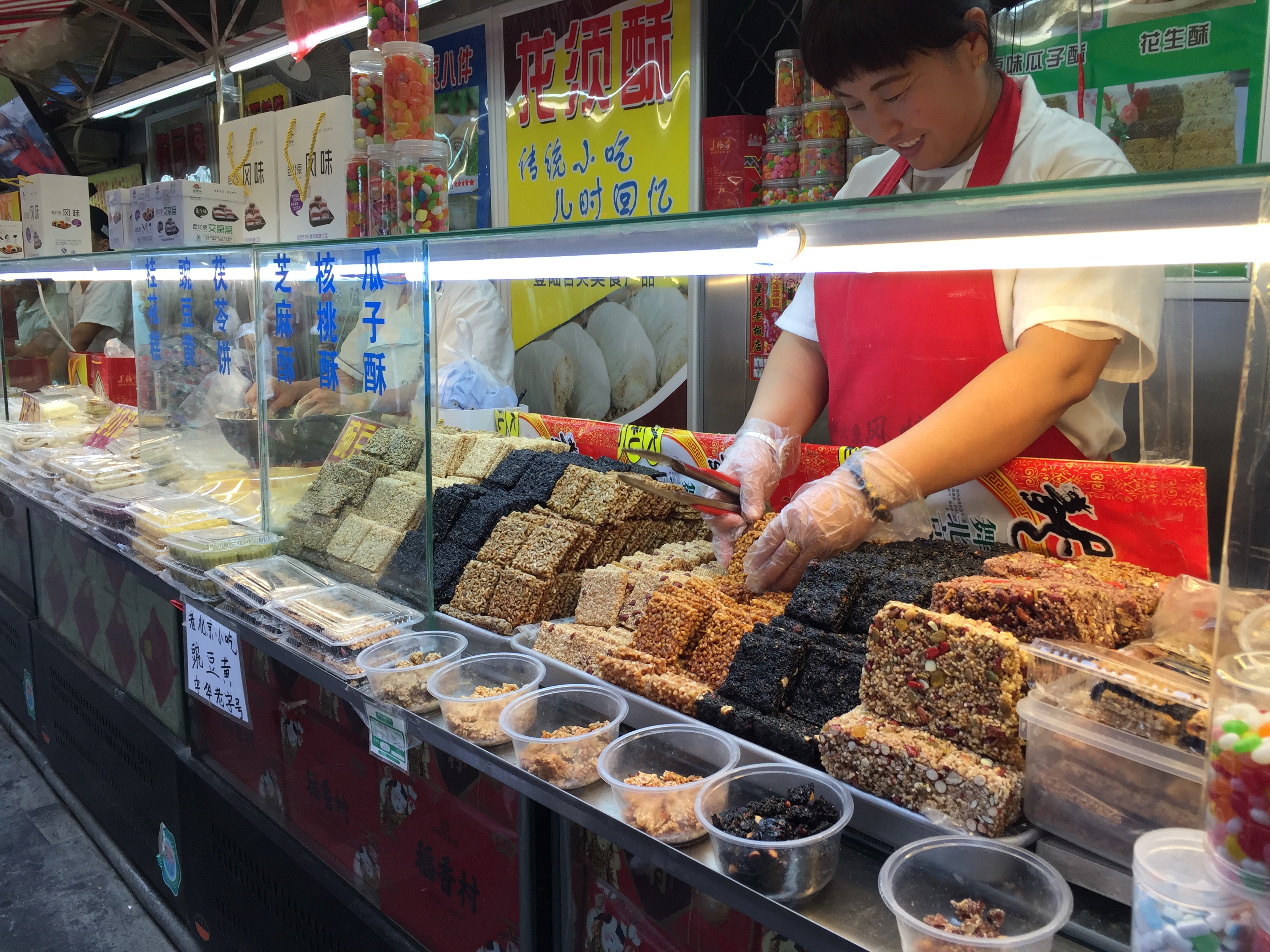
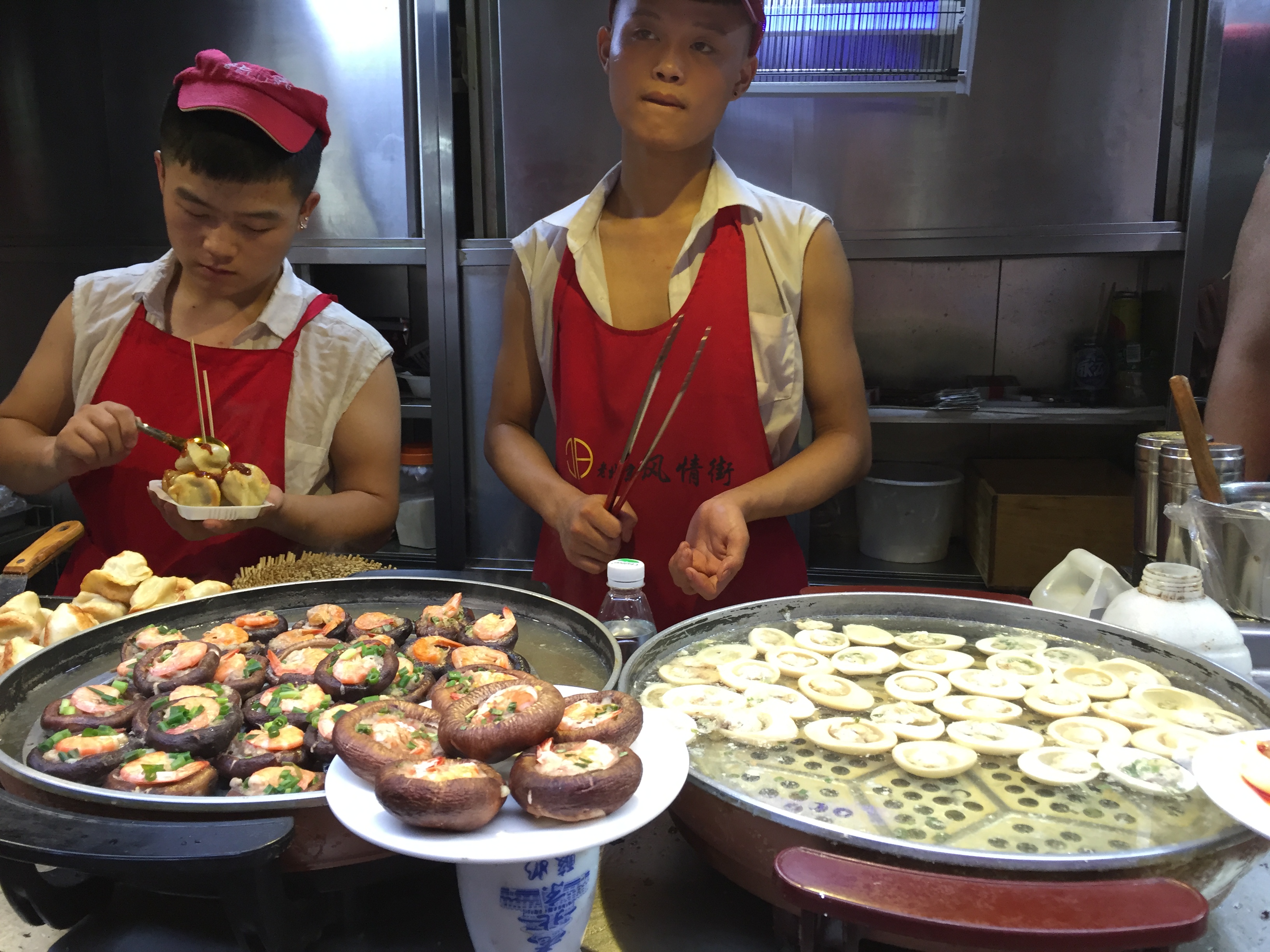
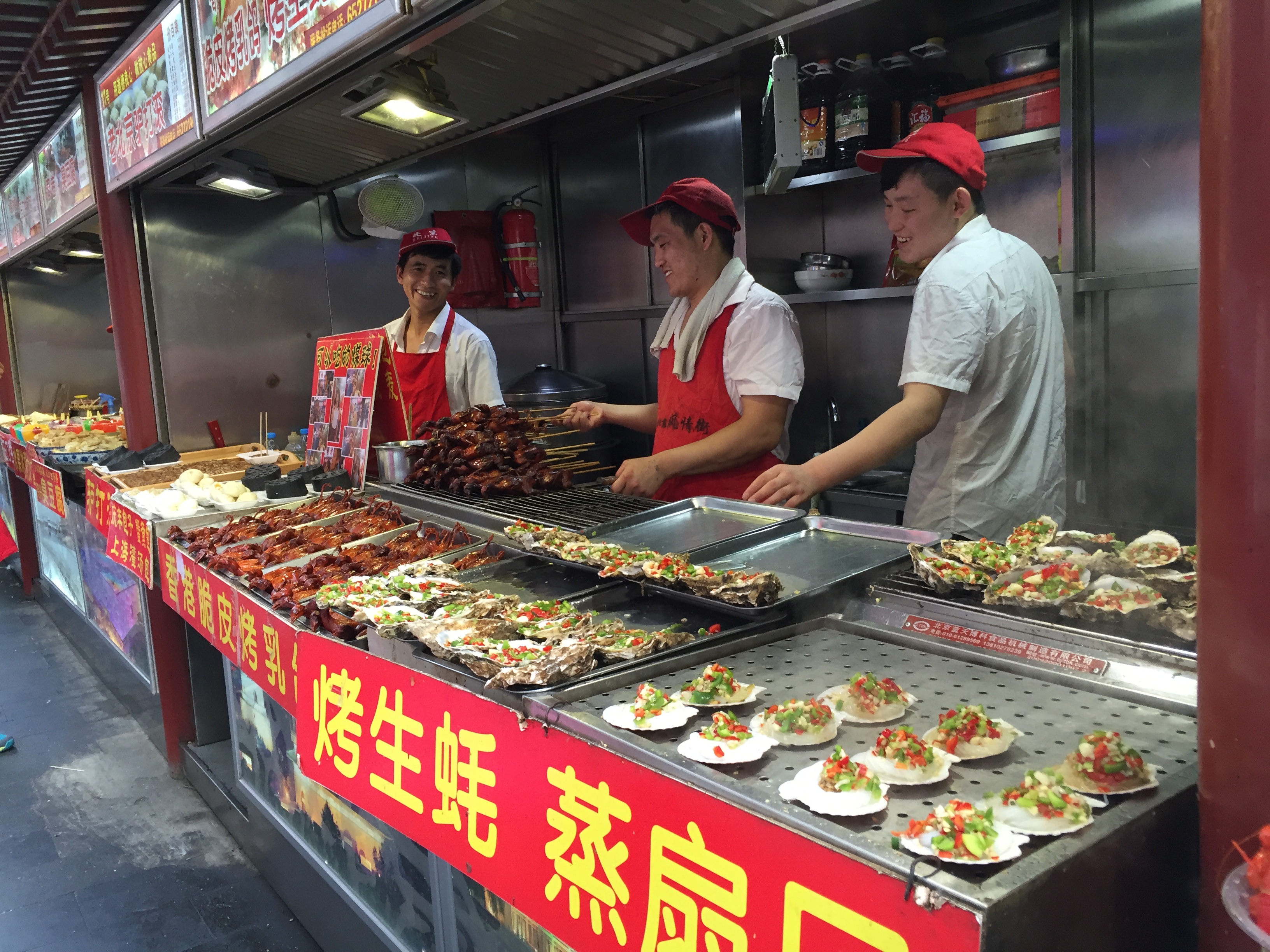
Above, see the variety of food from street vendors.
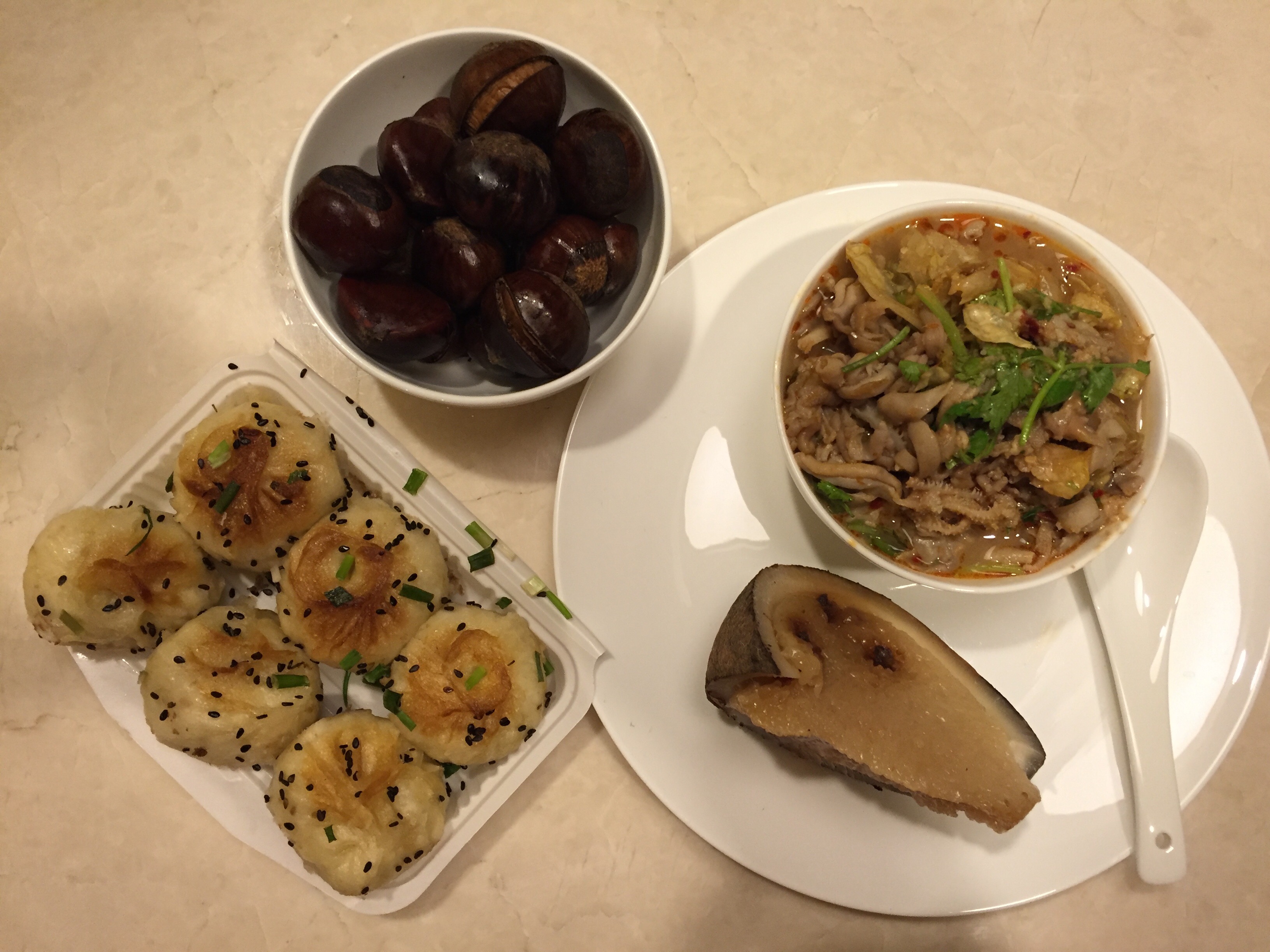
Below, the vendors sell their specialties, and we picked up food for dining at the hotel apartment (chestnuts, sticky rice in Coconut, Tripe, and refried mini-pork buns).
Imperial Palace
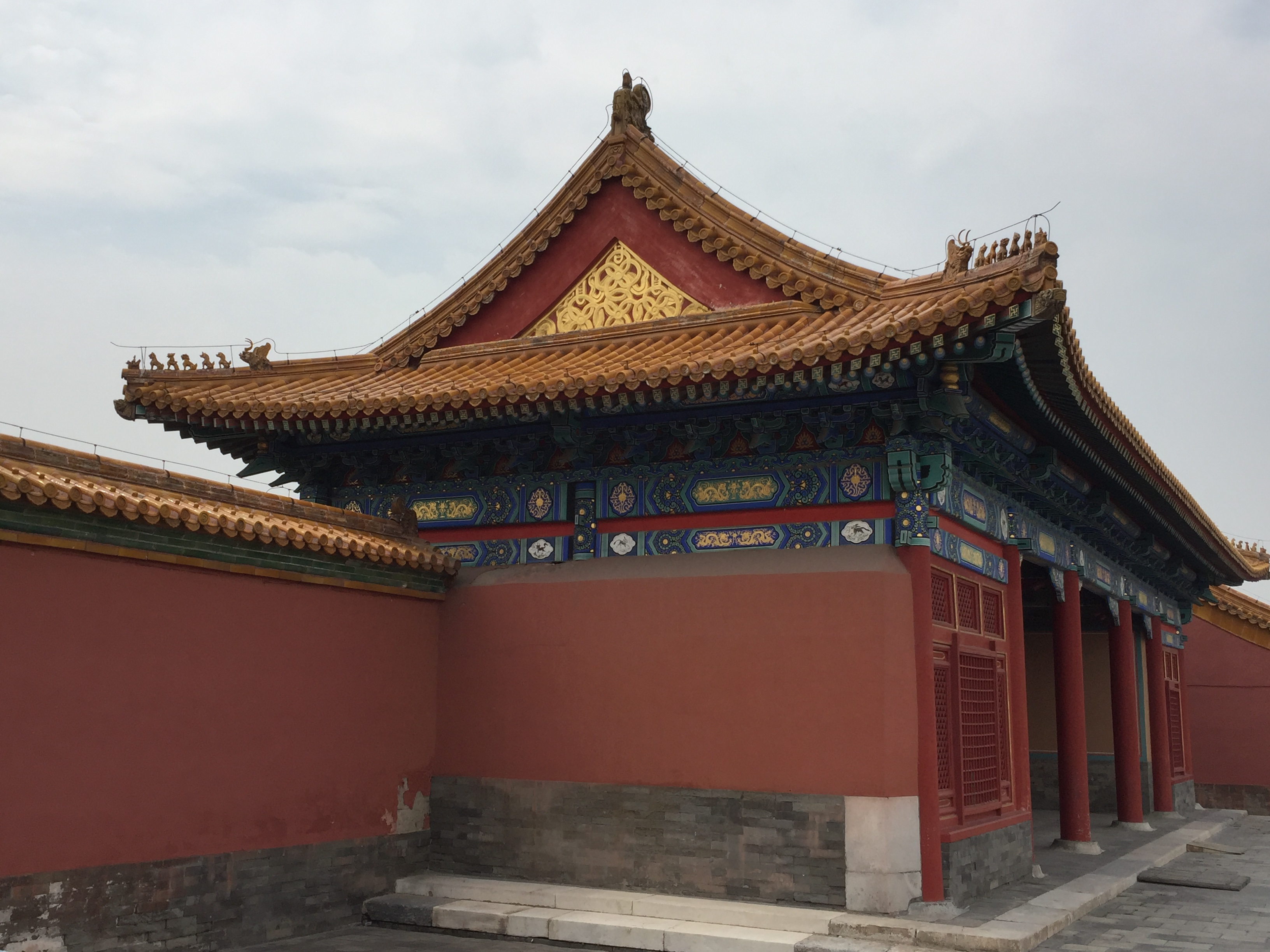
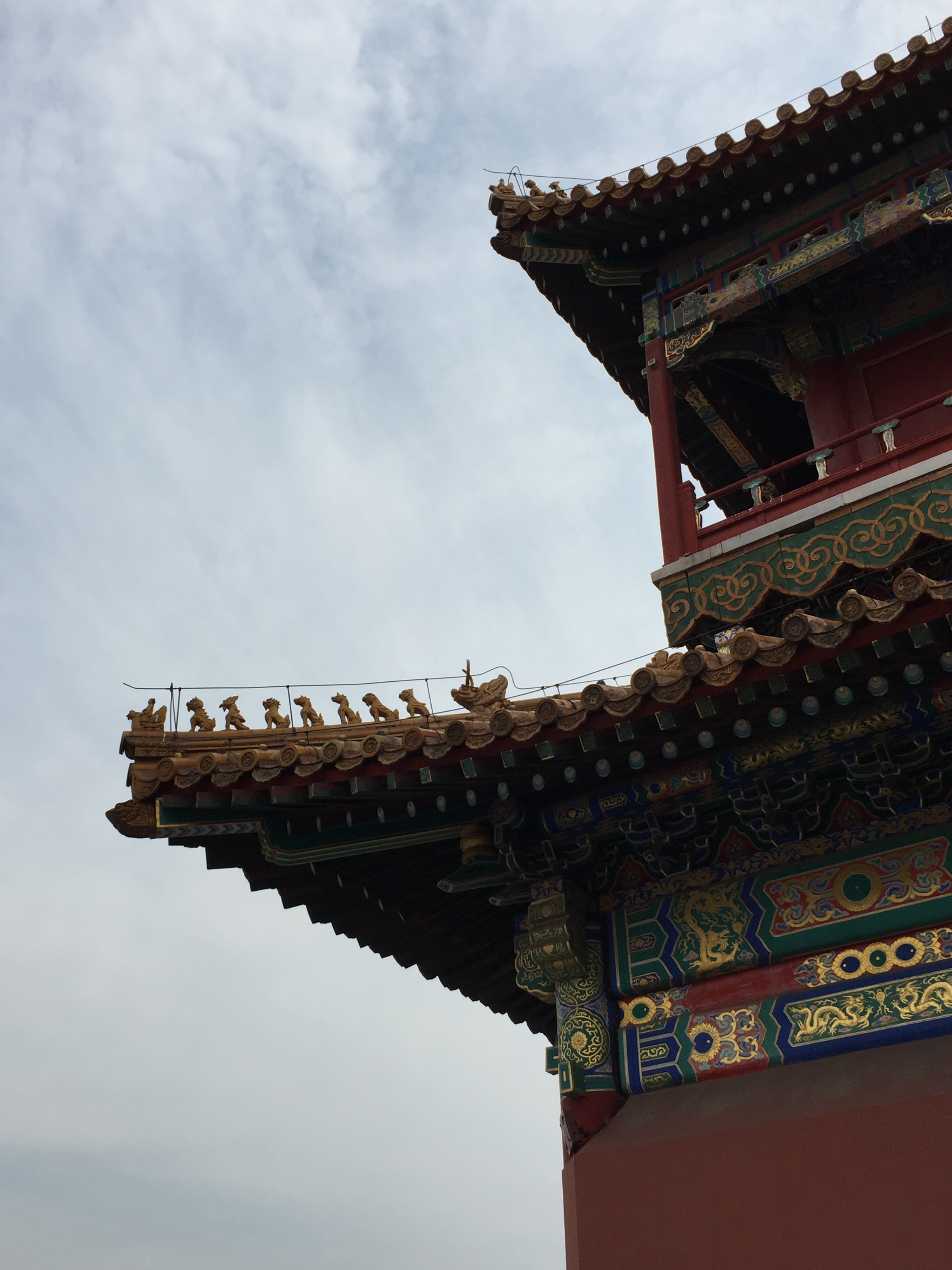
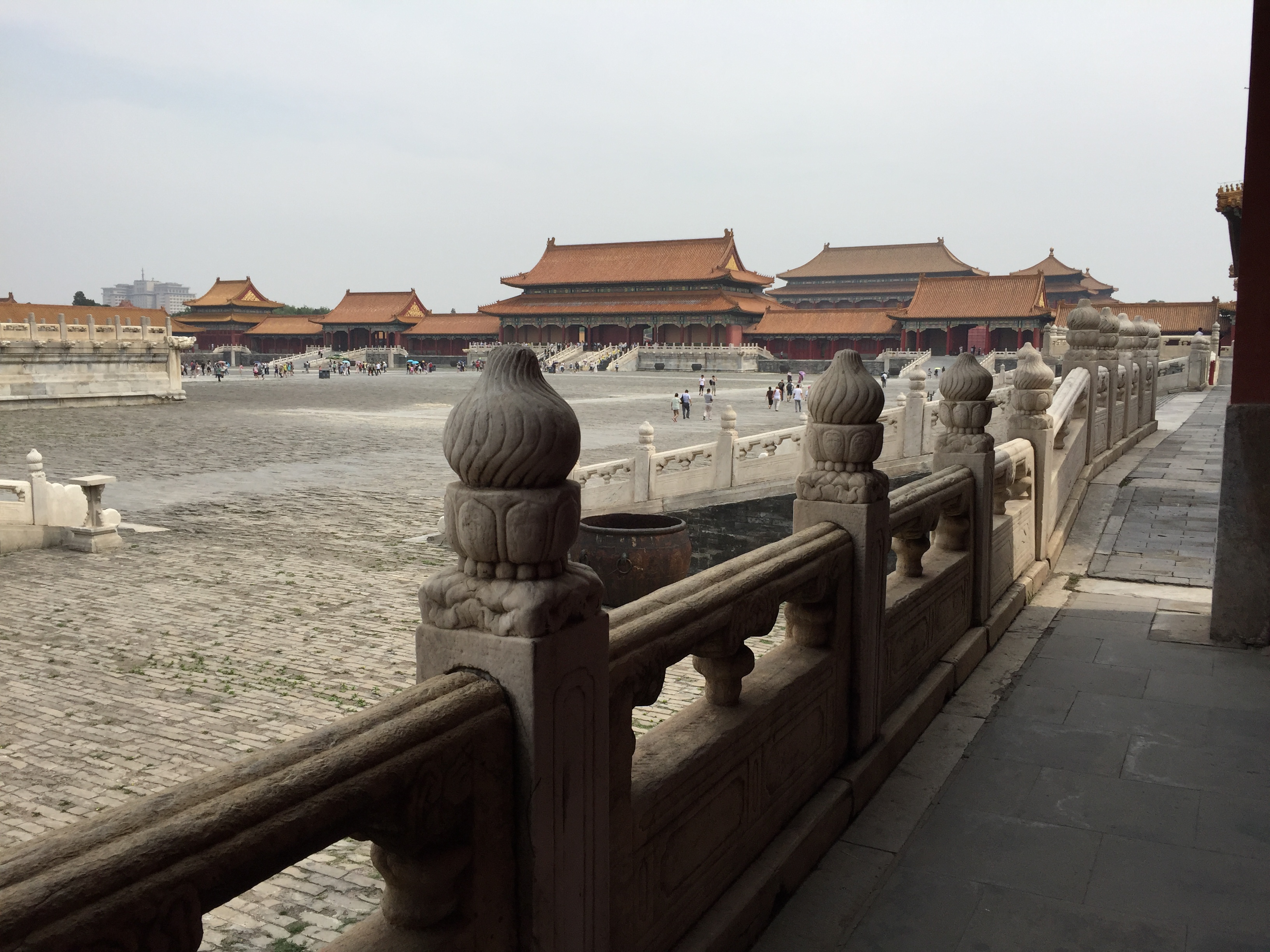
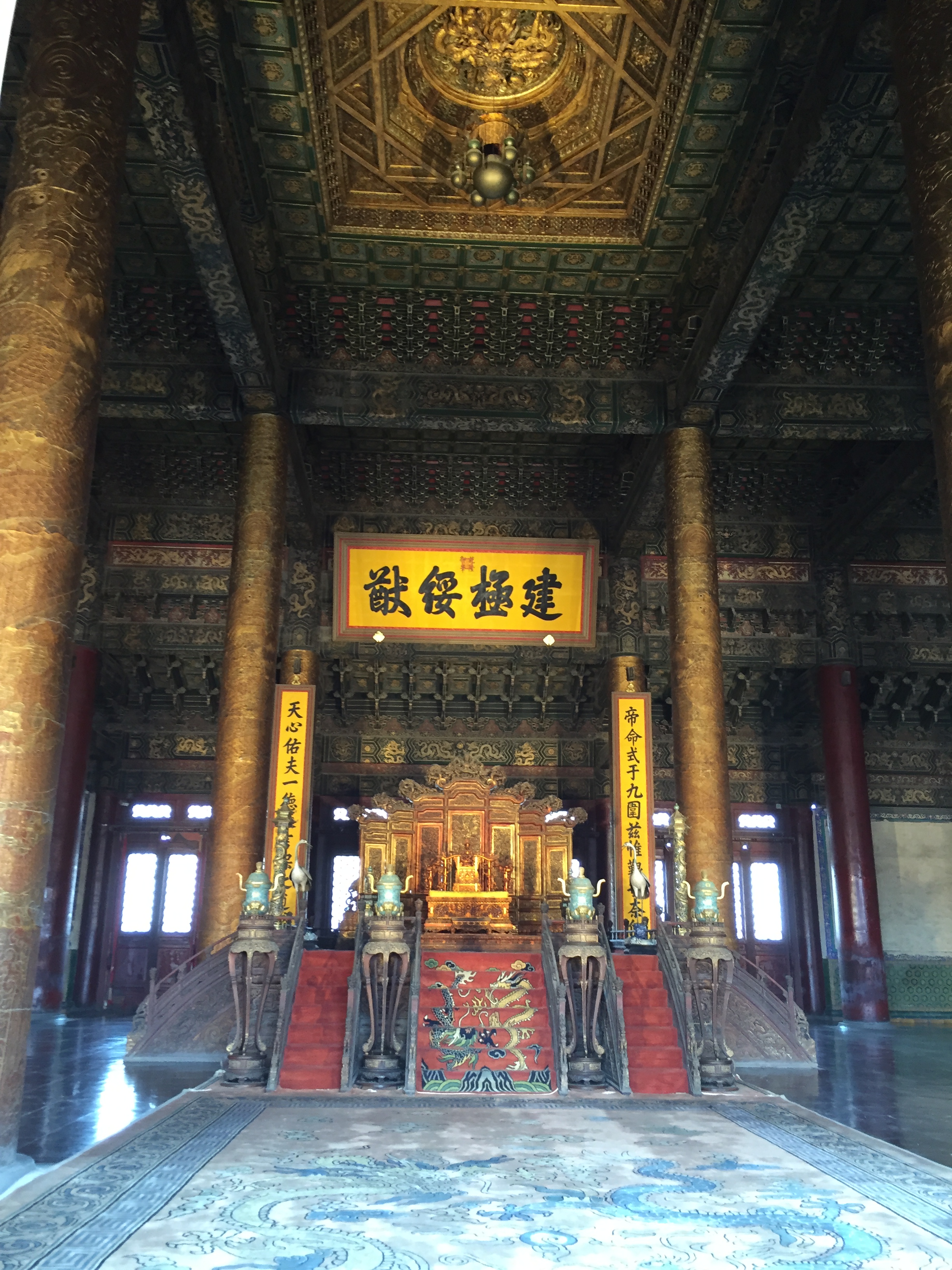
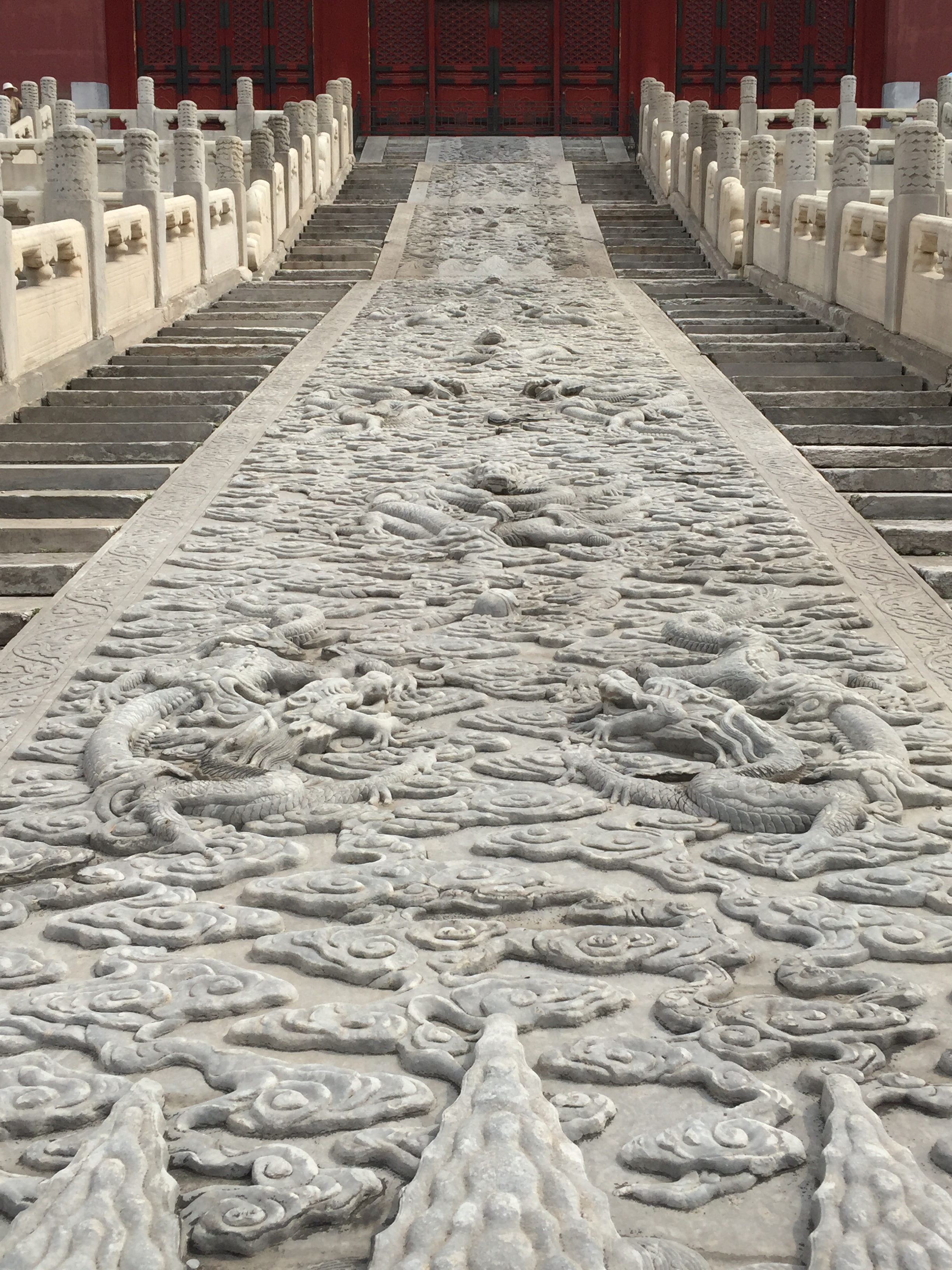
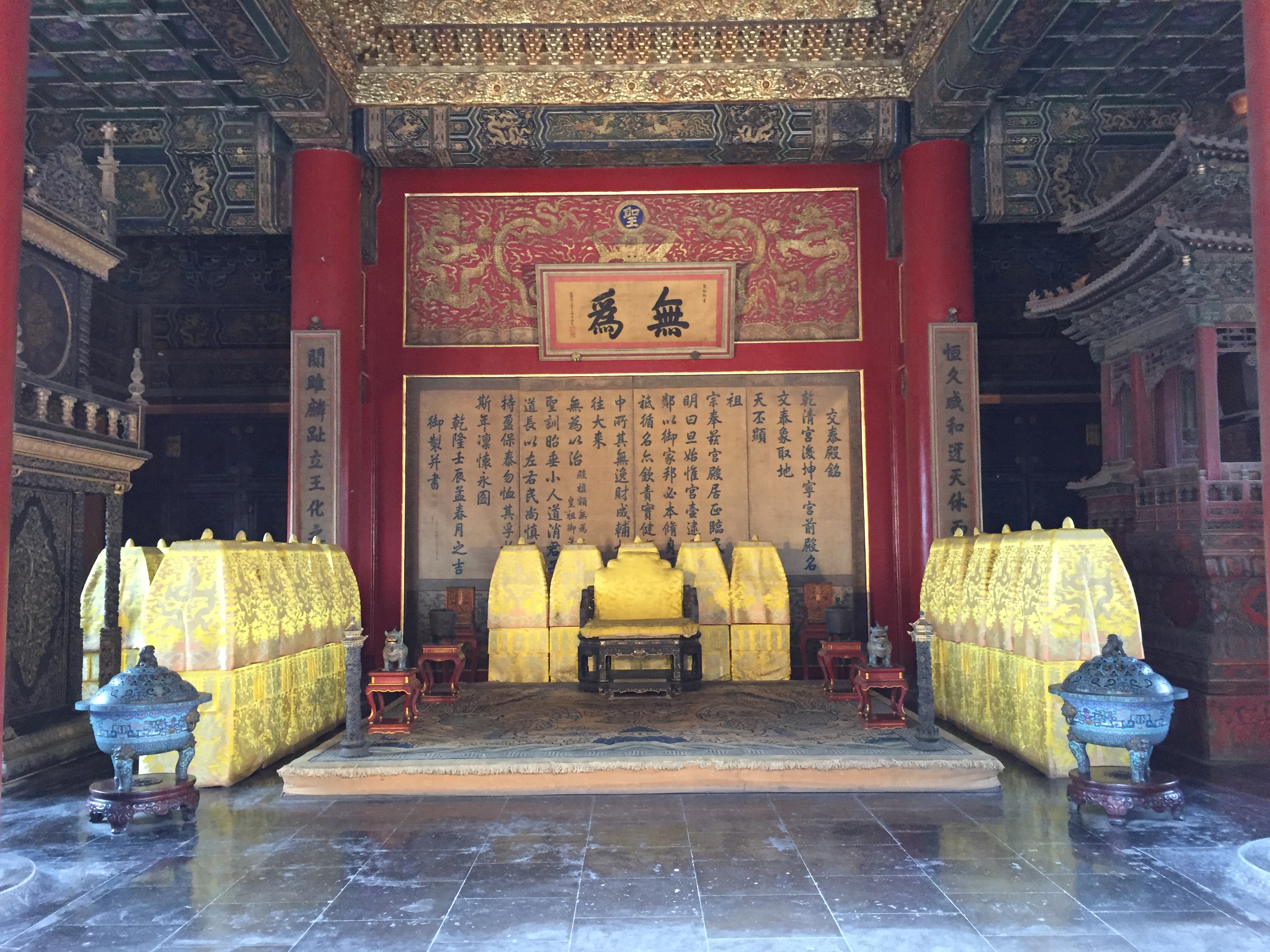
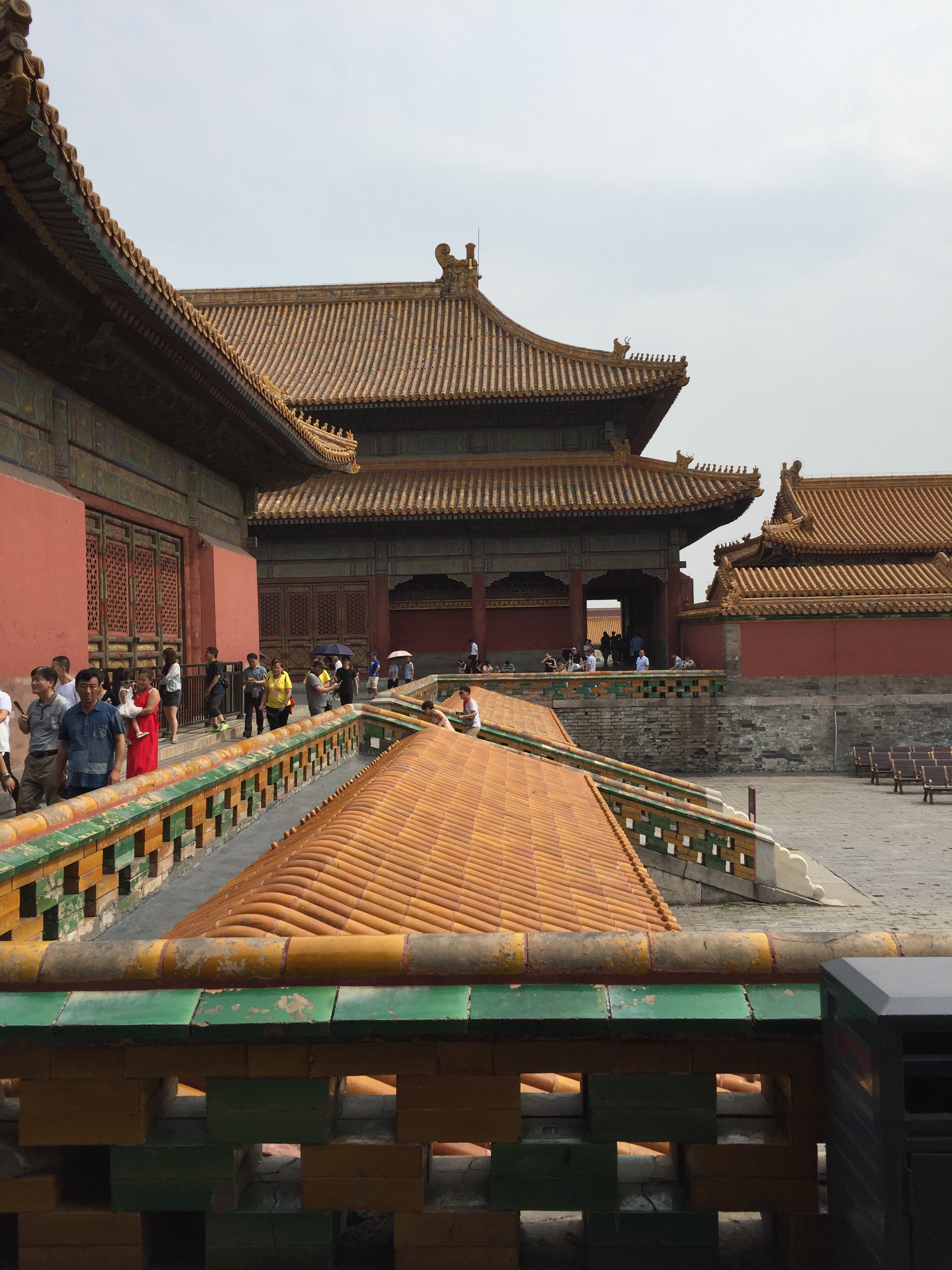
The next day, I took an afternoon stroll in the neighborhood at the “Forbidden City”, or Imperial Palace. Having been here multiple times, I could finally absorb and appreciate its grandness and scale. From the outer to the inner courtyards, each progressive complex of buildings paced you from the formal to more intimate parts of imperial life.
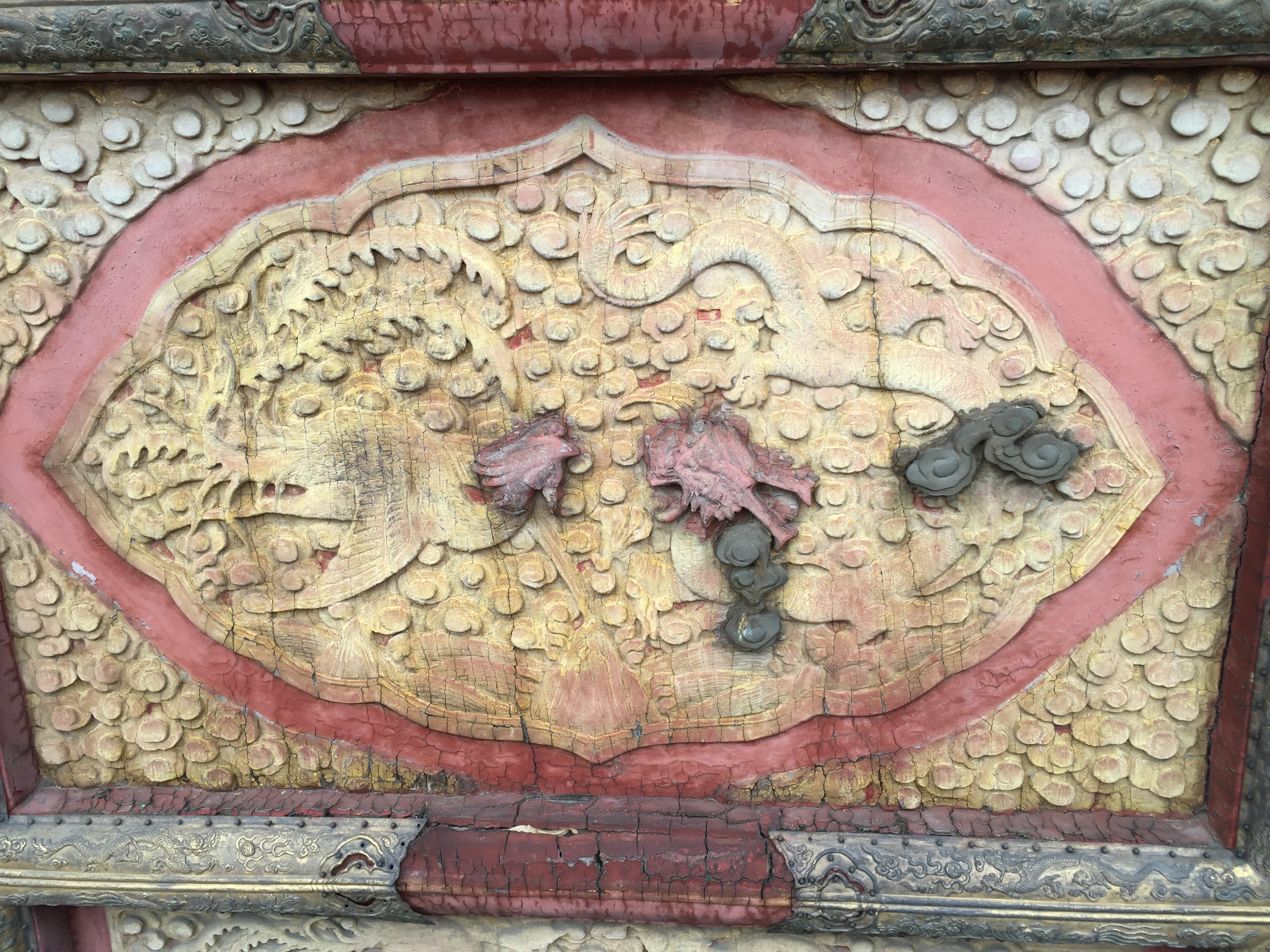
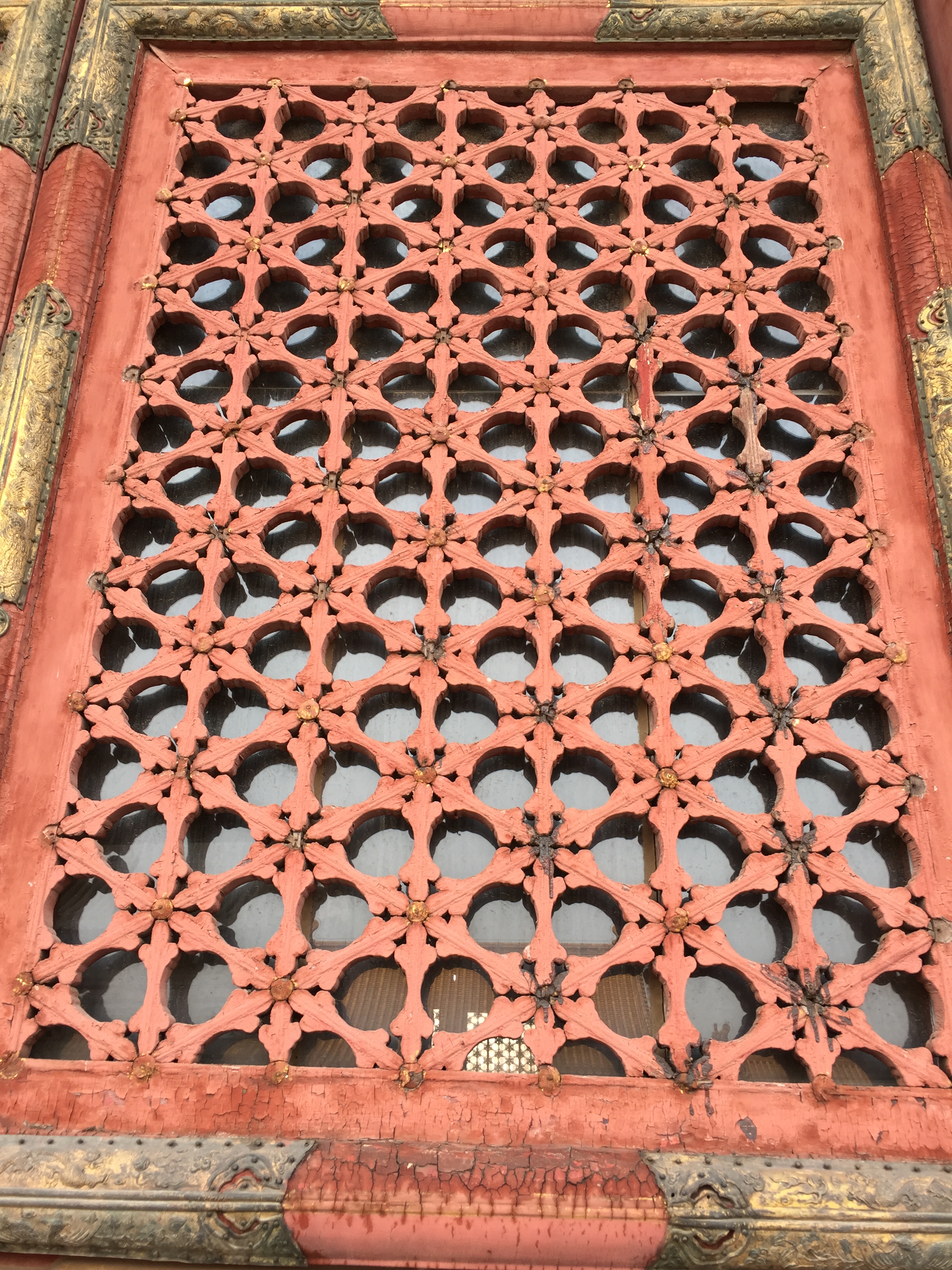
Details and interiors of the latter half of the Imperial Palace are below. I did my best to allow the hoards of tourists from deterring my own personal enjoyment. It did flash across my mind, however, about the last encounter with the floods at the Hermitage in St. Petersburg last year. I couldn’t excuse the cruise ships for unloading here this time. I gave way to the primarily Chinese tourists who may have come from the outer reaches to finally see the centuries of human capital used to build the empire, or maybe like me, were just taking a stroll around the block.
Four Hour Dinner
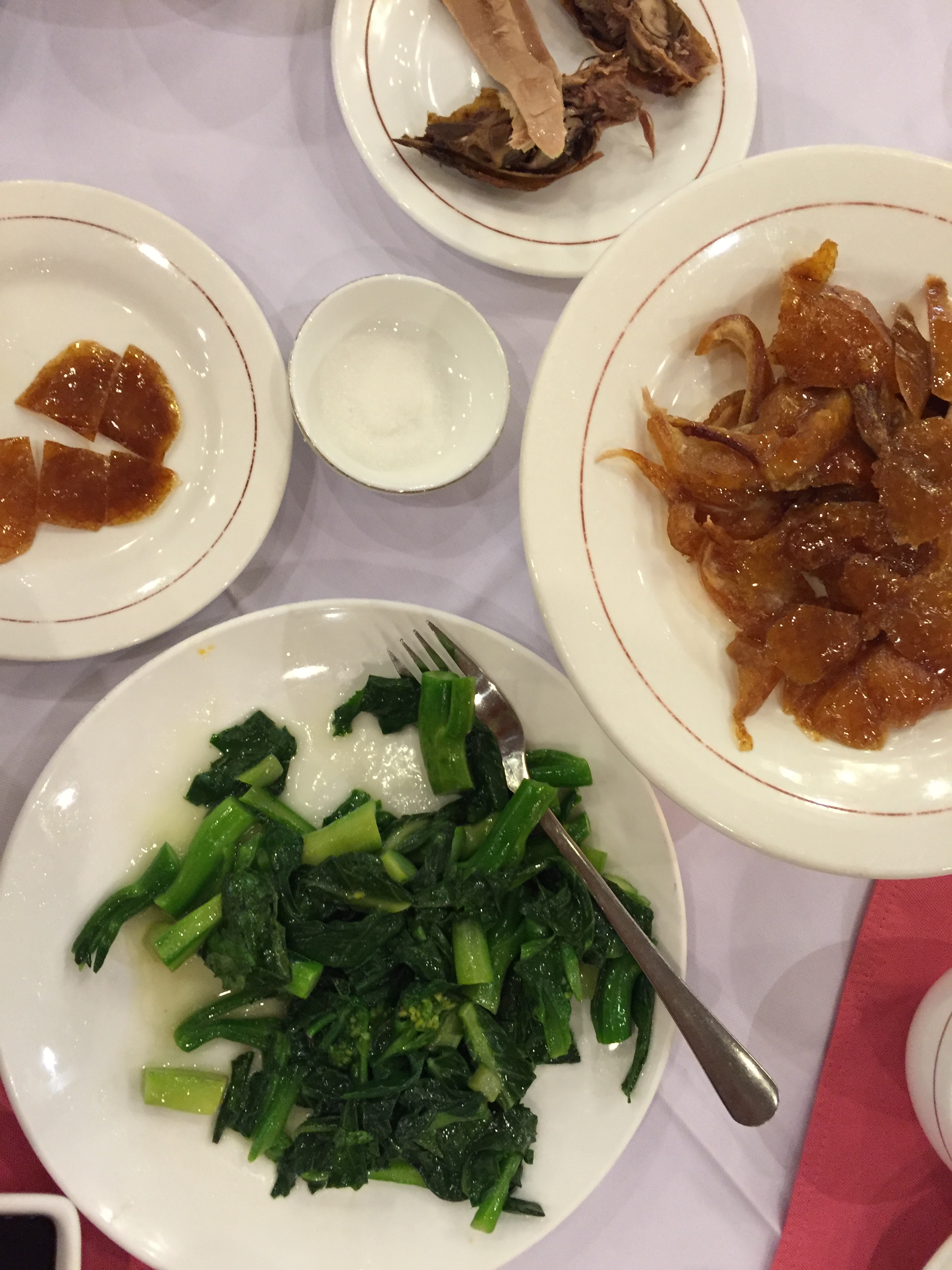
In the evening, we made our obligatory stop to the Peking Duck Restaurant, again, only steps from the hotel on Wangfujing:
Four Hour Lunch
Today was visiting Day with Gee Kin’s former professor in Hydraulic Engineering at Tsinghua University. We spent a leisurely day with him and his wife, who is also a professor in Water Resource Engineering. Gee Kin spent a year at Miyun Dam outside of Beijing in 1976 with his professor and other students. They were repairing the massive dam that was damaged by the Tangshan earthquake and that supports Beijing’s population.
The Tsinghua campus is now a bustle of activity and has the energy and flow of Stanford. Google-type buses were everywhere, and students, researchers, post-docs all sped by with focused purpose.
We had an elaborate lunch of Peking Duck, pickled web’s feet, chestnuts and Shanghai cabbage, whole steamed fish, braised pork belly, dry-fried bamboo shoots and green beans, and numerous fruits and sweet desserts.
Beijing Underground
We trained ourselves to use the new Metro Subway and took several lines each way to become fully versed in one of the largest systems in the world. It was built in only in less than 10 years and is indicative of China’s focus on their infrastructure systems. This is a huge achievement for the country.
More importantly, we observed how kind people were to one another. Passengers were always courteous and apt to get up for elderly people or women with young children. There was no need to provoke a response. It made me proud to be among the Chinese people (the ethnic pride thing in me kicks in!) and I was surprised at these small acts of human kindness within such a massive population. I wondered how often that happened on SF Muni or BART.
Window and Food Shopping–an Integrated Experience
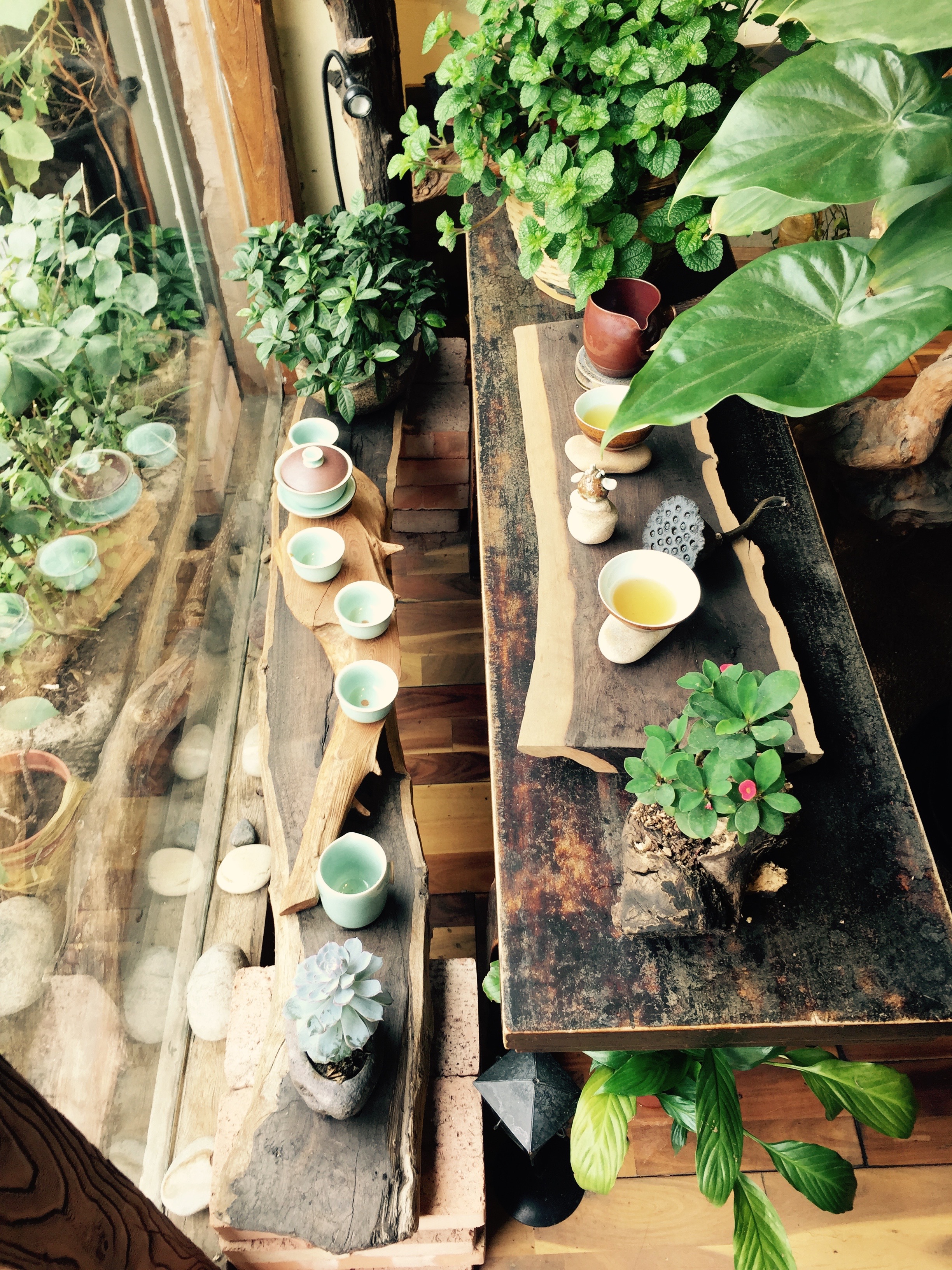
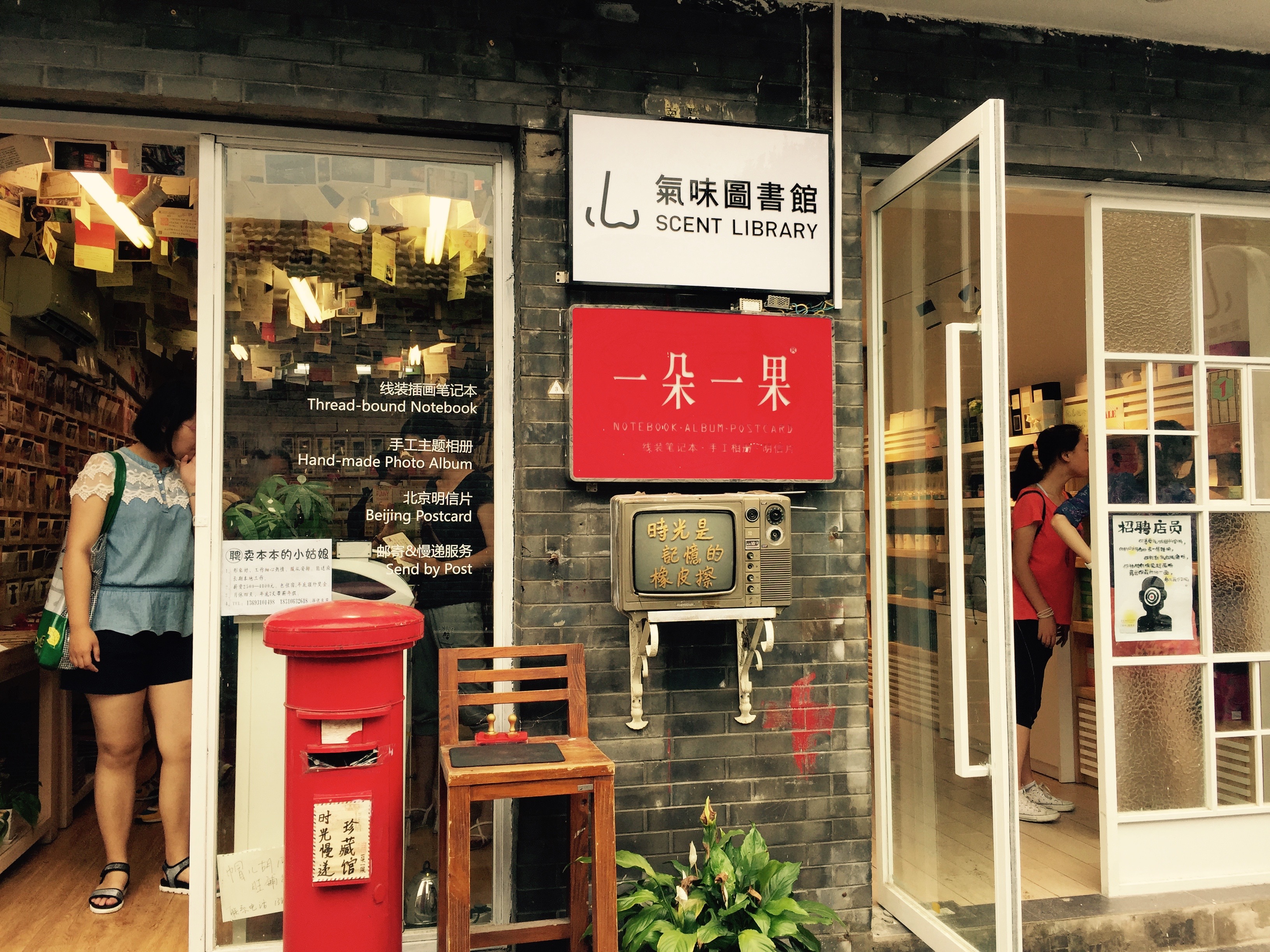
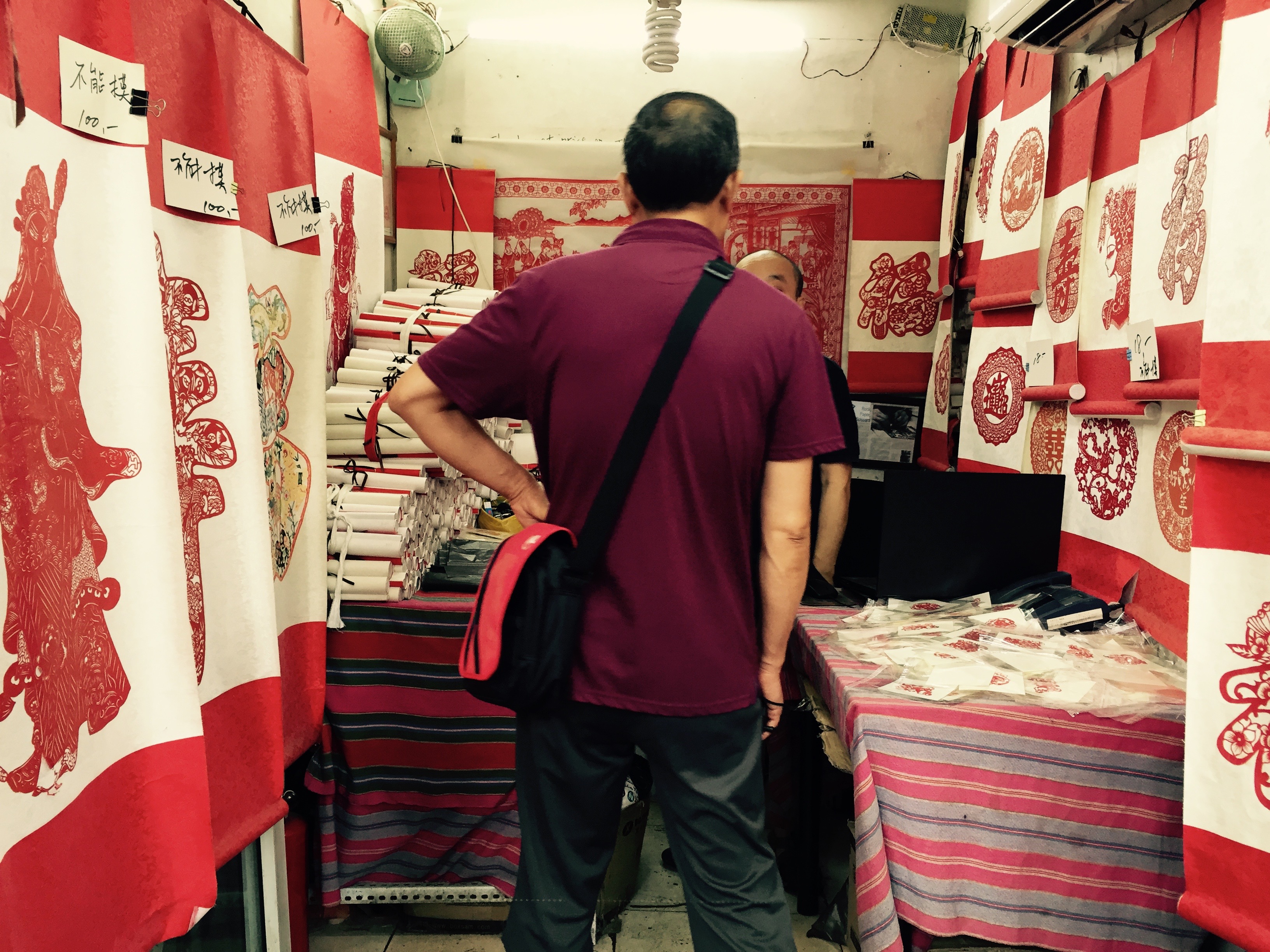
We spent the rest of the afternoon enjoying our neighborhood, where there are many traditional and creative shops to bend the mind (and the pocketbook!). This area has always hosted clever shops, and this new version is only an extension of the past.
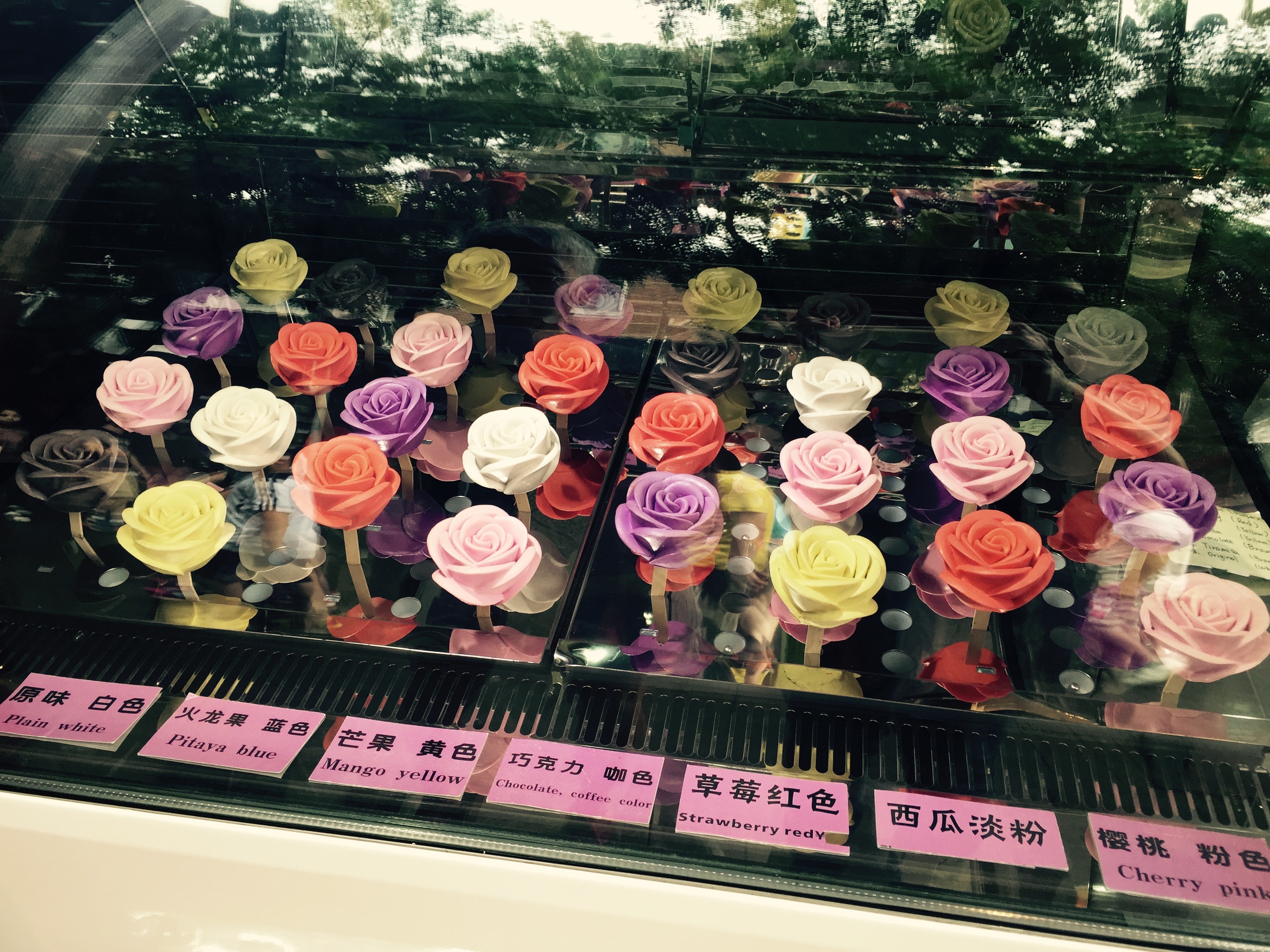
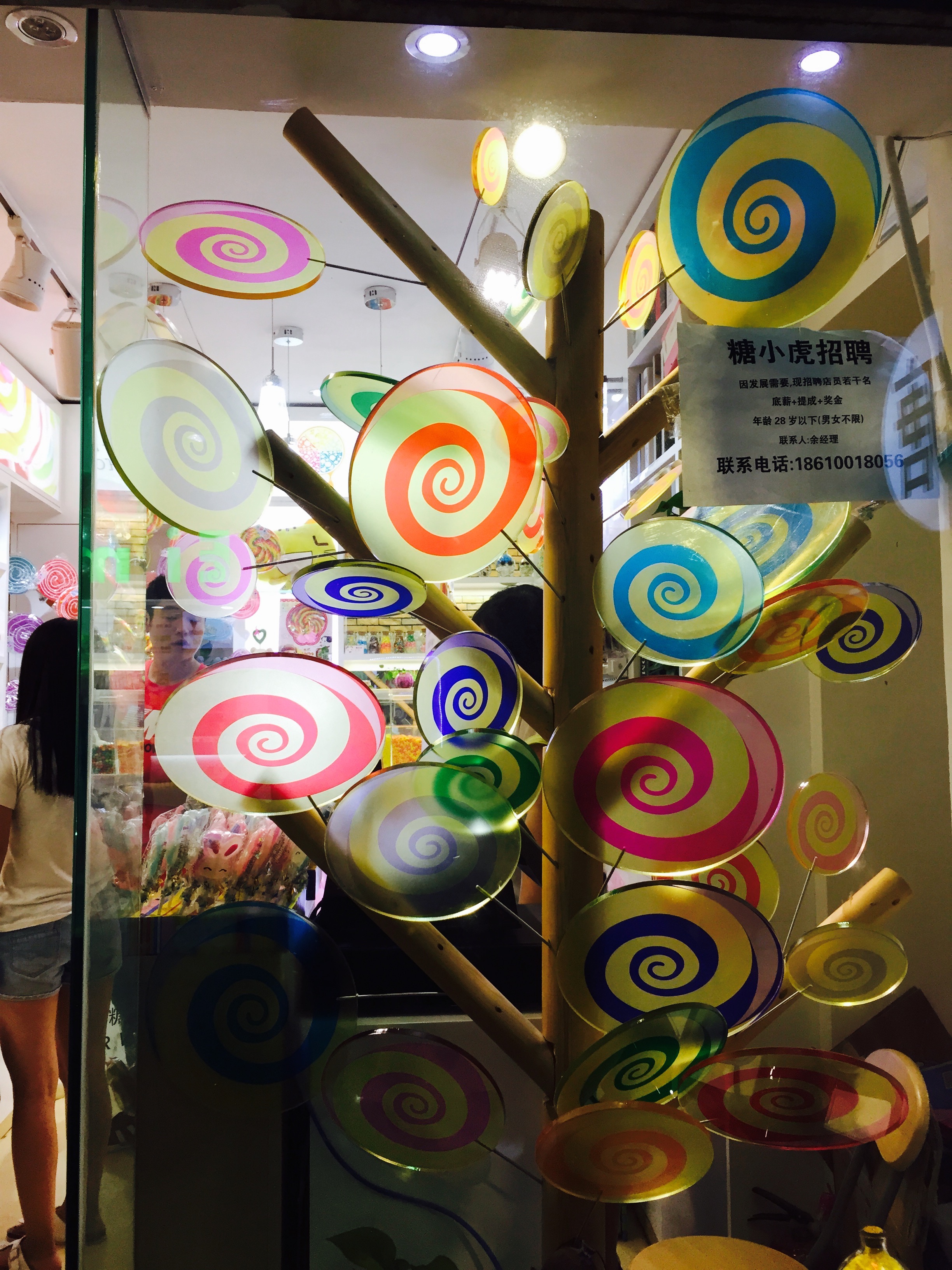
Spun Sugar
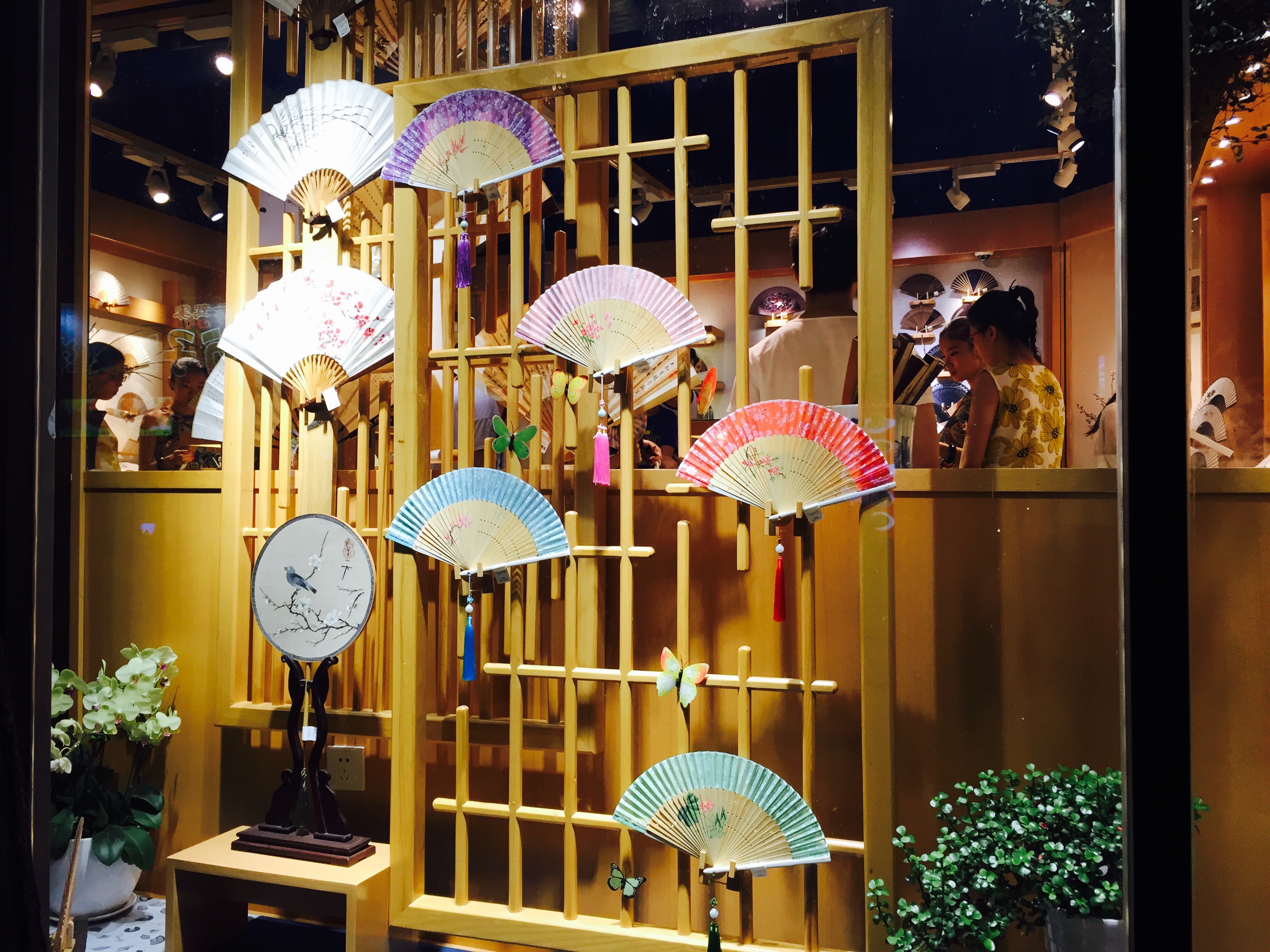
One-of-a-Kind Fans
Noodle Shop with Post-it Notes for Graffiti
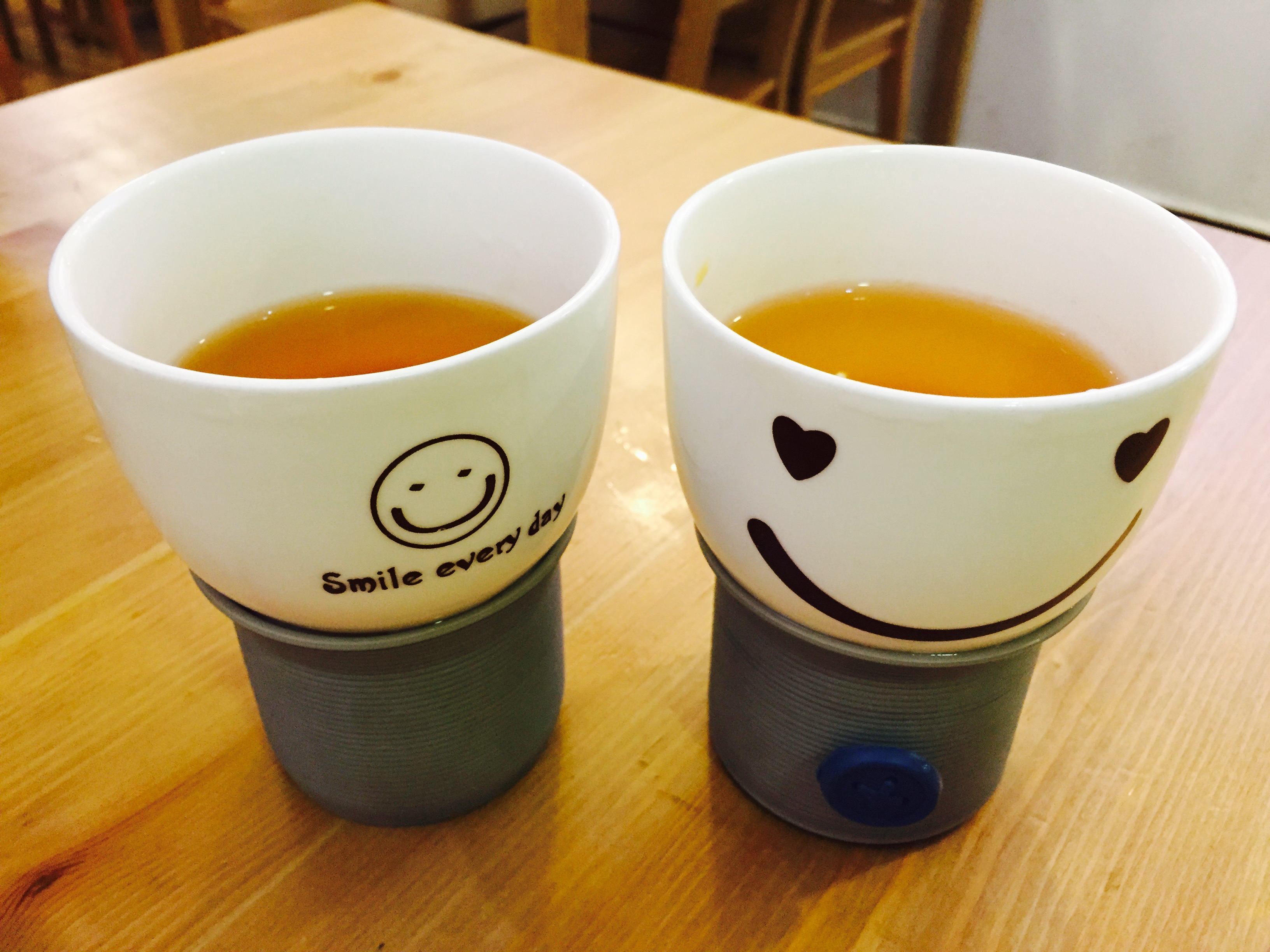
High Rise Tea Cups with Happy Faces
30’s Retro Entry
We stayed in the Northern Hutong District (Gulouyuan) of Beijing in one of the hotels preserving the traditional courtyard style residences.
Original Posts: 6/20/16 and 8/6/15
Next Stop: Look for the Silk Road Adventure 3 on Northwest China in the next week or two! Send me an email at vifongit@gmail.com if you want a notification!
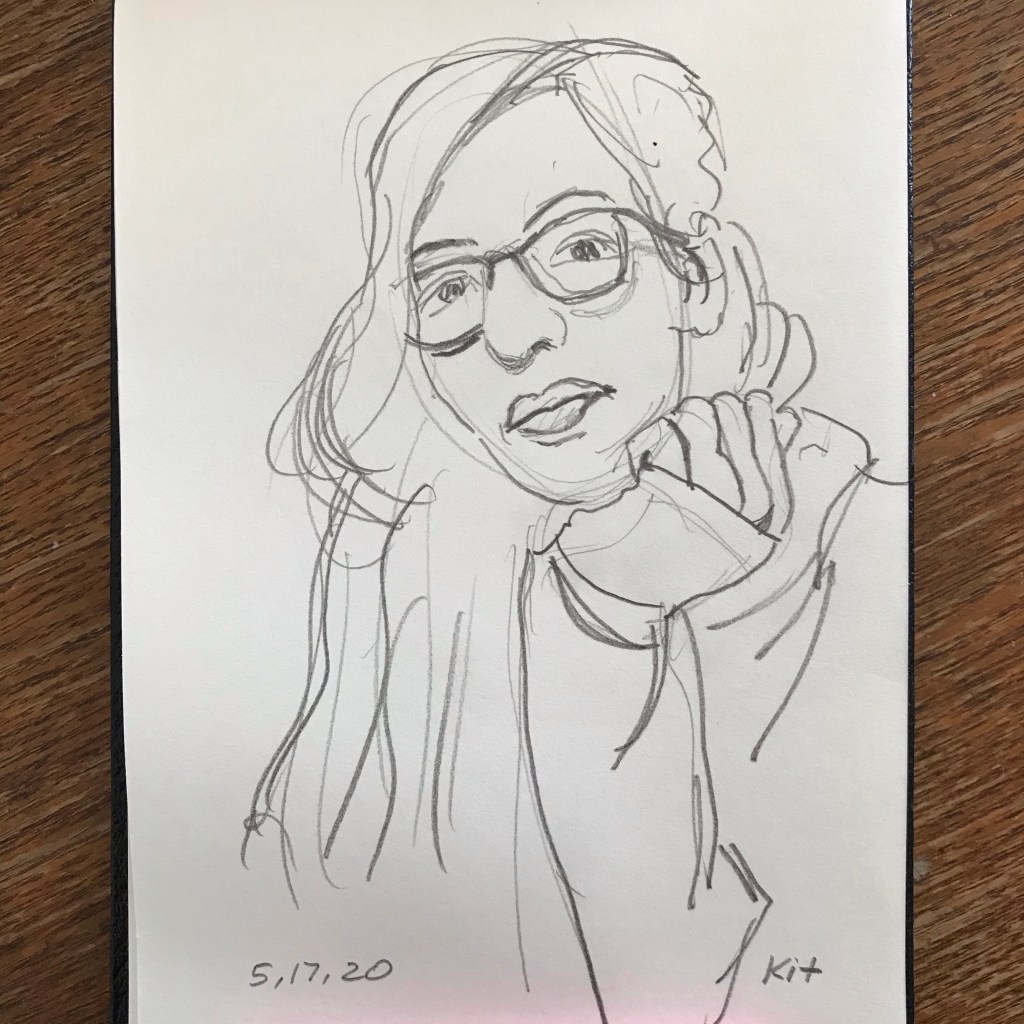
The Corona Virus and its Shelter in Place requirements in California have kept me on my toes creatively, to plan each day at a time and to fill it with learning and entertainment. For one of my favorite activities, I combine both opera streaming with sketching..
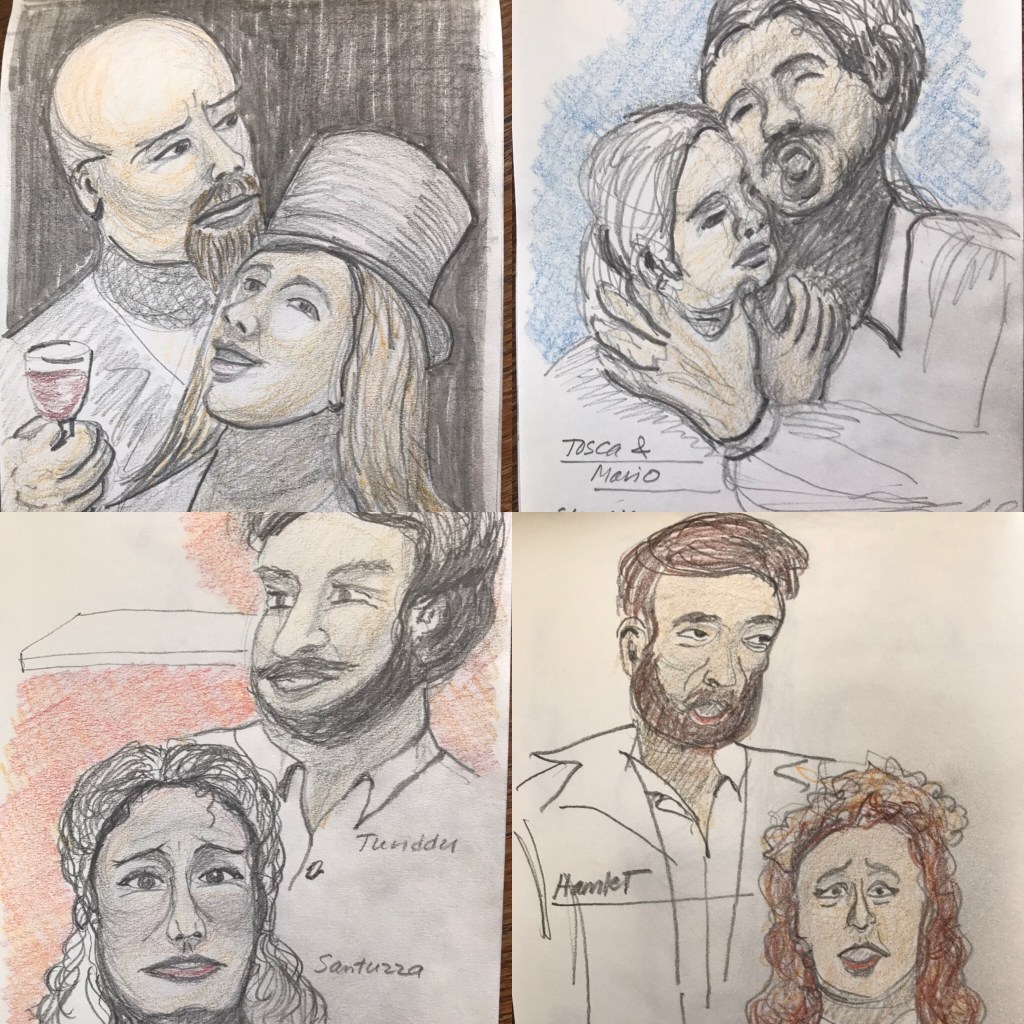
The daily operas presented by the New York Metropolitan Opera (go to metopera.org) provide an anchor, so in addition to listening to wonderful music, I can study and record performers’ faces that hold long enough for a sketch. In the case of opera, it’s pretty easy once they launch into a famous aria. But I can’t say that I can follow the story at the same time!
Pagliacci et al
Opera Couplets
Turandot’s Calaf, Timur and Liu
Turandot’s Ping, Pang and Pong urandot
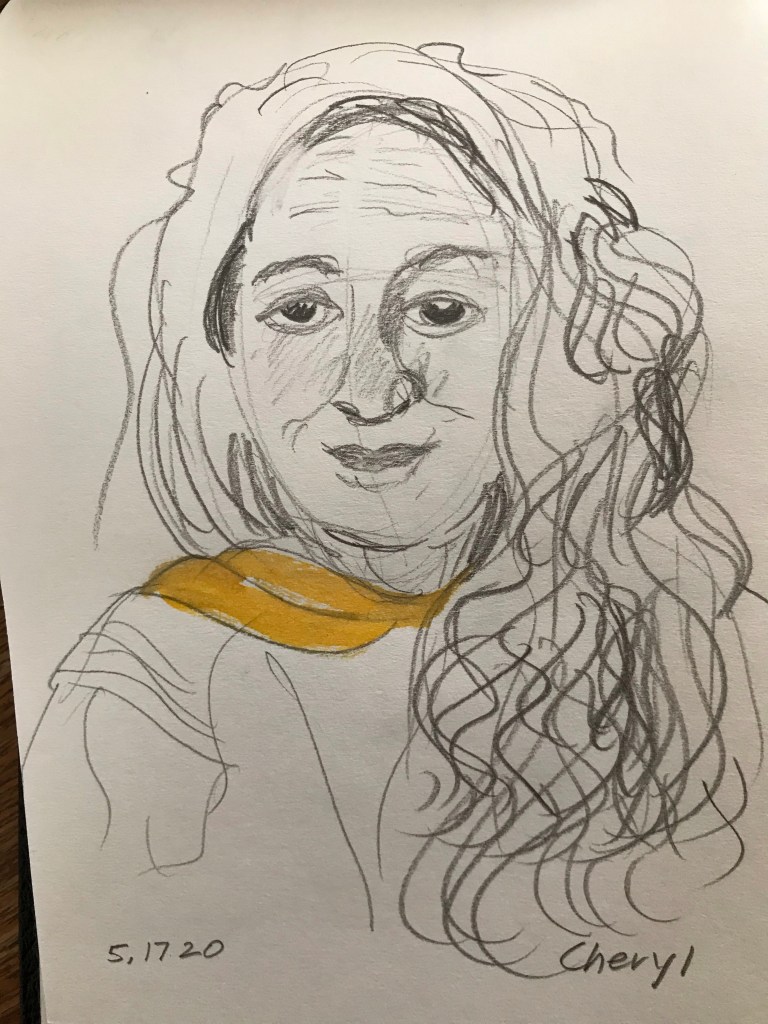
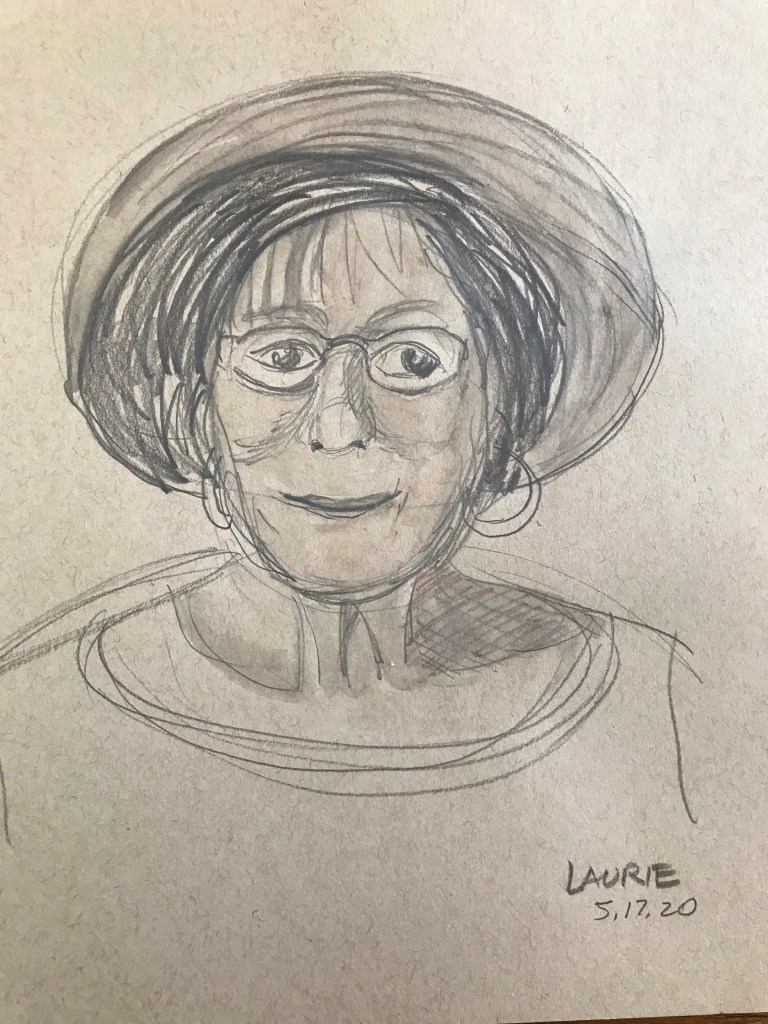
In addition to opera sketching, there are plenty of live zoom sketching events. I follow those sponsored by SF Sketchers, so we have sketched each other from our homes using 3, 5 and 8 minute sketches. Down and dirty, but lots of fun and we engage.
In another sketching event yesterday, we took a gondola tour of Venice and stopped along the way to sketch at a couple of spots. It triggered fond memories of traveling. I had already reduced my plans to travel this year and had made no bookings for the summer. Since all international travel is off the books for now, I wasn’t stranded with cancellations.
Nevertheless, it’s still disappointing to realize that there is no end in sight to being able to visit different parts of the world in the foreseeable future. In lieu of travel I have reduced my carbon footprint by traveling via books. Currently I am reading “Sasha’s Dance”, a cultural history of Russia, in conjunction with “Anna Karenina”, a Tolstoy masterpiece. They are wonderful to read together by weaving both front and back stories.
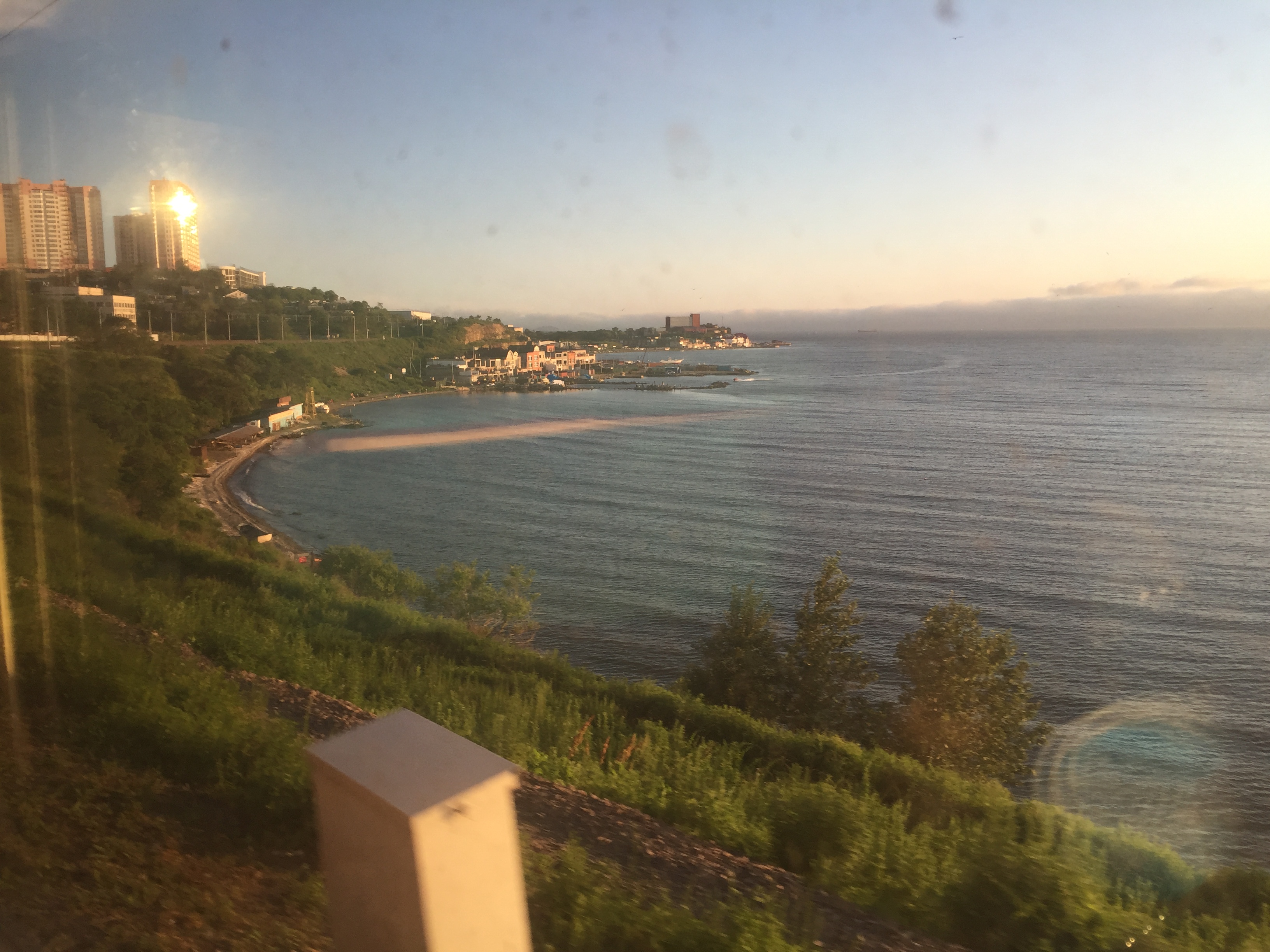
After having nostalgic thoughts about Russia, I went back to watch a video I made of Vladivostok. These videos remind me of the the coastal city’s austerity. The video below is the quick version.
For those of you interested in the long version, I am reposting what I wrote on Day 59 on Vladivostok. It was part of my 80-day world trip in 2016. For this portion, we traveled from Beijing to Vladivostok via the Trans-Siberian Express eastwards to the coast, then flew from Vladivostok to Tokyo. Look on the next post.
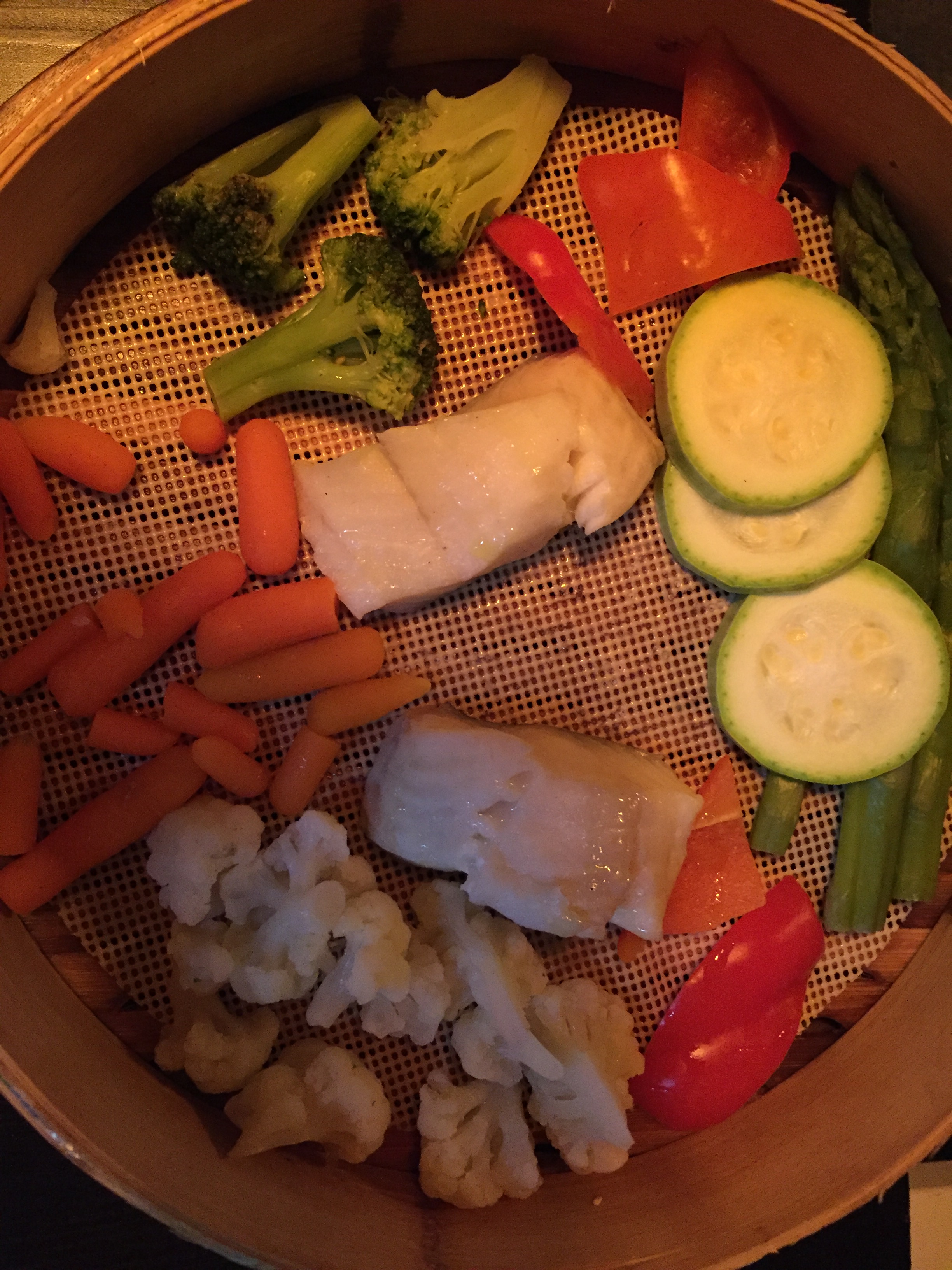
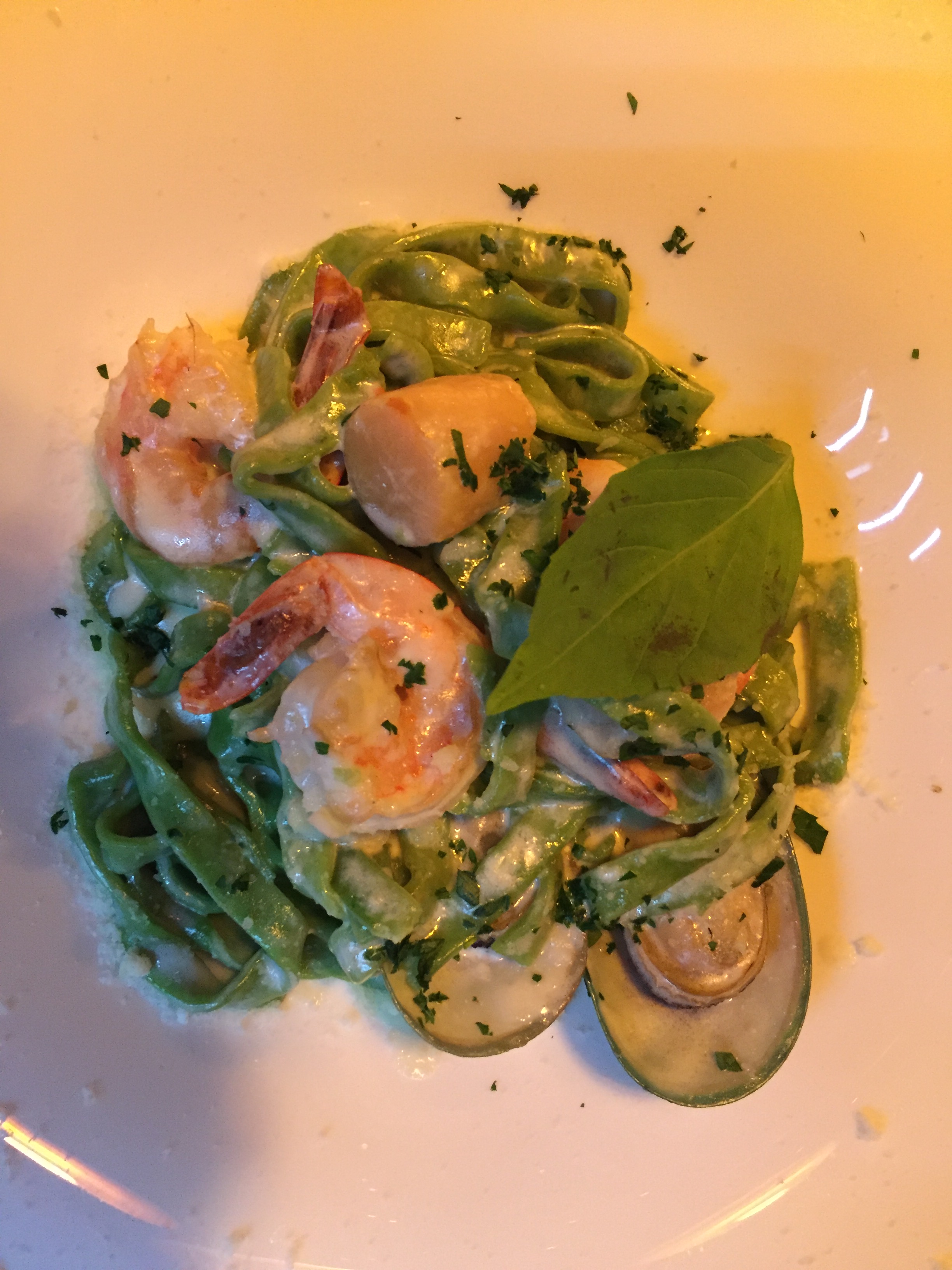
P.S. In the image featured above, I did the “everything” activity yesterday, by combining food and opera on a blustery Saturday evening. I made handmade chicken and spinach pasta with homemade pasta sauce, then plopped down to enjoy “L’Elixir d’Amore with Pretty Yende, Michael Polenzani and a glass of wine. Wish you were here!
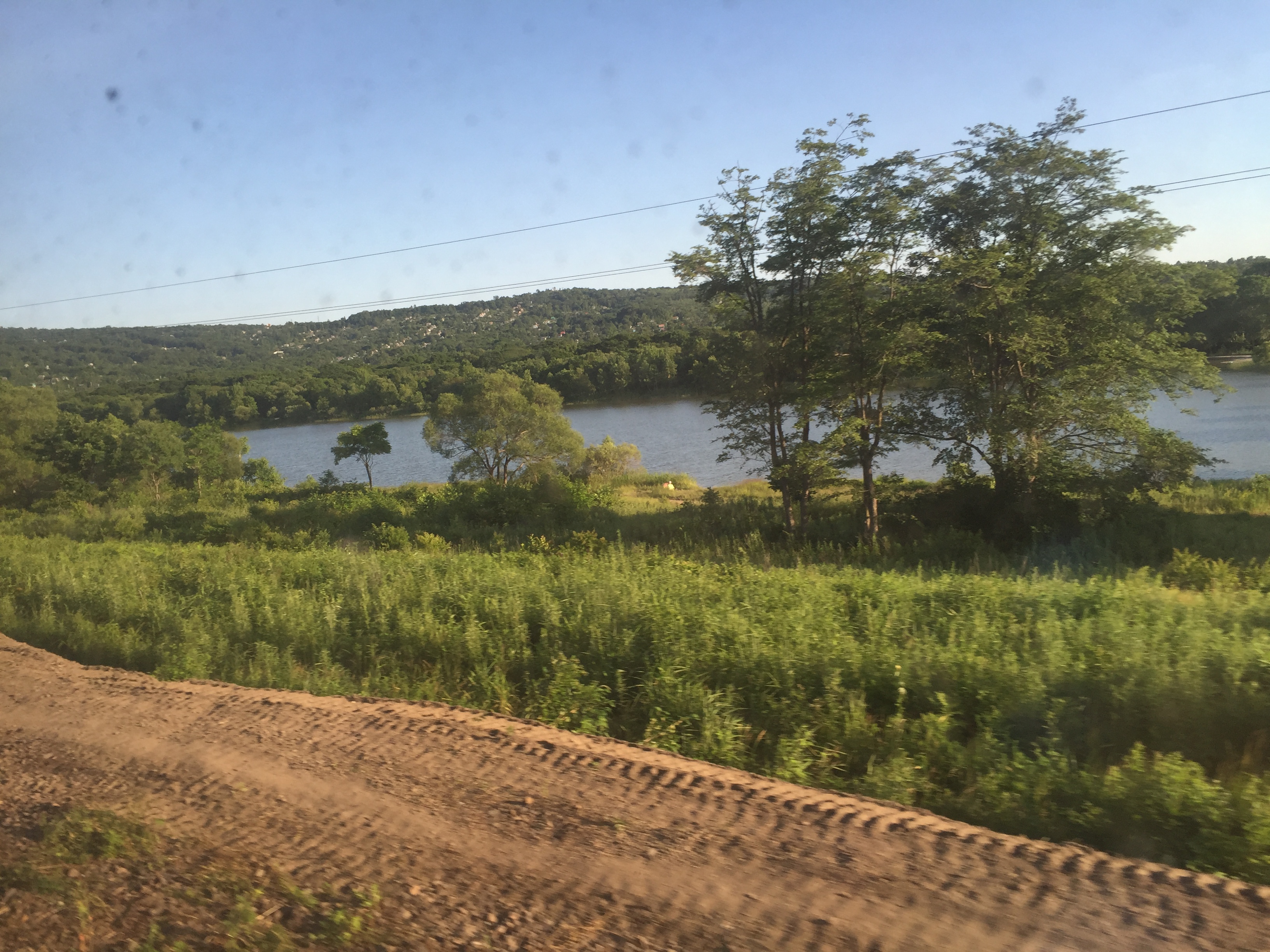
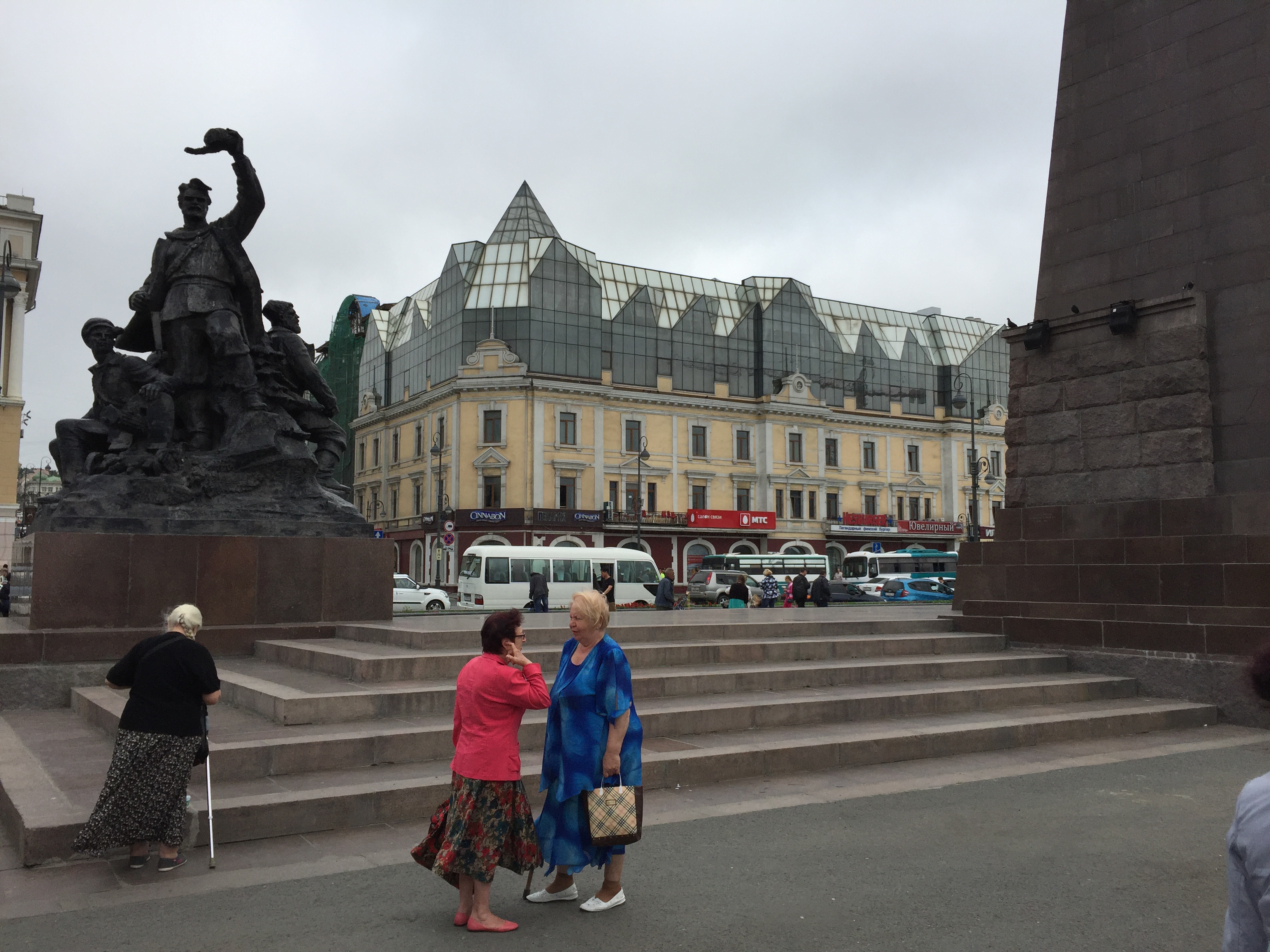
Here are some first views of Vladivostok coming from the north by train on arrival at sunset the night before:
Dinner at Three Brothers across from the hotel, complete with live American jazz music for $30 for both of us with wine
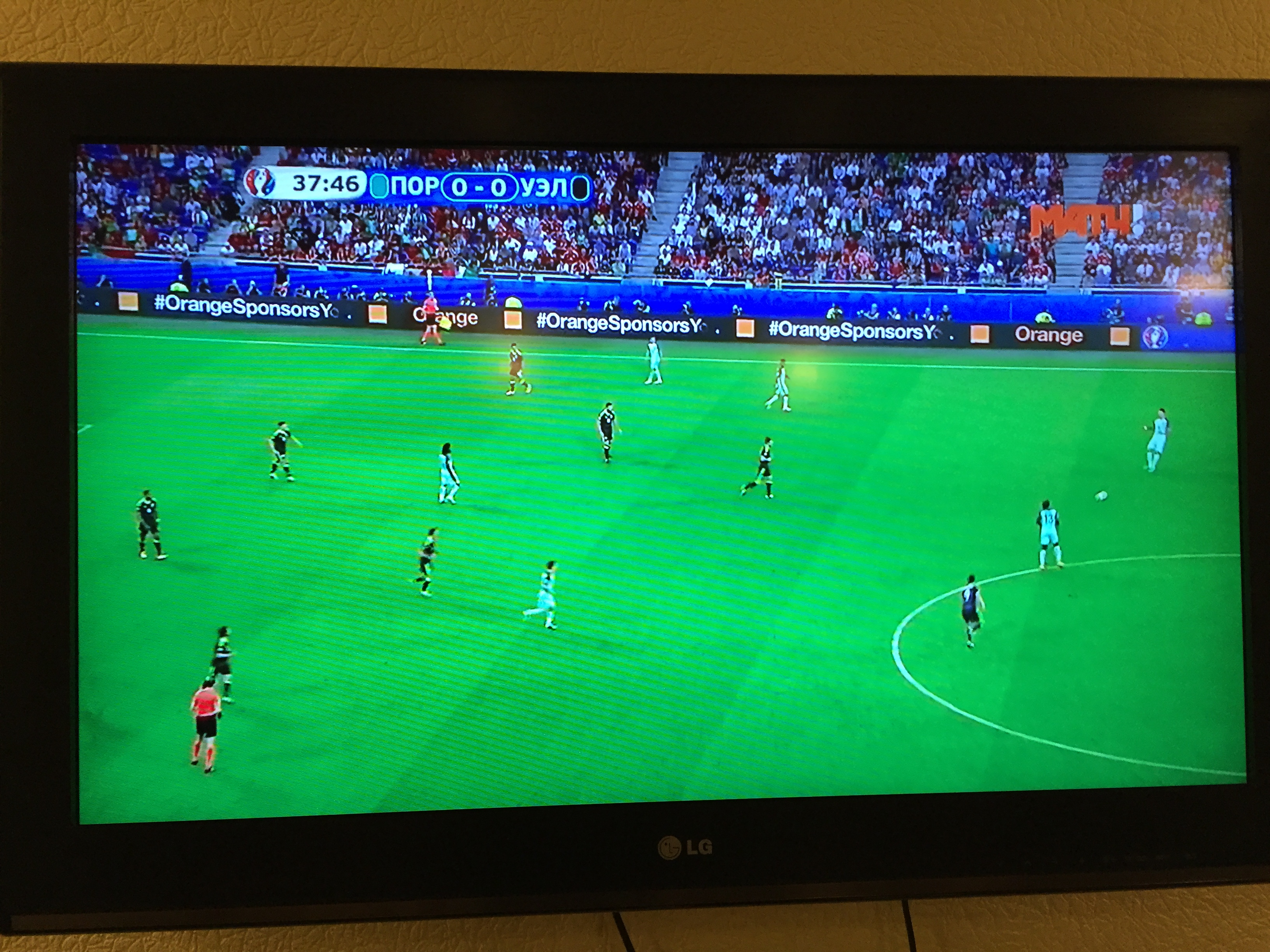
Evening Entertainment: Portugal vs. Wales with Rinaldo scoring 1 of 2 goals
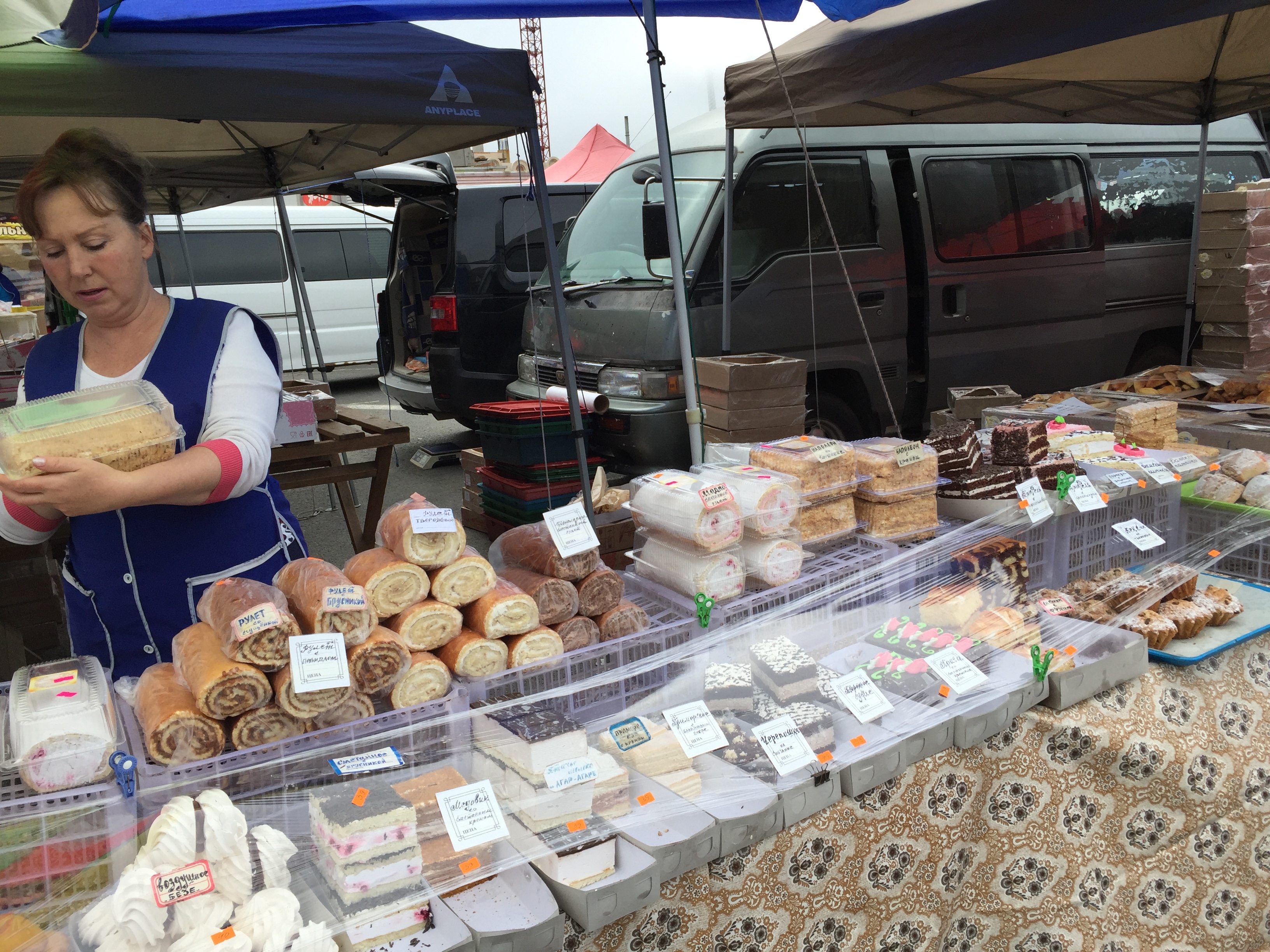
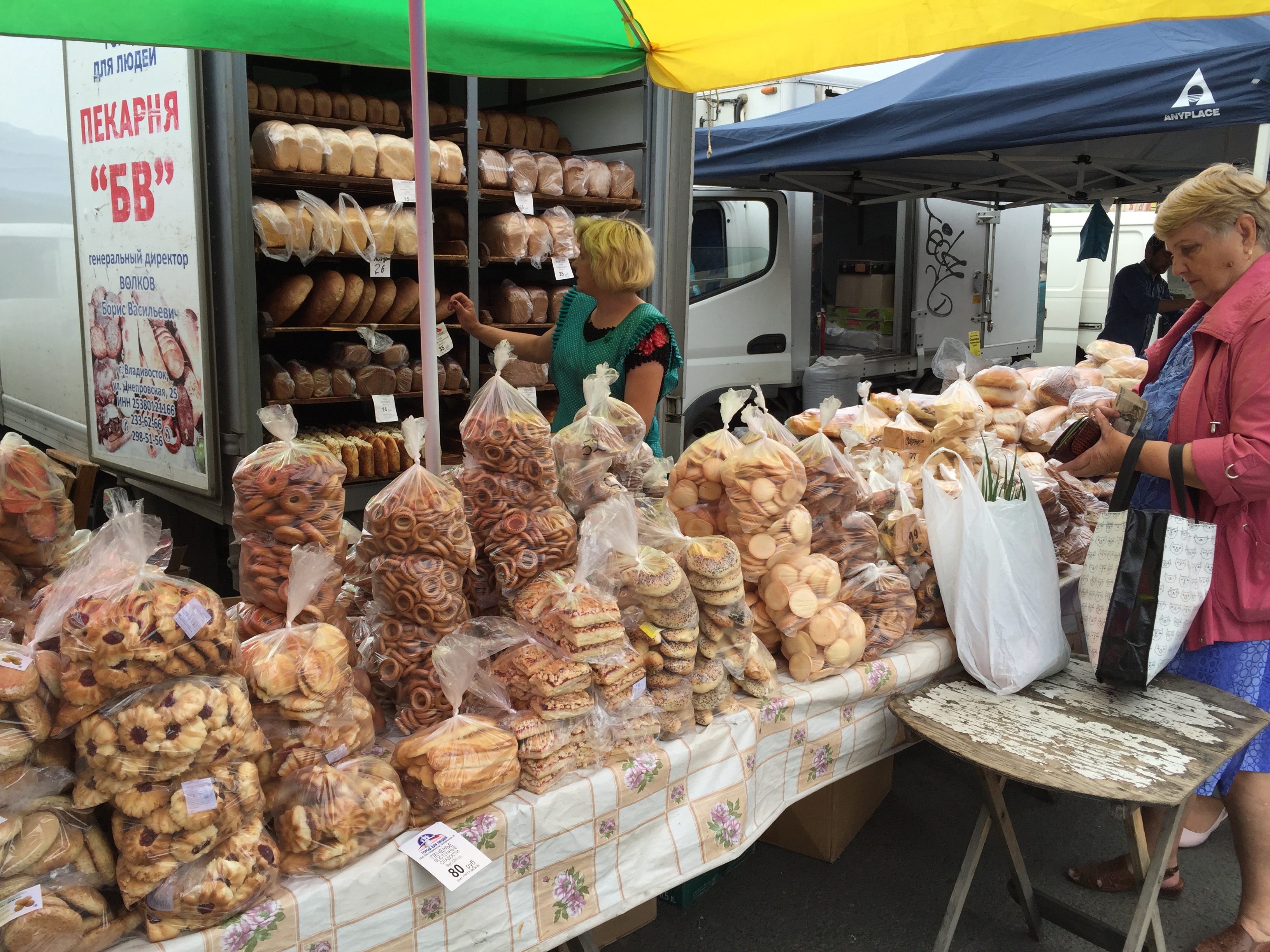
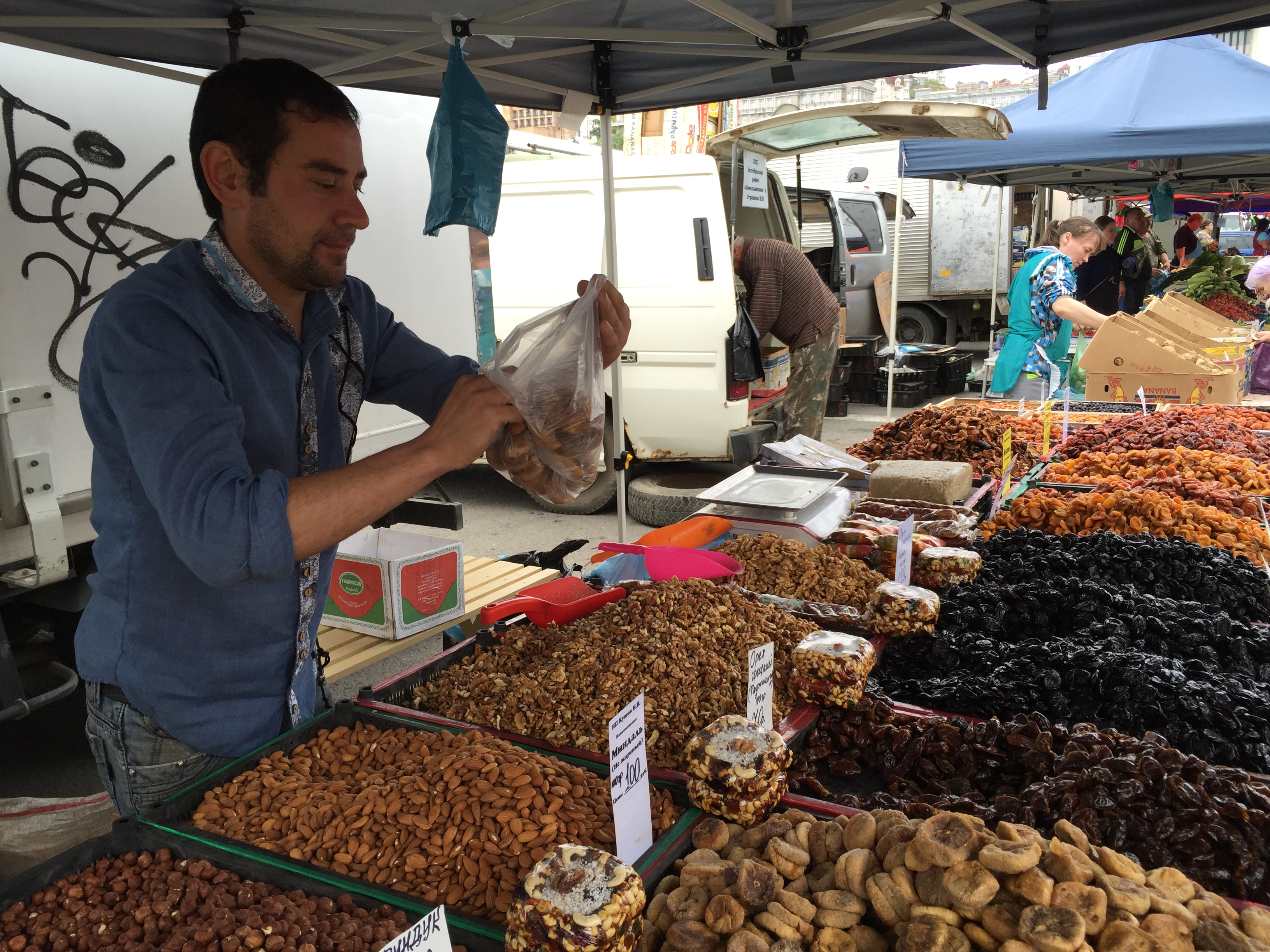
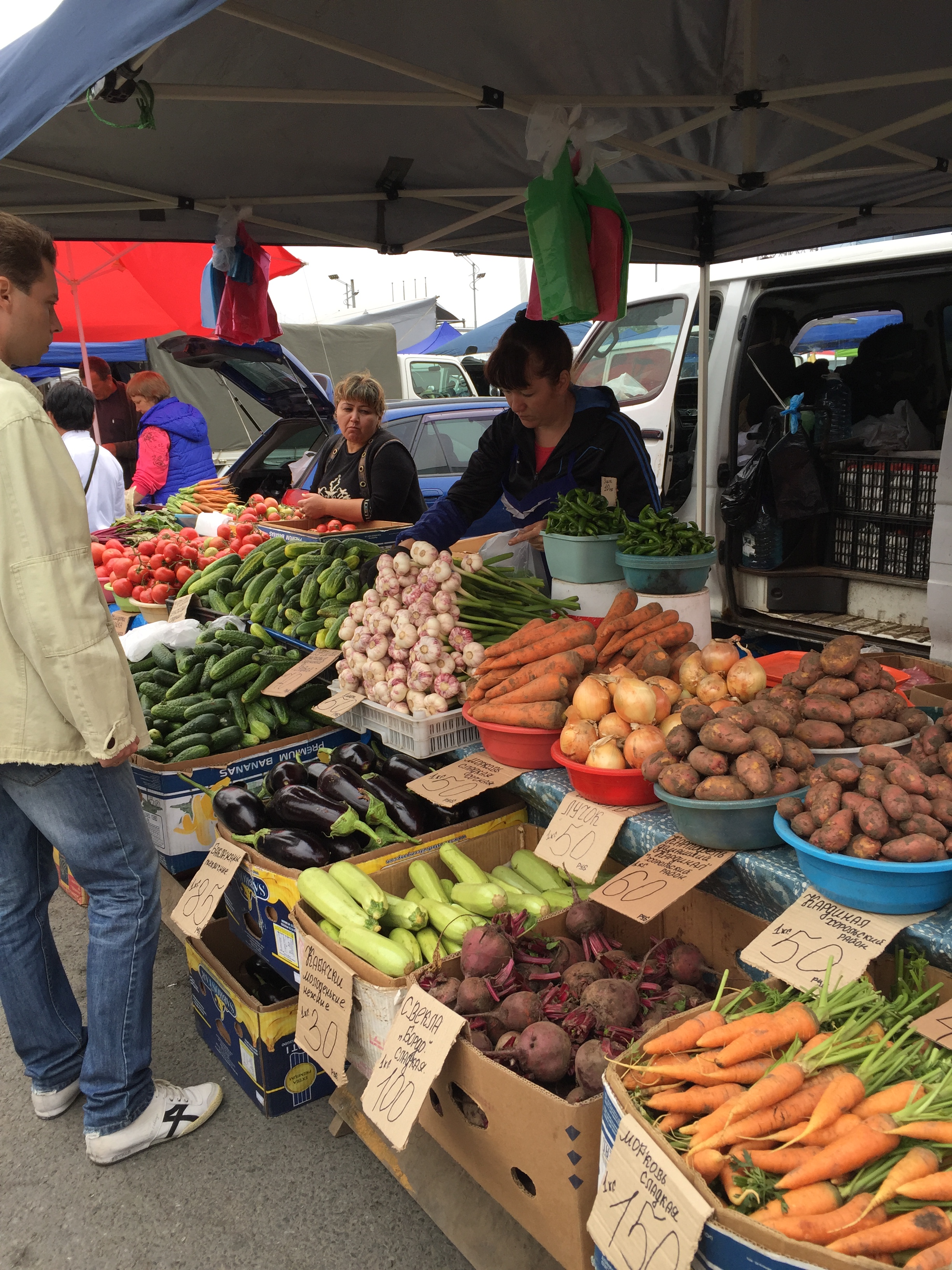
If you were visiting Vladivostok for the first time like we were, you could start an early morning walk at the Friday morning Central food market:
You can take a minibus to the new Mariinskiy Opera and Ballet Theatre. It is hosting the first International Piano Competition at the end of this month. I predict that it will be a great draw for concerts, ballet and opera in the future. You might consider taking a trip to attend this magnificent new venue and the emerging new productions and stars that will perform here!
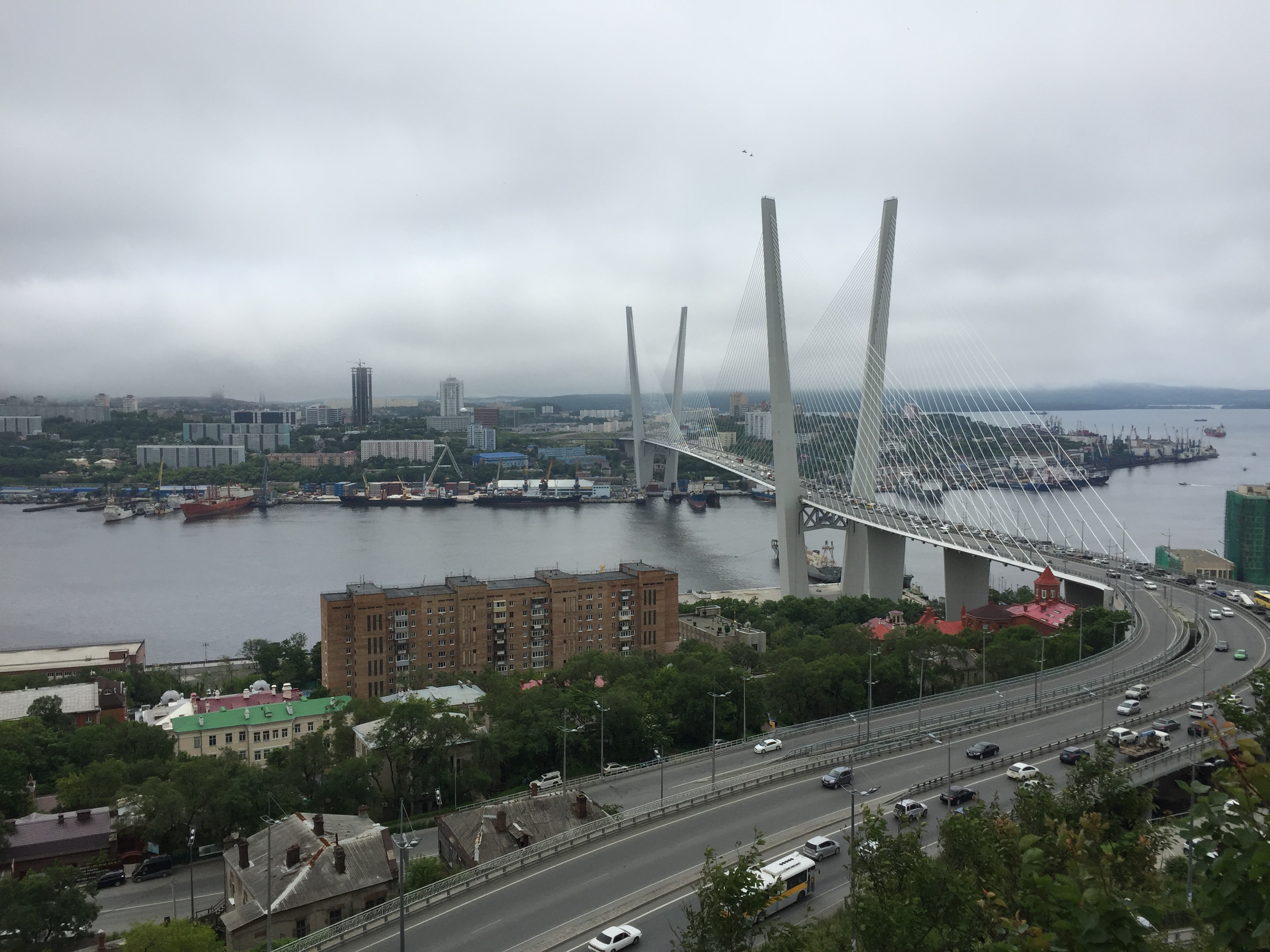
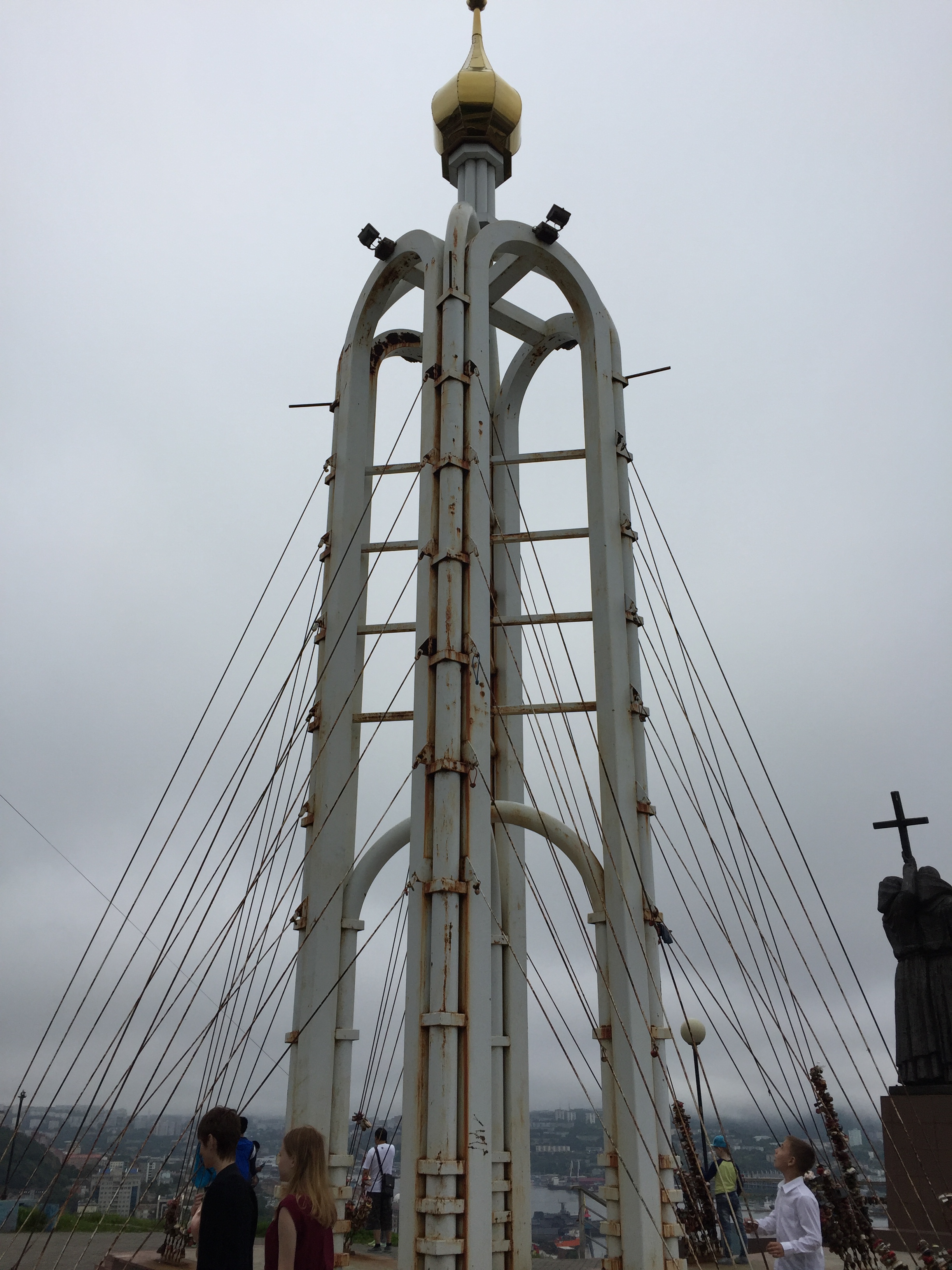
After that, you can catch a bus back to the city and stop at the Lookout Point over the new Golden Bridge completed in 2012. Does the design look familiar to you?
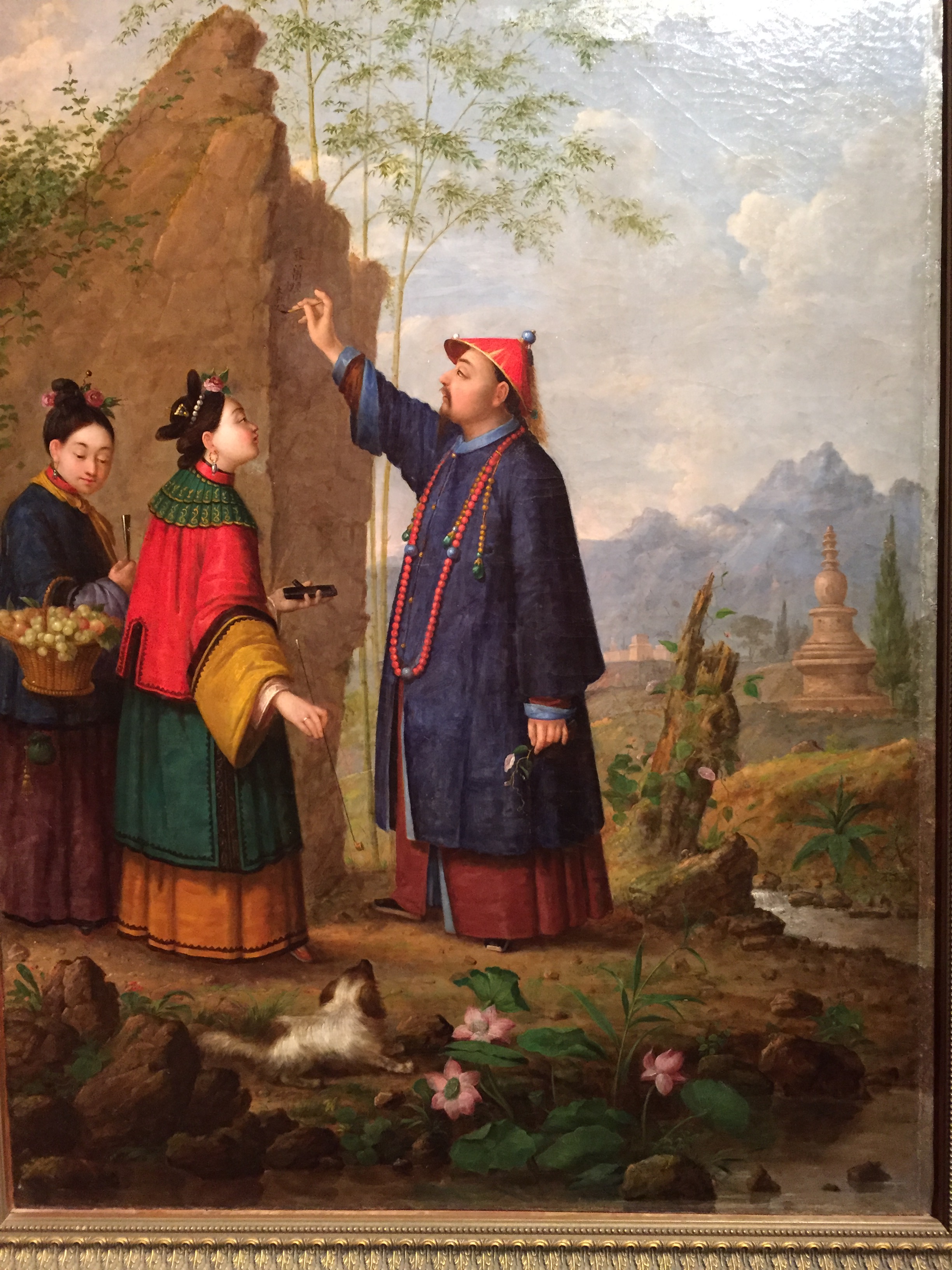
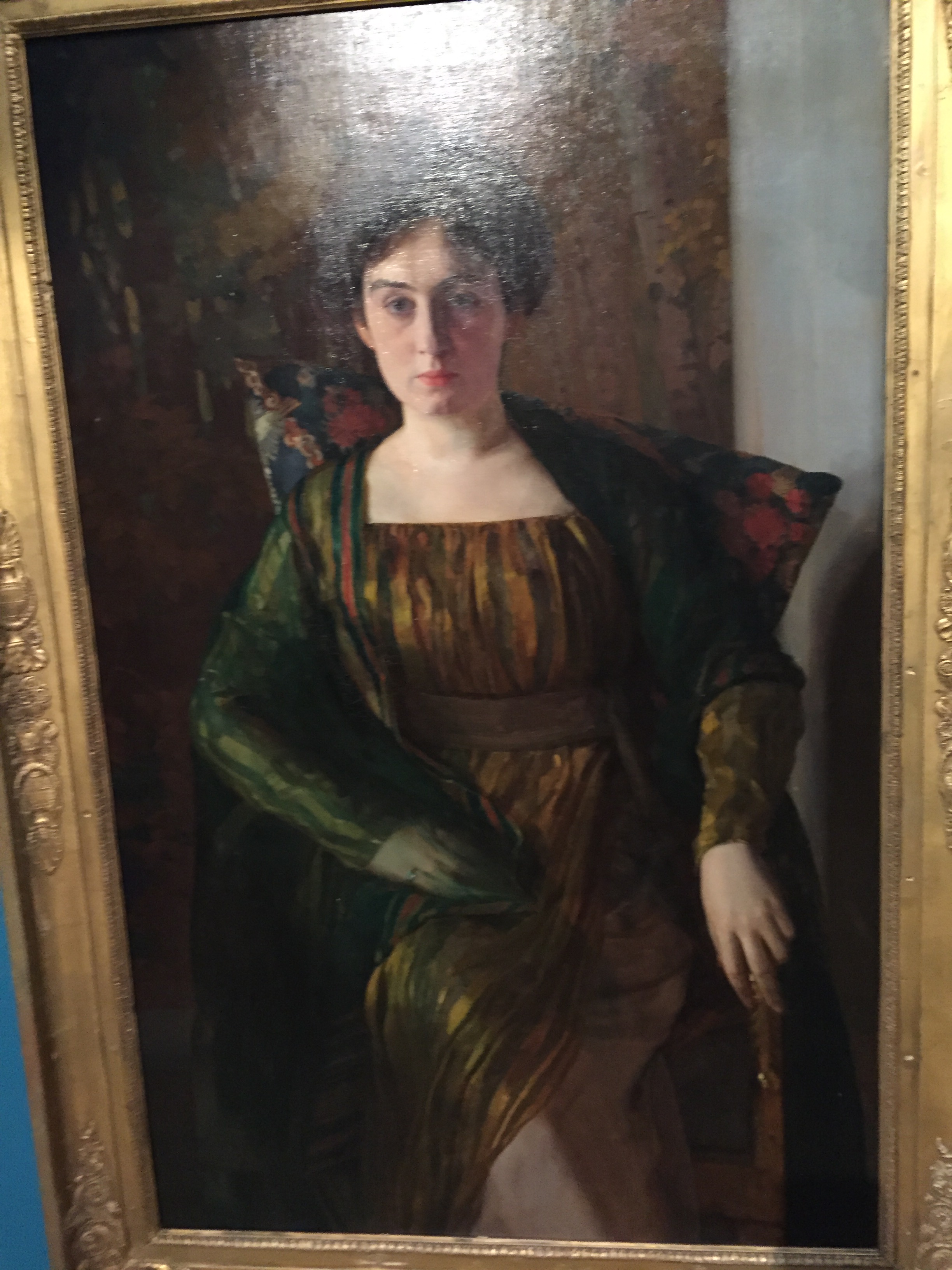
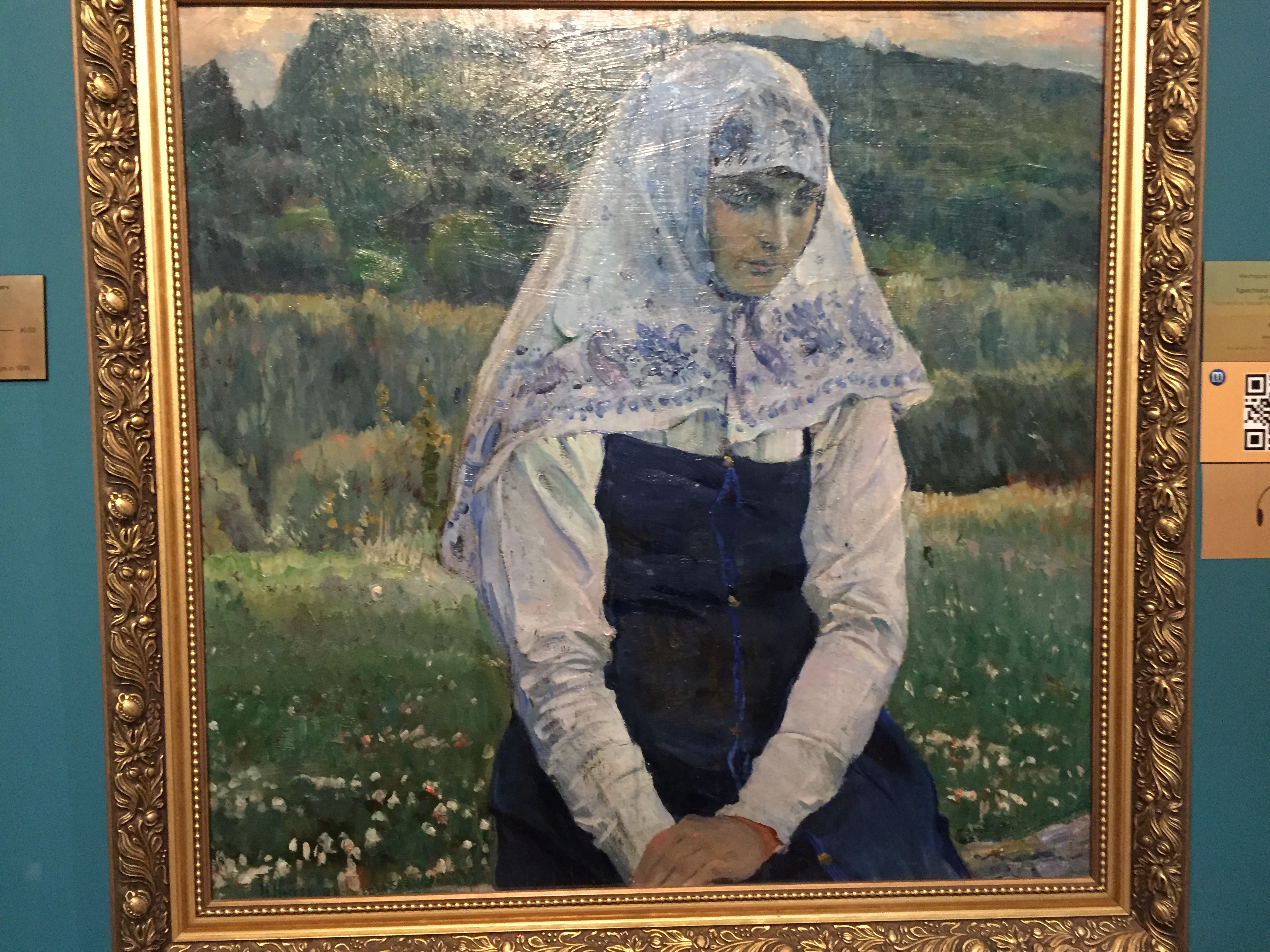
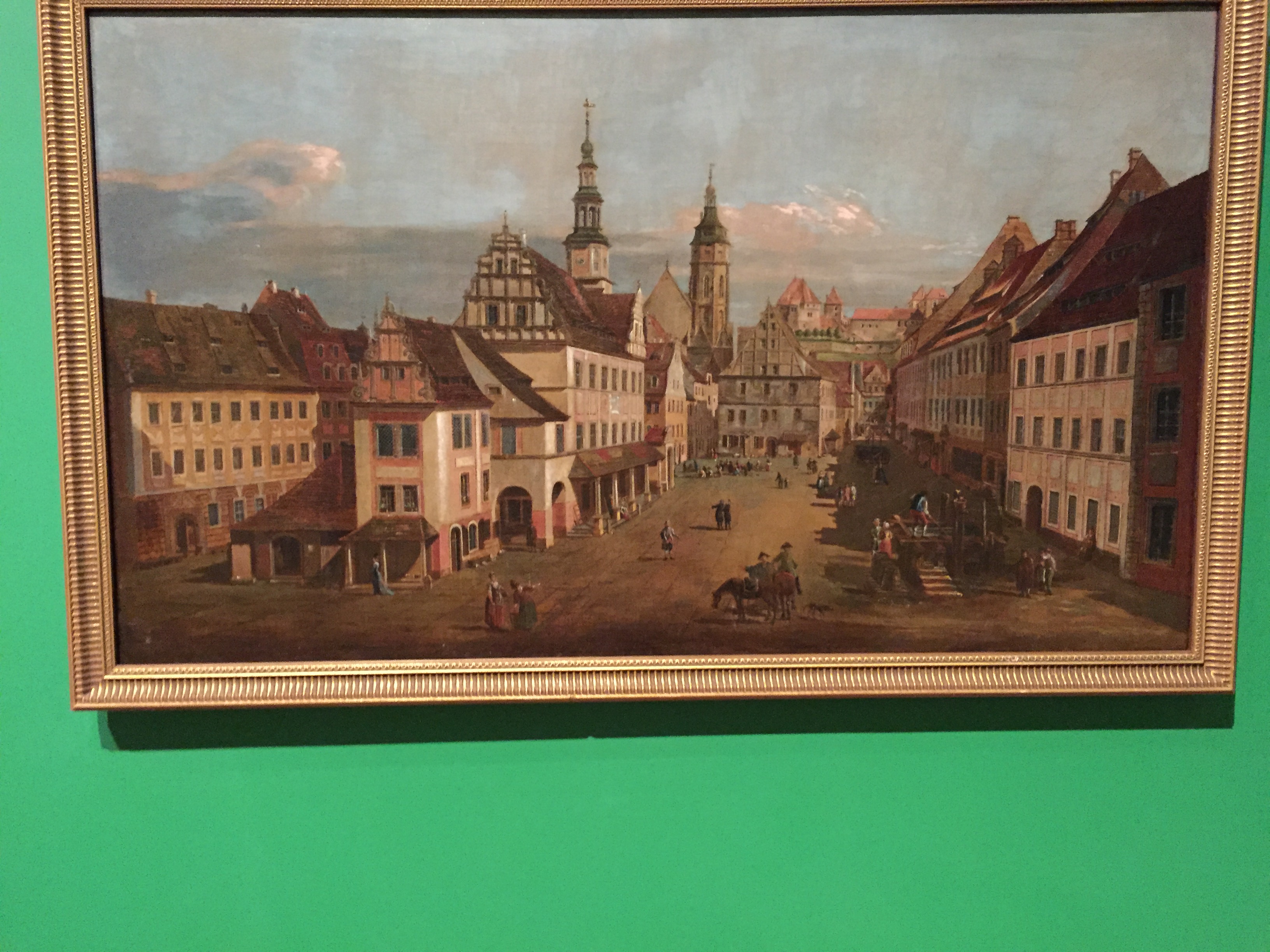
Later in the day, get your cultural brains in gear and visit the Primorie Art Gallery. When we attended, it was showing an exhibition of Russian Art from 1700-1900. We were intrigued with the very personal touches of each painting, that may have reflected or imitated more famous Western paintings of the same era. Sargent, Picasso, and Matisse came to mind.
There were also a number of startling paintings that represented new subjects seldom seen in paintings of the same era. Chinese or Muslim figures were represented in historical settings that required more context and explanation. Unfortunately, all paintings were titled in Russian or limited English.
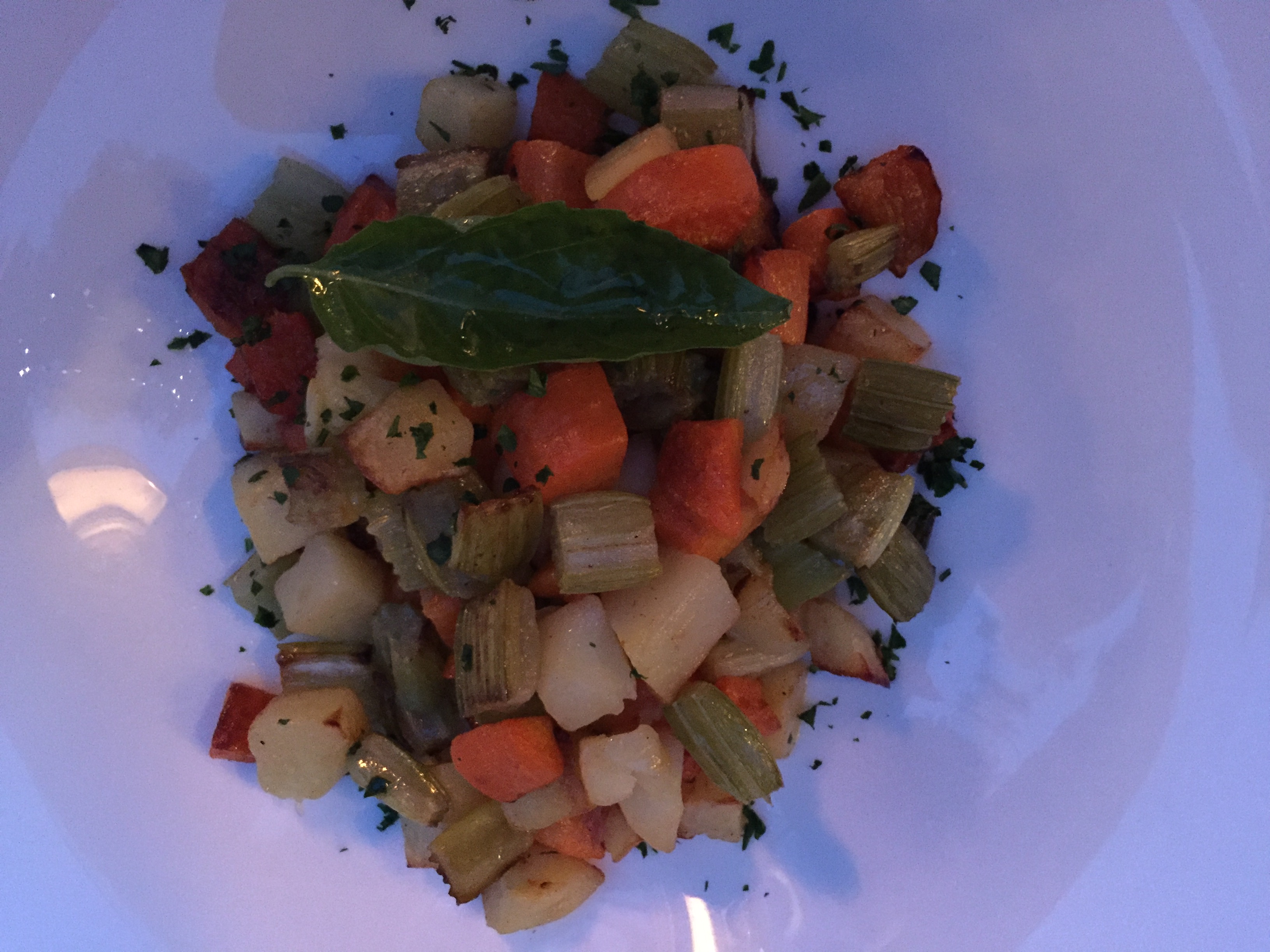
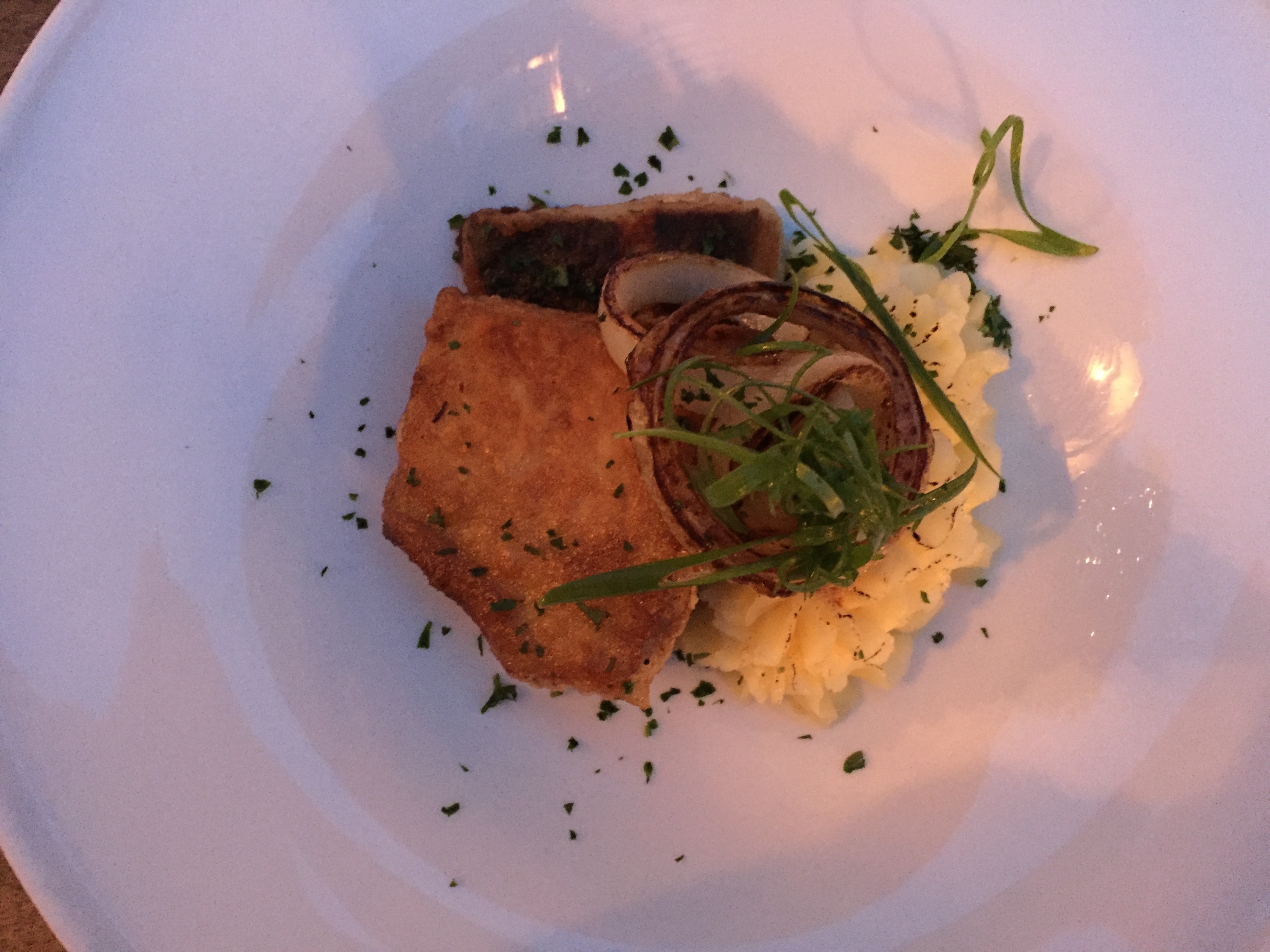
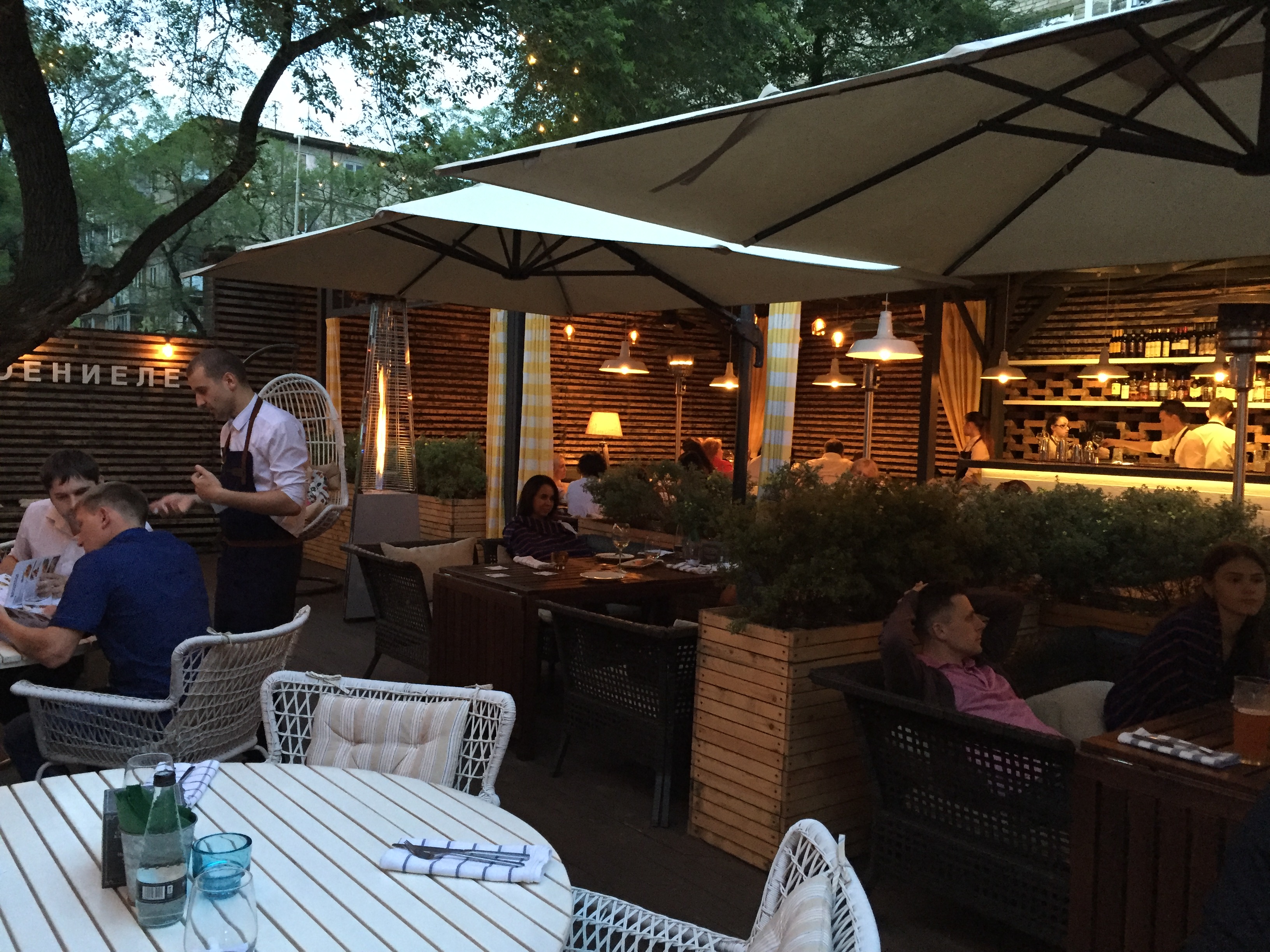
At the end of the day, kick back and have dinner at the Three Brothers for evening meal. This was our return visit from the night before. The outdoor dining was perfect for the cool balmy weather of Vladivostok. The city is very similar to San Francisco, with hills, coastal fog, city views everywhere, and a lively ambience. We’re in love with this city of 2 Million!! This city is destined to be a big tourist destination in the next 10 years, so come soon.
In light of this week’s tragic events over Iran, I felt compelled to share a video I produced at the end of 2018. It captures my current thoughts and feelings about Iran (in conjunction with other countries visited that year). My heart goes out to the Iranian people and their uncertain future.
Here’s the video:
(The notes below are an edited version from the original post, “Wring out the Old”, from December, 2018.)
Before the year closes out, I wanted to combine a number of videos and photos that I collected during this year’s travels. The selection includes a life-changing trip to Iran, first-timers to Korea and Hungary, and regular mainstays in Germany, Austria and China.
While most of the visits were with those who follow or are aware of my intrepid travels, fresh new friends taught me bout the hardships and endurance needed to survive the complicated political and economic world we live in. Shared laughter helped to offset an arduous year and to renew hope for the future.
I hope you will enjoy this quirky video. I’ve culled material from travels this past year, based on Barbara Streisand’s moving song, “Imagine/What a Wonderful World”, from her album “Walls”. Let’s hope that we can resist building walls and find ways to build trust and friendship instead.
The video includes clips from Shiraz, Persepolis, Isfahan, Yasd, and Tehran in Iran, as well as a few from Seoul, Korea. There are clips from my month-long sojourn at the Goethe Institute in Munich, Germany.
If you are interested in reading more about Iran, you can find the blog posts from April 2018.
Sadly, our weeklong foray into the dazzling Blue Aegean coast of Turkey has come to an end. Daughter Melissa‘s quest for the freshest, most creative food did not disappoint. I came for the connoiseur’s ride.
Turkish Food
Delicate bits of chopped morsels are packed with texture, flavor, and color to delight the senses. You swear you could eat like this every day, convinced of the variety and healthy ingredients.
Dolmas, eggplant spread with pomegranate and pumpkin seeds, and artichoke with mustard sauce
Bodrum to Izmir
The four hour public bus from to Izmir to Bodrum followed the coast, was a safe and comfortable trip, and cost us each a hefty $6. In true Turkish hospitality, they even served tea and cookies! We gazed at the stark countryside, lit by the low winter sun behind turbulent clouds, as olive and tangerine groves slid past.
View of Mountains and farmland from bus
Bizim Lokanta
On arrival back in Izmir, we couldn‘t resist returning to the lokanta in the Bazaar where we had eaten earlier in the week.
Tongue soup, bulgar with fava beans, and cabbage rolls with thick, creamy yogurtKudos on two walls of this vest-pocket diner were self-explanatory Bazaar Fun
It‘s a Wrap!
(Meatless) Kale and Cheese Wraps for a pittance
It‘s always bittersweet leaving a country, especially after such a short visit. But the food focus, imperial demands, abundance of land, and Mediterranean climate requires one to succumb to one of Turkey‘s finest features.
















































































































 travelswithmyselfandothers.com