Tag Archives: Architecture

Day 13: Moscow Camera Roll Continued

Yesterday’s events yielded far too many photos to post. I have chosen among my favorite children and am posting them for your viewing pleasure below. Moscow has been an amazingly inspirational visit–far too few Americans have been here to partake in its rich history and treasures. I feel badly that I didn’t come sooner.

And for Moscow by Night, here are a few shots of Moscow after a brilliant performance of “La Traviata”, the ballet, we caught. Moscow is totally safe in the tourist areas we walked at night, in beautifully balmy summer, late light weather. The lights really showcase the architectural detailing of each building in its pride and splendor.

And finally, for the foodies, our dinner menu. We tried the Holodet, an aspic of chicken and duck with dill that was delicious! Apparently, it is a local creation. You can read about its history on the menu page.

It’s probably worth mentioning that I have been revising and cleaning up the early Day 1-10 posts. I renumbered the days in successive order from the beginning, added photos that should have been in the posts, and fixed typos or information that was incorrect.

If you see any major bloopers, please email me and let me know! The website should be more stable going forward, once I am in Europe and the States, so hopefully you won’s see the fits and starts from the beginning of the trip. Once again, my apologies to those who may have been confused by incomplete information.

Thanks to all for the comments and support. Once Gee Kin returns to the US, I will be traveling on my own. It feels like you are all traveling with me, especially when I hear from you! It keeps me motivated and I keep you in mind when I am looking for interesting things to post. I hope they capture your attention too!

Day 12: Moscow Tour Time

Red Square
Red Square
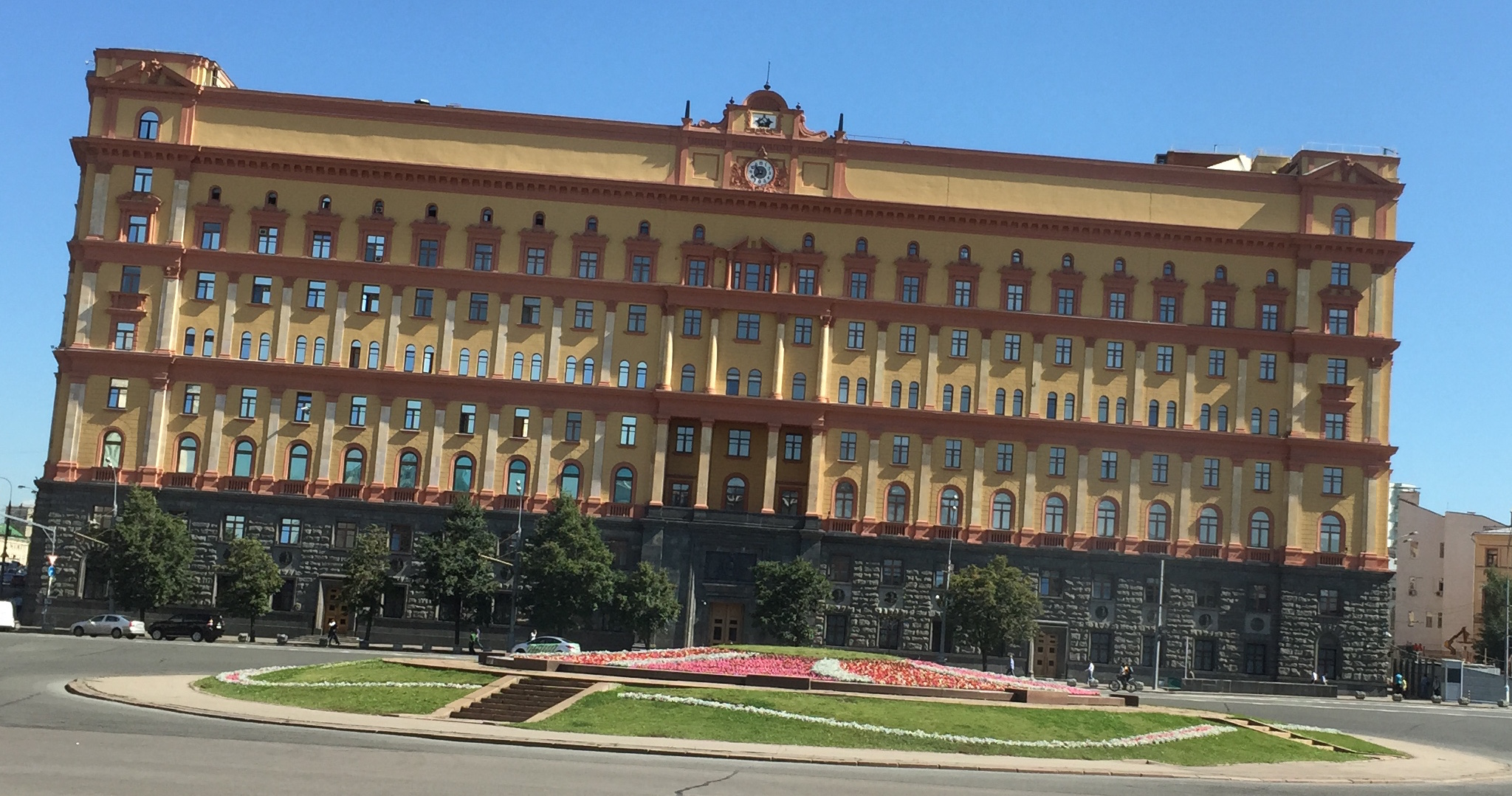
KGB after a bottle of vodka

Yesterday was a busy “play tourist” day, covering most of Red Square including the Eastern Orthodox St. Basil’s Cathedral, with its colorful onion domes; one of the most beautiful parks in the world just outside the Kremlin walls (see header if it is current); and Tym Department Store with its turn-of-the-century splendour (it has an enclosed galleria like the one in Milano).


Meals have been incredibly exciting and contrary to stereotypical notions of Russian food. Like most big cities around the world, you can find state-of-the-art contemporary food for nouvelle tastes. We found a great lunch place near the hotel called “Fresh”, with inventive vegetarian dishes. I had a salad of quinoa, avocado and greens, and Gee Kin had one with buckwheat, tomatoes, grilled spinach, sweet potatos, and mung bean sprouts. Both were served with olive oil and a delicious miso/rice vinegar, soy sauce, and mint dressing.

For dinner, we ventured into the Arbatskaya area and landed on an original crab-and-caviar menu with Prosecco for under $50! From Kamchatka, the crab is Russia’s equivalent of the Alaskan King Crab. Gee Kin thinks perhaps the oil boom brought on alot of high end quality food demands but the ruble devaluation has made the prices here a bargain. Come soon while Russia is on sale.

See pop-up captions above to sights we visited today.

Follow up to my own question the other day: why does it seem so long to lunch time on the TME and always an hour away?

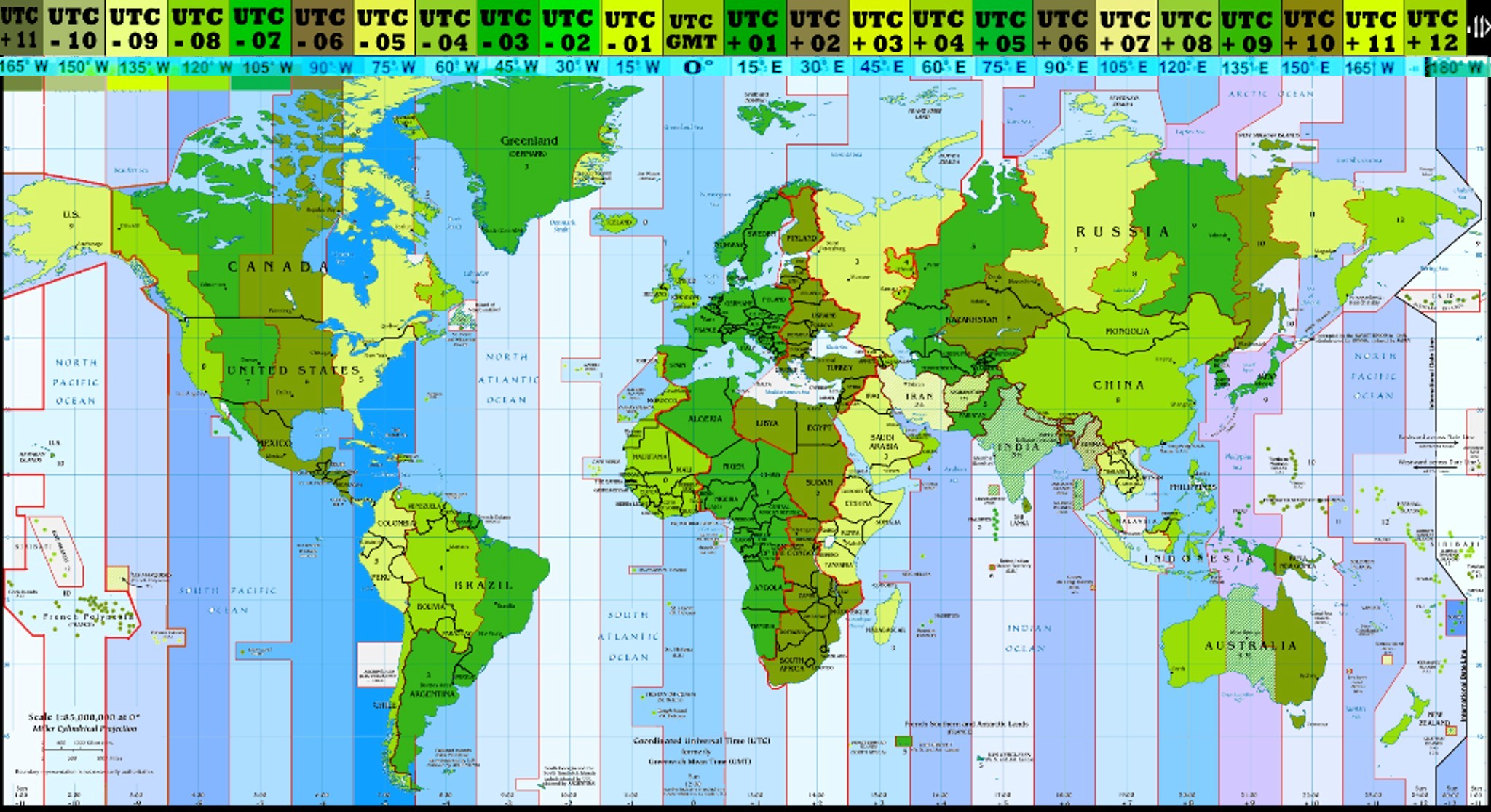
Take a look at the up to six time zone changes, from Beijing to Ulan Bator in Mongolia, then across Siberia to Moscow. Many of the westernmost cities such as Kirov, Novgorod, and Ekaterinaburg along the train trip follow Moscow time to avoid confusion. However, as the crow flies westward, the time zones are less dramatic on a train than those when flying. Jet lag is reduced, but the time warp messes with your brain and metabolism like a slow drag. Also notice how tidy (and tiny) our US times zones are compared to those in Russia. Russia visually looks and feels alot like Canada somehow when you compare the two countries on the map.

World Time Zones
World Time Zones

Day 11: Moscow Smackers

I am posting a few photos of our first half-day arrival in Moscow. The food photos were taken near the Bolshoi Theatre along Tsverskaya and Bolshaya Dmitrovka.

For the foodies:

Photos, above:

1 and 2: Our dinner at a nearby cafe, yielding yummy fettucine versions with tomatoes, pine nuts and arugula, and eggplant, tomatoes, and crab;

3. Blackberry mousse with chocolate and strawberry/kiwi/truffle tartlets along with dinner reading;

4 and 5: Pastry shop with blackberry deep dish pies and piggie rolls with apple filling (my breakfast pick)

6. Chilled caviar on tap with black sturgeon (6000 rubles–you work out the exchange rate) and red salmon roe for about 2000 rubles

For the curious:

Day 9: Scenes from a Marriage of Landscapes

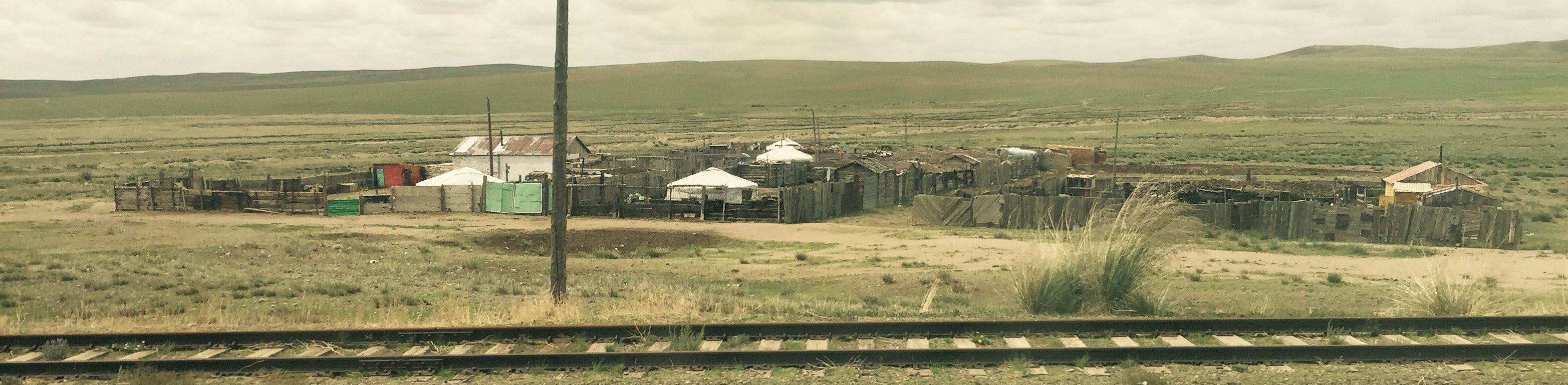
Mongolian yurt tracks

Photos, above:

1. Mongolian Yurts near Train Tracks
2. Yurt Ghetto
3. Russian Landscape
4. Russian Rural Housing

Those of you who have been choking over the number of museum visits on my blog this past year are going to get relief from the trudges through repositories of art and culture. Along the Trans-Siberian, there are few renown cultural centers, and no places to get off, at least on our itinerary. At pit stops, we haven’t wandered far from the train car, tethered to it by the time. We figure out where we can get a wi-fi signal (50% hit rate so far), and worry about missing the train. The attendants told us that there are no bells or whistles to warn us that the train is due to depart like there might be in the States. I’m not sure there are any there either. As the attendant looked at us, he cocked one eye against the sun and scornfully told Gee Kin that they dump the personal effects of missing trippers at the next police station. That thought deterred us from taking any risks.

Aside from stretching our legs at stopovers of 10-30 minutes, we have found plenty of amusement on the train. Heading out of the halfway mark along the line (technically the Trans-Mongolian Railway), we found ways to exercise: I walked the equivalent of 3 miles, or 3×5280 ft/the length of a train car of 50-60’x6=1 football field or 300’x18=100 times, or approximately an hour); Gee Kin used the hand rail for a ballet bar for his yoga and stair stepping, and I brought my PT stretchy band for muscle toning. We even danced to the Beegee and Beach Boys today  on hand-held music in our own private Idaho! It was great fun trying to come up with new ways to entertain ourselves.

The scenery has been a very good backdrop for these types of activities. We could listen to classical music with intent on our phones, learn survival Russian alphabet and phrases, and stare into the horizon for minutes on end. To describe the scenery…well let me see. After getting away from the smog of Beijing in the first four hours, the hilly mountains and picturesque terraces of Hebei Province and Inner Mongolia finally appeared. That quickly led to magnificent and stunningly clear plains and steppes of Mongolia. The pastoral views of horses, cattle, goats, sheep and camels were dotted with white puffy marshmallow yurts. The expanse of space was soothing and impressive. It gave us a reason to return to learn more about the Mongolian way of life. We hope that its nomadic lifestyle won’t disappear before we have a chance to return.

The Russian countryside first looked bleak and impovershed. Most countries don’t showcase their best along railway lines, but what I noticed was the prevalent neglect of structures. It seems that once a building was constructed, it was left to deteriorate and to let nature take its course. Many buildings looked rusted out or in need of repair. The one-story houses on flat terrain eventually gave way to more affluent, two-story Alpine style chalet buildings along the slopes of mountains.  They too seemed prone to being run down. We noticed people walking along unpaved roads with few cars. This vast country (4800 miles from Beijing to Moscow, 1.5 times the width of the US, and more than 6,000 miles on the Moscow-Vladivostok route, or 2 times the US width) would have a hard time keeping its transportation network maintained, for so few people. It is so spread out that there seems to be logistic problem in paying for its infrastructure and upkeep.

Cities are much more well endowed with mid-rise buildings, and few high rises so far. As part of my crane-spotting interest throughout the world, I was pleasantly surprised to find cranes populating the denser areas of the big Russian cities, but only a handful at best. This cannot be compared to the crazy building boom in China that I witnessed in my travels over the past year. Every major city I visited was benefitting from the internet revolution, except perhaps Russia. Everyone seems to live very simply and have to live with less. These are only impressions, and without validation from local people. Hopefully we will be able to get some perspective on this when we visit Moscow.

Our tour of train stations yielded some depressing results. A few over the top showcase-style buildings, but they were too over-articulated, with massive bulky shapes and proportions for a Western-trained eye. Wood was used for all rural and low-rise city housing and some brick, but very little or no stone or concrete structures existed. The massive woods of birch trees along the entire railway line are attractive to look at, but the only variation of the landscape is an occasional field of wheat, corn or hay. 

We turned our attention to the environment inside the train and found plenty of activity to occupy our time. I finally set up my new Macbook filing system and felt superior achievement after a few hours’ effort today. Aside from preparing my blogs (they take about an hour or so each day), posting them at station stops (results are highly unpredictable and with high drama), and an occasional short nap, we have not been bored at all. Gee Kin tells me he likes traveling with me, but I know he needs to go home to recover. He says he has work to do, but I know he is just being kind to say that.


Photos, Above, left to right: Krasnoyarsk, Mariinsk, and Novosibirsk Train Stations

Day 3: A Chinese Style Boutique Hotel

As mentioned earlier, we are staying at a Courtyard-style residence. This small boutique hotel is over 300 years old and is well preserved and showcases the best of Chinese Architecture. The rooms are decorated with traditional Chinese fretwork and furniture. The public spaces also reflect traditional Chinese art and design.

panorama

Private rooms surround the courtyard. It is well used and shared by guests, who can recover there from the stifling heat and frenzied activity in the surrounding neighborhood. Dongcheng, or East Wall, has become the hot new area after a portion of the courtyard style residences has been saved. Despite much controversy in the recent past, this area was renovated and repurposed to retain its history and old-city atmosphere.

It’s been a fun place to explore and peek into existing courtyard homes. Shopkeepers have been very creative (see yesterday’s post). They sell one-of-a-kind handmade and locally produced clothing, accessories, and of course, food. (This is China, after all!!) Services such as spa treatments can also be found in this area. Both foreign and local tourists alike are fascinated by the clash of modern and ancient Chinese culture.

Updated 8/6/15

The Salk Institute, La Jolla, CA

I don’t normally like to follow raves on buildings by architects, but I am glad to succumb to this one. The Salk Institute is one of the icons of architecture and considered a sacred site by many. You can see why from the setting, the restraint of materials, and the pure forms that are executed with absolute skill and perfection.

I’ve cut and pasted the text from the website below so you can understand its mission and beginnings.

The Salk Institute was established in the 1960s by Jonas Salk, M.D., the developer of the polio vaccine. His goal was to establish an institute that would explore questions about the basic principles of life. He wanted to make it possible for biologists and others to work together in a collaborative environment that would encoura them to consider the wider implications of their discoveries for the future of humanity.

History of the Salk

Jonas Salk had a distinct vision for the Salk Institute as he worked with scientists and architects to create a new paradigm for research and collaboration. Pictured above the early 1960s, Salk worked closely on many of the construction details of the Institute.

In December 1959, Salk and architect Louis Kahn began a unique partnership to design such a facility. Salk summarized his aesthetic objectives by telling the architect to “create a facility worthy of a visit by Picasso.” Kahn, who was a devoted artist before he became an architect, was able to respond to this challenge.

For San Diego mayor Charles Dail, a polio survivor, bringing the Salk Institute to San Diego was a personal quest. Dail showed Salk 27 acres on a mesa in La Jolla, just west of the proposed site for the new University of California campus then planned for San Diego. In June 1960, in a special referendum, the citizens of San Diego voted overwhelmingly to give the land for Salk’s dream. With initial financial support from the National Foundation/March of Dimes, Salk and Kahn were able to proceed.

Groundbreaking took place in 1962, and soon thereafter the Salk Institute for Biological Studies became a reality. A few key researchers were invited to work in temporary buildings which were used while construction was under way. When the first laboratory was opened in 1963, there were five senior scientists and their research teams. This distinguished group of fellows formed members of Salk’s first faculty group and in addition to Jonas Salk included Jacob Bronowski, Melvin Cohn, Renato Dulbecco, Edwin Lennox, and Leslie Orgel. The first Nonresident Fellows selected were Leo Szilard, Francis Crick, Salvador Luria, Jacques Monod, and Warren Weaver.

During the next few years, as the Salk expanded, resident fellows (now generally regarded as professors) and nonresident fellows (appointed scientists from other institutions) together advised Dr. Salk about future scientific directions. The organization of the Institute has evolved with time to its present structure, consisting of a board of trustees, a president and CEO, an academic council, and a chairman of the faculty.

Today the major areas of study at Salk are: molecular biology and genetics, neurosciences, and plant biology. Salk research provides new understanding and potential new therapies and treatments for a range of diseases—from cancer, AIDS and Alzheimer’s disease, to cardiovascular disorders, anomalies of the brain and birth defects. Discoveries by plant biologists at the Salk pave the way to improving the quality and quantity of the world’s food supply and to addressing pressing environmental problems, including global warming.

The Institute has been supported over the years by funds awarded to its members in the form of research grants, most from the National Institutes of Health, and from private foundations and individuals. Especially important has been the continued support of the March of Dimes which, in addition to funds for the original structure, has contributed significantly every year to the Institute’s financial needs.

For more details about the history of the Salk Institute, check the website http://www.salk.edu for information about the “Genesis of The Salk Institute”. Written by Suzanne Bourgeois, Professor Emerita and Founding Director of the Regulatory Biology Laboratory at the Salk Institute.


image

Großartige (Magnificent) Weimar

Photo above: View of Plaza outside Goethe’s House

Goethe and Schiller are often mentioned in the same breath when taking about Germany’s literary past and pride. It is no accident that both were friends and lived in Weimar as contemporaries. We came to this elite small town to learn more about each of them.

The Goethe Institute’s namesake was already mentioned last year when I attended a month long language class in Dresden (see Day 22 post in August 2014 Archives). I was fascinated by his life story. It began with his love interest, Charlotte, who was seven years’ his senior. He was swept away by her, despite her already being betrothed to another man. He was compelled to write one of the first romantic novels that spilled the beans (or poured his heart if you will), very openly and honestly. He eventually had to go away to Italy for two years to get over her.

The Sorrows of Young Werther recounts his passionate love for Charlotte as a young man. It went viral. Unfortunately, this success later plagued him in life to the extent he regretted writing it. The fleeting romance story didn’t exactly match up to the stature of his deeper thoughts. For me, it added dimension to his life and a reason for learning more about this great philosopher.

It even compelled Thomas Mann to write a story about Goethe’s famous love for Charlotte. In Lotte in Weimar, the modern writer of the 1930’s imagines Goethe meeting Charlotte in Weimar after they are in their sixties. She comes to visit with her sister and daughter, and she meets with Goethe. A faint reminder of Pride and Prejudice, both Goethe and Mann stories have deep psychological meaning despite being early soap operas. They are fascinating stories that examine and delve into German character and emotions.

Although we had been to Weimar before, I wanted to revisit this historically significant town. As a philosopher, politician, writer, artist and humanist, Goethe was a Renaissance man. After seeing his home, we have greater awareness and appreciation for his life and work. Of course, it didn’t hurt that he was patrician and hung out with royalty!


Photos above:
1. and 2. Interior of Goethe’s house
3. View of garden from inside house


Photos Above:

1. View of scenic Elbe River and Bad Schandau, from train en route from Prague to Dresden (approximately 2 hours by train)
2. View of Prague train station Art Nouveau interior, spotless and spit-shined (also very safe)

More on Schiller and the Bauhaus to come…

Thank You Very Mucha

image

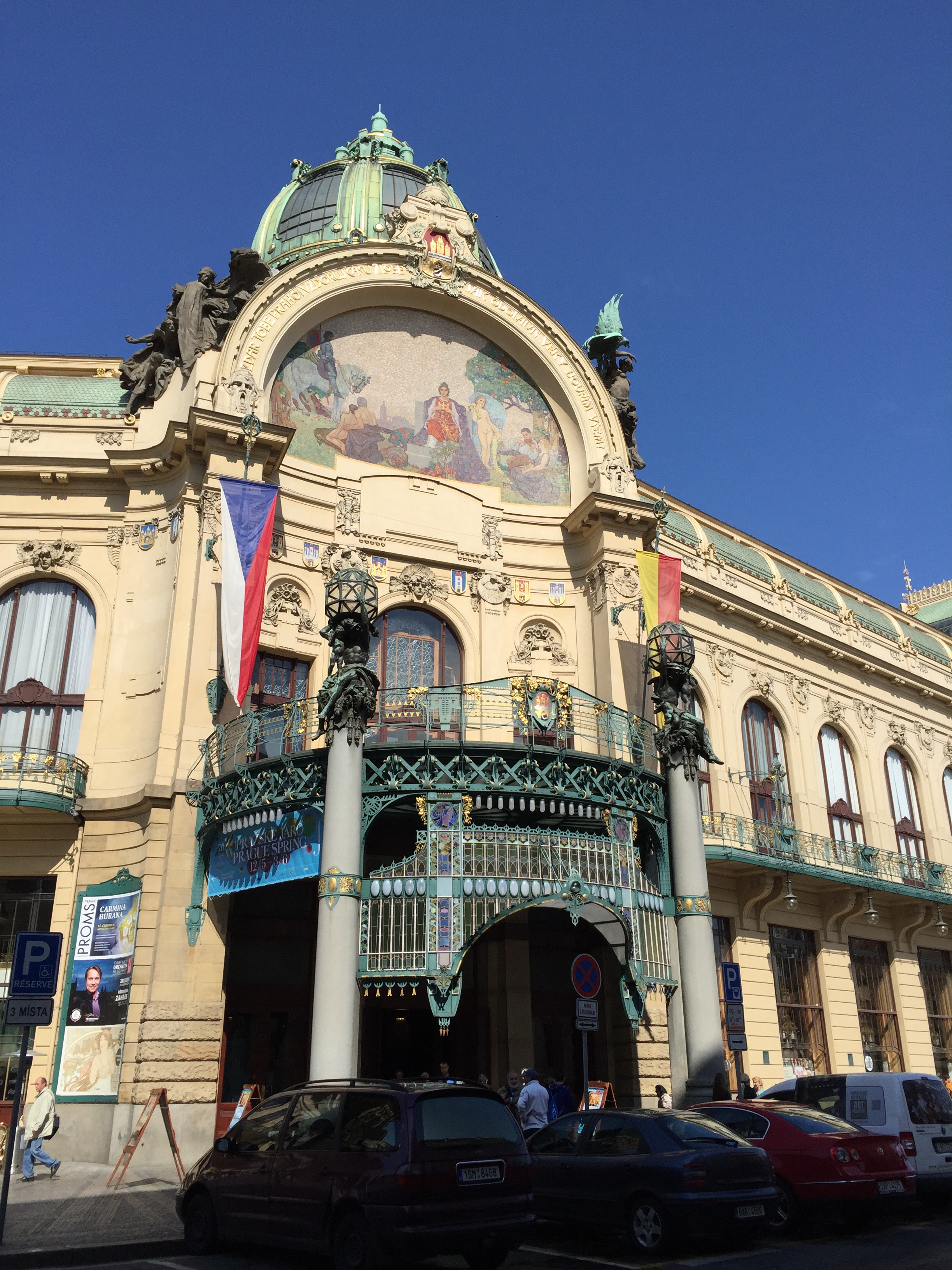
Exterior of Municipal Hall with murals by Mucha

Alfonse Mucha was a Czech graphic designer who was known for his advertising posters of Sarah Bernhardt, and for his signature designs that were instrumental in the Art Nouveau movement. After a successful career in Prague and New York, he decided to return to his Czech roots. He dreamt of helping to record the saga of the Slavic nation after WWII. Through his benefactor, he was able to depict the Slav Epic in 20 murals, now housed in the National Museum.
image

The museum was closed, but we were able to see three of his works in the National Gallery. The poster framed in gold was one of the pieces. The Mucha Museum showed most of his work and an informative video produced by the Mucha Foundation presented the life of this artist. He was prolific as one of the first advertising artists of his day, and became famous in Paris. He hob-knobbed with famous artists and patrons, and eventually made his way to New York.

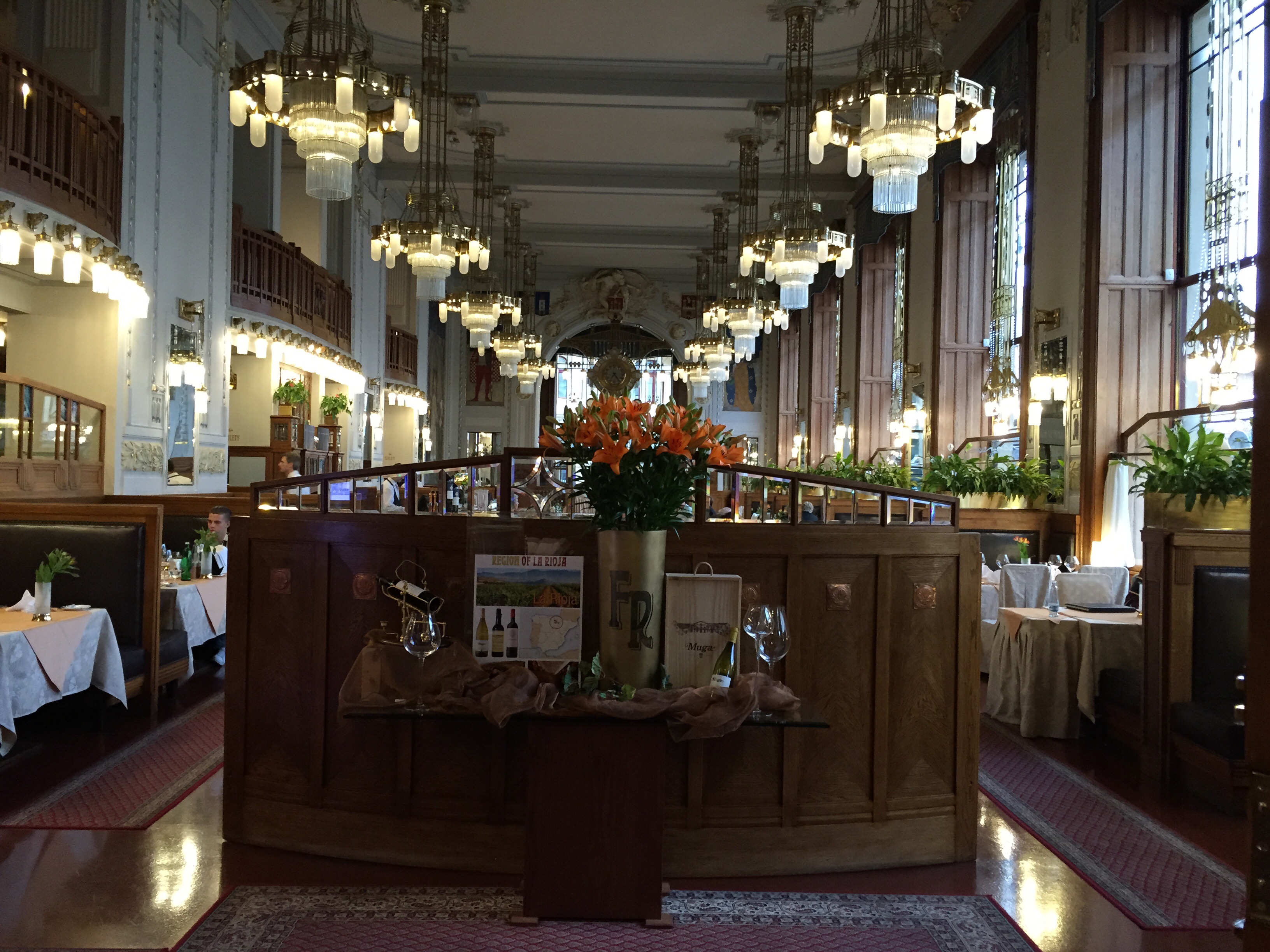
Upon his return to Prague, he was commissioned to decorate the Municipal Hall where the concert we attended last night was held. The interior was ornately decorated with etched glass, brass trim, and murals by Mucha. The view of the stage with the organ, the dome, and the interior photos you see are taken inside the hall.

More impressive was the musical performance. Despite my initial trepidation about hard sellers barking on the street to us, we were glad that we succumbed to their pleas. The music itself was delightful and the quality was very high. We heard a Mozart Concerto in C Major with a violin soloist, and Beethoven’s triple Concerto in G Major for Violin, Cello and Piano. The highlight was Dvorak’s New World Symphony, a stirring reminder of the Czech Republic’s early beginnings.

With 60 musicians performing for a small audience of less than 200 people (mostly tourists), I wondered how they were able to break even. It was great value, and I even felt a bit guilty paying so little for such a fine, ovation-warranted performance. To top it off, we continue to enjoy visiting and attending performances in beautiful and historic buildings. This particular building reminded me of the Palacio des Belles Artes in Mexico City. (See posts and video in December 2014 on Mexico City Art and Architecture).

It was particularly thrilling to reflect on the day’s exposure to Mucha and his commitment to the Czech People, followed by stirring music by Dvorak and the conductor of the North Czech Philharmonic Orchestra, in a venue decorated by Mucha himself! The visual and sound effects conveyed the passionate feelings of the artists and made the experience very moving and emotional.

As for the competition between Dresden and Prague, two musically inclined cities, I can only be politically correct and say that they are similar and different. Dresden has the Semper Opera House, the Schiller Theater, Frauenkirche and many other smaller venues that provide seasonal programs including the annual Music Festival.

Prague has its counterparts in State-supported venues such as the National Opera House, National Theater, Municipal House, Rudolfinum and many churches. With a larger population, Prague seems to rely on a pattern of daily, year-round performances for tourists who expect to hear music on demand. I’m sure there are performances catered to local music lovers, but I wasn’t able ascertain whether the tourist-oriented events were also for local residents.

I’ll continue this debate and decide after the musical events in Dresden this week as to which city I prefer (I have a hunch already–what’s your guess?). It will be strictly subjective, determined by many factors such as weather, what I ate that day just before the performance, how easily I got to the venue, and who’s in the audience! Assume all the music in both cities is the best quality and value that can be found anywhere in the world.

image
Entrance to historic restaurant in Art Nouveau splendor
image Detail of hall interior

Prague Perspectives

Here’s a potpourri of architecture, art, and street scenes from today’s walks to the National Gallery and along the Charles River:


1. The Fred Astaire and Ginger Rogers Dancing Building by Frank Gehry
2. Optional transportation across the Charles River
3. Elegant Witches’ Caps

Architectural Models by Loos and others (for the architects in the room)

Portraits by Rousseau, Matisse, and Picasso; Sculpture by Degas and Rodin

A moving tribute to a 22-year old artist


1. En Plein Air
2. Czech Donut Making


3. Witches and Goblins and Ghosts–Oh My! are everywhere in Prague (we just missed April 30, when everyone dresses up as a witch throughout the city)
4. Second Effigy in Two Days–a whimsical or warped obsession?

Note: Click on photos before for better viewing.

I’ll be on the road to Weimar tomorrow, so next post may be delayed. See you soon!

Prague Architecture & Promos


Like Dresden, Prague has a Disneyland-ish quality to it. We think of the SoCal American counterpart as fantastical, whimsical, and totally pedestrianized, and this city seems to match those descriptions. Like Disneyland, it also has hoards of tourists. For this city’s economy, tourists are no plague for Prague.

The buildings are impeccably maintained as are the streets (at least in the old town–I haven’t seen the real world by daylight anywhere yet!). It’s best to succumb to the lovely lures of the inner city and not overly scrutinize what may be beyond just yet.

Photos, from top left, counter-clockwise:
1. Tattooed Building
2. Baroque Beauty
3. Another Baroque Beauty outside hotel
4. Town Hall and Astronomical Clock in city center
5. Stone Relief on side of building
6. Effigy decorates confluence of crooked streets; impressions of Prague in 3GS: gruesome, gnarly, and Gothic.

image
Jewish Synagogue (above)

As for Prague being a musical city, it definitely is well endowed, with a twist. Tourists must run the gauntlet of mass advertising for concerts and performances held at virtually every available venue. Catholic and Protestant churches competed in the past for parishioners and compete today for music patronage. Like canned tours, it is impossible to avoid the bombardment of flyers and hawkers (not for sex, but…music???). I felt a bit sorry for those disinterested in music, like the feeling you get when you’re not a sports fan and everyone around you is a fanatic. What’s all the fuss about?!? It’s a different world.

Fortunately for us, I was a bit unprepared and the readily at-hand research saved my ogling-going on Google. Instead, we physically stumbled into an ideal performance at the Municipal Hall. Dvorak’s New World Symphony will be performed with 60 local musicians of the Czech orchestra for around 40 euros each. (Quantity, not quality matters here) It’s also easy to compare choices when ads are at every street corner.

We are about to go to a Prague State Opera performance of “Nabucco” tonight. Keep your fingers crossed. Although I bought tickets online, I wonder how many tourists got coerced into going to something at the last minute that they really didn’t want to see. As for performances in Dresden and Leipzig, they haven’t capitalized on music or pandered to tourists to the extent done here (unless I missed something before). Maybe by choice, or less desperation. Stay tuned….

Update: the Prague Opera did not disappoint…in fact, it fully redeemed my faith in coming here. The performers were stellar, the staging straightforward, and the kudos were appropriate to the performance (not overinflated as they are in the U.S. with standing ovations the norm rather than the exception).

*I couldn’t help but add a panoramic of the interior of the beautiful opera house here. The acoustics were the best of any house I have visited. It’s small, intimate, and perfectly balanced. Maybe it was sitting in dead center of the parterre that did it, but for $55 for best seats in the house it beats the Met hands down on acoustical quality and value.

imagePrague State Operahouse interior