Day 72: Frilly Philly to Cheeky Chicago

Most visitors to the US would not normally include Philadelphia on their list of must-sees, but Americans would find that Philadelphia is representative of what would be considered an all-American city. Its early history certainly rivals that of Boston, the industrial golden age was built there, and it has deep connections to the 60’s era of rock and roll.

The weather over the weekend didn’t help the gray color of the city, but a strange injection of pink showed up in unsuspecting places. First it appeared in the fountain at City Square, then later.

As I meandered over towards Chinatown, I discovered how universally consistent the food, services and physical environment were to those elements in other Chinatowns around the world. Perhaps the similarities were more so in American-style Chinatowns because of their vintage, but they also appeared in latter-day Chinatowns in other cities like London, Sydney, Auckland, and Zurich. The money spent in Chinatown gets recycled a number of times before discharging out into the rest of the world, so there are social, economic and political spinoffs to keeping purchases within the community. It also keeps prices dirt cheap and affordable. Maybe this contributes to the common look and feel of each community.

I wondered where the Chinese get the recipes for old standbys like dim sum, egg tarts and Ho fun? Internet?? A Master Martin Yan chef who qualifies and certifies chefs for consistencies and maintains an archive of secret recipes? An underground triad network of chefs who kung-fu chops you off the list if you are non-compliant to the recipes honed since the Sung Dynasty?

I found this question very intriguing and mysterious. Maybe there was some giant alien spaceship distribution point near that town in New Mexico that delivers the stuff from outer space or the shopkeepers secretly 3-D print the food at Kinko’s for Chinese dim sum subscribers.

While I was eating my comfort breakfast of shrimp noodle and rice congee with pork and 1000-year old egg, a young 30-something Asian male entered into the fluorescent pink dim sum shop. He was meeting a middle-aged man in a suit. He ordered an Avocado smoothee that the shopkeeper behind the counter repeated: “Avocado?” “Yeh. Smoothee.”

I eavesdropped. The smoothee drinker was advising an older man on how to get a life insurance broker’s license. He explained that, with a license, you can advise people on Obamacare and rake a $50 service charge. They carry on their conversation about details, percentages and commissions.

Later that day, we initiated our first major overnight adventure on Amtrak from Philadelphia to Chicago. Here are a few starter shots. Watch for the USA-Russia cross-country train competition ahead.

Scenery along the way:

The train:

Day 71: An Unscientific Analysis of Two Land Voyages

Today I am launching my first official competition between the Trans-Siberian Express (We took the Chinese-run portion of the Trans-Mongolian Express using TSE tracks from Bejing to Moscow at the end of July and the beginning of August–see posts if you missed them) and the American Amtrak system.

I consulted with my hubby and travel partner on the TME what criteria I should use. His response was
1. Food
2. Food
3. Food.

In my attempt to be neutral (ala Swiss) and to avoid any international incidents between Russia/China and the USA, I decided to establish more traditional criteria for judging each system’s merits:

1. On Time Record (TME evaluation will be based on flickering Memory)
2. Comfort (Bed strength, ability to rock a baby to sleep and keep them there; access to lights, camera, action; no annoying overhead PA system used at free will for the comfort of the system and not the passenger; and good padding and ergonomics for blogging.
3. Service (attentive staff, no back talk or attitude–i.e. Courteous; visible but not obtrusive; professional but not hollow friendly delivery of information)
4. Cleanliness(no spit on counters; toilet paper unfailingly in supply; Windows you can see through; stainless upholstery and carpets)
5. Food (real food; reasonable prices; no cheap shots using lots of salt and sugar; no bar codes on wrapping; cold beer; wine list; nuking; no plastic, polystyrene, or jewel boxes)

Gee Kin reluctantly added the first criteria for time after he realized his credibility and reputation were at stake. By then, I had already prepared my testing lab for forensic evidence.

To date, the qualitative analysis will incorporate the following:

Pros of the Trans Mongolian Express:
1. Decent food in the Russian dining car at reasonable price
2. Service in the sleeping car was very good and attentive by the two attendants assigned to our car (even though we and one other woman were the only passengers in the car after Ulan Bator!)
3. The compartment was tidy and toilet at the end of the car was adequate.

Cons for the Trans Mongolian Express (TME)
1. The tracks are not universal in Mongolia thereby requiring wheels to be changed on every car going between China and Russia through Mongolia
2. The trains do not have Internet access
3. The schedule and arrival times at any station were a mystery due to fluctuating time zones

Pros for Amtrak trains
1. The trains are very comfortable
2. The trains have Internet access
3. The information for time, stops and scenic opportunities is helpful

Cons for Amtrak
1. Service staff are surly
2. Stations are antiquated
3. Seating is not reserved

Here are a couple of pictures comparing the station interiors for starters.

Stay tuned for interim reports after the three upcoming long haul, overnight trips across the USA:
1. Washington DC to Chicago on the Capitol Ltd.;
2. Chicago to Santa Fe, New Mexico on the Southwest Chief;
3. Santa Fe to Los Angeles (continuation of the Southwest Chief), then the Coast Starlight train from LA to San Francisco.

The results will be a cliffhanger and won’t be finalized til after the end of my 80 days around the world, so stay tuned!

Day 69-70: Philadelphia’s Grand Museums

Today we started at the Barnes Foundation Collection. Barnes was a wealthy patron of the arts and kept his artwork in very specific positions in his mansion. When he died in 1951, he intended the artwork kept in his home to be available to the public. However, after many legal battles, the Foundation succeeded at moving the collection. The new building, designed by Billie Tsien and Tod Williams, was opened in 2012. You can read about the history here:

https://en.wikipedia.org/wiki/Barnes_Foundation

While I was unable to take photographs of the paintings on display, my notes included the following features:

All the modern impressionists and classical painters were represented, with a wealth of Renoirs, Cezannes, and Matisses.

I made a point to learn about new painters whose names I did not previously recognize. I chose Jules Pascin, an American and Bulgarian painter. Another was Chaim Soutine, a Russian who was active in France between 1893-1943. One of my favorites was of a young pastry chef. Barnes bought over 50 of Soutine’s works. John Kane, whose work Barnes seemed to favor, was an American who painted lovely American scenes.

Barnes accumulated so many paintings that he was able to display work by painters influenced by earlier painters side by side. He intentionally placed these works adjacent to each other. It was very challenging to view the art as you were required to consider why the paintings were juxtaposed to each other.  A main piece was placed in the center of a wall flanked by other smaller similar pieces. Greater variety was created by placing portraits adjacent to landscapes to vary the scale and context, so your mind is actively bouncing back and forth between these paintings as well as painting styles.

In addition to variety in scale, content, and size, unrelated pieces such as an artist’s work from other parts of the world were interspersed throughout the collection. I found the small naive New Mexico panel paintings by Jose Aragon (1796-1862) an interesting contrast to those of much more sophisticated European artists. Chinese paintings from the Ching Dynasty were also injected over other Western paintings. The usual overload of styles from the same artist or period was broken by this approach. It was a clever way to provide relief and maintain interest.

Furnishings and decorative arts were also placed under or over paintings. Barnes claimed that a hinge was as worthy of being appreciated as a work of art as a major painting. Initially you are aghast at the display of so many items on one wall, but eventually you realize that the density and intensity has a purpose and meaning to it.

In the afternoon, we took a tour of the Surrealist collection at the Philadelphia Museum of Art that included pieces from Dali, Man Ray, and Picasso. The Surrealists moved from the Cubists’ physical description of space and added psychological interpretations. They attempted to depict dreams and drew from ideas posed by Freud and Jung.

At the tail end of the day, I made my way to see the Asian art collection that Gee Kin and I saw over 30 years ago on our first visit to the Philadelphia Museum of Art. I remembered the incredible Ming Scholars’ Room and the Japanese Teahouse, which are shown below. At that time, I had not appreciated the wonderful Tang musicians, horsemen, and camel figures in the collection. I first saw them along the Silk Road in Dunhuang last year (see 2014 posts in September, 2014). I enjoyed returning to this venerable institution a second time to discover these ancient treasures.

Text for French Courtyard in featured image above:
IMG_9733

After traveling from Philadelphia to Washinton DC, are about to embark on our first overnight journey. We won’t be stopping in DC except to transfer to the Capitol Ltd. to Chicago. Stay tuned for a big itinerary and lots of fun ahead!

Day 66-68: Very Vermonty

After a ride Upstate on the Ethan Allen Express from Penn Station to Albany, NY, my college roommate and I rented a car and drove east toward Middlebury, Vt to go “leaf-peeping”. The only ominous problem was that this year’s weather affected the Fall foliage. Much of the greenery along the Hudson River appeared to be damaged and dried from the unusual summer heat.

Apparently it rained in June, then very little over the summer. The leaves depend on cold weather to turn color. We started seeing just a tinge of color here and there, but were not too hopeful that we would see much in the next couple of days. Instead, we resolved to enjoy the casual air, windy roads, and 55mph highways.

We stopped in an apple farm along the way, had a long leisurely lunch at the “Lobby” with Otter Creek as our view, and then strolled over to visit the glamourous Middlebury College indoor track.

All along the way, I was reminded of the history of this area. “Last of the Mohicans”, buildings with ca. 1800 etched in stone, white clapboard houses, and picture-perfect Lutheran churches are abound.

I was struck by the resemblance in parts of Germany to New England. The early 19th and 20th C. signature church steeples in the small towns dotted throughout Germany were contemporary to those built in the US. It’s amazing to think that these areas were just getting their footing at the same time Goethe and Schiller were in full tilt in Weimar. It helps me to appreciate and relate to a book I am currently reading, “Two Boston Brahmins in Goethe’s Germany”.

Only a faint blur of red dusting the wooded hills were visible around the ski resort of Killington. Instead of a gondola ride up the 4162 elevation, I opted for a rickety chair lift in this ski town. It was half the price for half the height, and probably half the time, so it appeared to be a sound if not minimal investment to me.

image
image

A late morning breakfast was jump-started by champagne cocktail, quiche, ravioli and finished with a delicious bacon and egg muffin sandwich cushioned with a sweet potato bed, in that order.

The next day, we left Killington to explore the Scenic Roads from Killington along Route 4 East to Woodstock, Vt. and South along Route 100 through the heart of Vermont to Wilmington. The leaves were most impressive along the Green Mountain National Forest.

We made a stop at the Shackleton Thomas Woodworking and Pottery Store, where they made hand crafted furniture and stoneware. Each item was lovingly produced in an atelier that carried on many traditional techniques.

Tomorrow we will be traveling from Albany, NY to Philadelphia, PA by Amtrak through NYC. We have ordered tickets the following day for the Barnes Foundation Collection and the Philadelphia Museum of Art, so art lovers, get ready!!

Day 64-65: New York City, New York (Turandot and Anna Bolena)

Three opera performances in a row may sound ridiculous, but my weekend in New York was virtually spent at Lincoln Center doing just that. When you start to recognize the cleaning staff and where the women’s bathroom lines are non-existent during intermissions, it’s time to get a life. Nevertheless, I indulged myself and got my opera fix good enough for a year.
imageTurandot’s staging was monumental and an “only at the Met” extravaganza. The cryptic story refers to the son of Timur and Samarkand, where the Sogdians ruled. The mythical princes, land and story must have been based on Central Asian history and the Silk Route trade that I discovered in modern-day Uzbekistan last year. (See 2014 posts on Samarkand). Learning this small piece of information helped me to connect and appreciate the historical setting for the opera.

Unfortunately, most of the production still felt unable to reconcile the fairy-talish Chinoiserie and stilted Chinese operatic dance movements with historical perspective. Despite many Asian attendees in the audience, I wondered if they were any better able to accept the strange mix. I wished I had seen Zhang Yi-Mou’s production of this opera in Beijing. The famous Chinese director utilized a cast of thousands and staged it in the Bird’s Nest Stadium
a few years ago.

The story is based on the princess demanding her suitors to answer three riddles to win her. If they didn’t, they got the QCECK (sound effect, with an abrupt horizontal hand Slash at the neck). I may need to dig further into the opera’s history and Puccini later to find a decent answer to my own riddle.


Photos, above: curtain calls for Turandot crew

Earlier in the day, I saw Anne Boleyn. Although the first half was a bit dull and heavy, the second half made up for it with a gripping unfolding of events and thrilling arias. Sandra Radvonovsky as Anne Boleyn and Jamie Barton as Jane Seymour were captivating together. See the curtain call below.
image

Last but not least, a visit to a New York institution: the local bagel shop. Lox and cream cheese on an everything bagel…perfecto!!
image

Day 63: New York City, New York (Il Trovatore and the Guggenheim)


IMG_9504For my old and new friends and fellow opera lovers, here are photos of the Mighty NY Metopera evening of Il Trovatore, with superstars Anna Netrebko and Dmitri Hvorostovsky.

In the most moving part of the evening, Hvorovosky was showered with yellow roses during his curtain call. He was recently diagnosed with a brain tumor and had cancelled all performances in July and August. He had only returned to perform with Anna Netrebko for three performances of Il Trovatore after positive treatment. You can read more about him on his website at:http://hvorostovsky.com/

Anna Netrebko, who played Leonora, was sublime, and Hvorostovsky was courageous and powerful. Delora Zajick, who played Azucena, and Yonghoon Lee, who played Manrico, were both well received.

Earlier in the day, we took a short walk to the Guggenheim Museum to see a highly recommended Doris Salcedo exhibition. Doris is a courageous artist who asks questions about trauma caused by colonialism, racism, and social injustice in her native Colombia and other countries through her work.

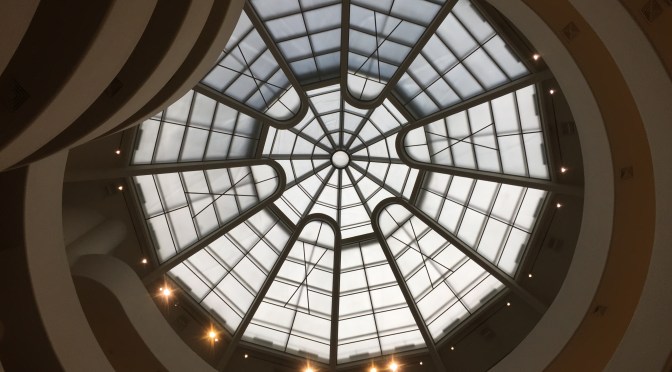
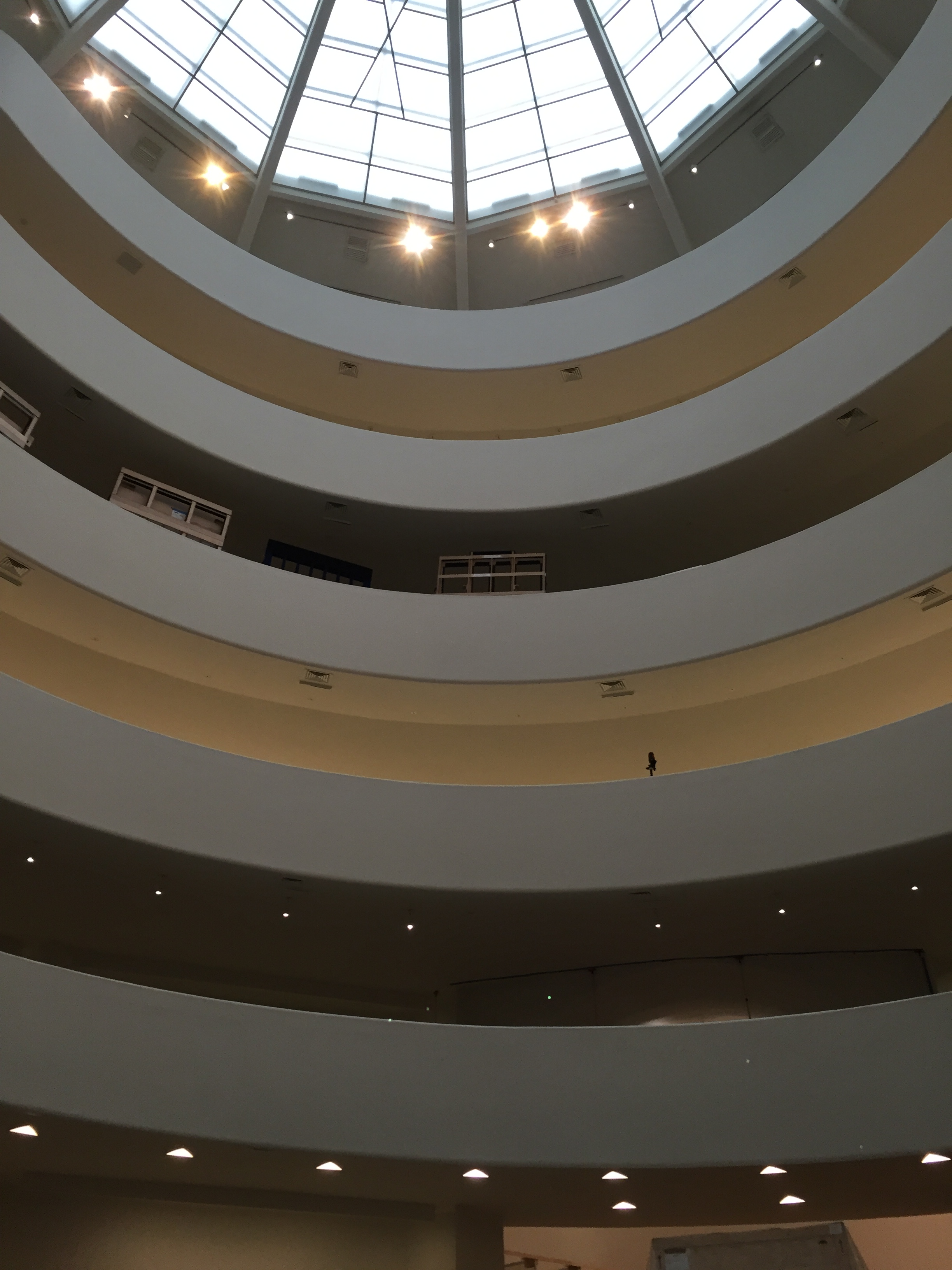
Interior Corkscrew
Interior Corkscrew

This museum was designed by Frank Lloyd Wright, ca. 1959.
Most of the museum was closed during an installation of an exhibition. You can read more about this controversial museum at the time it was being designed and constructed at http://www.guggenheim.org/new-york/about/frank-lloyd-wright-building


1. A Flor de Piel, 2014: Based on a burial shroud, this fabric is an homage to a nurse who was tortured and murdered in Colombia.Its enormous undulating fabric is painstakingly stitched together from chemically preserved rose petals–a material replet with romantic  associations that at the same time mimics the appearance of flayed skin.

2. Wooden Armoires with Concrete and Steel: Between 1989 and 2008, Salcedo created an expansive body of work forged from pieces of domestic furniture with concrete poured in them, as if to immobilize and be muted by grief. The furniture represents the families of those who have died and their silent mourning.

3. 11 Stacks of Shirts with Rebars evoke an image of violent incursion

4. Disremembered, 2014: Woven from strands of silk thread, these works take the form of garments that would harm rather than protect the wearer. The shimmering forms hover on the edge of visibility, in an expression of the artist’s interest in representing the experience of loss through the shifting lens of memory.

For more information, go to Doris Salcedo at guggenheim.org/Salcedo. (These descriptions are excerpts from the Doris Salcedo exhibition material at the Guggenheim)
IMG_9494
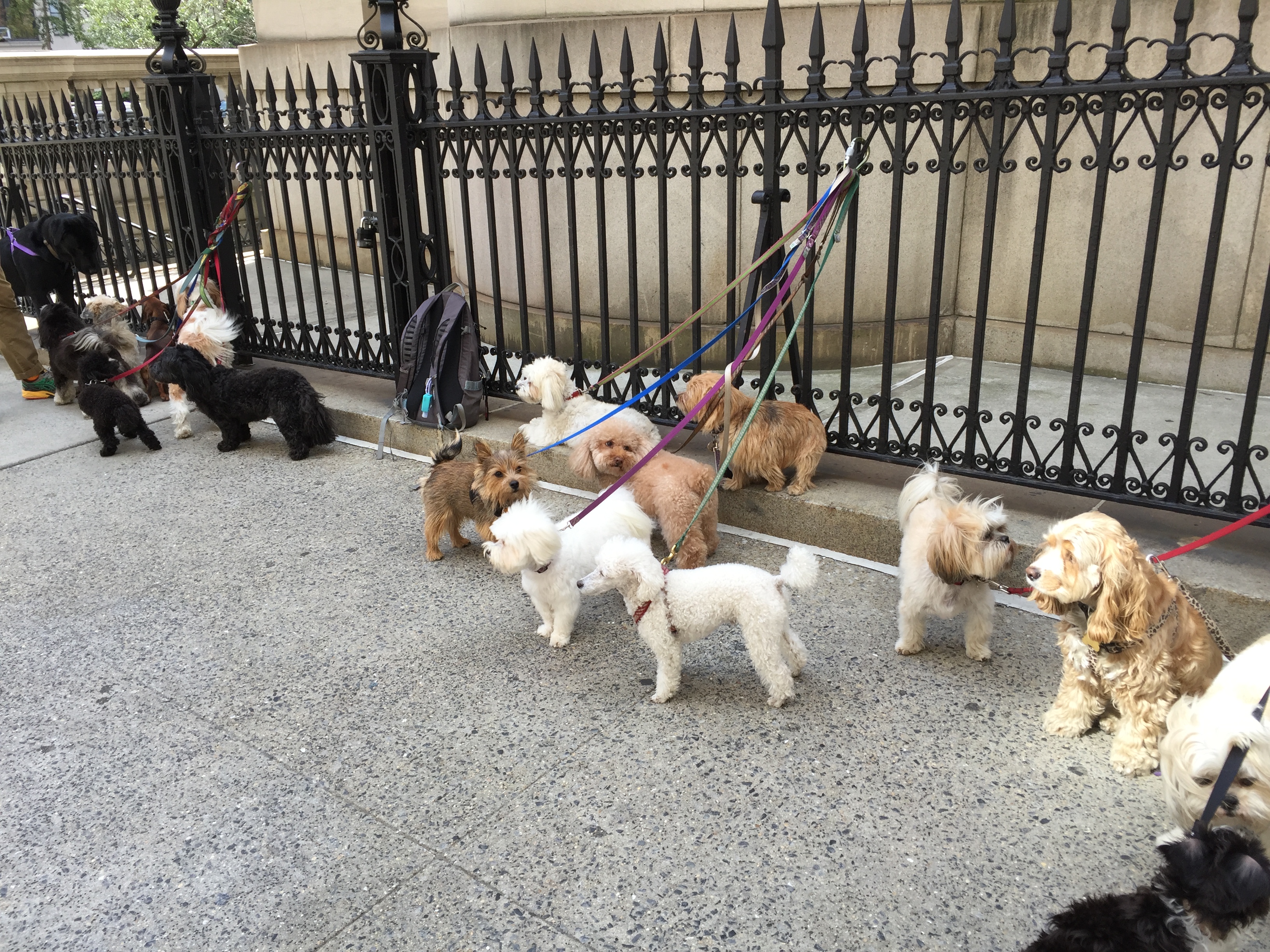
On our walk back, we passed the Doggie Day Care Parade.
Available for your visual pleasure Only in New York.

Day 62: New York City, New York (continued)

Today was a continuation of yesterday’s whirlwind tour of galleries and museums, directed by two friends and ardent museum-goers. We started with a visit to the new Whitney Museum, that has been relocated from the Upper East Side to the Meatpacking District adjacent to the popular Highline. It was exciting to see an expanded display of America’s best that included many women and artists from different ethnicities. Galleries are organized and grouped by themes.

The featured painting above is entitled “Saigon” by Peter Saul, 1967. It shows the raping, death and destruction from that horrible war. You can go to the link below and find an audio presentation about it given by a museum guide.

The freshly minted building by Renzo Piano:


Photos above:
1. Sculpture by Ruth Asawa, San Francisco’s own
2. New York, 1955
3. Jackson Pollack
4. Rothko Painting indicating Tragedy, Ecstasy and Doom
5. Photographer in front of painting by Krasner, who was the wife of Pollack. After he died, she continued to paint but converted from small scale to large scale in his barn studio.


Normally, I roam the galleries looking for only the artists I recognize. Near the end of the visit, I made an effort to find three artists whose work I did not know. See those above for Cy Twombly, Alma Thomas, and Elizabeth Murray. So many contemporary artist represented in this vast collection can be intimidating and overwhelming, but I found that determining a small number for myself was manageable, energizing and educational. It didn’t stop me from continuing to look for those old shoes, however, for comfort’s sake!

IMG_9466
The Whitney specializes in American Art and has been a big supporter of providing classes for artists.

For more about this exhibition that closes on Sept. 27, “America is Hard to See” go to http://whitney.org/Exhibitions/AmericaIsHardToSee

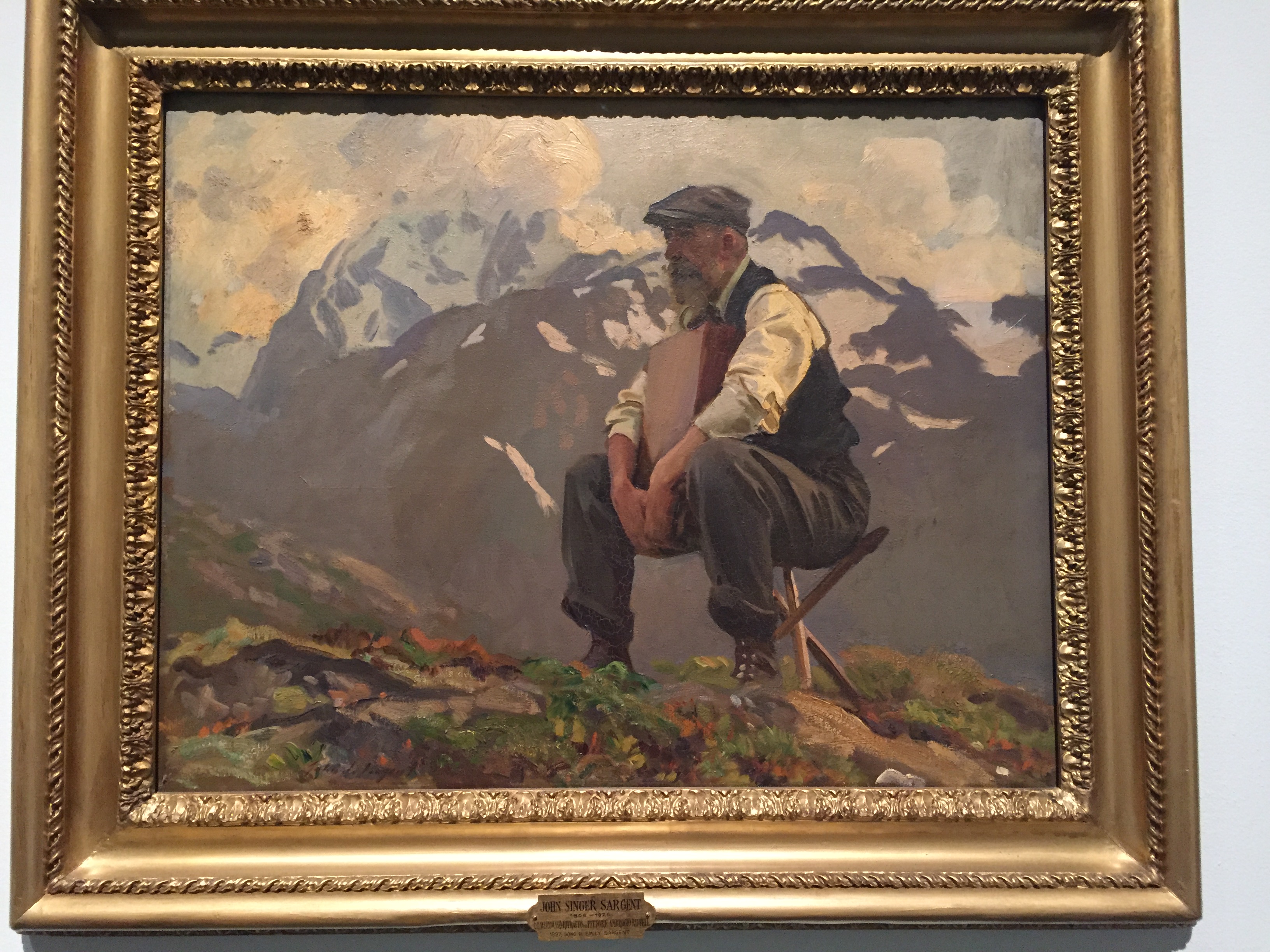
If this exhibition at the Whitney wasn’t enough, the gods must have been crazy to allow me go to another major museum in town. The Metropolitan Museum was having a major exhibition on John Singer Sargent’s “Artists and Friends”. He was born in Europe to American parents and had extensive connections to highly influential individuals, artists, and musicians in Paris, London, and throughout Europe.

Here are a few of my favorites. They are dedicated to Sargent fan Tony (if you are out there):

Full Size Portraits

Head Portraits

This one’s for you Helena:

Simplon Landscape
Simplon Landscape

For more about this exhibition “Artists and Friends”, go to http://www.metmuseum.org/about-the-museum/press-room/exhibitions/2015/sargent

And last but not least, for Isa who asked:
These are televised screen shots from the Pope’s visit last night at St. Patrick’s Cathedral. We weren’t there, but our host was late to dinner after attending the mass. We were watching TV and checking for him in the audience. The Pope seemed like a pretty nice person.

Day 60-61: New York City, New York

Attached are a few photos of the Picasso Sculpture Exhibit currently at the MOMA:

From a dozen gallery visits the following morning:

Lunch

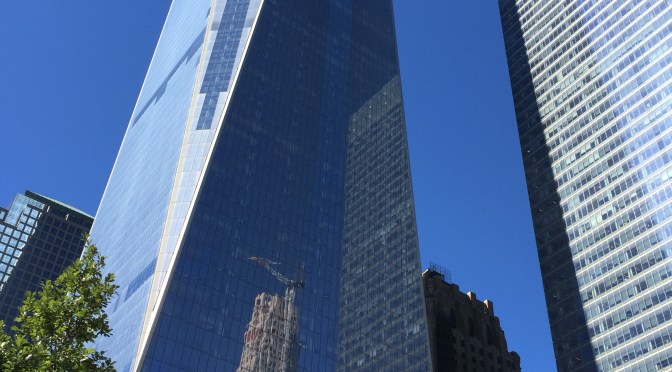
Tour of World Trade Center Area

Cruise on the Hudson in 130′ Yacht

Room with a View-New York City Skyline looking North

Day 59: Ich Erinnere Mich…

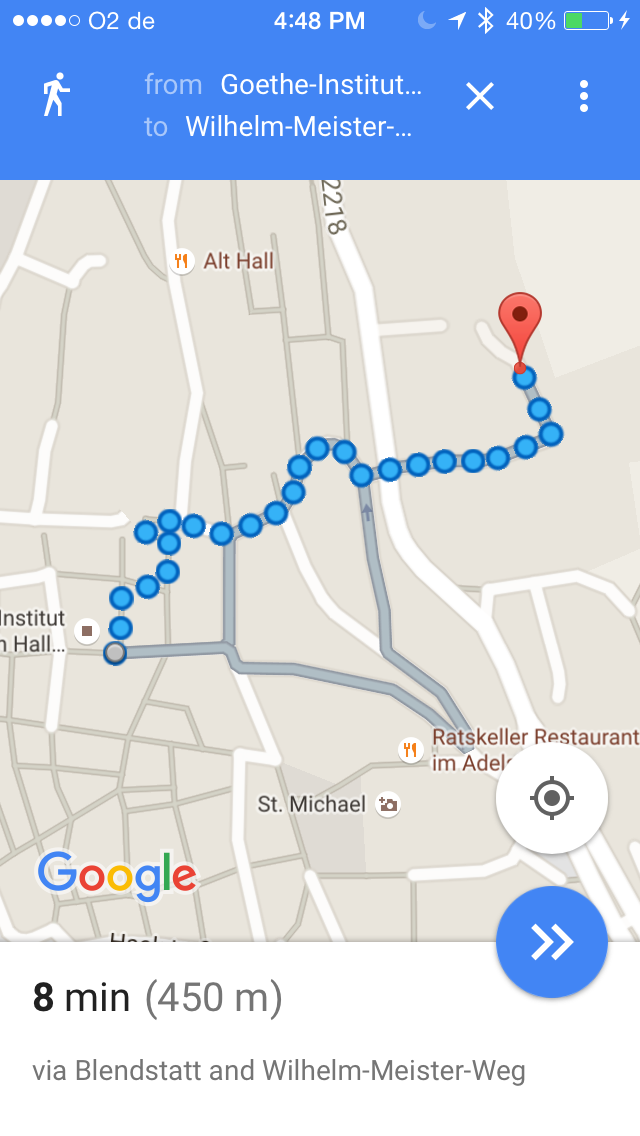
In addition to afternoon walks to various museums and sights sponsored by the Goethe Institute, I put in my daily walk to and from the guest house to the Institute. I became very fond of my own personal “Schwabisch Weg” in either direction, as this tiny trek was only for a two-week duration but seemed different and fairy-talish every time I took it.

From the map attached, you can see that there are multiple ways to accomplish getting there. Initially, I got lost more than once, in my inimitable way of trying to find shortcuts. They usually led to dead-ends (any life lessons here?) but somehow I managed to dig my way out of innocuous tribulations for the benefit of a hearty trial.
IMG_9273

While only 8 minutes each direction according to Google Maps, it actually takes longer.

As you exit the building and the guest house, you must go in the opposite direction (ie, north or up in the map) from the destination, along a very narrow and heavily traveled route, to cross the road. The traffic is erratic and unpredictable, thus the need for a subterranean crossing. Some liked dashing across the road, but I decided that a little more exercise wasn’t going to hurt and others wiser than me thought it was safer. It occurred to me that I could make someone pretty miserable if they hit me by mistake, but whoever thinks of that?? I must be getting senile, or more considerate in my old age!

The Grundschule am Langen Graben, a grade school, adjacent to our living quarters, is paired with what looks like a private upper school for the older students. I first noticed it with the traffic signs decorated by school children reminding everyone of its precious cargo (as we used to refer to kids being transported in the U.S.) The signs were made by students, and the adorable naive drawings, life-size, were good reminders to adults and drivers to mind the crossing for children.

After navigating past the very official automatic barricade and the stainless steel man-gate, you can make your way past the private vehicular entrance to the public tunnel under the road. It’s a bit dark and uninviting, but it’s perfectly safe day or night. The cold concrete and functional features don’t ask anyone to dally, except for more student artwork of life-size kids lined up in a row to remind you of the little people in the area.

Once past this threshold is another set of steps. It threads through the Landrat Building, a pretty innocuous modern government admin building for Migrants. I imagined that one day soon that building would be overwhelmed, but as of yet had not seen any impact of the refugees coming in. I could only identify the access with an auto insurance company logo. That reminded me of one of our class lessons in “Versicherheit”, or insurance, that is so essential for survival in Germany.

Immediately after, you link into a quick swoop down a cobbled, winding street clad with modern housing over small scale retail. The shops offer natural wool-made products, a shoe maker, photography studio, and candy. A furniture store connected to the building with the auto insurance broker displays Scandinavian style Futon lounges and L-shaped sectional seating for $450.00. You wonder if they are still selling the original goods from the 60’s or whether they are a retro-snap–for that price it’s a bargain.

Steps are necessitated by a gradual downward grade toward the river. Remember the entry steps outside St. Michael’s Cathedral, facing the river. It’s a good stage for theater, dance, and musical events.

We carry on to the Big Steps. Modernized to fit a little town on the move, this wide, stone-surfaced series of three or more flights straight down the hill make you hesitate and think twice before tackling it. It is laden with broken glass from the previous weekend’s teenage brawl. Maybe better dealing with the clean-up than the guns or mindless violence we see in the States, I say to myself.

You can opt for the glitzy glass elevator if you don’t have the stamina to tackle the straight shot down the stairs. A bit hard to find, the vertical tower gleams in open space by itself. The only problem is how to get to it. Once you figure it out, the path to it has another challenge. The open steel grating to let water through is a bit unsettling. Don’t look down, or you might get vertigo. Innate trust in engineering calls on you. You have a momentary dilemma–should I go back and take the tumbling steps, or tiptoe over the grating to avoid any vibration and looking down?

Once down toward the river and near the Institute, you have one of three ways to the classroom. You can go either to the right up the alley then around the courtyard in the middle of a U-shaped building, or to the left up the alley and up a flight of stairs outside. The middle route, where I normally went under the arch into the complex, by-passed an immigrant beggar every day. I avoided this path as it made me feel guilty that I hadn’t supported this person in need.

The Goethe Institute was located in a renovated building that formerly was a hospital. In the middle of the hospital was a chapel. It was apparent that the chapel was an integral part of the hospital operations. When the hospital was no longer needed or moved, the chapel was repurposed into a gathering and meeting space for the Institute. The outdoor courtyard, or hof, surrounding the building, provided a social activity space. A few inexpensive tables and chairs were enough to become an inviting and lively atmosphere for students.

While the trips back and forth to the Institute were rushed many days, it was short and sweet enough to help me appreciate the history and quality of the environment. It’s a memory that I hope I have captured and can preserve for a long time.

Day 58: Pause to Refresh

This is a good time to recap the first two-thirds of my 80 days around the world, since I am about to leave Germany to fly back to the US. In the past two months, I have traveled on the Trans-Mongolian Express (TME) from Beijing to Moscow, visited the Russian capital and St. Petersburg, and several cities in Austria, Switzerland, and Germany.

The next segment will be a stay in New York City and a short trip by car to see the Fall Foliage. The final leg will be the counterpart to the TME: a cross-country trip via Amtrak to Philadelphia, Chicago, Santa Fe, New Mexico, and finally back home to San Francisco.

Join me in the next few weeks as I compare cross-country trips between the U.S. and Russia!! I also look forward to seeing old friends and family.

Below is a glimpse of each stop. You can find the posts by searching the city or in the archives for July-September 2015.

Beijing: Best Hotel Experience in a traditional Chinese Hutong (Courtyard) Hotel

The Trans-Siberian (Mongolian) Express:

The Trans-Mongolian Express travels from Beijing to Moscow and is part of the Trans-Siberian Express. It connects to the Trans-Siberian Express in Ulan Bator and picks up the route that begins in Vladivostok.

Transsiberianmap

Mongolia and Ulan Bator:

Moscow and St. Petersburg:

Berlin:

Salzburger Festival Performances:

Vienna and Linz, Austria

Switzerland

For Schwabisch Hall, see recent posts.

And a few earlier posts organized by my favorite topics:

Architecture:

Food:

Artwork:

Photos may be repeated from earlier posts.

Real Time Creative and Independent World Travel