Category Archives: 2015

Time Out: Thoughts on Austria’s Minority and Immigrant Population

Traveling on the road allows you to stay in touch or out of touch with the news. It wasn’t until my daughter informed me that there was a refugee crisis of monumental proportions happening right under my nose that I started checking the NY Times. While it has been in the German news on a daily basis, the effects of refugees haven’t been felt in the cities where I have been traveling…yet.

Ironically, I wrote the following piece below (on Day 31) when I first arrived in Vienna over two weeks ago. It got shelved because I thought there would be little interest in this topic. I decided to publish it now so I can share my thoughts about immigration in this part of the world with you. Please bear in mind that it was written prior to the events that have taken place and with little research.

It suddenly struck me when one of the students commented about his train from Vienna to Schwäbisch Hall being stopped for three hours at the border last week. He was allowed to continue travel but refugees were returned to the border of Hungary from where he had traveled. By then, I had already left Austria the week before and was in Switzerland when I first heard about the truck of refugees that were discovered.

Day 31: Thoughts on Austria’s Minority and Immigrant Population

Austrians speaking German. Turkish speaking German. Africans and Asians speaking German? I am finding a fascinating array of backgrounds and experiences among the resident population here and in Germany.

One of my first conversations with an immigrant living in Europe was back in China. Gee kin and I were on a train going from Shanghai to Huang Shan, a beautiful mountain with misty Chinese landscapes like the ones you see in paintings (except they really look like that).

We met a young college student who was going to Germany to learn German. It struck us as very odd. Coming here today clarifies for me this person’s intent from twenty years ago. The Chinese diaspora (which, let’s face it, must be by numbers relative to the population in China the biggest in the world) is an endless tale of the supply and demand chain. Chinese provide excellent skilled and unskilled labor to each country, and the Chinese immigrants can raise their children in relative peace and prosperity.

Once you arrive in Vienna, the capital of Austria, you can’t but notice the large minority population resident in this country. How did they come here? What is it like to live here as an immigrant? Do they see a future here?

The evidence of this is not by the tourists swarming these European cities, but by the stroller population. There are young African mothers, Middle Eastern mothers, Chinese and Asian mothers, with kids. They get on and off the underground and the buses that I am taking. They aren’t tourists; from their conversations they live here.

I am attaching a site that helps to put perspective on my questions: http://www.migrationpolicy.org/article/austria-country-immigration. I had also overlooked the Eastern European immigrants and their conflicts. Granted, this article is dated and didn’t seem to address the influx of Middle Eastern population that came subsequently, but it gives an overview of immigration in Austria at the time it was written.

I had a funny experience going to the Mozart concert the other night at the opera house. I purchased a ticket to an all-Mozart “variety show” so I could see a performance and the Vienna opera house. The musicians and attendants were all dressed up in Mozart-era costumes. Some employees touting tickets to tourists were Middle Easterners wearing white powdered wigs. It seemed silly, until you realized it was a job.

Austria has always had a fixation on wealth and the privileged class, just as the US has become (thanks to Austria’s namesake Arnold Schwarzneggar and others like him). And because of immigration in the past 50 years, Austria is now facing similar integration and assimilation issues that plagued the US since the Sixties.

In the mid-70’s, I came to Vienna on a tour with my mother and sister. Two young Indian sisters on the tour asked me to accompany them to visit their relatives in a refugee camp outside Vienna. Because I purportedly spoke German, they asked me to join them. While I wasn’t of much assistance, it was an eye opener for me. The camp consisted of people packed in tents and blanket plots, as densely placed as those at San Francisco’s Opera in the Park.

As Ugandan natives, their relatives were being purged from their own country during one of Idi Amin’s brutal campaigns. Although they were S. Asian by descent, they had never lived or been to India. Fifty years later, refugees like these are no longer refugees. Very few were ever repatriated to countries they claimed, such as the UK, US or other developed country. Although once “temporary” refugees, they are now second and third generation residents of Austria. They are no different from my history in America. Yet I wonder whether these new Austrians have the same benefits and respect in their country that I receive in the U.S.

For Middle Eastern immigrants, the recent influence is evident in Austrian hotels. Visitors who come here to visit relatives watch Aljizeera and a number other Middle East stations, which are represented on Cable TV. Their presence is noticeable in the hotel lobbies, where they visit with relatives. You realize how many more people are traveling back and forth between these parts of the world and Europe than in the US.

While these are all random impressions, they form a pattern. It raises questions about whether these once immigrants and now residents are integrated into society and being treated fairly. The US is no shining example, but perhaps it has had the advantage of dealing with immigration over a long time and many nationalities. Maybe there were a few good men to contribute to this cause.

As a small country of 8 million people, Austria’s proximity to the Middle East and Africa makes it a destination for immigrants. Germany, with 80 million residents, is in a similar situation. After I struck a conversation with a bus driver going to the monastery today in Linz where I was staying, I asked him whether he needed to speak English to many tourists. He remarked, “No. Turkish.” When I pursued why that answer, he said, “just a joke.”

Austria will have to tackle this problem now, as it unfolds.

Day 44-46: Schwäbisch Hall

My 2015 80 Days Around the World are already over half-way completed. As I look back at the titles and featured photos of this blog, I can’t help but be amazed at all the incredible sights and sounds of each unique environment. It does restore my faith in humanity when I think about all the efforts and decisions that have taken place to advance mankind in the world. And it goes without saying that meeting friends and making new ones are the highlight of any city.

So why I am traveling so much and so far? For a few newcomers, I thought I should take a minute to explain the purpose of my travels. It’s the same rationale behind the trip I took around the world this time last year, only in the opposite direction.

The fundamental reason for my traveling each year is to get to and from Germany to study German. I studied German in high school, and like an instrument that hadn’t been touched for a long time, I decided to dust off the creaky machine and make use of it. Having taken a couple of non-contiguous courses in San Francisco at the Goethe Institute got me jump-started. And a growing new interest in German writers, opera, and music motivates me to read Thomas Mann, librettos for the Zauberflote by Mozart and books about musicians like Schumann and Beethoven.

The means of getting to and from Germany form my itinerary. Last year, I went to Dresden for a month. This time, I am spending two weeks in Schwäbisch Hall in a language and cultural program.

This year, I traveled on the Tran-Mongolian Express from Beijing to Moscow with my husband, Gee Kin, visited Russia (also with Gee Kin), and tapped into German-speaking countries for a couple of weeks on my own. At the end of my course, I’ll fly to New York, spend some time in New England with my college friend Karen, then take the train cross-country back home with her. We’ll stop in a few cities across the US along the way.

Last year, I rolled in my curiosity about the old Silk Road and Central Asian cities with carpets named after them, like Samarkand, Bokhara, and Kiva. I traveled in a one-way direction eastwards instead of a round-trip to and from Germany. You can read more about these in the summaries for 2014 and 2015.

Of course, having the pure and intrepid lust for travel doesn’t hurt. It makes travel planning fun and challenging. Along with a fully supportive and understanding husband and family, I am free to go as far as I can, wherever I want. I try really hard to keep things affordable, interesting, but varied to match my interests.

So, back to what I have been doing for the past few days.

On arrival at Schwãbisch Hall, I was happy to finally unload EVERYTHING from my bags for two weeks. Despite traveling light, I still accumulated more brochures, historical materials, and a few CD’s than I had planned on collecting. I’ll have to make some hard decisions at the end of this stay as to whether I will continue to tow these in my bags. I slogged my carry-on, nearing the 14.6 kilo limit for the German Wings flight we took from Moscow to Berlin, and my backpack off three trains and a remote bus link to the Goethe Institute guest house where I am staying.

As it was overcast, threatening to rain and nearing the end of the day, I beat it over to the main guest house to retrieve my keys and card. It was exhilarating to get in the door after nearly two hours of juggling all my paraphernalia. The room was perfectly adequate, with a half-size refrigerator, plenty of storage, and a private bath. There were other students milling around, but everyone seemed pretty mellow and ready to start class.

The first day of class is always exciting. Direktor Herr Schmidt of the GI gave us an introduction about the city, its history and economic activities. We were split into classes after a written exam to determine our level and ability. I was not disappointed to be placed in the middle of the pack, along with 11 other students.

Our teacher has been teaching at the GI for ten years. After introductions and playing some getting-to-know-you games, we all felt comfortable. The nationalities in my class included students from the UK, US, Denmark, and Japan. Each person had an interesting background, but we also had similar interests in art, music, and history.

The GI is located in a former hospital that has been renovated completely. A “kirche”, or church, was part of the original building and where we were greeted in the beautiful, large meeting hall. Other modern facilities included a media library, cafeteria, and classrooms.

Schwabisch Hall is situated in South Central Germany between Frankfurt and Munich, near Stuttgart. It is a lovely, small city of about 40,000 people and a welcoming environment for its visitors. The Goethe Institute serves as an anchor for the city’s activities and Schwabisch Hall offers a wealth of celebrations, cultural events, and historical architecture. Within the Market Plaza are examples of medieval, Gothic, Renaissance, Baroque, Rococo and modern architecture! You can get an overview of history just by turning 360 degrees!

The town is peppered with a network of pedestrian passages, stairs, and cobbled streets that make this a delightful environment for visitors and residents alike. The town planners showed how modern architecture, open landscaping, and transportation can work together to form a compatible, balanced machine for living.

Day 43: Basel, Switzerland

Three Walking Tours were available in the heart of the city and we decided to take the architectural tour. Many of the buildings in the city were designed by Herzog and Meuron. Basel has bragging rights to a number of world famous architects, including Zaha Hadid, Frank Gehry, Richard Meier, Tadao Ando and another of their own native sons, Mario Botta.

It’s interesting to note that both Botta and Herzog and De Meuron designed museums in San Francisco but are known in Switzerland for many other building types. The prevalence of American architects may be due to the development of the biotech industry in this area and its partnerships with American firms. Many of the buildings featured on the architectural guide were biotech companies such as Roche and Novartis.

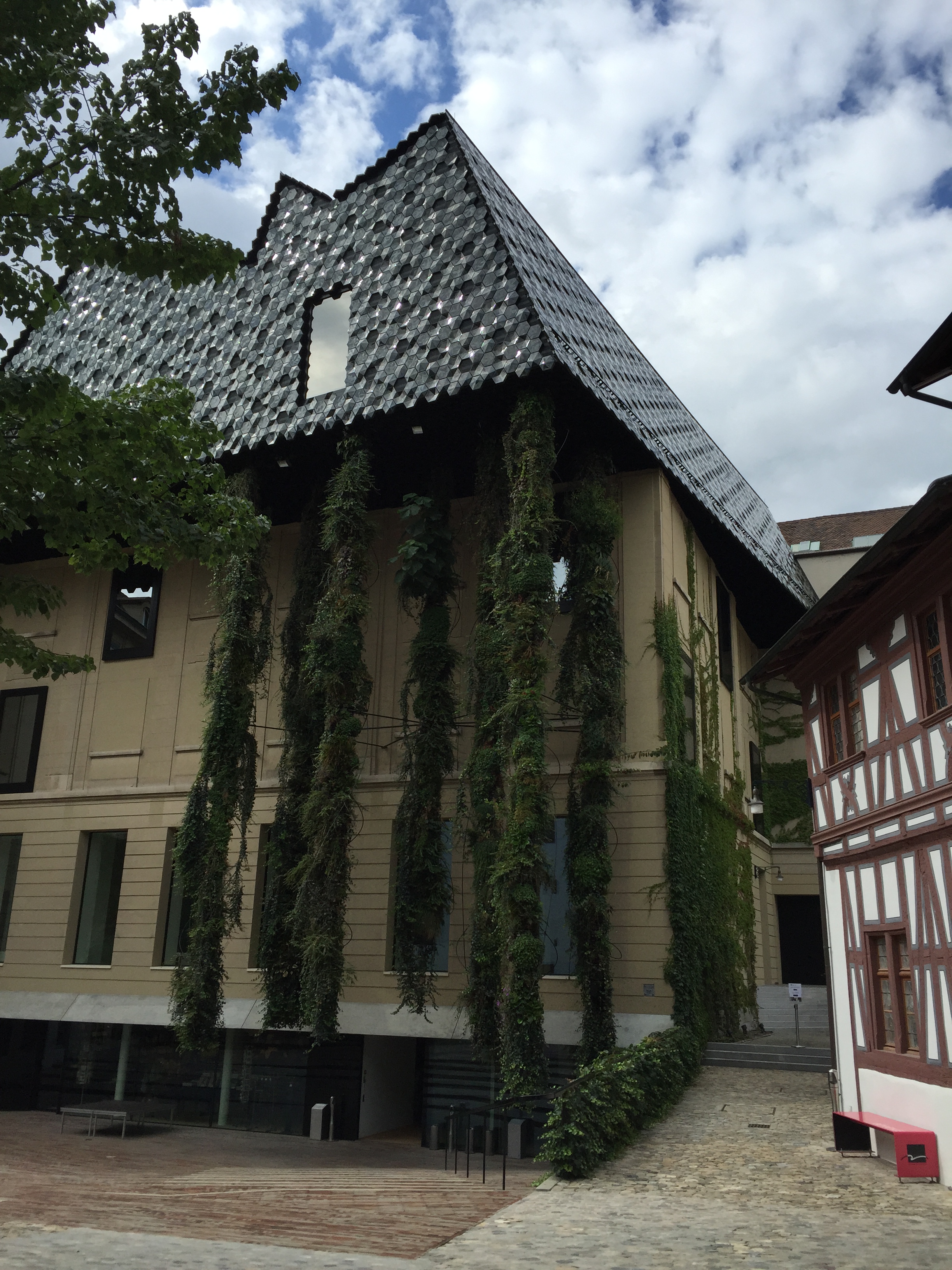
IMG_8671


The vertical extension of Basel Museum of Culture was designed by Herzog and De Meuron. The textural pattern of hexagons reflected the irregular shape of the plaza facing the museum. They were in both convex and concave shapes. The giant hanging plants at the entrance reminded me of the seaweed forest at the Monterey Bay Aquarium, where they swayed gently in the breeze.

The De Young Museum in San Francisco, also designed by Herzog and De Meuron, is one of my favorite buildings. I love the mottling effect of the exterior copper panels on the inside of the building and how it imitates the light coming through trees in Golden Gate Park. The huge canopy at the entrance also reminds visitors of the deep shadows in the park.

The Basel museum featured an exhibit on opium that sparked a lively conversation with my hosts in Brunnen. My grandfather had died of an addiction to this deadly plant. The museum collection included all the history, plant production, implements and literary figures who were influenced by opium (including one of my relatives, Lin Biao). The saddest part of course was the Opium Wars and the treaty ports imposed on China as a result of the wars. The exhibition was very thought-provoking and a moving educational experience.

Swiss Cheese, Salad, and Potato for Raclette

Our final evening was topped by the famous Swiss specialty “Raclette”, a fondue-like dish of Swiss cheese toasted with onion and spices on a grill, then spread with a miniature wooden scraper onto the top of sliced potatoes.

After saying goodbye to my dear friends in Switzerland, I was looking forward to my next big adventure. I will be taking a German language and culture class for the next two weeks in Schwabisch Hall, Germany, and can’t wait to spread out my meager belongings during this time.

My friends Helena and Hans took good care of me and showed me a local’s view of Switzerland. I am very grateful to them for their generosity and appreciate their care and attention during my stay there.

Day 40-42: Swiss Whirlwind

This week I traveled across the beautiful country of Switzerland, from Brunnen on the shore of the Vierwaldstättersee near Lucerne to the French speaking area of Valais near Sion .
IMG_8583
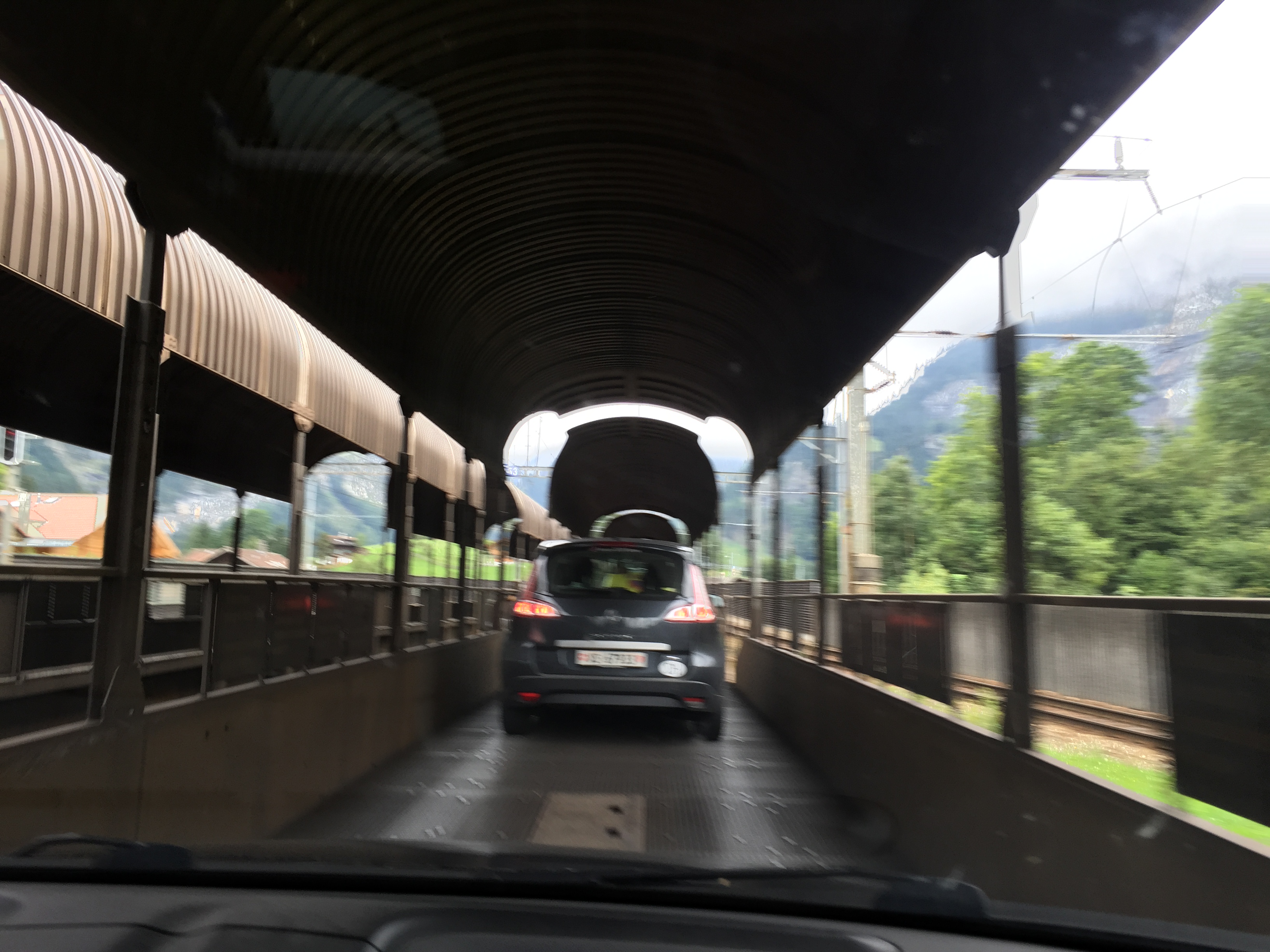
We took a car train through a deep tunnel in the mountains to the valley. Also known as Wallis in German, Valais is a serious wine growing region with a patchwork of vineyards etching the south-facing sides of the valley and flatter terraces of the north side. It was in the middle of the Autumn harvest, and the carpet of vineyards provided a lush green for the eyes and sheer pleasure for the palette.
IMG_8630After a much appreciated day “at home” at my friend’s home built with straw walls for insulation, I met another friend who was working in the French speaking area. Marie had a friend visiting from Der Wolf in Belgium, and together we went to the medieval castle on the hilltop in Sion. Afterwards, we had a delicious lunch al fresco at Restaurant L’Enclos de Valère. Upon returning to Sierre, I took the bus back to where I was staying halfway up the hill from Sierre and near the resort area of Montana.


IMG_8612

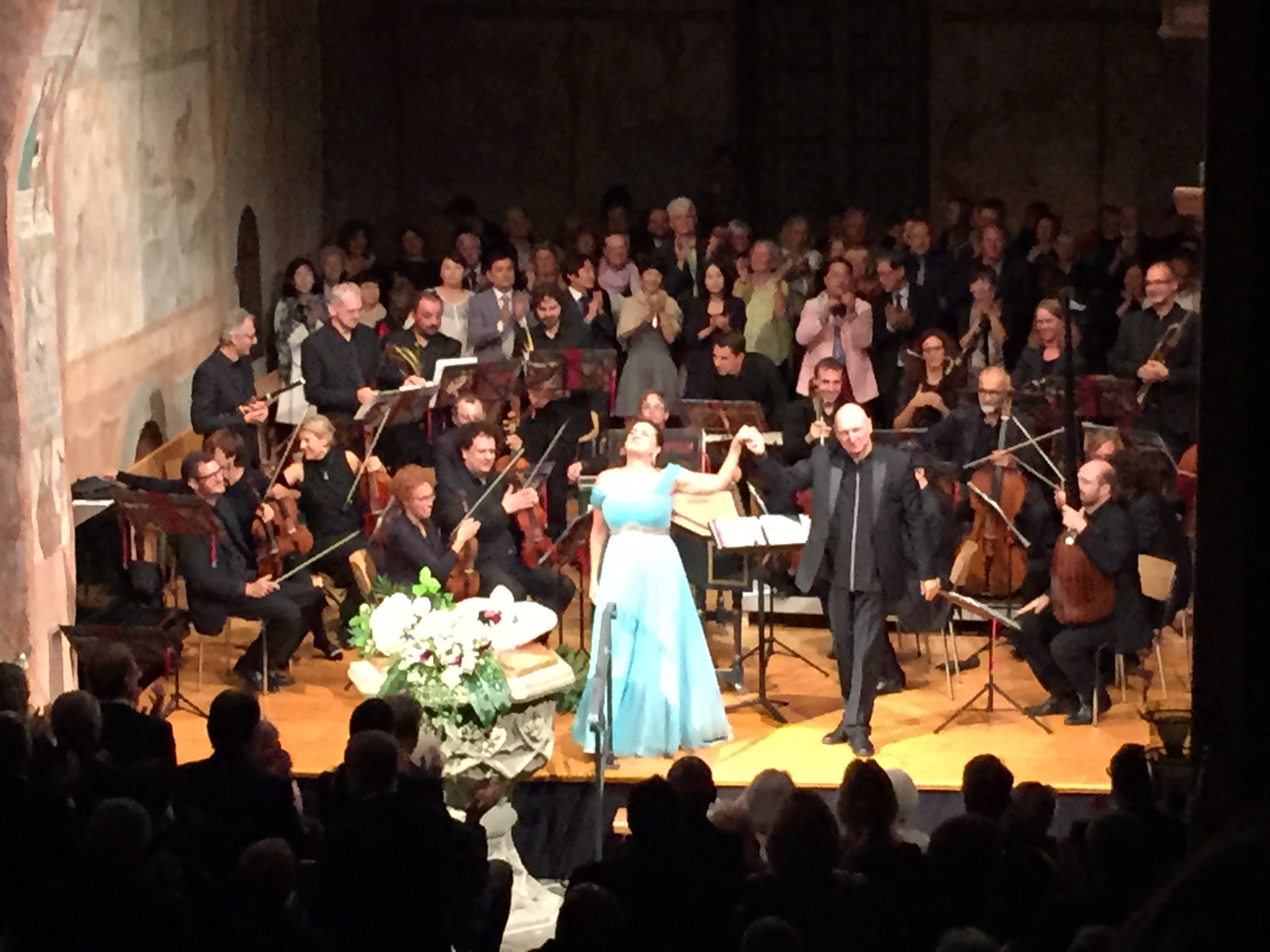
Later that evening, Hans, Helena and I attended a performance by world-famous opera diva Cecilia Bartoli in a small church in Gstaad. It was a two-hour ride by car to get there, but well worth the intimate venue and Cecilia’s delivery of beautiful baroque music by Vivaldi and others. It was performed by I Barocchisti, an orchestra specializing in this type of music, using original instruments from that period. Both Cecilia Bartoli and I Barocchisti performed in Iphigenie en Tauride, an opera I saw recently in Salzburg.
IMG_8650

Day 37-39 Exuberant Brunnen, Zurich’s Blicks, & Lucerne’s Concerns

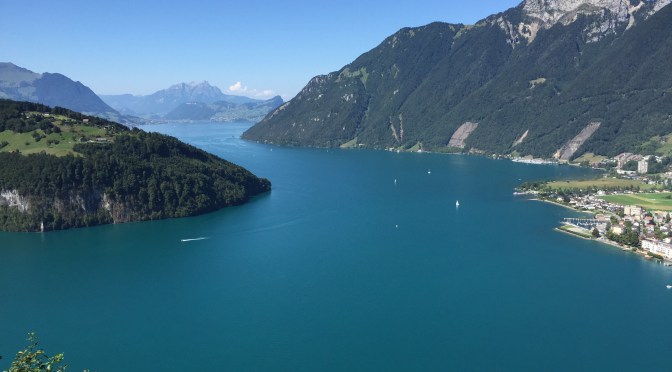
After reaching near the halfway point of my travels, I am pausing to refresh and staying with friends in the Zurich area. The town of Brunnen lies on the shores of Vierwaldstättersee, which is basically a collection of four lakes that form Lake Lucerne. We took a lovely hike halfway up the mountain yesterday, and despite the blazing heat in exposed areas (of the land, that is), my friend Helena and I enjoyed a leisurely walk with breathtaking views of the string of lakes below.
IMG_8531 2
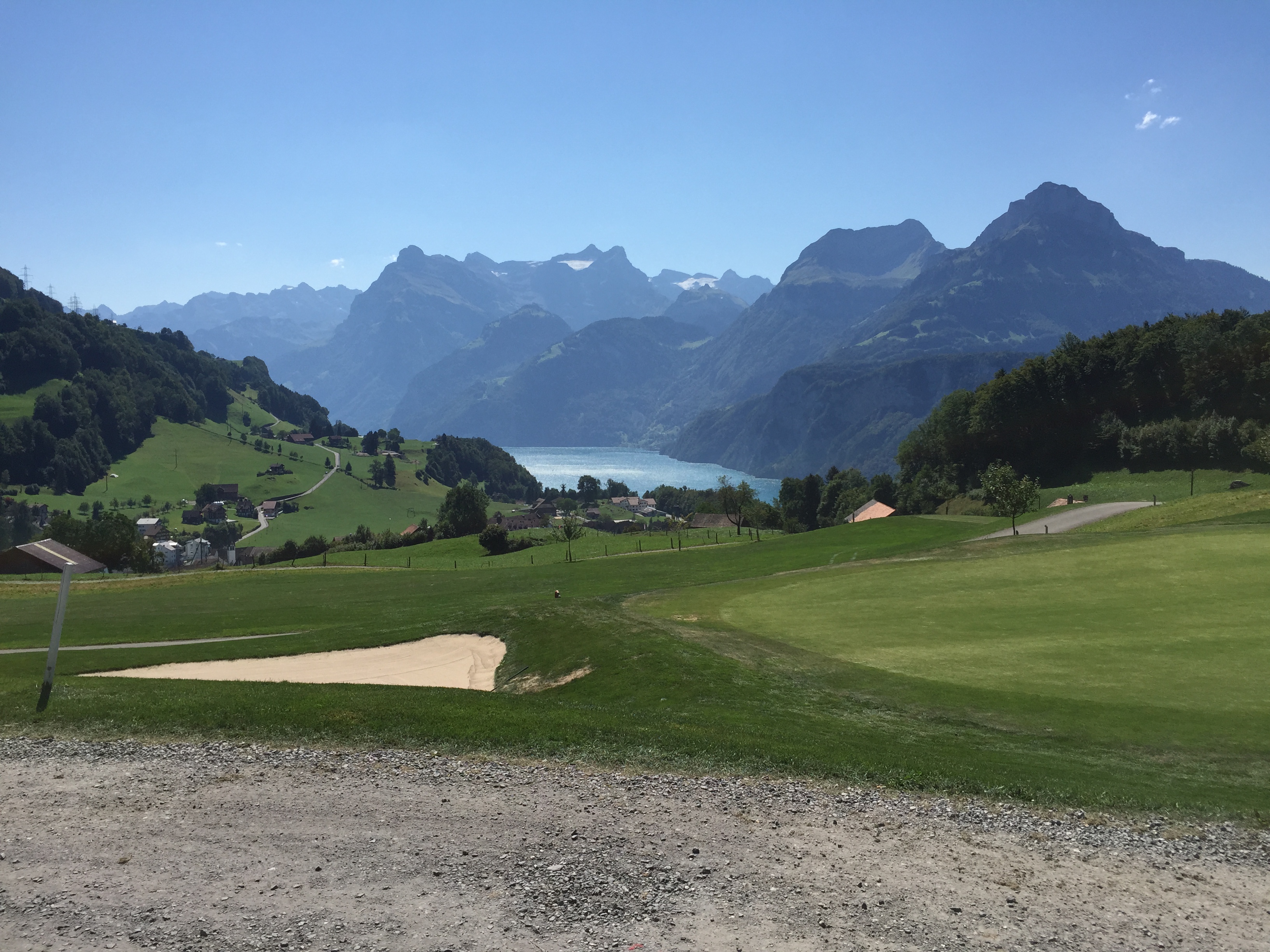
We chowed at the golf course situated halfway up the mountain. Being careful to avoid flying golf balls, we pondered the merits of golfing. I was reminded of my experience with Gee Kin playing for the first time in Napa, California. Neither of us had really played golf before but the Weekend package offered a free round of golf on the green. We hacked away and tore up the green, laughing so hard we ached afterwards. Despite trying our best, our shots were pitiful and were a sore reminder how much skill it takes to be good at anything. I don’t think we are going to be playing, or be allowed to play, for any time again, soon, or ever.

But…back to Switzerland where, regardless of the golfing, the idyllic landscape surrounded by dizzying heights and crystal clear waters waxes one poetic. See the featured photo above and some additional panoramas taken from the boat to Lucerne below.

The day before was spent at the Kunsthaus in Zürich. By now, you have seen many of these artists’s works in other museums I have visited throughout Europe, America, and Russia. See if you can identify the following famous artists from the collection at the Kunsthaus:

Some of the tags are left on the enlarged photos, but don’t look if you want to try guessing.
1.
2.
3.
4.
5.

And a couple of sculptors:

1.
2.

The point is that the Kunsthaus had a full spread of famous artists. It was thoroughly enjoyable and worth visiting. A few of my stray favorites here, the latter from the Sammlung Rosengart in Lucerne:


I always notice any historical renderings of Dresden, so this one caught my eye right away. The Kreuzkirche was destroyed by Prussian cannonade during the Seven Years’ War around 1700, and this was a rare accounting of its condition.

The Rosengart Collection is a much smaller, focused gallery that specialized in two artists, Picasso and Klee.

The photo of Paloma reminds me of a cartoon that Gee Kin loved. It showed a kid bringing home his art project from school with a grade of F on it. He had drawn a face with a profile on it. What the teacher didn’t know is that the parents really looked like that (as in Picasso’s faces). the parents were looking at the picture and couldn’t understand what was wrong with the picture and why their son failed. Maybe Paloma had the same problem!

Day 36: Zurich’s Riches

Every city on arrival has inspired me. Everything is so fresh, new, and exciting. I feel like I am abandoning the children I left behind: the cities that were so sweet, quaint, and lovely. Each one had their unique qualities, but I can’t help but look forward to the adventures in the near and present future.

Attached are some photos of a do-it-yourself city tour I took on Saturday morning. It was unbearably hot by time 2pm struck–it was well over 90 degrees. The street parade was taking place, and by time I got to the train station there were floods of celebrators, mostly young and in costumes and wigs, ready to tackle hundreds of music venues spread throughout the city. Many of the party-goers appeared to be from within Europe–Italians, Dutch, Eastern Europeans, and the like. They were ready to PAR-TEE!!

A curious contingent of Asians were in one of the small squares with yellow T-shirts promoting democracy. I thought that was a bit strange but learned afterwards that students and residents of Malaysia were protesting against their prime minister and were demanding for his resignation. He apparently was dictatorial and had mis-managed funds. Another group in yellow T-shirts were just getting out early ahead of the parade and entertaining tourists on the street.


Switzerland is frightfully expensive, so I am staying on the outskirts of town. The location feels South Peninsula-like, with many new internet and bio-tech firms concentrated in the area among spanking new housing. I noticed on my run this morning that new housing includes heavy metal louvers over each window as a standard. (even on my hotel window). It definitely helps provide shading and environmental advantages from the strong sun and temperatures here.

There was also a playroom in this new housing development. American architects have studied ideal housing in Europe consistently, yet I still do not see this level of integration for children in public or private housing in the U.S. At the same time, it would be perfect if housing can incorporate activities for seniors such as a support system for day care within the same development. Time to consider this approach and how we can get it to happen.

As a contrast, as there always are, I had to beat it to the supermarket before 9pm last night. They are closed on Sundays. I guess Americans just look like a bunch of workaholics who can’t get their lives together to avoid the food shopping on Sundays. Or else we just eat so much we run out of food every day, and need access to the Sabbath for that last beer. Maybe we should establish a one-day-a-week food-buying moratorium to curb the urge??

Day 35: Yummy Tummy Summary

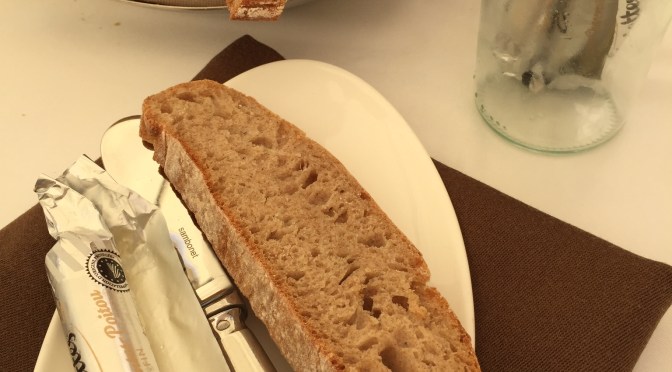
Here’s a special summary of what specialties and dishes I have encountered of late. Nothing from 5-star or destination restaurants, just high quality, places with proud owners who turn out good food at reasonable prices for its customers. The featured image above came as a simple bed of three bread choices as a starter, with chilled rolls of butter wrapped in foil. I thought it was an elegant presentation of Austria’s finest.

Some of these dishes along the way were left out of earlier posts for one reason or another. My focus in this post is about how I have drastically modified my food choices. Despite all the temptations and delicious food, restaurant food on an on-going basis is not sustainable. I’d be the last person to admit that, but even I have hit my limit…at least, for today.

The first few meals were hard to pass up:

1. A tasty salad of shaved mushrooms from the Vienna Kunsthistorishes Museum Cafe.

2. Another museum special in Salzburg, of roasted chicken on a bed of hominy and salad. It was delicately flavored and delicious. Museum cafes are convenient and seem to have good environments with great views and pretty reliable food, even if they are a bit slow or lack business. It’s also easy for a singleton like me to slide in and enjoy a nice glass of wine with my meal without feeling like I’m unpaired.

3. Wiener Schnitzel at the cafe across from the Freud Museum had a coating that was unbelievable. Better than any tempura or batter fried fish you ever had–crisp, hot, not oily and melted-in-your-mouth scrumptious. The problem was that the portion was enough for three big men, but I ate it anyway. (This was my predicament for the past few weeks, whether it was a salad, fish, or ANYTHING on a plate! What happened to those tiny meals in Russia??)

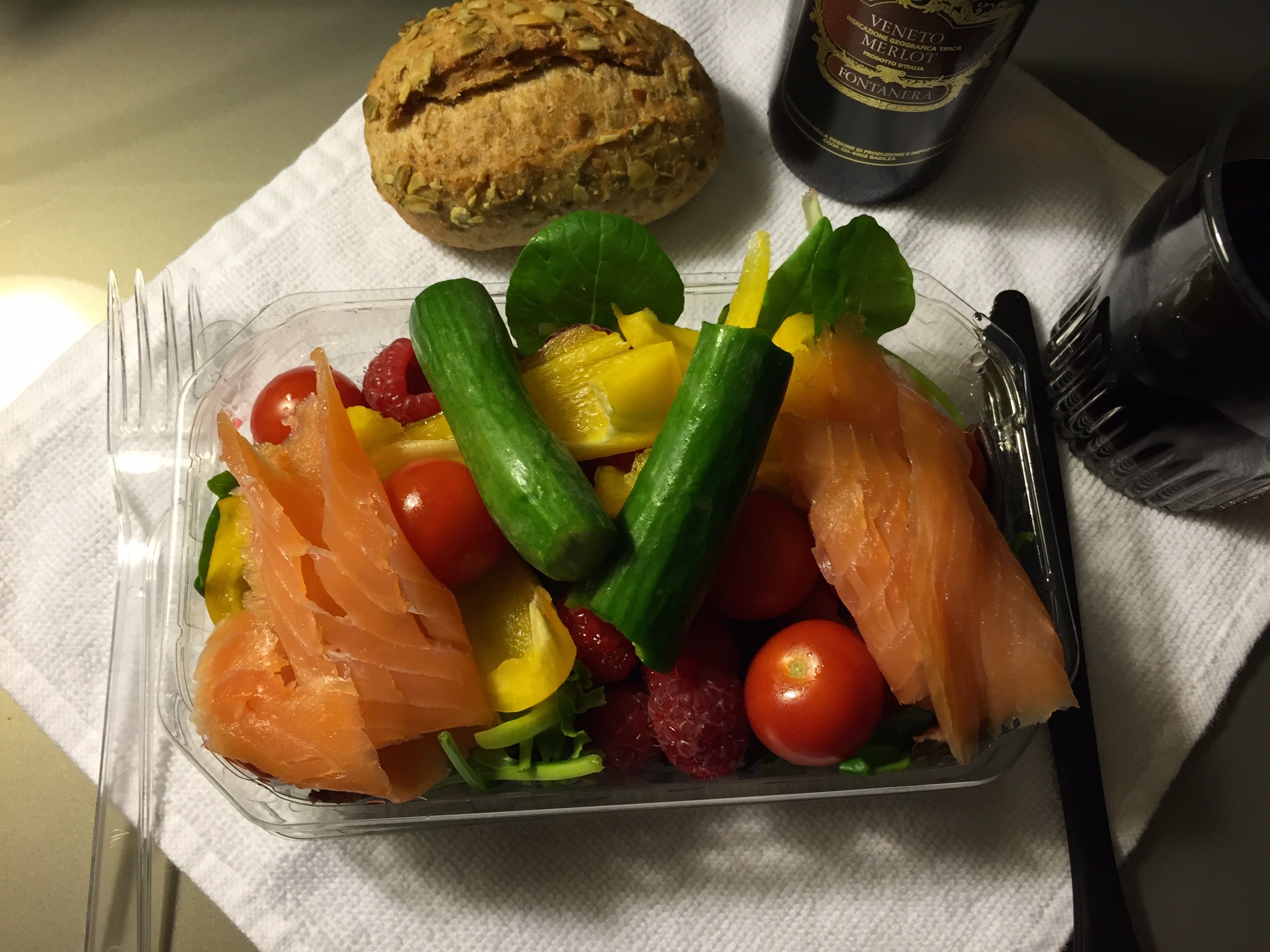
By the end of the week, however, I was yearning for the plain and simple. I arrived in Zurich making a dash for the nearby supermarket, conveniently across the street from the hotel. I was able to conjure up a delicious summer salad with Scottish lox, raspberries, tomatoes, yellow pepper, and finger cucumbers, with a seeded roll and split of Italian red on the side. I was proud of how I could prepare an entire meal with ad-hoc implements and bath towels from the hotel. I’ve been trending toward this healthier, less expensive approach to food on the road.

IMG_8090

Before leaving Linz and Austria, the famous Linzer Torte had to be tackled and deconstructed. I tasted it and wasn’t too impressed, but I am including several versions of recipes for those who are interested. Hopefully you can enlarge the print to read it. I tried holding my breath every time I take these photos with text so they don’t turn out fuzzy, but alas, I sometimes giggle uncontrollably.


The upshot of the torte is that, from what I saw, you make a sort of almond paste/marzipan type of glue that you fence onto the top of the cake smeared with jam. Pardon my description. It sounds gross but I am actually interested in trying to make a tasty version of it when I get home.
(from the Schloss Museum, Linz)
And of course everyone wants to have fame in the food world. The Linzer Torte can’t escape the temptation.
IMG_7960-1

Day 34: St. Florian, A Closer Look

Time to reflect on St. Florian, the Augustinian monastery outside Linz, Austria, where I spent my last three days. At first it seemed very grim and austere, but by the time I left I felt the urge to return. It has its undeniable charm, and the offerings in the area were far beyond my expectations. The biggest draw, although I did not do it, was the Bruckner Weg, or Symphonie Weg. I described it earlier, but it’s hard to describe how excited I was by it. It combines my love of walking and music!

It’s a great way to learn about the music of a composer who was so dedicated to organ music, he wanted to be buried under the church of St. Florian. And indeed, here’s a picture of his crypt in the basement!image

I was able to discover this grand old monastery and its historical treasures that are now under appreciated and forgotten. The library holds over 140,000 volumes and about 4,000 are original books before the printing press was invented.

image

Other treasures were the performances in the cathedral itself. I took many videos of the two daily performances and the mass at six jsut to record the music. I guess it wasn’t really a mass because the monks all came out and chanted for about 20 minutes and there was very little audience participation. I got really curious about the Augustinians. Here’s a description if what I read in Wikipedia:

https://en.m.wikipedia.org/wiki/Augustinians

The interesting part was about their psyche. It indicated that monks were high on the masculine scale but also had a very high preponderance towards female qualities of neuroticism and detail. Wow. What a combination. I wondered if I was material for monkhood??

In any event, that minor piece of information got me to thinking what could have motivated these men to join the order. I was surprised to learn that Martin Luther was an Augustinian before he protested against the Catholic order and the papal Bulls. Eventually, he got married.☺️
Others like him must have suffered some hardship or divine inspiration. The Augustinians also have hermits too, so their monastery is a perfect place to try out the lifestyle. I wondered how Herman’s Hermits picked their name.

As the monks left the cathedral, I couldn’t help but study each face. Hmm, older, tall, and pretty handsome for their age. Is that where all the men have gone? I’m searching for my single lady friends.

It all starts to come together. All the glorious trimmings at the expense of the people. But it was interesting to see the development of the environment and understand the conflicts that were subsequently caused by it.

Here are some more views:

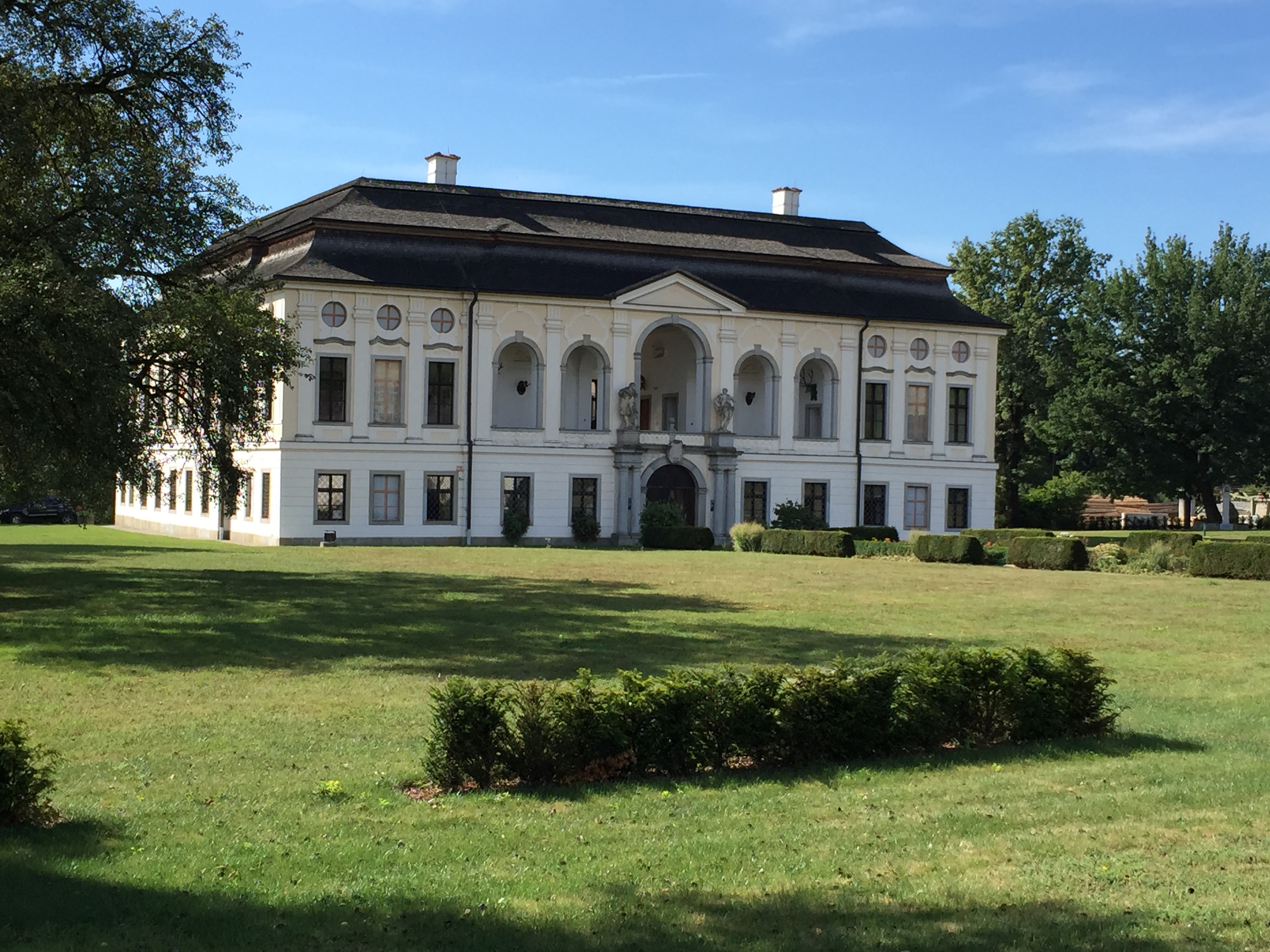
I mentioned some of the wonderful paths and “wanderings” available throughout Austria and Germany earlier. Switzerland probably has an awesome offering, but I haven’t heard about them yet. Although I was unable to do Jacob’s Way to Santiago de Compostela (my 19 days were already numbered), the Bruckner Way or the Symphonie Way (the museum at the far end was closed for the month of August), I took a short walk a mile away to the Hohenbrunn Schloss. It was blazing saddles, so I had to shade-spot along the path. Before arriving, I stopped to enjoy looking back at St. Florian in the distance beyond the road (pictured in the header).

Hohenbrunn, shown below, is some version of a hunting lodge built between 1722 and 1732. No one was there except me, and for a few quid I could see the entire place to myself, unaccompanied. At first it seemed a little creepy, as it felt like someone had just occupied it and left the water running somewhere. And all those guns. The one I took the picture of was one-of-a-kind. It actually is used for shooting ducks on a boat, so the boat supports the long barrel. I’ve captioned a few of the other photos that struck my fancy as I pranced through.

Front of House
Front of House

The up close and personal with the animals got a little weird. They all seemed to be having Gary Larson conversations with each other, wondering where all the human pets had disappeared to. I felt like Ben Stiller in “A Night at the Museum.”

Despite my digs at the culture in and around St. Florian, it was really pretty sweet. It took a bit of courage and good faith to come here on my own, but I stayed in contact with my support staff. I am nearly half way through my journey, and as many of you know it is not about the destinations but the process of getting there.

At times I wondered what I was doing. When I finally played my on-line music appreciation class that I brought along with me, I realized that this is real-time learning. I can hear and relate to music that is being performed. I ironically was at the point of learning about “Baroque” as in Bach vs. “Classical” music by Beethoven. That was awesome!

I hope I can convince any of you to come back with me to St. Florian. The surrounding area is luscious and vibrant, and you feel the freedom to explore at your own pace. It’s heavenly to hear the organ and Bruckner here. And yes, I am a little sad to leave.

Featured photo at top: Hoenbrunn Schloss, in St. Florian near Linz, Austria

Day 31-33: St. Florian

As a contrast to my onslaught of cultural cities, I decided to take a different path and stay at a monastery in Linz, Austria.

My first glimpse of the monastery was breathtaking, after a short but determined path uphill through a winding path. The landscape in the area is exquisite, with rolling hills and tenderly groomed patches of yellow and green plots. You would never leave here if you were from this area, I thought.

The monastery has rooms for visitors at a reasonable price, and has daily performances of one of the most magnificent organs in Europe. The highlight will be another (gulp) mass in the evening with an organ performance.

Anton Bruckner, who was an organist and composer, is a native son of the area. There is now a connection between Ansfelden, where Bruckner was born, and the Augustinian cathedral at St. Florian, where he was a choir boy. You can read about him: https://en.m.wikipedia.org/wiki/Anton_Bruckner

A billboard advertising the Bruckner Way is located on a path outside the monastery. It lights up each path you select among several different paths. You can view the Google image below. “Wanderers” can choose from the more mild “running shoes” paths and those for more advanced “hikers”. Trips run any where from 5-20 km.

The walk even has an MP3 player for hire that has all 12 Bruckner symphonies on it, so you can listen to it while you are on the trail. You can also arrange for a taxi to take you back if you only want to do a one-way trip. I thought that this was an excellent idea and wished this system that is available throughout Europe were established in the U.S.

This path forms part of the “Jacob’s Way” and leads a pedestrian all the way to Santiago de Compostela in Spain. I googled it and you can do it in a mere 19 days from here. If you “boots are made for walking” here’s a place to use them.
This walk was one I had always contemplated, until I realized why they advised carrying a poncho.

Day 30b: Viennese Sights

1. In and around Vienna: St. Stephen’s Cathedral and Plaza area (also featured image), and a street scene near Mozart’s House in Vienna. Notice the wide contrast in architectural styles, right in the cultural center of the city.

2. The Albertina and a collection of Modern Art from Carl Djerassi

These are only a few of the works I liked in particular, from his extensive collection that include Lichtenstein, Warhol, Gerhard Richter, and Klee.

Read about Carl Djerassi’s possible connection to San Francisco: https://en.wikipedia.org/wiki/Carl_Djerassi, or better yet read this fascinating obituary in the Telegraph: http://www.telegraph.co.uk/news/obituaries/11384755/Carl-Djerassi-father-of-the-Pill-obituary.html. The Klees on display are part of the Djerassi Trust and has been promised to the Albertina. I wonder if there is a tug of war going on between the SF MOMA and the Albertina. It might be interesting to follow it as part of the art world’s pursuit of wealthy collectors and their endowments.

Gerhard Richter is one of Melissa’s favorite artists. The black and white portrait of a woman smoking was not obvious until I took a picture of it!

By the way, I discovered that Adolf Loos was Austrian (and Czech). Here’s some interesting information about him: https://en.wikipedia.org/wiki/Adolf_Loos.

3. The Vienna Opera House: from an evening of Mozart music.

Now, after three “variety shows” of operatic music and concert pieces featuring Mozart and Strauss, I can hear the difference. Strauss added alot of drums and brass but also contrasted these boomers with sweet melodies. They are a crowd pleaser and I admit I became mesmerized by the rhythm and tunes. Unfortunately, the opera is closed in August so there are no regular performances. If you come in August you are stuck with the tourist track.

Updated 8/23 11:10pm