All posts by VickieVictoria

Intrepid traveler. Architect and appreciator of design, art, language, opera, history, and anthropology.

Day 20-25: Duffelbag in Düsseldorf, Multi-Tasking, and Multi-Culturalism

The eagle has crash landed. After an eventful day traveling from London via Brussels and Köln to Düsseldorf, I settled down to my “home” for the entire month of May, 2017. Reporting on Pretty Yende was irresistible. I apologize to those non-opera fans for obsessing on someone you might not know. But if you have heard of Pavarotti, you will soon hear Pretty Yende as a household name too.

So, Düsseldorf. My first introduction to the concept was quickly corrected by my AirBnB hostess. When she watched me unsuccessfully enter the internet access password she had given me, she reminded me that Düsseldorf needs to spelled “DuEsseldorf” to be correct. No E, no Entry to the Magic Kingdom of the Internet.. OK, right, as they say in the U.K.

The drizzly week didn’t help to motivate me to see much if the city, except to hang around the train station and the Goethe Institut, where I am taking a one month German course. This is my fourth course in four years (refer to the travel itineraries under the header for each year).

Some of my former German class buddies may be curious to hear how my class is shaping up. Students are diverse in age and nationality. One or two Koreans, Chinese, Japanese and Indonesians; Ukrainians, South Americans, Saudis, British and Americans.  It’s best to avoid groups of three or more students from the same country as clumps and gangs form! I’m pretty satisfied with the collection for now, but we’ll see.

Multi-Tasking

Our first German class topic was about the brain and learning. It was a great introduction to the up-to-date, state of the art German education. It quoted the most current research, citing numerous examples of ways to retain new information. I reflected on the brain research studies Gee Kin (husband) and I will be participating in after I return to San Francisco: part of superstar Adam Gazzaley’s research on distraction and brain landscapes.

We have devoted our lives to multi-tasking to the point of distraction. While hipsters can manage and focus, it’s a bigger challenge for those of us who have built multiple careers on prior knowledge. It gives us little time to clear out the attic and the clutter is evident.

As part of learning new German vocabulary, our class was taught all the various learning styles: seeing, hearing, speaking, and a combination of speaking and movement. We should vary exercises and not be fixated on only one method. For instance, walk around and recite seven new words, but no more, for very short periods. They didn’t say it, but these suggestions are based on brain studies and the most effective ways to retain information.

We also learned in class that men learn quickly but also shut down information quicker than women. This started a lively conversation stereotyping men’s and women’s learning styles. It was too tempting to resist judgment between the sexes: one student claimed that men were smarter while women paid more attention to detail.

This naturally caused a call to arms between my new kindred English woman architect classmate and me. We exchanged some rapid eye movement and eye rolling and began to dispute the claim.

Initiated by a couple of male students from “not-so-liberated” countries, we stepped up and did what would have done Gloria Steinem proud. But in the midst of it, I felt a sad mood descending on our spirited encounter.

A few months back, I had seen a program about the Flüchtlingen (refugee) experience in Germany on Deutsche Welle, Germany’s version of Voice of America. A recent immigrant interviewed expressed his gratitude for free and public education, housing, and health care, but he noted how he was not accustomed to going to training classes with female students. I couldn’t help but flash on this observation.

I wondered what experience one of these male students had in classes with women students. While I don’t consider myself a super-feminist, I saw the huge canyon between my perspective and this classmate.
Should nations of Western Europe and the US strive to convince the world to go our way? Or are we imposing our might on others? I felt as if there was a mountain of work convincing this student that women were as good as men. Maybe women in his country just don’t ever get a chance to take men to task. Where does that put Angela Merkel, a chemical engineer, running a major country? Or maybe we should just back off?

I was grateful that I lived in the US, where you are at least free to enter the ring.

We assume that Diversity means other races and cultures but in some cases we have to remember to include women on the list.

Multi-Culturalism

Later that day in Frankfurt, I met a nice African-American woman, Carol Lynn. She had been working and living in Germany for over 35 years. She came from DC, so I couldn’t help but rave to her about the NMAAHC. She listened politely, then told me briefly about her life. Her family was already 5 or 6 generations traceable, back to the original slave owner. Her family of 9 siblings promoted many offspring, numbering over 100 members in the family and with 50 nieces!
She had many jobs working both as military and civilian personnel supporting our American presence in Germany.

I began to realize how many Americans are in Germany. Until now, most of my travel had been concentrated on Eastern Germany or in the countryside, so it was less evident. This conversation gave me perpective. Particularly for African Americans, I wondered if it wasn’t a more positive experience abroad than at home.

It’s important for all cities to embrace its members in a multicultural society. It isn’t enough for struggling minorities to merely “parallel play” and be marginalized.  All cultures must be engaged in a common goal and feel that they are contributing collectively to the vibrancy of the city to which they belong.

Apropos to all of these observations and experiences, I had asked husband Gee Kin to reflect on our recent travels. Here are his thoughts, and please send us yours.

Diversity in the World’s Great Cities by Gee Kin Chou
San Francisco is considered one of the great cities of the world. However, it’s a mere village compared to two other great cities on the list: New York and London.

I’m not talking about size; I’m talking about diversity.

Within the 64 square miles of San Francisco proper, White and Asian faces dominate. Yes, Latinos and African Americans become a larger part of the picture when you expand the geography to the greater San Francisco Bay Area, but many are marginalized; African Americans in particular live in increasingly segregated communities. Africans from Africa, and Islamic headscarves are rare.

In New York, and even more so in London, a random day is likely to include contacts with several ethnicities. The shop assistant may have emigrated from Egypt, the bank teller from Nigeria, the hotel clerk from Bulgaria, the waitress in the upscale restaurant from Colombia and the electrician from Barbados. Every day encounters with ordinary people doing ordinary things. It may seem trivial but this is not the daily Bay Area experience.

I had always thought the “diversity” of the Bay Area was the future and the role model for the rest of the world. But visiting New York and London after a long hiatus has reminded me not to get too smug: San Francisco is not where it’s at. New York and London are truly GREAT cities.

Miscellany

Finally, a few shots of the Frankfurt Opera interior (the new one, not the old opera house and the evening performance “Three Operas”:

It’s worth seeing something at the opera house as the intimacy, sight lines, and acoustics were fantastic.

Header Image Above: Can you guess where and what this is?  It was too significant to pass up as one of the largest Gothic cathedrals in Europe. You’ll have to wait for more Dusseldorf sights next week, when friend Helena and I will do the town and attend concert events here and in Essen!

Plus: Happy Happy Birthday today to Isa!!
Day 19: Pretty Awesome Pretty Yende (Köln)

Last night I attended a concert with Pretty Yende at the StaatenHaus am Rheinpark at 6pm in Koln. She is the hot new South African opera star adored by the Metopera whom I wrote about earlier. I found an under-the-radar, one-shot performance in Koln and I managed to get myself a ticket several months beforehand. Pretty (that’s really her name, she owns it) was partnered with Eric Cutler, a tenor, and Igor Golovatenko, a baritone, singing arias from Romeo and Juliet and Lucia de Lammermoor. She had performed these recently at the MetOpera in New York.
Naturally, as I do at each performance, I study the audience. Asians are not yet a significant part of the classical music crowd in Europe. There are normally a sprinkling of Asian attendees, but few and far between.

Let’s face it, I look Asian. I AM Asian. And I also look to see if there is any other representation. There are even fewer of any other ethnicity. Sad but true. I have adjusted myself to being the only one in the audience as I was tonight, and didn’t really mind, considering who I was about to see.
Occasionally I feign myself as being a former crown princess of some ancient city. I strut about royally during the pauses, disdaining the cheap champagne and decayed mushroom puff pastries being served at the bars. I peruse the huge bouquets of lilies and roses, and imagine that they were being sent to my hotel room as an acknowledgement of my attendance. I update my fantasy to being a wealthy, thirty-something owner of an internet empire. I idylly drift in and out of world-class performances and bummel around elegant Baroque castles, wineries, and fineries of Europe.
I return to my Row 1, Seat 1 proudly. I could observe every twitch and turn of both conductor and star performers and detect what was really going on in their minds. You are so close to them you can see their temples pulsating as they reach their climaxes (musical).
But back to the performance. Stellar. Stellar. Stellar. Pretty Yende was poised and perfect. Every note was chiselled with the finest of singing tools and the wind going through her throat melted like honey.
I breathed every breath she took, as her trills and curls gave me tingles like lightning up my hairy arm. I imagined drawing her as a model in my figure drawing class, and saw the shapes and triangles on her face and body. Her costumes were an extension of her inner beauty and strength, and her name. I was captivated.
A couple of men in the back of the audience shouted “Bravo!! Bravo!!” Mesmerized by her delivery, I suddenly discovered myself yelling the same. I couldn’t believe it was me—that quiet Asian wonan, who can never raise her voice loud enough to be heard answering questions in German class, suddenly turning into Katy Perry and shouting as if “you can hear me R-O-A-R???” while both disregarding and commanding attention?!?
Hey, it’s easy when you are congratulating perfection. Timing my call was perfect too, like what a percussionist does to nail that single triangle stroke or clash of gongs. Could it have really been me? The polite German woman next to me looked taken aback and perplexed. (If you know German audiences like I do, they never give standing ovations.**)

I started to like this new-found powerful image of myself. Why stop?

At the end of the next piece, I suddenly heard a different shout.

“Brava!! Brava!”

Oh God, THE WORD IN ITALIAN HAS GENDER!

Did I really shout what I heard the first time, or did I follow like a lamb what I heard??

I lambishly shouted and mimicked again, but quickly disregarded my first faux pas and claimed this time, “BRAVA! BRAVA!”

After all, why kill a good thing coming?

Sorry, Pretty Yende, if you are reading this, you really were Pretty Awesome. And I was thrilled to meet you.

IMG_7473
Pretty Yende signing CDs

*I noticed that the title of this post was used by the NY MET in their press releases but I tagged mine before seeing it. So hopefully I wont be accused if plagiarism! You can also find the smashing cover of Opera Magazine UK with Pretty Yende on it here: ‪http://www.opera.co.uk/, along with many others to come!

And here’s an interesting discussion I found on the web about the use of Brava, Bravo, Bravi, Brave, Bravatissimo, etcetera…etcetera…
https://italian.stackexchange.com/questions/1880/can-i-say-bravo-to-a-female-performer

A quiet moment in Koln just before the performance, just so I can remind myself that I was really there:

**There were no standing ovations at any opera performances that I attended in Germany, except once for Nina Stemme in Tristan und Isolde in Berlin’s Deutsche Oper. Normally, as they did for Pretty Yende, Germans stamp their feet sitting down in lieu of standing up and clapping. As an architect, that makes me cringe–not so much because of concern for the weight or stress on the structure, but for the abuse on the floor!! OMG!

Days 17-18: Asian-American in London Sees An American in Paris

Blenheim must be one of those architectural gems featured in An Outline of European Architecture  by Nicholas Pevsner. I wanted to run to my tattered and worn copy on my shelf at home to see if it was. The book got me through most of my Architectural History classes, just at a time when I wondered why studying palaces like these were useful endeavors in life.

A rare English Baroque palace, Blenheim was built by John Vanbrugh. He was a controversial pick over Christopher Wren, who designed and built St. Paul’s Cathedral. Van Brugh managed the project poorly and he himself had to be managed during the process. In the end he left the project in disgrace. It’s funny, but I’m sure I didn’t learn the project management details in architectural history, but it figured prominent in the storytelling about Blenheim.

Van Brugh was probably better known for his layout of the rooms. He originally designed an entire length of the building intended as a picture gallery. It didn’t work out. Maybe there weren’t enough portraits of the family. The walls were converted for use as a library. One of the photo shows how it looks like…well, an afterthought.

The Duke of Marlborough, an original Churchill, lived here. He was granted the property after winning the war against France and Prussia around 1704. The battle took place in Blindheim, Bavaria with 50,000 troops on each side.

Sir Winston Churchill was also born in Blenheim–I didn’t realize that he was born with a silver spoon in his mouth, as they say. Sadly,  I didn’t find this palace very impressive, even though it is now an UNESCO World Heritage Site,

To reach Blenheim by public transportation, it takes a side trip from London through Oxford by train, then by bus to Woodstock. We stayed overnight in Woodstock (half an hour from Oxford) to visit the Palace early the next morning. Woodstockers are proud to claim their namesake that preceded Blenheim by about 500 years, and  ‘way before the piddly little NY town claimed the name. It’s famous for glove-making.

IMG_7322.JPG

Before the palace was open, we took an early stroll through the grounds. The rolling hills were fun to navigate among the pastoral sheep and a stray pheasant here and there. Not much going on except extensive stretches of green lawn as far as the eye can see and shady trees as shown above. No one was in sight, until we arrived back at the entrance where the tour buses were just unloading the hoards. It started to feel a little bit like St. Petersburg again so we hustled our way out of the throngs quickly.

Our friends in Bath had recommended the Ashmolean Museum in Oxford, so we stopped there after Blenheim on the way back to London. The museum has an impressive ancient art and archaeological  collection and many representative pieces I had not seen elsewhere. I could also continue pursuing Silk Road connections and learn more about the string of cities along it.

From what I recall,  art history seems to formally begin around 3000 BC, when Egyptian civilization became established.  One of the earliest pieces in the museum was from as early as 8000 BC, during the Neolithic period in Metsopotamia. Here are a few of my favorite pieces from later periods:

On return to London, I planned a special return visit to Fez Mangal, an “authentic” Turkish restaurant in the Ladbroke Grove neighborhood. I craved its fresh mezzes and kebabs as much as those in Istanbul. Friend and fellow traveler Karen will remember this restaurant from our 2014 visit to London. While we waited for a table SRO, we ordered our sea bream and mixed grill (with lamb, chicken, and mixed lamb kebabs) dishes in advance of being seated.

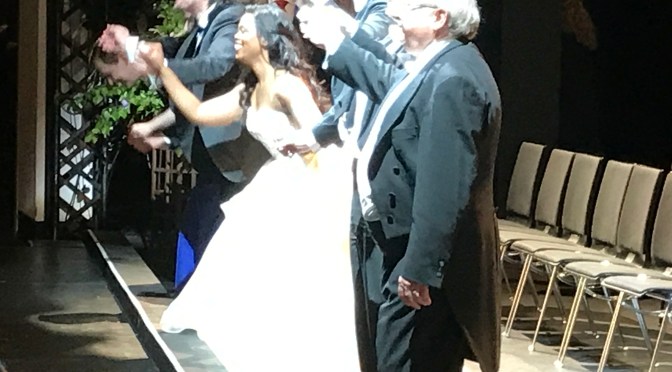
An American in Paris (see curtain call in featured photo above)

Unfortunately, despite excellent dancers and singers, the confusing and dated dialog from the original production couldn’t be improved. Save your money and watch the movie.

By the way, I forgot to mention in my previous post that Bath is also a world UNESCO site.

In keeping with my celebration list, I’d like to wish dear Dresden friend Hannelore, who keeps me motivated and learning German, a “Happy Birthday” or “Alles Gute zum Geburtstag!”

Days 12-16: A-Mews Yourself with Bathing in Bath

Arrival in London reminded us that the British are much more formal than Americans, but also friendly and engaging. Their use of the language is brilliant and a reminder of why so many of us use it throughout the world.

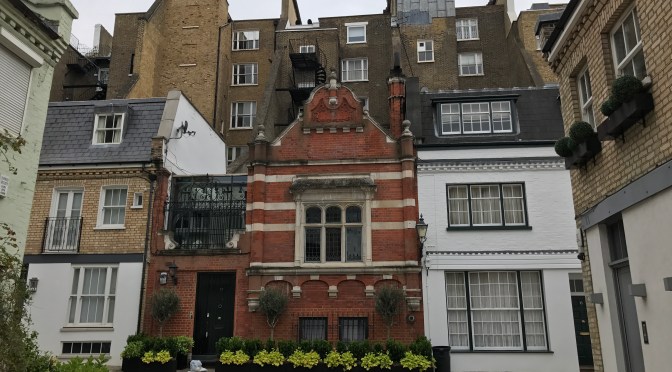
Our early morning walk around S. Kensington where we are staying surprised us with the V&A Museum, Imperial College, and the Natural History Museum within a half-mile radius. More intriguing were the quaint mews or back streets that used to house the horses and carriages of the gentry living in Kensington. They are homes to die for. A few little shops were tucked in for a-mews-ment. Back on the main road, we enjoyed the gigantic London Plane trees that lined Cromwell Road so majestically. They reminded me of the street trees where I grew up on Grosvenor Place in Oakland’s Lakeshore District.

At mid-day, we met an old friend for lunch at the Comptoir for Lebanese food to share our missed lives together. She was, at the time we first met, a community activist working in the Fitzrovia area helping Chinese settle in London. I was doing a study of the London Chinese as part of the Branner Traveling Fellowship from UC Berkeley’s Architecture Department. She helped me to connect to Chinese living and working in Soho, or London’s Chinatown.

I only discovered in our conversation today, that, in addition to training at the London School of Economics, she studied at Cambridge University and visited China with a group of students from Cambridge for two months. She also lived in the Hong Kong New Territories teaching English during the time that I worked in Hong Kong as an architect.

We shared many stories about our early careers and how we chanced to meet each other. It was a great rediscovery of each other’s past, ones that we had barely known or understood at the time. It was so much more meaningful, now that each of us have lived (and loved) in life. A few bruises along the way gave us greater depth and understanding of the world and each other’s lives.

I encourage everyone to go and find an old acquaintance and to rediscover the time absent between yourselves. You will gain perspective and learn more about each other. Like seeing old friends, this meeting made the entire trip across the universe from San Francisco to London worth the trip alone. Life is short.

Our first full evening was devoted to opera. I was looking forward to seeing Thomas Ades’ new work, “The Exterminating Angel”, based on the movie by Luis Bunuel. Modern opera has a way to go in appealing to devoted opera goers. The music, story, singing, and staging has to pair like a fine wine with the passion and drama of opera. I admit that I am a bit of a drama queen, but that’s why I appreciate good opera. It has all the elements of the classic life stories, whether they occur today or the day they were written. This one didn’t quite make it for me, but I’ll give it a *** for effort and execution. Here’s the story: http://www.metopera.org/Discover/Synopses/Eugene-Onegin/

Bathing in Bath

Within one and a half hours’ train ride, you can get yourself to Bath. I never connected the roman orgy of bathing to Pride and Prejudice, but it’s definitely alive and well in Jane Austen country.

All exteriors of buildings must be of local limestone, so the buildings are consistent and match each other beautifully.

Our first official tourist act was indeed to go to the Bath Thermae Spa around the corner from the hotel. The words all seem redundant, but we did enjoy the minerva spa, outdoor roof pool with a view of the city, and the steam bath indeed peeled away any stress from traveling and overeating.  I indulged in a facial. I convinced myself that I deserved it after passing up all the Baden in Baden-Baden.

The real purpose in coming to Bath was to visit friends here.  They had abandoned the frantic London life for a kinder, gentler world. Bath was perfect, being only a stone’s throw away but real enough to feel the quality of life run between your fingers. We luxuriated in a beautiful country home, complete with an English garden and view of the city’s skyline of limestone structures tucked like sets of stellae in the rolling hills. The canals rippled just below the back of the house and offer lovely strolls to town and beyond.

Our host-catered lunch included spinach ricotta cheese in puff pastry, tibouli salad, and baked ratatouille in the shell, with hummus and homemade yoghurt on the side. Another perfect day with finest of friends, food and the fine.

More Royal Crescent

Days 9-11: (Upper) West Side Story

Following our side trip to Washington DC, we are back in New York staying at The Beacon Hotel on the Upper West Side. It provides convenient and walking access to the next three days’ events at Lincoln Center’s Metropolitan Opera: Aida, Der Rosenkavalier, and Eugene Onegin. You might find that worse than doses of cod liver oil, but for me, it’s like dying and going to heaven. You’ll hear more of the gory details later.

Breakfast

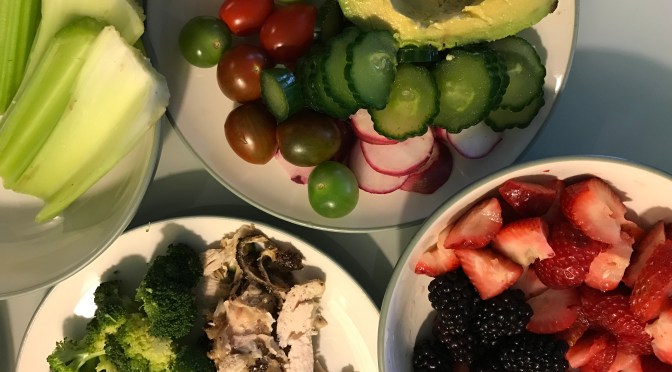
We started off the day with the Fairway Supermarket across the street from the hotel. We loaded up with fresh Mediterranean fare (see photo above)–fresh fruits with yoghurt and granola, cucumbers and tomatoes, and veggies with protein. We are taking a break from restaurant food everyday by booking a hotel with kitchens in the rooms to cook and eat healthier.

A quick walk within a half-mile radius of the Beacon Hotel yielded a wealth of new finds. Many shops are individually owned, mixed in with community gardens. Sandwiched in between Central Park on the east and Riverside Park, the Upper West Side is stocked with plenty of greenery and O2 to replenish the body and soul. A couple of retirees in Riverside were racing their model sports car through our feet as we gingerly tiptoed through the racetrack and the tulips.

Lunch

What more can you say? Food is everything in New York. You can find just about any type of cuisine or ethnic cooking, including crossovers like my favorite example of Uzbeki-Korean food. Not to beat that over a dead horse, but that level of complexity ain’t in foodie-snobbie San Francisco.

After-Dinner Snacks

The evening performances at Lincoln Center are dazzled by sparkling chandeliers inside the operahouse that modestly excuse themselves from blocking anyone’s view as the concertmaster plays A on the violin, the lights dim, and they retire to the very top of the ceiling.

All seats are good. The ones I selected for the series of three this time were side-saddles with box seating at the dress circle level. The $25 tickets I purchased at the very top row of the balcony in the past aren’t a slouch either. You have the option of ditching the performance if you don’t like it or incentive to get creative with a wild one.

What follows is our raisin d’etre for coming to NYC this time. The string of operas with curtain calls, synopses and my subjective opinion of the performance (all in: singers, staging, music, etc) for those interested:

Aida

IMG_7126

http://www.metopera.org/__Redesign/Views/Pages/Discover/Synopses/Synopsis.aspx?id=46544&epslanguage=en

My Rating this performance: ***

Der Rosenkavalier (Renee Fleming’s swan song/final performance and curtain call as an opera diva, along with Elina Garanca)

Error
This video doesn’t exist

http://www.metopera.org/__Redesign/Views/Pages/Discover/Synopses/Synopsis.aspx?id=46548&epslanguage=en

My Rating this performance: **

Eugene Onegin (with Anna Netrebko in Tchaikovsky’s masterpiece)

IMG_7155

http://www.metopera.org/__Redesign/Views/Pages/Discover/Synopses/Synopsis.aspx?id=46533&epslanguage=en

My Rating this performance: *****

Let me know if you have ever lived on the Upper West Side or on the Lower East! What was your experience? We had been pretty stuck on Midtown or Upper East Side in the past but found that trying out these new neighborhoods gives us a very different dimension to New York City. We’re encouraged to try a different neighborhood each time we come to this magnificent, multi-cultural city. I hope you will consider doing the same!

As a final tribute to our being in New York, we toasted our anniversary and a birthday with a dear friend whom we met in Hong Kong and who is a New York City native. At a rehearsal of the American Ballet Theater’s upcoming Don Quixote, we caught a glimpse of Misty Copeland! What more could you ask for in a sendoff from New York City??

We’re on to London, so be prepared for a British accent to the next post! (Fewer operas, Queen’s Gate, then on to Bath and Blenheim)….

Days 5-8: Dizzyin’ D.C.

The number of museums (all free) in Washington D.C. is staggering, and deciding which ones to visit is a daunting challenge. We decided to each pick one today–and a few off the beaten path. We had already covered the most popular ones in the past with our kids–the National Gallery, the Smithsonian, the National Air and Space.

IMG_4122

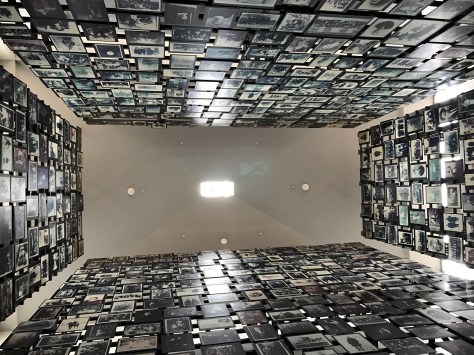
First, we headed to the U.S.Holocaust Museum. The featured photo above shows the five-story high atrium of the museum. Photos of Jewish families who perished in the Holocaust were displayed there.  The chain of events leading to the holocaust were many and complex, to say the least.  False evidence blamed the Jews for killing Christ.

Around 1525, Martin Luther initially embraced them. He later turned against them when they refused to convert to Protestantism. It wasn’t until 1994 when the Lutheran church acknowledged Luther’s anti-Semitism.

We primarily think of the Jews from Germany and Austria being sent to camps and killed there. Even more Jewish people from Romania, Poland, Russia and Lithuania were killed. Many were forced to live in ghettos segregating them from mainstream society. However, most Jews living in Italy, Bulgaria and Hungary were spared.

There were chilling graphic depictions of the camps. The arrival of American troops helped to document the horrors before evidence was destroyed. More than half of those who were liberated died within two weeks of being freed. They were already too sick to survive or were unable to digest the food they consumed.

While very sad and sobering, the museum presented an important lesson in history. Similar events could take place again.  This museum teaches us the social, political, and economic circumstances behind such heinous acts and the chain of events that caused the Holocaust. You can learn more about the museum here: https://www.ushmm.org/information/exhibitions/museum-exhibitions/permanent.

In the afternoon, we made our way to the Native American Museum. While the museum is housed in an impressive building, it didn’t reduce the weight of the subject and its history. The many tribes and unions between nations were systematically ignored and destroyed.

The many treaties that were created between the Native Americans and the U.S. were constantly violated, despite initial good intentions. The map below shows how Americans pushed the Native Americans westward further and further from their homelands, while new settlers expanded into these territories.

IMG_5083 2
Non-native Population Expansion, 1820 (Dark Red), 1850 (Rust), and 1890 (Yellow)

We welcomed the slow walk back to the hotel to ponder our thoughts from the day’s deep and sobering educational experiences.

Days 7-8: The NMAAHC, Capitol Hill, and the Museum for Women in the Arts

Many of the newer Washington D.C. attractions like the National Museum of African-American History require advanced tickets. I was glad I knew ahead of time, or I would have been disappointed. The stunning new building was designed by David Adjaye and is clad in filigree bronze screen panels.

After being guided down to the lower floor where slavery, civil war, and segregation topics were covered, we began our long difficult journey tracing and understanding the roots of African-American history.

Everyone was very quiet and pensive as we shared the tragic stories of Africans from mostly Central and Coastal West Africa being captured by Portuguese, Dutch, British, French and Danish slave traders. By around 1800, the importation of foreign slaves was banned. Rhode Island slave traders developed and dominated a thriving domestic trade.

Less than half of the captured Africans survived the journey to the Coast or the horrific slave ships. While approximately 500,000 slaves were brought to the States, a total of around 12 million slaves were captured in Africa and sold in the New World. The largest proportion were sent to the Caribbean or to Brazil.

As families were split up and sold, the humiliating auction blocks were used to showcase the black slaves. They were split up from families and loved ones, mothers from their babies. Both sides of the Revolutionary War and the Civil War used the issue of slavery as a strategy to rally supporters to their side. The British and Americans offered freedom to those slaves who fought in the Revolutionary Wars, and the North and the South also made promises to African Americans that often were not kept.

After slavery, it was difficult for African-Americans to survive the post-Civil war era. Many prominent leaders and heroes were featured, and there were many historic events and landmark decisions. Segregation displaced slavery and became another racist era.

The museum was split into the history and dark past on lower levels, and modern culture on upper levels. The NMAAHC offered insight and understanding of the arduous path of not only African-Americans, but the shared path of all Americans. You can read more about the museum’s collections here:  https://nmaahc.si.edu

The combination of these museums left a powerful imprint on my understanding and perspective of oppressed people in America. It seems more pertinent for all of us to learn about the history and development of oppression as race and religion become major issues in our current society.

The stretches between sights and buildings along the Washington Mall and Capitol Hill are far and wide, so good shoes and good planning are essential for surviving D.C. The Washington Metro provided some relief in getting between points, but the distances by foot are intimidating, even to veteran walkers like us. Thanks to L’Enfant and his grandiose French city planning scheme, the wide boulevards and diminished human scale do seem to put people in their places.

Well, the verdict is in. Yes, Washington D.C. is a pretty awesome place. I couldn’t help but compare the time lapse walking between buildings with that of Versailles. We got our royal injection thanks to L’Enfant. And I’m not sure whether the Kremlin and Red Square came first or we did (around 1800), but I’m guessing that National Mall beats Moscow’s in area. While we’re at it, it might be worth comparing Beijing’s Tian An Men Square and Forbidden City.  A research project for another day.

At the opposite end of the National Monument, above are just a few grand dames on Capitol Hill: the U.S. Capitol, the Supreme Court and the Library of Congress.

Above are one of three perfect copies of the Gutenberg Bible at the Library of Congress; and Cupcakes?!? (click on image to see captions and to increase scale)

Below: interior of ornate Italian Renaissance style Library of Congress. Almost stands up to or equal with the Library in Vienna. (To see the Vienna Library, search posting from Day 27 of 2015, dated Aug. 21)

A very understated but worthwhile visit to the Women’s Museum yielded some gems: a Frieda Kahlo Self-Portrait dedicated to Leon Trotsky, and friend Hung Liu’s noble portraits of women who were prostitutes. Gee Kin had trouble identifying five famous women artists, but managed to come up with these and Annie Liebowitz. Sure enough, she had a photo of Dolly Parton proudly on display.

There were numerous other interesting works there, but I felt sad that these great artists (including Berte Morisot and Mary Cassatt whose works were represented) and others (I didn’t see any Georgia O’Keefe) had to find a cause to be celebrated on their own and could not be integrated with the mainstream art world. Can you name five living women artists?

To top off the day at Momofuku DC: Honey Crisp with Arugula, Kimchee, and Maple Sugar; Skate Wing, and Chinese Broccoli with Cashews. Highly recommended.

Apologies for the long post.  Combined posts will reduce the load on your Inbox!

Days 3-4: A Beeline for the Highline and a New York State of Mind

A couple of years ago, I was introduced to the over-the-top experience on the Highline in the Meatpacking District of New York City. It didn’t take much convincing for me to want to retrace my steps again on this visit. The clever landscaping over a derelict elevated railway track, sumptious architecture and brilliant urban planning make the short two-mile long path an essential destination for both tourists and locavores alike. New outdoor art installations have been added since the first visit, and Zaha Hadid, a world-famous architect, has a signature building under construction on the north end. (She recently passed away.)

We made another beeline in the afternoon for Brooklyn. In a posting last month, our Brooklyn buddy researched the Uzbeki-Korean Cafe Lily for us. The hour-long ride to and from Brooklyn was no sweat compared to flying back and forth to Uzbekistan for kimchee and kebabs in one fell swoop.

Thanks to the favorable review from the NY Times in February and an eyewitness account (see the special correspondent report from the February 2017 post), we were not disappointed. Okay, it was after 2pm when we descended on an empty restaurant, but hey–it was open for business.

After a deliciously simple cucumber and tomato salad, perfectly flavored and crisply fresh (exactly as I  remembered the food in Uzbekistan), we slurped beef soup, prepared at the table with condiments, and tickled our palettes with a teeny lamb kebab. The highlight was an entire fried branzino for $15! The whole meal barely topped $50. This was the antidote to gourmet dining.

In Uzbeki food, simple cooking allows the inherent freshness of each ingredient to be sensed and savored with each bite. The Mediterranean emphasis is evident, but subtle. I noticed the care taken in preparing each slice or morsel of food when I visited Tashkent. Samarkand, and Bokhara (Oriental carpet namesakes) on my first world trip. Even though it is Eurasia’s version of California’s Central Valley, Uzbekistan does not seem to take food production lightly. Maybe it’s the depletion of nearby Lake Aral where the water was used inefficiently for cotton growing, or just historical frugality. Uzbekis seem to cherish each and every fruit and vegetable they grow with love and kindness.

Our day was topped off by a third and final beeline to a Billy Joel concert at the mighty Madison Square Garden. Going there was already an experience itself. Watching the living songwriter/master pianist/singer/quintessential entertainer deliver a straight two hour performance without an break was a phenomenon in itself!  It doesn’t take the Metopera to be the pinnacle of civilization. Only the best of the best–like Billy Joel.

Here’s a short clip of the stunning performance with a birdseye view from the rafters:

The next day we visited the Han Dynasty exhibit at the Metropolitan. Here are a few of the many excellent pieces on display.

We’re off to Washington D.C. today, so more museums to come….

Days 1-2: If I can’t make it here, I’ll make it… in SF!?!

On a cold, crisp, early, snowless morning, we landed in EWaRk–oops Newark. Land of the plenty, as hubby Gee Kin tells me. Joisey’s not only the second wealthiest state (per capita) in the US of A and higher than that of California, but the most densely populated (@470 sq. m/pp). In fact, almost as dense as the Netherlands (@409 sq. m/pp)! That’s a two-upper to lowly San Francisco Priders, who can claim neither for California.

Despite our early arrival from the red-eye, we managed to entertain ourselves with a brisk, let’s-avoid-chills-in-our-flimsy-made-for-California-jackets-walk in NYC to the Soho area where Balthazar, a great Frenchy breakfast institution, is located. I indulged in a rare Bloody Mary (no, I didn’t have a Vodka preference) with a salmon tartine and a first-time ever decaf coffee at 10am in the morning.

Our intriguing waitress was Korean-Irish and grew up in Japan. She validated my question about her origins after she told me that many people ask her if she was from one of the Stans. I guessed she might have been Uzbeki. For centuries the Central Asians have mixed their European and Asian roots into beautiful minds and bodies. It’s always exciting to find them in far-flung America.

On the way back to our Lower East Side hotel, we passed the New Museum. I couldn’t resist a quick peek. I learned from my personal guide, an Italian Art History major, about the museum’s genesis. As a spinoff from the Whitney, this museum collects work of living artists but has no permanent collection. That poses some challenges where there is a perpetual installation on half of the building’s several floors. Nevertheless, the portion that was open for Raymond Pettibon proved to be a worthwhile stop. While most of his work is focused on American iconic figures and political messages, his foray out of his graphic work into the SoCal surfing world was refreshing. See a few curly waves below.

After a break in the hotel to de-jetlag, we made it to the Pig and Khao around the corner for an early dinner. The diverse gathering of patrons and staff made the environment feel very friendly and comfortable. It reminded me about a comment from my German teacher. After she had visited New York for a week, she returned to San Francisco and was struck by how lacking in diversity San Francisco was. We were just starting to catch a whiff of the contrast between cities already.

The hotel is a new-age, suite hotel in the middle of the Lower East Side neighborhood. The narrow streets give this area an immediate neighborhoody feel. Despite the questionable gentrification, the owners made an attempt to link the hotel to the community by offering yoga classes and volunteering in the neighborhood. We actually went to the pop-up free food service to the neighborhood to help serve meals in the morning. It’s a great way to discover another part of NYC and a departure from our usual Midtown Manhattan Pod Hotel.

Pretty Philharmonie, Pretty Cities and Pretty Yende

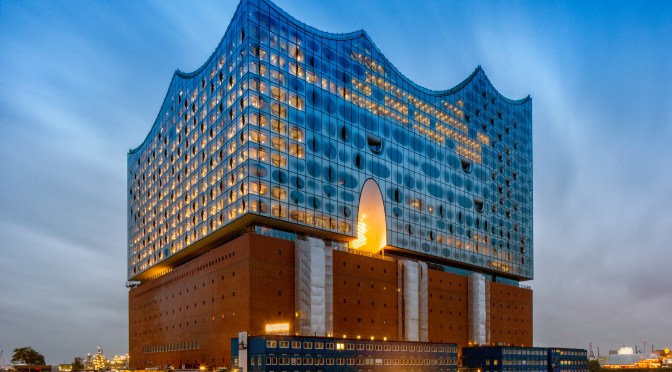
The fantastic Hamburg Elbphilharmonie is a newly minted symphony hall by Herzog and DeMeuron, one of our favorite starchitects. Costing nearly a Billion dollars (nur ein Milliarde auf Deutsch, to make it sound like less in classic German humble pie) and three times the original cost, it better klingt gut! It may seem unconscionable at that price, but…at least I wasn’t the project manager for that one!?! Whew!!

Nevertheless, I’m sure that it will take your breath away if you see it live. Perched high on a six-level parking podium, this building guards the Hamburg harbor.  Looking like a gigantic, dry-docked cruise ship, the interior is equally impressive.  Notice the scale of the building next to adjacent existing low rise buildings along the harbor. This building will change the face and pace of future symphony halls. More and younger crowds will attend to be seen and heard in these exciting venues that must include creative new productions and innovative performers in order to survive.

You can read all about it here: https://en.m.wikipedia.org/wiki/Elbphilharmonie#

Five German Speaking Cities Ranked Top in Quality of Living Survey

A recent survey tracked the most liveable cities in the world. Of eleven top cities, five are German speaking (Munich, Frankfurt and Dusseldorf are in Germany; Zurich is in Switzerland; and Vienna is in Austria). San Francisco was the only American city ranked in the top ten aside from NYC. Berlin was #11.

The cities — 230 in total — were evaluated on 39 factors including political, economic, environmental, personal safety, health, education, transportation and other public service factors. Cities were compared to New York City which was given a base score of 100. Mercer, who conducted the survey, is one of the largest human resources companies in the world based out of New York City.

Here’s the (updated) link: https://www.mercer.com/newsroom/2017-quality-of-living-survey.html

This survey may explain why I devote so much time and effort in learning German and spending a good proportion of my travels in Germany. The clues are based on the key factors cited above. They are the same reasons why I live and breathe in San Francisco. Now you know where I’d be if I hadn’t left my heart here.

Pretty Yende Pretty Amazing

April 30 will be a big day for me, when I see Pretty Yende in Dusseldorf. She has a pretty strange and curious name, but once you see her perform, you will completely understand why she us called that.

Out of (South) Africa, Pretty started learning and doing opera from Age 13. Apparently enough time on the clock to soar to one of the Met Opera’s youngest divas–performing in the Barber of Seville, Romeo and Juliette, and pinch hitting a few years earlier in Comte Ory. She’s gorgeous, powerful, energetic, and a heavenly sensation.

She’s planning to learn Wagner next, so get ready for some more fireworks. Don’t walk but run* to the nearest operahouse where she is performing. She’s slated to sing Lucia de Lamermoor and Elixir of Love next season, and I am already getting in line for tickets at the Met!

Watch the trailer for her new album here:

Incidentally, if you are a new opera lover like me, check out http://www.operabase.org for a database of all performances, opera companies, and performers throughout the world. For instance, if you search for Pretty Yende under Artists, you will see all her past, current,  and future performances. It’s an awesome site that I use regularly for trip and personal event planning.

A friend spotted Rufus Wainwright at the Zuni Cafe at lunchtime yesterday! There’s still time to catch his performance at the Uptown in Napa tonight.

My next post will be the start of Year 4 for Travels with Myself and Others ….so fasten your seat belts…

*Strange visual as some people attending the opera require canes to get around, but that’s changing!

Wishing a happy birthday this month to sister Muriel!

Ein Schönes Wochenende (A Beautiful Weekend)

The ten-year drought in California is over. Fountains are flowing again. Cherry blossoms and daffodils are in bloom in the Park. I have come out of hibernation and the synapses are sparking. And Spring is in the air!

Unlike the East Coast, we are experiencing beautiful weather in San Francisco. Germans often wish friends and family “A Beautiful Weekend”, and indeed we celebrated one this week.

Can you walk to a museum within a mile where you live? Indeed, we are fortunate enough to have both the DeYoung Museum and the Academy of Sciences within a stone’s throw of home. We finally took advantage of the convenience and did a twofer in one day to use our memberships in both. For visitors to San Francisco, you can easily conquer these in one fell swoop as they are opposite each other in Golden Gate Park. In the tower at the top of the DeYoung (a Herzog and DeMeuron masterpiece), you can grab a killer view of San Francisco within Golden Gate Park (see images shown below) from the tower (see header image above of tower).

The annual “Bouquets to Art” at the DeYoung allows floral designers to interpret a famous painting or exhibit. The scent of the flowers enhance the experience. A few of my favorites are shown here. Flowers are scattered throughout the museum, with two or three displays in each gallery. The floral displays coerce you into a lively dialog with the paintings.

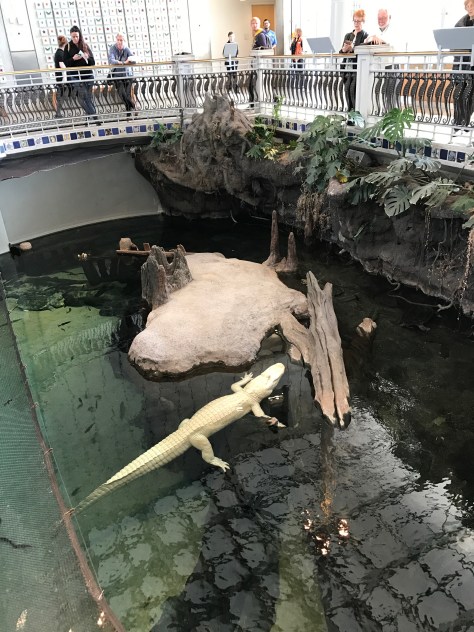
The nearby Academy of Sciences is a recently renovated, Platinum LEED building. That means it is a sustainable, net-zero energy building. We had neglected this natural history museum and aquarium until recently, after I saw the ones in New York and Berlin. The albino crocodile, Earthquake exhibit, Butterfly Terrarium (in a structure that imitates the Reichstag!) and full-scale skeleton of a blue whale are notable. And, in true San Francisco style, the Terrace Cafe had a decent menu with our choices here (Fish Tacos and Skirt Steak with Arugula Salad).

IMG_3038

The annual CAAM (Center for Asian American Media) Festival, held in San Francisco over the past couple of weeks, closes this weekend. The “Guangzhou Dream Factory”, was an evocative documentary about African entrepreneurs in China, and a series of seven short films showcased emerging filmmakers. Here’s a couple of shots from the new trendy “Uptown” neighborhood of Oakland where the New Parkway Cinema is located, and the Q&A with the directors and actors of the film shorts.

My midterm art review for figure drawing earlier this week helped me to organize and present what I have produced in class. Here is a spectrum of work along with others’ work. See if you can detect my “style” vs. others’ contributions!

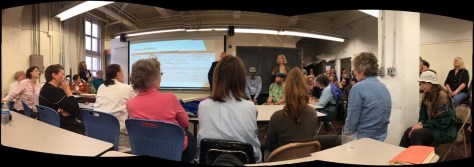
At the beginning of the week, the Acting Chancellor of City College of San Francisco presented plans for the Fort Mason campus, where I attend art classes. Unfortunately, the lease is up for renewal. Options were presented to a vocal group of teachers, students and representatives of the arts in San Francisco. It was a contentious meeting. Despite the re-accreditation and free tuition for San Francisco residents next year, the budget and planning process is very unclear and dubious.

IMG_6547

You’ll soon see the launch of the Fourth Annual “Travels with Myself and Others” World Trip! Stay tuned and follow along “real time” during the posts next month! You can check out the itinerary of places to be visited on the tab at the top for “World Tour 2017 (or in the series of bars on the upper right on a mobile device). Join me and and don’t forget to send your comments!