Day 13: Moscow Camera Roll Continued

Yesterday’s events yielded far too many photos to post. I have chosen among my favorite children and am posting them for your viewing pleasure below. Moscow has been an amazingly inspirational visit–far too few Americans have been here to partake in its rich history and treasures. I feel badly that I didn’t come sooner.

And for Moscow by Night, here are a few shots of Moscow after a brilliant performance of “La Traviata”, the ballet, we caught. Moscow is totally safe in the tourist areas we walked at night, in beautifully balmy summer, late light weather. The lights really showcase the architectural detailing of each building in its pride and splendor.

And finally, for the foodies, our dinner menu. We tried the Holodet, an aspic of chicken and duck with dill that was delicious! Apparently, it is a local creation. You can read about its history on the menu page.

It’s probably worth mentioning that I have been revising and cleaning up the early Day 1-10 posts. I renumbered the days in successive order from the beginning, added photos that should have been in the posts, and fixed typos or information that was incorrect.

If you see any major bloopers, please email me and let me know! The website should be more stable going forward, once I am in Europe and the States, so hopefully you won’s see the fits and starts from the beginning of the trip. Once again, my apologies to those who may have been confused by incomplete information.

Thanks to all for the comments and support. Once Gee Kin returns to the US, I will be traveling on my own. It feels like you are all traveling with me, especially when I hear from you! It keeps me motivated and I keep you in mind when I am looking for interesting things to post. I hope they capture your attention too!

Day 12: Moscow Tour Time

Red Square
Red Square
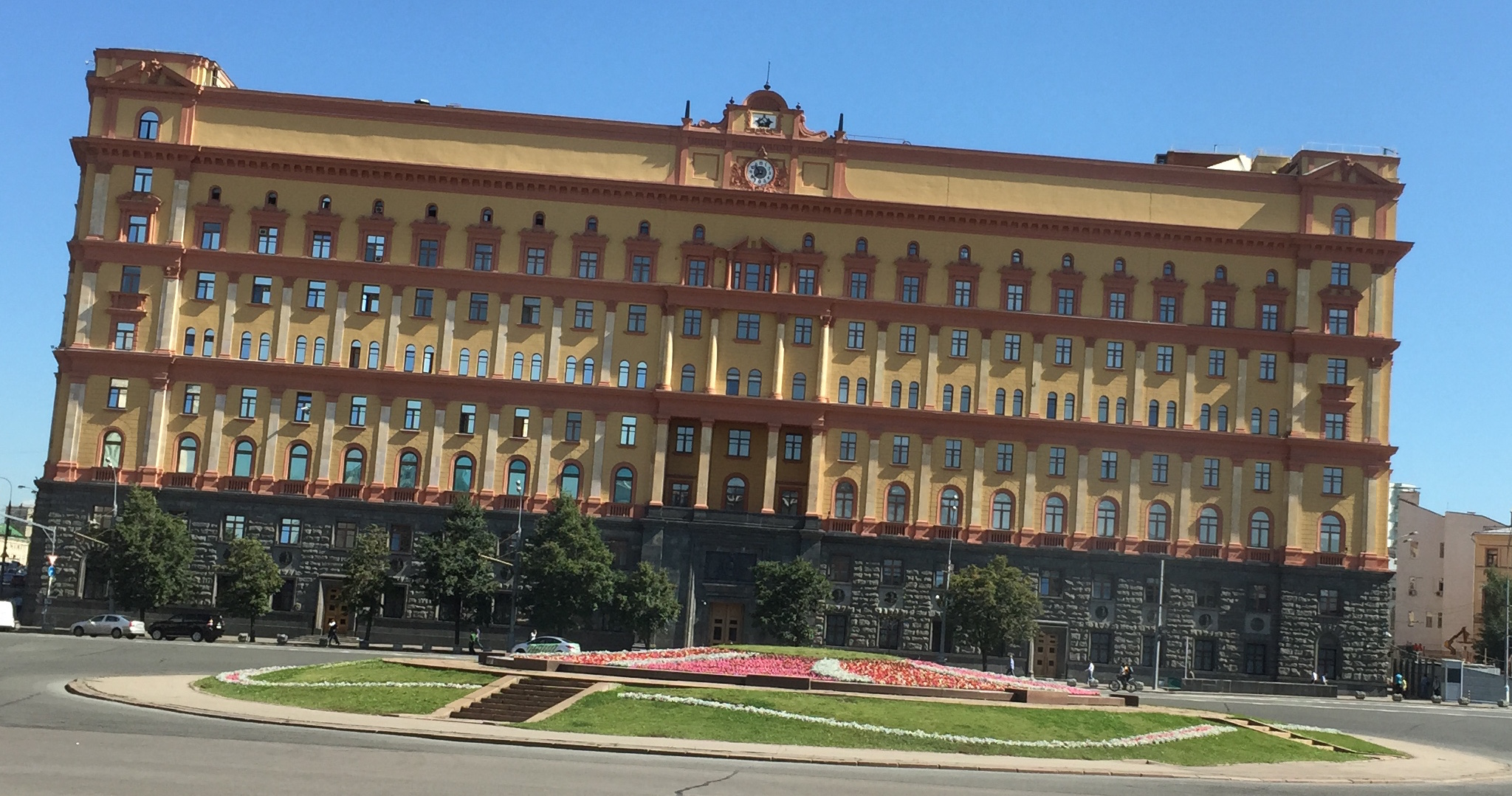
KGB after a bottle of vodka

Yesterday was a busy “play tourist” day, covering most of Red Square including the Eastern Orthodox St. Basil’s Cathedral, with its colorful onion domes; one of the most beautiful parks in the world just outside the Kremlin walls (see header if it is current); and Tym Department Store with its turn-of-the-century splendour (it has an enclosed galleria like the one in Milano).


Meals have been incredibly exciting and contrary to stereotypical notions of Russian food. Like most big cities around the world, you can find state-of-the-art contemporary food for nouvelle tastes. We found a great lunch place near the hotel called “Fresh”, with inventive vegetarian dishes. I had a salad of quinoa, avocado and greens, and Gee Kin had one with buckwheat, tomatoes, grilled spinach, sweet potatos, and mung bean sprouts. Both were served with olive oil and a delicious miso/rice vinegar, soy sauce, and mint dressing.

For dinner, we ventured into the Arbatskaya area and landed on an original crab-and-caviar menu with Prosecco for under $50! From Kamchatka, the crab is Russia’s equivalent of the Alaskan King Crab. Gee Kin thinks perhaps the oil boom brought on alot of high end quality food demands but the ruble devaluation has made the prices here a bargain. Come soon while Russia is on sale.

See pop-up captions above to sights we visited today.

Follow up to my own question the other day: why does it seem so long to lunch time on the TME and always an hour away?

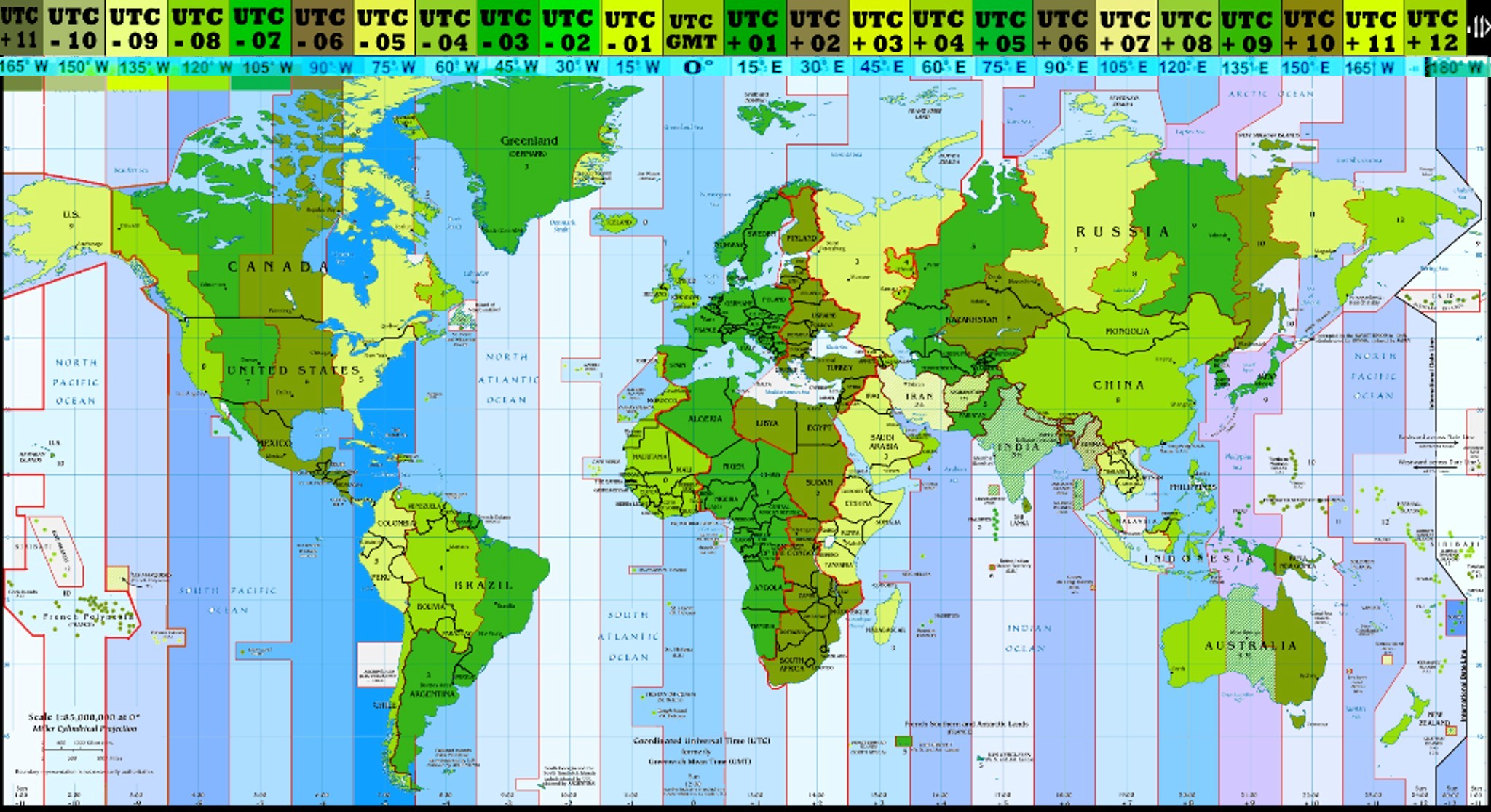
Take a look at the up to six time zone changes, from Beijing to Ulan Bator in Mongolia, then across Siberia to Moscow. Many of the westernmost cities such as Kirov, Novgorod, and Ekaterinaburg along the train trip follow Moscow time to avoid confusion. However, as the crow flies westward, the time zones are less dramatic on a train than those when flying. Jet lag is reduced, but the time warp messes with your brain and metabolism like a slow drag. Also notice how tidy (and tiny) our US times zones are compared to those in Russia. Russia visually looks and feels alot like Canada somehow when you compare the two countries on the map.

World Time Zones
World Time Zones

Day 11: Moscow Smackers

I am posting a few photos of our first half-day arrival in Moscow. The food photos were taken near the Bolshoi Theatre along Tsverskaya and Bolshaya Dmitrovka.

For the foodies:

Photos, above:

1 and 2: Our dinner at a nearby cafe, yielding yummy fettucine versions with tomatoes, pine nuts and arugula, and eggplant, tomatoes, and crab;

3. Blackberry mousse with chocolate and strawberry/kiwi/truffle tartlets along with dinner reading;

4 and 5: Pastry shop with blackberry deep dish pies and piggie rolls with apple filling (my breakfast pick)

6. Chilled caviar on tap with black sturgeon (6000 rubles–you work out the exchange rate) and red salmon roe for about 2000 rubles

For the curious:

Day 10: Time on TME or Stop the World…

I wanted to get off…so was it worth doing the TME (Trans-Mongolian Express) from Beijing to Moscow? I explained in an earlier post about my pursuit of trains and train travel initiated by a stint at the Hong Kong Mass Transit Railway Corporation. Sir Edmund Hillary, when asked why he was climbing Mt. Everest, said, “Because it’s there”. While this obviously cannot compare to climbing Everest, taking the TME is certainly an achievable goal by any able bodied individual with a penchant for the absurd. In a good way.

For starters and the curious, the best intelligence on this venture is through the website http://www.seat61.com. The author, whom I believe is British, has mastered every angle of all the trains throughout Russia. He gave me all the information needed to help me decide that this was worth it…for me and Gee Kin.

OK, so pros and cons.

First and foremost, you get to spend time with someone. Five and a half days of dedicated time will flush out your true selves and your relationships, good or bad. That’s a good thing.

Secondly, you get to put things in perspective. Food and pooping are important. Seeing early sunrises out the window with the sun and the moon at the same time with the world whipping by. In Chinese. In Mongolian. In Russian. Giving yourself time to look at colors of the sky when you never bothered to before. Making time of time.

Third, it’s a curiosity satisfied. The vast continent linking Asia and Europe caused and enabled human migrations and wars to be fought. Humans have stepped where I am stepping to create this civilization as we know it. The German traveler we met informed us that Ghenghis Kahn had traveled from Beijing to today’s Steiglitz in Germany. That’s a lot of horseback riding. The TME is a pretty good way to trace his tracks. Ghenghis-baby got the benefits of belonging to all of the above too.

Cons, well can’t think of too many for the big picture. A lot of small stuff, but why sweat it?
Yeah, there’s a few weird cultural inconveniences and this is not for anyone. Themanincar61 best describes these.
In the final analysis, I heard myself uttering more than once, “this trip is already halfway there?” And “I don’t want it to end!” We are already talking about Vladivostok to Ulan Bator via Korea or Japan. Overall, it must have been a good decision.

Photos above:

1. Birch woods along the Trans-Siberian-Mongolian Express
2. Endless birches by moonset

Day 9: Scenes from a Marriage of Landscapes

Mongolian yurt tracks

Photos, above:

1. Mongolian Yurts near Train Tracks
2. Yurt Ghetto
3. Russian Landscape
4. Russian Rural Housing

Those of you who have been choking over the number of museum visits on my blog this past year are going to get relief from the trudges through repositories of art and culture. Along the Trans-Siberian, there are few renown cultural centers, and no places to get off, at least on our itinerary. At pit stops, we haven’t wandered far from the train car, tethered to it by the time. We figure out where we can get a wi-fi signal (50% hit rate so far), and worry about missing the train. The attendants told us that there are no bells or whistles to warn us that the train is due to depart like there might be in the States. I’m not sure there are any there either. As the attendant looked at us, he cocked one eye against the sun and scornfully told Gee Kin that they dump the personal effects of missing trippers at the next police station. That thought deterred us from taking any risks.

Aside from stretching our legs at stopovers of 10-30 minutes, we have found plenty of amusement on the train. Heading out of the halfway mark along the line (technically the Trans-Mongolian Railway), we found ways to exercise: I walked the equivalent of 3 miles, or 3×5280 ft/the length of a train car of 50-60’x6=1 football field or 300’x18=100 times, or approximately an hour); Gee Kin used the hand rail for a ballet bar for his yoga and stair stepping, and I brought my PT stretchy band for muscle toning. We even danced to the Beegee and Beach Boys today  on hand-held music in our own private Idaho! It was great fun trying to come up with new ways to entertain ourselves.

The scenery has been a very good backdrop for these types of activities. We could listen to classical music with intent on our phones, learn survival Russian alphabet and phrases, and stare into the horizon for minutes on end. To describe the scenery…well let me see. After getting away from the smog of Beijing in the first four hours, the hilly mountains and picturesque terraces of Hebei Province and Inner Mongolia finally appeared. That quickly led to magnificent and stunningly clear plains and steppes of Mongolia. The pastoral views of horses, cattle, goats, sheep and camels were dotted with white puffy marshmallow yurts. The expanse of space was soothing and impressive. It gave us a reason to return to learn more about the Mongolian way of life. We hope that its nomadic lifestyle won’t disappear before we have a chance to return.

The Russian countryside first looked bleak and impovershed. Most countries don’t showcase their best along railway lines, but what I noticed was the prevalent neglect of structures. It seems that once a building was constructed, it was left to deteriorate and to let nature take its course. Many buildings looked rusted out or in need of repair. The one-story houses on flat terrain eventually gave way to more affluent, two-story Alpine style chalet buildings along the slopes of mountains.  They too seemed prone to being run down. We noticed people walking along unpaved roads with few cars. This vast country (4800 miles from Beijing to Moscow, 1.5 times the width of the US, and more than 6,000 miles on the Moscow-Vladivostok route, or 2 times the US width) would have a hard time keeping its transportation network maintained, for so few people. It is so spread out that there seems to be logistic problem in paying for its infrastructure and upkeep.

Cities are much more well endowed with mid-rise buildings, and few high rises so far. As part of my crane-spotting interest throughout the world, I was pleasantly surprised to find cranes populating the denser areas of the big Russian cities, but only a handful at best. This cannot be compared to the crazy building boom in China that I witnessed in my travels over the past year. Every major city I visited was benefitting from the internet revolution, except perhaps Russia. Everyone seems to live very simply and have to live with less. These are only impressions, and without validation from local people. Hopefully we will be able to get some perspective on this when we visit Moscow.

Our tour of train stations yielded some depressing results. A few over the top showcase-style buildings, but they were too over-articulated, with massive bulky shapes and proportions for a Western-trained eye. Wood was used for all rural and low-rise city housing and some brick, but very little or no stone or concrete structures existed. The massive woods of birch trees along the entire railway line are attractive to look at, but the only variation of the landscape is an occasional field of wheat, corn or hay. 

We turned our attention to the environment inside the train and found plenty of activity to occupy our time. I finally set up my new Macbook filing system and felt superior achievement after a few hours’ effort today. Aside from preparing my blogs (they take about an hour or so each day), posting them at station stops (results are highly unpredictable and with high drama), and an occasional short nap, we have not been bored at all. Gee Kin tells me he likes traveling with me, but I know he needs to go home to recover. He says he has work to do, but I know he is just being kind to say that.
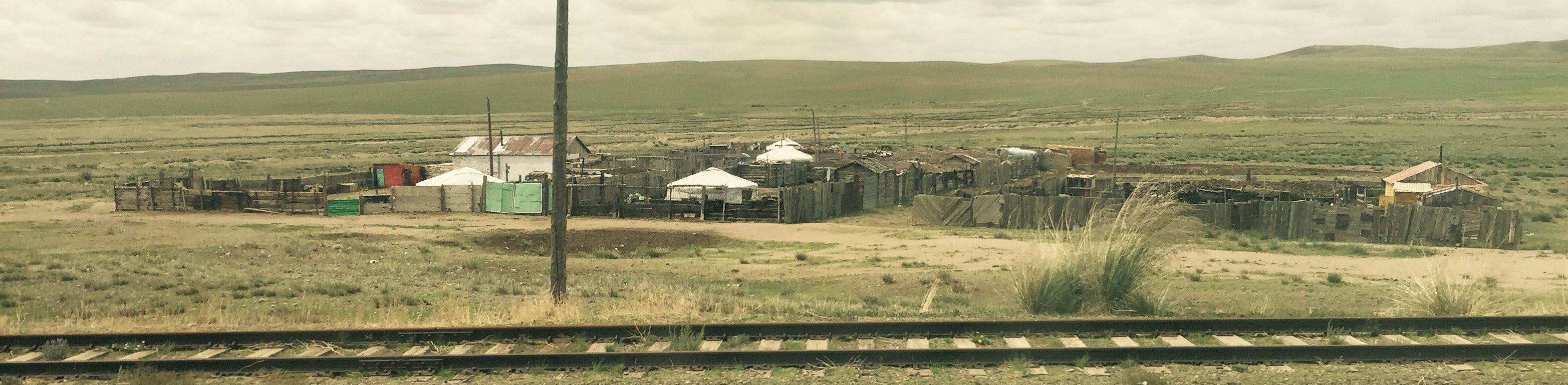

Photos, Above, left to right: Krasnoyarsk, Mariinsk, and Novosibirsk Train Stations

Day 8b: Food on the TME

It’s hard not to comment on one of man’s eternal pursuits—food. From our standpoint, the food served in dining cars has been OK, not the greatest, but it is convenient and not as bad as its reputation. Last night we had our second meal in the Russian Dining car—pretty empty both times for some mysterious reason. We had a “square meal” with roast chicken, tomatoes and cucumbers on the side. Gee Kin had a beef stew in a small bowl. The meals were small, but then we realized that this is more indicative of the rest of the world, and not the kind of portions you get in big fat America. The earlier one was similar, but we both had grilled salmon and I added some borscht out of curiosity.

The more fascinating aspect of food is how the attendants eat. Our two attendants took care of us, but they took care of themselves too. As we headed to our dining car last night, we had to transcend 5 cars, including both second class luxury and soft sleepers. Each pantry was occupied by one of the two attendants of each car. They were preparing their own meal, and each one was preparing the exact same dish. Some were slightly ahead of others, but they were preparing jaio zi for themselves and their other teammate!

Apparently, the car attendants are supplied the same ingredients for each trip at the beginning. From Beijing on, they use the meat and vegetables to prepare a fresh homemade meal. The washroom we used every day was a store room for their food. We could see the plastic bags of peppers and tomatoes (see photo if it’s loaded). Note that the counter above is used for charging our devices. This use competes for attention in this room along with daily washing and the precious food storage for the attendants.

We were jealous of the attendants’ ability to prepare food in their pantries (off limits to travelers), but were intrigued with their consistency. Each car’s attendants were doing the same thing—one minded the tasks for maintaining the car while the other cut meat, chopped it, and wrapped jiao-zi (dumplings) in probably less than an hour. It’s a bit of a monastic order, as we learned that many of the attendants have worked on the job for twenty years or more.

I pondered what the Amtrak crew did in a similar situation. Nothing seems to be more stark in contrast. I hope to investigate what American train attendants do for their own needs and how they do it. It reinforces China’s focus on food. #1. I don’t think it compromises safety or service to customers, but it does make a statement about what a society deems to be important in life.

After spending a lifetime learning many languages, some better than others, I ran into one of my first communication barriers. We met the woman sharing our car today. She didn’t speak any English, German, French, Cantonese or Mandarin. And we didn’t know a stitch of Mongolian or Russian (aside from the three words we just taught ourselves). A lost Golden opportunity, despite warm smiles both ways.

Latest flash: Gee Kin managed to take a picture of the Baozi (Like Cha Siu Bao, but with wild grass picked on the side of the railway line, garlic, and scrambled egg) in our car today. The attendant then surprised us later with a gift of one to each of us! A delicious treasure to behold!!

Saturday, August 1, 2015

Day 8a: Success and Failure in One Felt Swoop

My first glimpse waking up this morning through the window was a view of a mountain-wrapped, dead flat valley with waterways feeding Lake Baikal. Villages sprinkle the edges with single story, detached houses and proper 5’-high wooden fences succinctly staking out each owner’s territory. Its clean air and water is disrupted by a parade of toilet paper shreds populating the railway line. The pieces were all dried out, caught in the brambles, and sadly waving from neglect.

You could say it’s the Siberian town you would expect to see, somewhat bleak and tragic. Unfortunately, we are only passing through and have no impression of the liveliness or livelihoods of the people who live here. It could be completely different from surface impressions.

Yesterday produced a winner and a loser. Some of you may have already noticed my one-hour escape to Wi-Fi Heaven at the Ulan Bator Railway Station. I sang my Hallelujahs as I sent my three latest posts and added images to those that wouldn’t behave in Beijing. It was exhilarating to walk into a dead railway coffee shop and ask for Wi-fi Access, and “You can alway get what you want”, contrary to Mick Jagger. Just ask.

Immediately after our return to the train, the car attendant informed us that all the first class 2-berth compartments were fully booked out by a Chinese tour group that just embarked. So no upgrade. Wah!! That took the wind out of my buoyancy from a few minutes beforehand. What an emotional roller coaster!

Without any option, Gee Kin and his optimism kicked in. He loves to dig into the “toughing it out” adventure he had always imagined. I was grumpy. No toilet to ourselves, only the single grungy one for the car.  OK, so we were the only ones in the entire car except a late-bake single woman who mysteriously appeared in Ulan Bator. She had the nerve to occupy “our” car.

As I continued to pout, the car attendants (2 for each) tried to convince us how fun it would be to have access to the entire car (except for the invader). What’s the difference between sharing a toilet in the first class, polished wood compartments with Chinese carpet runners along the corridor and ours, anyway? 

We had carpet runners too, and even the first class ones had stretchy lumps that you tripped over predictably on the way to the dining car. And we had our “shared” toilet, full access to the shaver outlets in the wash room for recharging our devices, and hot hot hot water for tea on demand from an urn. Bedding was fine, and not much difference in quality to the embroidered upholstery. But I was sure I liked the goopy gold filigree on red version than the flat blue-on-blue plain jane in ours.

In the end, like the crazy horse that grows mature and gets tamed, I resigned myself to the fact that we are stuck in the second class compartment. Although it was not our choice by design, it is growing (more) hair fondness on my chest. Live like the locals (except no local in their right mind is doing this). Get to like taking a half-bath in the railway station mop sink (which I did). Eating doses of Instant Oatmeal packets and Chinese Noodles is perfectly tolerable for 5 days. Packaging is fun when you can rip the tops off with your teeth. 

Waiting for the customs and immigration officials to embark and do their thing certainly wasn’t any different. Between first and second class you get treated equally. After being forewarned at the border between China and Mongolia (remember the dry-docking of the cars?) between 10pm and 1am, this one should be a piece of cake. A two hour stopover from 8-10pm according to one schedule should be plenty of time for the crack team to do its thing.

Instead, we didn’t have to re-wheel. Mongolia and Russia had their act together, but China must have missed this detail on track standardization. We skimmed right through any workshop in the station straight to the barbed-wire lined border station (Naushki). Hefty drug-sniffing Russian Shepherds glazed past us, then the Brunhilde-like inspector came in. 

She did a good job investigating each and every compartment in our car. She adeptly and impressively mounted every ledge or protrusion to scale and anchor her Doc Martins to reach the ceiling of each room. She found every architectural piece of hardware used to close or hinge metal ceiling or wall panels and either opened them herself or had the compartment attendants do it. We heard her for half an hour commanding, “KAI!” for “OPEN!”. And yes, each and every one was opened and the empty space behind was thoroughly inspected.

Meanwhile, her cohort looked down below. Empty compartments were already prepared for this customs search, so lower bunks were tipped up in order for space underneath to be visible. We got to see the show for our compartment, since we had been sleeping until the border patrol arrived. The agents were courteous, but made us get up out of bed so they could “look at us”, full-height (clothing not essential) against our visa photos.

After this “interesting” experience, we were grateful that border patrol was completed. Gee Kin got his adventure, and me my experience to share.

For the foodies out there, our food improved with the Mongolian dining car. It was attached during the dry-docking, and the bad Chinese food left for the next gig. We had beef and onions, rice, and pickled carrots. Perfectly decent. Looks like a Russian dining experience is next.  The only thing we can’t figure out is when lunch is. There is six hours’ time difference between Moscow and Ulan Bator. We are traveling west. Every time we check the time, it seems to be an hour away to lunchtime. Can anyone figure this out???