Tag Archives: Sights

Day 19: Pretty Awesome Pretty Yende (Köln)

Last night I attended a concert with Pretty Yende at the StaatenHaus am Rheinpark at 6pm in Koln. She is the hot new South African opera star adored by the Metopera whom I wrote about earlier. I found an under-the-radar, one-shot performance in Koln and I managed to get myself a ticket several months beforehand. Pretty (that’s really her name, she owns it) was partnered with Eric Cutler, a tenor, and Igor Golovatenko, a baritone, singing arias from Romeo and Juliet and Lucia de Lammermoor. She had performed these recently at the MetOpera in New York.
Naturally, as I do at each performance, I study the audience. Asians are not yet a significant part of the classical music crowd in Europe. There are normally a sprinkling of Asian attendees, but few and far between.

Let’s face it, I look Asian. I AM Asian. And I also look to see if there is any other representation. There are even fewer of any other ethnicity. Sad but true. I have adjusted myself to being the only one in the audience as I was tonight, and didn’t really mind, considering who I was about to see.
Occasionally I feign myself as being a former crown princess of some ancient city. I strut about royally during the pauses, disdaining the cheap champagne and decayed mushroom puff pastries being served at the bars. I peruse the huge bouquets of lilies and roses, and imagine that they were being sent to my hotel room as an acknowledgement of my attendance. I update my fantasy to being a wealthy, thirty-something owner of an internet empire. I idylly drift in and out of world-class performances and bummel around elegant Baroque castles, wineries, and fineries of Europe.
I return to my Row 1, Seat 1 proudly. I could observe every twitch and turn of both conductor and star performers and detect what was really going on in their minds. You are so close to them you can see their temples pulsating as they reach their climaxes (musical).
But back to the performance. Stellar. Stellar. Stellar. Pretty Yende was poised and perfect. Every note was chiselled with the finest of singing tools and the wind going through her throat melted like honey.
I breathed every breath she took, as her trills and curls gave me tingles like lightning up my hairy arm. I imagined drawing her as a model in my figure drawing class, and saw the shapes and triangles on her face and body. Her costumes were an extension of her inner beauty and strength, and her name. I was captivated.
A couple of men in the back of the audience shouted “Bravo!! Bravo!!” Mesmerized by her delivery, I suddenly discovered myself yelling the same. I couldn’t believe it was me—that quiet Asian wonan, who can never raise her voice loud enough to be heard answering questions in German class, suddenly turning into Katy Perry and shouting as if “you can hear me R-O-A-R???” while both disregarding and commanding attention?!?
Hey, it’s easy when you are congratulating perfection. Timing my call was perfect too, like what a percussionist does to nail that single triangle stroke or clash of gongs. Could it have really been me? The polite German woman next to me looked taken aback and perplexed. (If you know German audiences like I do, they never give standing ovations.**)

I started to like this new-found powerful image of myself. Why stop?

At the end of the next piece, I suddenly heard a different shout.

“Brava!! Brava!”

Oh God, THE WORD IN ITALIAN HAS GENDER!

Did I really shout what I heard the first time, or did I follow like a lamb what I heard??

I lambishly shouted and mimicked again, but quickly disregarded my first faux pas and claimed this time, “BRAVA! BRAVA!”

After all, why kill a good thing coming?

Sorry, Pretty Yende, if you are reading this, you really were Pretty Awesome. And I was thrilled to meet you.

IMG_7473
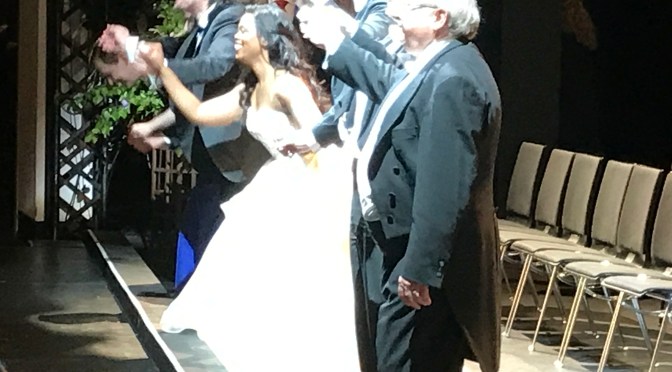
Pretty Yende signing CDs

*I noticed that the title of this post was used by the NY MET in their press releases but I tagged mine before seeing it. So hopefully I wont be accused if plagiarism! You can also find the smashing cover of Opera Magazine UK with Pretty Yende on it here: ‪http://www.opera.co.uk/, along with many others to come!

And here’s an interesting discussion I found on the web about the use of Brava, Bravo, Bravi, Brave, Bravatissimo, etcetera…etcetera…
https://italian.stackexchange.com/questions/1880/can-i-say-bravo-to-a-female-performer

A quiet moment in Koln just before the performance, just so I can remind myself that I was really there:

**There were no standing ovations at any opera performances that I attended in Germany, except once for Nina Stemme in Tristan und Isolde in Berlin’s Deutsche Oper. Normally, as they did for Pretty Yende, Germans stamp their feet sitting down in lieu of standing up and clapping. As an architect, that makes me cringe–not so much because of concern for the weight or stress on the structure, but for the abuse on the floor!! OMG!
Days 12-16: A-Mews Yourself with Bathing in Bath

Arrival in London reminded us that the British are much more formal than Americans, but also friendly and engaging. Their use of the language is brilliant and a reminder of why so many of us use it throughout the world.

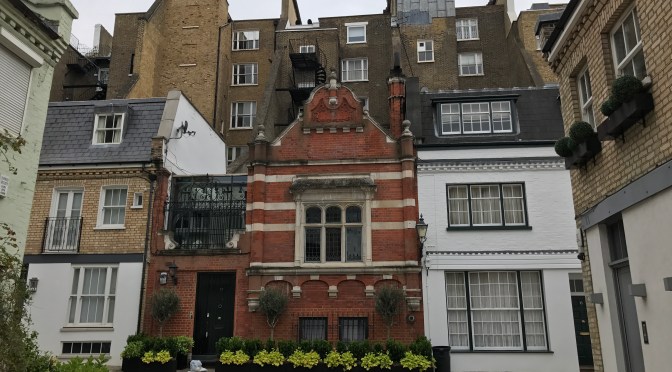
Our early morning walk around S. Kensington where we are staying surprised us with the V&A Museum, Imperial College, and the Natural History Museum within a half-mile radius. More intriguing were the quaint mews or back streets that used to house the horses and carriages of the gentry living in Kensington. They are homes to die for. A few little shops were tucked in for a-mews-ment. Back on the main road, we enjoyed the gigantic London Plane trees that lined Cromwell Road so majestically. They reminded me of the street trees where I grew up on Grosvenor Place in Oakland’s Lakeshore District.

At mid-day, we met an old friend for lunch at the Comptoir for Lebanese food to share our missed lives together. She was, at the time we first met, a community activist working in the Fitzrovia area helping Chinese settle in London. I was doing a study of the London Chinese as part of the Branner Traveling Fellowship from UC Berkeley’s Architecture Department. She helped me to connect to Chinese living and working in Soho, or London’s Chinatown.

I only discovered in our conversation today, that, in addition to training at the London School of Economics, she studied at Cambridge University and visited China with a group of students from Cambridge for two months. She also lived in the Hong Kong New Territories teaching English during the time that I worked in Hong Kong as an architect.

We shared many stories about our early careers and how we chanced to meet each other. It was a great rediscovery of each other’s past, ones that we had barely known or understood at the time. It was so much more meaningful, now that each of us have lived (and loved) in life. A few bruises along the way gave us greater depth and understanding of the world and each other’s lives.

I encourage everyone to go and find an old acquaintance and to rediscover the time absent between yourselves. You will gain perspective and learn more about each other. Like seeing old friends, this meeting made the entire trip across the universe from San Francisco to London worth the trip alone. Life is short.

Our first full evening was devoted to opera. I was looking forward to seeing Thomas Ades’ new work, “The Exterminating Angel”, based on the movie by Luis Bunuel. Modern opera has a way to go in appealing to devoted opera goers. The music, story, singing, and staging has to pair like a fine wine with the passion and drama of opera. I admit that I am a bit of a drama queen, but that’s why I appreciate good opera. It has all the elements of the classic life stories, whether they occur today or the day they were written. This one didn’t quite make it for me, but I’ll give it a *** for effort and execution. Here’s the story: http://www.metopera.org/Discover/Synopses/Eugene-Onegin/

Bathing in Bath

Within one and a half hours’ train ride, you can get yourself to Bath. I never connected the roman orgy of bathing to Pride and Prejudice, but it’s definitely alive and well in Jane Austen country.

All exteriors of buildings must be of local limestone, so the buildings are consistent and match each other beautifully.

Our first official tourist act was indeed to go to the Bath Thermae Spa around the corner from the hotel. The words all seem redundant, but we did enjoy the minerva spa, outdoor roof pool with a view of the city, and the steam bath indeed peeled away any stress from traveling and overeating.  I indulged in a facial. I convinced myself that I deserved it after passing up all the Baden in Baden-Baden.

The real purpose in coming to Bath was to visit friends here.  They had abandoned the frantic London life for a kinder, gentler world. Bath was perfect, being only a stone’s throw away but real enough to feel the quality of life run between your fingers. We luxuriated in a beautiful country home, complete with an English garden and view of the city’s skyline of limestone structures tucked like sets of stellae in the rolling hills. The canals rippled just below the back of the house and offer lovely strolls to town and beyond.

Our host-catered lunch included spinach ricotta cheese in puff pastry, tibouli salad, and baked ratatouille in the shell, with hummus and homemade yoghurt on the side. Another perfect day with finest of friends, food and the fine.

More Royal Crescent

Days 9-11: (Upper) West Side Story

Following our side trip to Washington DC, we are back in New York staying at The Beacon Hotel on the Upper West Side. It provides convenient and walking access to the next three days’ events at Lincoln Center’s Metropolitan Opera: Aida, Der Rosenkavalier, and Eugene Onegin. You might find that worse than doses of cod liver oil, but for me, it’s like dying and going to heaven. You’ll hear more of the gory details later.

Breakfast

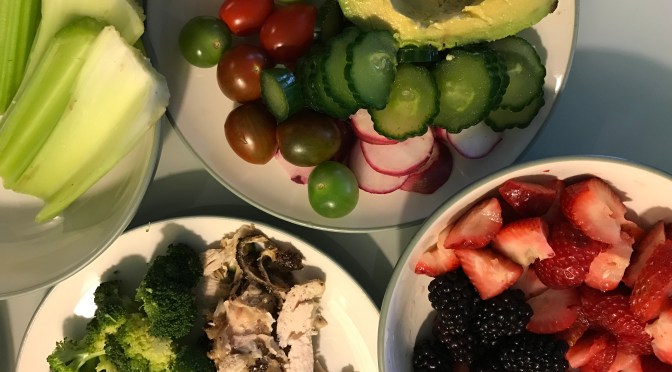
We started off the day with the Fairway Supermarket across the street from the hotel. We loaded up with fresh Mediterranean fare (see photo above)–fresh fruits with yoghurt and granola, cucumbers and tomatoes, and veggies with protein. We are taking a break from restaurant food everyday by booking a hotel with kitchens in the rooms to cook and eat healthier.

A quick walk within a half-mile radius of the Beacon Hotel yielded a wealth of new finds. Many shops are individually owned, mixed in with community gardens. Sandwiched in between Central Park on the east and Riverside Park, the Upper West Side is stocked with plenty of greenery and O2 to replenish the body and soul. A couple of retirees in Riverside were racing their model sports car through our feet as we gingerly tiptoed through the racetrack and the tulips.

Lunch

What more can you say? Food is everything in New York. You can find just about any type of cuisine or ethnic cooking, including crossovers like my favorite example of Uzbeki-Korean food. Not to beat that over a dead horse, but that level of complexity ain’t in foodie-snobbie San Francisco.

After-Dinner Snacks

The evening performances at Lincoln Center are dazzled by sparkling chandeliers inside the operahouse that modestly excuse themselves from blocking anyone’s view as the concertmaster plays A on the violin, the lights dim, and they retire to the very top of the ceiling.

All seats are good. The ones I selected for the series of three this time were side-saddles with box seating at the dress circle level. The $25 tickets I purchased at the very top row of the balcony in the past aren’t a slouch either. You have the option of ditching the performance if you don’t like it or incentive to get creative with a wild one.

What follows is our raisin d’etre for coming to NYC this time. The string of operas with curtain calls, synopses and my subjective opinion of the performance (all in: singers, staging, music, etc) for those interested:

Aida

IMG_7126

http://www.metopera.org/__Redesign/Views/Pages/Discover/Synopses/Synopsis.aspx?id=46544&epslanguage=en

My Rating this performance: ***

Der Rosenkavalier (Renee Fleming’s swan song/final performance and curtain call as an opera diva, along with Elina Garanca)

Error
This video doesn’t exist

http://www.metopera.org/__Redesign/Views/Pages/Discover/Synopses/Synopsis.aspx?id=46548&epslanguage=en

My Rating this performance: **

Eugene Onegin (with Anna Netrebko in Tchaikovsky’s masterpiece)

IMG_7155

http://www.metopera.org/__Redesign/Views/Pages/Discover/Synopses/Synopsis.aspx?id=46533&epslanguage=en

My Rating this performance: *****

Let me know if you have ever lived on the Upper West Side or on the Lower East! What was your experience? We had been pretty stuck on Midtown or Upper East Side in the past but found that trying out these new neighborhoods gives us a very different dimension to New York City. We’re encouraged to try a different neighborhood each time we come to this magnificent, multi-cultural city. I hope you will consider doing the same!

As a final tribute to our being in New York, we toasted our anniversary and a birthday with a dear friend whom we met in Hong Kong and who is a New York City native. At a rehearsal of the American Ballet Theater’s upcoming Don Quixote, we caught a glimpse of Misty Copeland! What more could you ask for in a sendoff from New York City??

We’re on to London, so be prepared for a British accent to the next post! (Fewer operas, Queen’s Gate, then on to Bath and Blenheim)….

Days 5-8: Dizzyin’ D.C.

The number of museums (all free) in Washington D.C. is staggering, and deciding which ones to visit is a daunting challenge. We decided to each pick one today–and a few off the beaten path. We had already covered the most popular ones in the past with our kids–the National Gallery, the Smithsonian, the National Air and Space.

IMG_4122

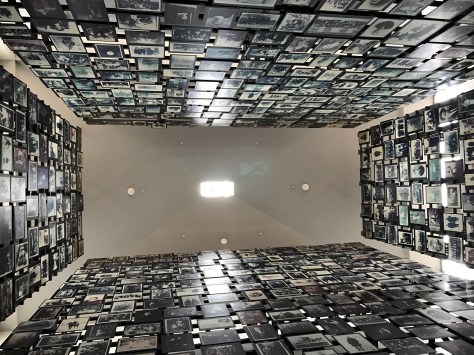
First, we headed to the U.S.Holocaust Museum. The featured photo above shows the five-story high atrium of the museum. Photos of Jewish families who perished in the Holocaust were displayed there.  The chain of events leading to the holocaust were many and complex, to say the least.  False evidence blamed the Jews for killing Christ.

Around 1525, Martin Luther initially embraced them. He later turned against them when they refused to convert to Protestantism. It wasn’t until 1994 when the Lutheran church acknowledged Luther’s anti-Semitism.

We primarily think of the Jews from Germany and Austria being sent to camps and killed there. Even more Jewish people from Romania, Poland, Russia and Lithuania were killed. Many were forced to live in ghettos segregating them from mainstream society. However, most Jews living in Italy, Bulgaria and Hungary were spared.

There were chilling graphic depictions of the camps. The arrival of American troops helped to document the horrors before evidence was destroyed. More than half of those who were liberated died within two weeks of being freed. They were already too sick to survive or were unable to digest the food they consumed.

While very sad and sobering, the museum presented an important lesson in history. Similar events could take place again.  This museum teaches us the social, political, and economic circumstances behind such heinous acts and the chain of events that caused the Holocaust. You can learn more about the museum here: https://www.ushmm.org/information/exhibitions/museum-exhibitions/permanent.

In the afternoon, we made our way to the Native American Museum. While the museum is housed in an impressive building, it didn’t reduce the weight of the subject and its history. The many tribes and unions between nations were systematically ignored and destroyed.

The many treaties that were created between the Native Americans and the U.S. were constantly violated, despite initial good intentions. The map below shows how Americans pushed the Native Americans westward further and further from their homelands, while new settlers expanded into these territories.

IMG_5083 2
Non-native Population Expansion, 1820 (Dark Red), 1850 (Rust), and 1890 (Yellow)

We welcomed the slow walk back to the hotel to ponder our thoughts from the day’s deep and sobering educational experiences.

Days 7-8: The NMAAHC, Capitol Hill, and the Museum for Women in the Arts

Many of the newer Washington D.C. attractions like the National Museum of African-American History require advanced tickets. I was glad I knew ahead of time, or I would have been disappointed. The stunning new building was designed by David Adjaye and is clad in filigree bronze screen panels.

After being guided down to the lower floor where slavery, civil war, and segregation topics were covered, we began our long difficult journey tracing and understanding the roots of African-American history.

Everyone was very quiet and pensive as we shared the tragic stories of Africans from mostly Central and Coastal West Africa being captured by Portuguese, Dutch, British, French and Danish slave traders. By around 1800, the importation of foreign slaves was banned. Rhode Island slave traders developed and dominated a thriving domestic trade.

Less than half of the captured Africans survived the journey to the Coast or the horrific slave ships. While approximately 500,000 slaves were brought to the States, a total of around 12 million slaves were captured in Africa and sold in the New World. The largest proportion were sent to the Caribbean or to Brazil.

As families were split up and sold, the humiliating auction blocks were used to showcase the black slaves. They were split up from families and loved ones, mothers from their babies. Both sides of the Revolutionary War and the Civil War used the issue of slavery as a strategy to rally supporters to their side. The British and Americans offered freedom to those slaves who fought in the Revolutionary Wars, and the North and the South also made promises to African Americans that often were not kept.

After slavery, it was difficult for African-Americans to survive the post-Civil war era. Many prominent leaders and heroes were featured, and there were many historic events and landmark decisions. Segregation displaced slavery and became another racist era.

The museum was split into the history and dark past on lower levels, and modern culture on upper levels. The NMAAHC offered insight and understanding of the arduous path of not only African-Americans, but the shared path of all Americans. You can read more about the museum’s collections here:  https://nmaahc.si.edu

The combination of these museums left a powerful imprint on my understanding and perspective of oppressed people in America. It seems more pertinent for all of us to learn about the history and development of oppression as race and religion become major issues in our current society.

The stretches between sights and buildings along the Washington Mall and Capitol Hill are far and wide, so good shoes and good planning are essential for surviving D.C. The Washington Metro provided some relief in getting between points, but the distances by foot are intimidating, even to veteran walkers like us. Thanks to L’Enfant and his grandiose French city planning scheme, the wide boulevards and diminished human scale do seem to put people in their places.

Well, the verdict is in. Yes, Washington D.C. is a pretty awesome place. I couldn’t help but compare the time lapse walking between buildings with that of Versailles. We got our royal injection thanks to L’Enfant. And I’m not sure whether the Kremlin and Red Square came first or we did (around 1800), but I’m guessing that National Mall beats Moscow’s in area. While we’re at it, it might be worth comparing Beijing’s Tian An Men Square and Forbidden City.  A research project for another day.

At the opposite end of the National Monument, above are just a few grand dames on Capitol Hill: the U.S. Capitol, the Supreme Court and the Library of Congress.

Above are one of three perfect copies of the Gutenberg Bible at the Library of Congress; and Cupcakes?!? (click on image to see captions and to increase scale)

Below: interior of ornate Italian Renaissance style Library of Congress. Almost stands up to or equal with the Library in Vienna. (To see the Vienna Library, search posting from Day 27 of 2015, dated Aug. 21)

A very understated but worthwhile visit to the Women’s Museum yielded some gems: a Frieda Kahlo Self-Portrait dedicated to Leon Trotsky, and friend Hung Liu’s noble portraits of women who were prostitutes. Gee Kin had trouble identifying five famous women artists, but managed to come up with these and Annie Liebowitz. Sure enough, she had a photo of Dolly Parton proudly on display.

There were numerous other interesting works there, but I felt sad that these great artists (including Berte Morisot and Mary Cassatt whose works were represented) and others (I didn’t see any Georgia O’Keefe) had to find a cause to be celebrated on their own and could not be integrated with the mainstream art world. Can you name five living women artists?

To top off the day at Momofuku DC: Honey Crisp with Arugula, Kimchee, and Maple Sugar; Skate Wing, and Chinese Broccoli with Cashews. Highly recommended.

Apologies for the long post.  Combined posts will reduce the load on your Inbox!

Happily, the End of 2016!

Leonard Cohen died. Your data are at risk. And it’s the end of the year.

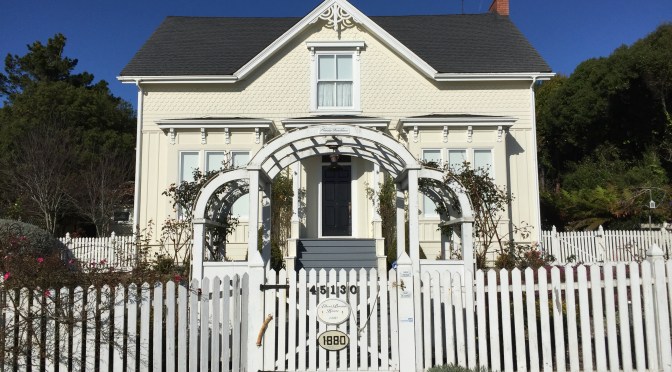
So we skipped out of town and headed to Mendocino. For my foreign friends, it’s a coastal town about 3 hours’ drive north of San Francisco, through majestic redwoods 300 years old, on non-commercial roads in a commercial country. It’s a blissful escape to a pristine environment that reminds you of growing up in a pure and innocent world.

Our conversations focused on what defines the American Dream, whether it still exists, and how Germany compares to the US in liveability.

We overnighted at a local bed and breakfast, where the owners struggle to pay their mortgage for 12 years until a frisky new buyer can be found.

On the way back, we picked up a magnum of Brut Rose at Roederer Estate, a couple of bottles of Pinot Noir and Chardonnay at Husch, and a bag of apples at a roadside orchard.

The winery, an original, has seen the rise of baby boomer vineyard owners descend on the Andersen Valley, after the apple orchards had displaced the sheep. Not bad for terroir development, I guessed.

We prepare for the New Year’s arrival, wisking away bad habits and hoping for a brighter beginning next year. Wishing all of you the best for a happier new year!!

No Carbon Footprint Series: Belmont-San Francisco (Days 4-5)

Header image above: Bay Meadows Development

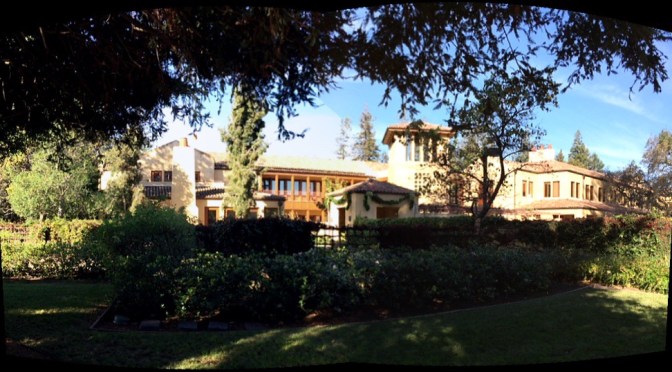
Featured Photo above: a very exclusive corporate center in Palo Alto where I made a pit stop!

Photos of Millbrae sights, above:

1. Milk Mural

2. Historical marker for Milk Mural

3. Vintage cars, in abundance in San Mateo. Mild weather, no bugs, and lots of old people with lots of money make them plentiful

4. Iron Horse chained to a pole at a gas station!

5. Yep, we made it here.

6. Street monument on El Camino. Not as romantic as the ones in Berlin, but still fun to find at your feet

Above, our lunch at Hong Kong Flower Lounge in Millbrae. A highlight of our jaunt included Tofu, ginkgo nuts, and pea tendrils in soup, pigs’ feet and red egg in vineagar, congee with thousand year old egg, and sesame balls!!

The fish tank displayed 2 giant lobster, Alaskan King crab, and prawns.

We have reached our destination safely and in one piece (two pieces, to be exact)! It was a great way  to make use of a fabulous week of perfect winter weather, have fun with great company, and get in some serious calorie reduction techniques. You can reduce the carbon footprint instead of flying, avoid traffic, and see your world around you. For those interested, here was the route:

San Jose-Sunnyvale (Sunday) 8.4 mi.

Sunnyvale-Palo Alto (Monday) 9.7 mi.

Palo Alto-Belmont (Tuesday) 7.7 mi.

Belmont-Millbrae (Wednesday) 10 mi.

San Francisco-Millbrae (Thursday) 12 mi.

You can also find my earlier trips to Napa and San Jose at http://www.crazyladywalks.com.

Finally, on a sad note, we send our condolences to the families of the Berlin attack. A photo of the location from our visit to the Breitscheidplatz Christmas Market in Berlin in January of this year is here:

A safe and precious holiday to all.

VickieVictoria

No Carbon Footprint Series: Sunnyvale to Belmont (Days 2-3)

Our journey from San Jose to San Francisco progresses at a rate of approximately 10 miles per day. Since it follows a dead flat route with virtually no elevation change, it is a healthy, simple challenge for beginners. It’s not exactly the Santiago de Compostela, but certainly more easily accessible being in California!

After a 3-4 hour beeline with a couple of pit stops for clothing changes, nut breaks, and bathroom visits, we arrived at one of the hotels I prebooked a couple of days ago. We enjoyed a late lunch nearby, took a nap, and caught up with lively conversations that would not otherwise occur. It’s a great way to reconnect again, and to appreciate the precious time you have with your partner.

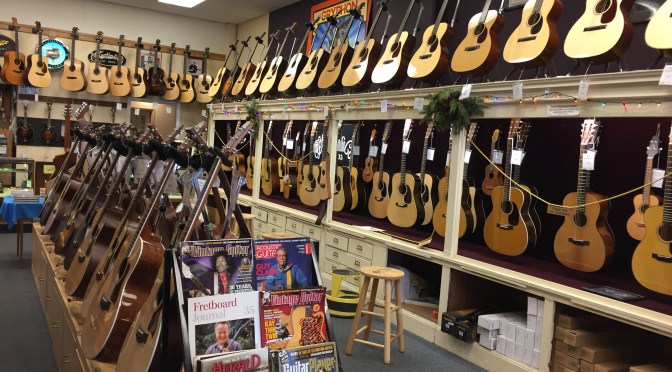
I haven’t documented prior trips so this time I’m devoting additional time to doing so. Yesterday we discovered a gem of a music shop in Palo Alto, that sells guitars, mandolins and other hand plucked string instruments (see photo above).

The old Mountain View neighborhood hosted a string of modest, pre-war bungalow-type houses that were as inviting as those in Sunnyvale the day before. They proudly displayed orange and grapefruit trees in their front yards. Interestingly, there were fewer decorations as we approached upper-crust Palo Alto.

The houses are close to the streets, with only a 5-15′ setback. A sad reminder of a time when the world was trusting and safer.

I looked out for Eichler homes that are scattered throughout the neighborhood. They were a new phenomenon at the time–a departure from the 3-BR 2-bath ranch house. Same size, but instead they boasted inner courtyards with plenty of light for each room. They didn’t appear to be as prominent on the streets we passed along.

Although we follow the general route of El Camino Real, a long strip highway/road originally linking the missions, we manage to take parallel off-streets whenever possible. The small residential streets are definitely more pleasant, but they sometimes end up inside subdivisions with curvy dead ends or no outlet. To avoid that I check the street end-to-end before using it, so we know where to turn. Google maps allows us to plan out our strategy and assures us that we have backup support whenever needed for navigation.

El Camino as a concept reminds me of both the Nakasendo Highway near Matsumoto in Japan and the Pilgrim Route (Santiago de Compostela) in Spain. There are many other similar long-distance foot trails (also the Pacific Trail) that provide a variety of challenges. My go-local determination allowed me to refrain from going to Spain or France for a destination walking trip. Since we were already in Japan last year, we took a side trip inland.

Despite the Christmas holiday frenzy, we grabbed the good weather forecast to make time for this trip. We discovered that the down time for business travel has slashed the price of hotel rooms–up to half off!!

There are plenty of delights and surprises, just around the corner from where you live! Take a look at two woody walking paths not far from El Camino along the way, and a sweet little surprise to literary friends.

No Carbon Footprint Series: Do You Know the Way from San Jose? (Day 1)

Most of you know the way along 101 or 280. But most likely not the way we are coming. This week we are walking from San Jose to San Francisco–a mere 48 miles over a few days’ time.

For the past few years we have gone out the door (literally) and walked to Napa, California and two ways to San Jose–south along the east side of the Bay and along the Peninsula. This time we are going in reverse order from San Jose Downtown to San Francisco north along El Camino Real.

Many of you know us as urban walkers, and who enjoy the “slow” version of transportation. We see the small businesses stringing El Camino strip malls. Their parking lots serve nail salons, ethnic fast food take-outs, specialty music shops, and mid-range companies (vs. start-ups), that all pay their rent, bills, and struggle to stay in the economy.

The first time I started this wacky way of walking, I was on a weekend trip from Hong Kong to Honolulu about to take my first professional architectural licensing exam. Perched in Manoa Heights at a friend’s home, I had made plans to meet my friend Downtown for lunch. When I missed the bus, I discovered that the next one would not be for another hour! I glanced down the hill and determined that it wouldn’t be too difficult to walk instead. A three-mile walk is a breeze today, but in those days NO ONE walked outside their houses. Especially in Honolulu.

I was used to being without a car in Hong Kong for seven years, so it seemed rather natural. The look on my friend’s face must have been priceless when I told her that I would be a little late and why. She thought I was…well, wacko. So that’s how I coined myself the crazy lady ever since.

Nevertheless, we are keeping up the crazy lady walks. We came to San Jose for a performance, and despite the holidays being around the corner, we had the time to walk back to San Francisco, so why not?

For a few starters, we passed the Old Frank Lloyd Wright Building and the Rosecrucian Museum on the way towards Santa Clara University.

The weather is clear and crisp (above frost level today). The lovely neighborhoods we walked through included tidy pre-war bungalows and 60’s ranch subdivisions, all proudly displaying their Christmas decorations and embarrassingly beautiful citrus trees reminiscent of the region’s agricultural legacy.

San Jose, Santa Clara, and Sunnyvale are in the heart of Silicon Valley and dead flat with paved sidewalks along the entire stretch to San Francisco. Walking 10 miles a day is a no brainer, with plenty of food and lodging establishments along the way.

Can you guess what we saw? Here’s the curtain call:

img_6115

Opening Night at the Opera and Museum Sickness

Last year when I attended the Salzburger Festival by myself, I wondered how the glitz and glamour compared with our backyard gala. I satisfied my curiosity when we attended the opening night of the 94th season of the San Francisco Opera last night. The glitz and glamour were definitely there, but in limited supply.

Here are a couple of pre-opera performance shots:

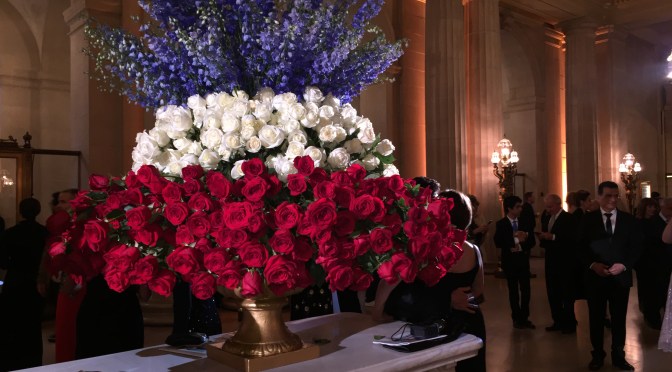
Nevertheless, the SF Opera House is always an exciting and beautiful venue to visit. Thanks to Dede Wilsey, the grand dame of arts in San Francisco, the lobby was decked out in a magnificent red, white and blue flower arrangement and the interior of the opera house was draped to reflect the French theme of “Andrea Chenier”.

While it holds over 3,000 seats, the opera house is on the order of NY Met’s capacity at 3800 seats. The Semperoper in Dresden is half that size, with only 1500 seats and Vienna is similar to Dresden’s with 1700 seats. The SF Opera still feels more intimate and reminiscent of the European opera houses because of its Beaux Arts design than the Met’s spartan Sixties Modern style.

The only difference between Opening Night and other performances, aside from excitement in the air and a bit of a Halloween-like “dress like someone else you always wanted to be” atmosphere, were two distinguishing marks. There were speeches beforehand by the President of the Board and an introduction to the new General Manager of the SF Opera. It felt a bit like going to a Chinese wedding, where you had to sit through two hours of speeches before getting food. Fortunately, it lasted only ten minutes or so.

Before the performance, we sang the Star-Spangled Banner. That was another first for me, at least at an opera performance. I couldn’t help but think about Colin Kapernick and the debate he has aroused from this simple tradition. I snuck a look around the room and behind me to see if anyone had the courage to protest. But no, everyone complied.

You probably can’t tell from the photos, but the photographer has taken painstakingly edited views of the evening. We have our own distinct American style of casualness and innovation that needs to be appreciated. Nevertheless, I’m making plans to return to Salzburg as soon as I can. The schedule of events is announced in March next year.

Andrea Chenier is an opera about the French Revolution sung in Italian. Younghoon Lee was the star of the evening. He replaced Jonas Kaufman as Don Jose in “Carmen” at the NY Met last year. While Lee’s voice is very powerful and technically impressive, I felt that he still lacked the performance quality and passion that I enjoyed in Kaufmann’s performances.

Many of you may be wondering where I have been since returning from our third world trip. I finally got organized and signed up as a full time City College of San Francisco student! It has been a bit of a jolt realizing that there are so many bureaucratic steps to getting recognized as an individual with unique needs. I had forgotten that UC Berkeley had taught me how to be a master of administration, and not necessarily a master of any academic pursuit.

Still, the old battle skills kicked in. I managed to get signed up for figure drawing, Intermediate German, and two cinema classes. It’s probably over the top and overcommitting myself, but that seems to be my style these days.

I decided to try the local city college approach to language training for a variety of reasons. Arriving at a class of over 40 students was a bit disarming, I’d have to admit. After sorting out various levels and stages of German language training, the instructor assured us that she could manage. She adeptly split us into 4 groups. Two for beginners, two for intermediate.

Each group is subdivided into “academic” and “practical” students. She whizzed her way through the system and found another classroom, where she toggles between two groups of students in each room. Like the star of “Bewitched”, she magically flies between rooms giving instructions to each and sprinkles “can do” grammar dust on us in between. It strangely works, at least for the time being. Admittedly, this is an extreme switch from the clockwork 12 students in Germany or the monastic tutorial. More on this method to madness later.

In one of the cinema classes, I am writing a “how to” film script. I decided to do mine on “museum sickness”. A certain close friend is afflicted with this strange phenomenon that strikes unfailingly each time we go to a museum. It miraculously subsides once we are about a mile away and well outside the possibility of ever returning to the premises. Some of you may wonder why I coin “travels with myself…”…and now you have a pretty good idea.

Doing a bit of online research has been fascinating and entertaining. My topic, “how to avoid Museum Sickness” is derived from information I collected from the museums I visited in the past year, such as:

1. The Dresden Hygiene Museum, where they offer portable stools for visitors.
2. The Rijksmuseum in Amsterdam, that displayed a curious chair known as the Stendhal Chair” for museum goers to decompress when being overwhelmed. A variation of a confessional, this chair has a flip door in front of the seat so you can sit down and avoid eye contact with others when you are seated inside! (You may have seen this earlier in January 2016 when Melissa and I were in Amsterdam)

The Stendhal syndrome is a defined condition related to becoming disoriented while in a museum. Apparently Mark Twain experienced this phenomenon when traveling by ocean liner across the Atlantic to Europe, then immediately going to one of the famous museums. He became dizzy and sick from the overstimulation.

Another version of museum sickness is called “synesthesia”, a condition of mixed sensations–where one modality affects another, such as audial effects transferring to visual, or from form to color. I wondered how prevalent this condition was or whether it was purely hypothetical in nature. Obviously, more research will bear this out. In the mean time, I am completing my assignment in script format. Get your fancy dress ready to attend the Oscars!

Since my posts are down to monthlies until I am traveling again, I’ll keep you posted on my educational progress. I hope all of you continue to live and learn, to keep the fire burning in the attic…

Days 74-76: Heady Headers

Photo, above: Mongolian Herder Family, with awards from Dad’s wins in local horse  racing contests. You can see them all in Mongolian Herder Family video at https://youtu.be/QBCz8EjsMoc

As a finale I decided to summarize my trip by sharing the headers below that were used for my postings with you. I remembered (nearly) every location by heart, with a couple of technical exceptions. I am fond of each and every experience! They are now like my children, and hard to give any of them away. I hope you have enjoyed seeing these again, this time with captions.

A note about the number of days on each annual trip: There have been 68, 80, and 72 in 2014, 2015, and 2016, respectively. Anchored on one end for a German Language Course and Asia on the other end for contrast, the stuff in between has been the most interesting and lesser traveled. I was always fixated on the Silk Road, and this time, the Genghis Khan saga across the great Eurasian Continent. The timing was right for me, the weather and climate suitable, and a very achievable itinerary in my (crazy) view of the world. If you have questions or details on accomplishing it, let me know and I’d be happy to give you more information.

A big hug and thanks to each of my travel partners and visitors: Gee Kin, above all; Tom, Helena, Patrizia, Hanne, Jens, Vladimir, Iyoko, Paul, Kanji; and new Goethe friends Mukda, Anu, Jess, Ilaria; and Mongolian guides Aggie and Nassa. I now have collected many friends from all over the world to join me in my future travels. And of course, to you, the readers.

There’s a very short, 3-second survey at the end of this post that I would really appreciate your taking the time to respond to for my benefit and future trips. Thanks again to all for following my blog and keeping me focused on getting both of us new and exciting experiences, both in the raw and virtually!! Love to all.

cropped-image107.jpeg
View of Tennozu Isle, Tokyo, Japan
cropped-image941.jpeg
View of Mt. Magome, Japan
cropped-image85.jpeg
Nakasendo Highway, Japan
cropped-image60.jpeg
Rear End of S7 flight-Valdivostok to Tokyo
cropped-img_4625.jpg
Vladivostok, Russia
cropped-img_4560.jpg
Vladivostok Harbor, Russia
cropped-img_4336.jpg
In transit on Trans-Siberian Irkutsk to Vladivostok, Russia
cropped-img_4244.jpg
Village along Lake Baikal, Russia
cropped-img_40231.jpg
Khorkorin, Mongolia
IMG_3923
Free Range Sheep and Goats, Orkhon Valley, Mongolia
cropped-fullsizerender-73.jpg
Gorge of Orkhon River, Mongolia
cropped-image131.jpeg
Forbidden City, Beijing, China
cropped-img_3193.jpg
Bauhaus, Dessau, Germany
cropped-img_3104.jpg
View from Kunst Akademie, Berlin, Germany
cropped-img_2845.jpg
Spree River, Berlin, Germany
cropped-img_27201.jpg
Tiergarten, Berlin, Germany
cropped-img_2561-5.jpg
Museum of Terrorism, Berlin, Germany
cropped-img_2441.jpg
Egyptian Panel, Neue Gallerie, Berlin, Germany
cropped-img_2412.jpg
Street Art, Berlin, Germany
cropped-img_2329.jpg
Bernauer Strasse, Berlin Wall Park, Germany
cropped-image17.jpeg
Weimar, Germany
cropped-panorama.jpg
Jazz Orchestra, Dresden Musikfestspiele, Germany
image
Dresden, Germany
cropped-img_1357.jpg
San Francisco City Hall, California, USA

Survey