Tag Archives: Museum artwork

Day 26: Sommerfest

image image image

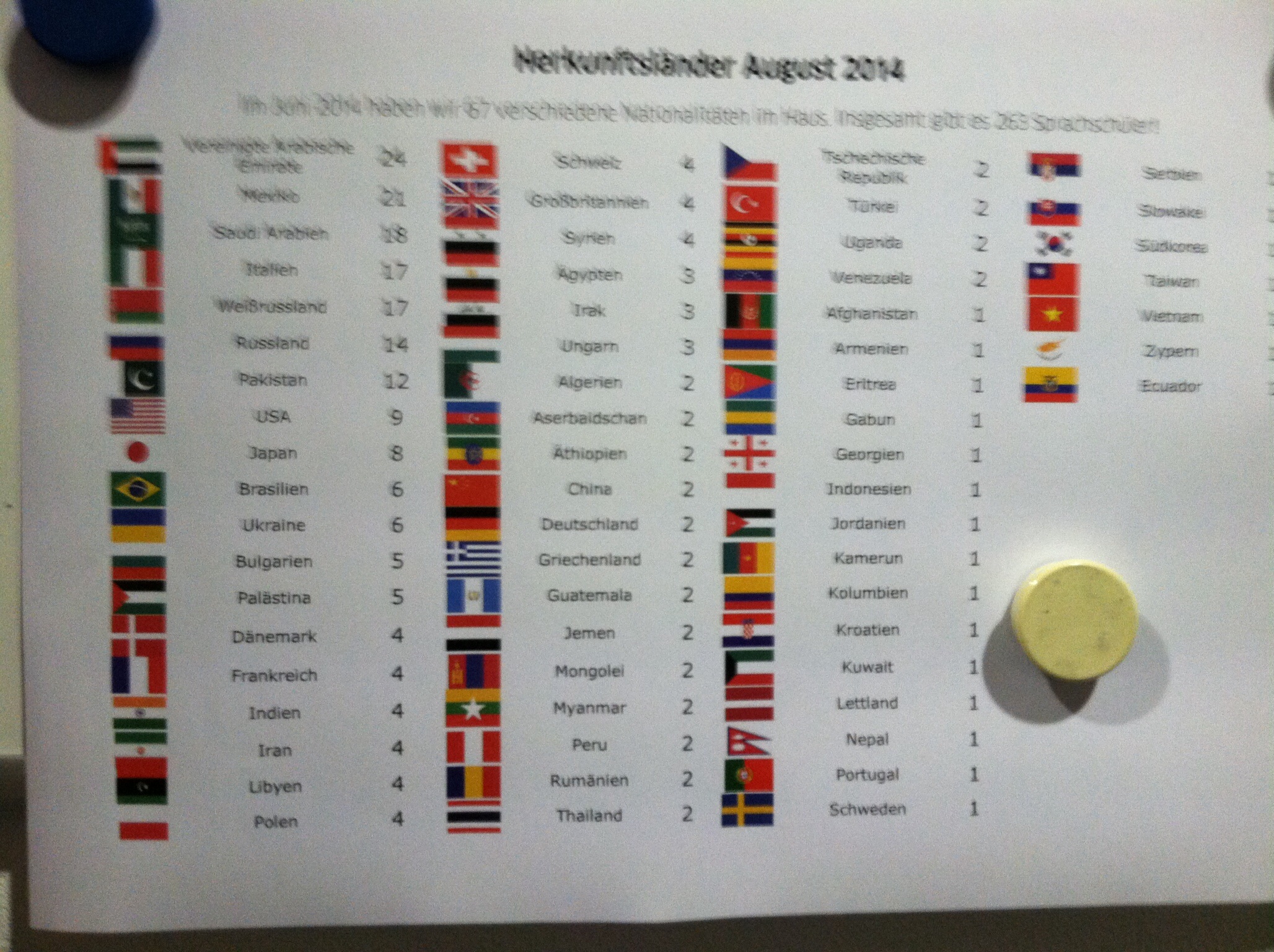
Last night was our class get together at the GI. The list of countries gives you a good idea of how varied the population is here–virtually one of each. The interesting point is that there are few Americans and a healthy contingent of Mexican students learning German for some reason. I heard that this might have to do with fewer students liking the U.S., but for whatever that means I like being in the minority here.

In case you are unable to see the list, there are 67 countries represented at the GI since June 2014. 21 from Mexico and 9 from the US. The largest group comes from the Union of Arab Emirates (24). It feels like the Eurovision version of American Idol–much more internationally oriented and with plenty of opportunities on both sides to either reinforce or dispel stereotypes.

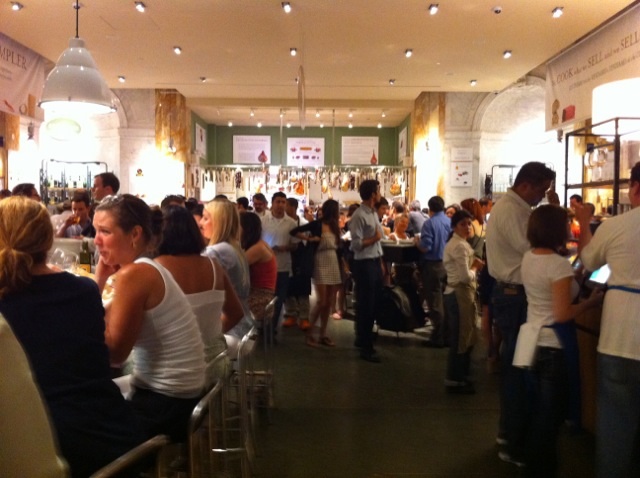
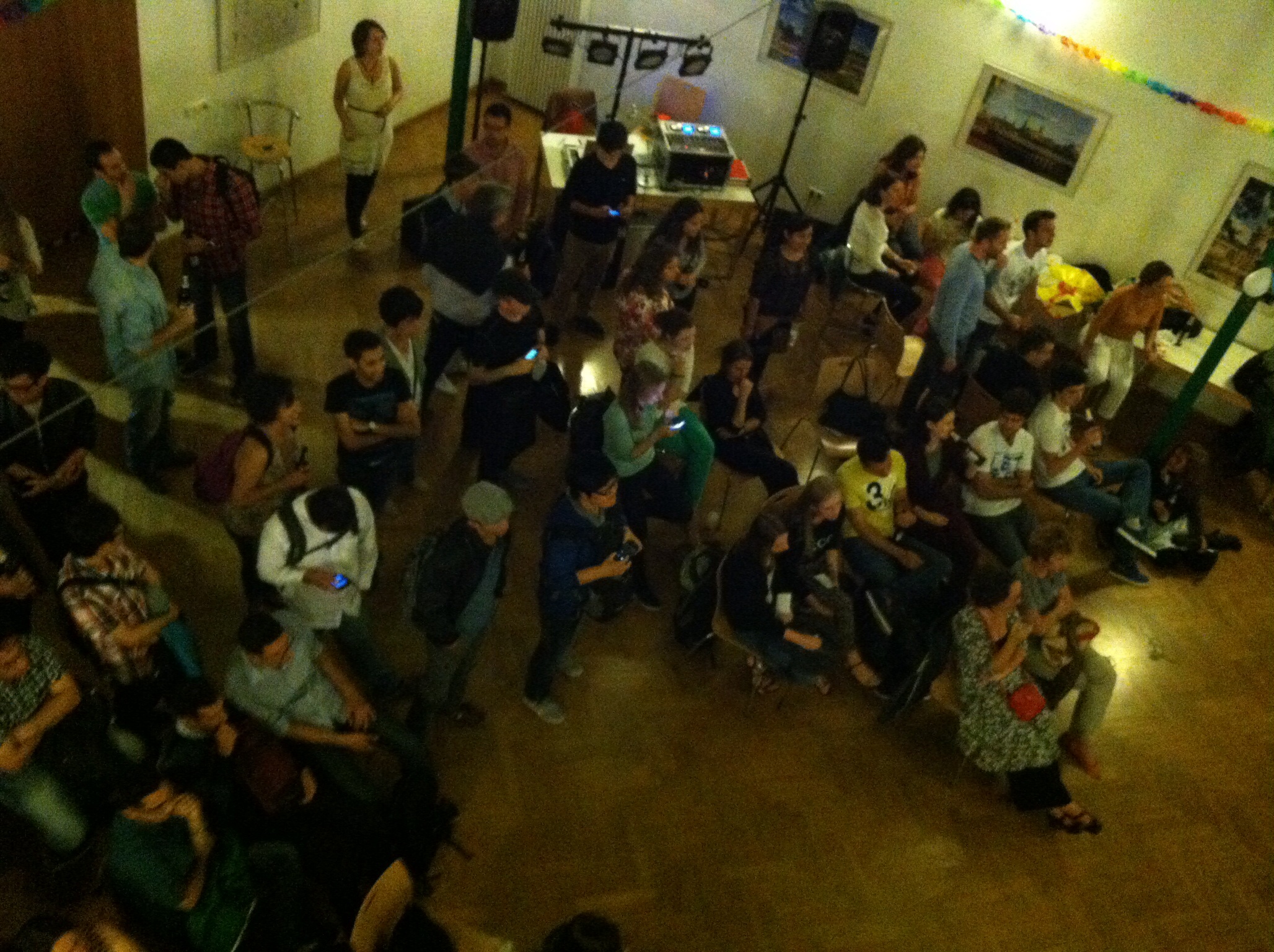
The evening began with wine for 2€ and Goulash, the specialty meal and top of the line for 3€. I burned a hole in my pocket paying 5€ for dinner. The program included songs sung by students, a Jeopardy game, and dancing. I enjoyed chatting with a German woman who has been hosting students for many years. (The older crowd in the picture is not representative of the age of students in the program!) She asked me to join her at the table  where she was sitting.

Day 13: Trier, Germany’s Oldest City

image image image

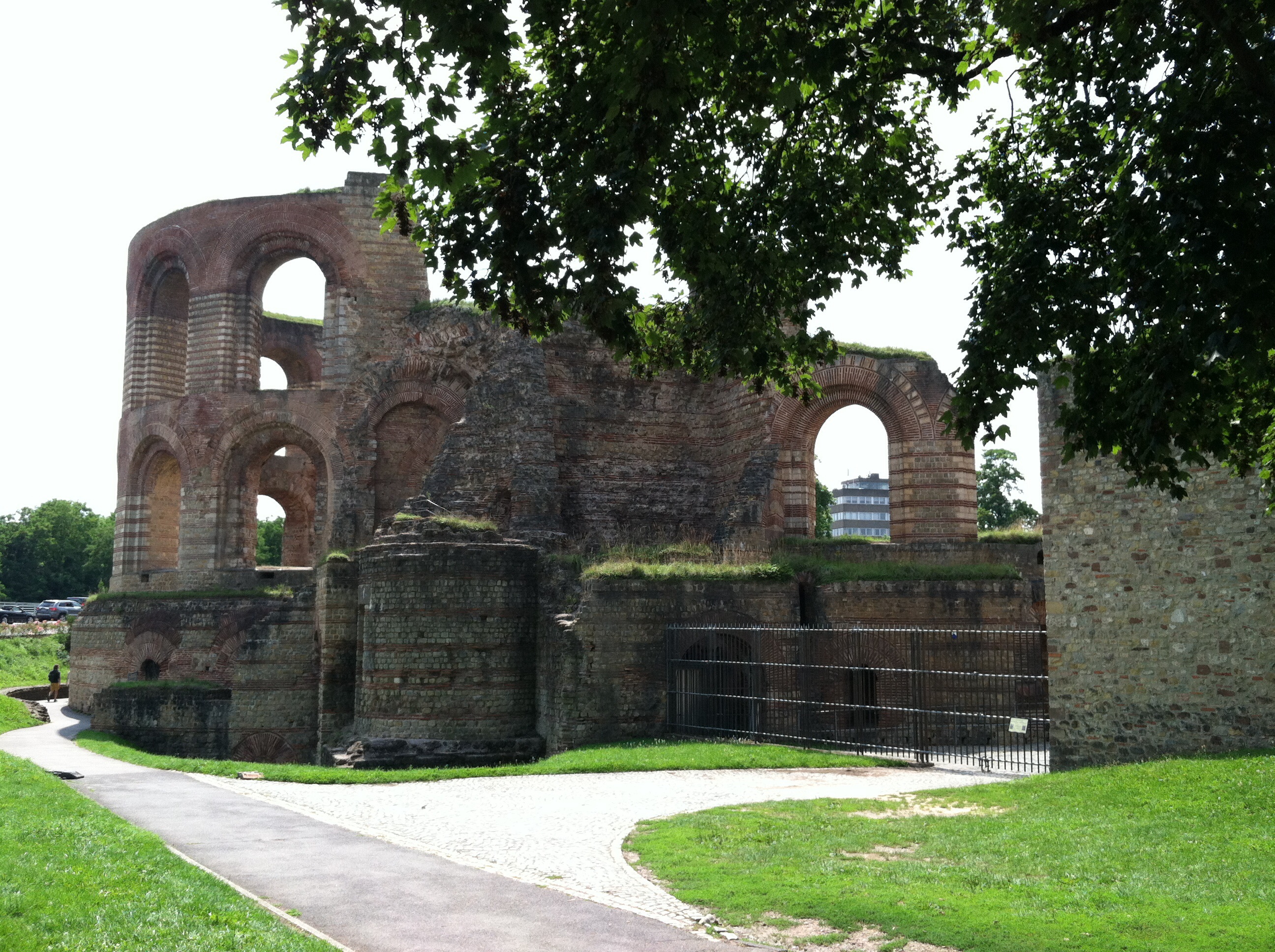
Trier’s history is one of the most fascinating stories in Europe. Beginning with the rule of Julius Caesar in 50 BC when he ordered Roman walls to be erected to protect its soldiers and citizens to destruction in World War II, it transcended the presence of Constantine, who held court in the reception hall in 300 AD; the monk who lived in medieval times in the Porte Negra; the rape, pillage and trading of the Vikings; and the arrival of Napoleon.

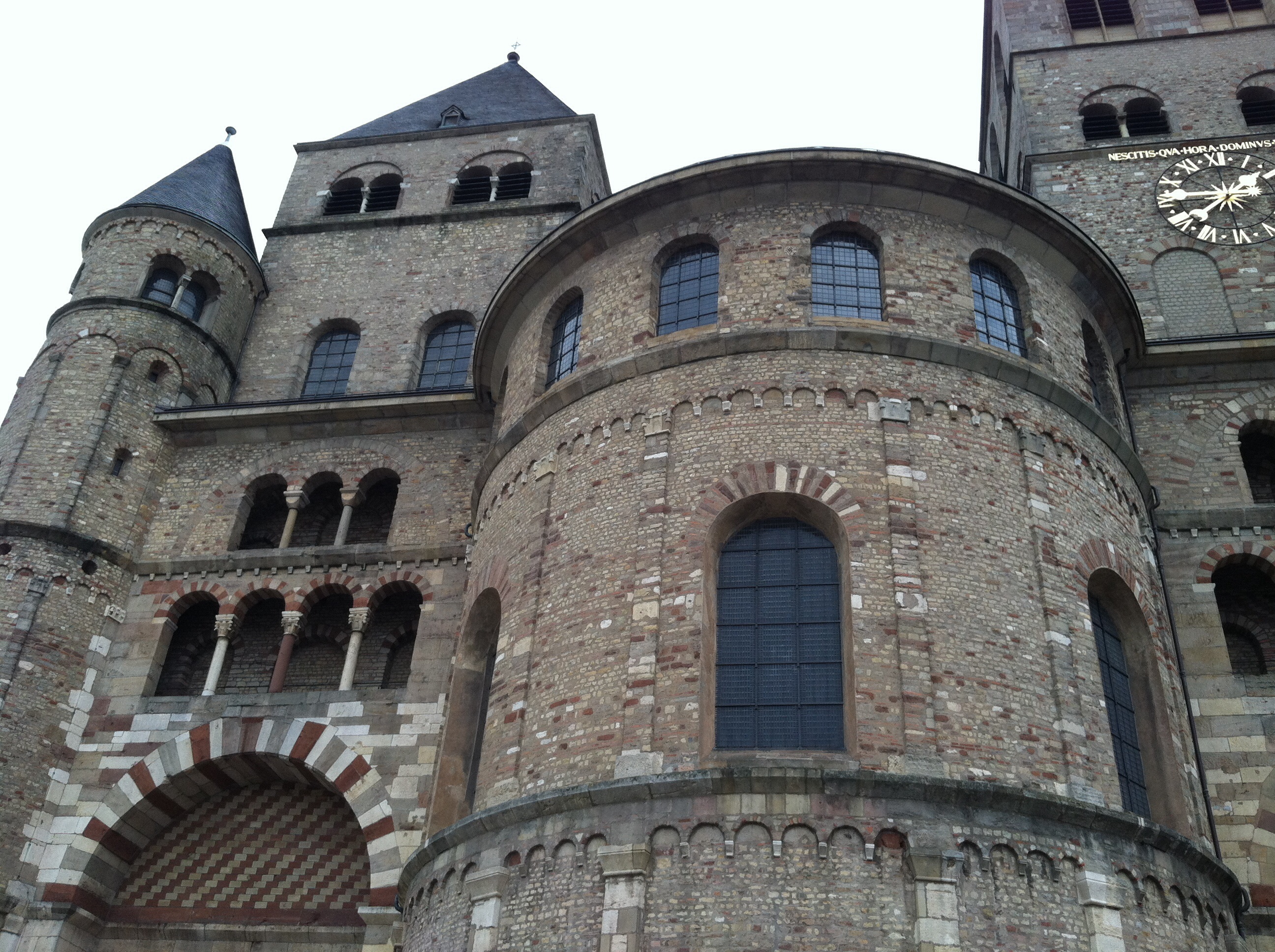
The major buildings include the Porte Negra, the only remaining Roman wall today; the Basilica, where it served as a pilgrimage church during the Crusades; and the Reception Hall where Constantine met his guests.

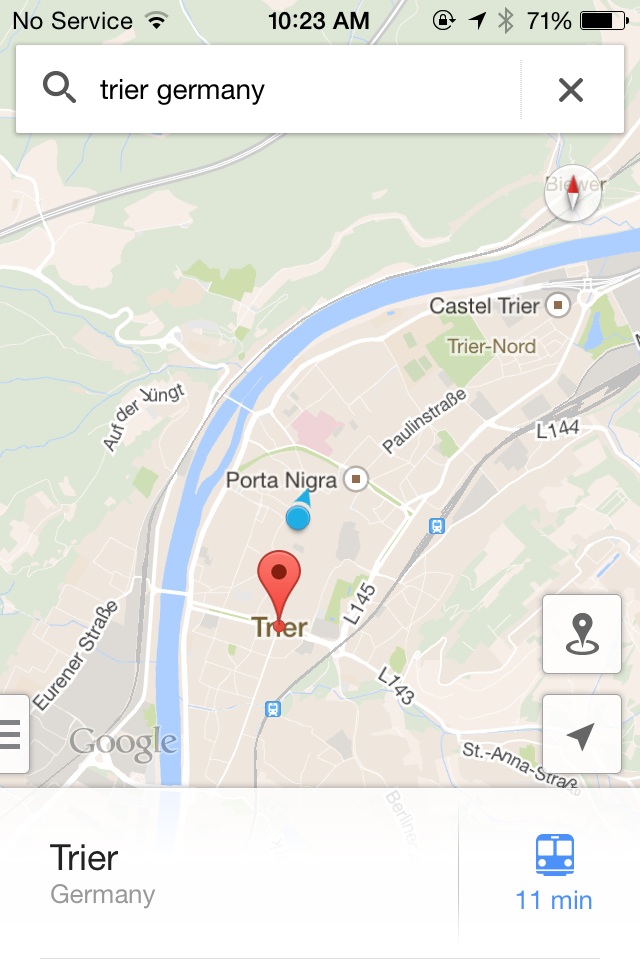
Photos from top:

1. Map of Trier, with the Moselle River inning through it;
2. The Basilica
3. The Konigstherme

Day 9: Musee du Monde Arabe (Paris)

imageimageimageimage

This is one of the few places in the Western World where I have seen a museum devoted to the Arab World. Despite there being limited English text, the museum is worth visiting due to reminders that math and science are largely attributed to Arab inventions and discoveries.

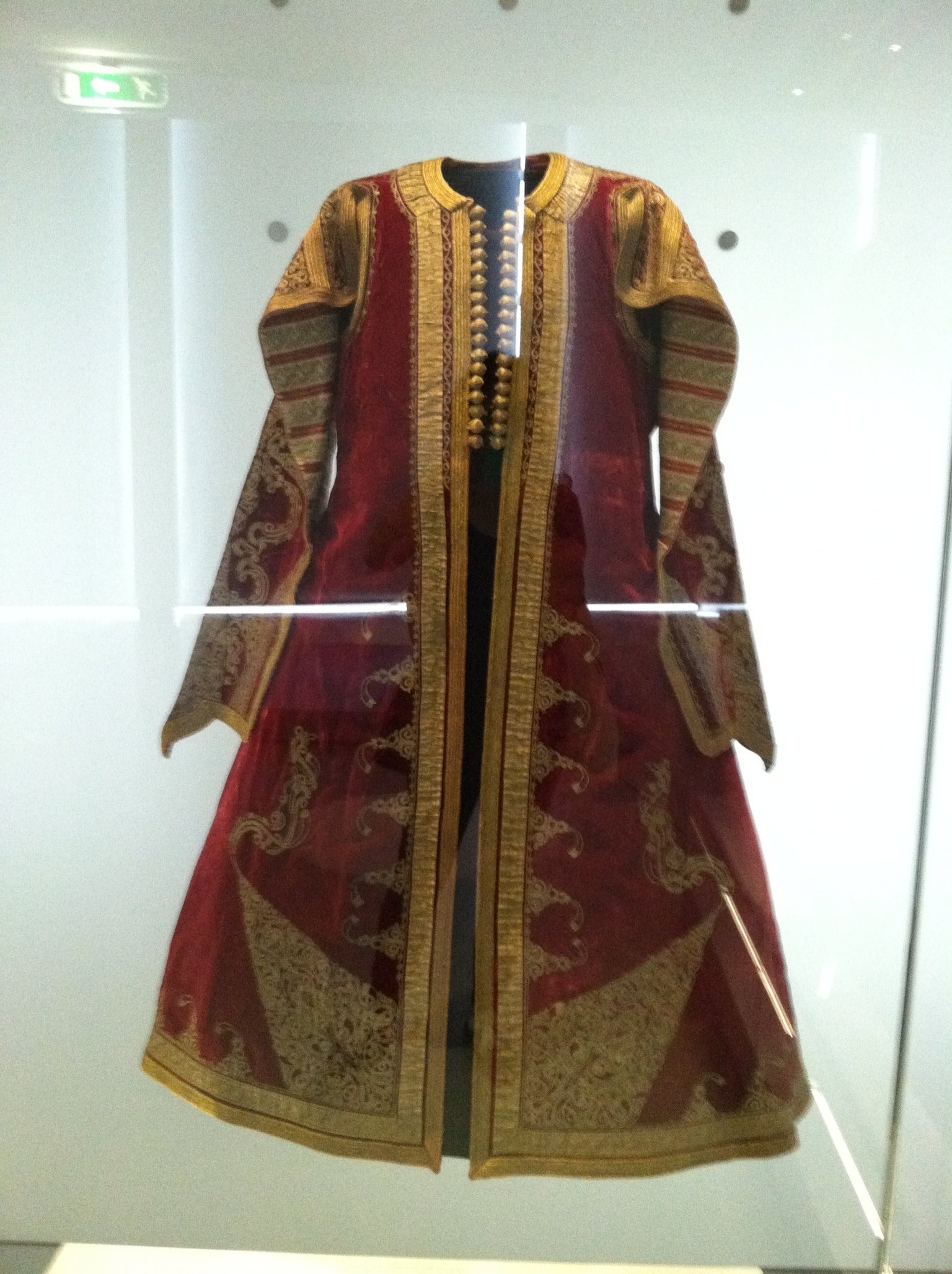
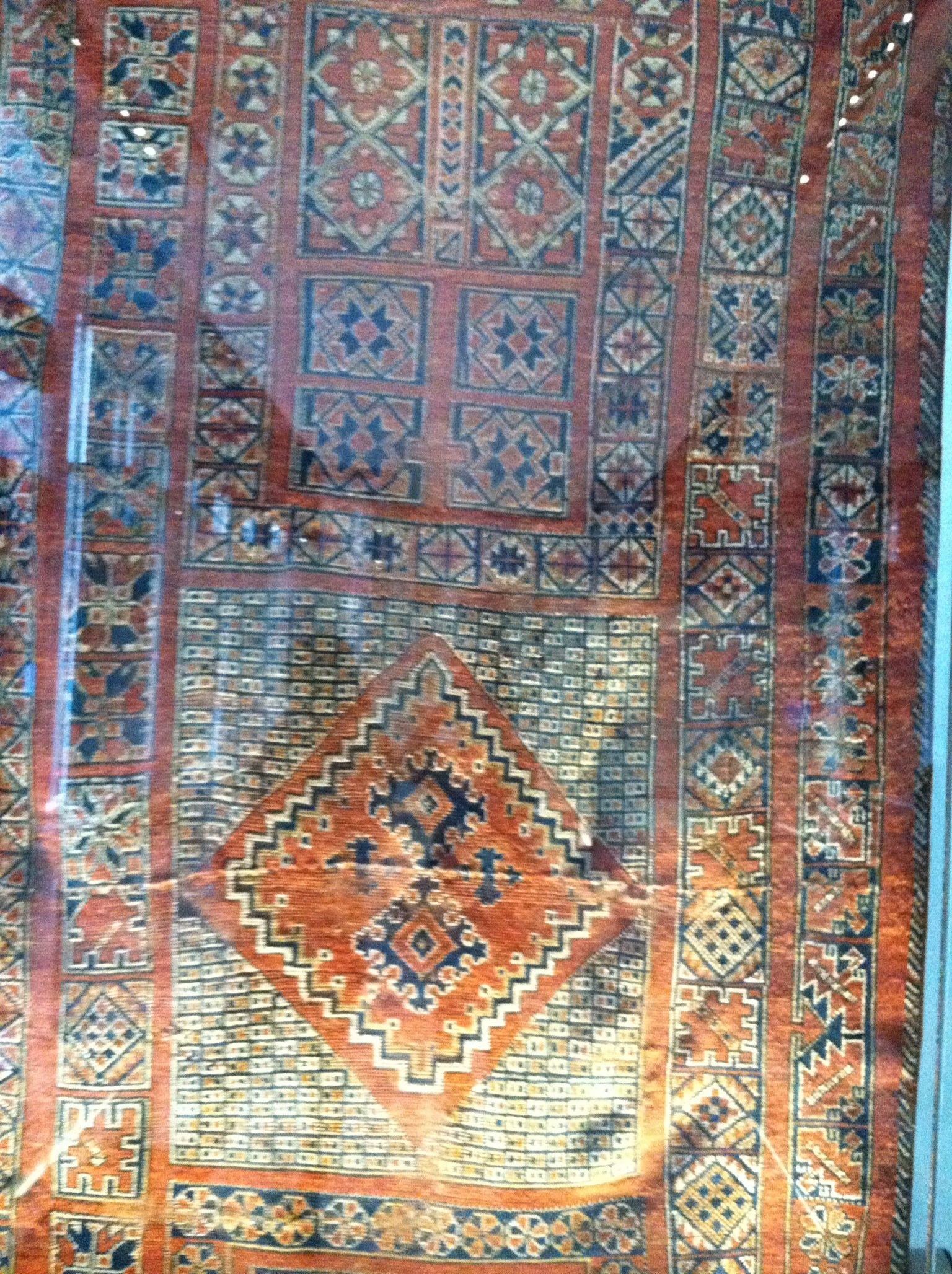
Treasured silk was traded from Asia used to convert into garments and fabrics. The beautiful draped clothing takes advantage of the light that casts iridescent hues, and the geometric patterns found in many carpets and tapestries are reflective of the mathematical mind that developed in the Arab World. Other decorative patterns come from foliage and nature and often are in symmetrical, orderly arrangements.

One of my pursuits for this trip is to connect the dots between Western and Eastern cultures. The Arab World as well as Persia played a huge part in bridging this gap through trade and education.

Photos, clockwise:

1. Detail of aperture on the facade of the museum.  Apertures are purported to adjust to the exterior light conditions but did not appear to have any consistency..

2. Intricate  woven garment

3. Chest with geometric and foliate patterns

4.  Carpet with geometric patterns

Day 3: Ai-Wei Wei (Brooklyn)

imageimageimageThe Ai-Wei Wei exhibit at the Brooklyn Museum was thought-provoking and raised many issues about Chinese policies towards its own people. Many photographs of the artist revealed his early years living in New York
and his father’s background as a poet and artist. AWW is still very much from the genre of crude and glaringly graphic artists who emerged after the fall of the Gang of Four–use of nudity and human existence ( did I really need to see video clips of his barfing?) leave you nowhere to avoid his messages.

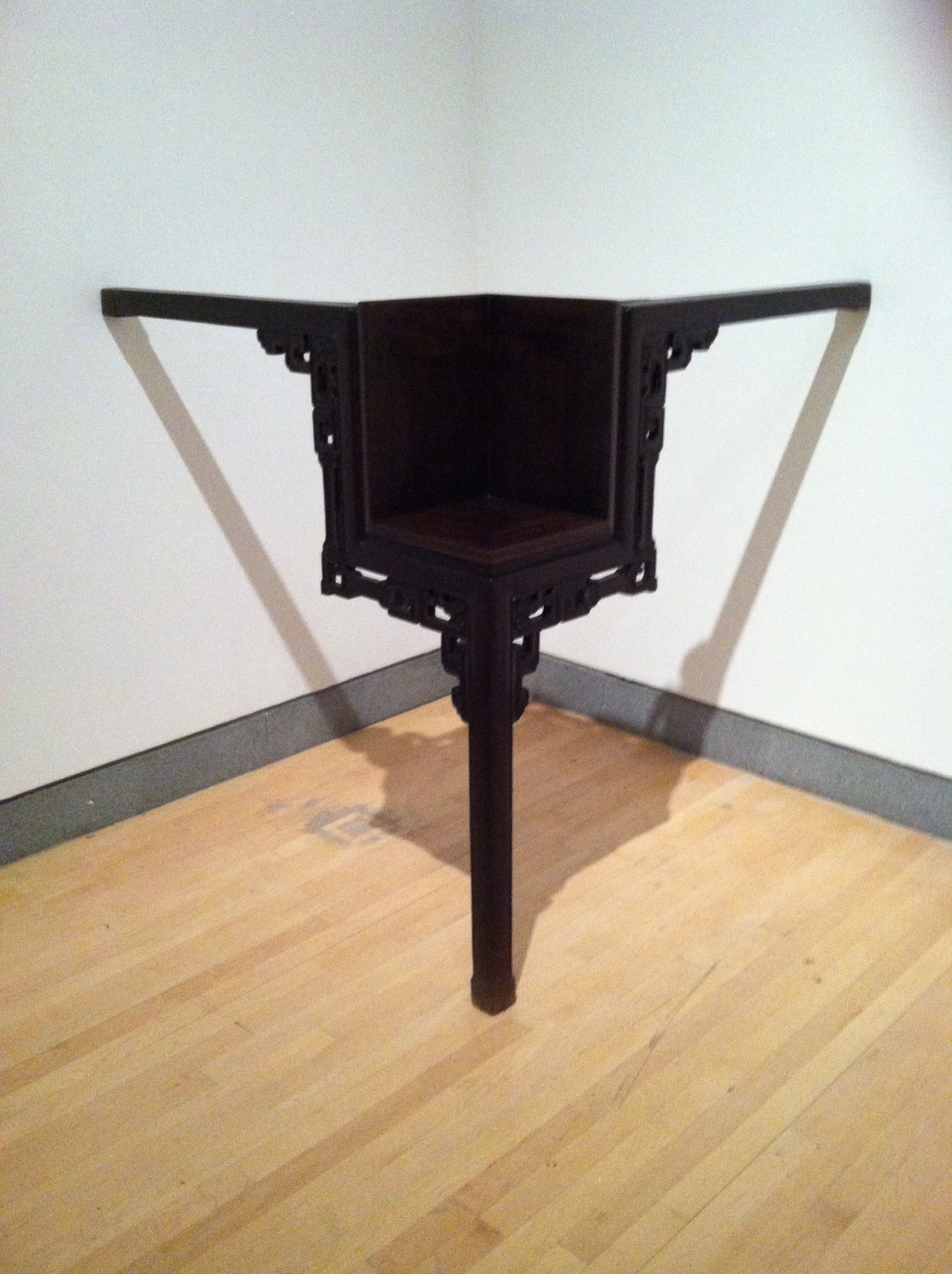
At the same time the use of everyday materials is clever and resourceful and often beautiful. For example, a traditional piece of furniture is cut to create a new appreciation of the craftsmanship and design of a familiar object (photo 3).

Photos, from top:

1. Common kitchen stools
2. Backpacks sewn together representing those from student killed in schoolhouse in Szechuan. Apparently there was no accounting of construction methods or whether rebars were installed in original building.
3. Traditional Chinese furniture put in a different dimension and respective.