Tag Archives: Interiors

Day 58: …and the “Diversity in Accommodation” Award goes to….

Back in my old Campus Planning days in the 90’s, I received a dubious distinction for “Most Diverse Clothing”, and no, I wasn’t cross dressing. I could easily transform myself from slob to slick. At that time it meant wearing tee shirts before casual was in and business suits for women that weren’t dark blue imitations of what men wore except for floppy dark blue bow ties.

For this post I decided to show you the range of hotel accommodations, from Emei Shan to the following day in Fraser Suites in Chengdu.  (OK, for Emei Shan camping could be more extreme but this was in a structure–or at least purported to be one. And yes, it was in a rural, remote part of the world, with NO standards. It makes the Marriott attention to detail something you would kill for after this encounter. And there’s no comparison as far as price was concerned because we are talking two ends of the spectrum.

I never claimed to be big on luxury, but I am admittedly a bit eclectic. You can compare the living, dining, and sleeping accommodations at your own leisure. At Fraser Suites, we were able to get a free upgrade to a 1-BR suite, free buffet breakfast, and full kitchen with washer/dryer for the price of a typical chain hotel. I think you will catch the drift. The bathroom in Emei was edited so you wouldn’t see the details of the floor toilet conveniently integrated directly below the shower, but the room did have, as the Brits say “an ensuite bedroom”. We came back to Fraser Suites in Chengdu and I finally got my shower. The difference in 24 hours is what bears consideration, and what a shock it is to my system. I think I deserve a “Diversity in Accommodation Award” at least for yesterday and today.

Day 43(d): More Islamic Architecture

Photos, from top, left to right:

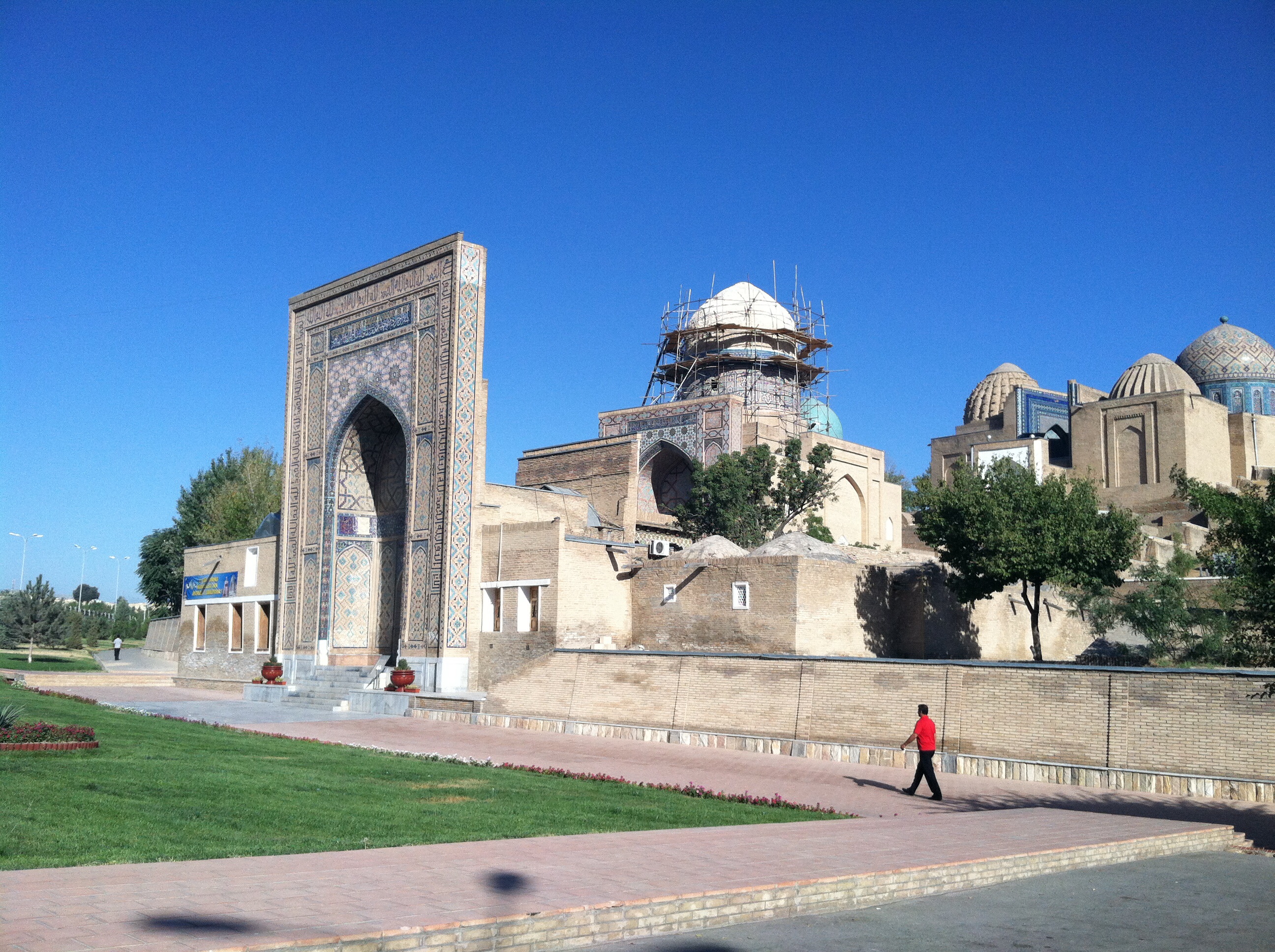
1. Exterior of Afrosiab Complex, built on a hill that was then ransacked by the Mongols. Tamar worked out that it was easier and more fortuitous to get water from the lowland rather than to transport it up the hill to the fortress, at the expense of having fortifications.

2. Steps leading to mausoleum complex. One is supposed to count the number up. If you count the same number coming down, you are a good and faithful person. If not, try next time. I went down the back-end so will never know my worth

3. “The City that Defies Death” consists of mausoleums dedicated to dignitaries with a street connecting all of them to each other.

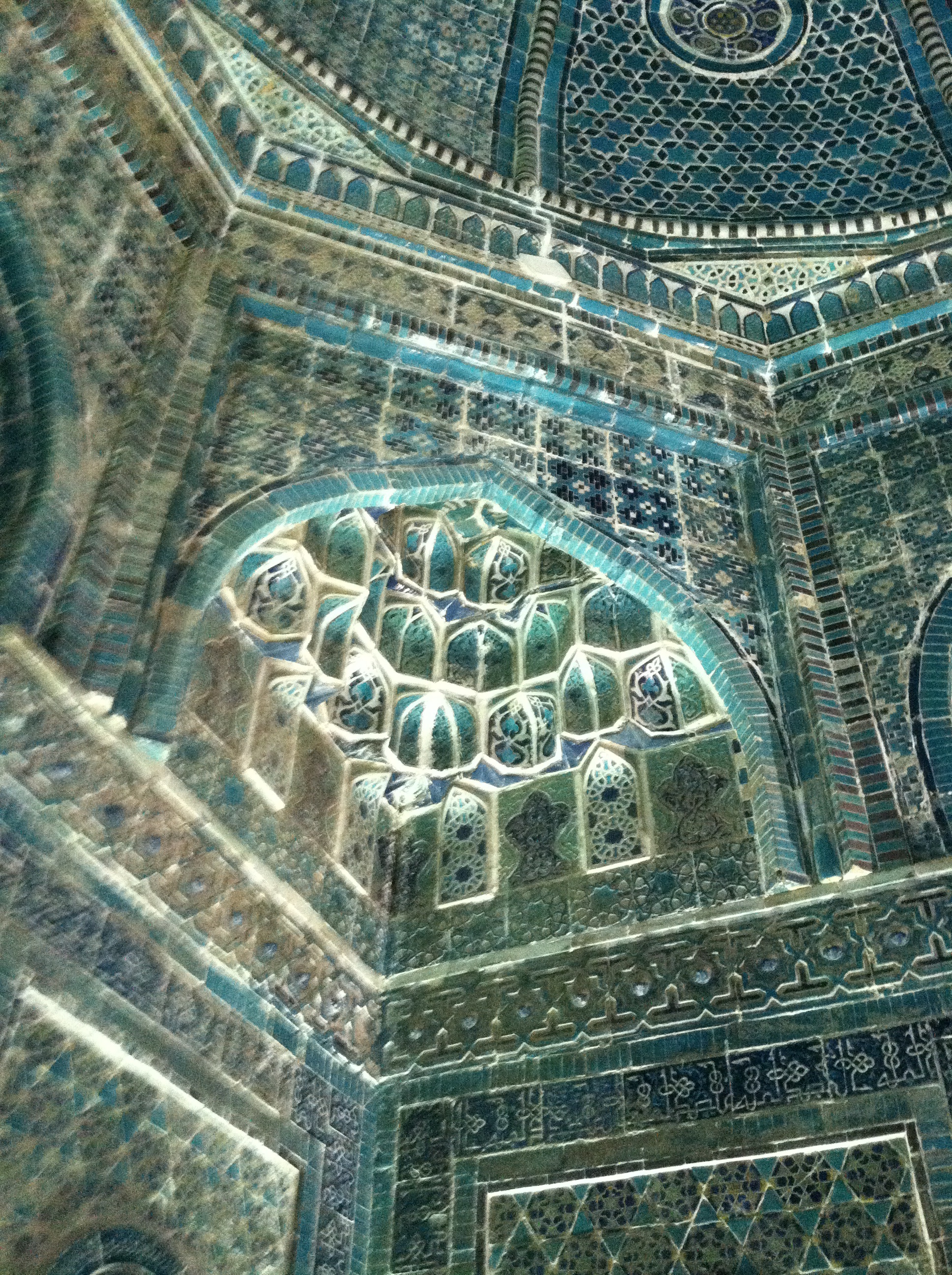
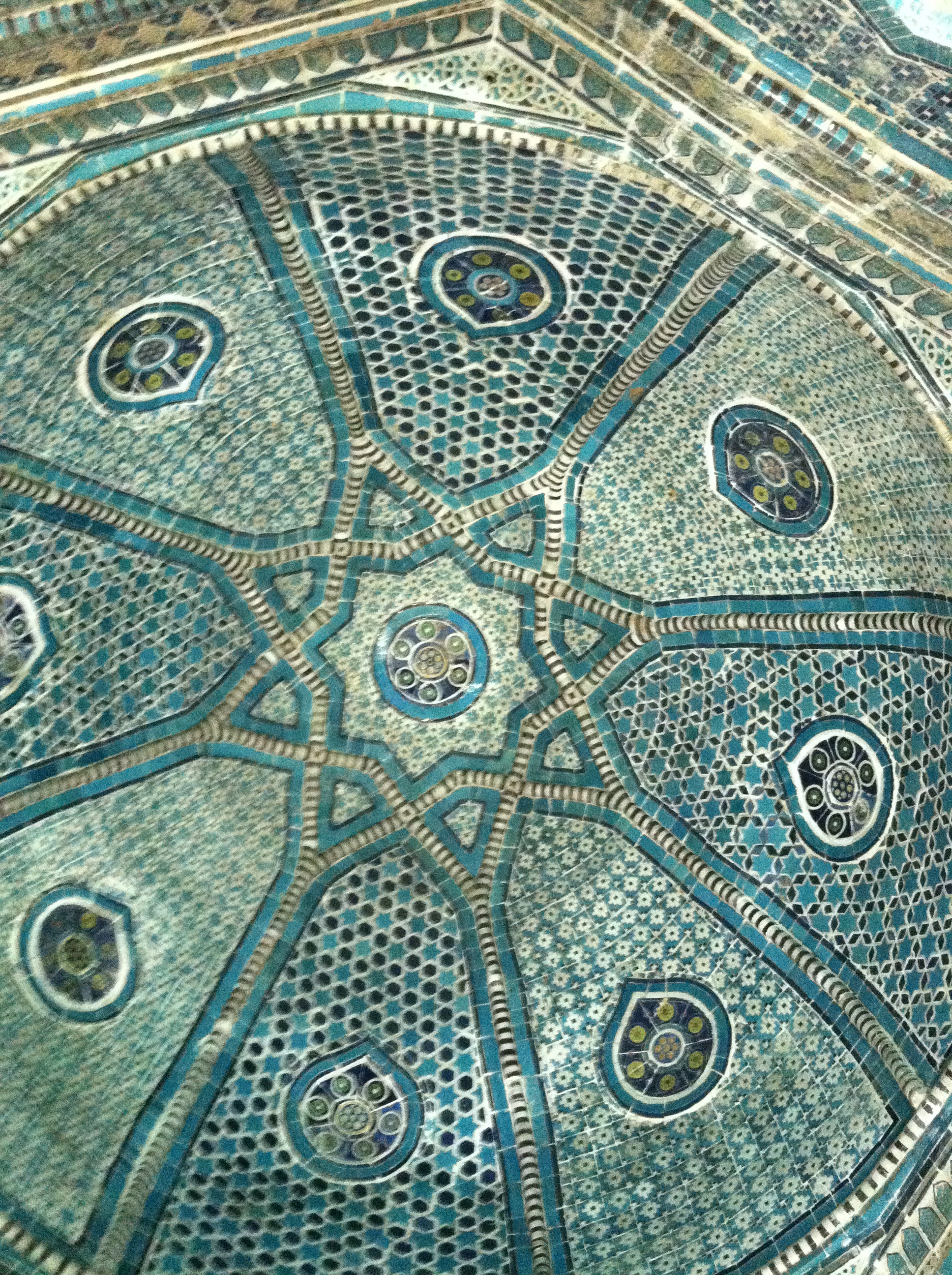
4. A decorative ceiling inside one of the domes.

5. The stalactites in the corners between the dome and the wall reinforce the dome support and provide clever decorative element to the room.

6. another dome interior, with more cobalt blue coloring.

7. Beginning of Chinese influence with fritted wood panels over windows and wall paintings

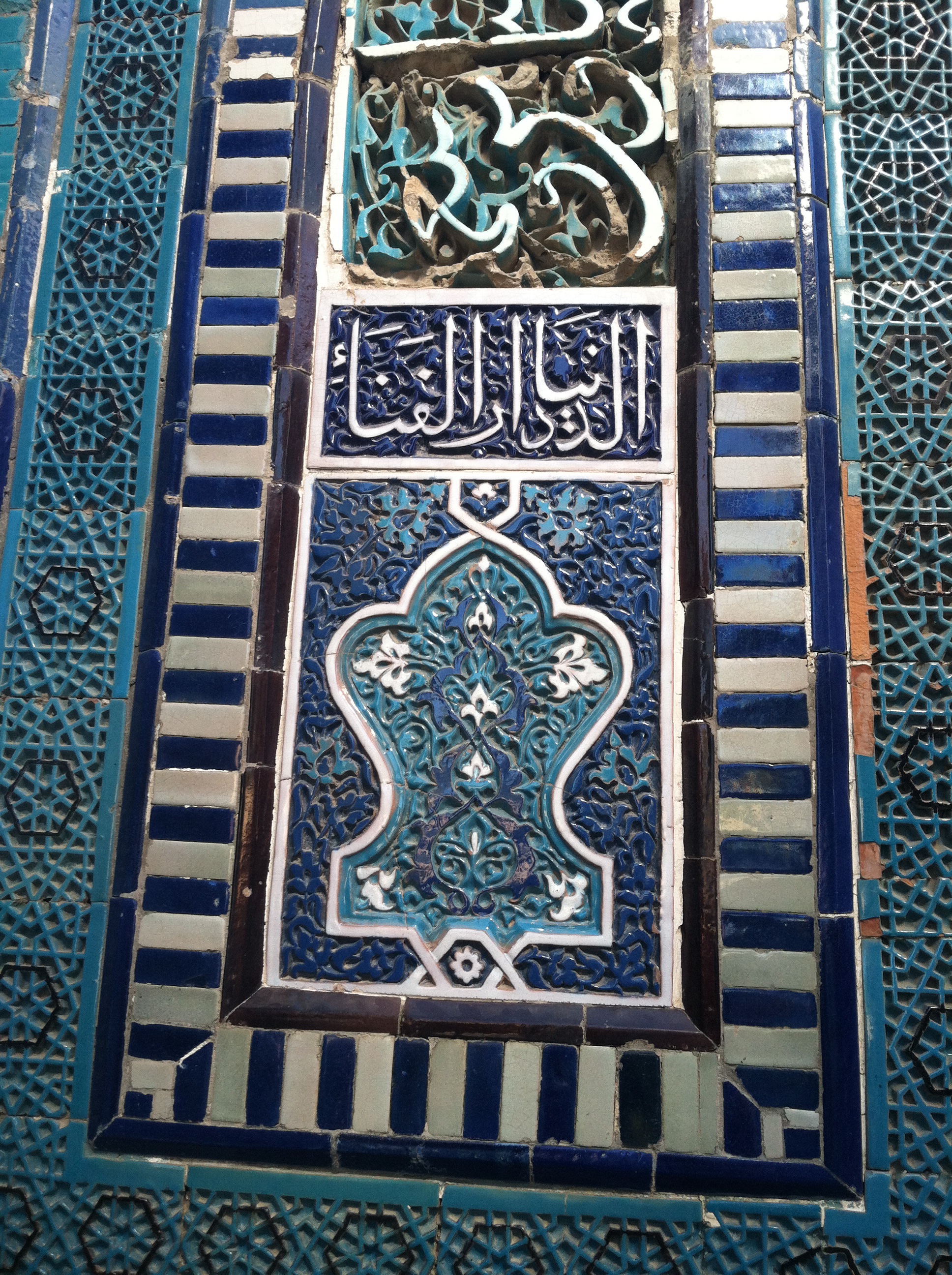
8.  Detail of stone Arabic lettering before tiles replaced in between

9. Another wall detail showing intricate floral, written and geometric patterns

Day 43(a): Islamic Architecture

imageimageimage
image
image

Memories of Days Gone By

The Afrasiab Hill consists of a series of mausoleums developed between the 12-15th Centuries to dignitaries who lived in Samarkand. They were designed by architects and ornately decorated in a variety of stone carvings, mosaic patterns, and exposed brick.I felt like I was seeing all the European Gothic cathedrals all in one city. It’s no wonder so many pilgrims made their way through to Samarkand just to see so many beautiful buildings in one place.

There are many beautiful and moving stories about captured princesses and war campaigns plotted and lost. Some of the passion and beauty of the period are depicted in the intricate tracery patterns that are all different. The inscriptions appear to be wise, cautionary, and quite mild mannered and respectful of the multiplicity of religious beliefs at the time of Timur (ca. 1400), who was working on promoting Islamic religion.

Photos, from top:

1. Decorative tiles on interior
2. Detail of Dome
3. Entrance to complex on the Afrisaib Hill
4. Detail of exterior cut stone and mosaic tiles
5. Exterior view from back of hill

Day 40: Farewell to Dresden

image

imageimage

imageAs I wind down this segment of my travels, I feel very sad to leave Dresden. Particularly having bonded with my German class, it is hard to say goodbye. Everyone has their lives to live beyond this momentary blip in the universe. I’m so grateful for having had the support and encouragement from family and friends to do this, at this time of my life, because it IS the time of my life.

I felt wistful about leaving out some shots that didn’t ever seem to fit into the theme for the day. This is a potpourri of architectural photos, a one-off sign, and some cultural relics. I’ll be leaving Dresden, overnighting in Frankfurt, then starting Segment 3 of the Silk Road this weekend.

Photos above, from top:

1. The Blood Center

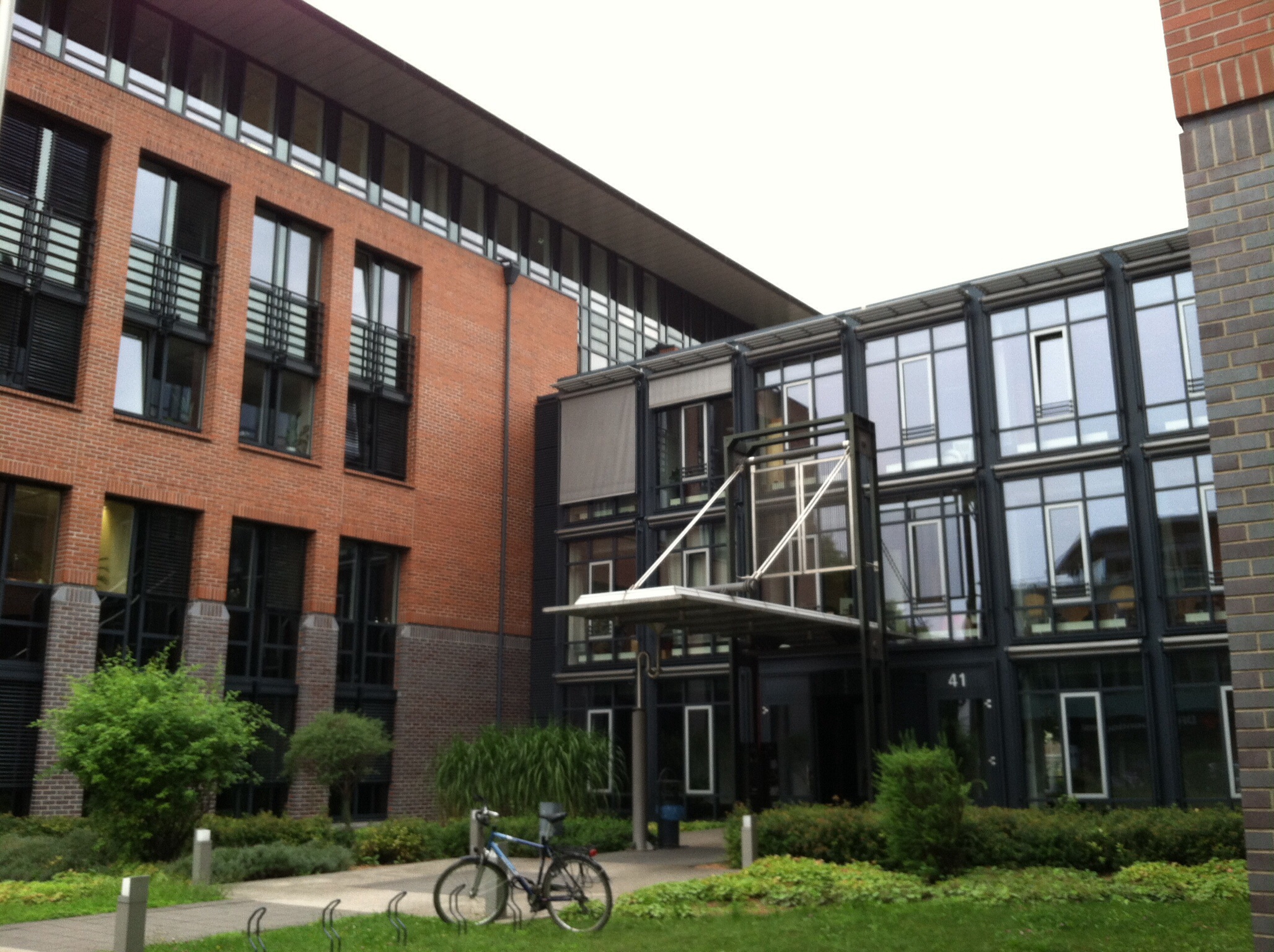
2. Clinical buildings in the medical center area of Dresden.

3. Another clinical building.

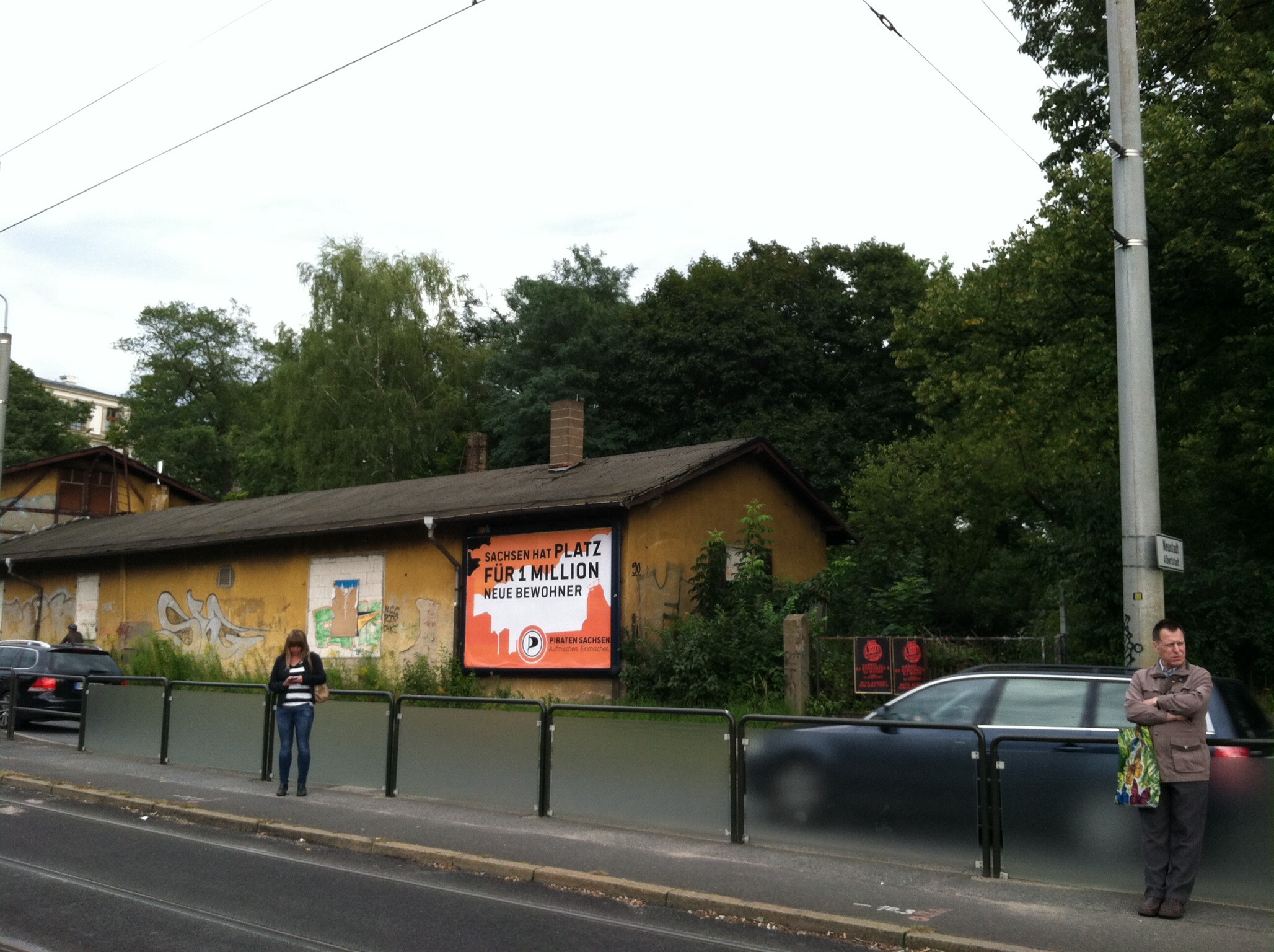
4. Sign indicating from the Pirate Party that there is room for another million residents in Sachsen, the state where Dresden resides. It also implies that mixing and matching population is good for Saxony. (tap up the scale to read text).

Party elections are coming up and Angela Merkel is scheduled to come to Dresden on Saturday. Unfortunately, I will be off before then, but I would have definitively gone to see her.

Photos below, from top:

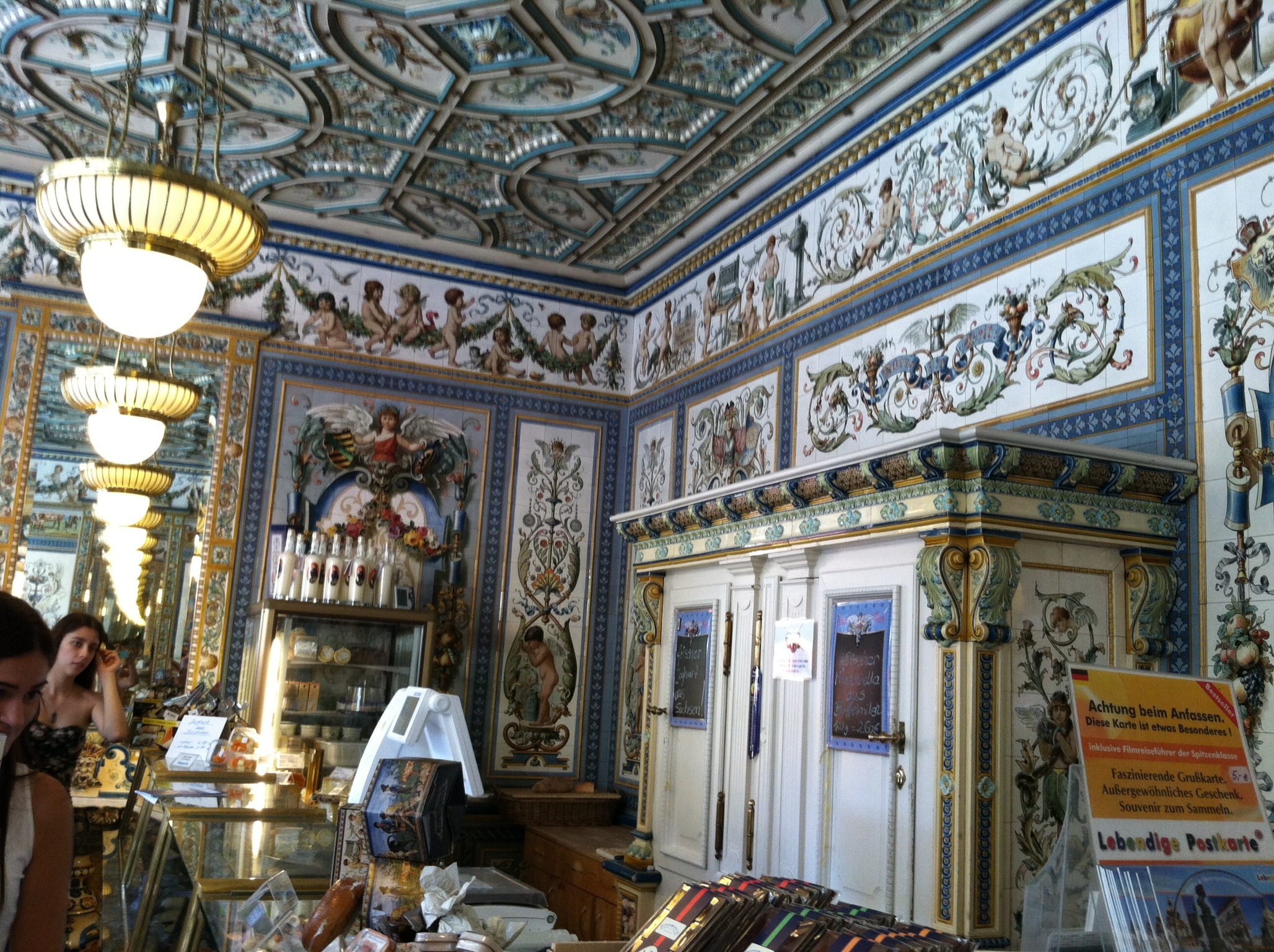
1. The Molkerei, a dairy and classic cheese shop that has been around for generations. The ornate decoration makes this a popular tourist stop.

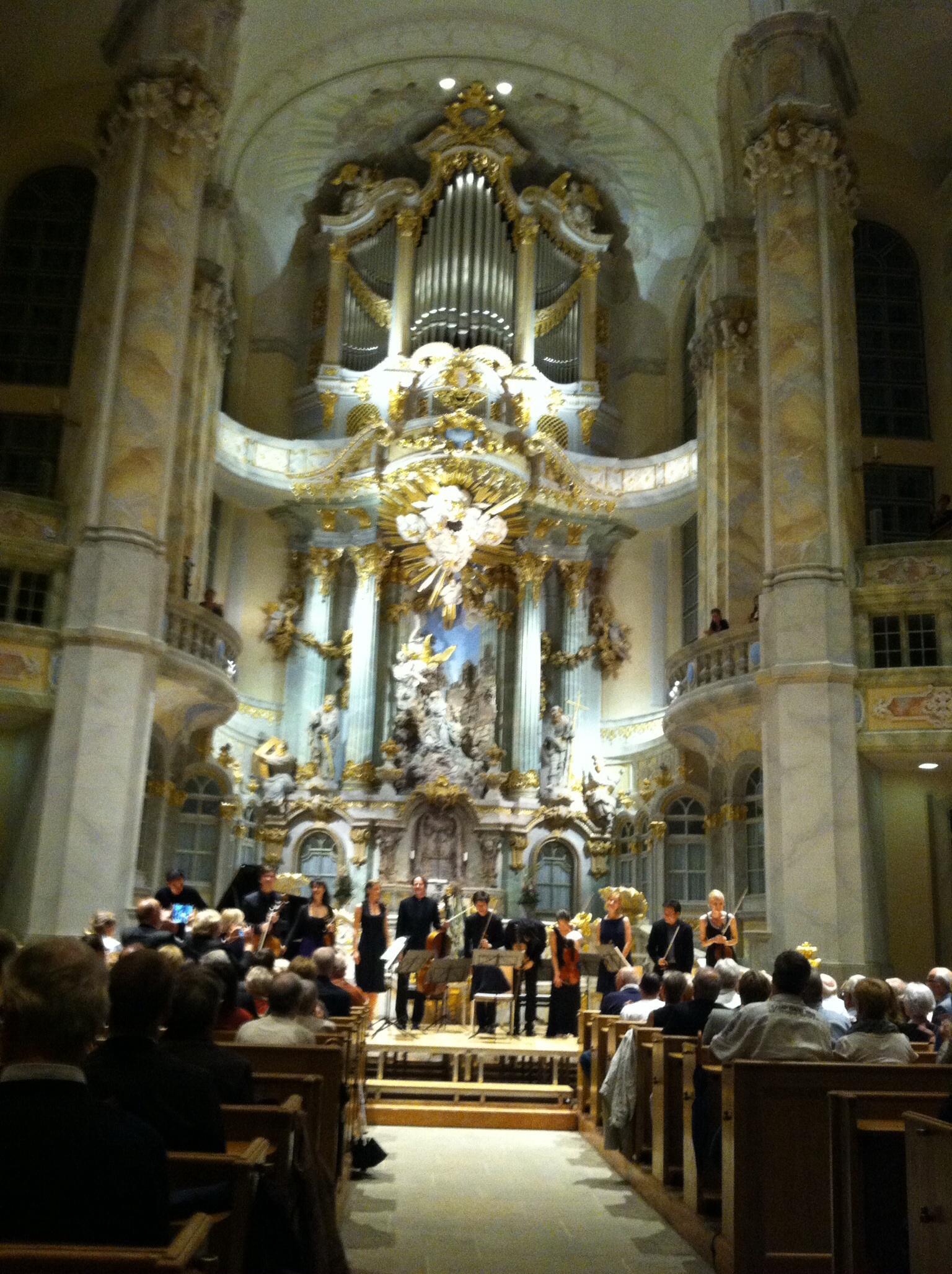
2. The interior of the Frauenkirche, where Helena and I attended a concert. Maria Baumer played the part of Bach’s wife in several readings between Bach pieces. The concert was sponsored by the Moritzburg Festival.

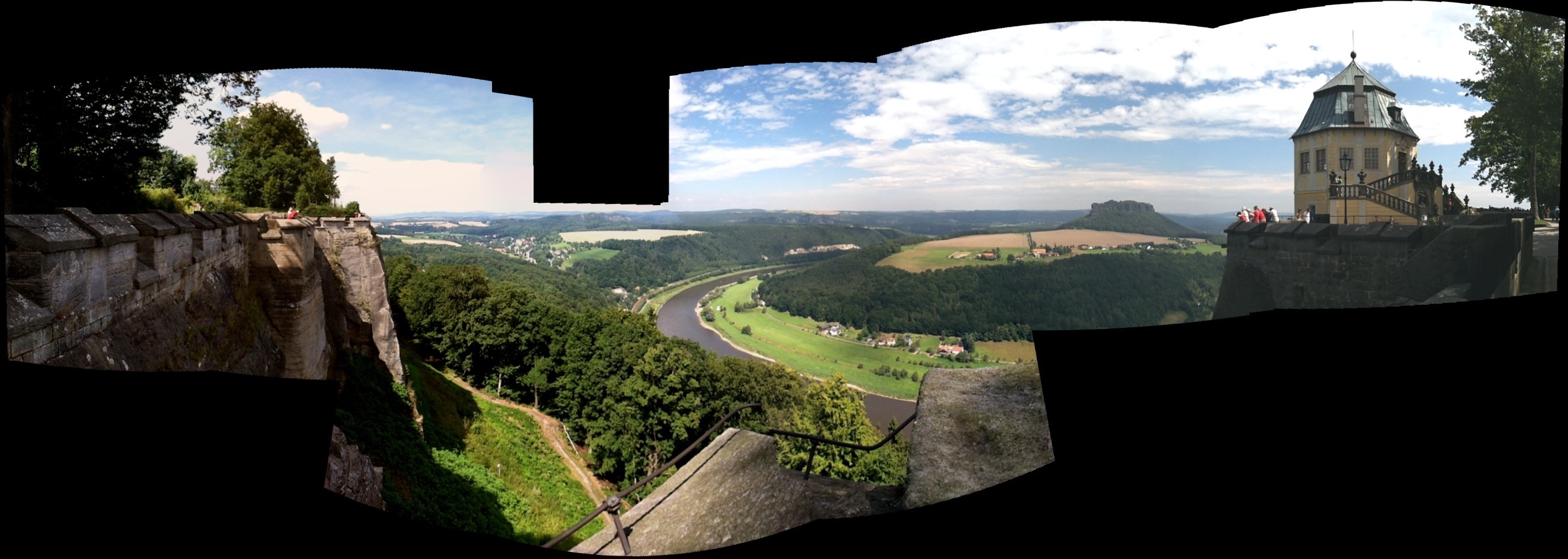
3. Another panorama shot of Dresden and surrounding area from the Konigstein fortress. Zoom up to appreciate the beauty of this area.

imageimageimage

Day 37: Military History Museum

image image image image image

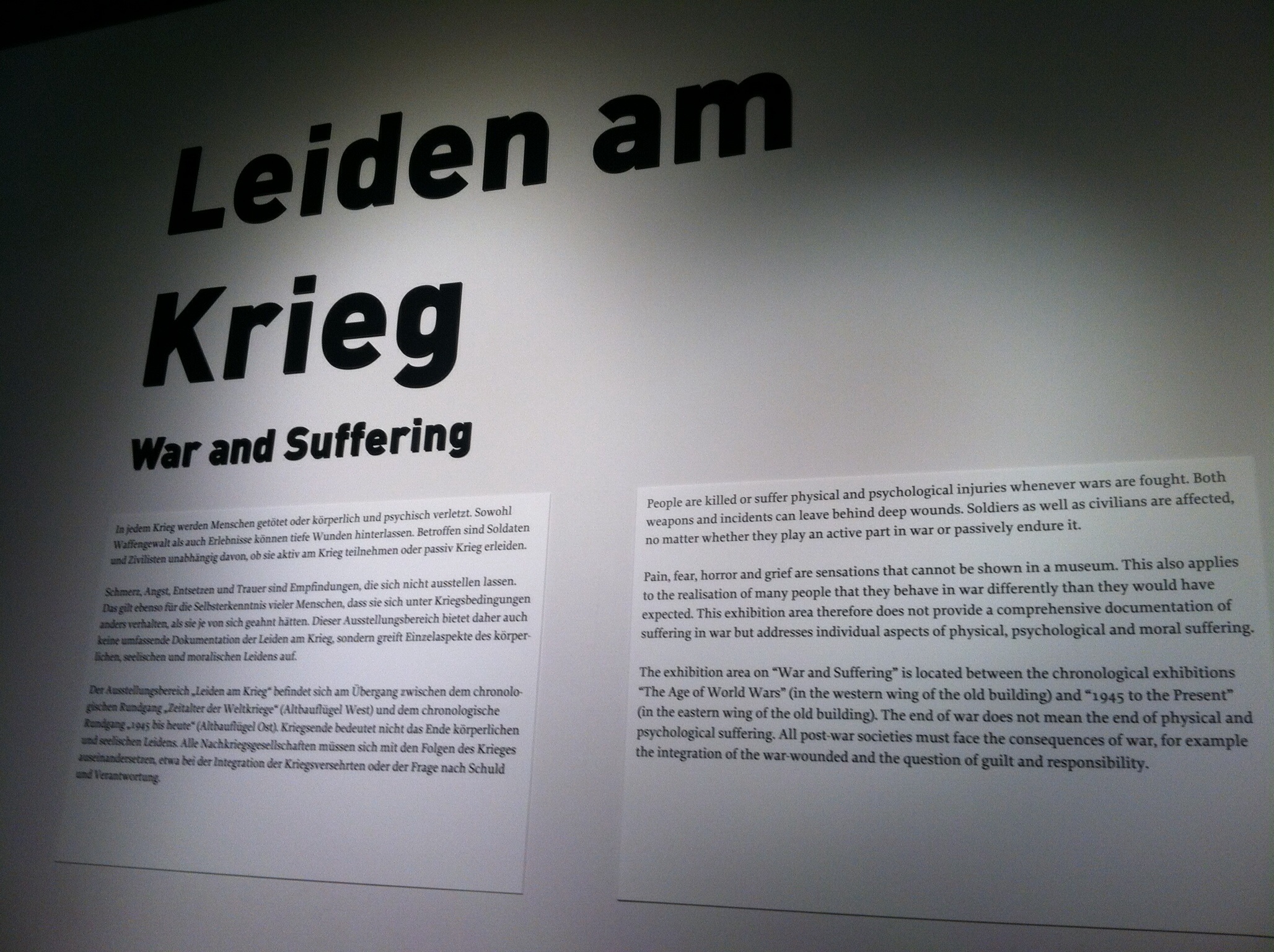
The Military History Museum is one of the most interesting museums in the world, not only for its collection and the building design, but for the message it brings. It tries to tackle the prickly issue of war and its consequences and uses displays to teach how everyone loses in wars.

Daniel Liebeskind designed and finished this building in 2011. The exterior of the neo-classical building is truncated by a metal shard that points to the spot where Dresden was targeted. While both sides of the building are devoted to traditional armaments, the new building tries to confronts visitors with the human impacts of war.

Photos above, from top to bottom:

1. Exterior of the building, located in a former military area.
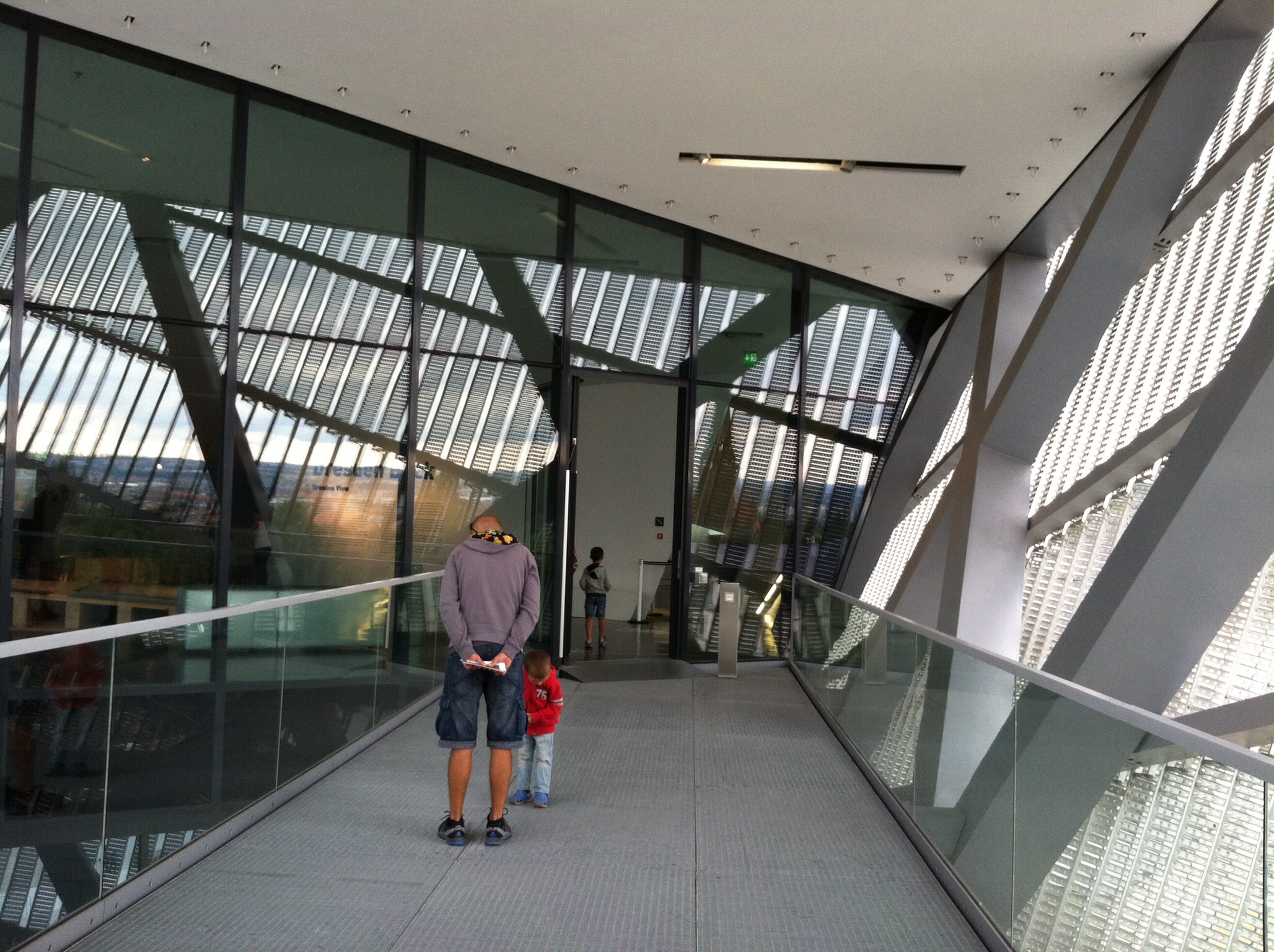
2. Overview of Building interior on the top floor.
3. Exterior terrace inside the metal point. From here you can see a view of Dresden Old City. The open metal walkway can be a harrowing experience but is appropriate with the entire building and what it conveys.
4. Beautiful stairs and custom designed lighting built into the handrails.
5. Custom designed horizontal panel for the elevator controls.

Photos below, from top to bottom:

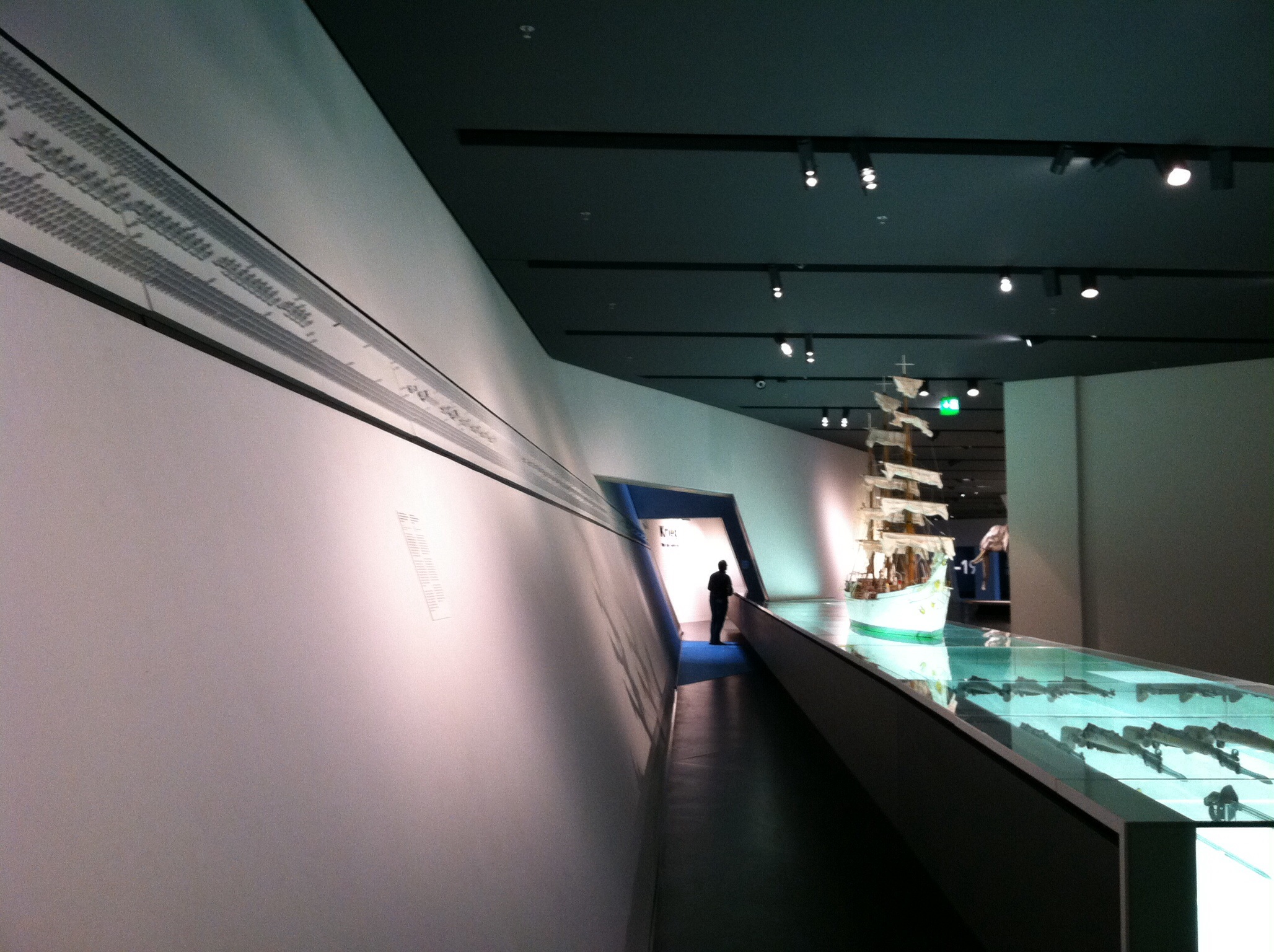
1. Wall to the left shows a regiment of 10,000 troops in formation heading to war at a miniature scale.
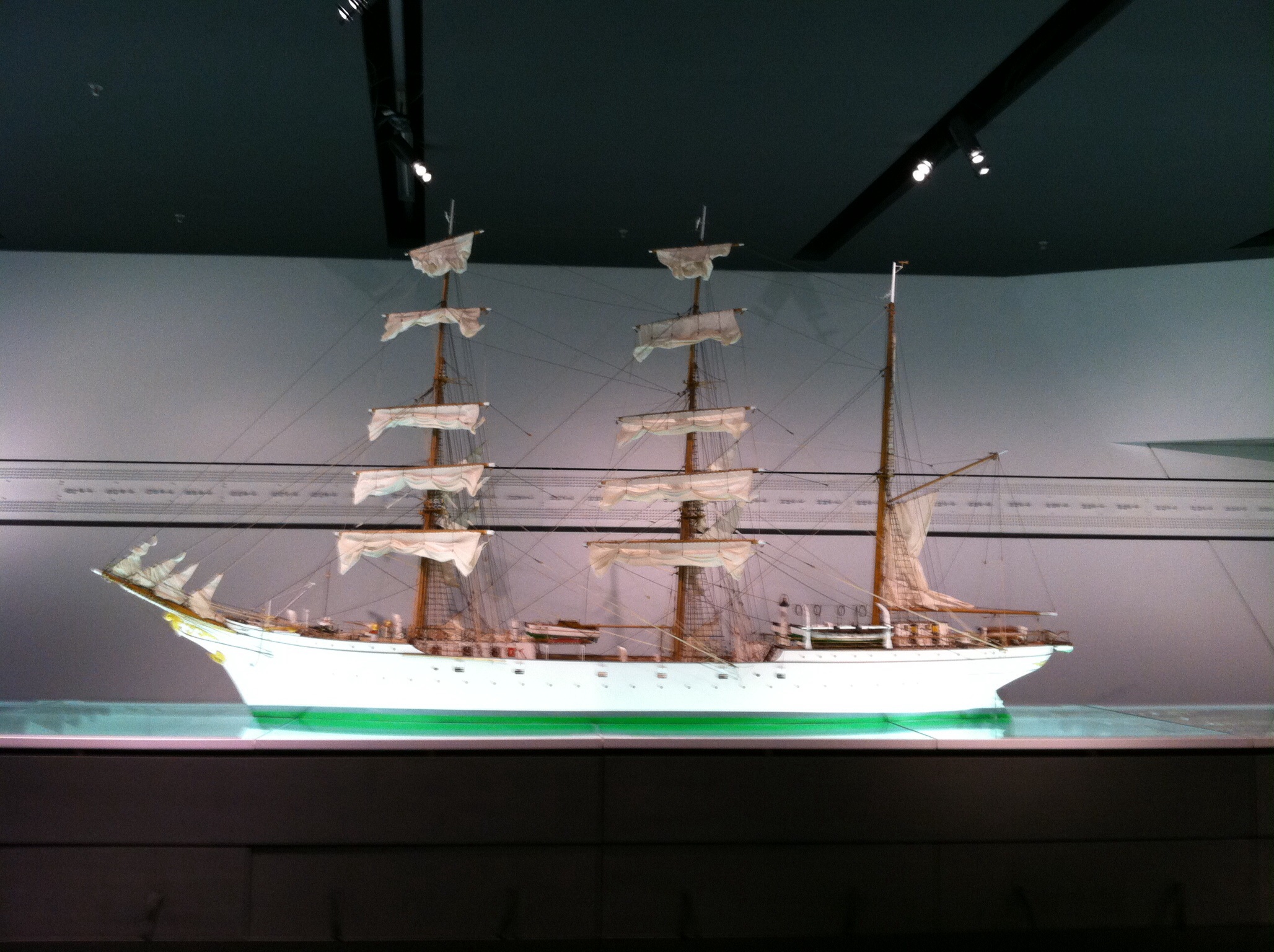
2. A scale model warship, with a view of the formation in the background
3. A full scale display of animals
4. Typical text explaining the consequences of war. (Tap to scale up)
5. Another text display.(Tap to scale up)

imageimage
imageimageimage

For more information, see http://en.m.wikipedia.org/wiki/Bundeswehr_Military_History_Museum.

Day 15: Getting Settled in Dresden

The Goethe Institute is located two tram stops from my designated guesthouse in the Neustadt district of Dresden. After I got my key to the “dorm”, the shock set in: possibility of no Internet. Doing without Internet access is non-negotiable in my mind (especially with my expectations of staying in touch through my blog)!

After numerous inquiries about how to get it and not getting any results, I decided to let it go, for awhile at least. I completed the orientation by attending a cultural events and activities session and duly paying my deposit for the room. I also met with an instructor who interviewed me for placement in the appropriate class level.

The activities offered by the GI were extensive, including dining out with other students to practice German, city and museum tours, and day-long excursions to nearby cities.

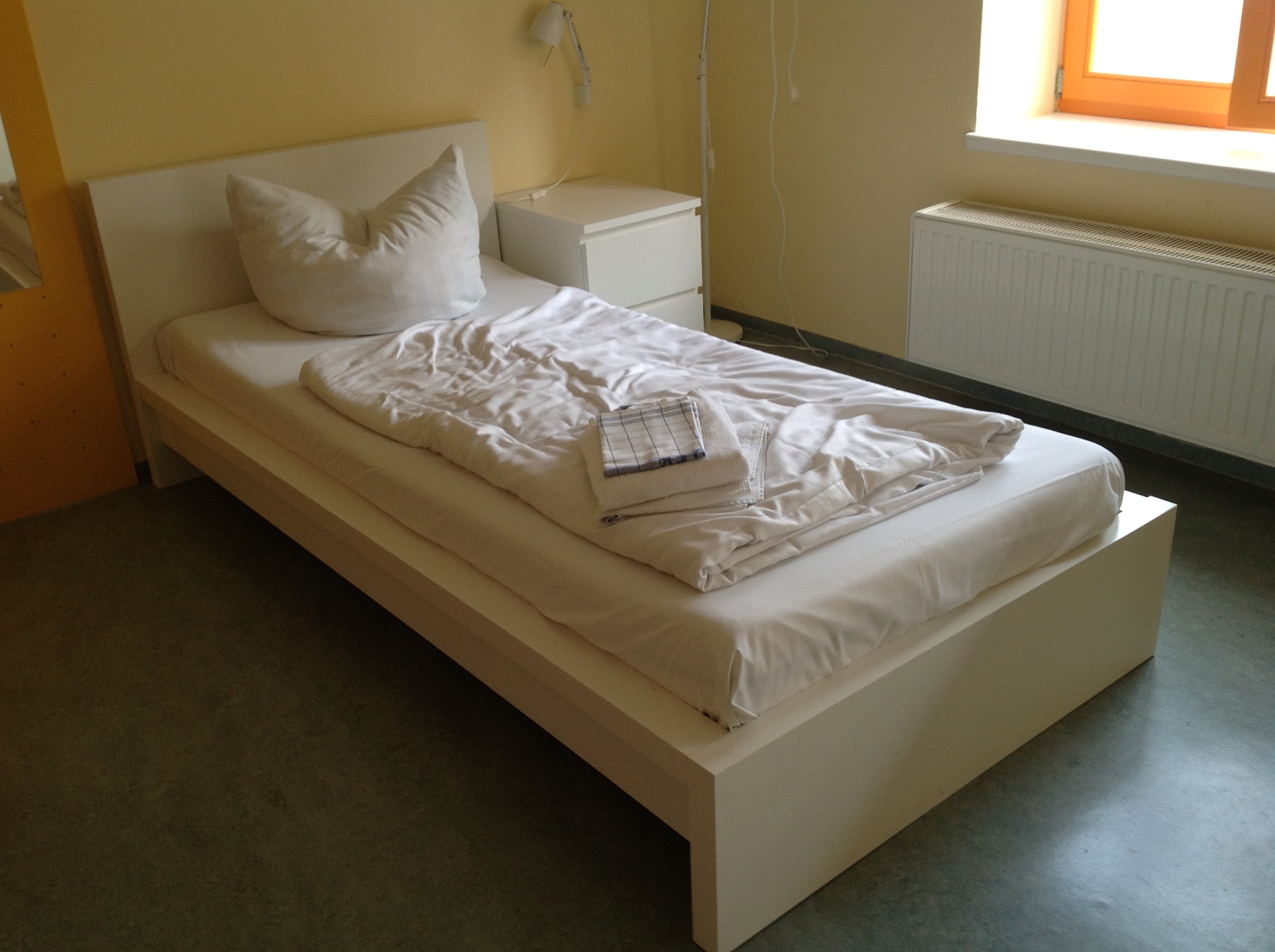
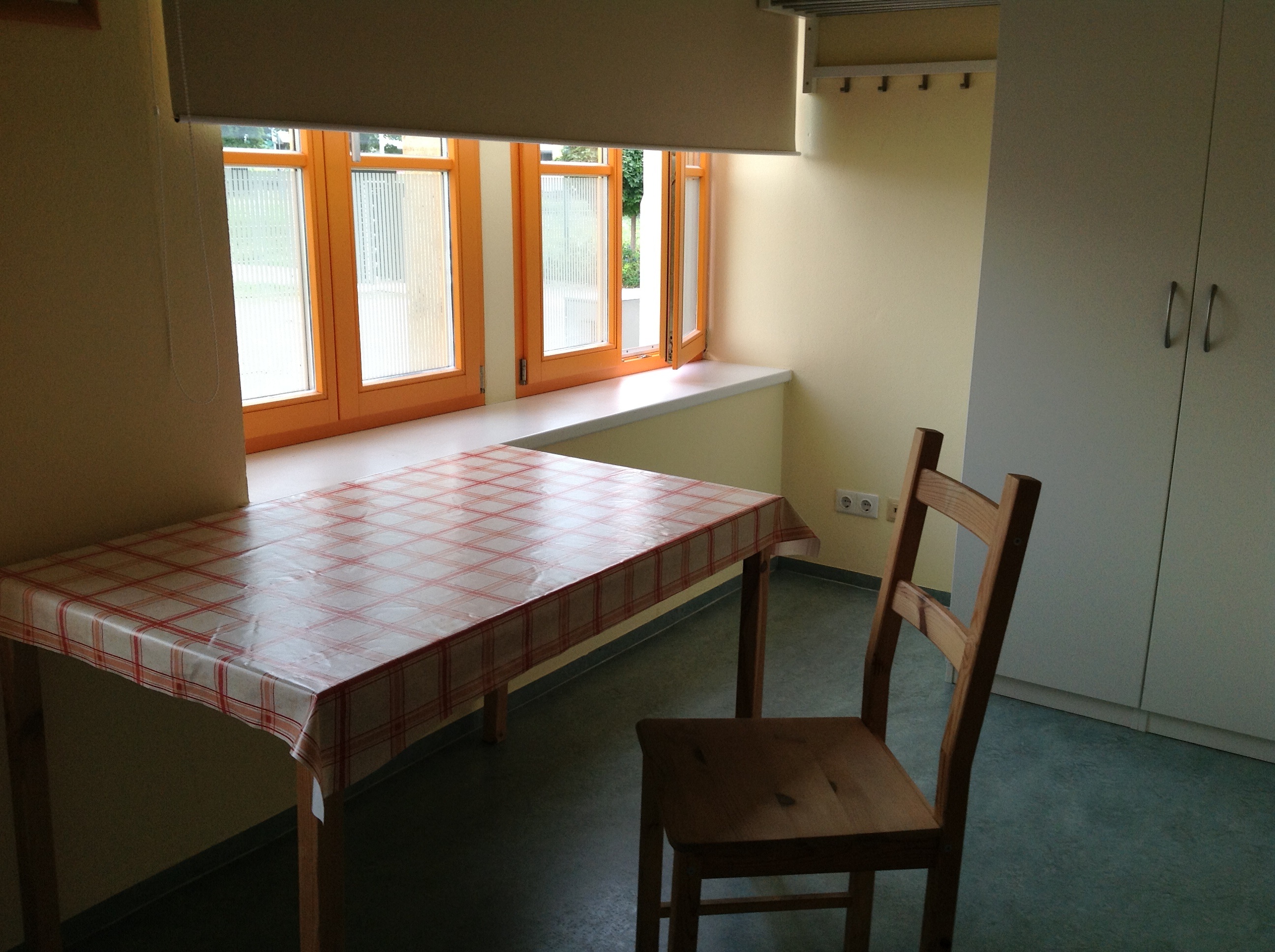
Photos below: views of dorm room, in former Russian military quarters.

image

image

image