Tag Archives: Food

Impressionistic Views

Monet Exhibit

The special Monet exhibit at the Legion of Honor in San Francisco is worth seeing if you are in town through May. You get an extra bonus on a beautiful day with views of the Golden Gate Bridge.

Monet’s early years were revealing. He wasn’t always the fuzzy artist we have come to know. He was very accomplished and painted his family and landscapes on trips to London and Holland. His studies of flickering light on water and objects were exquisite. These led him to the later impressionistic work as his eyesight failed him.

He worked so skillfully en plein air that all the paint was still wet on the canvas when he put his brush down! Amateurs could only dream of mastering painting like that.

Going dark

You might think its pretty hard to avoid the news media these days, but I am proud to say that I have gone dark for over a solid month now. After battling a serious addiction to the news, I decided to kick it completely. I couldn’t take the noise and felt like I was going deaf from it.

Short of a few minor infractions by headlines that popped up on innocent websites not known for news (my bank, Instagram, or Twitter for the non-news sites I visit), I went cold turkey. That included TV, internet and newpapers!

The filtered, second- or third-hand information you inadvertently receive from conversations with others protects you from heading into a 100-year flood or dam collapse. My best solicited sources of news and weather reports in California were from friends in Germany! They certainly were much more concise and only told me that I need’t look for Noah’s Ark yet.

I finally broke the ice today and listened to Deutsche Welle’s Langsamer Gesprochen, or news in German spoken s-l-o-w-l-y. I got both curiosity and language learning covered at-the-same-time.

Racist or Anti-Racist?

At our German class last night, we had an interesting assignment. Specifically, we were learning the words for musical instruments and prepositions. In general, the story we were to read with a partner involved a group of residents in an apartment building in a German city. Each of the residents played a different instrument. When they each practiced, they caused havoc and complaints between neighbors in the building.

Next thing we read is that a foreigner moves into the building. He plays the guitar. Suddenly all the neighbors who never spoke to each other become friends and band together to complain about the new neighbor. I love learning German for all the analysis and critical thinking they throw into exercises just to make sure you are paying attention.

The guitarist eventually moves away, and the neighbors go back to being the way they were–unfriendly,complaining, and not speaking to each other.

Clearly there are cultural differences between moral judgment and how we are taught in Germany and the U.S. But if the teacher hadn’t explained it to us, I would have thought it was a racist story! What do you think?

Cafe Lily

I discovered from one of Ruth Reichl’s tweets that a Korean-Uzbeki restaurant exists deep in the heart of Brooklyn. I immediately calendared this intriguing cafe on my list of go-tos once we arrive in New York on our upcoming trip eastward.

The article from the NY Times attached explains how Koreans ended up in the far-flung former Russian state in Central Asia. If it hadn’t been for Julianne’s classmate, who had been to Uzbekistan on a Korean Christian mission, we never would have connected the dots.

But indeed the Koreans were purged from cities like Moscow and Vladivostok during WW 2 to isolated Uzbekistan. If you remember from my first travels in 2013, I visited the Silk Road cities of Tashkent, Samarkand, Bokhara and Kiva. I can’t wait to get another sweet reminder of the delicate flavors from there, combining plov (pilav) and root vegetables with kim chee and barbequed meat!

For those interested, here’s the writeup:https://www.nytimes.com/2017/02/16/dining/cafe-lily-review-bensonhurst-korean-uzbek.html

Here are the photos (reformatted with new editing tools) originally posted from travels to the Samarqand market Bazaar in Uzbekistan in 2014. The market in Tashkent was even larger– one of the biggest in the world that I have seen! (Click on photos for captions and larger images)

Bouquets of Birthday wishes in March to: Farris, Marilyn, Julianne, Frances, and Corene!
A Chinese Chicken Kind of Year

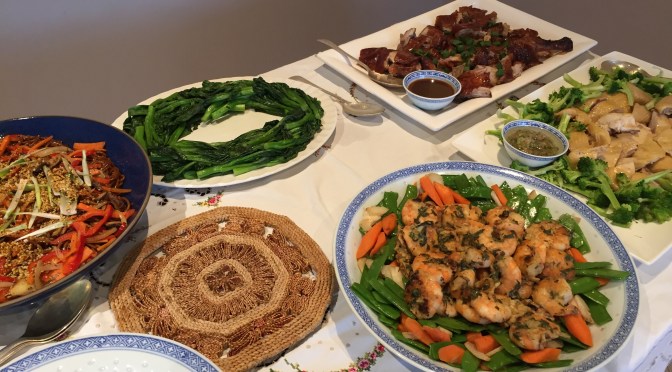
For Chinese New Year’s, I prepared a dinner for eight to those who have never experienced a Chinese celebration. I served the usual chicken and duck (purchased from Irving Street), but added vegetable dishes that included three kinds of mushrooms (not shown in the photo above) with greens and a Fuschia Dunlop recipe of shrimp with green tea over water chestnuts, snow peas, and carrots.

The missing dish from the picture was the taro root and pork belly casserole that was still in the oven. Guests opted for cold noodle salad over black rice. Starters included lotus root chips, and a cross between Chinese salame and head cheese made with pigs’ feet in aspic from an ancient Chinese cooking manual.

Many friends and followers may not be aware of the Lunar New Year celebrated by Chinese all over the world. While it’s not a religious holiday, it’s a version of religion when the focus is on FOOD. I can’t think of another culture that places such great importance on what we eat. The Chinese, although becoming more health conscious, will still defy any food allergies or restrictions. No vegan, gluten-free, lactose-intolerant or peanut-product allergists need apply. We eat pork, chicken, lamb, beef, and fish from head to toe and everything in between. Literally.

I’ve often given a long leash to the Chinese with the notion that deprivation drove habits, desires and fetishes. And certainly food is the best example of Chinese culture in this respect. We have taken food and cooking it to a different level, for the reason of the greatest deprivations we have endured. Chinese greet each other by inquiring if they have eaten yet, not how they are. And frequent roadside conversations among friends and strangers resort to the different type of soup they are preparing or should make to cure an ailment.

So in the year of the Chicken, it’s appropriate to serve the noble bird, along with every other kind of meat you can get your hands on. It used to be an annual event when you could have meat, so the quest for meat has always been compelling in Chinese culture. Even in the land of plenty, old traditions die hard. We still like to see the twinkly eyes of the dead chicken and fish despite the Westerner’s horror at seeing them.

We have evolved over centuries and generations, to still honor our parents, focus on education, and be humble. It’s difficult to break outside the box when millions of our forebears remind you of your place in society. Yet it is a strong and compelling force. The older we get, the more alike the rest of our ancestors we become. And, it’s such not a bad place to be.

According to most Asian cultures, everyone is born into the year of some animal. They repeat every twelve years based on the lunar new year cycle. Gee Kin just discovered that, while he always thought he was a rabbit, he is actually a tiger!! Apparently, in the year he was born, the actual date of the new year was after his February birthday, not before. He never checked the dates until yesterday. So he’s now in the midst of a trans-animal personality change. It’s a pretty big flip-flop from being a bunny to a tiger. Oh dear. Now I can’t stop him from leaping from room to room and scaring the hell out of me, when he used to meekly tiptoe and be terrified of me.

If you are interested in what goes on here in San Francisco over the week of Chinese New Year’s celebrations, take a look at: https://instagram.com/p/BP0URBCjJqO/, with compliments from daughter Melissa.

And speaking of travels, my new page for 2017’s travels will be listed below the header on this page.

Happily, the End of 2016!

Leonard Cohen died. Your data are at risk. And it’s the end of the year.

So we skipped out of town and headed to Mendocino. For my foreign friends, it’s a coastal town about 3 hours’ drive north of San Francisco, through majestic redwoods 300 years old, on non-commercial roads in a commercial country. It’s a blissful escape to a pristine environment that reminds you of growing up in a pure and innocent world.

Our conversations focused on what defines the American Dream, whether it still exists, and how Germany compares to the US in liveability.

We overnighted at a local bed and breakfast, where the owners struggle to pay their mortgage for 12 years until a frisky new buyer can be found.

On the way back, we picked up a magnum of Brut Rose at Roederer Estate, a couple of bottles of Pinot Noir and Chardonnay at Husch, and a bag of apples at a roadside orchard.

The winery, an original, has seen the rise of baby boomer vineyard owners descend on the Andersen Valley, after the apple orchards had displaced the sheep. Not bad for terroir development, I guessed.

We prepare for the New Year’s arrival, wisking away bad habits and hoping for a brighter beginning next year. Wishing all of you the best for a happier new year!!

No Carbon Footprint Series: Belmont-San Francisco (Days 4-5)

Header image above: Bay Meadows Development

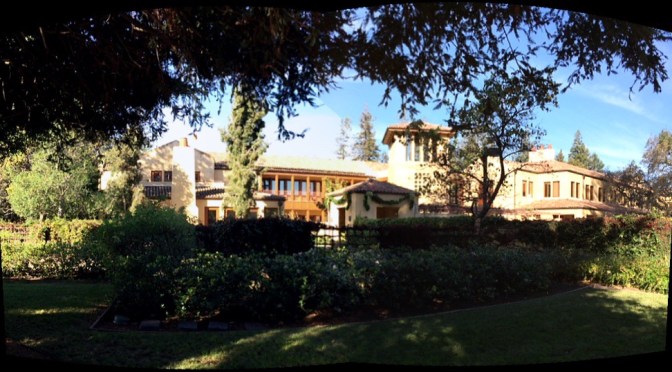
Featured Photo above: a very exclusive corporate center in Palo Alto where I made a pit stop!

Photos of Millbrae sights, above:

1. Milk Mural

2. Historical marker for Milk Mural

3. Vintage cars, in abundance in San Mateo. Mild weather, no bugs, and lots of old people with lots of money make them plentiful

4. Iron Horse chained to a pole at a gas station!

5. Yep, we made it here.

6. Street monument on El Camino. Not as romantic as the ones in Berlin, but still fun to find at your feet

Above, our lunch at Hong Kong Flower Lounge in Millbrae. A highlight of our jaunt included Tofu, ginkgo nuts, and pea tendrils in soup, pigs’ feet and red egg in vineagar, congee with thousand year old egg, and sesame balls!!

The fish tank displayed 2 giant lobster, Alaskan King crab, and prawns.

We have reached our destination safely and in one piece (two pieces, to be exact)! It was a great way  to make use of a fabulous week of perfect winter weather, have fun with great company, and get in some serious calorie reduction techniques. You can reduce the carbon footprint instead of flying, avoid traffic, and see your world around you. For those interested, here was the route:

San Jose-Sunnyvale (Sunday) 8.4 mi.

Sunnyvale-Palo Alto (Monday) 9.7 mi.

Palo Alto-Belmont (Tuesday) 7.7 mi.

Belmont-Millbrae (Wednesday) 10 mi.

San Francisco-Millbrae (Thursday) 12 mi.

You can also find my earlier trips to Napa and San Jose at http://www.crazyladywalks.com.

Finally, on a sad note, we send our condolences to the families of the Berlin attack. A photo of the location from our visit to the Breitscheidplatz Christmas Market in Berlin in January of this year is here:

A safe and precious holiday to all.

VickieVictoria

A Decent December

Photos, above:
1. My figure drawing with model station in background (no photos of models allowed, sorry! Although one student brought a friend in to “observe” in order to overcome nudiephobia)
2. Friends and Support team of Figure Drawing
3. Violin repair shop in San Francisco that fixed my G string on the spot in a snap

Despite Finals Week and the need to wrap up three city college classes (Figure Drawing, German, and Script Writing), I am playing a bit of hookey and sneaking in some holiday madness.

It started with a conversation on FaceTime with Dresden friends Hanne and Jens, who sent me many pictures of Dresden’s famous Streislmarkts. It is one of the oldest Christmas markets in Germany that sets a very festive mood for the holidays.

We chatted about old German traditions surrounding the Advent calendar, how to make Stollen and then how Germans and Americans celebrate the holidays.

Similarly, my German class had discussions about traditions. Our German teacher told us how children in her town would go around knocking doors on Xmas Eve to ask if Mary could stay and no one answers the door. She also taught us 10 Christmas songs, of which I only recognized three–Oh Tannenbaum, Silent Night and O Come All Ye Faithful!! Apparently there are many other lovely  hymns by German composers that have not been  translated into English. And Silent Night is never to be sung before Xmas Eve.

I’m going to attempt making Stollen for my German class Christmas party next Friday, with a few modifications approved by my German advisor (Hanne). I plan to use Brandy instead of rum and dried cranberries mixed with raisins and dates. I was also advised that fresh yeast is important!

I’ll let you know how the recipe downloaded from the Food Network goes. For those who want to try it, see here:

http://www.foodnetwork.com/recipes/stollen-recipe.html

I tweeted to Ruth Reichl a question about Stollen and she put me in touch with Luisa Weiss Classic German baking (for those of you interested in pursuing the real thing, look her up online). Keep your fingers crossed for me–I hope I don’t have a Catastrophe with bits of Stollen on the ceiling to clean up after this expedition!

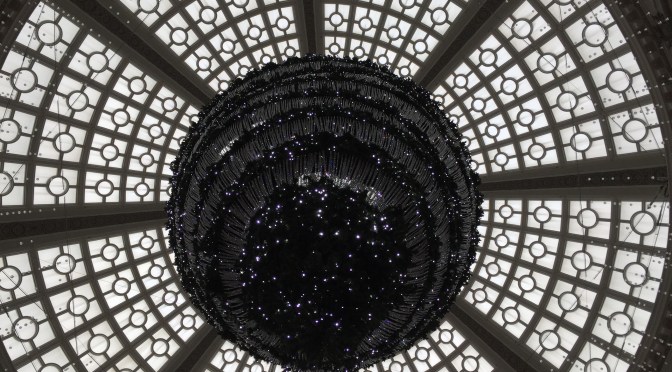
Speaking of ceilings, here’s a shot under the dome of the original Emporium in San Francisco. I ran into Santa on a trip at Westfield Mall Downtown and put in my order for this year.

Before I head back to the salt mines, I want to wish Happy Birthdays this month to Melissa, Ruth and Sherry!!

Here’s a tribute to Leonard Cohen:https://youtu.be/dhsimHRscIE

And Happy Holidays to all!!

Farm to Table in About an Hour

The term, “Farm to Table” is touted and well-known in the restaurant business and throughout the world, but how long can it literally take?

On a chilly Saturday morning amidst the classic summer San Francisco coastal fog, we decided to take a trip into the edge of the Central Valley to find out. Brentwood, Ca. is a sleepy little town, more well-known for its retirement community and exurbs, due east of the San Francisco Bay Area. Approximately an hour’s drive away from the City, Brentwood lies in of one of the world’s greatest bountiful farm regions.

The area is laden with stone fruits such as cherries, peaches, plums, green gauge plums, pluots (a hybrid of plums and apricots), nectarines; corn as a major crop; all varieties of heirloom fancy and ordinary tomatoes; melons; peppers; and endless other vegetables and fruit. You can shop here and find just about every item on your list for healthy eating.

Brentwood jolted us from the usual morning 55 degrees to 95 degrees’ temperature (in Celsius, 10 degrees to 35 degrees). At times in the summer, there can be extreme temperature differentials as much as 50 degrees Fahrenheit (30 degrees Celsius) between cities. Between the summer inversion layer of fog in the City and the dry desert-like heat of the inland valley, you are never fully prepared for both on a day trip.

Imagine starting out the day with leather gloves, London Fog raincoats, knee-high boots and windshield wipers to clear the dripping dew from the windshield. OK, maybe that didn’t happen TODAY but I have recalled going to work in the middle of August experiencing such in the past. After arriving in the Valley, the miragy sunlight is so blinding you can get a migraine headache just from blinking.

We learned about Brentwood after visiting my mother there, where she lived a healthy life for the last two years of her life until she was 98. We managed to visit her and take advantage of Brentwood’s proximity to the variety of fresh fruits and vegetables that were grown in the area. We didn’t pay much attention to whether it was organically grown or not. We just knew it was fresh and reasonably priced, so we bought bagfuls to take home.

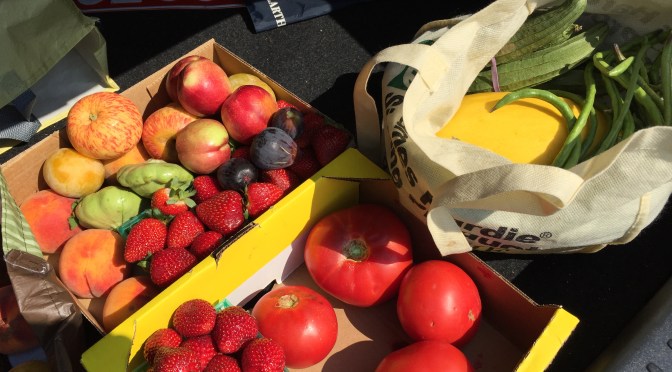
This time, we revisited three farms along the Farm Trail. Two were operated by small farmers of Asian descent. Chan Was NOT Missing (see photos, above) at one of our all-time favorites. The tiny stand sold fragrant, sweet strawberries still stoked by the sun. The pips were popping out like the magnified sesame seeds that MacDonald’s uses on their hamburger buns. At the next stop, we bought ripe, juicy peaches by the box. Both growers sold Chinese vegetables like long beans and silk melons (“see gua”) that we added to our bounty. Finally, we rounded up our Foray into Farmland by stopping at Smith’s Ranch for the rest–beans, nectarines, and apples.

We fondly recalled past visits to this area with friends and family to pick seasonal Mandarin oranges and cherries. Sadly, a number of U-pick farms that we loved visiting with the kids in other areas like Sebastopol have closed. Owners were unable to carry the liability insurance to cover people falling off ladders and making other careless mistakes. Fortunately, there are still a few in this area for “farm tourists”.

Being in this rich farmland reminded me of the huge markets in Uzbekistan. It supplies the massive linked continents of Asia and Europe (see my post from Day 50, September 2014). It was one of the largest markets in the world that I had ever seen.  Being so far north in far-flung Vladivostok and Moscow from Uzbekistan, we could understand how essential and significant Uzbekistan’s farms are to feeding Russians and Eurasians.

After having made a stop into town for cash, tomatoes at the local Farmer’s Market and lunch, we passed a local display of vintage cars at a nearby parking lot. It definitely conveyed an aspect of Americana and how locals like to spend their leisure time. Tents and tail-gate pantries surrounded the parking lot outside Safeway.

Technically, it took us more than an hour to get to the area, shop, and return our bounty home for dinner. In terms of distance, however, you can go one-way and get from Foggy Bottom San Francisco to Central Valley just to savor what the delicious California sun is really like “in about an hour”.

Days 67-68: Tokyo Weekend

Returning to Tokyo has allowed us to recover from the many trains and buses we have taken inland to the east. We perched ourselves in an Air BNB for a few days in an unusual area of Tokyo–a mere twenty minutes from the center of town, but in wide open swaths of fresh sea breezes to the south away from the high density high rises.

Known as Tennozu Isle, the new metro station is tucked between new high tech buildings, the  Tokyo University of Marine Science and the Samezu Sports Park. It feels like Mission Bay in San Francisco, and the UCSF campus where I worked. There is a core of ex-pats floating around the streets, and a Jonathan’s Fast Food Restaurant complete with American food AND Japanese dishes AND Chinese noodles AND Pizza AND Ice Cream AND Wine, etc., etc. If you died here, you’d have gone to Fast-Food Heaven, Japanese-Style.

It was strangely sensational and comforting to know that all these types of food could be found in one establishment. This place could solve any problems with getting the shakes over a fast-food deficiency.

Our foray to stock up on provisions led us to the Aoen Supermarket Basement of the Department Store in the area. It felt like a Ranch 99 gone big-time, hitting the mall in a high-rise scene and grown up with the big boys. The aisles were wide, the shelves well stocked with everything Japanese and Western, and it looked like Moscone Center or a convention center packed with Japanese food.

I felt a bit conflicted with food choices–sashimi with glassy flesh so fresh you could almost see through them; an entire case of seaweed options; and a whole dairy case of varying tofu densities. There were fresh octopus suckers, endless ginger and daikon variations, and rows upon rows of pickled cabbages. How can you decide what to buy when you’re too busy figuring out why you never set eyes on these items to this extent before?

After finally forcing ourselves to make a few decisions for dinner and buying ‘way too much to carry, we dragged our booty back to the apartment. It was only 15 minutes by foot but that’s only easy when you’re not lugging 30 pounds. We dragged our flimsy bags through the door. We savored a simple home-cooked meal of Teriyaki Salmon and salad with lemon dressing.

Speaking of food, we had lunch near Tokyo Station in the G-Zone, where we watched the local chef prepare hand made soba. These are the buckwheat noodles that are famous in Matsumoto. Here are two chef versions, one preparing the dough, and one cutting:

The handsome chef at the end was making and serving his own soba in Kusatsu, the hot springs village we visited earlier last week. When I showed him my video original, he graced my compliment with a shot of the finest iced sake I have ever sipped.

When we passed the Sports Park in Tennozu, we noticed the commotion ahead of us. A baseball game was in full tilt, complete with Little Leaguers in full regalia playing their hearts out. I would like to dedicate this clip to Kanji Hishinuma, my friend Iyoko’s son. He is a baseball fan and follows the American teams on Youtube.

I couldn’t complete the Japanese segment of my trip without mentioning the toilets. The designers of the equipment must be commended. No doubt anyone visiting Japan will remark on the cleanliness and impeccable care and detail of keeping public facilities spotless. Pardon my imprudence over raising this topic for those who might be sensitive or offended, but you cannot overlook the novelty if you come to Japan.

See photos below, left to right:

  1. A child’s booster seat mounted in the corner of the women’s rest room, so women can use the toilet with their babies and toddlers;
  2. An ordinary toilet, with palm-activated flush sensors. The more deluxe and typical versions have squirts for your bottom, warm seats, and, get this: amplified simulated waterfall sounds activated by the water flushing through the system. (Are we being confronted by a toilet fetish here?!?)
  3. Great design for toilets, with beautiful, cleanable surfaces, flush or recess-mounted baby changing stations, and perfectly operable hardware (they always close with a “click” so you know it’s closed!)
  4. Okay, this one’s not in the toilet but a device in a restaurant. Can you guess what it is? My answer will be in the next post!

Days 61-63: Kusatsu Hot Springs, Japan

I’ve been following a few blogs every now and then. Not often, rather infrequently, just out of curiosity, and to see the style of postings. Mine tend to be pretty straightforward, while I find many blogs pontificate, pyschoanalyze, or philosophize about the meaning of life. I am not trained to do any of those, so I try to steer clear. However, today brought new meaning to life. Staying in a real ryokan, or Japanese style inn, has renewed my ability to appreciate and understand life. That’s a pretty tall order, considering the whirlwind of activities that I have thrust myself into over the past couple of months. But slowing down and being in an exquisitely beautiful area has given me cause to pause and reflect.

Good things come to those who wait. I guess it’s hard to see all the offerings life has before each of us. As we grow older, we are able to differentiate and discriminate. Many think that growing old is a sad process but I am finding it to be uplifting–not always, but the quality of what we see is so different. Once you have perspective on many experiences, you draw from them and can detect what is bitter and what is sweet.

We should have realized what an occasion coming to Kusatsu Hot Springs was going to be. Once we arrived at the bus terminus from the train station (3 hours travel west from Tokyo by 2 bullet trains), we asked the information counter how to reach our hotel. All I had was an address in Japanese. We asked if we could walk there. “Of course,” said the receptionist. “But I can call the hotel and they will come to pick you up. Just have a seat in the lounge and they will find you shortly”. Sure enough, within 5 minutes an older gentleman appeared to whisk us in a van to the hotel about 5 minutes away. Now that’s what I call service.

From the arrival at the entrance to the ryokan, we knew it was going to be special. Soft voices, infinite courtesies, and true hospitality catch our attention. Maybe after Russia and even Mongolia we are sensitive to the manner in which humans greet each other. Not so much the degree of warmth as the presence or absence of it.

The Japanese have the hospitality covered. In this case, it’s a business. But so are the Marriotts and the Goyo Travels (our guide company in Mongolia) and the Zemzuchinas (our hotel in Vladivostok). Everyone makes the effort, but no one knows respect for the customer like what we are getting here.

We were shown to our Japanese style room. Every detail in the room is exquisite–from the carved and lacquered wooden post that trace the inherent knots and wood grain, to the miniaturized proportions and tea service in the room. Every detail is taken into consideration. I don’t know where I heard this before but the thought of “economy, purpose and delight” come to mind.

After casing out every joint (literally, the choice of thickness for wood trim, the depth of niches, the size off doors, the thinness of wood recess handles, etc etc, we tore ourselves out of the room and to the house baths. The hot springs eternal here. As one of the many features, you go to separate quarters for men and women to wash down , then soak in tepid splendor.

Our dinner, with the complete set (see menu), was another version of perfection. I’m not sure how you can produce and consume every item on a menu but they produced and we consumed. They only thing we could do afterwards was roll over and flop into bed from overconsumption. Bad for the heart but great for the head. Anthony Bourdain was right to say the best food in the world is Japanese.

The early morning concert of birds reminded me of how Japan is or was, a tropical island. The wide leafed bamboo, lotus roots, and array of bird life are evidence. The Japanese not only have nature in their DNA, but in their history. It leaves me very envious that the Chinese were not as able to inhale the environment the way the Japanese have. Despite the disarming blight everywhere, the shibui or exquisite beauty seems to well compensate for the shortcomings.

Finally, a brief visit to the art gallery adjacent to the hotel reinforced Japanese compatibility with the sublime modern:

A Note on Travels with Myself and Others

I have been pondering my recent travels. They seem to gravitate on the 38th parallel north or somewhere between 35-40 degrees latitude. It’s not an accident that the San Francisco Bay Area (I was born in Oakland, across the bay), lies on this imaginary line. I probably mentioned that a year or two ago when I traveled along the Silk Road in Uzbekistan, and how everything felt so natural and comprehensible to me.

The beets, carrots, peas and potatoes were reminiscent of home. The Mediterranean climate is easy to get hitched to, but people do not associate it with further flung places like Beijing or Tokyo. The 38th parallel traces through of course Greece, Italy and Turkey, but also parts of China and Japan, Iraq, Iran, and Uzbekistan.

Granted, the culture and weather are different, but I still regard these environments as hospitable and liveable. You can read more about the countries along the 38th degree north here:
https://en.m.wikipedia.org/wiki/38th_parallel_north.

The Japanese have an infinite respect and appreciation of the environment. It is highly cultivated, but created for the enjoyment of all. They are natural at landscape design, architecture, and planning. Nothing less than awesome is what I’ve just witnessed on a brief morning walk behind the ryokan. This post is for you, Sara and Jim (my professors at Berkeley, to whom I am eternally grateful), and all my Japanese friends).

I have been contemplating what’s next. I’ve toyed with the idea of visiting countries along the ring of fire, but I haven’t convinced myself just yet. Alternatively, I considered tackling the countries along the 38th parallel south. To my dismay, it touches two countries where I have already been: Australia and New Zealand. That leaves Chile and Argentina on the list.

For a video on Vladivostok, click here:https://youtu.be/_i4E0wh-b9k

Day 59: Vladivostok, Russia

Here are some first views of Vladivostok coming from the north by train on arrival at sunset the night before:

Dinner at Three Brothers across from the hotel, complete with live American jazz music for $30 for both of us with wine

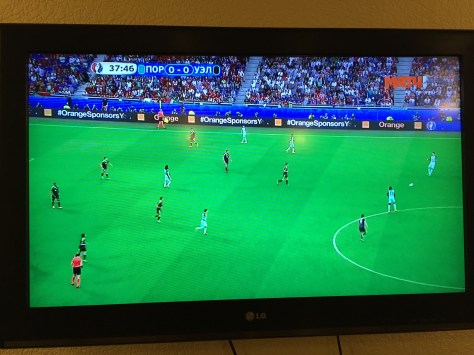
Evening Entertainment: Portugal vs. Wales with Rinaldo scoring 1 of 2 goals

IMG_4475

If you were visiting Vladivostok for the first time like we were, you could start an early morning walk at the Friday morning Central food market:

You can take a minibus to the new Mariinskiy Opera and Ballet Theatre. It is hosting the first International Piano Competition at the end of this month. I predict that it will be a great draw for concerts, ballet and opera in the future. You might consider taking a trip to attend this magnificent new venue and the emerging new productions and stars that will perform here!

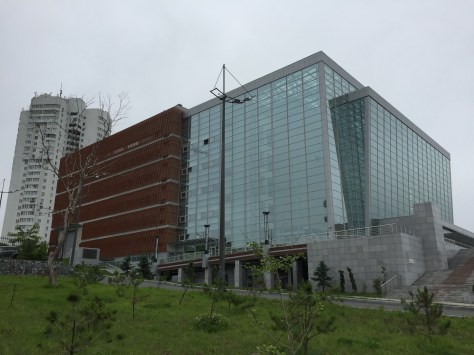
After that, you can catch a bus back to the city and stop at the Lookout Point over the new Golden Bridge completed in 2012. Does the design look familiar to you?

IMG_4541

Later in the day, get your cultural brains in gear and visit the Primorie Art Gallery. When we attended, it was showing an exhibition of Russian Art from 1700-1900. We were intrigued with the very personal touches of each painting, that may have reflected or imitated more famous Western paintings of the same era. Sargent, Picasso, and Matisse came to mind.

There were also a number of startling paintings that represented new subjects seldom seen in paintings of the same era. Chinese or Muslim figures were represented in historical settings that required more context and explanation. Unfortunately, all paintings were titled in Russian or limited English.

At the end of the day, kick back and have dinner at the Three Brothers for evening meal. This was our return visit from the night before. The outdoor dining was perfect for the cool balmy weather of Vladivostok. The city is very similar to San Francisco, with hills, coastal fog, city views everywhere, and a lively ambience. We’re in love with this city of 2 Million!! This city is destined to be a big tourist destination in the next 10 years, so come soon.

Day 56-58: TSE in Transit

Good Morning Everyone

We boarded the eastern section of the Trans Siberian Express (TSE) the night before, so today is the second of three days on the train from Irkutsk to Vladivostok.

Irkutsk is positioned on the west side of Lake Baikal. As mentioned earlier, Lake Baikal is the deepest and oldest lake in the world. These may be little known or insignificant details to most people, except that it was one of the engineering obstacles in building the TSE. Although much of the construction required laying track along the 5880 miles or so, the section along Lake Baikal required blasting, going through narrow gorges, and swampy terrain. Now there is talk about a joint venture between China and Russia to build a high-speed version of the route.

Until then, I will enjoy what has been produced to date. The views of the eastern route have changed, from five of the six continuous days last year through Siberian birch forests and saggy wooden rooftops to brighter, open grassland sprinkled with wildflowers among pine and birch forests along the Amur River. There are twice as many stops on this eastern leg of the TSE (only about a quarter of the distance from Ulaan Baatar to Moscow). We were pleased to see a more vibrant side of the Russian landscape.

The people have been curious. We have had limited contact with Russians, and the language has definitely been a deterrent. We were finally able to connect with one of the guides at the Irkutsk City Museum by using broken French on both sides. So my five years of French in high school finally paid off, after trying English, German and Chinese in futility.

Virtually no one on the train speaks English, with one exception. We met a gentleman who lived in the Grand Canary Islands in the dining car yesterday. He was Austrian, originally from Innsbruck, and owned and operated a small, up-scale restaurant in the Canaries. He was taking a four-month break (low season in the summer in the Canaries, as most tourists go there in the winter) with his wife and was traveling through Eurasia by train.

In the Eighties, he made twenty films on different cities and countries in the world for an Austrian television series at a clip of one a week. San Francisco was one of the cities, so his eyes sparkled when we told him we came from there.

His current route took him from Vienna to Minsk, then Moscow, then Ulaan Baatar. After spending a week in Mongolia, they were heading in the same direction we were, to Vladivostok. We are finding that the travelers we meet along the way have substantive histories and travel background.

Other than 2-3 staff, this couple has been running a small high quality restaurant for over 30 years. The gentleman and head chef had been trained in a cooking school from the age of 14 to 17. When he turned 18, he left his home to start a successful business and wound up in the Canaries.

Every year, he and his family (the couple has a 17-year-old son) traveled to Africa, South America, and Asia. They loved traveling with their son as he was growing up. Alas, their son has finally decided to do his own thing this year. Although we have yet to meet the wife, the chef indicated that she was very sad about this change. We could certainly commiserate with him over this shift in no longer sharing family travel.

We realized that the depth and breadth of these travelers are fascinating stories. It took an hour-long conversation to get the facts and stats straight. They unfold slowly, with each question leading to another. This couple was planning to continue after Vladivostok to North Korea, take the ferry from Vladivostok to S. Korea, train from Beijing to Hong Kong, then back home. They planned all of their own travel routes and visas. I didn’t feel so crazy about my traveling itinerary after all. I found that it was often topped by other creative travelers.

The older couple on the hour-long minibus to Lake Baikal were another pair of experienced travelers. They lived in Doha as boomerang teachers and were doing the TSE after Mongolia to Moscow. They had lived and taught in Bonn, Germany for three years and loved Germany. They recommended going on safari through Kenya, Tanzania, or Botswana. After a week in Mongolia off-road, it sounded tantalizing and achievable.

The third group of savvy travelers we met during another dining car conversation going from Ulaan Baatar to Irkutsk. The young 30-ish fluent English speaker was originally from Mexico, living in Beijing, and owned an adventure travel company. He planned tours for ex-pats and locals living in the Beijing area, and could switch between Iran ski trips to scuba diving on Hainan Island. He was in Mongolia for the first time keeping an eye on a tour group led by a guide from his company.

One of his tour members was an older woman from North Carolina. She was teaching music in Beijing and was hopeful one of her emerging students could become world-famous. Like the rest, this woman was friendly, energetic, and ready to tackle any adventure along the path of travel.

The similarity between all three groups were the fact that they were ex-pats living abroad and eaking out a pretty good life. Whether young or old, these individuals were searching for ways to experience the world in as many ways as possible. I felt strangely at home with them. Being more visual, I find that seeing the world helps me to learn about it much quicker than through books.

Unfortunately, our encounters with the Russians have not been as promising as we hoped. The language barrier is obviously the main obstacle, but we found their demeanor a bit clipped and uninviting. I’m sure that under different circumstances it would be better.

We landed in a four-berth compartment on a wager that last year’s similar booking would get a private compartment without having to pay for it. Wrong. We are sharing the accommodation with a Russian mother and her 12-year-old son, who were a bit beside themselves when we invaded the space at 9pm in the evening.

We are still waiting for them to warm up to us, and to recognize that we are in this together for the next three days. The carriage is full, and despite cheery hellos in Russki and English we are still experiencing downward facing glances. We are now more appreciative of the friendly unassuming Americans, who have everything to share and are aware that they have everything to gain in doing so.

Due to the high density of the population, the Chinese in their inimitable way are also quick to engage despite their rude and crude behavior. They are not afraid to be embarrassed. Imagine Americans going to Mexico in the first generation of travel beyond our borders. Transfer that experience to Chinese traveling to Russia.

IMG_4449