Tag Archives: Commentary

Day 73: Guest Post Summary and SaFe in SF

Reflections on the Far East

This past month has been a series of contrasts: first the energy (and pollution) of Beijing; then the pristine emptiness of Mongolia; the Russian Far East trying to establish a sustainable economy; and finally the efficiency and delicate beauty of Japan.

Each country is in a different stage of development. First Mongolia, with just 3 million people living in an area about a third the size of the continental US, where nomadic herders can still graze their livestock almost anywhere in the country. Then the Russian Far East, 3 times the size of Mongolia but only 7 million people; almost entirely birch forests or treeless tundra. The central government in Moscow 6 timezones away is trying to encourage emigration from western Russia. But even Vladivostok, with its attractive location and business potential is struggling to attract people and investment. Then there is China. There are 110 million Chinese living in the 3 provinces of China sandwiched between Mongolia and Vladivostok helping to drive an economy that has been booming. Finally Japan, having achieved the Asian “miracle” now grappling with how to sustain that miracle.

I have enjoyed traveling in every one of these countries. As a tourist with limited language skills, my understanding is shallow. But one over-riding conclusion comes through stronger and stronger the more I travel: people everywhere just want peace and a better life for their children.

And there are no right answers, no single road towards happiness. Neither China nor Japan holds the blueprint for sustainable development for Mongolia or the Russian Far East, no more so than the US holds all the answers for China’s future. History, culture and geography do matter. Countries are all dealt a different deck, and their people have to play their cards as well as they can. Hopefully, everyone can come out a winner.

Traveling humbles me. I know so little about the world. I want to keep coming back to these places to learn more.

by Gee Kin Chou 7/20/16

SaFely in SF

Ever since I left San Francisco to travel for the first time, I don’t think I was ever happy to retun “Home”. It’s hard to admit that if you come from one of the recognized world-class cities that happens to be thriving in a non-heavy industrial, high tech environment. But I was always a bit of a wanderer, so in that respect I always look to where the grass is greener, or at least growing.

Everyone wishes a safe return home, including me. We are back, and everything is fine. The weather here was breathtakingly beautiful: clean, crisp, with clouds from the Pacific Ocean swishing by.  It’s a typical day of 61 degrees Fahrenheit (16 degrees Celsius–the only two numbers that can be transposed), which is typical for most of the year. We are heading for a heat wave of 70 degrees Fahrenheit.

I know there is depressing news and horrific events that have transpired in the past two months, including one now in Munich apparently. My heart goes out to those who are affected. I only watched TV periodically or seldom while traveling. When you are out of the loop, it preserves your sanity in a way. While reality is sobering, I can’t help but believe our fears are heightened by the media that perpetuates these incidents.

And life must go on, as it has and will in all the peaceful cities we visited: Beijing, Ulaan Baatar, the Mongolian Countryside, Irkutsk, the towns and villages along the Trans-Siberian to Vladivostok, Vladivostok, Tokyo, Kusatsu, Matsumoto, Nagiso, Tsumago, and Magome. Before that, I was in Dresden, Weimar, Leipzig, Berlin, Dessau. I wish the continued safety and freedom from harm for these cities.

I had forgotten that there are bills to paid, junk mail, invitations (hypothetically), and maybe even calls to return (oops, no more voice messages left to be heard). But nothing that needs immediate attention, thanks to internet access and email dumps. A few flying papers strewn in the garden, dead plants, giant cobwebs, but nothing that can’t be amended.

My world travels for the past three years have been an ongoing experiment. With careful planning, traveling can happen with minimal disruption to one’s life. I hope you will all take advantage of life and what it has to offer, whether they are far-flung places or a trip to the grocery store.

Since Gee Kin has written the summary of our travels (ohne Deutschland), I am reposting the short films that some of you may have missed on Mongolia, Russia, and Japan that were made on the fly just after our visits to each country.

Mongolian Herder Family:

On Vladivostok:

The Art of Soba Making

It’s difficult to do a hard stop on this communication in travelswithmyselfandothers.com. You have been an important part of my travels. Thank you again for your comments. I’ll be reposting a few headers and footers in the next few days to make San Francisco a part of the journey for those interested.

Days 61-63: Kusatsu Hot Springs, Japan

I’ve been following a few blogs every now and then. Not often, rather infrequently, just out of curiosity, and to see the style of postings. Mine tend to be pretty straightforward, while I find many blogs pontificate, pyschoanalyze, or philosophize about the meaning of life. I am not trained to do any of those, so I try to steer clear. However, today brought new meaning to life. Staying in a real ryokan, or Japanese style inn, has renewed my ability to appreciate and understand life. That’s a pretty tall order, considering the whirlwind of activities that I have thrust myself into over the past couple of months. But slowing down and being in an exquisitely beautiful area has given me cause to pause and reflect.

Good things come to those who wait. I guess it’s hard to see all the offerings life has before each of us. As we grow older, we are able to differentiate and discriminate. Many think that growing old is a sad process but I am finding it to be uplifting–not always, but the quality of what we see is so different. Once you have perspective on many experiences, you draw from them and can detect what is bitter and what is sweet.

We should have realized what an occasion coming to Kusatsu Hot Springs was going to be. Once we arrived at the bus terminus from the train station (3 hours travel west from Tokyo by 2 bullet trains), we asked the information counter how to reach our hotel. All I had was an address in Japanese. We asked if we could walk there. “Of course,” said the receptionist. “But I can call the hotel and they will come to pick you up. Just have a seat in the lounge and they will find you shortly”. Sure enough, within 5 minutes an older gentleman appeared to whisk us in a van to the hotel about 5 minutes away. Now that’s what I call service.

From the arrival at the entrance to the ryokan, we knew it was going to be special. Soft voices, infinite courtesies, and true hospitality catch our attention. Maybe after Russia and even Mongolia we are sensitive to the manner in which humans greet each other. Not so much the degree of warmth as the presence or absence of it.

The Japanese have the hospitality covered. In this case, it’s a business. But so are the Marriotts and the Goyo Travels (our guide company in Mongolia) and the Zemzuchinas (our hotel in Vladivostok). Everyone makes the effort, but no one knows respect for the customer like what we are getting here.

We were shown to our Japanese style room. Every detail in the room is exquisite–from the carved and lacquered wooden post that trace the inherent knots and wood grain, to the miniaturized proportions and tea service in the room. Every detail is taken into consideration. I don’t know where I heard this before but the thought of “economy, purpose and delight” come to mind.

After casing out every joint (literally, the choice of thickness for wood trim, the depth of niches, the size off doors, the thinness of wood recess handles, etc etc, we tore ourselves out of the room and to the house baths. The hot springs eternal here. As one of the many features, you go to separate quarters for men and women to wash down , then soak in tepid splendor.

Our dinner, with the complete set (see menu), was another version of perfection. I’m not sure how you can produce and consume every item on a menu but they produced and we consumed. They only thing we could do afterwards was roll over and flop into bed from overconsumption. Bad for the heart but great for the head. Anthony Bourdain was right to say the best food in the world is Japanese.

The early morning concert of birds reminded me of how Japan is or was, a tropical island. The wide leafed bamboo, lotus roots, and array of bird life are evidence. The Japanese not only have nature in their DNA, but in their history. It leaves me very envious that the Chinese were not as able to inhale the environment the way the Japanese have. Despite the disarming blight everywhere, the shibui or exquisite beauty seems to well compensate for the shortcomings.

Finally, a brief visit to the art gallery adjacent to the hotel reinforced Japanese compatibility with the sublime modern:

A Note on Travels with Myself and Others

I have been pondering my recent travels. They seem to gravitate on the 38th parallel north or somewhere between 35-40 degrees latitude. It’s not an accident that the San Francisco Bay Area (I was born in Oakland, across the bay), lies on this imaginary line. I probably mentioned that a year or two ago when I traveled along the Silk Road in Uzbekistan, and how everything felt so natural and comprehensible to me.

The beets, carrots, peas and potatoes were reminiscent of home. The Mediterranean climate is easy to get hitched to, but people do not associate it with further flung places like Beijing or Tokyo. The 38th parallel traces through of course Greece, Italy and Turkey, but also parts of China and Japan, Iraq, Iran, and Uzbekistan.

Granted, the culture and weather are different, but I still regard these environments as hospitable and liveable. You can read more about the countries along the 38th degree north here:
https://en.m.wikipedia.org/wiki/38th_parallel_north.

The Japanese have an infinite respect and appreciation of the environment. It is highly cultivated, but created for the enjoyment of all. They are natural at landscape design, architecture, and planning. Nothing less than awesome is what I’ve just witnessed on a brief morning walk behind the ryokan. This post is for you, Sara and Jim (my professors at Berkeley, to whom I am eternally grateful), and all my Japanese friends).

I have been contemplating what’s next. I’ve toyed with the idea of visiting countries along the ring of fire, but I haven’t convinced myself just yet. Alternatively, I considered tackling the countries along the 38th parallel south. To my dismay, it touches two countries where I have already been: Australia and New Zealand. That leaves Chile and Argentina on the list.

For a video on Vladivostok, click here:https://youtu.be/_i4E0wh-b9k

Day 56-58: TSE in Transit

Good Morning Everyone

We boarded the eastern section of the Trans Siberian Express (TSE) the night before, so today is the second of three days on the train from Irkutsk to Vladivostok.

Irkutsk is positioned on the west side of Lake Baikal. As mentioned earlier, Lake Baikal is the deepest and oldest lake in the world. These may be little known or insignificant details to most people, except that it was one of the engineering obstacles in building the TSE. Although much of the construction required laying track along the 5880 miles or so, the section along Lake Baikal required blasting, going through narrow gorges, and swampy terrain. Now there is talk about a joint venture between China and Russia to build a high-speed version of the route.

Until then, I will enjoy what has been produced to date. The views of the eastern route have changed, from five of the six continuous days last year through Siberian birch forests and saggy wooden rooftops to brighter, open grassland sprinkled with wildflowers among pine and birch forests along the Amur River. There are twice as many stops on this eastern leg of the TSE (only about a quarter of the distance from Ulaan Baatar to Moscow). We were pleased to see a more vibrant side of the Russian landscape.

The people have been curious. We have had limited contact with Russians, and the language has definitely been a deterrent. We were finally able to connect with one of the guides at the Irkutsk City Museum by using broken French on both sides. So my five years of French in high school finally paid off, after trying English, German and Chinese in futility.

Virtually no one on the train speaks English, with one exception. We met a gentleman who lived in the Grand Canary Islands in the dining car yesterday. He was Austrian, originally from Innsbruck, and owned and operated a small, up-scale restaurant in the Canaries. He was taking a four-month break (low season in the summer in the Canaries, as most tourists go there in the winter) with his wife and was traveling through Eurasia by train.

In the Eighties, he made twenty films on different cities and countries in the world for an Austrian television series at a clip of one a week. San Francisco was one of the cities, so his eyes sparkled when we told him we came from there.

His current route took him from Vienna to Minsk, then Moscow, then Ulaan Baatar. After spending a week in Mongolia, they were heading in the same direction we were, to Vladivostok. We are finding that the travelers we meet along the way have substantive histories and travel background.

Other than 2-3 staff, this couple has been running a small high quality restaurant for over 30 years. The gentleman and head chef had been trained in a cooking school from the age of 14 to 17. When he turned 18, he left his home to start a successful business and wound up in the Canaries.

Every year, he and his family (the couple has a 17-year-old son) traveled to Africa, South America, and Asia. They loved traveling with their son as he was growing up. Alas, their son has finally decided to do his own thing this year. Although we have yet to meet the wife, the chef indicated that she was very sad about this change. We could certainly commiserate with him over this shift in no longer sharing family travel.

We realized that the depth and breadth of these travelers are fascinating stories. It took an hour-long conversation to get the facts and stats straight. They unfold slowly, with each question leading to another. This couple was planning to continue after Vladivostok to North Korea, take the ferry from Vladivostok to S. Korea, train from Beijing to Hong Kong, then back home. They planned all of their own travel routes and visas. I didn’t feel so crazy about my traveling itinerary after all. I found that it was often topped by other creative travelers.

The older couple on the hour-long minibus to Lake Baikal were another pair of experienced travelers. They lived in Doha as boomerang teachers and were doing the TSE after Mongolia to Moscow. They had lived and taught in Bonn, Germany for three years and loved Germany. They recommended going on safari through Kenya, Tanzania, or Botswana. After a week in Mongolia off-road, it sounded tantalizing and achievable.

The third group of savvy travelers we met during another dining car conversation going from Ulaan Baatar to Irkutsk. The young 30-ish fluent English speaker was originally from Mexico, living in Beijing, and owned an adventure travel company. He planned tours for ex-pats and locals living in the Beijing area, and could switch between Iran ski trips to scuba diving on Hainan Island. He was in Mongolia for the first time keeping an eye on a tour group led by a guide from his company.

One of his tour members was an older woman from North Carolina. She was teaching music in Beijing and was hopeful one of her emerging students could become world-famous. Like the rest, this woman was friendly, energetic, and ready to tackle any adventure along the path of travel.

The similarity between all three groups were the fact that they were ex-pats living abroad and eaking out a pretty good life. Whether young or old, these individuals were searching for ways to experience the world in as many ways as possible. I felt strangely at home with them. Being more visual, I find that seeing the world helps me to learn about it much quicker than through books.

Unfortunately, our encounters with the Russians have not been as promising as we hoped. The language barrier is obviously the main obstacle, but we found their demeanor a bit clipped and uninviting. I’m sure that under different circumstances it would be better.

We landed in a four-berth compartment on a wager that last year’s similar booking would get a private compartment without having to pay for it. Wrong. We are sharing the accommodation with a Russian mother and her 12-year-old son, who were a bit beside themselves when we invaded the space at 9pm in the evening.

We are still waiting for them to warm up to us, and to recognize that we are in this together for the next three days. The carriage is full, and despite cheery hellos in Russki and English we are still experiencing downward facing glances. We are now more appreciative of the friendly unassuming Americans, who have everything to share and are aware that they have everything to gain in doing so.

Due to the high density of the population, the Chinese in their inimitable way are also quick to engage despite their rude and crude behavior. They are not afraid to be embarrassed. Imagine Americans going to Mexico in the first generation of travel beyond our borders. Transfer that experience to Chinese traveling to Russia.

IMG_4449

Day 52: Mongolia 5 (Herder Video, Guest Post, and Tips)

Mongolian Herder Video

Thoughts on Mongolia

Coming to Mongolia has been a philosophy class. What is “progress”? What is a “fulfilling life”? What should be the relationship of humans to the rest of the earth?

Thousands of years ago, much of the world was like present-day Mongolia: a few humans herding livestock from one location to another pursuing better pastures and decent weather. Then came the development of intensive agriculture; people stopped moving around and started living closer to each other. And we are now where we are.

Obviously, Mongolia is not thousands of years behind the rest of the world. But there ARE very few people, only 3 million living in an area the size of Western Europe. And as many as 30% of the population are still herders, living in “gers” that they move with the seasons. There are no fences. Their animals are allowed to roam and graze on lands naturally covered with native plants. Their livestock provide much of their food: meat and dairy. Their days are regulated by the hours of daylight, and their year is regulated by the seasons. The land and their animals provide life. This is their mantra.

All this is going to change. But Mongolia has a chance to do development right. It’s as if God is giving humans another chance – to not screw it all up this time round.

I don’t know what Mongolia is going to be like in 20 years. But as the population increases, there will be more constraints on the herding, nomadic way of life. Massive factory farms and open-pit mines already are fencing off areas from grazing.

A law that was passed a few years ago that entitled every adult Mongolian to 0.7 hectare of land will eventually have to end. Mongolians don’t write wills; the descendants decide among themselves how to divide up any inheritance. As Mongolians become wealthier and family members live further apart, lawyers are going to come into their own.

I like modern living. This past week in Mongolia has reinforced my appreciation of indoor plumbing, being able to eat foods other than meat and dairy, and security from wind, rain, bugs and wild animals. But there are other things I could do without.

If I had a chance to start human development all again, I would make choices. Mongolians have a chance to make theirs.

Gee Kin Chou, June 29, 2016

12 Tricks for Mongolian Ger Survival

I just realize that my posts have been pretty dry and humorless in the past few months. It’s hard to laugh with yourself unless you are reminded at times. Now that I have a traveling partner, we share the perspective on how we travel–the good, the bad, the fun, the pain. Laughter is the best medicine to get you through all situations.

Here are a few pointers for those contemplating a stay in a ger. There’s nothing like creating a list from real life experience.

  1. Duck your head when entering the low door opening. Oops, didn’t someone already warn me about that!?!
  2. Ask for extra blankets regardless of 90 degree weather in the daytime. Temperatures changes dramatically at night. ( hey, I thought I asked earlier?)
  3. Have the stove heated twice a day. Once before bedtime around 8 pm and once around 7 am before (thinking about it then is too late) you get up. The guide or staff will ask, but make sure it is customized to your waking and sleeping hours! It needs to be timed to when you are undressing and dressing. Notify staff or guide in advance if they don’t ask. This is your only option as there is no other thermostat in the room.(where ARE they?)
  4. Wear hiking boots , not just for hiking but for getting to the outdoor loos in knee high wet grass in the middle of the night and 6″ deep puddles during rain (Damn, I thought this was going to be a walk in the park?)
  5.  Use the futon or comforter as a sleeping bag and roll the edges around your body to eliminate air gaps (and bugs…or am I getting paranoid?)
  6. Use the long tongs for wood  from the stove for removing large black beetles from the sides of tent
  7. Do not be deterred by rain snow sleet or hail. Use garbage cans, trays, and water bottles during the time you are inside to catch any of the above that may inadvertently enter your ger.
  8. Fondle the felt when you first enter the ger. It will reassure you that you will be kept warm, away from most bugs except those that crawl under the gaps through the ground or fly in through the door or opening at the roof plastic. Don’t be disheartened by silly rodents that run over the tops of the ger roof or the moths that cluster outside the skylight plastic. They provide a sweet symphony to lull you to sleep. The felt also protects you from heat and inclement weather. (If you want to know what direction you are facing, the ger doors always face south.)
  9. Decide if you want light by leaving the door open or bugs flying around  the ger before bed. You get both if you leave the door open. Remember that if bugs have a hard time getting out if they manage to get in.
  10. Keep your voice down. If you hear others in the next ger, they can hear you.(Oops ! Have I been shouting? Remember whatever you say comes back to you in a round chamber)
  11. Avoid spending any brain power on the dung being used in the stove as the material contrary to common thought does not smell. If firewood is used, appreciate how far it has come to a neighborhood near you. The smell is only temporary as the stove will not be burning except when you are dressing. (unless you are crazy enough to come outside of the tourist season).
  12. Should you not find any hooks mounted in the walls, simply drape your clothing over any surface areas. Use the chair seats or backs, headboards or beds, and tables in the room. Avoid stuffing clothing between the cross slats in walls or structural ribs in the ceiling as they may cause the ger to collapse.

Above all, remember that Mongolians have been living in gers for centuries and the ger camps are providing you with this experience. They don’t need our advice on advancing civilization. They ruled it for over 200 years and have survival in their DNA.

(ed.note: please send us your comments! We appreciate any and all feedback on your impressions of our travels throughout Eurasia. Emails or comments here are appreciated and welcome!! Keep them coming so we can keep going! Thanks to all for those who have written during this journey.)

After today, our next venture will be in Eastern Russia, through Lake Irkutsk and Vladivostok by train, followed by Tokyo and the Nakasendo Highway. Stay tuned and travel with us.

A note to the newbies: This is my third, around-the-world, live (except for technical glitches), real time journey. As an architect, my interests are in Planning, Design, and Architecture professionally; archaeology, anthropology, art history, and travel generally; Silk Road history, opera, culture and food emotionally; and everything in between.

Days 45-47: Mongolia 1

After the last posting on Beijing, I didn’t realize that leaving Ulaan Baatar was going to cap access to the internet for awhile. Therefore, you are receiving a rather long, delayed post. The itinerary through Central Mongolia was on and off-road, to ger camps without internet access. It was both a blessing and a curse.

But more importantly, a little background on the vast country of Mongolia. It is a flat, diamond shaped country the size of Western Europe. It is sandwiched between Russia and China and therefore must maintain good relations with these giants.

The growing season is only four months during the summer, and the entire country is shrouded in snow in the winter. Its harsh environment requires the mere 3 million people to rely heavily on family, community and each other. The limited good weather impacts all development, repairs and activity to a very short season.

Why come to Mongolia? Here are three reasons: to learn about the past, present, and future. The history of Genghis Khan, the first ruler who united the tribes, is a fascinating one. His descendants, including Kublai Khan continued to rule during the Mongolian Dynasty for two hundred years, from 1200-1400. Most of the expansionist period was during the first fifty years, when the grandsons who were posted to the outer reasons conquered as far west as Hungary and beyond. 1 in 200 men in the world have the DNA directly attributed to this prolific ruler Genghis and his descendants.

Following the Yuan or Mongol Dynasty that ruled most of Eurasia and China, the Ming defeated the Yuan at their capital in Beijing, and then the Manchurians (Ching Dynasty) ruled over China and Mongolia. With Russian help, Mongolia defeated the Ching Dynasty and became an independent country in 1921.

The second reason for coming to Mongolia is the environment. Mongolia, unlike China today, is still a pristine and pure environment. Nothing can be more contrasted than flying from Beijing to Ulaan Baatar (the correct spelling). The pollution and stifling heat of Beijing disappears and the crystal clear skies and bright sun of Mongolia appear. Ecotourism is being promoted here today and the Mongolians are very proud of their country. They know that the world is their oyster and they have every intention of protecting it.

The future is the third reason. Mongolia has huge mineral resources. Mining is one of its biggest industries, and tourism is growing despite its short season. With such a small population, Mongolia’s GDP has been growing at a rate of 10-15% over the past several years, twice the pace of China. While Mongolia is still considered a basically agricultural, nomadic land, it will experience phenomenal change.

Many people are still nomadic herdsmen, and they still live in the traditional ger, or round huts. They are constructed of wooden supports, felt padded walls, and can be easily assembled. A pot belly stove in the middle heats the room, and all the basics of living are contained within the ger: cooking, eating, sitting, sleeping, and storing. Oops, except for the toilet.

Everything has been hunky-dory in the ger camps where we have been staying for the past few days (we’re in No. 2 of 5). Toilets in the first ger were banked below the dining hall, not unlike those you would find at the UC Blue and Gold Camp in Pinecrest, CA. The second ger ratcheted up the ante to an outhouse, with a tastefully decorated Mongolian tent over the pair for easy identification. You could use the sawdust at free will. I was getting into the flow, with one minor detail. It rained this morning.

Imagine the scene for dressing (everything was set in place in advance the night before inside the ger), with even an umbrella. Contending with Mother Nature in order to let Mother Nature contend with you was a challenge. In the end, it wasn’t as bad as it sounded. You just felt all thumbs and big toes in the execution. When in Rome, do as the Romans, as they say.

But I digress. Back to Mongolia. The first afternoon of our private tour was devoted to the National History Museum in the middle of Ulaan Baatar. The museum traced the beginnings in the Fourth Century BC to the present day. Photographs are not allowed there or during the performance of traditional Mongolian singers and dancers. The main display I wanted to capture was the map of the conquests by Genghis Khan and his grandsons. They occurred over a very short time span of fifty years, and mostly in a ten year period between 1215-1225.

In the morning of Day 2, we visited the largest Buddhist monastery in Mongolia. Mongolia is 98% Buddhist, so the religion plays an important part in daily life as well as its history. Buddhism came to Mongolia via the Tibetan monks. Today’s monks come from all over the country to study and chant at this monastery.

Later in the morning, we left the capital city to visit a shaman. Shamanism, or contact with the spirits through a medium, is also practiced in Mongolia. If an individual wanted to send a message to the gods, he or she went to a shaman. The shaman did not give advice but only transferred the information back and forth.

IMG_3561 3

This shaman explained to us that she was “struck” by both a desire and calling only after being confronted a number of times. After her husband died and she was sick, she eventually consented. She very patiently and proudly explained her roots and the people she served.

Her room was laden with offerings to the gods and spirits, both good and bad. Offerings included cheese, curd, dried nuts, fruits and dishes of food. Unfortunately, I didn’t get the answer to a question I had in mind. Her next appointment was already waiting and time ran out.

In the afternoon the driver and our guide took us on and off road in search of the Przewalski horses. They run wild and are the ancestor to today’s domesticated horses. They are shorter, stockier and more muscular than the Arabian horses we are accustomed to seeing. They are named after the Russian who discovered them and helped to return them to their native land. They were an endangered species, but due to good management, they can now be allowed to proliferate in a protected environment. It felt a little bit like whale watching, but we were able to find a pack of six in the distance.

The vast green virgin landscape stretches literally for miles and as far as the eye can see. Occasionally there are pigs, and sheep dotted throughout the landscape. The herdsmen know where their herds are located and round them up at the end of the day. They are branded and the larger animals are used for milk and transportation.

The next day, the landscape suddenly rose in elevation, with mountains in the background to nearly 4,000 meters (12,000 ft!). Eventually a sandy desert mixed with small grass emerged. There are many small, Gobi-like deserts throughout Mongolia, and we headed for one of them. The camels that reside here are two-humped, and can carry up to 800 lbs. They can travel without water for a month and without food for up to two months. (See featured photo above)

The distances between sites are vast in this huge country, and few roads are sealed. It takes nearly three hours to travel 100 miles, due to hazardous pits in the road or sandy roads. We were surprised that the driver only had to refuel once in the three days we were driving. While we weren’t used to sitting in the car for such long hours, we were grateful that the Land Cruiser was very sturdy and capable of handling bumps, muddy pits, and stream crossings.

Today’s drive took three hours off-road to a beautiful valley known as the Orkhorn Valley. Rain and inclement weather has deterred our camel and horse back riding, but we have been able to see the beautiful lush green, unspoiled countryside in its natural state.

(Ed note: Apologies for delays and disjointed editing in post. Limited or unpredictable access to internet make posting a challenge! It was quite refreshing to be off the grid, were it not for my anxiety about posting. I finally decided to let it go, so hope you will understand and appreciate how some of the rest of the world lives. Gee Kin did catch one of the monks using his smart phone under his sleeves at the temple. He was playing chess. One of the daughters we met with the herder family confessed that she missed the internet in town. It’s a changing world….)

Days 35-36: People and Dinosaurs

It’s nearly half-way through my third world-wind trip. By Day 42, I will be heading to Beijing, to the other side of the great Eurasian continent. I’ll be meeting “mein Mann” Gee Kin there, where we will gather our senses for our flight to Ulan Bator (Mongolia). After a week-long private tour there, we’ll complete our Trans-Siberian Express train trip from last year. We’ll go from Ulan Bator to Irkutsk and Lake Baikal, then over to Vladivostok to the East Coast of Russia. Our last stop will be Japan, but more about that later.

After a month in Berlin, I haven’t mentioned the many individuals and connections I have made during my stay here. The Goethe Institute has been my anchor. Students in my class came from Israel, Iraq, Sweden, Mexico, Hong Kong, and the U.S. Two of the American students are budding opera students, so it has been fun learning more about their world of opera that is so different from being in the audience. Other friends I have made included two German language teachers from India and Finland; two gentlemen from New Zealand; and another pair of Ph.D students, one from Sardinia in Architecture and one from Tennessee in German History.

Attending nearly every extra-curricular activity has given me the opportunity to chat with a combination of these individuals as well as others. The common question everyone asks is “why are you learning German?”. Most are learning for their current or future job prospects, but few have my intentions. I tell everyone I am learning to increase my understanding of opera.

Most people find that puzzling, but if you are an opera junkie like I am, some of the best translations of opera are subtitles in German! Reading dual supertitles in German and English at the Deutsche Opera put me in rhapsody. I get the chance to follow what is being sung (also keeps me awake) and get a German language course at the same time!

Coming to Germany for the past five years to see opera and hear music reinforce my interest in learning the language. In addition to a real, primary purpose to keep my brain exercised, I am investing in a much deeper appreciation of the culture through speaking, reading and writing. I am definitely going to continue this affair and make learning German a life-long pursuit.

For my GI (that’s Goethe Institute, not Gastro-Intestinal) friends, snippits of typical exercises we did every day are below. We shuffled the tags around in groups until they lined up.

The Institute’s last and final activity to Deutsche Welle was cancelled due to illness. I love watching the broadcasts in the US, so I was very disappointed. I made alternative plans to visit the Natural History Museum, where the Guinness Book of Records’ largest dinosaur resides. I wouldn’t have gone there, had I not been introduced to the dinosaur bones at the Natural History Museum in New York City. Ross (David Schwimmer) from “Friends” played a paleontologist, and that always amused me.

The museum turned out to be a thrill. I didn’t realize that the tall head of the Brachiosaurus could only allow it to eat leaves from the canopies of trees. Dinosaurs lumbered around town due to their huge size and weight. It took a huge bio-engineering effort to move, nourish, and keep alive such a large mechanism.

Other dinosaurs in the same display could only eat things near the ground because they could not lift their heads very high. Their tails were needed as counter-weights for their elongated, skinny heads! You can read more about the Brachiosaurus and what they ate in the text below, for those interested.

Days 16-17: “Mr Trump: Tear Down that Wall!!

After posting “Ich bin eine Berlinerin” in January this year, I have renewed my vows for this thrilling city. This time, I am even more emphatic and feeling that I have come to greater respect and appreciation of this vibrant, active, and considerate city. I suppose you can find the opposite in any city, but at the moment I am insatiably intoxicated by Berlin and all the human effort that makes a great city livable.

The week has been packed with German lessons, getting to know other students, and walking tours of neighborhoods nearby. I comprehend about half of the commentary since they are in German, but the visual experience provides the other half. There are so many new elements of the city that I had never seen or understood in the past three visits.

After the walking tour of Berlin Mitte from the day before, the same flamboyant guide escorted us to Prenzlauer Berg. Located on the East German side, it started off as a fairly respectable residential neighborhood, with classic Parisian style facades. Our guide pointed out a few vestiges of Jewish life still visible today–a school with a synagogue behind it and some serious security bollards in front.

If you are interested in the artist honored in the sculpture above, here’s a link to Kathe Kollwitz: https://en.wikipedia.org/wiki/K%C3%A4the_Kollwitz

The later, mind-numbing residential blocks were created in the Sixties (not shown). To support the residential areas, schools were provided. The renowned and advanced development of German schools was a feature of the tour. One current-day school we stopped at has an “adult-free zone” to reduce stress for kids! Schools and a good education seemed to be a tradition and pride of former East German society.

By the Eighties, Prenzlauer Berg deteriorated to a point of neglect. No families lived in the area because the housing was outdated. The big blocks built previously were designed with only one bathroom and communal kitchen per floor. Twenty years later, no one would tolerate that standard of living. No one could afford to renovate either, so families moved elsewhere.

The guide continued to spin a story for us about how the area was rejuvenated, literally. After the fall of the Berlin Wall, everyone was so euphoric. People in the newly reunified city squatted and held parties in these abandoned buildings. Exactly nine months later…

…and now Prenzlauer is considered one of the most livable and desirable areas for families in the cities! From what was a shelled-out, deteriorated, and abandoned neighborhood, schools and other services were re-established to serve the residents. It’s transformed from what was once today’s version of Kreuzberg to Berlin’s Upper West side.

A tour of Potsdamer Platz gave another completely different dimension to my impression of the area. We had stayed there last year (after the Beijing-Moscow-St. Petersburg Trans-Siberian Express), but spent most of the time in the Tiergarten due to the scorching heat at the time.

This tour focused on the architecture of Modern Berlin, after 1989. The trail meandered through Leipziger Square and the southern end of Potsdamer between the Berlin Philharmonic and Kreuzberg. The guide explained the endless debates about how to weave the east and west portions of the city together. The debate isn’t over, but city planners, architects, and the general public exhausted themselves discussing this issue.

Some of the planning was brilliant and some dismal. What has to be appreciated is that the land was repurposed in a No Man’s Land in the middle of the city. The hype today gives faint pulse rates of a Hong Kong or Shanghai tilted on its side. I was grateful that this tour was offered as a “general” tour, even though it would have been a “specialty” tour elsewhere.

The buildings included the Arkaden, a huge modern shopping mall and fully integrated mixed use development. Residential, office, retail, entertainment are all concentrated in one place. Anchored by the Sony Center and the old Daimler site, these buildings claim WFA (world-famous architects) Helmut Jahn for the Sony Center, Renzo Piano Workshop for the Daimler site, and Richard Rogers for adjacent buildings. It’s a lively place intended for all citizens of Berlin to enjoy.

After missing the Berlin Wall tour departure today by a half an hour, I decided to do my own tour. The Mauer Park and Bernauer Strasse exhibit was literally at the next corner to my accommodation, and I had been meaning to go there. With free time on my feet, I discovered a very moving experience. Not only were the exhibits a reminder of the amazing power of humankind to solve its own problems, but the physical development and energy it took was very reassuring. Once again, I could witness modern history in a very immediate way.

IMG_2331

Trump should come to learn the history of the Berlin Wall and all its trials and tribulations before considering building one himself. I don’t think he would do what he says after he saw what it took to undo one. He should listen to one of his cronies, Reagan, to “Tear down that Wall”.

Some of the information from the displays on the Berlin Wall.

And last, but not least, a few of the ethnic shops just north of where I live. I went into one of the Arabic markets and bought cherries, loquats, poufy dried figs the size of your palm (almost, OK, maybe a fat baby’s), spargel, carrots and celery for soup for 12.75 euros.

My first and last adventure the day before with Currywurst, a national institution, was a bomb. Yucky tasteless frankfurter cut into bite-size pieces (good for the convenience and service), smothered with ketchup (bad), dusted with “curry powder” (bad), and served by Germans (what happened to the “ethnic charm”?!?). FLOP. I usually think of myself as tolerant of any fast food, but this takes the prize for low point in human culture.

Day 12-15: Burling into Berlin


IMG_2272Above: the Berlin Tower with a new base

Currently the place where I am staying is known as an “alt bau”, or an old building. I had imagined it as an old Baroque building, finely tailored and detailed, but renovated with modern conveniences. Not. I am in an old building. It will take a bit of getting used to, but it’s going to be fine.

Berlin is wired, both on coffee and devices. Everywhere, at least in the Mitte, people sit outside once the good weather appears. They pull out stools and tables from inside their coffee houses, the laundry or offices.  The coffee and the laptops follow, and nothing less than a Macbook Air. Germans like sturdiness and quality. People sit staring at an open laptop and do double duty with a smart phone in front of their computers, just like we do in San Francisco. The only difference is that they can do it in plain sight and en plein air.

Sports shoes are the hot new fashion statement. Every shop in Mitte where I am staying seems to have a full array of snappy looking shoes with white bumper guards, for not a lot of money. It does feel as if design is a high priority here, with more quality and variety in clothing and furnishings. Mitte feels like an up-and-coming St. Germaine-de-Pres. It will soon become too pricey to afford. I’d give it two to five years at the most.

My first day of class at the Goethe Institute was Monday, and I am already fully immersed. There are 12 students in my Intensive, 4-week Intermediate level class, and Herr Göbels is a mature and native German speaker. After nearly five hours of class in the afternoon from 1:15-5:45 including precious breaks, we are pretty wasted.

Above: Photos of the oldest church in Berlin, the Heilig Geist, with an artistic expression at the entry to the church.

The extensive cultural programs for students focus on the different neighborhoods in this diverse city. The first tour this morning was Berlin Mitte and the oldest section of the city. An evening lecture provided an overview of the cultural city of Weimar. Having just been there, I learned much more about Schiller, Goethe, Nietzsche, Liszt, and Wagner. Liszt had conducted Wagner’s Lohengrin in Weimar, and Richard Strauss wrote “Thus Spake Zarasthustra” based on Nietzsche’s book by the same name. There are planned field trips to Potsdam, the opera, ballet and museums, so I am a happy camper!

However, it’s back to the grindstone. I have homework and audio assignments to finish before class tomorrow! I enjoy the focus, learning about the host country, and meeting a wide spectrum of students from many countries. I highly recommend a similar program for any language learner.

I have a few shots to share of the Deutsches Historical Museum and Potsdamer Platz.  The historical museum contains a new wing that showcases the architecture of I.M. Pei. He also designed the East Wing of the National Gallery and the prominent entrance to the Louvre.

The story of the Berlin Wall  was displayed in posters at Potsdamer Platz. After going to the Stasi Museum in Leipzig, I was more curious about the events that led to Reunification in Berlin. The story is told in these words and pictures and includes a healthy (?) supply of bubble gum stuck to the old wall relics. Click on each image to increase the size and readability.

Day 1: Ready…Set…

Hi Everyone,

Are you ready for the travelwithmyselfandothers.com third world trip?!? It’s about to begin in less than 24 hours! Follow along my path of travel through Germany for a month and a half. I’ll be joining friends for the Dresden Music Festival first, revisit Weimar and Leipzig, then spend a month in Berlin studying German at the Goethe Institute.

After that, I meet up with hubby Gee Kin in Beijing to revisit Mongolia, Russia, and Japan to complete my 80 days around the world. It’s a follow-up tour from last year, where we took three-fourths of the Trans-Siberian Express (the Mongolian portion) from Beijing to Moscow.

This year, we are completing the full TSE route from Irkutsk, Russia to the east coast border town of Vladivostok. We are curious to see if it is a boom town full of economic activity. In case you’re not sure, just ask Sarah Palin! She can see what’s going on from her living room window!!

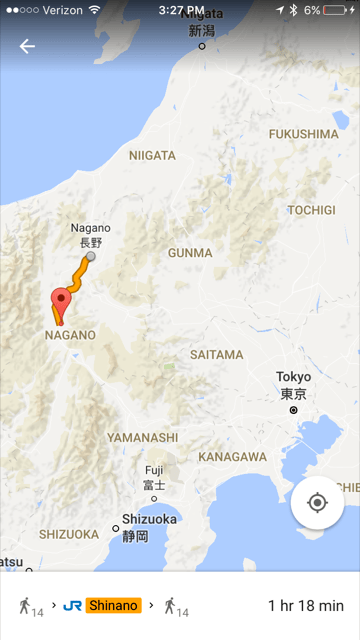
After that, we’ll fly to Japan to decompress on an ancient highway that connected Kyoto to Edo. It’s in the middle of Honshu, where we’ll also visit Matsumoto Castle, Nagano, and hot springs in the area.

Not much visuals to share yet, except for a weather report that I keep on my phone of all the upcoming cities (not necessarily in that order). See below.

Hang on, and hope you enjoy the ride with me. Write if you get a chance, I love hearing from you! (If you find the email notifications annoying, you can always opt out and follow manually by visiting the website directly at https://travelswithmyselfandothers.com/

Auf Wiedersehen, Viele Gruße, and Tschuss!!

VickieVictoria

IMG_1579

COMING SOON! Third Annual Trip Around the World 2016

Get ready for another fun-filled cultural trip around the world in 72 days, about to begin in one month!

image

This year’s travels will be a combination of my two world trips in 2014 and 2015 (see summaries above).  I will be heading  eastward from San Francisco to Germany for the annual Dresden Music Festival in May (my fourth year in a row!). The photo above is the completely rebuilt center of the city in Dresden, known as the “Florence of the Elbe”.  After that, it’s back to Berlin to attend a  one month, intermediate level language course at the Goethe Institute.

The second leg of the trip will be another long-distance train ride. I will meet my husband Gee Kin in Beijing to take the Trans-Mongolian train to Ulan Bator, where we launch a one-week visit to Mongolia. After a stop in Irkutsk along Lake Baikal, we plan to continue last year’s trail of the Trans-Siberian Railroad in the eastward direction to the final coastal destination at Vladivostok.

The last segment of the trip will take place in Japan. From Tokyo, we will head west to visit Kusatsu Hot Springs, Nagano, Matsumoto Castle, and a walking trail known as the Nakasendo Highway, an ancient route built more than 400 years ago that connected Edo to Kyoto.

This might be considered a consolidation trip, to revisit and capture some of the highlights that were missed or overlooked from the past two years. I will have more time to reflect and explore German and Russian cultures, and to compare them with the Mongolian and Japanese. I hope you will enjoy traveling along with me to cities like Dresden, Berlin, Beijing, Ulan Bator, Irkutsk, Vladivostok, Nagano, and Tokyo, as much as I will enjoy sharing them with you! BONSAI!!!

IMG_1522