Sadly, our weeklong foray into the dazzling Blue Aegean coast of Turkey has come to an end. Daughter Melissa‘s quest for the freshest, most creative food did not disappoint. I came for the connoiseur’s ride.
Turkish Food
Delicate bits of chopped morsels are packed with texture, flavor, and color to delight the senses. You swear you could eat like this every day, convinced of the variety and healthy ingredients.
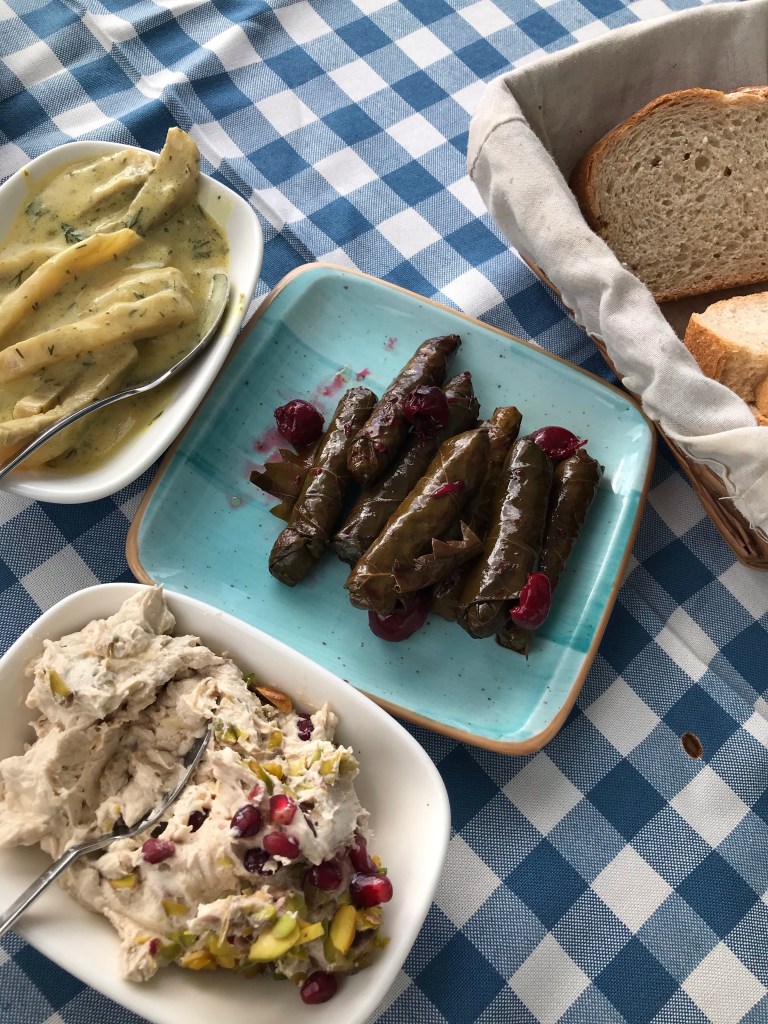
Dolmas, eggplant spread with pomegranate and pumpkin seeds, and artichoke with mustard sauce
Bodrum to Izmir
The four hour public bus from to Izmir to Bodrum followed the coast, was a safe and comfortable trip, and cost us each a hefty $6. In true Turkish hospitality, they even served tea and cookies! We gazed at the stark countryside, lit by the low winter sun behind turbulent clouds, as olive and tangerine groves slid past.
View of Mountains and farmland from bus
Bizim Lokanta
On arrival back in Izmir, we couldn‘t resist returning to the lokanta in the Bazaar where we had eaten earlier in the week.
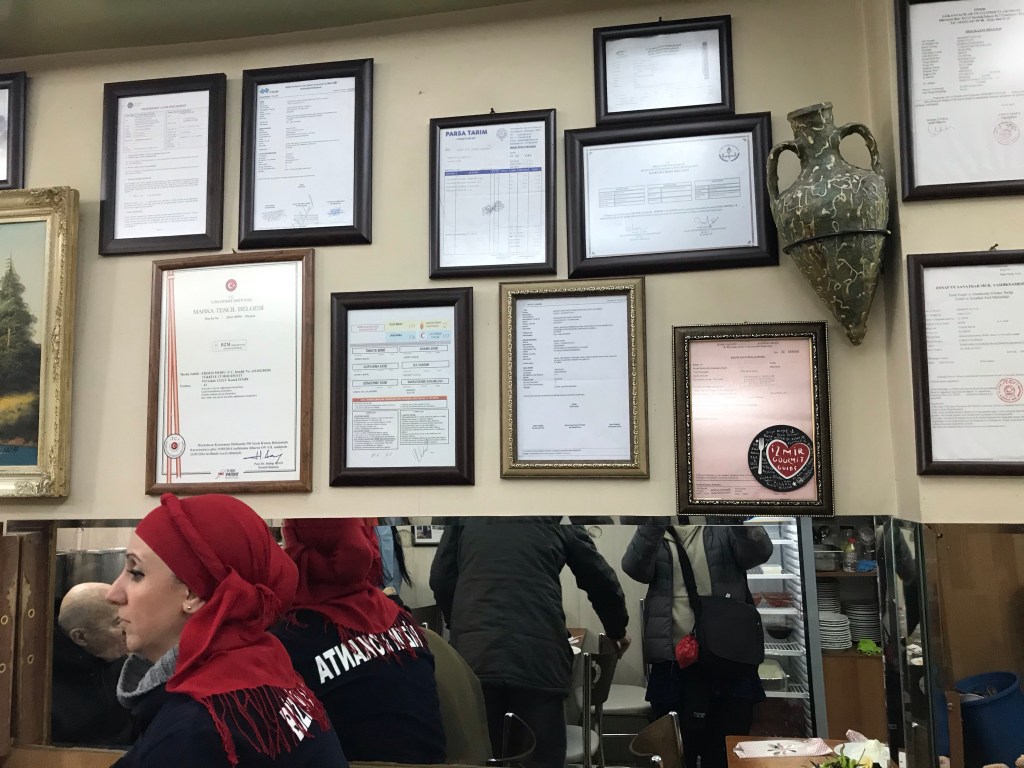
Tongue soup, bulgar with fava beans, and cabbage rolls with thick, creamy yogurtKudos on two walls of this vest-pocket diner were self-explanatory Bazaar Fun
It‘s a Wrap!
(Meatless) Kale and Cheese Wraps for a pittance
It‘s always bittersweet leaving a country, especially after such a short visit. But the food focus, imperial demands, abundance of land, and Mediterranean climate requires one to succumb to one of Turkey‘s finest features.
Our visit to the ancient city of Ephesus in Turkey required an overnight stay in Izmir. Although we had a chance to get acclimated, we immediately took to the streets in search of lunch. Thanks to Melissa’s intrepid search for the tastiest food in any country and her Googling skills, we traipsed through the town’s nearby grand bazaar and after numerous twists and turns, tracked down a local locanta.
Izmir Locanta
Izmir Bazaar Favorite among locals
This is where the locals dine on some of the heartiest meals made with the freshest ingredients. We savored the sardine soup recommended by the gentleman sitting across from us. It’s one of those diners where you point to the big vats of steaming concoctions or decorated casseroles in order to get your meal secured!
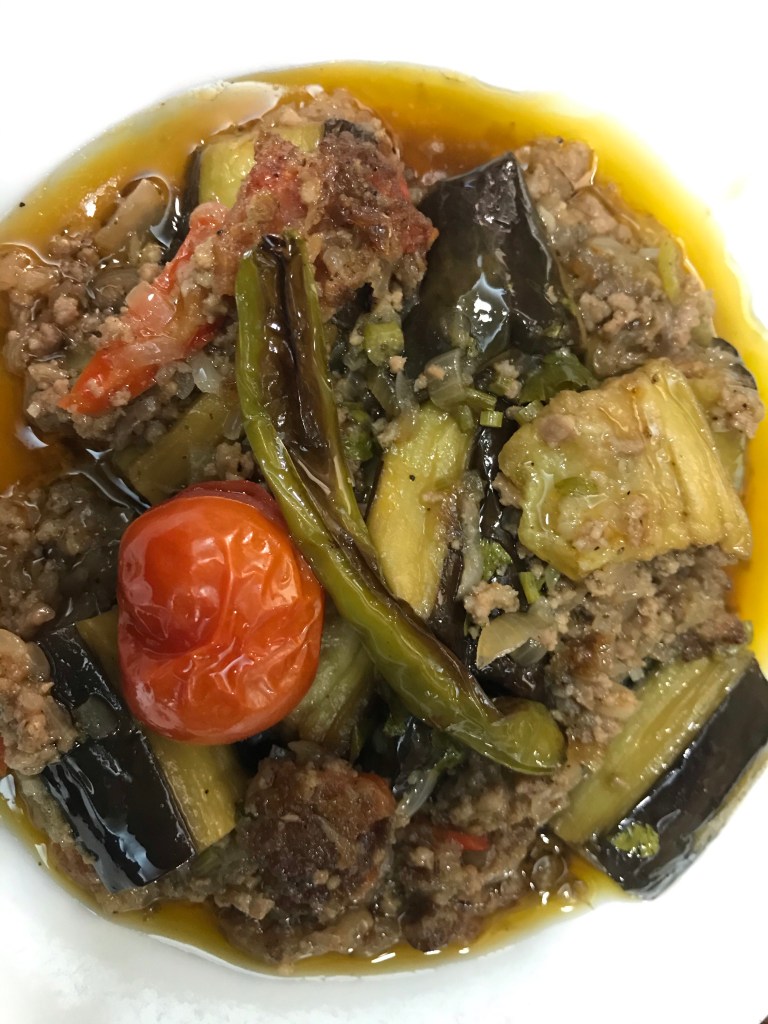
Stewed Eggplant
Ephesus
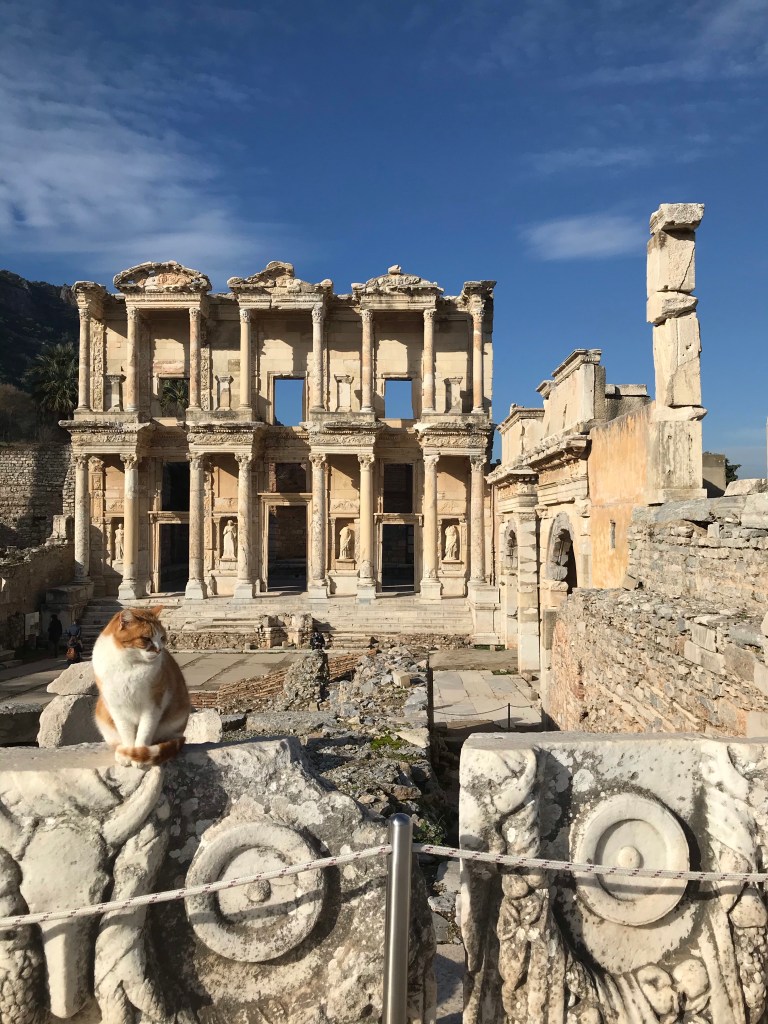
The short 40 minute drive from Izmir to Bodrum jolted us into realizing how ancient the land in which we were traveling is. From biblical figures like John the Baptist, Mother Mary, and their pilgrim followers, to the largest civilization outside of Rome at its peak, it was hard not to be impressed by the significance and grandeur of Ephesus.
Once inhabited by 250,000, Ephesus is a UNESCO world heritage site and was carefully restored and brought to life. It is a relatively late-bake on the list, as its discovery is fairly recent and only a fraction of it has been uncovered.
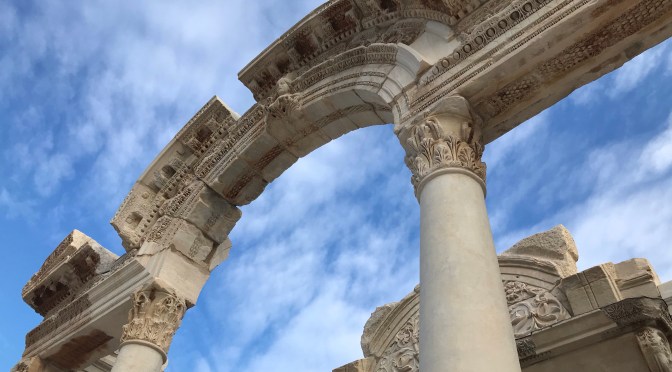
The library at Ephesus
Highlights include the odeon, a theatre; an amphitheater, an agora, terrace houses, and a library. You can download Rick Steves’ Audio Europe app for free and use it as you walk the site. All the details of what we saw were based on his excellent instructions. I highly recommend trying it out, and he certainly covers the major features. This fascinating site was once a thriving port city before the Persians, Alexander the Great, and the Goths each had their go at destroying it!
We decided to hire a car for a day to get from Izmir to Ephesus and Ephesus to Bodrum, our final destination. The only catch was making certain that we could call the driver after he dropped us off at the carpark at the top of the entrance to Ephesus. He was to meet us at the bottom of the hill at the exit 90 minutes later. Minor details: he had our bags in the boot!! We needed a backup just in case we could not find the driver. After a bit of cell phone finagling, conversations with hotel personnel, and a lot of good faith—we managed. Where we spent on the driver, we saved on time and the cost of a tour and guide. Just a reminder on how you can travel the way you want, with just a few creative tricks and determination to be a traveler and not a tourist.
Boviera
Known as “Boviera”, sparkling Aegean resort towns along the Western Turkish coast include Bodrum. It’s off-peak and chilly presently, but well worth the quiet solitude and even threats of rain to avoid the throngs of English-speaking tourists.
As close as you can get to the creatures being served at your table before they are caught! Anchovies, artichokes with pineapple, cheese and walnuts, and squash in yogurt
Note: due to traveling light and leaving my Macbook at home for this brief trip, I am using my Iphone to compose and post photos. The capabilities are limited, but I hope you will still enjoy the material the same as regular posts!
At the start of the New Year, dessert chef/ daughter Melissa and I are making a quick stopover in Munich en route to Western Turkey for a few days.
We searched high and low for tasty, affordable dishes. In Germany, it’s a challenge to avoid meat-forward or vegan counter-reactionary approaches. There seems to be very little in between.
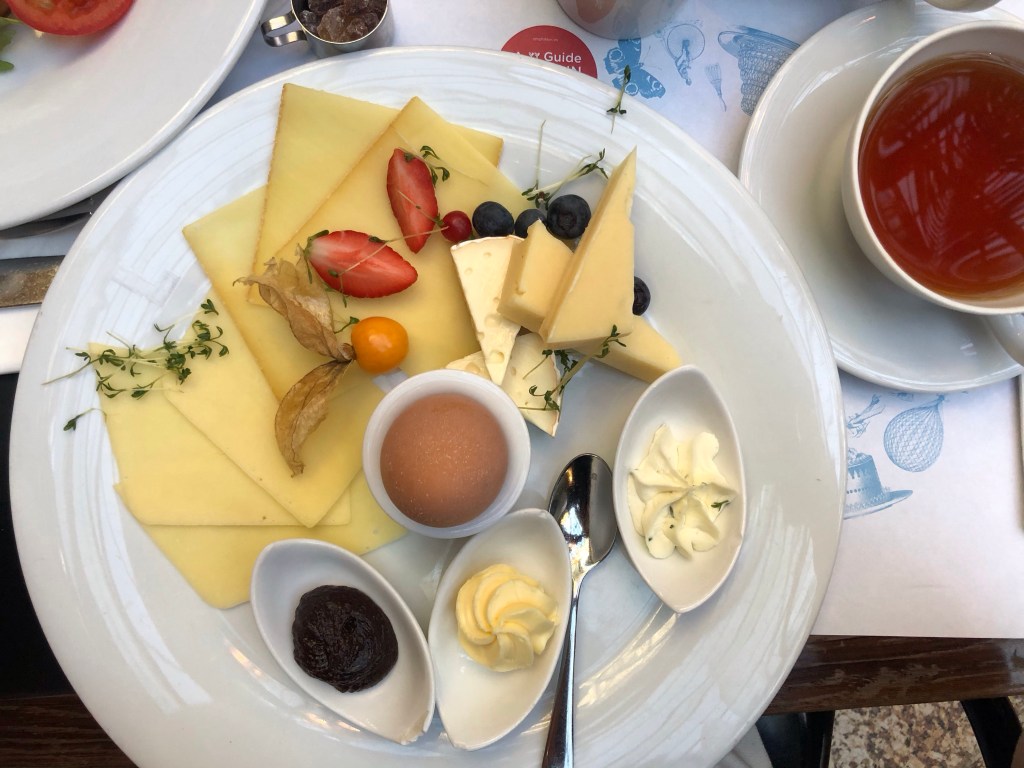
Nevertheless, Melissa decided to go classic and identified the Cafe Luitpold. We indulged in a delicate croissant assemblage and a cheese plate for breakfast.
Cheese Plate at Cafe Luitpold
Meanwhile, our main objective for stopping in Munich was to hit as many museums in one day possible.
To digress, speeding thru museums when the kids were young helped. We broke into parent-child pairs for a one-hour treasure hunt. Finding famous pieces and objets d/art such as the Venus de Milo in Louvre was energizing. It helped each of us remember what we found!!
Quality was less relevant than quantity in order to win! I feel less guilty about subjecting our children after this daughter became an art history major.
Back to the ranch. We decided to tackle the Pinakothek Moderne today. It’s a behemoth museum that dwarfs artwork and erases any artist‘s notion of grandeur. The Reichstag-like atrium was wet with a pendulum-swinging, egg-shaped disco ball.
Pinakothek Atrium, Munich
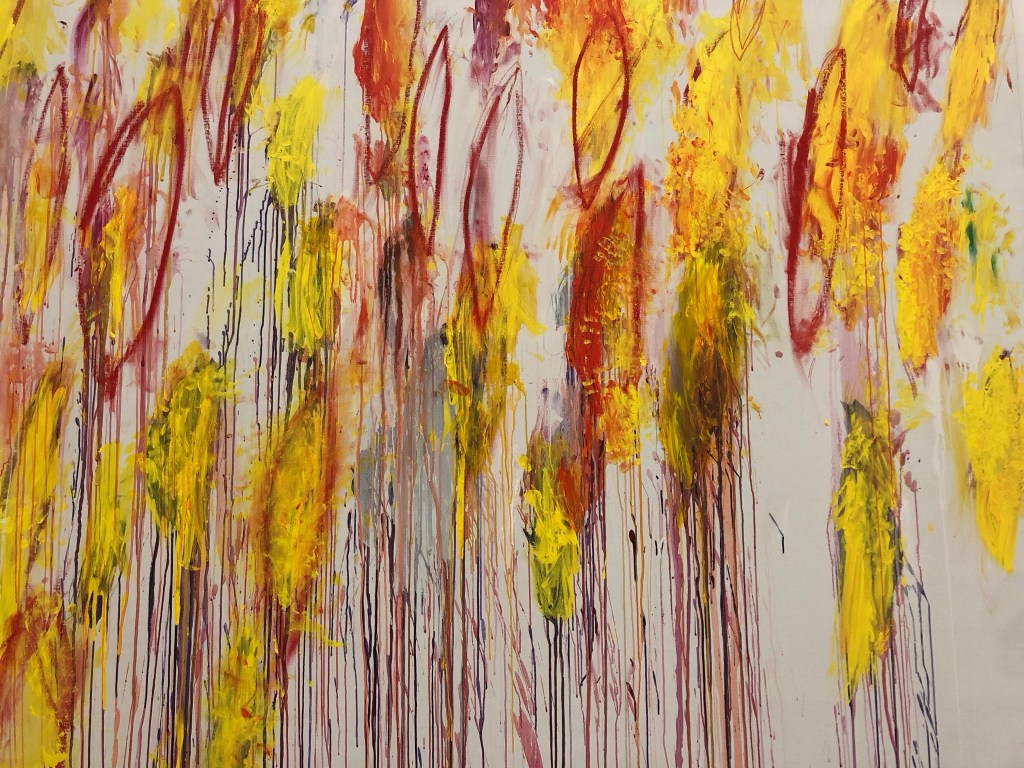
After a short break, we visited the Brandhorst Museum across from the Modern. A huge Cy Twombly exhibition displayed his beautiful series on roses, as well as his Sketches and Scribbles.
Twombly’s Roses
The museum celebrated its tenth anniversary by providing souvenir cards of many artists’ works. It saved buying an exhibition catalog, that often are killers to transport home.
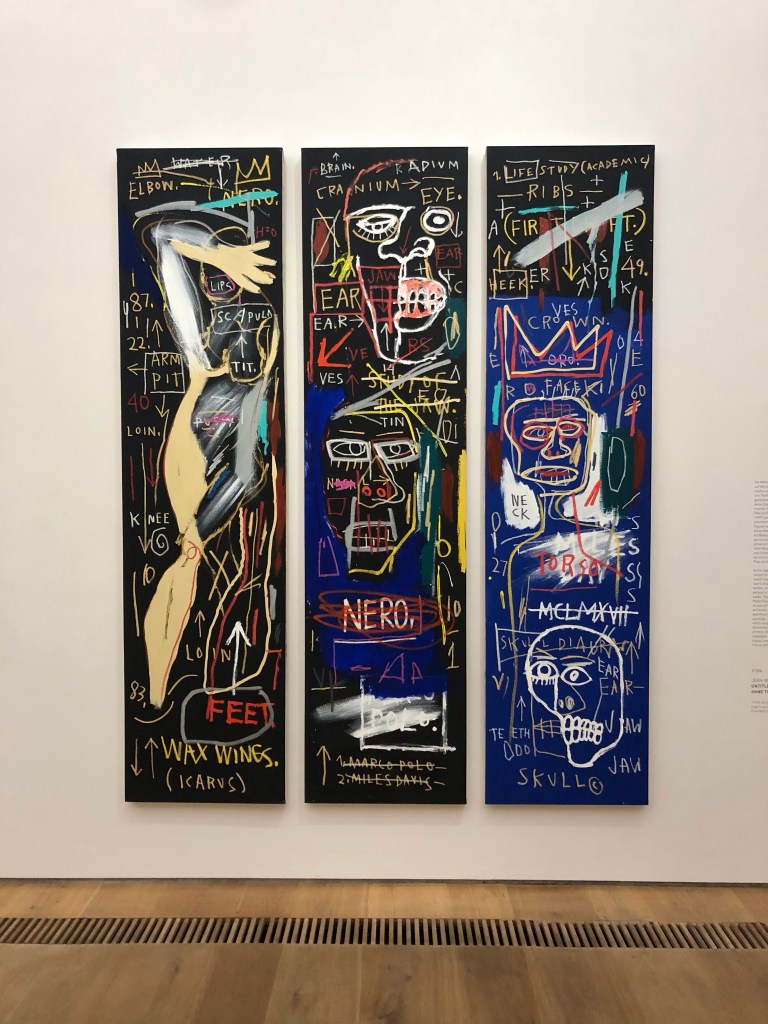
American contemporary artists such as Andy Warhol, Keith Haring and Jeff Koons were well represented here, juxtaposed against German Expressionists and the Dusseldorf Academy faculty.
This is one museum worth visiting, and the late Thursday opening allowed viewers near-exclusive access to an amazing collection.
Jean Michel Basquiat, untitled, 1983The Dancer by Oskar Schlemmer, 1922
(Author‘s Note): if you think we’re crazy to do two museums in one day, we scaled our goal back from the four in the Pinakothek collection that we had intended to visit!
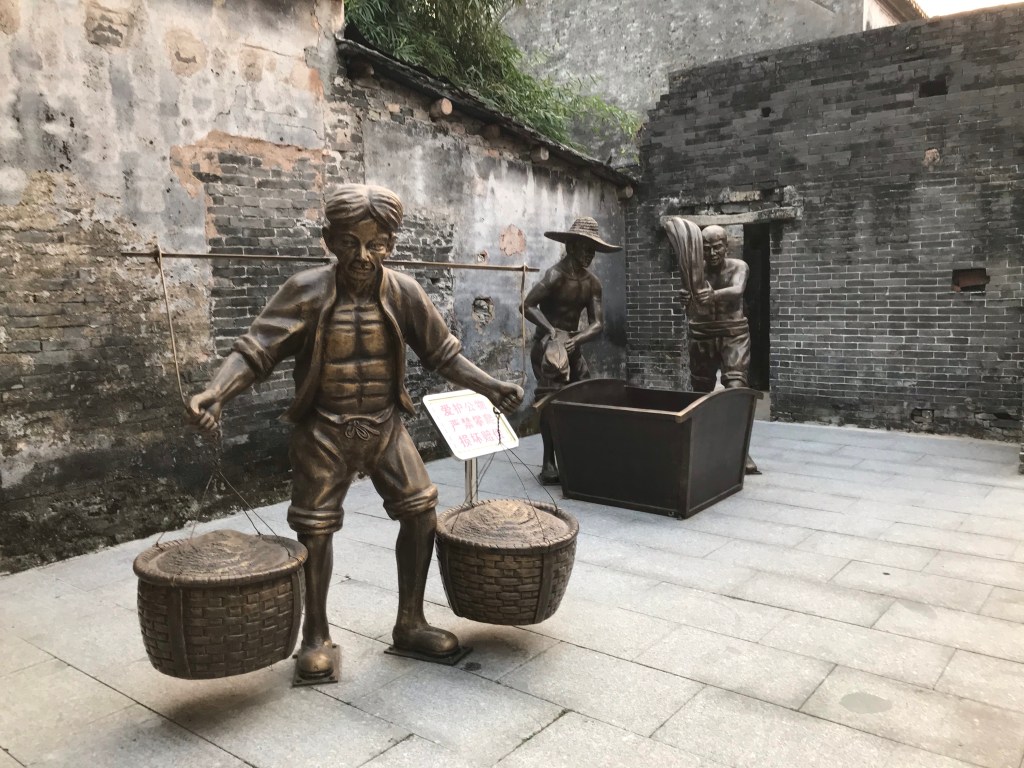
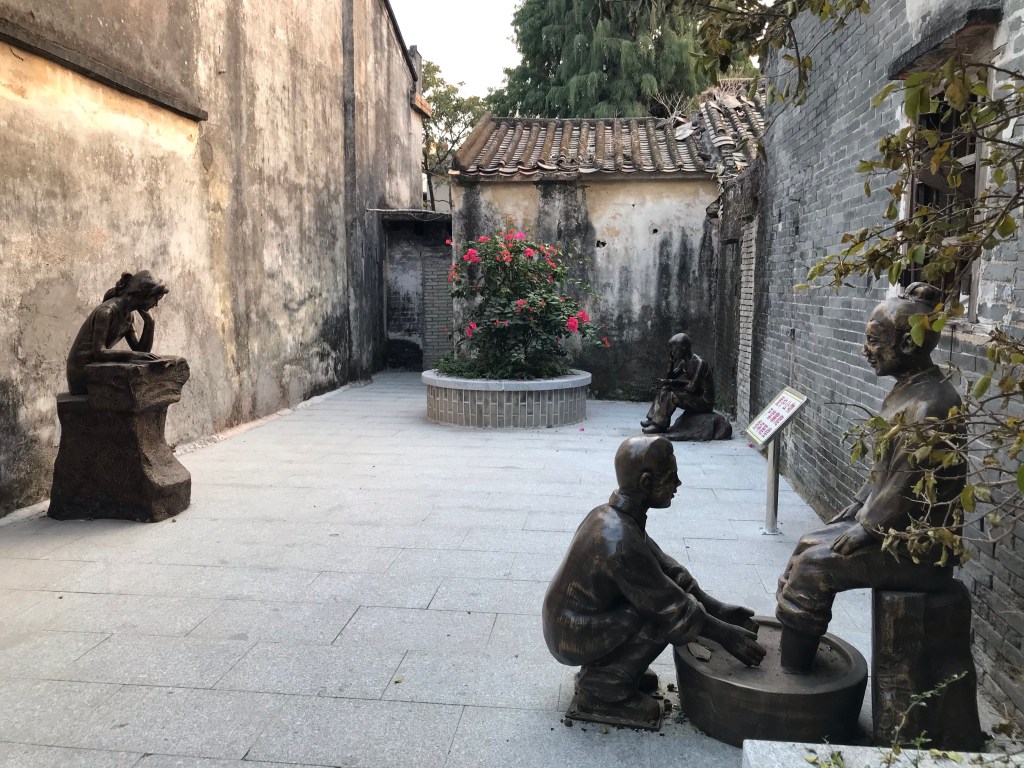
Antang Village is being preserved by local authorities to capture the history and experience of village life in China. It is one of four classified villages in Zhongshan, Guangdong Province, to be preserved.
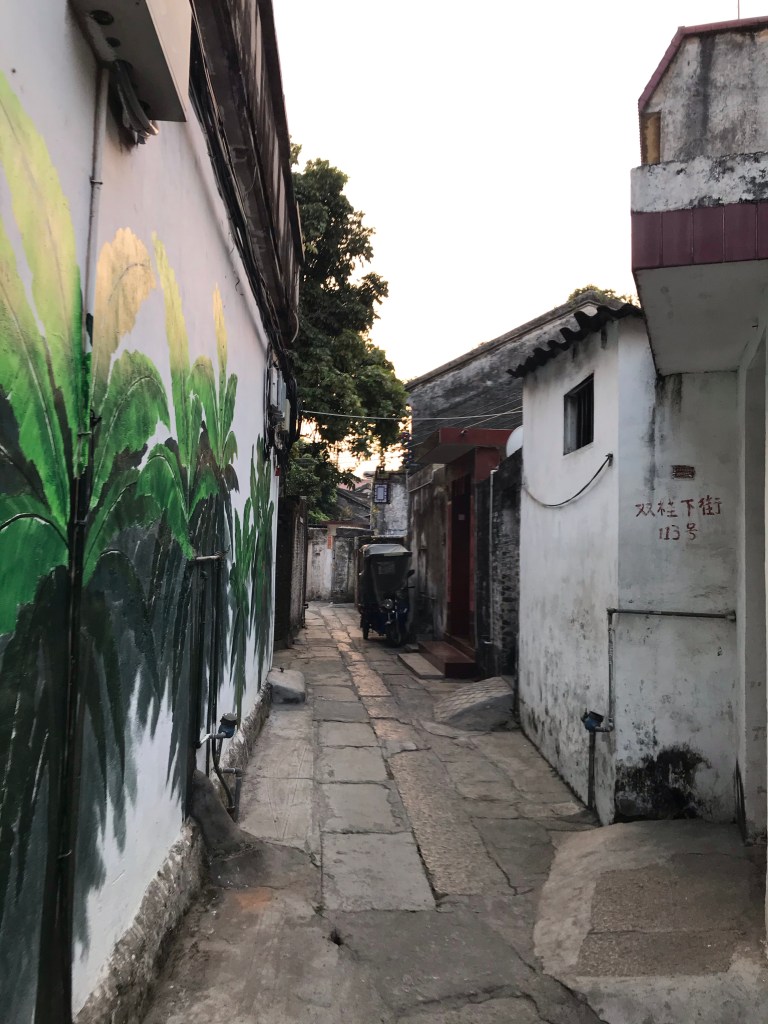
The bronze sculptures told the stories of daily life and are set in intimate courtyards near my mother’s original house. Murals are similar to those in other neighborhoods of Antang shown earlier.
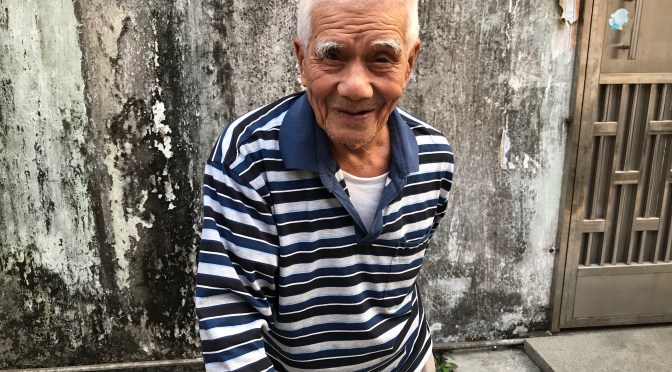
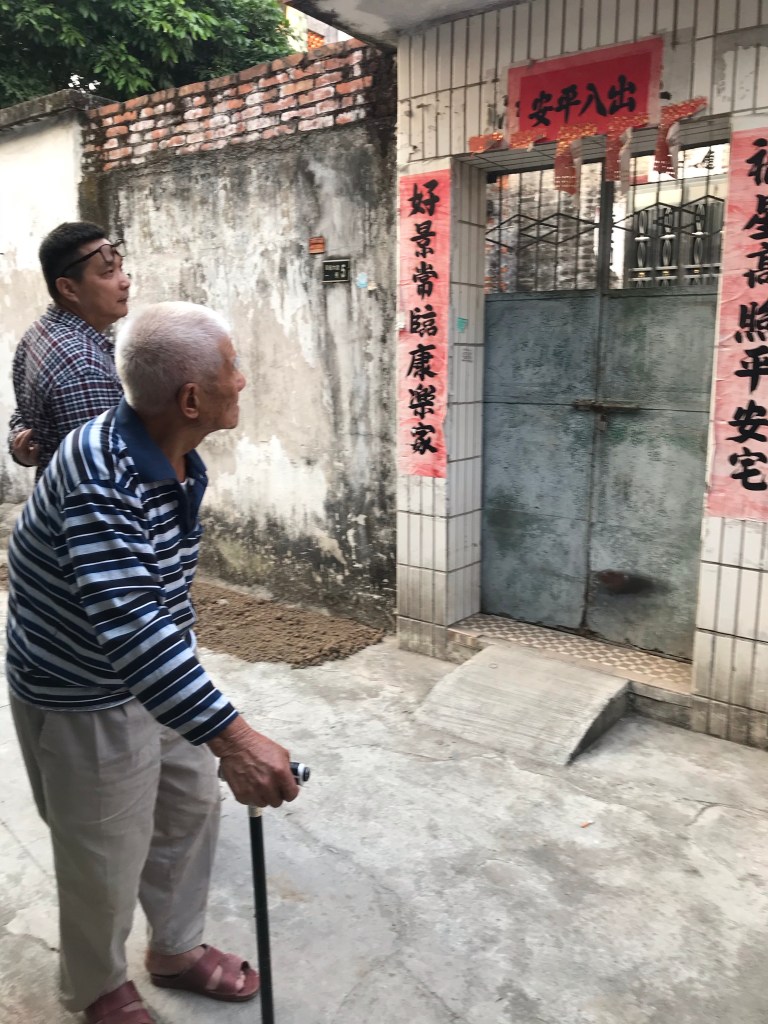
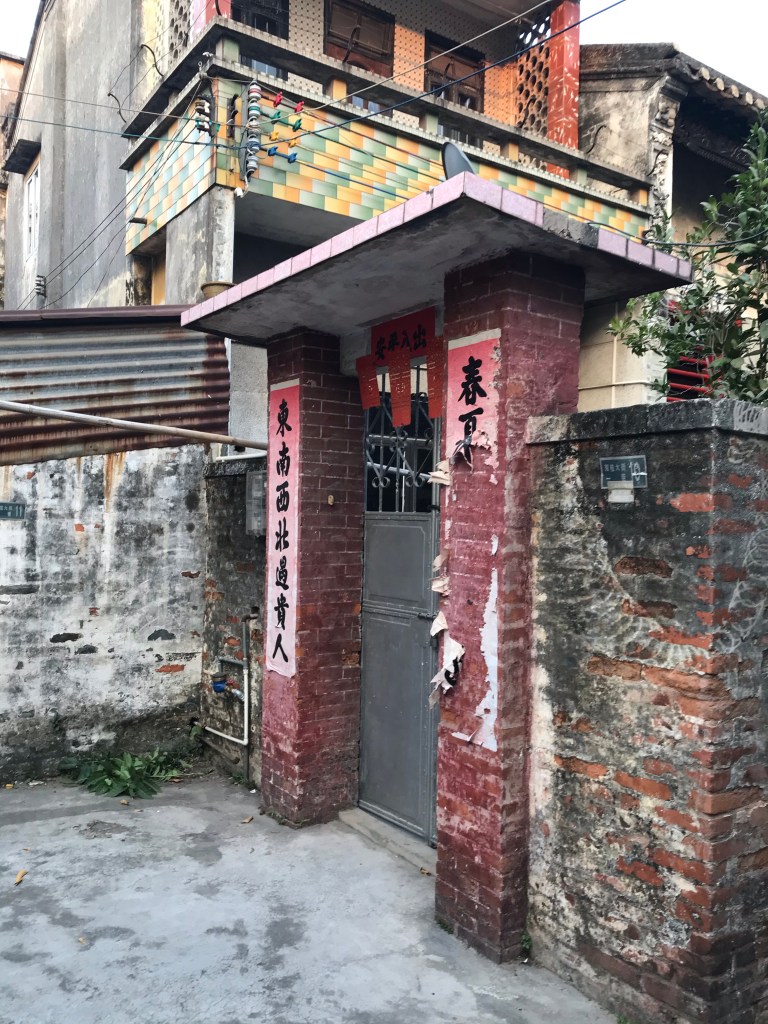
Finding the house location was a challenge as the original house no longer exists. But in classic form, we found an old fellow at the ancestral hall who knew where the house was located.
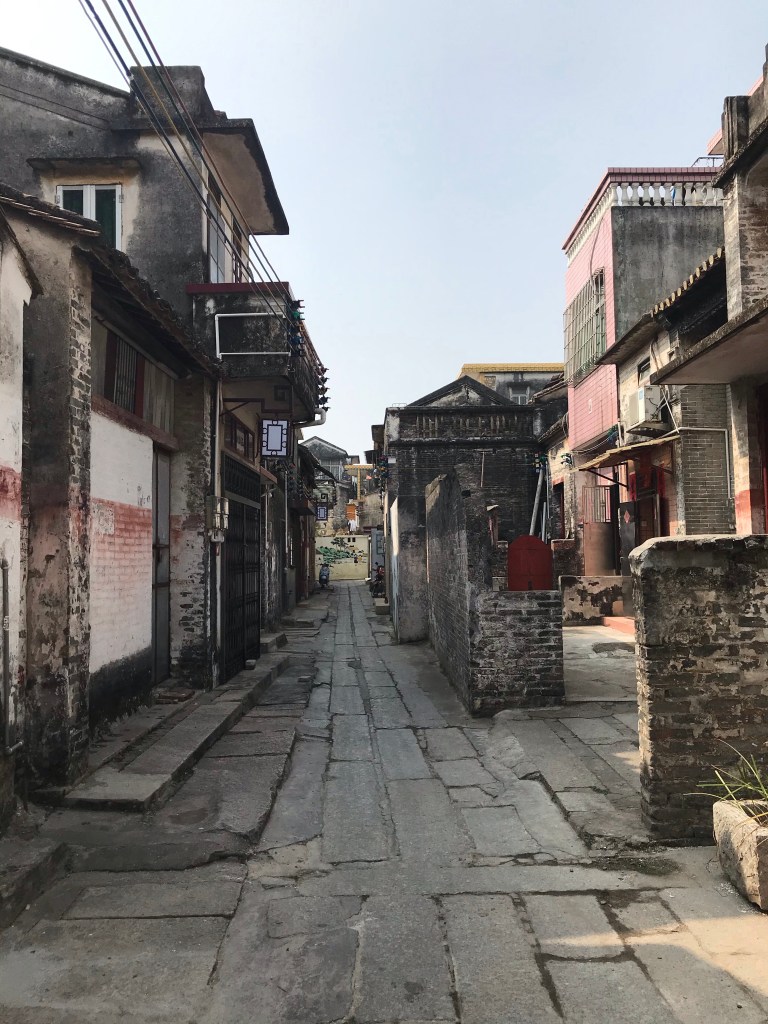
He agreed to lead us to the site based on the only picture of a wall of the house that I had. The walls of houses and granite paved alleyways provided a sharp contrast to the new artwork installations. These new additions were well integrated with the original village character.
I couldn’t help but think about the Italian village of Matera that Melissa and I had visited in January this year. Its preservation of twin hill towns was inspiring. The planners intend to preserve the environment for 0 impact from tourism while offering commercial opportunities to local villagers. I hope that the Antang planning authority will have the courage, wisdom, and funding to preserve this village in the same meaningful way.
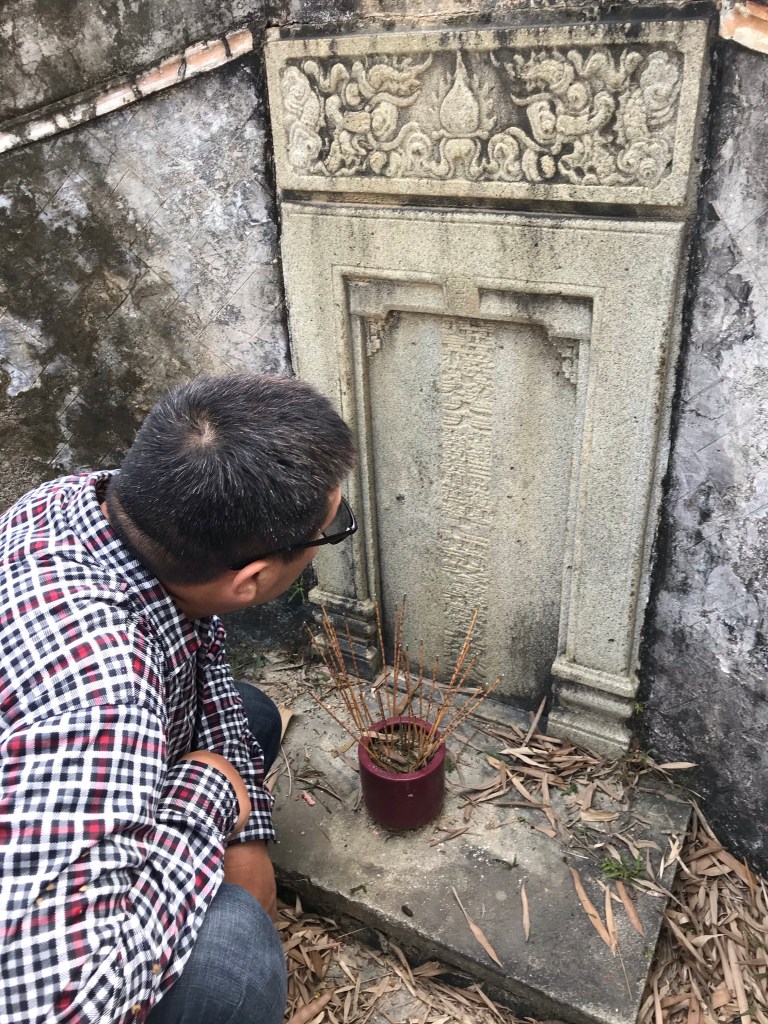
In another moving experience during this trip, my cousin took me to find the gravesite of our ancestors. He goes every year during Ching Ming to clean the site of brush and leaves. For me, it captured the experience of many Chinese throughout time. They made the effort to respect and remember the shoulders of those upon which we stand.
Getting to Hanoi from Guangzhou was an adventure! Initially, we traveled by train for four hours in the evening. We finished with a land route from the Chinese border at Pengxiang to Vietnam. We passed gorgeous mountain peaks reminiscent to those in Kweiin, but also traveled through many rice fields being burned. They polluted the sky and left us wondering why there weren’t alternatives for clearing the spent growth.
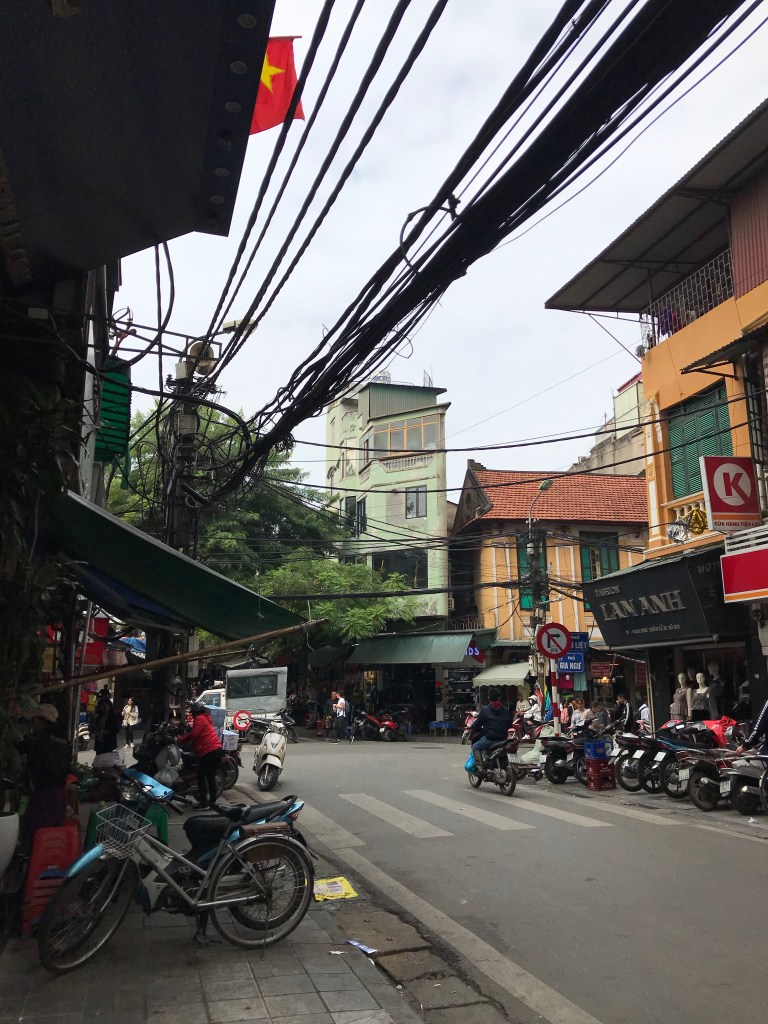
After three hours, we arrived in the old city. Our kamikaze driver got us to the city in half the time of a train ride. The honking horns and endless stream of motorbikes reeked chaos and anarchy. We were relieved when we arrived at the hotel safely.
A glimpse of normal life in Hanoi
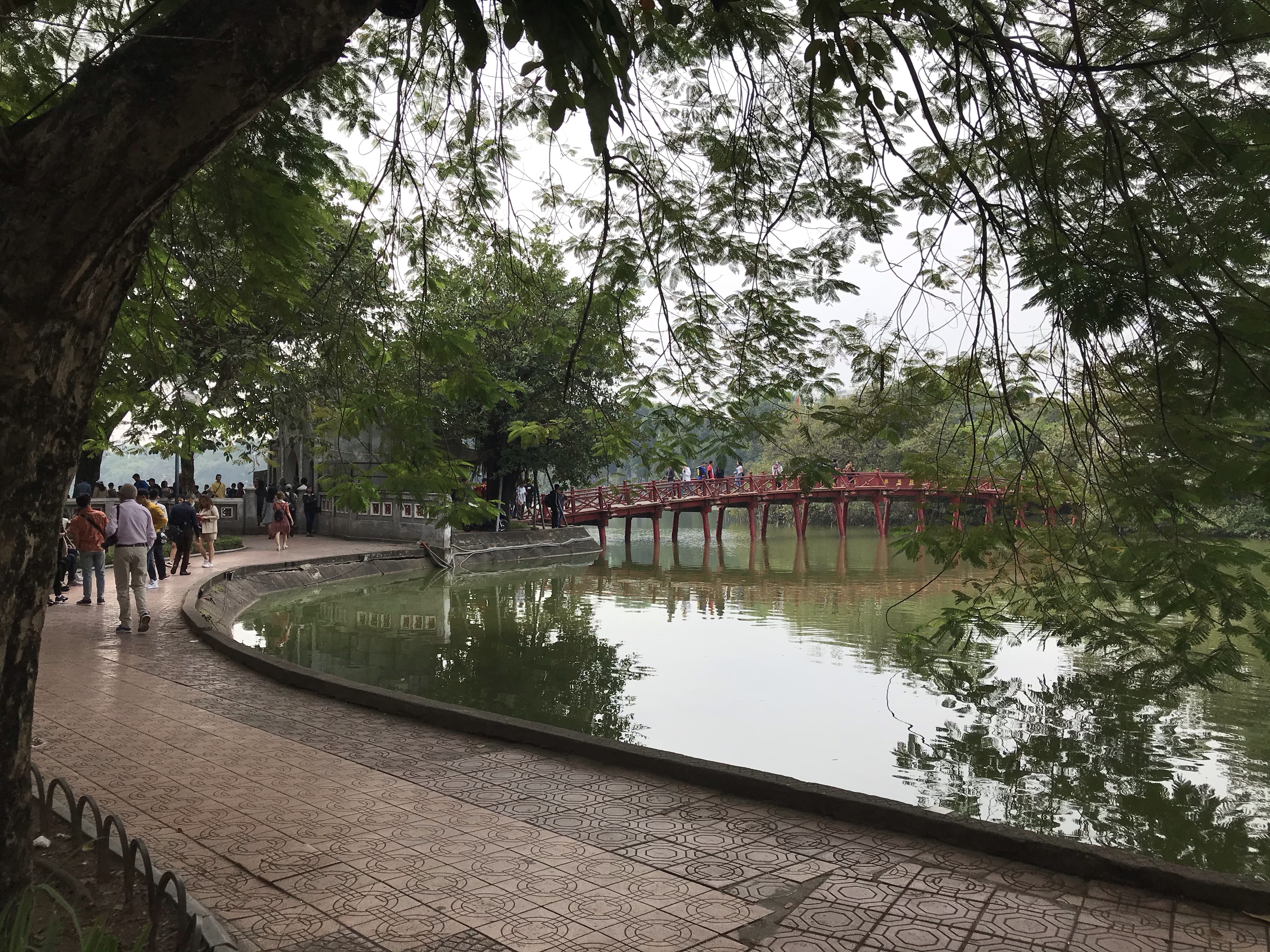
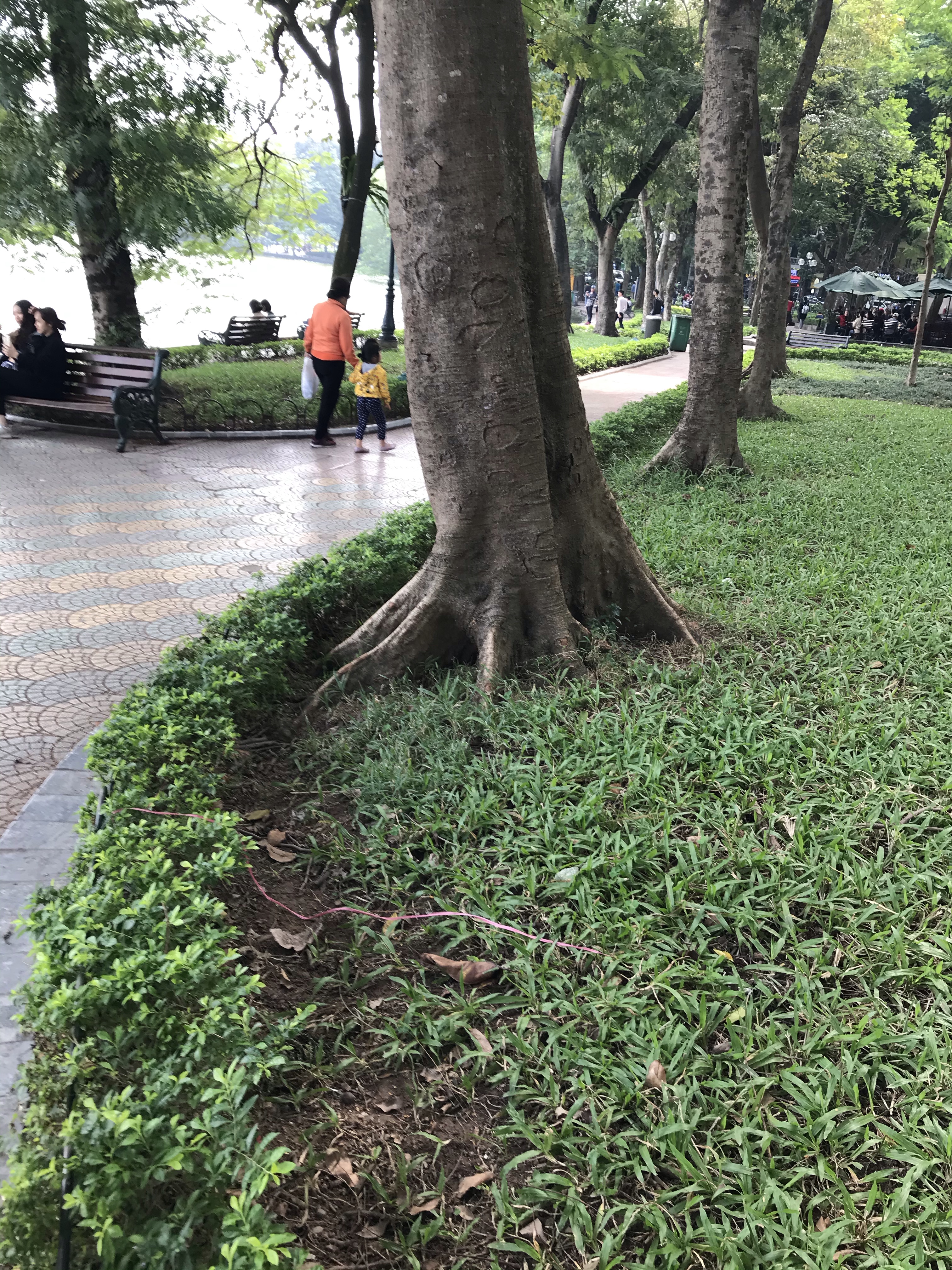
Hanoi Central Park
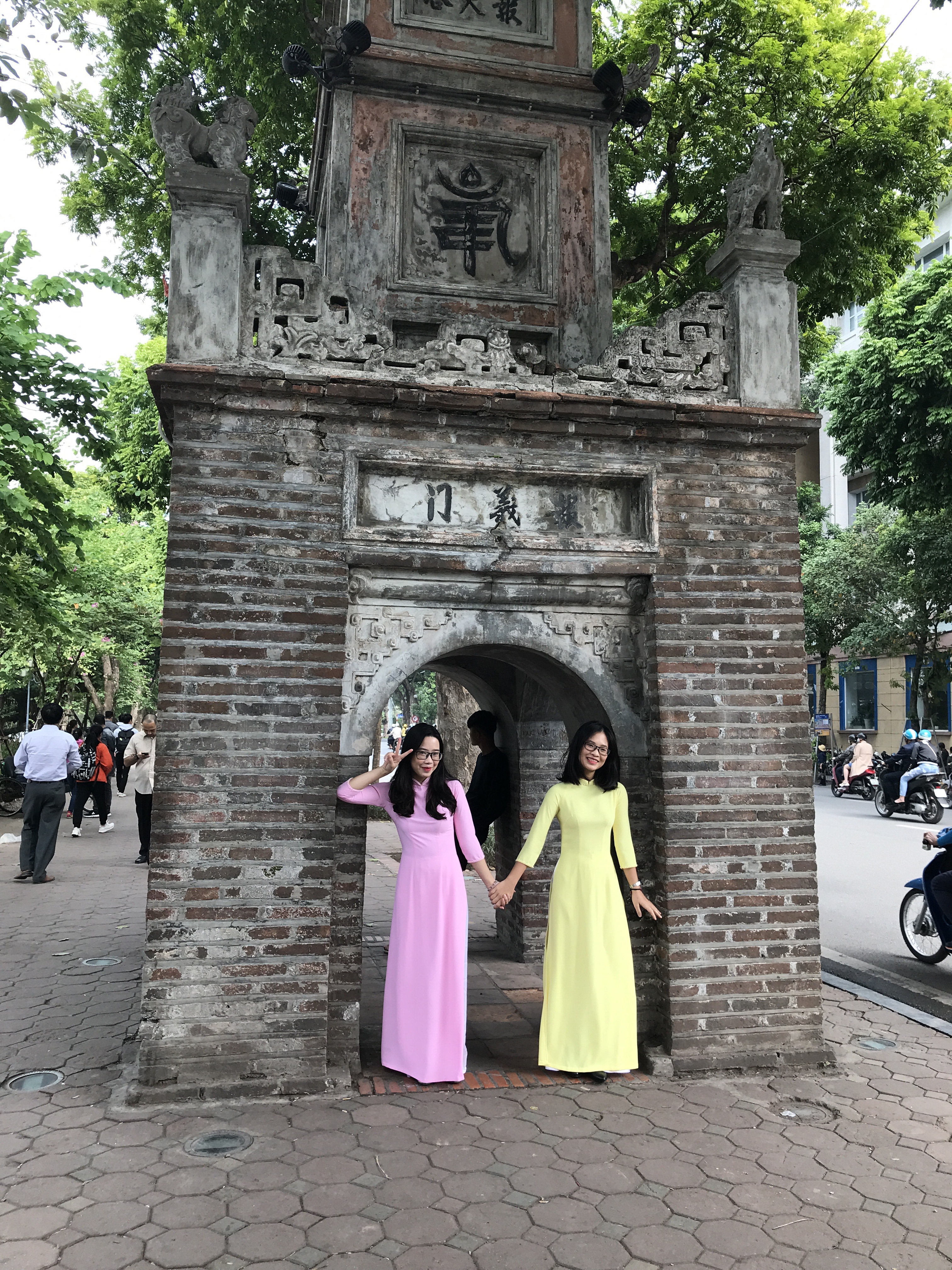
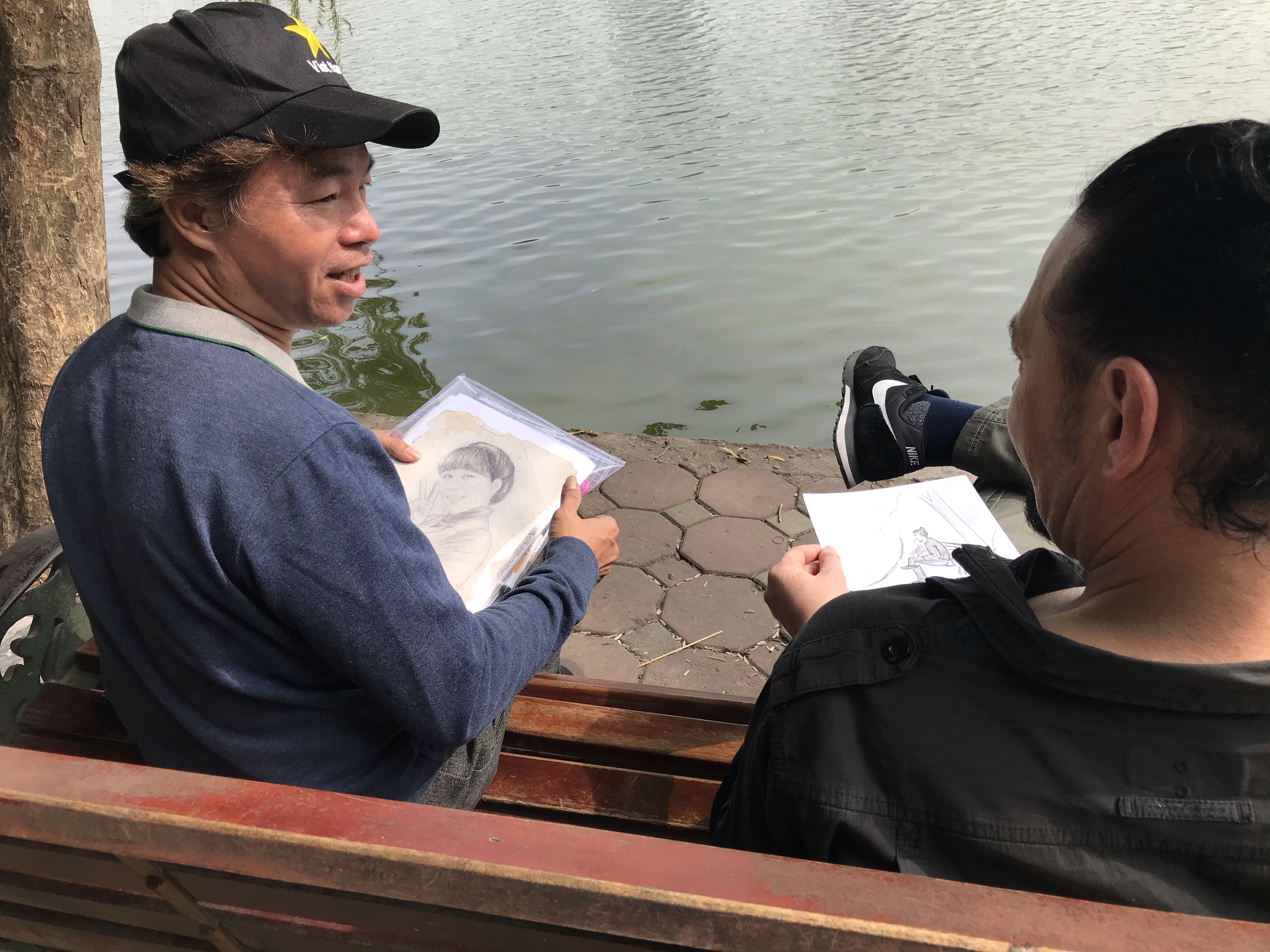
From our rooftop breakfast room at the hotel, we spotted a small lake in the middle of Hanoi. We headed over for a look. The leisurely stroll refreshed our souls and allowed us to escape from the constant traffic noise. Girls and ladies in beautiful Vietnamese gowns posed for pictures, sketch artists entertained curious passers-by, and both tourists and locals enjoyed sharing the human experience.
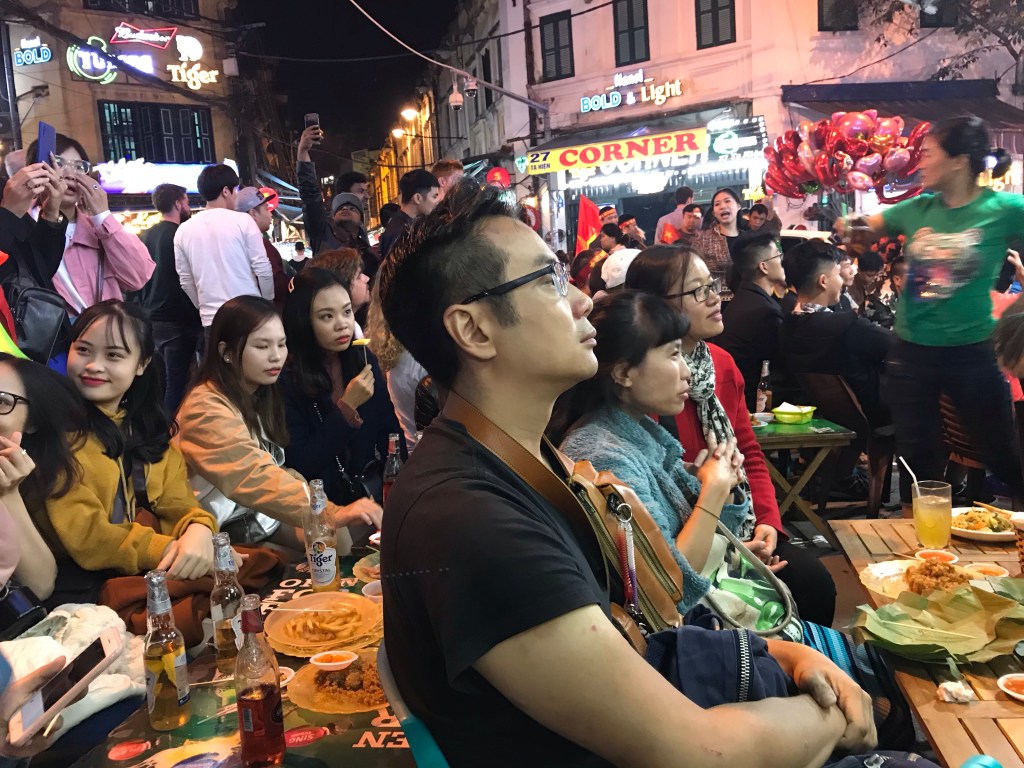
Hanoi Street Life
On our first night, we ate street food along with crowds of tourists watching a local soccer match between Vietnam and Thailand on big outdoor screens. The crowd was cheerful, friendly, and intent on their home team’s win. Nearly every food stall took advantage of the opportunity to bring in business by offering seating, food, and large screens.
In the next morning’s walk, we waited for a couple of bank assistants to fill the depleted ATM machine. Metal cartridges of money were stacked beside them, but they seemed stymied at how to install them properly. They were searching the internet for instructions, using their powder pink and Hello Kitty decorated phones, while squatting in their high heels!!
Vietnamese Food
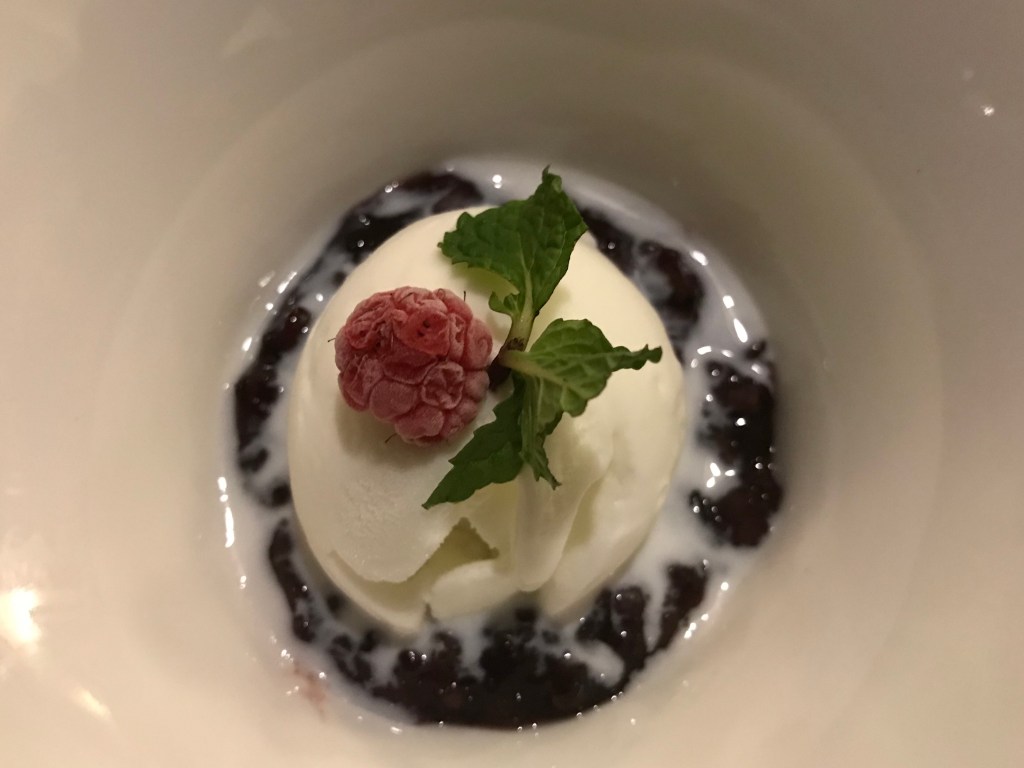
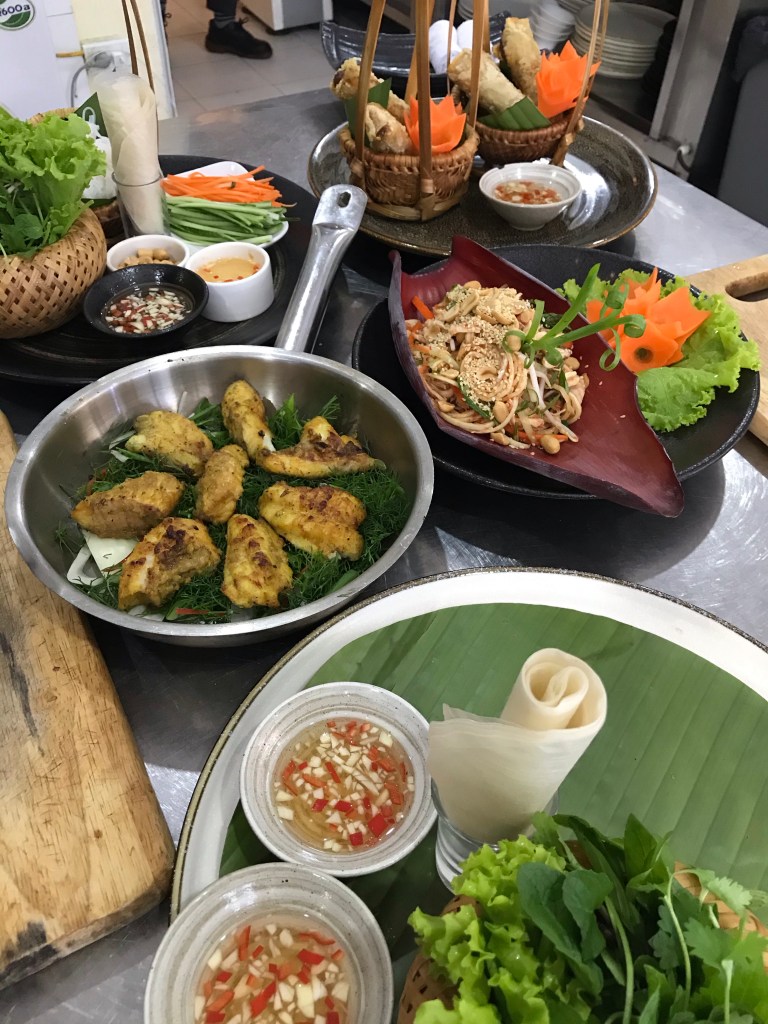
The Vietnamese food has been a delightful surprise. We did not expect such glamorous presentations and freshest ingredients. Meat or seafood, vermicelli, peanuts, and matchsticks of carrot and cucumber wrapped in rice paper make yummy, albeit a bit sloppy, finger foods. Black rice and tapioca topped with ice cream was a typical dessert and great palette cleanser.
After dining at the Orchid Restaurant, we decided to take a cooking class to learn how to make the fantastic dishes. In addition to learning from his family, the chef was trained for four years in a cooking school. He worked for over ten years in French, Italian, Chinese and Vietnamese restaurants.
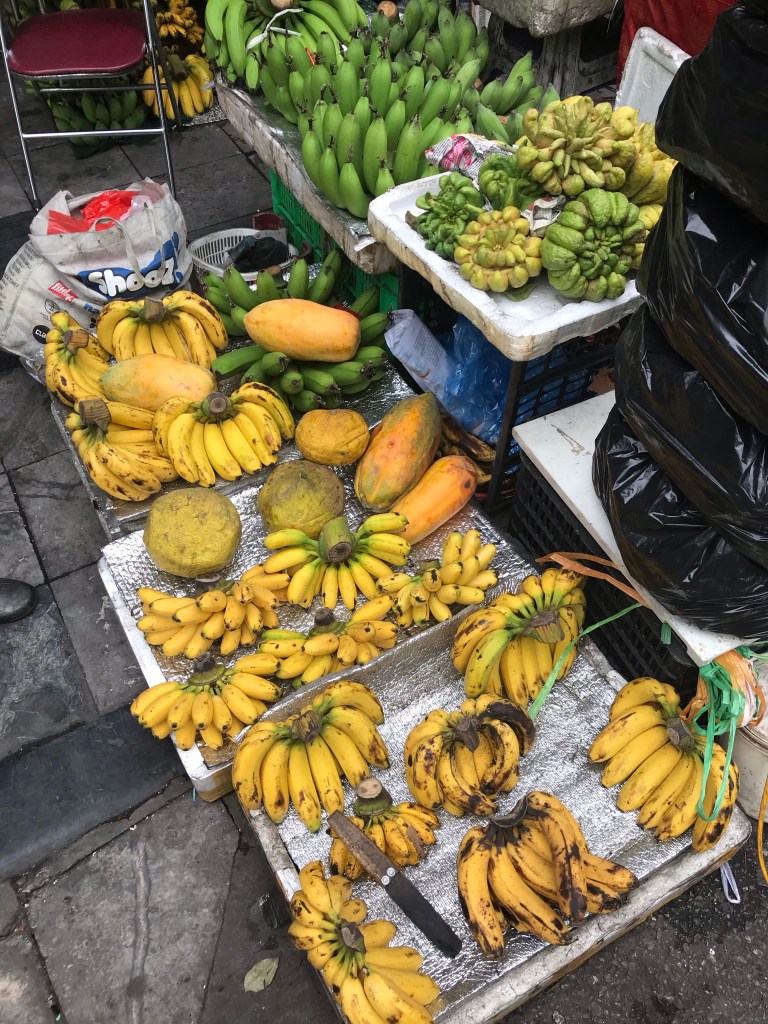
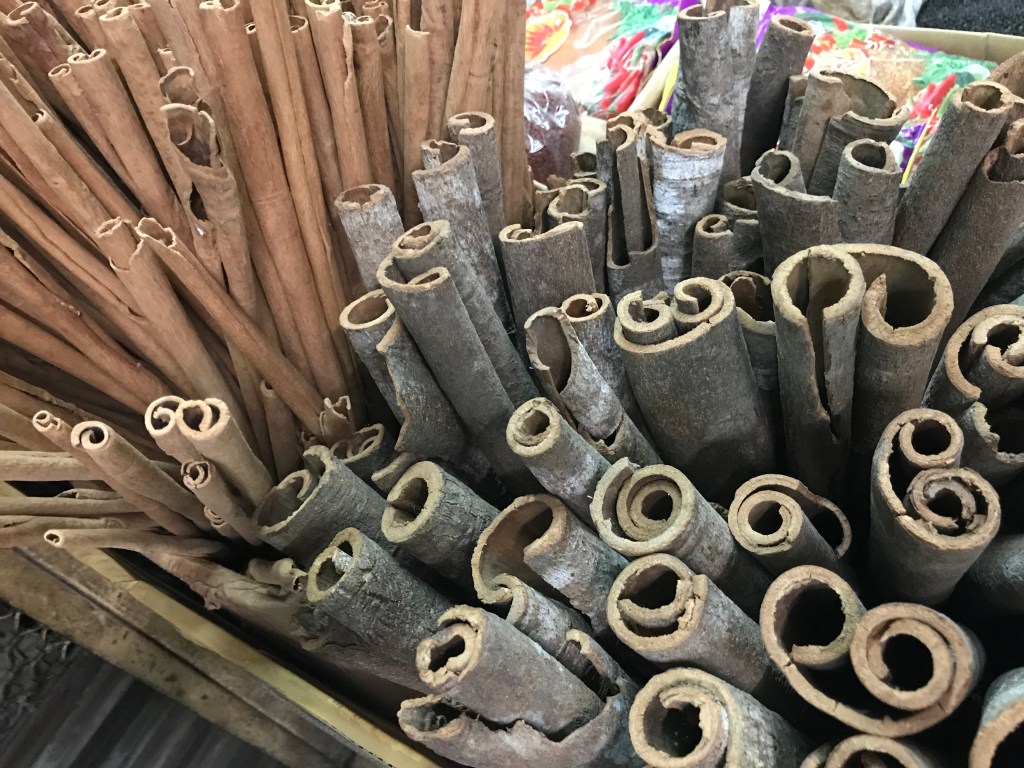
The four-hour class started by a trip to the market. It offered one of the most p ok ingredients that we had seen anywhere in the world.
A colorful array of market items
Big fat juicy bananas
Cinnamon Bark
Special Ginger-like Root Flavoring
Our chef in action
We returned to the restaurant and donned aprons. We honed our cooking skills by learning how to filet fish, julienne vegetables, and wrap spring rolls.
Crispy Pancake
Our efficient and bubbly chef
Fried Fish in Rice Wraps
Color and Delicate Flavors Abound
If you come to Hanoi, try one of the many combo restaurant/cooking schools in the Old City. Vietnam cuisine ranks high on our list as one of the most colorful and tasty in the world.
We’re heading back to Zhongshan and Guangzhou, China via Hong Kong, so stay tuned…
For many foreigners who do not share buildings dedicated to one’s lineage, going to a Chinese family temple would be a dull experience. On this trip, we discovered a repository of family history that not only answered many questions, but we developed a quest for more knowledge of one’s origins.
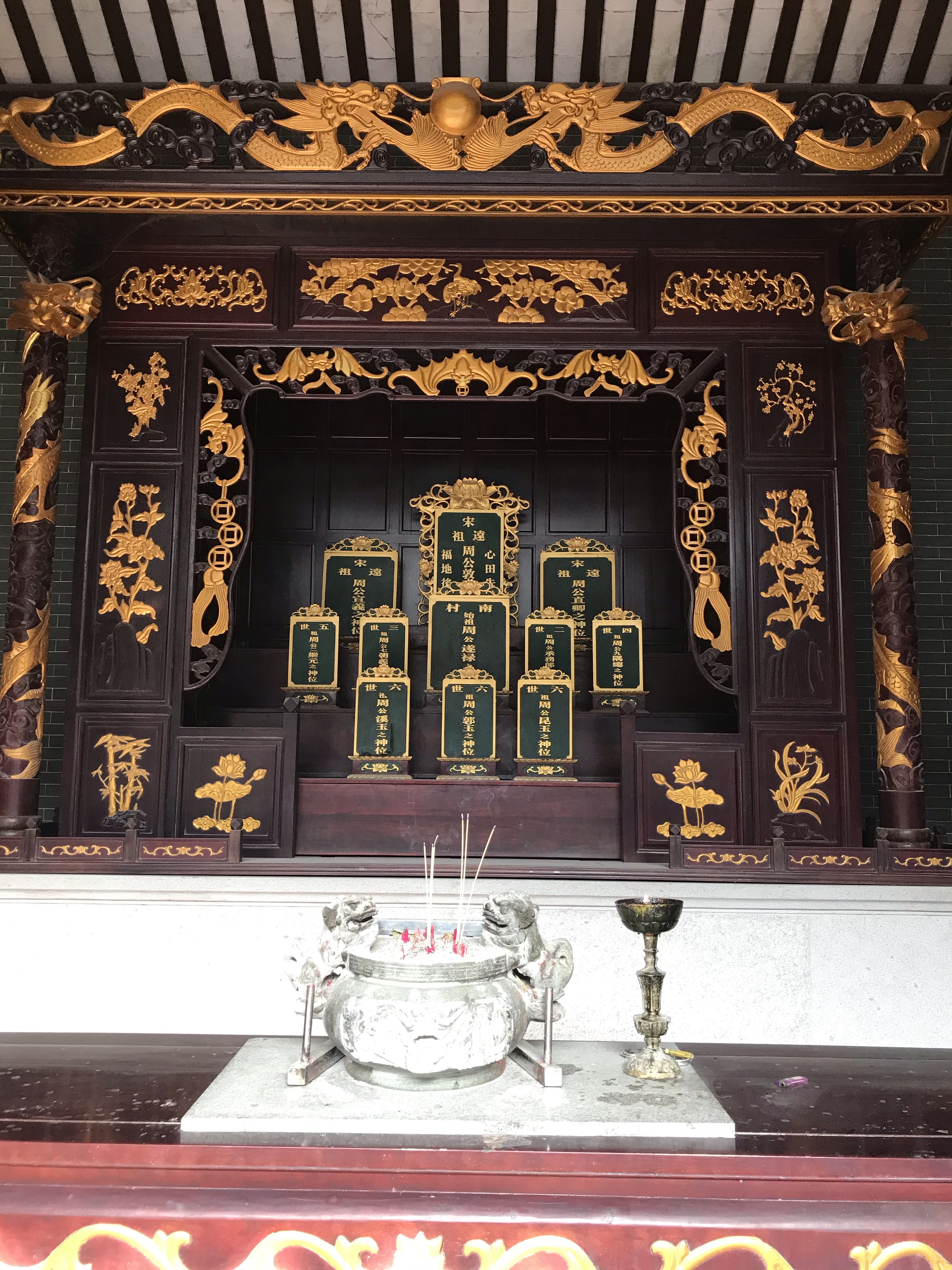
In China, ancestral family temples provided the heart and soul of each community. They gave special significance to family members with a common last name. Family histories and genealogy were stored in these cultural institutions and offered missing information.
We visited the Chou, Lum and Fong Family Ancestral Temples in Guangdong and Zhongshan, where our parents’ native villages were located.
Chou Family Temple
Chou Family Ancestral Temple
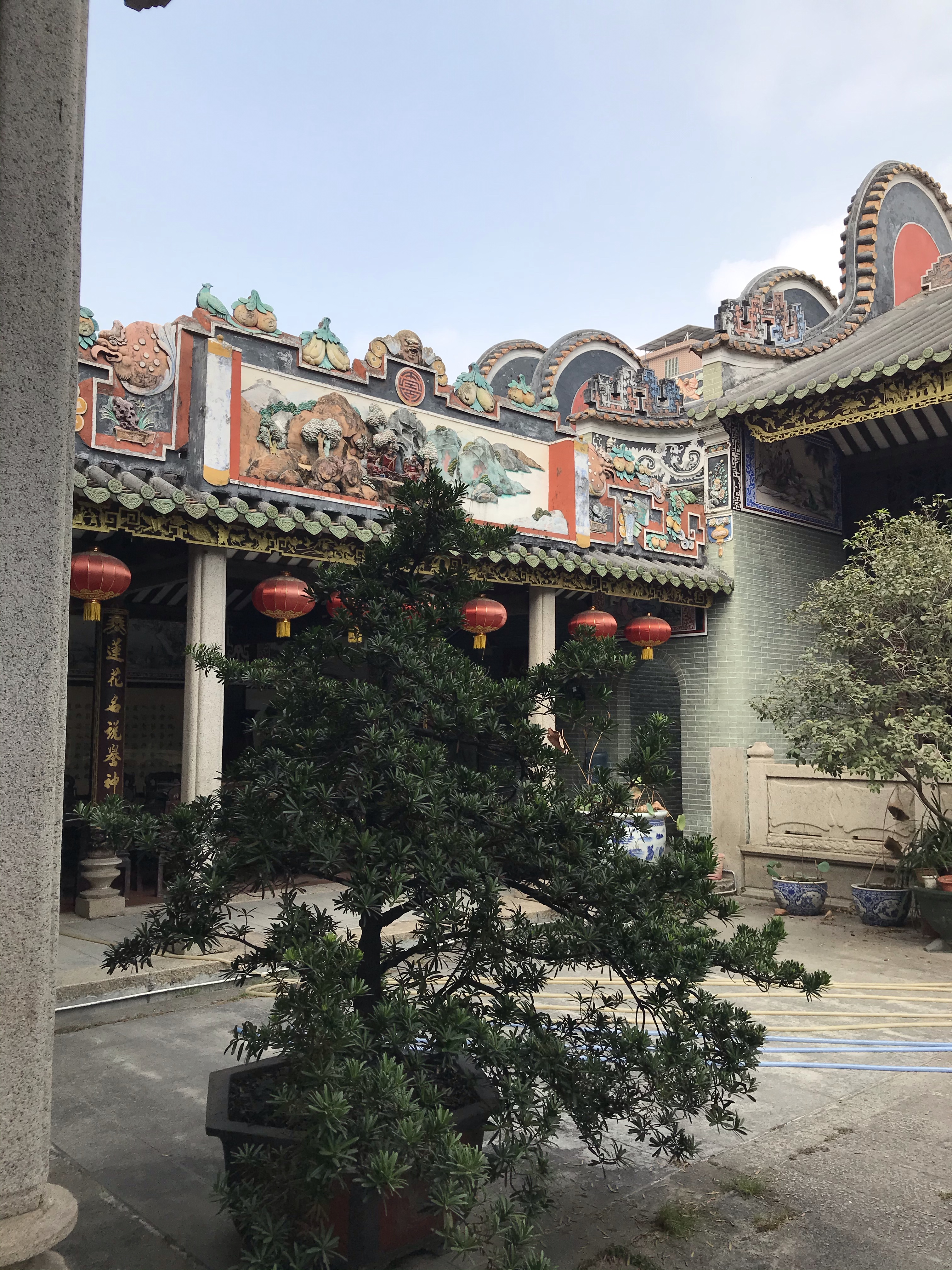
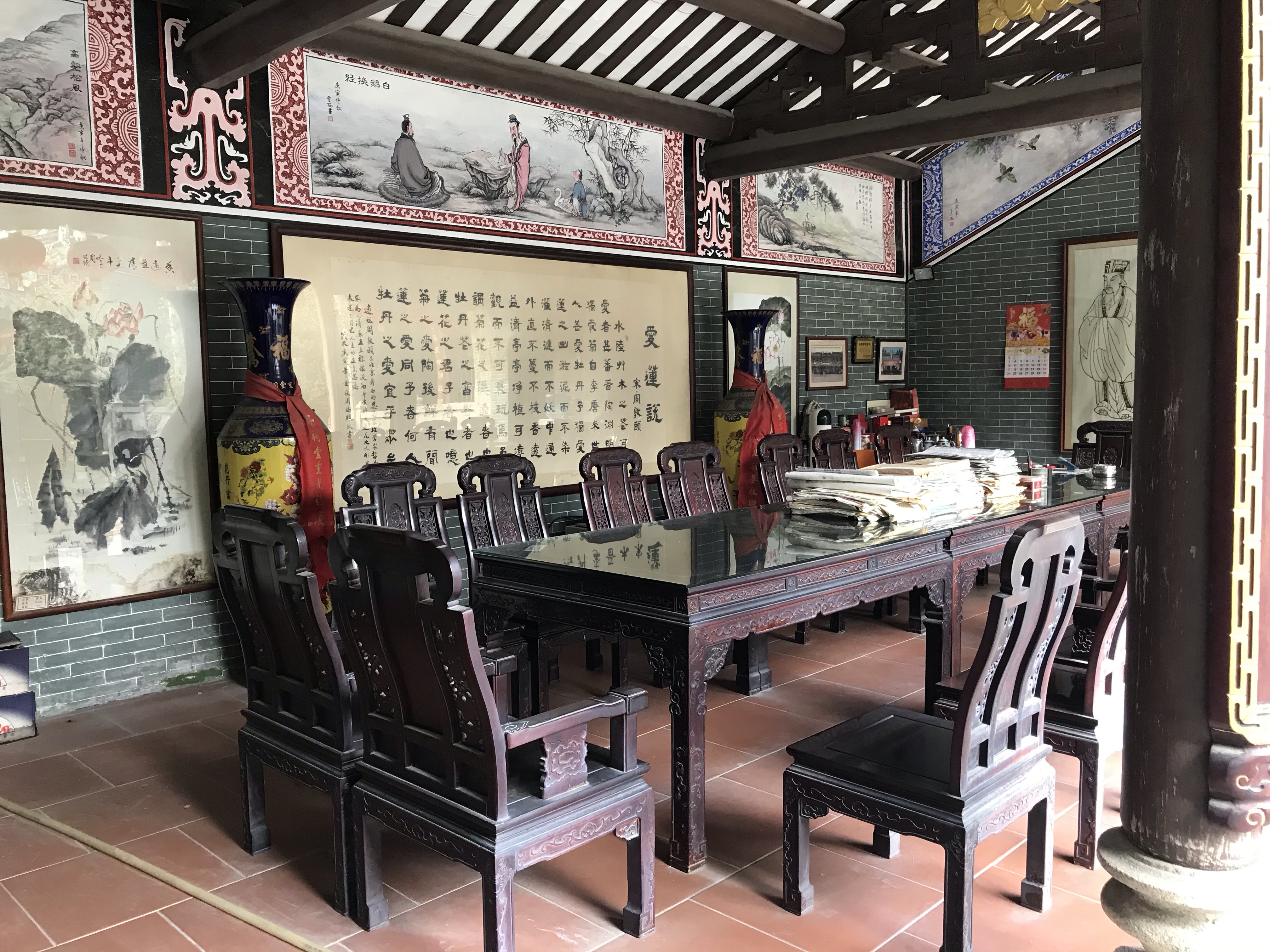
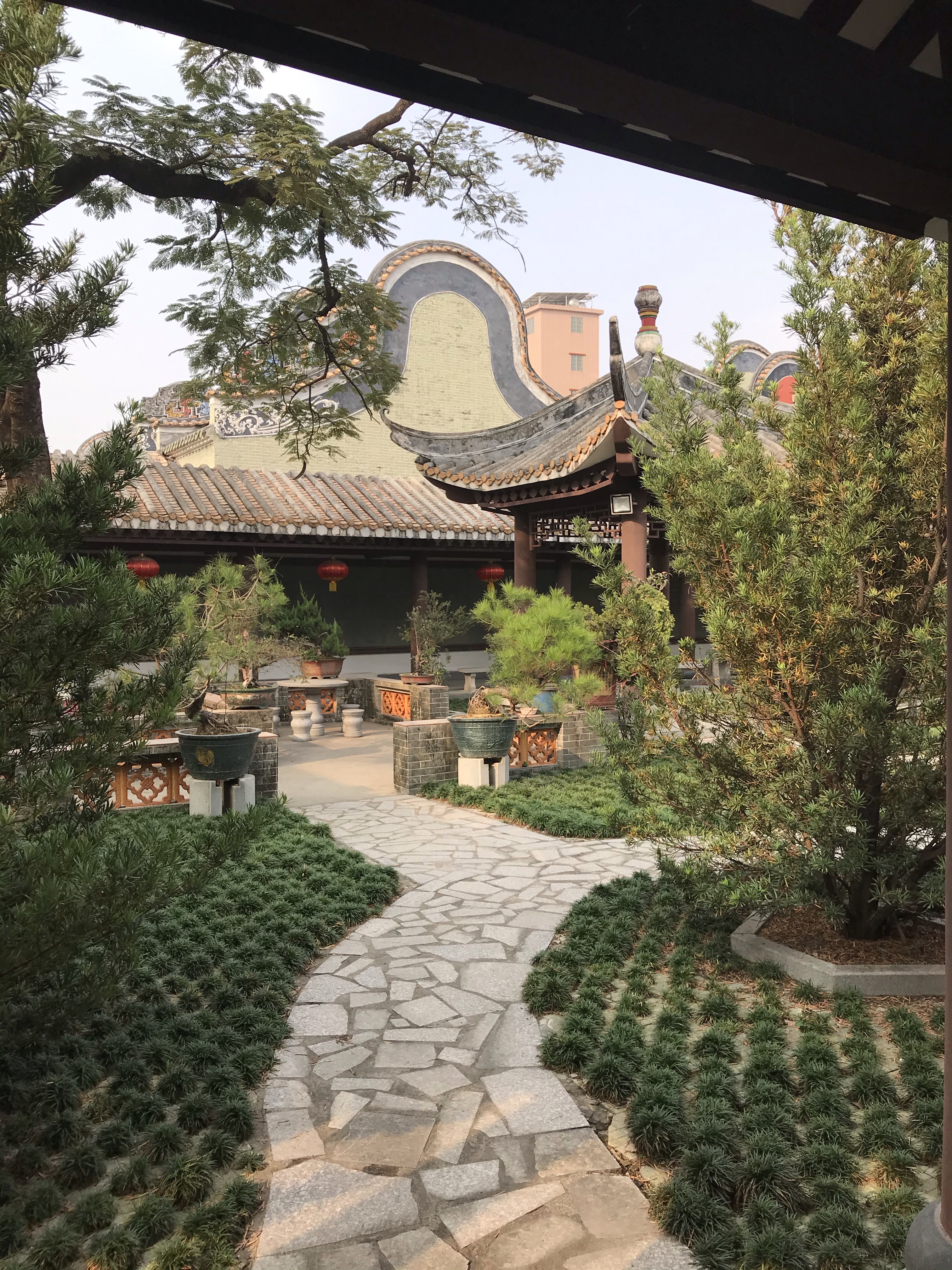
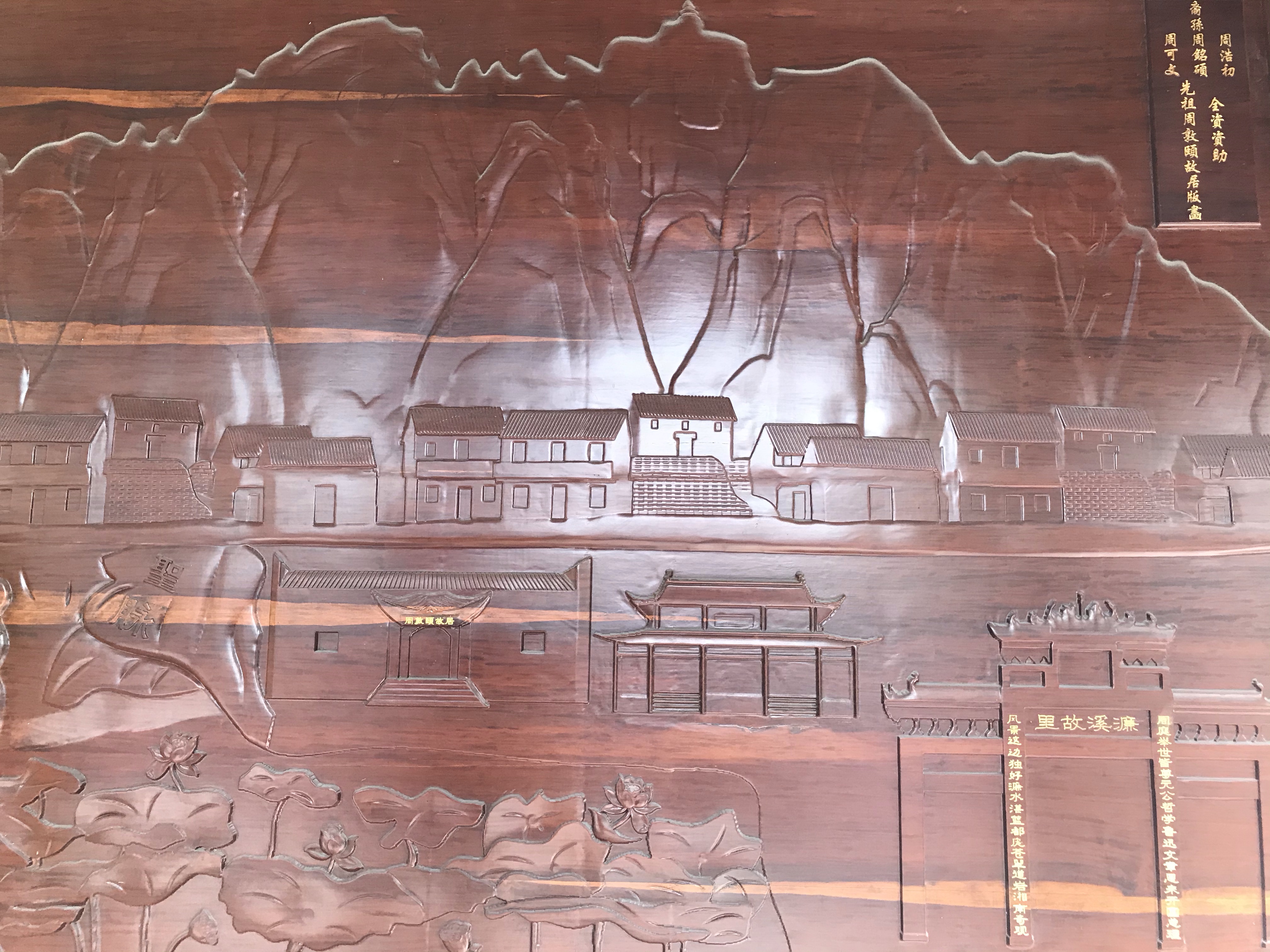
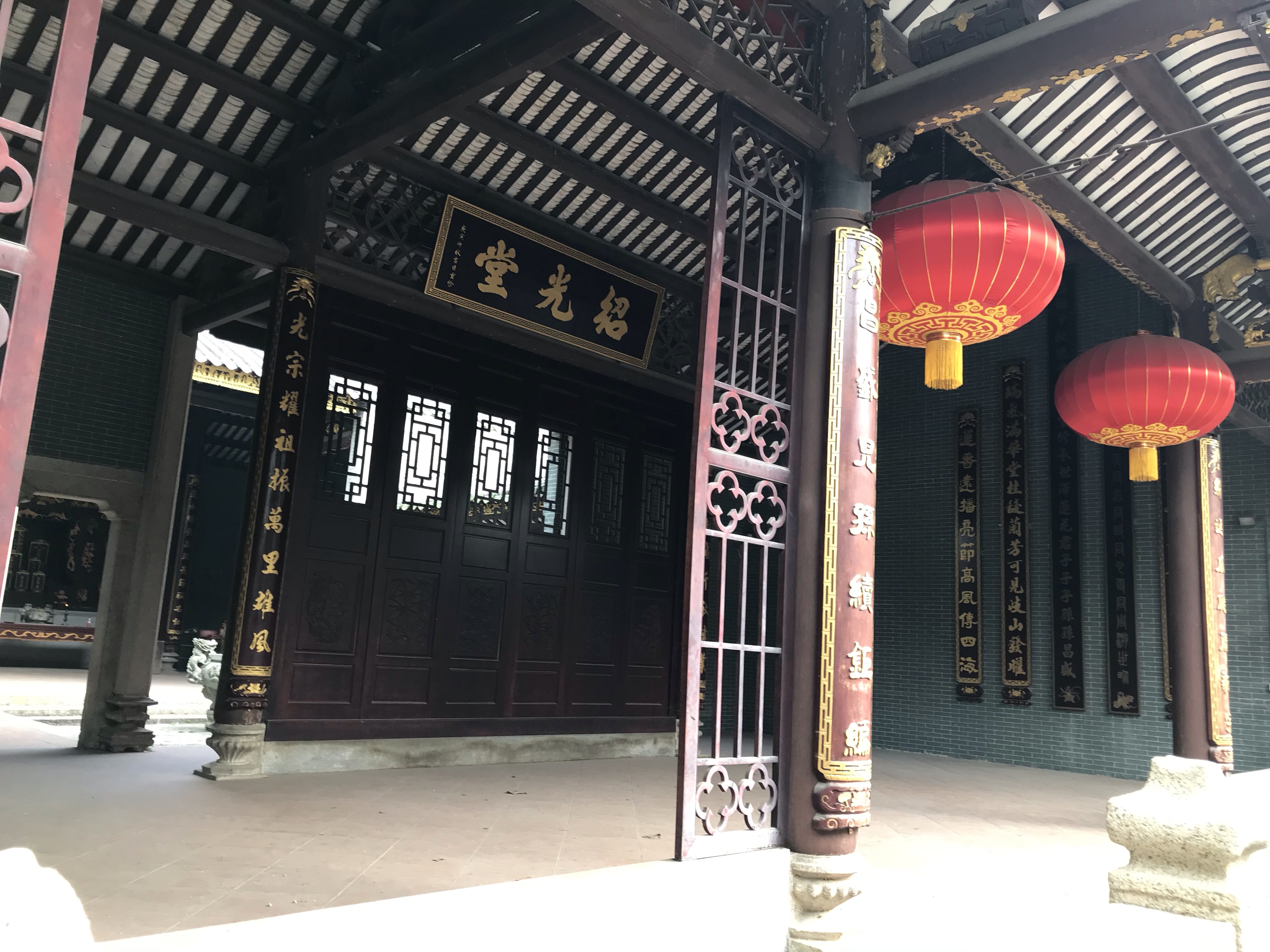
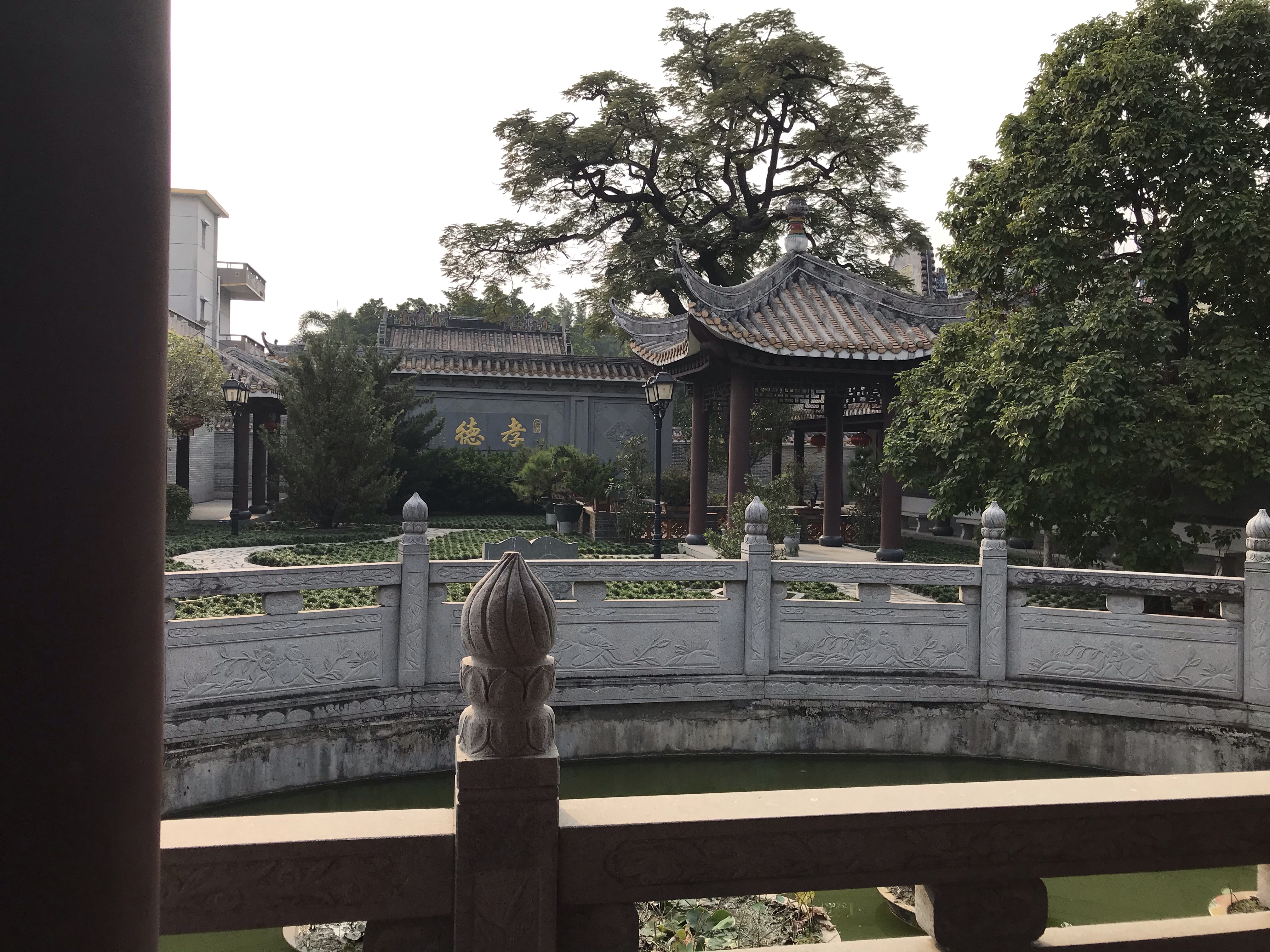
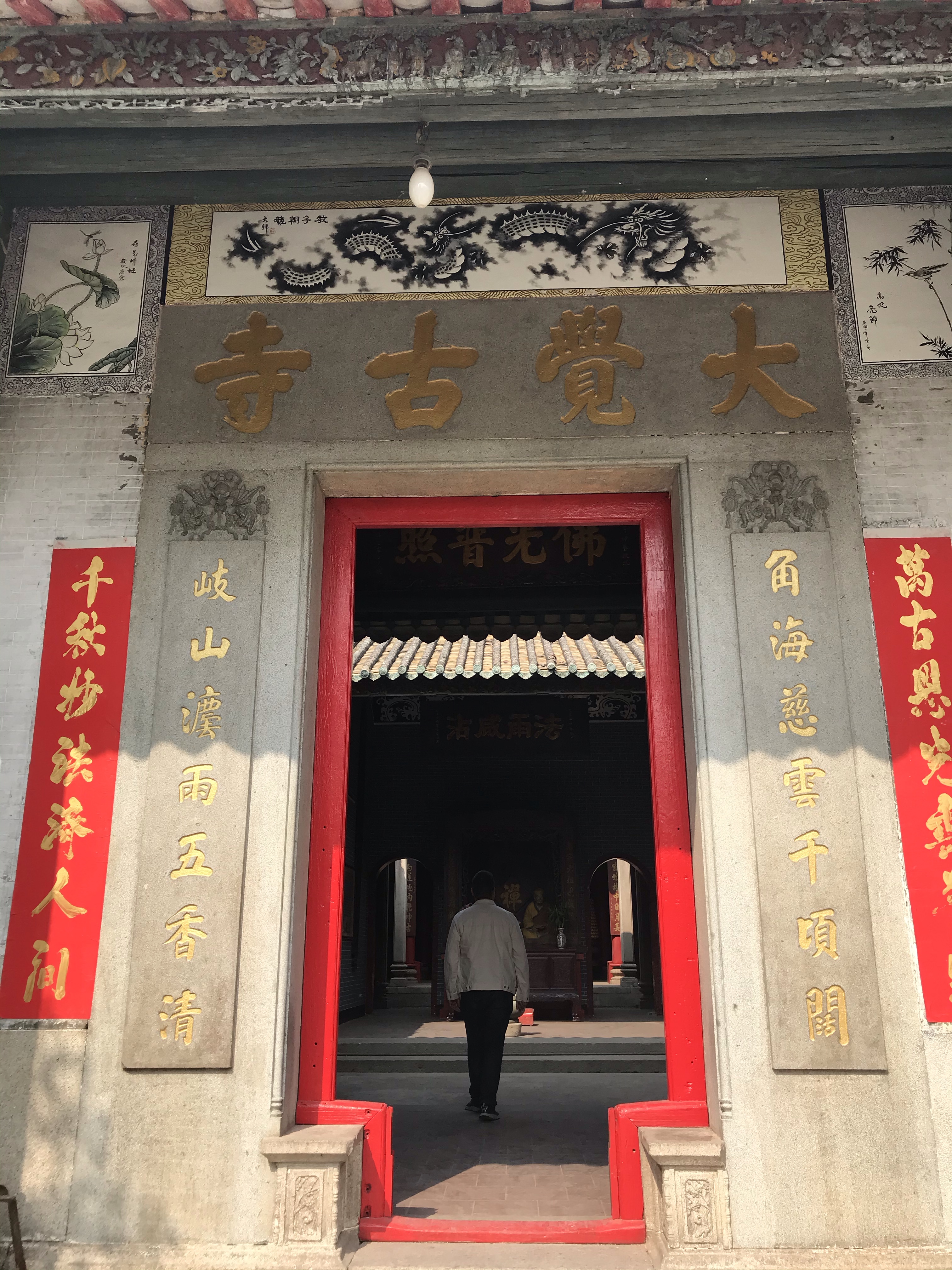
The Chou Family Temple, originally in Punyu outside of Guangzhou, was a spiffy display of the achievements of its clan members. It was well-endowed, orderly and refined. Judging by its size, educational content, and tidiness, there was plenty of support from both local and overseas sources.
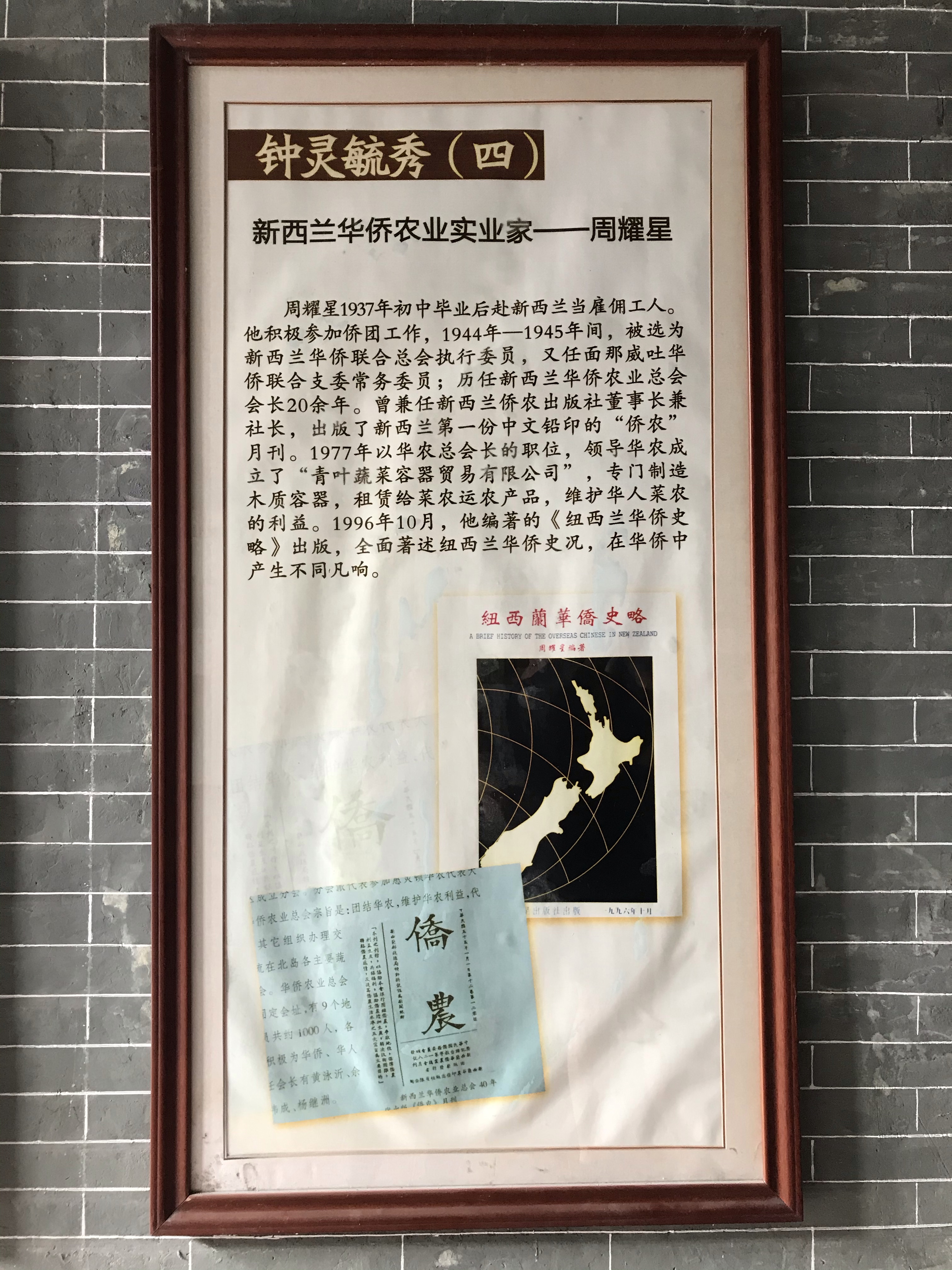
Here are more slides of the temple gardens and architecture (click to the right to advance): A poster room showed the first Overseas Chinese who migrated to New Zealand among other illustrious clan members.
Lum Family Temple
The Lum Family Temple in Antang was simple, modest, and a bit neglected. There seemed to be little interest in reviving its religious function. Perhaps due to generations of scholars and civil examination administrators, there was less outward display of wealth.
Lum Family Ancestral Temple
See previous post for additional photos of the Lum Family temple.
We also collected big manuals of family history. The “juk po” contains the genealogy beyond 24 generations. Most of these histories recorded began with the earliest patriarch who settled in a locality.
Many Northern Chinese migrated south prior to, during, and after the Mongol Invasions of Genghis Khan. We discovered some awesome dates as early as 1017!!
Newly Renovated Fong Family Ancestral Temple
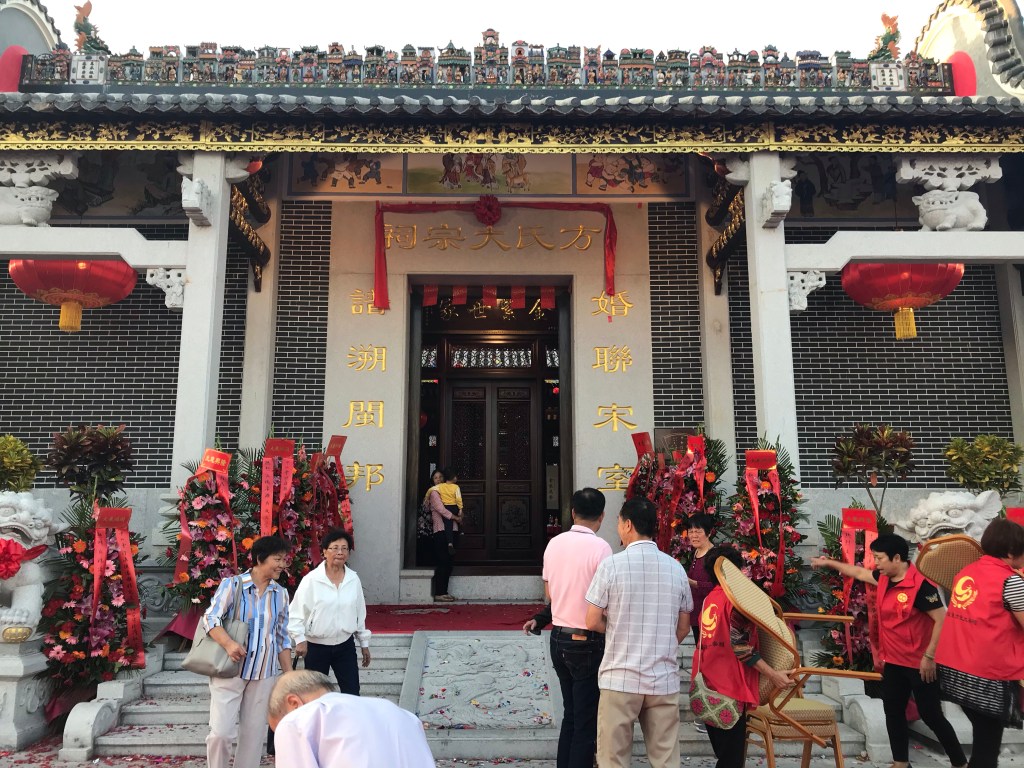
Unlike the solemn and serious nature of the Chou and Lum Ancestral visits, we had a completely unique experience visiting the The Fong Family Ancestral Temple. The Fong clan pulled out all the stops for a lively inauguration of its newly renovated complex..
We were invited to join a sit-down dinner banquet serving over 1200 guests. Acrobats, dancers and a pop singer provided home-grown entertainment in the large playground outside the temple. Activities throughout the day included a lion dance commemorating the inauguration and honoring the ancestors.
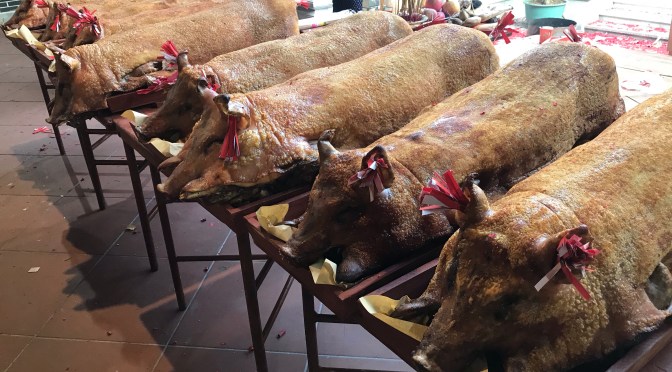
The traditional nine-course menu included duck, chicken, fish, prawns, and abalone in the shell. The string of roast pigs first served to the gods were later carved and served to we lowly mortals in attendance.
It was a raw and bawdy but authentic affair. We were able to witness history with the entire community, and gained a deeper understanding and appreciation of our family roots.
Visiting three ancestral temples simultaneously may seem like cultural overload. But by visiting these ancestral shrines in a row, I could fully appreciate the importance of these facilities that served past generations of Chinese and will serve future ones as well.
Inauguration of Fong Family Ancestral Temple Complex Renovation
Note: I apologize if videos are not viewable on your device. Posting graphic material in WordPress from China has been a challenge! I will try updating them after I return to the U.S. next week. Check back then if you are interested.
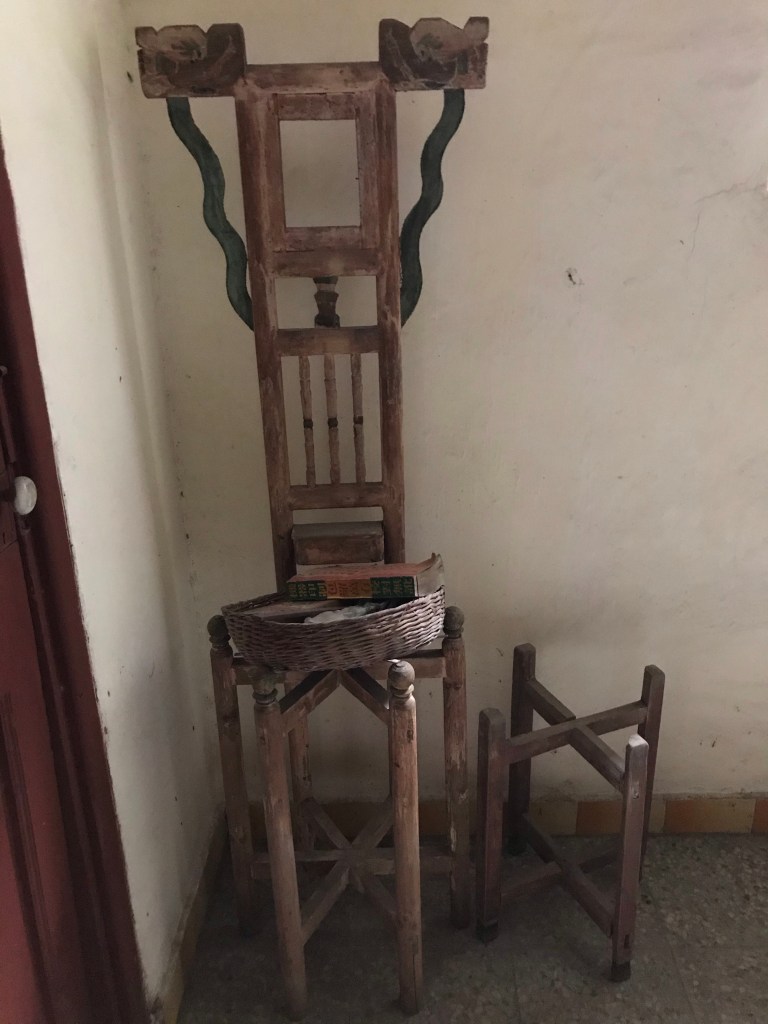
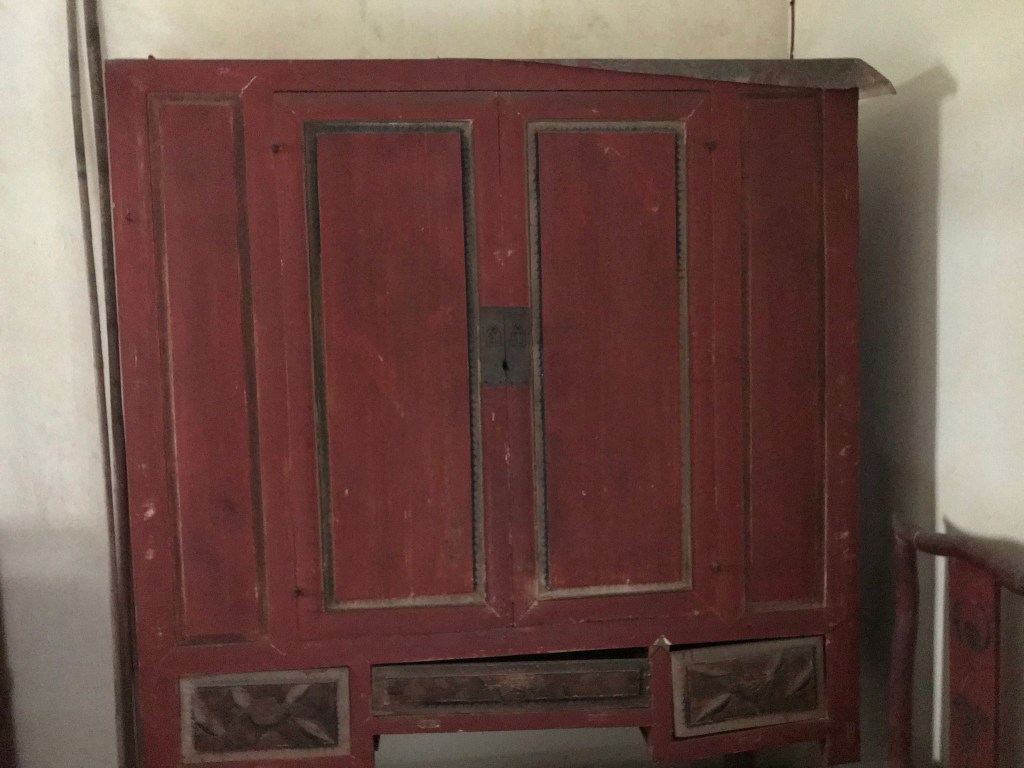
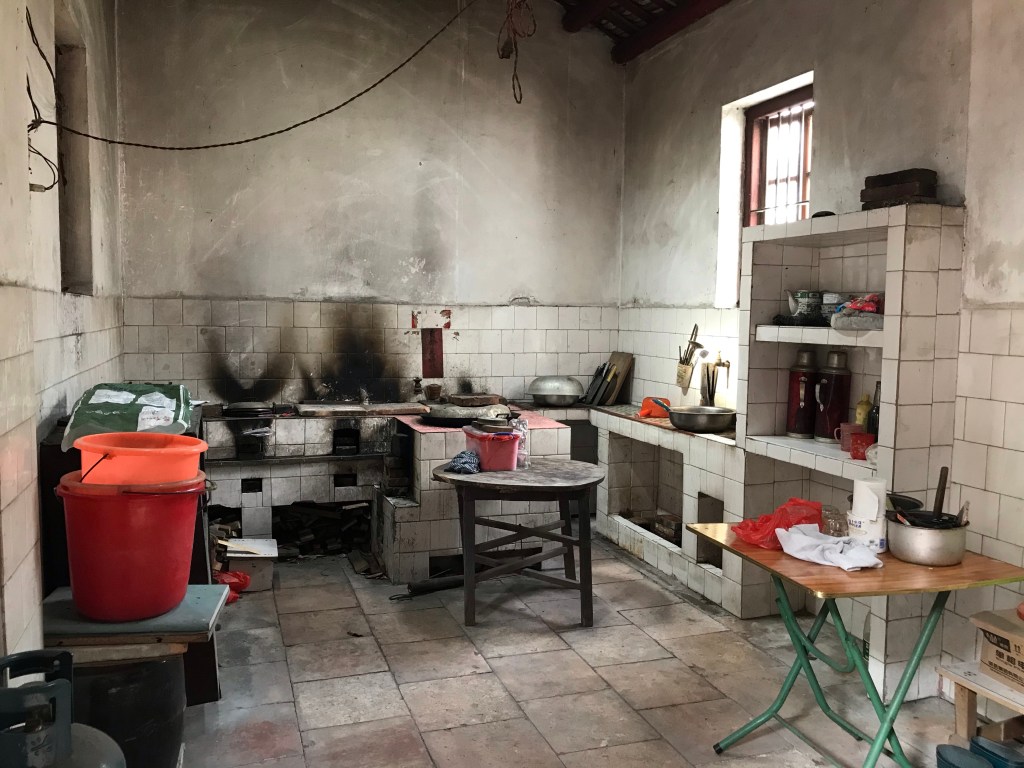
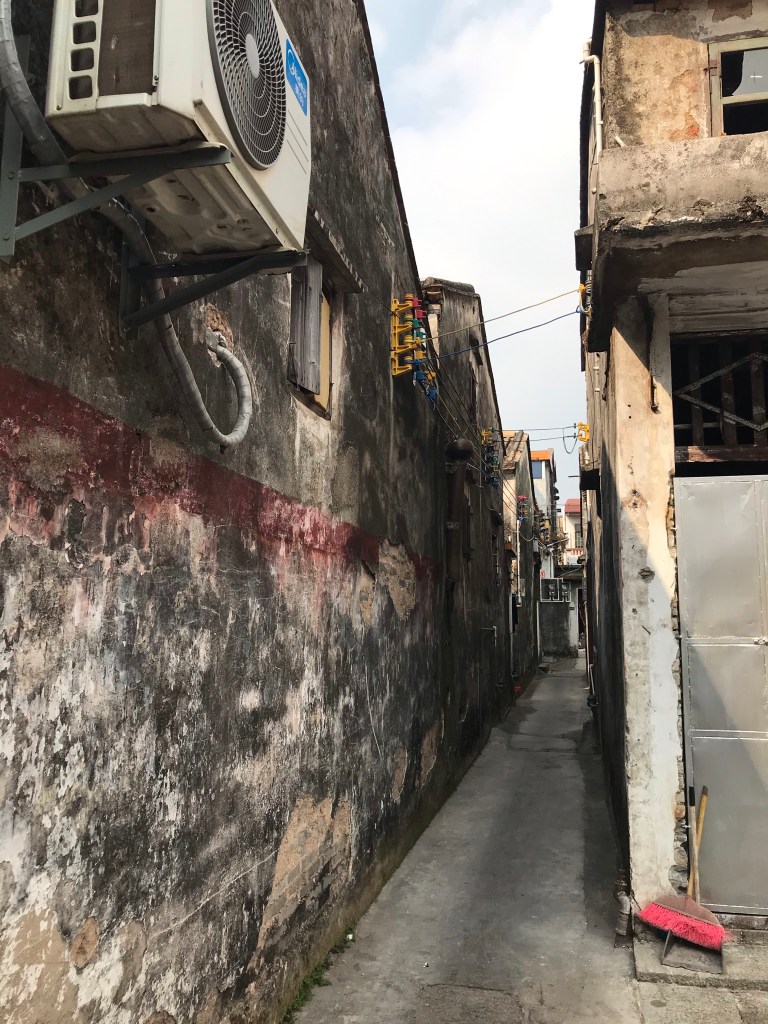
The Chou Family village home in the once-rural area of Punyu is now consumed by the urban demands of Guangzhou. Located in the Bamboo Garden Village in Bai Yun near the Guangzhou airport, the stately home was originally built in the middle of rice paddies. Through the maze of six to seven-story buildings haphazardly built in the 80’s and 90’s, the narrow alleyways lead to this peaceful oasis.
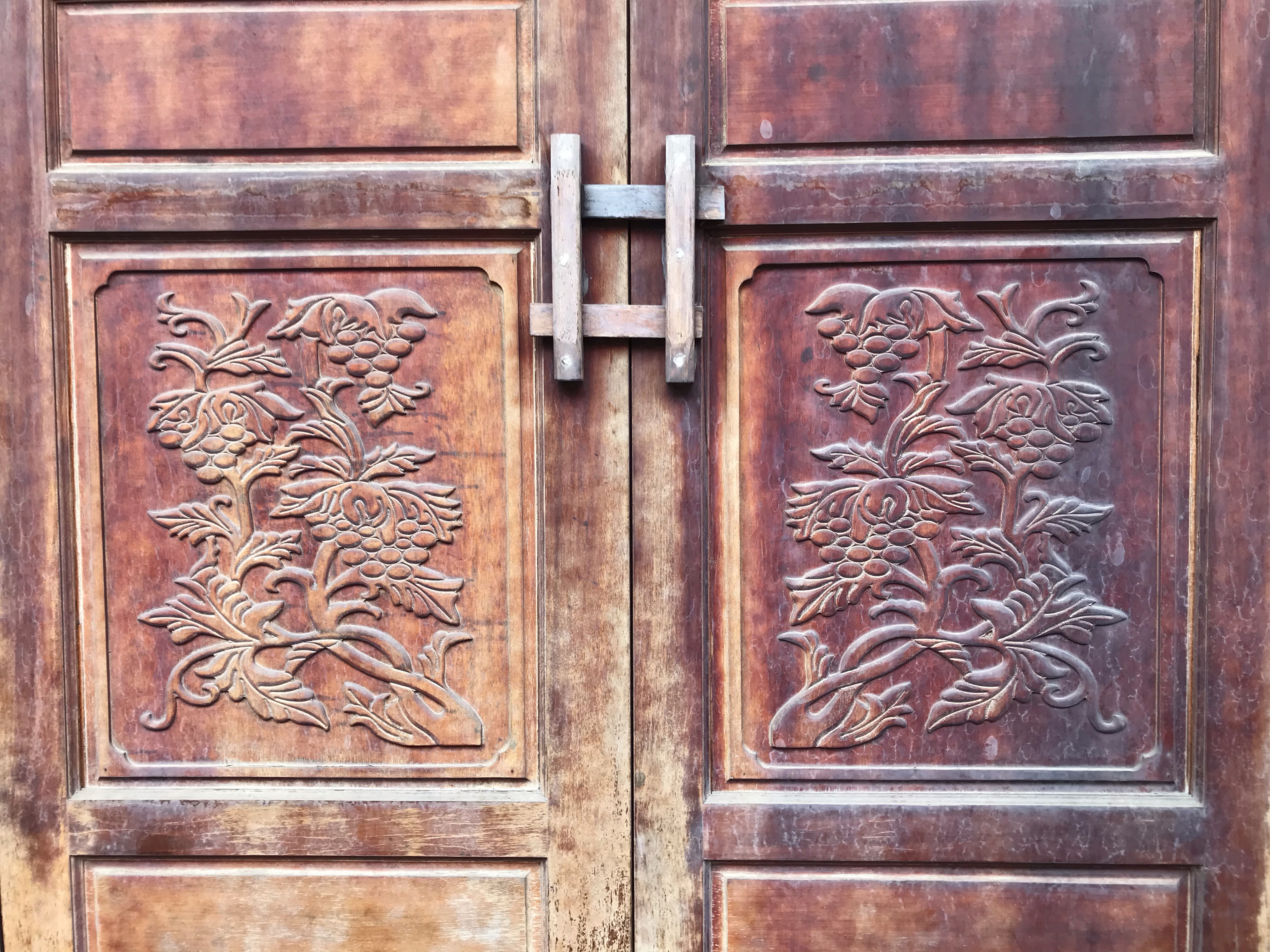
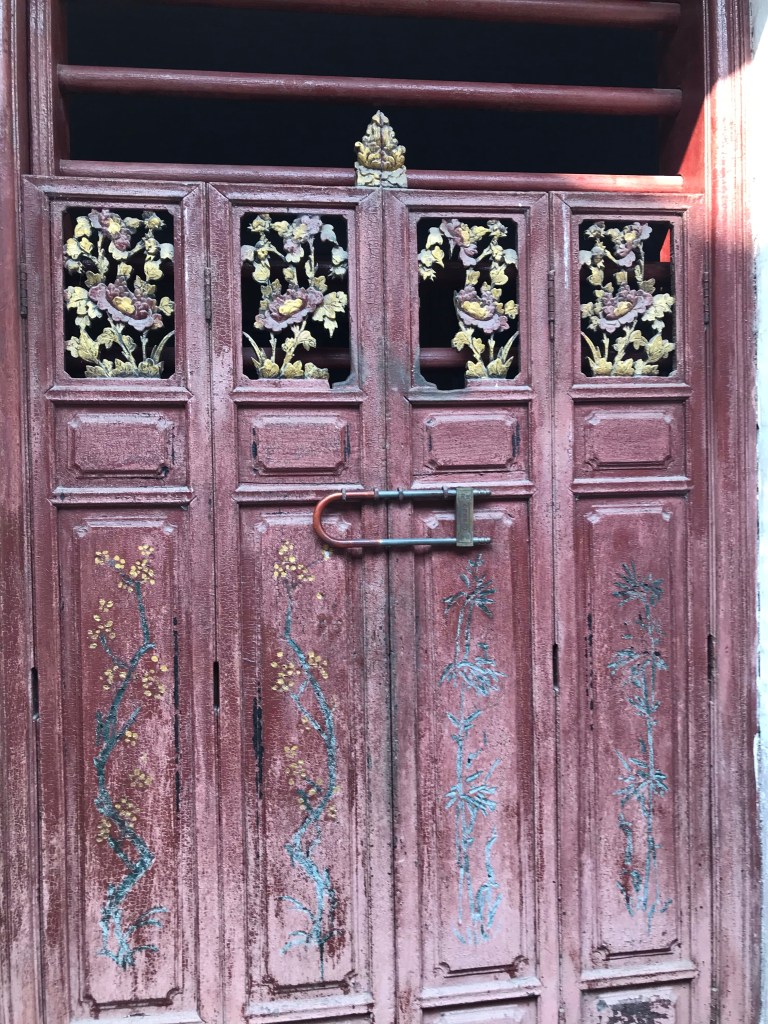
The house is the oldest remaining home in the village. A few remaining pieces of furniture shown above survived the past. The family residence remains unoccupied, but hopefully its redeeming features will support new life and purpose.
An Tang Village
A search for the Lum Family house in An Tang Village proved to be more challenging. The house no longer exists, but finding the precise location was also elusive. The search demands people, place, and time. Rickety 80’s and 90’s adhoc housing sprinkled throughout the village similar to that found in Bamboo Garden obscure landmarks. Being in a more rural setting, the An Tang Village contained more traditional village houses. This could be related to funding, demand and proximity to an urban area.
We located the home of my mother’s uncle. Adjacent to it was a 20’s era clinic. It reminded me of the contemporary style of Sun Yat Sen’s Residence in Hong Kong. Athough unoccupied, it appears to be a historic building ripe for attention and TLC.
The series of Ancestral Temples made the village visit worthwhile. In addition to the artwork that preserves the legacy of the Lum Family, local street murals scattered throughout the village provided inspiration for its residents.
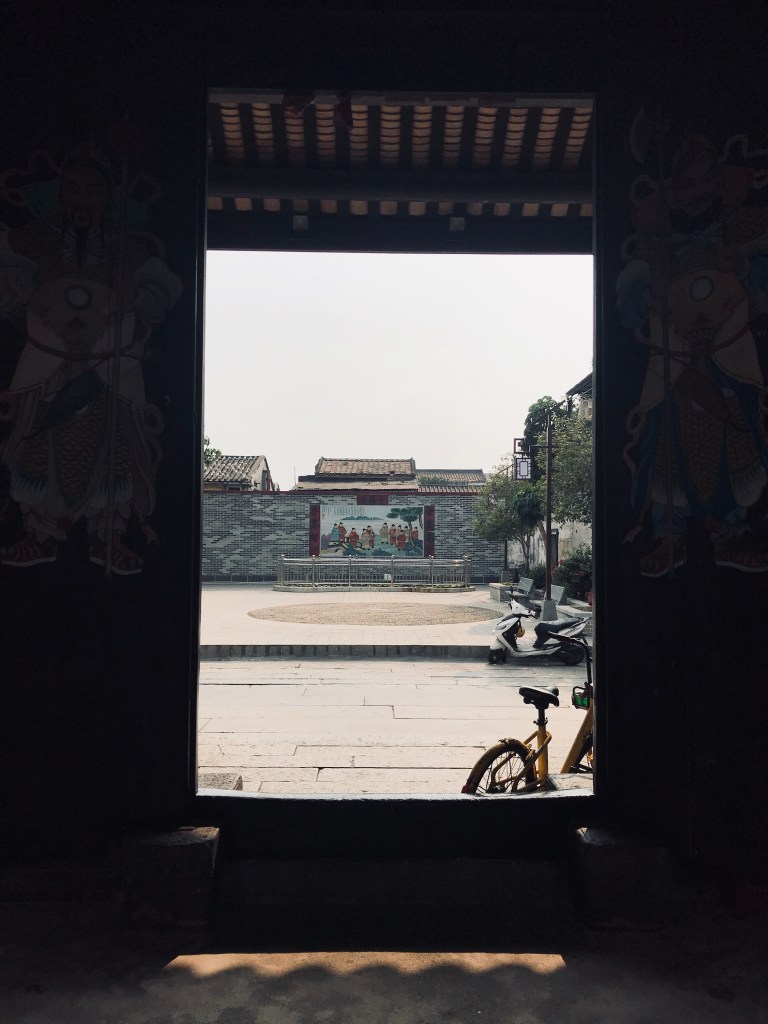
Temple Entrance
View to the Courtyard
Village Founders
Street Mural
Street Mural
Foodie Heaven
One could never escape a stay in Guangzhou without being first confronted, then blown away by the exquisite simplicity of flavors and unadulterated freshness of ingredients. The consistency of quality is truly remarkable. Restaurants compete for business. Reputation is everything. Now add innovation and creativity to rival any five-star presentation.
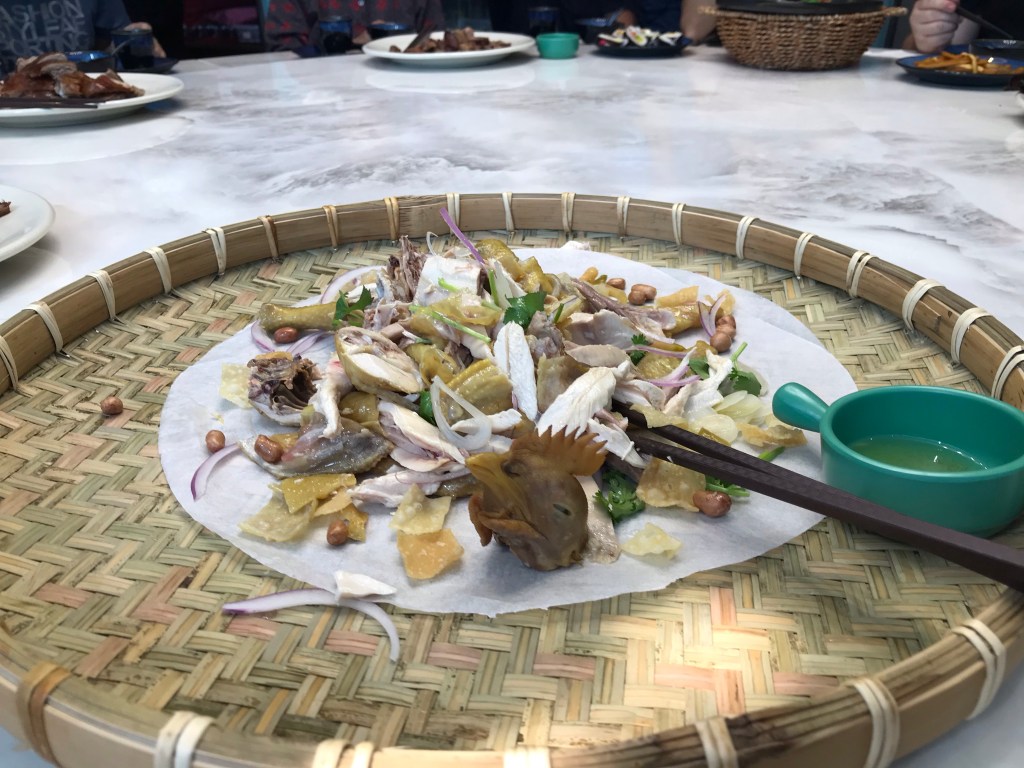
Chicken Salad
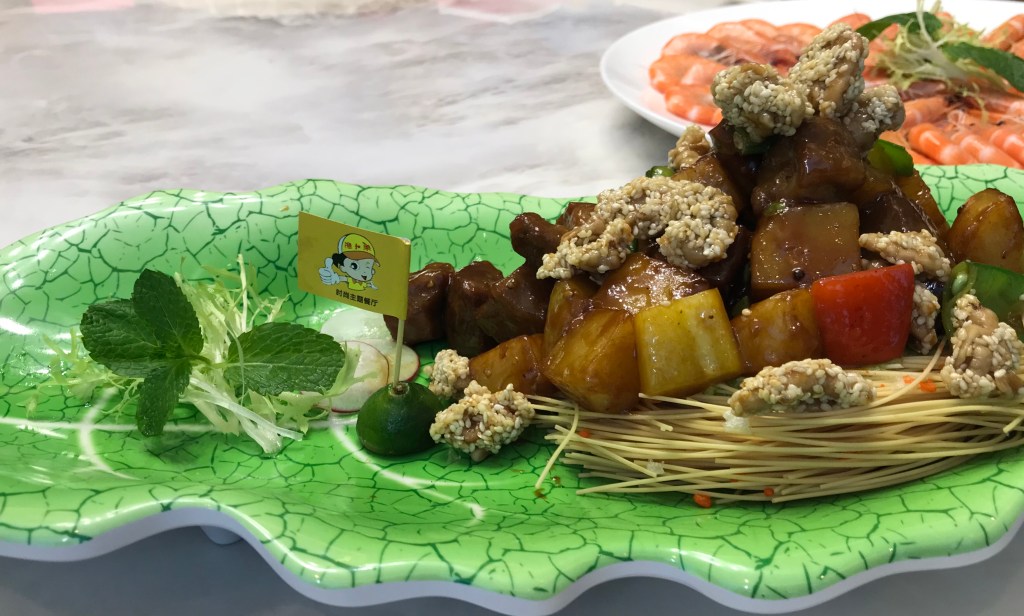
Pineapple Pork in Noodle Nest
Classic Steamed Shrimp
The spread
Crispy pancake dessert
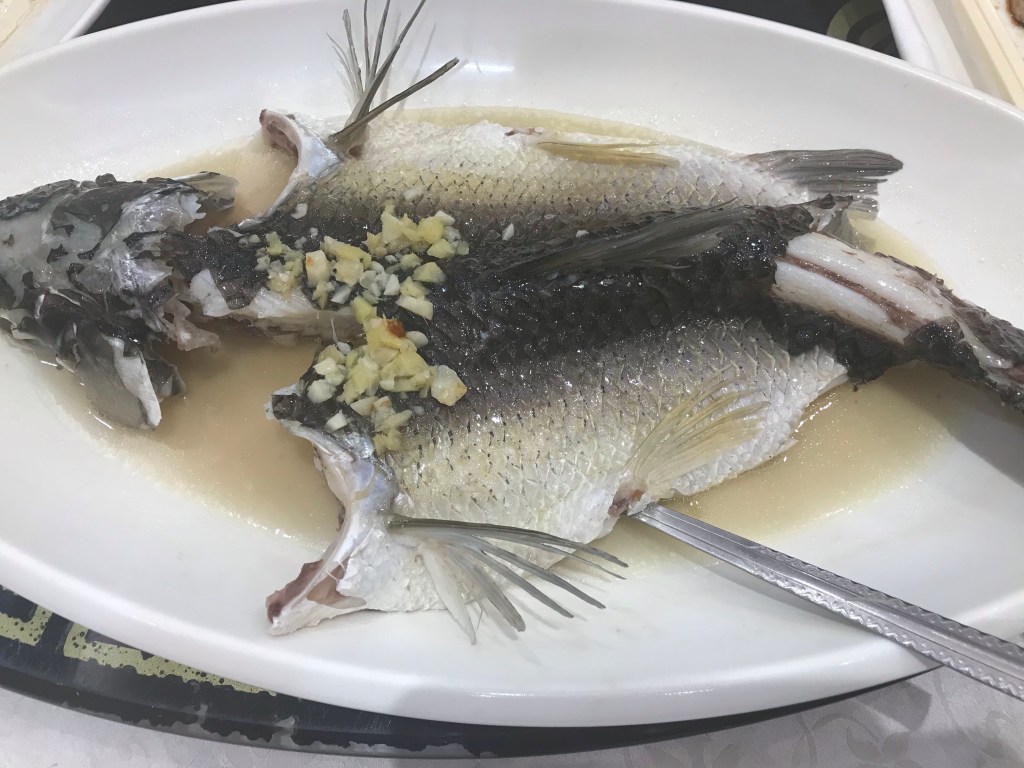
Traditional Steamed Fish
In one restaurant, a huge automated lazy susan brings the food to you. Similar to the sushi boat concept, you barely have to “lift a finger” to get the food to your plate!
Transit Nightmare
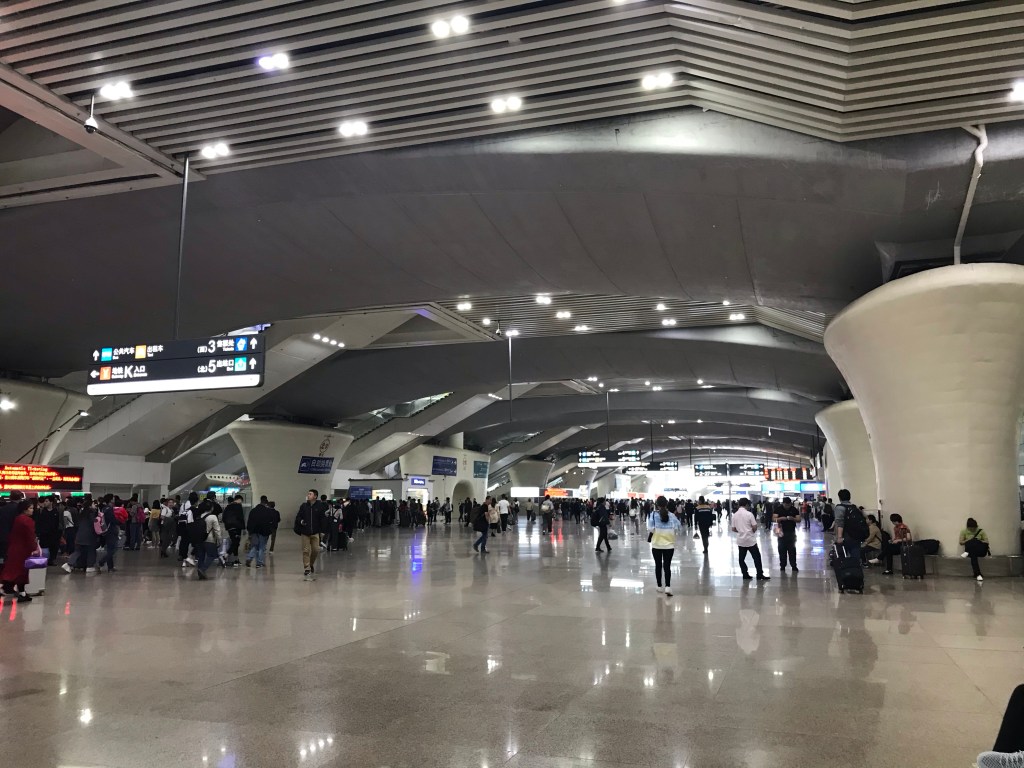
Despite the herculean feat of moving teaming masses of humanity, public transit in Guangzhou is still a frightening, mesmerizing, and astounding experience. High speed trains get you from Hong Kong to Guangzhou and other remote areas in less than an hour, buses interconnect to desired locations, and the internet provides information and easy ticket orders.
Having worked on the HK Mass Transit Railway when its first line was under construction, I am at a loss at how to improve this situation. This development addresses mankind’s needs and for the time being, it is about as good as it gets.
Teeming humanityThe new Guangzhou South Railway Station is the length of 6 football fields
After a non-stop flight of 14 hours and 40 minutes, we arrived safely and were processed through the airport smoothly. The airport express only runs until 7pm to Kowloon, where we are staying, so we took a taxi directly to our hotel. Streets seemed to be eerily quiet except for stray tourists in Tsimshatsui. We’ll be traveling primarily through Guangzhou and Hanoi over the next couple of weeks.
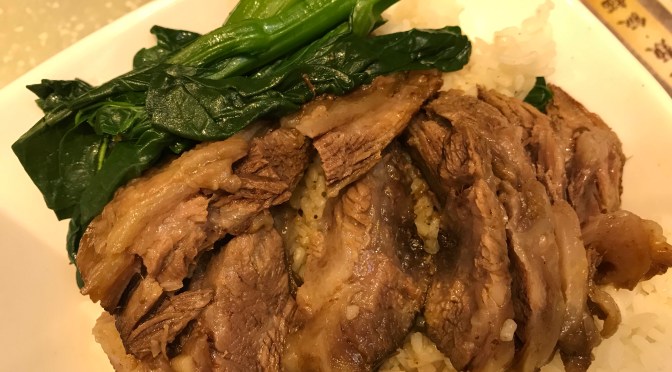
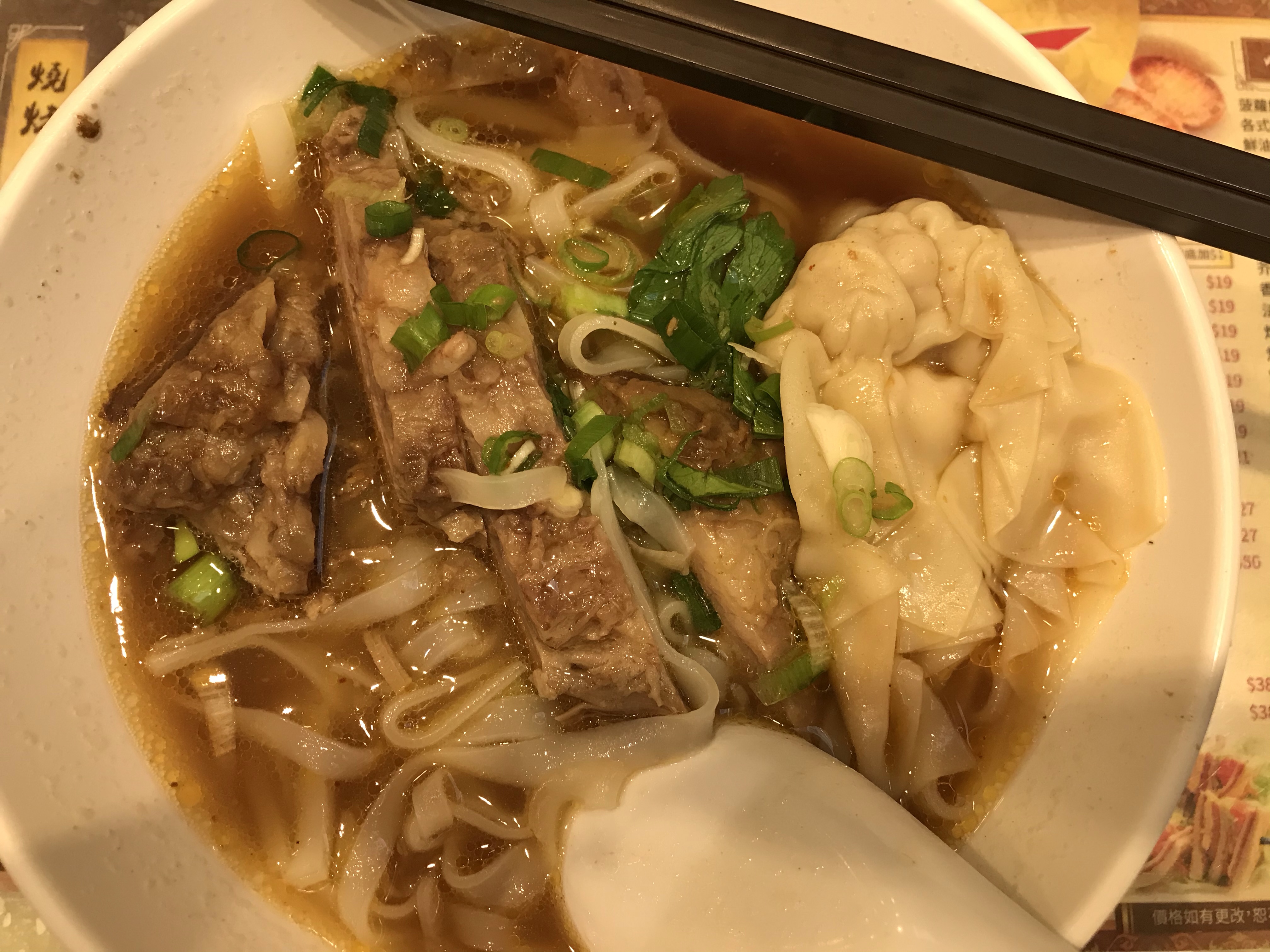
We found a hole-in-the wall for comfort food of braised beef over a choice of rice, rice noodle, wheat noodles or won ton in soup. We slurped to our hearts delight for that one dish that is quintessentially Hong Kong.
We are scheduled to take the train from Hung Hom Station to Guangzhou East tomorrow. It’s on the other side of HK Polytechnic, where protests have occurred. Stay tuned for a report on our situation tomorrow.
Every year, about when Indian Summer in San Francisco begins to strike, we receive wishes from friends and relatives in China for the Mid-Autumn Festival. The mooncakes are given to celebrate the unity of the family, on the 15th day of the 8th Month of the lunar calendar. Moon watching and lantern lighting are part of the festivities in many countries in Asia.
The origin of mooncakes dates back to the Tang Dynasty, when a Turpan businessman gave the cakes out after the Hsiungnu were defeated in Northwest China (at the gateway to the Silk Road). The gift of mooncakes became a tradition after that.
Our daughter and dessert chef at Mr. Jiu’s in San Francisco created her interpretation of mooncakes in the picture above. She hosts a pop-up shop, “Grand Opening” every second Saturday of the month, with different limited-edition desserts paired with savory specialties created by in-house or guest chefs.











































 travelswithmyselfandothers.com