Category Archives: 2016

Day 56-58: TSE in Transit

Good Morning Everyone

We boarded the eastern section of the Trans Siberian Express (TSE) the night before, so today is the second of three days on the train from Irkutsk to Vladivostok.

Irkutsk is positioned on the west side of Lake Baikal. As mentioned earlier, Lake Baikal is the deepest and oldest lake in the world. These may be little known or insignificant details to most people, except that it was one of the engineering obstacles in building the TSE. Although much of the construction required laying track along the 5880 miles or so, the section along Lake Baikal required blasting, going through narrow gorges, and swampy terrain. Now there is talk about a joint venture between China and Russia to build a high-speed version of the route.

Until then, I will enjoy what has been produced to date. The views of the eastern route have changed, from five of the six continuous days last year through Siberian birch forests and saggy wooden rooftops to brighter, open grassland sprinkled with wildflowers among pine and birch forests along the Amur River. There are twice as many stops on this eastern leg of the TSE (only about a quarter of the distance from Ulaan Baatar to Moscow). We were pleased to see a more vibrant side of the Russian landscape.

The people have been curious. We have had limited contact with Russians, and the language has definitely been a deterrent. We were finally able to connect with one of the guides at the Irkutsk City Museum by using broken French on both sides. So my five years of French in high school finally paid off, after trying English, German and Chinese in futility.

Virtually no one on the train speaks English, with one exception. We met a gentleman who lived in the Grand Canary Islands in the dining car yesterday. He was Austrian, originally from Innsbruck, and owned and operated a small, up-scale restaurant in the Canaries. He was taking a four-month break (low season in the summer in the Canaries, as most tourists go there in the winter) with his wife and was traveling through Eurasia by train.

In the Eighties, he made twenty films on different cities and countries in the world for an Austrian television series at a clip of one a week. San Francisco was one of the cities, so his eyes sparkled when we told him we came from there.

His current route took him from Vienna to Minsk, then Moscow, then Ulaan Baatar. After spending a week in Mongolia, they were heading in the same direction we were, to Vladivostok. We are finding that the travelers we meet along the way have substantive histories and travel background.

Other than 2-3 staff, this couple has been running a small high quality restaurant for over 30 years. The gentleman and head chef had been trained in a cooking school from the age of 14 to 17. When he turned 18, he left his home to start a successful business and wound up in the Canaries.

Every year, he and his family (the couple has a 17-year-old son) traveled to Africa, South America, and Asia. They loved traveling with their son as he was growing up. Alas, their son has finally decided to do his own thing this year. Although we have yet to meet the wife, the chef indicated that she was very sad about this change. We could certainly commiserate with him over this shift in no longer sharing family travel.

We realized that the depth and breadth of these travelers are fascinating stories. It took an hour-long conversation to get the facts and stats straight. They unfold slowly, with each question leading to another. This couple was planning to continue after Vladivostok to North Korea, take the ferry from Vladivostok to S. Korea, train from Beijing to Hong Kong, then back home. They planned all of their own travel routes and visas. I didn’t feel so crazy about my traveling itinerary after all. I found that it was often topped by other creative travelers.

The older couple on the hour-long minibus to Lake Baikal were another pair of experienced travelers. They lived in Doha as boomerang teachers and were doing the TSE after Mongolia to Moscow. They had lived and taught in Bonn, Germany for three years and loved Germany. They recommended going on safari through Kenya, Tanzania, or Botswana. After a week in Mongolia off-road, it sounded tantalizing and achievable.

The third group of savvy travelers we met during another dining car conversation going from Ulaan Baatar to Irkutsk. The young 30-ish fluent English speaker was originally from Mexico, living in Beijing, and owned an adventure travel company. He planned tours for ex-pats and locals living in the Beijing area, and could switch between Iran ski trips to scuba diving on Hainan Island. He was in Mongolia for the first time keeping an eye on a tour group led by a guide from his company.

One of his tour members was an older woman from North Carolina. She was teaching music in Beijing and was hopeful one of her emerging students could become world-famous. Like the rest, this woman was friendly, energetic, and ready to tackle any adventure along the path of travel.

The similarity between all three groups were the fact that they were ex-pats living abroad and eaking out a pretty good life. Whether young or old, these individuals were searching for ways to experience the world in as many ways as possible. I felt strangely at home with them. Being more visual, I find that seeing the world helps me to learn about it much quicker than through books.

Unfortunately, our encounters with the Russians have not been as promising as we hoped. The language barrier is obviously the main obstacle, but we found their demeanor a bit clipped and uninviting. I’m sure that under different circumstances it would be better.

We landed in a four-berth compartment on a wager that last year’s similar booking would get a private compartment without having to pay for it. Wrong. We are sharing the accommodation with a Russian mother and her 12-year-old son, who were a bit beside themselves when we invaded the space at 9pm in the evening.

We are still waiting for them to warm up to us, and to recognize that we are in this together for the next three days. The carriage is full, and despite cheery hellos in Russki and English we are still experiencing downward facing glances. We are now more appreciative of the friendly unassuming Americans, who have everything to share and are aware that they have everything to gain in doing so.

Due to the high density of the population, the Chinese in their inimitable way are also quick to engage despite their rude and crude behavior. They are not afraid to be embarrassed. Imagine Americans going to Mexico in the first generation of travel beyond our borders. Transfer that experience to Chinese traveling to Russia.

IMG_4449

Day 55: Sadly, Irkutsk, Russia

Here’s a gallery of unpreserved historical and old buildings in Irkutsk. Both the Trubetsky and the Irkutsk Historical Museums that we visited today did not allow photos inside, so these are exterior shots only.

You can really get a sense of how bleak and gruesome it was living through a winter in Siberia. Around 1830 in St. Petersburg,  nobles tried to revolt and lead a coup against the Russian empire. They failed, were put into hard labor camps, then exiled to Siberia. Their wives and children were left to follow and look after them, at their own expense.

Known as the Decembrists for the month of the revolt, the anti-imperialists are now finally given due respect for their travails. Trubetsky was one of the survivors who was allowed to live out his life in Irkutsk. His wife had died and was buried here,  so he chose to remain where her grave was. The museum is located in the home where he lived out the remainder of his life.

Irkutsk has a short history of only 355 years. I find it surprising that American history predates the one here. We are so easily surpassed by any country in Europe. It’s not surprising that few humans would contemplate ever living here.

The state of disrepair and condition of the city were depressing. At a site we passed, old Russian artillery and tanks were on display in a neglected area overrun with weeds. Once a building was built, it never seemed to be maintained or repaired to extend its life.

The harsh weather of Siberia shows how difficult and impractical it was to make sufficient repairs in the few good months of the year. It seems that everyone needed to spend the time recovering from the previous winter and enjoy the few days of sunshine, rather than toil to gain a simple pride of place.

Relevant to this conversation, the construction of the Trans Siberian Railroad was another example of how difficult it was to build anything. Stretching nearly twice the length of the US, the railroad took 25 years to build. The area around Lake Baikal was particularly difficult. Here’s more information about the construction around Irkutsk:http://www.irkutsk.org/fed/transsib.html.

Sadly, Irkutsk didn’t have the vibrancy and can-do  energy of Mongolia. It seems to be bogged down by its climate, corruption and inertia. It may be harsh judgment, and I can not speak from an impression of the city. Gee Kin travels for understanding, while I travel for enjoyment. It’s hard to do either here.

Going off the grid for three days or more. Will try to report from Vladivostok next. Apologies in advance if you are having trouble accessing the website. It’s been erratic and unpredictable. Hopefully this will be fixed by time I reach Japan. Thanks for your patience!

Day 53-54: One Degree of Engagement (Lake Baikal, Russia)

Looking back at our week in Mongolia, it has been exhilarating and life-changing. I try to think of similar experiences, and although the trip we took to Montana came to mind, it seemed to be a far cry in comparison. Imagine Montana being the size of the US with the same density of population and that would give you an impression of what Mongolia is like.

I am attaching the Wikipedia reference for those who are curious: https://en.wikipedia.org/wiki/Mongolia. In this quick search, I learned that Mongolia is in fact the most sparsely populated country in the world. It’s no wonder that we felt the impact (or lack thereof) of human habitation on the planet here. We wondered if this wasn’t a good place to start if you wanted to live on the moon.

The low density means that people who live in Mongolia depend on each other. Gee Kin explained some of the details in the last post. For me, it was a reassuring vote for humanity. You learn to trust and rely on those around you. Just like the herder family in the video, you do everything for each other. We had a beautiful day and authentic experience with the herder family and our guides.

I am reposting the video from yesterday for those of you were unable to view it. I inserted the punchline in the back, so hope you will enjoy this revised version.

And…just to close out a few stray thoughts on Mongolia, here is a copy of the map of the Mongol Empire, showing Genghis Khan and Family’s Conquests in a few fell swoops:

FullSizeRender 71.jpg

Onward to Irkutsk, Russia

Our 18 month Russian visas from last year made it easy to take another trip into Russia this year. We hadn’t really planned on it, but coming to Mongolia made it irresistible to continue through Russia east to Vladivostok. We came north first by train from Ulaan Bataar (see spiffy Mongolian train above), then in a few days will be heading to the East Coast to on the last leg of the Trans-Siberian Express.

We heard that there were 19th Century wooden buildings in Irkutsk, so went towards an area for dinner that reminded me of Cannery Row in Monterey or Jack London Square in Oakland. It was an easy walk on a Saturday afternoon and many locals were heading in the same direction toward the mall.

We found a pretty decent restaurant with equal flair to any Bay Area restaurant:

Dinner with wine was only $40.00!

Listvaynka Village, Lake Baikal

Our main adventure the following day headed us in the direction of Lake Baikal, the oldest and deepest (about a mile deep) fresh water lake in the world. After gawking at the seaside crowd, we had pilaf and smoked fish for lunch in Listvaynka Village. It was refreshingly cool and a little bit of Sausalito in Eastern Russia.

The Sunday Weekend market in Lake Baikal featured smoked fish.

The bus back to Irkutsk put is in front of the city’s Sunday Market. It was very similar to the huge market that I saw two years ago in Tashkent, Uzbekistan. Uzbekistan produces much of the fresh vegetables and fruits for Russia, Mongolia, and other Central Asian and Asian countries.

On the way to Lake Baikal, about an hour outside Irkutsk, we met two Canadian travelers. They were a sturdy pair–active seniors who were working as educators in Doha and traveling throughout the world. In case you were wondering what’s happened to baby boomers, they are out of the woodwork and into the world again. Maybe not on the $5 a day like we did in the late 60’s, but resilient as ever.

They can do a mean Ritz Carlton on demand as easily as a backpacker’s hostel–for a few days, at least. I like to think of myself as being able to do both, but I tend to be more of a middle-of-the-roader. Our trip to Mongolia, on the other hand, was certainly a safari of sorts, but with fewer wild animals.

Our new-found friends told us a story about someone they met in Mongolia who was on a Guinness Book of Records pursuit for the most number of countries visited in the shortest amount of time. The 27-year old female traveler had already been to 130 of the 196 countries and is taking three years to complete the task. She spent most of her time obtaining visas and on the internet and had company endorsements.

I calculated that it would take about five days per country. At the minimum, all she had to do was to record the GPS point at the airport on her phone and get a visa stamp. I’m sure that she is doing more than that, but regardless, what a journey! It captured my imagination. I decided that I had met her through one degree of separation.

Day 52: Mongolia 5 (Herder Video, Guest Post, and Tips)

Mongolian Herder Video

Thoughts on Mongolia

Coming to Mongolia has been a philosophy class. What is “progress”? What is a “fulfilling life”? What should be the relationship of humans to the rest of the earth?

Thousands of years ago, much of the world was like present-day Mongolia: a few humans herding livestock from one location to another pursuing better pastures and decent weather. Then came the development of intensive agriculture; people stopped moving around and started living closer to each other. And we are now where we are.

Obviously, Mongolia is not thousands of years behind the rest of the world. But there ARE very few people, only 3 million living in an area the size of Western Europe. And as many as 30% of the population are still herders, living in “gers” that they move with the seasons. There are no fences. Their animals are allowed to roam and graze on lands naturally covered with native plants. Their livestock provide much of their food: meat and dairy. Their days are regulated by the hours of daylight, and their year is regulated by the seasons. The land and their animals provide life. This is their mantra.

All this is going to change. But Mongolia has a chance to do development right. It’s as if God is giving humans another chance – to not screw it all up this time round.

I don’t know what Mongolia is going to be like in 20 years. But as the population increases, there will be more constraints on the herding, nomadic way of life. Massive factory farms and open-pit mines already are fencing off areas from grazing.

A law that was passed a few years ago that entitled every adult Mongolian to 0.7 hectare of land will eventually have to end. Mongolians don’t write wills; the descendants decide among themselves how to divide up any inheritance. As Mongolians become wealthier and family members live further apart, lawyers are going to come into their own.

I like modern living. This past week in Mongolia has reinforced my appreciation of indoor plumbing, being able to eat foods other than meat and dairy, and security from wind, rain, bugs and wild animals. But there are other things I could do without.

If I had a chance to start human development all again, I would make choices. Mongolians have a chance to make theirs.

Gee Kin Chou, June 29, 2016

12 Tricks for Mongolian Ger Survival

I just realize that my posts have been pretty dry and humorless in the past few months. It’s hard to laugh with yourself unless you are reminded at times. Now that I have a traveling partner, we share the perspective on how we travel–the good, the bad, the fun, the pain. Laughter is the best medicine to get you through all situations.

Here are a few pointers for those contemplating a stay in a ger. There’s nothing like creating a list from real life experience.

  1. Duck your head when entering the low door opening. Oops, didn’t someone already warn me about that!?!
  2. Ask for extra blankets regardless of 90 degree weather in the daytime. Temperatures changes dramatically at night. ( hey, I thought I asked earlier?)
  3. Have the stove heated twice a day. Once before bedtime around 8 pm and once around 7 am before (thinking about it then is too late) you get up. The guide or staff will ask, but make sure it is customized to your waking and sleeping hours! It needs to be timed to when you are undressing and dressing. Notify staff or guide in advance if they don’t ask. This is your only option as there is no other thermostat in the room.(where ARE they?)
  4. Wear hiking boots , not just for hiking but for getting to the outdoor loos in knee high wet grass in the middle of the night and 6″ deep puddles during rain (Damn, I thought this was going to be a walk in the park?)
  5.  Use the futon or comforter as a sleeping bag and roll the edges around your body to eliminate air gaps (and bugs…or am I getting paranoid?)
  6. Use the long tongs for wood  from the stove for removing large black beetles from the sides of tent
  7. Do not be deterred by rain snow sleet or hail. Use garbage cans, trays, and water bottles during the time you are inside to catch any of the above that may inadvertently enter your ger.
  8. Fondle the felt when you first enter the ger. It will reassure you that you will be kept warm, away from most bugs except those that crawl under the gaps through the ground or fly in through the door or opening at the roof plastic. Don’t be disheartened by silly rodents that run over the tops of the ger roof or the moths that cluster outside the skylight plastic. They provide a sweet symphony to lull you to sleep. The felt also protects you from heat and inclement weather. (If you want to know what direction you are facing, the ger doors always face south.)
  9. Decide if you want light by leaving the door open or bugs flying around  the ger before bed. You get both if you leave the door open. Remember that if bugs have a hard time getting out if they manage to get in.
  10. Keep your voice down. If you hear others in the next ger, they can hear you.(Oops ! Have I been shouting? Remember whatever you say comes back to you in a round chamber)
  11. Avoid spending any brain power on the dung being used in the stove as the material contrary to common thought does not smell. If firewood is used, appreciate how far it has come to a neighborhood near you. The smell is only temporary as the stove will not be burning except when you are dressing. (unless you are crazy enough to come outside of the tourist season).
  12. Should you not find any hooks mounted in the walls, simply drape your clothing over any surface areas. Use the chair seats or backs, headboards or beds, and tables in the room. Avoid stuffing clothing between the cross slats in walls or structural ribs in the ceiling as they may cause the ger to collapse.

Above all, remember that Mongolians have been living in gers for centuries and the ger camps are providing you with this experience. They don’t need our advice on advancing civilization. They ruled it for over 200 years and have survival in their DNA.

(ed.note: please send us your comments! We appreciate any and all feedback on your impressions of our travels throughout Eurasia. Emails or comments here are appreciated and welcome!! Keep them coming so we can keep going! Thanks to all for those who have written during this journey.)

After today, our next venture will be in Eastern Russia, through Lake Irkutsk and Vladivostok by train, followed by Tokyo and the Nakasendo Highway. Stay tuned and travel with us.

A note to the newbies: This is my third, around-the-world, live (except for technical glitches), real time journey. As an architect, my interests are in Planning, Design, and Architecture professionally; archaeology, anthropology, art history, and travel generally; Silk Road history, opera, culture and food emotionally; and everything in between.

Days 50-51: Mongolia 4

We are in Day 5 of ger living. Despite its challenges, the variety of gers has allowed us to get a full flavor of ger living. Our last ger included a stay along one of the largest fresh-water lakes in Mongolia. While rudimentary, it gave us a feeling of staying at Lake Tahoe, Mongolian style.

The many incredible, pristine pastoral landscapes we encountered traveling off-road by Land Cruiser included frequent herds of sheep, goats, horses and cattle. These are free-range animals, owned by herders who live in nearby gers, and have no fences. The animals get rounded up at the end of the day and know who and where their friends and family are. We had a full court press of the domestic animal world with a few wild ones and migrating birds for flavor.

The Erdene Zuu Monastery was founded in 1586 and is the first Buddhist monastery in Mongolia. The religion came from India and Tibet in the 12th Century. The grounds of the Monastery are preserved as a museum. The adjacent complex is a working temple. The temple was built over the palace built by Ugudei Khan, and materials were taken from the ruins.

The Kharkhorin Museum presented a fascinating series of maps showing the the history of Mongolia. If you are curious, please click on these to see more; if not, skip this section.

The Chinese Han Dynasty successfully fought back the Xiong Nu empire in Northwest China, and early portions of the Great Wall were built to deter the Xiong Nu from advancing further. (Remember Mu Lan? She was fighting the Xiong Nu!) You can read more about the ruins of the early Great Wall in my posts from Turpan in August 2013.

In the following series, you will learn more about the history of the great Chinggis Khan (1162-1227), one of his sons Ugudei Khan (1186-1241), and his grandson Kubilai (1215-1294). The maps attached are in some ways easier to read than the ones above, as they show the flow of conquests. Take a look at the arrows and dates on the maps and the extent of their conquests in the span of a century! The influence of the Mongols reached as far west as Iran, Iraq and Turkey.

In the same museum where early 8th Century Turkic memorials were preserved, a tomb for servants contained miniature figures similar to those found in Xian. They had Han Dynasty characteristics similar to the figures we enjoyed seeing in Dunhuang Museum in Northwest China. They had unique, expressive faces and lively gestures in their bodies. Apparently these were not created in a tomb for any noble, but were offerings by servants. The size of the figures, gold, and ceramic pieces were not large enough to represent those that were buried with those a leader.

Day 49: Mongolia 3

While we basked in the luxury of a “free range day” where we explored the wide open countryside at a leisurely pace, we still had time to take in another UNESCO World Heritage site. The Orkhon River Valley was a prime location for burials that grouped together large flat steles in round or rectangular shapes. Another spot showed exposed granite stones weathered over time with petroglyphs still evident.

The Land Cruiser allowed us to enjoy the off-road traveling comfortably. Otherwise, it would have been a Russian van that was just as sturdy but a rough ride. Along the way we encountered herds of free-range sheep, cattle, goats, and horses. Many birds also migrate to Mongolia over the summer and travel as far as South Africa.

The photos don’t do any justice to the huge 360 degree views that take your breath away. The clean air is also hard to swallow, especially after Beijing!

Look for next station after Ulaan Baatar: Lake Baikal and Irkutsk, Russia!

Day 48: Mongolia 2

This will be short. We spent the afternoon with a Mongolian herder family. It was alive with activity, including milking cows and horses (for mare’s milk), corralling animals, racing with boys, tasting fermented mare’s milk and curd dessert, and playing with the family’s newborn baby.

The family included an award-winning horse racer (30 years old), his wife (29 years old), his two boys (8 and 6), and the newborn (1 month old)

Our capable guide could milk the cows and horses and had many other talents, but we were thoroughly impressed when she could milk cows and horses without any difficulty! Our driver could wrestle and win races against 5 boys all at once!

Days 45-47: Mongolia 1

After the last posting on Beijing, I didn’t realize that leaving Ulaan Baatar was going to cap access to the internet for awhile. Therefore, you are receiving a rather long, delayed post. The itinerary through Central Mongolia was on and off-road, to ger camps without internet access. It was both a blessing and a curse.

But more importantly, a little background on the vast country of Mongolia. It is a flat, diamond shaped country the size of Western Europe. It is sandwiched between Russia and China and therefore must maintain good relations with these giants.

The growing season is only four months during the summer, and the entire country is shrouded in snow in the winter. Its harsh environment requires the mere 3 million people to rely heavily on family, community and each other. The limited good weather impacts all development, repairs and activity to a very short season.

Why come to Mongolia? Here are three reasons: to learn about the past, present, and future. The history of Genghis Khan, the first ruler who united the tribes, is a fascinating one. His descendants, including Kublai Khan continued to rule during the Mongolian Dynasty for two hundred years, from 1200-1400. Most of the expansionist period was during the first fifty years, when the grandsons who were posted to the outer reasons conquered as far west as Hungary and beyond. 1 in 200 men in the world have the DNA directly attributed to this prolific ruler Genghis and his descendants.

Following the Yuan or Mongol Dynasty that ruled most of Eurasia and China, the Ming defeated the Yuan at their capital in Beijing, and then the Manchurians (Ching Dynasty) ruled over China and Mongolia. With Russian help, Mongolia defeated the Ching Dynasty and became an independent country in 1921.

The second reason for coming to Mongolia is the environment. Mongolia, unlike China today, is still a pristine and pure environment. Nothing can be more contrasted than flying from Beijing to Ulaan Baatar (the correct spelling). The pollution and stifling heat of Beijing disappears and the crystal clear skies and bright sun of Mongolia appear. Ecotourism is being promoted here today and the Mongolians are very proud of their country. They know that the world is their oyster and they have every intention of protecting it.

The future is the third reason. Mongolia has huge mineral resources. Mining is one of its biggest industries, and tourism is growing despite its short season. With such a small population, Mongolia’s GDP has been growing at a rate of 10-15% over the past several years, twice the pace of China. While Mongolia is still considered a basically agricultural, nomadic land, it will experience phenomenal change.

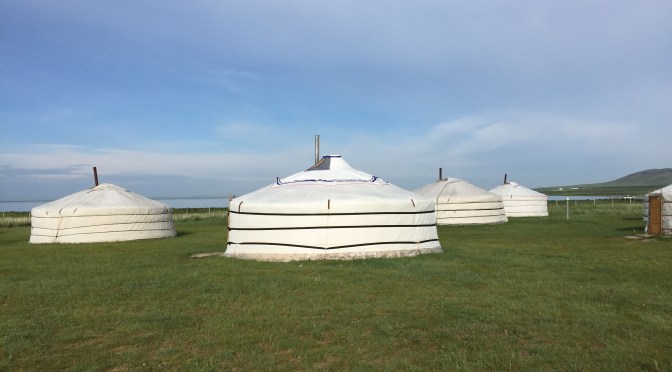
Many people are still nomadic herdsmen, and they still live in the traditional ger, or round huts. They are constructed of wooden supports, felt padded walls, and can be easily assembled. A pot belly stove in the middle heats the room, and all the basics of living are contained within the ger: cooking, eating, sitting, sleeping, and storing. Oops, except for the toilet.

Everything has been hunky-dory in the ger camps where we have been staying for the past few days (we’re in No. 2 of 5). Toilets in the first ger were banked below the dining hall, not unlike those you would find at the UC Blue and Gold Camp in Pinecrest, CA. The second ger ratcheted up the ante to an outhouse, with a tastefully decorated Mongolian tent over the pair for easy identification. You could use the sawdust at free will. I was getting into the flow, with one minor detail. It rained this morning.

Imagine the scene for dressing (everything was set in place in advance the night before inside the ger), with even an umbrella. Contending with Mother Nature in order to let Mother Nature contend with you was a challenge. In the end, it wasn’t as bad as it sounded. You just felt all thumbs and big toes in the execution. When in Rome, do as the Romans, as they say.

But I digress. Back to Mongolia. The first afternoon of our private tour was devoted to the National History Museum in the middle of Ulaan Baatar. The museum traced the beginnings in the Fourth Century BC to the present day. Photographs are not allowed there or during the performance of traditional Mongolian singers and dancers. The main display I wanted to capture was the map of the conquests by Genghis Khan and his grandsons. They occurred over a very short time span of fifty years, and mostly in a ten year period between 1215-1225.

In the morning of Day 2, we visited the largest Buddhist monastery in Mongolia. Mongolia is 98% Buddhist, so the religion plays an important part in daily life as well as its history. Buddhism came to Mongolia via the Tibetan monks. Today’s monks come from all over the country to study and chant at this monastery.

Later in the morning, we left the capital city to visit a shaman. Shamanism, or contact with the spirits through a medium, is also practiced in Mongolia. If an individual wanted to send a message to the gods, he or she went to a shaman. The shaman did not give advice but only transferred the information back and forth.

IMG_3561 3

This shaman explained to us that she was “struck” by both a desire and calling only after being confronted a number of times. After her husband died and she was sick, she eventually consented. She very patiently and proudly explained her roots and the people she served.

Her room was laden with offerings to the gods and spirits, both good and bad. Offerings included cheese, curd, dried nuts, fruits and dishes of food. Unfortunately, I didn’t get the answer to a question I had in mind. Her next appointment was already waiting and time ran out.

In the afternoon the driver and our guide took us on and off road in search of the Przewalski horses. They run wild and are the ancestor to today’s domesticated horses. They are shorter, stockier and more muscular than the Arabian horses we are accustomed to seeing. They are named after the Russian who discovered them and helped to return them to their native land. They were an endangered species, but due to good management, they can now be allowed to proliferate in a protected environment. It felt a little bit like whale watching, but we were able to find a pack of six in the distance.

The vast green virgin landscape stretches literally for miles and as far as the eye can see. Occasionally there are pigs, and sheep dotted throughout the landscape. The herdsmen know where their herds are located and round them up at the end of the day. They are branded and the larger animals are used for milk and transportation.

The next day, the landscape suddenly rose in elevation, with mountains in the background to nearly 4,000 meters (12,000 ft!). Eventually a sandy desert mixed with small grass emerged. There are many small, Gobi-like deserts throughout Mongolia, and we headed for one of them. The camels that reside here are two-humped, and can carry up to 800 lbs. They can travel without water for a month and without food for up to two months. (See featured photo above)

The distances between sites are vast in this huge country, and few roads are sealed. It takes nearly three hours to travel 100 miles, due to hazardous pits in the road or sandy roads. We were surprised that the driver only had to refuel once in the three days we were driving. While we weren’t used to sitting in the car for such long hours, we were grateful that the Land Cruiser was very sturdy and capable of handling bumps, muddy pits, and stream crossings.

Today’s drive took three hours off-road to a beautiful valley known as the Orkhorn Valley. Rain and inclement weather has deterred our camel and horse back riding, but we have been able to see the beautiful lush green, unspoiled countryside in its natural state.

(Ed note: Apologies for delays and disjointed editing in post. Limited or unpredictable access to internet make posting a challenge! It was quite refreshing to be off the grid, were it not for my anxiety about posting. I finally decided to let it go, so hope you will understand and appreciate how some of the rest of the world lives. Gee Kin did catch one of the monks using his smart phone under his sleeves at the temple. He was playing chess. One of the daughters we met with the herder family confessed that she missed the internet in town. It’s a changing world….)

Days 42-44: Beijing Bites

I went out looking for water and accidentally found this pedestrianized area around the corner from the hotel. It’s in Wangfujing and just next to the Imperial Palace in Central Beijing.  (You can click on photo for captions).

Above, see the variety of food from street vendors.

Below, the vendors where I bought items to sample and the food repackaged for dining at the hotel apartment (chestnuts, sticky rice in Coconut, Tripe, and refried mini-pork buns).

The next day, I took an afternoon stroll in the neighborhood at the “Forbidden City”, or Imperial Palace. Having been here multiple times, I could finally absorb and appreciate its grandness and scale. From the outer to the inner courtyards, each progressive complex of buildings paced you from the formal to more intimate parts of imperial life.

Details and interiors of the latter half of the Imperial Palace are below. I did my best to allow the hoards of tourists from deterring my own personal enjoyment. It did flash across my mind, however, about the last encounter with the floods at the Hermitage in St. Petersburg last year. I couldn’t excuse the cruise ships for unloading here this time. I gave way to the primarily Chinese tourists who may have come from the outer reaches to finally see the centuries of human capital used to build the empire, or maybe like me, were just taking a stroll around the block.

In the evening, we made our obligatory stop to the Peking Duck Restaurant, again, only steps from the hotel on Wangfujing:

After Dresden as a pit stop, Beijing was a rallying point to meet husband Gee Kin and travel partner for the rest of the trip.  We leave for Ulan Bator (Mongolia) on Friday morning, so the highlight of the second half of this 80 day adventure is about to begin.

Days 40-41: Keeping Clean at the Hygiene Museum

After all the racy operas and design porn I’ve been posting, I’m not sure how to outdo myself and keep things clean. A trip to the Hygiene Museum in Dresden today, however, sent my senses to the cleaners. It seems that ditching the art world for science isn’t such a bad venture, at least for an afternoon.

I was enraptured with a series of well-presented exhibitions that included sex (well, sort of), the brain (neuroscience and scanning techniques), health, DNA, and lots of peripherals about the history of science education in the DDR and Germany. The Hygiene Museum was famous for the “first transparent man”, where you could see all the innerds reproduced through clear plastic. All of the above were a fascinating foray out of the world of art and architecture and into the other end of the spectrum.

While I consider myself decently informed on technology but low on science, this experiment in seeing how the other half of the world lives (into science and out of art) was pretty promising. I can truthfully thank the Dresden Hygiene Museum for this exposure. I have to confess that neither the Exploratorium nor the Lawrence Hall of Science in the Bay Area did it for me. My kids loved both, but my ADD never allowed me to concentrate on anything. I think that this visit has changed my perspective on science museums.

Other than a few NOVA episodes or a Long Form broadcast on how a tongue disease kept someone from from being able to speak (my daughter forced me to listen to the episode during our drive from Berlin to Amsterdam in January), I confess that I zone out on scientific explanations of the world.

Two seminal experiences on this trip have changed my attitude, thankfully. One was the Naturkundes Museum in Berlin (the Natural History Museum), where I finally learned how the earth’s crust functions, and today’s post, the Hygiene Museum. Maybe it’s the aura of being in Germany that has worked wonders on my appreciation of science. Whatever it is, it’s working!

The Hygiene Museum has a somewhat checkered history. I gathered that from the first introduction poster that tactfully explained how all subject matter was voluntary or approved to the extent possible.  No knowing pain or agony was inflicted on the part of subjects used in research experiments. I took this as a moment of truth and trusted the claim, at least for now.

That having been said, the history of the museum itself featured prominently in displays. The museum either presented research from or collaborated with other institutions (like the Max Planck Institute or Deutsches History Museum in Berlin) to develop displays. I found these very curious as the information was apt to talk about its past, frank, and very unique from the way Americans would present information.

Here are a few examples:

Photos Above, top to bottom, left to right:
1. Display on Food and input from visitors on what they think should be done to improve healthy eating habits
2. Effect of MacDonalds on humanity and the iconic image of Ronald MacDonald
3. Overall Display
4. World Map of Life Expectancies in Selected Countries: Germany, US, Canada are high, but not the highest. Can you guess the country with the highest life expectancy? The lowest? Some of the statistics are surprising.
5. An explanation of PET technology: you can slide the red bar horizontally in each image to see the slices in the brain scans (if you’re like me, you always wanted to manipulate these images but never could do it unless you found a museum like this one).

Displays below are about childbirth and delivery:

1. top left: birthing chair, that was popular in the 19th century. It was portable and used by midwives who carried the chair to their patients, who delivered at home; or families owned a chair that was handed down within generations in the family. It was not until the latter half of the 20th C. that the prone position in hospitals became a more accepted way of delivery. The stool was used by the woman delivering as a counterbalance. Now, the chair is coming back, using gravity as the assistant to natural delivery. (ed. note: why didn’t I know this??)

2. video of a baby going through the birth canal (ed note: why didn’t I see this before??)

3. The different stages of a baby going through the birth canal as the cervix dilates (ed. note: why didn’t I know or see this before??? Do you know how many women have gone through this without a visual image of what happens??)

The displays below will not format into a gallery for some reason. Perhaps it’s just as well. See explanations below or in captions.

IMG_3311IMG_3327IMG_3304IMG_3303IMG_3321IMG_3318

1. This first cartoon character that everyone knew in the DDR was used to keep all kids clean and healthy. The character made sure that all kids did not run around with snotty noses and carried out unclean or unhealthy practices. By time kids got reprimanded by this character, they got the picture pretty fast. It was a form of social control and clean living habits. The character was abandoned after reunification.

2. The windflower was used to help children who were dying of a terminal illness and their families. It was a form of hospice used at the Charity Hospital in Berlin. It helped children and their families understand the nature of dying and death, and to accept the inevitable. I thought this was a very thoughtful way of raising the issue and showing how hospice programs help. The four pictures are by a 10-year old boy who drew pictures about his younger sister dying from a disease.

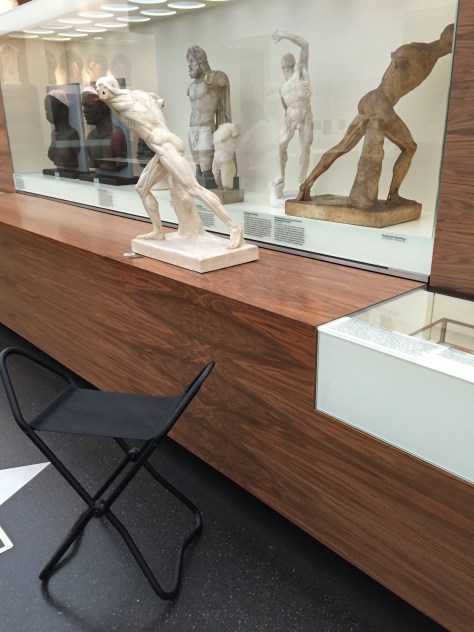
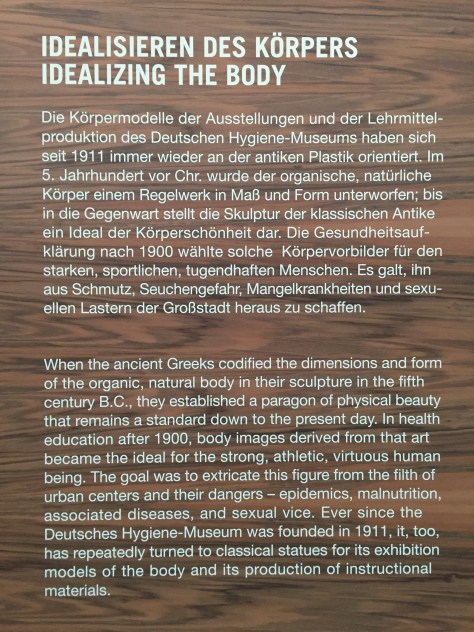
3. and 4: these two pictures show how the human body was idolized and idealized since classical times and the text that went with the display.

PS. The photo with the sculptural casts of the human body also show a chair. These stadium chairs were available in large supply for anyone going through the museum who wanted to listen to audio guides and needed to sit while doing so. What a great idea!! I loved it and took advantage of this free service. (ed. note: why don’t they have this in other museums all over the world??)

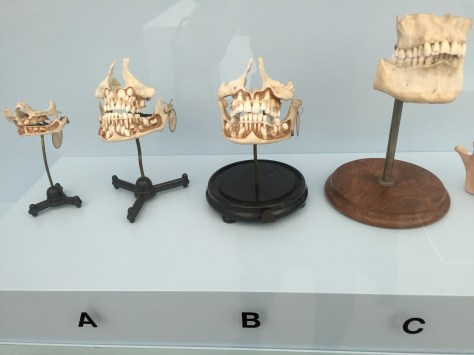
5. A display showing the development of teeth in human development, from childhood to old age. Children’s teeth are already poised for discharge, to be filled in by permanent teeth already formed or forming above their baby teeth (ed. note: Why didn’t I know or see this before??)

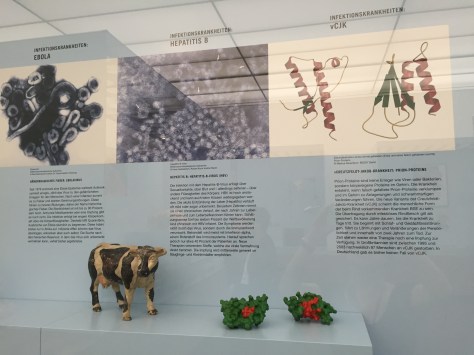
6. A typical poster display explaining the different common diseases, such as malaria, tuberculosis, and hepatitus (ed note: why didn’t I know this or see this before??)

There were many other interesting displays that I haven’t included, such as a transparent model of the human body, how the reproductive system works, and a really good explanation of death and dying. There were also excellent displays about health and healthy eating. These were too numerous to cover, but the bottom line is…get to a place where you can see these types of displays to educate yourself, and if you are lucky enough, come here to the Hygiene Museum in Dresden.

Not all displays are translated in English, but there are enough cues to inspire a neophyte like me and to make it a fascinating and inspirational experience. You can read more about this delightful museum here: http://www.dhmd.de/index.php?id=204

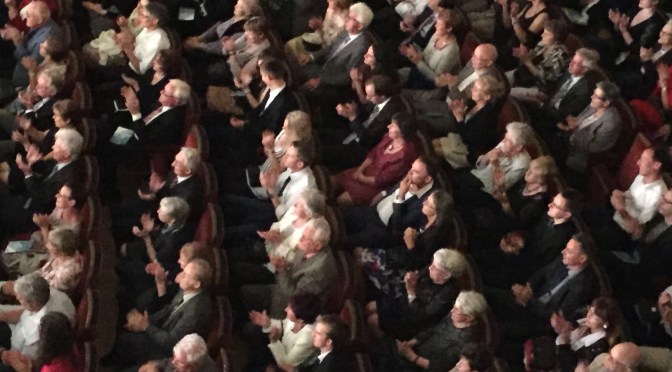
A final gasp in my Dresden pit stop before leaving Europe was a lovely opera at the Semperoper, “Liebestrank”. Little did I know that this translation was for the delightful Donizetti comedy, “Elixir of Love”! It was a stellar production, and in typical German fashion, the audience clapped politely. The performers deserved a lot more than they got (not even the raucous foot stomping). Maybe the nudity was missing, but the audience did stay awake (see the featured photo at the top for proof: they clapped).

Alas, to all: I am leaving Germany and all the wonderful experiences I have had in the past month behind. My next venture will be a big change from 24 degree warm weather with frisches Luft and no sunscreen in Dresden to 30 degree heat, humidity, and pollution in Beijing. I have no idea about the connectivity…so don’t be surprised if I go AWOL for awhile. Some of you may remember this from past trips through China. Until then…hang tight, and read my lips….