All posts by VickieVictoria

Intrepid traveler. Architect and appreciator of design, art, language, opera, history, and anthropology.

Day52(b): Food! Food! Glorious Vegetables!

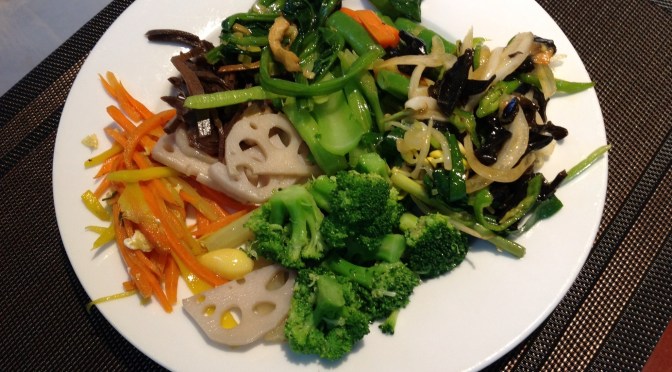
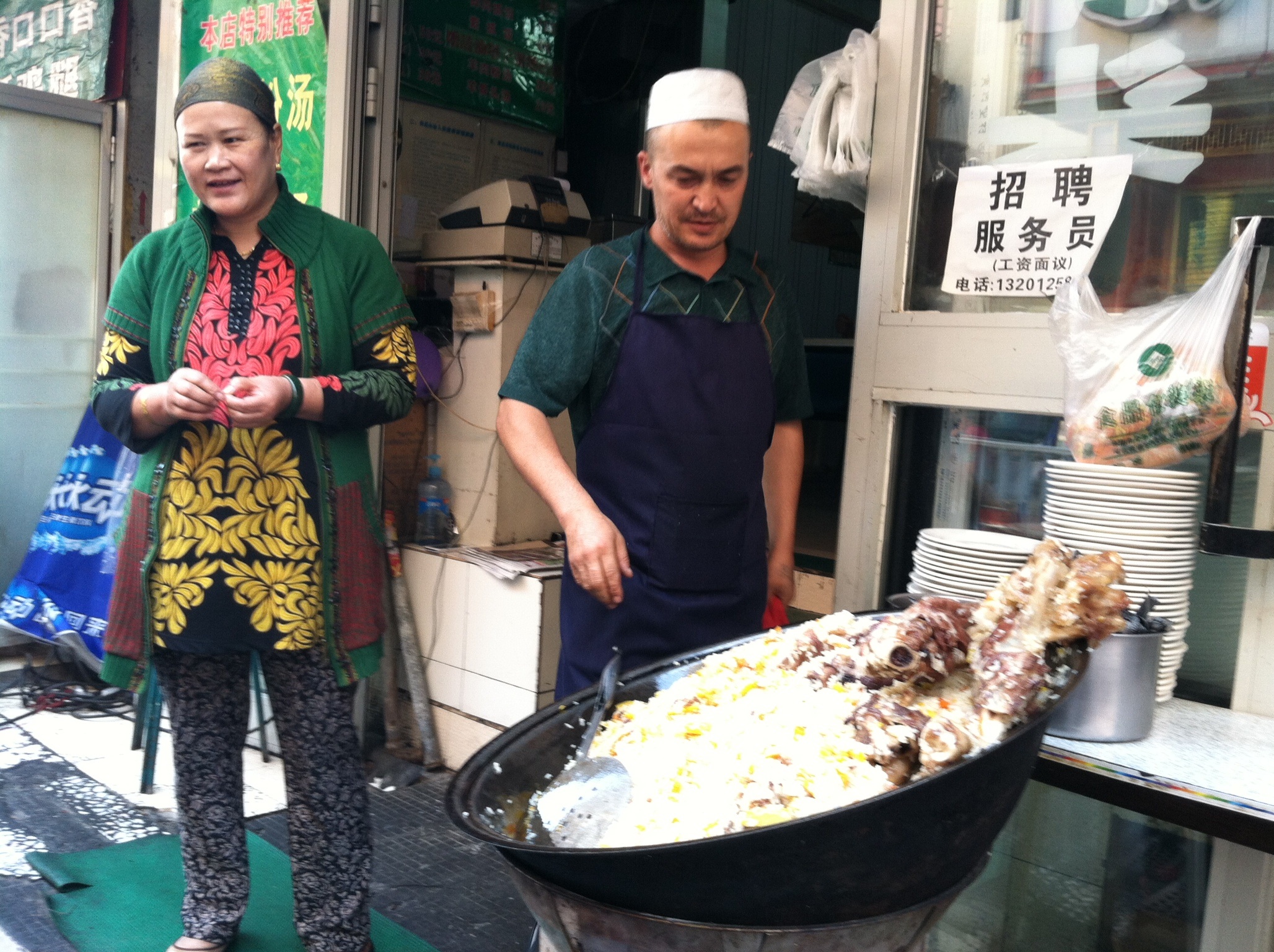
In addition to items one might expect from a typical Chinese breakfast buffet in Turpan, we were treated to an array of dishes, all cold, and mostly vegetarian. These locally produced vegetables were lightly flavored with oil and a hint of garlic or chili pepper and proved to be not only a visual delight, but very appealing to the palette for an energetic wake up. Dishes included the following:
1. Fresh broccoli
2. Lotus roots with ginkgo nuts, fungus strips, celery strips, red cabbage clips, red pepper, and straw mushrooms
3. Fresh steamed yellow and orange carrots (a contribution to China from the West)
4. Clouds Ears with onions, red and green pepper strips, bean sprouts and green onions
5. Shaved Gourd strips with Green onions and red peppers
6. Green beans (also likely a Silk Road vegetable imported from the West) with carrots, leeks and red pepper
7. Chinese Greens
8. Marinated cabbage with deep-fried pork strips
9. Deep-fried pulled noodles
10. Mini tschung and corn on the cob (another item from the New World) sections
11. Mung beans and pickled cabbage

Day 51: Thing for Thina

Today is a travel day, so I am getting ahead of the pack by sharing some information about the Silk Road. I read the book “the Silk Road, a New History” by Valerie Hansen and I want to cite some interesting points from it. The book covers three key chapters of my selected cities: the Turpan, Dunhuang, and Samarkand.
Dunhuang, while known for its Buddhist cave paintings, has a treasure trove of over 35,000 documents that recorded official edicts, announcements, and private letters. These were found in a garrison outside of Dunhuang. The dry desert air helped to preserve these documents from the 1st Century BCE to the 1st Century CE. Agreements were written on bamboo strips and wood before paper, originally used for wrapping, became the material for writing. Paper did not become widely used for writing until the 2nd Century. All envoys passed through this garrison at Xuanquan outside Dunhuang in either direction to control movement.
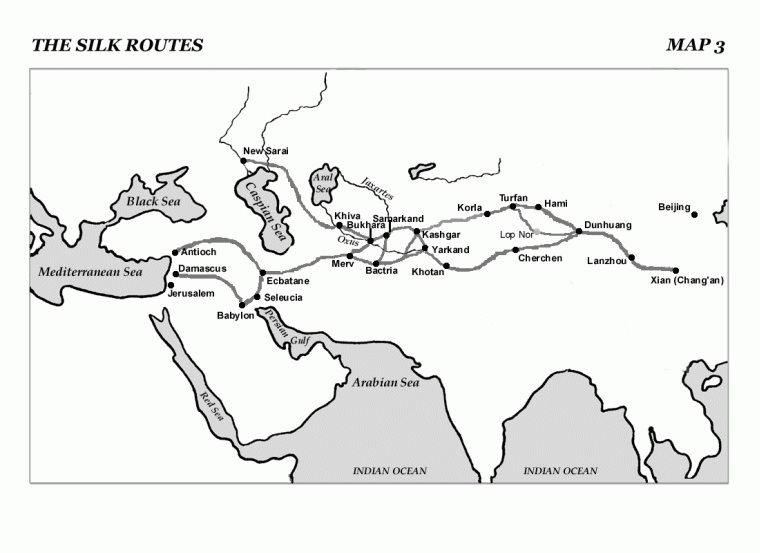
Turpan, a walled city further west from Dunhuang, was known for its foreign community dating back to the Tang Dynasty. It was only the halfway point between Samarkand and Chang An (current day Xian). One of the most significant groups living in Turfan, believe it or not, was the Sogdians, who originated from Samarkand! They settled in Turfan to farm, run rest stops, take care of animals, and trade.
A chapter of the book is devoted to Samarkand, one of our stops in Uzbekistan. The Sogdians who hailed from this area were originally migrants from Iran and practiced Zoroastrian beliefs such as leaving bones of their dead exposed before burial. Trade between Sogdiana and China peaked between 500 and 800 CE. Many Sogdians from Samarkand may have migrated to Turfan when Sogdiana was conquered by the Muslim genera in 712.
The difference in timeline between these cities can be substantial, so the context between them is important. The book focused on the period between 200 BCE and 1200 CE, with major Islamic developments in the latter half of the time span. This later period coincides with the Tang Dynasty at its peak in Dunhuang.image
In case you were ever wondering, the name “China” is derived from a reference to “Thina”, by a merchant in the 1st C. CE with a description of China as “a great inland city from which silk floss, yarn and cloth are shipped by land…” Since Ancient Greek did not have a letter for “ch”, the letter theta was used. In Sanskrit, where the English word for China is derived, China was pronounced Chee-na. This word came into use around 221-207 BCE during the Qin Dynasty.
As far as the Silk Road is concerned, it is a relatively recent concept from 19th C. explorers. The Silk Road consisted mainly of clusters of cultures that lived and traded among each other. The paths were unmarked and did not provide the big saga event romanticized by the Marco Polo story. Silk was only one among other goods traded that included chemicals, spices, horses, glass and paper.

Day 49: Room with a View

image

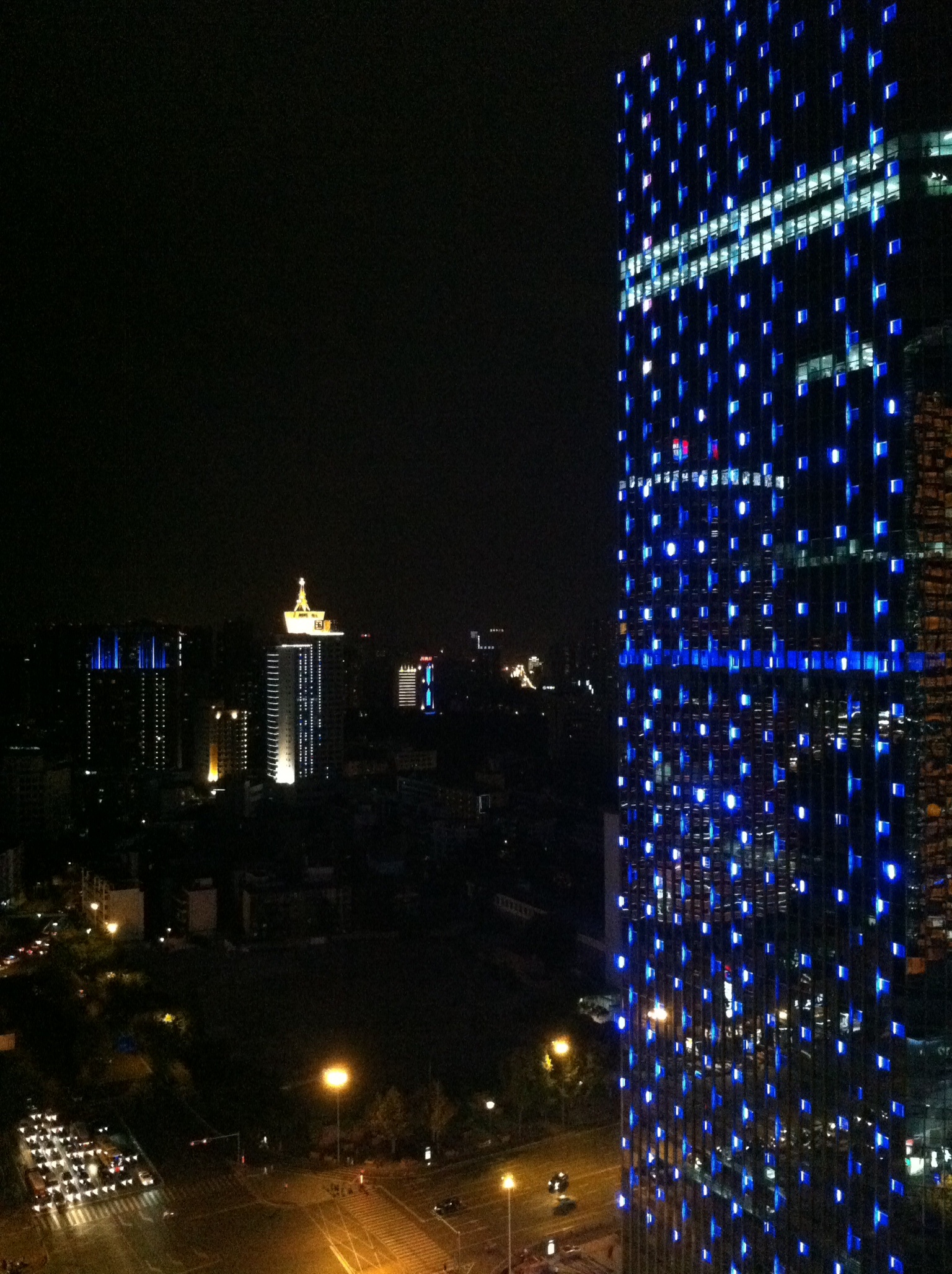
To the left is a lovely view from our 25th floor hotel. Apologies for the dirty window.

Update: what a difference a day makes! The new panoramic photo shows today’s view. Urumqi is one of the 10 most polluted cities in the world, as cited by Tsinghua University. We had a strange deja vu when we arrived in Beijing a few years ago the day before National Day on Oct. 1. The same dramatic transition occurred miraculously, as if God opened up the skies!

Beijing and Taiyuan beat Urumqi for the record. Three million people here are the same number in population as Tashkent. Interesting to compare the two. Note the mountains in the background.

Status Report on photo uploads: between 4 devices (a computer, I pad, and 2 cell phones), we have not managed to figure out why the photos are not loading properly as they have in the past. I am going to abandon ship on the Day 48 posting.
The technical problems getting access to the internet continue to persist. It’s a connection between the host editor, wordpress, and the website that is not allowing the pictures to link. Thanks for your patience.

image

Day 48: It’s the End of the (Silk) Road–for now


About Uzbekistan: In a short week, I have grown very fond of the country and people of Uzbekistan. The people are gentle, calm, and kind. They are looking for ways to catch up with the rest of the world, but in another respect they. maintain a balance of initiative and acceptance. The driver summed it all last night. On the drive from the airport around midnight, he said to me, unsolicited, “People who visit Tashkent ask where the night life is. People in Tashkent prefer to sleep”.

About the Silk Road: the sights weren’t quite what I thought they would be. I guess I was expecting museum quality perfection. The presentation of archaeological finds, while being designated UNESCO world sites, is still hampered by a country’s wealth and priorities. That might explain why Germany has a high number of heritage sights, aside from probably having a heavy hand in the designations. Italy has the highest number of any country in the world.

In places like Uzbekistan, some of the work is performed by others not much better trained for that type of work than you or me. Matching original materials with what is currently available is dependent on money and knowledge. Our Western attitudes and expectations impose pressure on countries to deliver better appreciation of their cultural relics. This of course is controversial and can be debated.

On traveling alone: a friend referred to me as “gutsy”. I guess I have always been a bit rebellious, refusing to listen to the voice of reason. But this was in a way pretty safe and predictable, without dipping into the odd looks at my traveling alone. People either assume I am I married or divorced, and I don’t always feel compelled to convince them that I am happily married with kids.

I always seem to end up bringing Gee Kin back to the places I visited without him, so I have become a scout of sorts. Maybe that’s the role I enjoy, and he has been incredibly generous, supportive, and understanding of my compulsion. It certainly was true of Germany and Turkey. Obviously, it’s a lot of fun to share these experiences with your partner, family and friends, with a higher rate of predictability.

It’s not so bad, either, to have time to collect your thoughts about where you are, how you are seeing them, and why things happen the way they did historically. It’s a different lens from which you are seeing the world.
For now, I have completely satisfied my needs and wishes for this part of the trip and look forward to sharing the next segment with Gee Kin who will be meeting me at Midnite in Urumqi! We’ll be picking up the Northern part of the Silk Road in Northwestern China, so stay tuned….

Photos below, from top, left to right:

1. Tour group from Ferghana Valley visiting pilgrimage sites. The local gentleman jumped into the picture of ladies because he couldn’t resist getting his picture taken! (They also loved being photographed).
2. Djuma Mosque. six of the columns date back to the 10-12thC, but most of the construction dates to the 18-19thC. The new columns were propped up with copper bands to protect them from insects and moisture.
3. Niche facing Mecca, as all mosques have.
4. Courtyard.
5. Camel for comic relief! Good tourist trap.
6. King’s harem courtyard in the Tash-Hauli Palace
7. View of the inner city bound by a fortress wall
8. Reconstruction is actively taking place throughout Kiva, using sun dried mud brick covered with straw reinforced mud.
9. Detail of column with swastica sign
10. Kunya-ark Mosque.

Day 46: Following the Yellow Silk Road…the Wizard of Uz


So Where’s Uzbekistan? First of all, it shares a commonality with Lichtenstein. It’s doubly landlocked with no access to a seaworthy port (the Aral Sea doesn’t count, but more about that later). As mentioned in earlier posts, water was everything in the distant past as it is today.

The Soviets wanted Uz. to produce cotton so they did. They relied on a single crop to supply the former Soviet Union, so after Peristroika, Uz was in trouble, with no diversification. The government seemed to switched to mixed crops as quickly as it could, but it took a lot of water to grow cotton. That sapped the supply of water from the border river they share with Kyrgyzstan, so now they have to buy water for neighboring Tajikistan.

Traveling along the Great Silk Road today (7 hours by car from Bokhara to Kiva, another UNESCO world heritage site), I actually saw camels on the highway! That blew me away, until I saw an accident a few minutes later. There was a dead man in the crossing. His car was tipped over sideways and it looked like he was hauling some gas tanks. He looked scorched.

Otherwise, this could be a typical 90 degree summer day. Here’s the report ala Ruth Reichl Twitter style:

Cloudless sky. No smog. Gentle people. Girls walking home to lunch from school. Boys riding bikes. Huge birds with long tails. Stray oxen, cattle, donkeys, and goats. Dead flat. Power lines on horizon.

The driver has been very careful. After driving two hours with the windows closed, he rolls down window exactly one minute after I wonder why he hasn’t done so. He figured there’s no need to use the AC. (just because they say the car has AC doesn’t mean that it will be used, does it!?) But it suits me fine. There were uneven road surfaces everywhere. It took 8 hours to drive 500 km or 300 miles for what would take only 5 hours on I-5, but we’re not in California, right? On the last drive, he didn’t use the AC until the last half hour of a 4.5 hr ride. Made sense.

Driving along the Silk Road for eight hours can wax you poetic. There were prominent mounds every so often, that served as watering holes. The caravansaries were pitched nearby and served as stopover points along the Silk Road. Being dead flat seemed to make it a no-brainer for travel to progress along the way, in the way that it did. There were markers with strange clipped brushes pushed upside down to mark the way. (See photo above, markers are in mid-ground). We followed that path for half the time, then it disappeared. I pictured Gee Kin and me trekking along the path. Flat, marked path is a piece of cake so no desperate need for Google maps? Oops, no shade.

So back to Uz. There are about 30 million people here, mostly in agricultural communities. (Tashkent holds about 1/10 of the population or 3 million people, but most cities are small). It is run by Karimov, a “benevolent dictator” who has been in power for the last 23 years. Uz. Also has natural gas, uranium and is developing electricity.

Because cotton was grown here and the land absorbed so much water, the river also began to run dry and the Aral Sea that used to collect the water dried up. What used to be a port city is now sitting in the middle of a peninsula! San Francisco or Oakland suddenly becoming Stockton! It didn’t take very long so it’s definitely a word to the wise. Now they are trying to deal with all the salt in land where it used to be a lake. Less than 50% of the water is left; it used to be the fourth largest body of inland water in the world. (See photo above).

Just a few stray thoughts after yesterday’s post: I was told that Armenians were the best craftsmen and were recruited to come work on some of the buildings in Bokhara. Iranians were considered the best architects. It’s no wonder, with their attention to gardens and outdoor spaces, math and geometric skills, and beautiful interpretations of color and lighting.

As for insights on pilgrims visiting these sights: I noticed that a few visitors walked around site three times before entering the mosque or mausoleum. It was considered bad luck if you didn’t. They also rubbed sacred trees so some of the good luck would rub off, and they also practiced leaving money on the crypts. It was a way to wish for good things and have them come true.

In case you ever wondered where the fat French women were…they’re all in Uz. I can’t compare them to any Americans because there aren’t any here.