All posts by VickieVictoria

Intrepid traveler. Architect and appreciator of design, art, language, opera, history, and anthropology.

USK Berlin 2023

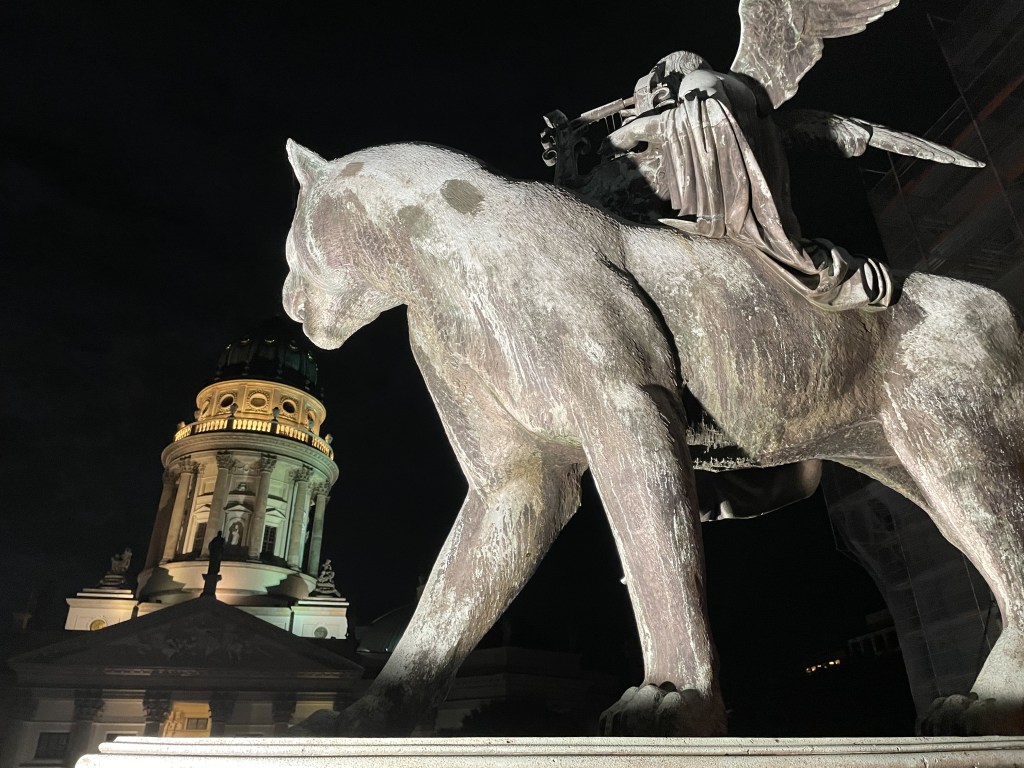
Oh My God. If this is any indication of German Planning, it wins the Nobel Prize! Over 950 participants descended on Berlin this weekend to sketch in over 60 venues planned throughout the city. Everything is free and the organizers simply wanted to avoid extensive sponsorships and risk exposure.

So they simply posted an email offering sketchers to sign up within a specified period of time in July. The response was overwhelming, but they delivered what they promised. Three meeting venues at the Kulture forum, Humboldt Forum and another location near the Brandenburg Gate gave everyone a place to connect informally. Organized sketch walks with tour guides were assigned to each participant.

My first assignment was site of the Templehof Airport, a Nazi creation. Nearby neighborhood housed a delightful Karl Muehlenhaupt Museum. His work, resembling that of March Chagall were child-like figures of gnomes and faces filled with “Liebe, Leid and Lebensfreude”, (Love, Passion and Lust for Life) that immediately grabs your attention and emotions.

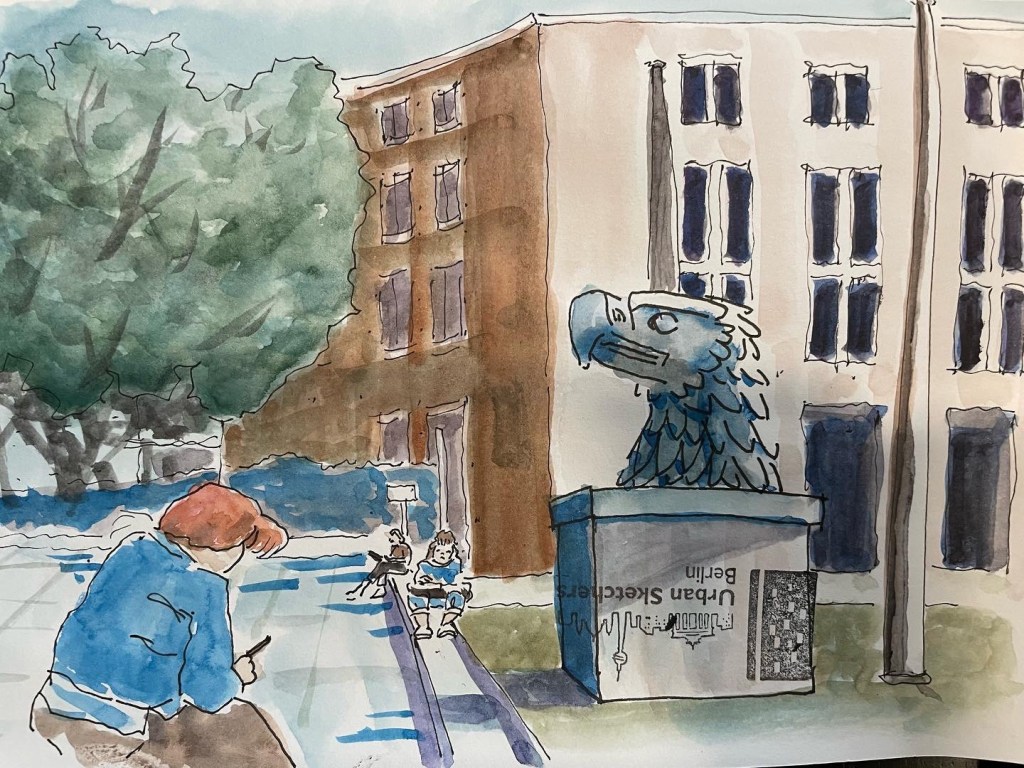
A lot of what’s good about Germany hasn’t made it into translated material. This was one of them. Managing my own interpretation is a struggle, but even more rewarding when I discover the depth and earnestness of the German culture.

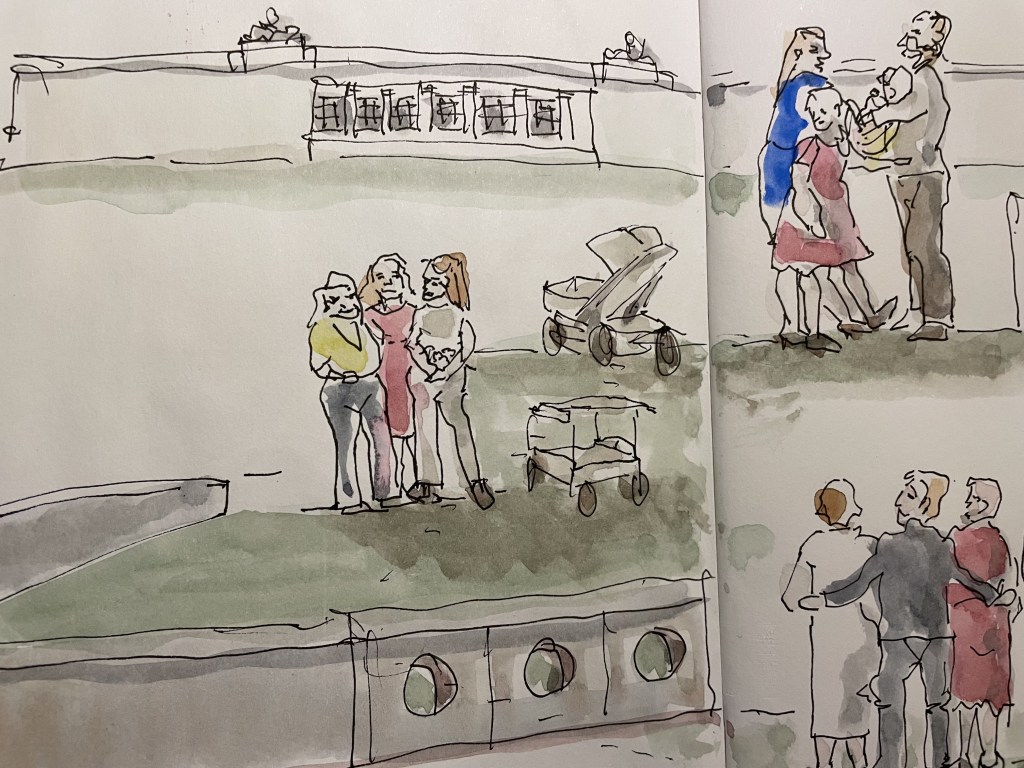
Today’s venture to the second site was more challenging. The Kurpark near the Golden Reindeer Monument in the park next to the at Rathaus Schoeneberg was outside of the center of the city. Several routes to get to it confused me with indecision, so a late arrival cost me the tour and a chance to meet others.

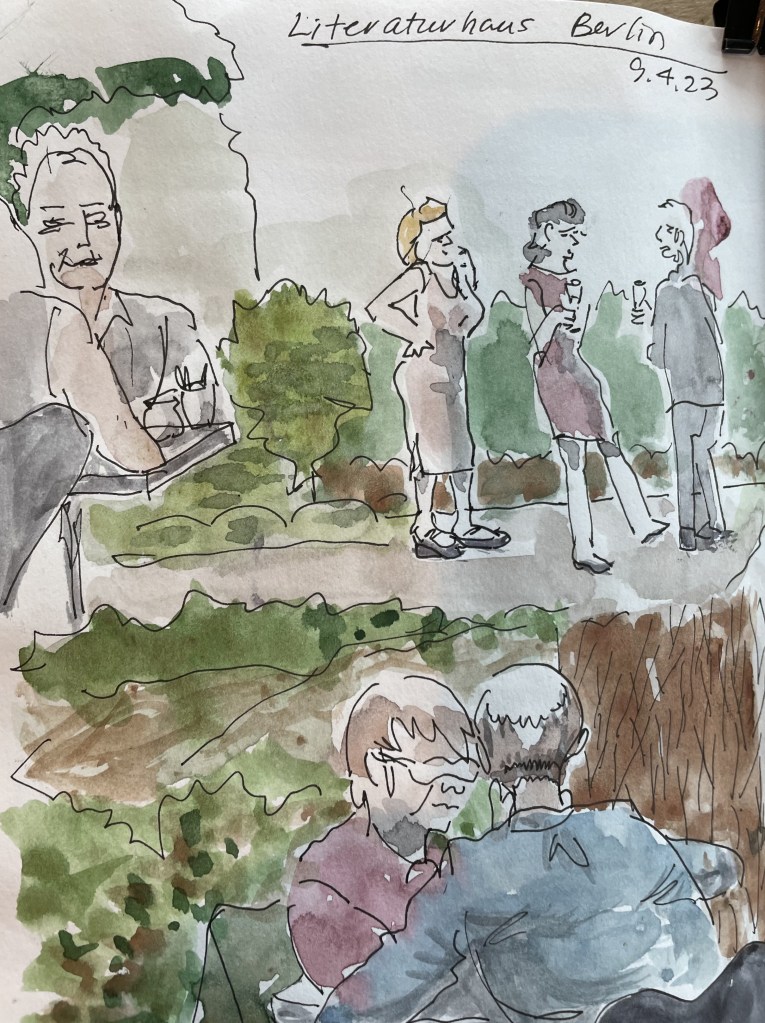
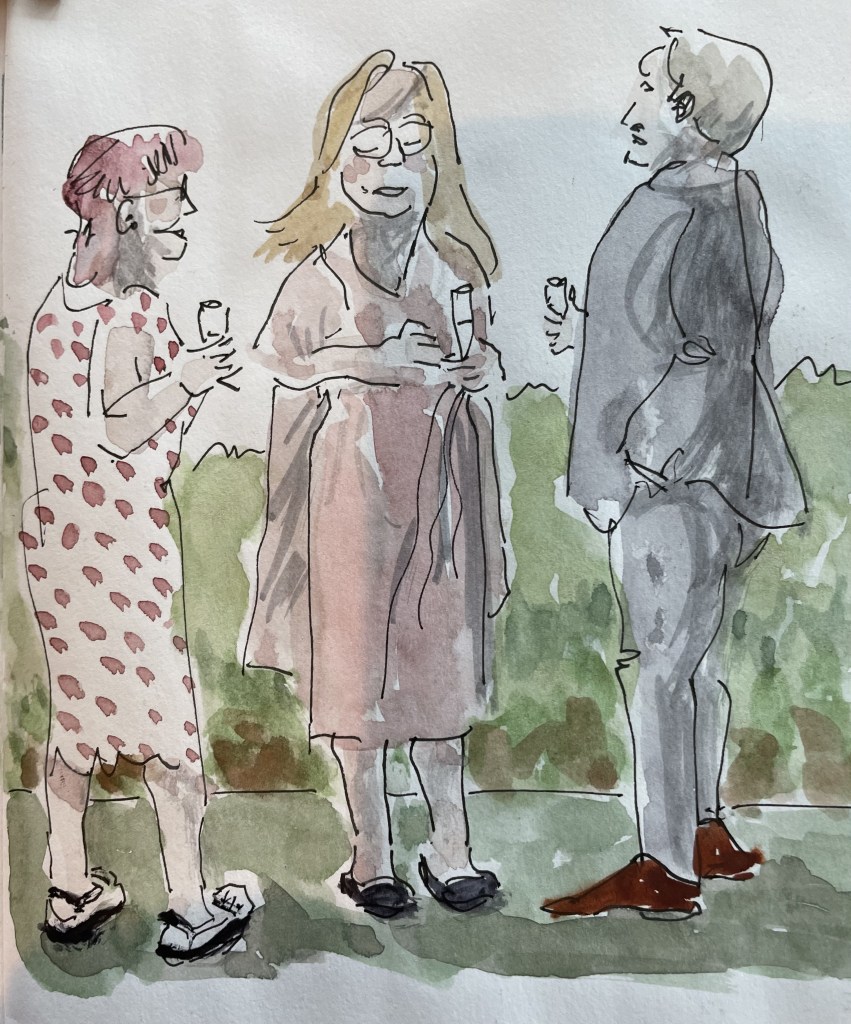
Nevertheless, I forged on to sketch as intended. Suddenly floods of wedding parties arrived as if staged for my benefit. They celebrated their free pop-up event with champagne and formal photo shoots. The park setting was merely a backdrop for me to focus on gestures of dressed-up guests and their animated conversations.
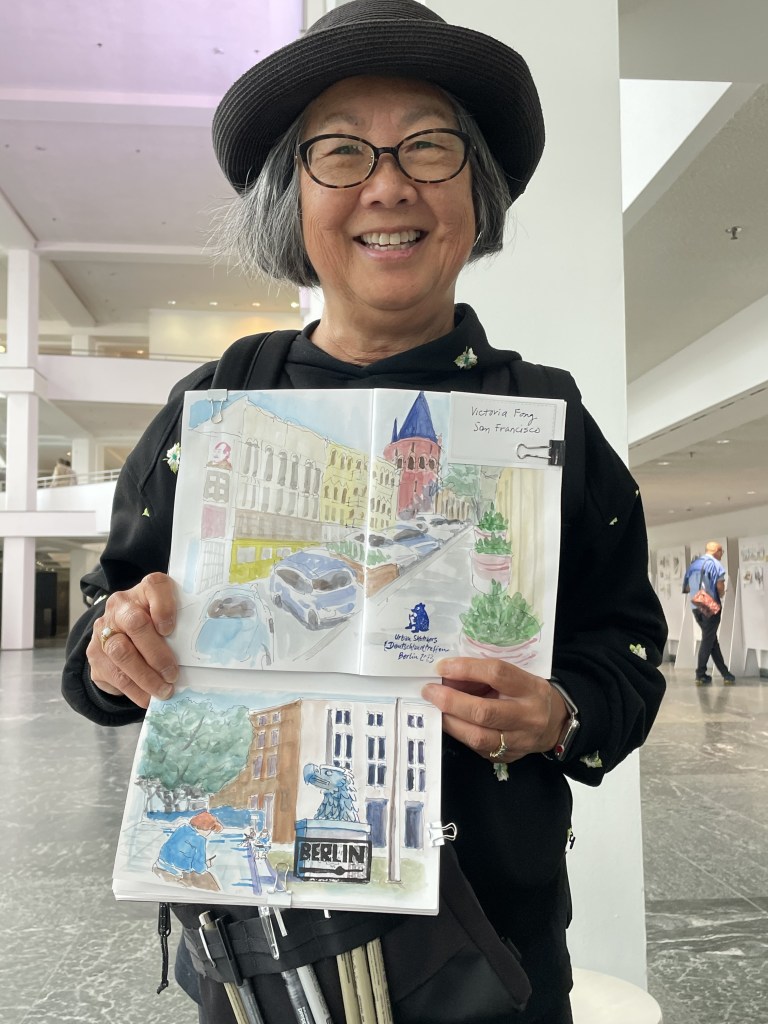
The Sketchers met for a photo shoot at the Kulture Forum the previous afternoon. It was a bit daunting to see so many dedicated and talented sketchers. Every sketch seemed more polished and intriguing! The German devotion to doing things well overwhelmed me, from the high-tech weightless sketching stool I spotted, to the super-organized backpacks everyone carried with all their supplies pared down to a minimum.

Bustling Berlin

I’d be disingenuous to claim that I was as dedicated as the German attendees to sketching in Berlin. I was distracted, and exhausted by the myriad events and historic sites beckoning to me.

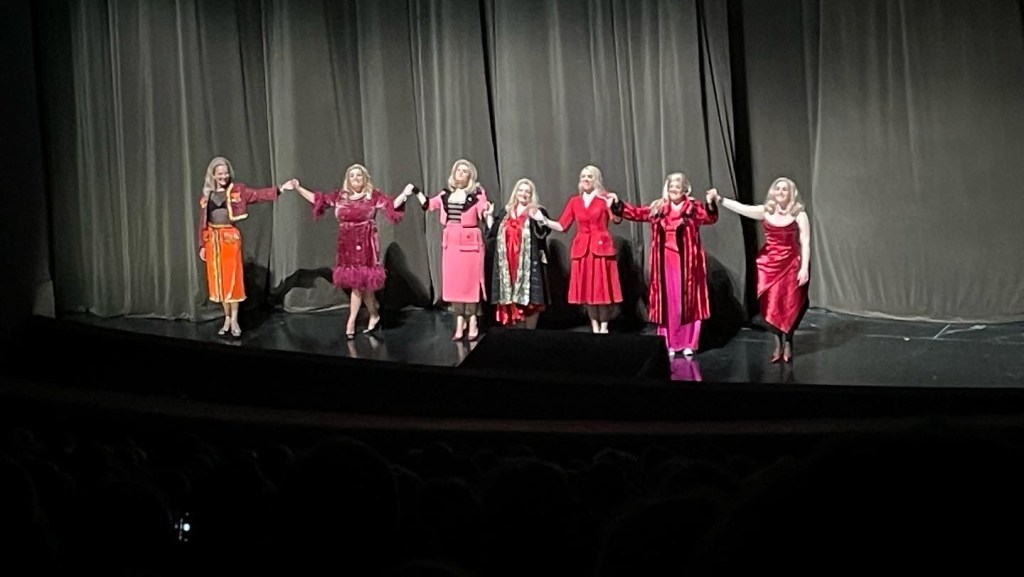
A special concert introducing rising star conductor Joana Mallwitz was held at the Berlin Konzerthaus was held with overwhelming support from the audience. Joana took her time to thank each and every soloist who performed, and took many bows herself. I was lucky enough to meet her and her partner Simon Bode at a reception after the performance.
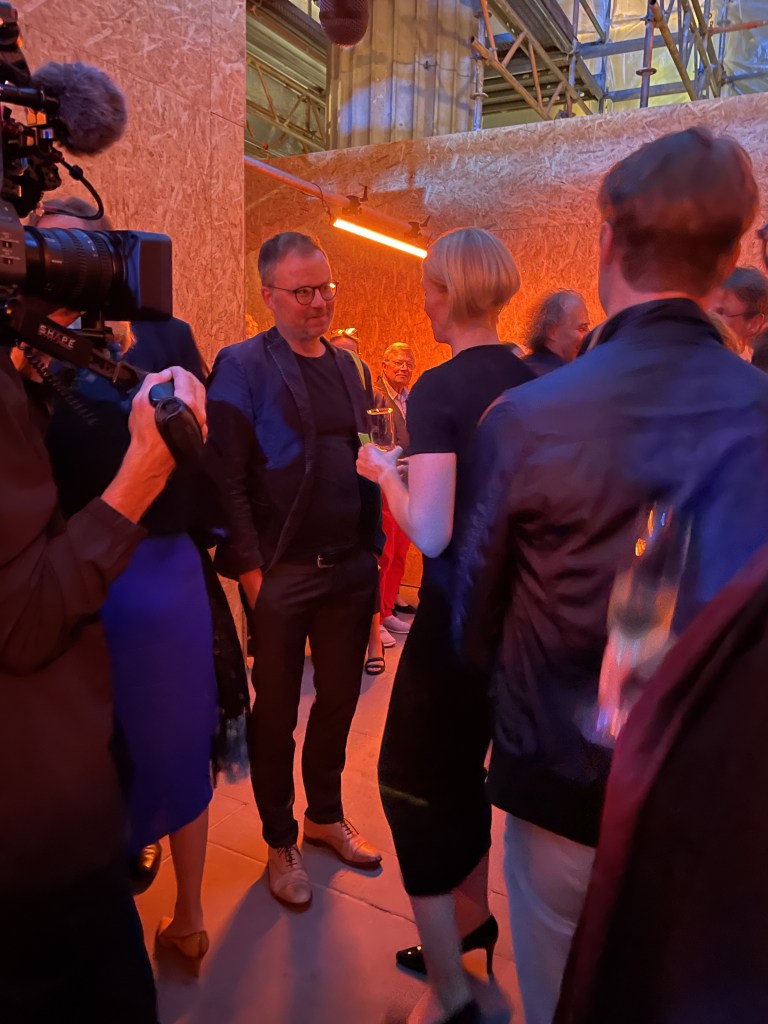
Debut of Joana Mallwitz as conductor of the Berlin Konzerthaus Orchestra

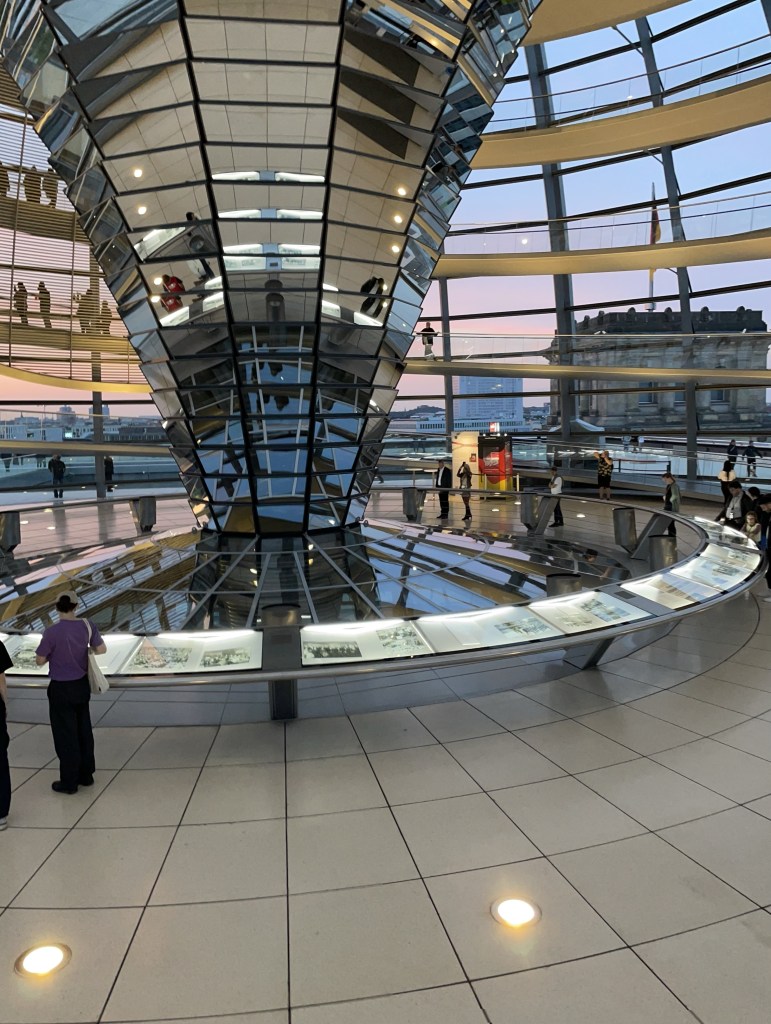
After the sketching photo shot, I raced over to an appointment to tour the Bundestag Building. The tour was tiring and boring at the end of the day, but I realized that I actually retained some of the information. Germany has 15 states that are represented in the Parliament, just like we have 50 states represented in Congress.

Before Perestroika in 1989, the Soviet Union also had 15 states. The Soviet Union was the third largest country after China and India, and larger in population than the US at the time (The Soviet Union had 300 million, and the USA had 250 million).

Today, Russia is just under 150 million, compared with that in the US at over 330 million. With Germany at slightly over 80 million, Russia is twice the size of Germany but half of its original mite. Ukraine is half the size of Germany or at about 40 milion people. It’s no wonder Russia is struggling to keep its former glory and trying to recapture some of the Ukraine.

The current history of Germany is inevitably tied to Russia because of the division of Germany after WWII. The Bundestag building still displays relics of the Russians who took over Berlin in 1945. Graffiti was exposed by Bundestag architect Norman Foster who wanted to capture the historic takeover by the Russians. And the design of the building attempts to remind politicians that they work for the people, so the public at the top of the dome can watch over their leaders. Hmm….

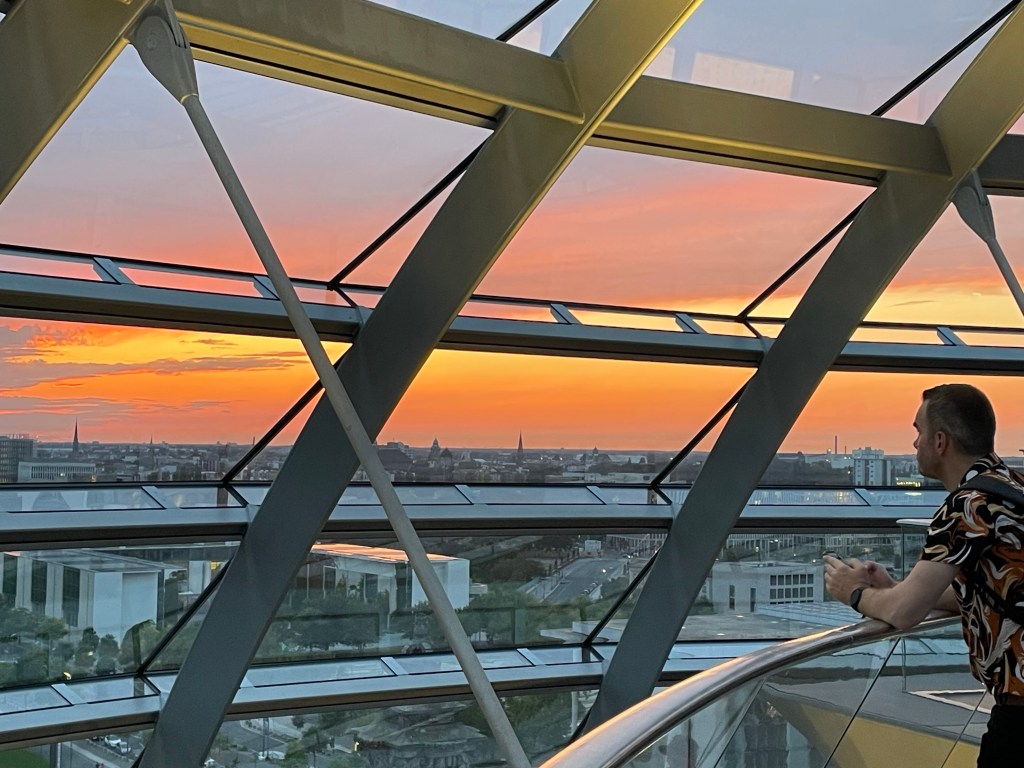
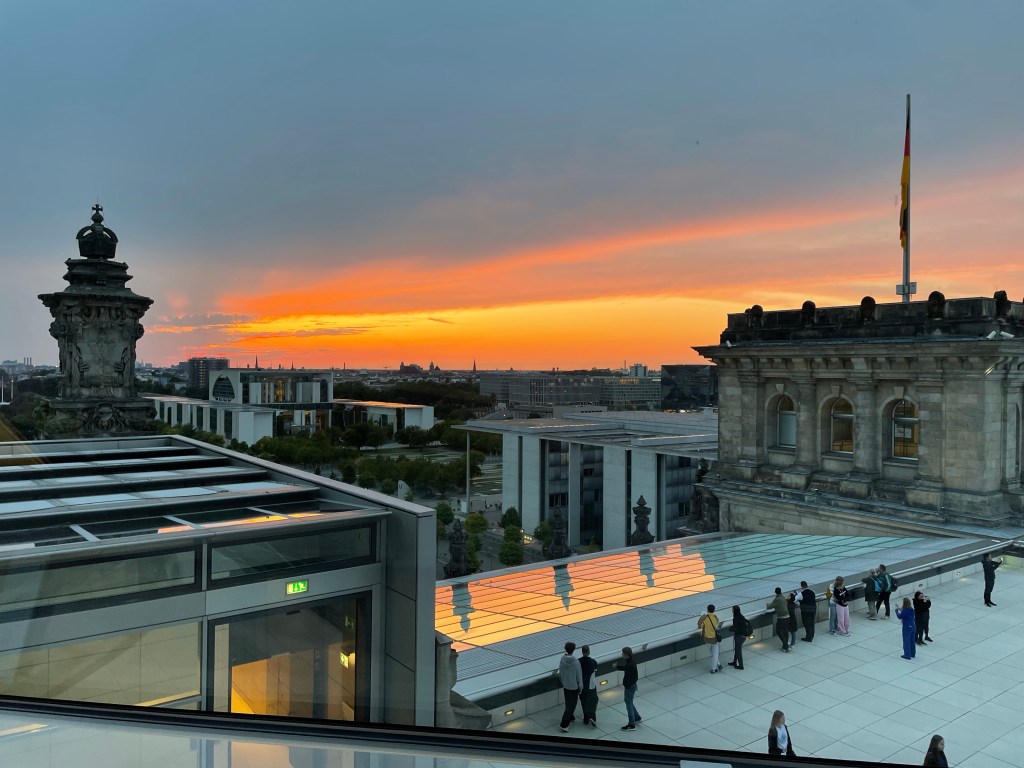
Being at the end of the day, the tour was tedious. Catching the sunset over Berlin made the trip worthwhile. Maybe the tour guide was a little too fixated on two young women who were together–one Russian and one Ukrainian. That did seem to inspire the rest of us to believe that the war will end one day soon.
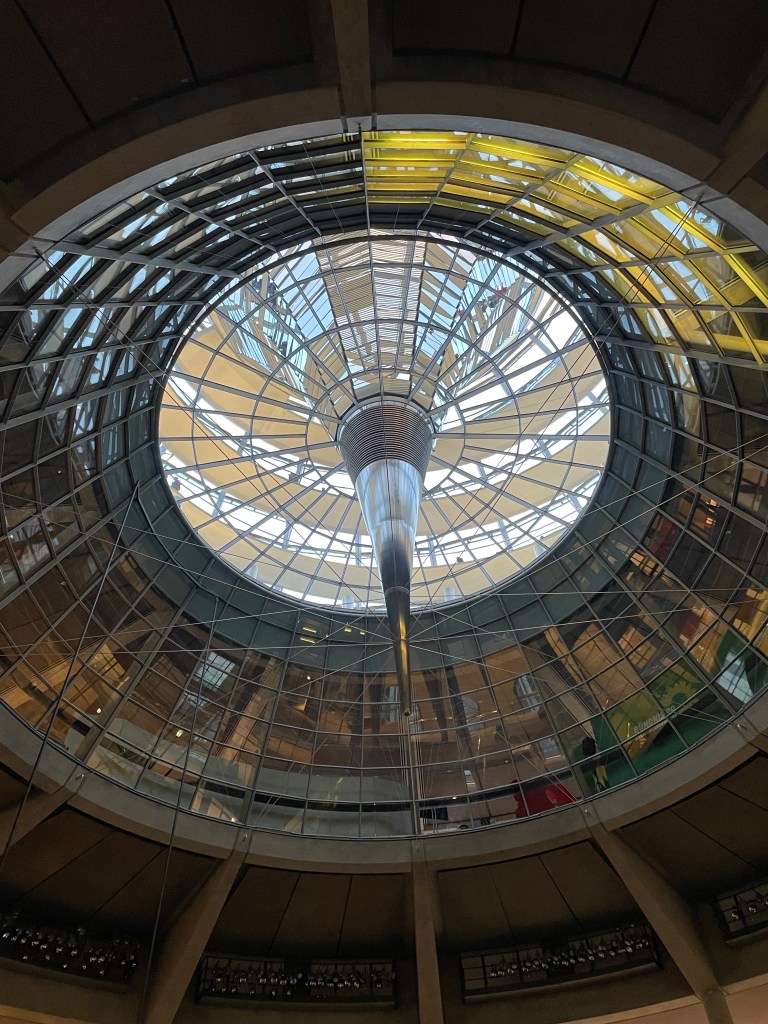
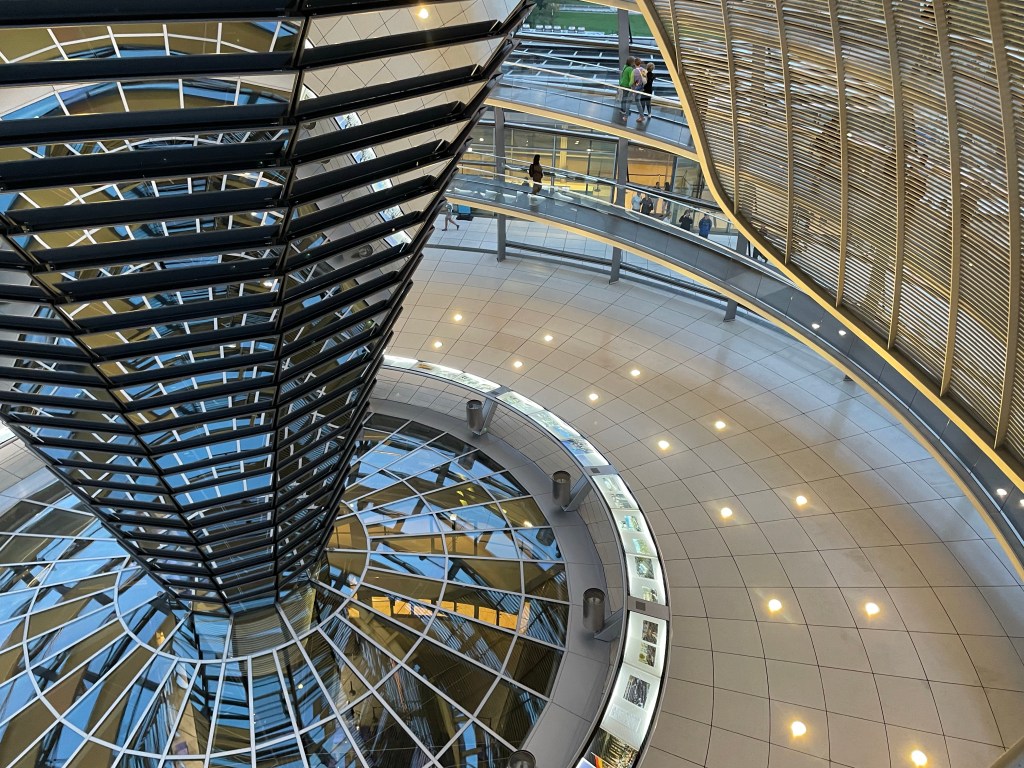
A walk up the ramp at sunset

And of course I had to make a quick stop between U-Bahn changes to catch Brandenburg Tor.

Those who know me will wonder how I passed up two world-class opera performances at the Deutsche Oper. But I did. Maybe I’ll catch up at the free annual family event today in between the sketch exhibition, an open house at the Bundestag, or the Berlin Music Festival.

DC (Washington) and BG (Berlin, Germany)

I’m taking my annual pilgrimage to Germany, this time without plans to take any German language classes. Instead, I’m joining a free weekend Sketchfest in Berlin, a side trip to Leipzig for opera and concerts, and more of the same in Hamburg.

Descent into DC

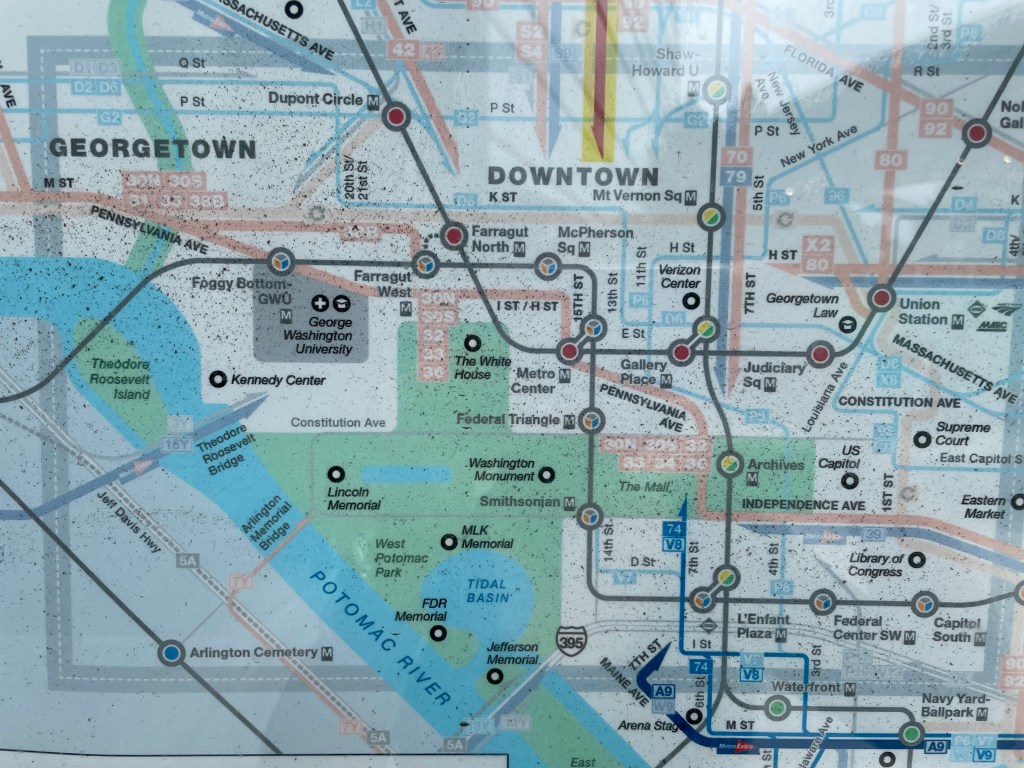
A long layover on the way to Berlin gave me an opportunity to visit the Capitol Mall with plenty of time. It was reassuring to know that the Metro is finally, after over 50 years, being used as intended. In the early days, it was a white elephant and far too ahead of its time. The waffled concrete stations have held up well and are a signature system in terms of durability and aesthetic longevity.

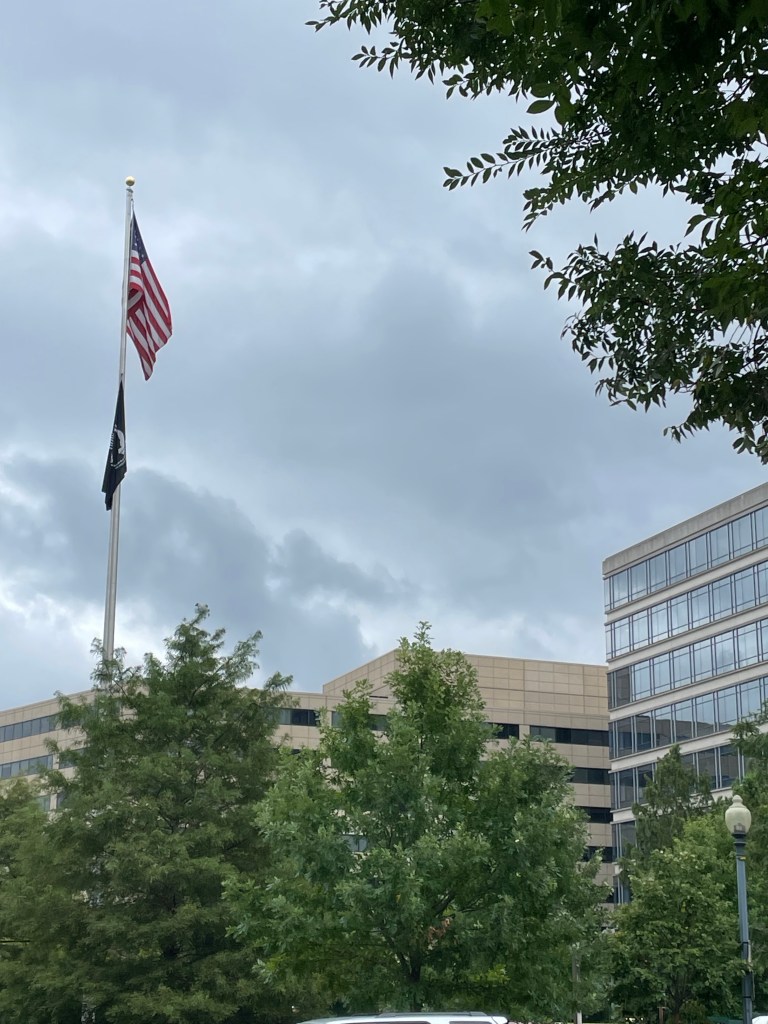
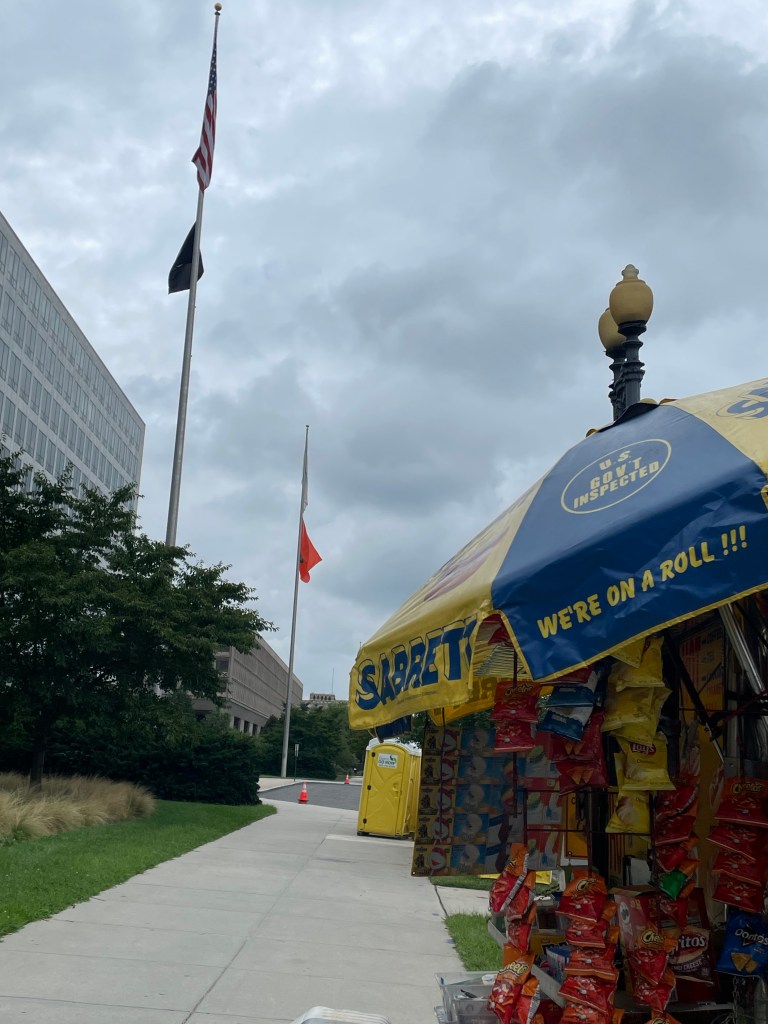
I had never noticed so many flags speckled throughout the capitol previously. Despite the dour circumstances of recent elections, seeing these iconic symbols restored some of my faith in American democracy.

The beauty and wealth of the nation was clearly evident throughout the mall. Wide vistas, free national museums of every imaginable persuasion and the lush landscaping afforded by the hot and humid South all contributed to this exciting discovery.

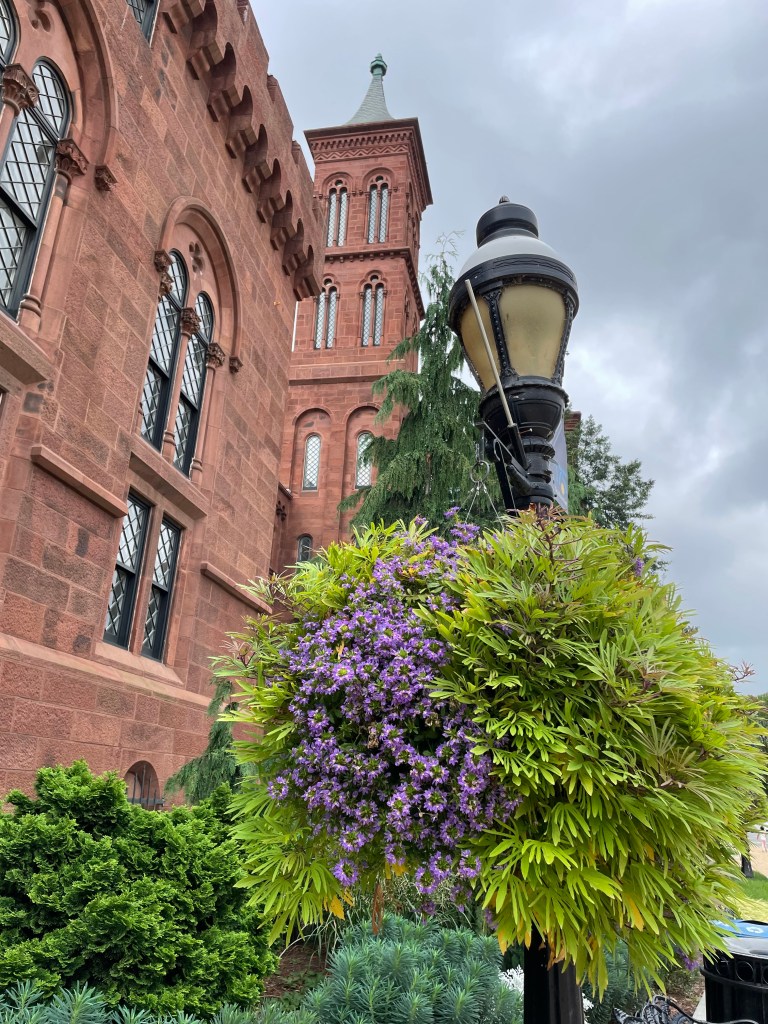
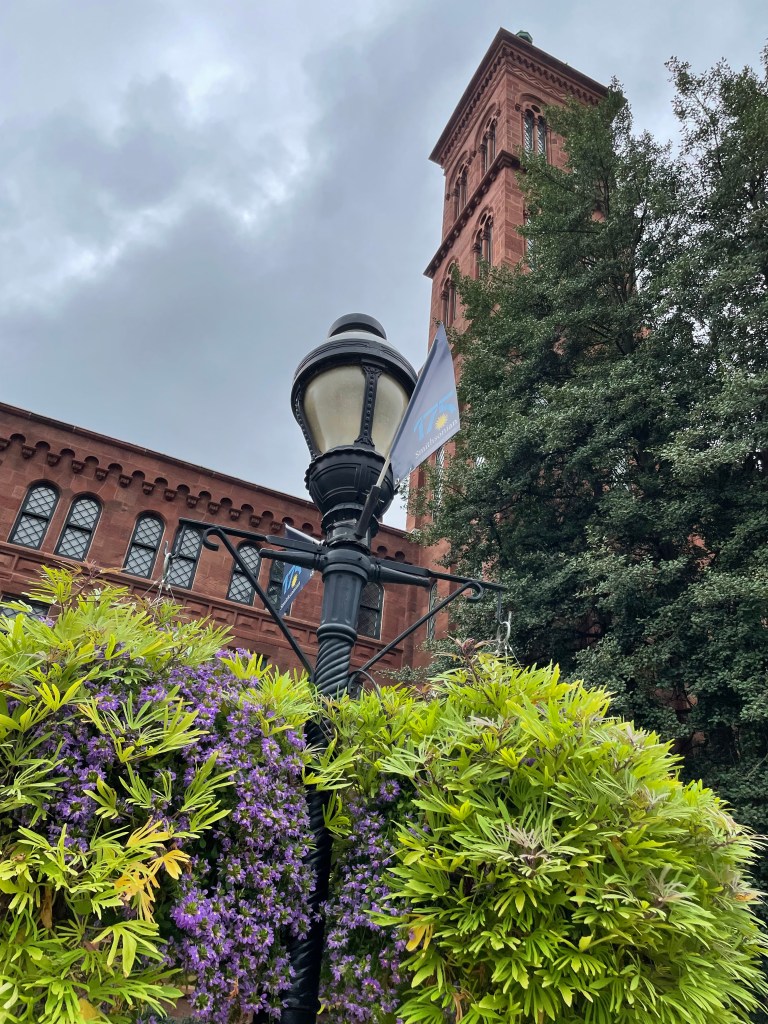
Buildings seem to boast their well-kept grounds and renovated facelifts. The historic Smithsonian sandstone palace, closed for renovation, contrasted with nearby giant modernistic office buildings, polished and sparkling.

A day-long, single purpose journey didn’t give me a proper perspective on the real life and times of Washington, DC. I had seen some of that on previous trips. Instead, my goal for the day was to tackle two museums on the mall as quickly and effortlessly as possible.

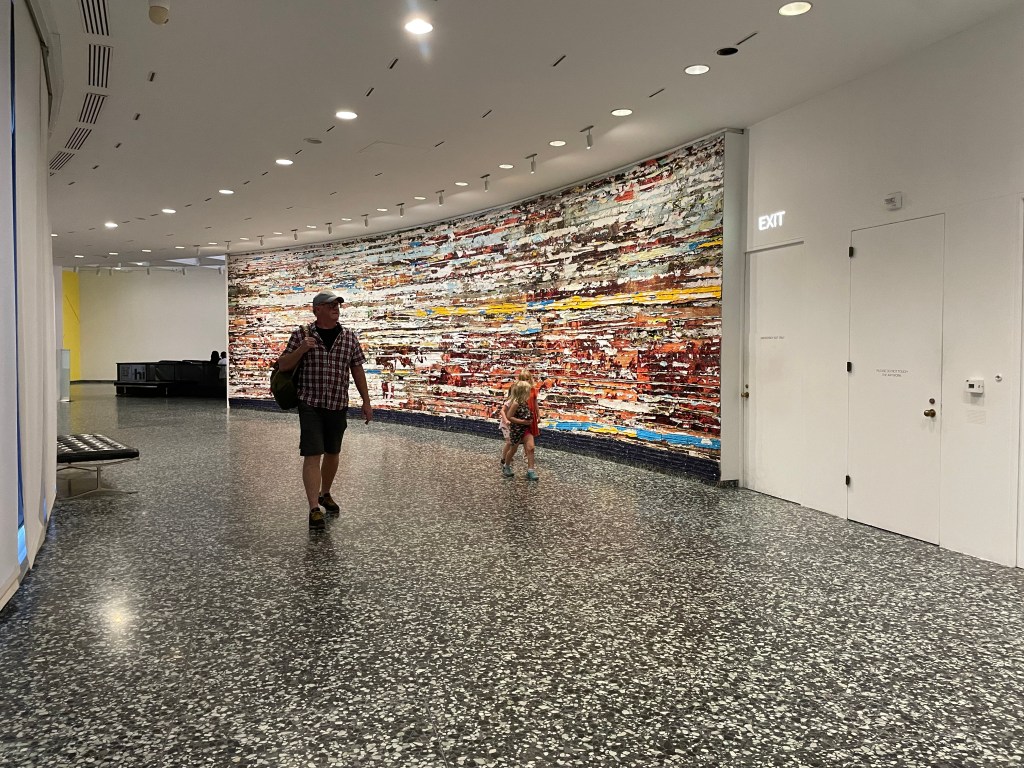
The donut-shaped Hirschhorn Art Museum reminded me how awkward flat paintings look in a building with curved walls. Wall segments managed to divided spaces successfully, however. An exhibition by women was an unexpected find.

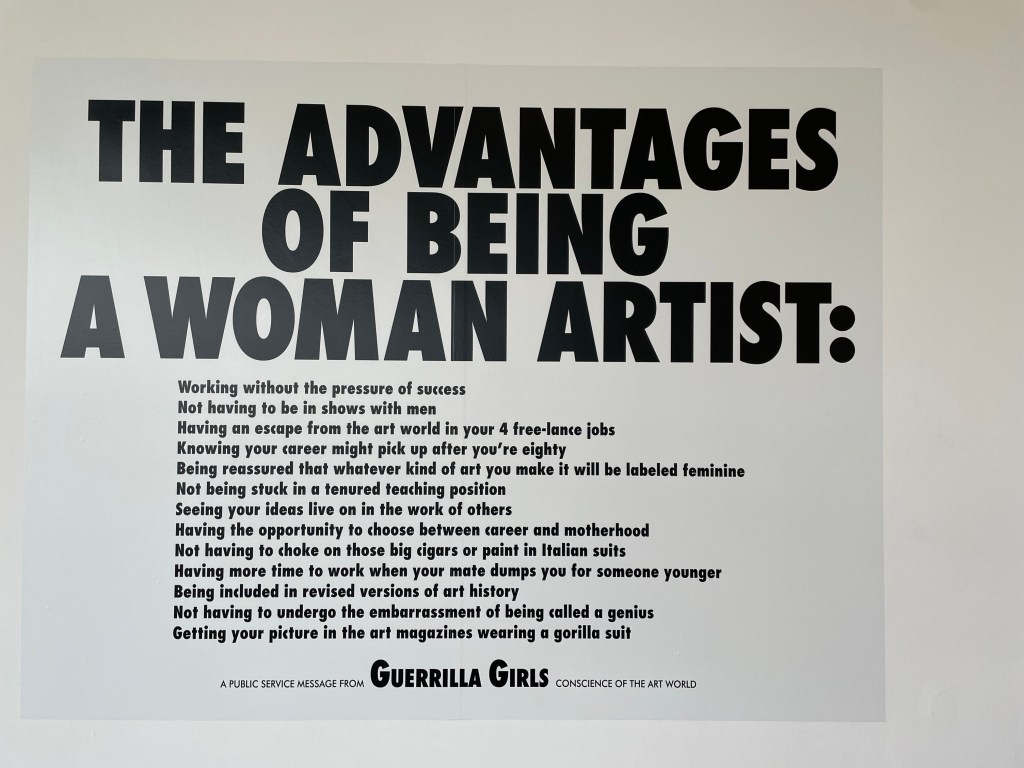
Every exhibition has a story to tell. In this case, it focused on the male-dominated control of the art we see in museums. An overwhelming proportion of artistic work is produced by men and funded by men. The manifesto by Guerrilla Girls made the message very clear. In response, the Hirschhorn has committed to rectifying this disparity by increasing works and exhibitions by women artists. Two of the pieces I particularly enjoyed are represented below.

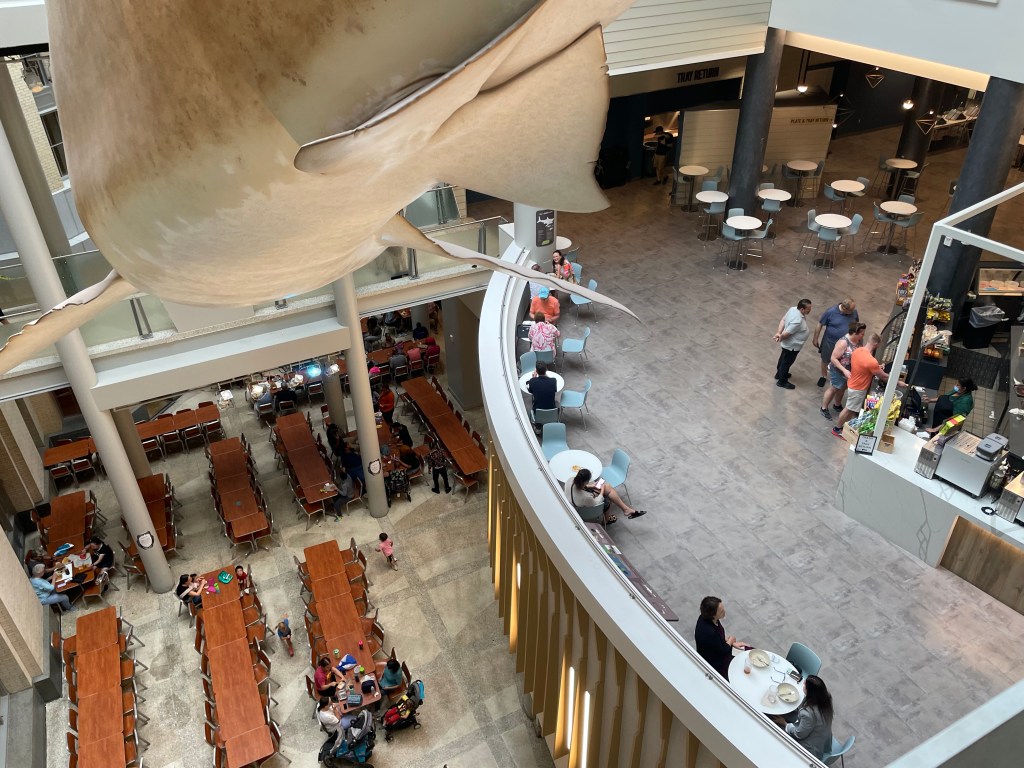
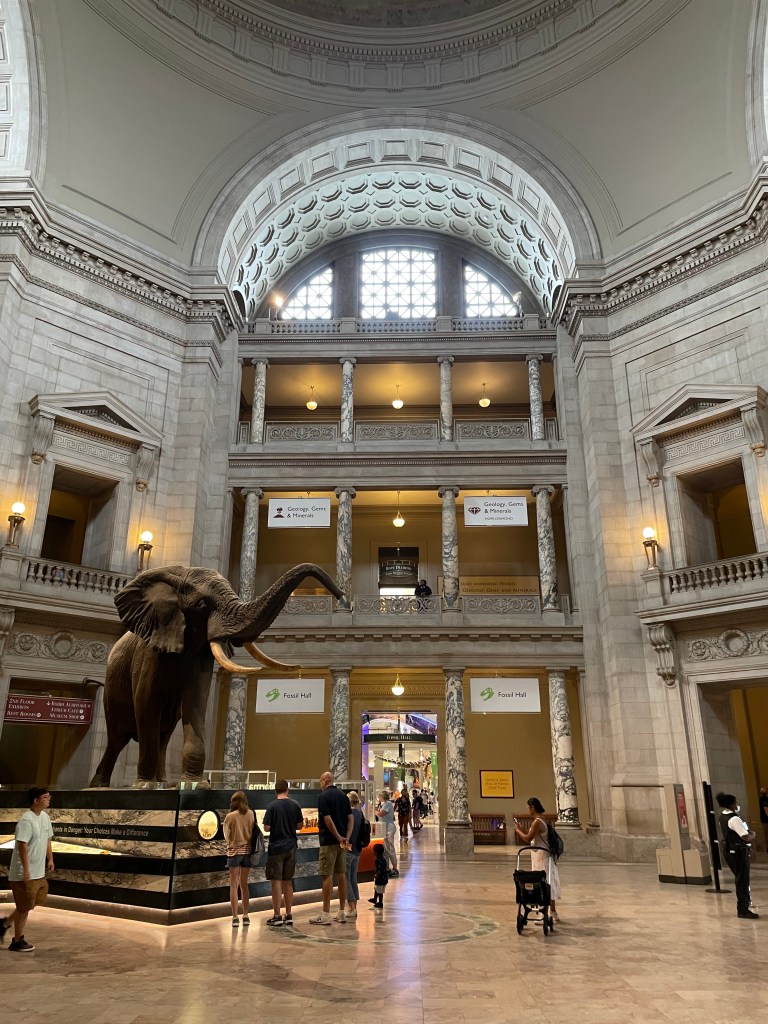
The Natural History Museum was a first timer for me. It wasn’t until I marveled over exhibitions in London and Berlin that I realized our own garden variety is no slouch. Great displays on man’s emergence from the ocean and evolution from other primates were well communicated in that very down-to-earth American style of gee-gosh.

This real-time image shows how fast the world is increasing in population and where–watch the total population at the top

I splurged and used award miles for my first Polaris flight transatlantic from DC to Berlin. It lasted just short of eight hours and was enough time to fully appreciate the fully reclining cocoons.

Prenzlauer Berg in Berlin, Germany

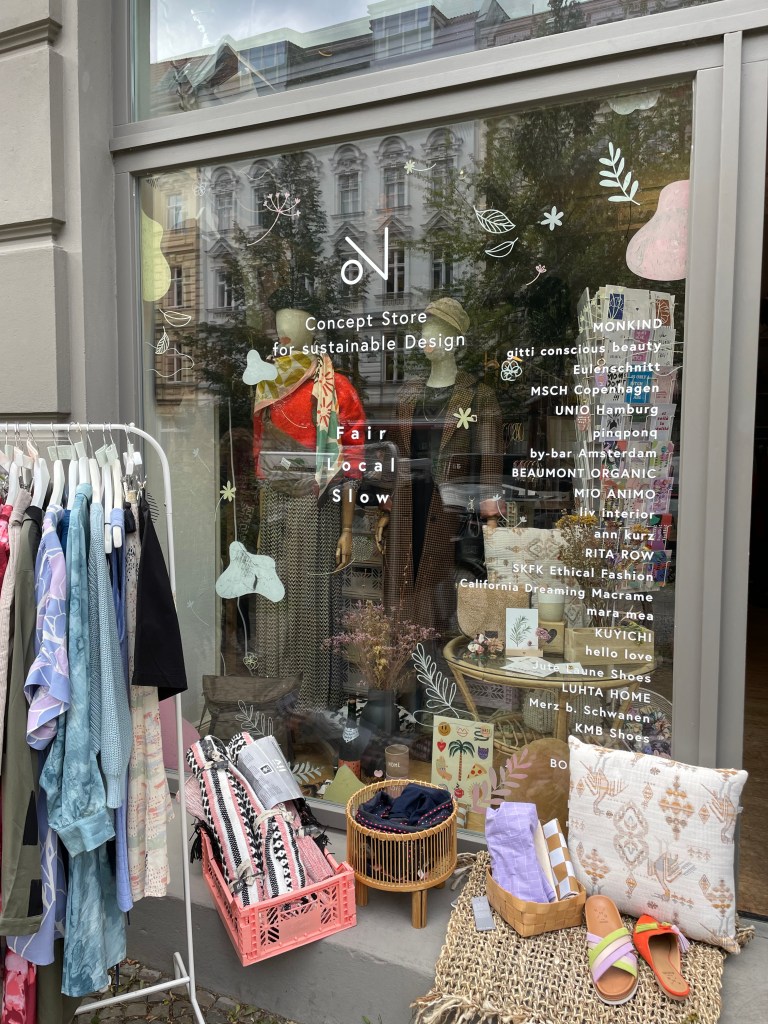
After an early morning arrival, I headed to my AirBNB in the convenient Prenzlauer Berg neighborhood in Northeast Central Berlin. This district captures young thriving interests in sustainable, gluten-free, organic, and S-L-O-W living. Shops, cafes, and services are directed to these new ventures.

What makes Berlin so fascinating and intense, as in other European cities, is the integration of history within modern living.

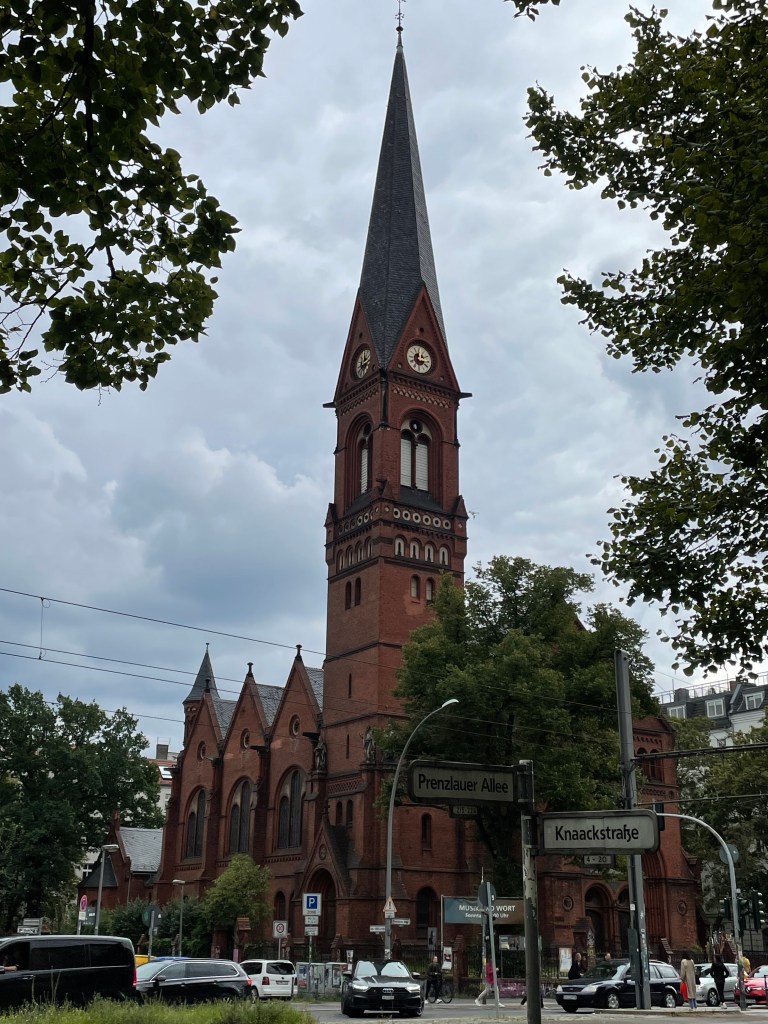
Here, the water tower, a local church with a huge slate steeple, and the closely guarded Jewish synagogue provide history and context for new developments in Prenzlauerberg. I stopped to ponder the brass plates inscribed on one of the cobbled streets. The tragic story as many others was told: a family of five, including a mother, her two grown children, and a young granddaughter all met the same fate.

Coming up: Sketching in Berlin with 1000 other participants

The Finishing Touches: Landscaping

Some of you may be wondering what has been happening since the last post a woeful six months ago. We are in recovery mode, letting the development of the ADU settle, occupying the glorious space, and focussing on the exterior landscaping and entrance to the unit.

Homeowners always seem to ask themselves why they didn’t do the landscaping sooner. While funds are usually stretched to the limit, committing to getting maximum benefit and value from what’s left is the order of the day. The effect and the rewards are immediate and immensely satisfying. We’ve come a long way to fulfilling our goals for developing multi-generational housing, remaining in place, and potential rental, so it was important to complete the project with landscaping.

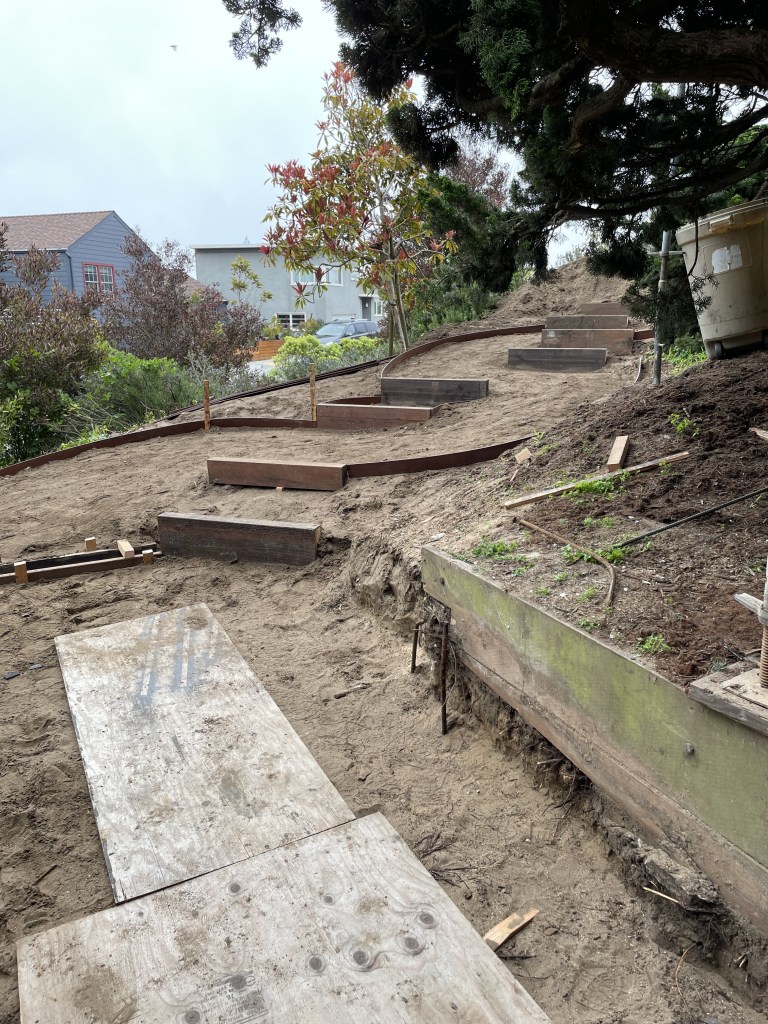
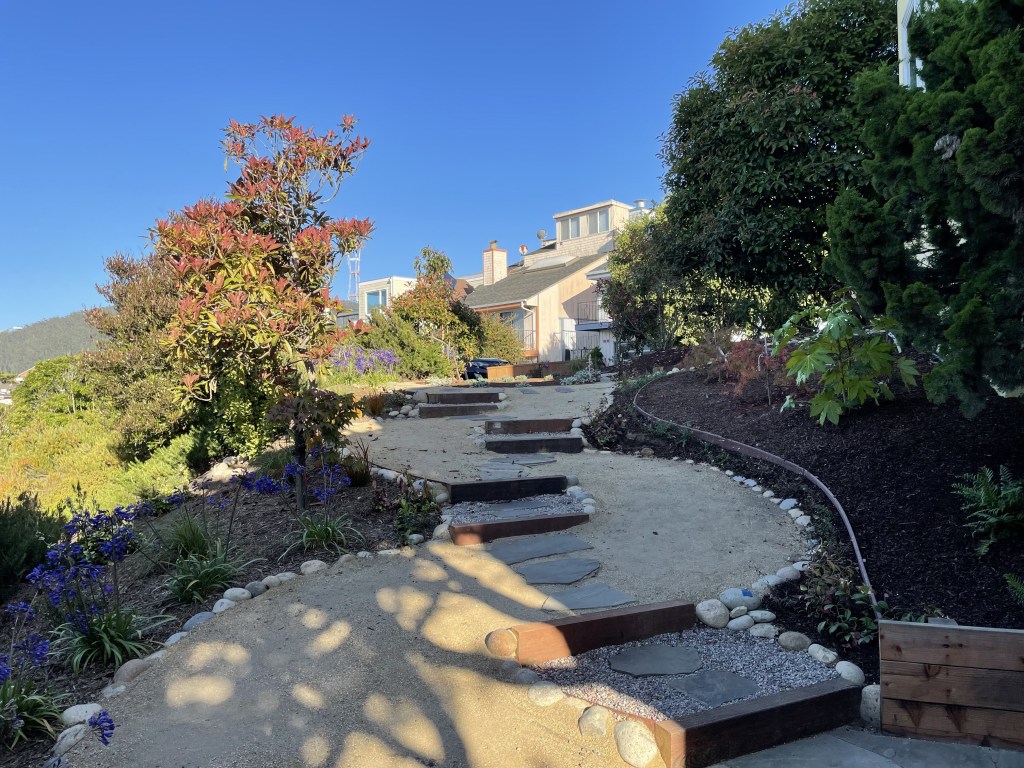
The first task at hand was to create a design . To a large extent, the original concept developed twenty years earlier for a path to the rear yard was reactivated to forge a safe path from the street to the ADU entrance. About 100 feet from the sidewalk to the entrance, an intertwined path down the hill served two purposes: a ramp that could be used by strollers (and wheelchairs maybe!) and a set of gentle steps for a more direct route.

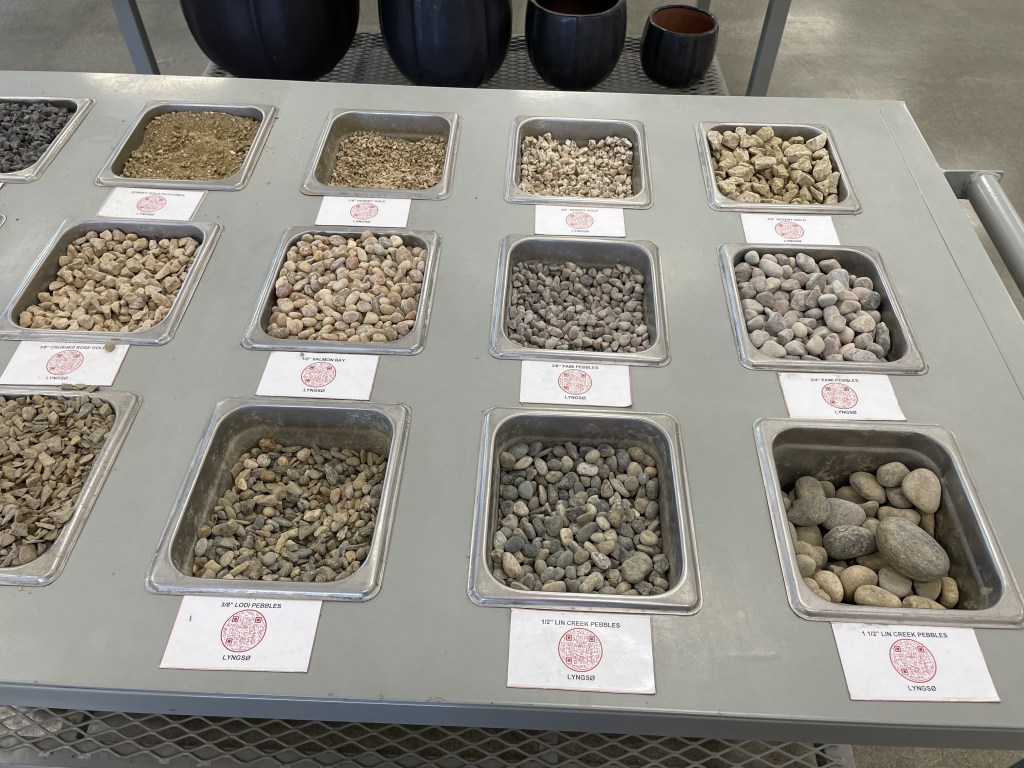
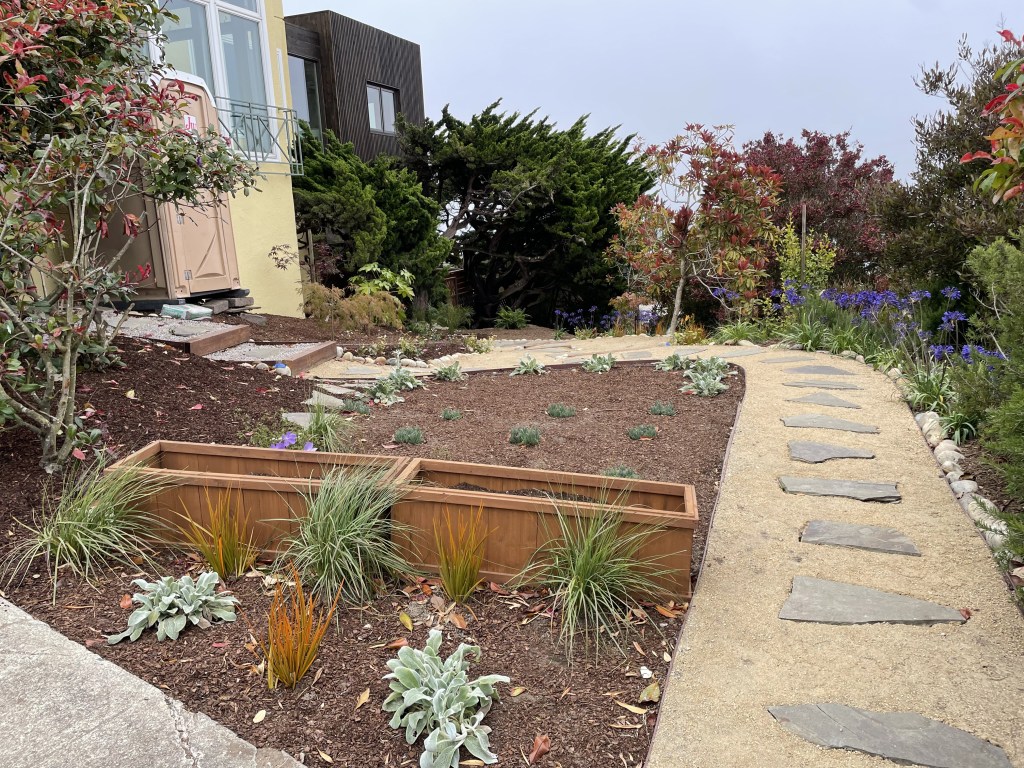
With this idea in mind, the best hardscape finishes suitable for each path were contemplated. What to use? Wood? Metal? Stone? After many trips to Lyngso, a stone supplier in San Carlos, and Broadmoor in South San Francisco, decisions were made: wooden railway ties for steps were integrated with rounded Pami pebbles in between. Compressed sand with additive for stabilization was chosen for the ramp. Irregular pieces of flagstones were imbedded in the sand between the steps to match the flagstone entry area.

Seeing huge shards of flagstone in varying color ranges was thrilling and terrifying. What type? What color? Does it match other materials on the exterior of the building? I did know one thing. In terms of durability, it was going to outlast any of us! Fortunately, having a deadline forced the decision so the landscape contractor wasn’t kept waiting. You have to look at the brighter side of life to avoid fear of flying.

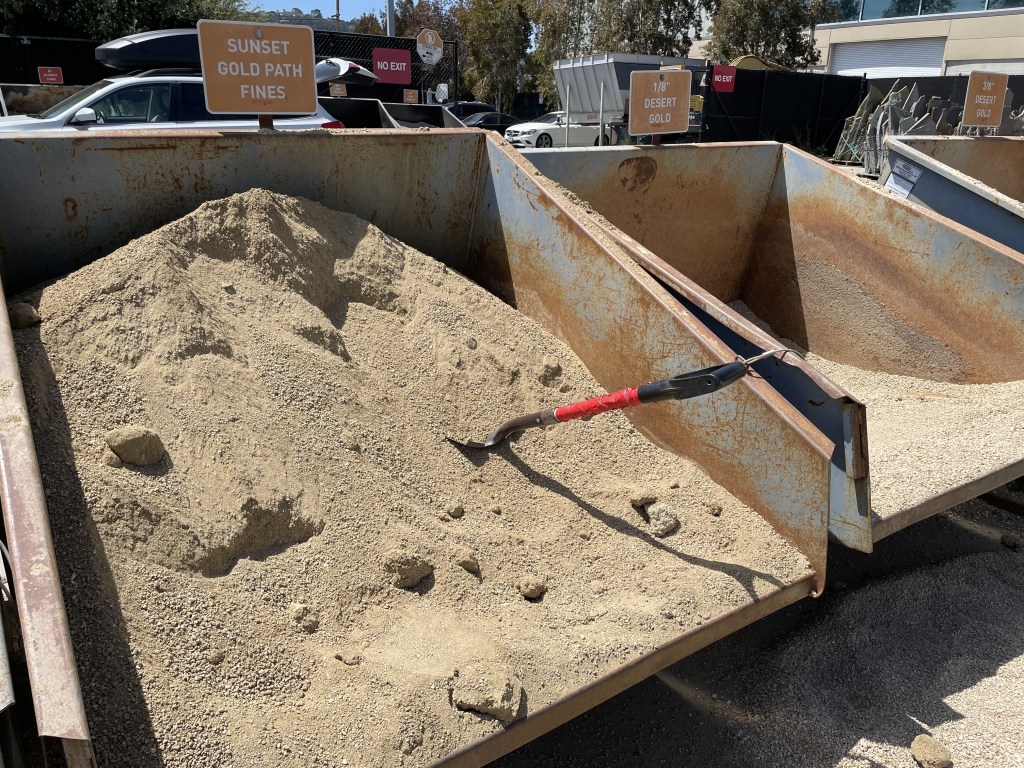
The minimum order required 2 Tons, so highs school match kicked in to calculate area and weight. Materials including mini boulders, gravel, sand, and pebbles were delivered to the job site, making our plot look like a quarry.

Thanks to good friend, landscape pro and sketch buddy Mary Swanson, she helped me with some additional heavy lifting. Scores of plant tpyes and positions needed coordination and planning. Her skill, foresight and insight were a godsend.

Landscape architects not only have to know a million species of plant life and their botanical names, but they also must fully comprehend the nature and performance of these living creatures. A command of hardscapes are also in their toolkit. When you serve as owner, you come to appreciate the necessity of getting such good professional advice.

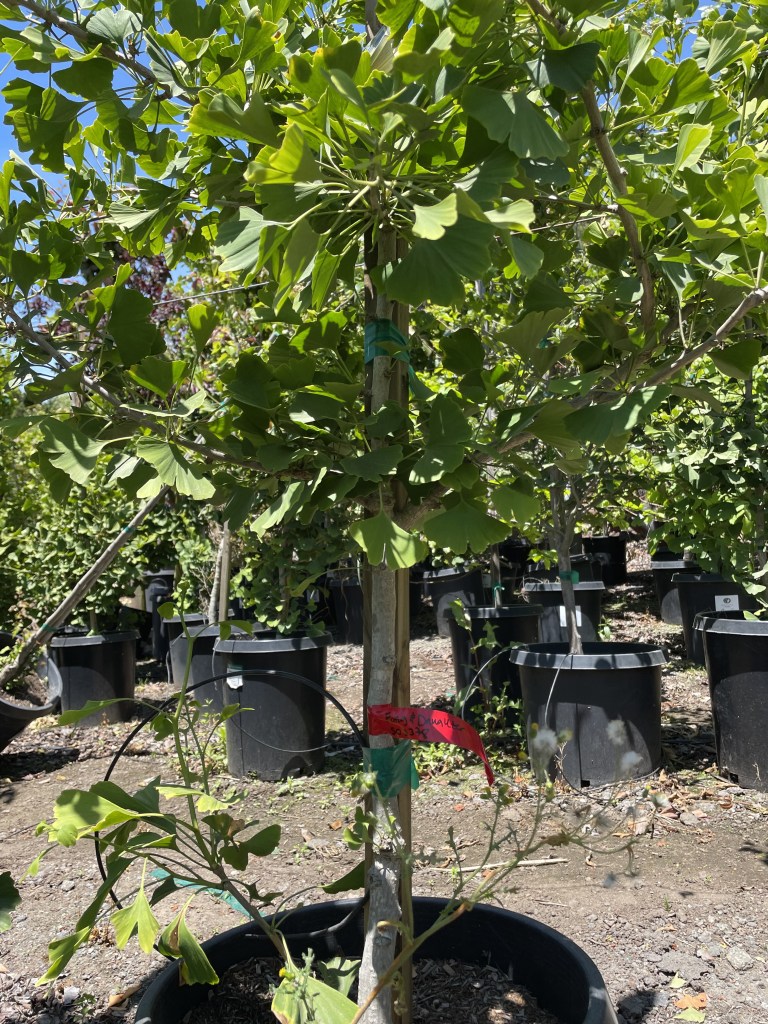
After numerous trips to Pacific Nursery, a wholesaler, all the plant materials were selected and ordered. Exotic names like Alogyne Heugera, Libertia Peregrine, and Dicksonian Antartica were ordered, along with a Gingko, Japanese Maples, and a host of more commonly known ferns, agapanthus, and lavender.

The height of trees became a major stumbling point. Views from windows needed to be preserved, and inadvertent interference from treetops could block views of the city and the Golden Gate Bridge. The ultimate height of each new tree was checked before being planted to ensure that no sightlines would be blocked.

The flagstone and stone delivery was almost as exciting as the first timber delivery for the house. The earthworks required shaping the windy path to follow the natural grade. Once the flagstone was laid at the entry, it was alot easier to visualize connecting the path from the street to the front door.

Delivery of Stone to job site

Newly planted trees and plants need time to grow into their element. We are happy and relieved to complete this final phase of the project and declare victory after an intense couple of years! We love our development and thank all who participated, especially J&J and Felix Associates. We hope you will come to visit us soon!

News Flash!!!

Stay tuned for another trip to my favorite country: on to Germany for a three-day sketch fest in Berlin and three weeks of opera and concert performances in Berlin, Leipzig and Hamburg! Watch for the next post in a week!

Movin’ on up (and in!!)

It’s been a month since we moved into the the new ADU (accessory dwelling unit). Despite the heavy rainfall and intermittent delays, our spirits were not dampened!

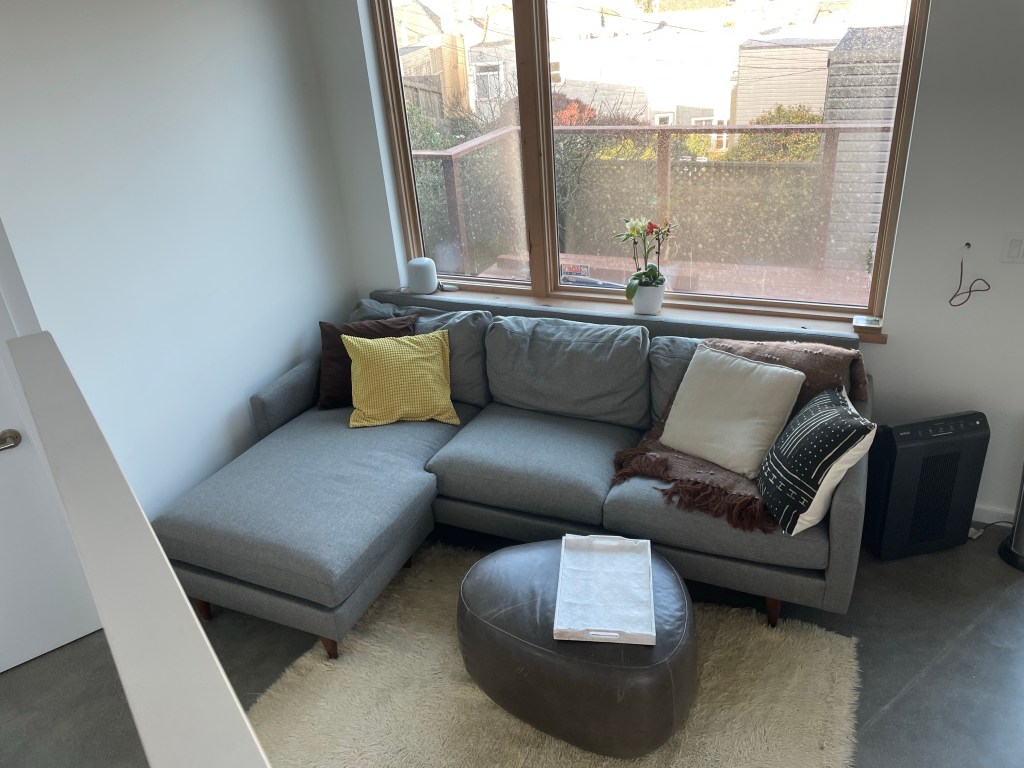
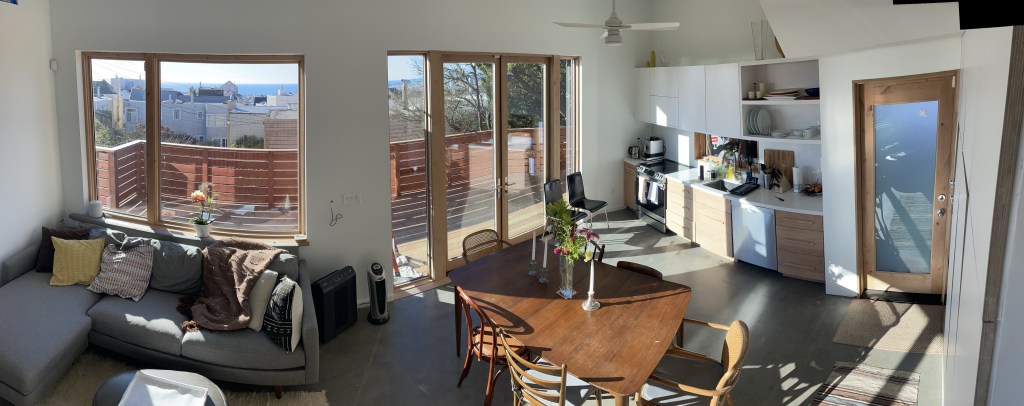
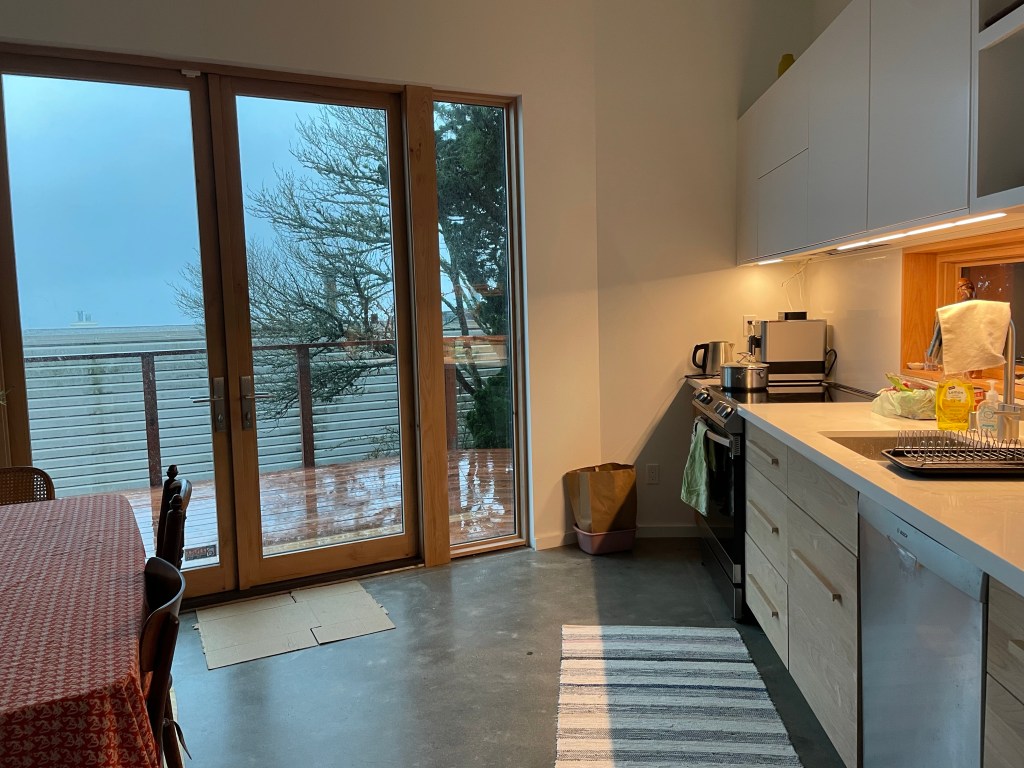
After waiting anxiously for 18 months, this big baby was delivered! The wedge-like irregular shape created by the rear yard setback integrates a kitchen, dining and living area on the ground floor. The main windows facing west provide generous natural light and ventilation. Combined with high 11′ ceilings, these public areas feel open and spacious. A double patio door leads to the exterior redwood deck expands public spaces for outdoor entertaining.

Naturally finished wood windows, shelving and details are used throughout the unit to complement sealed concrete flooring on the ground floor and wood flooring above. Walls are painted white throughout both levels.

The kitchen service area combines overhead matte gloss cabinets with wood base cabinets. A cozy picture window frames a 70-year old juniper tree outside. Painted wood shelving displays dinnerware and a large display space is reserved for a future surfboard!

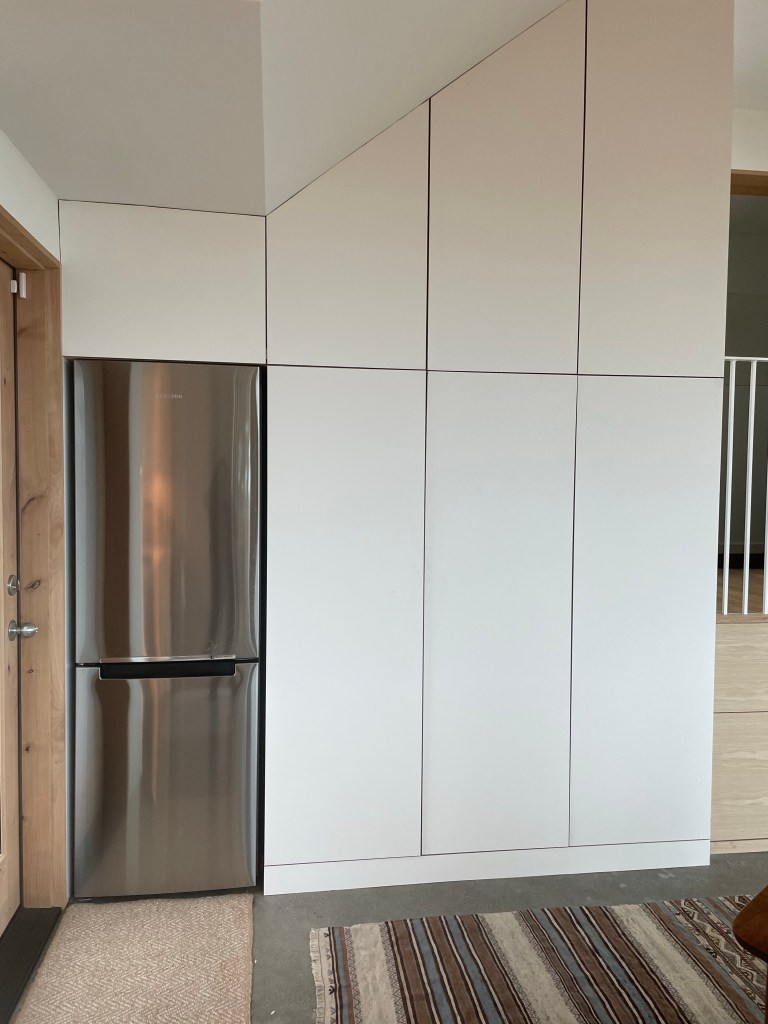
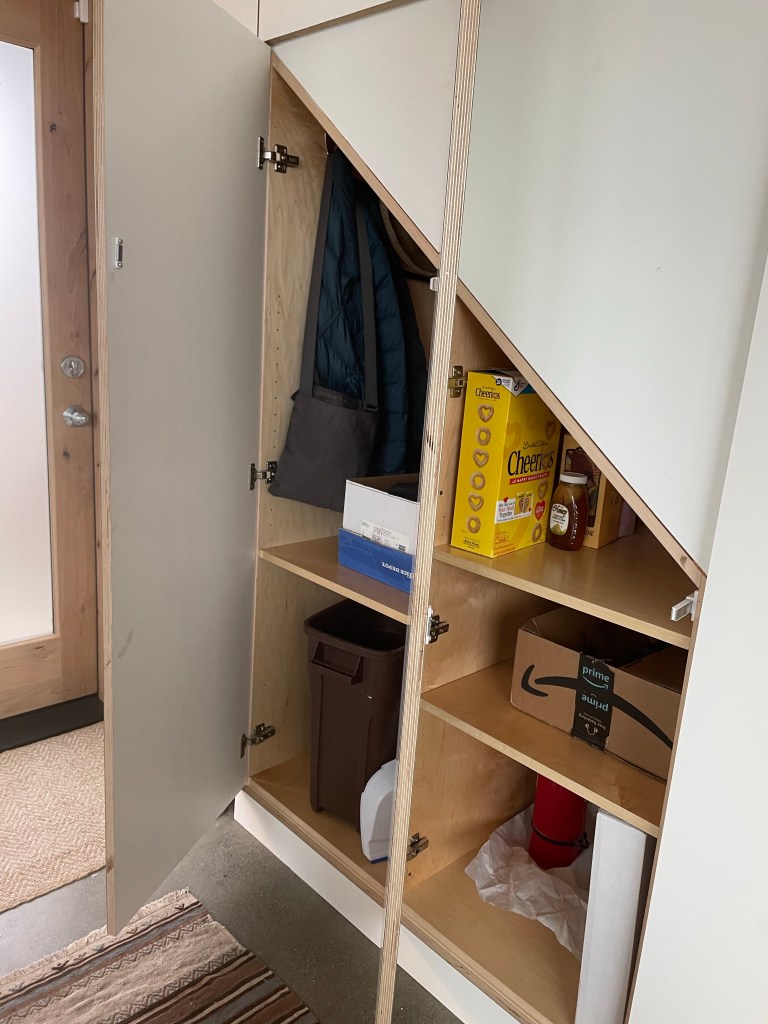
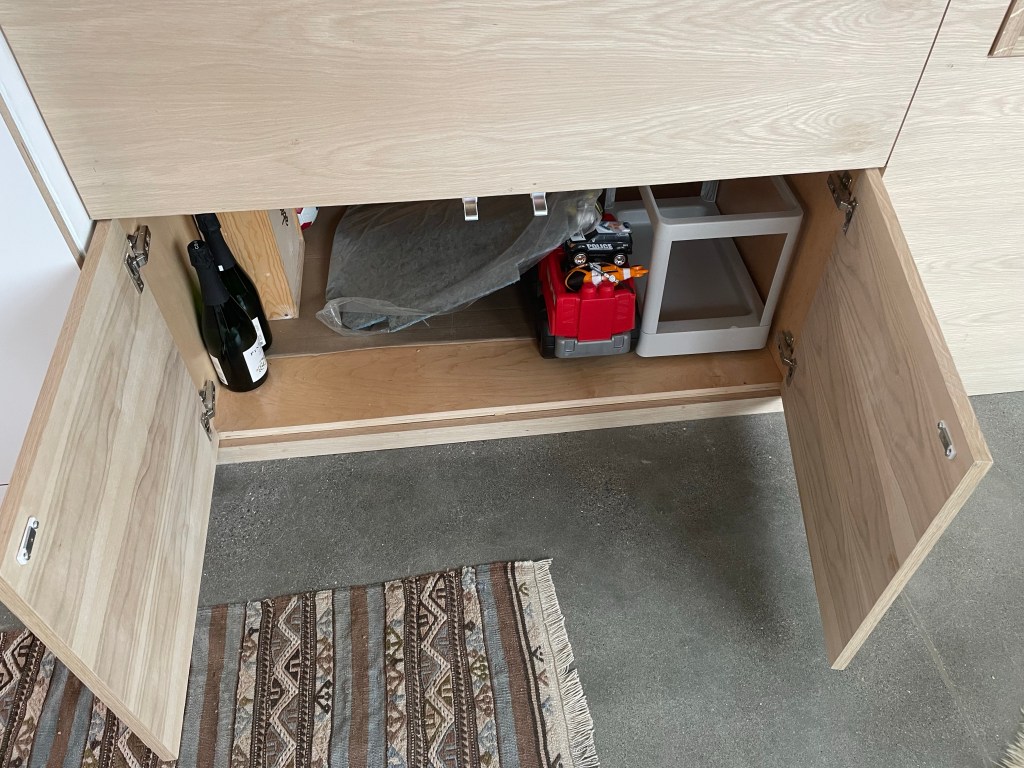
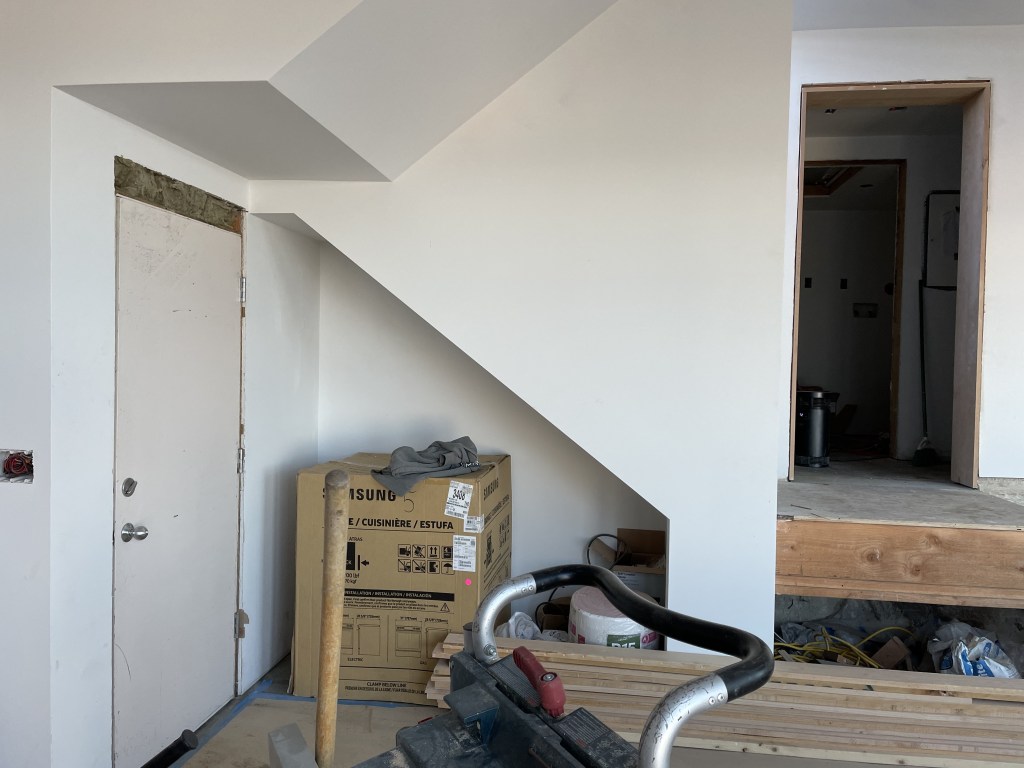
Opposite the entry door are built-in cabinets that maximize unused space under the stairs. Coats, pantry, recycling bins and additional storage are tucked behind blind doors. Special attention was paid to proportions, materials, and craftsmanship.

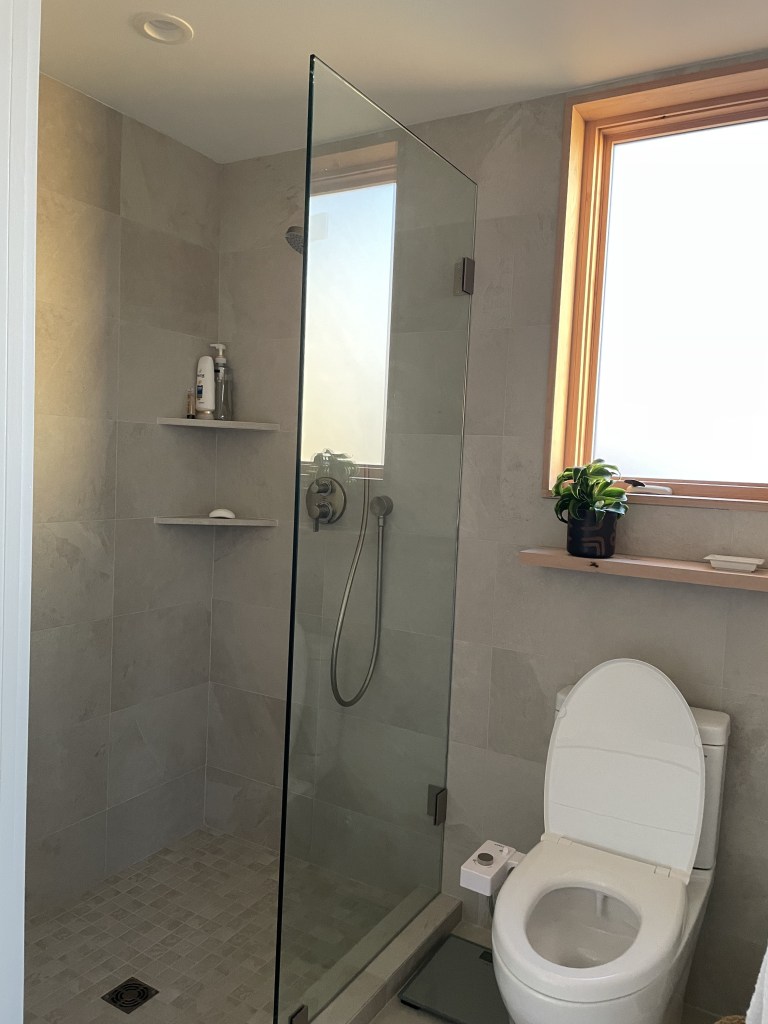
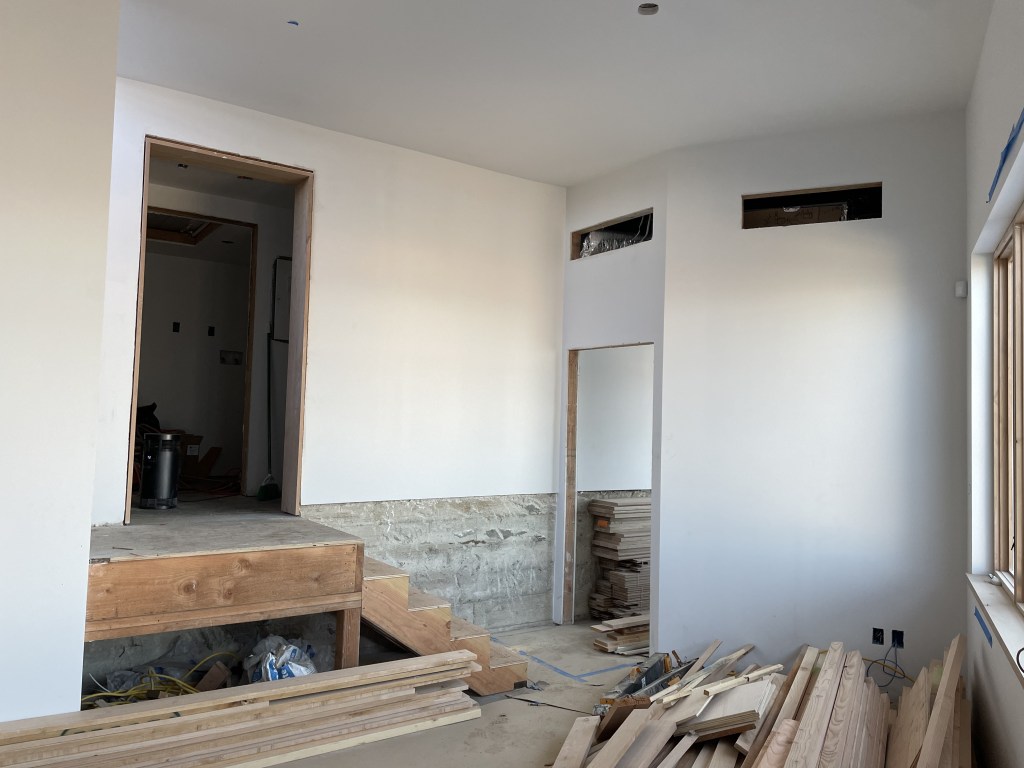
Half a landing up, the basement room inside the original house was converted to a bedroom and bath suite. the bedroom ” inner sanctum ” may be used in the future as a mini- screening room. Both bathrooms in the ADU utilize radiant floor heating. Wood shelving adds a luxurious spa-like touch to each.

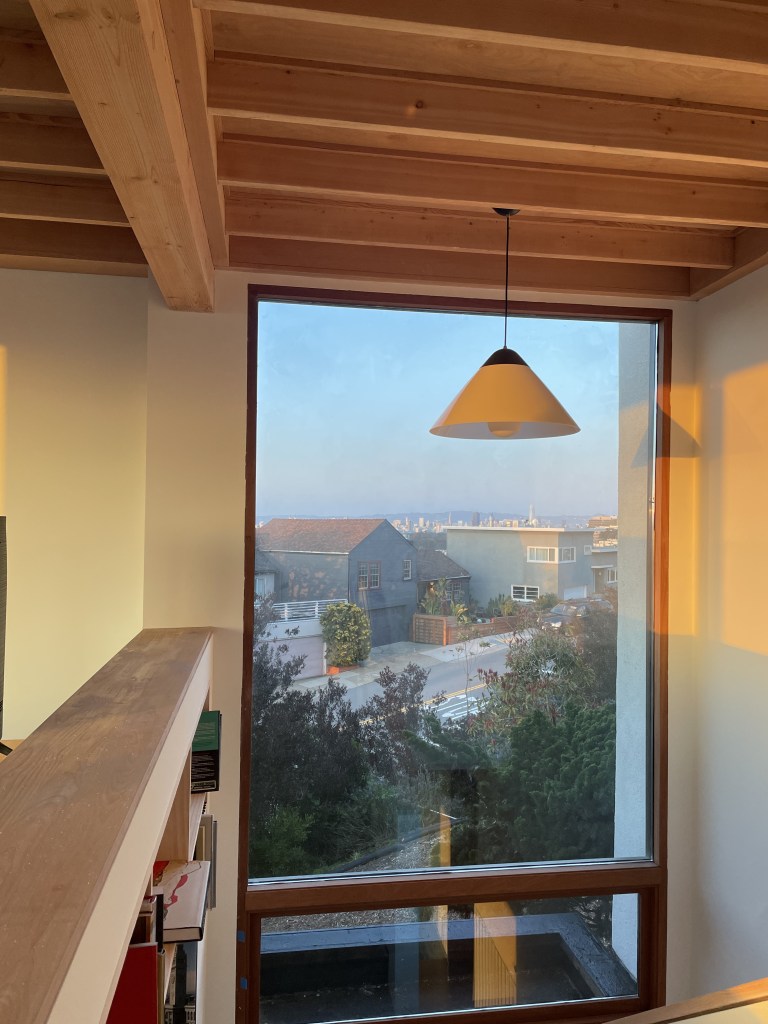
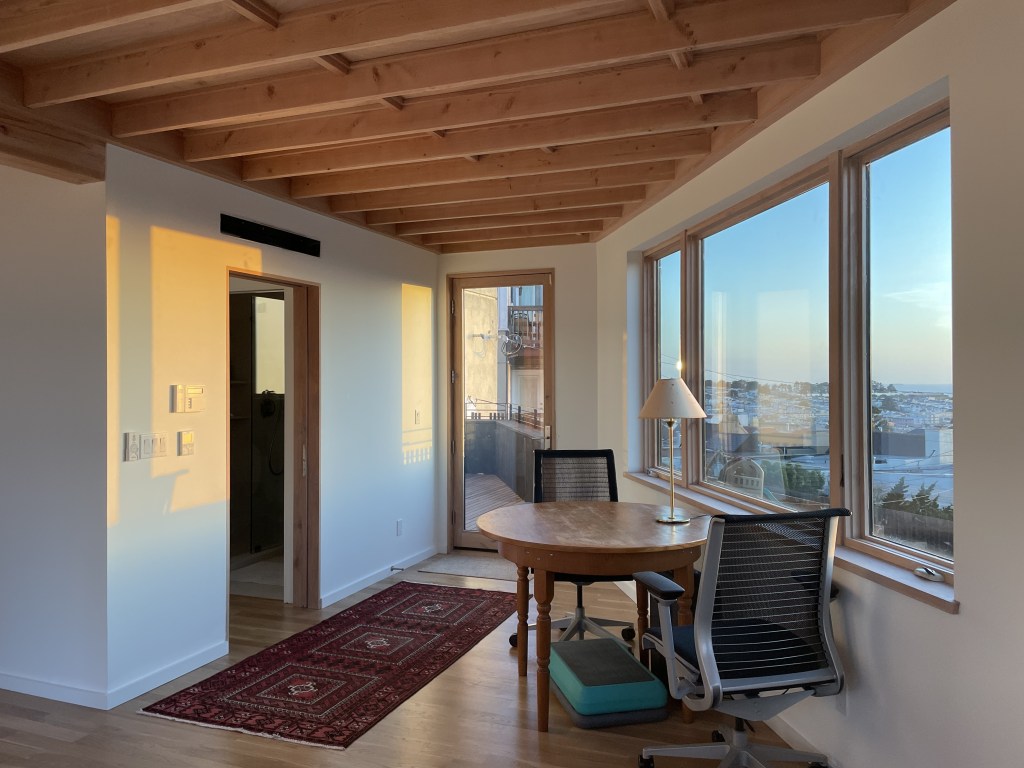
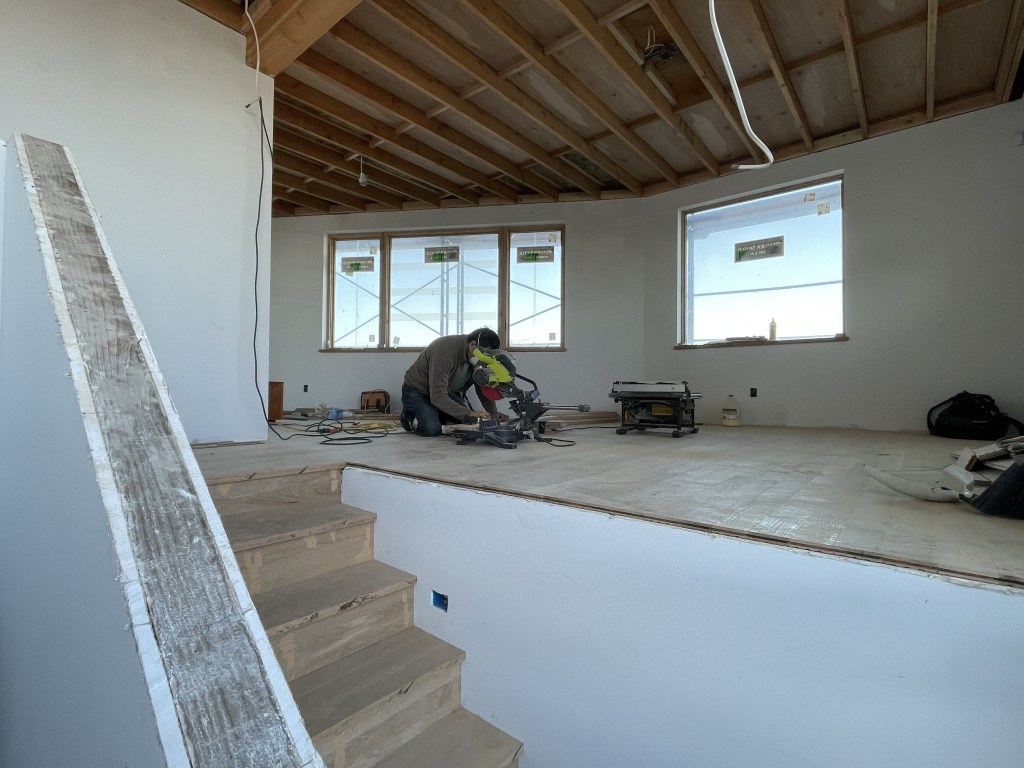
An open, double-height stair provides a view towards Parnassus Heights and Downtown San Francisco. The master bedroom/bath suite and large sitting area connects to an upper patio deck. In turn, it connects to the kitchen dining area of the original house. Large windows catch an abundance of natural light and spectacular views of the Pacific Ocean, Richmond District, and the Golden Gate Bridge. Like those from penthouses over New York City’s Central Park, this view captures Golden Gate Park and the greenery from above its tree canopies.

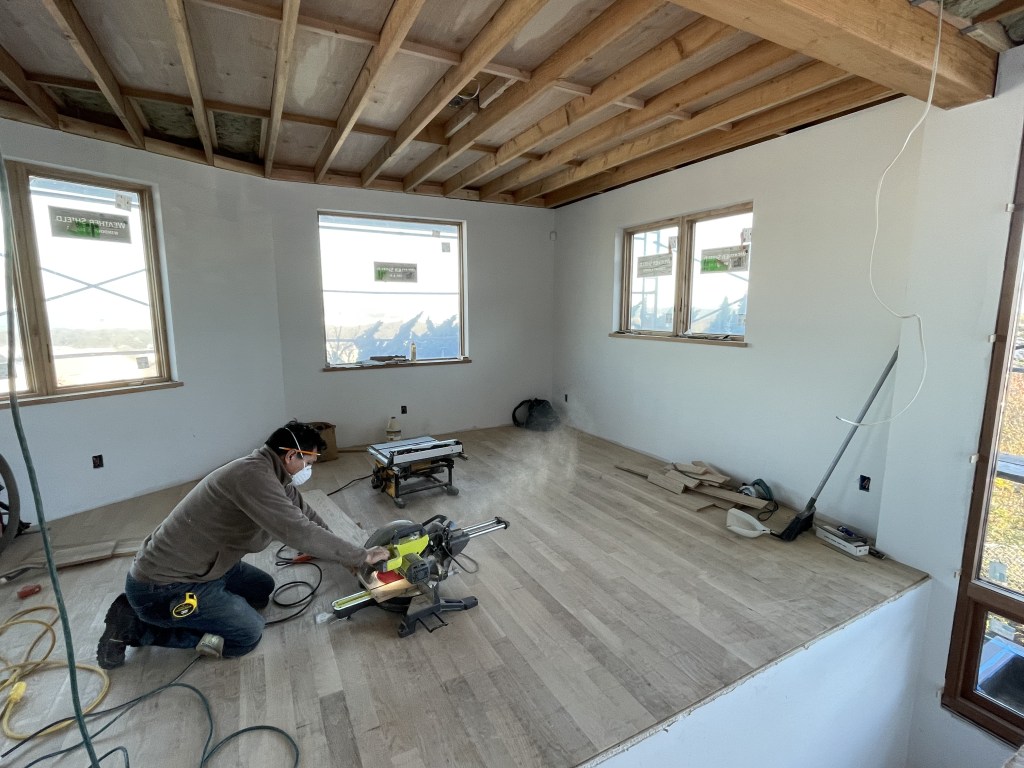
Window trimmed in natural wood finishes and natural oak flooring complement the 9′ high exposed wood joist ceiling. It’s a reminder of the extensive rough carpentry work on the building performed by J&J.

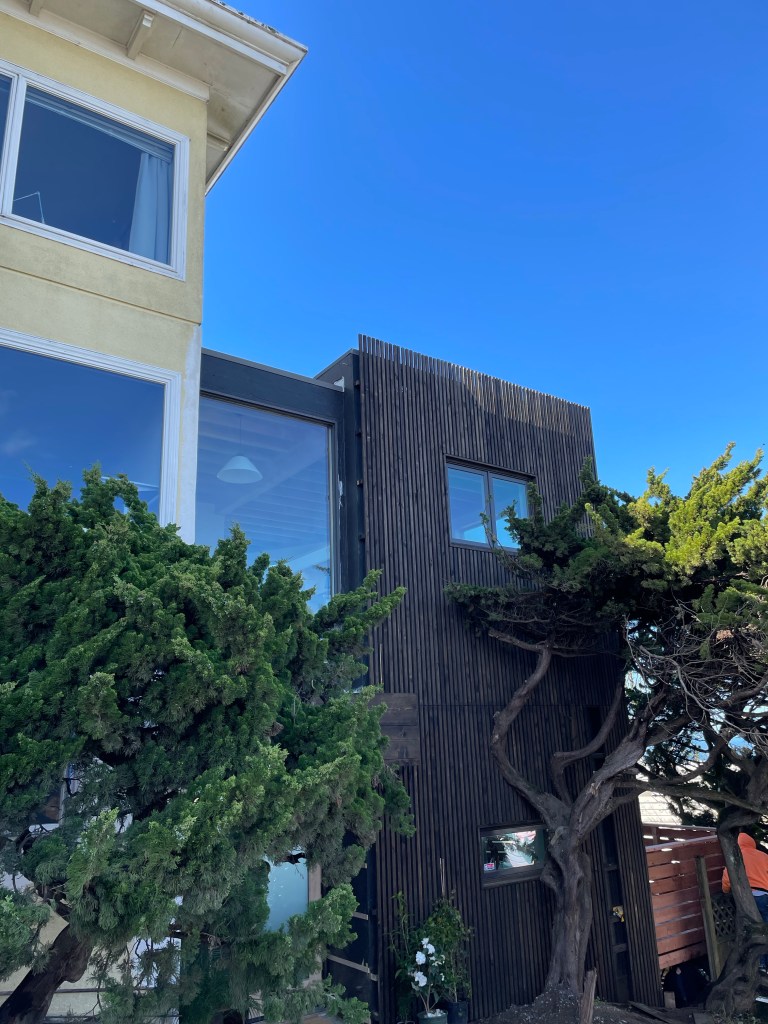
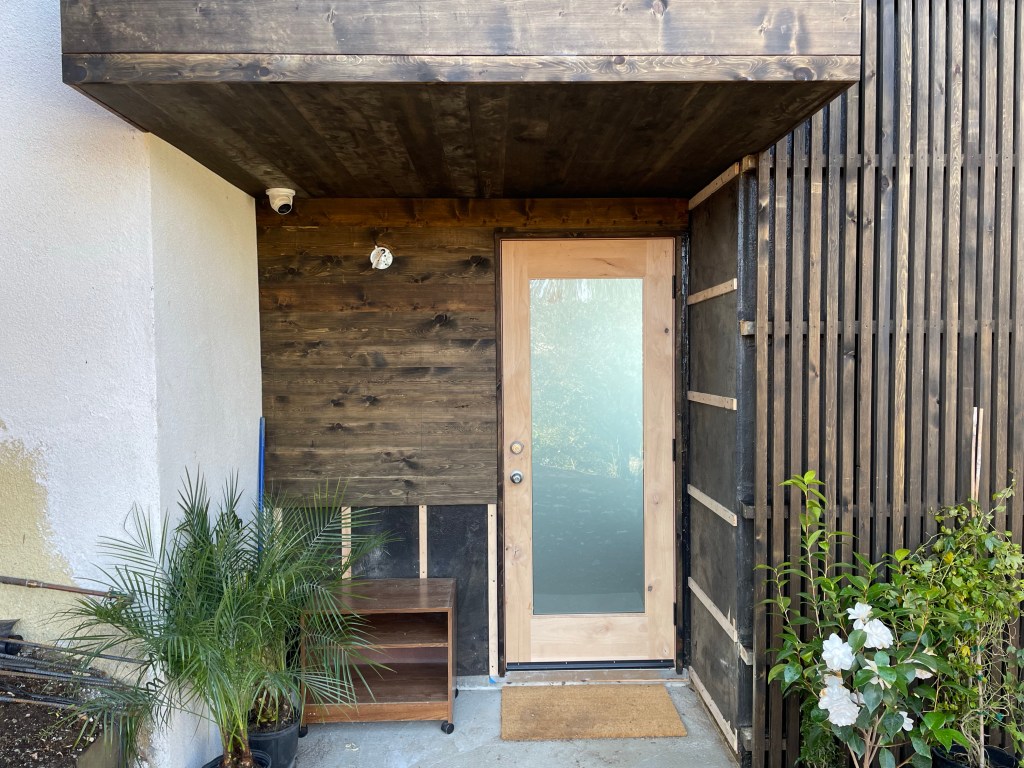
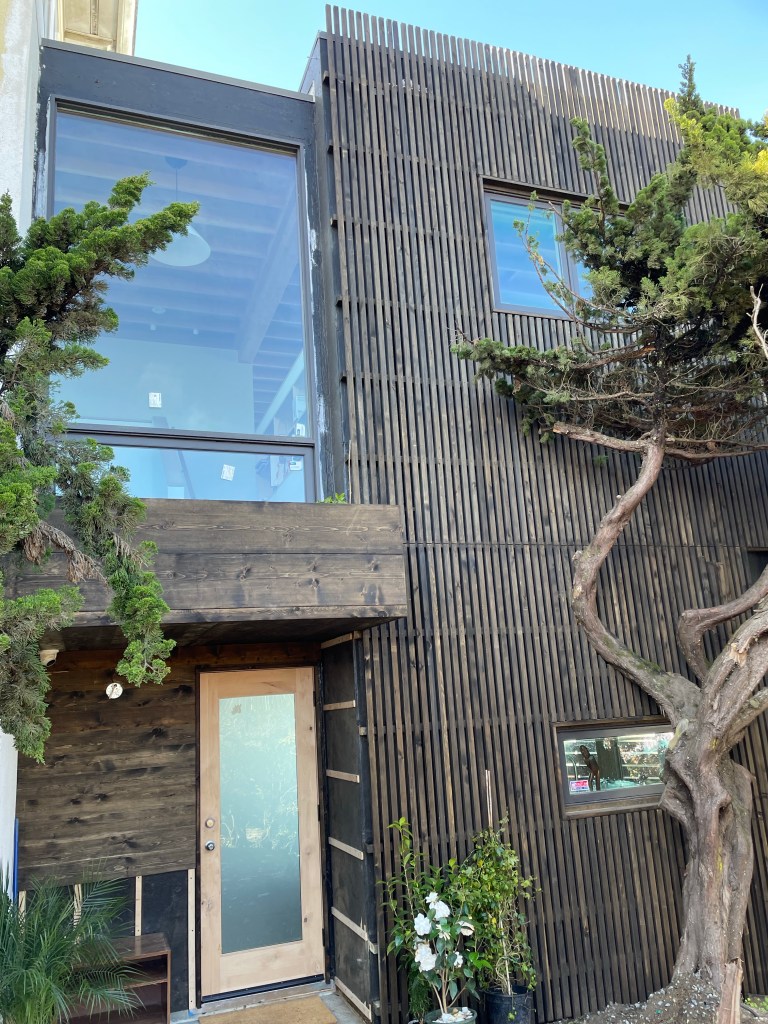
The exterior of the addition is clad in exposed wood vertical strips stained in black and walnut finish over cedar. Each window is framed with similar wood finishing. The redwood deck connects to the ground floor living space.

An example of the myriad details and instructions that make this project so remarkable is shown below. Jeff marked up plans and photos to explain the design intent. Here, he describes guard rail spacing to provide wind protection, natural ventilation and visual relief all in one solution.

This example is only a small indication of the dedication and care that was taken to create a beautiful and timeless design. Harking back to the three goals for the project–to develop a rental unit; to create multi-generational housing; and to enable future aging-in-place–all were met and our expectations were exceeded.

This post is dedicated to Julianne, the Daughter of Fong & Daughter, for her tenacity, commitment, and relentless desire to go above and beyond the call of duty. We love and cherish you Julianne, and partner Jeff, for your work that will last for many generations to come!! Dear Felix is one lucky and happy fella with you as his parents!! With Love and affection from the Fong of Fong & Daughter.

Late Bake

Here’s a quick video of both floors of the ADU and the bedroom suite at the half landing. Let me know if you have questions or comments!

ADU Overview April 2023

Just Germany

For those of you who miss my point about why I love traveling to Germany, I’ll give you a quick refresher. I can see and do much better opera more cost effectively there. The transportation system is a dream. It’s safe, clean and informative. The historical, cultural and social offerings are well presented and provide context for a fulfilling experience.

Most tourists prefer to travel to Italy, France, or England for a European holiday. Few people I know travel to Germany. But I discovered that many people from the German diaspora return to learn about Germany in ways that many Chinese Americans go to China to discover their roots. We struggle to learn and retain the language, just as many German-Americans do. I found that similar pattern strangely comforting.

So this trip was a make-up for the years lost during the pandemic and the house construction. I managed to travel at the beginning of 2020 to London and returned on March 12 just before the lockdown. At the other end of 2020 I went to New Zealand and spent nearly a half year there with family waiting for COVID-19 to subside in the U.S.

2022 was the dry spell until September when I made my way to Bayreuth to see the Ring. Only Wagnerian fans will understand the obsession with the composer. He is the only one who has successfully combined both music and poetry into a total, integrated work. My German language training helps me to appreciate and love this unique artistry.

While food is not one of the reasons for going to Germany, I do have to comment on a few items. I discovered an extensive Portuguese food haven in the neighborhood where I stayed in Hamburg. Getting whole fish and a hearty meal was inexpensive, hearty, and healthy.

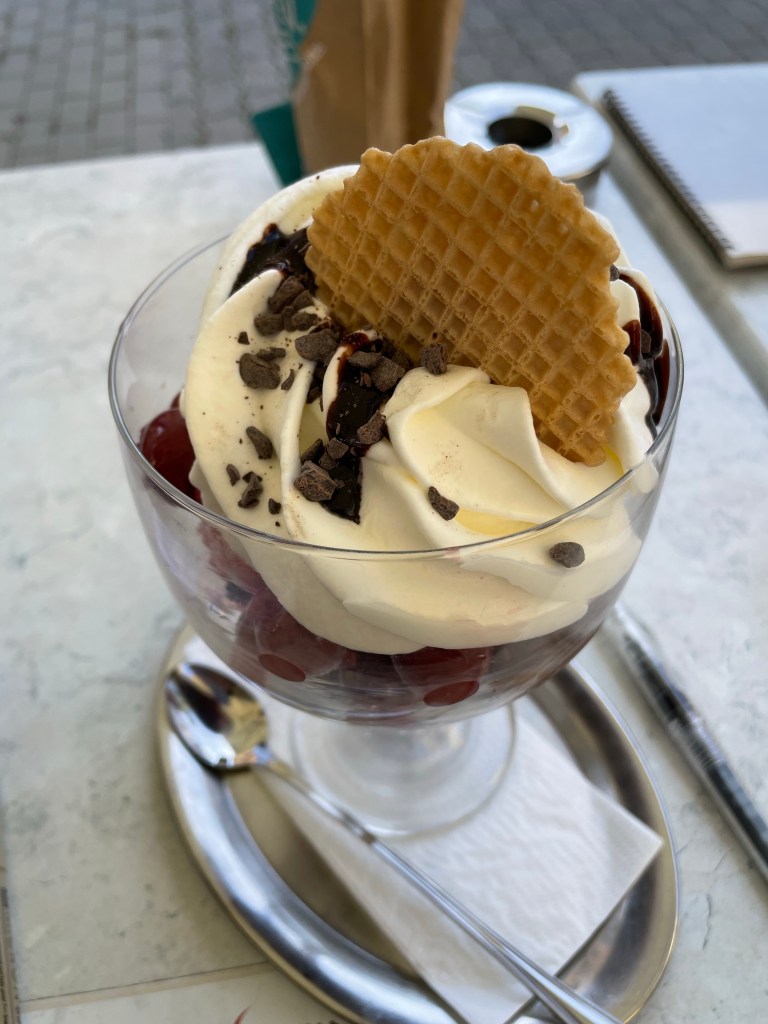
Leberkase and Bratwurst are not exactly culinary orgasms but the desserts are still to die for– particularly anything Black Forest and in season. The layered dessert with cherry topping was bedded with chocolate and crunchy puffed nougat sprinkles. And you already saw the Schwarzwald Ice Cream bomb in Leipzig–some food porn I couldn’t resist repeating. German buddy and vet here in San Francisco immediately recognized it and was jealous she couldn’t join me in Leipzig.

Berlin
My well-behaved intentions were eroded by…

The Berlin Sketchfest, intended for German sketchers, was my initial impetus for traveling to Germany this year. However, attending the opening season concert at the KONZERTHAUS in Berlin the night before was an even more thrilling experience. It overshadowed the sketching event. The new conductor, Joana Mallwitz, was stunning in her debut and delivery of beautiful music. Her gestures and love of music were so expressive. You couldn’t help but feel her joy and delight in every note as she guided the orchestra.

Cameras following Joana Mallwitz
after debut performance conducting Konzerthaus Orchestra

After the performance, I had an opportunity to meet her. The lights and camera crew following her through the adoring crowds were spell-binding. I even reconnected with her operatic partner Simon and hotel owner Ralf from Nurnberg, both of whom I had met the year before!

Reception for Joana Mallwitze
at the Konzerthaus after performance

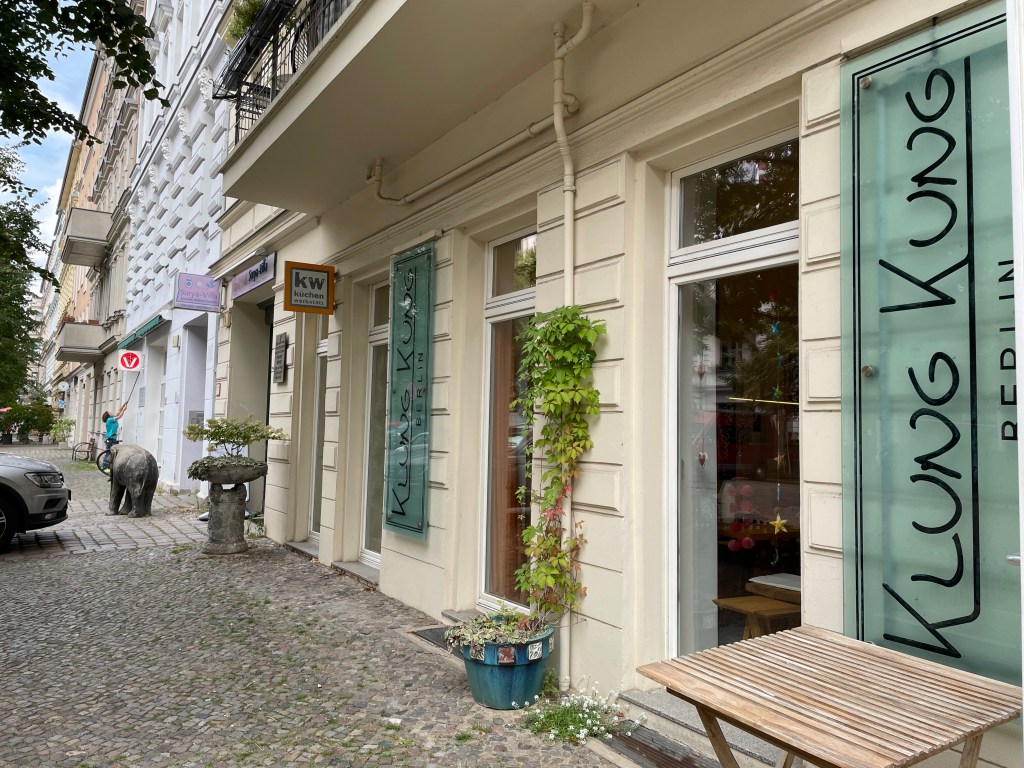
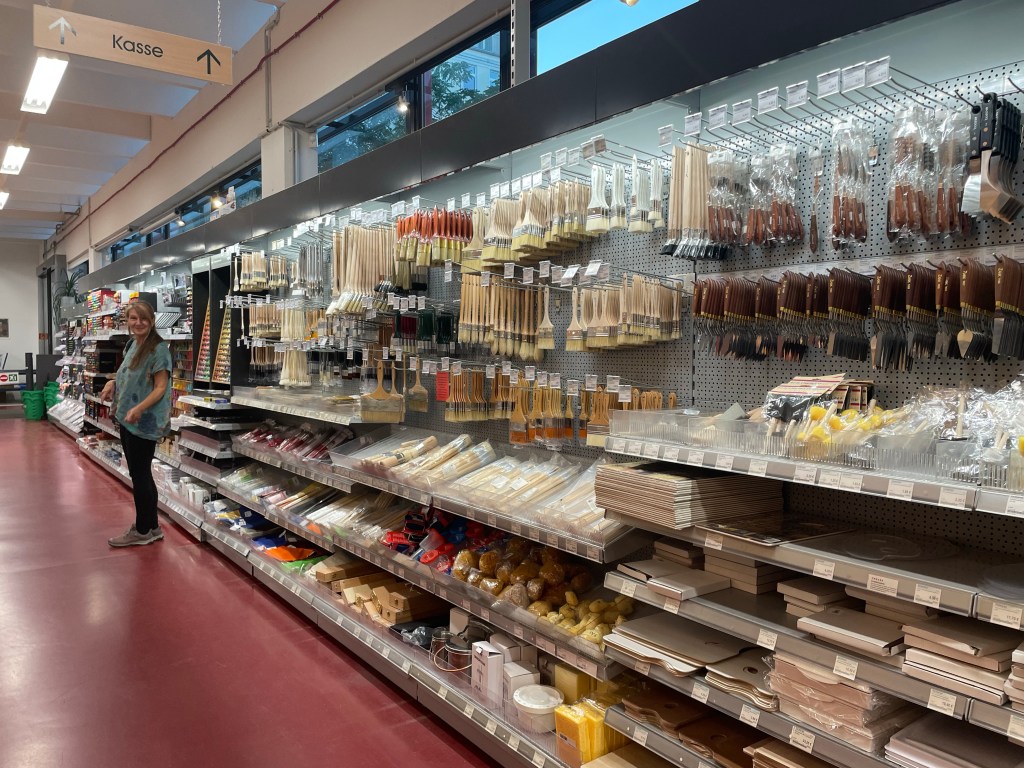
Staying in Prenzlauer Berg near Alexander Platz was a good bet. The local scene was filled with families, cafes, and trendy shops. I dropped some hefty euros at Boesner, the local art store filled with an extensive collection of paper, brushes, paints and artists’ supplies.

My Air BNB host recommended booking early for the visit to the Reichstag. The English tour at sunset was a double bonus while learning about how much the Russians were a part of the building’s history. An added bonus was seeing the Berlin skyline twinkling at dusk.

Reichstag at Dusk

Carefully picking only one museum in the Museum Island (Museum Insel) saved me from becoming overwhelmed by the wealth of artistic treasures in the city. An exhibition featuring Uzbekistan, with its fascinating history and UNESCO world heritage sites, was my irresistible choice.

Leipzig

The musical influence of Bach, Mendelssohn and Schumann drew me back to Leipzig for a third visit. This time, however, was even better. Meeting two friends, Hazel from Heidelberg and Vladimir from Meissen, made it all the more exciting. Hazel and I first joined a zoom sketching class and then made our pilgrimage to the homes of the city’s famed musicians.

When Vladimir joined us later in the week, we toured the new Modern Art Museum together and sauntered through the city in the warm, 85 degree weather. We ate Asian food outside the hotel and celebrated at Auerbach’s, where Goethe is purported to have written Faust.

Hamburg

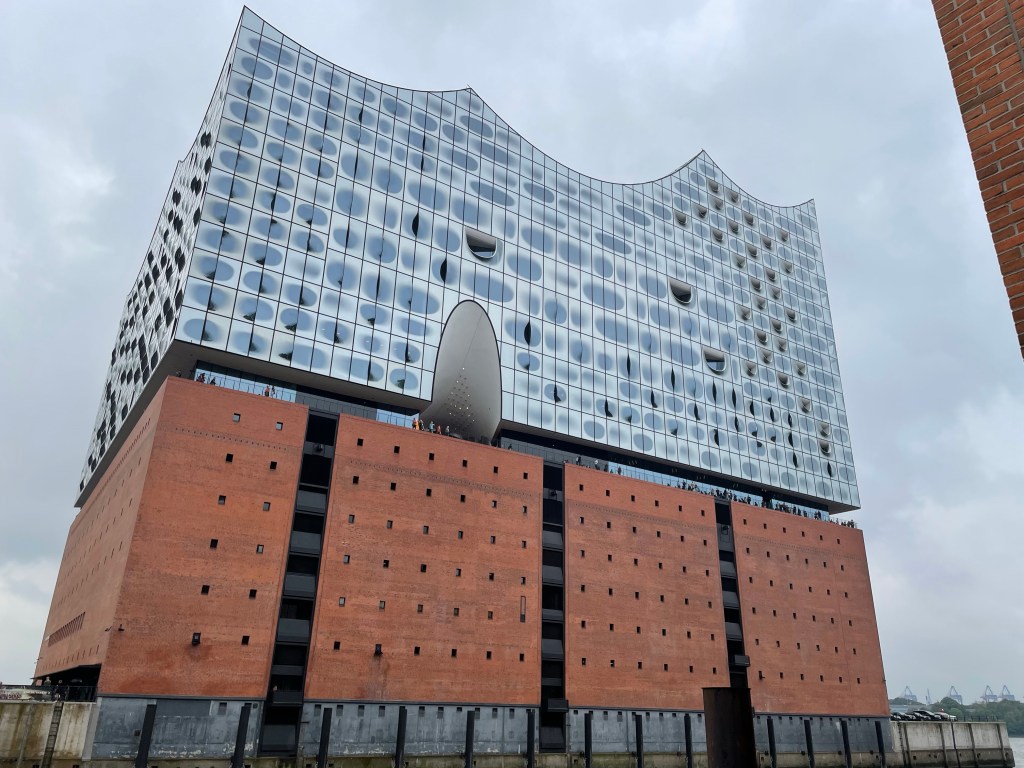
The Elbphilharmonie was the most stunning building I have seen for a long time. There are few buildings that meet my approval from BOTH the interior as well as exterior perspective. Having studied interior design as an undergraduate and architecture as a graduate student, I look for the perfect balance of both.

It was hard not to compare recent visits to the iconic Berlin Philharmonie and the Leipzig Gewandhaus. The concert houses in Germany were just as compelling as their opera houses. Sound and the music were paramount.

So I lost my wallet. That was very distressing. It coincided with buying a ticket for the Elbphilharmonie without any money. After the transaction, I met Annemarie, whom I have described in the previous post. She was a godsend and made the lost wallet inconsequential.

Annemarie at dinner on the deck of restaurant across from the Philharmonie

I did, however, make an excursion to see whether I could recover my wallet. And in classic German efficiency, the lost items were all carefully categorized for lost owners at the Lost and Found Bureau. Mine hadn’t shown up yet, but I surreptitiously enjoyed seeing the disasters of others. I’ll have to wait until I get notified of a data breach to get my day of reckoning.

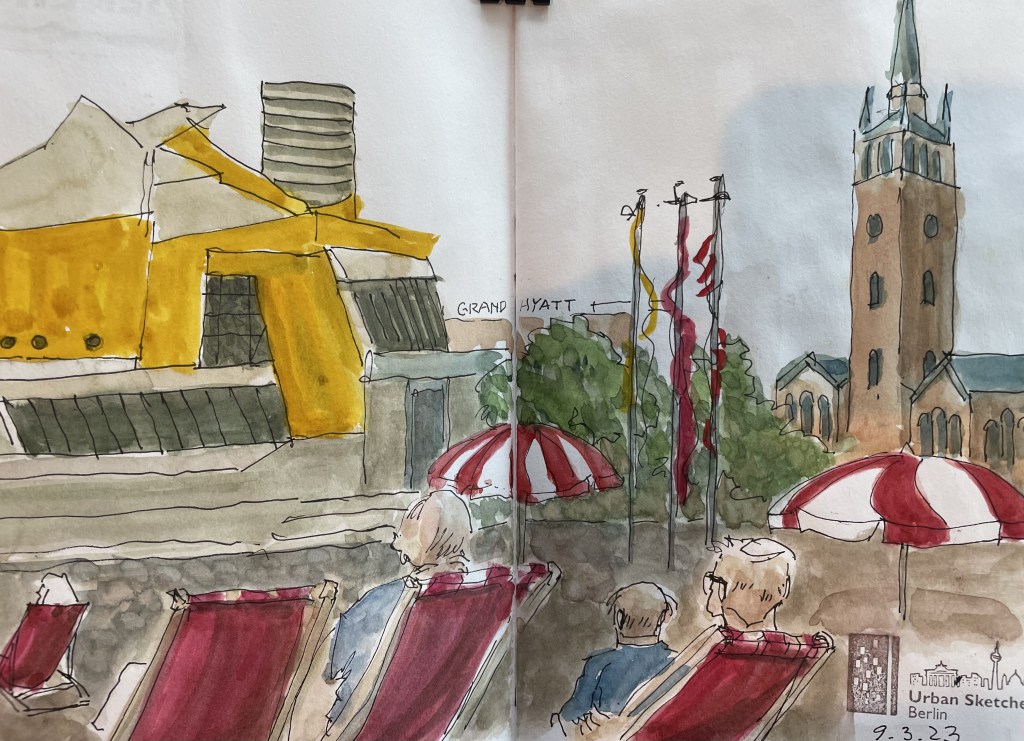
Sketchfest in Germany

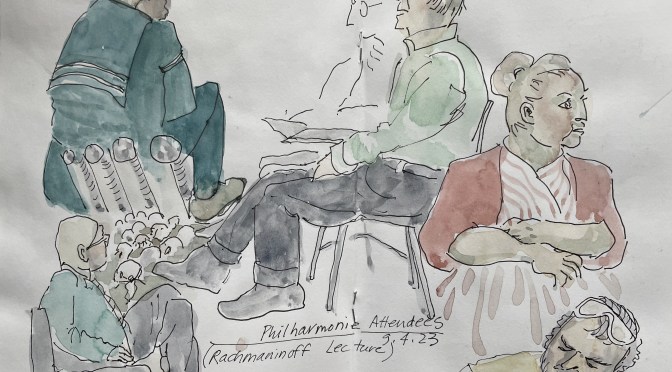
From Berlin to Leipzig, Hamburg, and Lübeck, I captured another dimension of Germany through sketches that fold the edges of people, places and things.

Environmental Boomerang

A noon time protest in Lubeck reminded me of our climate crisis.A Demonstrators of all age groups marched peacefully through the middle of town. When I posted this video on instagram, I immediately got negative comments. It made me very sad that there are such outspoken reactions in denial of the need to focus on a concern that affects everyone on the planet.

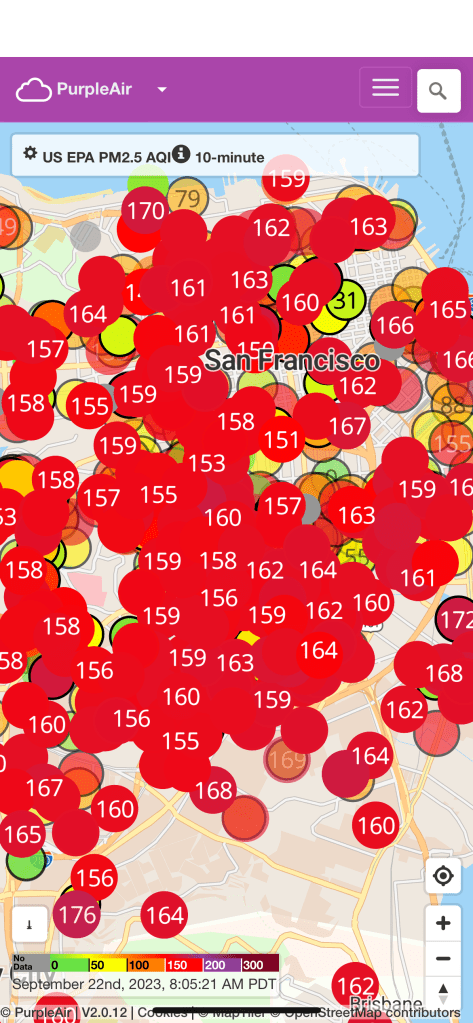
Before arriving in Hamburg on this trip, I learned that the pollution index was over 100. I don’t normally check air quality in cities during trips. But the app on my phone exists because San Francisco provided real-time air quality monitoring during the fires a year ago in California.

When I inquired about it to my Air BnB host in Hamburg, he dismissed it as a non-event. So I went. Ironically, the day I returned to San Francisco, the pollution index was over 150. That was the worst in the world on that day. Fires in Oregon and Northern California had drifted down to the SF Bay Area and were trapped there.

Screenshot of the air quality index
in the Bay Area on 9/22/23
A Post-Mortem

Some of you may have read in my 2023 summary that I am closing down my website at the end of the year. After seven years of traveling around the world from 2014-2020, two years of pandemic insomnia, and two years of babbling home construction, it’s safe to say that I have exhausted my creative wanderlust!

Knowing me, I’ll no doubt still sneak in a few trips here and there. I miss my German friends terribly. For my local friends, I need you too! For now, I’m looking forward to zooming with my two precious grandsons and recording the stories that Felix tells me about his favorite camper van and his day at the farm.

Bis bald!

Constructive Traveling (Weeks 64-71): It’s a Wrap!!!

It’s hard to believe that our ADU project will be completed next month! The latest photos below are captioned and describe the finishing process for the third and final phase of construction for the interiors.

With final inspection and a few finishing touches left to complete, we plan to move in by the end of January 2023! Thank you all for following our progress on this once-in-a-lifetime experience! We hope you have enjoyed the ride!

Together with J&J (Design/Build team) and Fong & Daughter (Planning and Design), we planned, designed, and physically built this entire 1000 sf addition to our existing house. Each member of the Fong & Chou Family are grateful for the opportunity, manageable weather, and our good health to finish the project.

Dear Felix deserves a special mention. He endured the trials and tribulations of mom’s intermittent absence from the homefront to the battlefront. Initially he could watch all the action from the dining room window, as many of you have witnessed in early posts. But as time progressed and the walls were enclosed, he lost his viewing stand and parental supervision. (that is, his supervision of his mommy and daddy!)

Nevertheless, he was a total professional and cooperated with us wherever he could. He observed the daily development and progress as his parents built a home for his family, his grandparents, and generations for years to come.

Spoiler Alert: Next month you may see a regular post of Travels with myself and Others in ….Paris!! Until then, Happy Holidays!

CONSTRUCTIVE TRAVELING: Rockin’ and Rollin’ (Weeks 55-63)

If you followed the last couple of posts, I took a hiatus from the construction of the ADU and went to Germany for a couple of weeks. The main event was the Bayreuth Festival, where I sat through 17 hours of The Ring Cycle amidst a primarily German crowd. Check out the posts if you are interested in Germany and opera.

But this week it was back to the grind. Progress on the ADU project continues slowly, but surely. With the challenging first two Foundations and Rough Framing phases behind us, we are now energized by the advent of the third and final phase for Infrastructure and Interior Work.

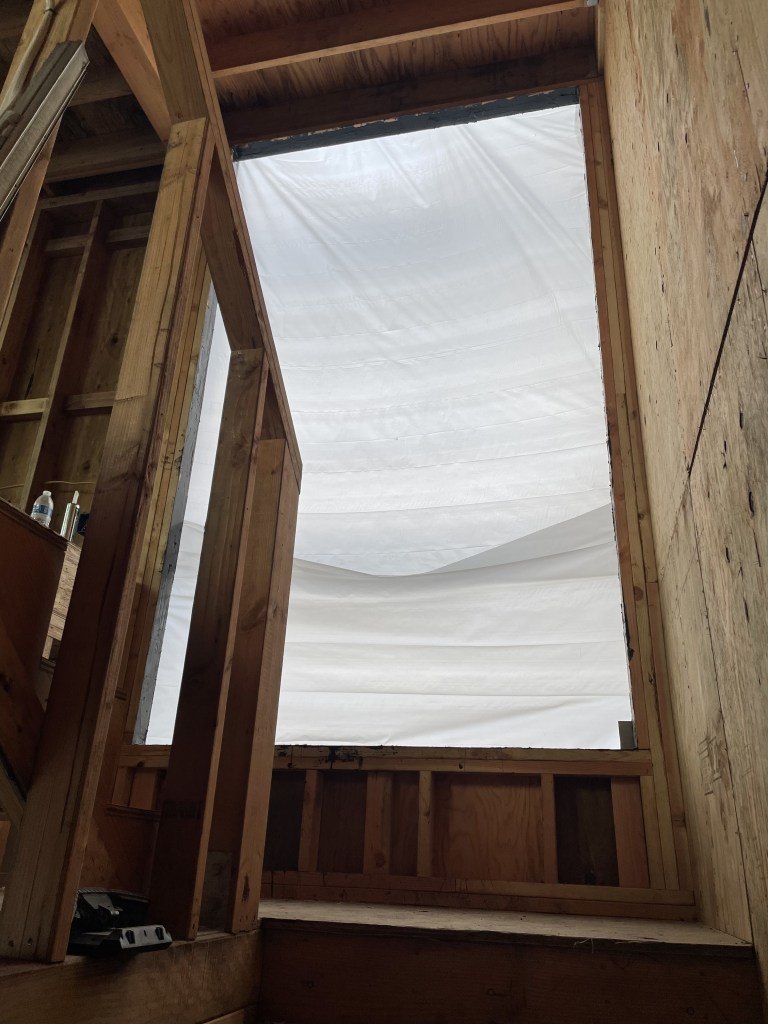
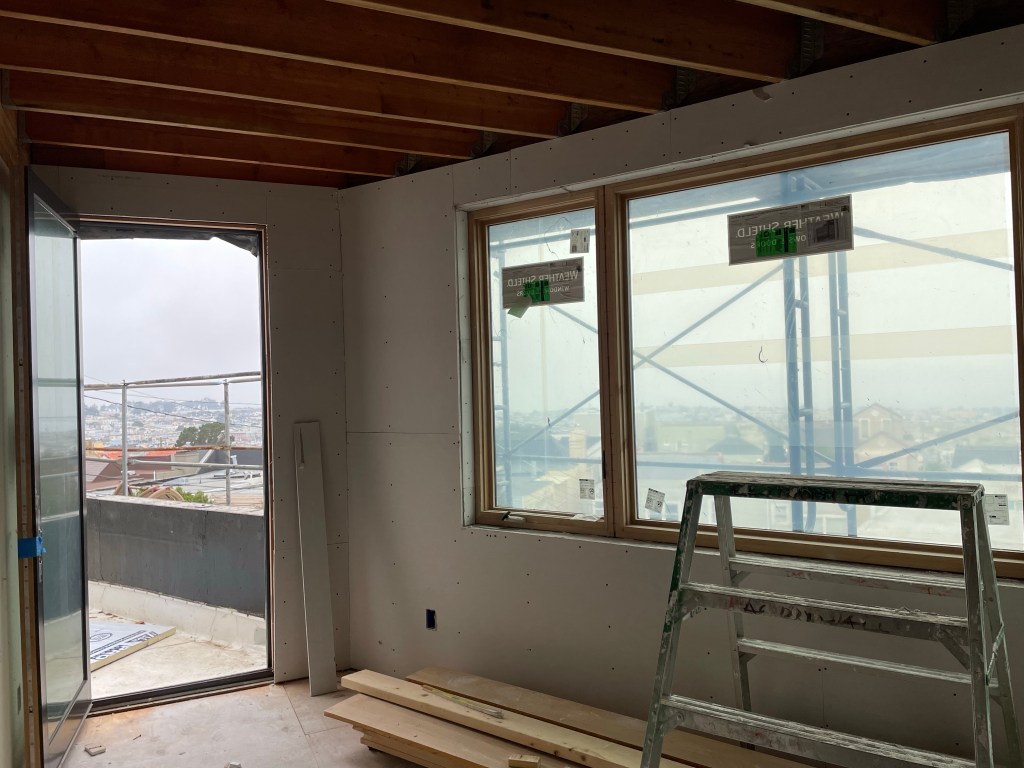
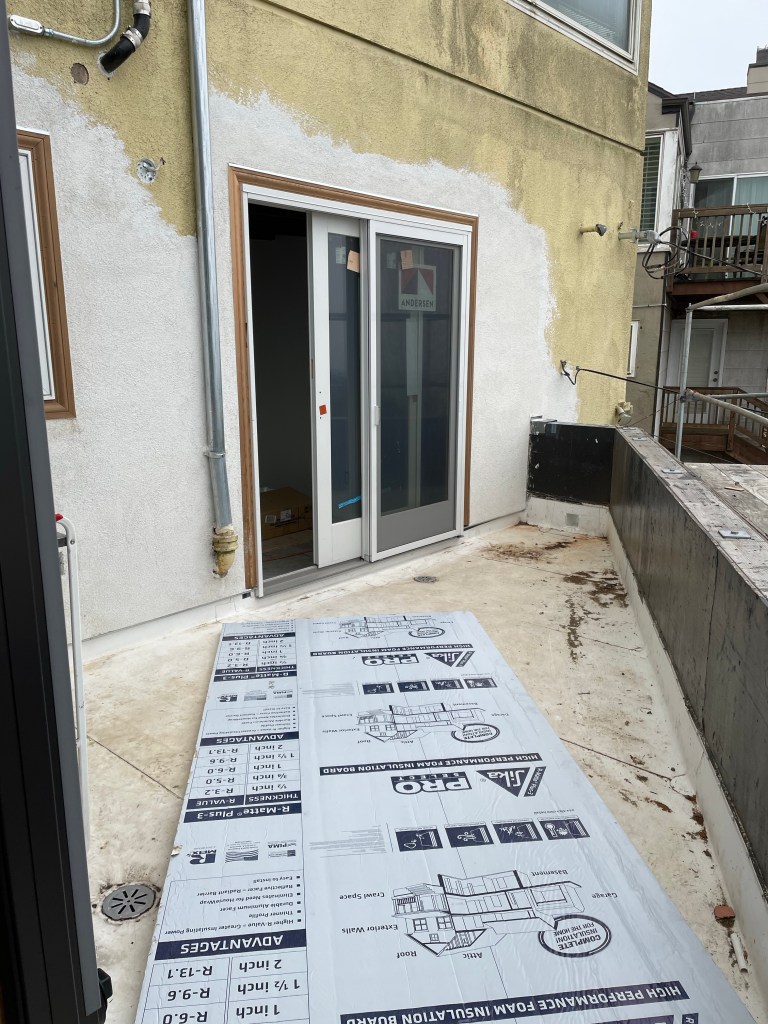
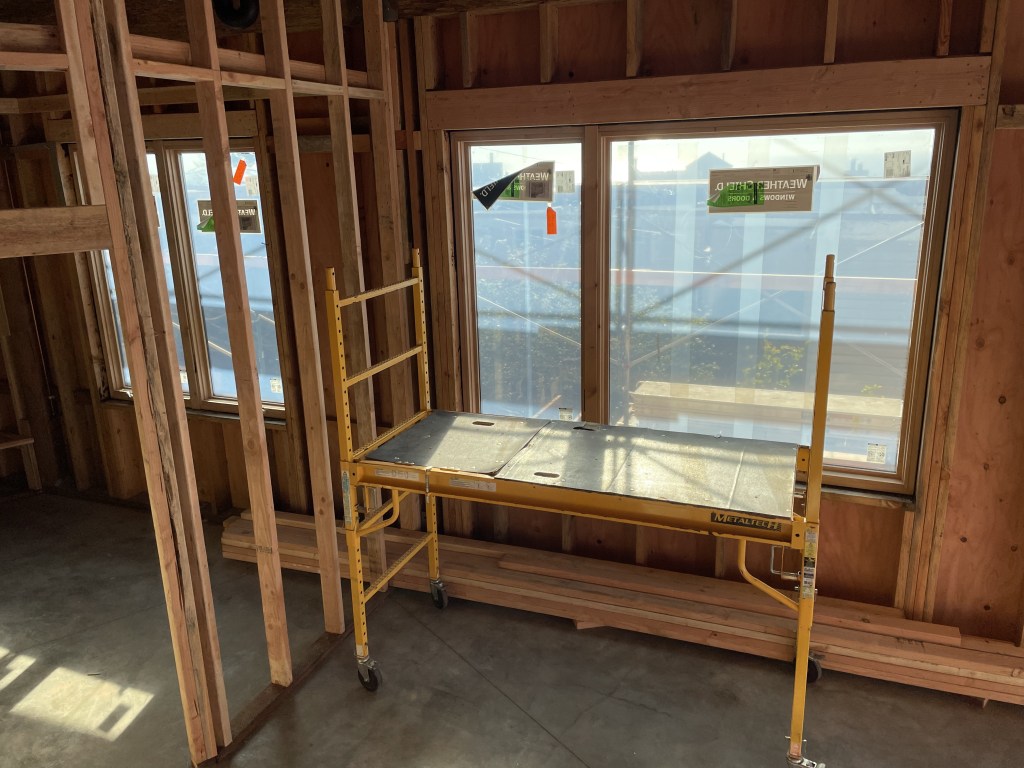
There is only one exterior opening outstanding before the project can be officially deemed “sealed and weather-tight”. The two-story hallway picture window was temporarily covered in plastic, then hoarding used to cover the large opening. All the rest of the windows have been installed, including the large French patio doors to the exterior deck and the sliding doors to the breakfast nook. Additional weather-proofing details, such as roof and window flashing, will be applied following the stucco patching on the original house.

The Building’s Respiratory, Digestive and Circulation Systems

Like the human body, a building is reliant upon its respiratory (heating, ventilating and air conditioning system), digestive (plumbing) and circulatory (electrical) systems to function properly. Once the skeletal system (structure) is formed, the other layers are added.

Infrastructure defines our modern-day living standards but is seldom seen or appreciated. Without the effort of HVAC mechanics, plumbers and electricians, we would still be living in caves. These contractors were now front and center stage.

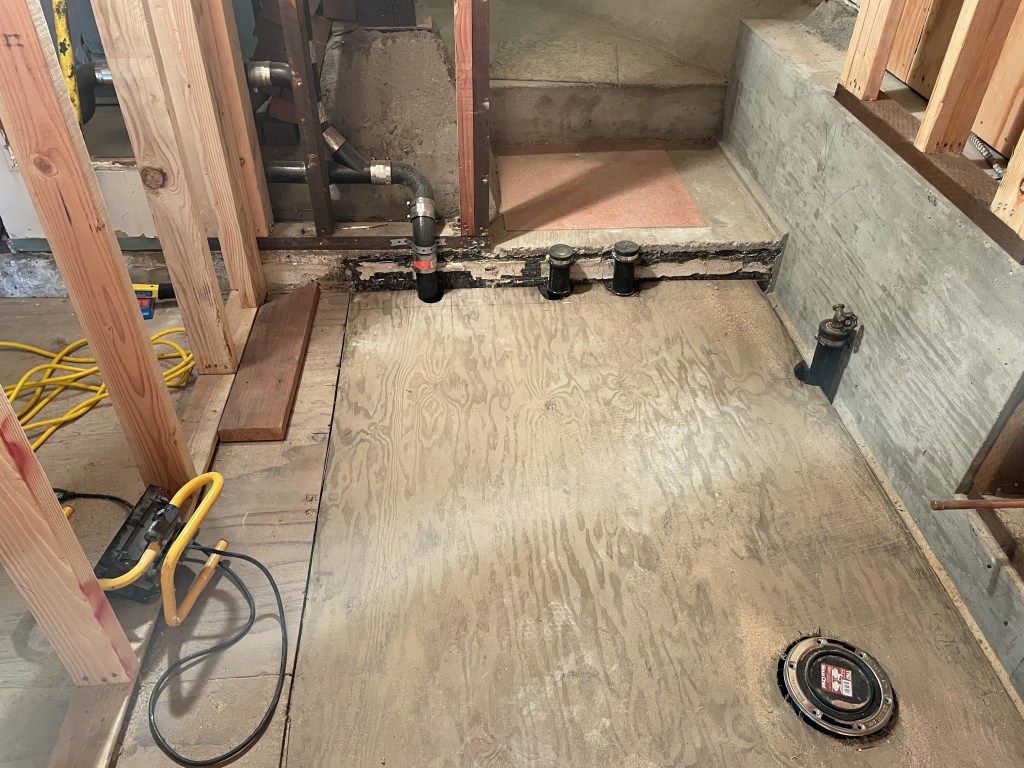
They drilled and sawed through and between stud walls to place plumbing pipes, vents and electrical outlets. Their work is grueling as we watched them twist and screw sewer lines, vents and ductwork in between walls and in awkward crawl spaces. We depend on their ingenuity to fit conduits, connectors, and pipes within confined spaces to provide us with essential juice and means of discharge.

We seldom think about how crucial these elements are until they are missing or misplaced! And of course, the brains are stored in the controls, meters and sacred electric panel.

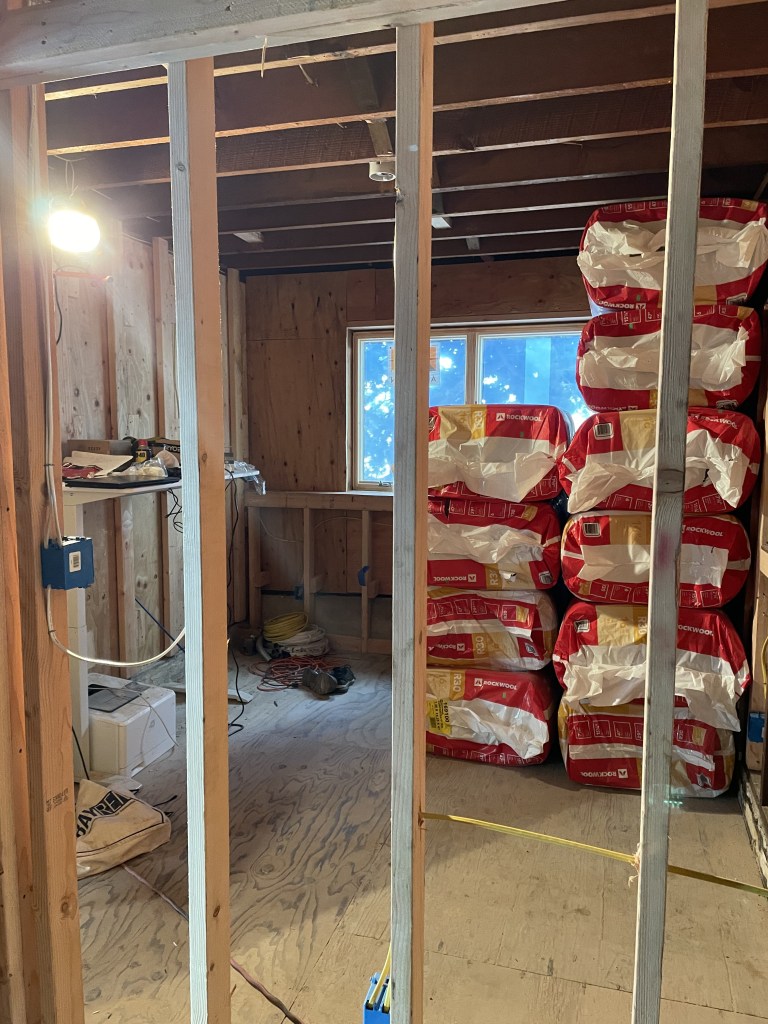
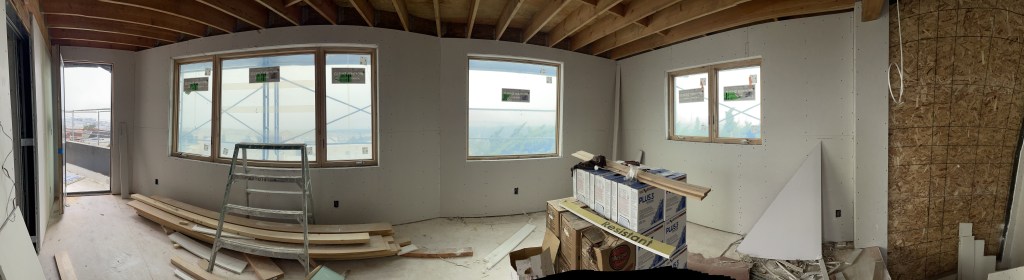
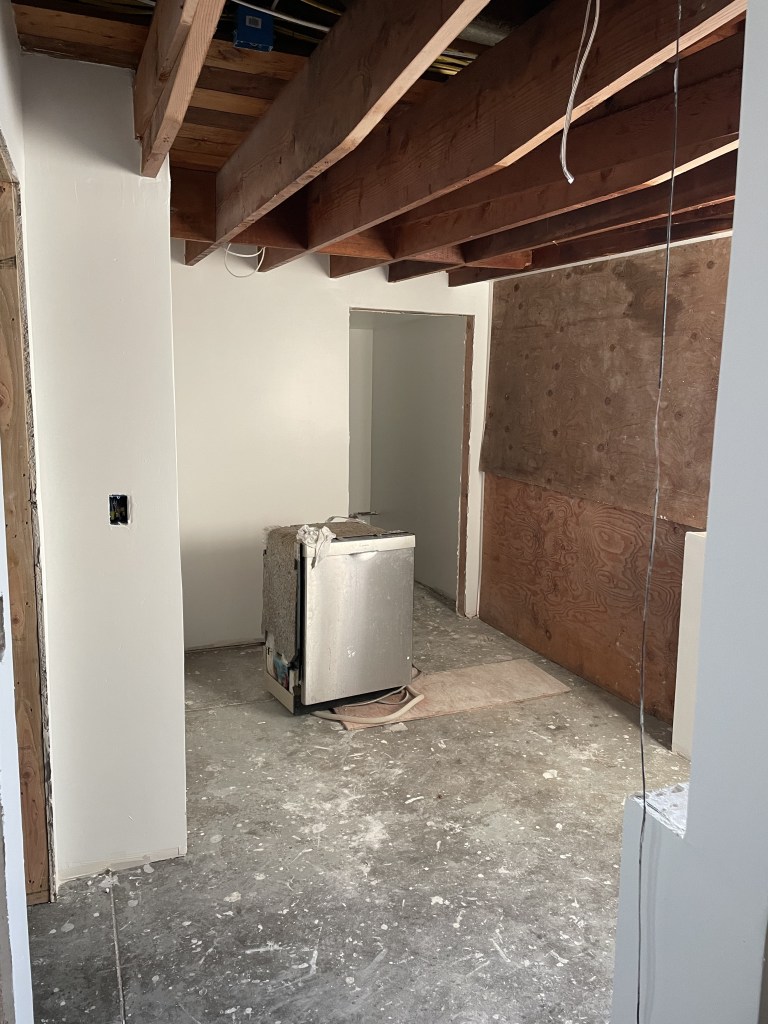
After the plumbing and electrical work, blanket insulation was installed. Upon successfully completed inspections, sheetrock was placed on both sides to form walls, with cutouts for electrical outlets and switches.

Rockin’ and Rollin’

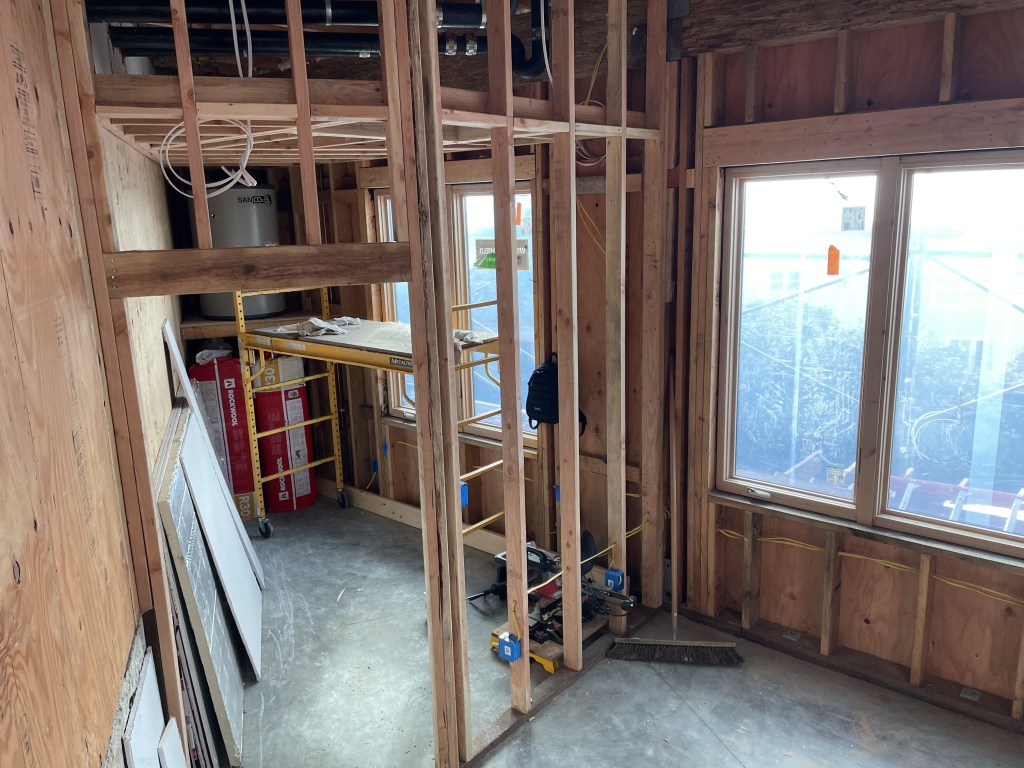
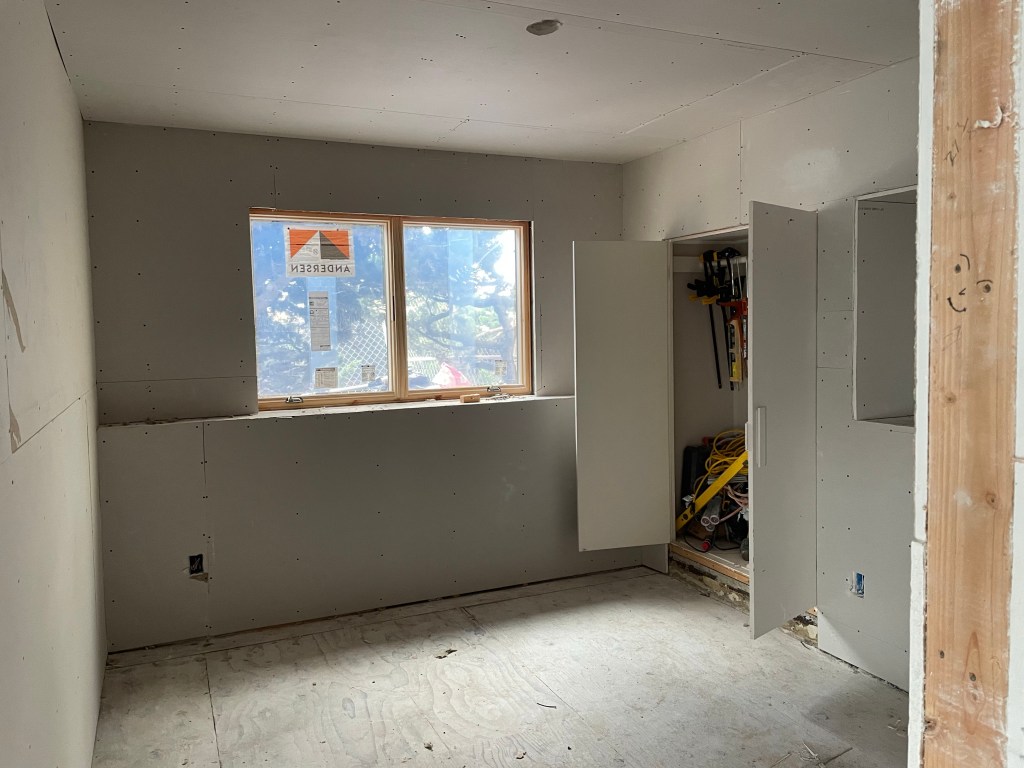
Before we were able to pause and catch our breath, the drywall was quickly put throughout the unit. It left a marked visual change to all the spaces– we could no longer telescope through the rooms! The windows were suddenly framed by opaque walls and views popped out of each space. What a joyful sensation after such a long wait!

The drywall scope is quite an intricate process. After the drywall is installed over stud walls packed with blanket insulation, gaps between panels are taped, “mudded” or sealed with wet plaster, troweled, and allowed to dry for a couple of days. The mud is sanded to a smooth finish so there are no flaws on the surface of the sheetrock. Despite having seen this process over hundreds of commercial and residential projects over the course of my career, it’s not the same as watching it unfold in front of you real-time. The swiss cheese gouges in sheetrock are no longer visible to the naked eye. It can be gratifying but only after endless hours of what feels like watching the grass grow.

The Kitchen Renovation

Without a functional kitchen, the stress and anxiety built to fever pitch . Washing dishes in the bathroom vanity sinks and avoiding clogging food particles in the narrow 2″ pipes was a daily brain bender.

Following drywall wetting and drying processes, the primer and paint was then applied. Different paint finishes, such as flat, eggshell and high gloss, determine the amount of light reflectance and resilience. The higher the sheen, the higher the light reflectance. In the kitchen, we wanted to maximize the light reflectance due to the limited amount of natural light. If you remember from one of the earliest posts, we sacrificed the kitchen window to maximize the ADU.

The kitchen now has no natural light. Using higher light reflective paint helps to capture as much light from elsewhere as possible to mitigate limited daylighting. Most of the walls were going to be covered by high gloss overhead and base cabinets so the wall color was moot.

Laundry flooring led me into the world of engineered products. You can now buy vinyl floor tiles that do not require grout. They are “keyed”, or grooved to the next piece as you would expect Pergo or thicker simulated wood flooring. The profile of the vinyl tile is less than 1/4″ thick, but manufactured with a laminated surface, a composite sandwich in between, and then with a plastic backing. These new engineered products command a premium price, but it is worth it for ease of installation and a more durable material.

After considering products at Home Depot or Lowe’s, I decided to purchase the product at Floorcraft, an “old school” retailer down on Bayshore. A sales rep waxed poetic and shared his years of experience as a flooring installer with me. As a real-time responder to my endless questions, he sold me on his recommendations. There’s still something to be said for customer service where you can see the whites of their eyes.

In progress photo, still with film on the surface of high gloss white cabinets and no tile backsplash
Coming Soon….

Watch for the next post to see the finished kitchen and more steps to the finish line for the ADU! Don’t forget to comment or let me know if you have questions about the design and construction process!!

Right by Bayreuth

Wagner pompously stated “there’s Bayreuth…and everywhere else. Its hard to escape this dominant patron in the tiny city of 75,000.

This may sound incredibly arrogant, but the attitude is understandable when you are here. It’s an out of body experience to infuse the soul of one of the most enigmatic characters in modern history.

Germans adore their musicians, and support their favorite sons actively with state funding, reduced rate performances, and frequent indoctrination by researchers who uncover new tidbits of information about their musical gods and heroes. If only Americans would be so kind to their own artists and creative community!

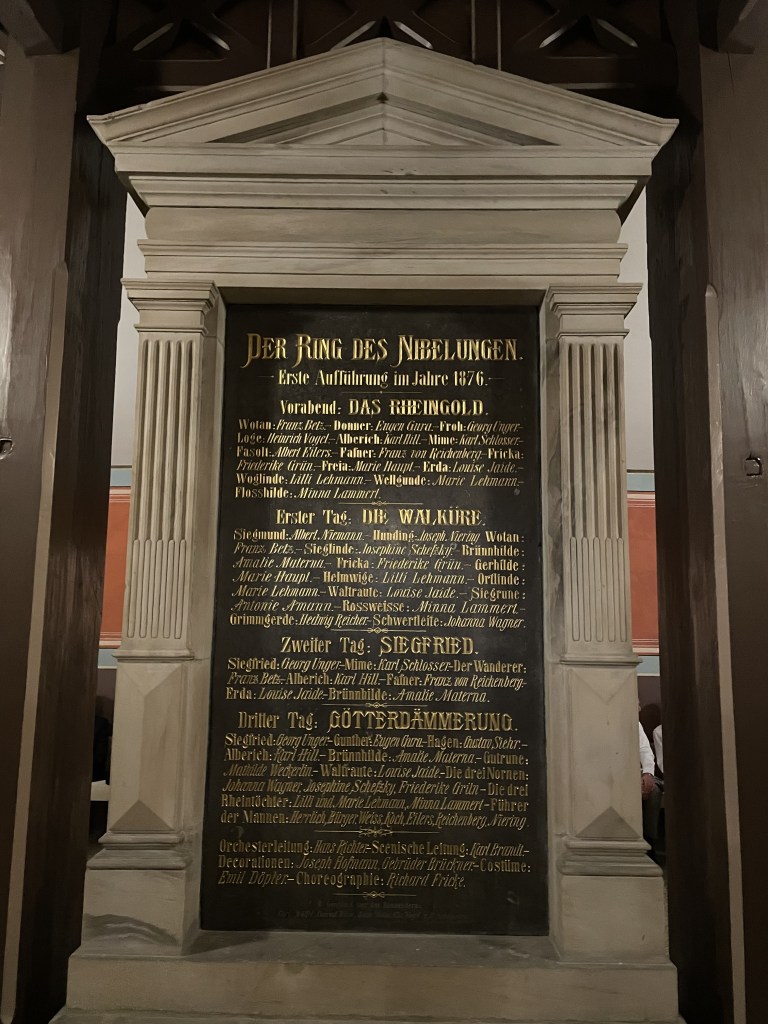
But back to the Wagner drum roll. His family were prominent residents of the town and managed to nab a slot in an idyllic park in the middle of the city. Then he built the festival opera house on a hill overlooking the city to present his work. His Ring cycle, four operas over six days and 17 hours of entertainment, opened the opera house in 1876.

For those unfamiliar with Wagner, you might wonder what the whole fuss is about. It would not be a stretch to say, at least among his disciples, that he represents not only the pinnacle of German opera, but of Western opera.

In the Ring cycle, Wagner not only wrote his own libretti or poems (in this series to tell the saga of a dysfunctional extended family), but he also scored some of the best classical music ever. He was an intellectual snob but succeeded transformed music with emotional skill and content.

Fast approaching its 150th anniversary in 2026, the Bayreuth Festival has been tooting its horn for quite some time. No other musician has attempted to build a monument in which his own works could be performed. Doing so seems pure folly. Wagner went ahead and did it anyway.

There’s no doubt Wagner was anti-Semitic. The Wagner House museum displayed some of his writings, but claimed that it was his family who embraced his writings and promoted them during the Nazi regime.

“There’s Bayreuth…and the rest of the world…”

I don’t know if you know anyone who’s been to the Festival, but I can claim only one other person from the States I know crazy enough to have come here. My friend warned me that Wagnerians take their religion seriously. Members of the Wagnerian society meet regularly, then proselytize after being trained in intricate Wagnerian minutia.

I’m only a neophyte, but I confess to ordering three books on Wagner. I felt compelled to weaponize myself in case my knowledge was put to the test. Aside from a narrative version of the Ring, a German-English paired translation of it, and a scholarly analysis of its music and history, I felt I had earned proof of my devotion to Wagnerian principles and thereby gained access to Valhalla.

The Festival Hall

Nothing too remarkable, except that it perches on a heath overlooking the town of Bayreuth. My accommodation was a fast half-mile walk and perfect for the occasion. The opera house accommodates 1500 eager opera lovers, a cozy size for the acoustics of unamplified voices and the way opera should be heard. That’s nearly half of the 3800 seats in the cavernous Metropolitan Opera in New York City.

The orchestra sits under the stage and is hidden so the audience is not distracted by the musicians. They huddle like Nibelungen in the cave, chipping away and churning out musical notes. Wagner exercised musical chairs to reposition players according to the sound they projected to the audience.

Every seat is a good view. The wide cone of nearly 70% makes everyone feel equal to the best. The down side is that, with nearly 50 seats per row without aisles, you have to skip the cocktail champagne to get into your seat in the middle or incur the side seaters’ wrath. Everyone grits their teeth until the center sitters arrive, then are finally able in domino fashion to seat themselves. By the last half of performances, late arrivals lost their pole positions and got relegated to the edges as others were instructed by ushers to move into vacant seats. That suddenly upped our real estate 10%.

I made the mistake of forgetting that cushions are available from the garderobe. During my first performance of Das Rheingold, I squirmed between drifts of head bobbing. I had not prepared myself properly with an obligatory nap beforehand. Rushing to Bayreuth with three changes on the day of the performance and buzzing from the glamour of being there was a fatal combination.

Catering is well planned for a variety of tastes and affordability. I tried most of every type of station—from sushi to ice cream, bratwurst to cold steak platters. I did pass on the 70€ buffet only because I didn’t think I could gorge on all that was offered within an hour!

The controversy over Wagner’s anti-Semitism lingers. Displays of prominent Jewish composers and musicians who contributed to Wagner’s success were posted. You couldn’t help but wonder if was only a token effort.

The Performances

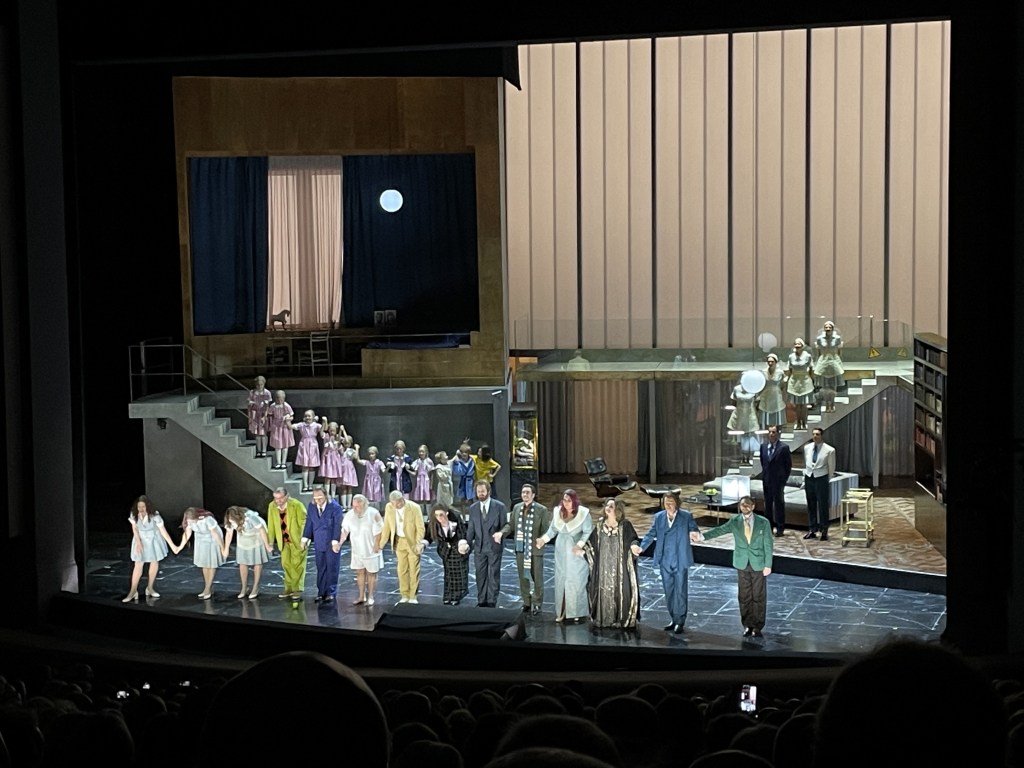
Having now seen all four operas of the Ring Cycle, I was intrigued by the visual changes to the traditional story. Performers wore contemporary fashion and gestured in current body language. Think Kardashians. Think Trump. Think downfall of society.

It took awhile to get whetted to the visual style. The director transformed iconic fairy tale characters into trash behavior. They strutting in stilettos, grabbed guns for attention, and constantly glued themselves to cell-phones. Did we really want to see a fantasy playing out the way we witness life every day?!? Where are my hero and heroic heroine figures that I came to wish upon a star with?

I tried my best to keep an open mind, but I struggled in the end to accept the director’s imagery. For me, an original story with timely relevance today expressed by Wagner in word and song over 150 years ago did not have to be a literal translation. This ironically backfired and left a very bad taste in my mouth not just for this stage direction, but also caused me to question Wagner.

Audience Reaction

Take my one interpretation and multiply it in a room by 1500. One of the most startling and entertaining parts of the evening was witnessing the audience reaction to each performance. The noise level steadily escalated to a crescendo in the fourth and final act of Gotterdammerung.

There were two competing aspects: superb singing and horrible visual effects. This is not the ho-hum nervous applause you expect from any American curtain call, embellished with an obligatory standing ovation.

German audiences are much more reserved and discriminating. They give standing ovations for performances that are genuinely exceptional. No grade inflation. But there was no standing here. The Germans were too busy in their seats stomping their feet while clapping furiously for minutes on end!

Simultaneously, wild jeers and boos were spat out while foot stomping. No one rushed off to catch taxis or buses, but remained in the theater far too entertained by the raucous scene to think about lost time. It was just too precious a moment to miss. This is one of the rare times I saw so many genuinely smiling faces in Germany, as if it were the community spirit suddenly unleashing itself. My, what a refreshing group therapy session that was!!

The Rest of the World

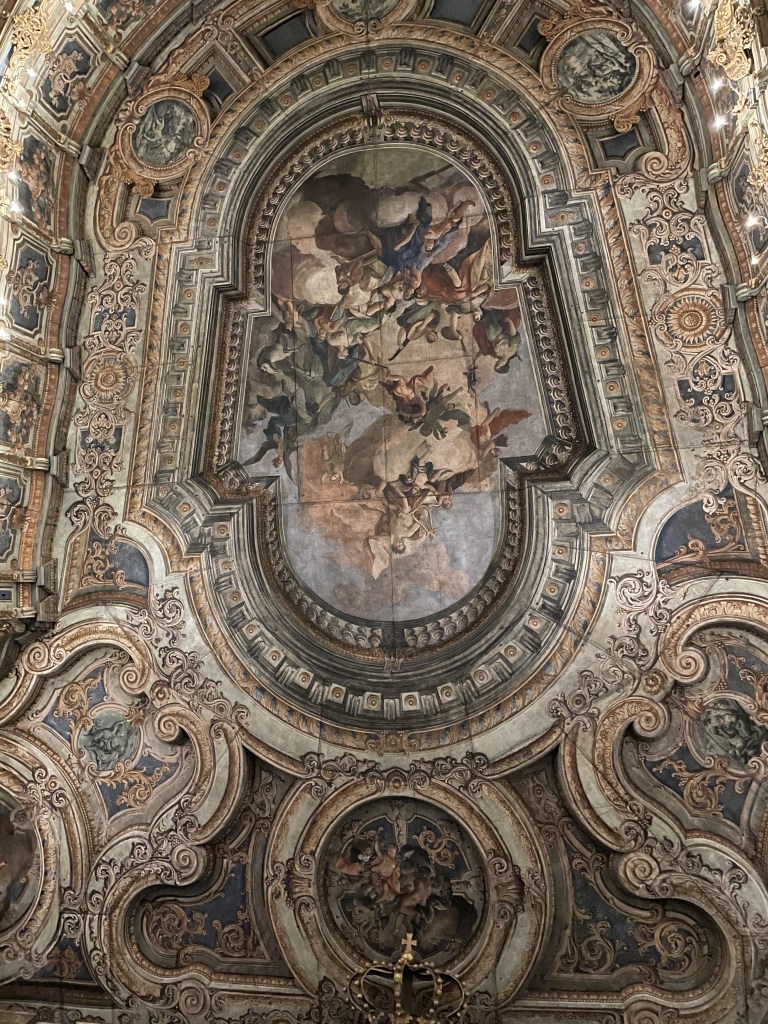
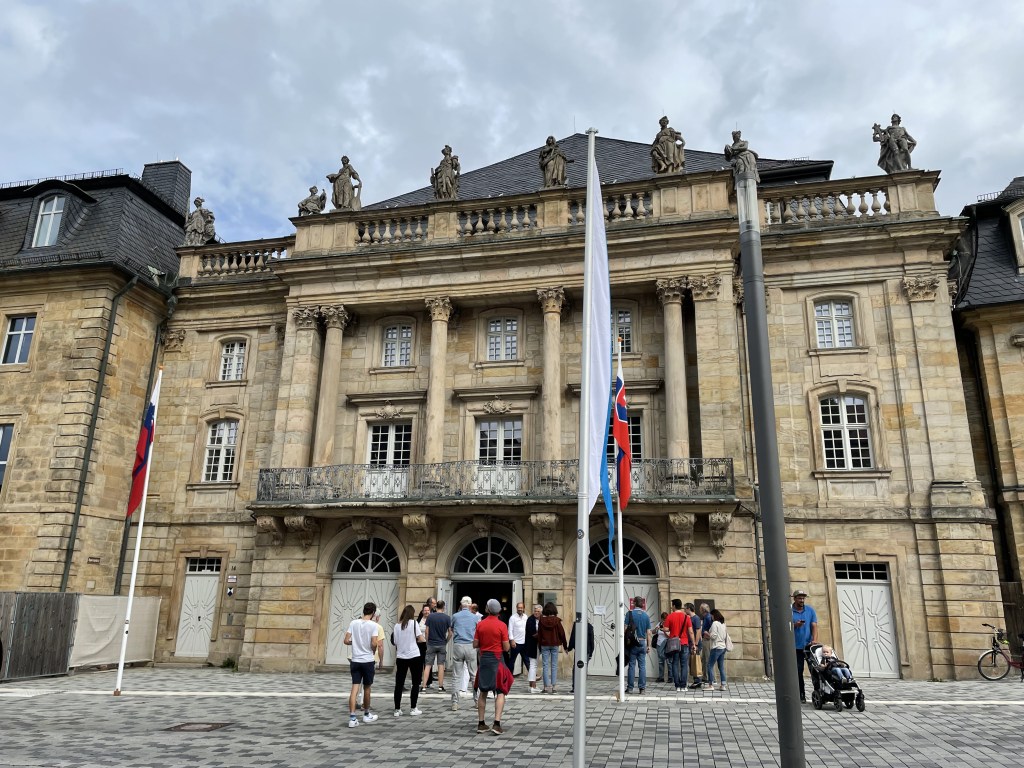
There’s still plenty to see in Bayreuth if you aren’t an opera fan. You can indulge in 1. another opera house recently made a world UNESCO site. Margravine Wilhelmine of Brandenburg-Bayreuth (1709-1758) was the Prussian king’s daughter and favourite sister of Frederick the Great.The baroque opera house was dedicated to the wedding of Wilhelmine’s daughter. An opera buff and some time theatre director, Willy chose high drama to showcase her daughter’s betrothal.

Opera House Margravian, a
UNESCO World Heritage site

2. Wagner’s house. OK now we get it. He was of the gentry and came from a prominent family. Nice grounds to prove that Wahnfried deserved its name—to be free and satisfied.

No, I wasn’t traveling to Bayreuth in the winter. This is a model of the opera house in Wagner’s house. Designed by Semper, it has strong resemblance to the shape and character of the Dresden Opera House that I love. Despite the uncomfortable seating in the Bayreuth operahouse, the acoustics are worth experiencing.

3. The Royal Palace (see header above): the royal court of Markgraf Friedrich von Brandenburg- Bayreuth landed here, and used the mid 1700 rococo facilities to impress and entertain the militia. No doubt a fun place to have a blowout. They even recreated an Italian grotto in a room where you went in full regalia to gawk at an imitation of the real world. Fortunately it was before Wagner’s time or he surely would have left an impression on Wilhelmina.

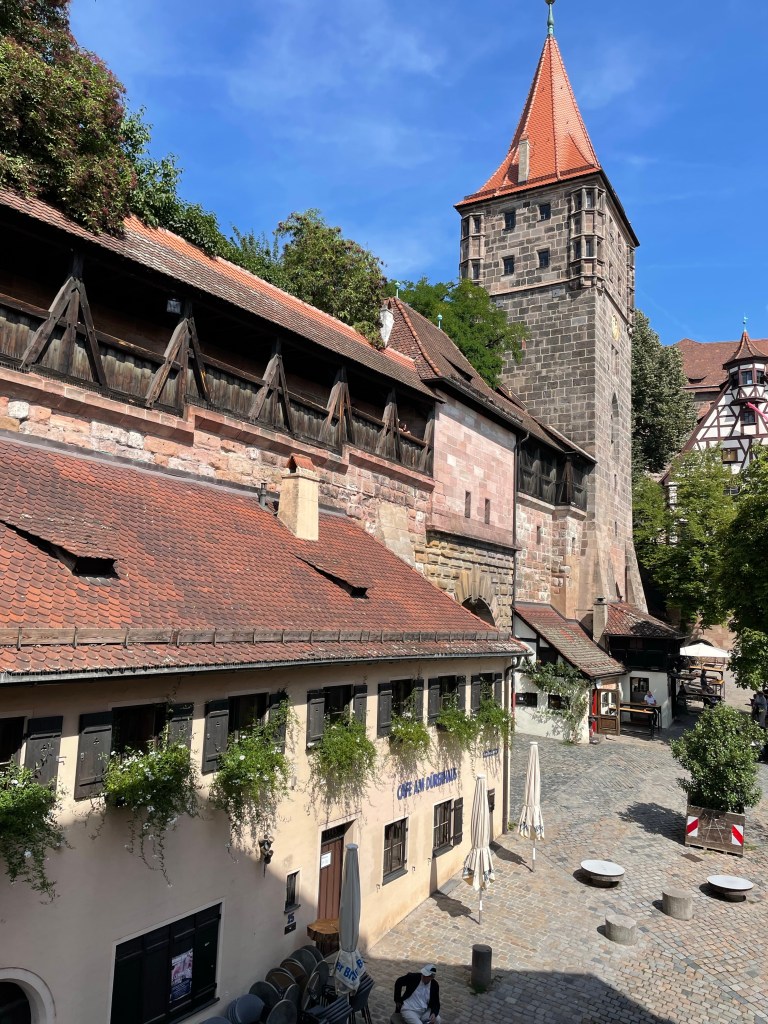
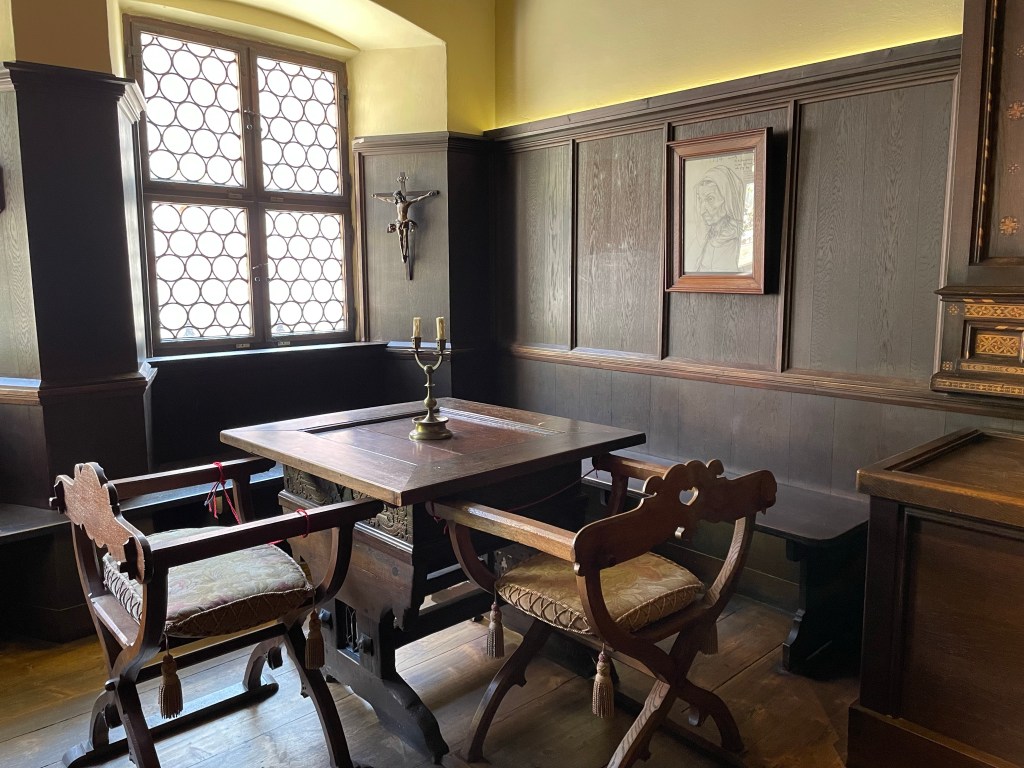
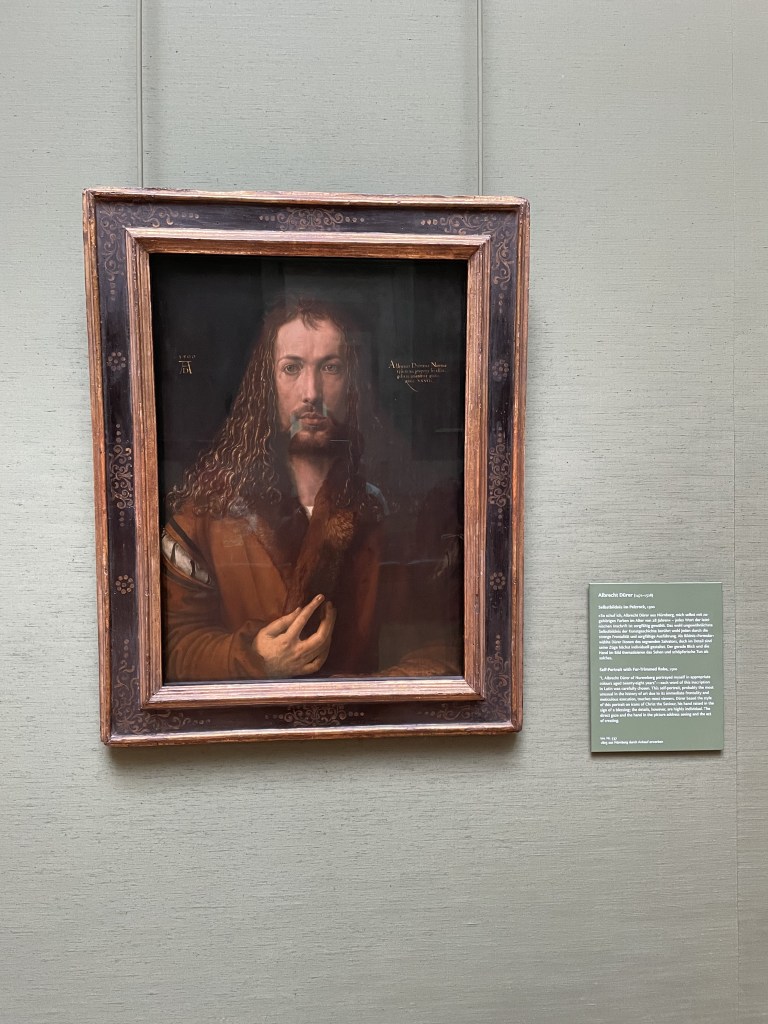
A sojourn in Nurnberg, about an hour and a half by slow train and bus to visit the medieval section of the walled city, where the Albrecht Durer House was located. I also visited the National Rally Grounds of the Nazi Party. It was a vast field of multiple football fields to promote the training and display of military might for the German people.

Author’s note: In 2018, I saw two Ring cycles: one in Munich, and one in San Francisco. You can read a comparison of Munich’s version here: https://travelswithmyselfandothers.com/2018/07/26/day-16-20a-ring-ring/

Apologies in advance for any errors or inconsistent information. I’m a bit rusty! Also trying to post this from my Iphone at the airport before takeoff!!

Back to Real-Time Travel!

After two years of self-imposed travel black-out to Europe, I finally decide to take the plunge for an opera trip to the Bayreuth Festival in Germany. After applying for two years in 2017 and 2018 unsuccessfully, I was offered a slot to purchase tickets for Wagner’s Ring cycle for 2022.

Normally all performances are sold out years in advance. You qualify after four years of application. I’m sure the COVID pandemic was a big detractor for many, so my chances of getting tickets were improved. I deliberated back and forth until I was advised by others to “live my life as I would have normally before the pandemic”.

I am taking a break from the past year’s construction project. If you have been following the story of the ADU (accessory dwelling unit) under the direction of Foreman Felix, we will resume after this two week diversion!

Munich–the Gateway to Bayreuth

After a direct flight from San Francisco to Munich, it felt odd to suddenly be plopped out of nowhere to a country that I had studied and admired so much. Being in Germany reminded me of all the reasons I became a Germanophile: Citizens take the environment and sustainability seriously; clean, predictable, comfortable public transportation; appreciation for and attention to architectural detail; and safe streets (except for bicyclists running over pedestrians).

Refreshing my German language studies before coming helped to prepare me, despite a huge reliance on fully capable English-speaking Germans. The immediate sensual experiences were the lush green countryside, church bells ringing, and the distinct lack of smell or taste.

This summer, scores of public transport agencies have joined together to offer a special incentive to use their services. For a flat price of 9 Euros, passengers can ride any of the local agencies throughout Germany for an entire month (June, July and August). You can get just about anywhere in Germany, as often as you want, for the price of a round-trip subway ticket!

Many residents were concerned that trains and buses would be overcrowded. Rush hours and popular tourist sites need to be avoided, but the summer months are normally the lowest ridership. I wondered if statistics were due to the high volume of Germans traveling outside the country during summer months pre-Pandemic. In any event, it appeared that my three changes to reach Bayreuth were completely manageable.

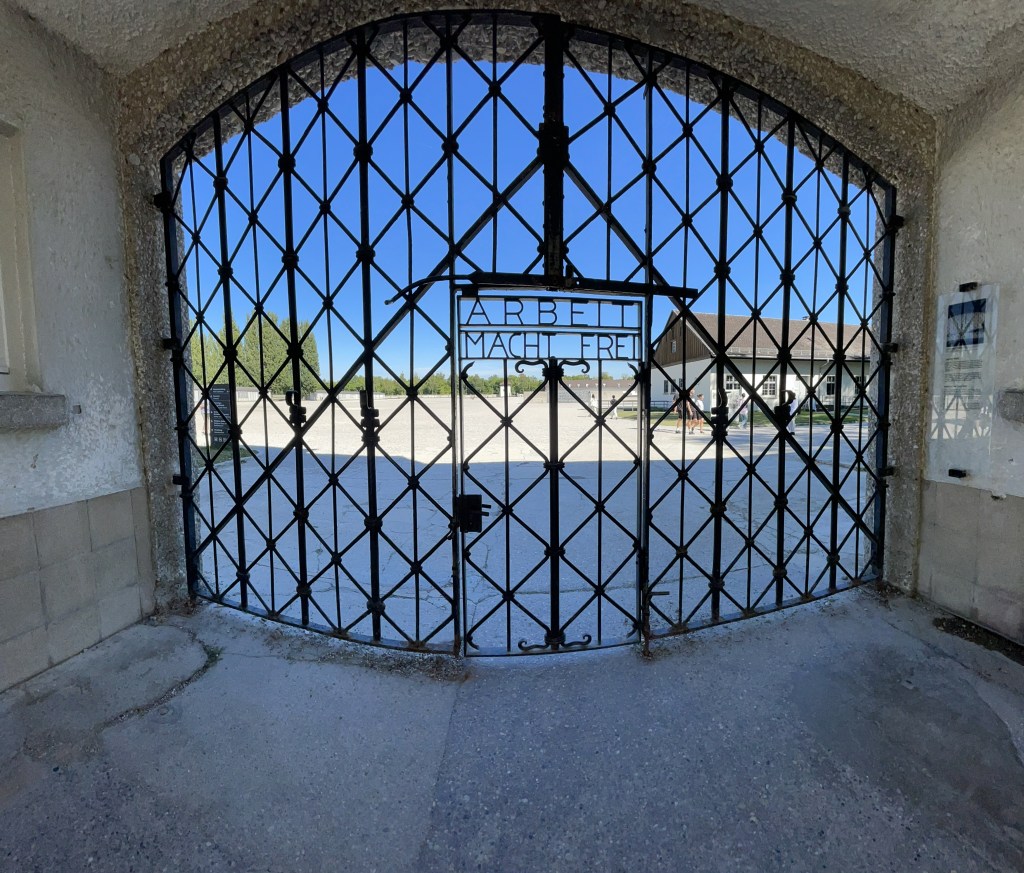
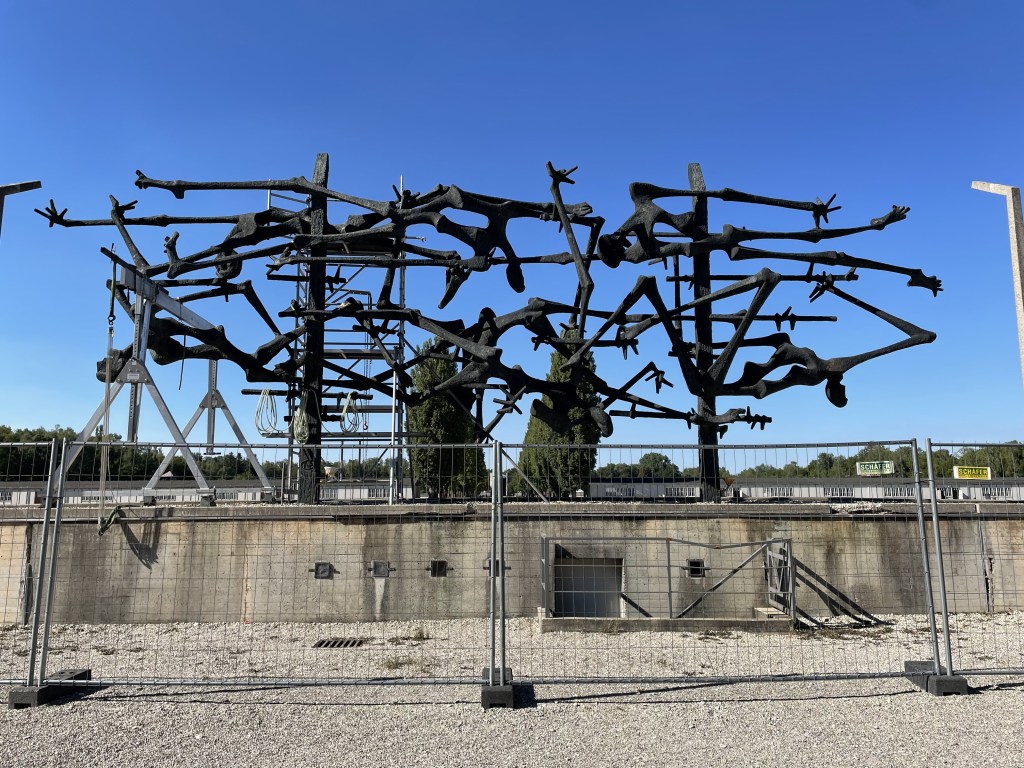
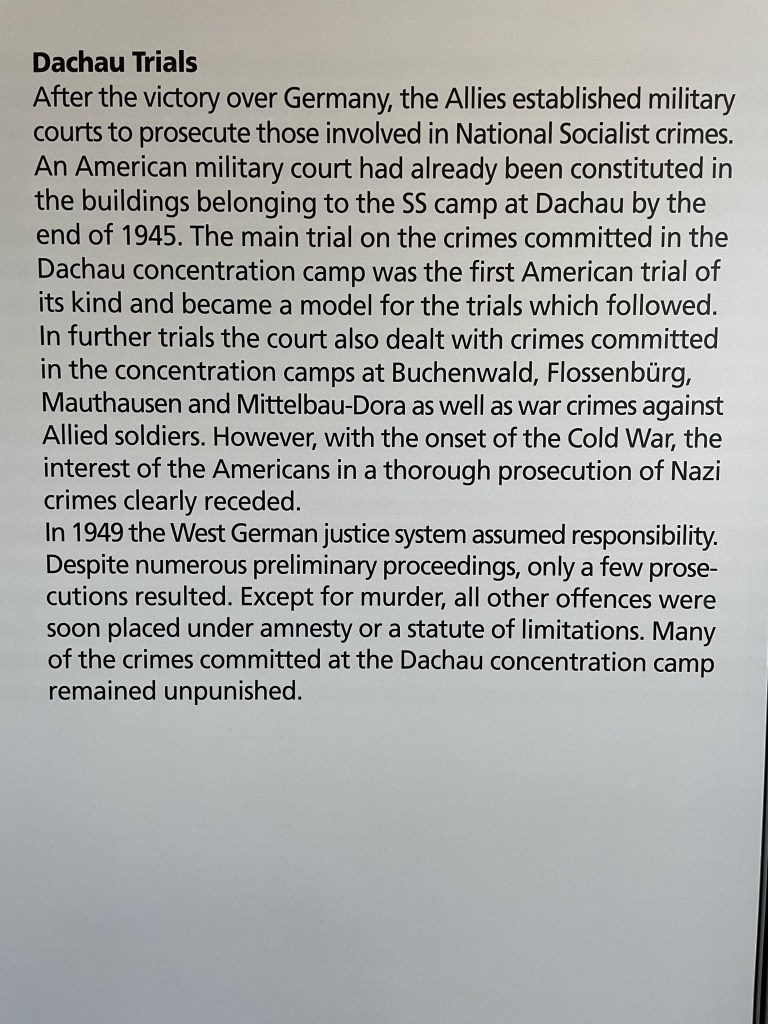
Dachau Memorial Site

Worry-free travel encouraged me to venture to Dachau to visit the grim Concentration Camp outside of Munich. Now known as a Memorial Site, it was a second visit for me. It was not as jarring as the first, when memories were raw and more startling.

Mature beech trees and religious institutions are now located on the site to reduce the impact to visitors. Audio-visual materials translated into English helped to describe what happened. Efforts to explain economic hardships after World War I and during the Thirties gave perspective on the past. When the Americans arrived in 1945, prisoners were freed. Unfortunately, the advent of the Cold War distracted the war trials. Few were held accountable for causing the Holocaust.

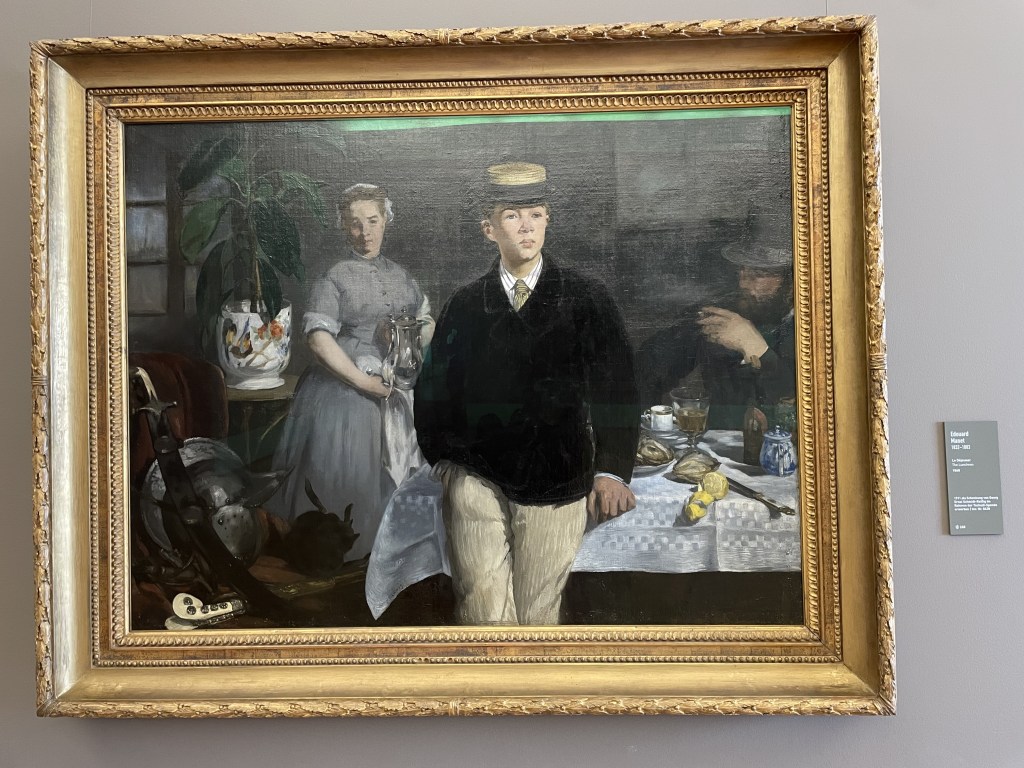
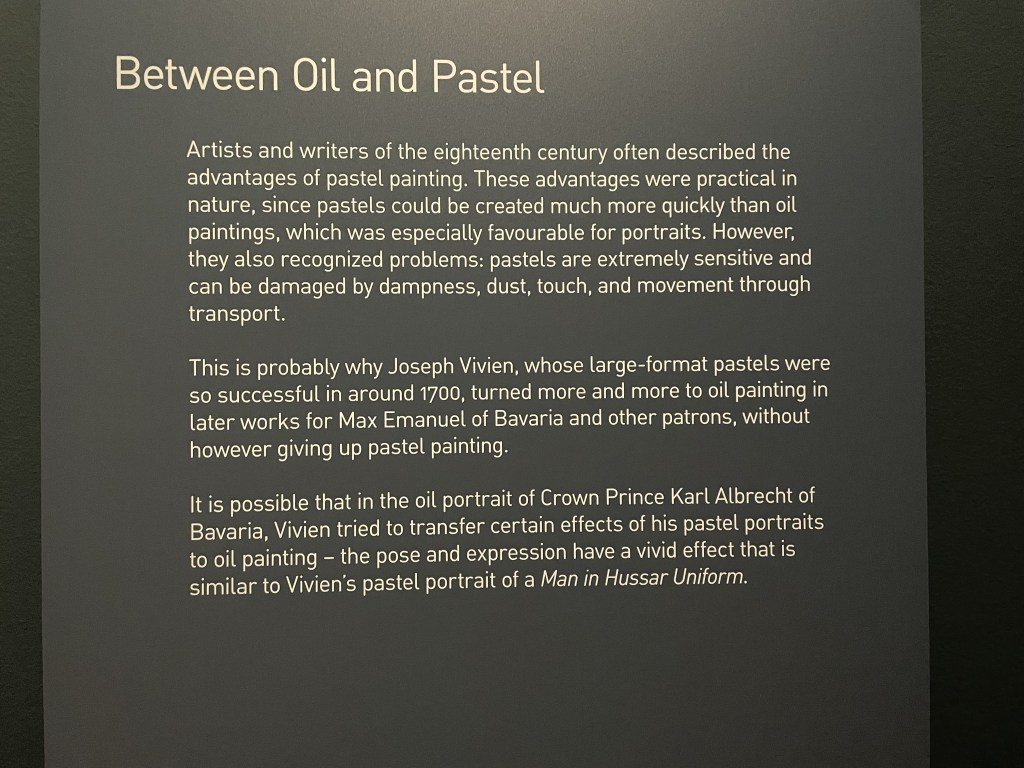
Alte and Neue Pinokoteks and the Modern Pinokotek

This extensive array of Western Art from the Greeks to Impressionists propelled me into full museum battlement. I covered many miles by foot and found the masters including DaVinci, Raphael, Durer, Van Gogh and Manet. I was delighted to find an Egon Schiele, one of my favorite artists. And the pastel collection was a great value lesson on how the medium achieves more luminosity over oil paintings. Pastel artists struggled with the chalky powder, so I felt vindicated by my shared frustration.

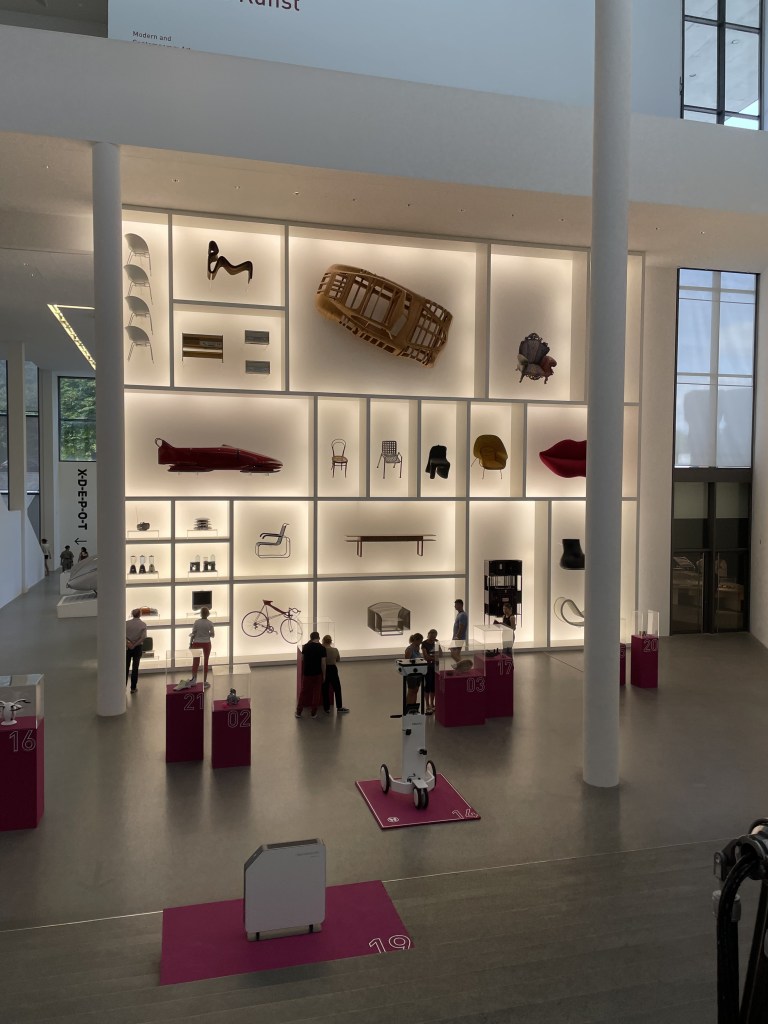
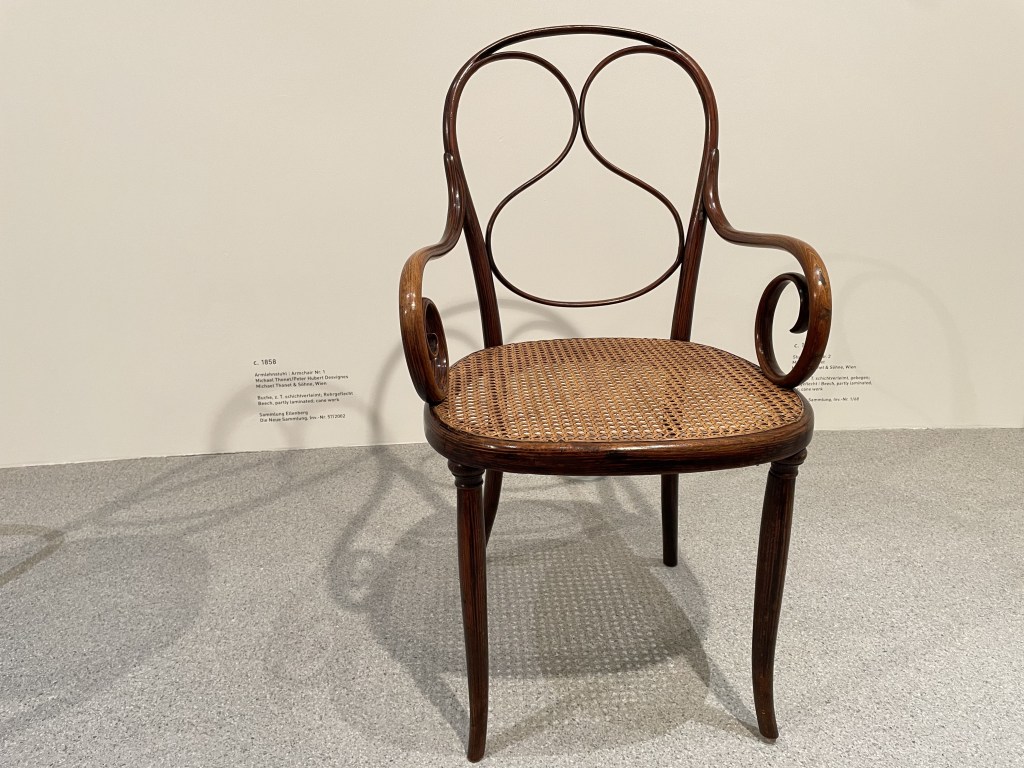
From the Alte Pinothek to the Modern, I searched specifically for any display of Thonet bentwood chairs. My early education as a design major gave me an appreciation for the best industrial design and chair production. The Modern Pinothek did not disappoint–in fact it showcased a chorus line of beautiful period Thonet chairs in chronological order!

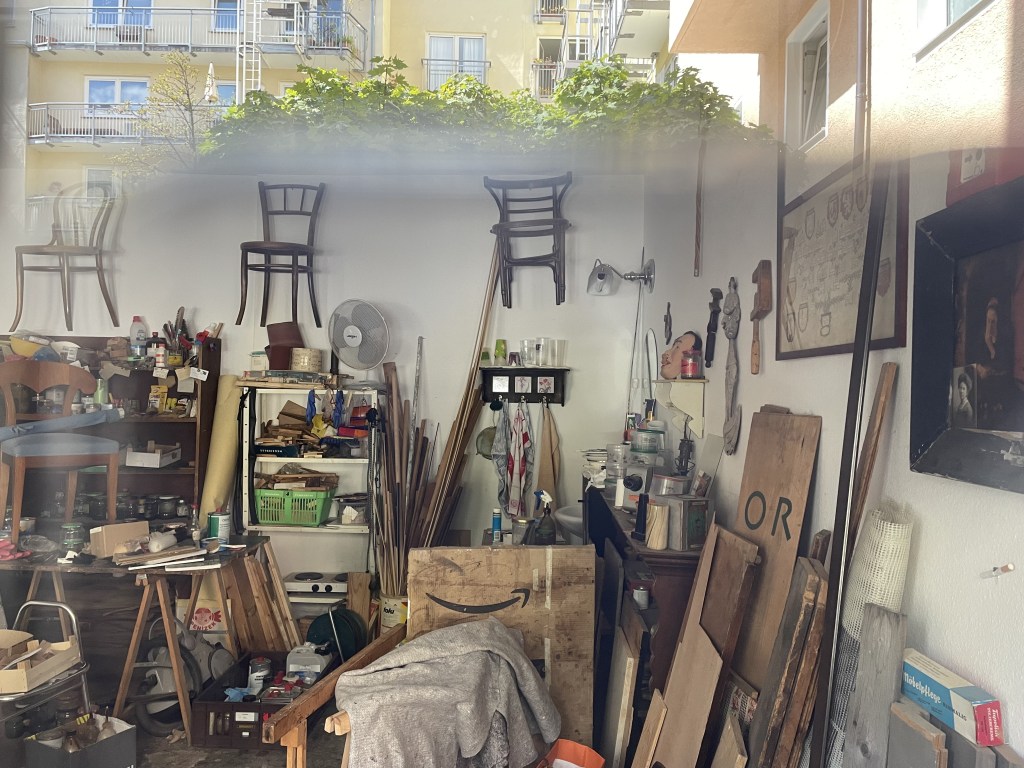
In the trendy Schwabing neighborhood where I was staying, I stumbled into a woodworker’s shop specializing in Bentwood refurbishing. Like many Germans in August, the proprietor was on “urlaub”, or vacation. A peek through his shop window motivated me to follow up with him after my return to the U.S. I also learned from conversations with a retail supplier that, while “Thonet” is produced in Germany, “Brueders Thonet” is a separate company out of Vienna, Austria. Important to know the date and source of production when searching for vintage pieces.

Schwabing

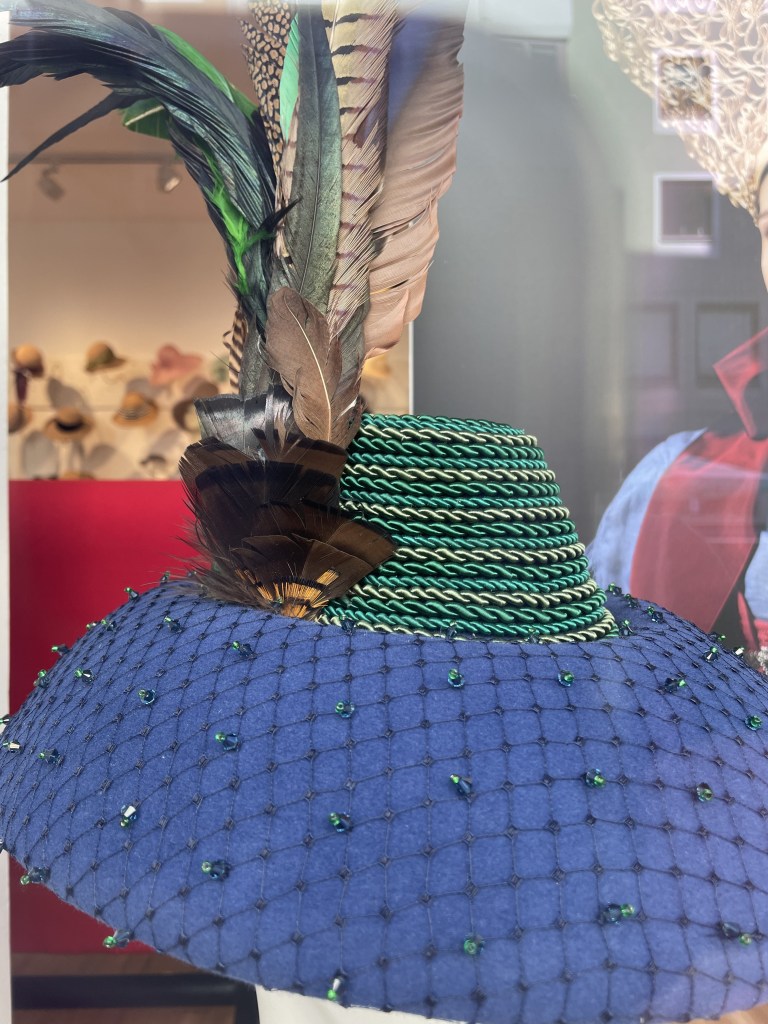
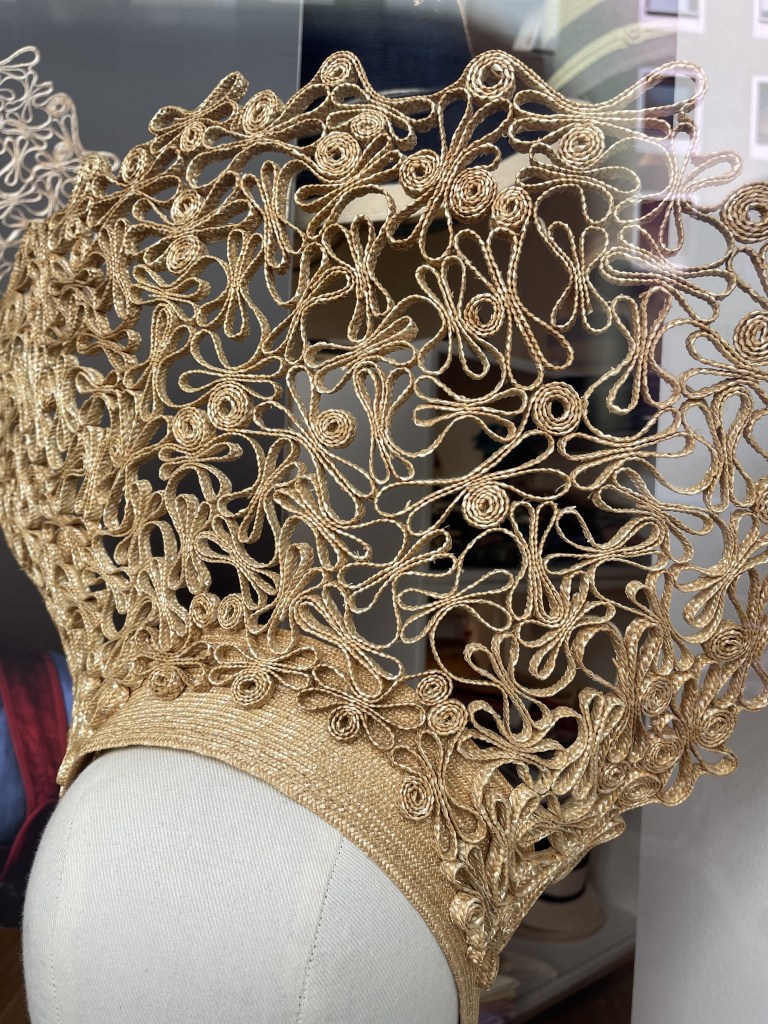
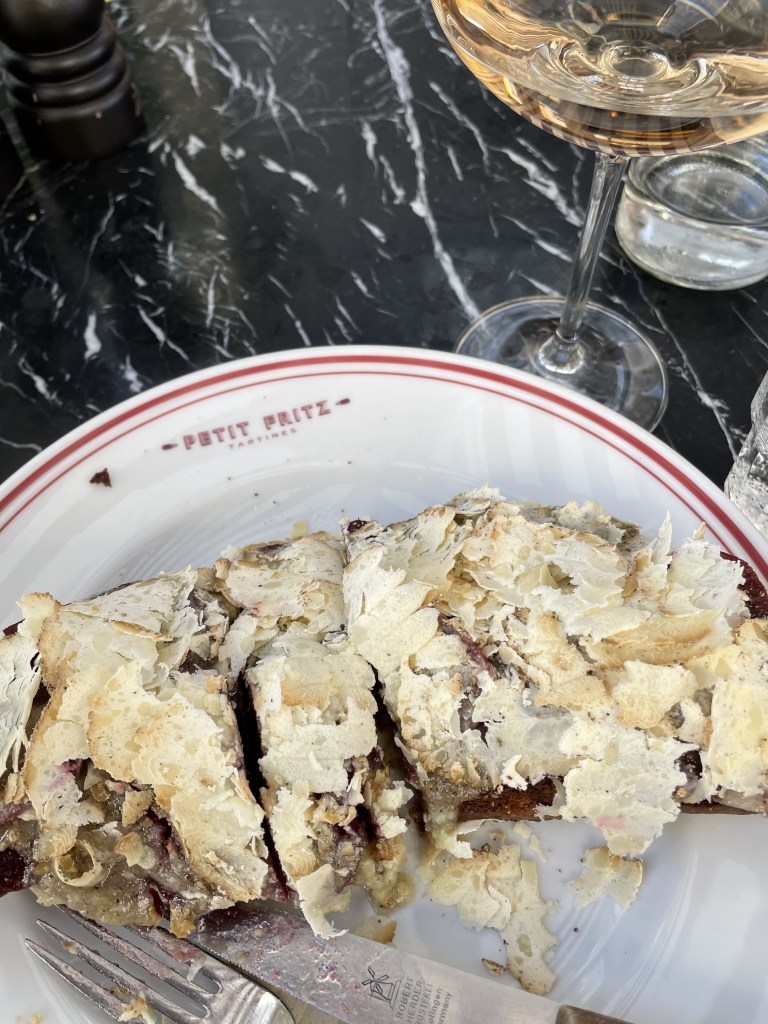
Several spins around Schwabing, the equivalent to St. Germain de Pres and near the Ludwig Maximilian University, yielded a boutique selling exquisite hats and headpieces, an academy for ancient Greek Sculpture where you can sketch to your heart’s delight, cute babies, and a yummy French bistro next to the hotel where I stayed.

(Note: the copper pipe in the featured photo above would never survive in San Francisco! Ah…such trust…)

I’m off to Bayreuth, about three hours by train-bus-train to see Wagner’s Ring Cycle! Sixteen hours of sitting in a theatre seat could just about get me around the world! Yes, the gods must be crazy and I am about to find out.

Don’t forget to write from wherever you are! When was the last time you were in Germany?!?

CONSTRUCTIVE TRAVELING: “the coldest winter I ever spent was a summer in…” (Weeks 40-54)

Part I: The Shell (Weeks 40-47)

Completing interior spaces provides great satisfaction in experiencing each room after many months of planning, design, and construction.

“Fly’through” of Second Floor Master Bedroom and Deck

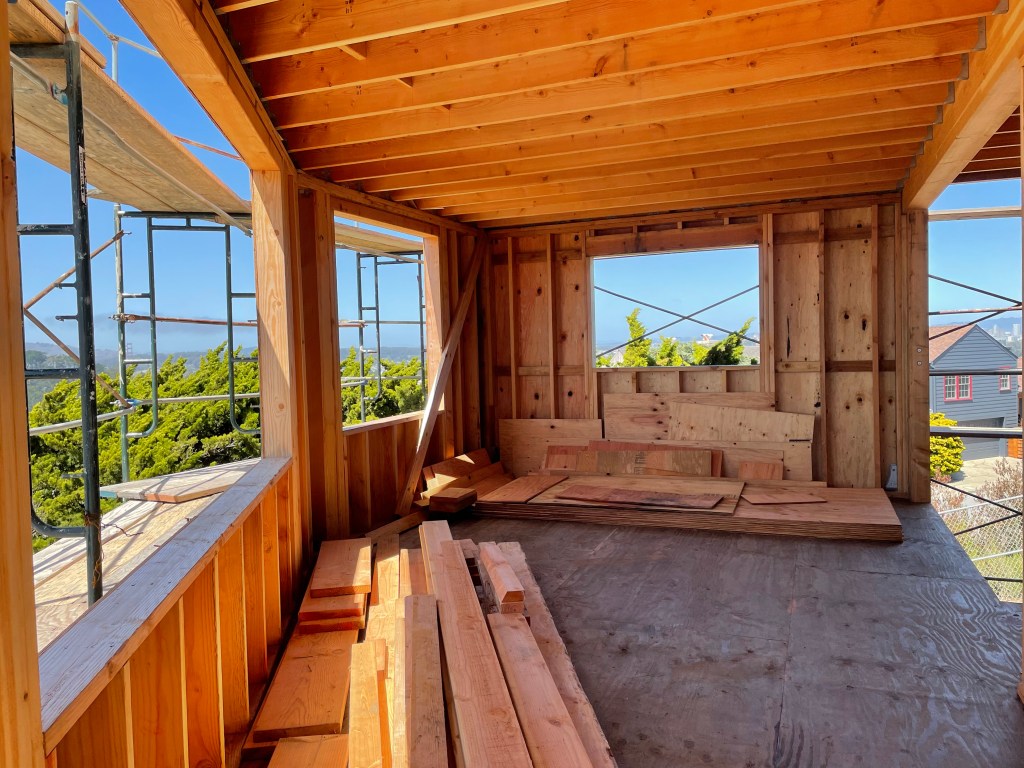
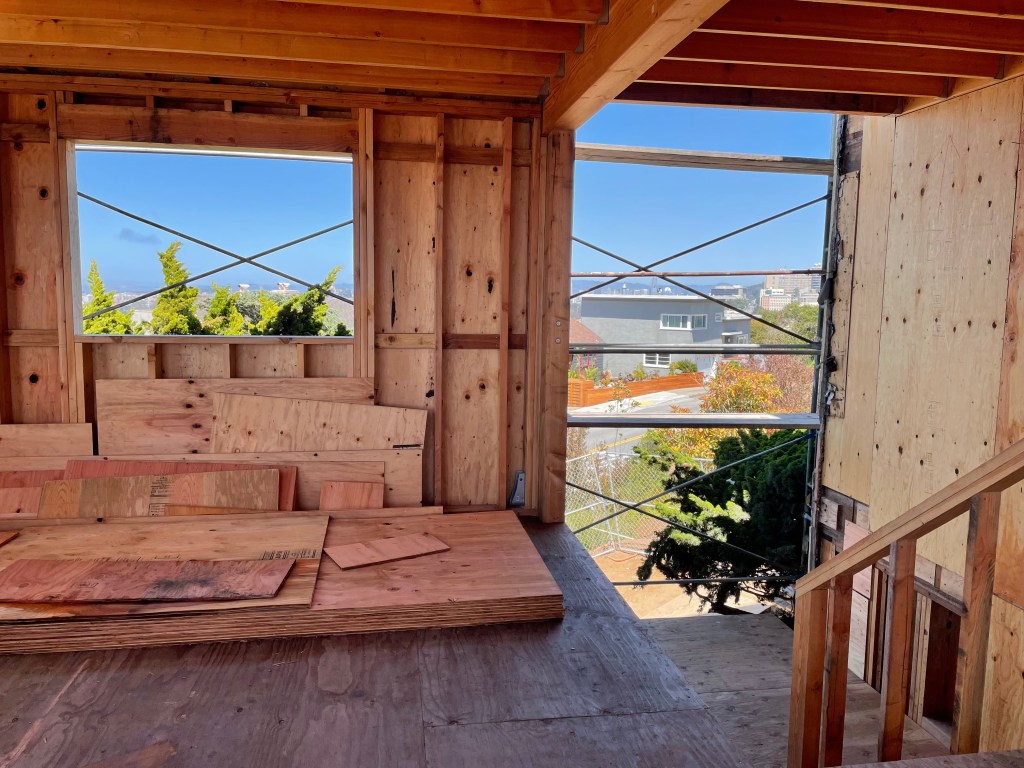
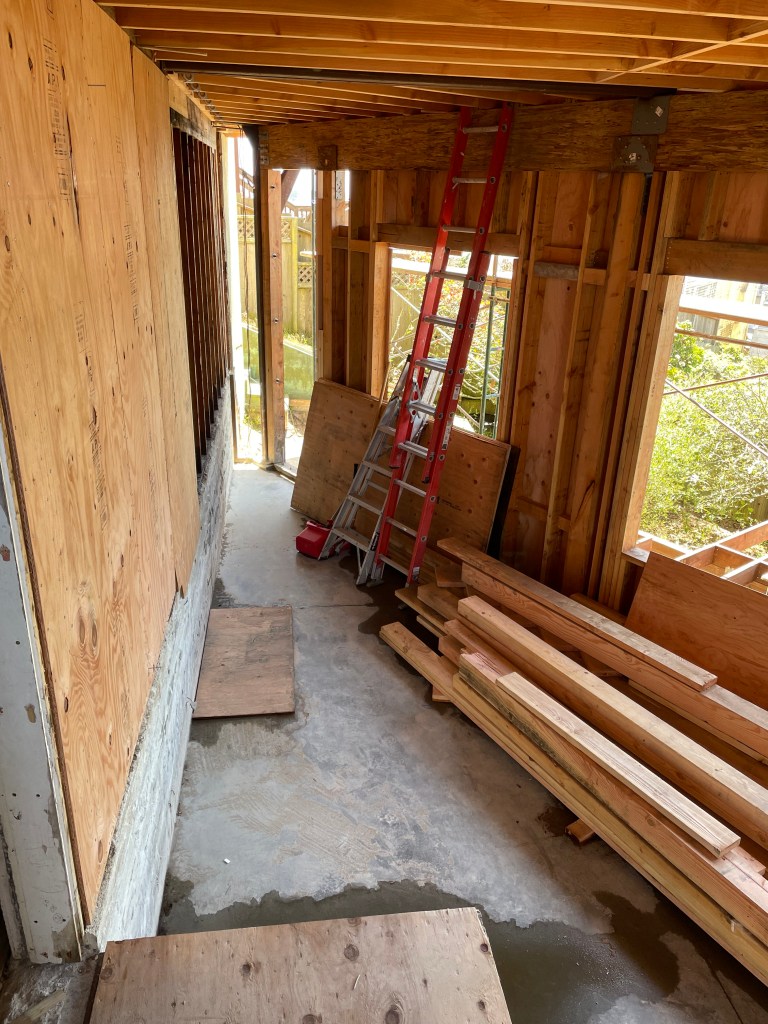
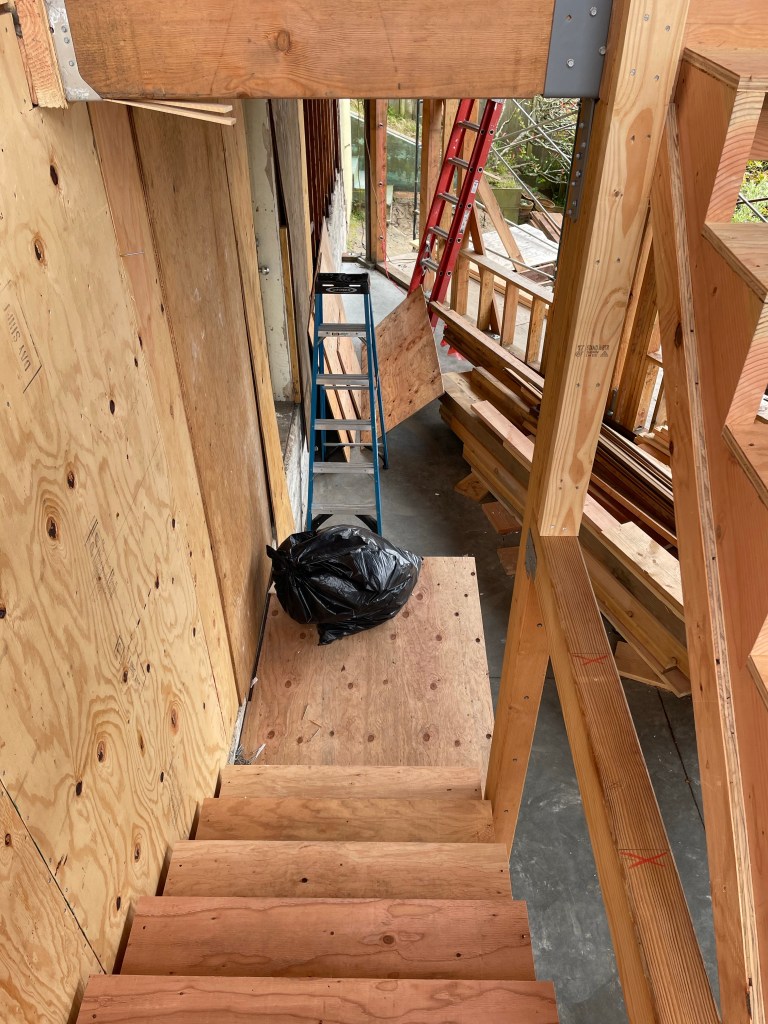
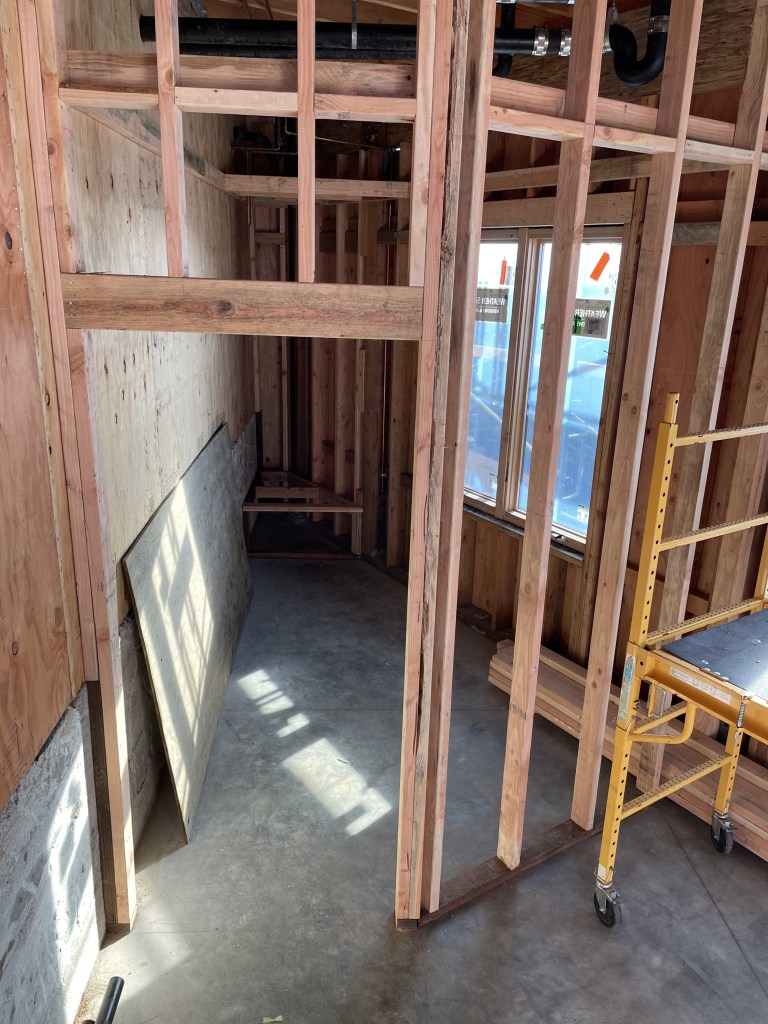
The new challenge is to work efficiently within confined spaces. Temporary storage of materials and equipment occupy space to be finished, so careful logistics and organization are needed to save time and effort. Lumber is very heavy and cumbersome to move!

Parapet Construction

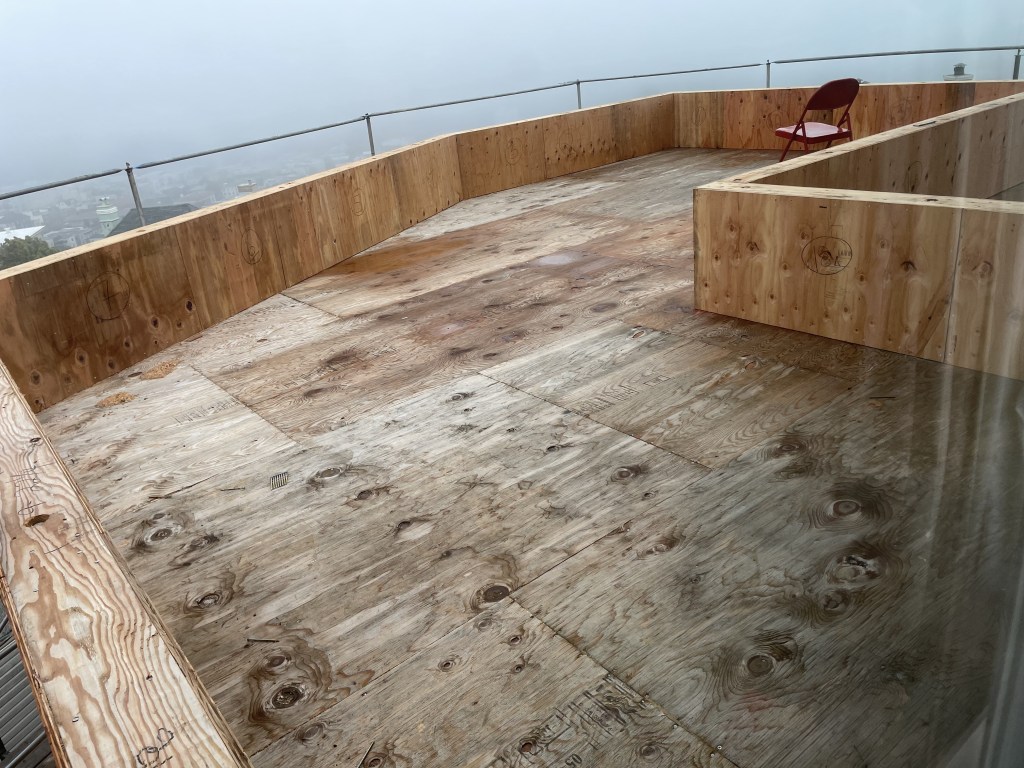
Designing the roof parapet was part of the permit submittal and approval. It was important to make sure that the assumptions for the design were correct. The height of the roof parapet had to be confirmed before waterproofing could be applied to the roof.

In order to maintain minimal impact on the neighborhood and balance proportions viewed from all sides, we checked the height of the parapet from across the street. It didn’t hurt to get some friendly input from our neighbor.

Felix tries to figure out what Mommy and Daddy are doing outside!

One loop thrown at us was wet weather–not the kind of driving rain that predictably hampers a construction site in the winter–but “the coldest winter I ever spent was a summer in San Francisco” kind of weather. The pebbly fog hung around for weeks in late July and early August–forcing us to delay finishing the waterproofing and window installation.

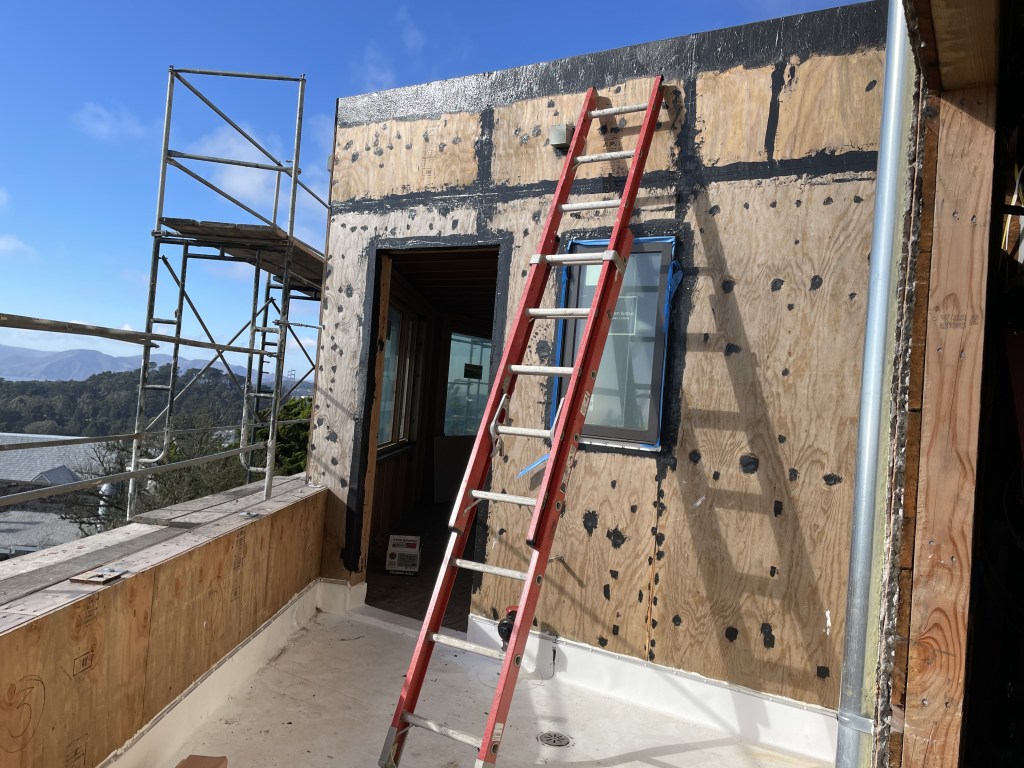
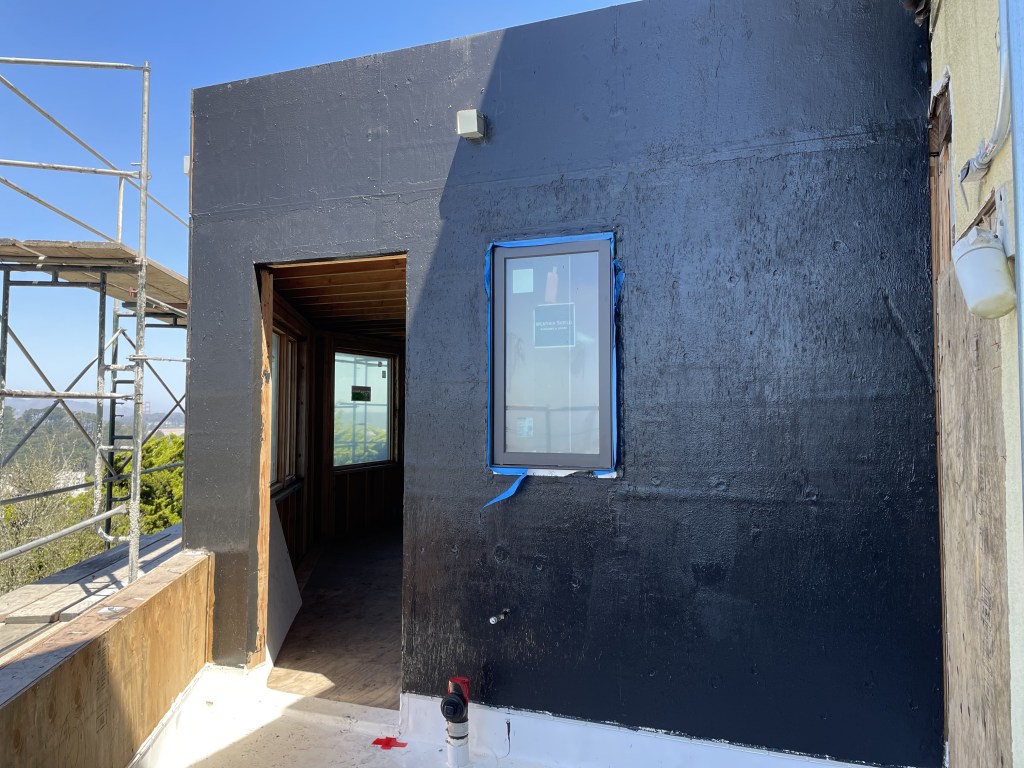
Finally, the skies parted and the grayness dissipated. The roofing insulation and waterproofing membrane were added after completion of the roof and parapet. Note the difference in the weather from the photos!

Material Delivery

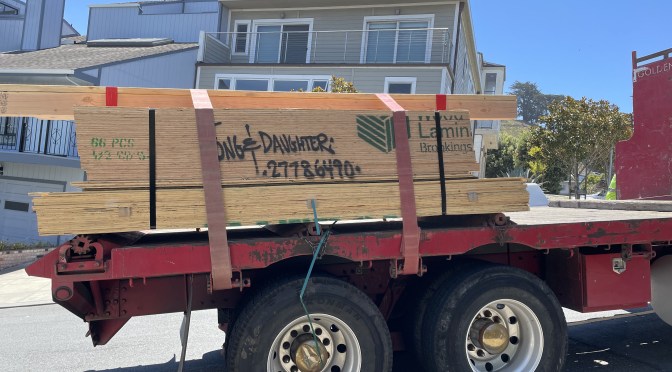
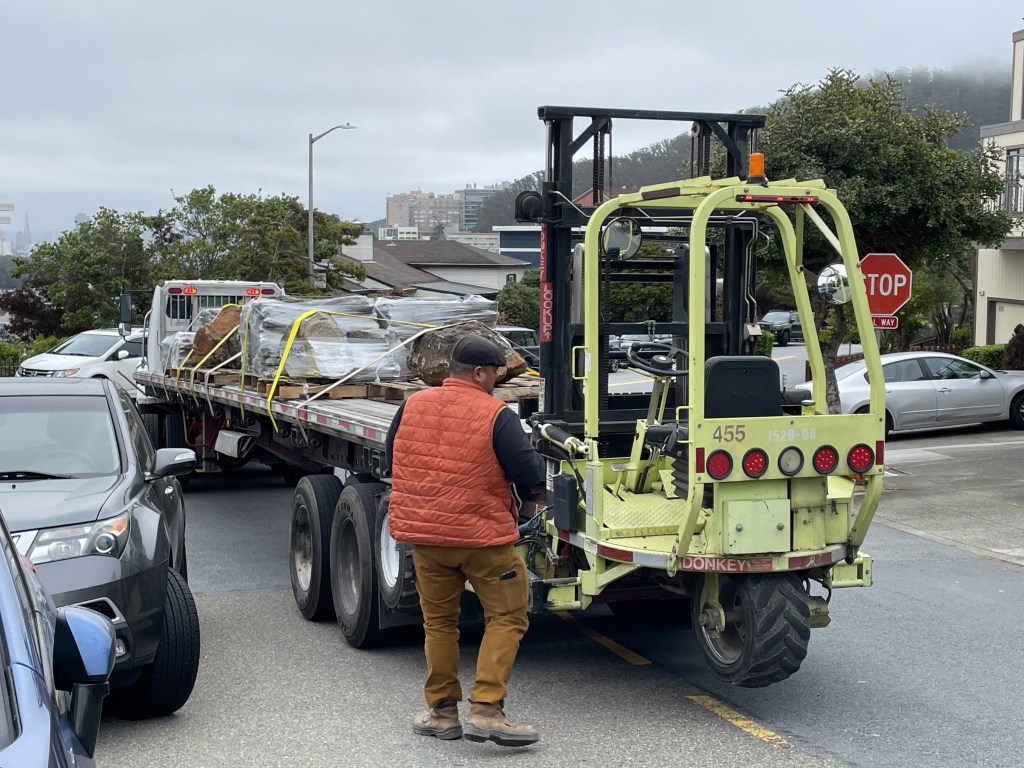
Being located in the rear yard was ideal for the ADU, but it posed temporary challenges for providing delivery access. Fortunately, the side of the house was just level enough for large trucks to move supplies as close as possible to the back. Felix had a field day watching the speed and skill with which drivers were able to shunt and offload heavy loads.

how trucker offloads lumber at side of house
Part II The Core (Weeks 48-54)

With the end of Rough Framing and the start of the third and final phase for Interior Finishes, we happily shifted gears. Previously, it felt painfully slow as we hurried and then waited for action. With multiple possibilities and combinations of skilled labor and materials, we were often faced with making decisions that could impact the project later.

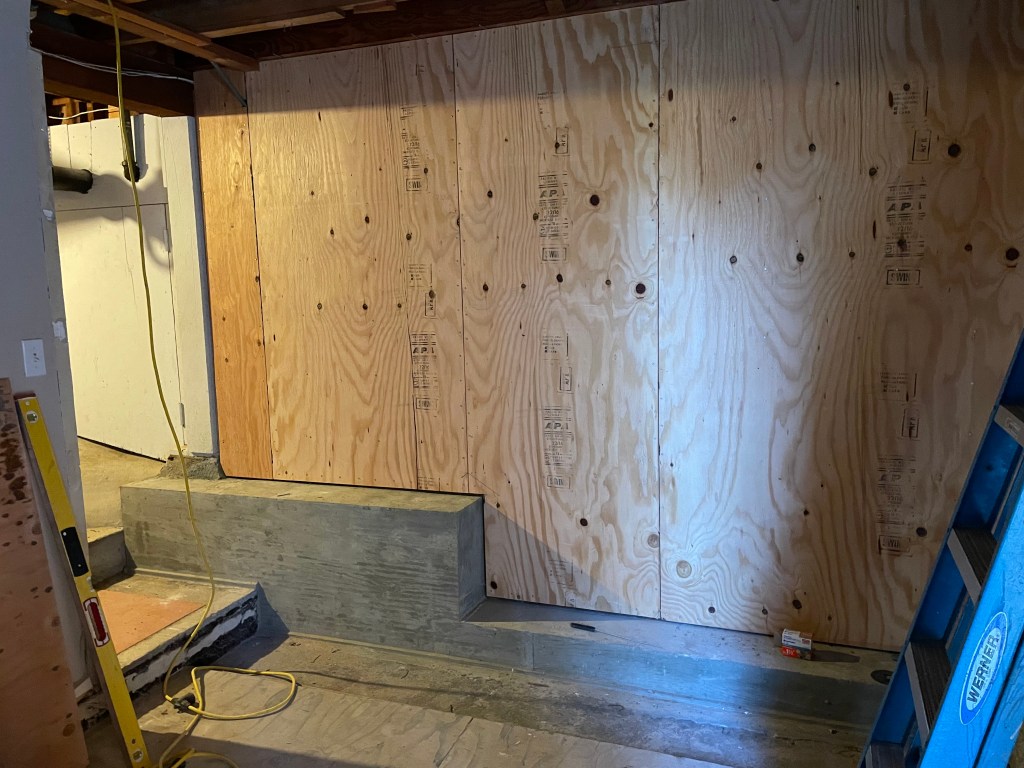
For the exterior walls, waterproofing was smeared over the nails and knotholes forming scabby polka dots to allow for the inspector’s scrutiny. Then, the rest of the waterproofing was applied to the exterior walls to form the underlayment for wood siding.

After the windows were installed, it no longer felt like a shell. We could really visualize being occupants in the space!

Passing rough inspection was a red-letter day. It officially determined the completion of the second of three construction phases. With rough framing behind us, we could proudly identify ourselves not only as owner and architects, but builders as well.
Coming Up: A diversion to…Munich and Bayreuth, Germany next!!!