
Despite numerous trips over the past ten years, I continue to remain loyal to the arts and classical music scene in Germany. The familiarity with many event venues, the high quality of performers and performances, and reveling German efficiency over and over never tires. It’s still my go-to choice of travel.
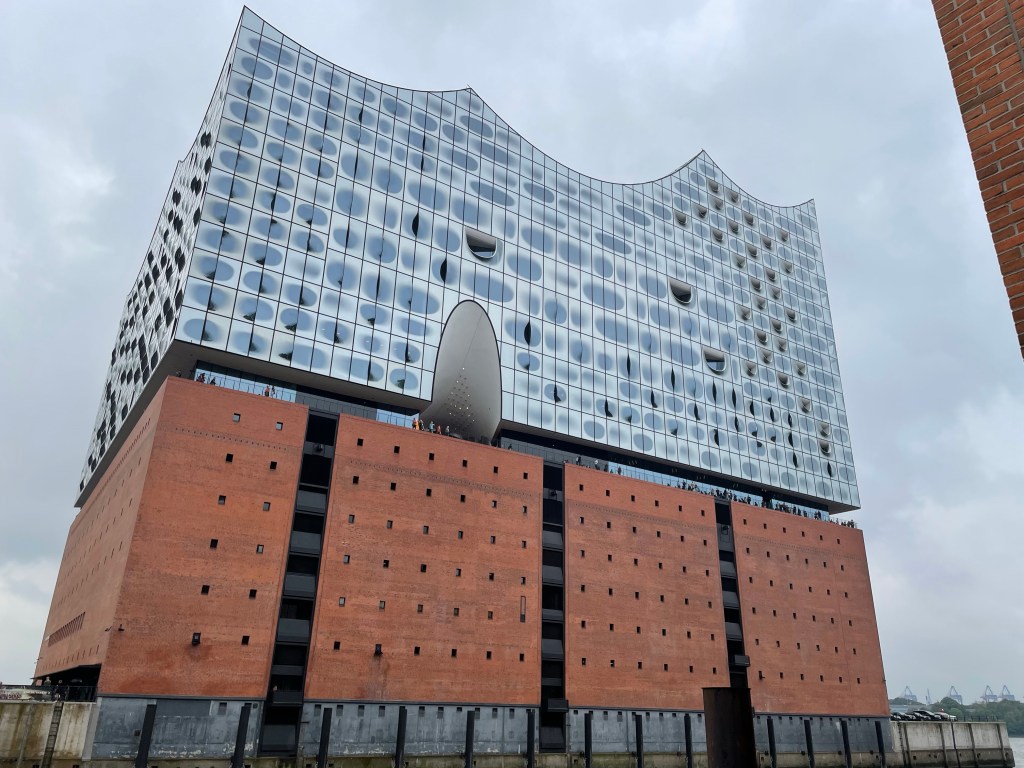
This year, my German friend Annemarie joins me. We met last year at Hamburg’s Elbphilharmonie sitting next to each other in scalped seats and in awe over Anne Sophie-Mutter’s virtuoso violinists. I am now introducing Annemarie to some of Germany’s most popular events, venues and classical performers. These cultural activities are supported by the German government.
You will hear more about our seven-week journey as we plunder through Dresden, Lueneburg, Dortmund, Germany, and later through Sofia, Bulgaria, and Verona, Italy.
The Transatlantic Flight
The 10.5 hour trip getting to Europe is always a chore so I decided to take a business class flight direct to Frankfurt.


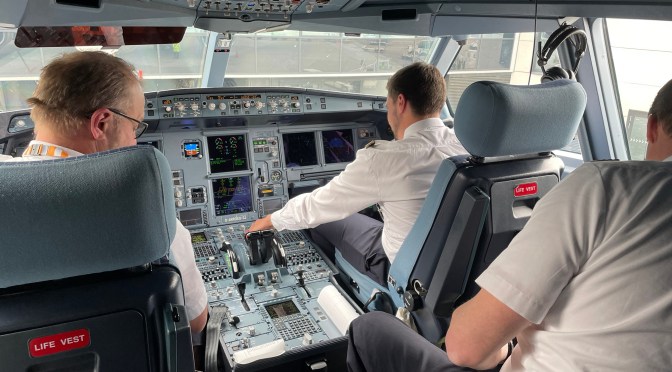
From the colorfully striped carrier to the comfy hang-out pod and delicious food, I was enticed by the extra effort being put into a memorable experience. The pilot crew even allowed me to take a photo of the flight deck on arrival in Germany!
After meeting Annemarie at the Dresden airport, we had a big debate about the effervescence in the glass of Nicholas Feuillatte champagne. Were the bubbles instigated by something like a cube of sugar? After seeing the description “The juice is pale yellow with silver tinges, brilliant and crystal-clear, revealing a persistent ribbon of delicate bubbles,” (per Google), What do you think?
A long layover in Frankfurt gave me plenty of time to contemplate the automated baggage drop. I’m not sure Americans would be able to speed the process up with this robotic service.
Goethe Haus, Frankfurt


Realizing that the glow from the business class flight was not going to sustain my nine-hour layover in Frankfurt, I resolved to find a city museum in between. The combined Goethe House and Romantic Museum seemed like an efficient way to kill two museums with one swipe
Goethe’s house displayed memorabilia by Germany’s beloved poet, philosopher and writer and with those who influenced him. There was an entire room connected to the Sorrows of Werther, the book that made Goethe wildly popular when he was only in his twenties.
Faust was yet another one of Goethe’s famous books (purportedly to have been written in Auerbach’s Keller in Leipzig) where a room in the museum was dedicated to the story and its inspirations.
Adjacent to the author’s house, the Romantic Museum connects many other artists, writers, and musicians that formed the romantic movement before, during and after Goethe’s lifetime.
A couple of architectural details caught my eye. The clever use of dots for lighting and steps in brass provided a coordinated balance to the subtle tile and wood finishes.
Die Walküre in Dresden
If you are not particularly tuned to being an opera junkie, just skip to the next section.
Our first performance at the KulturPalast was filled with cranky Wagnerians to hear a concert performance of die Walküre, the second opera of the Ring Cycle. Kent Nagano, a hometown Berkeley kind of guy, conducted brilliantly and led the four opera roles for Sigmund, Siegemunde, Wotan and Brünhilde.
Compared with a staged performance, the music rang exquisitely clear. The earlier lecture revealed that this performance was committed to the original wording and instruments from Wagner’s work. A jarring clash of wooden cymbals was noticeable, but other than that the rest seemed perfectly integrated for the modern ear.
Die Walküre led by Kent Nagano
Bad Schandau
Known as “Saxon Switzerland”, Bad Schandau is a spa town in the forested area along the Elbe River near the Czech border. An easy hour from Dresden, the multiple means of transport used to get there was more exciting than seeing the tall cliffs in the distance. Altogether, it took the train, a ferry and a vintage light rail train to see a trickling waterfall being repaired after dead trees from global warming blocked its path.



More tomorrow as we explore the Military Museum and the Loschwitz neighborhood. Don’t forget to write home!













































 travelswithmyselfandothers.com