Day 43(c): Food for Thought

image image image image

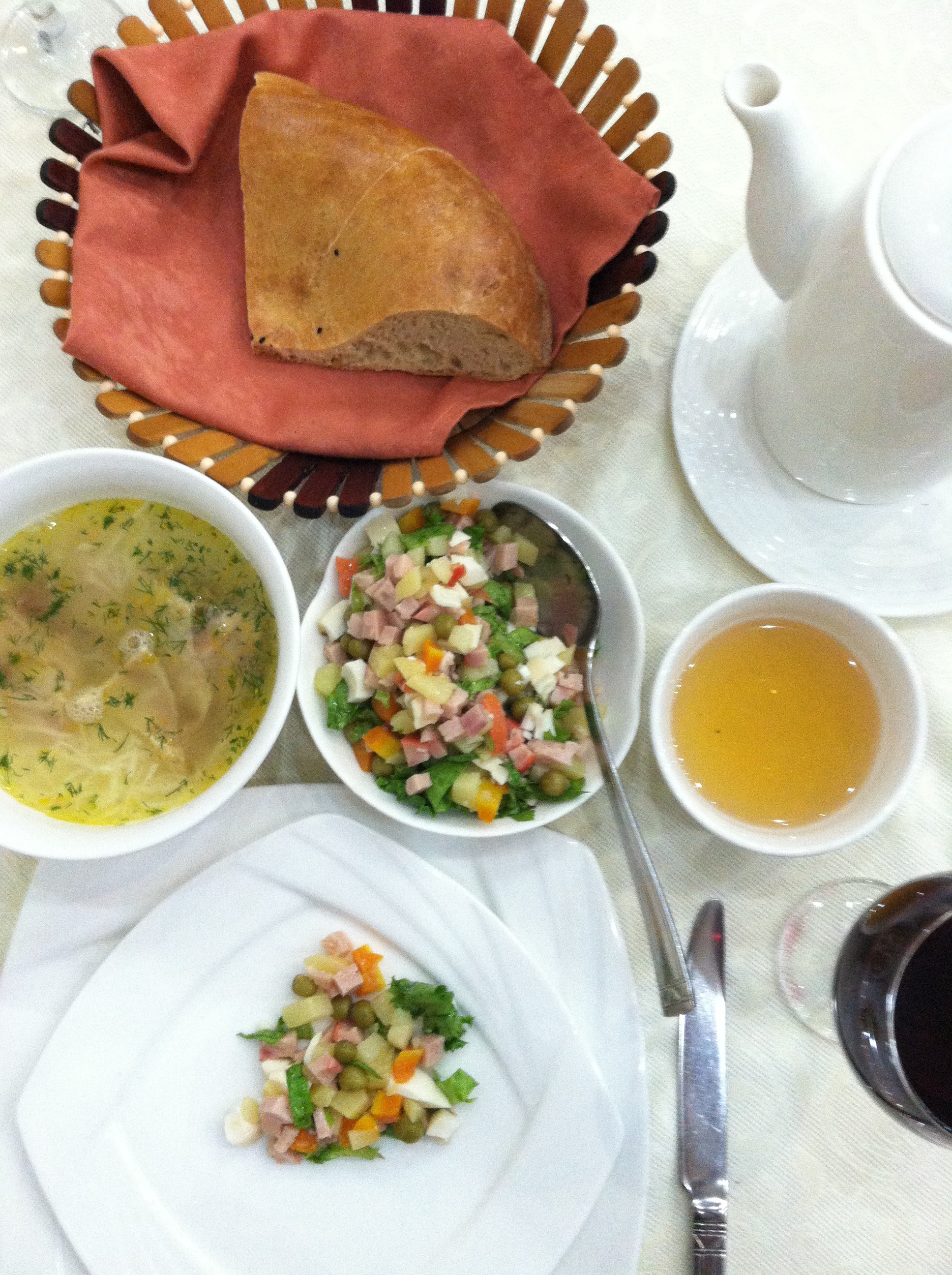
1. Similar to last nite: starter of veg salad with succulent carrots, fresh peas, bits of boiled egg white, tender potatoes, fresh lettuce, lightly flavored oil and lemon with dill–deliciously recognizable elements; chicken soup with fresh chicken chunks on the bone with rice noodle and dill; tandoori bread, and jasmine tea in chinese soup bowls. And yes, dry red wine. I could eat this as an entire meal!
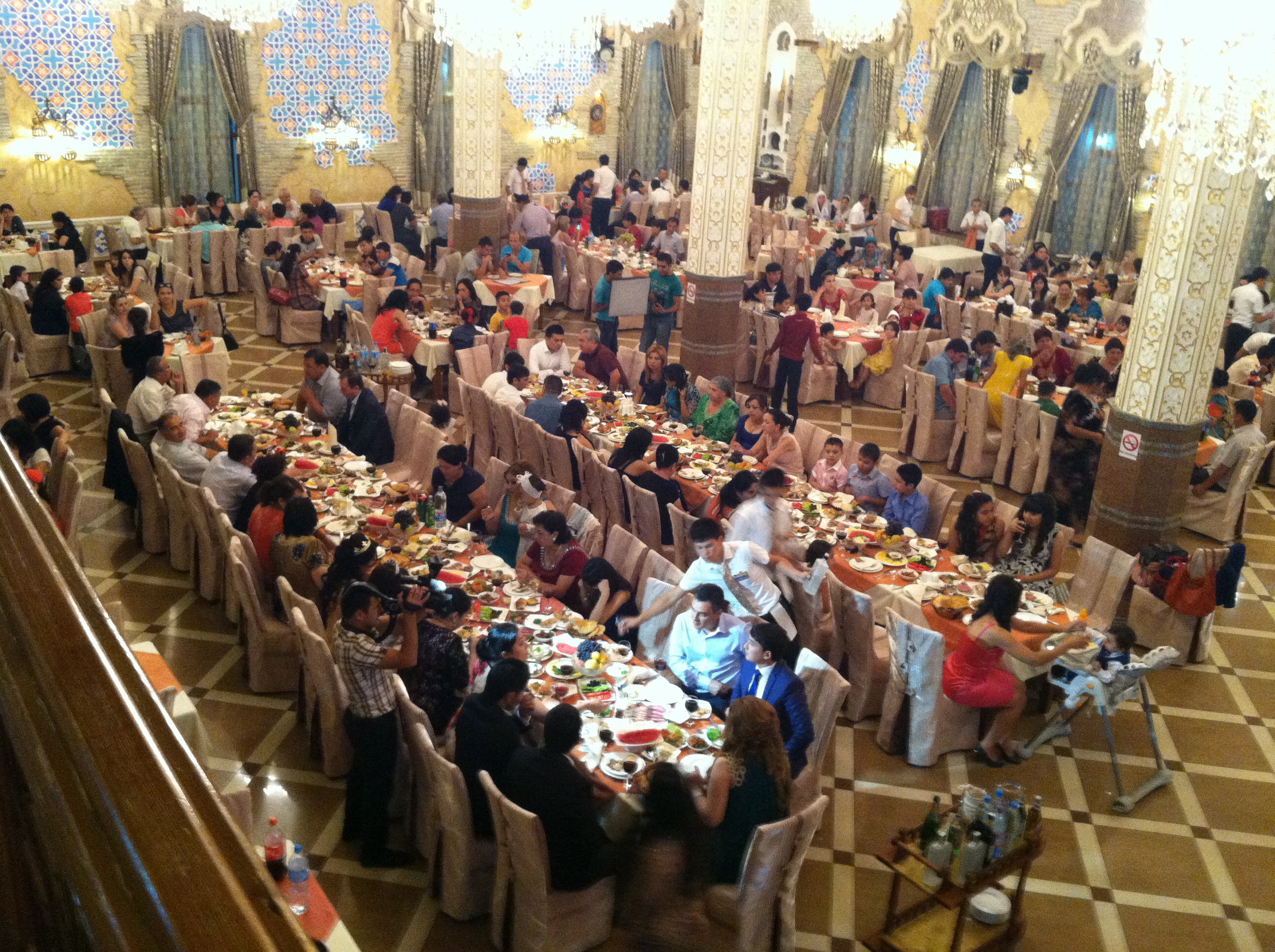
2. sorry, not my party. A banquet downstairs, with typical Uzbeki music and food.
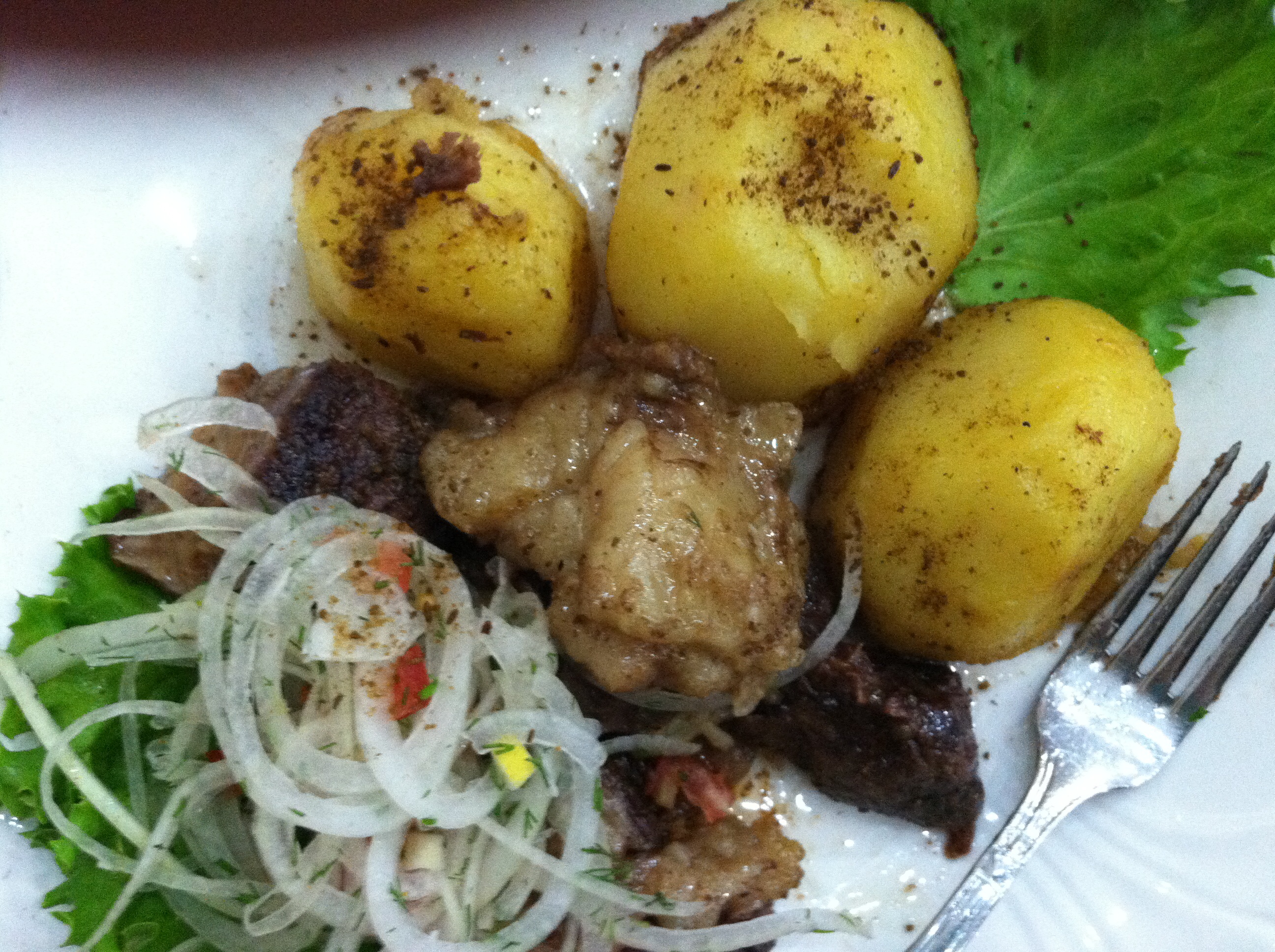
3. Perfectly braised lamb and potatos with lamb fat and marinated onions in lemon and dill on the side–piping hot and cooked to perfection–at the Samarkand Restaurant not far from my hotel.
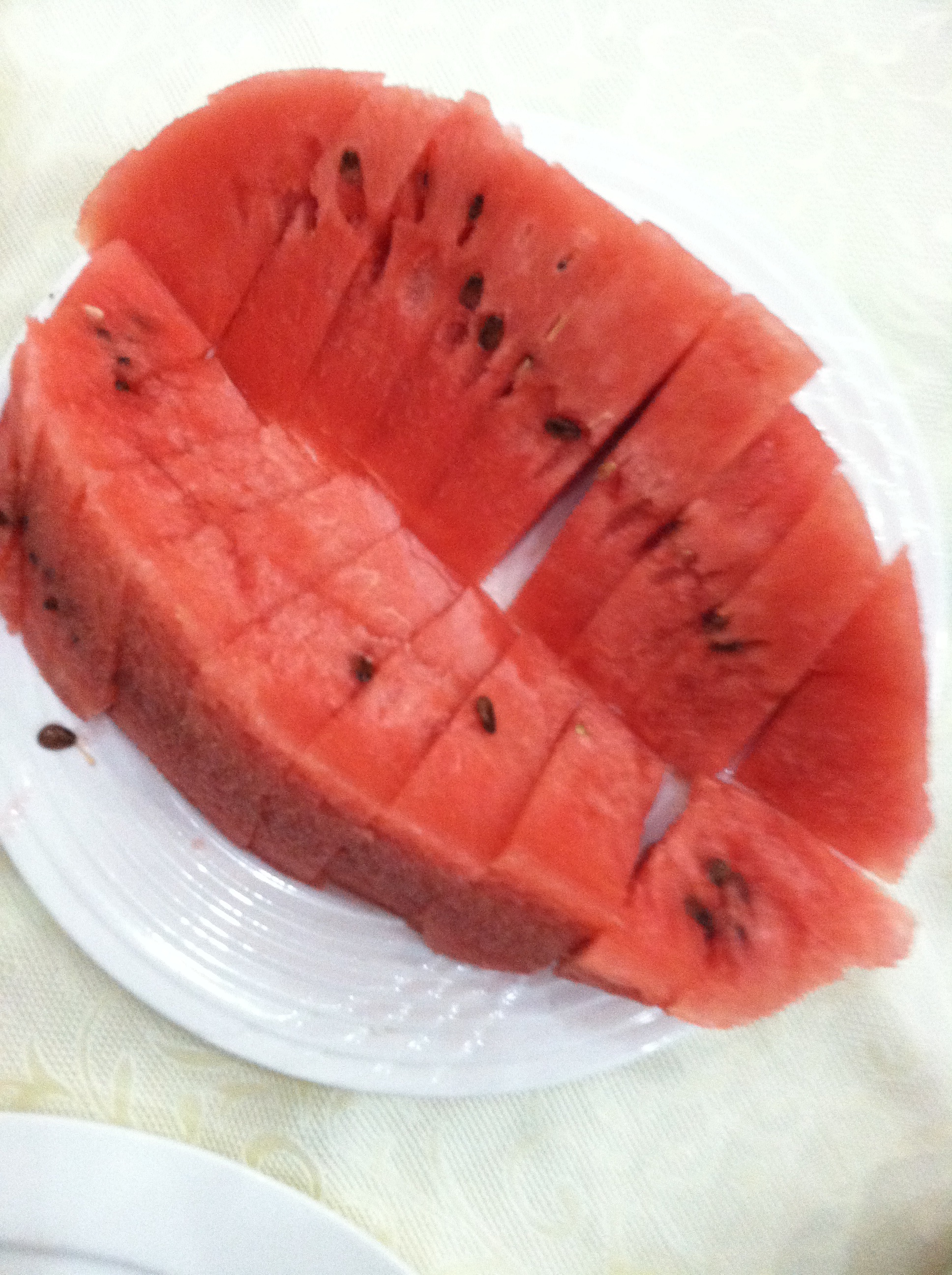
4. A whole half from the market the day before just for me! Why haven’t the Chinese figured this one out?!?

Day 43(b): Back Street Boys

imageimage

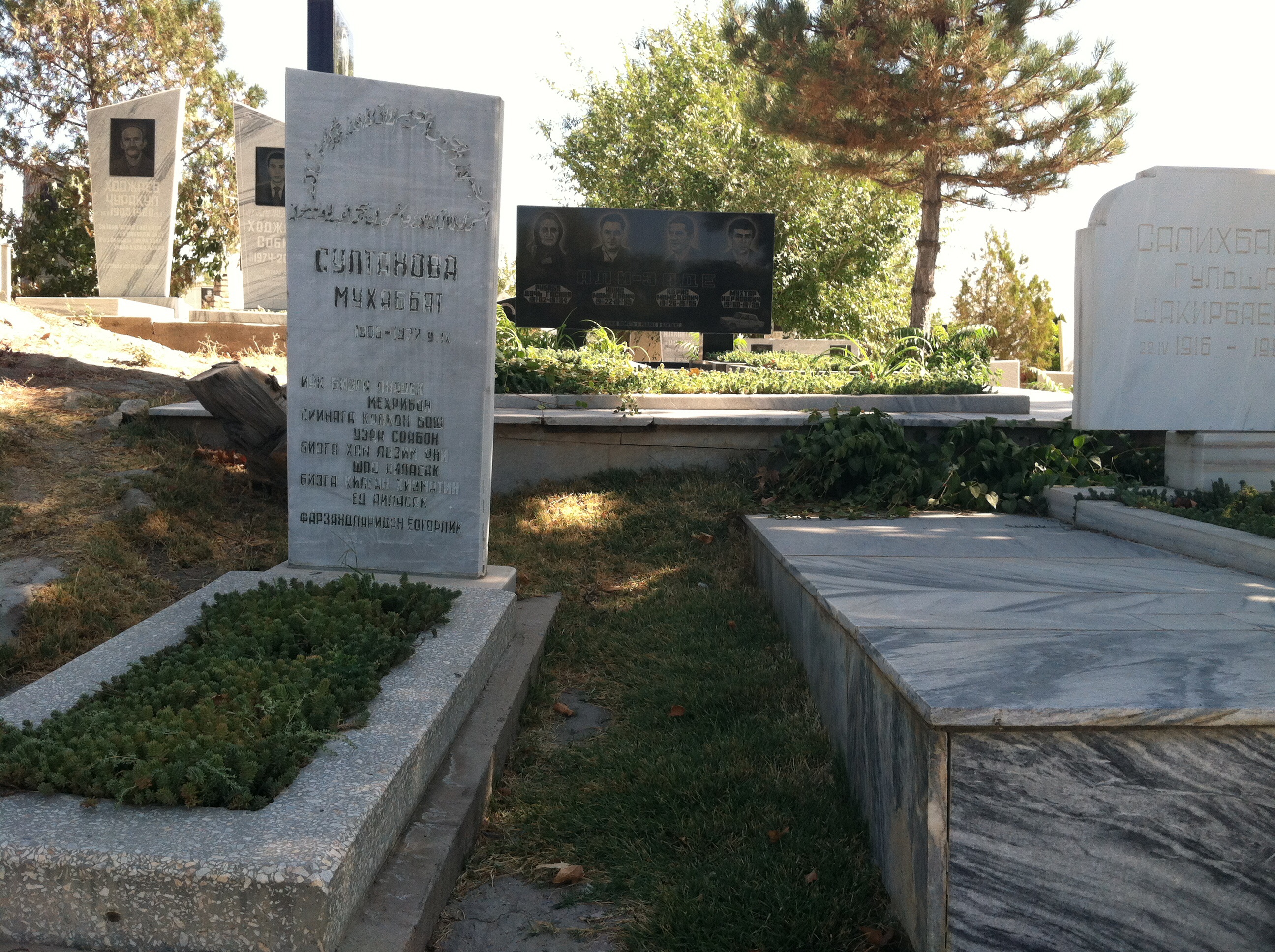
On the back of the low hill where the Mausoleums were clustered, was a contemporary cemetery. It proved to be a fascinating portrayal of how a society sees itself. The families of the recently departed wanted to make sure everyone knew how prominent their deceased relative was. Photographs are etched into tombstones: images of husband and wife, generals, academicians, politicians, and even a family of four caught in a car accident, all with the same date of death, left you with an empty feeling that you might have known these once alive individuals.

Day 43(a): Islamic Architecture

imageimageimage
image
image

Memories of Days Gone By

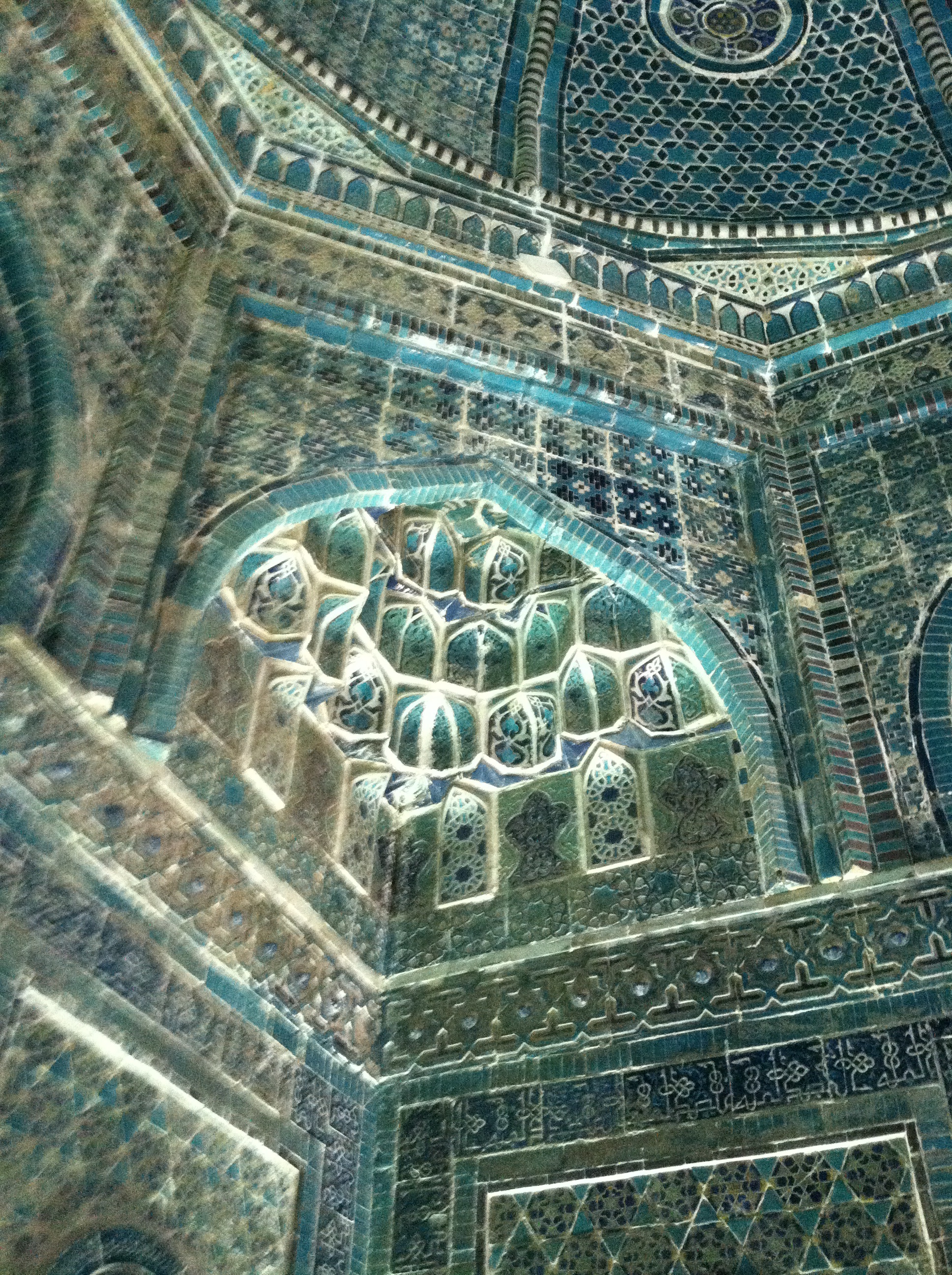
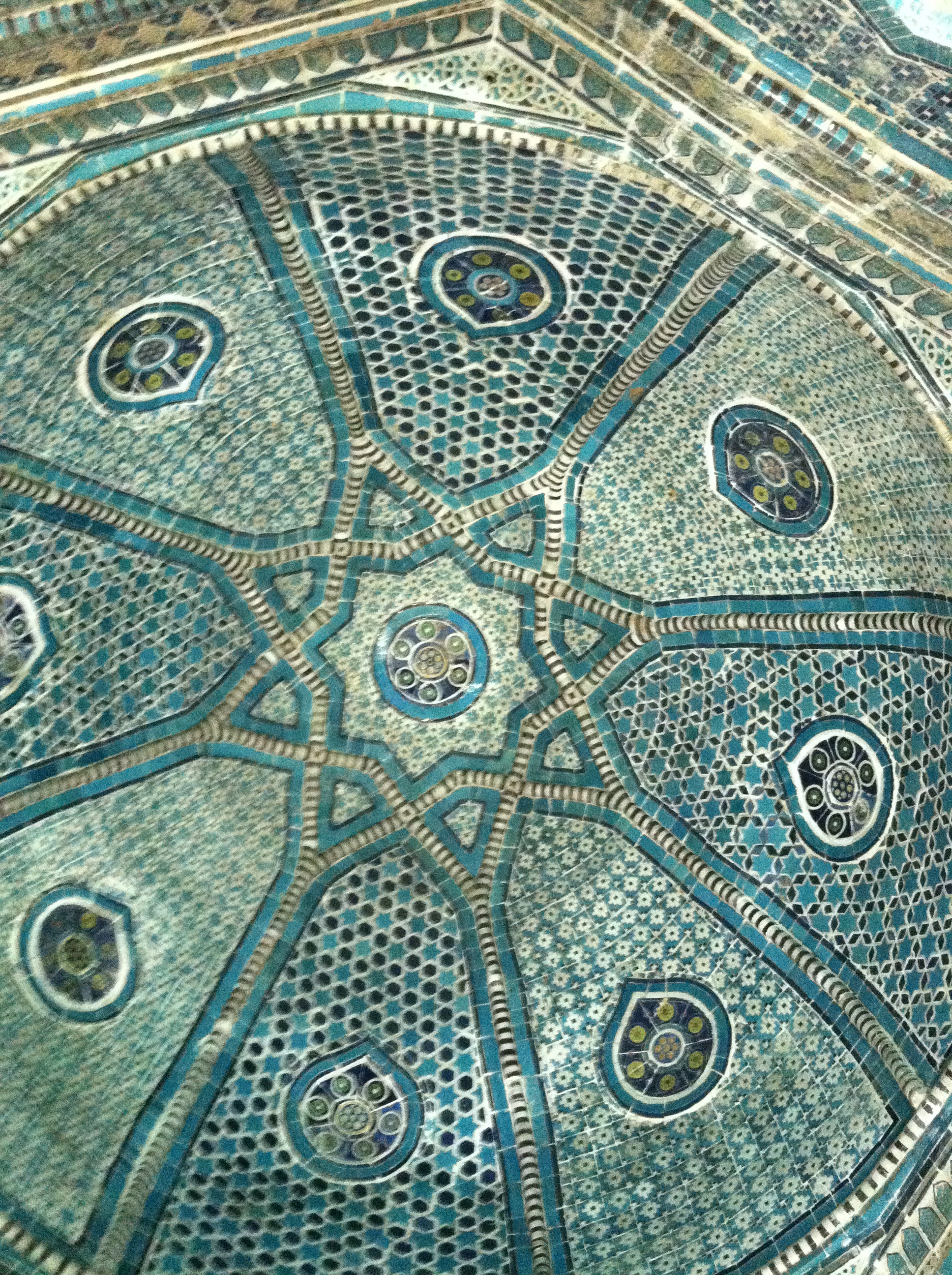
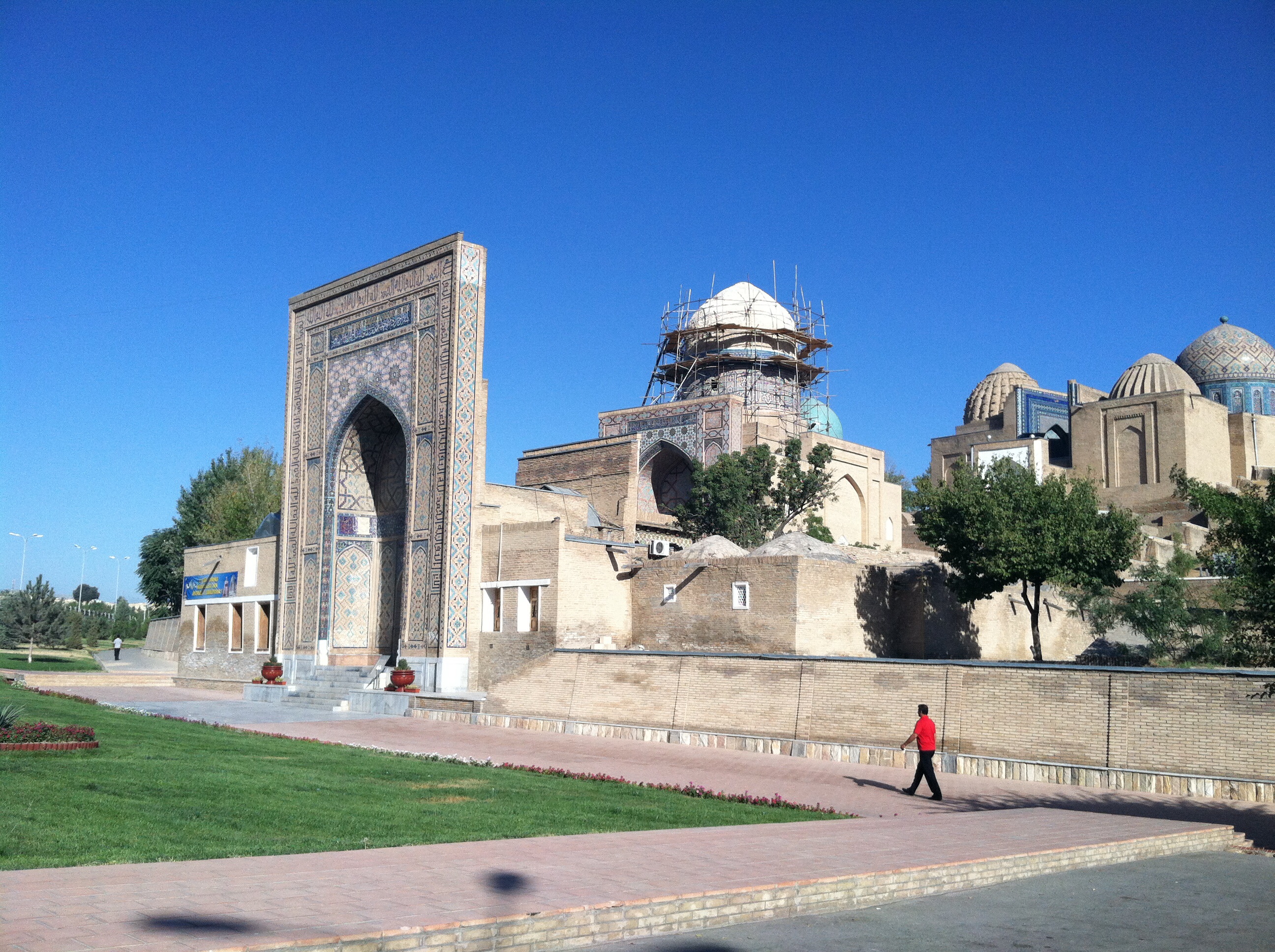
The Afrasiab Hill consists of a series of mausoleums developed between the 12-15th Centuries to dignitaries who lived in Samarkand. They were designed by architects and ornately decorated in a variety of stone carvings, mosaic patterns, and exposed brick.I felt like I was seeing all the European Gothic cathedrals all in one city. It’s no wonder so many pilgrims made their way through to Samarkand just to see so many beautiful buildings in one place.

There are many beautiful and moving stories about captured princesses and war campaigns plotted and lost. Some of the passion and beauty of the period are depicted in the intricate tracery patterns that are all different. The inscriptions appear to be wise, cautionary, and quite mild mannered and respectful of the multiplicity of religious beliefs at the time of Timur (ca. 1400), who was working on promoting Islamic religion.

Photos, from top:

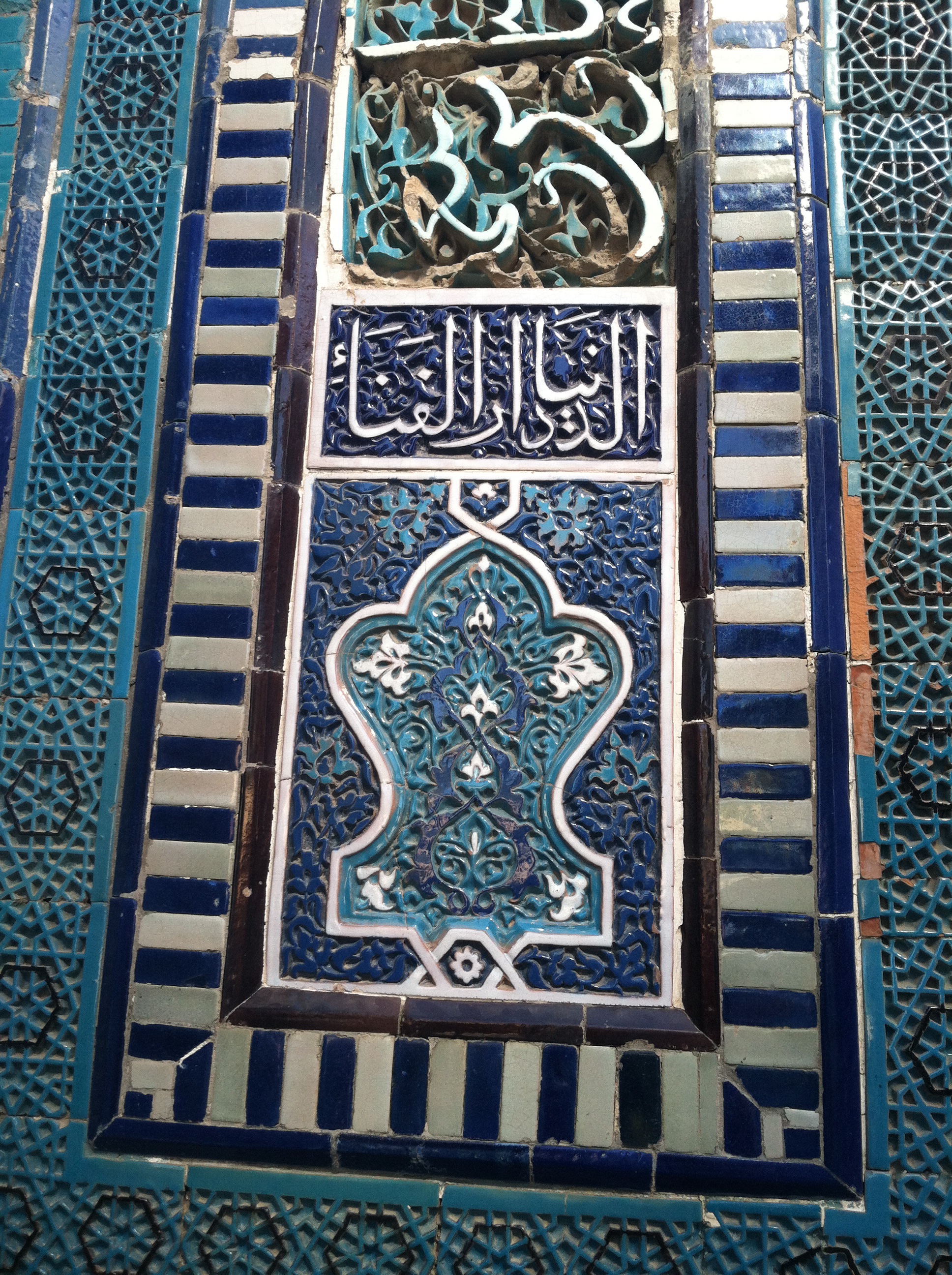
1. Decorative tiles on interior
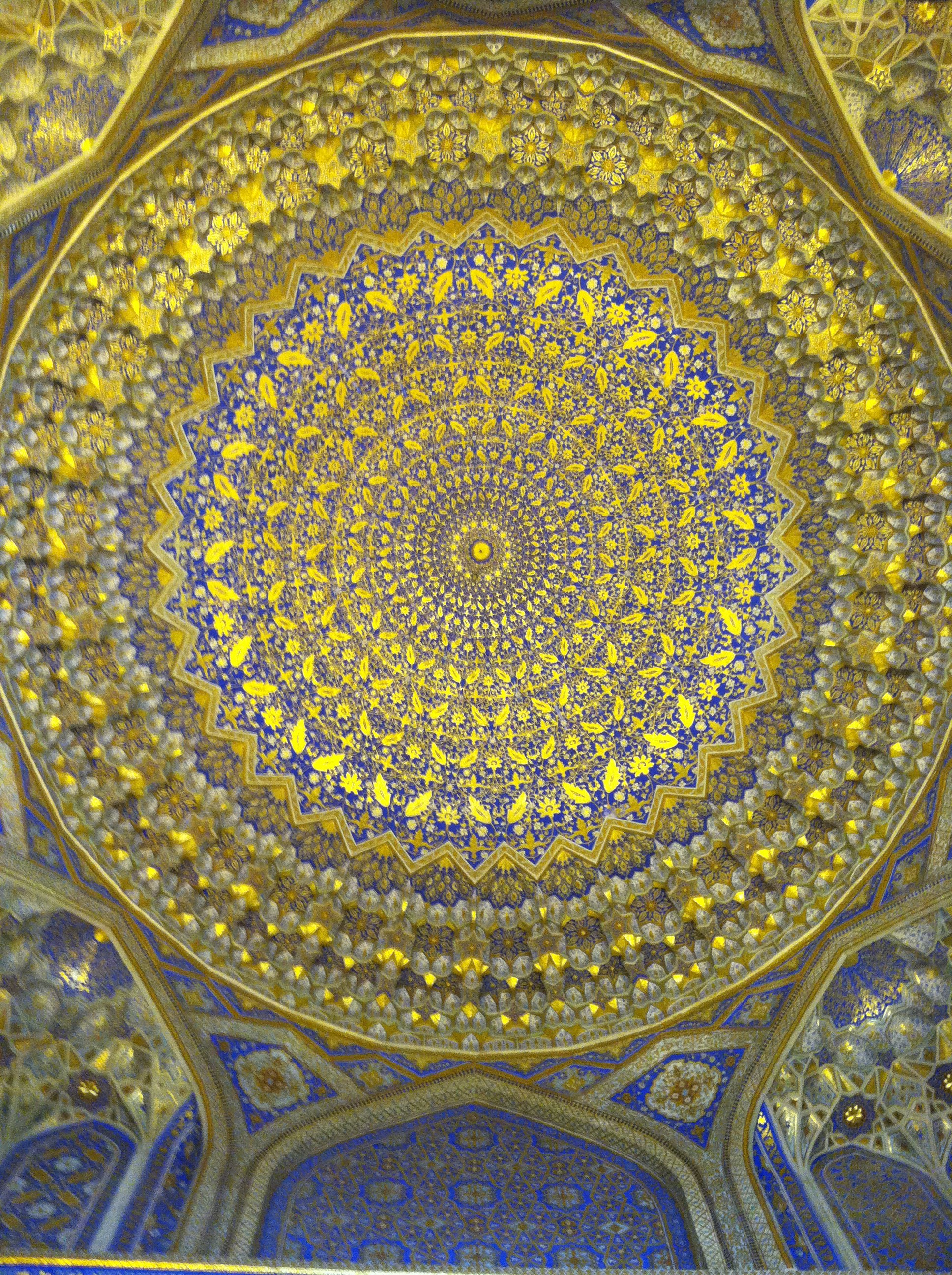
2. Detail of Dome
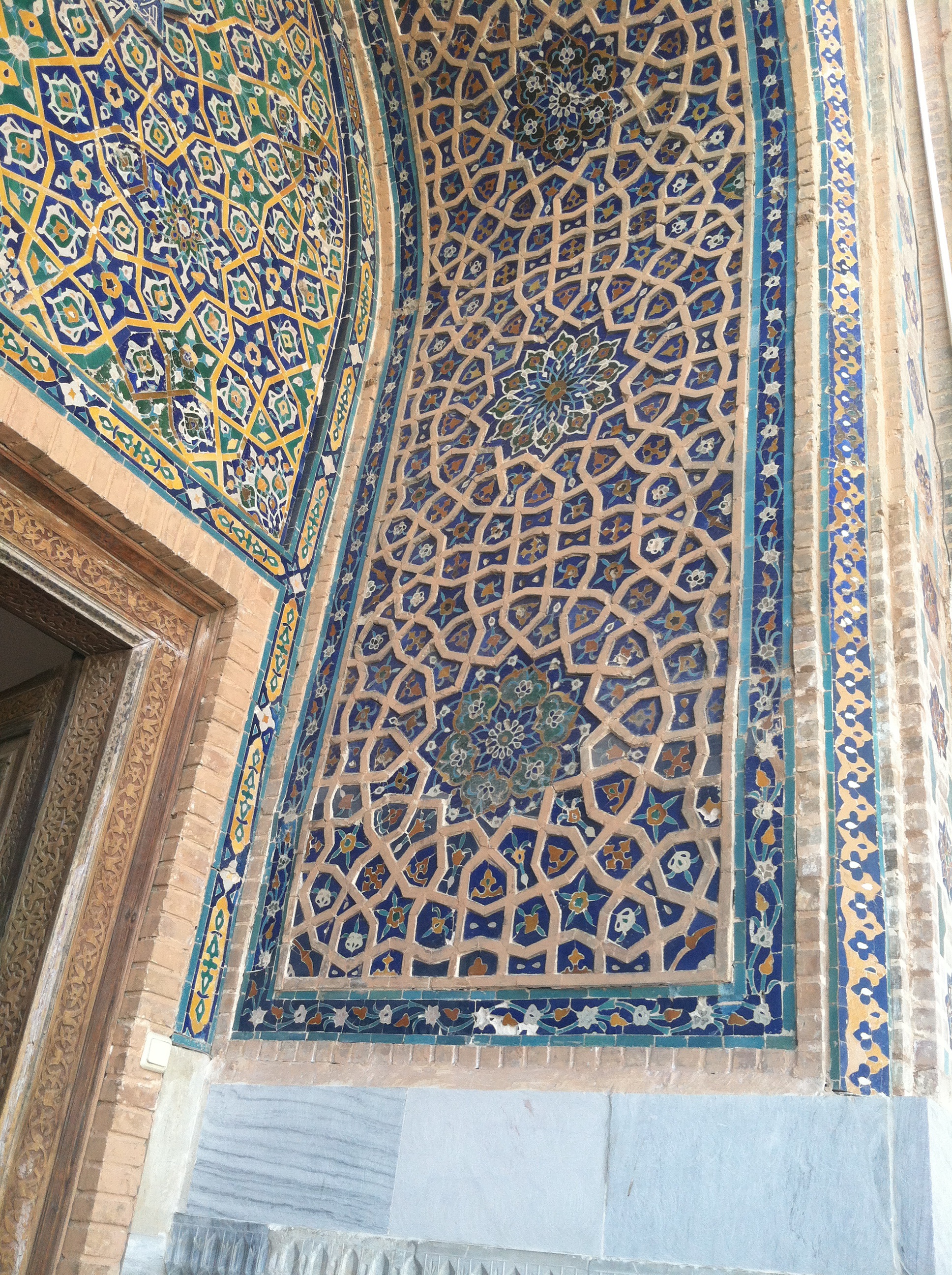
3. Entrance to complex on the Afrisaib Hill
4. Detail of exterior cut stone and mosaic tiles
5. Exterior view from back of hill

Day 42 (a): Samarqand

imageimage

image

image

The first day of this segment has overwhelmed me with history, jogging my brain and challenging all of those connections between Alexander the Great, the Mongols, and Tamir. Some of you may know this better, but for me, it’s learning on the job.

Lets start with Tamir and work back. Many of the madrasah photos shown here date from around the beginning of the 15th century. A madrasah was the focus of education, and included a library, classrooms and a place of worship. Tamir was from Samarqand and made a campaign to conquer India. His grandson was the scientist and developed an observatory and promoted a lot of concepts developed by the Arabs and and the Chinese.

2. When the Mongols struck in the 13th Century, they basically burned every town and village they encountered to the ground. Many of the relics predates this period, but the buildings are no longer standing. Alexander the Great conquered this area, but there is still some debate where and how long he ruled. He was physically here in the area with his army.

3. The complex of 3 madrassahs were built in two different periods: the one on the left was first developed in the early 1400s and the latter two that form a courtyard were from the 1500s. The later buildings were designed to form a symmetrical triad of buildings, but the domes are not symmetrically placed. There is a balance between symmetry and asymmetrical elements.

4. There were multiple religions operating at the same time, including Christian, Hindu, Muslim and Judaism. Sayings in Arabic on the entries to the building welcome all religions but only believers. These were sacred places of education held in high regard, and the eight major faculties each had their own rooms. Women were encouraged to learn in these institutions.

Extensive reconstruction of the tile work and buildings were made in the last few years. A bazaar used to be in the courtyard but the vendors have been relocated to preserve the structures.

Photos, from top:

1. Overview of Madrassah Complex, Samarqand

2. Map of Uzbekistan. My route is Tashkent-Samarqand-Bokhara-Khiva-Tashkent

3. Golden dome from inside, designed flat to reflect sound of prayer inside

4. Detail of stone tracery integrated with mosaic tiles to create textured pattern

Note: Internet access getting sporadic and unpredictable, particularly as I go further inland into the country. Keep your fingers crossed. I have an excellent guide but it is difficult to catch everything as she is covering a lot of ground. I’ll try to fill you in as I go.

Day 41: Dresden to Frankfurt

image
A full luxurious day on the train, on the beautiful Deusche Bahn system. These are to me the best trains in the world: fast, efficient and reliable. All the best in German engineering. As I sit on this five-hour ride, I can’t help but ponder what’s ahead for me in the future.

I am pretty happy. I decided that happiness is relative, and of course a process, not a place. It’s those endorphins you get planning something and thinking about where you WILL be, and not so much about when you are there. I have to say the German class exceeded my expectations. Little did I expect or know whom I would meet or learn from them. But that was just a bonus.

I used to watch the happiness programs on PBS and based on their advice, make the lists of what I was grateful for. Maybe it was needed when you are inundated with stressful days at work to maintain perspective. I definitely have had a full and satisfying life so far. But will that get me through the next third of my life? Who knows?

Part of this trip is about seeking inspiration. And my quest in Germany is fulfilling that. Learning about Goethe gave me a big shot in the arm and a reading list. At the top is going to be Thomas Mann’s Lotte in Weimar. The movie I saw about Goethe helped me to see inside the German culture. Then get an annotated guide for Magic Mountain. (The train just went through Weimar, and I wanted to get off!) Before, during or after that, maybe more on Weimar.

Currently the book given to me from the Krasnos has entertained and consumed me. “the Orientalist” is NY Times best seller and the author, Tom Reiss, won a Pulitzer Prize. It’s the story about a journalist Lev Nussibaum aka Essad Bey. It takes place in pre-war Germany, but traces Bey’s life from Lake Baku, where he was born, to a saga of escape from crumbling regimes through Turkey to France, and then to a private high school on an island in the North Sea. He ends up in Berlin writing books about Germany.

The author casts a lot of historical information as the backdrop for this audacious character, whose true identity was challenged multiple times. He was married to a socialite for a short time and operated in and was followed by high literary circles. I haven’t finished the book yet but am savoring and parceling out every last word as I am running out of something to read on my way to Tashkent.

Without getting into detail, this has been the best book for my trip. I’m really glad I have it and hope to use this as my springboard to learning more about German history, and its complicated relationship to Russia. The book in part tries to tackle the prickly question of how Hitler comes to power.

I decided that you could customize your own academic degree. When you have the time, you don’t need to find a program, apply for it, get credits, take exams and prove yourself with a degree–you just do it!

Targeting Tashkent…lets hope the Internet works there.

Day 40: Farewell to Dresden

image

imageimage

imageAs I wind down this segment of my travels, I feel very sad to leave Dresden. Particularly having bonded with my German class, it is hard to say goodbye. Everyone has their lives to live beyond this momentary blip in the universe. I’m so grateful for having had the support and encouragement from family and friends to do this, at this time of my life, because it IS the time of my life.

I felt wistful about leaving out some shots that didn’t ever seem to fit into the theme for the day. This is a potpourri of architectural photos, a one-off sign, and some cultural relics. I’ll be leaving Dresden, overnighting in Frankfurt, then starting Segment 3 of the Silk Road this weekend.

Photos above, from top:

1. The Blood Center

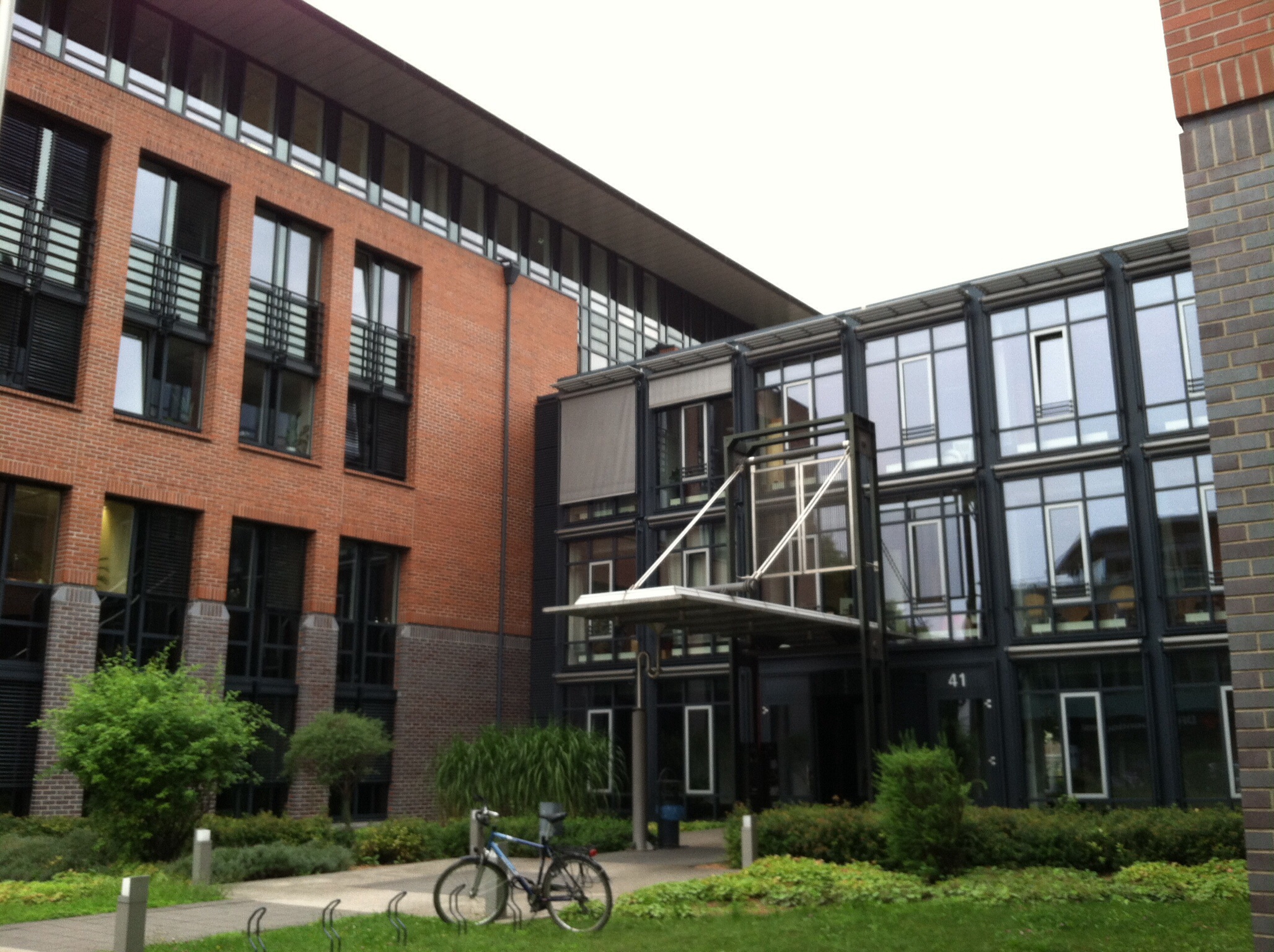
2. Clinical buildings in the medical center area of Dresden.

3. Another clinical building.

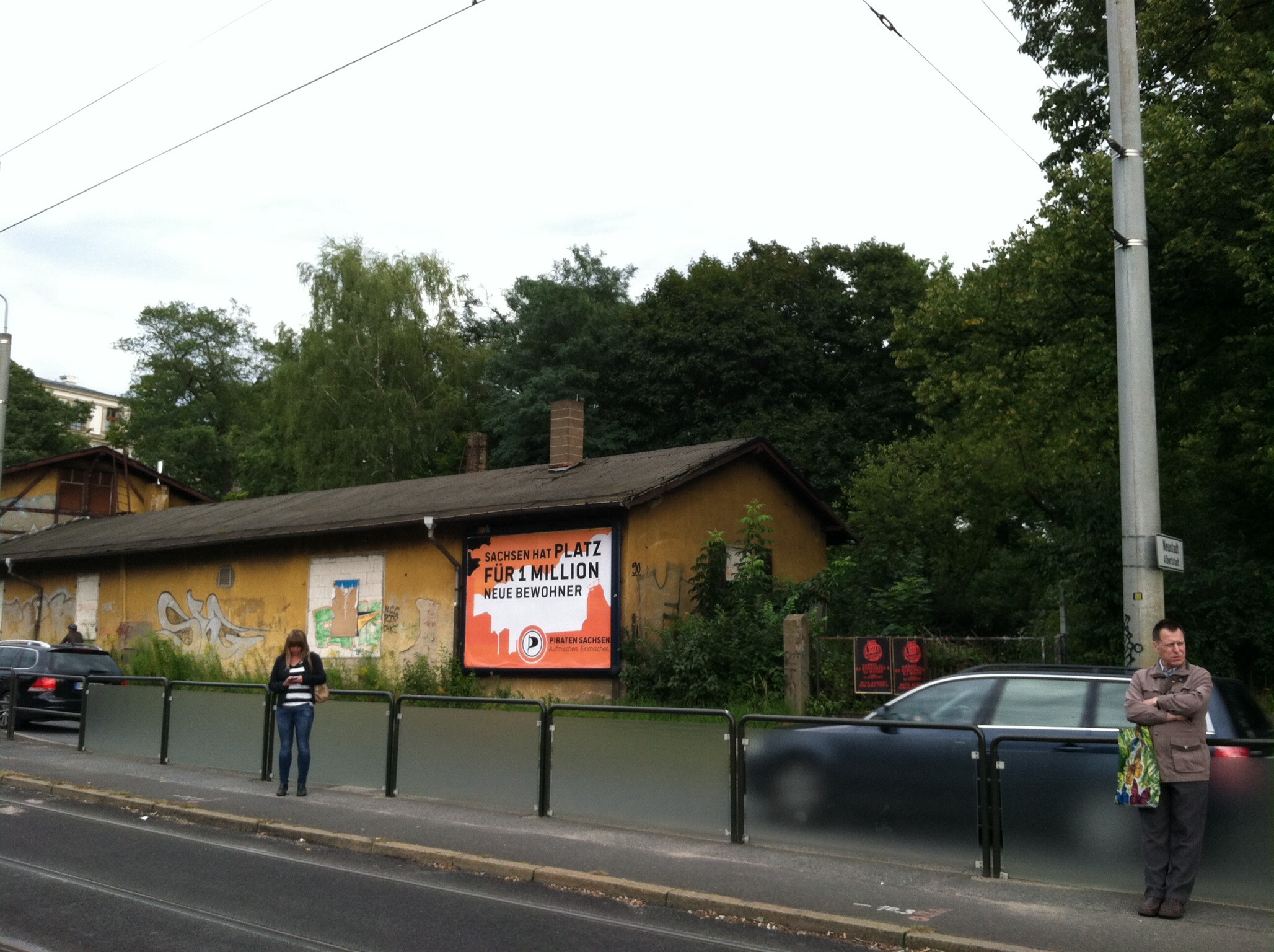
4. Sign indicating from the Pirate Party that there is room for another million residents in Sachsen, the state where Dresden resides. It also implies that mixing and matching population is good for Saxony. (tap up the scale to read text).

Party elections are coming up and Angela Merkel is scheduled to come to Dresden on Saturday. Unfortunately, I will be off before then, but I would have definitively gone to see her.

Photos below, from top:

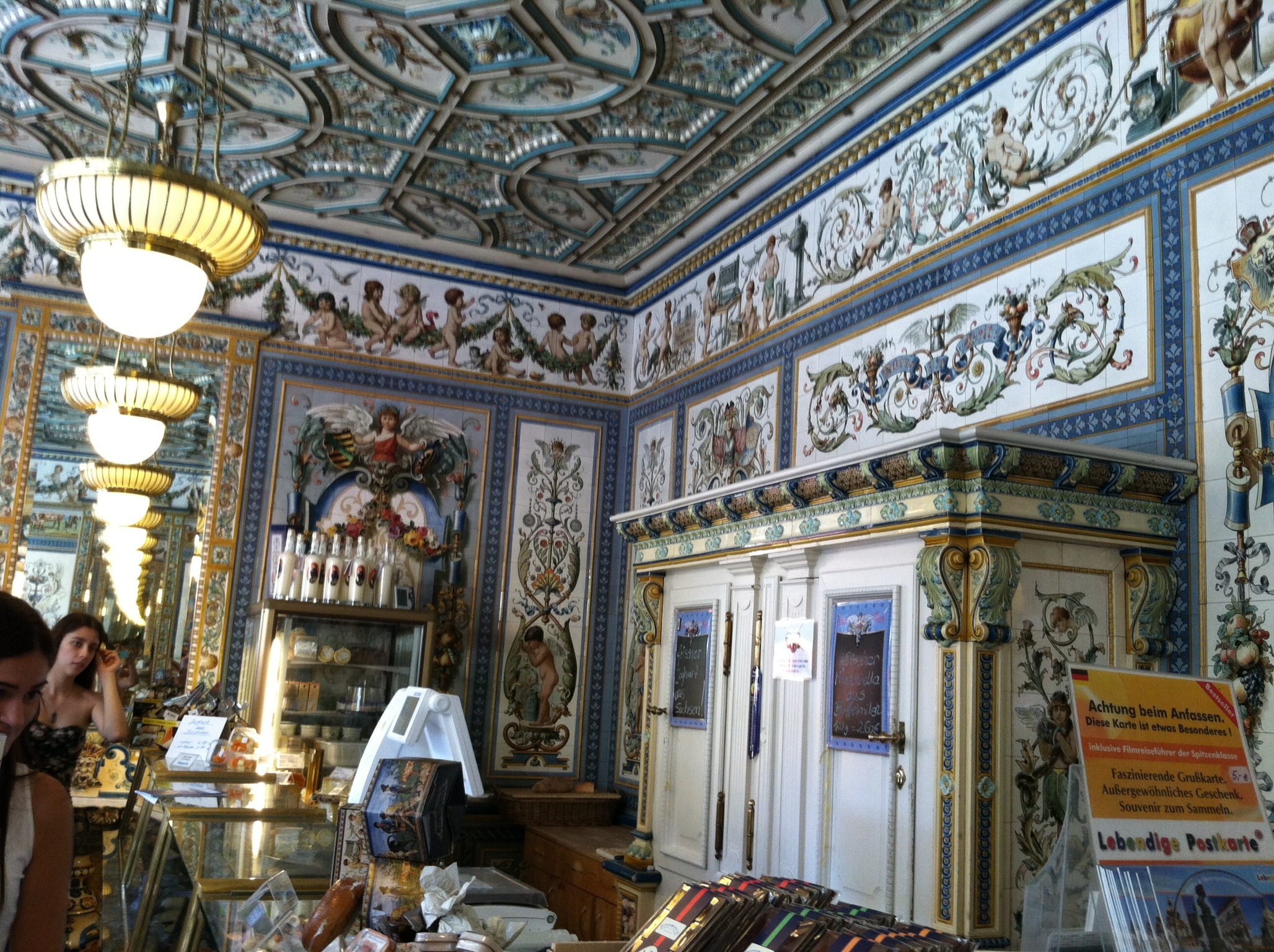
1. The Molkerei, a dairy and classic cheese shop that has been around for generations. The ornate decoration makes this a popular tourist stop.

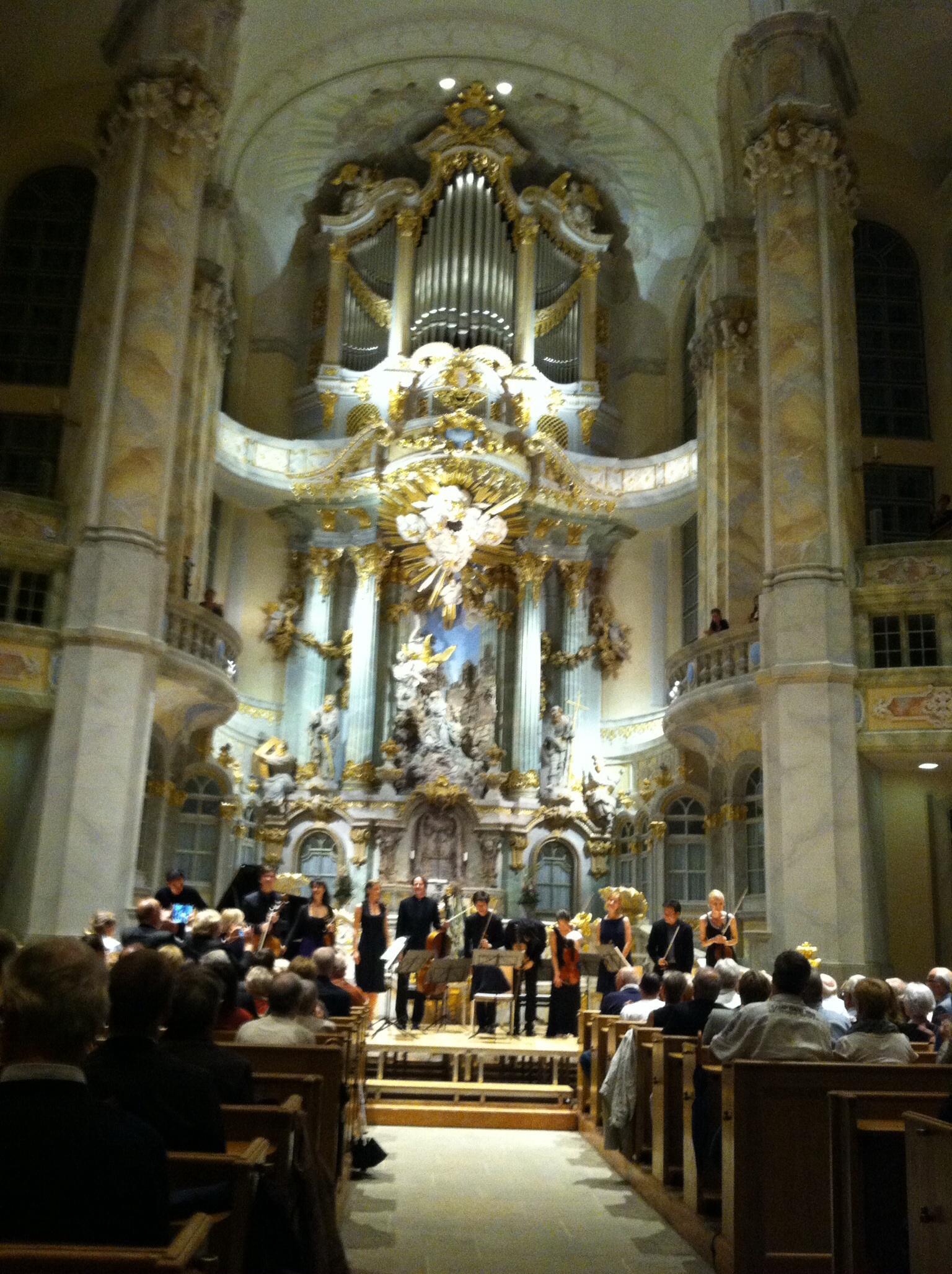
2. The interior of the Frauenkirche, where Helena and I attended a concert. Maria Baumer played the part of Bach’s wife in several readings between Bach pieces. The concert was sponsored by the Moritzburg Festival.

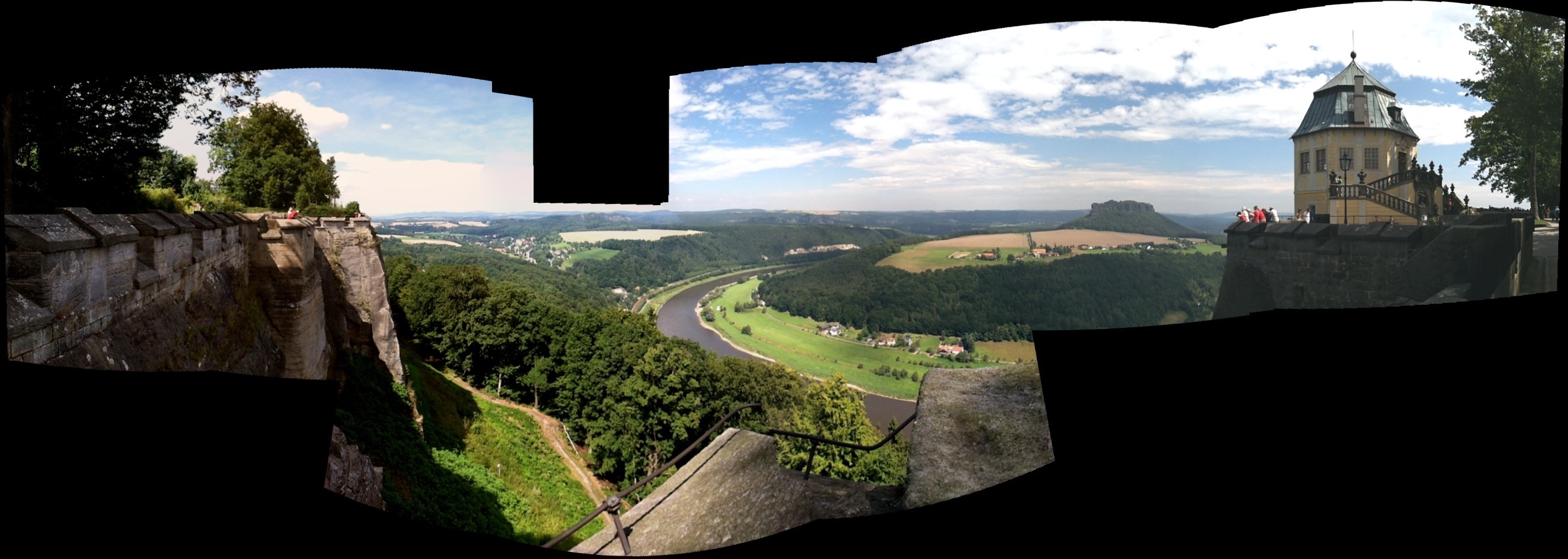
3. Another panorama shot of Dresden and surrounding area from the Konigstein fortress. Zoom up to appreciate the beauty of this area.

imageimageimage

Day 39: Sustainability and Transportation

imageimageimage

 Sustainability in Germany

Photos above, from top:

1. Older buildings utilized exterior louvers to provide sun shading for buildings to reduce heat gain. (Refer to lower bottom right of photo).

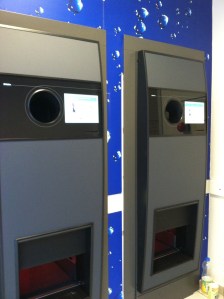
2. Customers return bottles at supermarkets and receive instant cash receipts. These can be used at the counter when paying for groceries.

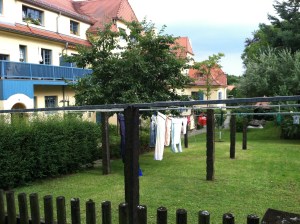
3. Photo from an earlier post (at Hellerau) showing how drying clothes outdoors has never really gone out of style in Germany, even in up-scale neighborhoods.

The only thing I didn’t see to any degree were solar panels, at least not as visible as in the Bay Area. Given the direction Germany has taken historically to provide steep roof lines for snow load control, it may be facing an uphill battle. The widespread use of penetrations for gabled roofs and attic windows don’t help matters. And there seems to be a lot of cloudy days here. 

Considering how Germany attempts to lead the world in sustainability and zero carbon footprint, this might hamper their reputation in solar energy development. Perhaps China has already pulled the carpet out from under Germany’s lead on industrial production of solar energy by now.

There has been a lot written about Germany’s endeavors to be sustainable, but it seems to come more from the traditional conservation methods than by innovative technology. Perhaps it’s not yet that evident, and it occurs in newer buildings. But for now, at least in Dresden, it hasn’t quite taken taken hold. Its historical use of reducing waste is a far better bet for the future than what the US is able to do for the time being.

Transportation

The Dresden transportation system is one of the delights in coming here. I have managed to get around the city and all the sights I have posted, with few exceptions. It’s safe, clean, and efficient. There’s respect and even affection for public transportation. Why can’t we get it together? 

Buses, cars and bikes are all in symbiotic relationship with each other here. You don’t do stupid things, wait for the lights to change, and minimize the impact on the environment. With taxes being out to good use, the Germans reap the benefits of their efforts.

Photos below, from top:

1. A bus shelter, that posts the full schedule for weekdays and weekends. It’s reliable, practical and clearly identified. Bikers often use the system and bike in between.

2. Interior of the tram system is kept clean and tidy to make it a pleasure to use and appreciate.

3. Window graphics indicate that areas near doorways are for wheelchairs and strollers.

4. The train system has been developed throughout Europe and thrives. Stations like this one up the street from where I live make it easy to get to virtually any point in Europe, or to regional spots. Safe, clean, and efficient.

image

>image

imageimage

Day 37: Military History Museum

image image image image image

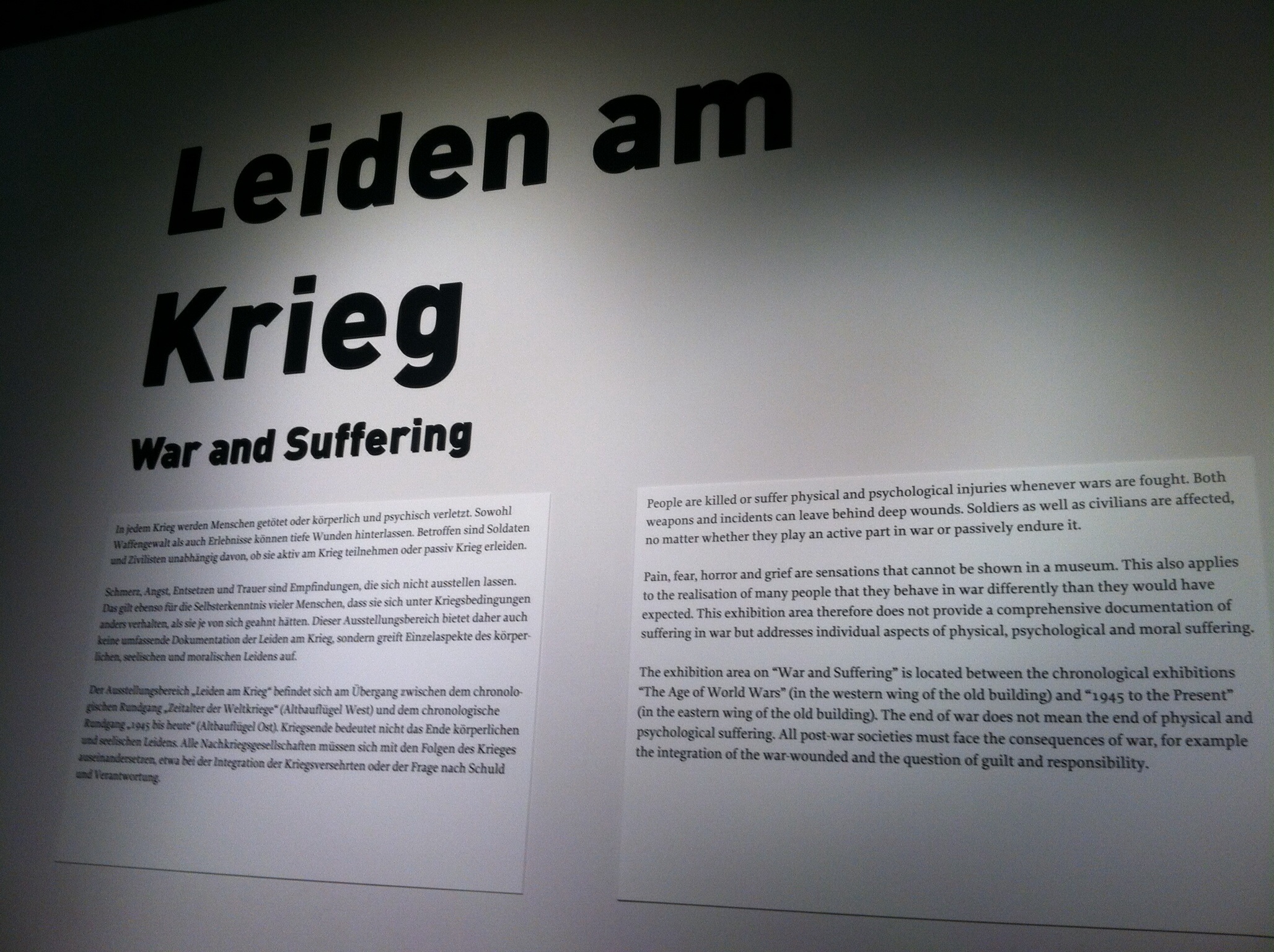
The Military History Museum is one of the most interesting museums in the world, not only for its collection and the building design, but for the message it brings. It tries to tackle the prickly issue of war and its consequences and uses displays to teach how everyone loses in wars.

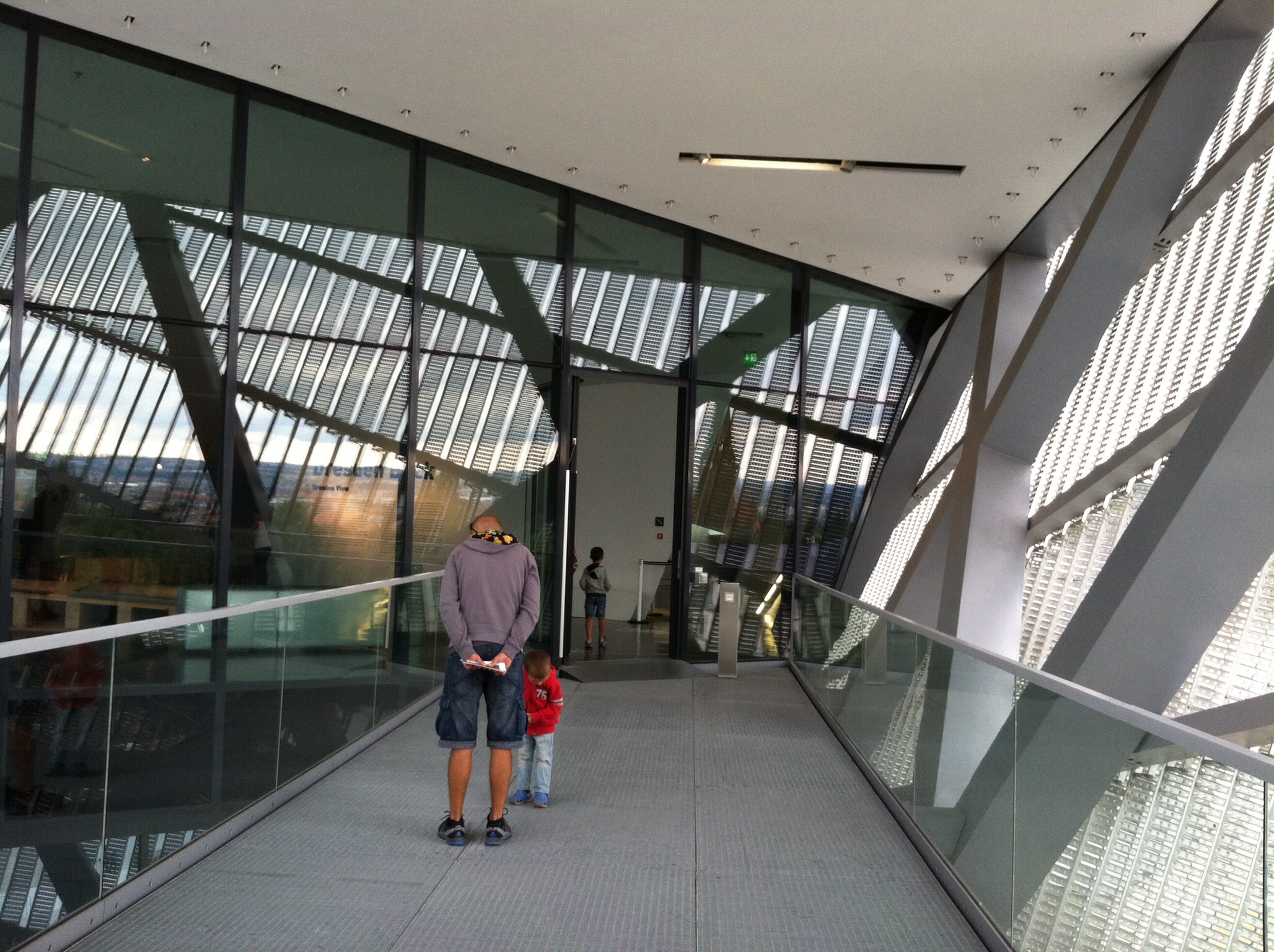
Daniel Liebeskind designed and finished this building in 2011. The exterior of the neo-classical building is truncated by a metal shard that points to the spot where Dresden was targeted. While both sides of the building are devoted to traditional armaments, the new building tries to confronts visitors with the human impacts of war.

Photos above, from top to bottom:

1. Exterior of the building, located in a former military area.
2. Overview of Building interior on the top floor.
3. Exterior terrace inside the metal point. From here you can see a view of Dresden Old City. The open metal walkway can be a harrowing experience but is appropriate with the entire building and what it conveys.
4. Beautiful stairs and custom designed lighting built into the handrails.
5. Custom designed horizontal panel for the elevator controls.

Photos below, from top to bottom:

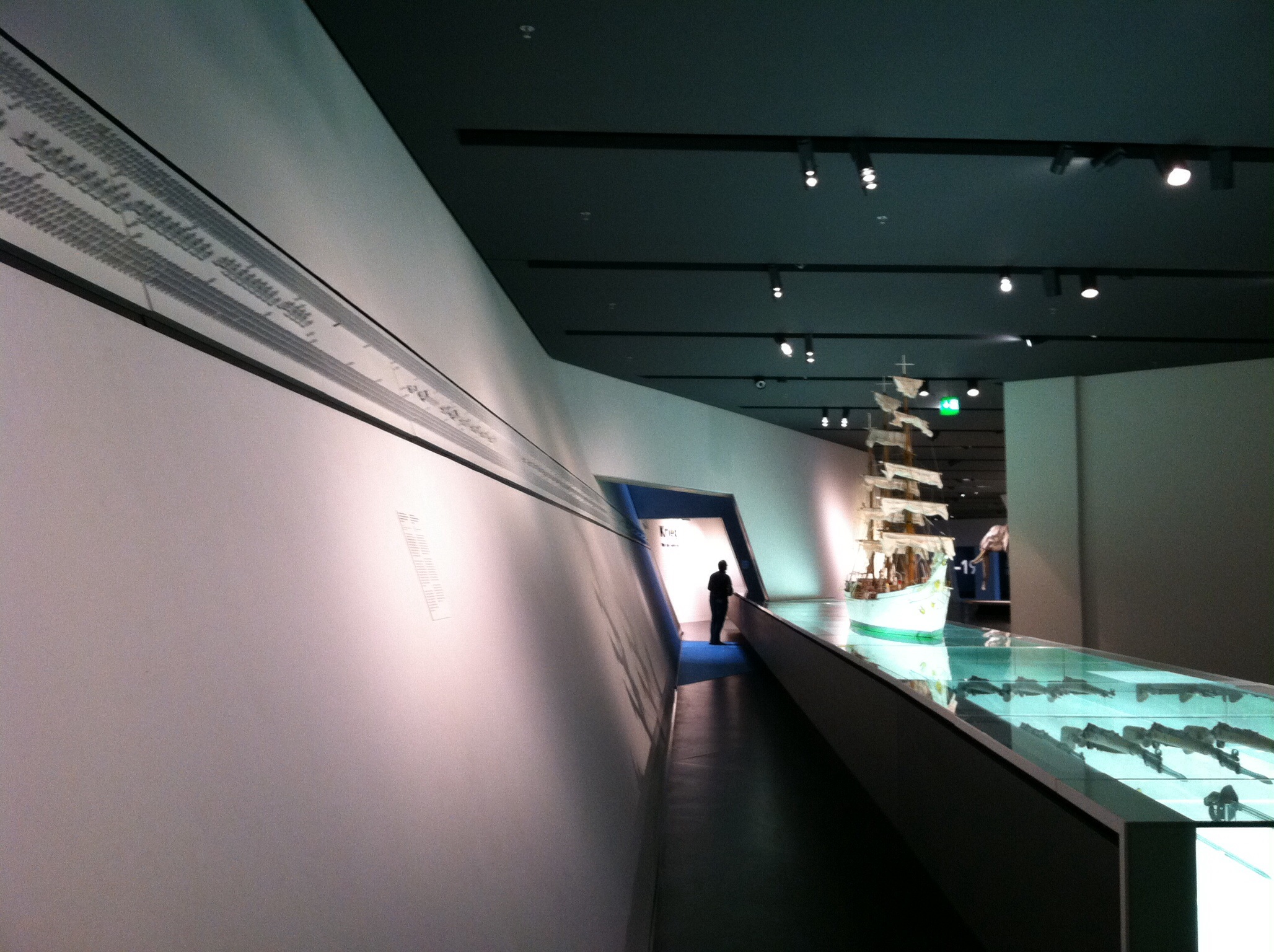
1. Wall to the left shows a regiment of 10,000 troops in formation heading to war at a miniature scale.
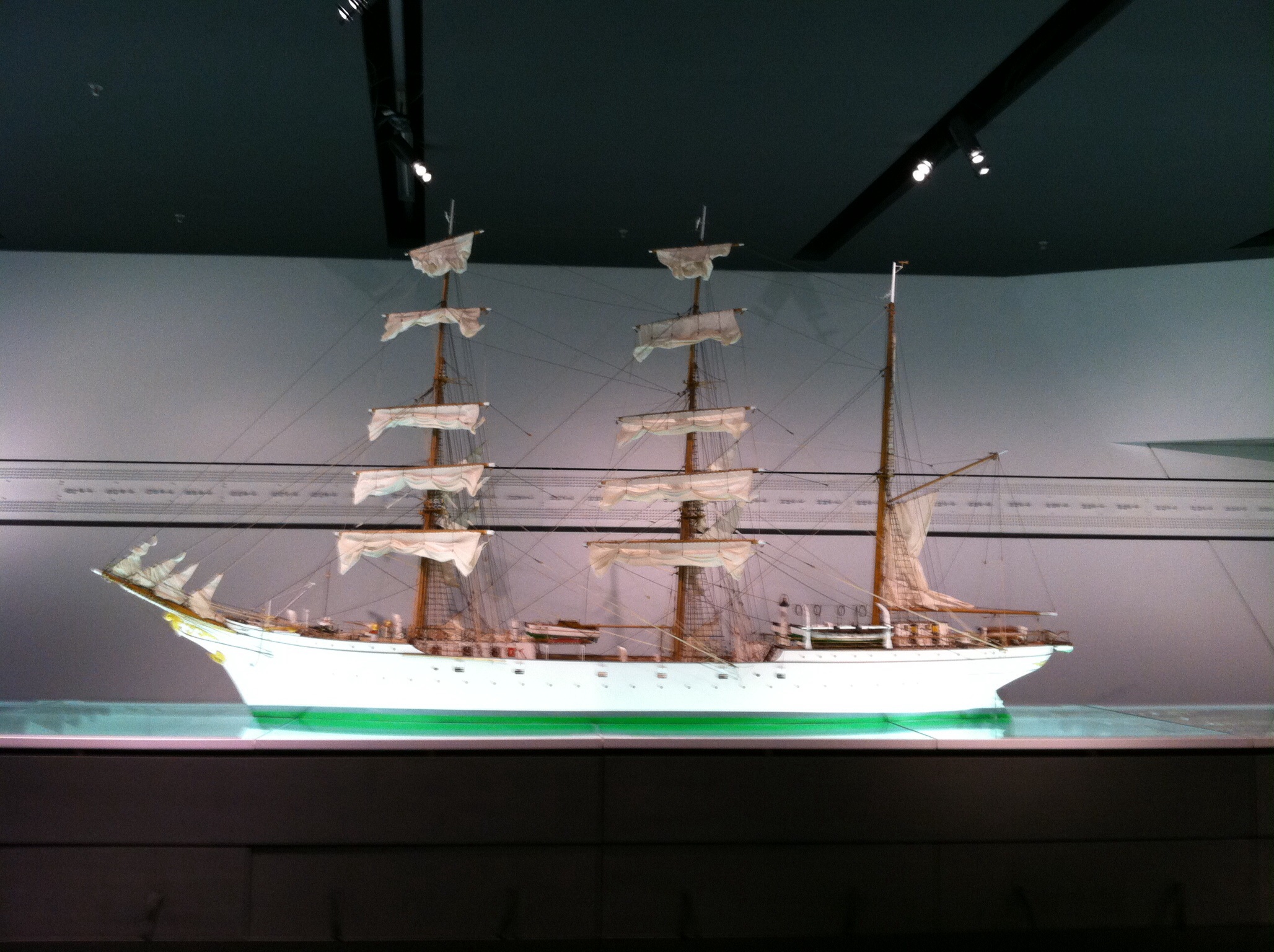
2. A scale model warship, with a view of the formation in the background
3. A full scale display of animals
4. Typical text explaining the consequences of war. (Tap to scale up)
5. Another text display.(Tap to scale up)

imageimage
imageimageimage

For more information, see http://en.m.wikipedia.org/wiki/Bundeswehr_Military_History_Museum.

Day 38: My German Class

image

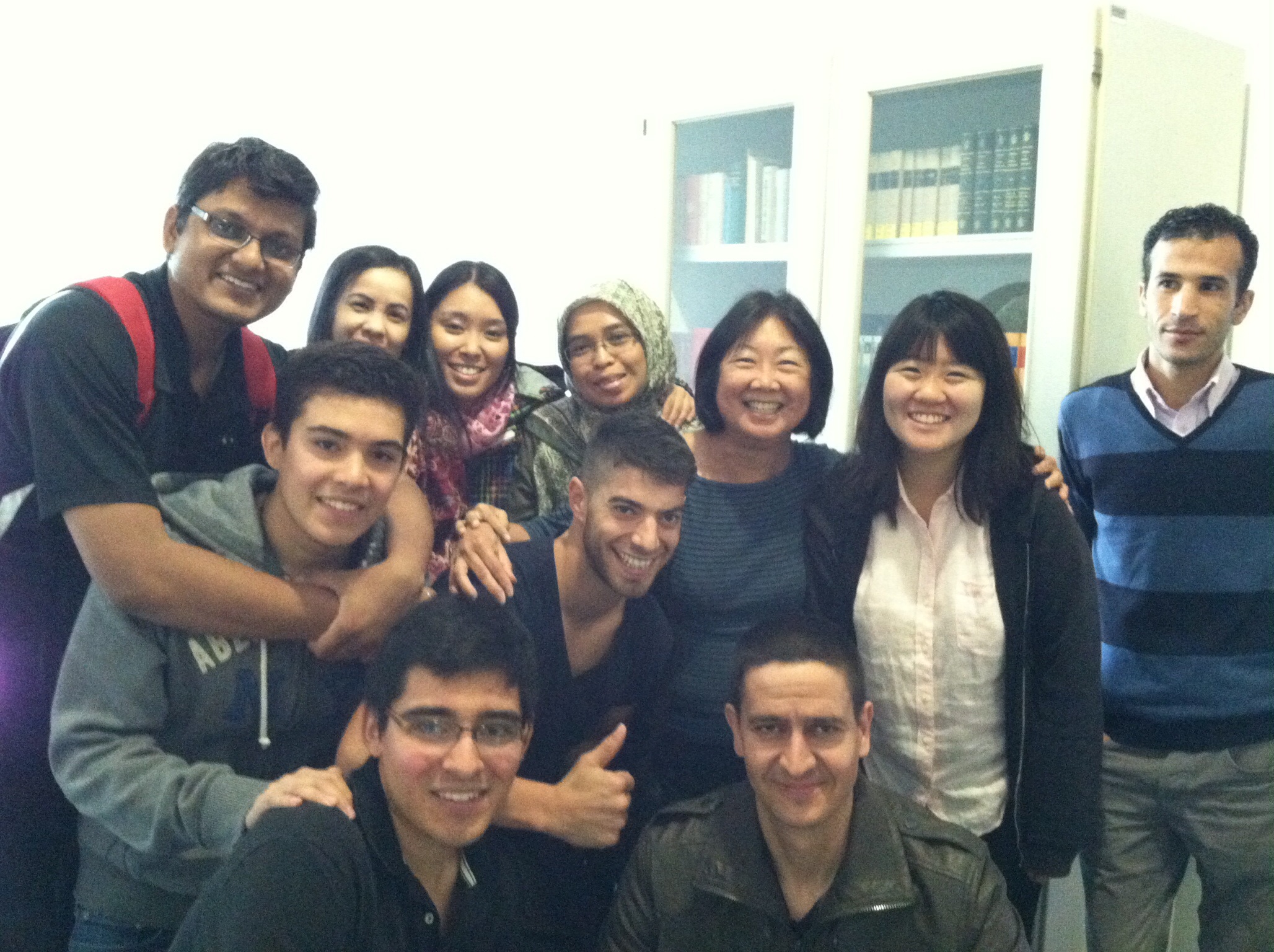
After three and a half weeks together in an intensive advanced beginner course, its not surprising that we feel bonded and sad to leave each other. Human nature, no matter what age, links you inevitably to each other. Age was certainly less an issue than culture, openness and confidence. We supported each other’s endeavors and shared each others’ stumblings.

Its much easier to introduce the students from the class at the end than at the beginning, as you can see from the comraderie in the picture:

Front row: Marco,(Mexico); Valadimir (Bulgaria).
Middle row: Luis (Mexico); Paolo (Portugal).
Top row, standing: Saikat (India); Keyson (Thailand); Masami(Japan); Meilina
(Indonesia); me; Yongin (Korea); Hamid (Algeria).

It was a great program, great class, and I passed my exam! Now I can proceed to the next level (intermediate). I guess I wanted to prove that I could still think and learn like a student, but in the end, even though I did, it didn’t really matter. I highly recommend this to others of any age to connect with people in whatever way you can who are NOT the same age you are. I really learned a lot from this group of energetic world beaters. We are going to be in good hands with people like the ones in my class. That’s my message and purpose for this segment of the trip, I guess, and I’ll be ready to move on to my next quest: the Silk Road.