Tag Archives: street scenes

Day 44: Bokhara I


Fast facts: The population of Bokhara today is 280,000. Bokhara is the oldest city and predates the others at 2750 years old. Just for comparison, Samarkand’s population is 500,000 and Tashkent’s is 3 million.
The land is flat, considered steppe and not desert (a desert designation is devoid of vegetation, and steppe has some visible vegetation if sparse–you know, kinda like the Bay Area).

Photos, from top, left to right:

1.  Nodir Devon Begi Madrassah 1623. This is one of the later buildings dedicated not to the king but a lower ranking official. By the time the buildings were dedicated to others the central govt was already in decline. The phoenix birds show Indian or Chinese influence. The face at the top was not banned at the time in artwork and different interpretations are made as to whether images are acceptable or not. The use of multicolored tile and yellow is also a late development, compared with the earlier cobalt and turquoise monochromatic schemes.
2. trading market designed and as covered market at crossroads to two streets. There were 5 built-in the city but they didn’t work so well. The earlier strip markets developed organically around neighborhoods. These did not take into account where people lived and needed the services. These trading markets are now mainly tourist attractions after they were designated for specialized trades such as metalwork or arts and crafts. Open cross ventilation makes this a very cool and sustainable place in the summer though!
3.wood door detail inside trading center
4. the water system was crucial to survival of the cities. Bokhara was considered an oasis along the trade routes and served as the seat of many governments who conquered and ruled this strategic location. Water came from the river that separates Afghanistan and Uzbekistan, but is now piped from the mountains in Tajikestan.
5. the minaret, made of bricks, shows how creative their brick craftsmen were in designing and pushing the height of these lighthouses.
6. contemporary building using wood columns and doors decoratively.
7. The earliest building in Bokhara was built below grade and preceded the Mongol invasion around the 12th c. Most buildings, particularly Islamic structures were built on top of the sites of former sacred sites, so it is likely that an earlier building preceded this one. This building is devoid of tile decoration but shows how use of brick for both structural purposes and textured walls was used very successfully, prior to the introduction of tile.
8.Detail of brick work.

Day 40: Farewell to Dresden

image

imageimage

imageAs I wind down this segment of my travels, I feel very sad to leave Dresden. Particularly having bonded with my German class, it is hard to say goodbye. Everyone has their lives to live beyond this momentary blip in the universe. I’m so grateful for having had the support and encouragement from family and friends to do this, at this time of my life, because it IS the time of my life.

I felt wistful about leaving out some shots that didn’t ever seem to fit into the theme for the day. This is a potpourri of architectural photos, a one-off sign, and some cultural relics. I’ll be leaving Dresden, overnighting in Frankfurt, then starting Segment 3 of the Silk Road this weekend.

Photos above, from top:

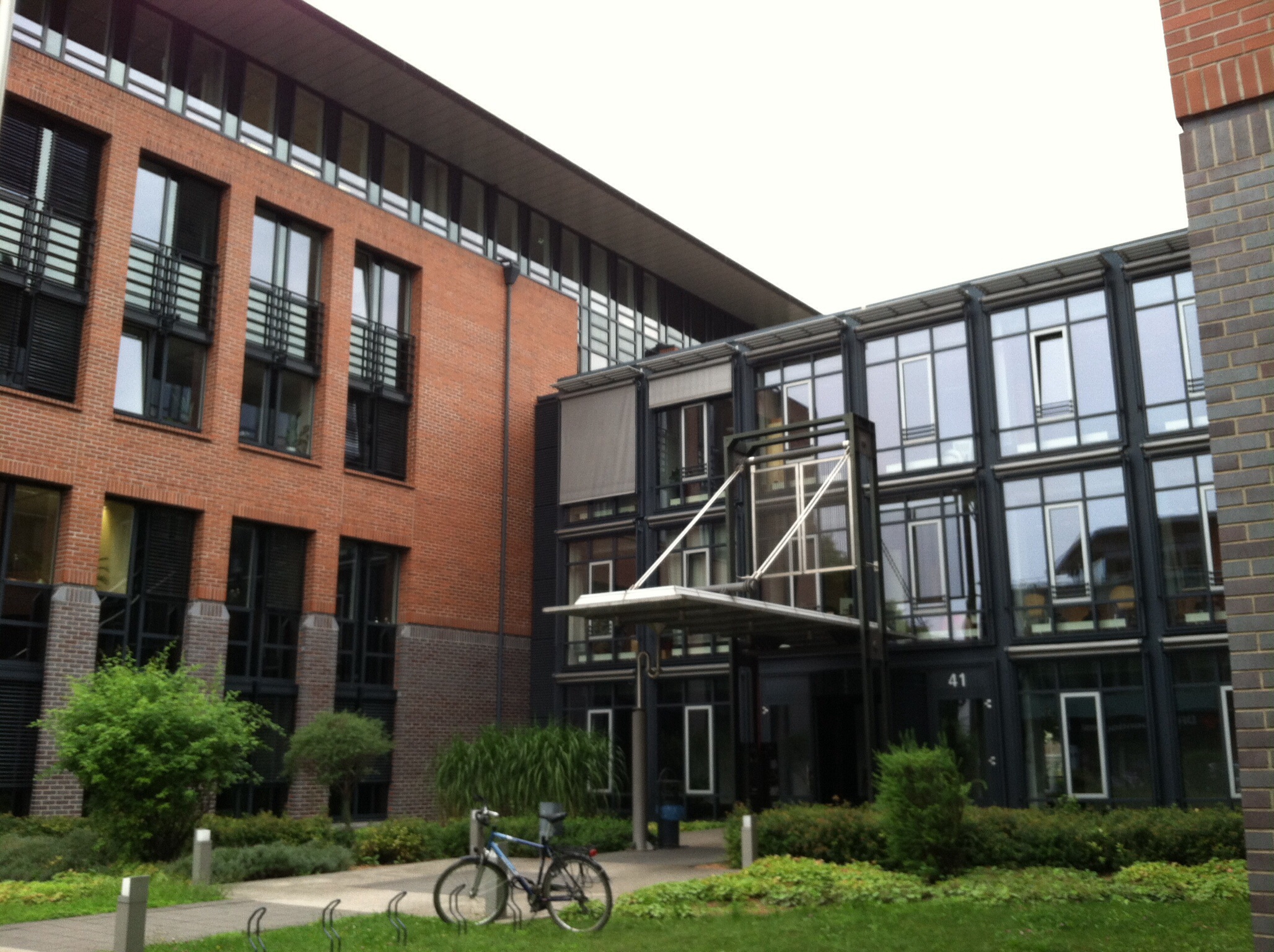
1. The Blood Center

2. Clinical buildings in the medical center area of Dresden.

3. Another clinical building.

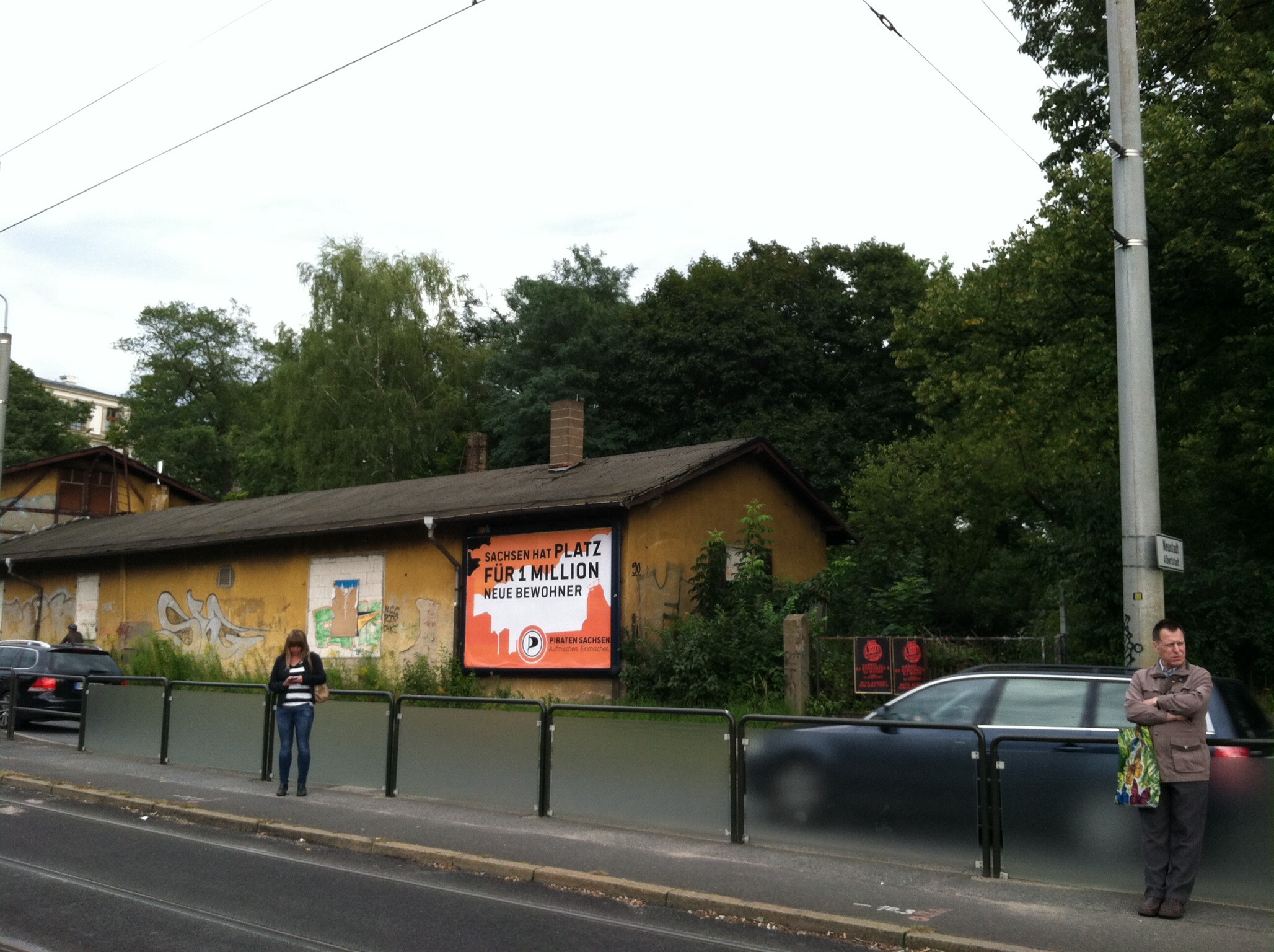
4. Sign indicating from the Pirate Party that there is room for another million residents in Sachsen, the state where Dresden resides. It also implies that mixing and matching population is good for Saxony. (tap up the scale to read text).

Party elections are coming up and Angela Merkel is scheduled to come to Dresden on Saturday. Unfortunately, I will be off before then, but I would have definitively gone to see her.

Photos below, from top:

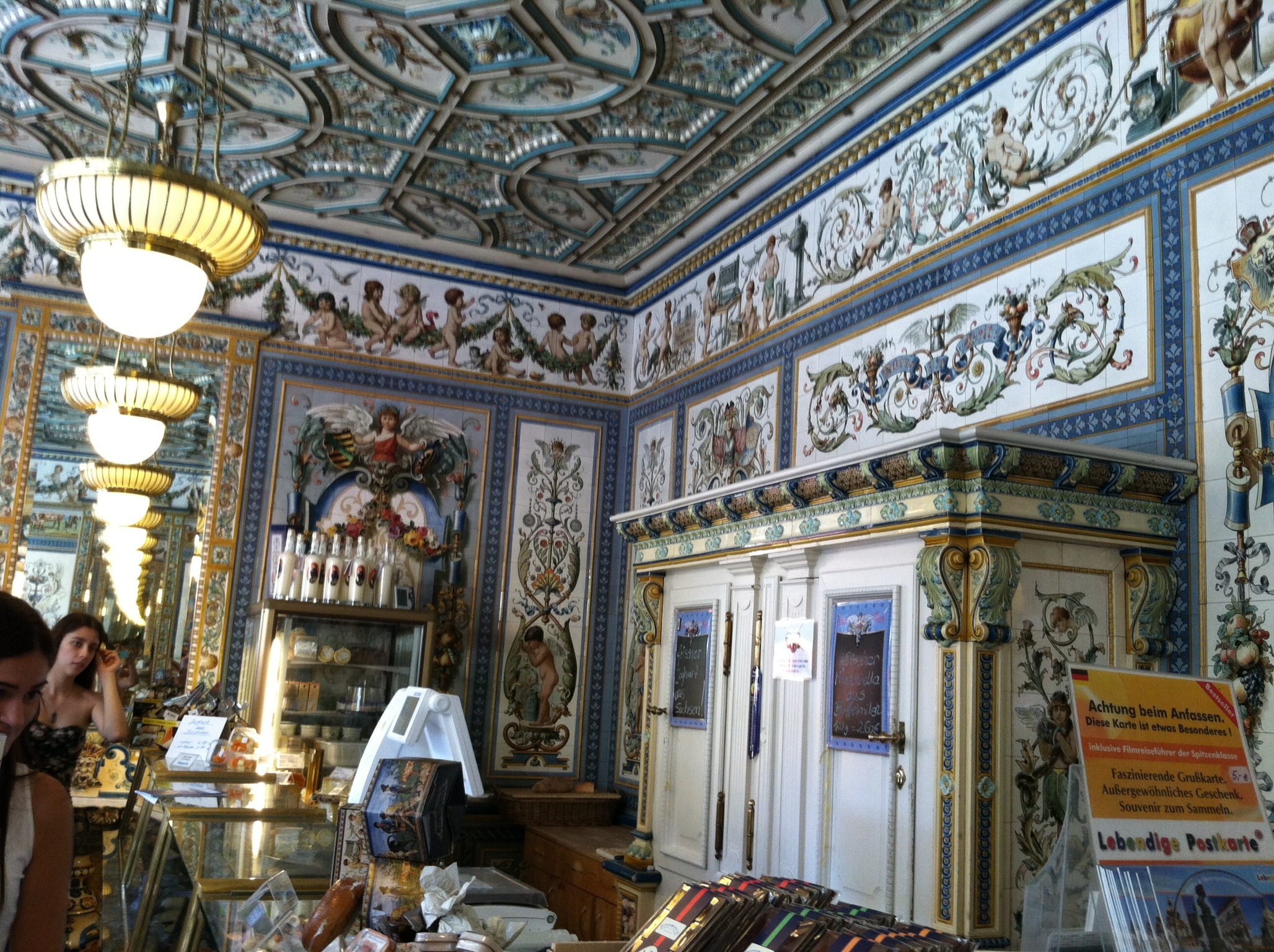
1. The Molkerei, a dairy and classic cheese shop that has been around for generations. The ornate decoration makes this a popular tourist stop.

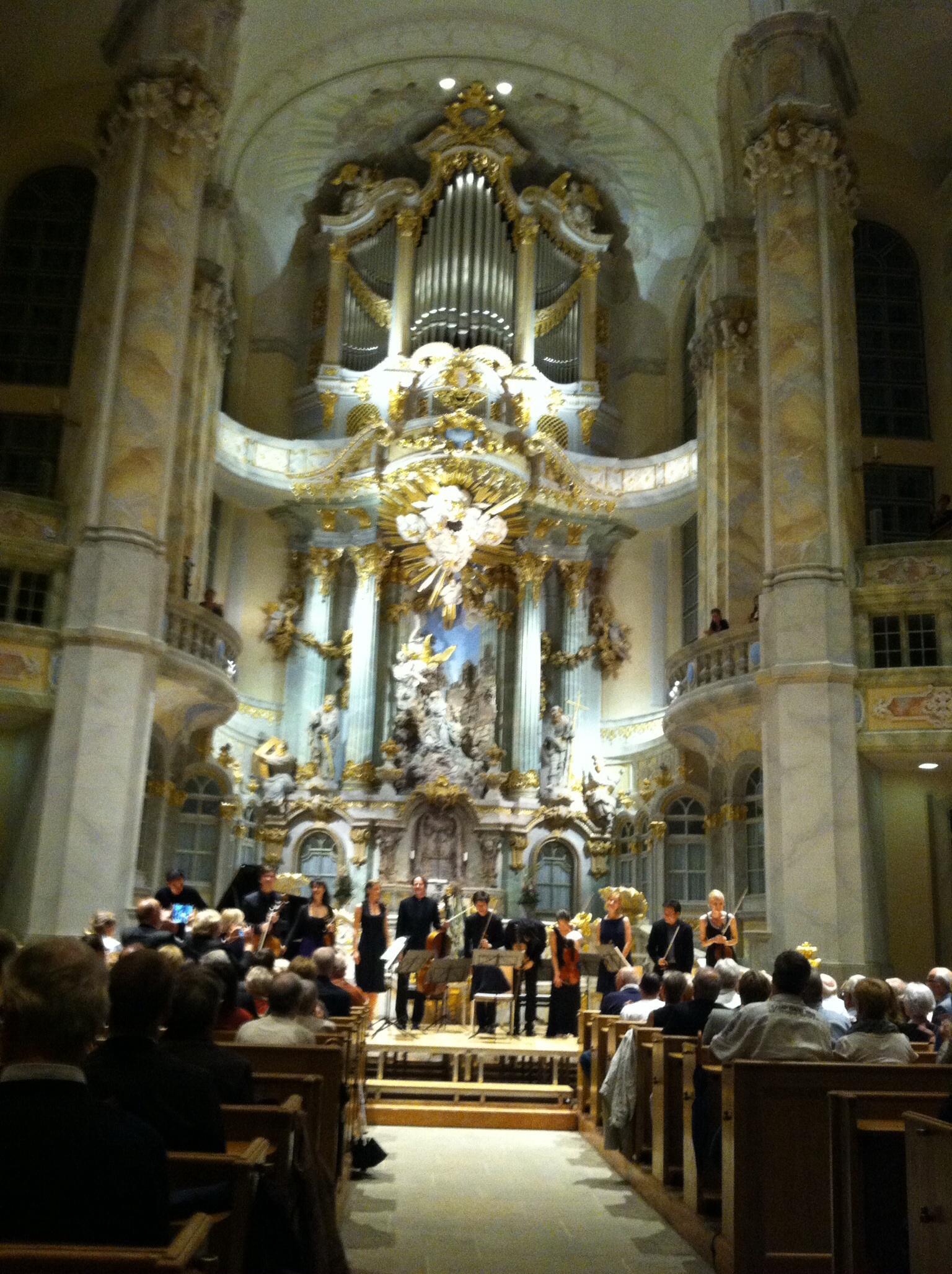
2. The interior of the Frauenkirche, where Helena and I attended a concert. Maria Baumer played the part of Bach’s wife in several readings between Bach pieces. The concert was sponsored by the Moritzburg Festival.

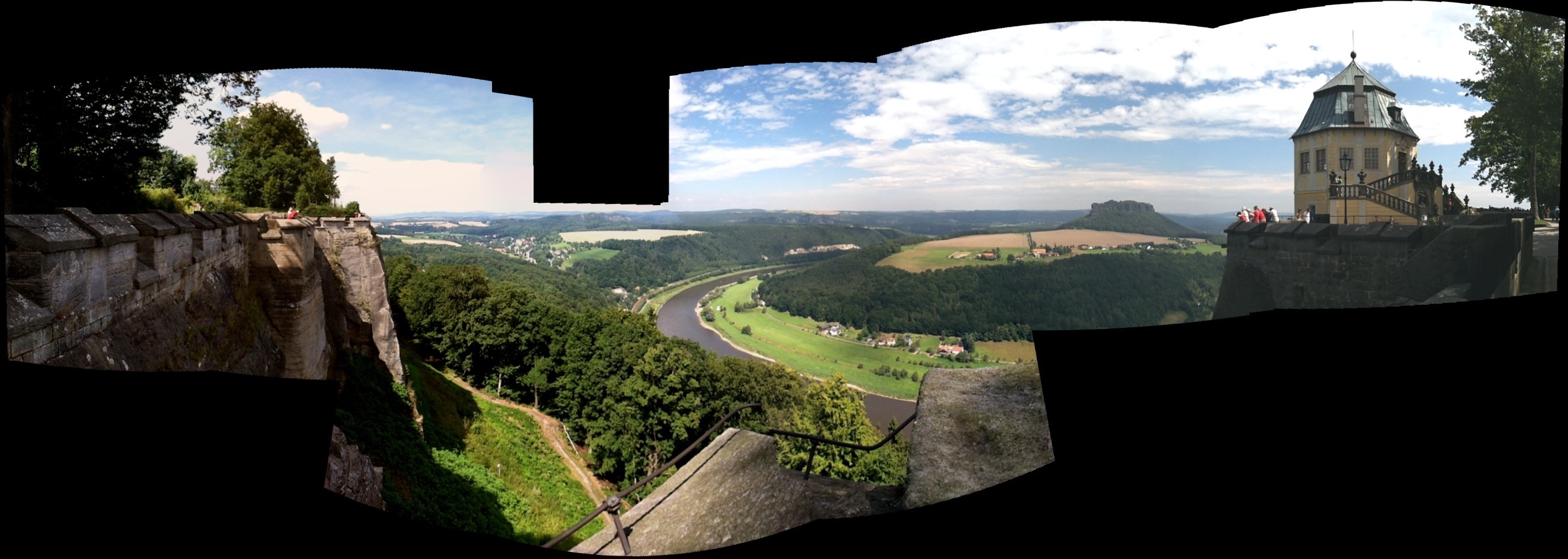
3. Another panorama shot of Dresden and surrounding area from the Konigstein fortress. Zoom up to appreciate the beauty of this area.

imageimageimage

Day 39: Sustainability and Transportation

imageimageimage

 Sustainability in Germany

Photos above, from top:

1. Older buildings utilized exterior louvers to provide sun shading for buildings to reduce heat gain. (Refer to lower bottom right of photo).

2. Customers return bottles at supermarkets and receive instant cash receipts. These can be used at the counter when paying for groceries.

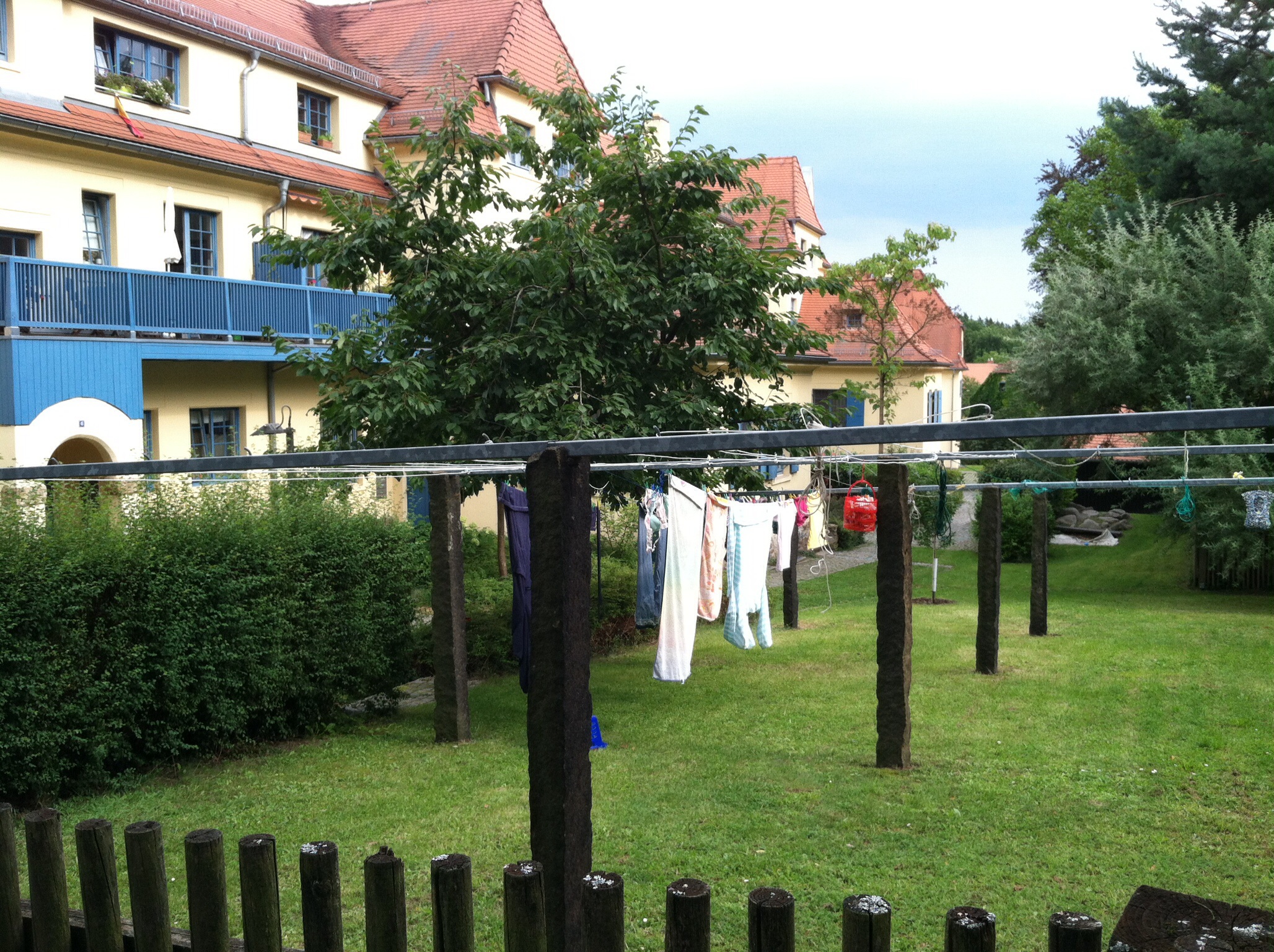
3. Photo from an earlier post (at Hellerau) showing how drying clothes outdoors has never really gone out of style in Germany, even in up-scale neighborhoods.

The only thing I didn’t see to any degree were solar panels, at least not as visible as in the Bay Area. Given the direction Germany has taken historically to provide steep roof lines for snow load control, it may be facing an uphill battle. The widespread use of penetrations for gabled roofs and attic windows don’t help matters. And there seems to be a lot of cloudy days here. 

Considering how Germany attempts to lead the world in sustainability and zero carbon footprint, this might hamper their reputation in solar energy development. Perhaps China has already pulled the carpet out from under Germany’s lead on industrial production of solar energy by now.

There has been a lot written about Germany’s endeavors to be sustainable, but it seems to come more from the traditional conservation methods than by innovative technology. Perhaps it’s not yet that evident, and it occurs in newer buildings. But for now, at least in Dresden, it hasn’t quite taken taken hold. Its historical use of reducing waste is a far better bet for the future than what the US is able to do for the time being.

Transportation

The Dresden transportation system is one of the delights in coming here. I have managed to get around the city and all the sights I have posted, with few exceptions. It’s safe, clean, and efficient. There’s respect and even affection for public transportation. Why can’t we get it together? 

Buses, cars and bikes are all in symbiotic relationship with each other here. You don’t do stupid things, wait for the lights to change, and minimize the impact on the environment. With taxes being out to good use, the Germans reap the benefits of their efforts.

Photos below, from top:

1. A bus shelter, that posts the full schedule for weekdays and weekends. It’s reliable, practical and clearly identified. Bikers often use the system and bike in between.

2. Interior of the tram system is kept clean and tidy to make it a pleasure to use and appreciate.

3. Window graphics indicate that areas near doorways are for wheelchairs and strollers.

4. The train system has been developed throughout Europe and thrives. Stations like this one up the street from where I live make it easy to get to virtually any point in Europe, or to regional spots. Safe, clean, and efficient.

image

>image

imageimage

Day 34(b): Fourth Eye Blind

image

image

image

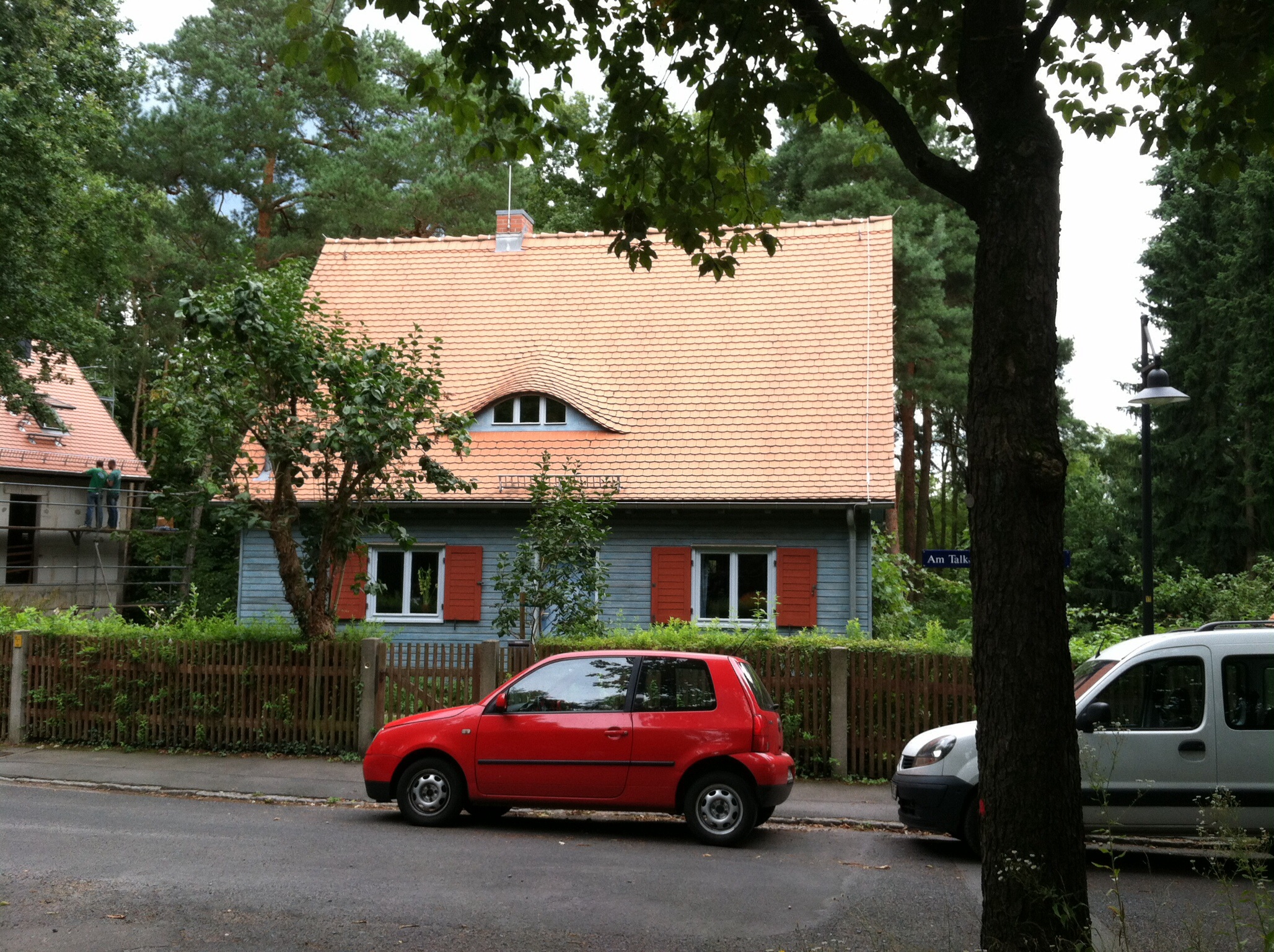
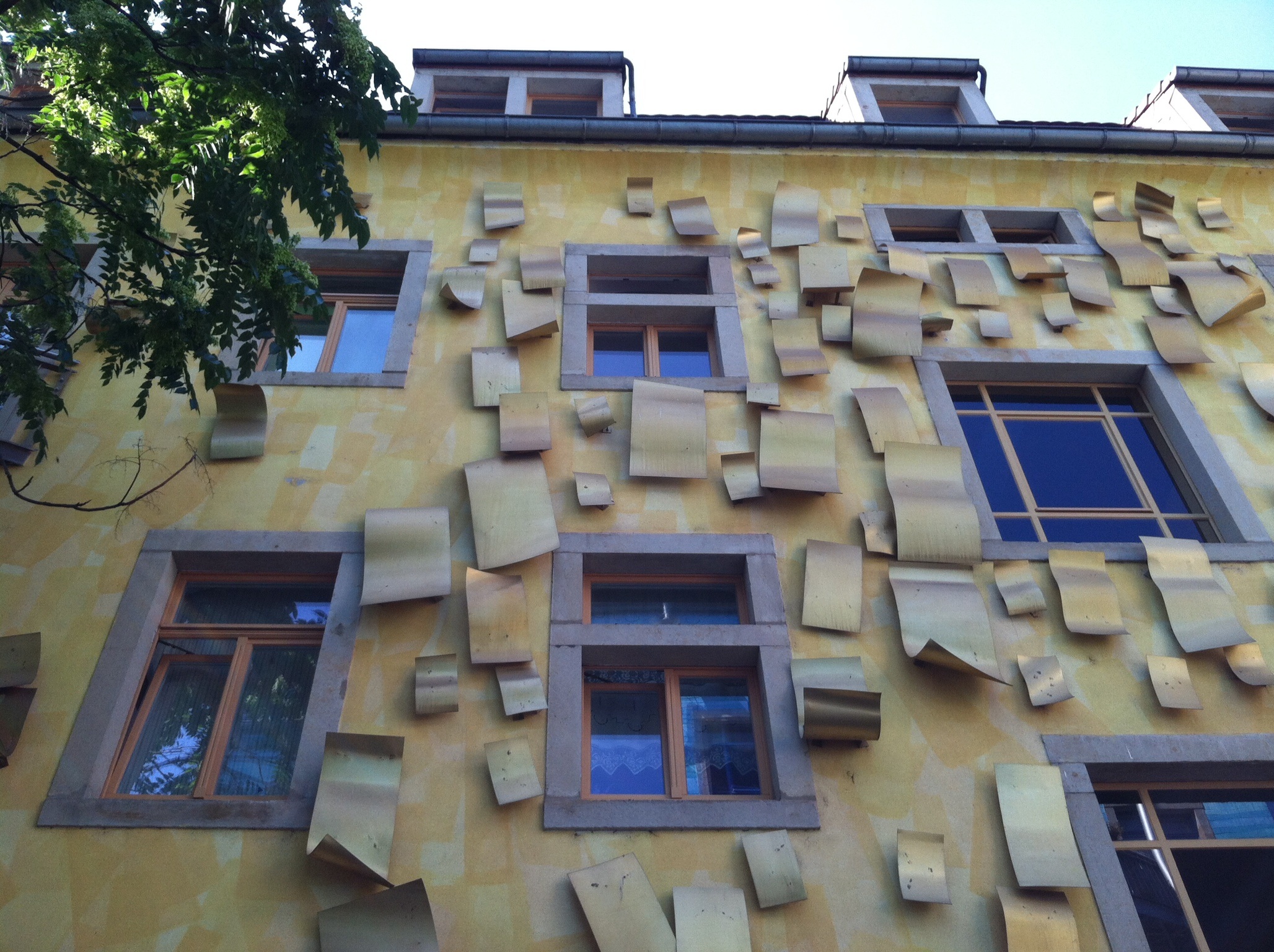
Ever since I discovered the blinking rooftops of Dresden, I got fixated on roof planes and how the German designers reconciled them. They do seem to take an inordinate amount of effort, load and space. My only conclusion is that the the tradition to go high and mighty has resulted in some of these new design dilemmas. The Protestant church steeples in every community make you feel as if you are in a throwback to Middle America. The Germans had problems shaking the dramatic effect of Gothic cathedrals. I am having fun going on scavenger hunts for these curious design solutions for pitched roofs. With only a few days before I leave I may have to wait for the next trip to Germany. I am including a few more roofscapes that intrigued me in Hellerau. This is for Pam, who came up with the idea of the blinking eyes.

Photos, top to bottom:

1. Four eyes. Don’t know if there are more than that, I am still looking.

2. One Eye. Proportion to roof plane seems crazy, but they really wanted that window there. But let’s not overdo it, they thought.

3. One Eye. Better version of previous post, just counting.

(In case you missed the previous one, check the Day 24: Third Eye Blind”. It was my first discovery of the blinking eyes.)

Day 34 (a): Hellerau Garden City

image imageHellerau has always been a romantic notion to me, but I finally was able to see it with a small group of students sponsored by the GI. It was based on an English town planning concept developed around 1910 in this idyllic “Dorf” a mere 15 minute ride along my tram line 8 north of Dresden.

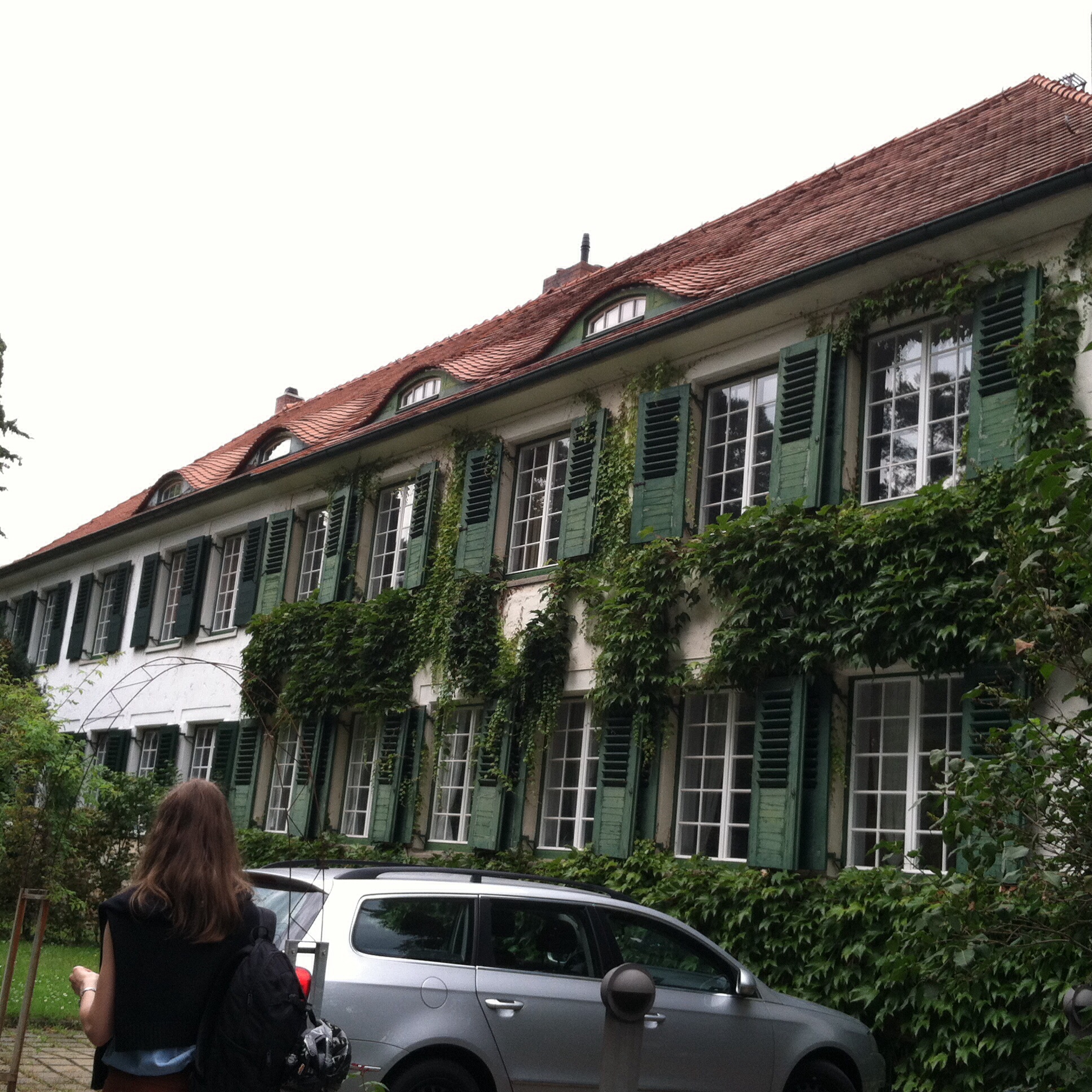
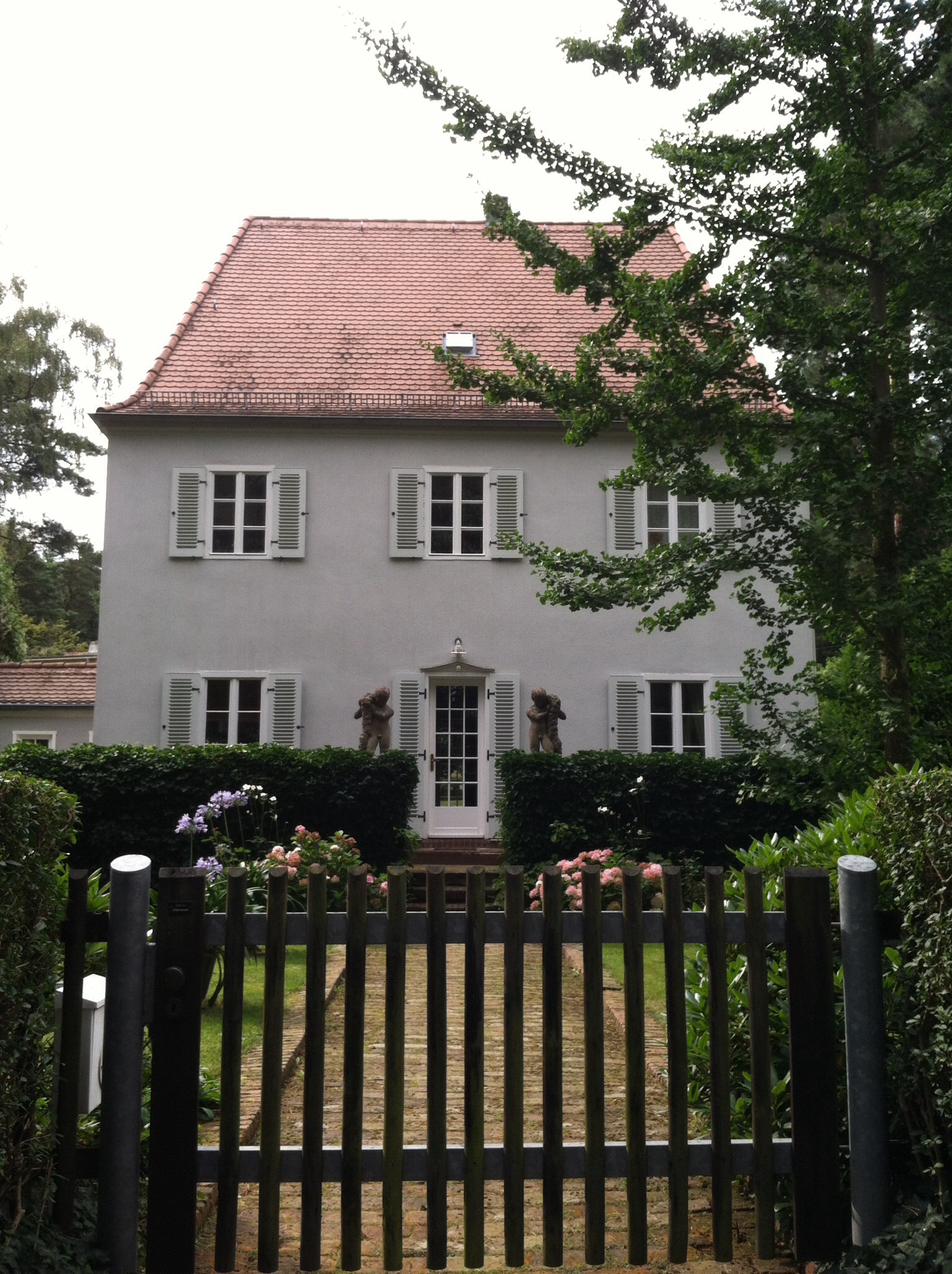
It felt a little bit like Marin or wooded Montclair, but of course, in the German tradition, extremely tidy. Everyone was entitled to a well designed unit, with plenty of open space, gardens for every unit, and community space. The buildings were well built and conceived, as evidenced by its condition today. There is the line connection to the city, but it looked like most people had cars to get back and forth.

The Werkstatt was intended to provide a community for Live-Work, obviously not a new concept. A furniture shop served as one of the mainstays for income. Today, it has been repurposed for artists and designers. Local temporary dance companies work in the community center and musical performances connected with the Dresden Music Festival are held here annually.

image image image

Photos, from top, down:

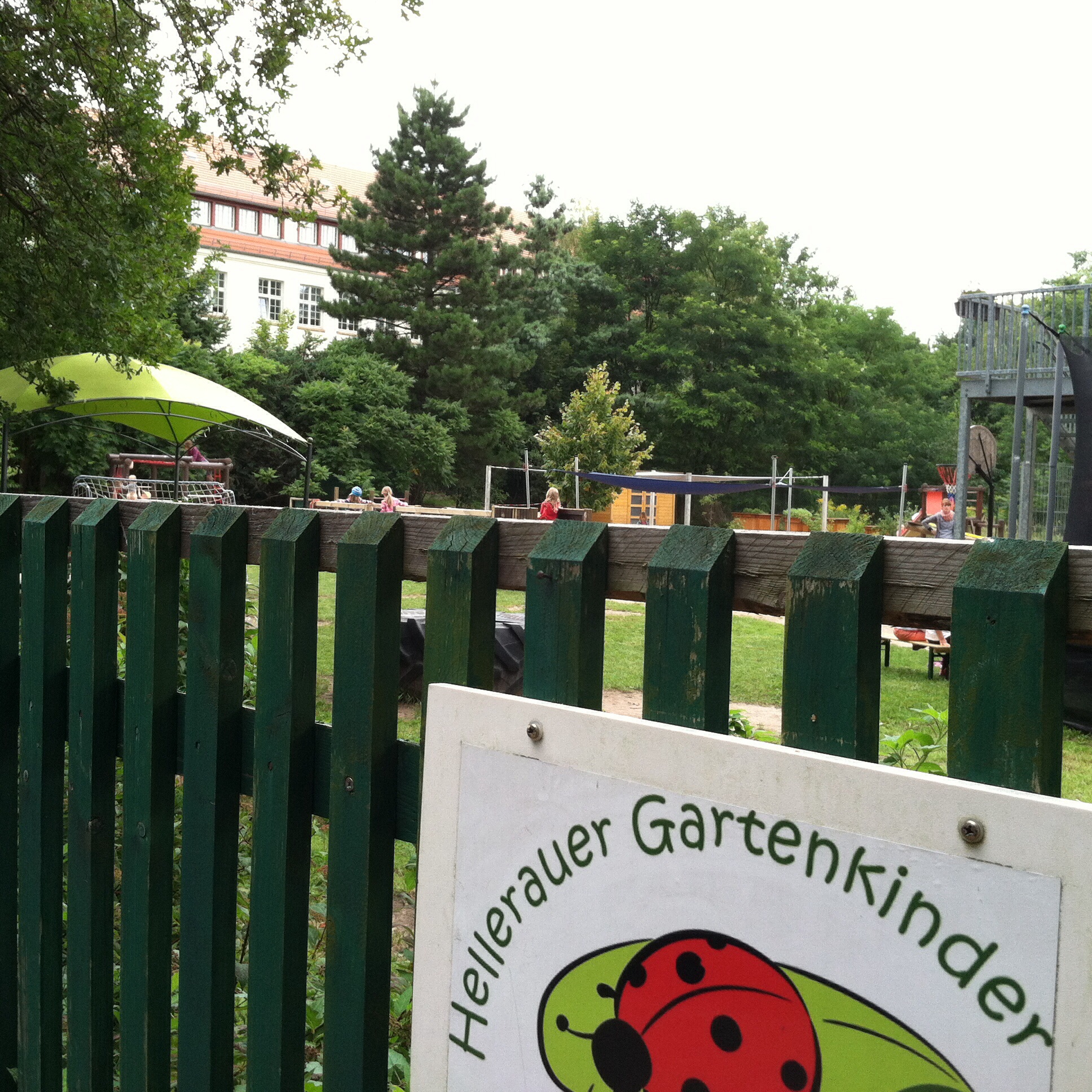
1. The new spin on what Germans coined for Kindergartens. They are, needless to say, well planned stages of life, with a lot of attention and loving care. These are still excellent models to emulate across the world.
2. Sustainability in action. This hasn’t changed from when the development was first built. Time for us to rethink our priorities.
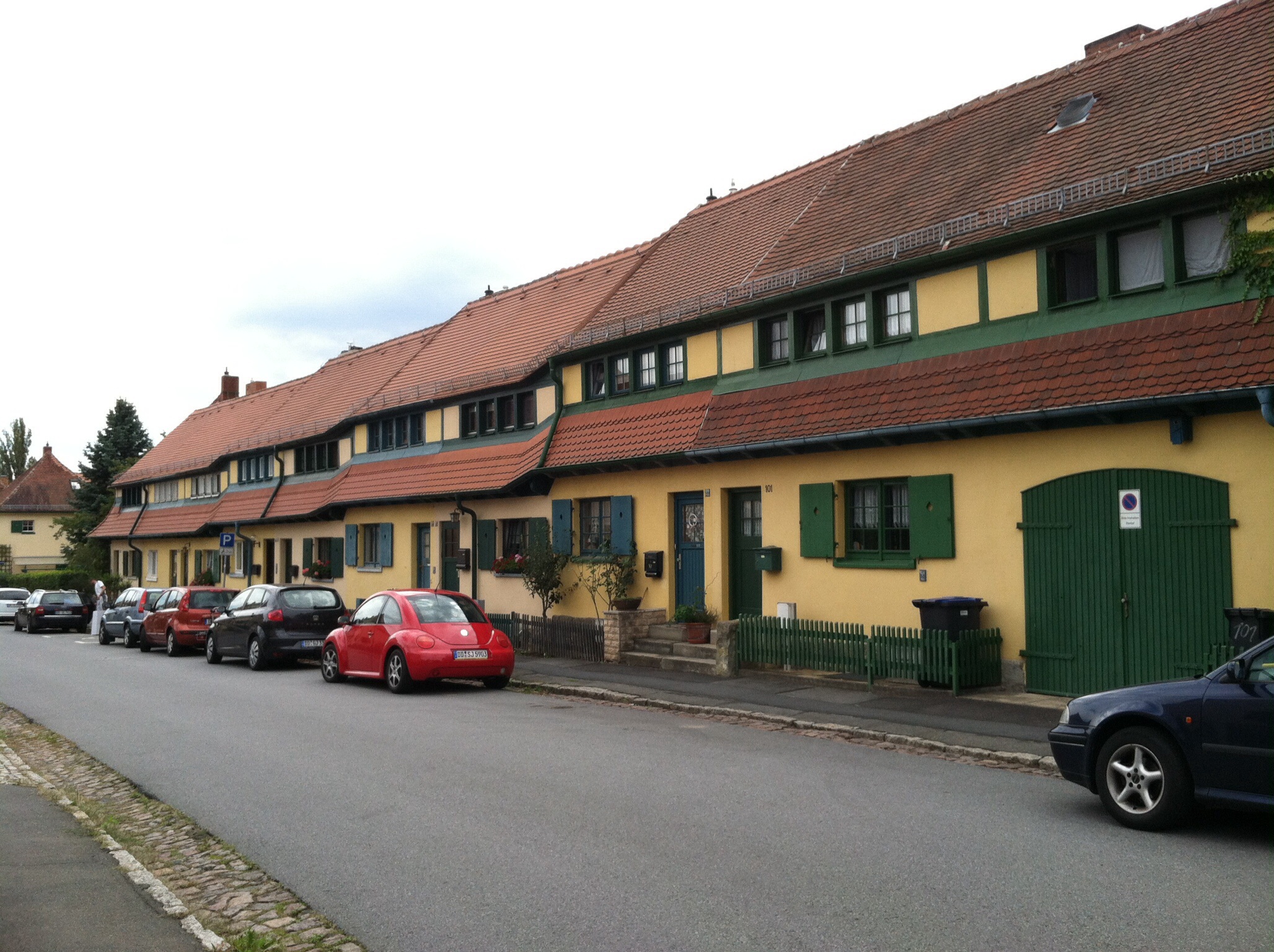
3. The first row housing development on a small scale, taken from the British, with more color
4. The Art Nouveau influence at that time is evident from the graphic lettering used on the Workshop for Furniture.
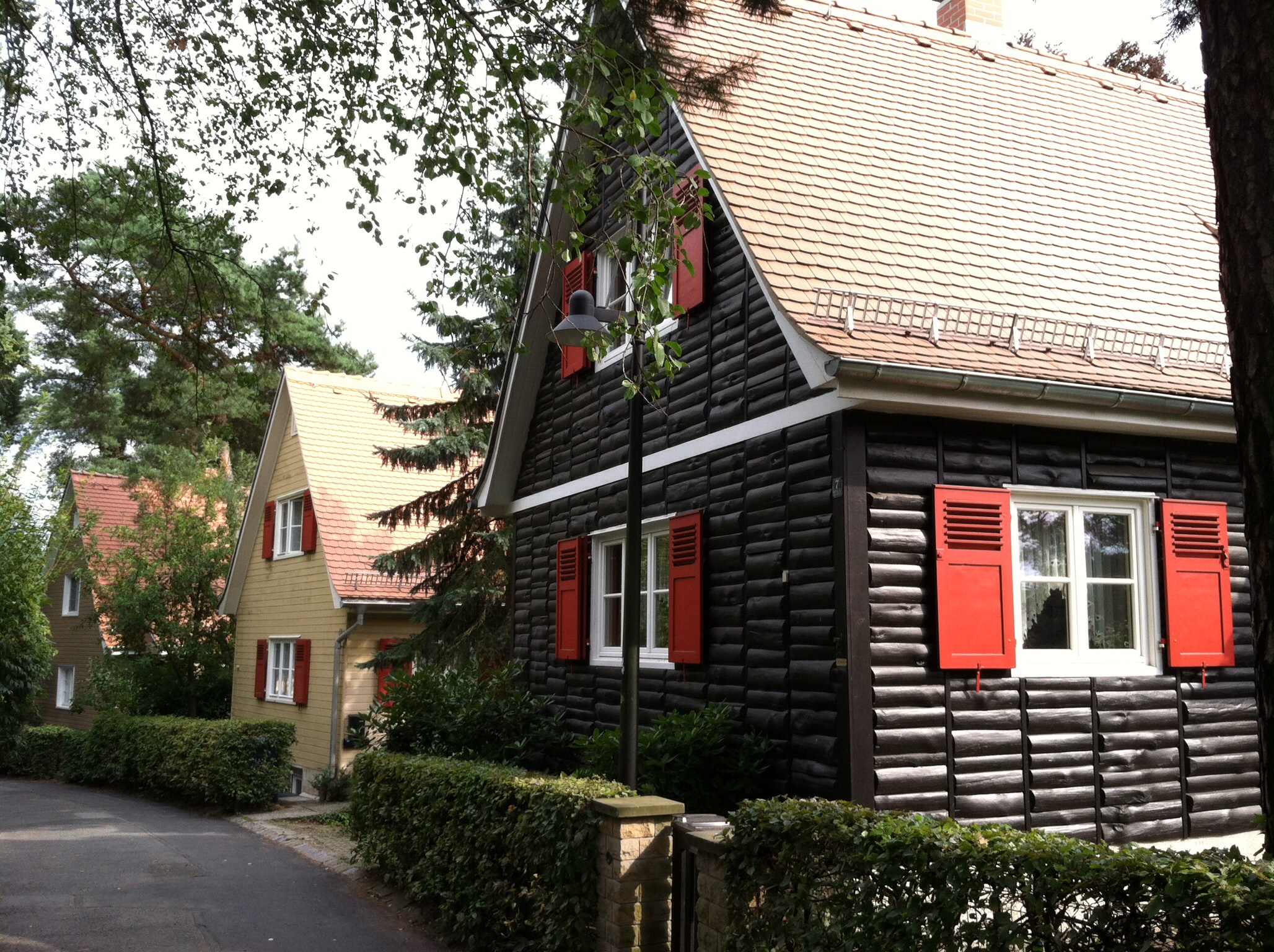
5. Individuality was allowed on buildings. While most were stucco plaster, this one utilized a log cabin concept with tapered logs, but stacked in smaller lengths in metal channels. This could have been a very efficient way to construct the exterior, and it still looks durable and easy to maintain.

For more information on Hellerau, check out http://www.hellerau.org/english/hellerau/history/the-garden-city/

Day 25: On the Back Street Where I Live

image image image image image image

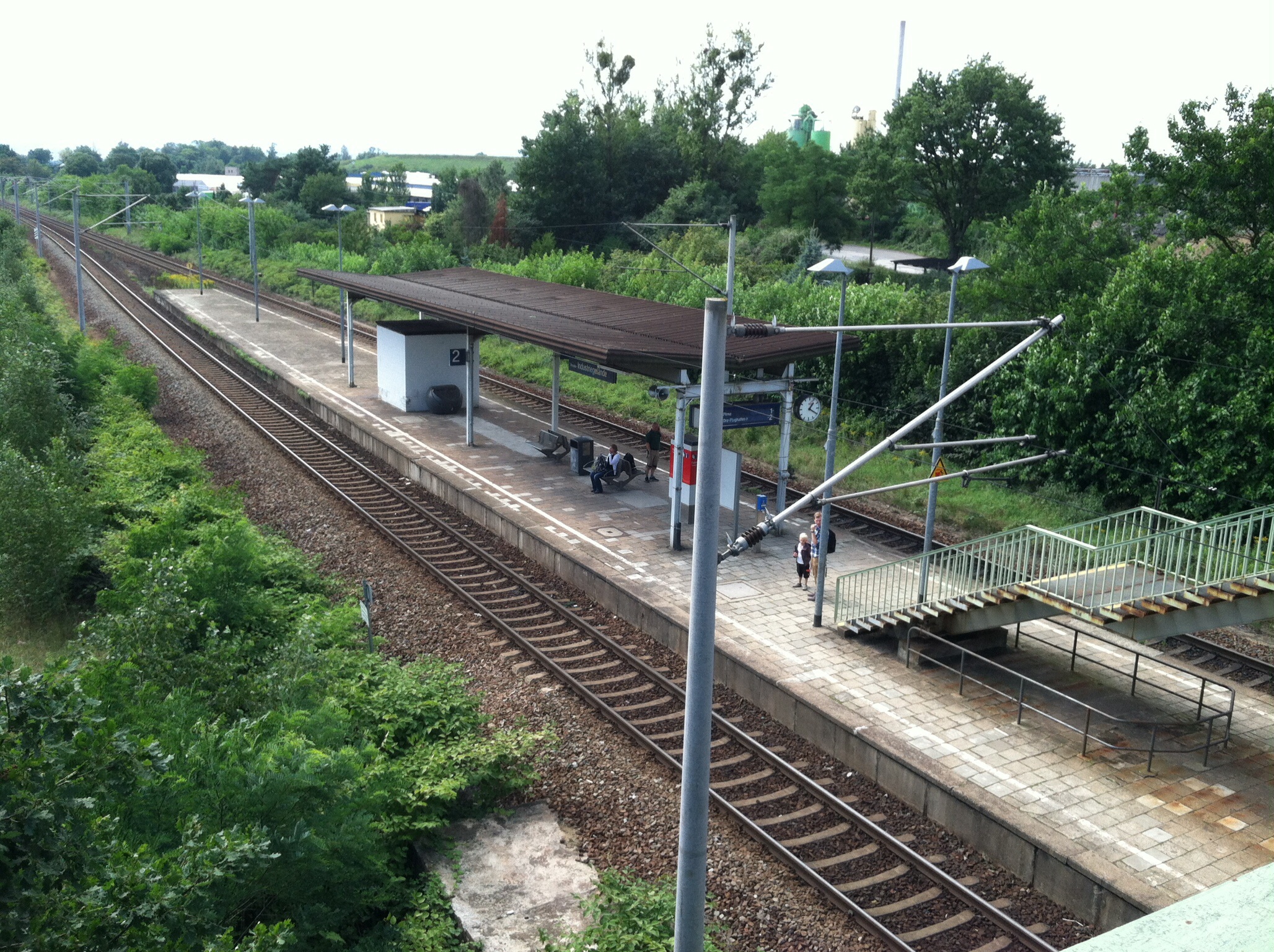
This isn’t sexy stuff, but I’ve been running around the neighborhood early in the morning and noticing a few things. The back street where I run is aligned with the railway line to the airport, a mere two or three stops away. Dresden is pretty small, so you can get from the center of town to the airport in about 20 minutes by train. My guesthouse is about halfway between stops.

I had noticed a lot of East German-like structures when I first rolled into town a few years back. They were pretty sorry and depressing. Well, they are finally being renovated. Thanks to my friend Hanne and the firm she worked for, they built the street where I run! The government also renovated the staunch old buildings–you can compare the before and after pictures. The buildings stand side by side with each other: one fully re-plastered with new storm windows, doors and foundations repaired, the other waiting for its turn. It’s an interesting historical comparison of two eras.
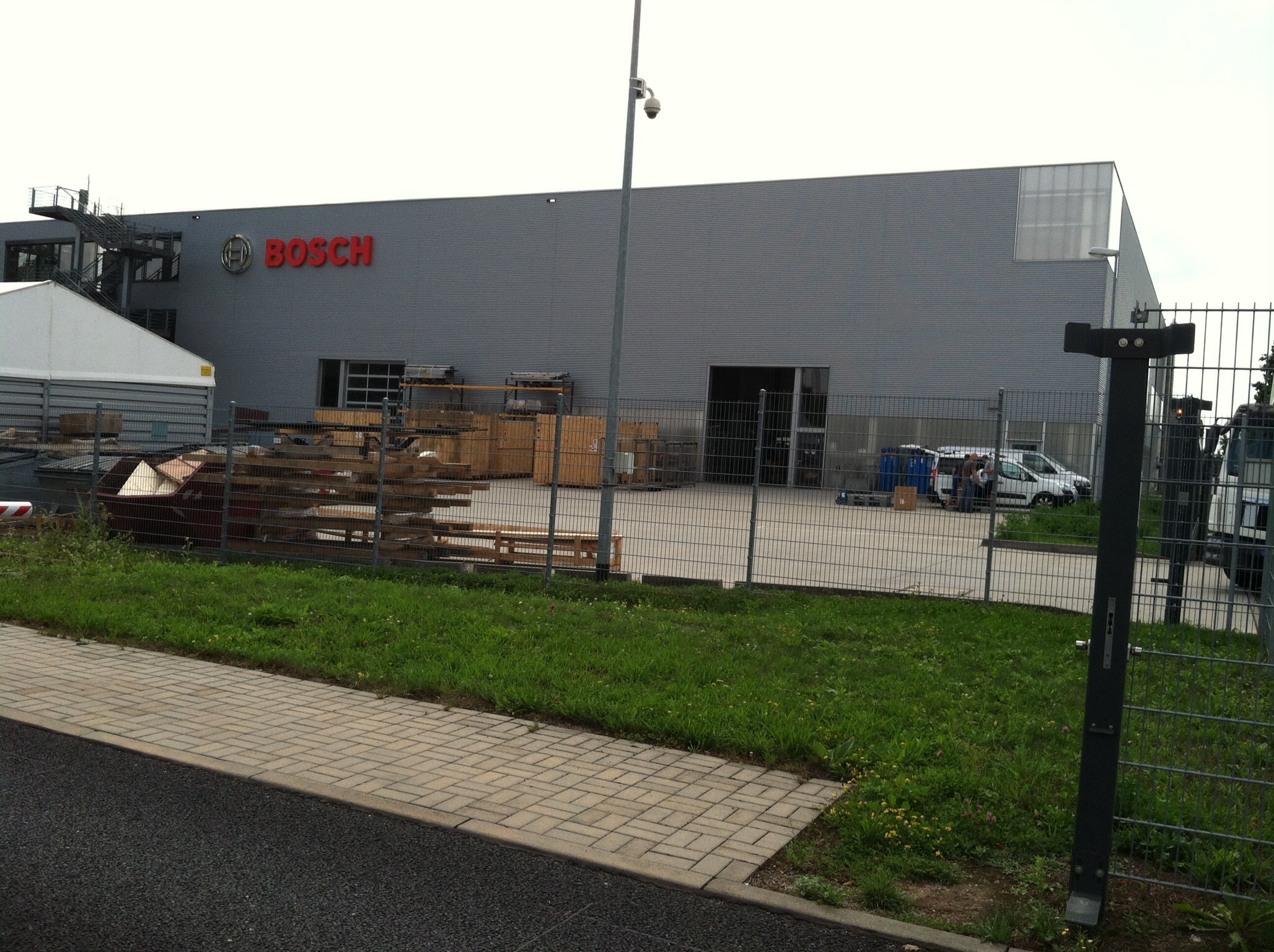
This industrial area includes new manufacturing and production facilities such as the Bosch pharmatech building adjacent to our guesthouse. The exterior to the guesthouse was renovated at the same time as the other buildings in (4).

Photos, from top:

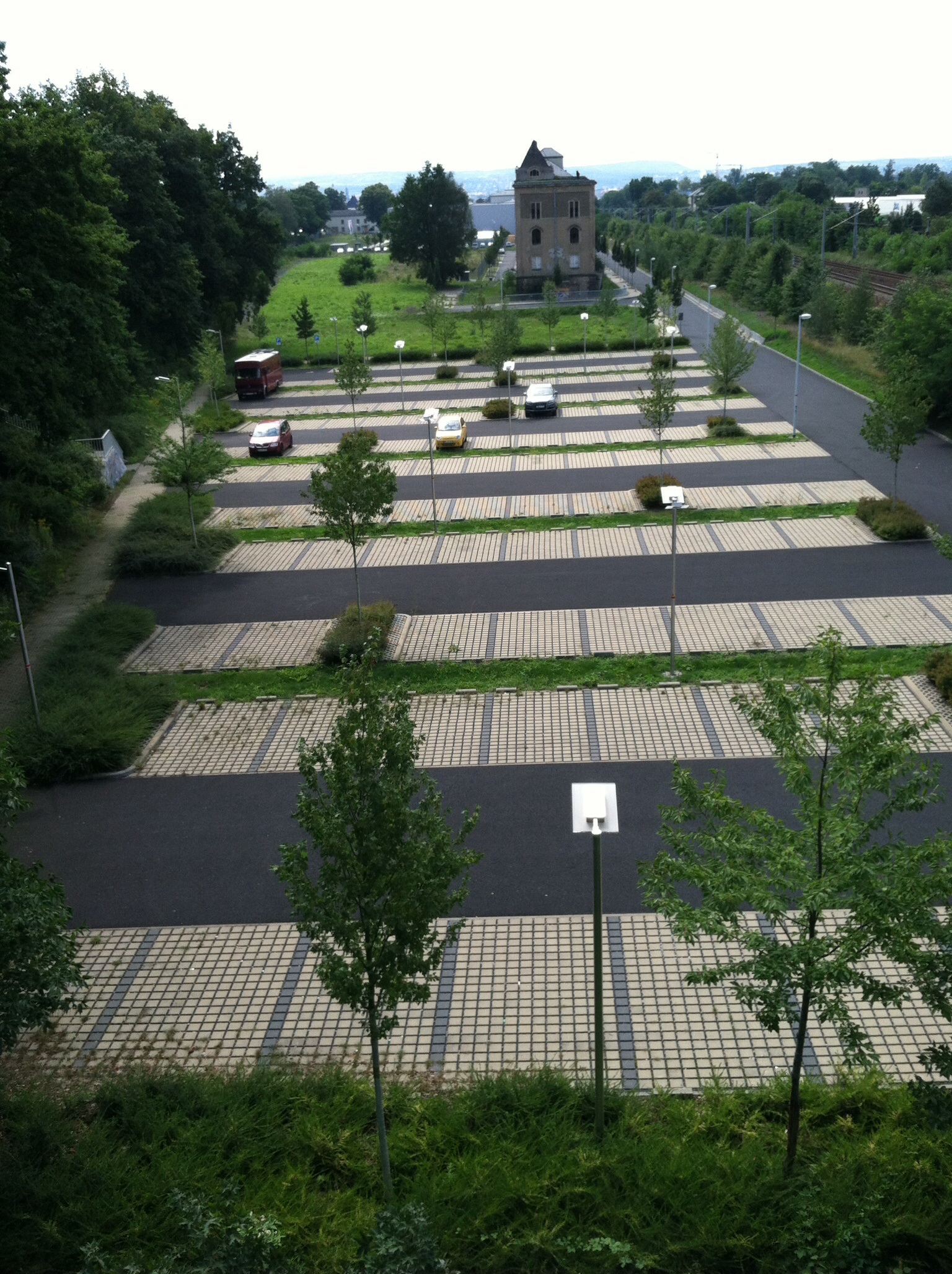
1. The parking lot for the Industriegelände stop. Germans are good at putting their words into actions. They provide means for water runoff and drainage in parking lots under the car park areas to reduce storm drainage problems. While we are trying in the US, there’s still a lot of lip service and no action. While this solution doesn’t provide full absorption across a large area, at least the runoff is reduced. The roadways still seem to need asphalt, the most economical and durable material.

2. The Industriegelände train station. I didn’t think the noise was acceptable at first until I realized it was the route that I had taken from the airport to the city. It seems to pass every 15-30 minutes along with other night trains. I actually find the whirr comforting now.

3. The “Before” of a delapidated and unoccupied building, waiting for funding and a purpose.

4. The “After” version, ready for another 50 years of use. Buildings have good bones in Germany. In the book “the Orientalist” that I am reading now, the Germans were reknown for building solid cellars in their colonial holdings. This is a good example of the building’s stoutness and longevity.

5. The Bosch Pharmatech facility next to our guesthouse.

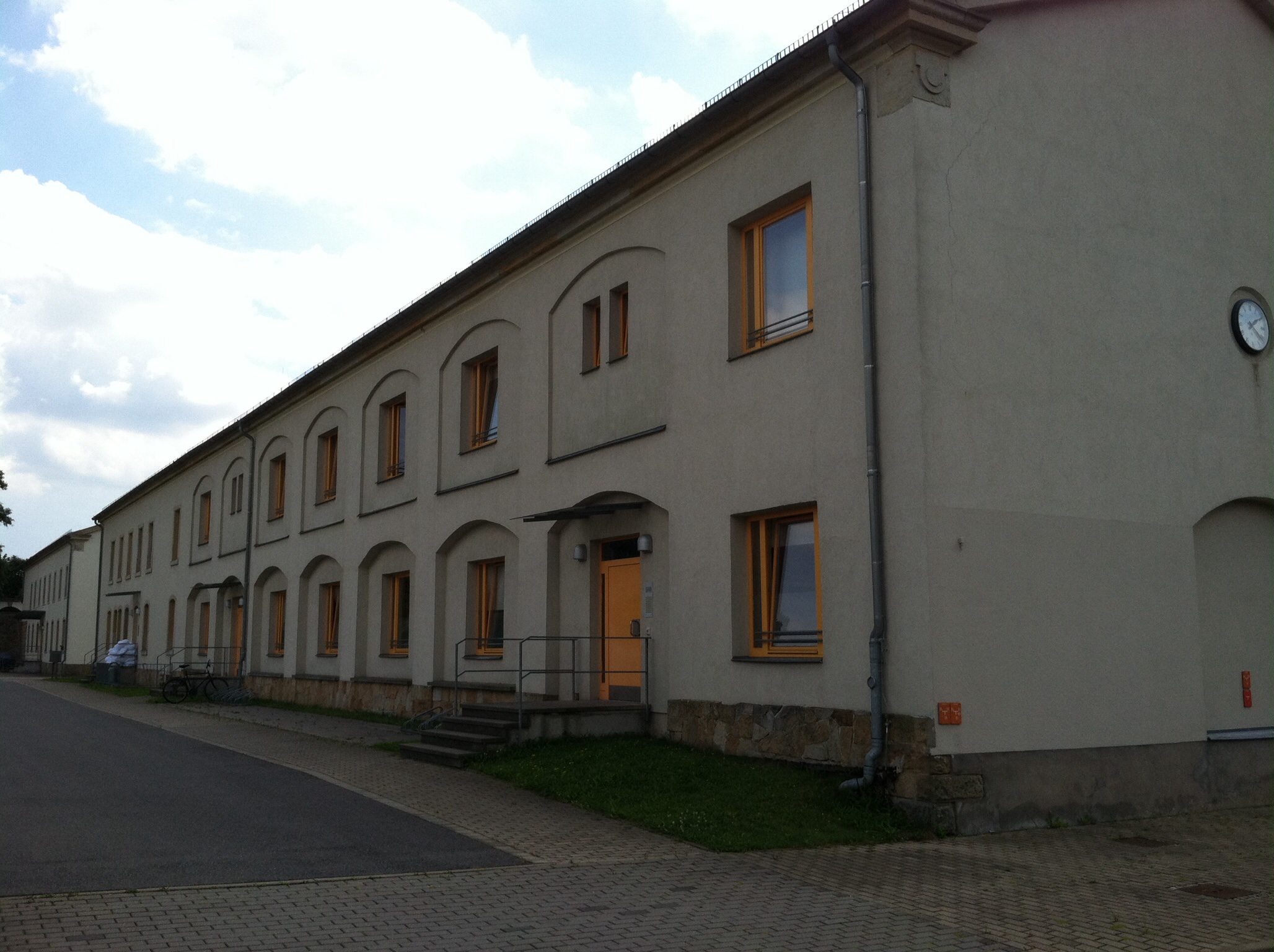
6. The Former Russian Military buildings used by the Goethe Institute for students.

Day 24: Third Eye Blind

imageimageimage

The Germans are among the best at designing rooftops of any people in the world. They seem to have mastered drawing your eye beyond the structure to the vanishing point leading to heaven. Maybe they had a lot of practice at it building all those Gothic cathedrals, where they pushed the boundaries of structure and visual drama. One of the tallest cathedrals in the world at the time it was built, Köln Cathedral, could certainly be attributed to German ingenuity and of course, its commitment to Christianity.

For residential buildings, what they do with those steep roofs besides letting the snow slide down in the harsh winters and how they manage volumes of space inside become interesting design problems. Many of the roofs are laden with gabled windows, dormers, and an encyclopedia of architectural terms that could keep a student of architecture googling all night (Julianne make note).

We toured Loschwitz today, a lovely upscale neighborhood in a very elegant part of Pre-war Dresden. Take a look at a sample of my photo survey of roofs. How clever can you get, satisfying the interior functionality and the need for light with the visual balancing act of the exterior?

Photos, from top.

1. One potato

2. Two potato

3. Three potato, blind?

Note: for a list of the tallest buildings in the world at the time they were built, including two in Germany, see http://en.m.wikipedia.org/wiki/List_of_tallest_buildings_and_structures_in_the_world

For more about Loschwitz, see http://en.m.wikipedia.org/wiki/Loschwitz

(Notes on the history of Luisenhof, the restaurant where Hanne and Jens took me last night, is covered in this article).

Day 21: Proschwitz Palace Picnic

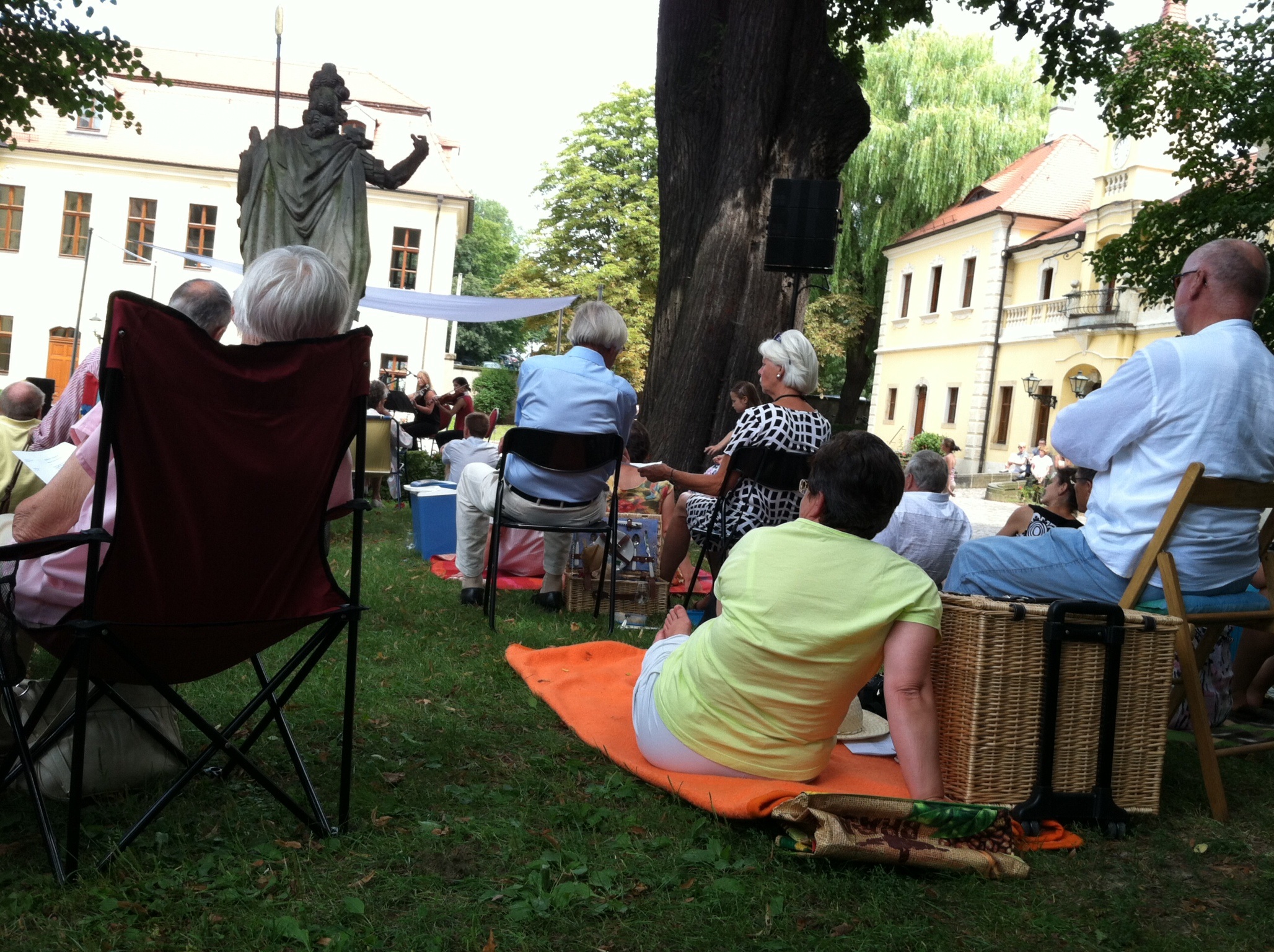
With an entire day free, I got brave and decided to go by myself to one of the outdoor classical music performances so ubiquitous in this area. It was part of the Moritzburg Festival for international music students and is directed by Jan Vogler. He also directs the annual Dresden Music Festival that Gee Kin and I attended the past three years.

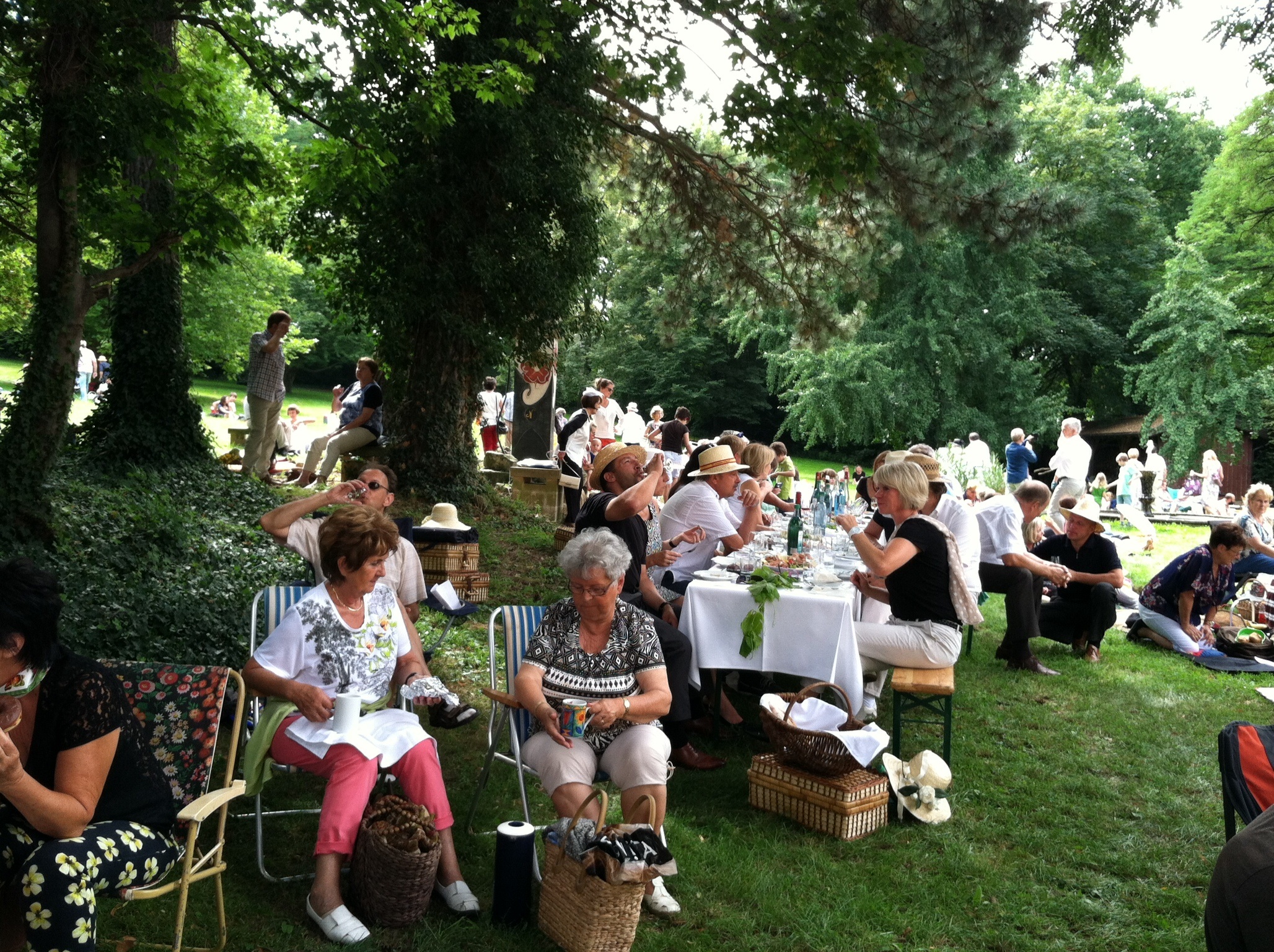
Everyone was encouraged to bring picnic lunches and when they say picnic, they take it to a whole new level. Granted, it was an older crowd, but each party had a fully equipped picnic basket complete with wine glasses. They did sell bratwurst on buns that took the standard back down but it was a definitely well-heeled crowd. I guess the 25€ entry fee left a few behind at the door, including me.

I tried negotiating in my lousy German that the reason I deserved a discount is that I got lost getting there and therefore couldn’t help it if I was a half hour late. I got passed over to the directrice and after presenting her with a choice of 50€ or 10€, I managed to convince her to take the latter. She looked exasperated, but didn’t want to disrupt the performance that was within earshot of the ticket table.

image

imageimageimageimageProschwitz is a palace on a hill near Meissen, about an hour from Dresden. I walked over 3 miles in each direction to the top of a shade-starved hill and back down in the blazing heat. The shady lawn was very luxurious. I would have paid the 25€ .
image

image

Photos:

1 and 2. Shots of crowd, with a fully outfitted linen table in the second picture.
3. Typical couple in foreground and upper crust couple behind them. Note proper picnic baskets for both, a prevalent theme here
4. Musicians under the canopy
5. The back yard of the palace
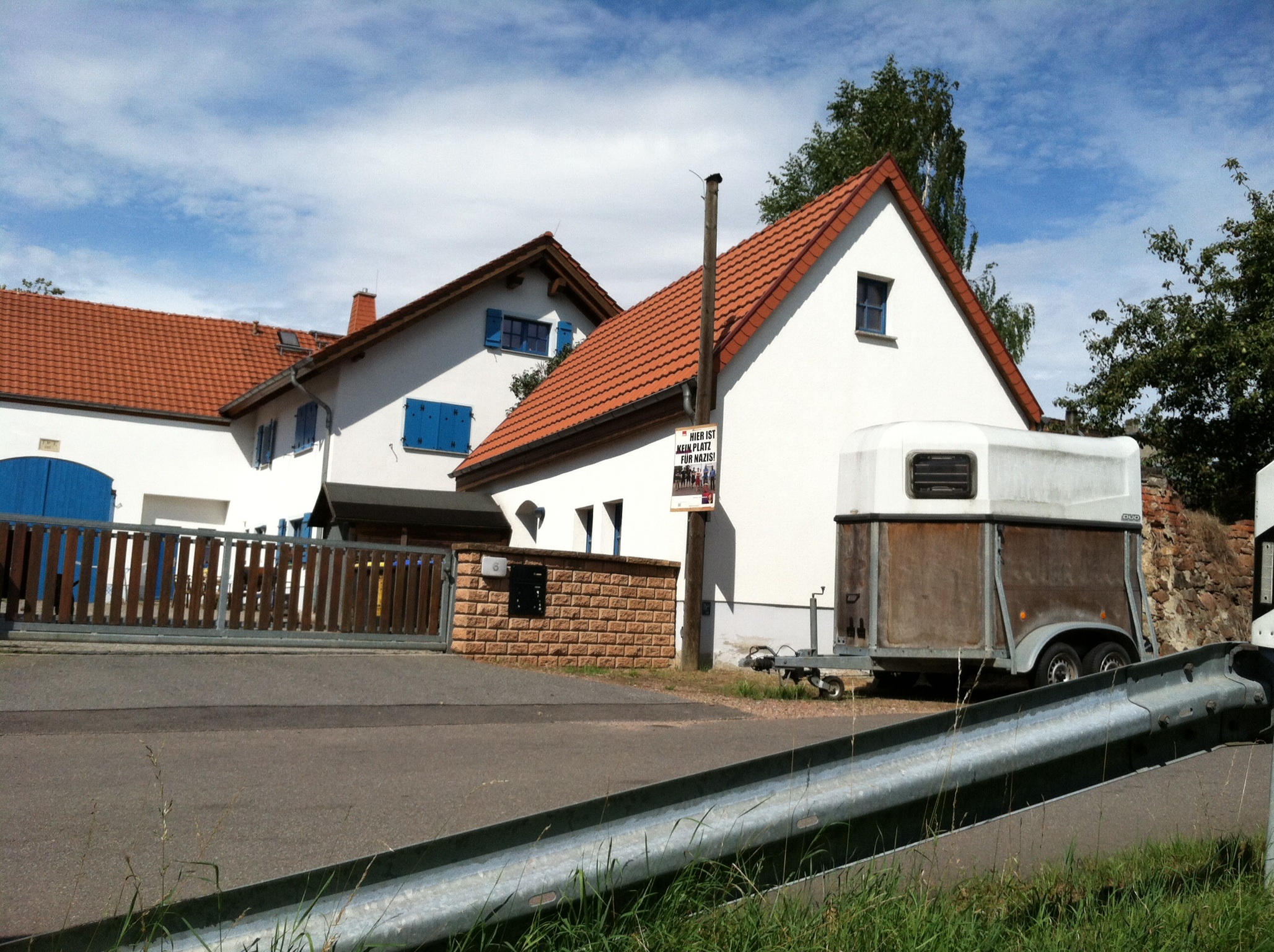
6. Sign indicating “Nazis Not Welcome Here”–evidence that the problem exists in the wine growing area around Proschwitz where I trekked
7.  View of the city of Meissen in the distance from the train station