Tag Archives: Performances

FIFA Frenzy+Opera Obsession–Russia 2018

You may think it odd for an opera fanatic to get obsessed with the opposite end of the world–football. But the stars align when Russia hosts the FIFA 2018 World Cup and kicked off the event with a gala laced with opera divas!

Traveling around the world last year to Morocco, Peru and Iran has certainly opened up my perspective of the world. The 2018 FIFA World Cup matches allow me to see the faces of the fans and players that I yearn to see again. I researched the games that these countries play against others, but the most exciting one for me was a direct match between Morocco and Iran. Iran won, but it struggles to stay in the running.


Following the first two weeks of matches, the quarter-finals, semi-finals and finals will complete five weeks of football frenzy. Not having paid much attention in the past, I am indulging this year in learning about the sport and why the rest of the world outside America goes so fanatical over the WC. I love the international spirit, but do see alot of aggressive, brutal brawls on the field.

No one appreciates a female version of commentary on sports, but if you are like me–it’s a chance to curb curiosity and to digest a new topic. What better way than to experience the best, in all its gore and glory? I am not sure that after American NFL football concussions and brain injuries whether soccer will be the next culprit, but injuries do seem to come with the territory and are suppressed.

Here are a few screen shots I took from instagram and TV during the first match between Iran and Morocco.


There’s still time to see three more weeks of five, so don’t be discouraged if you missed the first couple of weeks. You can see some of the matches in the U.S. on Telemundo, Fox 2 or on Fox Sports 1 (FS-1) if you order live-streaming from Sling, Hulu, or other streaming service. Here’s a link to the TV schedule and matches:

Click to access WC18_CALENDAR_V01.pdf

As an interesting contrast, the Russia 2018 Gala concert was telecast in Red Square at the beginning of the event. My two favorites, Anna Netrebko (with hubby Yusef Eyvasof) and Russia’s new ingenue Aida Garafulina, highlighted the Red Square broadcast, along with none other than Placido Domingo and Juan Diego Flores. Denis Matsuev, a concert pianist, hosted the event and Valery Gergiev, the conductor who discovered Anna Netrebko, were also primary performers at the event.

In order to access the full video for the gala, go to

The event was sponsored by the Russian government so you should be able to enjoy it free of charge, thanks to Russia’s devotion to opera and football!

Pavarotti, Domingo and Carreras also promoted opera during several past World Cups, so the concept of combining opera and football is not new. Only in the U.S. are we so out of touch with what the world prefers. Maybe it’s because we aren’t in the picture, being as brat-dominant as we often are.

This was Russia featuring its best, and opera was the answer. While opera is not as wildly popular elsewhere, Russian opera has some of the highest number of performances in the world. I did a bit of research and was not surprised to find that Germany has the highest number, with Austria at the top of number of performances per capita population.

The website operabase.com has a great resource for statistics like this. You can find it at:
http://operabase.com/top.cgi?lang=en&splash=t

By the way, this is a great website for finding all the artists, performances, and upcoming festivals throughout the world. I use this website on a regular basis to research my travel plans around opera performances.

Of course I am still saving my support for Germany! I’ll be in Munich during the finals, so secretly hope that they will make it again this time after winning the World Cup in 2014. It will go crazy in Germany while I am there if they win. If not, I’ll be able to settle down and learn some German!

Don’t forget to tune in starting on July 8, when I arrive in Munich for a month there. After that friends from Italy will meet Gee Kin and me for a week in Hungary and Austria. We fly direct from Salzburg to Guangzhou (yes!) for a week after that, then to Korea for a few days before returning back to SFO at the end of August. This itinerary is a slight deviation from the World Trip2018 posted, as we decided to forego a hot week in Italy for a hotter drippy week in Guangzhou to do some family research.


Isfahani Style?

Isfahan represents one of the great architectural cities of the world, and now I know why. The magnificent scale of site planning, building design and decoration are fully integrated. Many of the civic buildings surround what used to be a polo field and display the pride and beauty of Persia. (Yes, Persia and Iran is used interchangeably).

In the 16th Century, the Safavids defeated the Ottomans. During this triumphant period, Shah Abbas developed this square, which is the largest in the world. Islamic art and architecture flourished with distinctive elements. The public Mosque with twin towers dominates one end of the square. The architect’s signature is written on a tile discreetly placed to the side of the building. It avoids the front face and competing with the orientation towards Mecca. If only all architects were as humble!

After designing and building the Mosque, which is now a UNESCO World heritage site, the architect went away and returned after six months. He managed to convince the king that he was waiting to see whether the massive structure, with all its solid stone, brick and tilework, would cause settlement. (Yeah, right!!)

Everyone was relieved that it hadn’t, and the architect could still get his tea in Isfahan. Maybe the architect and structural engineer for the Millennium Tower in San Francisco were taking their sabbaticals before they got the bad news.

To the side is the private mosque, known as the Shah’s mosque. Daylighting illuminates verses on walls. As the sun rotates and casts light on various exposures, appropriate poetry is spotlighted naturally. The inside of the dome is also decorated with flecks of gold to cleverly simulate a spotlit tromp l’oeil effect.

This is only a glimpse of the many beautiful buildings with intricate floral tilework and awe-inspiring domes that are signatory to Isfahani architecture. The Shah’s Palace contained a music room with deep cutouts that made you feel as if you were inside a gigantic violin. And the Entertainment Center for the Shah displayed beautiful period paintings. While depiction of human figures was not allowed, these paintings represented non-Muslims such as Georgians or Indians. Some faces on the paintings were later marred or removed.

Persians enjoy strolling in the world-famous gardens built on the desert oasis and along the Zayandeh River. Sadly, the river is dammed to provide water to Yasd and farmers in the desert and as a result it runs dry. The Khaju Bridge that originally spanned the river is used as a leisurely stroll for Isfahanians. Local singers gather under the bridge to spar with other talented folk opera afficinados.  Here’s a short video of one of the talented regulars:

While I normally focus on historic architecture and museum artwork, this trip has engaged me in taking more photos of people in the streets. I have not been shy about asking for posed photos of strangers, because they are universally handsome and graceful in their poses and demeanor. You can’t help but want to capture some of this spirit that delights visitors to Iran and endears you to the people.

Nippy in NewYork

Coming to New York in the middle of the winter sounds like a crazy thing to do, but we did. It started as a nippy 18 degrees in New York, but so far it didn’t deter any plans or ability to walk outdoors. In fact, the noticeably fewer tourists, being able to get into restaurants and museums easily, and bargain hotel rates were all incentives for risking unpredictable weather. I came with my sister to show her all my favorite sights that include the Highline, the Mighty Mets (Metopera and the Metropolitan Museum) and the Museum of Modern Art (MOMA).

We power-walked the first morning from Midtown Manhattan and bee-lined down Third Avenue to Balthazar (shown on previous posts) for a brisk three-mile stretch, then made a quick stop to see the 911 Memorial. The fountain, a bottomless pit, was a sobering reminder of that fateful day that changed America and the world forever.

The new highrise developments in the area are stunningly beautiful, including Calatrava’s Transportation Center (also in header above). We headed over to the Highline afterwards for another short walk from 23rd to 34th Streets. Being able to walk everywhere is heaven, and staying in Midtown Manhattan makes everything all the more accessible. We clocked an average of 5-7 miles per day, so felt alert and energized.

My dear friends Lisa and Dick, who have been residents of NYC for over 35 years were ready to assist with event planning.  We started with dinner at Le Bateau Ivre downstairs from the Pod Hotel, tasted wine from the Chef & Sommelier glassware they brought to show us, then met the next evening for opera. Lisa was a bit skeptical of long, drawn-out operas that last well into the night, but the two short, hour-long verismo operas Cavallera Rusticana and Pagliacci were perfect to convince her that opera is a worthy investment.  The music is among some of the most beautiful in opera, so there wasn’t much convincing to do.

Starring Roberto Alagna in both operas, they were emotionally satisfying and the music was glorious. His performance was bright and powerful.  The story about a vaudeville troupe is a play within a play. Canio, the clown, whose wife is in love with another man, must perform his comedy act for the audience even though he is heartbroken inside. In an interview with Roberto Alagna, he commented on how relevant the story is to opera performers, but how unique it was to be sharing the lead roles with his real-life wife, Aleksandra Kurdak. (She played Nedda, Canio’s wife).

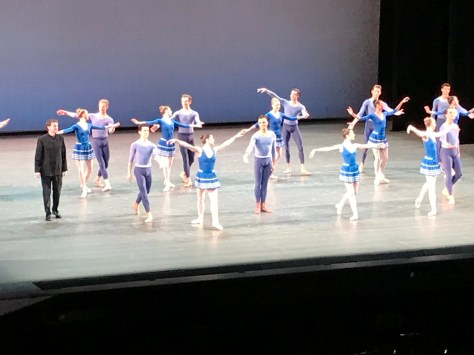
Later in the short week, we were also treated to a performance by the New York City Ballet. This time it was my turn to experience and appreciate dance through the joy of physicality combined with artistic talent.IMG_1537

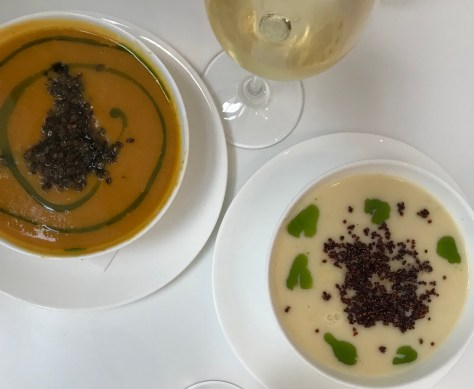
In addition to Balthazar and Ess-a-Bagel, our dining events include Bar Boulud and the Smith (both conveniently next to Lincoln Center), and Pastrami Queen at 1125 Madison Avenue on the Upper East Side. Some creative soups at the MOMA cafe filled both our eyes and appetites.

IMG_8927

When you can park yourself at one of New York’s best kept secrets–the Pod Hotel (at 230 E. 51st Street, between 2nd and Third Avenues) for $75 a night for two in bunk beds with a shared bath down the hall, mingle with international visitors of all ages, and spare the rest for all the food and entertainment in the Big Apple–what’s not to like? I normally do not mention hotels in my posts, but for variety and voracious urban consumers like me, this is it. Originally called the Pickwick Arms, we’ve stayed in this location in NYC off and on for over 30 years. To top it off, the Pod serves Ess-a-Bagels and Balthazar almond croissants in their cafe!!

The extensive Metropolitan Museum’s exhibition of Michelangelo’s Drawings, culled from over 23 sources throughout the world, was my primary purpose in coming to New York City. The private tour I took will follow in a separate post.

Pick Your Poison

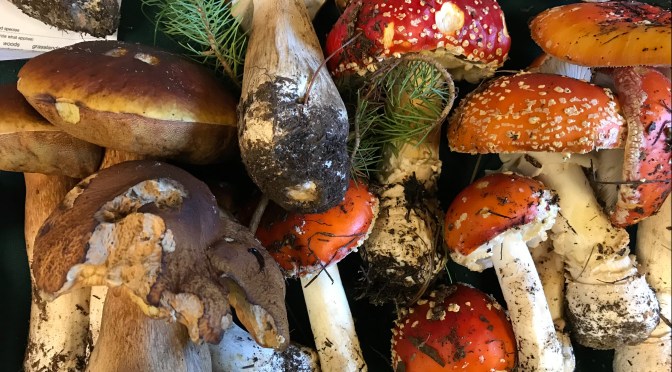
The Mushroom Madness event last week at the San Francisco Arboretum showcased not only the infinite variety of fungi, lichen, and spores that surround us, but it also surfaced many mycological fanatics. Not mythological, but close. In case you ever wondered whether the ones growing in your backyard were edible, this was the place to rub noses with those in the know.

The society reminded me of a similar group of astronomical buffs. When we stayed overnight at Fremont Peak years ago to stargaze, the featured delicacy of the evening, aside from Saturn and Jupiter,  was blue jello hidden below a frothy cloud of white meringue.

We couldn’t resist the Mushroom Soup this time either. Nothing too exotic, but we slurped and savored the mushy mess despite a few lingering trails of what looked like earthy seaweed in the broth.

December is wrap-up time for the academic fall semester. The student art show at City College of San Francisco’s Fort Mason campus brought together many new and old faces. Paper versions were displayed, while friends and family proudly gathered to admire the visual works. Below is a quick scan of a part of the Figure Drawing class exhibition’s earnest efforts.

And last night’s presentation of the SF Opera’s new and upcoming young singers from the Adler Program:

IMG_7894

Birthday wishes this month go to Eric, Melissa, Ruth, Jeff and Sherry!
Continue reading Pick Your Poison

A Thanksgiving Sketch 2017

Visiting Chicago earlier this month already seems like lightyears away, especially with the advent of the annual year-end Holiday Season. Eleven of the mostly Fong clan gathered around our dining table for a home-made traditional feast with basic turkey and trimmings, Chinese sticky rice “stuffing”, yams, vegetables, apple pie and pumpkin custard.

To throw in a few world influences from traveling this year, I kicked off the event with Peruvian pisco sours and yucca fries followed by Moroccan zaalouk. A bit eclectic, but I couldn’t resist the yummy new recipes I learned by being in these fascinating countries with deep food cultures.

Naturally, it was fun to see everyone. We are all older and wiser, and the lone child under thirty was the highlight of the evening. Our conversations shift from children’s activities to adult careers, friends, and travels. It was a leisurely, enjoyable evening, and indeed, a very satisfying and thankful one.

I noticed this year a focus on food preparation. Ladies in my classes, on the street, and in between were into some serious food therapy. Everyone delved into and savored the minutest details beyond what was described above.  They seemed to taste and smack their lips at each morsel being described.

A professional therapist would probably diagnose that these women (I did not notice if there were men engaged in the same conversations, but there could have been) are finding comfort in what little can be controlled in an uncontrollable world. It gave me a smile to think of these small pleasures, and to appreciate these heartwarming conversations.

The day after Thanksgiving was highly anticipated with the opera world premiere of the “Girls of the Golden West”. Unlike Puccini’s opera by the same name (except singular instead of plural), it is a factual account of the events during the California Gold Rush of 1849. It reveals many of the dirty little secrets of that golden era, now mystified and synthesized into a romantic vision of California’s genesis.

The opera features characters who suffered incredible brutality during that era: fugitive Black slaves, Hispanic workers, Chinese prostitutes being chased out of town, murdered, or lynched. Even the environment was not unscathed: a 24-foot wide redwood was cut to a stump and used as a stage. This formed part of the backdrop for what was a fascinating historical event in American history.

Unfortunately, converting a Ken Burns-style docudrama to opera did not translate. Librettist Peter Sellars and composer John Adams (Nixon in China fame) made a noble effort, but somehow the decent singing, decent music, and decent story–all necessary ingredients for a decent opera–did not come together. Even our upgraded Center Box Seats where you can sip sparkling wine during the performance could not salvage the evening. Hopefully time will mellow this opera like all others.

Above: Pre-Opera chat with Librettist Peter Sellars, and the curtain call with dancers. Note the reproduced tree stump and felled tree in the background.

Below: the final curtain call with both Peter Sellars and John Adams, and young cast

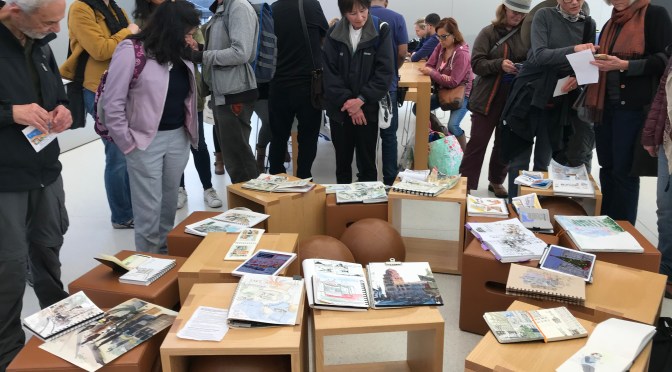
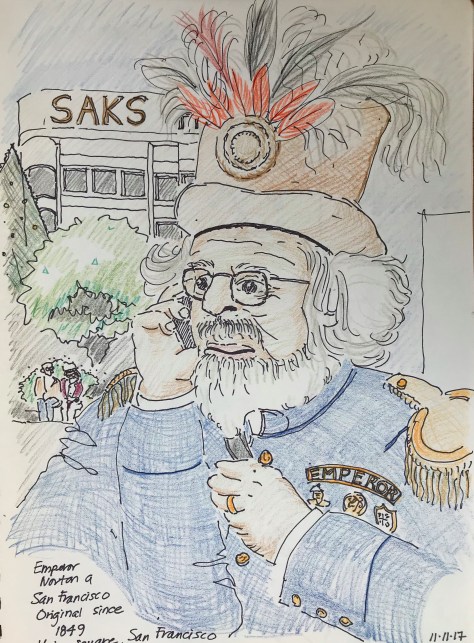
As the Fall Semester winds down, I am still busily preparing for final exams and projects. I continue to practice sketching at Meet-ups. The last one I attended at the Apple Store in Union Square produced an encounter with none other than Emperor Norton. Another character from the Gold Rush days, this impersonated, once-real character gives tours of historic San Francisco. I cartooned him while he anachronistically used his cell phone to schedule tours and take care of business of the day.

img_2544.jpg

Sunset over the Southwest

I’ve heard that foreign visitors to the U.S. often yearn to see the wide open spaces that are unique to America, like Yosemite, the Grand Canyon, and Yellowstone. As Americans, we often overlook those magnificent expanses of space that we take for granted in our own back yard.

On a weekend visit to Santa Fe, New Mexico, we caught some of the excitement over such vistas that seem to go on forever. We spent the first day exploring the mesas and pueblos of the Southwest. Located about an hour northeast of Santa Fe, the Puye Cliffs and area inhabited by the Santa Clara Tribe thrived here between 800 AD until the 16th Century.

The mesas were formed by tuff, or volcanic ash that covered this area (and made fossils out of alot of plants and animals), then eroded over time to form dramatic cliffs. The pueblos are Native American villages dotted throughout numerous reservations in New Mexico. The Santa Clara originally lived in these cliff dwellings and then later, in pueblos. (Click on Photos to see captions).

The kivas, or ceremonial roundhouses in each village, were used for male rites of passage, important decisions, and festivals. When the Spaniards arrived, they burned the kivas and built Catholic cathedrals over the sites.

The cliff dwellers protected themselves from invaders in the caves. Later, they created pueblo dwellings that were two-story structures on open land. The dwellings had no doors, but they used ladders to lower levels of the dwellings from the rooftops. These entries protected residents from invaders.

At our neighbors’ recommendation, we made a special day trip the following day to Ghost Ranch. An hour’s drive north of Santa Fe just beyond the Puye cliff dwellings, Ghost Ranch is a retreat cum camp for writers and artists. The ranch offers weekly programs, seminars and workshops in the high desert.

Georgia O’Keefe’s home is near here, so there’s plenty of creative inspiration and history in this area. The landscape alone is breathtaking, with wide open views of mesas in the distance as far as the eye can see. The ranch is nestled in an oasis with a precious lake nearby.

There are archaeological excavations that date back to the Triassic Period on the ranch. You can even participate in digs. From having taken three Anthro classes in college, I became interested in Anthropology and even contemplated majoring in it.

cropped-img_9341.jpg

I immediately fantasized about joining a dig until I saw real-time photos of volunteers in the program, posing on their shovels during a break. The exposed skin on their faces and arms looked as parched as old shoes and as cracked as the pottery shards they were digging up! I decided to relinquish the idea as I was reminded not to forget my nightly skin regimen.

The main purpose of our excursion to Santa Fe, however, was to attend a premiere performance of the opera, the (R)evolution of Steve Jobs. It’s the complicated, contemporary, and tragic story of Steve Jobs. While the place names were immediately discernible to those of us living in the Bay Area (Stanford, Cupertino, Los Altos), the story of this one-of-a-kind genius gives everyone a perspective on where we have been, where we are, and where we are going.

The Santa Fe Opera was an ideal venue for this premiere, with its dramatic open-air stage, setting, and architecture. Everything was perfect, including the weather, production, and food!

Here’s the final curtain call, with Edward Parks (an international Operalia Competition winner), who played Steve Jobs, the librettist Mark Campbell, and composer Mason Bates. (apologies for the overlighting).

This production was sponsored by the San Francisco, Seattle, and Santa Fe Operas. When you get a chance, see it, or check it out here:

https://www.santafeopera.org/operas-and-ticketing/the-revolution-of-steve-jobs

Back in Santa Fe, art is ubiquitous and a reminder that beauty can, and should be everywhere. There are art galleries galore and tourist shops selling turquoise, carpets and pottery to numb the mind, but if you look beyond those, there are many treasures outdoors to be found. Here are a few examples of fanciful sculpture and mindful landscaping that you will encounter on a walk through town. (BTW, you can see more artwork from the Day 77-78 stop in Santa Fe from my October 2015 Amtrak trip).

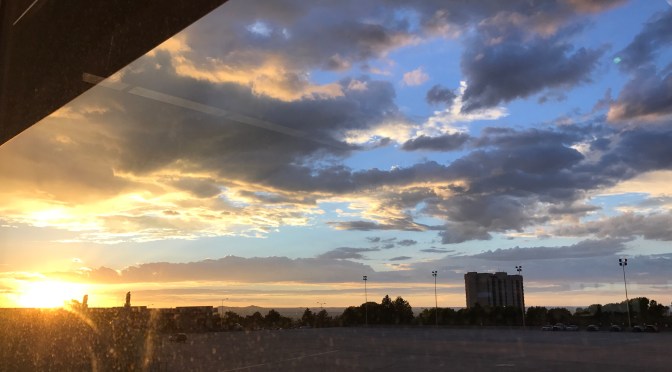
Turquoise and terra cotta are the trademarks that define the American Southwest. They even use this palette to paint the overpasses along freeways so you always know where you are. As our weekend wound down, I managed to capture the mood, signature colors, and the remains of the day at the Albuquerque Airport.

Happy Celebrations to Pam C., Pam C., Karen M., and Jens U-B!!

Sunrise over the Sunset

This month gave me time to pause, gather thoughts, and enjoy reuniting with friends and family.

In the past few months since I had been away from San Francisco, two high rise towers rose from the ashes downtown. The long-awaited Transbay towers are the tallest in The city’s short skyline, but minuscule compared to other cities I recently visited. The header shows the view of the towers in the distance, just below the sun. The view is taken from our house in the Sunset District.

This month I started a Brain Research study as a participant. Sponsored by Dr. Adam Gazzaley’s Neuroscape Program, the study looks at older adults and their ability to focus. In addition to an MRI, hooking up to electrodes on a skull cap, saliva swab and a blood draw, we do videogames to test our level of concentration or distraction. The study hopes to develop exercises to increase the ability for older adults to focus better.

You can join the study if you are in the Bay Area:

Participate

The research clinic is located in the Neurosciences Building that I developed as Project Director at UCSF. Located smack in the middle of the Mission Bay campus, it was designed by Skidmore, Owings and Merrill, San Francisco. I love going there to see the building in its full glory and fulfilling its mission to find cures for neurodegenerative diseases.

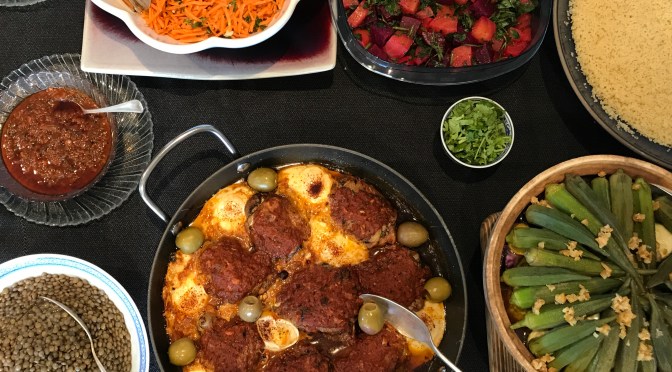
After my Moroccan sketching trip and the inspiration from the culture and food there, I decided to try a few recipes from the cooking class I took in Marrakesh. It took a bit of research from Paula Woolfert’s cookbook and a few trials before organizing and gathering friends together to try out an entire meal.

I couldn’t stop thinking about the intriguing tomato base tagine, or casserole, tucked under a plate of fresh eggs for lunch after our drawing expedition to the market outside Marrakesh.

When it was presented to us at lunchtime, I stared at it for quite some time before I realized the trick to getting it into your stomach was with your right hand. The bread was scattered around the table, readily available to assist. After the awkward start, it became second nature. (You can see photos of the dish at the table in Day 54: Meet me in Mogadur)

IMG_8386

You can compare the homemade version in the featured photo above. It was a joint achievement, with friends helping to prepare side dishes. From the bottom center, counter-clockwise: chicken smothered in homemade tomato jam and topped with eggs and olives; seven-vegetable casserole (okra, cabbage, green beans, onions, potatos, and carrots) with home-made preserved lemon; thrice-steamed couscous; beet salad compliments of Carmen); carrot salad (compliments of Royee) hummus; home-made harissa; and lentils. not shown: zaalouk, an eggplant dish, compliments of Susanne); a dessert bastiya made with apricots and almonds; orange slices with orange blossom water; and fresh mint tea!!

Organizing friends to share in the production of a complex meal is a great way to engage and invest everyone in the process and the outcome. Especially for what might be less familiar, everyone is more interested in trying each other’s craft.

I could focus my attention on more challenging parts that I may not have tried on such an ambitious menu. And doing it this way serves as a great ice-breaker to boot! Try it with a menu you’ve never tried before! Think of it as a shared cultural adventure.

If you find cooking Moroccan food too challenging, you can try out the new Moroccan restaurant Khamsa at 15th and Mission in San Francisco. It just opened so we dashed down there last night to try it out. All the good dishes are represented, including a fish tagine, chicken bastiya, zalouk, Moroccan wine and even mint tea!

For other dining experiences in San Francisco, our family celebrated recently at the Progress (Workshop) Restaurant. It’s next door to its Michelin-star cousin State Bird and Provisions. We chose dishes from the prix-fixe menu consisting of chickpea and oregano dumplings, quail quarters and black cod.

Here’s a quick tip for our opera fans: you can follow performances at festivals this month (including the Salzburg International and Verbier Festivals) free for ten days on medici.tv.

Thanks to all for answering last month’s survey. You can view results posted in the previous “Day 72+3: Return to Sender” at the bottom of each question. A quick note on videos: I try to use them judiciously, to avoid frustration. According to WordPress (the blog platform), the ability to see videos is based on the device you are using and your service compatibility. The videos may not load properly if you are reading my posts directly from email notifications on a smartphone. In that case, you may need to use a computer to see the videos. My apologies for these technical glitches. While I’m getting a request to see more videos, I’m afraid that many of you are unable to access them. Let’s keep trying to pursue solutions to these problems in the future.

For those who have been asking: yes, I am planning my next trip. It will be shorter, and soon. Stay tuned.

Day 46-47 Last Dance in Düsseldorf

IMG_7951
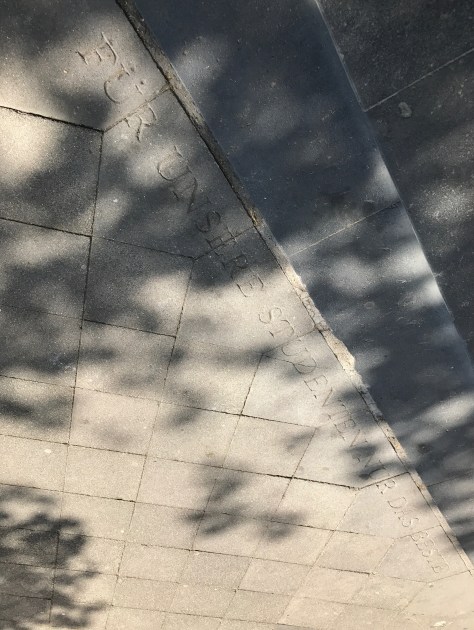
Inscription at Entrance to the Art Academy: ‘For our Students: Only the Best’

Art has been elusive in Düsseldorf, until I made a point to seek it out. Works by Luther promoter Cranach and German Expressionist Otto Dix were in town but hard to get to even though they were only a stone’s throw from where I lived. I discovered the Kunst (Art) Academy, where Gerhard Richter, one of my daughter’s favorite artists, studied and taught. The sobering words carved at the entrance seem daunting, for both student and teacher.

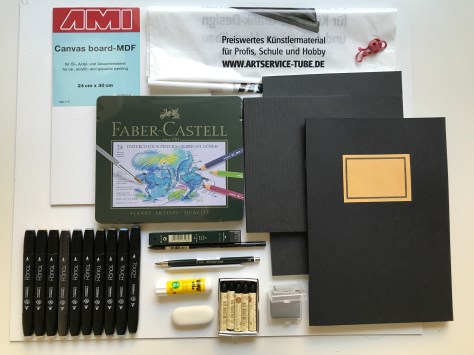
I originally came to the area seeking art supplies, and was delighted to find a tidy art store complete with what I needed for my sketching class in Morocco. It’s scheduled to begin at the end of the week, and I hadn’t stocked my bag yet. I sent all my German books  home so I could fit and replace the new materials in my carry-on.

IMG_7969

I enjoyed the experience so much that I decided to lay everything out for you. Just like ingredients for a soup, these are going to be the base and the flavor for my upcoming sketches. I loved all the quality German-made sketch paper, colored pencils, pastels, graphite pencils and holder, and even the UHU glue stick. After further inspection, however, I discovered that the gray pliable art eraser (in a plastic case) came from Malaysia and the markers from Korea. Oh well.

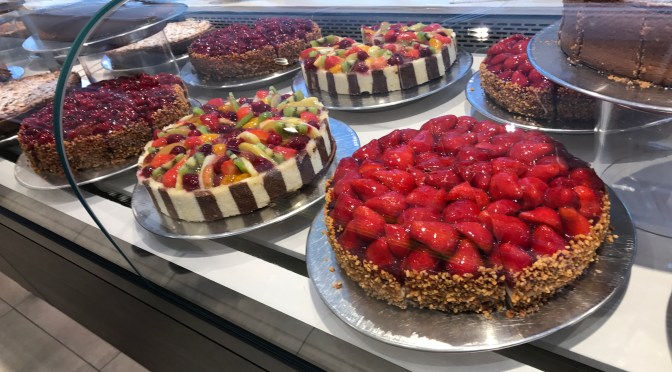
And just so you know I have my priorities straight, I stopped at the German bakery Heinemann’s for a kirsch cake over a Chocolate sponge and chocolate biscuit. They even packed the whipped cream with tender care “to go”.

Over the weekend, friend Vladimir was visiting and we made a stop at the Neanderthal Museum. Not one of my favorites, but here’s a tiny description of the 2,500,000 years of Migration, described as a “river”, with ebbs and flows”:

The burial discovery of a family of 14 showed how they were hacked by axes, where blows to the head were visible. The museum is the site for a discovery of Neanderthal man that was dated to 40,000 years ago, but earlier discoveries of Neanderthal man were made in Belgium before then. A number of artifacts and copies of archaeological finding were duplicates used to explain the evolution of man.

tmp_30199-DSC_06991044469968

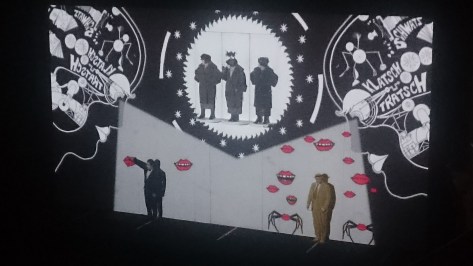
We made it back in time to see an innovative and clever version of the “Magic Flute”. The Germans are experimenting with new ways to present and appreciate the classic operas. In this one, they used the Buster Keaton silent film era graphics and period style as the backdrop for the beautifully enduring music. It worked well, the graphics and animated portions were original, creative, and thoroughly enjoyable. Don’t be surprised if you start seeing more of these interpretations as opera becomes more widespread and appealing to younger audiences.

tmp_27244-DSC_0742360256924For those interested, here’s a clip of the performance at the Opera on the Rhine in Dusseldorf:

http://www.operamrhein.de/de_DE/termin/die-zauberfloete.13972906

As I close this month’s visit to Dusseldorf, I am sorry to leave. The attention to art, music and culture is clearly evident, albeit subtle at times. In addition to promoting fashion, media, and trade fairs, the city has a bright and forward-thinking approach that will continue to make it a leader in these industries.

Addendum: a preliminary sketch of a static and well-behaved model that served as prep for my sketching class (photo was taken after the sketch!)

And the music legacy lives on as well…here’s the parting music and dance that took place on a casual 90 degree afternoon on Konigsallee around the corner from my apartment:

In Düsseldorf, you can hear year-end recitals by students at the Robert Schumann Musikhochschule free of charge. The piano recital I attended had a dozen or so students. Watch for these world-beaters in the upcoming years. The majority were Asian students. It will be interesting to see how they can influence Western music in their own countries.

I’m off to Morocco tomorrow, to meet with a sketch group organized by an art teacher at City College of San Francisco. Join me for some first-hand, and first-time experiences and adventures! I probably will post around the end of the week after getting acclimated, so stay tuned!

Day 32-38: Essen in Essen

Essen always had a curious name, since it sounds like the German word for “Food”, or “to eat”. There doesn’t appear to be any connection. I was tempted to feature the food we ate in town, but it wasn’t anything remarkable. A side trip from Dusseldorf to nearby Essen takes only a half hour by train, so friend Helena and I planned a full day excursion there.

At the recommendation of a fellow architect and German student, we spent the afternoon exploring the massive Zollverein, a coal mine converted to a museum for explaining the extraction, production and transport of black gold. As a UNESCO world site, this was the heart of the famous Ruhr Valley.

Like the African-Americans who migrated from the Deep South to the San Francisco Bay Area after World War II, many migrants came from Poland at the end of the 19th Century to this rapidly developing industrialized area. In the 1950’s and 1980’s, many new migrants from Italy, Spain, Portugal, Turkey, Russia and Romania arrived in this area and other parts of Germany to search for a better life.

The museum had a you-name it-we have it approach to anything and everything to do with coal and beyond. The plant area was so extensive, it could be a quarry for humanity. Integrated with the coal production factory itself, the collections included dinosaurs, Roman ruins, Greek urns, geological rock samples, and memorabilia. It felt a bit like the Tate Gallery and the High-Line concept in New York City thrown into one gigantic area, but it tries very hard to not be a theme park.

I amused myself by looking for the oldest fossil and located coral imprints that were 600 million years old!! My favorite though, was just a tender young fish print checking in at a measly 60 million years.

In addition to the actual production lines, scaled models were used to demonstrate the work flow. The tidiness and efficient Bauhaus-designed buildings didn’t reduce the cast of sadness and grueling work that must have taken place there. Work conditions were so poor that many workers did not live long. Below is a short clip of one of the videos presented (unfortunately in German only) that shows how the coal could be delivered from the shaft to the ground in 30 seconds:

In the evening, Helena and I saw Romeo and Juliet, the ballet by Prokofiev. The music was stirring and the performers expressive. We experienced a rare standing ovation by a primarily local crowd (i.e., no tourists), so it was definitely worth seeing. Recognition by the audience in such a warm way has been a rarity in my experience in Germany, but when it happens, you know you have seen something amazing.

The ballet was performed in the famous theater designed by Finland’s namesake architect, Alvar Alto. The flat panels of granite covering the building seemed strange on curved surfaces. He didn’t seem to think that poured-in-place concrete would be acceptable for such a noble building.

I couldn’t resist sharing this photogenic shot of Helena, my friend and traveling companion from Switzerland.  Every year, we attend music festivals in Germany or Switzerland. Some of you may remember seeing her in previous posts in Dresden. We keep threatening to tackle Salzburg together, or maybe a music festival near where she lives next. She prefers ballet over opera, but we compromise and go to both as well as concerts.

As a physician and therapist, she has traveled the world and lived in many places. She has an admirable life, from moving to Switzerland in high school from the States, to studying in China (where she and Gee Kin met), building a hospital in Mozambique, and working at a sleep clinic in Switzerland! She also has an amazing outlook on life that is energetic and contagious. She kept me on my toes (literally, trying to keep up with her pace), and fit enough for a queen.

IMG_7676

At the end of the weekend Helena and I went to another local event at Düsseldorf’s Oper am Rhein with a joint Russian and German concert. The program included arias from many popular operas, including Eugene Onegin, Don Giovanni, and Puccini. If that weren’t enough, we were in for another standing ovation.

The warm crowd (maybe a lot of passionate Russians?) clearly loved the performers and the music. We did too. But two in a row? If I don’t watch out, I will have to amend my comments on the rarity of standing ovations among German audiences. I could swear I didn’t detect any over-enthusiastic Americans or their accents prompting or provoking the crowd. In any event, it was a very satisfying weekend of walking, talking, listening, watching and enjoying life.

(Forgive me for cheating: the dish on the feature is from Düsseldorf, not Essen! We searched high and low for an American Breakfast on Mother’s Day, but only found a fancy hotel on the way serving yucky healthy food. Ironically, the scrambled egg on salad with sweet potato chips was delicious).