Day 44: Bokhara I


Fast facts: The population of Bokhara today is 280,000. Bokhara is the oldest city and predates the others at 2750 years old. Just for comparison, Samarkand’s population is 500,000 and Tashkent’s is 3 million.
The land is flat, considered steppe and not desert (a desert designation is devoid of vegetation, and steppe has some visible vegetation if sparse–you know, kinda like the Bay Area).

Photos, from top, left to right:

1.  Nodir Devon Begi Madrassah 1623. This is one of the later buildings dedicated not to the king but a lower ranking official. By the time the buildings were dedicated to others the central govt was already in decline. The phoenix birds show Indian or Chinese influence. The face at the top was not banned at the time in artwork and different interpretations are made as to whether images are acceptable or not. The use of multicolored tile and yellow is also a late development, compared with the earlier cobalt and turquoise monochromatic schemes.
2. trading market designed and as covered market at crossroads to two streets. There were 5 built-in the city but they didn’t work so well. The earlier strip markets developed organically around neighborhoods. These did not take into account where people lived and needed the services. These trading markets are now mainly tourist attractions after they were designated for specialized trades such as metalwork or arts and crafts. Open cross ventilation makes this a very cool and sustainable place in the summer though!
3.wood door detail inside trading center
4. the water system was crucial to survival of the cities. Bokhara was considered an oasis along the trade routes and served as the seat of many governments who conquered and ruled this strategic location. Water came from the river that separates Afghanistan and Uzbekistan, but is now piped from the mountains in Tajikestan.
5. the minaret, made of bricks, shows how creative their brick craftsmen were in designing and pushing the height of these lighthouses.
6. contemporary building using wood columns and doors decoratively.
7. The earliest building in Bokhara was built below grade and preceded the Mongol invasion around the 12th c. Most buildings, particularly Islamic structures were built on top of the sites of former sacred sites, so it is likely that an earlier building preceded this one. This building is devoid of tile decoration but shows how use of brick for both structural purposes and textured walls was used very successfully, prior to the introduction of tile.
8.Detail of brick work.

Day 43(d): More Islamic Architecture

Photos, from top, left to right:

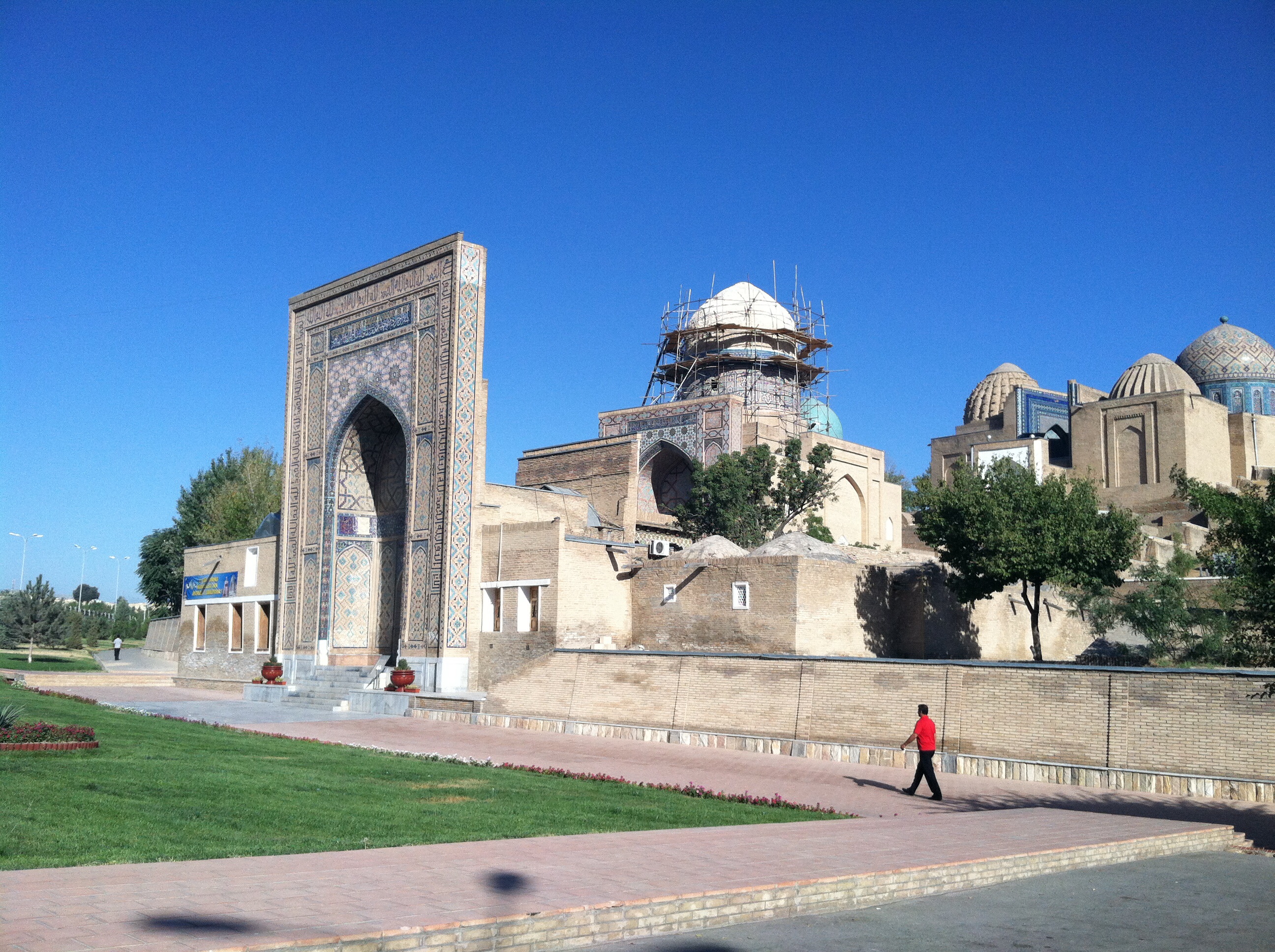
1. Exterior of Afrosiab Complex, built on a hill that was then ransacked by the Mongols. Tamar worked out that it was easier and more fortuitous to get water from the lowland rather than to transport it up the hill to the fortress, at the expense of having fortifications.

2. Steps leading to mausoleum complex. One is supposed to count the number up. If you count the same number coming down, you are a good and faithful person. If not, try next time. I went down the back-end so will never know my worth

3. “The City that Defies Death” consists of mausoleums dedicated to dignitaries with a street connecting all of them to each other.

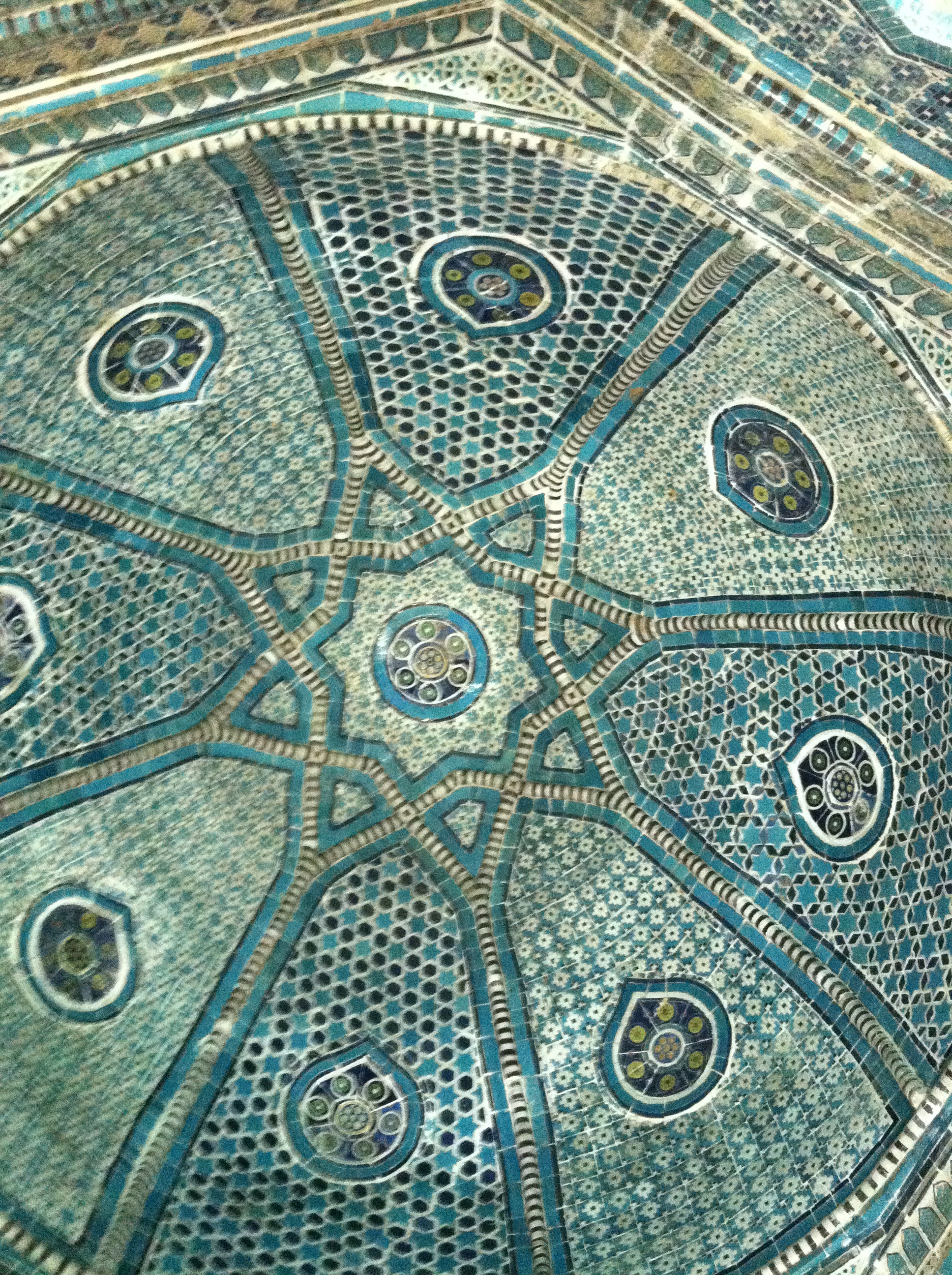
4. A decorative ceiling inside one of the domes.

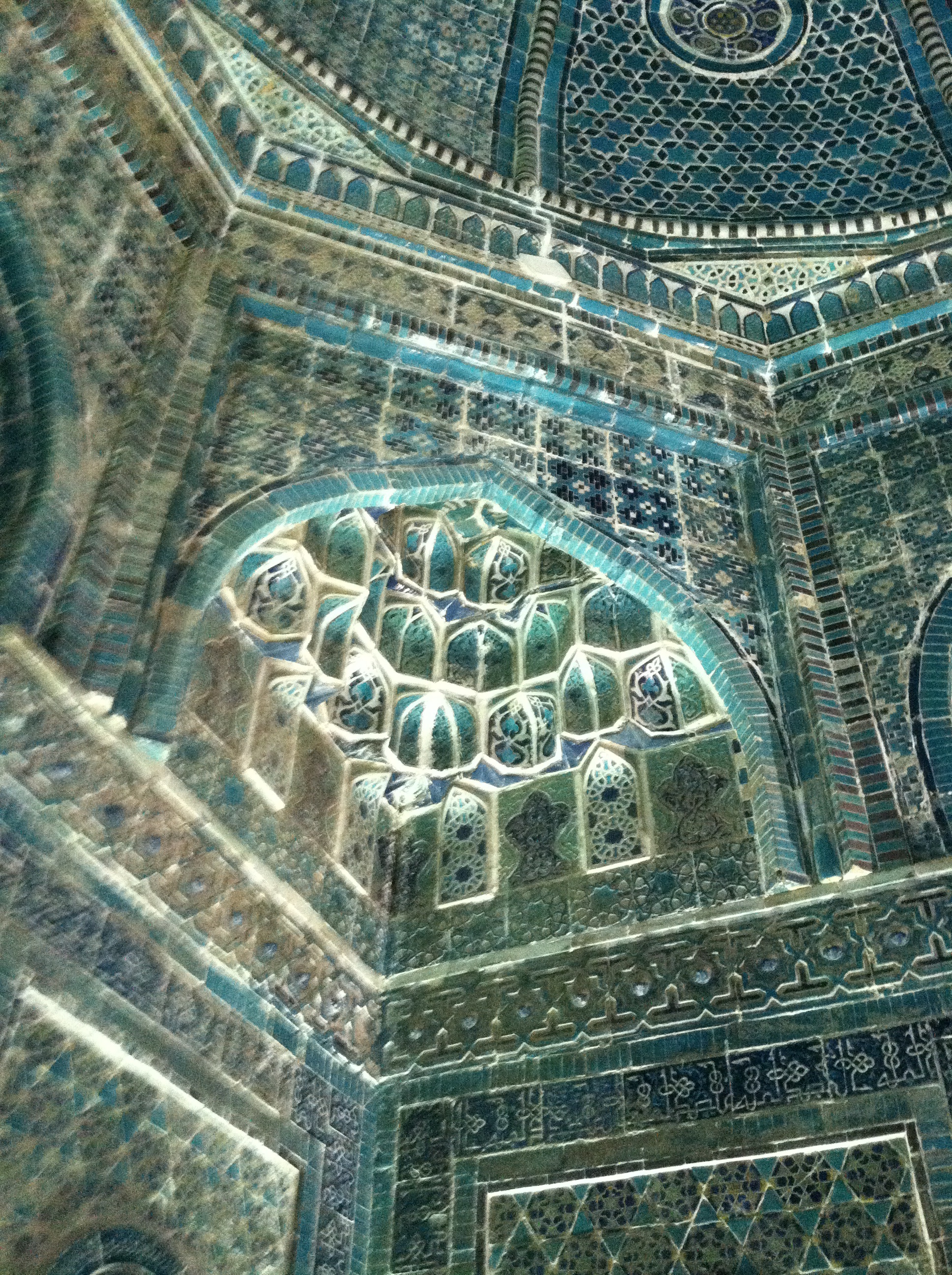
5. The stalactites in the corners between the dome and the wall reinforce the dome support and provide clever decorative element to the room.

6. another dome interior, with more cobalt blue coloring.

7. Beginning of Chinese influence with fritted wood panels over windows and wall paintings

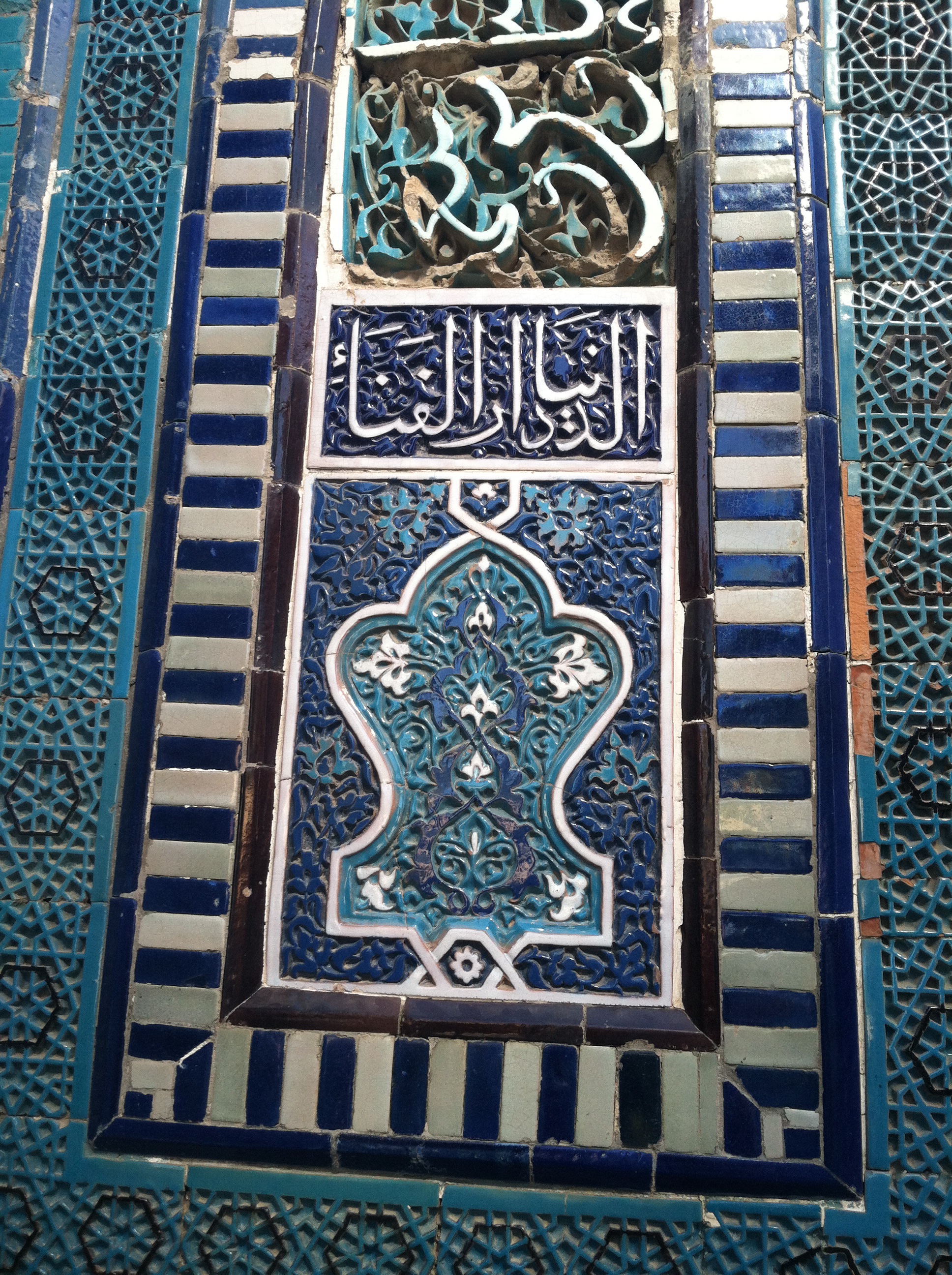
8.  Detail of stone Arabic lettering before tiles replaced in between

9. Another wall detail showing intricate floral, written and geometric patterns

Day 43(c): Food for Thought

image image image image

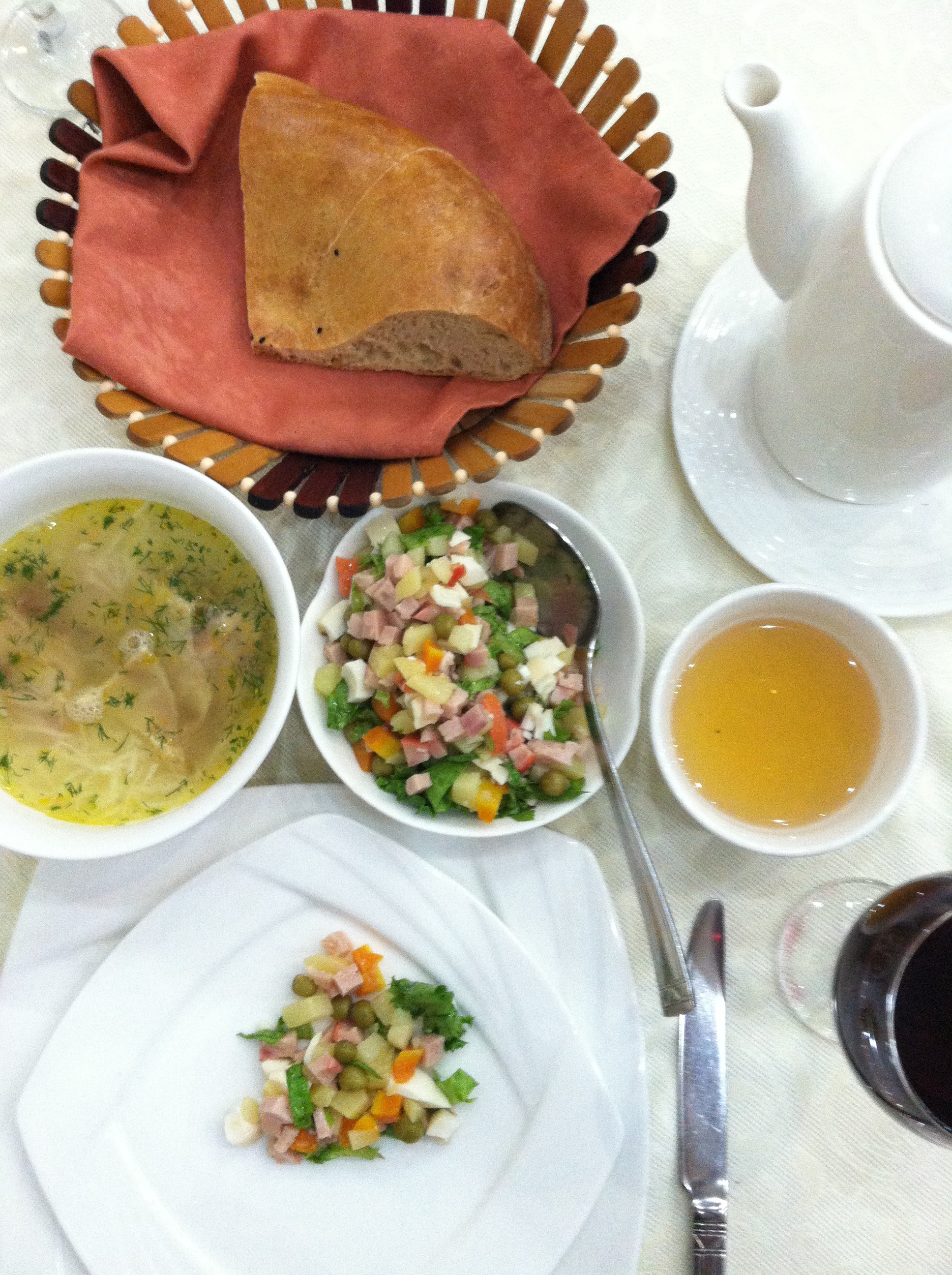
1. Similar to last nite: starter of veg salad with succulent carrots, fresh peas, bits of boiled egg white, tender potatoes, fresh lettuce, lightly flavored oil and lemon with dill–deliciously recognizable elements; chicken soup with fresh chicken chunks on the bone with rice noodle and dill; tandoori bread, and jasmine tea in chinese soup bowls. And yes, dry red wine. I could eat this as an entire meal!
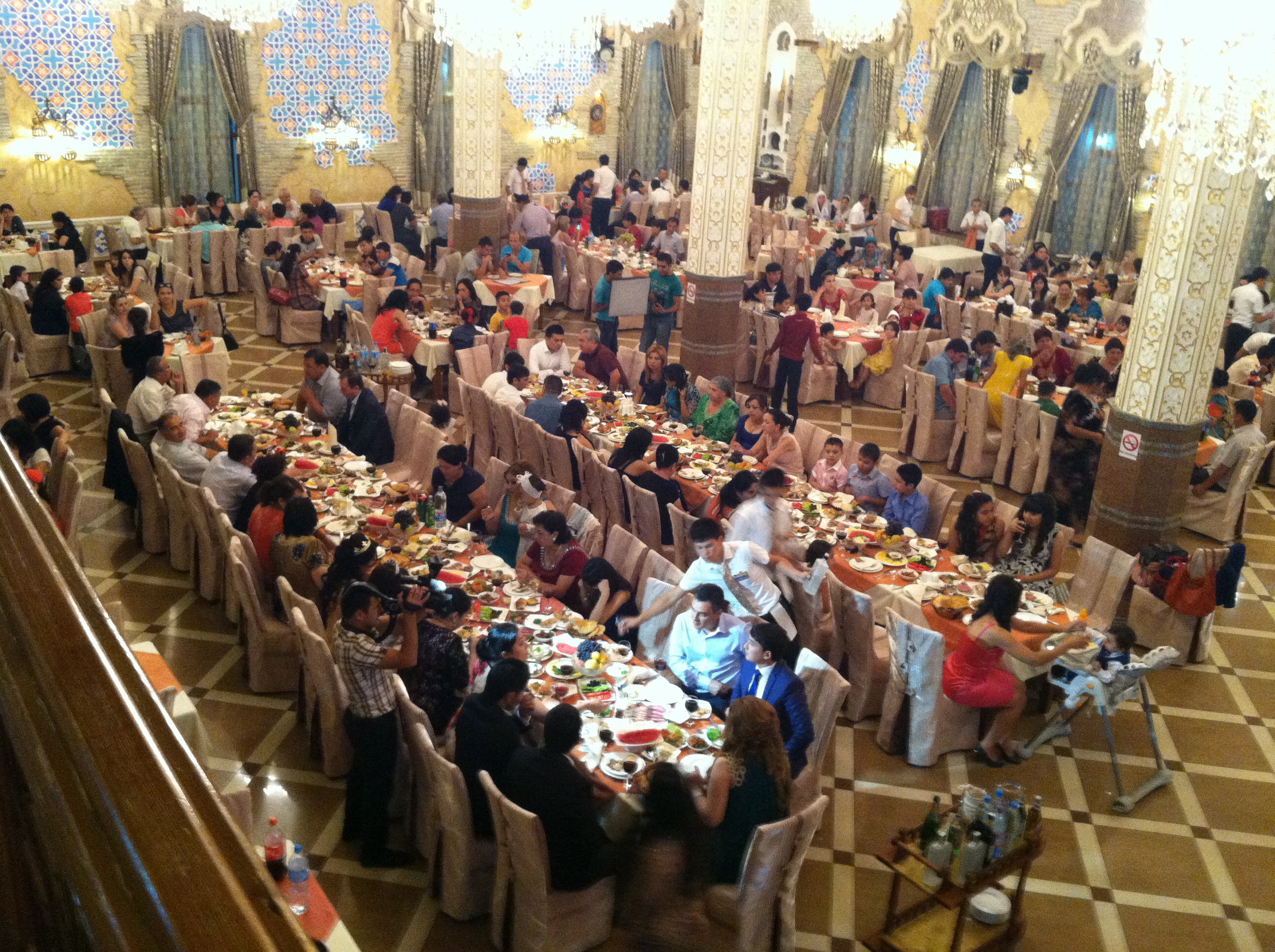
2. sorry, not my party. A banquet downstairs, with typical Uzbeki music and food.
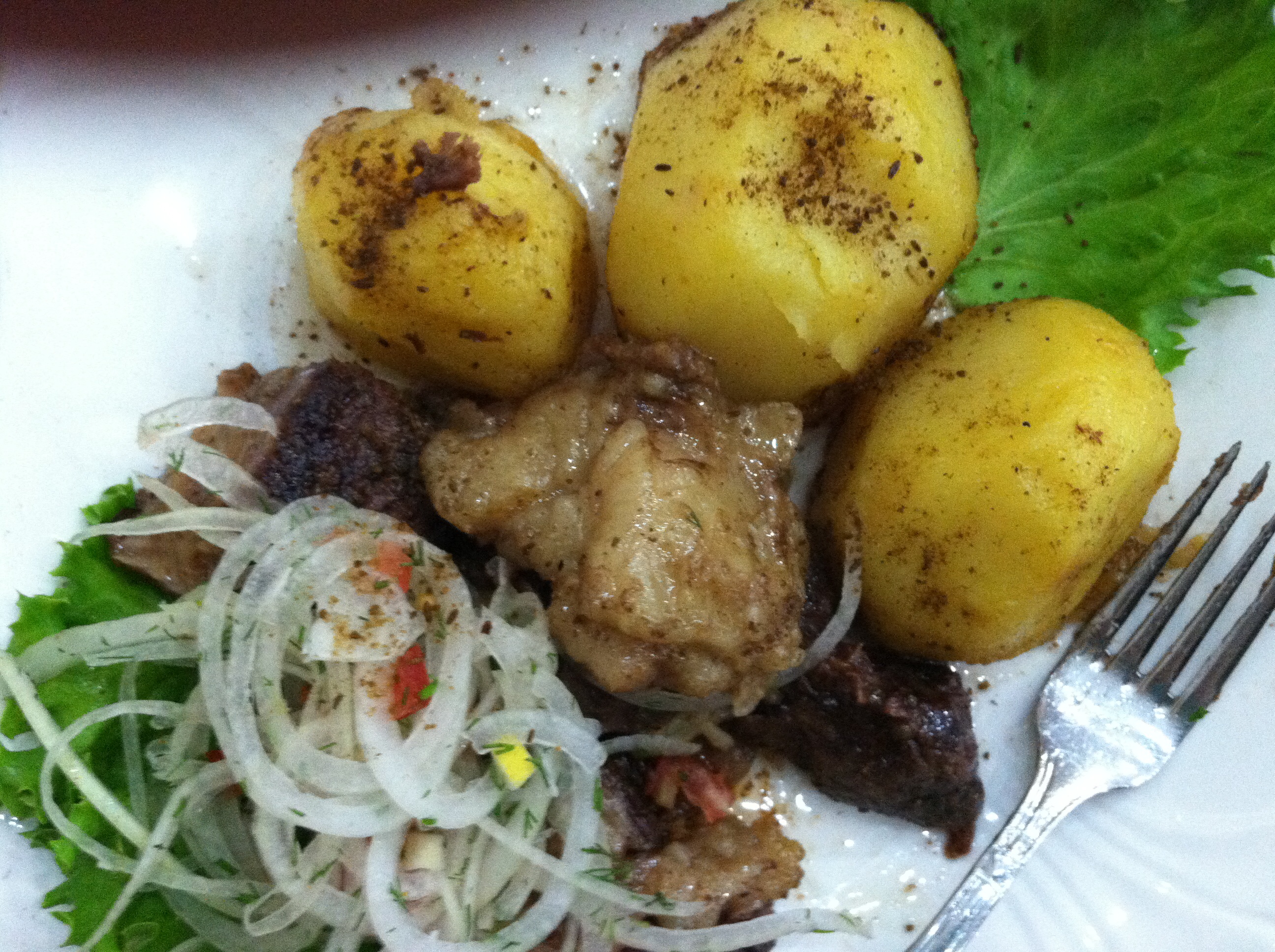
3. Perfectly braised lamb and potatos with lamb fat and marinated onions in lemon and dill on the side–piping hot and cooked to perfection–at the Samarkand Restaurant not far from my hotel.
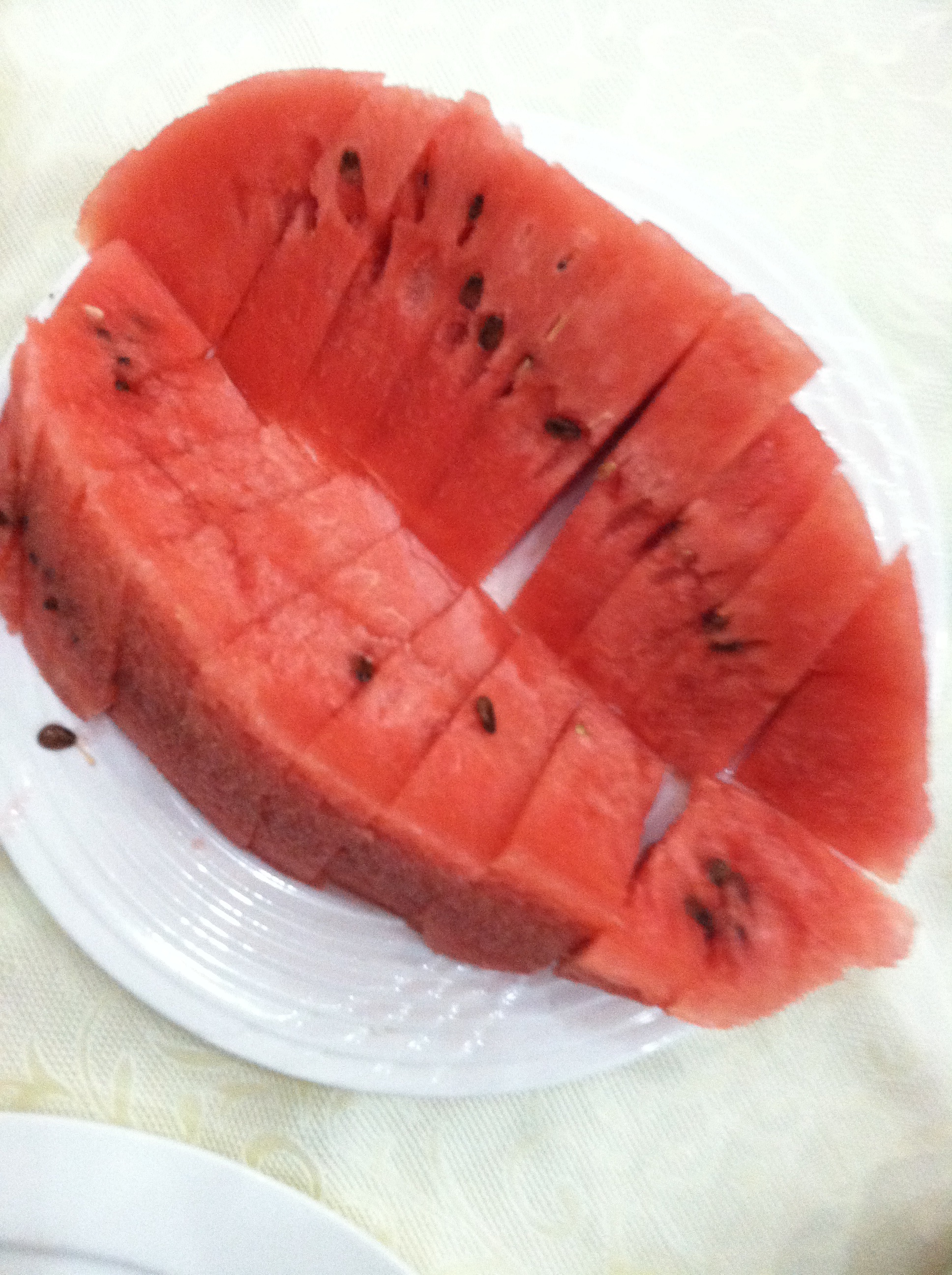
4. A whole half from the market the day before just for me! Why haven’t the Chinese figured this one out?!?

Day 43(b): Back Street Boys

imageimage

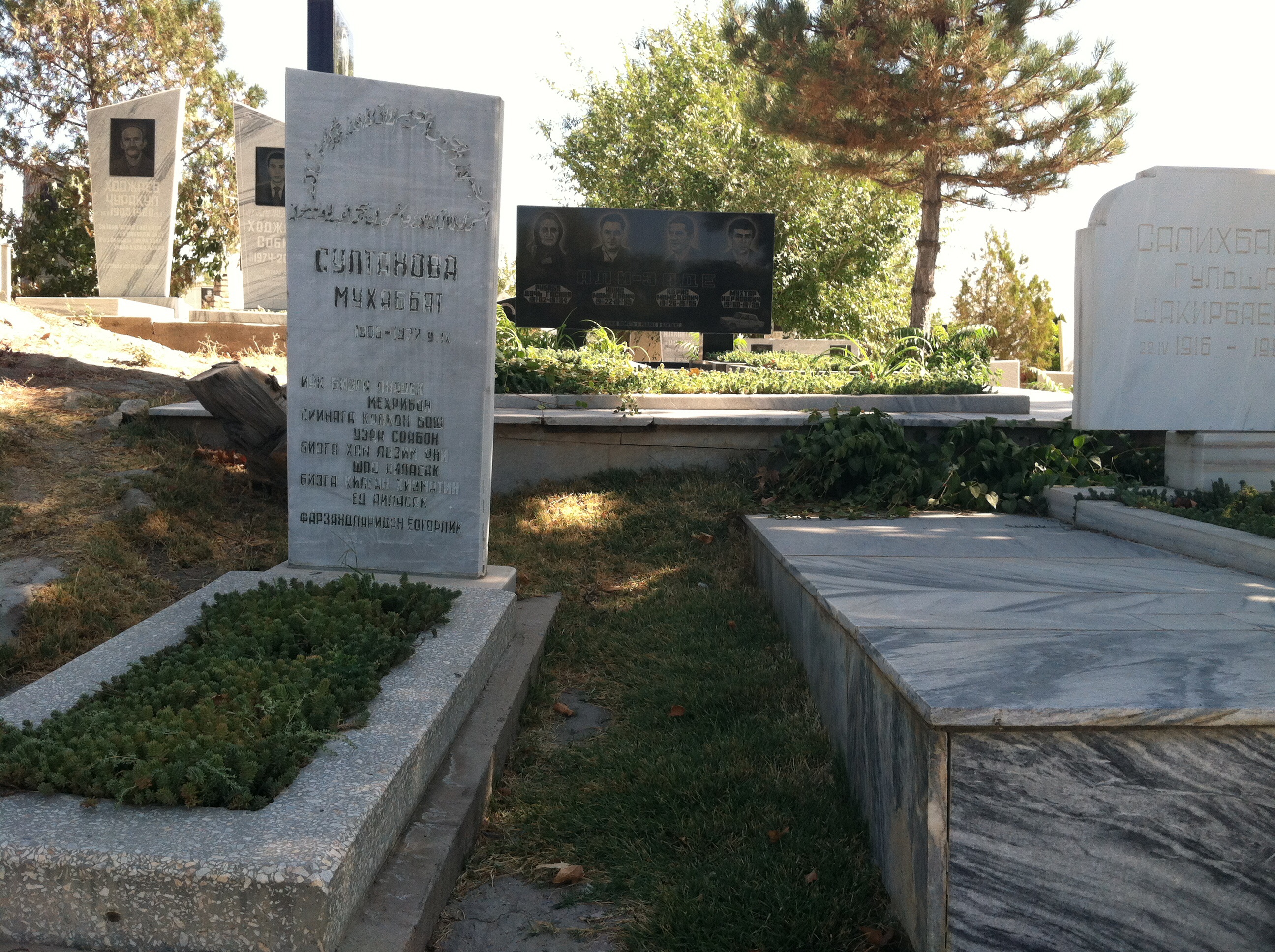
On the back of the low hill where the Mausoleums were clustered, was a contemporary cemetery. It proved to be a fascinating portrayal of how a society sees itself. The families of the recently departed wanted to make sure everyone knew how prominent their deceased relative was. Photographs are etched into tombstones: images of husband and wife, generals, academicians, politicians, and even a family of four caught in a car accident, all with the same date of death, left you with an empty feeling that you might have known these once alive individuals.

Day 43(a): Islamic Architecture

imageimageimage
image
image

Memories of Days Gone By

The Afrasiab Hill consists of a series of mausoleums developed between the 12-15th Centuries to dignitaries who lived in Samarkand. They were designed by architects and ornately decorated in a variety of stone carvings, mosaic patterns, and exposed brick.I felt like I was seeing all the European Gothic cathedrals all in one city. It’s no wonder so many pilgrims made their way through to Samarkand just to see so many beautiful buildings in one place.

There are many beautiful and moving stories about captured princesses and war campaigns plotted and lost. Some of the passion and beauty of the period are depicted in the intricate tracery patterns that are all different. The inscriptions appear to be wise, cautionary, and quite mild mannered and respectful of the multiplicity of religious beliefs at the time of Timur (ca. 1400), who was working on promoting Islamic religion.

Photos, from top:

1. Decorative tiles on interior
2. Detail of Dome
3. Entrance to complex on the Afrisaib Hill
4. Detail of exterior cut stone and mosaic tiles
5. Exterior view from back of hill