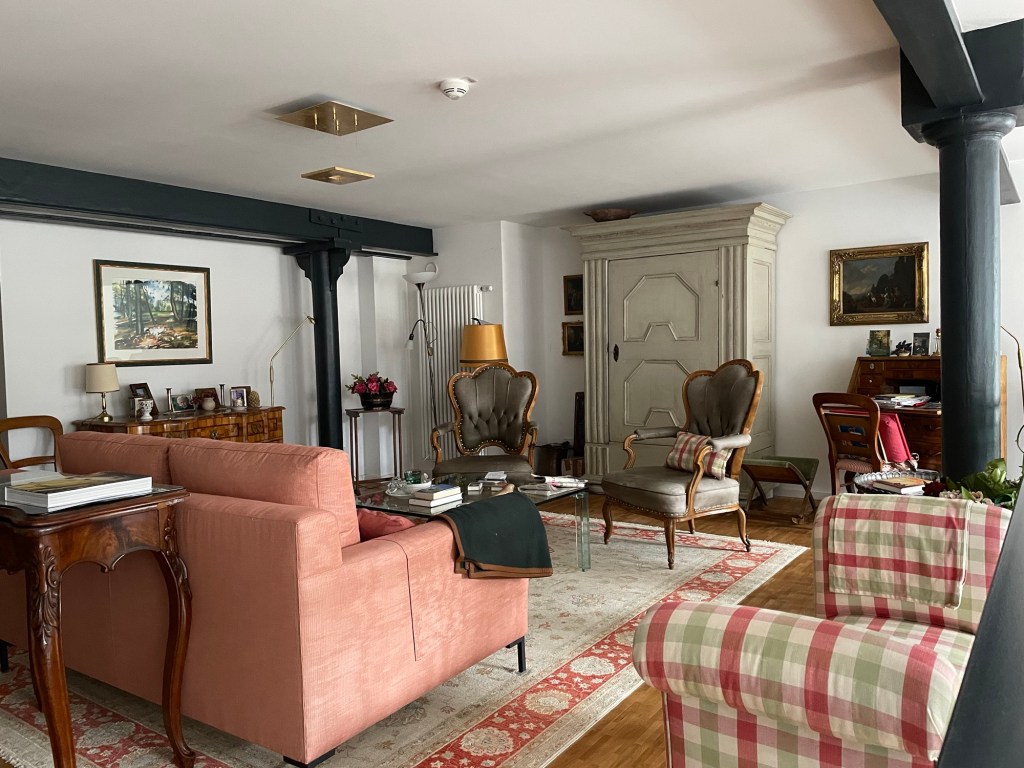
Having Luneburg, a charming small town outside of Hamburg Germany, as a base has been a delightful experience. Annemarie was kind enough to allow me to stay at her beautiful white-carpeted apartment just minutes from the train station and a short walk to all the cafes, shops, and services.
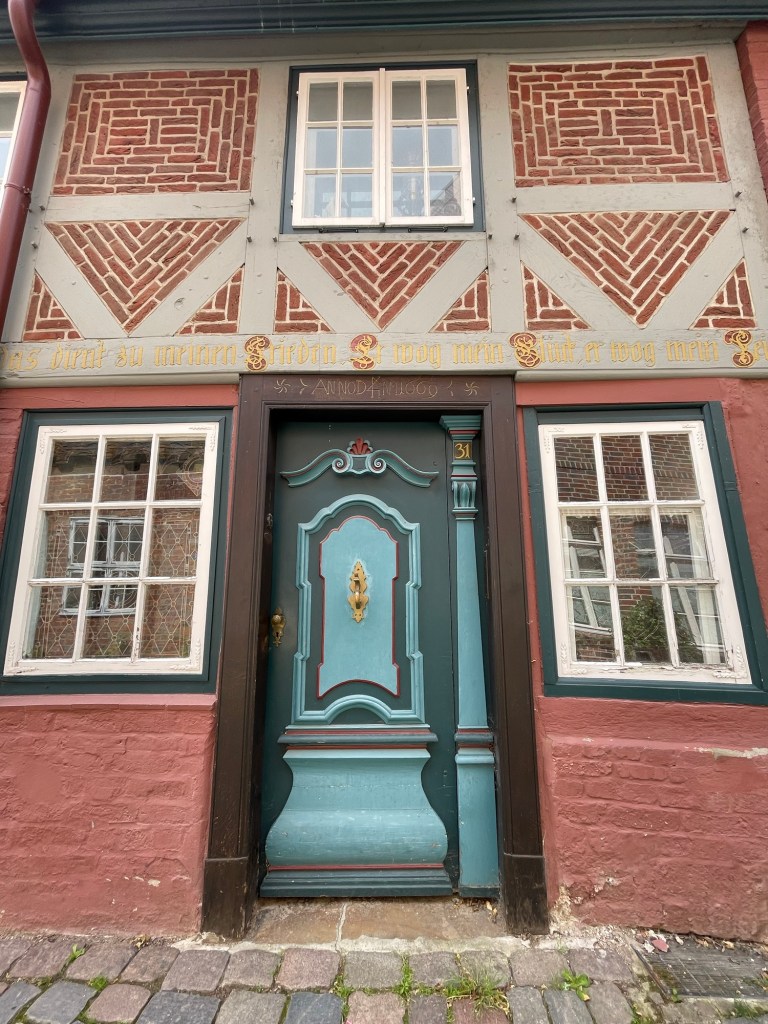
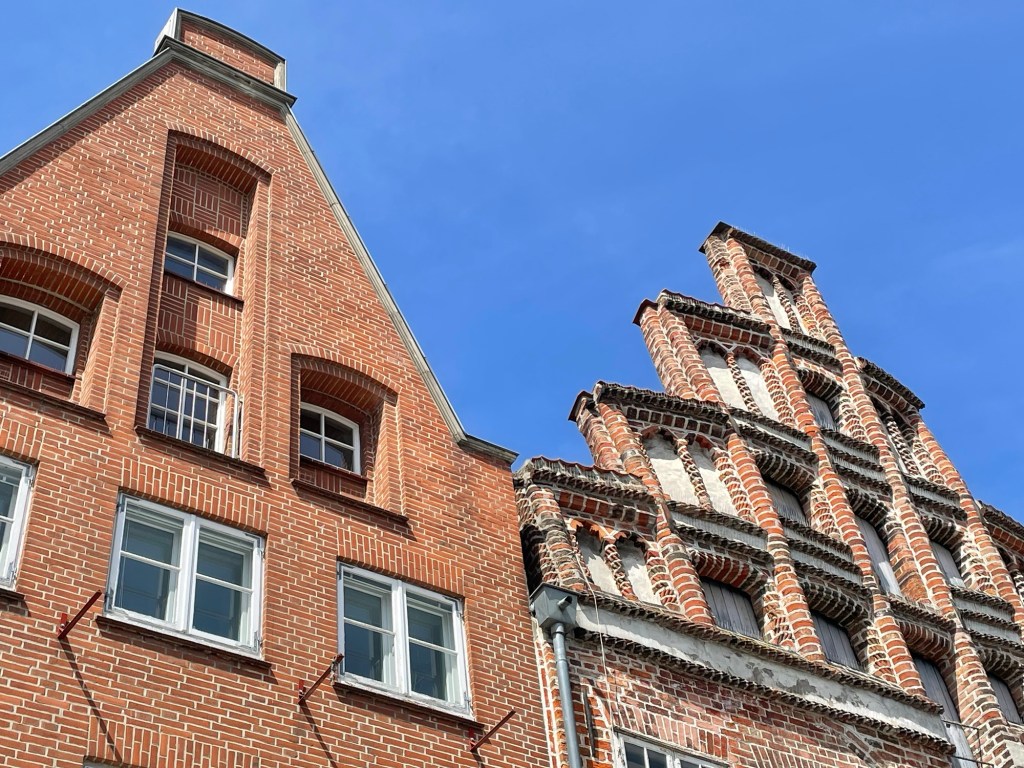
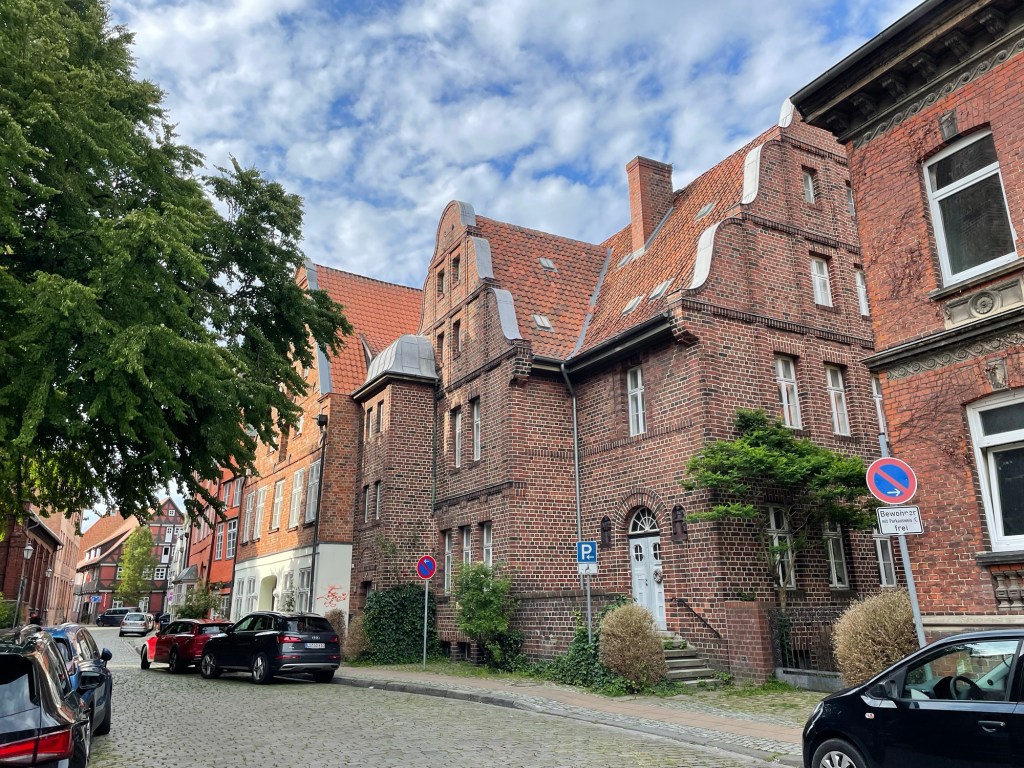
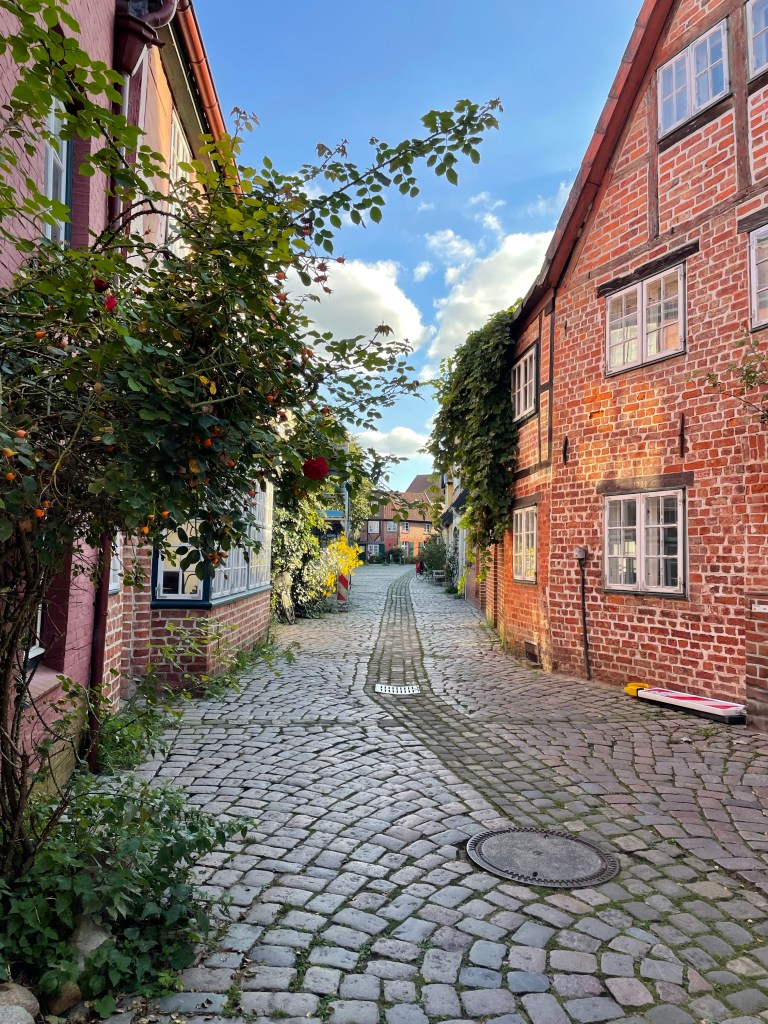
After a first week visiting the numerous museums in the city, I was ready to move into a quasi-resident mentality. With the fascinating history of this Hanseatic city under my belt, (See posting https://wordpress.com/post/travelswithmyselfandothers.com/28671), I was able to appreciate the razor-edged rooftops intentionally different from the next neighbors’. Many 16th C. buildings prominently display their beautiful brick facades along the narrow village paths.
Experiencing the natural pace of life in Luneburg was a joy. After the crazy opera-chasing from Dresden for Don Carlo, Berlin for the Ring Cycle, Dortmund for Pretty Yende, and to Bulgaria for Sonya Yoncheva’s Tosca, I savored the breath-catching week in this quaint and friendly little town.
Entertaining and Being Entertained
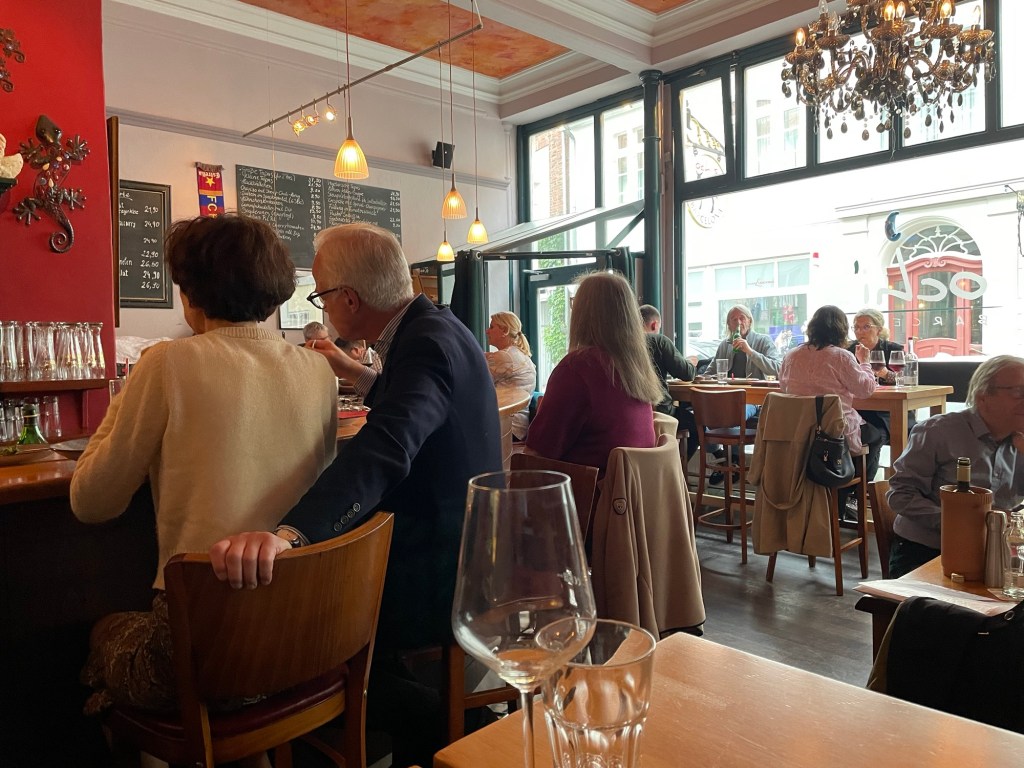
The many cafes and restaurants for tourists and locals reward all with excellent quality fish, Spanish food, and Mediterranean cuisine. Wednesday and Saturday markets offer all the necessities for quality at-home dining.
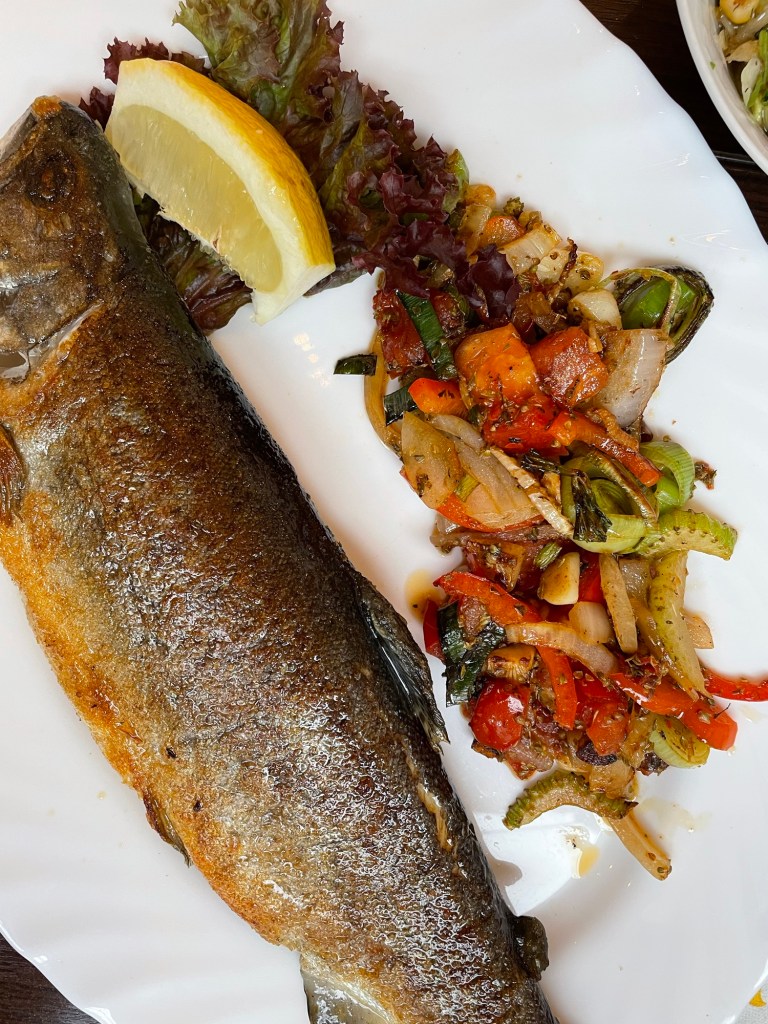
Whole Fish at Neptune’sOchi’sBreakfastBounty from Market Day
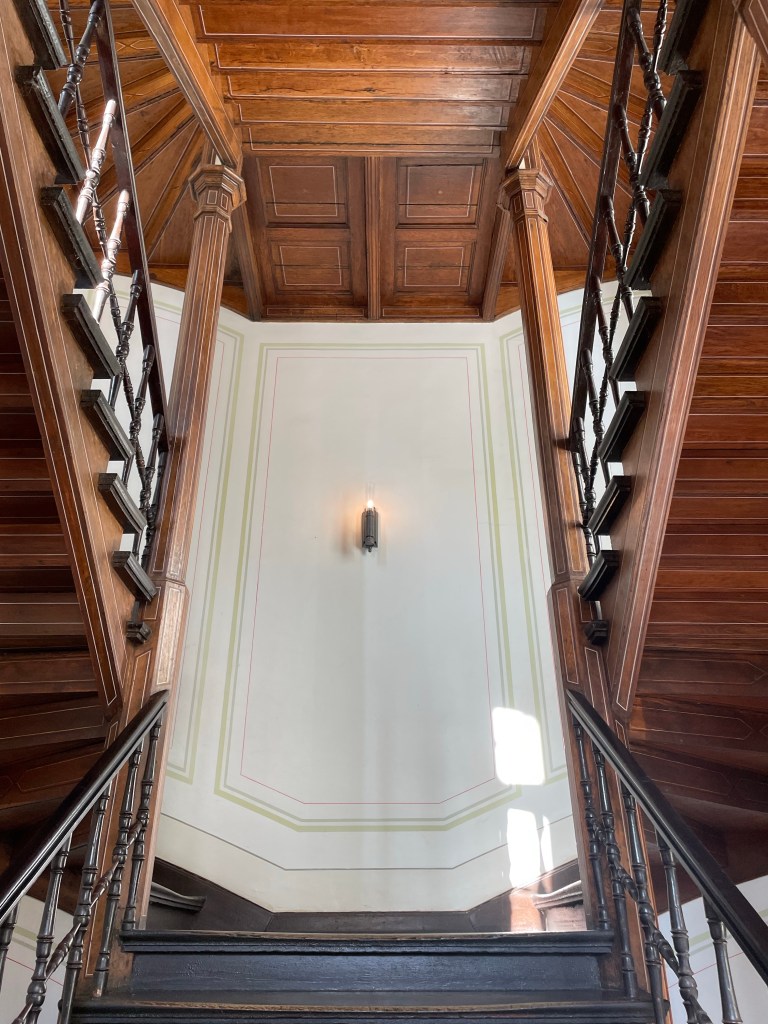
Historic Building Interior
A lunchtime invitation for seasonal spargel (asparagus) provided an opportunity to experience a lovely historical building interior with a worldly host, who provided insight on local family history.
Soccer Mania
The Euro Cup 2024 has descended on Germany. Games from 26 European countries are played in major German cities such as Munich, Hamburg, Dusseldorf, and Koln throughout the month. It’s hard not to get caught up in soccer fever, with national teams featuring famous soccer players from different clubs throughout Europe.
Germany vs. Scotland
Rod Stewart Competes for Opera Diversion
OK, so Opera isn’t my only obsession. Annemarie introduced me to Rod Stewart and converted me instantly. I struggled with my dual personality and bipolar disorder to maintain a semblance of normality. His mellow conversion to pop standards of past generations balanced his bad-boy image in a very digestible manner. I even forgot that I was in Germany after exiting the Barclay Arena humming “I Don’t Want to Talk About it.”.
Kickoff with “Addicted to Love”
In a couple of days, we’re off on a road trip due South to Munich, with stops in Bavaria to Annemarie’s heimat (home), Befreiungshalle, Walhalla, and Kloster Weltenburg. We’ll land in Verona for one final opera fix before I head home via Frankfurt.
A free walking tour of Plovdiv in English gave us plenty of food for thought about Bulgaria’s long, complicated history as well as insights on current trends in art, architecture and music.
Bulgaria’s Complex History
From the 6th to 3rd Centuries BC, Thracians (of Spartacus’ era), Persians, Celts, and Macedonians fought over rule of the Bulgarian land, until the Romans (Tremontium) conquered the region in 45 AD. Various tribes successfully ruled after the fall of the Roman Empire in the 6th and 7th Centuries until the Byzantine Empire granted Bulgarian rule in 681AD.
The Cyrillic Script developed by the Bulgarians and used today by the Russians helped to unify the Slavic and Balkan cultures.that then dominated the area. The Ottomans arrived in 1396 and ruled until 1918. After the Russo Turkish war of 1877-78, the Russians gained influence over the area until the fall of the Berlin Wall.
While an independent state, Bulgaria is a democracy with a market economy. It has seen its share of problems with stronger powers controlling the country, however. Local politicians, weak and intent on short term gain, plague the country today. Corruption, mafioso rule, and disorganization jeopardize Bulgaria’s stability. Zero population growth and mass migration to other EU countries have caused an undertow to the economy with little hope in sight for a recovery.
Roman Infrastructure and Urban Planning
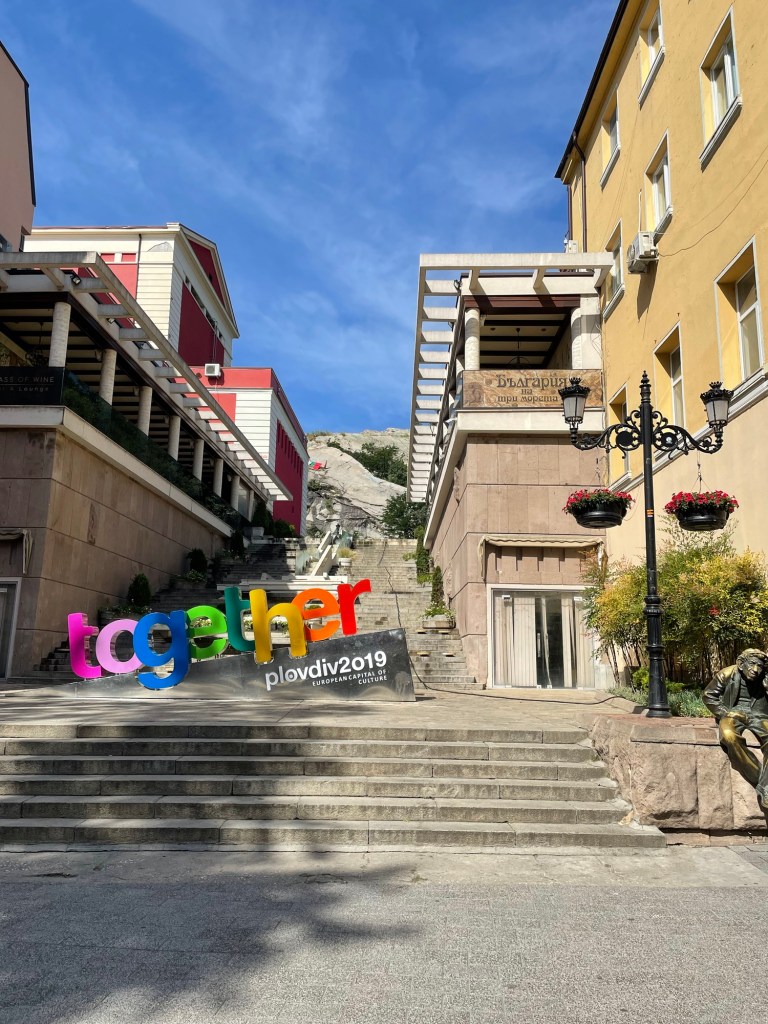
As one of the two European Centers of Culture identified in 2019, Plovdiv intended to promote its cultural treasures to the rest of the world. It was listed as a candidate for a UNESCO World Heritage Center, until the reconstruction of historic houses contravened UNESCO restrictions.
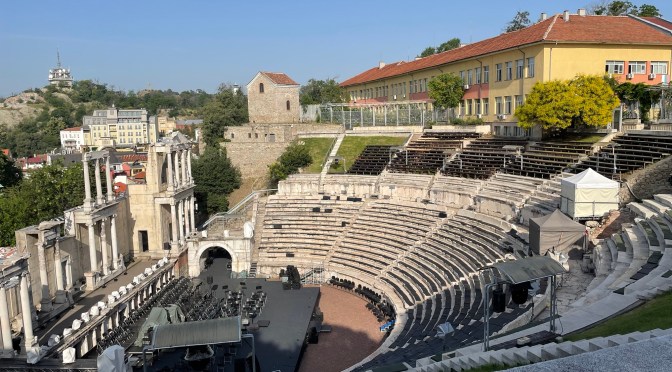
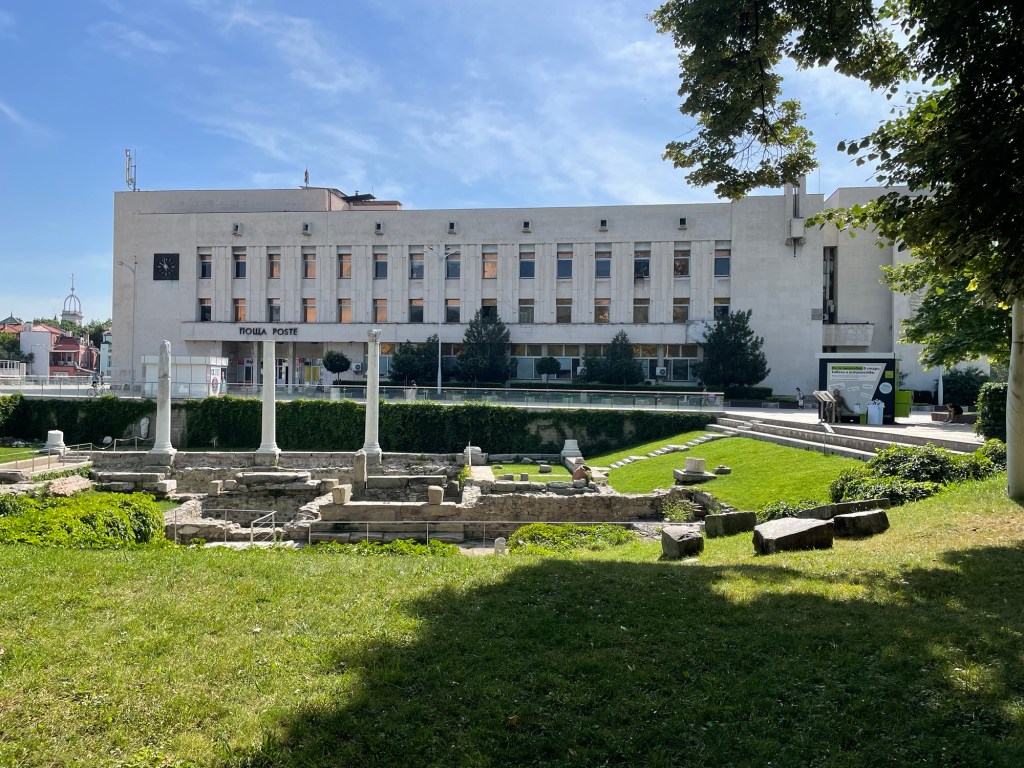
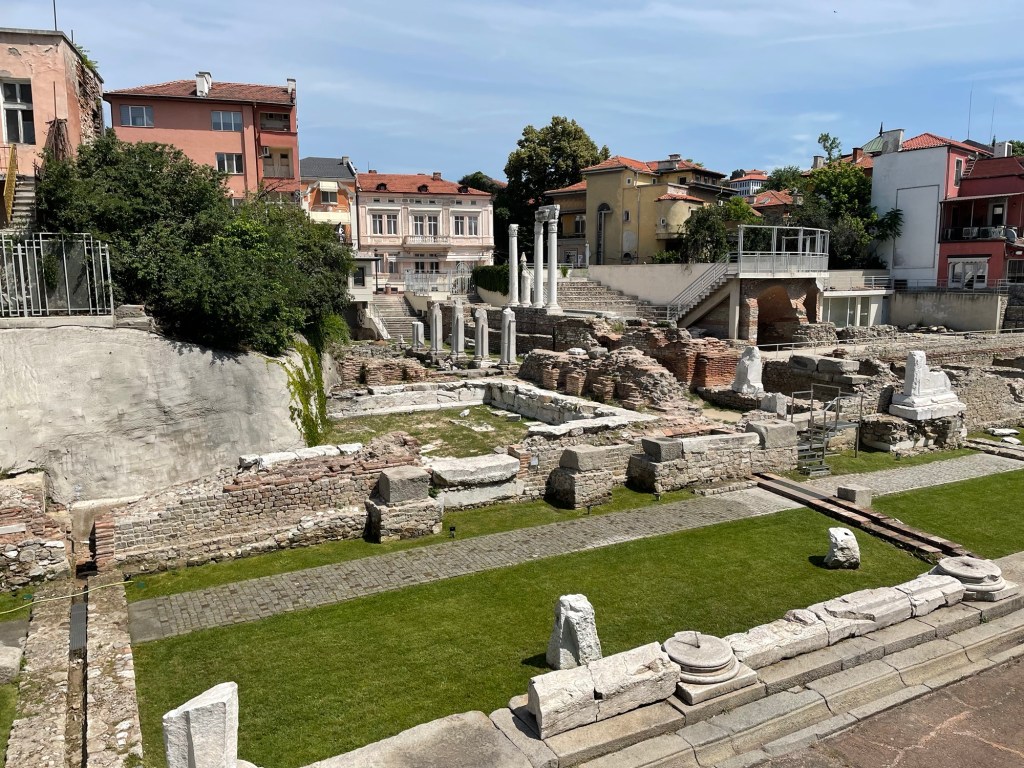
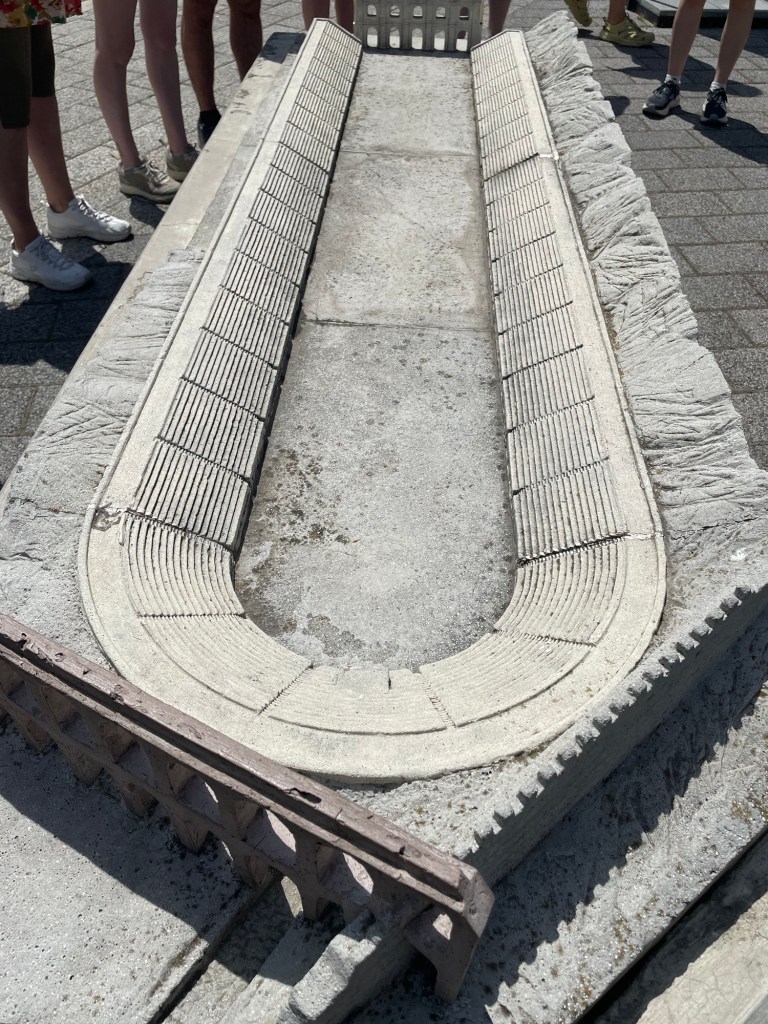
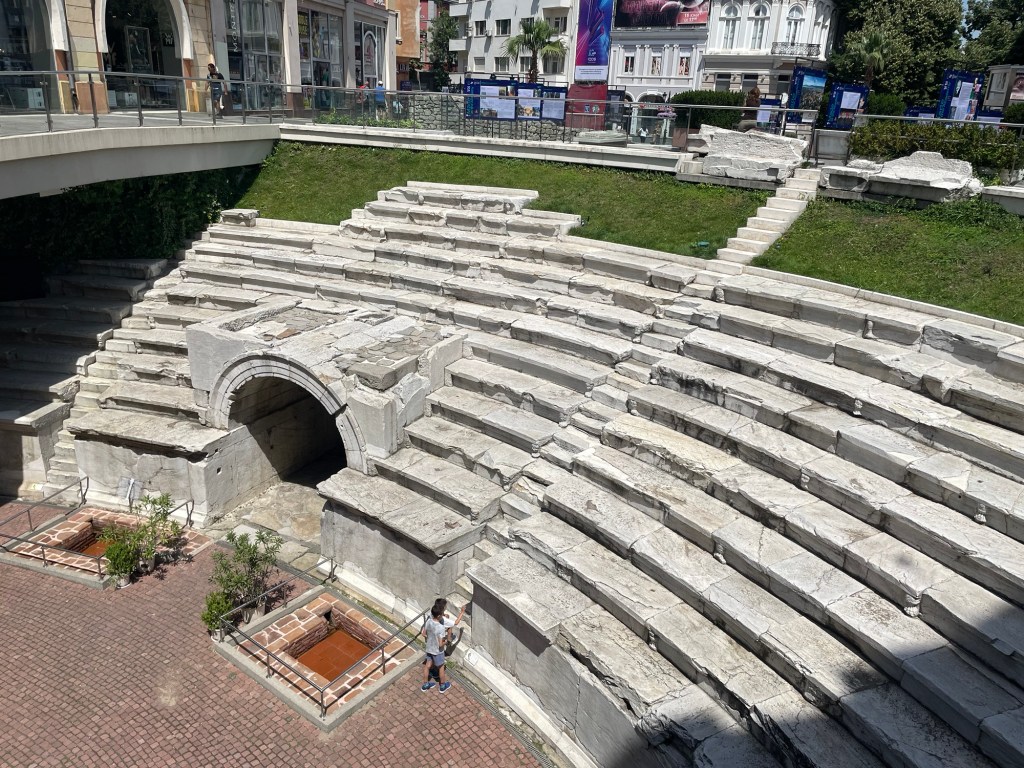
The Roman Ruins predetermined much of the city’s current layout. Aqueducts bringing water to the city from the mountains enabled Tremontium to thrive. A huge lozenge-shaped stadium, over 240 meters long, was erected for public events.
Eventually, as the stadium went into demise, a roadway and houses were built over the ruins. Only the small portion at the end has been excavated for public display.
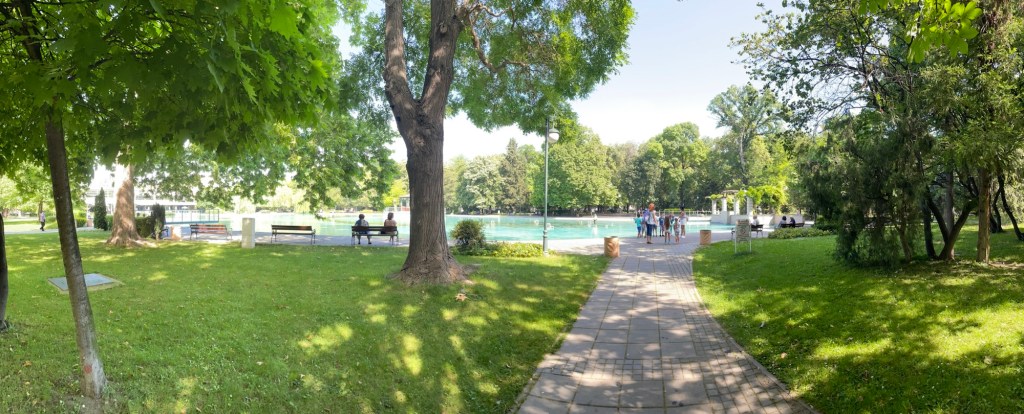
The Cultural City in 2019The Roman Forum and LibraryThe Roman Forum and LibraryA model of the stadiumThe City ParkThe stadium ruinsThe Stadium ruins
Ottoman Architecture
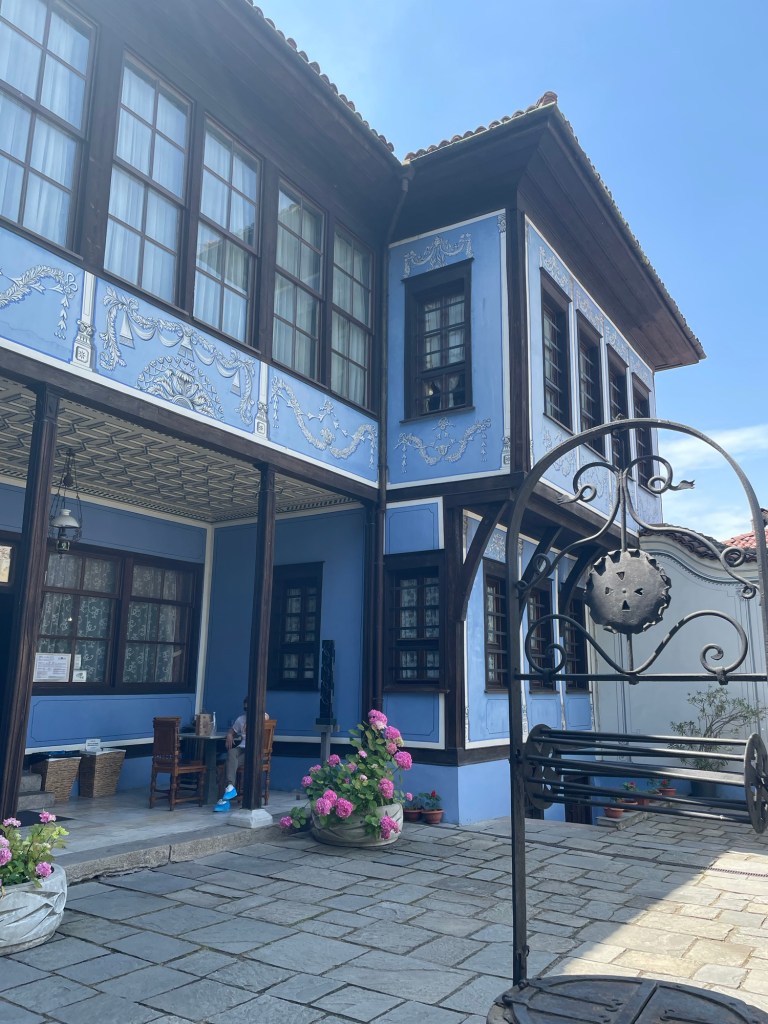
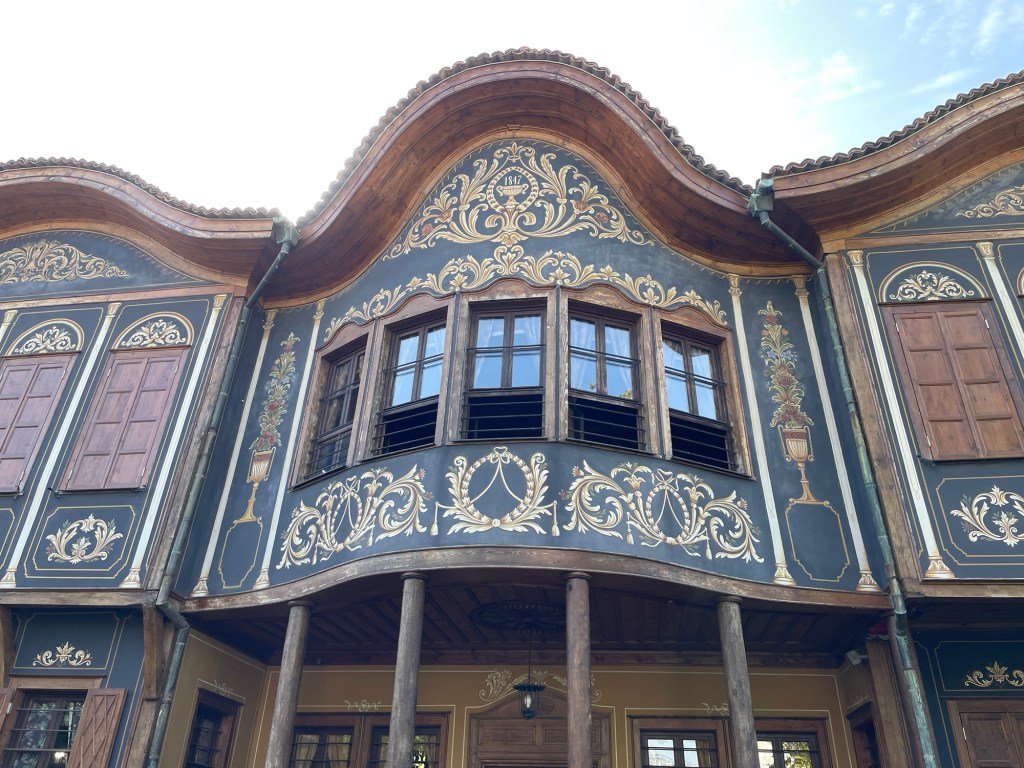
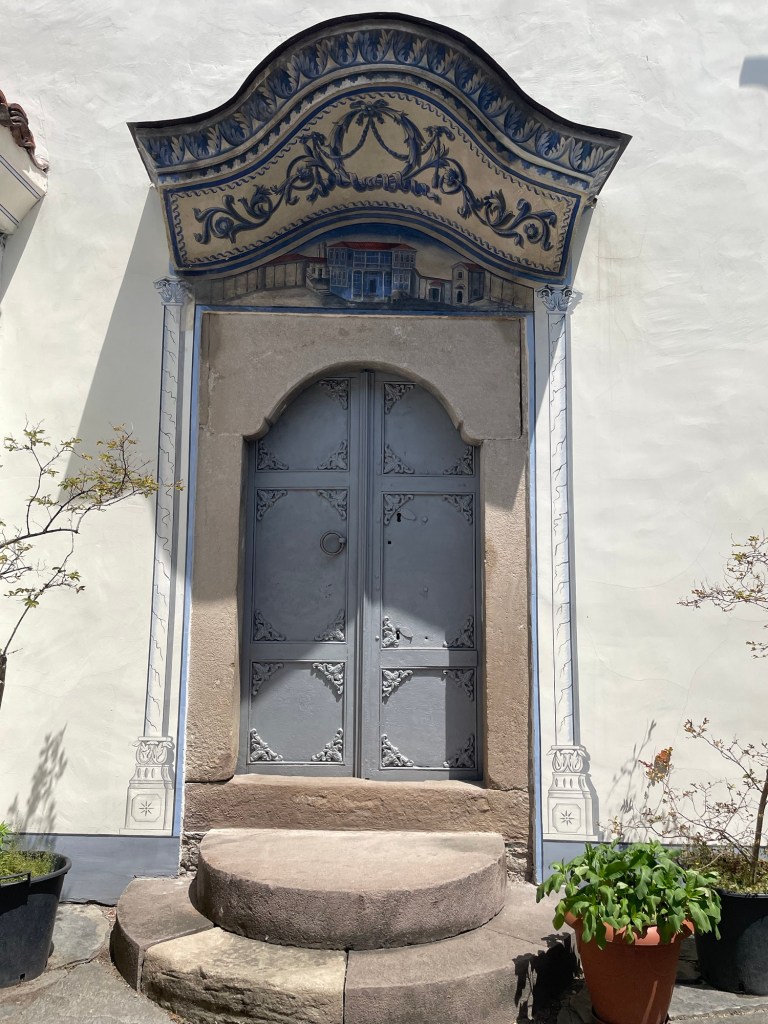
From around the late 19th to early 20th Centuries, wealthy residents of Plovdiv built fancy houses in the Ottoman style of architecture. The wood frame buildings and decoration have been preserved in the Old Town area near the Ancient Theater.
The proportions are tall with thin windows to restrict heat gain. Colorful exteriors and painted decoration exemplified the wealth of private patrician families.
The Ethnographic Museum
Much of Bulgaria’s history and culture is preserved in this family home in the Old Town.
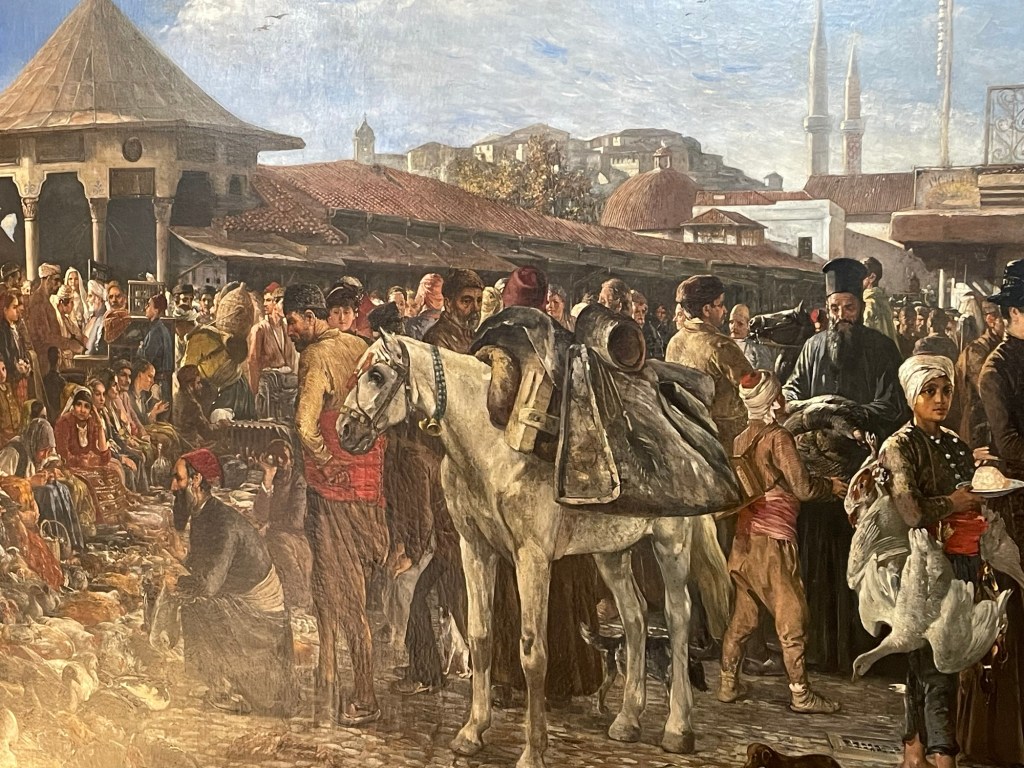
SeatingThe shaggiest bedcover everWooden String InstrumentsPainting showing a lively market scene
Many artifacts such as musical instruments, clothing, jewelry, and farm implements were displayed, as well as the handicrafts for metal forging, wool production and weaving.
Ethnographic Museum Interior
The Bachkovo Monastery
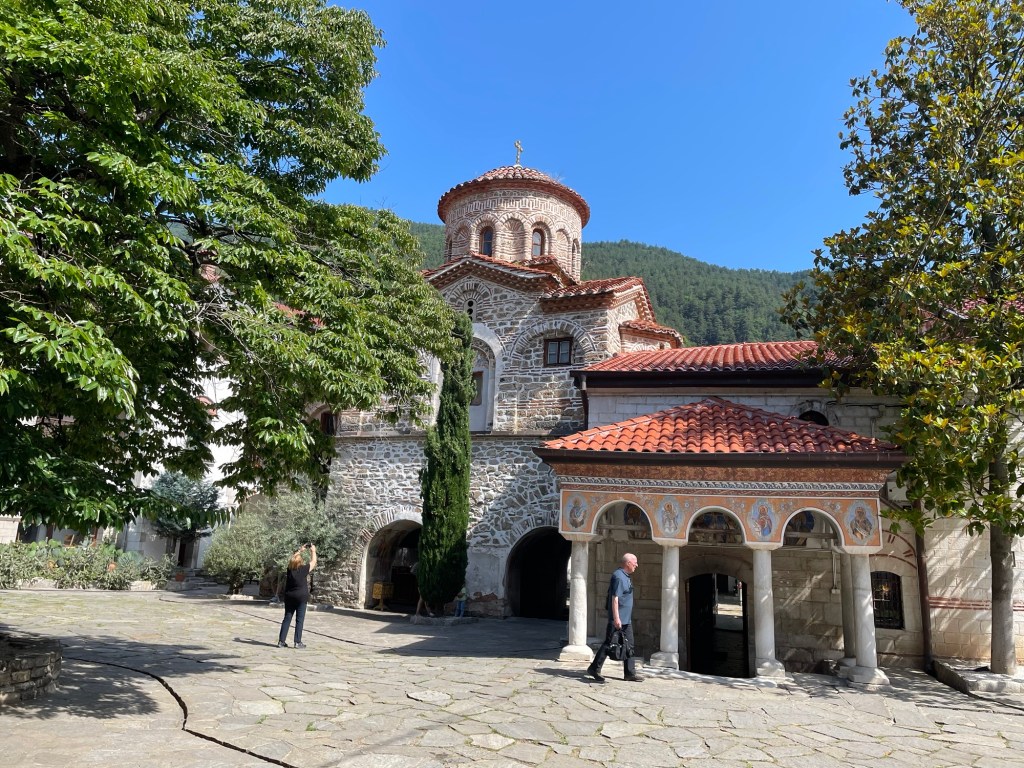
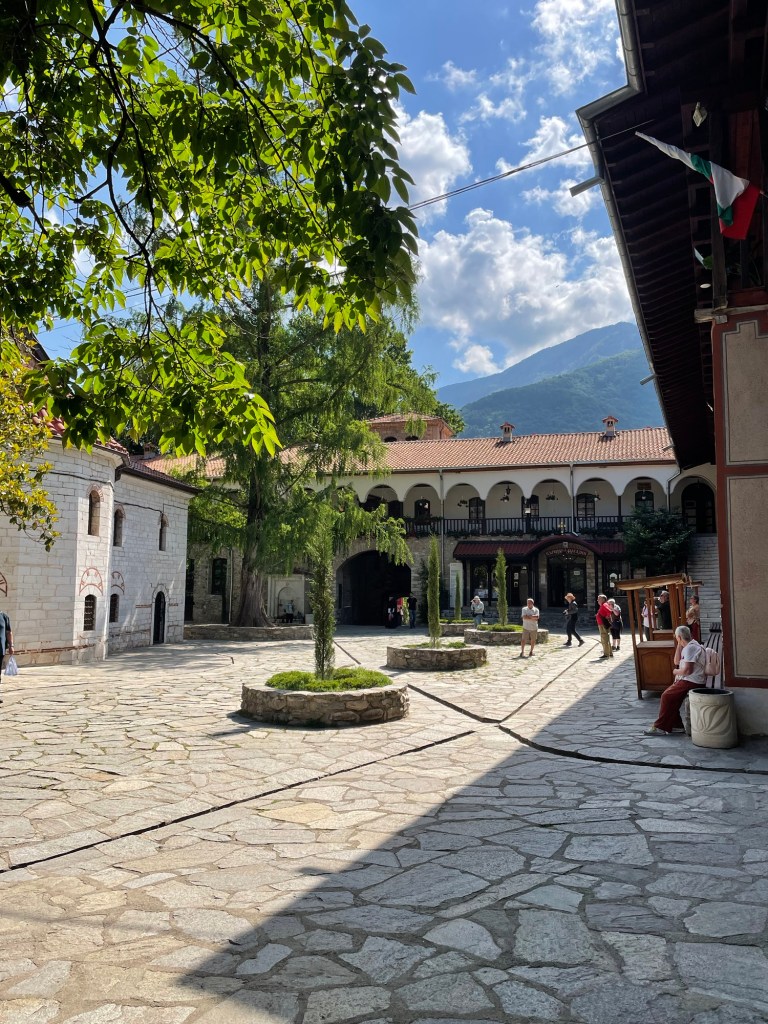
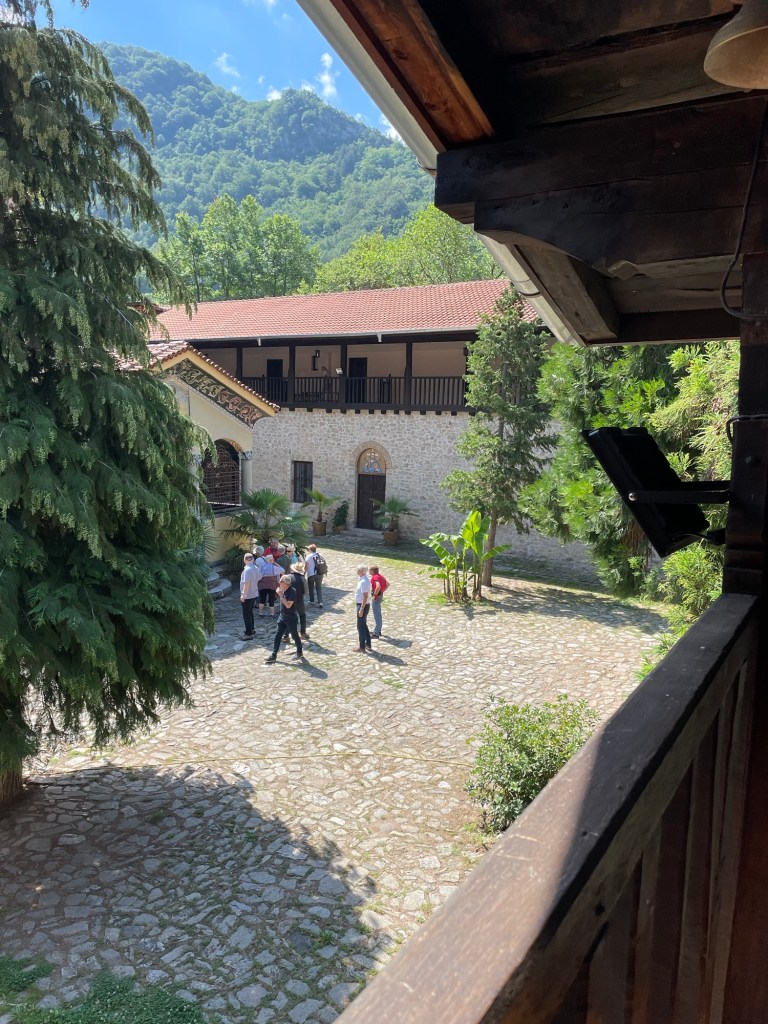
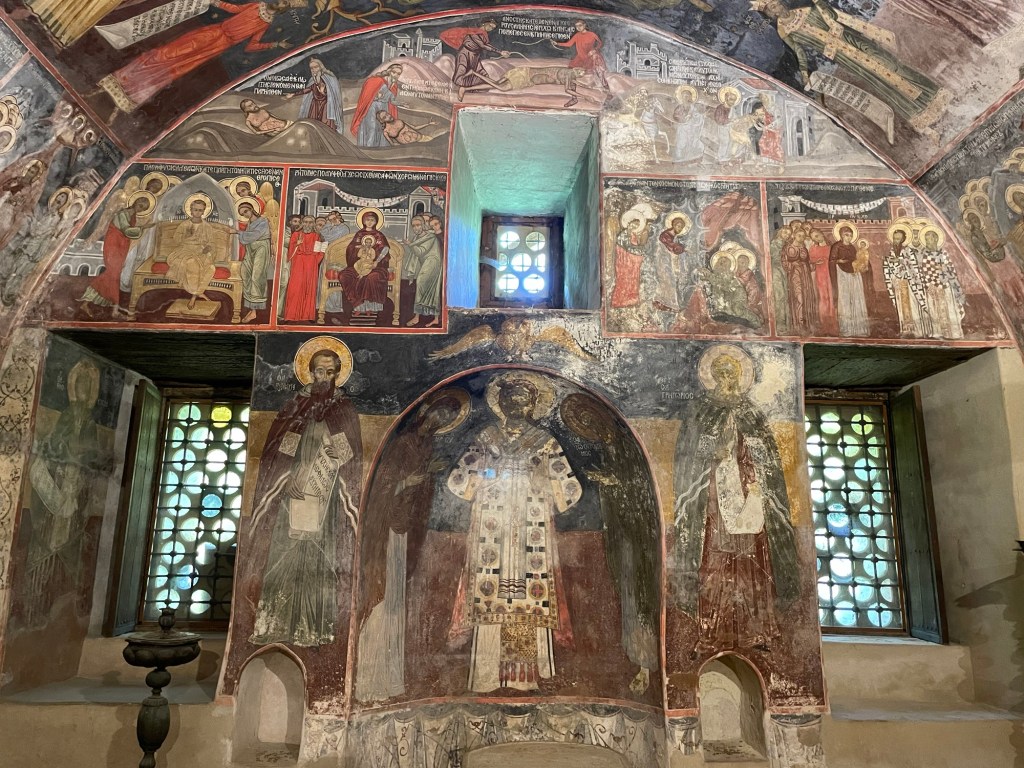
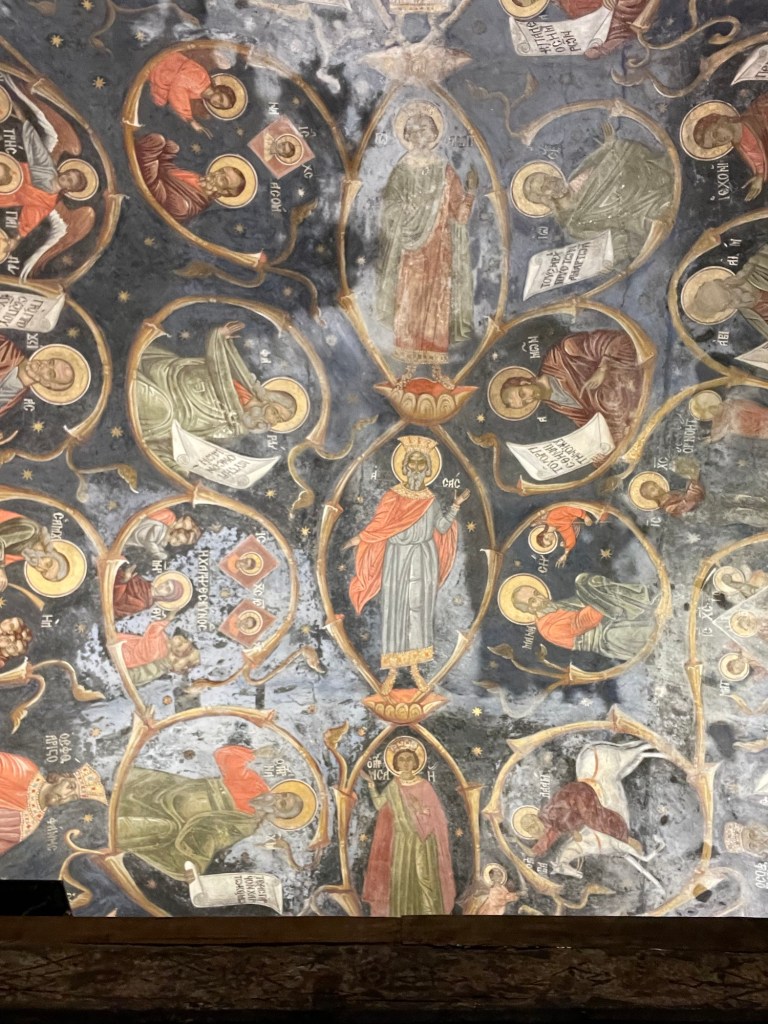
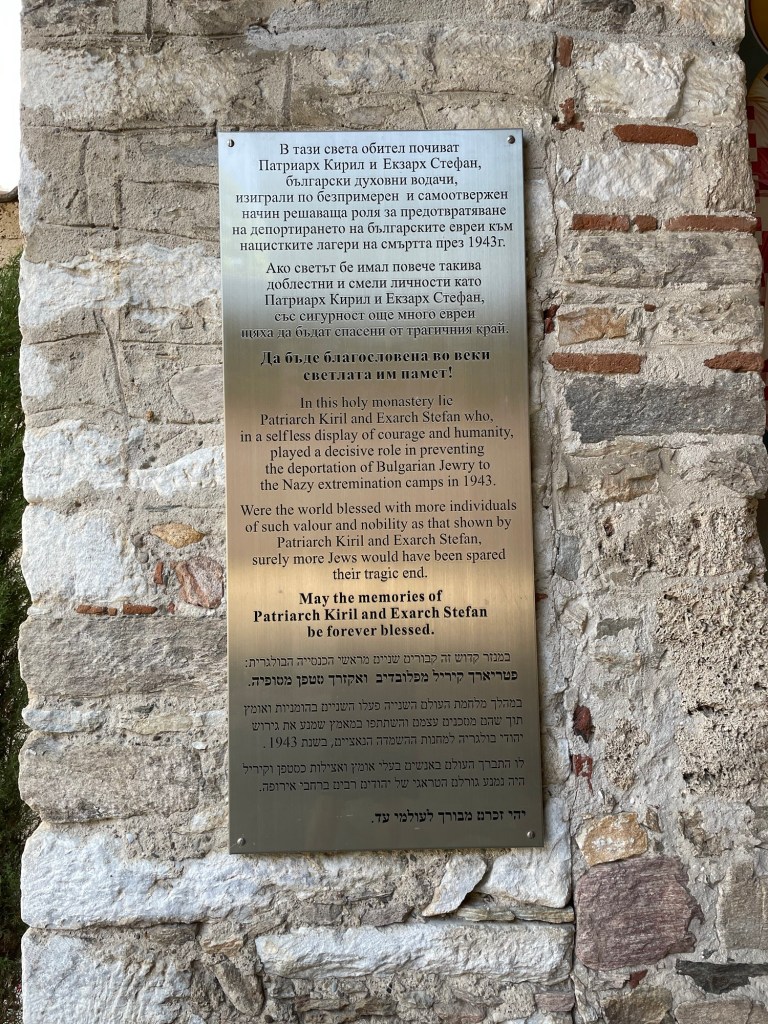
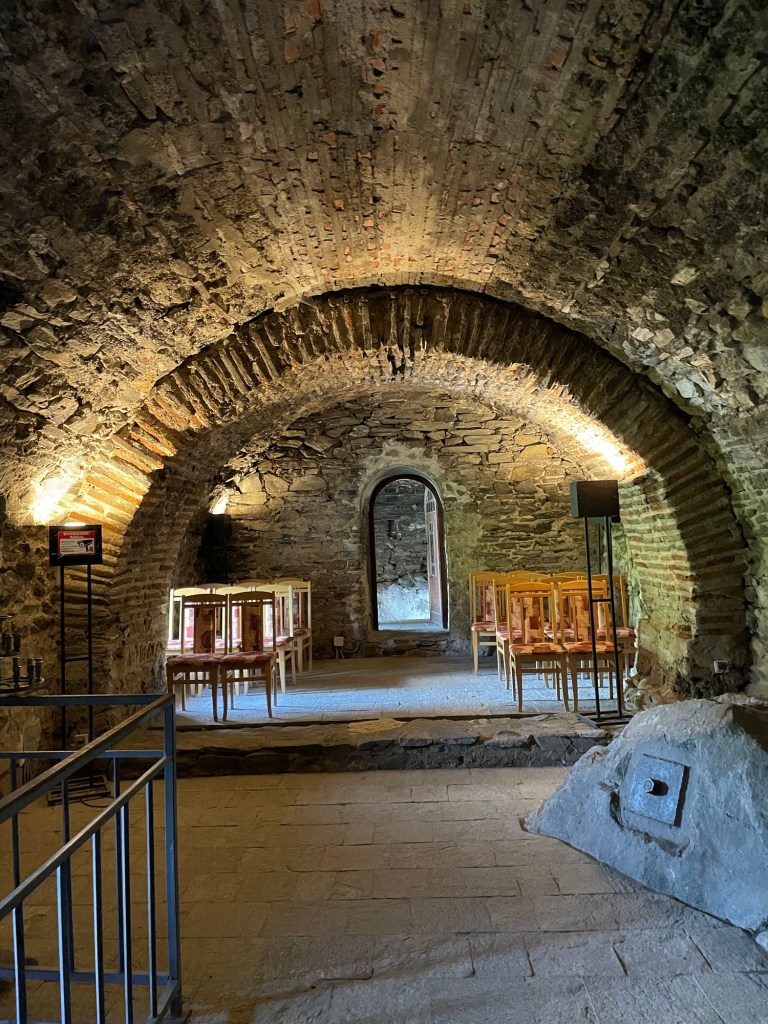
A side trip to the mountains beyond Plovdiv was a refreshing journey away from Plovdiv’s 90 degree Fahrenheit city heat. The Bachkovo Monastery and Refectory, founded in 1083, contained numerous frescoes from 1643 depicting Christian Orthodox history. The monastery was instrumental in saving many Jews from persecution camps in 1943. Historically, Bulgaria has embraced Christian, Jewish, and Muslim cultures.
Asen Fortress
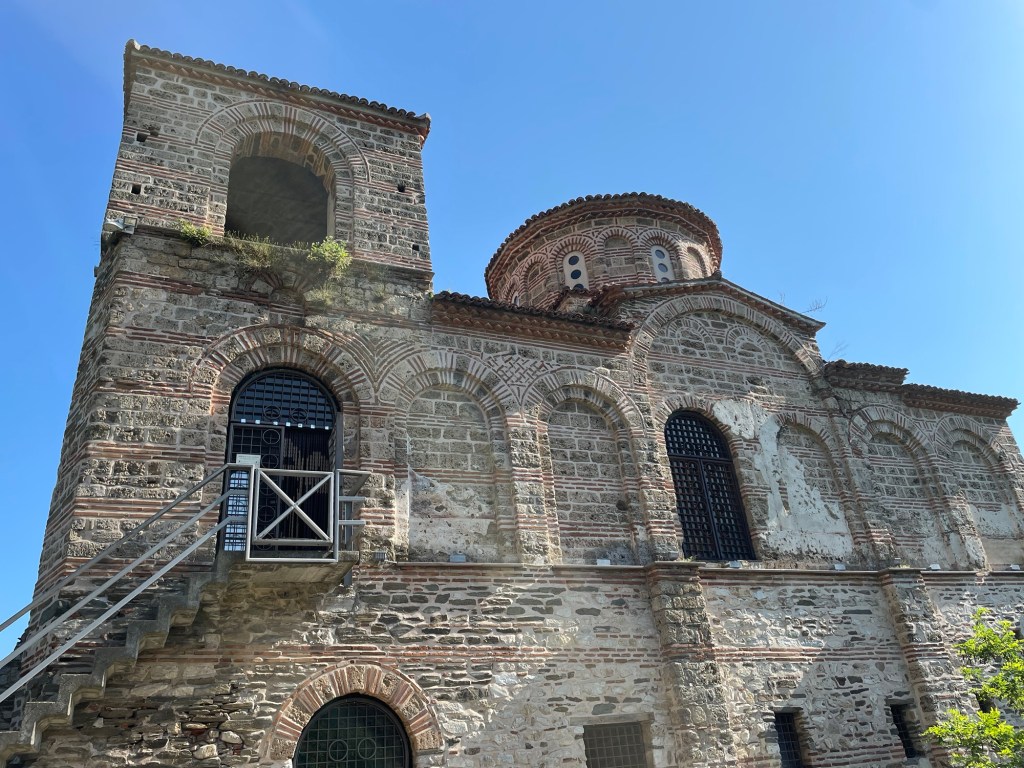
The Asan Fortress was built in the 13th Century as a defensive guard tower over the steep ravine. The location offers panoramic views of the Rhodope Mountains.
Italian Night I in the Ancient Theater
Our main purpose for traveling from Germany to Bulgaria was to attend a Tosca concert featuring Sonya Yoncheva. An opera diva born in Plovdiv, the city was excited to see their native daughter return with her stunning voice.
Dean Vatchkov as Scarpa
Ivan Mimorov as Caravadossi
Sonya Yoncheva as Tosca
No-Curtain Call
We were excited by the rare opportunity to film the performance with the backdrop of the ancient theater’s ruins.
Italian Night II in the Ancient Theater
While browsing, we noticed a poster promoting an Italian night performance in the Ancient Theater a couple of days later. We hadn’t heard of the performers, but we were excited by the chance to see more opera at the theater. Even though there was no translation for tickets or the performance, our Bulgarian friend Vladimir was able to help us purchase tickets online. We knew exactly where to go from the previous performance.
After a delicious dinner of beef tongue and grilled vegetables at a road-side outdoor restaurant, we made our way to the theater a short walk from our Air BNB. We chose our seats near the center along one of the designated marble rows in Section D. As the lights dimmed and the orchestra played a brief introduction, the lead singer appeared on stage and began singing.
We strained our ears to adjust to the music. Hmm, we didn’t recognize the opera aria at first. By the time a faint echo of a saxophone was heard along with wild audience applause, we realized that the singers were crooners and the music was contemporary pop music!
Annemarie and I looked at each other and realized that the “Italian night” was not for opera, but for schmaltzy Italian songs! The audience knew all the words and swayed to the music, from the days when Italian pop was at the top of all European charts.
We laughed at how we had misunderstood the meaning of “Italian Night”. Indeed, the term applied to pop music as well as opera music. Our minds were too intent on opera! We felt a little sheepish at the false assumption we had each made.
Nevertheless, we enjoyed the concert as much as Sonya Yoncheva’s classy performance. With 80 degree whiffs wafting through the stadium, delightful colored stage lighting, and a mellow Bulgarian audience, it was a memorable and romantic musical evening regardless.
Ramazotti Favorite
Nessun Dorma, an Italian opera favorite by all
The Volare Finale
The Dining Scene in Plovdiv and Sofia
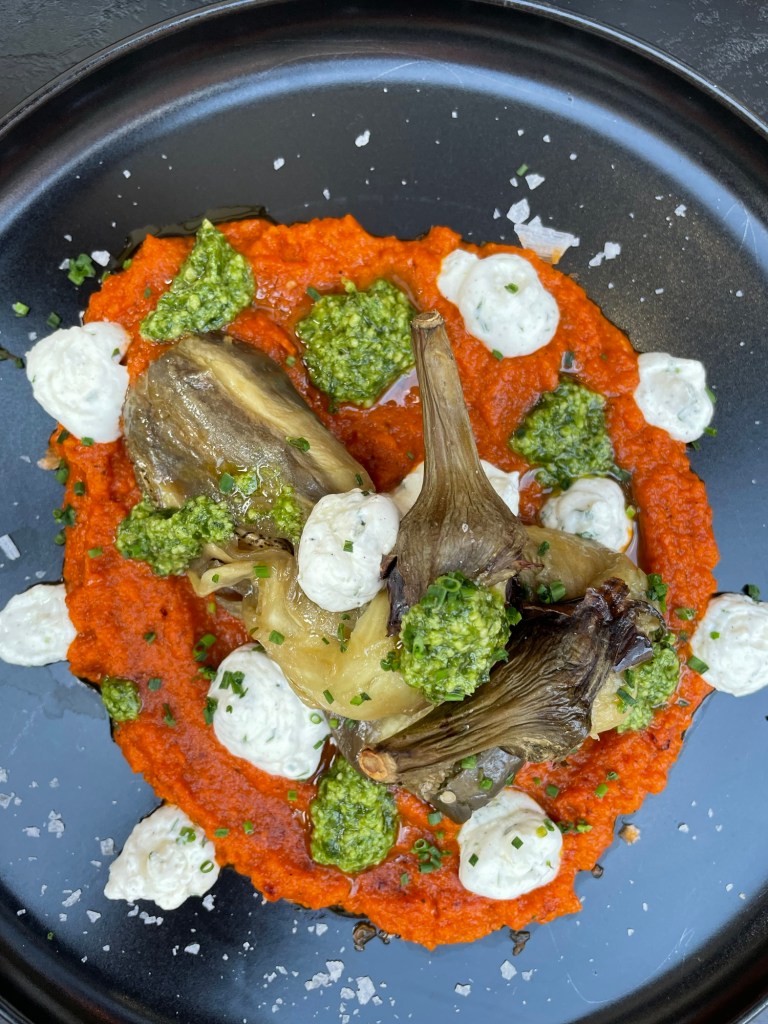
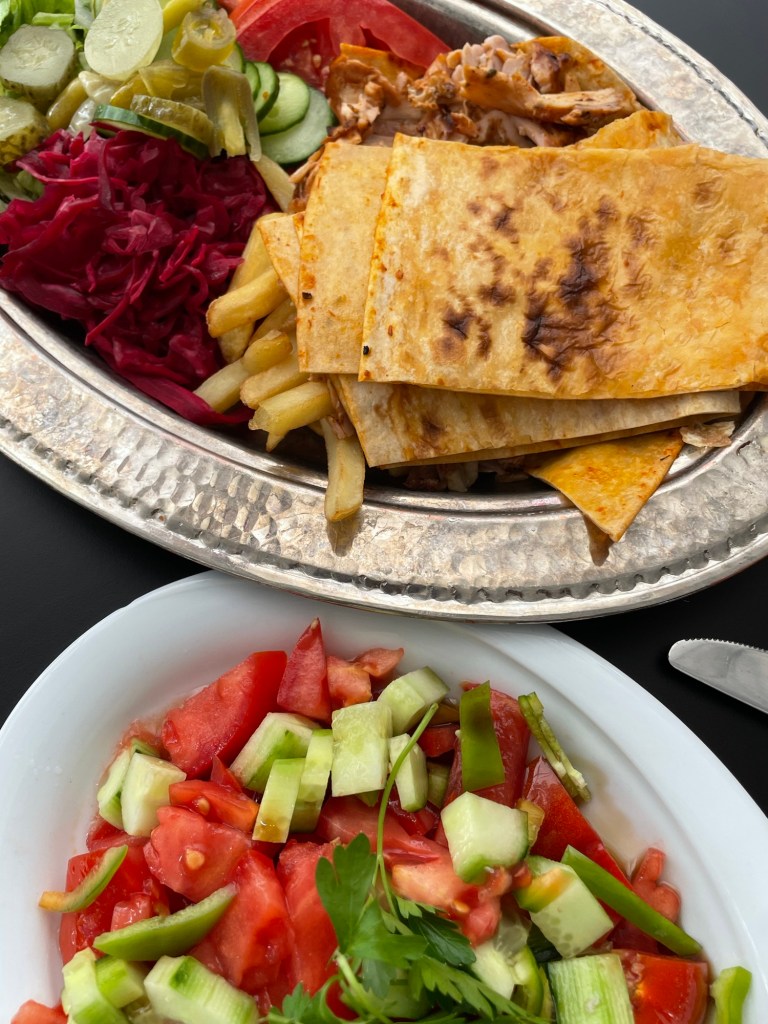
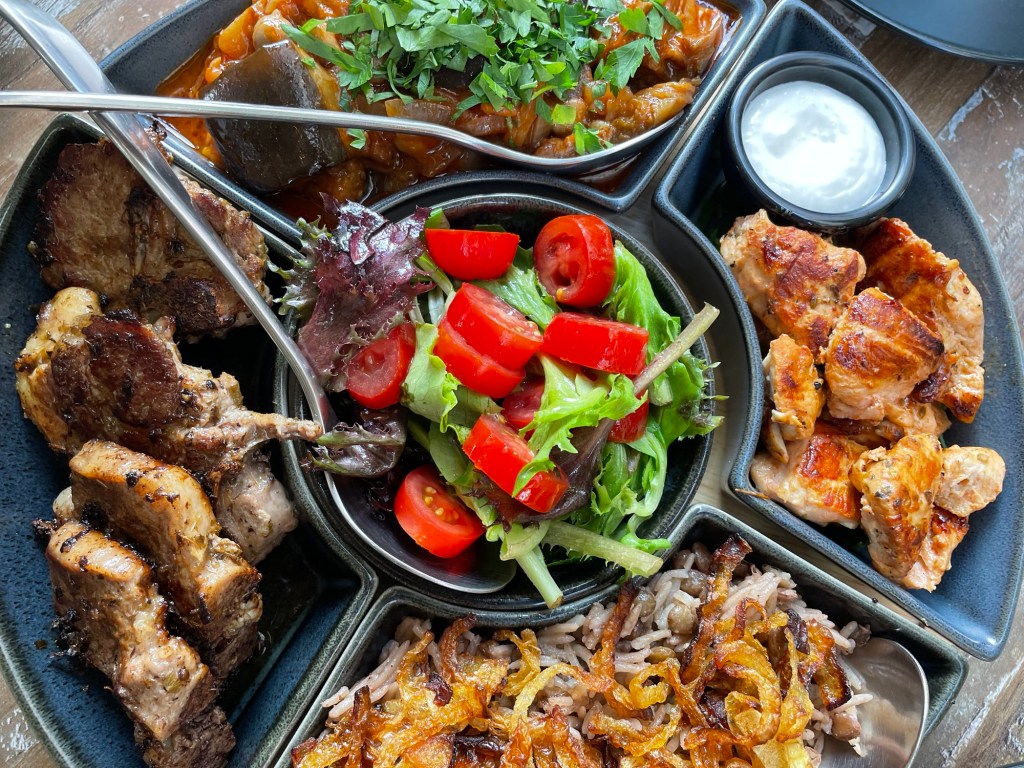
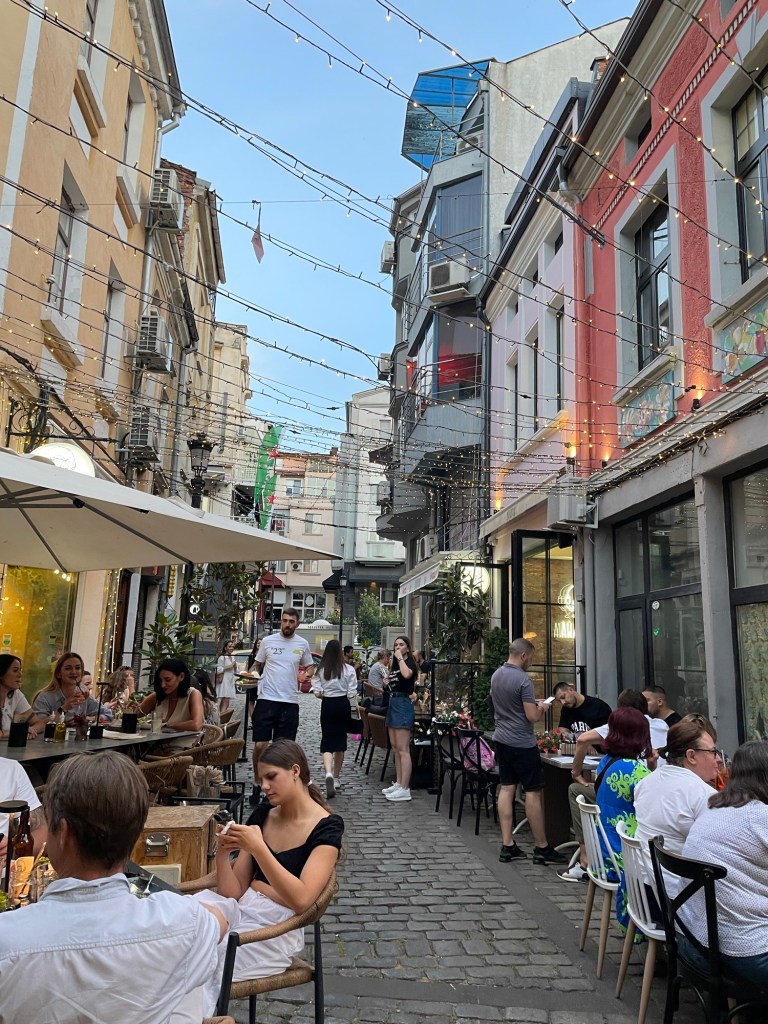
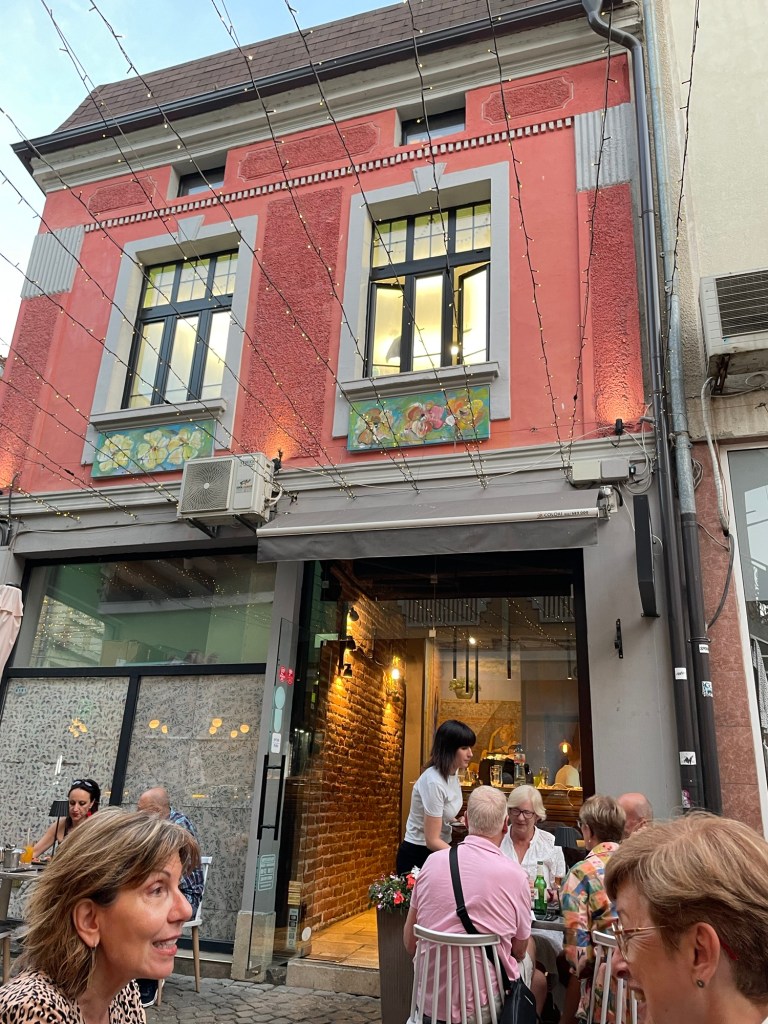
There were plenty of restaurants to soak up the tourist dollars, but even then everything was well prepared and dirt cheap. We especially enjoyed the eggplant and Turkish style mezze platters with tomato spread, pesto and burrata cheese. Cute outdoor restaurants in the Old Town area of Kapana were right outside our door and encouraged us to venture out and linger in the lively, 80-degree evenings.
Burrata, pesto and cheesePaellaCheese and eggplant spreadsClassic dishesMixed GrillKapana NeighborhoodKapana Neighborhood Dining
People of Bulgaria
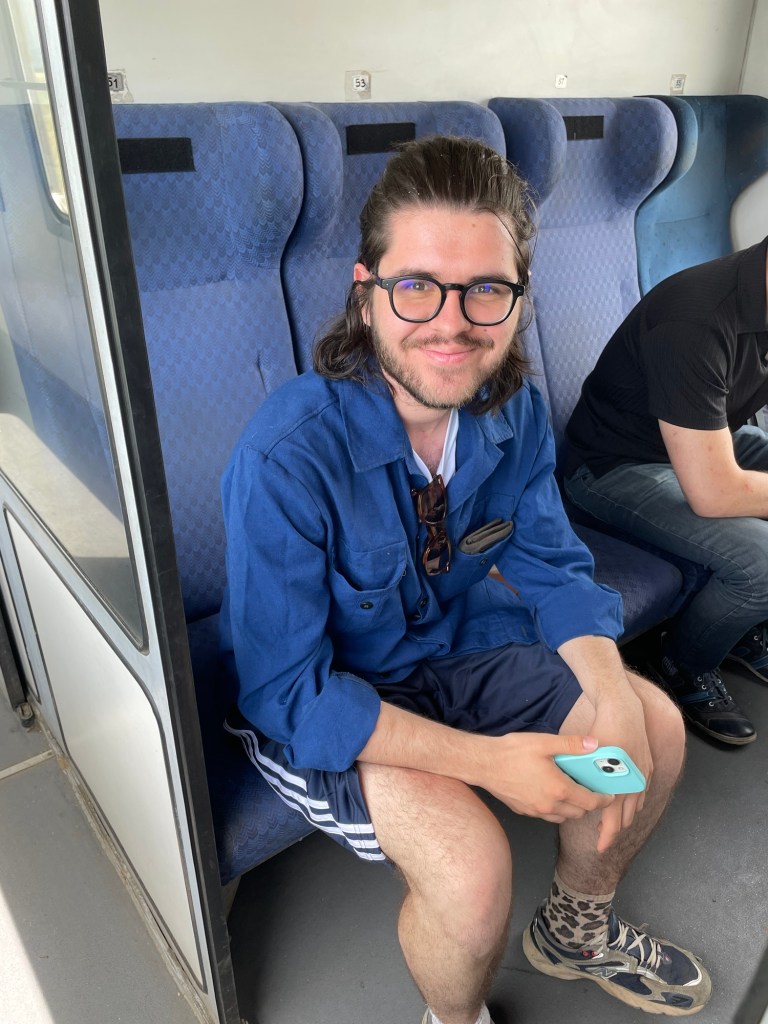
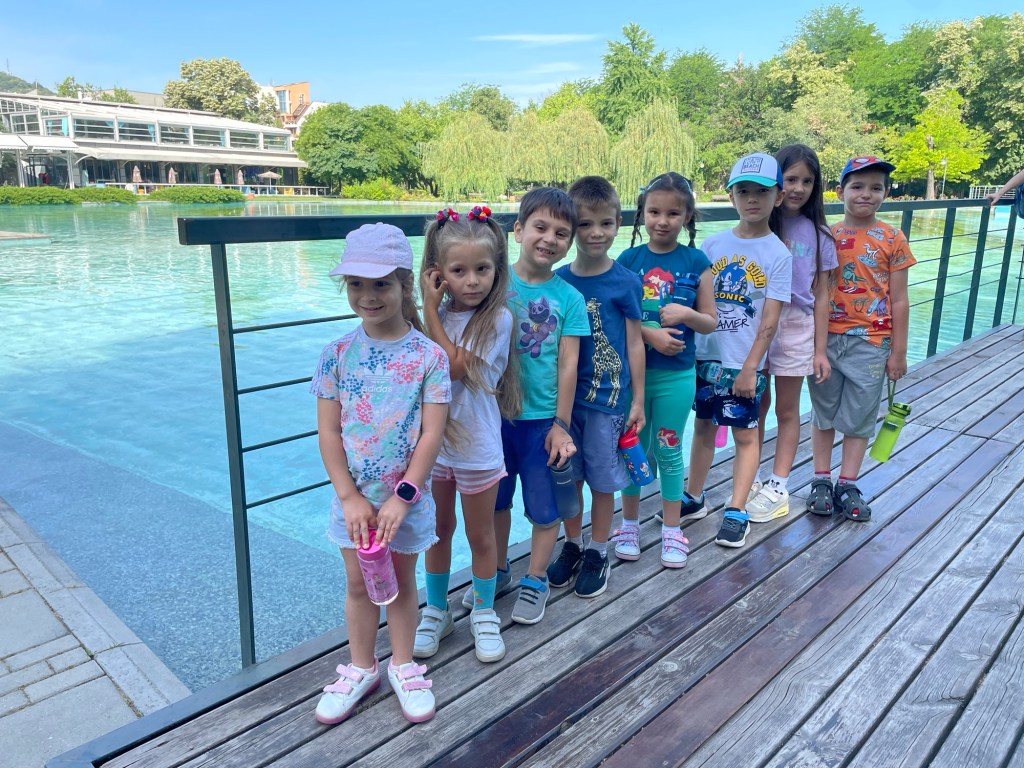
Here’s a collection of some people on the street, in the park, at the train station, and on the train:
Meeting the people in Bulgaria brings dimension and insight to the country. We look forward to coming back to learn more about Bulgaria’s rich and extensive cultural history (and more opera in the Ancient Theater!!!)
From the Military Museum to the Frauenkirche, Dresden confronts its responsibility to teach the public about Germany’s history. The Military Museum uses its historical collection to explain the consequences of war, while the Frauenkirche church reused salvaged blackened stones from the bombing to show how much of its building was destroyed.
Traces of blackened stone reused for reconstruction of the Frauenkirche
Dresden’s Elbe Valley was delisted as a UNESCO World Heritage Site in 2009 because a bridge was proposed to be built over the Elbe. It would destroy the river’s original view. Practical needs determined the decision to proceed. So now the bridge is built.
Nevertheless, the view of the river and the city’s Baroque buildings continue to be appreciated by tourists and residents alike. Historic preservation and its lasting value were challenged and the loss was contemporary society’s gain.
Loschwitz, or Lost Wits
Loschwitz, a neighborhood to the east of Dresden possesses original Jugenstijl buildings that I call “buildiful” architecture (my new coin for what I consider worthy of being sought more than once). The delightful rooftop windows typical of the era are in pristine condition and proudly wink at us.
One Eye WonderA Pair of EyesThird Eye Blind
Local Dresdners Hanne and Jens joined us at Toscana, a local patisserie for afternoon coffee and cake.
The Semper Opera and Don Carlo
The Semper Oper appears somewhat clunky and clumsy from the exterior, and its public spaces are even more awkward. Yet the intimacy of the interior for only 1300 seats makes the opera experience superior to larger opera houses. Compared to the New York Met’s 3800 seats, there is no comparison. Opera stars can focus on their tone, quality, and pacing, rather than screaming to the back of the balcony.
Our first tier seats to the side of the stage were perfect for a close up view. The story of Don Carlo gave me a historical lesson on the Inquisition, its chilling reign of terror, and about complicated royal household politics. No one was protected, not even the king or his family members, from the obligation and wrath of the Church. Love or lack of it, betrayal, and fear were the stuff that made this Verdi opera a reliable choice. It was worth devoting nearly four hours of time to be in the room.
The hyper- dramatic music was well supported by strong performers and marathon musicians. A stellar multi-media introduction, combined with a modern dance interpretation and elegant costumes, fused the entire opera together for a memorable show.
Enter Annemarie
Annemarie and I nursed a beautifully catered meal during intermission at the opera.
For those of you who have been following my world travels in the past, you will notice a new addition during this journey. Meet Annemarie. She has agreed to join me on this year’s forays to cities in Germany and beyond.
We met at the Elbphilharmonie in Hamburg a year ago during Anne Sophie-Mutter’s Virtuoso violin performance. Annemarie helped me through a lost wallet incident. In a short time, we have become close friends. I visited her in Lueneburg, her home town near Hamburg, and she has visited me in San Francisco. When I told her I was planning another opera and music trip to Germany, she agreed to join me. Combining a car trip to visit her “Heimat”, or homeland, at a 600 year-old farmhouse outside of Munich, we are packing in an ambitious itinerary.
What nerve do I have carting a native German through museums, opera houses, and historic treasures!?! I can somewhat justify my Rick Steve’s rips and having participated in numerous Goethe Institute’s extracurricular activities over the past ten years. Yet I am hardly the experienced guide.
But at Annemarie’s instigation, I am going to try delineating what works for me, at least from my Asian-American eyes.
Annemarie lived in the US for a good part of her early adult life and was busy raising a family after her return to Germany. Now, twenty years later, she is ready to take on the cultural world. I’m anxious to learn more about Annemarie’s roots, which initiated our conversation about traveling to her home village. Inevitably, we will share in our many life experiences and mutual interests along the way.
As we embark on this journey, I hope you will enjoy following our jabs into music and culture in Germany, Bulgaria, and Italy!
A week in Sydney has given me ample time to both enjoy and scrutinize this world-class city with objective consideration.Skeptical at first, I was quickly swayed by the Opera House and the infusion of Asian culture. A continuous palette of cultural activities couldn’t help but seal my positive opinion of this city.
In a way, Sydney doesn’t get the recognition it deserves. Respecting aboriginal rights, embracing multi-culturalism, good planning, and fortunate climate all contribute to this energetic outcome. Everyone should come and participate in this cultural experiment in the making, and perhaps, like I did, discover why other parts of the world are unlike it.
The Views, the Views, the Views
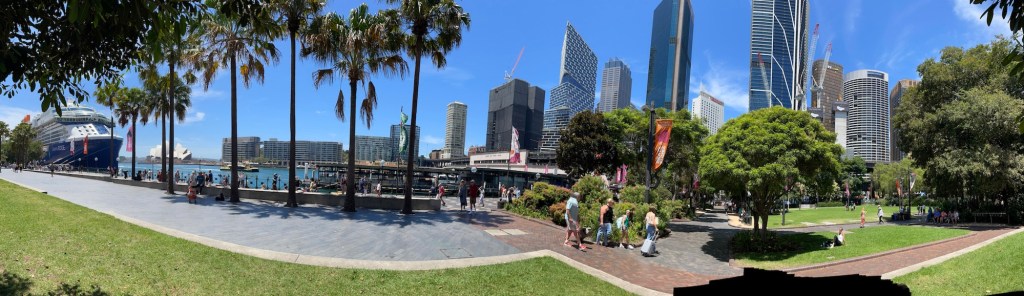
Compare the activity and views below to San Francisco’s Fisherman’s Wharf, the Cruise Ship Terminal, and the Ferry Building along the Embarcadero:
Wherever you live in Sydney, you get a good mental picture of the fact that you are located near water. Gently rising hills provide sneak peaks of the harbor and adjacent seaside locations.
The Australia Museum
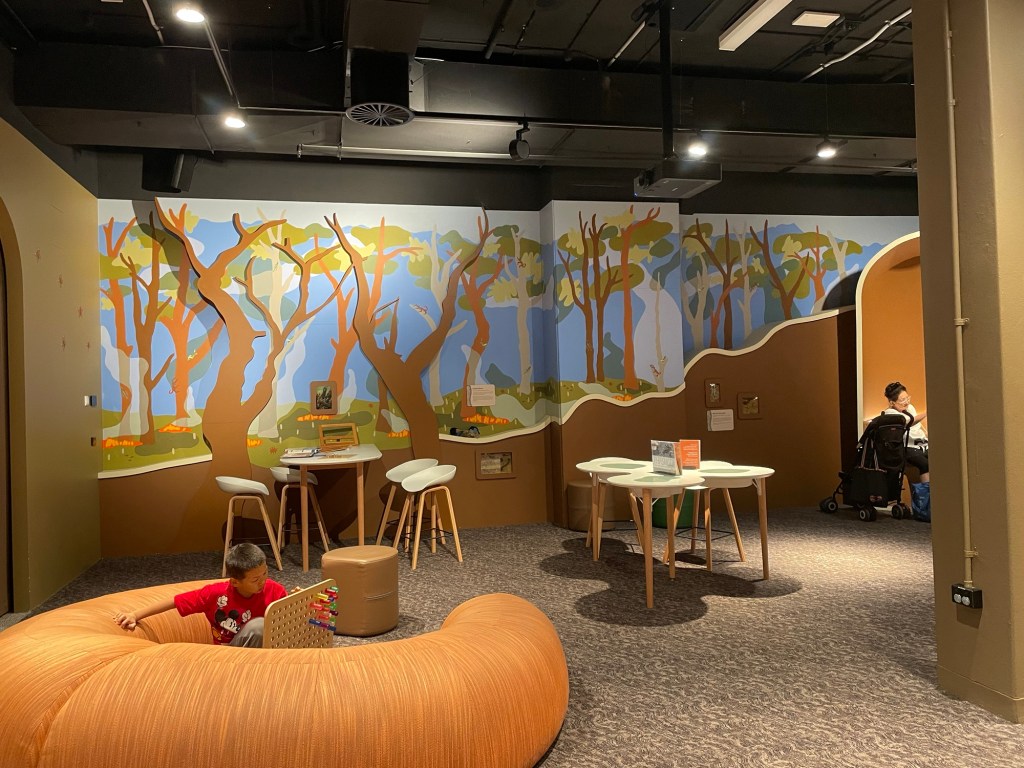
This national history museum offered interactive displays that were entertaining for both children and adults. The good old British tradition of documenting and researching the natural world is evident here, along with excellent communication and approaches to educating the public.
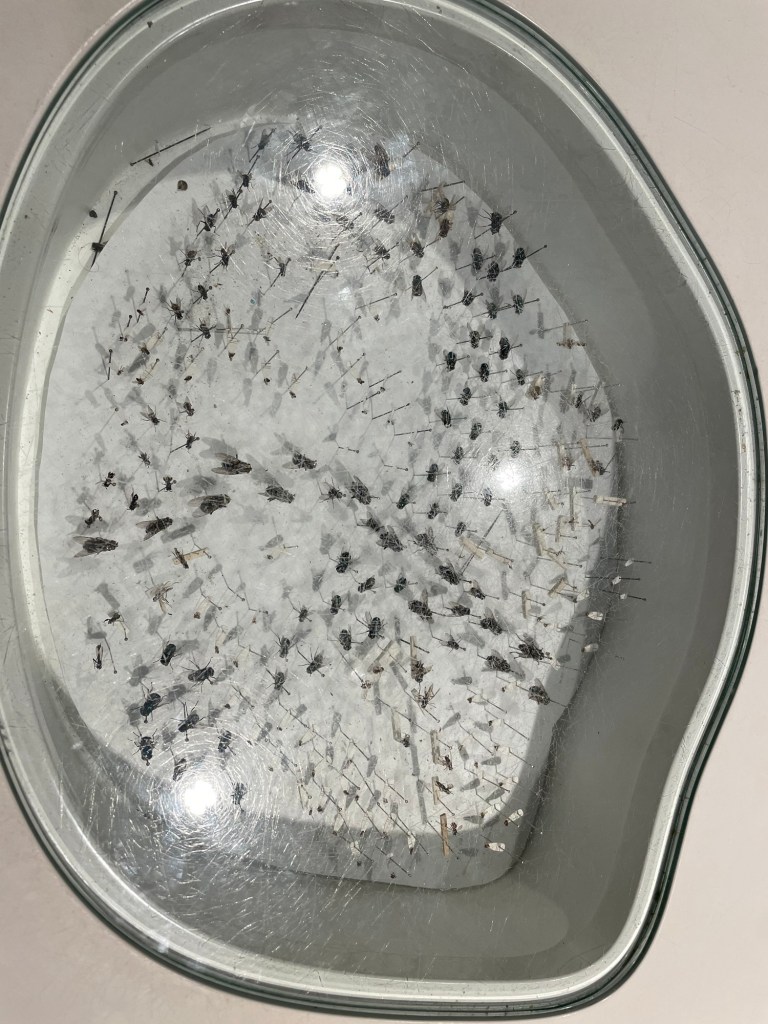
Museum EntranceLife Size Preserved SpiderBug CollectionInteractive Kids’ ExhibitsCaptivating Video at the Australia Museum
Museum of Contemporary Art
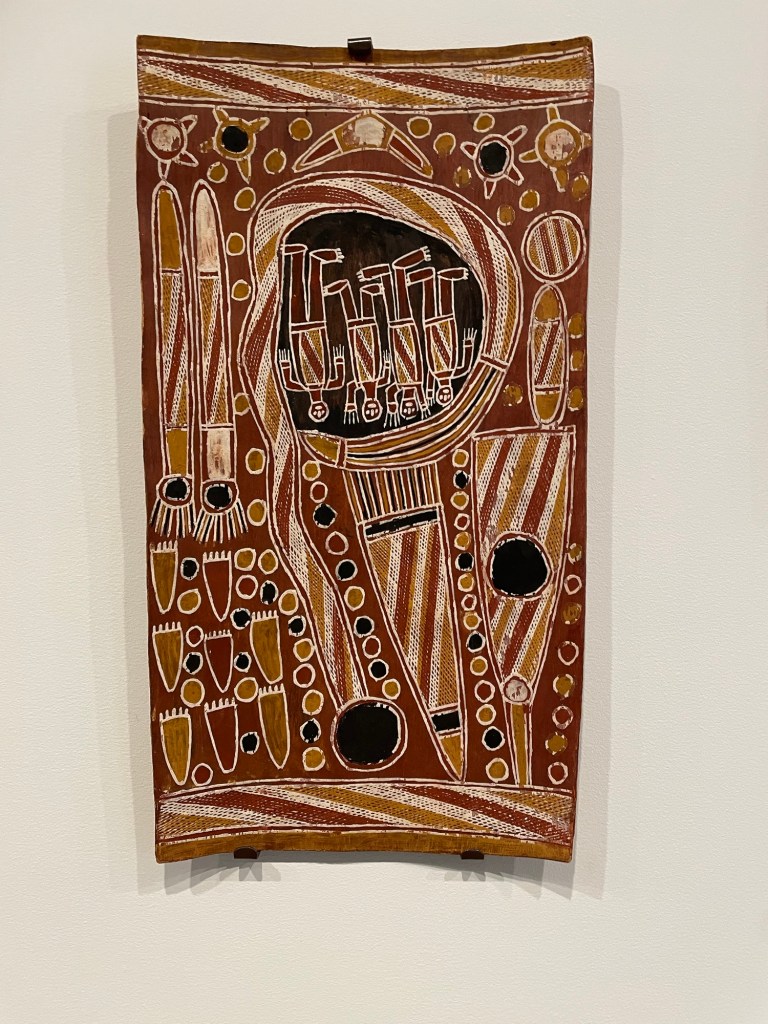
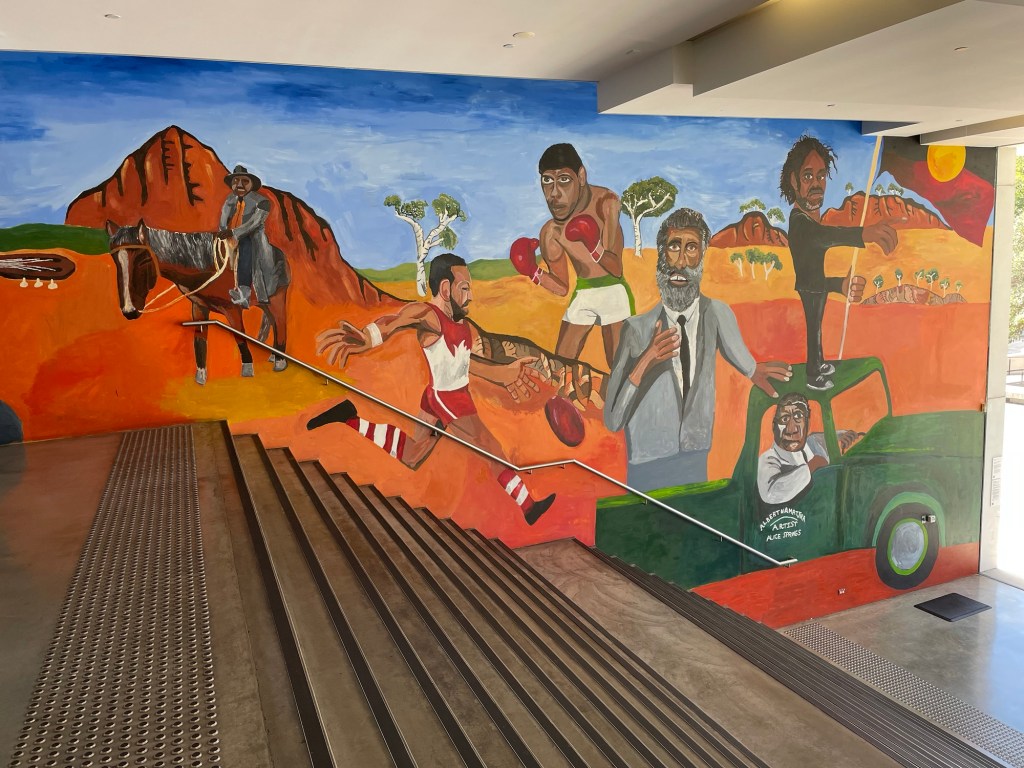
25% of the museum artwork is dedicated to aboriginal communities and their art. It was inspiring to learn about the original inhabitants alongside the latter day settlers as they form a context for artistic expression unique to Australia.
Bark PaintingBark PaintingEntrance to MCAExterior View from MCAExterior View from MCA
Conveniently located adjacent to the Cruise Ship Terminal and the Circular Quay, the MCA shared magnificent views of the Sydney Harbor Bridge and Opera House.
The Taronga Zoo
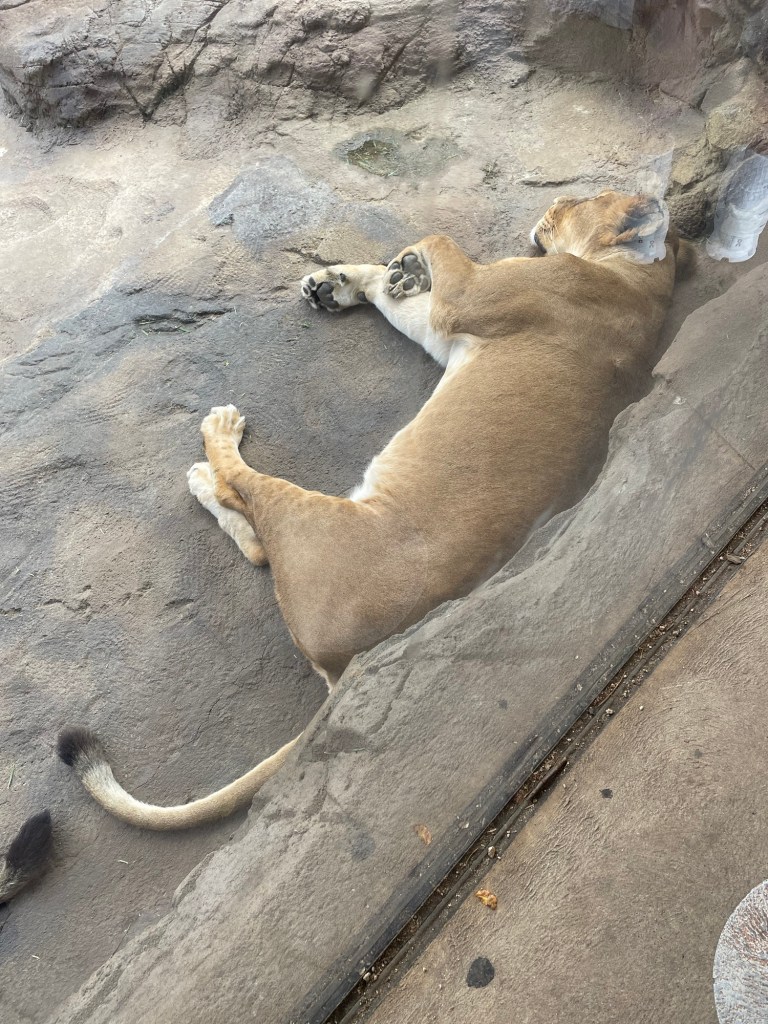
A quick 20-minute ferry ride to the Taronga Zoo made a perfect family outing. Elephants, giraffes, zebras are on display here, along with native animals such as the emu, kangaroos, and koalas
Naturally the koala bears were the first items on my agenda. I was still grateful that I took the extra two hours each way earlier in the week to visit the Ferndale Koalas outside of Sydney. The access to the male, female and baby koalas were more accessible, b ut I got my fix both ways.
The zoo’s proximity to the water and views of the city from the ferry continuously compete with the venue’s main attractions. Visitors and residents alike form an intimate connection to all points of the city wherever they are. Even the animals got a view of downtown Sydney!
More irresistible views of the city and its landmark opera house from the Taronga Zoo ferry:
To top it off, walks through stately Hyde Park in the middle of the city will make you fall in love with the city:
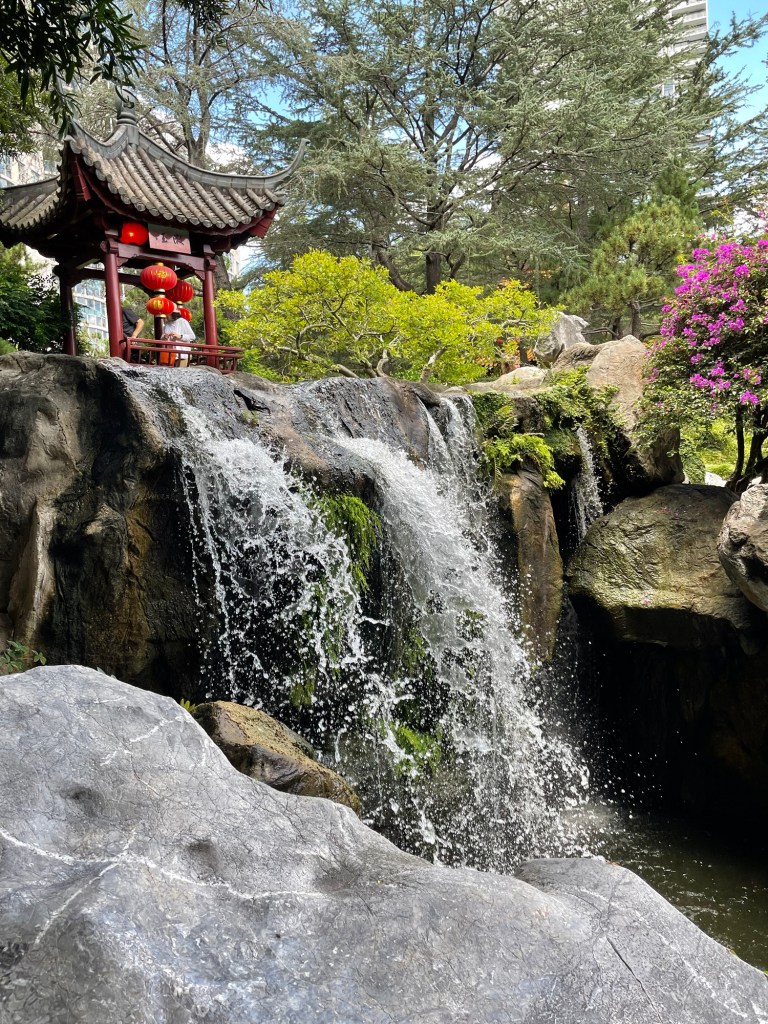
The Chinese Garden
Just footsteps from our hotel in the Central Business District was a beautifully designed Chinese Garden. We happened to be in town on Chinese New Year, and the festive atmosphere was supported by many children and even adults dressed in Chinese outfits. Being 20% Chinese, 20% White, and 16.5% Asian, the Asian influence is undeniable. At least in the downtown area, noodle shops and late-night retail services abound.
In the next neighborhood, Chinatown was hopping with tourists over the weekend. Festivities were topped by a fireworks display that was a fitting finale to our fascinating week in Sydney.
The difference in each Chinatown could be marked by its beginnings. The influx of Chinese in Sydney began in the Eighties. In comparison, Chinese immigrants who came illegally to San Francisco several generation before were primarily farmers and laborers. Exclusion laws, segregation and isolation dictated much of the history of San Francisco’s Chinatown.
Quirky Sydney
He-man activity at the bar, 5pmGigantic Tarantulas
From photos above:
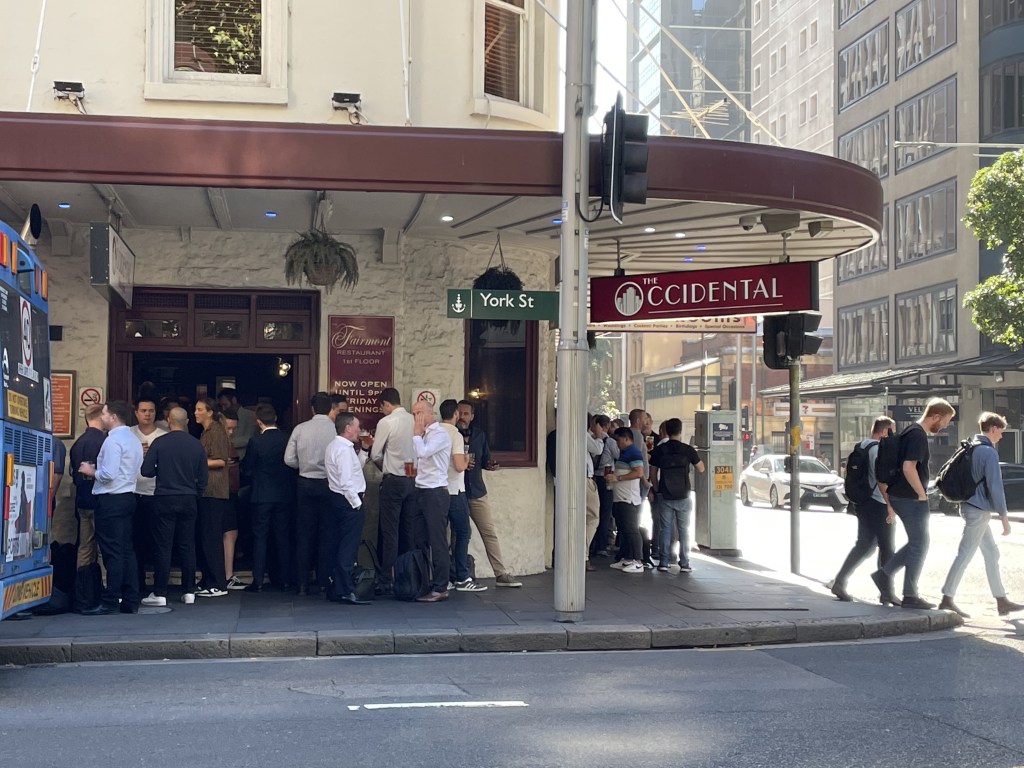
He-man drinking is alive and well in Sydney.
Not to forget Australia’s convict past, this building’s graffiti seemed to capture the mood of the country.
A reminder of the gargantuan creatures that have inhabited this vast country.
Adventure programs galore on broadcast television. I was fascinated by HE-man energy shows. Ex-excavator operators used their skills to find gold in Africa, American yokels from different corners of the country yanked logs stuck in rivers, and of course love at first date programs added to the intrigue. Maybe all TV is like this, but watching it gave me a window into the world of the Australian mindset.
After a solid dose of these mesmerizing shows, I was wishing I could watch TV as I did when I was young. It felt strangely comforting to watch a screen flicker into the night and allow a machine control your brain and what you were about to see. I wasn’t stressing out over instagram posts, nor was I constantly checking for emails. The empty promotions for advertising or political campaigns could at least be avoided, and not in a better, but different way.
Who knows? Maybe we will all go back to TV one day, when AI programming is done for you on your phone. You no longer have to search The NY Times guides to 50 best Netflix or Max shows to watch before they disappear. You just turn it on and get given it on a bigger screen. Yikes.
“I Left my Head in Sydney”???
Despite many confident conclusions that Sydney is like San Francisco, that old saying is obsolete. In its early days, Sydney may have appeared to be a poor second cousin to the romantic image of the City by the Bay, and where Tony Bennett left his heart.
But no, Sydney is not just like San Francisco. True, it’s missing a romantic tune that everyone can sing. But that’s just about where the shortcoming stops. In a nutshell, Sydney seems to be more vibrant, safe and sane. At least in my opinion and after ten days here, traveling with myself and others.
If Sydney has 5 million people compared to San Francisco’s population of 750,000, Sydney should have more than five times the problems. Yet it feels like it has five times fewer problems. Why is that?
People work in Sydney! Tons of workers in the financial district dress smartly, rush to get their lattes before facing a day in the office. This is a city for crane-spotting, but they were too numerous to count. Maybe it, too, will reach a climax like San Francisco’s financial district. The pandemic didn’t affect Australia in the way it did in the U.S. But bad on us for what happened during that time.
San Francisco seems to be tired, shaken, and ailing. It’s crashing by its own success and in need of solving some major societal ailments. Lack of housing, income disparity, and political uncertainty contribute to the insecurity. But those are not just predicaments for the city of San Francisco. More people across the globe share the same disease that the American people are facing.
Things could change in either direction quickly, and my opinion may change accordingly. Until then, escape to Sydney. It has more hope for the future. If the problems are here, at least they are different. And seeing them photoshopped out of view, you have time to enjoy the scenery.
Here are a few photos of a museum in Luneburg, crazy train travel on a 49Euro ticket throughout the country, and sights in Lubeck, famous for its marzipan (I bought 2 lbs!)
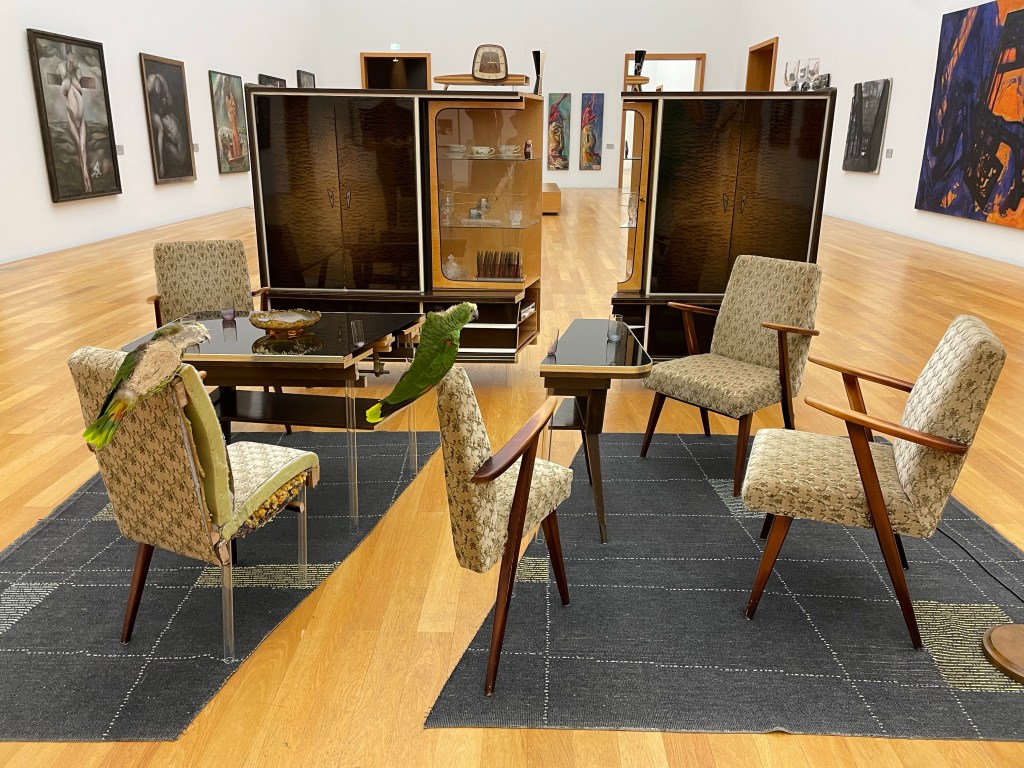
Sammlung Henning J. Claassen
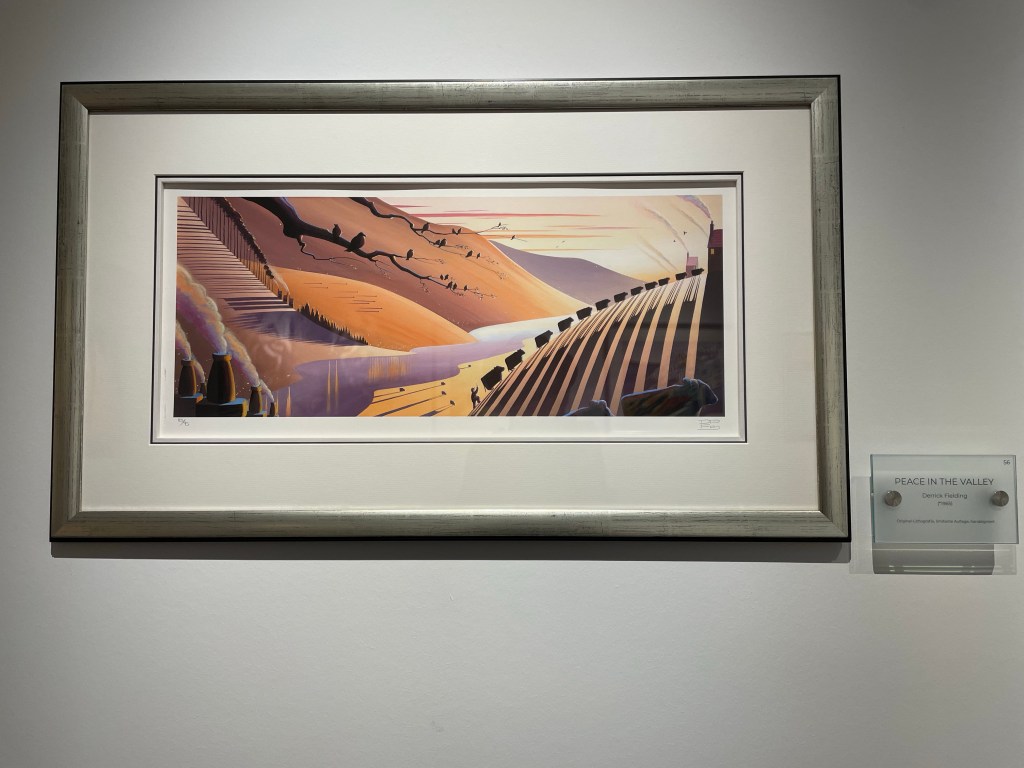
This was a beautiful gallery on the outskirts of Luneburg with a modern art collection with some examples shown here.
Train Travel in Germany
I somehow managed to snatch an online ticket for the month of September for only 49 euros! Crowds were intense over the weekend, but much saner during the rest of the week.
Friend Annemarie with sendoff from Luneburg
Lubeck
Idyllic Boat Cruise
Climate Action Protest in downtown Lubeck
A Last Look at Hamburg
St. Pauli from the Elbphilharmonie Plaza
A Newly Found Friend
Lively. Vivacious. Warm and friendly. Crazy. These are words that describe my new best friend.
It all started with a lost wallet. That is another story to be told, but let’s take this moment to a better place.
The Elbphilharmonie in Hamburg is the blessing in disguise. I had just taken my place in 16S (as in 16thfloor), Row 4, Seat 18 in the rafters at the sold-out concert. Soon thereafter, Annemarie arrived and greeted me as she sat down in Seat 19. We exchanged pleasantries and discovered that we had purchased tickets the hour before from the same person selling tickets outside the concert hall.
A third and fourth person appeared to claim their seats, and we all happily shared stories about how clever we were in snatching our tickets. Anne Sophie Mutter, the soloist, was a world-class violinist about to perform with a dozen other virtuosi string musicians.
After the exhilarating performance, I learned that Annemarie had worked in Chicago for 14 years. She was a marketing pro in the shipping business and was immersed in her life and work. Her warmth and charm reminded me of the inimitable friendliness of those from the Midwest. Growing up on a small farming village outside of Munich with four brothers, Annemarie had learned how to stand up for herself. She attributes her self-reliance and independent nature to her family relationships.
After the performance, Annemarie convinced me to visit her the next day in Luneburg, where she lived. I used my 49-euro, contactless monthly ticket to take the train there, a short hour-long trip outside of Hamburg. She met me and escorted me to her apartment, a mere five-minute walk from the train station. Her beautiful apartment was impeccably decorated with white carpeting and walls, soft modern furnishings, a few carefully chosen hand-crafted antiques and splashes of red here and there.
Picture windows framed a soothing garden outside, with greenery as far as the eye could see trailing down to a river beyond. A window cracked open allowed the breeze from the recent shower to waft inside. I felt so lucky to be invited into this luxurious German home! After Annemarie explained her work in the States, she described her humble upbringing. Her family grew hops for the breweries in Munich.
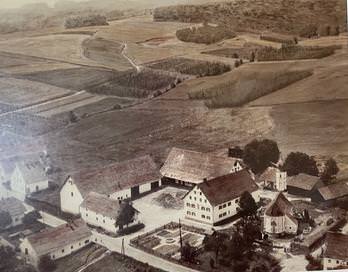
The two upper floors of her huge 20-room farmhouse were used to store and process grain. During harvest time, workers would load and hoist the hops that had been thrashed from the stalks to the top floor. The kernels would be poured into huge canvas sacks that were suspended by a hole on the bottom of the upper floor. They were then pressed into the sack while hanging down to the floor below. Using their feet, workers would then tamp and stamp the kernels inside the sacks to compress and leave them to dry.
Moarhofer, Putenhausen, Hallertau (outside of Munich, Germany)
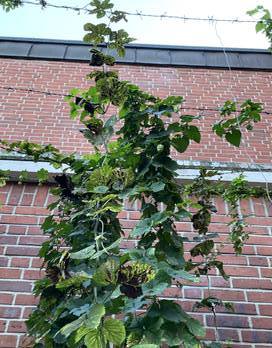
On our walk through the quaint town of Lueneburg, Annemarie stopped to show me one of the random wild hops’ vines. A plump kernel at the upper tips of the plant looks like a giant white raspberry. Annemarie broke it open to show me what it looks like inside. She then closed her eyes and took a deep whiff. Her face broke into a huge smile. It immediately brought her back to her childhood, and in a moment she took me there with her.
The hops vine
I too, had suddenly flown to this fairy-tale town to Southern Bavaria. I had often seen lush green fields and the tidy plots of German farmland. I instantly connected to the description of her humble beginnings. They reminded me of my mother’s childhood in rural China. I. too, closed my eyes and allowed the thought to take me there.There were many other stories that Annemarie told me about growing up in Germany and living in the States.
After sharing wine, glorious concerts, and even a special overnight at her lovely home, I treasured this story about her childhood. We connected in many ways. While names of the farm families change, Moarhofer continues. I would love to visit there one day. Annemarie’s vivid description brought the photo to life, and her friendship has given me the reason for investing in the German language.
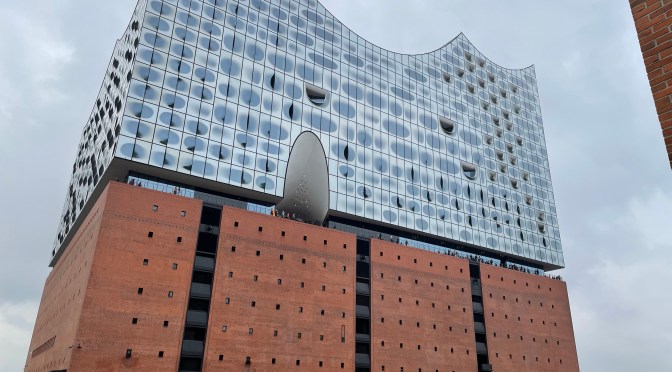
Approach to Elbpharmonie Concert Hall over parking garage and hotel levelsLife at the top
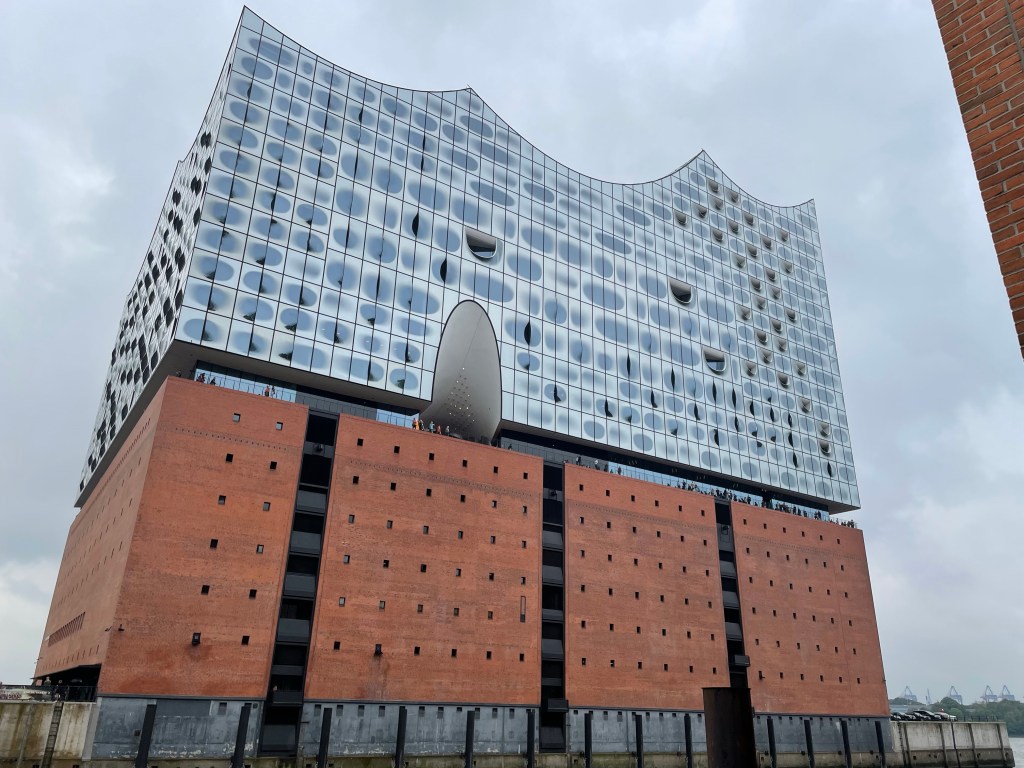
My primary interest in visiting Hamburg was the Elbphilharmonie, designed by Swiss architects Herzog and DeMeuron. In my book, it’s easily among the greatest modern buildings in the past hundred years.
It’s not flawless. But the experience is thrilling. As a destination, visitors marvel over its design and are overwhelmed by its prominence. Like a giant supercruise ship lifted out of the water, it sits on a promontory to the western edge of the city.
It’s now a destination point with tons of tourists from Luneburg to Buenos Aires. The size and massing establish its presence and its whimsical openings and surface treatment are intriguing,
There are few buildings I consider worthy from both interior and exterior perspectives. but this one exceeds my expectations. From the first encounter with the curve escalator to the 360 degree views of the harbor from the top, there is no comparable building in the world that combines an exciting amusement park with a inspirational view at the top of the world. Unless fans of bungee jumping argue that the sport is better. The results are the same.
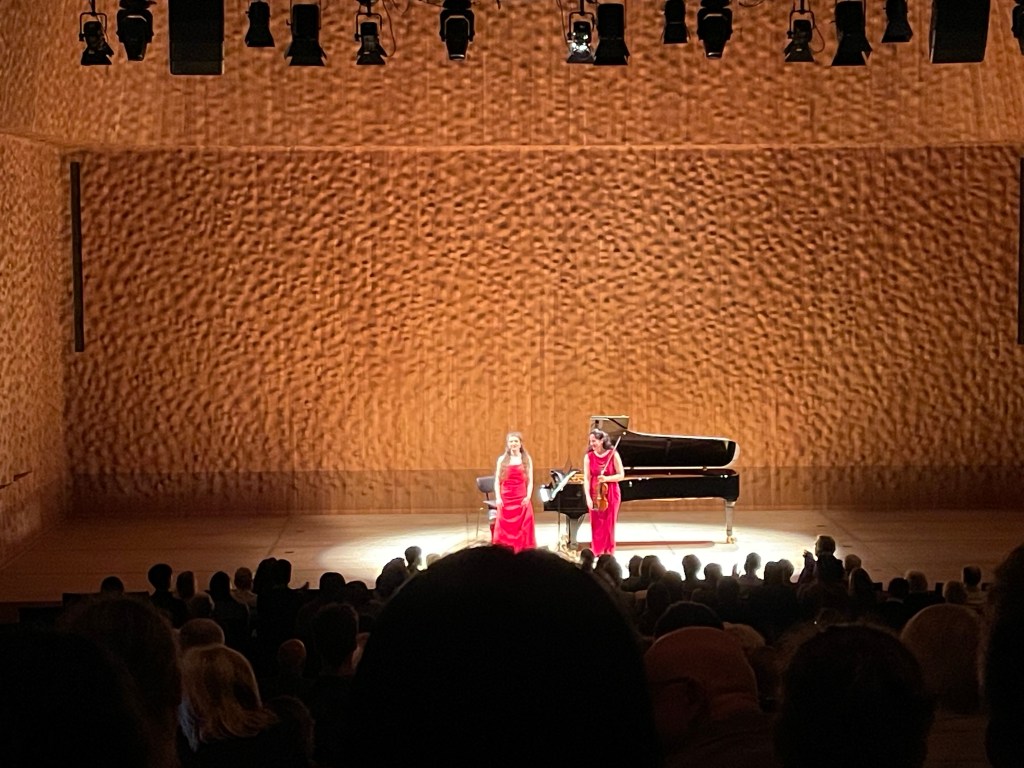
At the first performance there, I watched a rock star from the rafters. Anne Sophie Mutter and her Virtuosi concert took the sold-out audience over the top. Sightlines were so good you felt you were in a front seat and the sound quality, thanks to Japanese ingenuity, made you feel as if you had just cleaned the wax out of your ears.
Anne Sophie Mutter and Virtuosi Performance to Sell Out Crowd
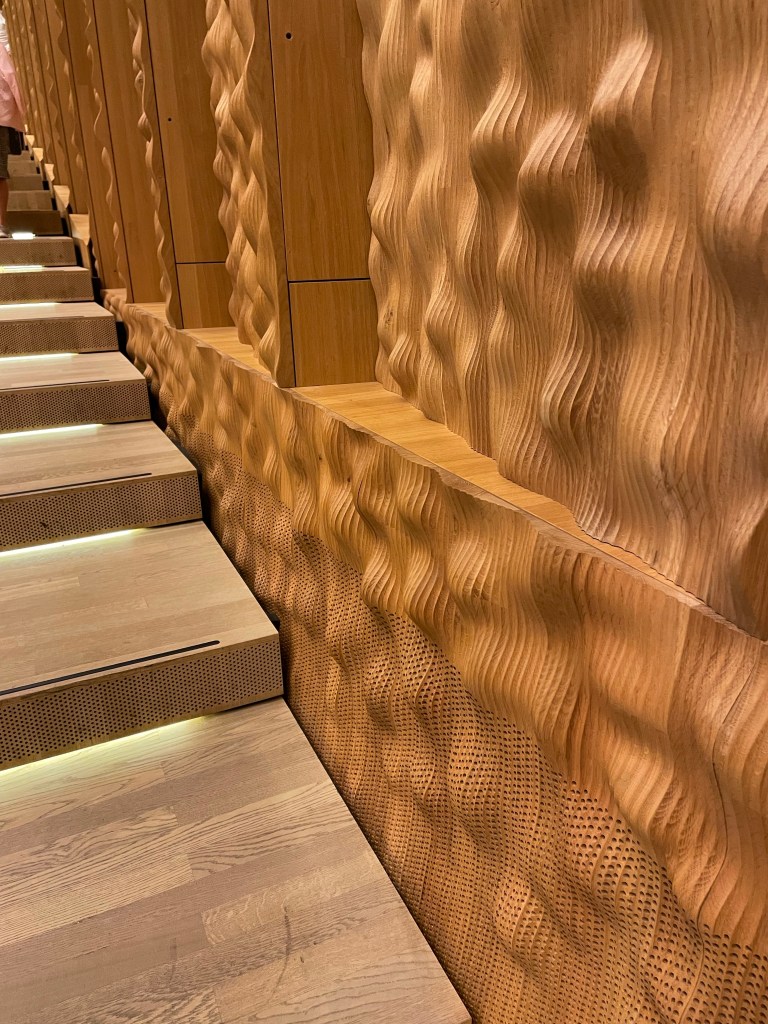
The second performance was in the Smaller Auditorium (Kleiner Saal). Quite a different but equally thrilling experience to that of the Larger Hall (Grosser Saal). The Mendelssohn Festival was being held simultaneously so the room and the chamber music fit perfectly.
Mendelssohn Festival in the Kleiner Saal (Small Room)Detail of sound wall in Kleiner SaalDizzying walls in an acoustically perfect sound auditorium
Like other European cities that have established star-architect branding to attract tourists to museums, Hamburg took a risk and turned its attention to a music venue. It cleverly lifted the concert hall to the pinnacle of a high rise building by putting 5 levels of parking at the base and sandwiching a hotel in the middriff.
Unfortunately it seemed like exiting the garage is a nightmare for attendees, both pedestrian and vehicular. And I questioned putting the high headcount at the top. I suppose its no different than occupants in a high rise building. There’s no doubt the building is spectacular and deserves its place among the top, if not the top, of ten best concert halls in the world. My opinion.
Fine and Applied Arts Museum, Hamburg
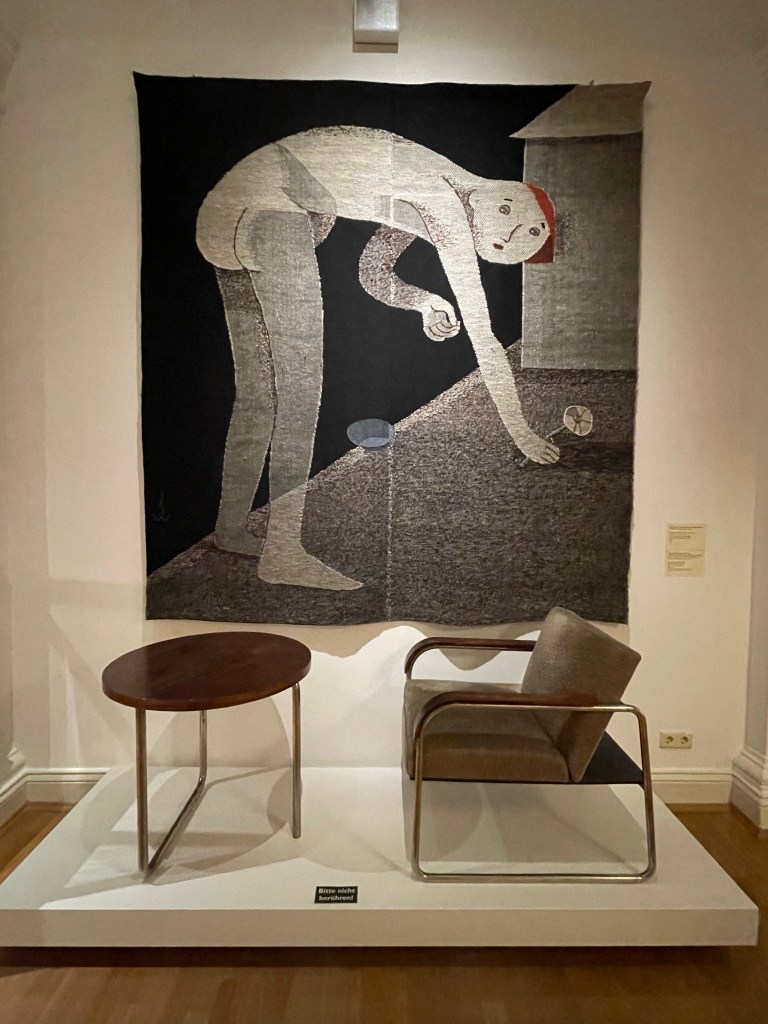
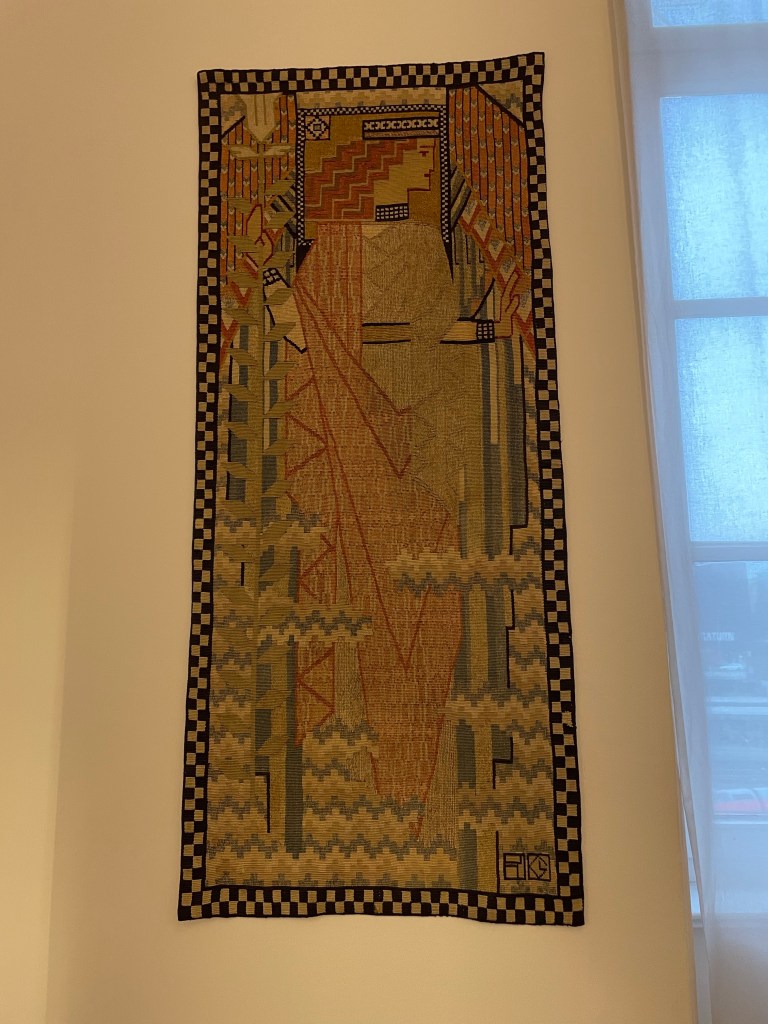
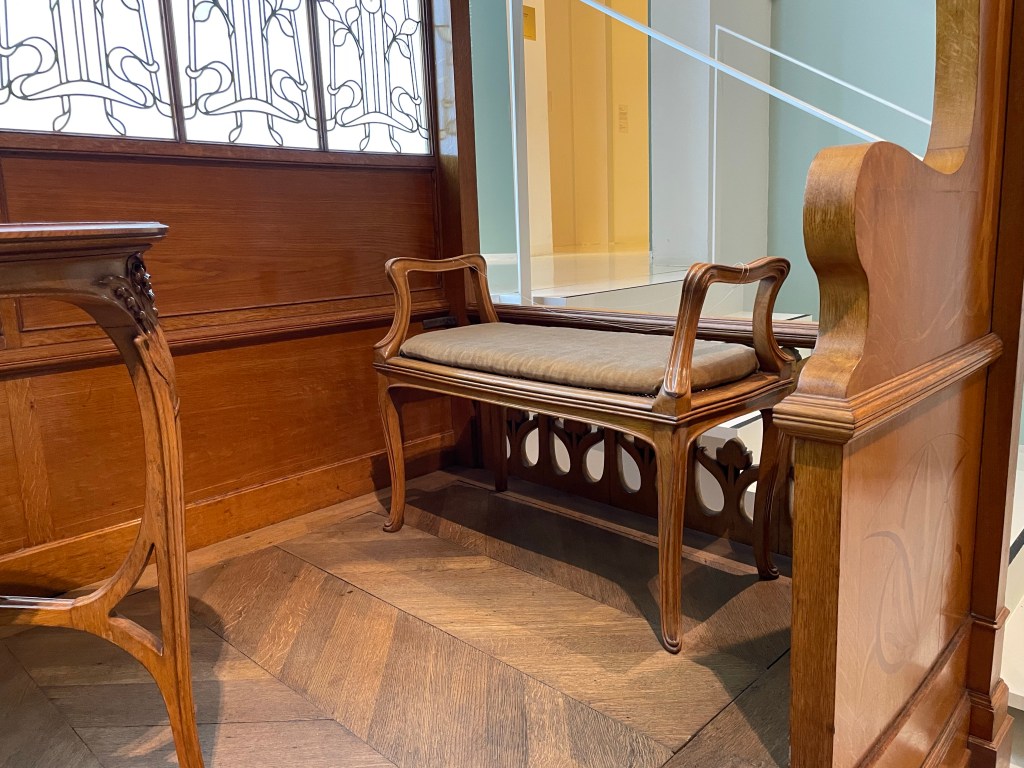
Wandering into the museum next to the train station was an oasis of German culture that I love. From the early beginnings of modern design and production of beautiful objects for the home, the roots of Ikea and Apple can ge found here. The tender, slender tendrils of Jugendstil (youthful style) represent the flowering of blending art and science, as it reflected the Art Nouveau movement and influenced the Moderne.
Fine and Applied Arts Museum, HamburgBeautiful ModerneHenry Van de Velde from the BauhausFurniture and Tapistry perfectly pairedTapistryUpholstered BenchMackintosh marketing menuFine and Applied Arts Museum furniture and objects from turn of the 19th to 20th century
The fine tapestries demonstrate the traditions of fine hand craftsmanship. Art extended into the home and blended architectural elements like walls, doors and windows as well as furniture. It’s no winder you see influences of Frank Lloyd Wright everywhere in these museums!
This special exhibition at the Fine Arts Museum captures the delight in educating and training children. The models, sketches, and planning required extreme care and dedication by talented professionals. Kids could draw their own creative versions!
PuppetsModelsKids’ versions of Sesame charactersPro Sketches for character shapes
Around the corner from the train station is where the other half of Hamburg lives. Real food is sold in markets here.
Luneburg
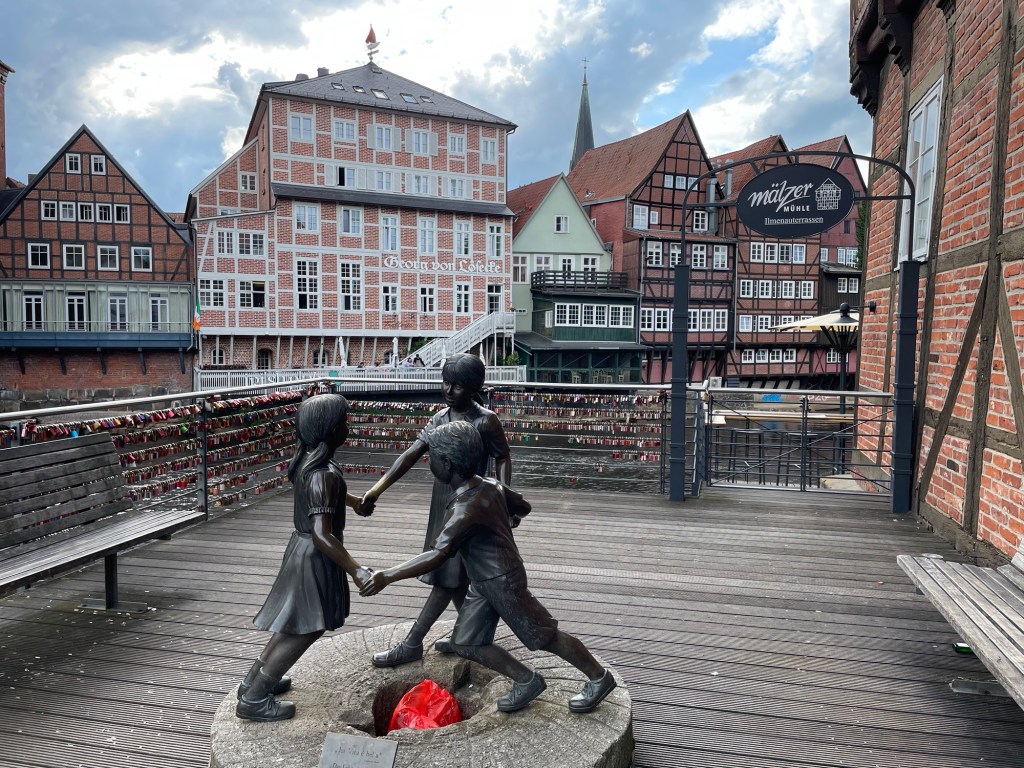
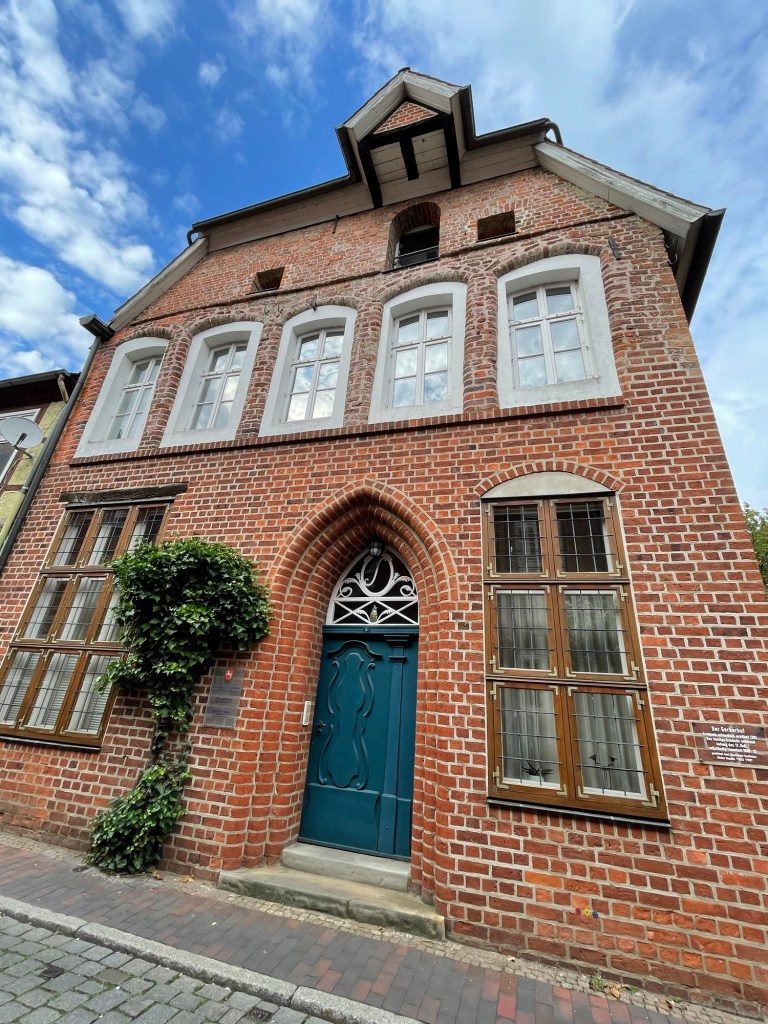
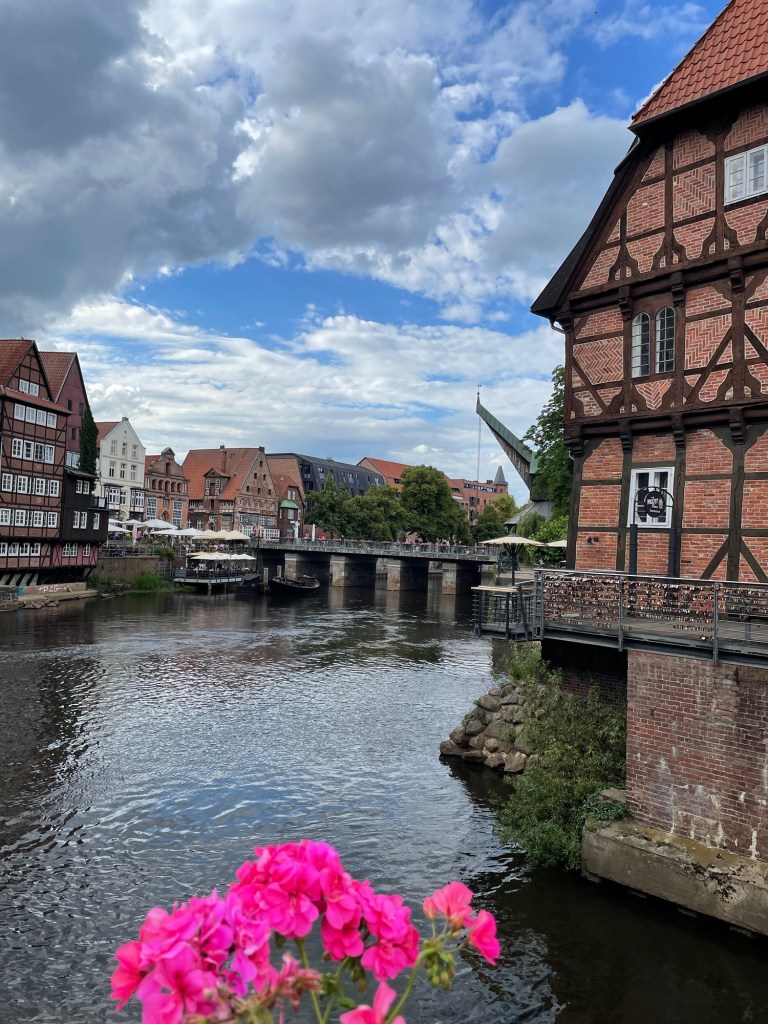
The Hanseatic city of Luneburg was a fine example of the wealth and commercial power of the Hanseatic league. Established to protect mutual trading interests of its members, the League was the most powerful from the 13th to the 15th centuries. Buildings in Luneburg have been preserved back to this period.
Locally controlled preservation of window detailsRoten rosen adorn the windows everywhereA typical windy space between buildingsHops vinesVillage view
Bremen controlled the North Sea and Hamburg controlled the Baltic. Athough Luneburg was not a coastal seaport, it derived its prominence from the salt in the area. I loved how roofscapes and windows made you “look up”, as Steve Jobs said in the opera (R)evolution about cell phones..
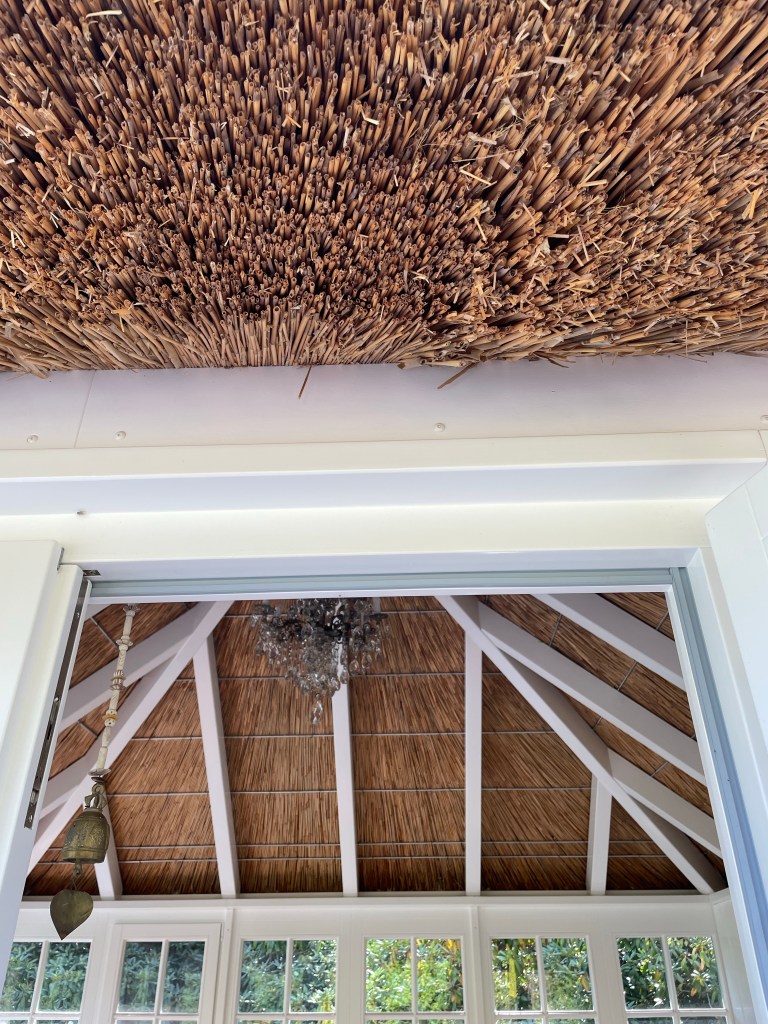
I was lucky enough to join my new German friend Annemarie to make a delivery to a client’s stately home on the outskirts of Luneburg. The thatched roof is a unique feature of homes in the area. Dedicated maintenance and care are required. The same roofing method was applied to the new pool house. The visit was a treat and a pleasure.
The underside of the new poolhouse roof, fabricated in the same way as the original house roofing material
There’s only a couple more days to see a final performance at the Philharmonie, then back to Berlin to catch my flight back to San Francisco!
Friends Hazel from Heidelberg and Vladimir from Meissen joined me in Leipzig for lively conversations. We also explored museums together. Each museum piece tells a story that connects to another. Collectively, they form a treasure hunt that makes museum-going so challenging and enjoyable.
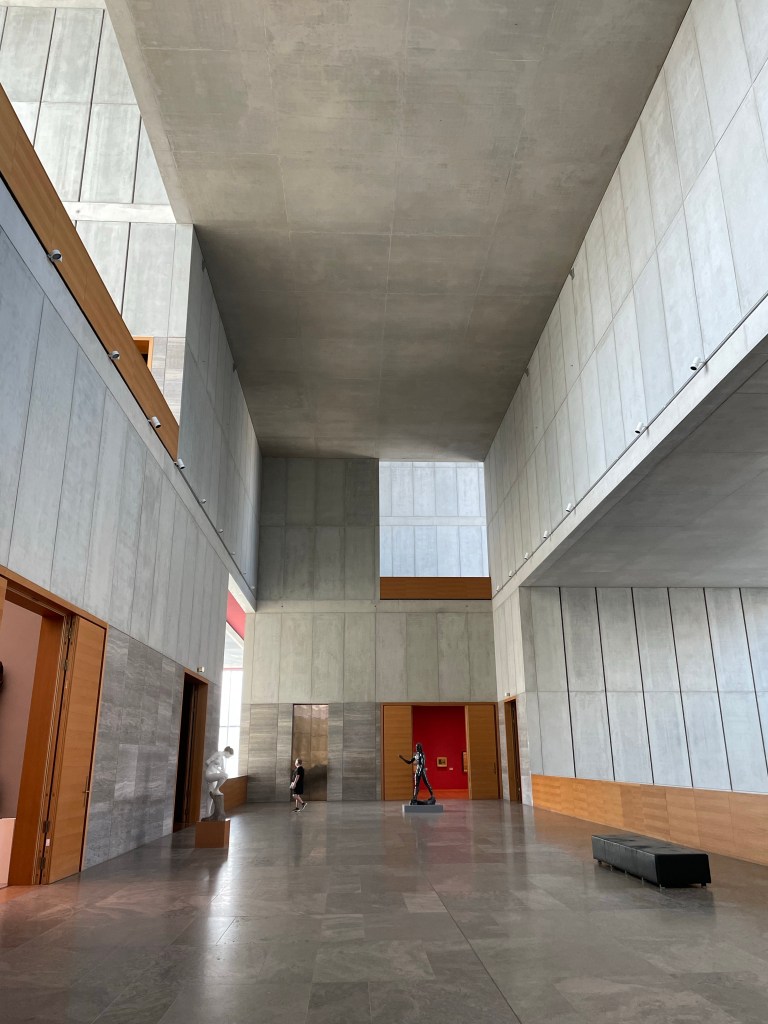
This relatively new museum north of the town center was a vast repository for large-scale modern artwork. Current collections could barely fill the monumental four-story high volumes of space. The museum was clean and beautiful, but I did wonder how efficiently the building could be environmentally controlled.
For me, it is a struggle of conscience over desire. My recent training taught me that architects have a huge obligation to address climate change in every building, especially those like this one. Reducing the use of concrete and other processed materials for sustainability didn’t seem to be evident. Yet the building was purposeful and emotionally satisfying.
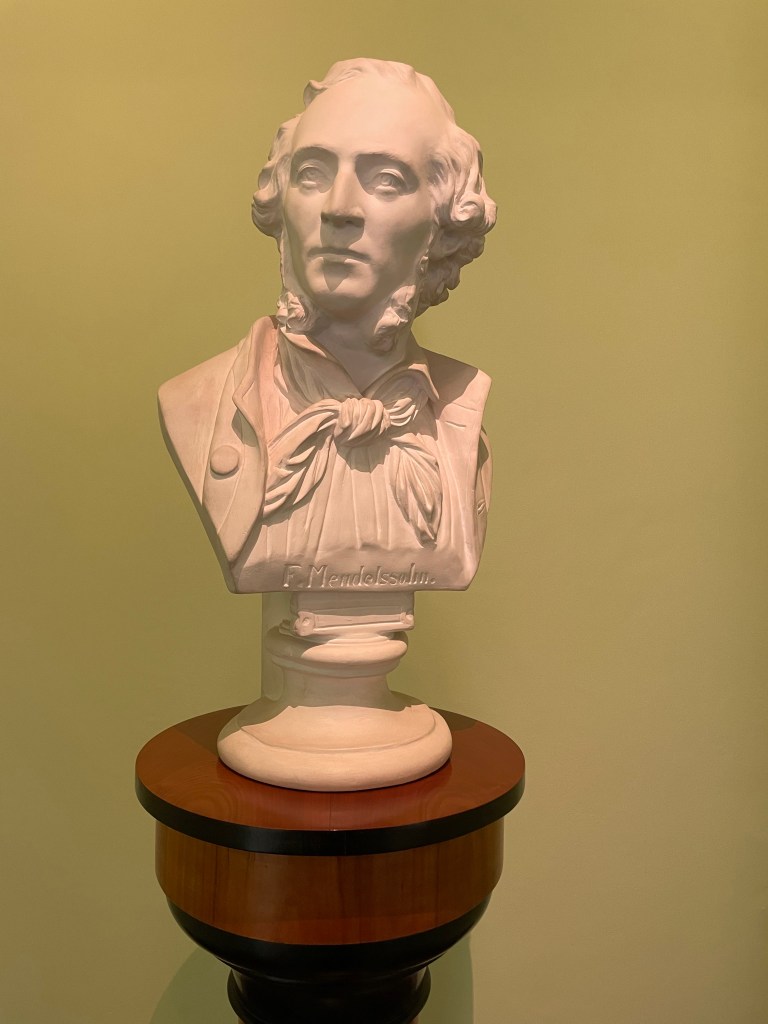
Mendelssohn House
Entry stairMendelssohnEntry stairClothing from childhoodMendelssohn House
The Music Trail in Leipzig links the homes of Bach, Mendelssohn, Schumann and 20 other sites that have musical significance. The entire round-trip takes more than a two-hour sprint. Instead, it’s much more digestible in small spurts. The influence is palpable. It’s no wonder that music can be heard in and around the streets at all times.
Although I had been to Leipzig twice before, I looked forward to renewing my vows to each composer. Mendelssohn traveled throughout Europe with his sister Fanny and his parents. They first traveled from Berlin to Naples and then returned through Switzerland to London. The composers’ privileged lives allowed him to create beautiful music.
More research is being devoted to the lives of influential and famous women like Clara Schumann and Fanny Mendelssohn. Although Schumann loved his wife Clara dearly, they had a tense professional relationship.
You could say that Schumann was actually jealous of her talent! She was trained as a concert pianist by her father, Carl Wieck, who was also Robert’s piano teacher. He was skeptical that Schumann could rise to the level of a concert pianist and tried to keep Schumann from seeing his daughter.
He even had a restraining order against Robert’s seeing Clara, but it didn’t stop the two lovers from meeting secretly. Finally, when Clara turned 18, Wieck consented to their wedding plans. Some of the sweetest music was created during Schumann’s love for Clara and his triumph over adversity
Schumann had another challenge in learning the piano. HIs fingers cramped up. He tried many methods to treat them. He gave up performing and initially turned to critiquing music. He used his father’s publishing business to help him launch his writings, and eventually published the music he composed himself.
Schumann’s life had a tragic ending. He could be diagnosed today with bi-polar disorder, but he preceded Freud and the advent of psycholanalysis. He and Clara had seven children, but he died at the age of 45. He left a legacy of beautiful music from the romantic era that he helped to create.
Laps in Leipzig
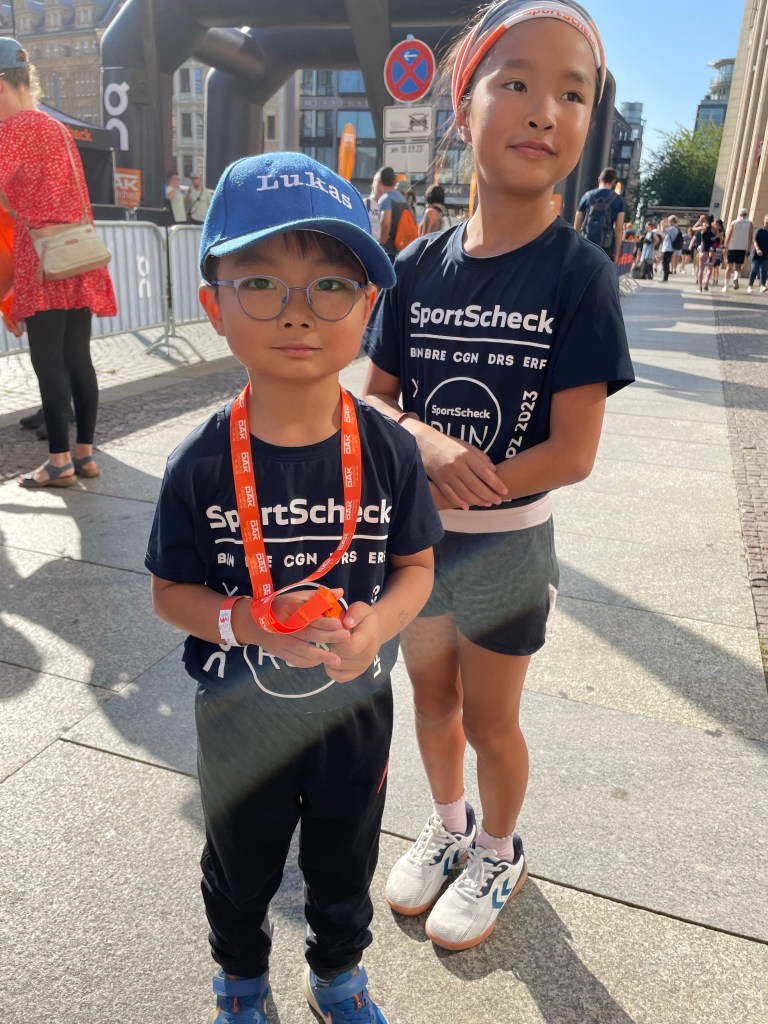
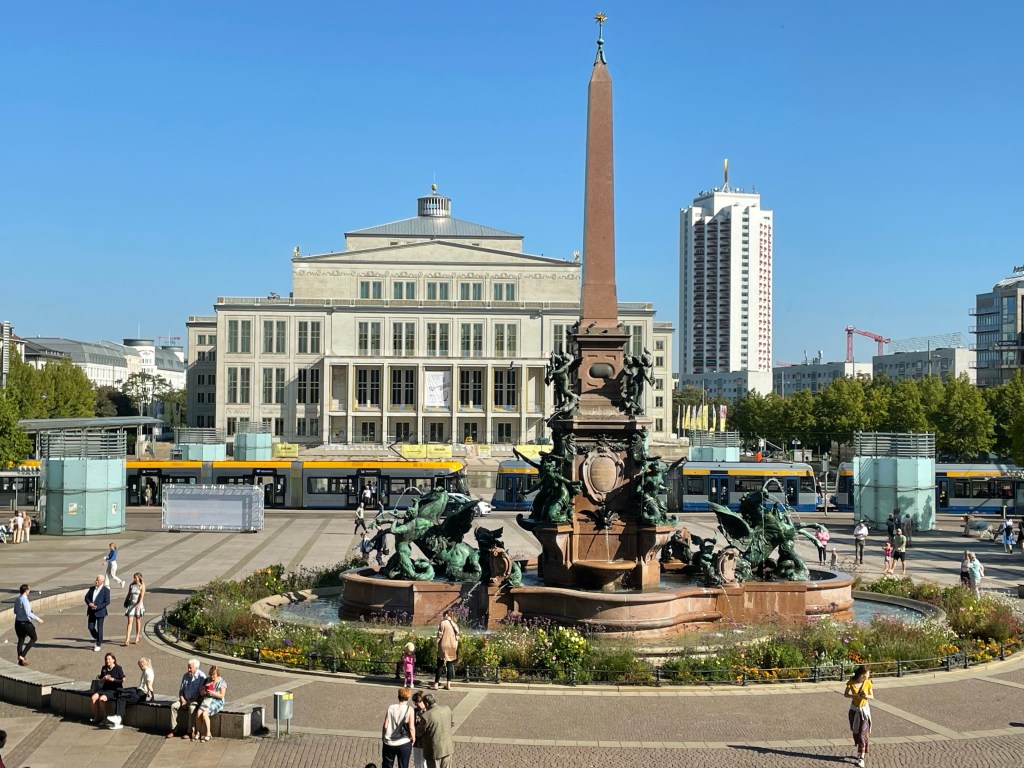
A great family event got kids out early Sunday morning to get fit and healthy. The race around the market plaza took determination, energy, and plenty of tears and smiles for extra flavor. Parents escorted the less brave, but in the end every child was a winner. I couldn’t resist taking a shot of a little German-Asian athlete proudly brandishing his medal.
Early Morning Race in Leipzig
Post Race
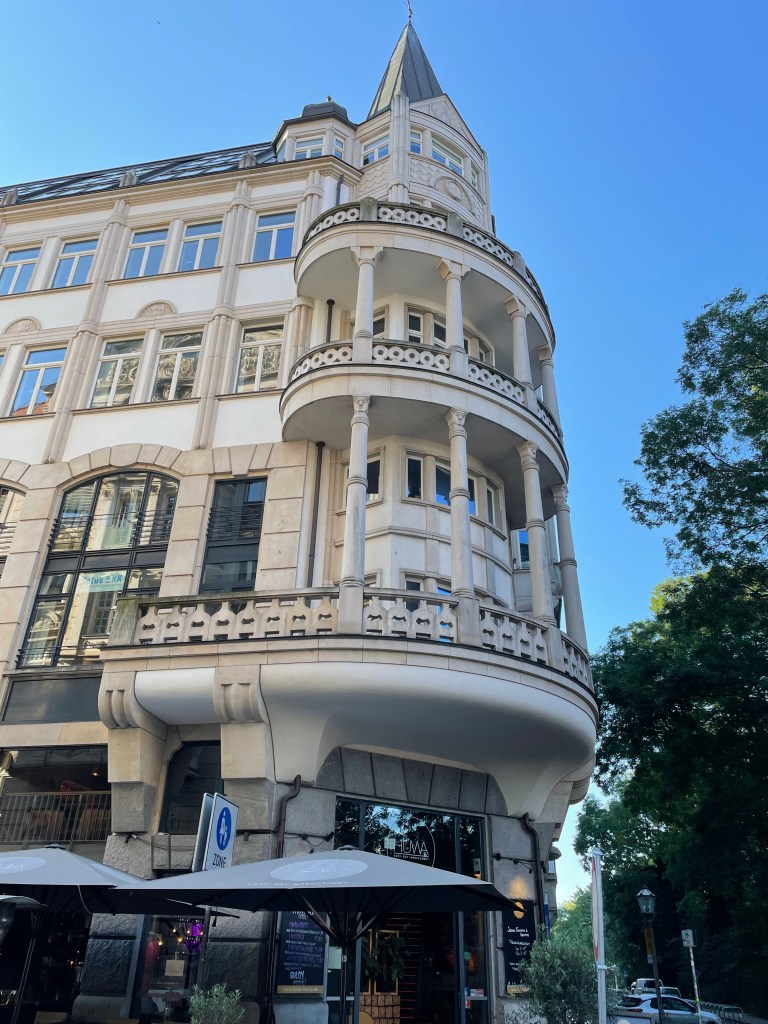
The Art Nouveau and Moderne buildings in the pedestrian zone are elegantly decorated with stone facing. The venue for annual book and trade fairs, Leipzig enjoys its status as a prominent city filled with commerce, art, music and culture.
Gewandhaus
Of course a concert was on the agenda during our visit to Leipzig. Like the Berlin Philharmonie, the Gewandhaus Concert Hall is a behemoth building better appreciated from within.
Conductor Herbert Blomstedt, now 96 years old, managed the concert with Berwald and Schubert pieces effortlessly. The elderly morning crowd greeted him with fondness and adoration. Blomstedt was conductor of the SF Symphony for ten years preceding Michael Tilson Thomas. He brought the orchestra to world prominence through his leadership.
Like Joana Mallwitz, Blomstedt acknowledged each soloist with intent and deliberation. It’s not something I had noticed before attending recent concerts in Germany.
Herbert Blomstedt commands the Gewandhaus Orchestra to a full house
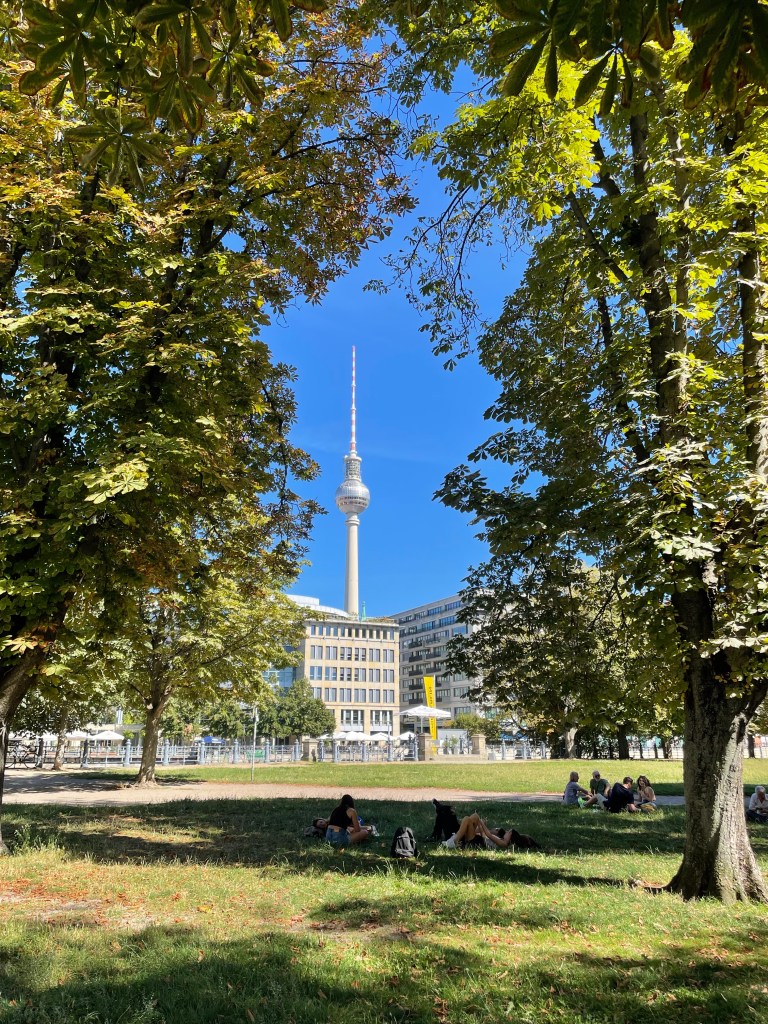
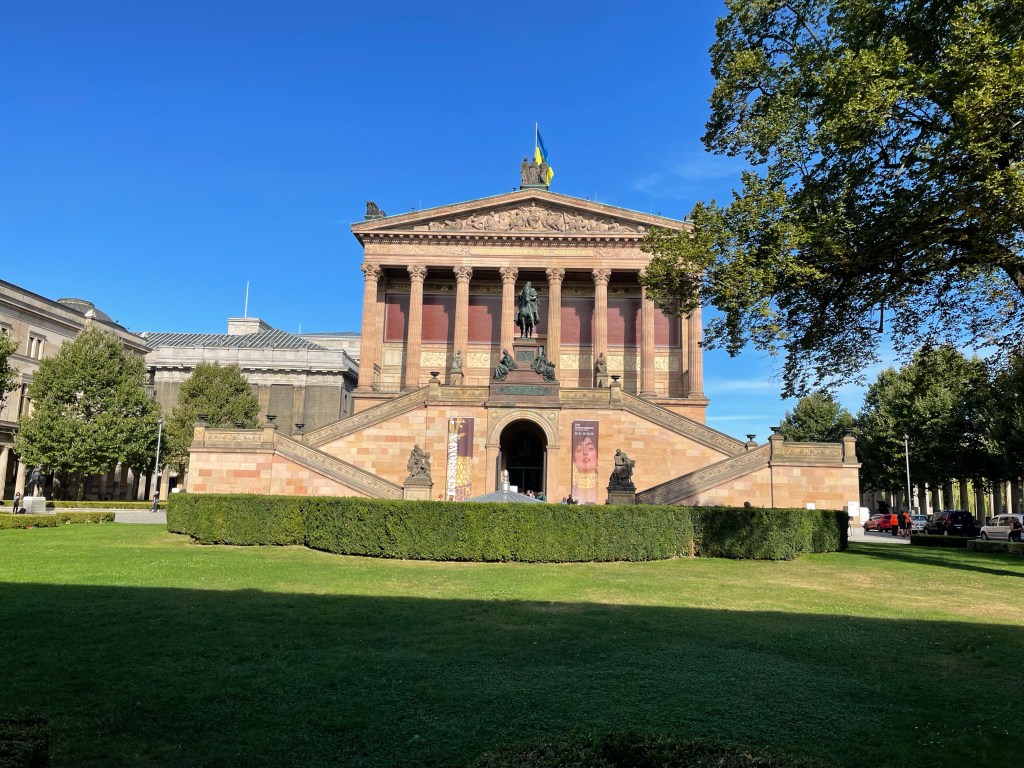
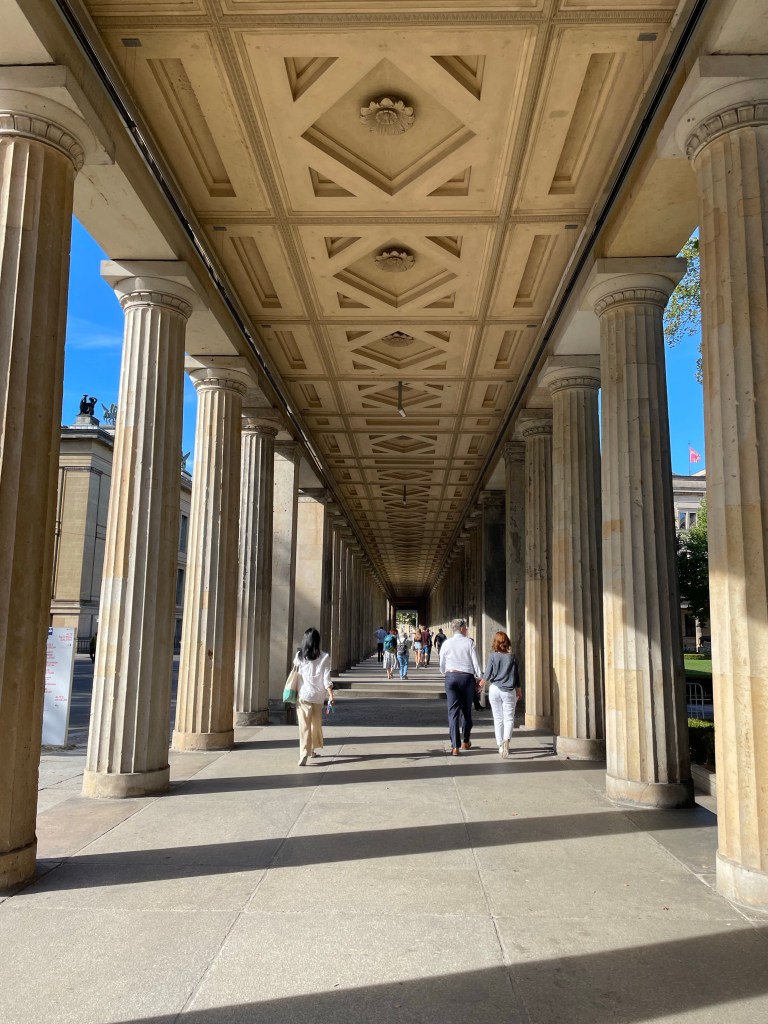
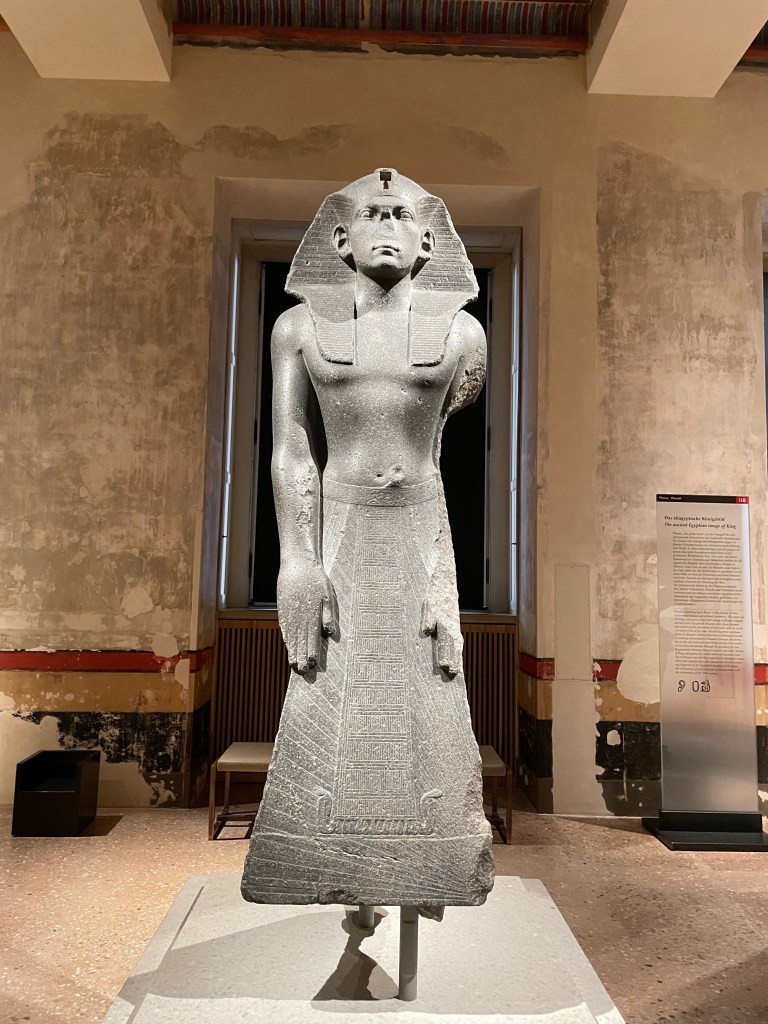
OK, this city has put me on total overload. I headed from Alexander Platz through Haecksher Markt to The Neues Museum. Along a leisurely walk surrounded by waterways and leafy green trees, I was reminded how beautiful the complex series of historic museums had become. Every building was renovated and preserved with the greatest detail and care.
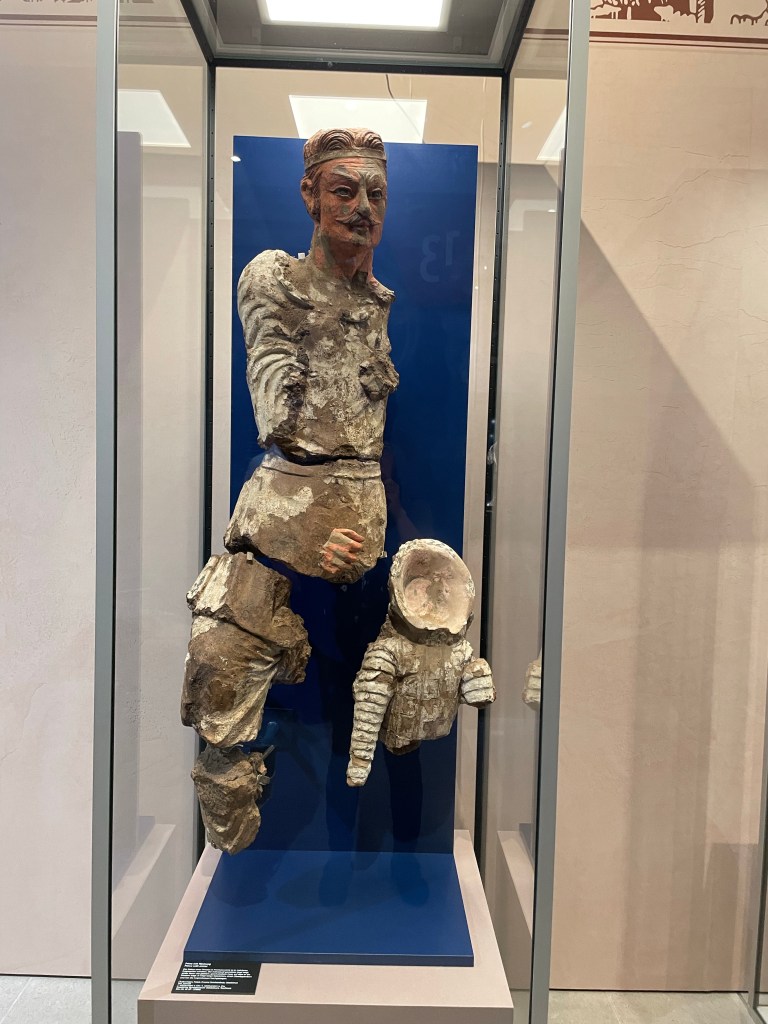
Buddhist Influence in UzbekistanEgyptian Sculptures in the Altes Museum
I found David Chipperfield’s integration of the Egyptian collection with the new wing very confusing. But the inspiring Archaeological Treasures of Uzbekistan exhibit compensated for the building’s shortcomings. The German museums distinguish themselves with superior curating and skill in educating the public with interesting, thorough, and thoughtful research. Most major exhibits are translated into English.
The exhibit introduced visitors to the early influences of buddhism in Central Asia before Alexander invaded and spread Greek culture throughout the area. Later, Arab invaders imposed Islamic culture after Persians brought Zoroastrianism, yet another religion, to this region.
Original Sogdians, a Turkic people, began and traded along the Silk Road. Journeys were not long transcontinental slogs imagined by Marco Polo’s travels. Initially, the Sogdians and others traded in short segments between two posts. Instead of traveling between a long string of pearls from one end to the other, they merely traded pearl to pearl.
Bokhara, Samarkand, and Kiva became wealthy cities from the silk brought by the Sogdian traders. The Silk Road stretched throughout the width of Uzbekistan, from the western Han Dynasty gateway that controlled trade in and out of China, through the trade cities, and on to Tehran and beyond.
Within the exhibit, a quiet sanctuary offered a place for reflection and solace. Visitors could post notes, questions and thoughts about the exhibit. It was the perfect moment to pause and refresh. I contributed a few of my own comments! I felt that I had flown on a magical carpet to Uzbekistan!
Berlin Philharmonie
Although I was able to sketch the Berlin Philharmonie (see previous post) from the outside, the chance to attend a concert inside seemed to elude me. I finally bought a ticket on the third visit to Berlin. The acoustics in the auditorium with more than 2000 seats provided a high quality, enjoyable performance.
An evening with the Israeli Philharmonic Orchestra at the Berlin Philharmic
The Art Supply Dream World
Here’s a tip for my urban sketching buddies:
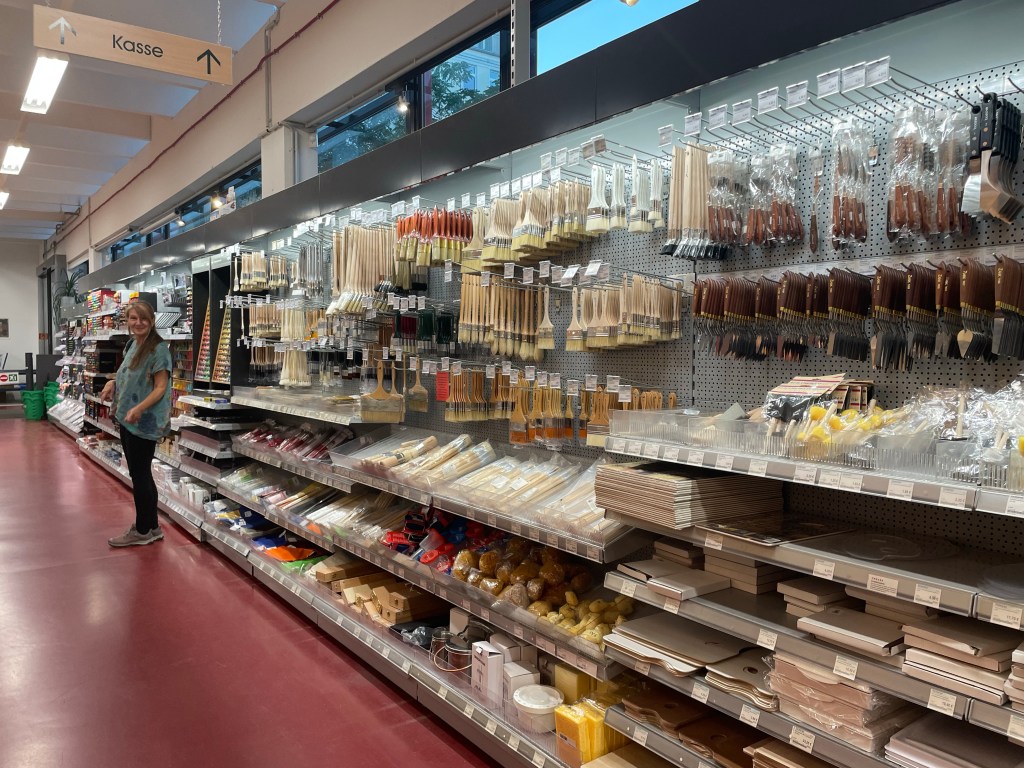
My vote for the best art supplier in the world is Boesner, a German store in Prenzlauer Berg (with branches in other German cities). It satisfies any and all aesthetic and technical needs for artists, including papers, paint, canvasses, brushes and everything else in between. Rooms full of sketch pads, imported papers of endless thicknesses and weights, and sets of watercolors, pastels or pencils increased the dilemma over what to choose. This was a top-flight, migraine-inducing experience!
The next stop is Leipzig, where many famous classical musicians such as Bach, Schumann, Mendelssohn and even Wagner, hung out and made music.
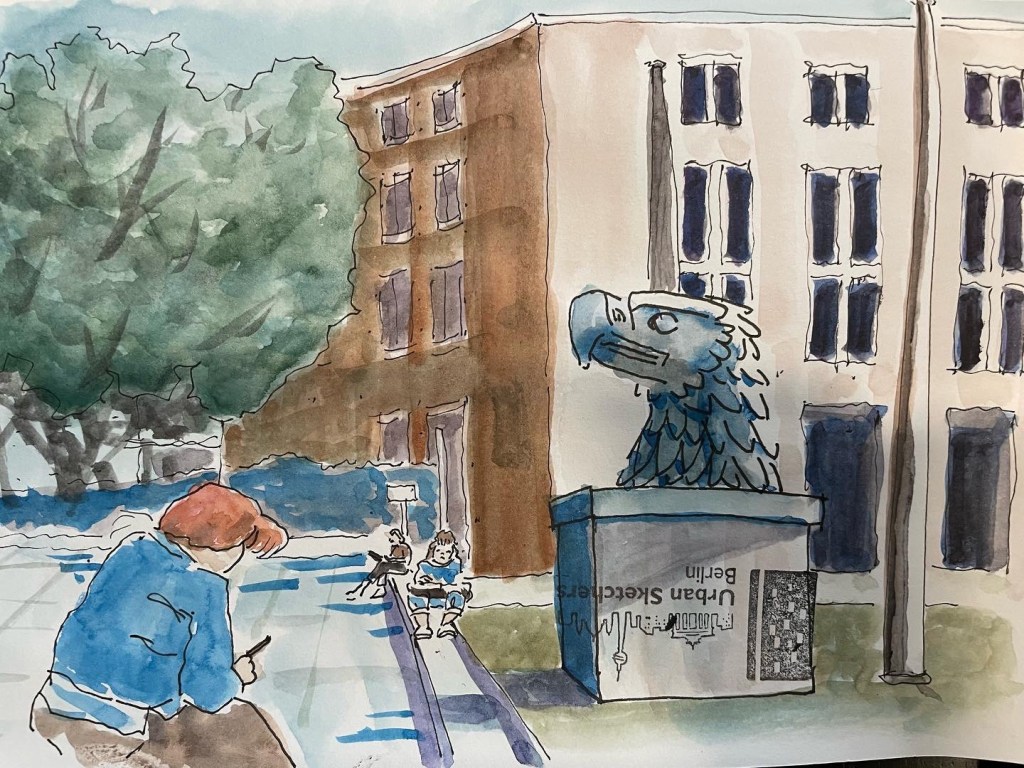
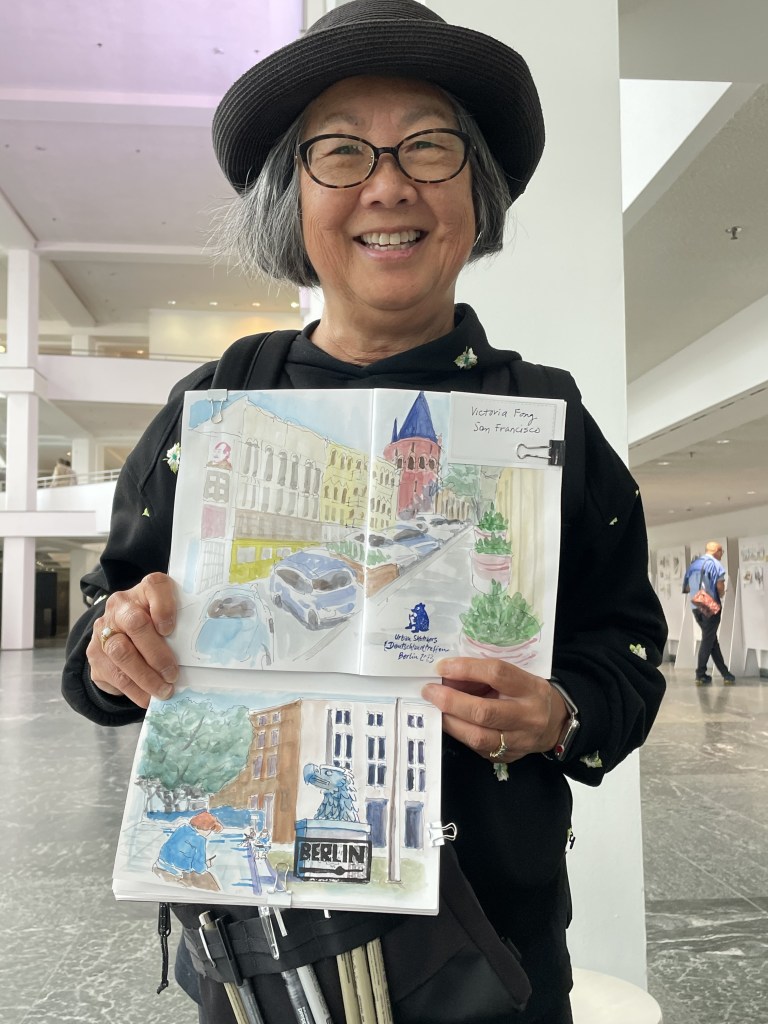
Oh My God. If this is any indication of German Planning, it wins the Nobel Prize! Over 950 participants descended on Berlin this weekend to sketch in over 60 venues planned throughout the city. Everything is free and the organizers simply wanted to avoid extensive sponsorships and risk exposure.
So they simply posted an email offering sketchers to sign up within a specified period of time in July. The response was overwhelming, but they delivered what they promised. Three meeting venues at the Kulture forum, Humboldt Forum and another location near the Brandenburg Gate gave everyone a place to connect informally. Organized sketch walks with tour guides were assigned to each participant.
My first assignment was site of the Templehof Airport, a Nazi creation. Nearby neighborhood housed a delightful Karl Muehlenhaupt Museum. His work, resembling that of March Chagall were child-like figures of gnomes and faces filled with “Liebe, Leid and Lebensfreude”, (Love, Passion and Lust for Life) that immediately grabs your attention and emotions.
A lot of what’s good about Germany hasn’t made it into translated material. This was one of them. Managing my own interpretation is a struggle, but even more rewarding when I discover the depth and earnestness of the German culture.
Today’s venture to the second site was more challenging. The Kurpark near the Golden Reindeer Monument in the park next to the at Rathaus Schoeneberg was outside of the center of the city. Several routes to get to it confused me with indecision, so a late arrival cost me the tour and a chance to meet others.
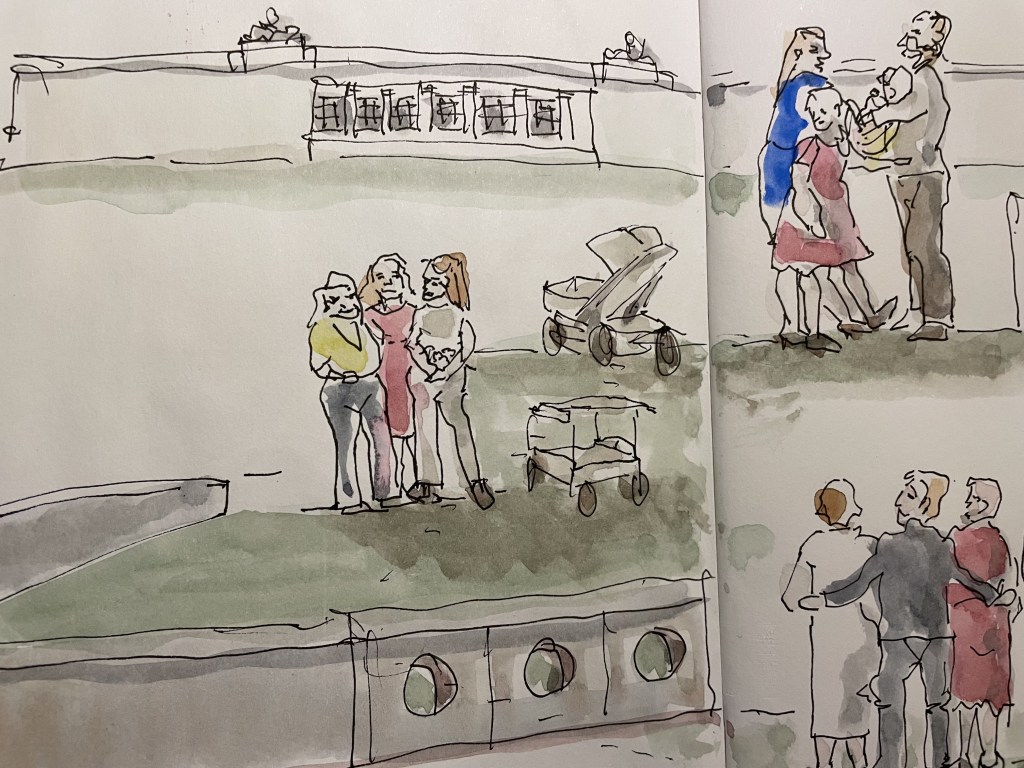
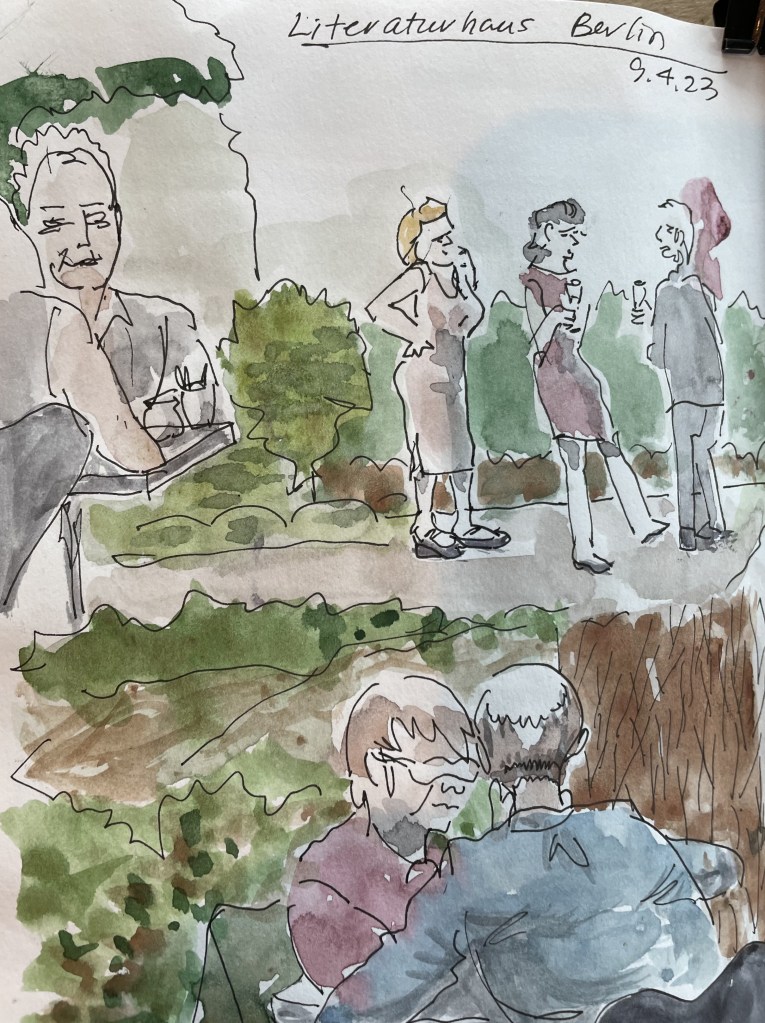
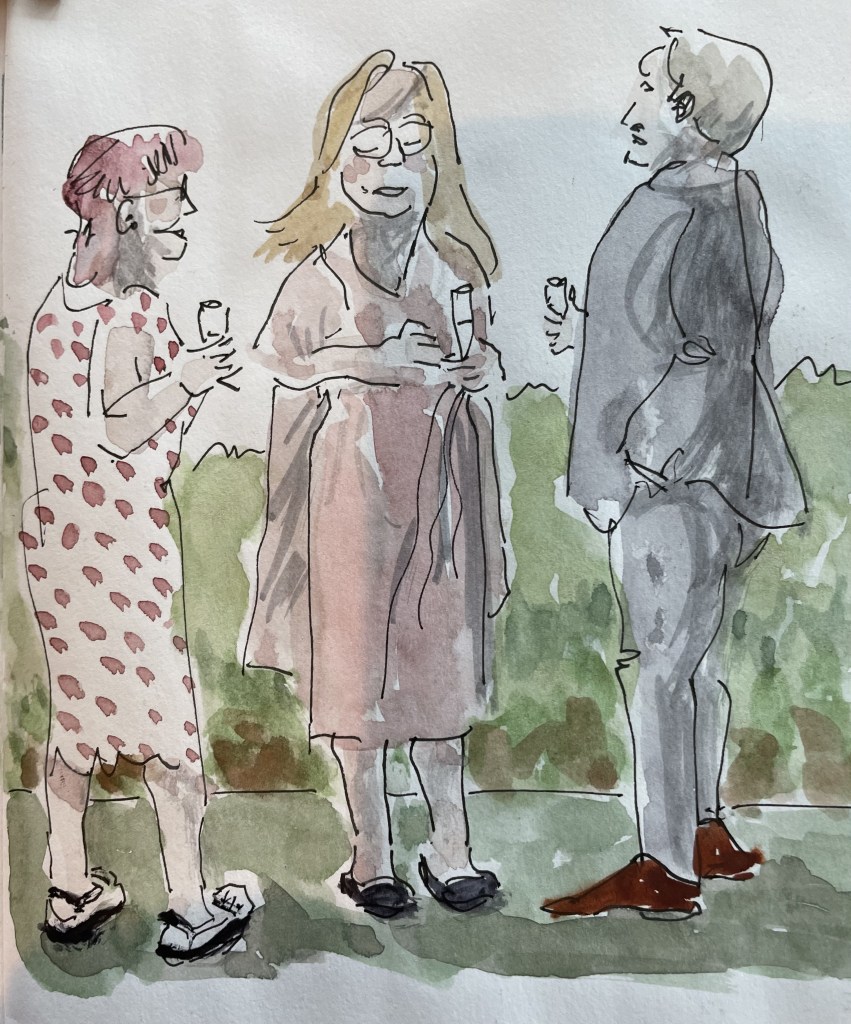
Nevertheless, I forged on to sketch as intended. Suddenly floods of wedding parties arrived as if staged for my benefit. They celebrated their free pop-up event with champagne and formal photo shoots. The park setting was merely a backdrop for me to focus on gestures of dressed-up guests and their animated conversations.
Champagne al frescoPosing for a group picture from the back
The Sketchers met for a photo shoot at the Kulture Forum the previous afternoon. It was a bit daunting to see so many dedicated and talented sketchers. Every sketch seemed more polished and intriguing! The German devotion to doing things well overwhelmed me, from the high-tech weightless sketching stool I spotted, to the super-organized backpacks everyone carried with all their supplies pared down to a minimum.
Bustling Berlin
I’d be disingenuous to claim that I was as dedicated as the German attendees to sketching in Berlin. I was distracted, and exhausted by the myriad events and historic sites beckoning to me.
A special concert introducing rising star conductor Joana Mallwitz was held at the Berlin Konzerthaus was held with overwhelming support from the audience. Joana took her time to thank each and every soloist who performed, and took many bows herself. I was lucky enough to meet her and her partner Simon Bode at a reception after the performance.
Debut of Joana Mallwitz as conductor of the Berlin Konzerthaus OrchestraReception and Media coverage after performanceOutside Konzerthaus
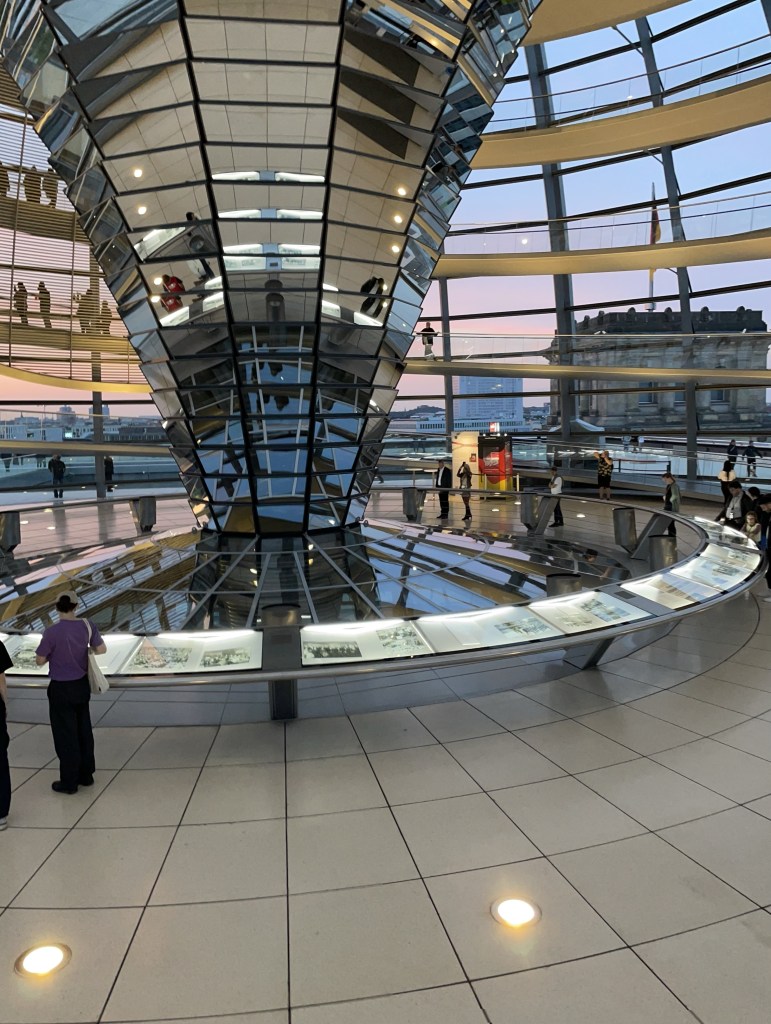
After the sketching photo shot, I raced over to an appointment to tour the Bundestag Building. The tour was tiring and boring at the end of the day, but I realized that I actually retained some of the information. Germany has 15 states that are represented in the Parliament, just like we have 50 states represented in Congress.
Before Perestroika in 1989, the Soviet Union also had 15 states. The Soviet Union was the third largest country after China and India, and larger in population than the US at the time (The Soviet Union had 300 million, and the USA had 250 million).
Today, Russia is just under 150 million, compared with that in the US at over 330 million. With Germany at slightly over 80 million, Russia is twice the size of Germany but half of its original mite. Ukraine is half the size of Germany or at about 40 milion people. It’s no wonder Russia is struggling to keep its former glory and trying to recapture some of the Ukraine.
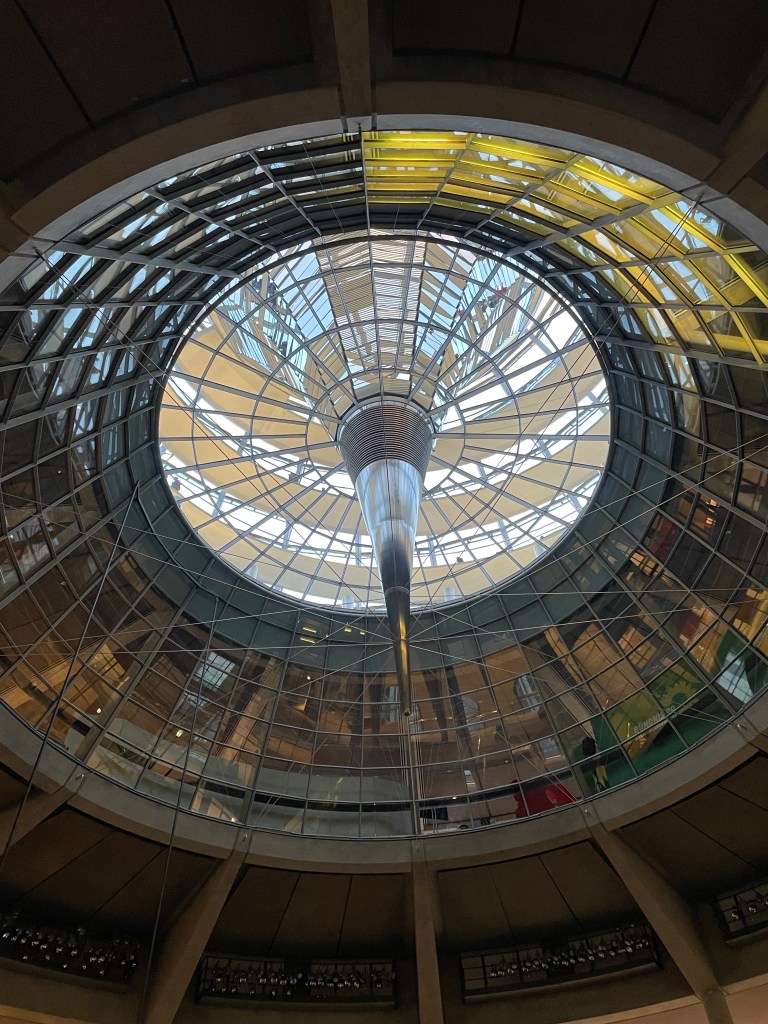
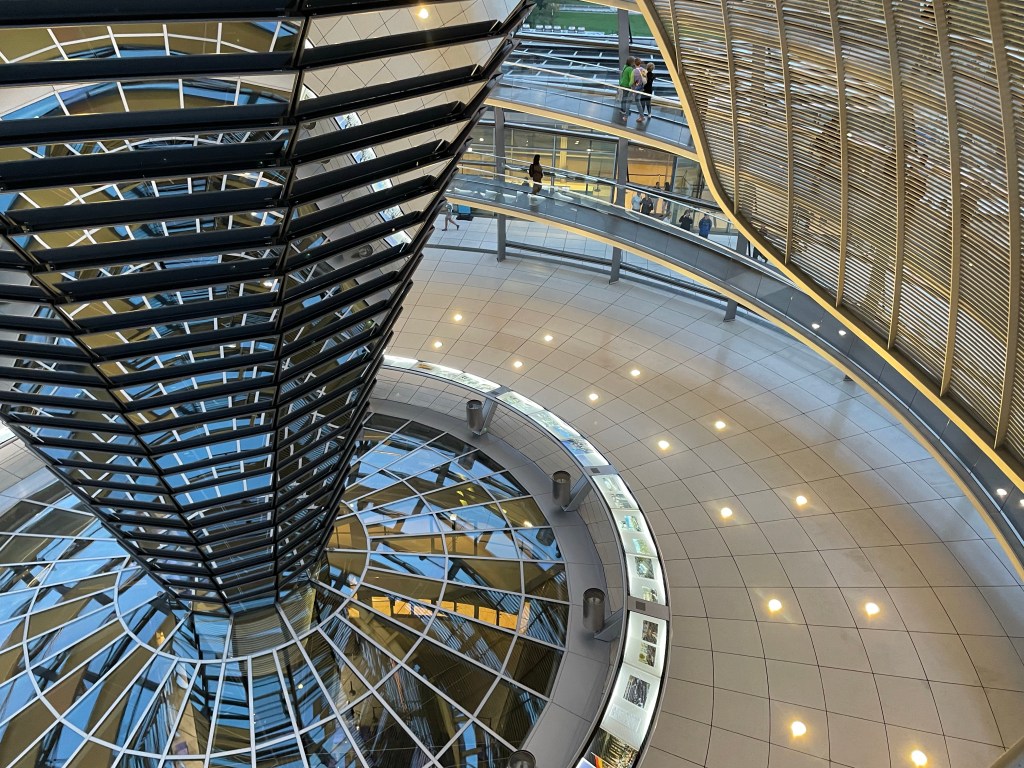
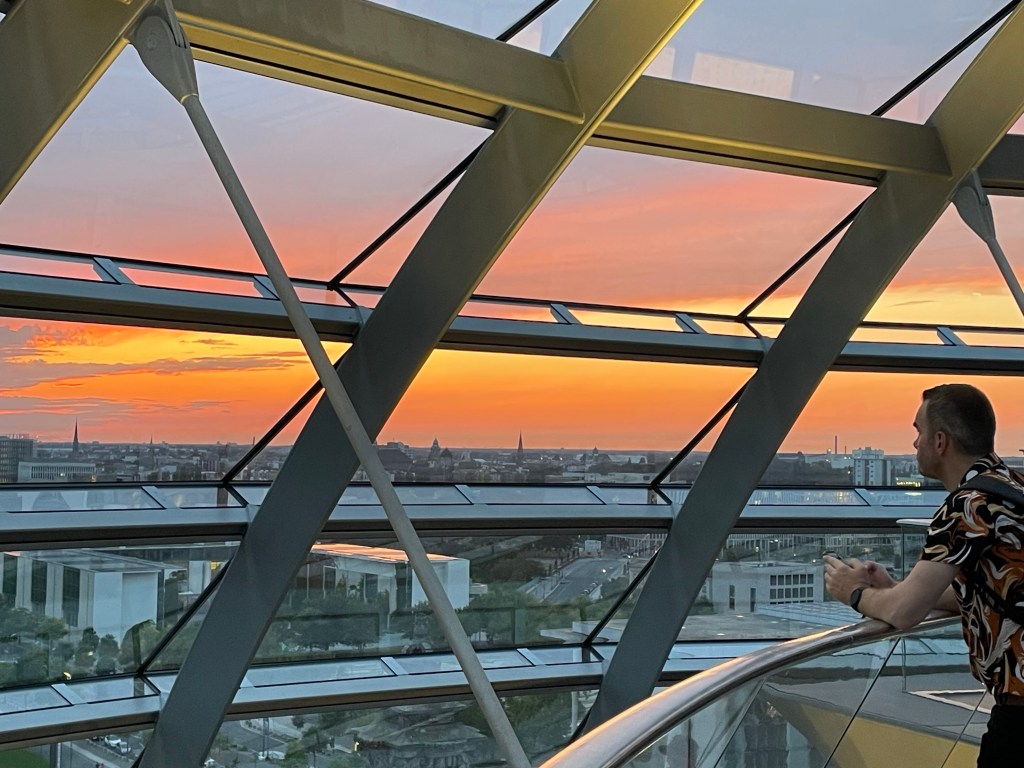
The current history of Germany is inevitably tied to Russia because of the division of Germany after WWII. The Bundestag building still displays relics of the Russians who took over Berlin in 1945. Graffiti was exposed by Bundestag architect Norman Foster who wanted to capture the historic takeover by the Russians. And the design of the building attempts to remind politicians that they work for the people, so the public at the top of the dome can watch over their leaders. Hmm….
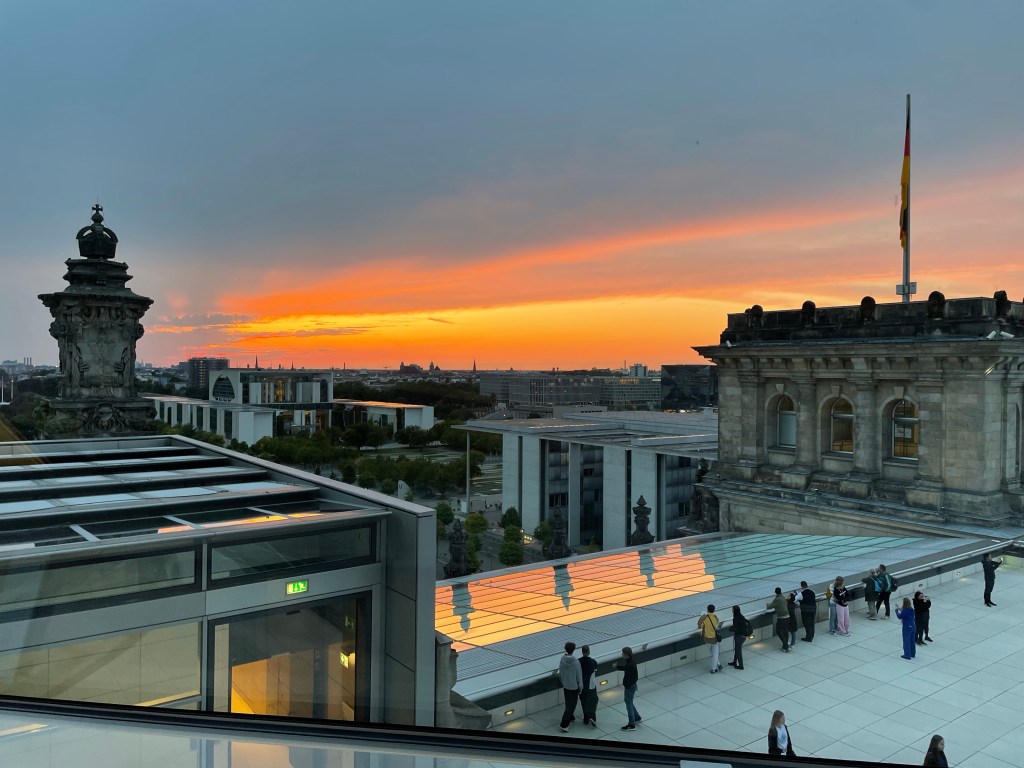
Being at the end of the day, the tour was tedious. Catching the sunset over Berlin made the trip worthwhile. Maybe the tour guide was a little too fixated on two young women who were together–one Russian and one Ukrainian. That did seem to inspire the rest of us to believe that the war will end one day soon.
A walk up the ramp at sunset
And of course I had to make a quick stop between U-Bahn changes to catch Brandenburg Tor.
Those who know me will wonder how I passed up two world-class opera performances at the Deutsche Oper. But I did. Maybe I’ll catch up at the free annual family event today in between the sketch exhibition, an open house at the Bundestag, or the Berlin Music Festival.
For those of you who miss my point about why I love traveling to Germany, I’ll give you a quick refresher. I can see and do much better opera more cost effectively there. The transportation system is a dream. It’s safe, clean and informative. The historical, cultural and social offerings are well presented and provide context for a fulfilling experience.
Most tourists prefer to travel to Italy, France, or England for a European holiday. Few people I know travel to Germany. But I discovered that many people from the German diaspora return to learn about Germany in ways that many Chinese Americans go to China to discover their roots. We struggle to learn and retain the language, just as many German-Americans do. I found that similar pattern strangely comforting.
So this trip was a make-up for the years lost during the pandemic and the house construction. I managed to travel at the beginning of 2020 to London and returned on March 12 just before the lockdown. At the other end of 2020 I went to New Zealand and spent nearly a half year there with family waiting for COVID-19 to subside in the U.S.
2022 was the dry spell until September when I made my way to Bayreuth to see the Ring. Only Wagnerian fans will understand the obsession with the composer. He is the only one who has successfully combined both music and poetry into a total, integrated work. My German language training helps me to appreciate and love this unique artistry.
A refreshing and tasty salad
While food is not one of the reasons for going to Germany, I do have to comment on a few items. I discovered an extensive Portuguese food haven in the neighborhood where I stayed in Hamburg. Getting whole fish and a hearty meal was inexpensive, hearty, and healthy.
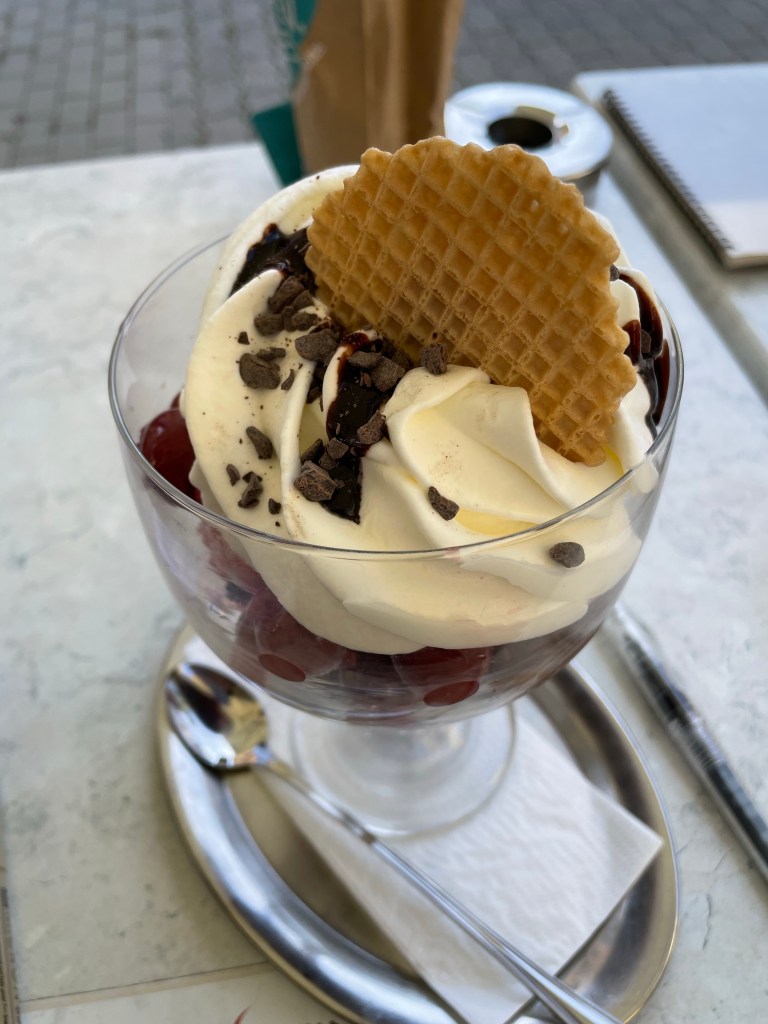
Leberkase and Bratwurst are not exactly culinary orgasms but the desserts are still to die for– particularly anything Black Forest and in season. The layered dessert with cherry topping was bedded with chocolate and crunchy puffed nougat sprinkles. And you already saw the Schwarzwald Ice Cream bomb in Leipzig–some food porn I couldn’t resist repeating. German buddy and vet here in San Francisco immediately recognized it and was jealous she couldn’t join me in Leipzig.
Berlin
My well-behaved intentions were eroded by…
The Berlin Sketchfest, intended for German sketchers, was my initial impetus for traveling to Germany this year. However, attending the opening season concert at the KONZERTHAUS in Berlin the night before was an even more thrilling experience. It overshadowed the sketching event. The new conductor, Joana Mallwitz, was stunning in her debut and delivery of beautiful music. Her gestures and love of music were so expressive. You couldn’t help but feel her joy and delight in every note as she guided the orchestra.
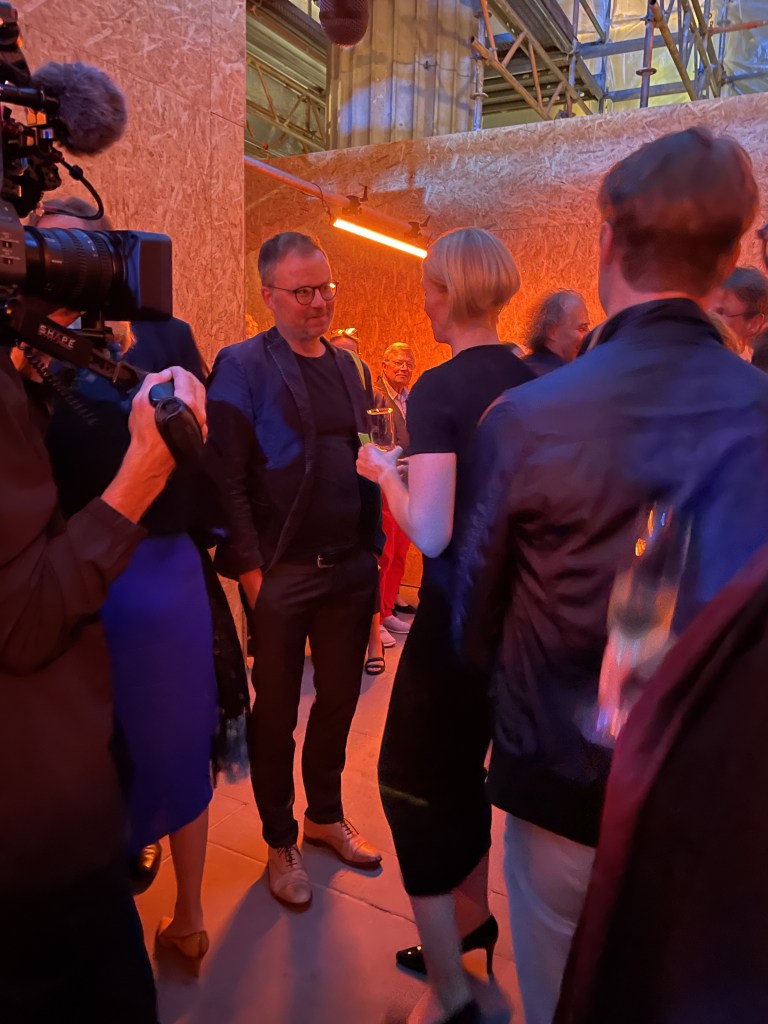
Cameras following Joana Mallwitz after debut performance conducting Konzerthaus Orchestra
After the performance, I had an opportunity to meet her. The lights and camera crew following her through the adoring crowds were spell-binding. I even reconnected with her operatic partner Simon and hotel owner Ralf from Nurnberg, both of whom I had met the year before!
Reception for Joana Mallwitze at the Konzerthaus after performance
Staying in Prenzlauer Berg near Alexander Platz was a good bet. The local scene was filled with families, cafes, and trendy shops. I dropped some hefty euros at Boesner, the local art store filled with an extensive collection of paper, brushes, paints and artists’ supplies.
My Air BNB host recommended booking early for the visit to the Reichstag. The English tour at sunset was a double bonus while learning about how much the Russians were a part of the building’s history. An added bonus was seeing the Berlin skyline twinkling at dusk.
Reichstag at Dusk
Carefully picking only one museum in the Museum Island (Museum Insel) saved me from becoming overwhelmed by the wealth of artistic treasures in the city. An exhibition featuring Uzbekistan, with its fascinating history and UNESCO world heritage sites, was my irresistible choice.
Leipzig
The musical influence of Bach, Mendelssohn and Schumann drew me back to Leipzig for a third visit. This time, however, was even better. Meeting two friends, Hazel from Heidelberg and Vladimir from Meissen, made it all the more exciting. Hazel and I first joined a zoom sketching class and then made our pilgrimage to the homes of the city’s famed musicians.
When Vladimir joined us later in the week, we toured the new Modern Art Museum together and sauntered through the city in the warm, 85 degree weather. We ate Asian food outside the hotel and celebrated at Auerbach’s, where Goethe is purported to have written Faust.
Hamburg
The Elbphilharmonie was the most stunning building I have seen for a long time. There are few buildings that meet my approval from BOTH the interior as well as exterior perspective. Having studied interior design as an undergraduate and architecture as a graduate student, I look for the perfect balance of both.
It was hard not to compare recent visits to the iconic Berlin Philharmonie and the Leipzig Gewandhaus. The concert houses in Germany were just as compelling as their opera houses. Sound and the music were paramount.
So I lost my wallet. That was very distressing. It coincided with buying a ticket for the Elbphilharmonie without any money. After the transaction, I met Annemarie, whom I have described in the previous post. She was a godsend and made the lost wallet inconsequential.
Annemarie at dinner on the deck of restaurant across from the Philharmonie
I did, however, make an excursion to see whether I could recover my wallet. And in classic German efficiency, the lost items were all carefully categorized for lost owners at the Lost and Found Bureau. Mine hadn’t shown up yet, but I surreptitiously enjoyed seeing the disasters of others. I’ll have to wait until I get notified of a data breach to get my day of reckoning.
Sketchfest in Germany
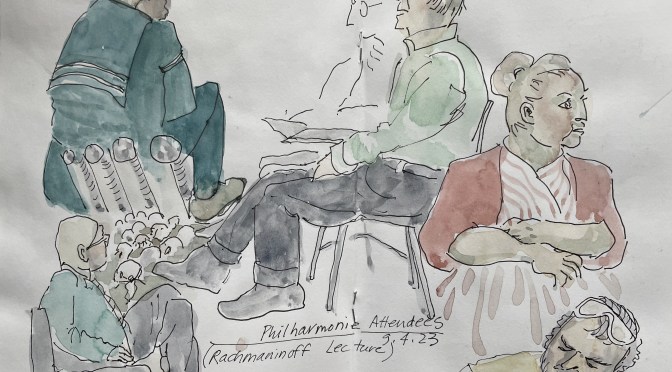
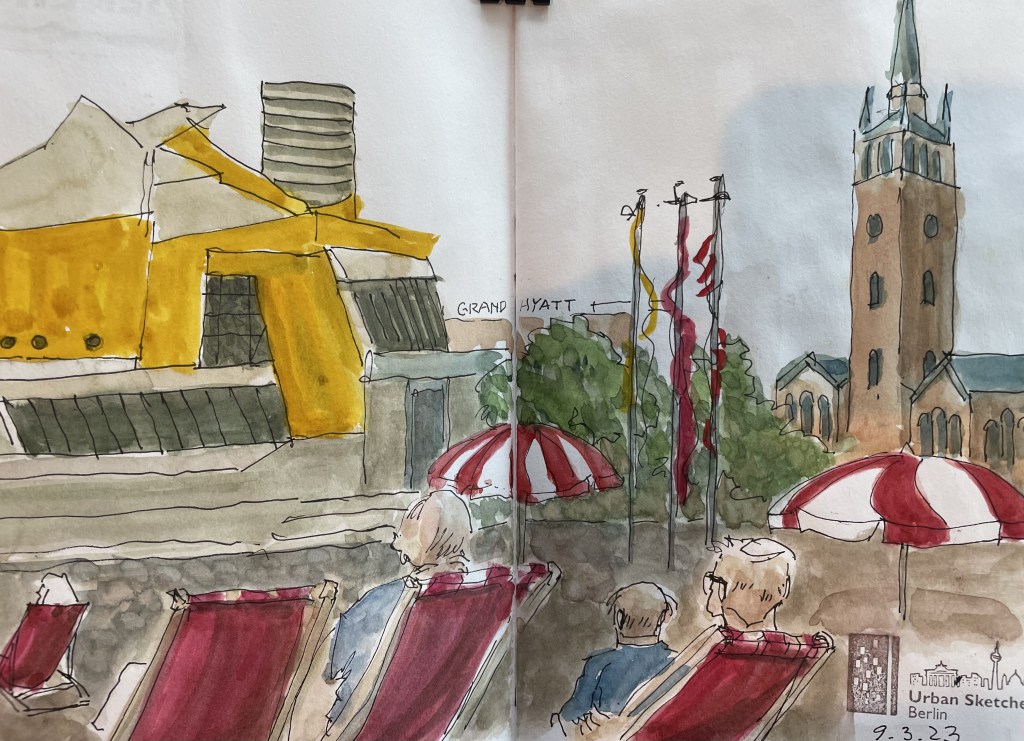
From Berlin to Leipzig, Hamburg, and Lübeck, I captured another dimension of Germany through sketches that fold the edges of people, places and things.
Environmental Boomerang
A noon time protest in Lubeck reminded me of our climate crisis.A Demonstrators of all age groups marched peacefully through the middle of town. When I posted this video on instagram, I immediately got negative comments. It made me very sad that there are such outspoken reactions in denial of the need to focus on a concern that affects everyone on the planet.
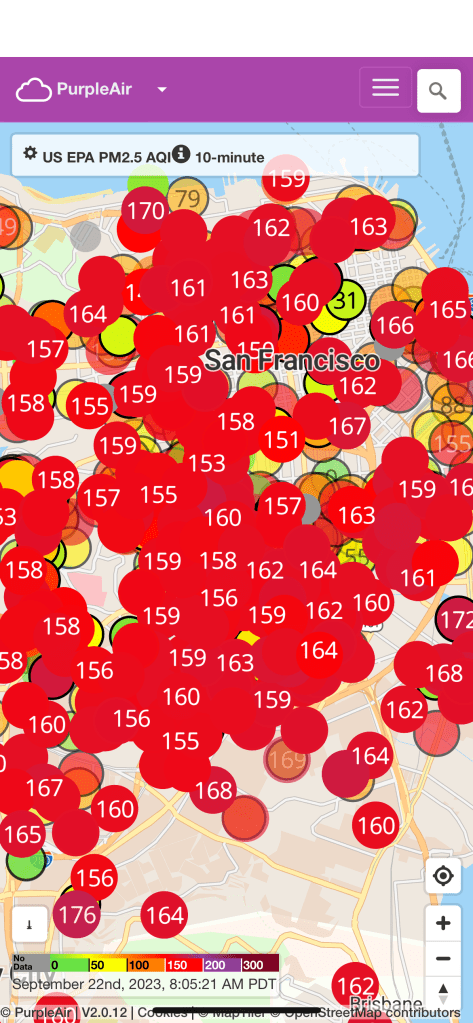
Before arriving in Hamburg on this trip, I learned that the pollution index was over 100. I don’t normally check air quality in cities during trips. But the app on my phone exists because San Francisco provided real-time air quality monitoring during the fires a year ago in California.
When I inquired about it to my Air BnB host in Hamburg, he dismissed it as a non-event. So I went. Ironically, the day I returned to San Francisco, the pollution index was over 150. That was the worst in the world on that day. Fires in Oregon and Northern California had drifted down to the SF Bay Area and were trapped there.
Screenshot of the air quality index in the Bay Area on 9/22/23
A Post-Mortem
Some of you may have read in my 2023 summary that I am closing down my website at the end of the year. After seven years of traveling around the world from 2014-2020, two years of pandemic insomnia, and two years of babbling home construction, it’s safe to say that I have exhausted my creative wanderlust!
Knowing me, I’ll no doubt still sneak in a few trips here and there. I miss my German friends terribly. For my local friends, I need you too! For now, I’m looking forward to zooming with my two precious grandsons and recording the stories that Felix tells me about his favorite camper van and his day at the farm.










































































 travelswithmyselfandothers.com