Culture in Bulgaria

A free walking tour of Plovdiv in English gave us plenty of food for thought about Bulgaria’s long, complicated history as well as insights on current trends in art, architecture and music.

Bulgaria’s Complex History

From the 6th to 3rd Centuries BC, Thracians (of Spartacus’ era), Persians, Celts, and Macedonians fought over rule of the Bulgarian land, until the Romans (Tremontium) conquered the region in 45 AD. Various tribes successfully ruled after the fall of the Roman Empire in the 6th and 7th Centuries until the Byzantine Empire granted Bulgarian rule in 681AD.

The Cyrillic Script developed by the Bulgarians and used today by the Russians helped to unify the Slavic and Balkan cultures.that then dominated the area. The Ottomans arrived in 1396 and ruled until 1918. After the Russo Turkish war of 1877-78, the Russians gained influence over the area until the fall of the Berlin Wall.

While an independent state, Bulgaria is a democracy with a market economy. It has seen its share of problems with stronger powers controlling the country, however. Local politicians, weak and intent on short term gain, plague the country today. Corruption, mafioso rule, and disorganization jeopardize Bulgaria’s stability. Zero population growth and mass migration to other EU countries have caused an undertow to the economy with little hope in sight for a recovery.

Roman Infrastructure and Urban Planning

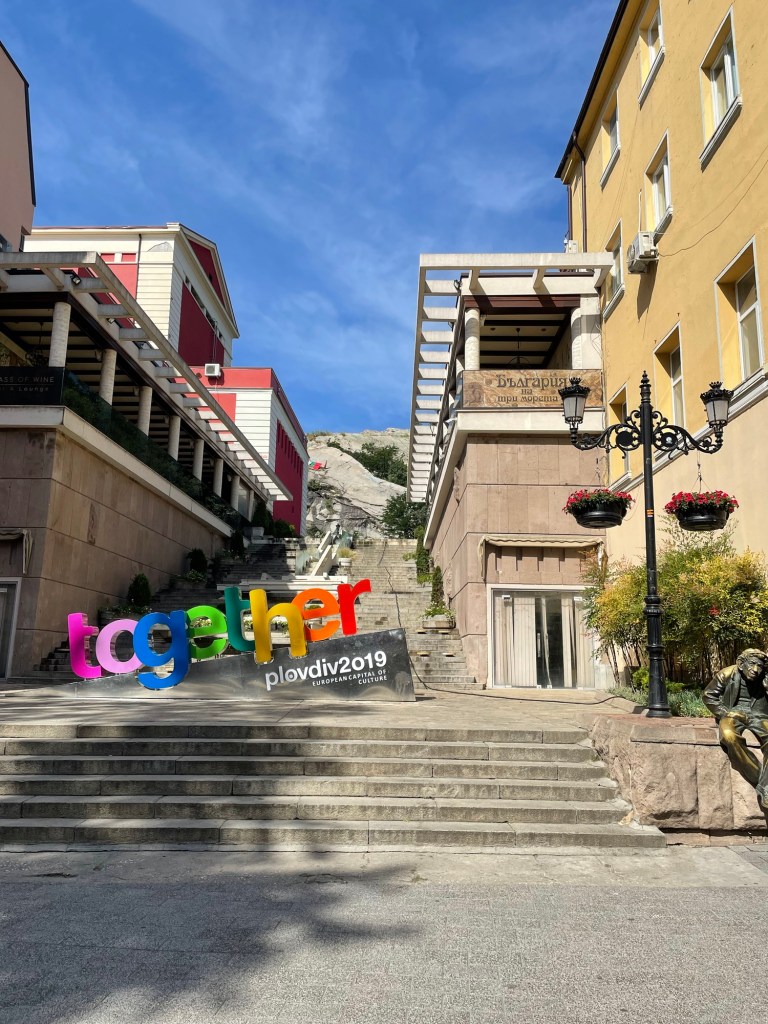
As one of the two European Centers of Culture identified in 2019, Plovdiv intended to promote its cultural treasures to the rest of the world. It was listed as a candidate for a UNESCO World Heritage Center, until the reconstruction of historic houses contravened UNESCO restrictions.

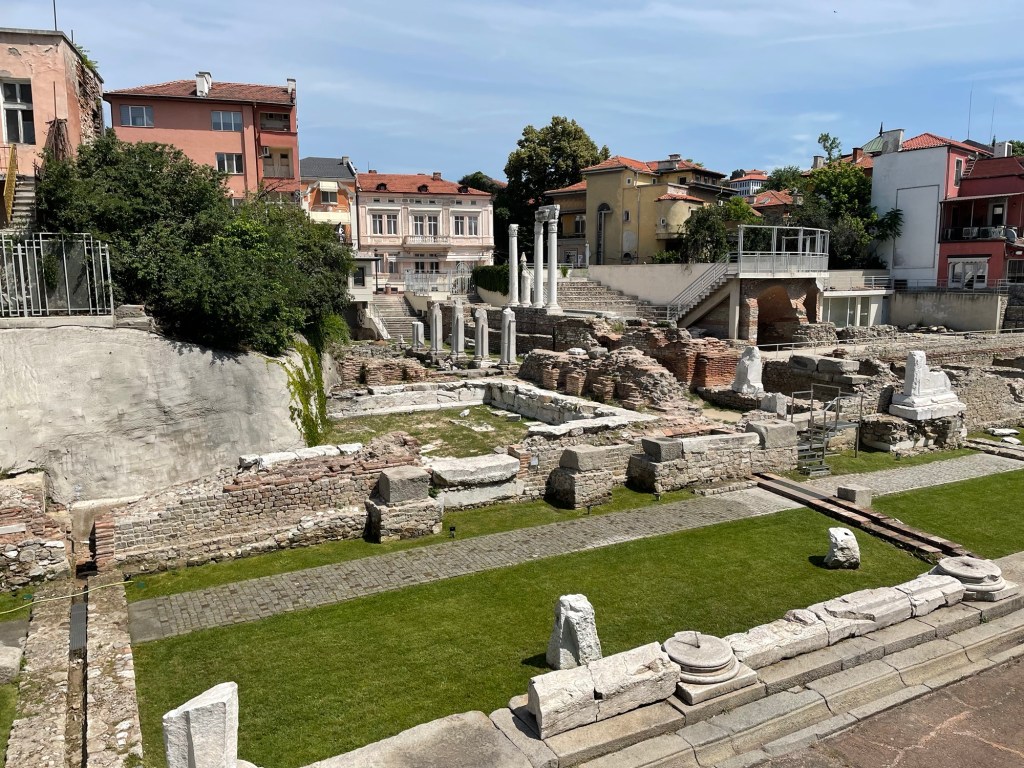
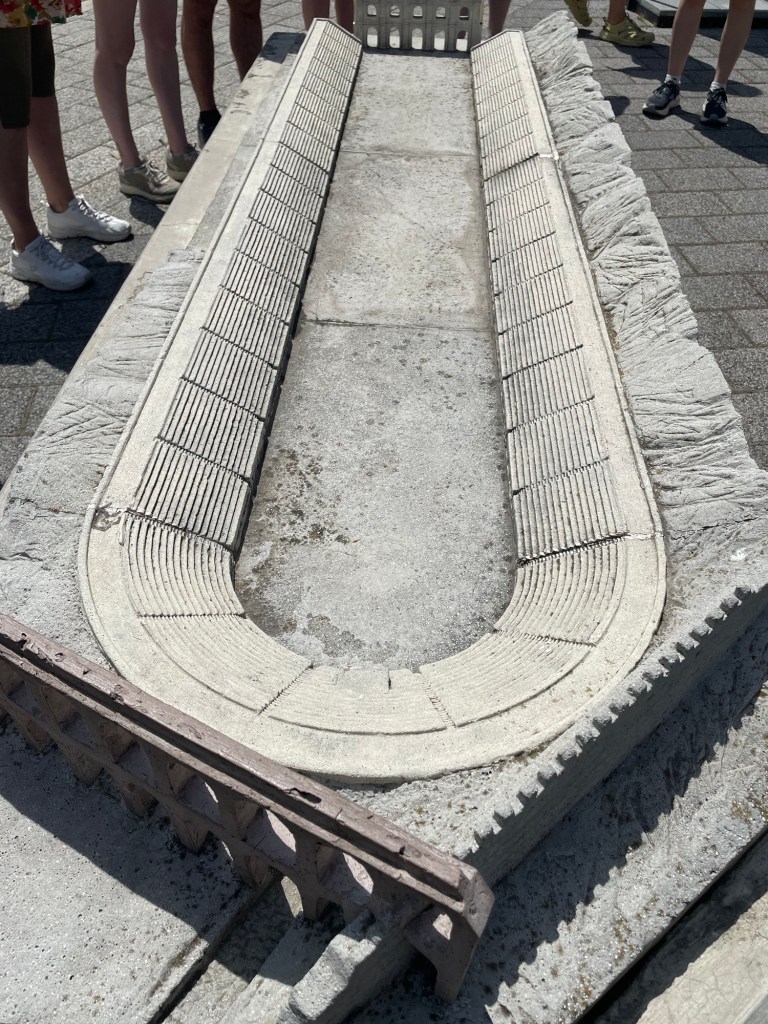
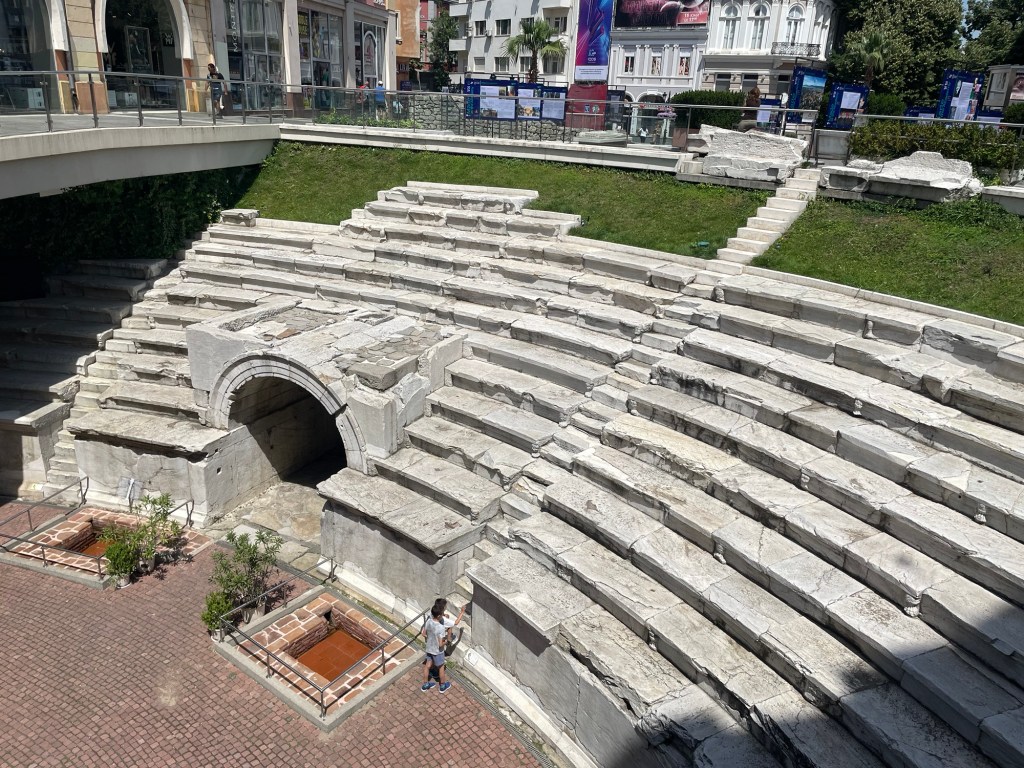
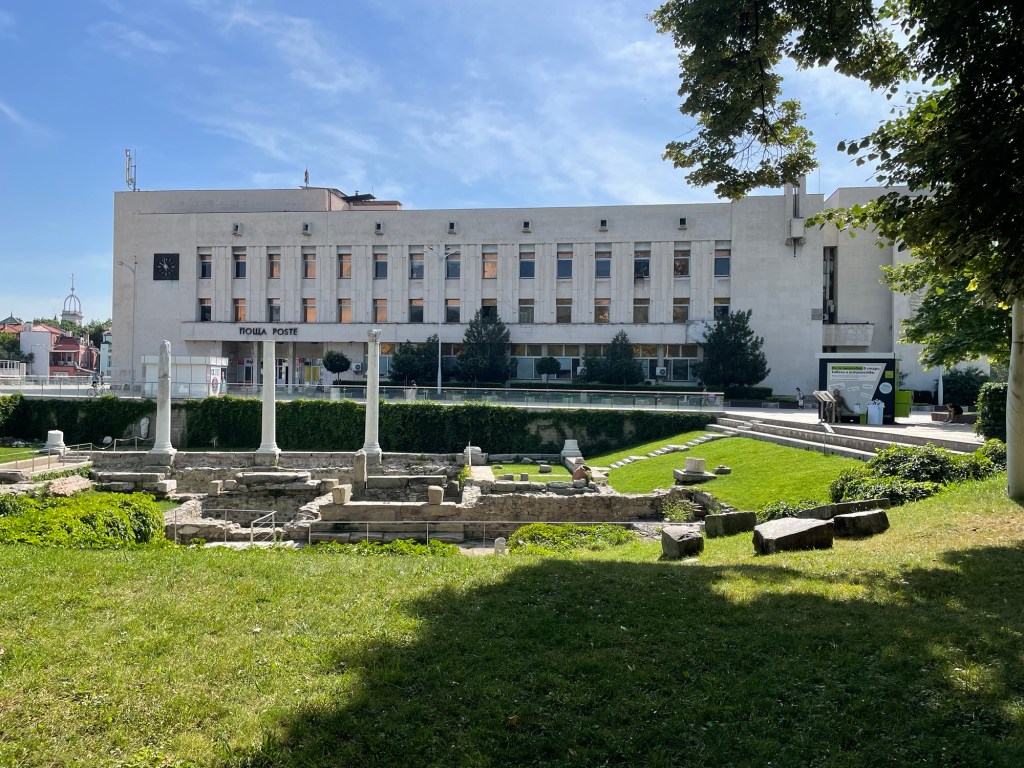
The Roman Ruins predetermined much of the city’s current layout. Aqueducts bringing water to the city from the mountains enabled Tremontium to thrive. A huge lozenge-shaped stadium, over 240 meters long, was erected for public events.

Eventually, as the stadium went into demise, a roadway and houses were built over the ruins. Only the small portion at the end has been excavated for public display.
Ottoman Architecture

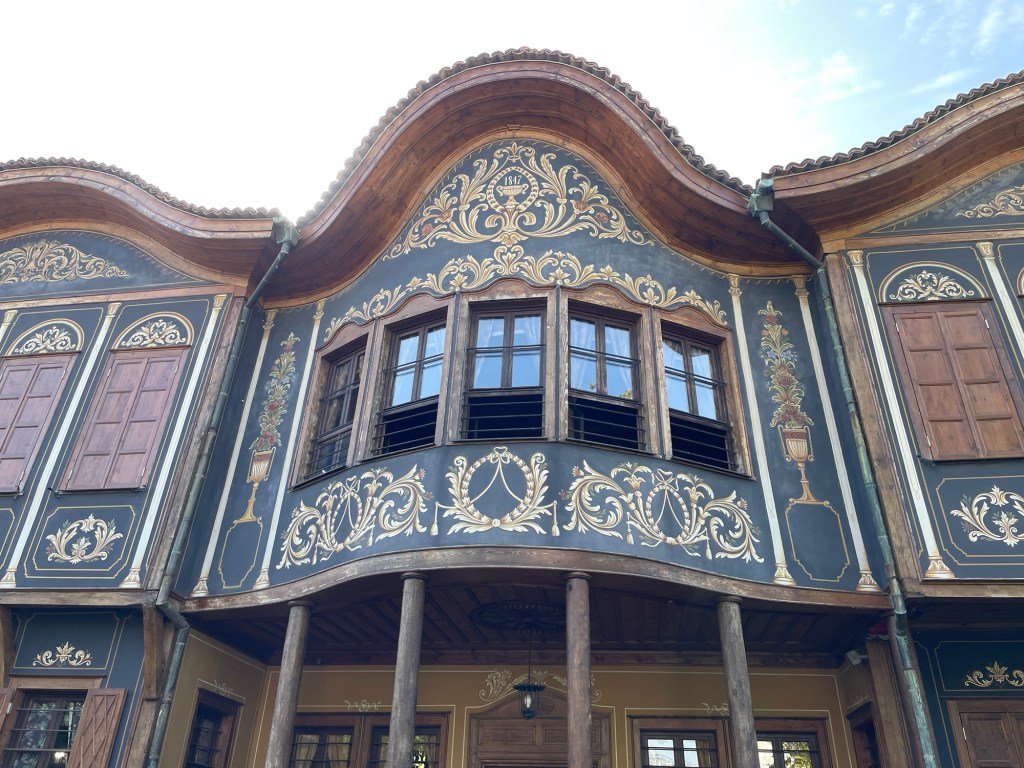
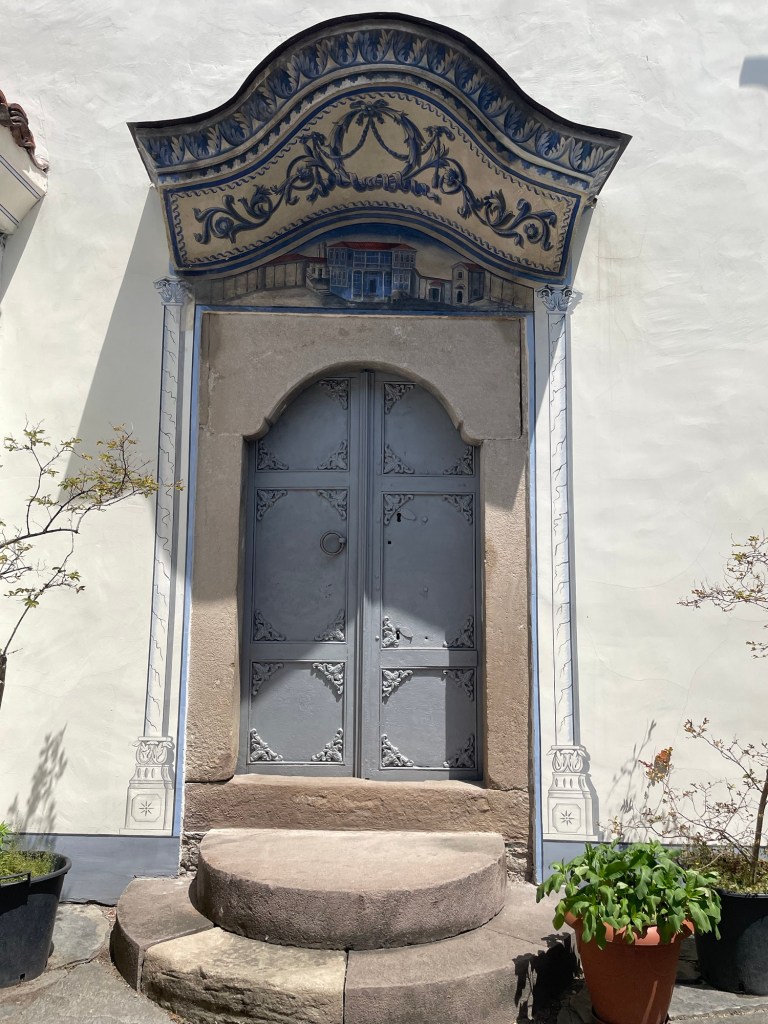
From around the late 19th to early 20th Centuries, wealthy residents of Plovdiv built fancy houses in the Ottoman style of architecture. The wood frame buildings and decoration have been preserved in the Old Town area near the Ancient Theater.
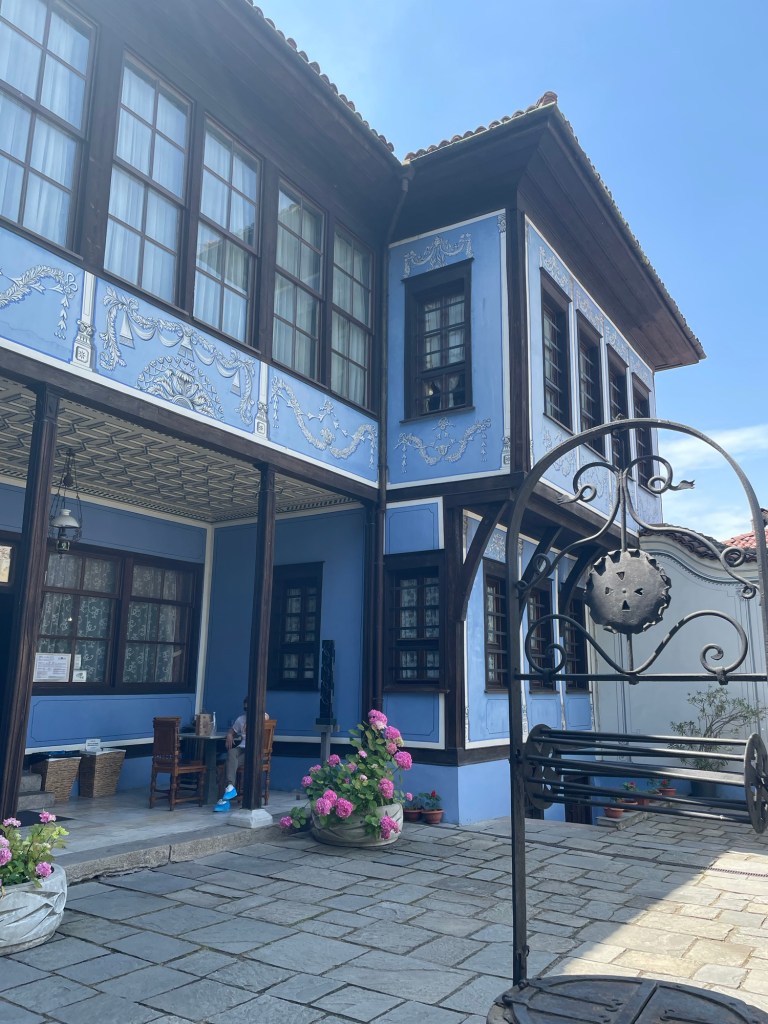
The proportions are tall with thin windows to restrict heat gain. Colorful exteriors and painted decoration exemplified the wealth of private patrician families.

The Ethnographic Museum

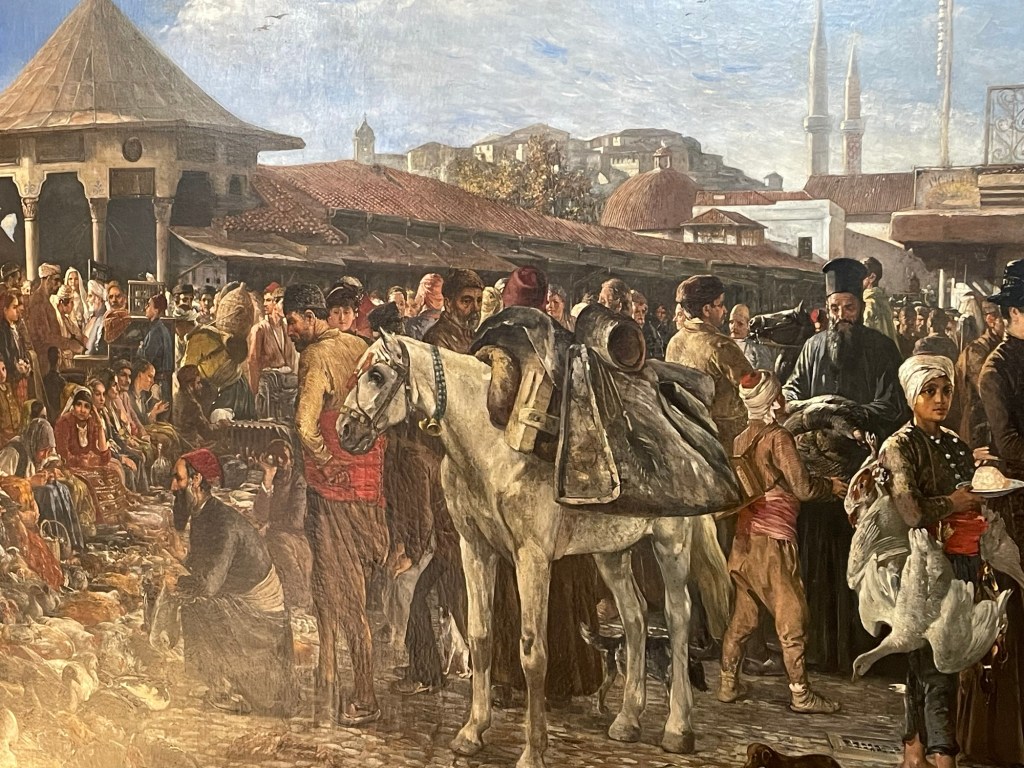
Much of Bulgaria’s history and culture is preserved in this family home in the Old Town.

Many artifacts such as musical instruments, clothing, jewelry, and farm implements were displayed, as well as the handicrafts for metal forging, wool production and weaving.

Ethnographic Museum Interior
The Bachkovo Monastery

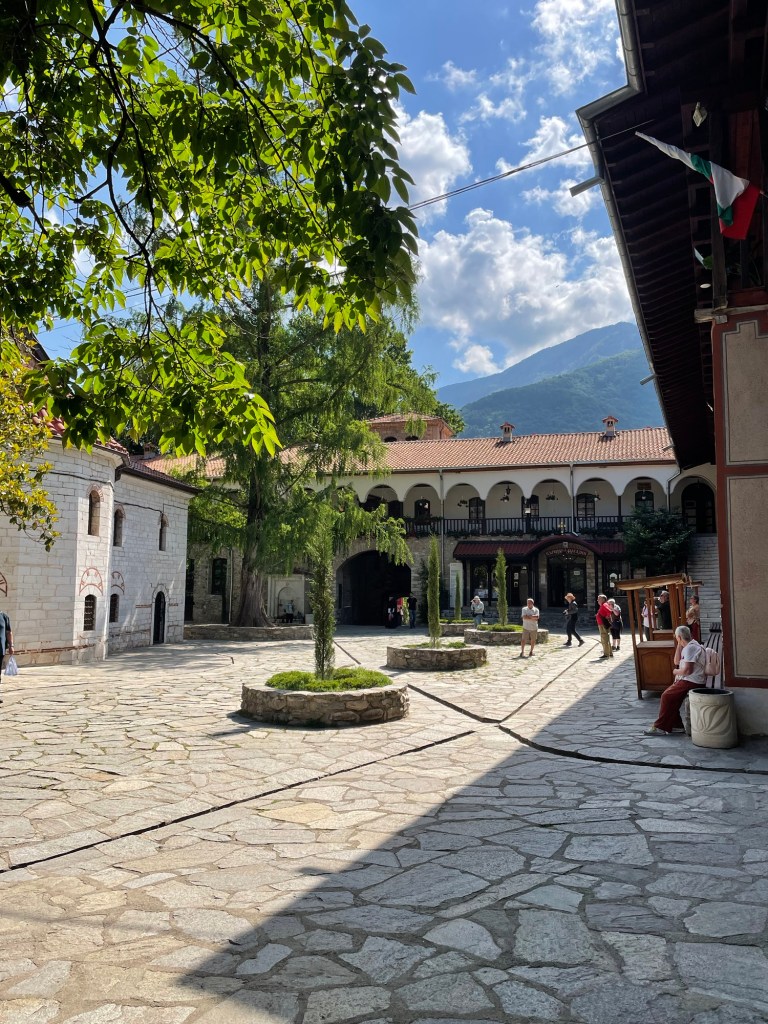
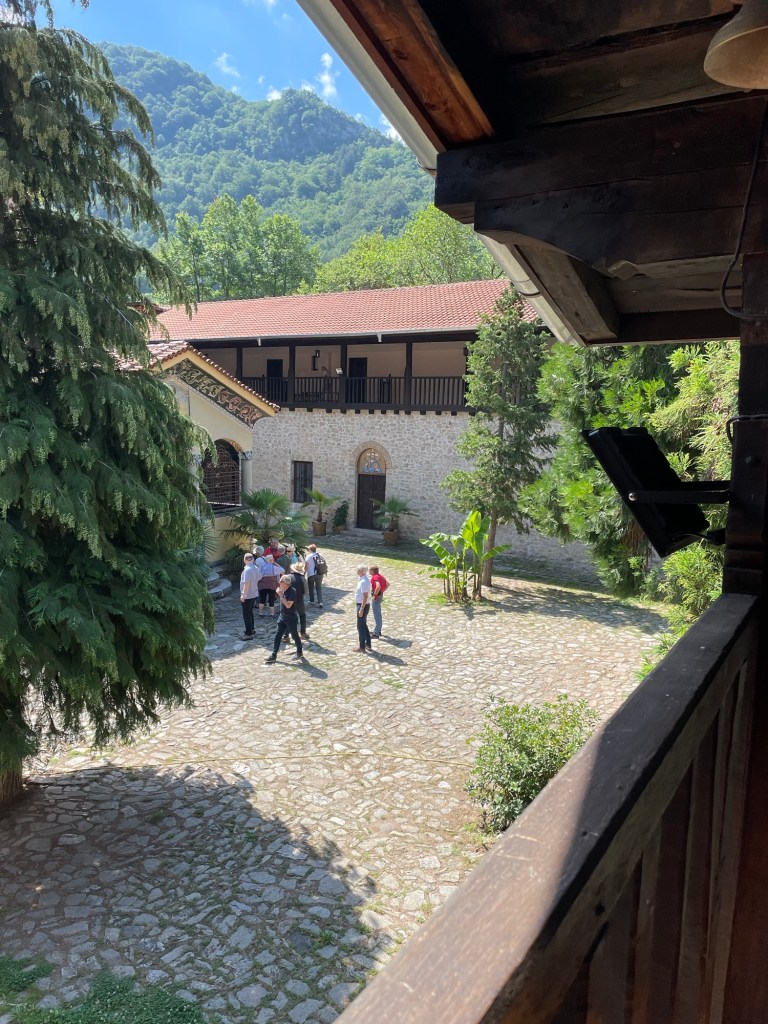
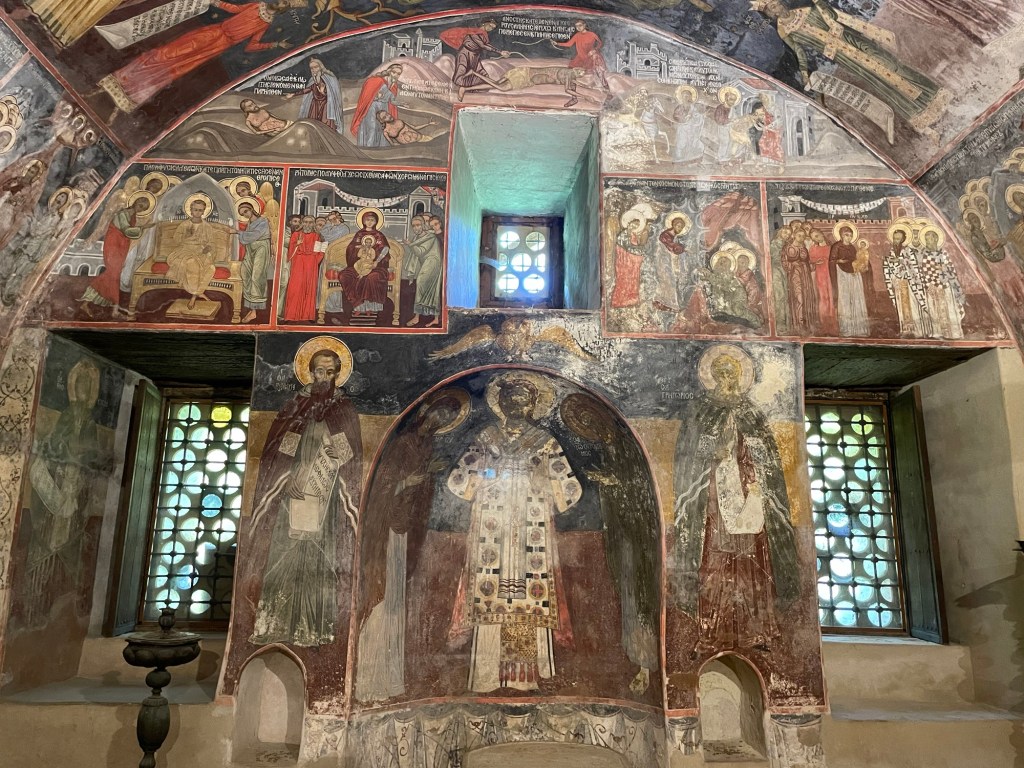
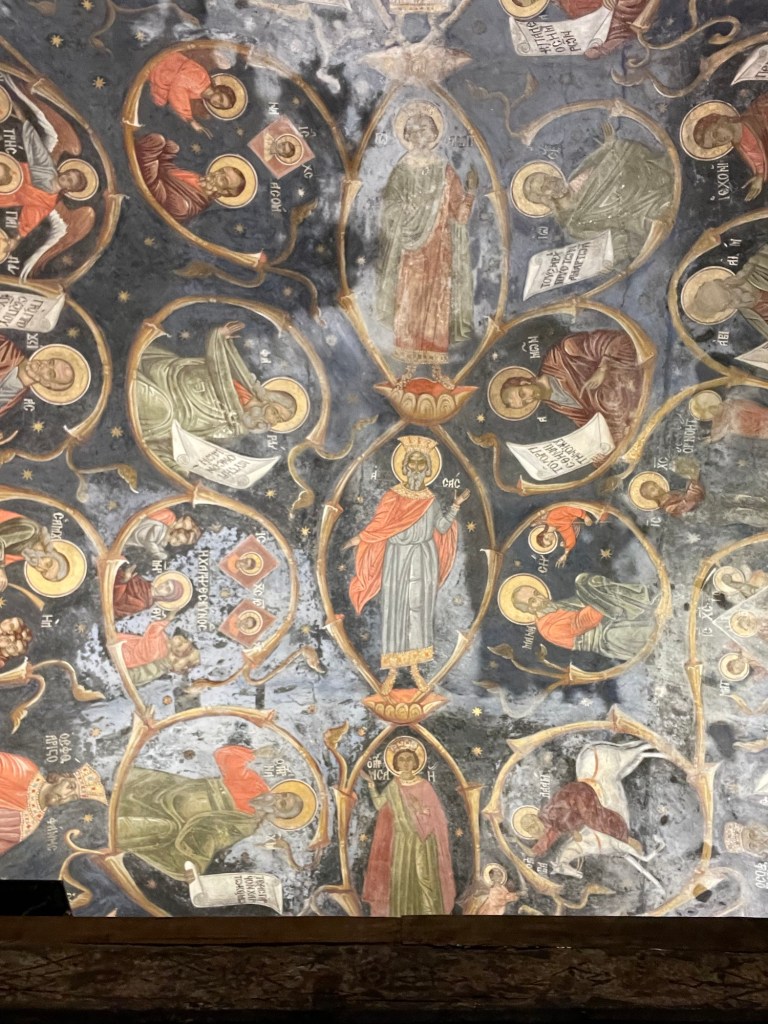
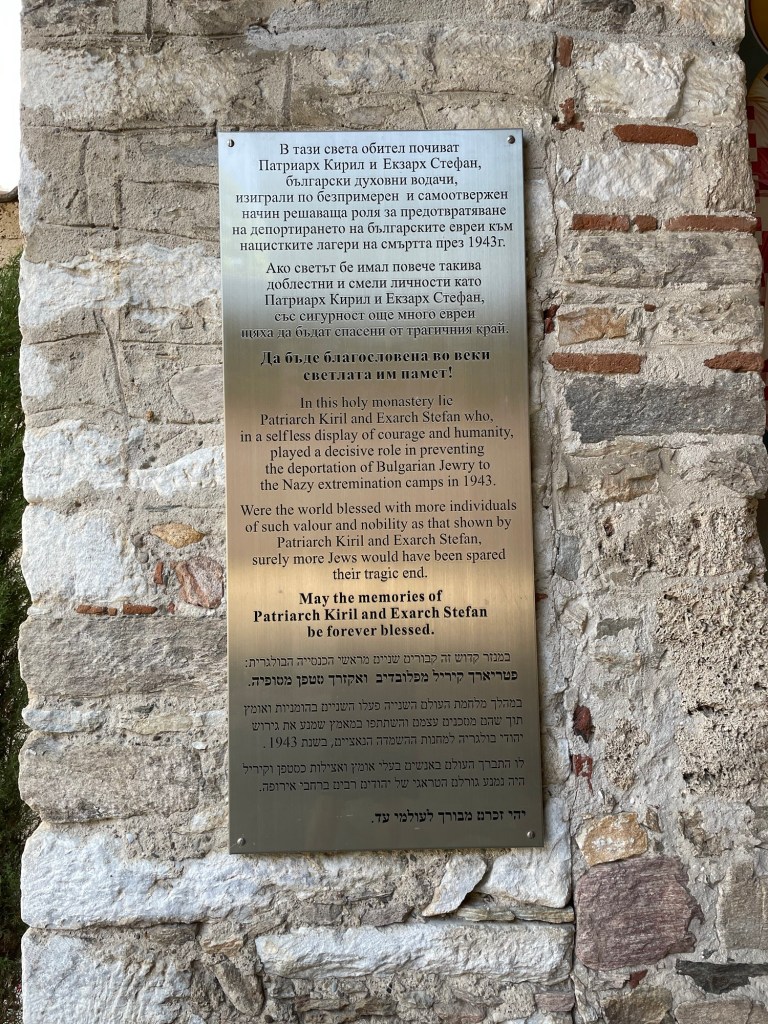
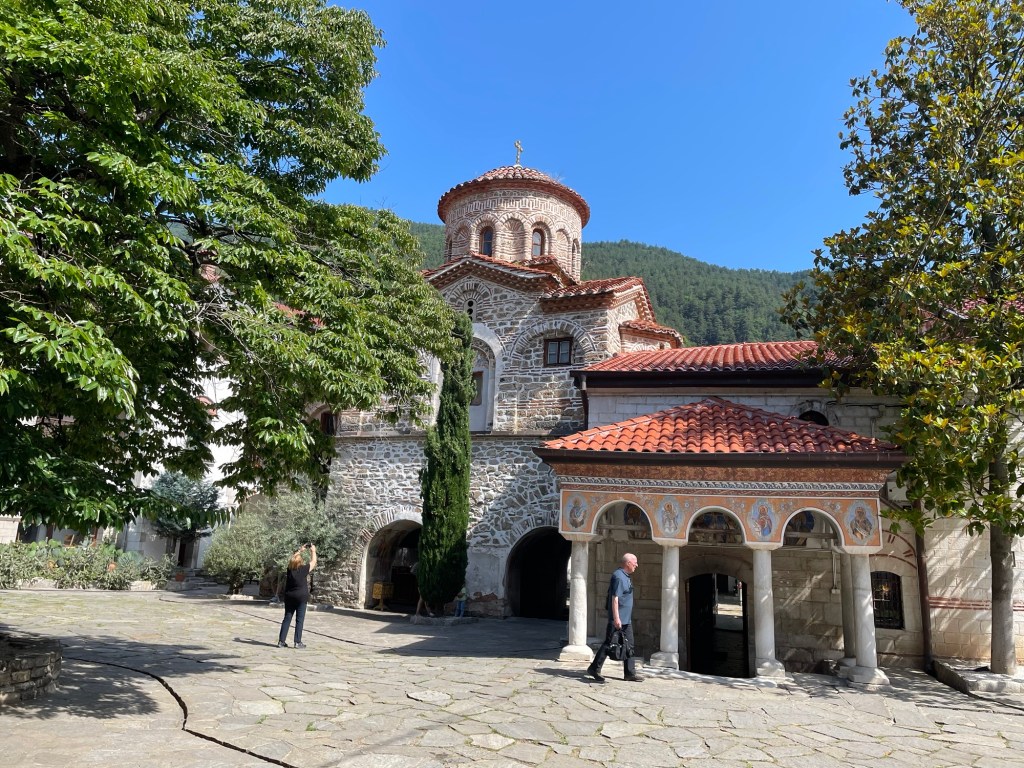
A side trip to the mountains beyond Plovdiv was a refreshing journey away from Plovdiv’s 90 degree Fahrenheit city heat. The Bachkovo Monastery and Refectory, founded in 1083, contained numerous frescoes from 1643 depicting Christian Orthodox history. The monastery was instrumental in saving many Jews from persecution camps in 1943. Historically, Bulgaria has embraced Christian, Jewish, and Muslim cultures.
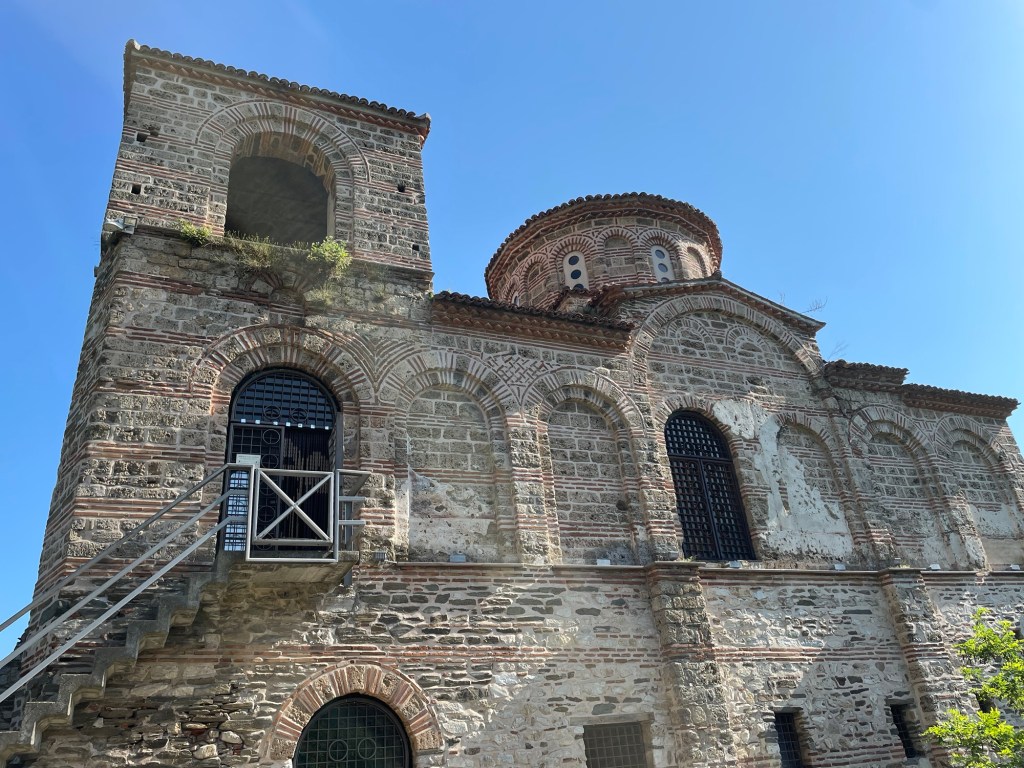
Asen Fortress

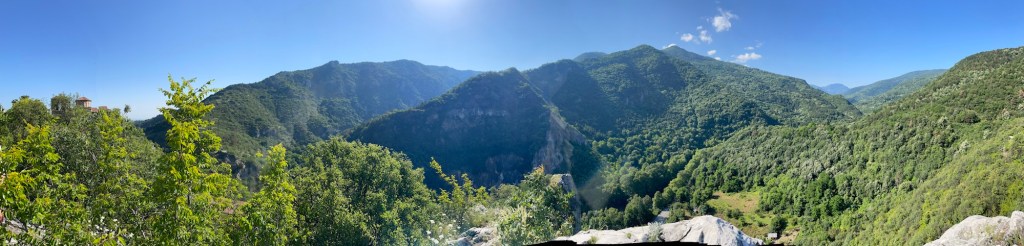
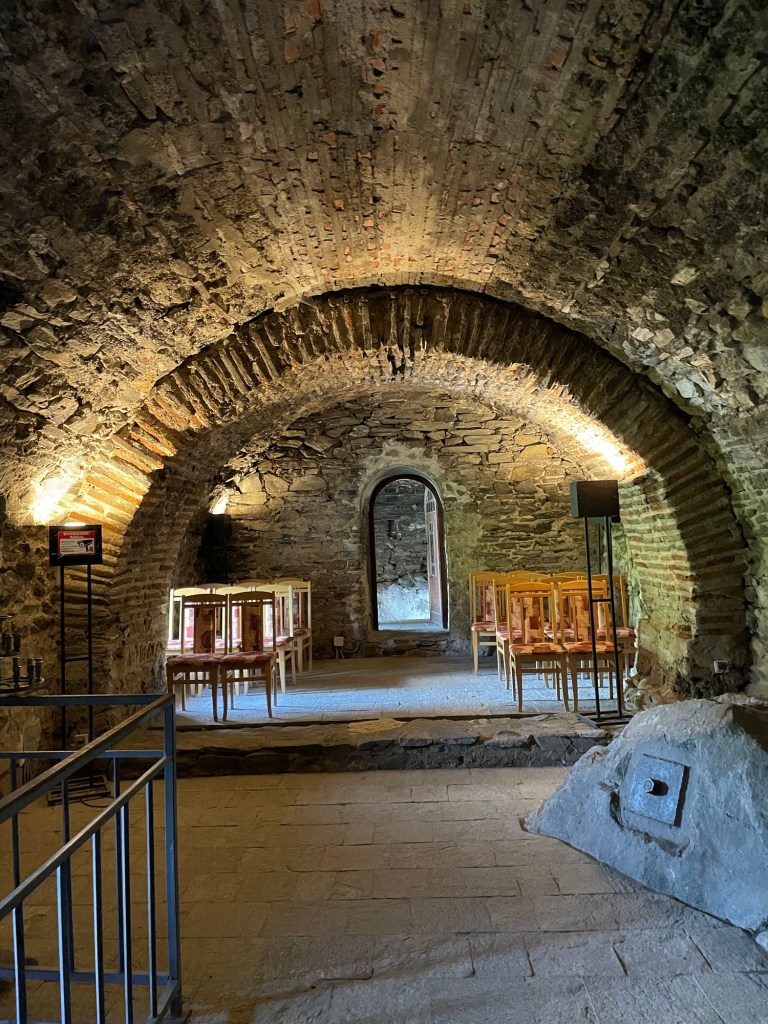
The Asan Fortress was built in the 13th Century as a defensive guard tower over the steep ravine. The location offers panoramic views of the Rhodope Mountains.
Italian Night I in the Ancient Theater

Our main purpose for traveling from Germany to Bulgaria was to attend a Tosca concert featuring Sonya Yoncheva. An opera diva born in Plovdiv, the city was excited to see their native daughter return with her stunning voice.

Dean Vatchkov as Scarpa
Ivan Mimorov as Caravadossi
Sonya Yoncheva as Tosca
No-Curtain Call

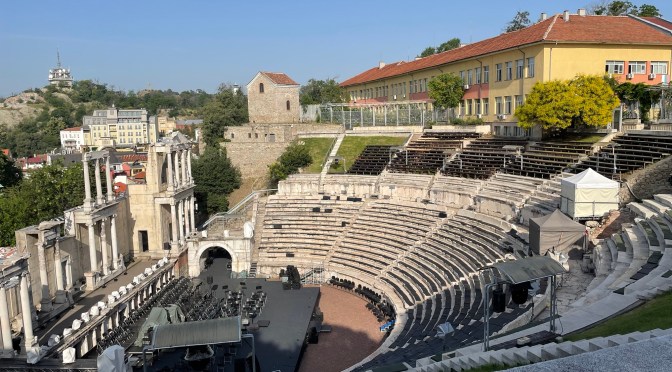
We were excited by the rare opportunity to film the performance with the backdrop of the ancient theater’s ruins.

Italian Night II in the Ancient Theater

While browsing, we noticed a poster promoting an Italian night performance in the Ancient Theater a couple of days later. We hadn’t heard of the performers, but we were excited by the chance to see more opera at the theater. Even though there was no translation for tickets or the performance, our Bulgarian friend Vladimir was able to help us purchase tickets online. We knew exactly where to go from the previous performance.

After a delicious dinner of beef tongue and grilled vegetables at a road-side outdoor restaurant, we made our way to the theater a short walk from our Air BNB. We chose our seats near the center along one of the designated marble rows in Section D. As the lights dimmed and the orchestra played a brief introduction, the lead singer appeared on stage and began singing.

We strained our ears to adjust to the music. Hmm, we didn’t recognize the opera aria at first. By the time a faint echo of a saxophone was heard along with wild audience applause, we realized that the singers were crooners and the music was contemporary pop music!

Annemarie and I looked at each other and realized that the “Italian night” was not for opera, but for schmaltzy Italian songs! The audience knew all the words and swayed to the music, from the days when Italian pop was at the top of all European charts.

We laughed at how we had misunderstood the meaning of “Italian Night”. Indeed, the term applied to pop music as well as opera music. Our minds were too intent on opera! We felt a little sheepish at the false assumption we had each made.

Nevertheless, we enjoyed the concert as much as Sonya Yoncheva’s classy performance. With 80 degree whiffs wafting through the stadium, delightful colored stage lighting, and a mellow Bulgarian audience, it was a memorable and romantic musical evening regardless.

Ramazotti Favorite
Nessun Dorma, an Italian opera favorite by all
The Volare Finale
The Dining Scene in Plovdiv and Sofia

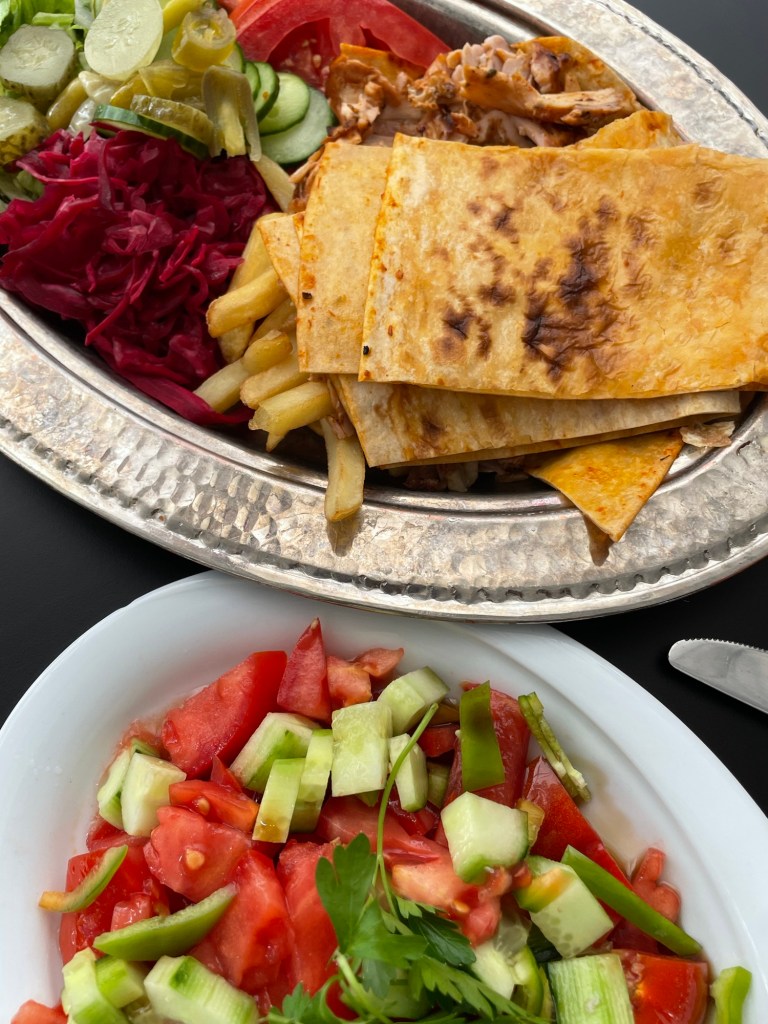
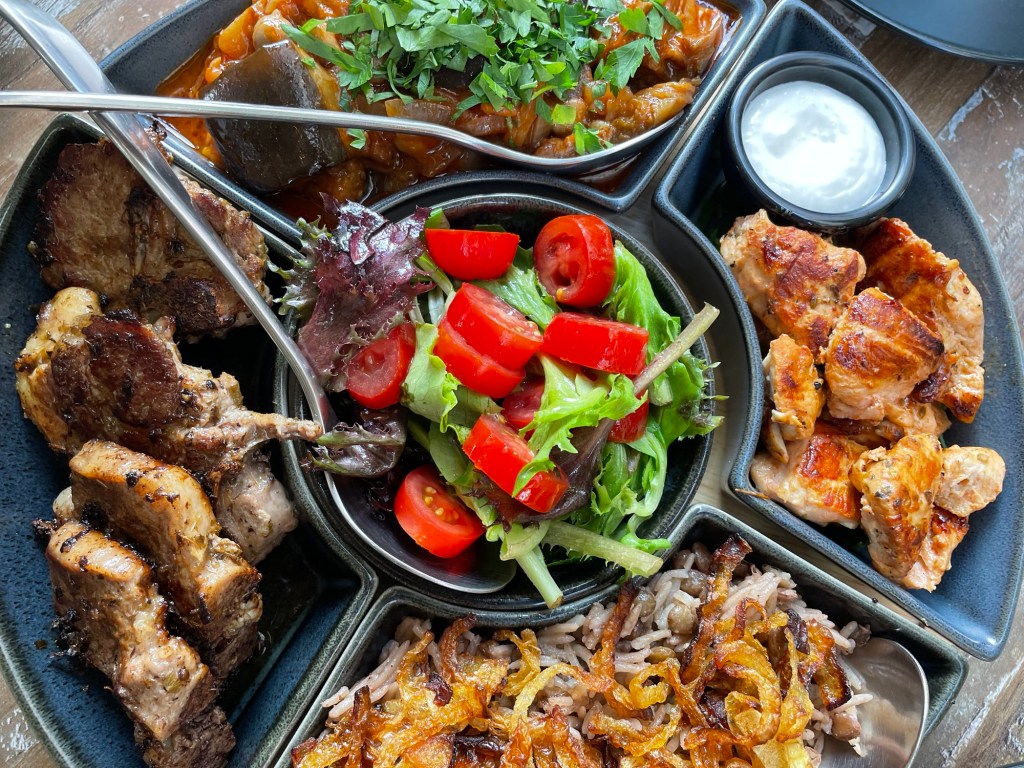
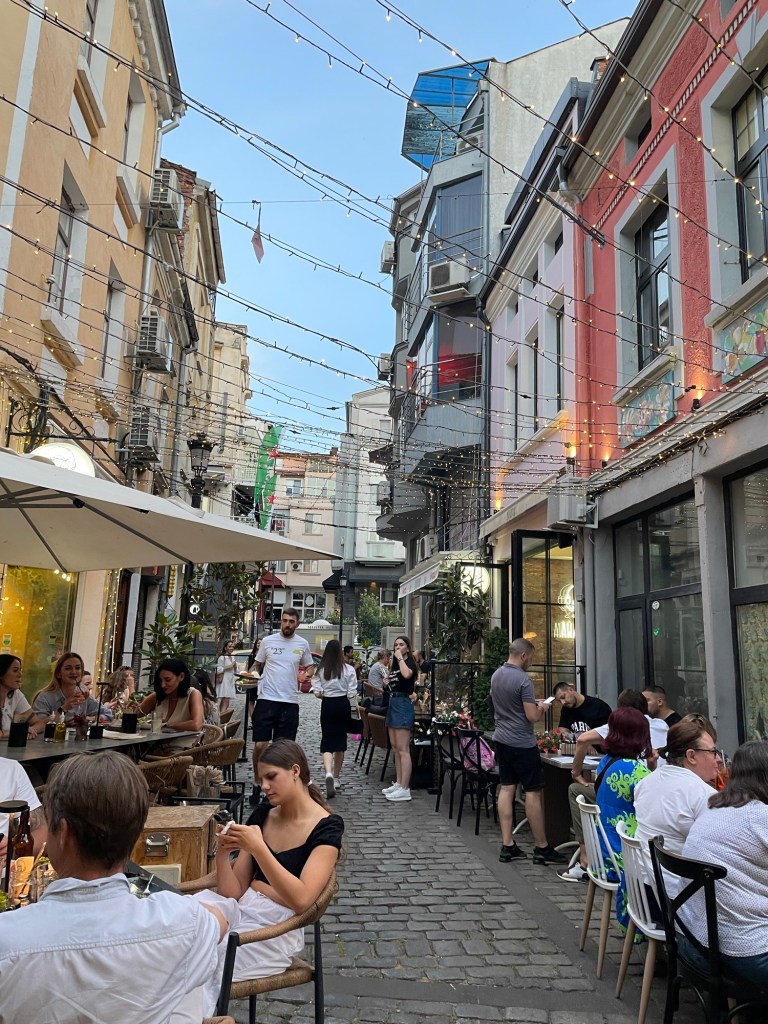
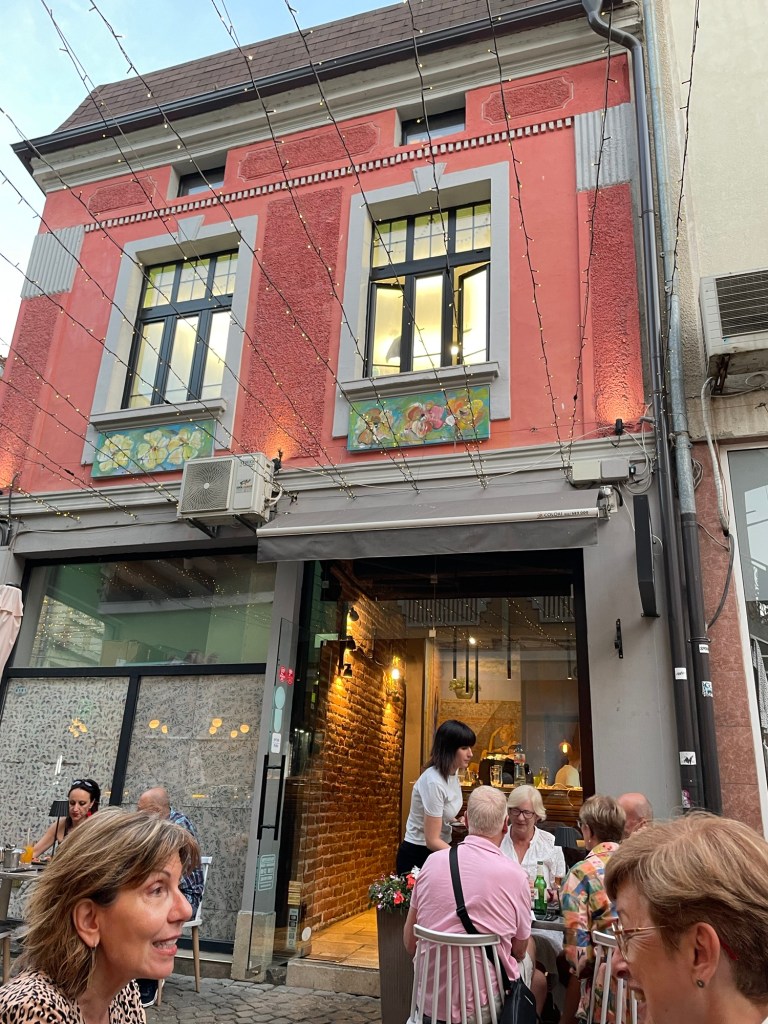
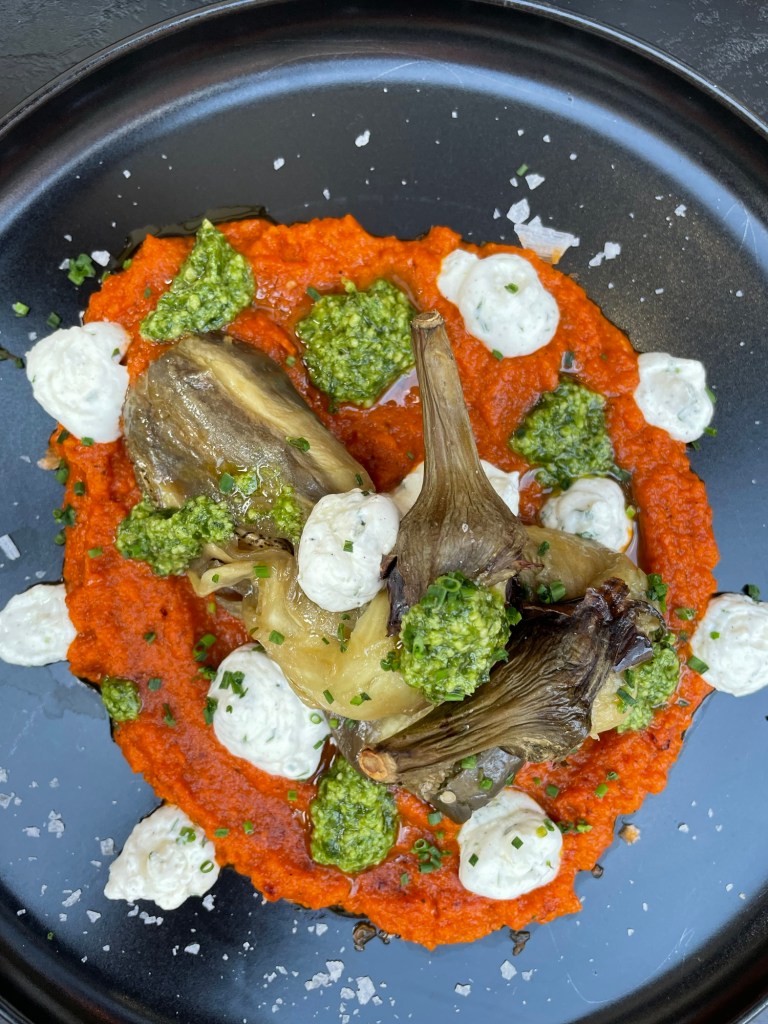
There were plenty of restaurants to soak up the tourist dollars, but even then everything was well prepared and dirt cheap. We especially enjoyed the eggplant and Turkish style mezze platters with tomato spread, pesto and burrata cheese. Cute outdoor restaurants in the Old Town area of Kapana were right outside our door and encouraged us to venture out and linger in the lively, 80-degree evenings.
People of Bulgaria

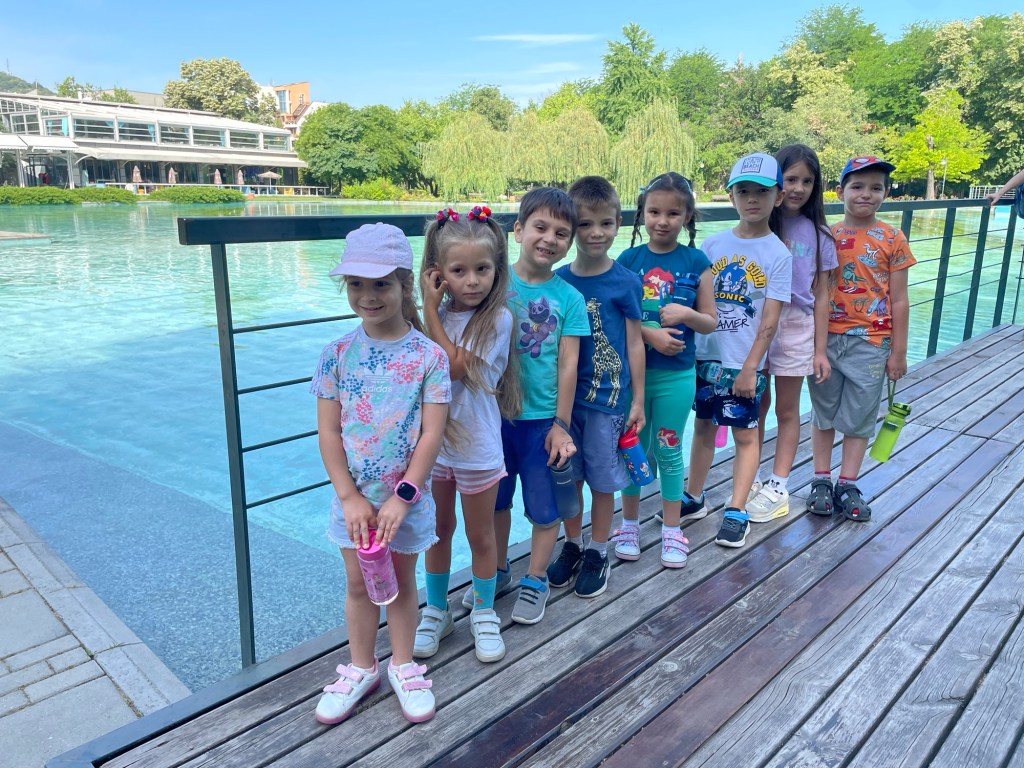
Here’s a collection of some people on the street, in the park, at the train station, and on the train:
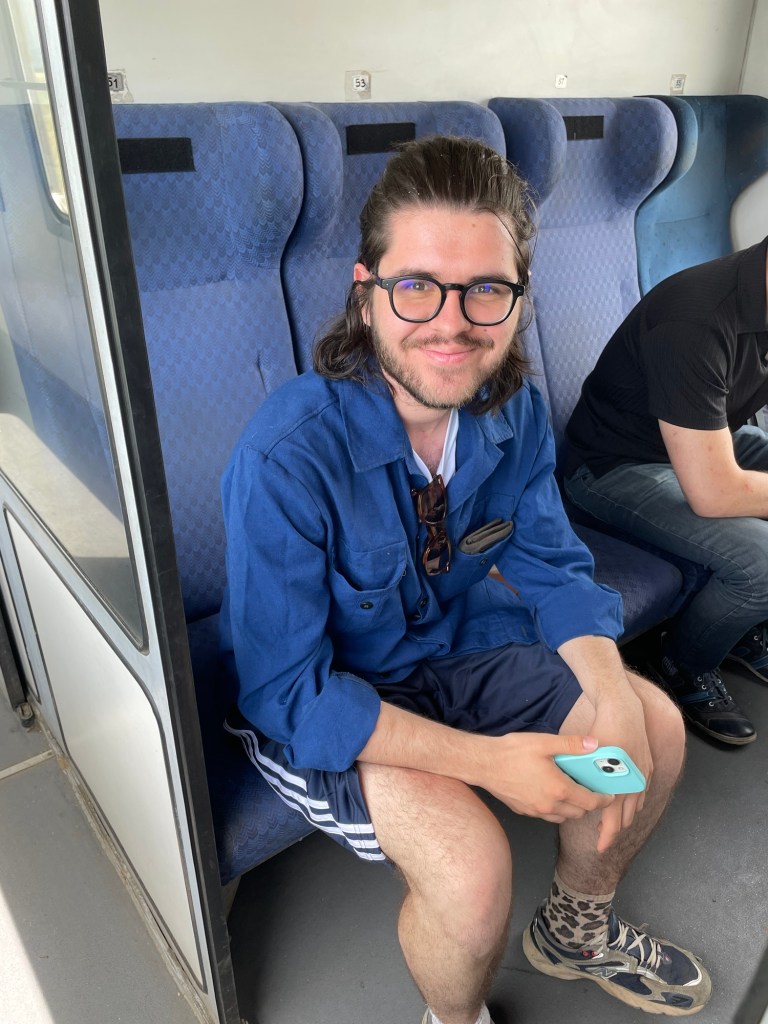
Meeting the people in Bulgaria brings dimension and insight to the country. We look forward to coming back to learn more about Bulgaria’s rich and extensive cultural history (and more opera in the Ancient Theater!!!)

Partners in Crime
Zum Wohl!

Ich bin ein Berliner!

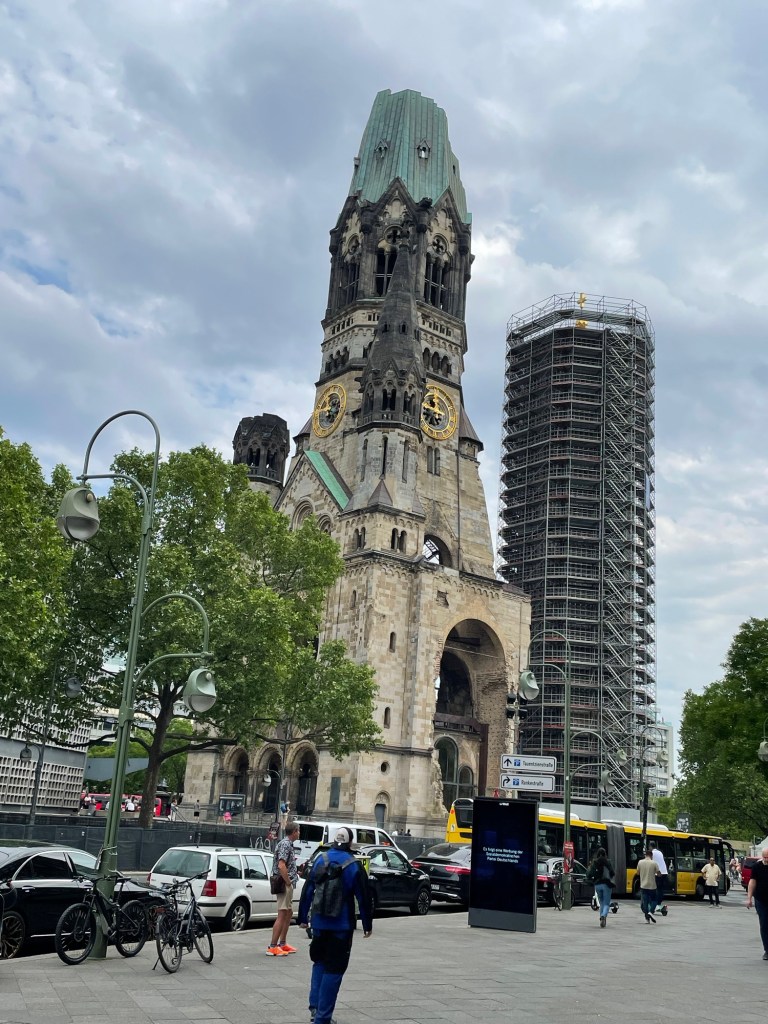
You may recognize some of the landmarks from previous posts, but I am including them as anchors for my day trip shopping in Kurfurstendamm. I seldom shop In San Francisco, but losing my lightweight jacket was a good excuse for a mile walk to the shopping district to replace it. First I passed the Kaiser Wilhelm Gedankniskirche, or Kaiser William Memorial, that caught on fire in 2020 and has yet to be restored.

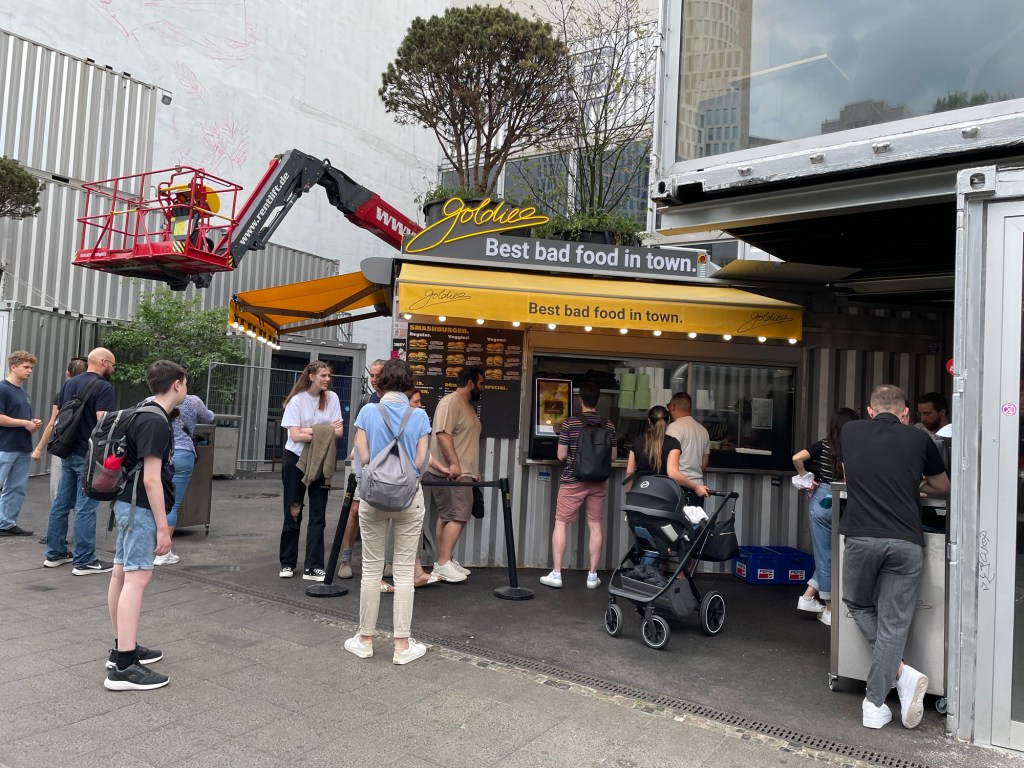
Walking down the street yielded two amusements. The “Worst Food in Berlin” with a long line in front would be the envy of any pop-up in San Francisco. And the street sculptor using sand to shape his bulldog and puppy was all in a day’s work for attention, admiration and a few coins.

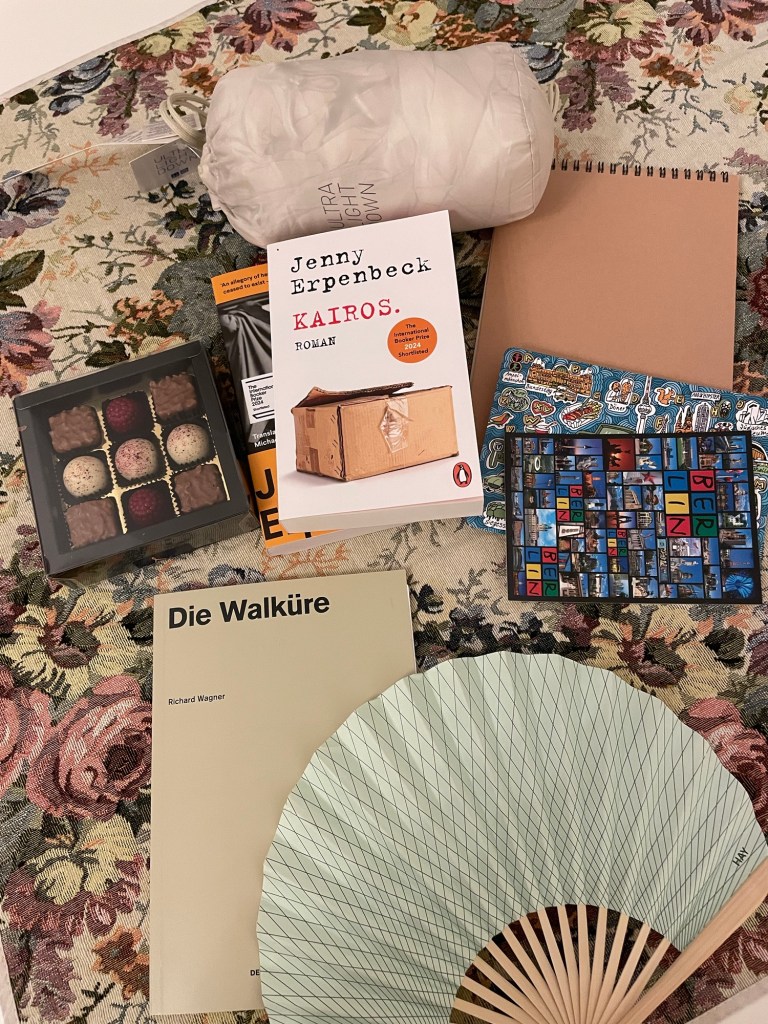
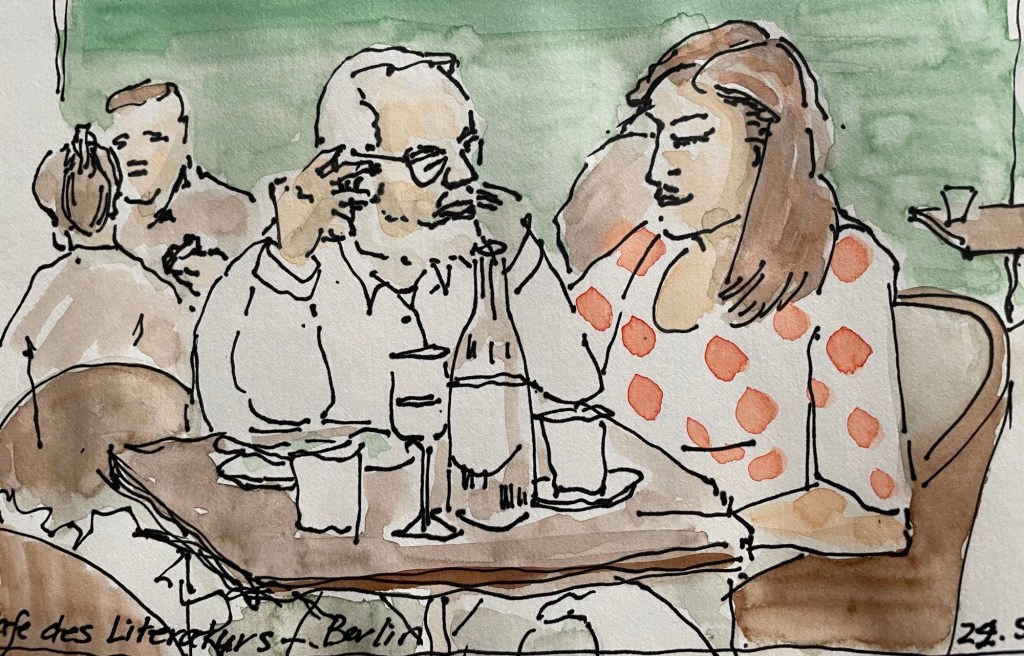
The Cafe Im Literaturhaus is another favorite haunt, where I went only last September to admire the patrons and the Belle Epoque villa style. The bookstore adjacent to the cafe sold me German and English versions of “Kairos” by Jennie Erpenbeck. The book won the International Booker Prize for 2024 and was Book of the Year in the Guardian.

More goodies in the table display above capture the day’s finds included a badly needed sketchbook, Lindt chocolates, and the program to “die Walkure” (see Part II below for the opera that took place later that day).

Konzerthaus, Berlin

My favorite conductor these days is Joana Mallwitz, who is the new director of the Berlin Konzerthaus. She’s very dynamic and gives informal lectures before her performances to explain the musical material she presents. Former male conductors seem so formal compared to her. She makes sure to acknowledge the musicians who are featured after her own curtain call.

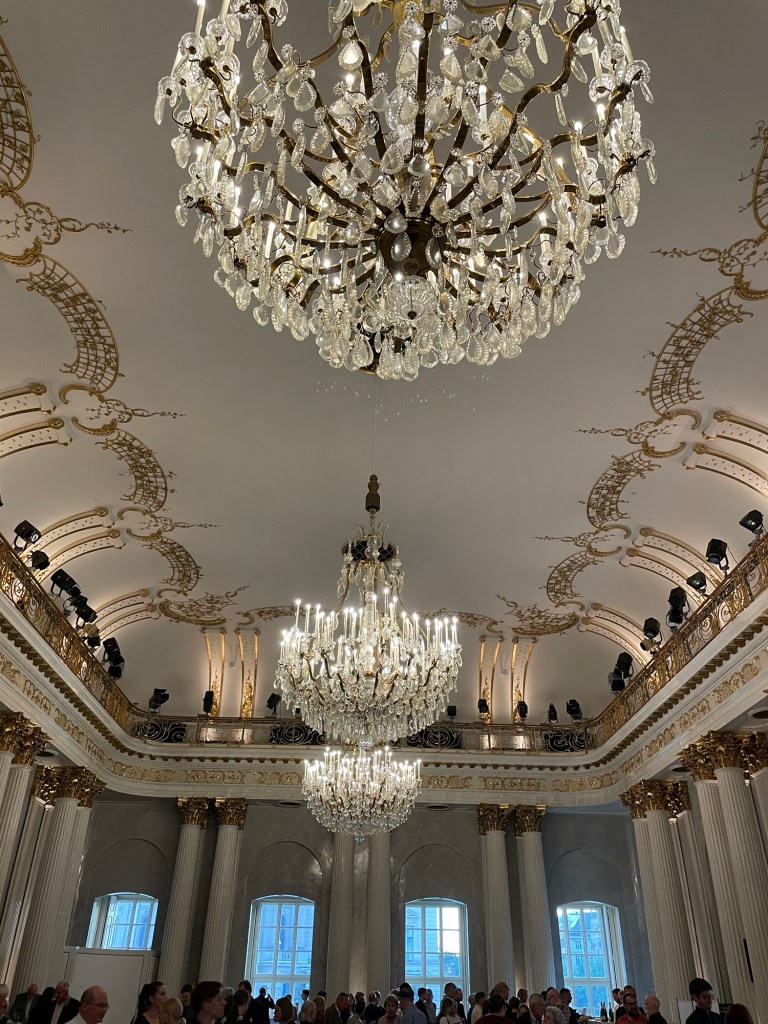
I sat two-thirds back near the center for a performance of Brahms’ Concert for Violin and Orchestra in D Major op. 77 and Beethoven’s Eroica. The acoustics were excellent despite my skepticism about rectilinear spaces. Of course the newly renovated interior provided over-the-top opulence and splendor to experience and enjoy.

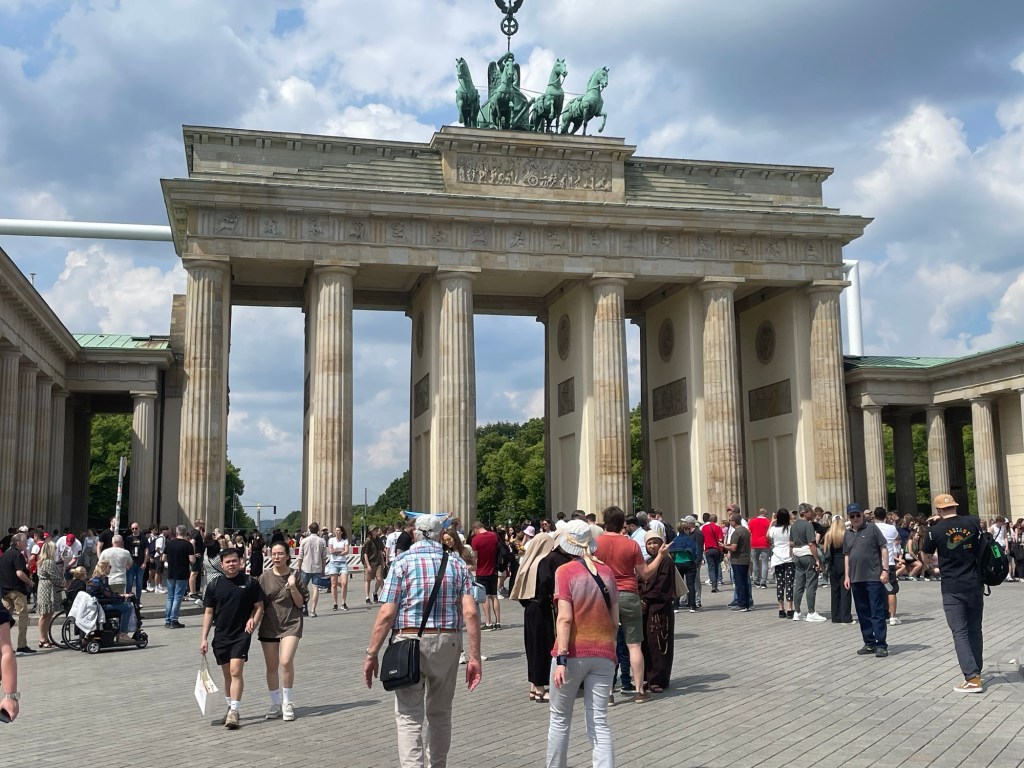
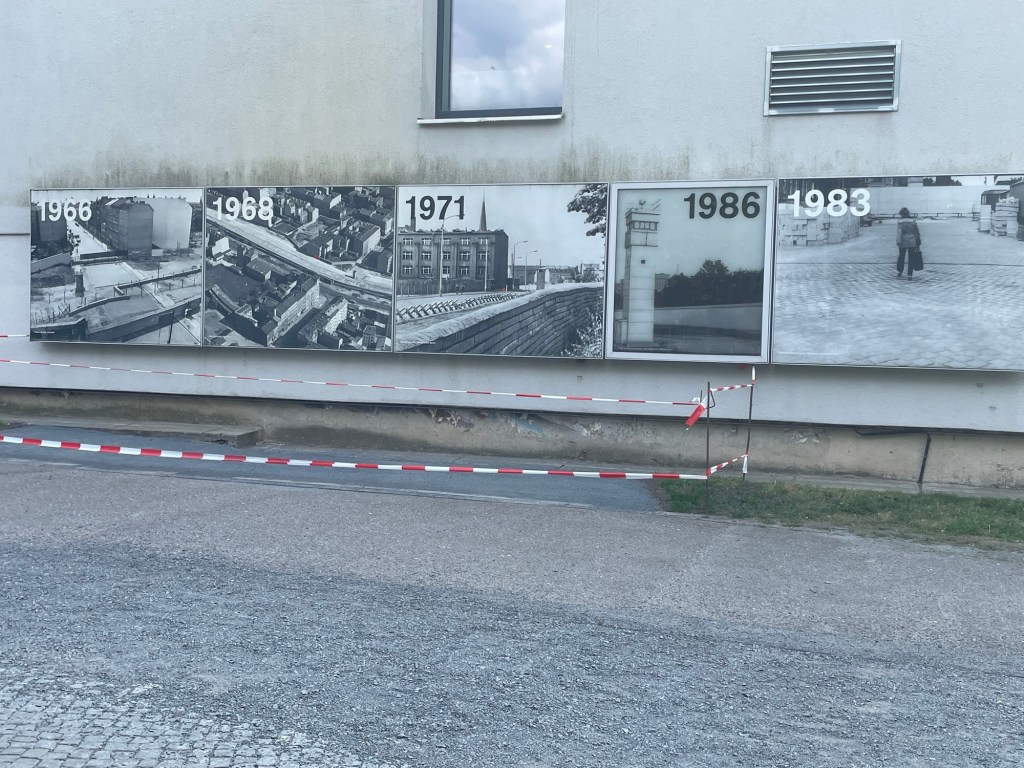
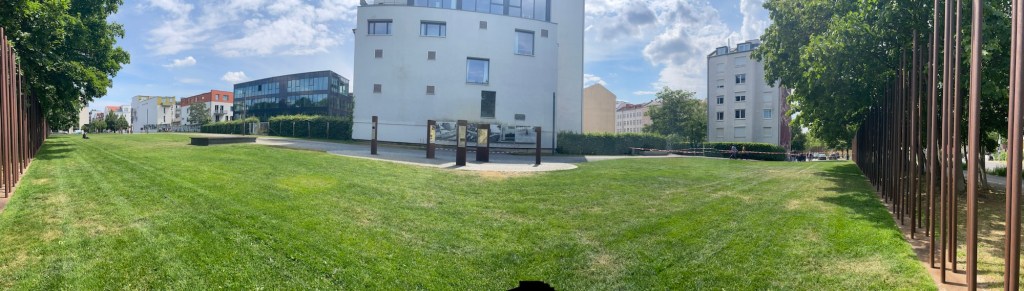
Fellow sketcher Kaori from Japan, Amsterdam and San Francisco arrived so I took her to the Brandenburg Gate and the Berlin Wall Park on Bernauer Strasse. The park was near where I used to live. In the eight years since taking my German class here in the summer of 2015, the former East Berlin neighborhood has been upgraded considerably. Hardly any vestige of what was East German blight in this area remains.

Part II–Ring Around Opera Fanatics Only

I am going to spare followers my opera obsession so I am putting the material in a Part II section in future posts. Truth be told, I came to Berlin specifically to see Wagner’s Ring. Heading into my fourth Ring (like my fourth Volvo), I was even more excited with this one than the first three. The story is intense and layered with ancient fairy tales and character flaws. It’s essential to see the series multiple times to appreciate Wagner’s brilliance. It’s a predecessor to the Lord of the Rings or Harry Potter Series, or any other modern day sagas you have managed to hook yourselves onto.

And yes, Wagner’s anti-semitism doesn’t go away. The controversy continues to rock the opera and classical world. I follow the opinions of musical professionals who regard the music beyond the individual creator and the universal timelessness of the work.

Night 2: Curtain Call for die Walkure
Night 3: Curtain Call for Siegfried, a 6 hour production
Deutsche Oper Break Time
Berlin Staatsoper Under den Linden

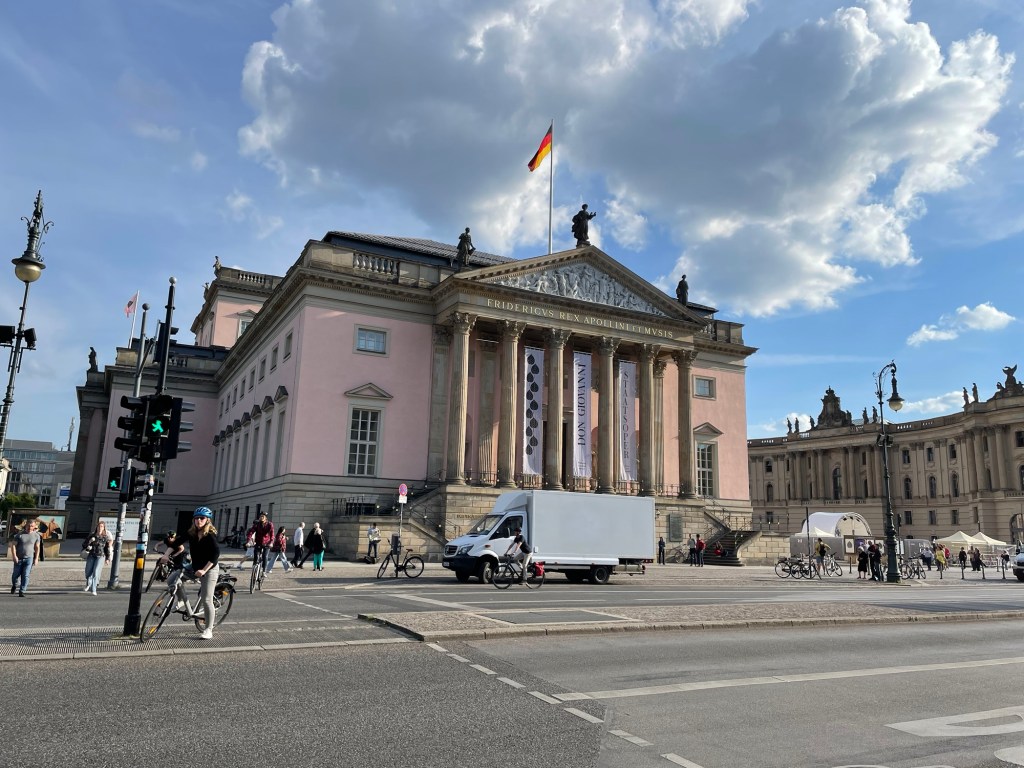
This may seem like overkill, but for me it was a glutton’s delight to finally see a performance in the Staatsoper unten den Linden. It was closed or being renovated when I was in Berlin previously, so I was overjoyed at finally reveling in this magnificent interior.

The opera house itself had some fatal flaws, however. The sightlines were hopelessly overlooked, and nearly 1/2 of our view on a diagonal was blocked. Nevertheless, being an opera house junkie, I appreciated the refined details of the exquisitely appointed details. Make a point to come to a performance in Berlin. Supported by the German government, the events and venues are cultural treasures.

Berlin Staatsoper Under den Linden Opera House Interior

Lüneburg, a Hanseatic City

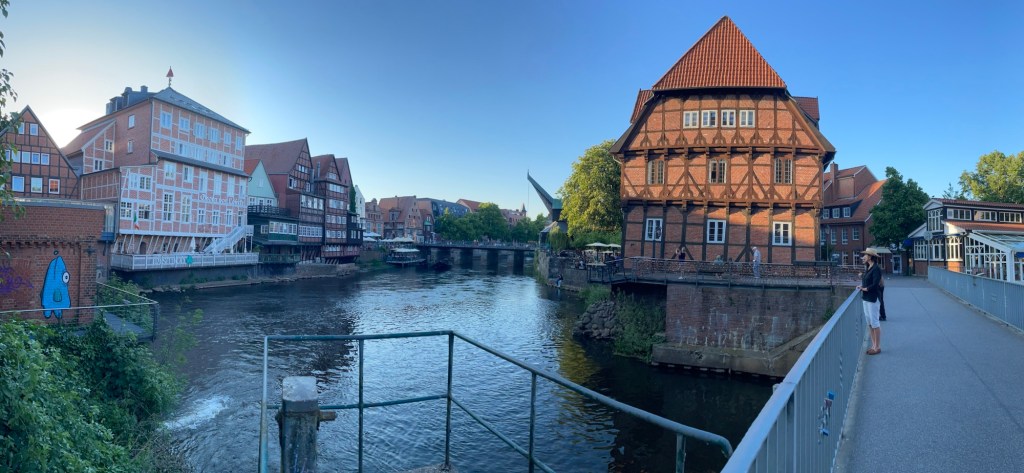
Located along the Ilmenau River, Lüneburg is conveniently located a half hour by train from Hamburg. This beautiful and wealthy Hanseatic city has a history founded on its salt deposits. Salt was coveted in Europe and was transported from this area along the river since its discovery.

We think of salt used at the table to flavor food, but it was also essential for food preservation. In fact, over 80 per cent is devoted to the production of building and plastic. Another small percentage is used to salt roads.

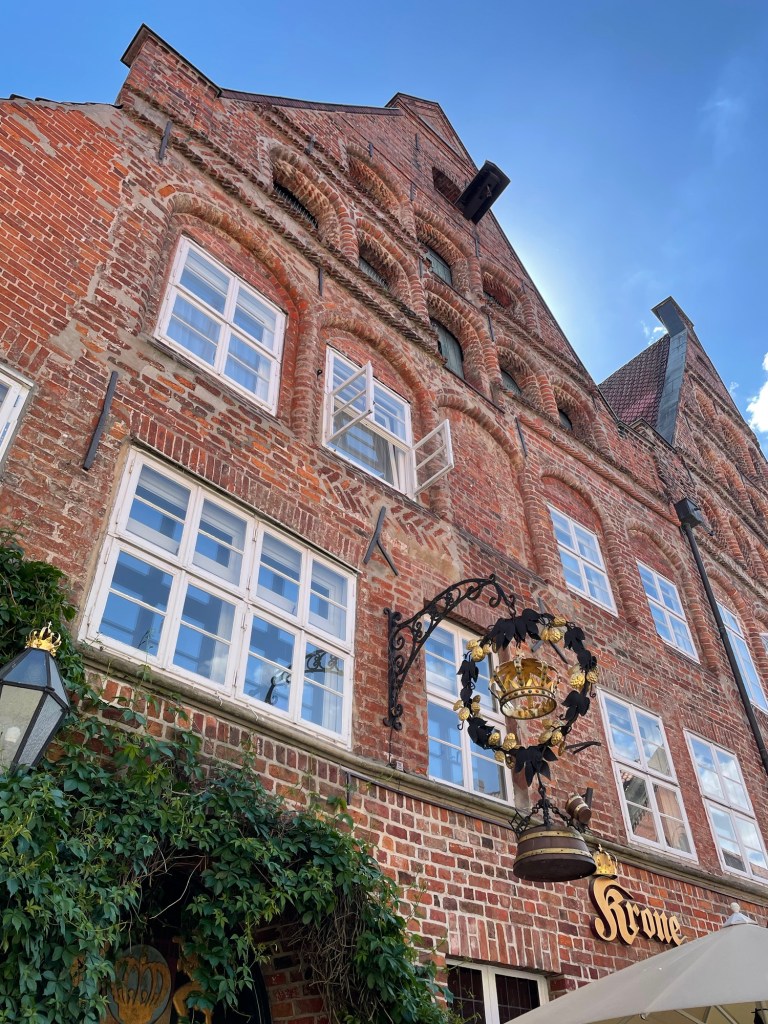
The merchants of Lüneburg built fancy homes and tall buildings. They consolidated power in the 16th Century and battled against the ducal regime to become a free state. The Lüneburg patricians are lesser known than the Venetians, but were just as wealthy and prominent.
Because of their proximity to the bog and Lüneburg Heath, a rise from the salt extraction, the earth was unstable. Many buildings subsided. The exteriors and local brick finishes are wavy gravy or look like leaning towers of Pisa, all sorrowfully showing their age and arduous future.

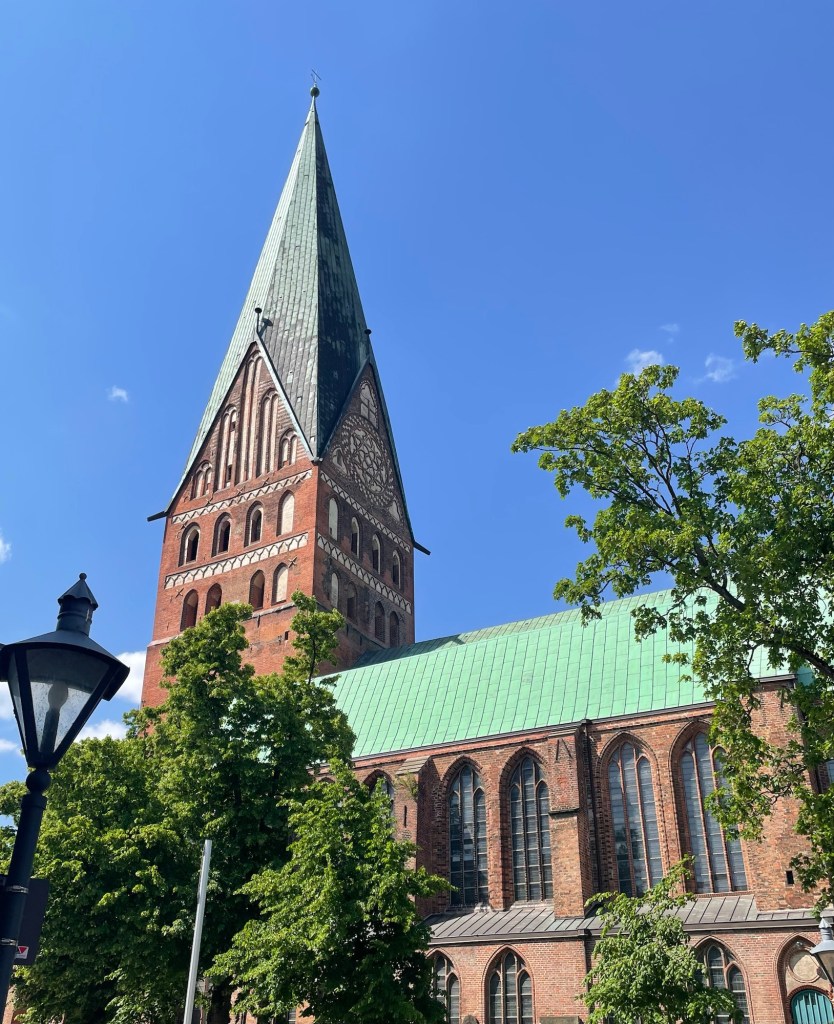
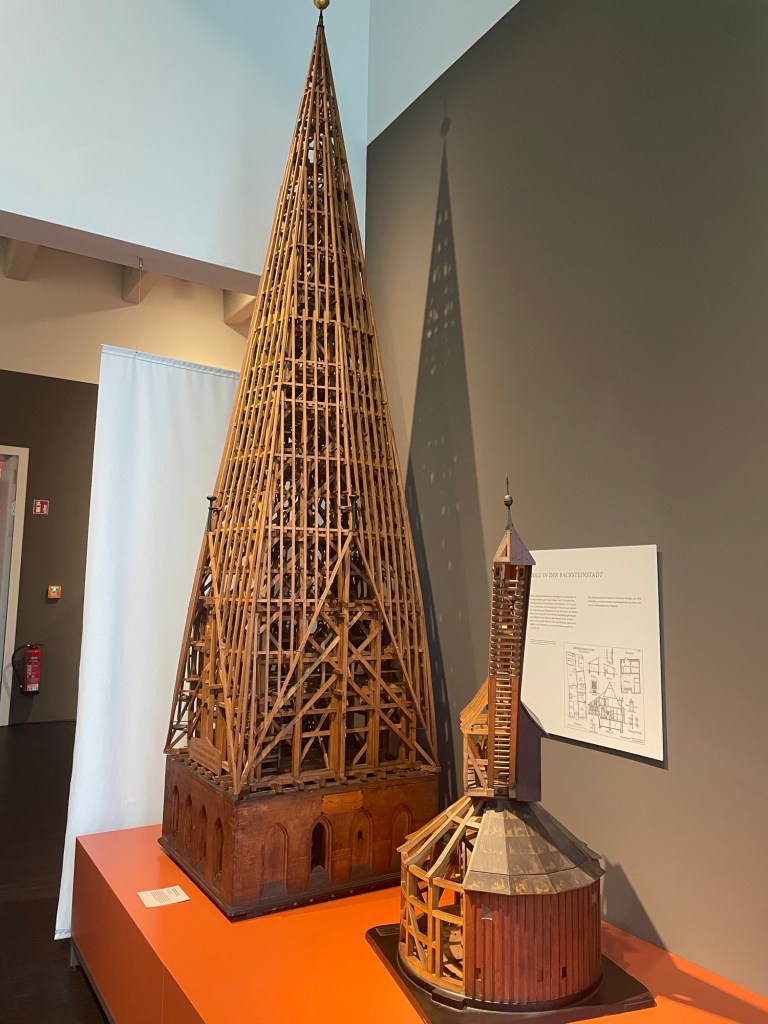
Copper roofing is prevalent throughout Luneburg, a further display of the city’s wealthy heritage. Local red brick was used for all the major buildings, including the St. John’s Lutheran Church. It was converted from a cathedral to a protestant church after the Reformation. A model of the spire is shown below.

The City Museum

A couple of displays in the City Museum showed architectural elements in buildings. The numerous windows and levels of an exposed timber structure would have been a child’s delight. The model depicting the steeple at St. John’s Church demonstrates the intricacy of the construction. The heavy assembly further added to the weight of the building and its impact on poor soil.

Excellent curated bilingual displays explained the paleontology, anthropological and contemporary history. Cess pits used to collect human waste were mined to yield household pottery, leather, and artifacts.

The East Prussian Museum

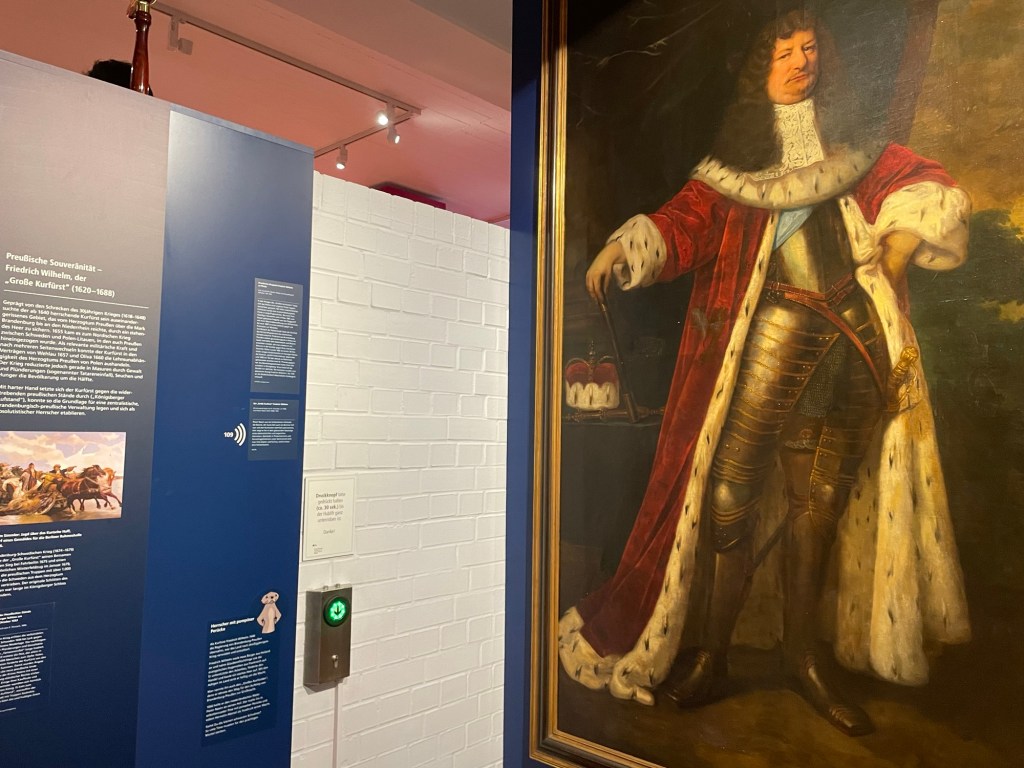
Another new museum in town connected alot of dots for me. In particular, where Prussia was located. Elector King Friedrich Wilhelm and the Hollenzollern family ruled over the area between Danzig and Königsberg (Kaliningrad), its capital. Dresden houses many of the treasures from the Prussian rulers.

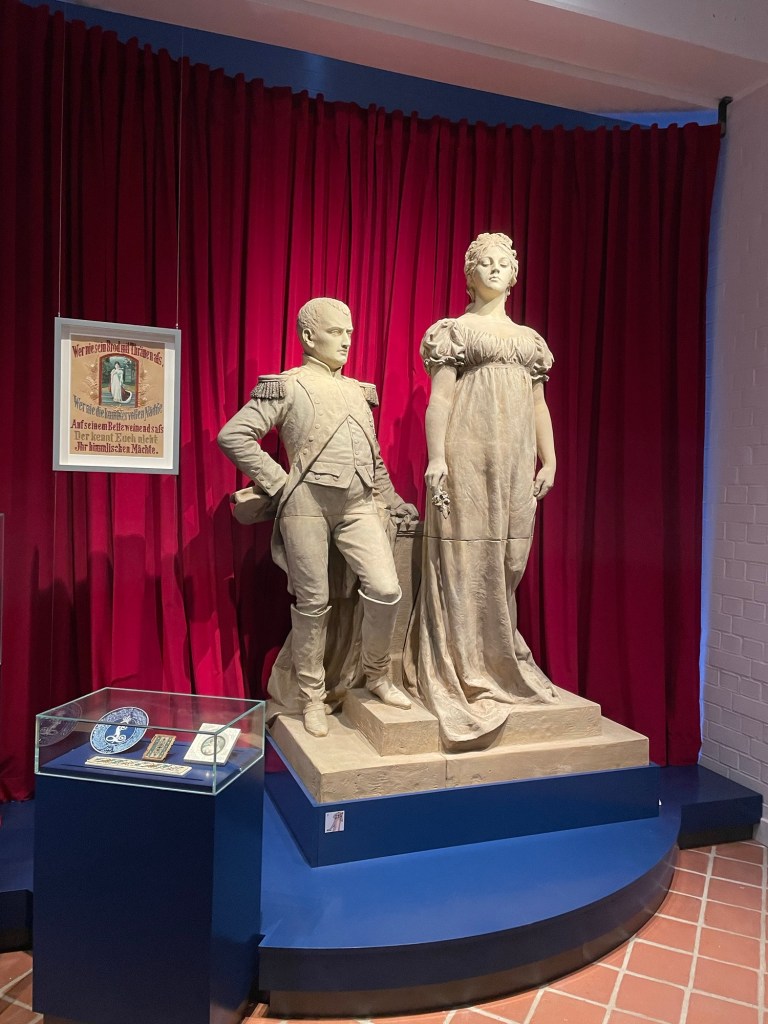
When Napoleon defeated Prussia in 1807, the queen of Prussia, Louise of Mecklenburg-Strelitz, tried to plead with Napoleon for favorable terms. Two completely different depictions of the unsuccessful meeting were displayed. One was a sculpture indicating the diminutive Napoleon next to the powerful queen, and the large painting showed a different perspective, with Napoleon confident and the Queen at his mercy.

The museum also presents the history of the refugees who were forced to flee after World War II.

Living in Lüneburg

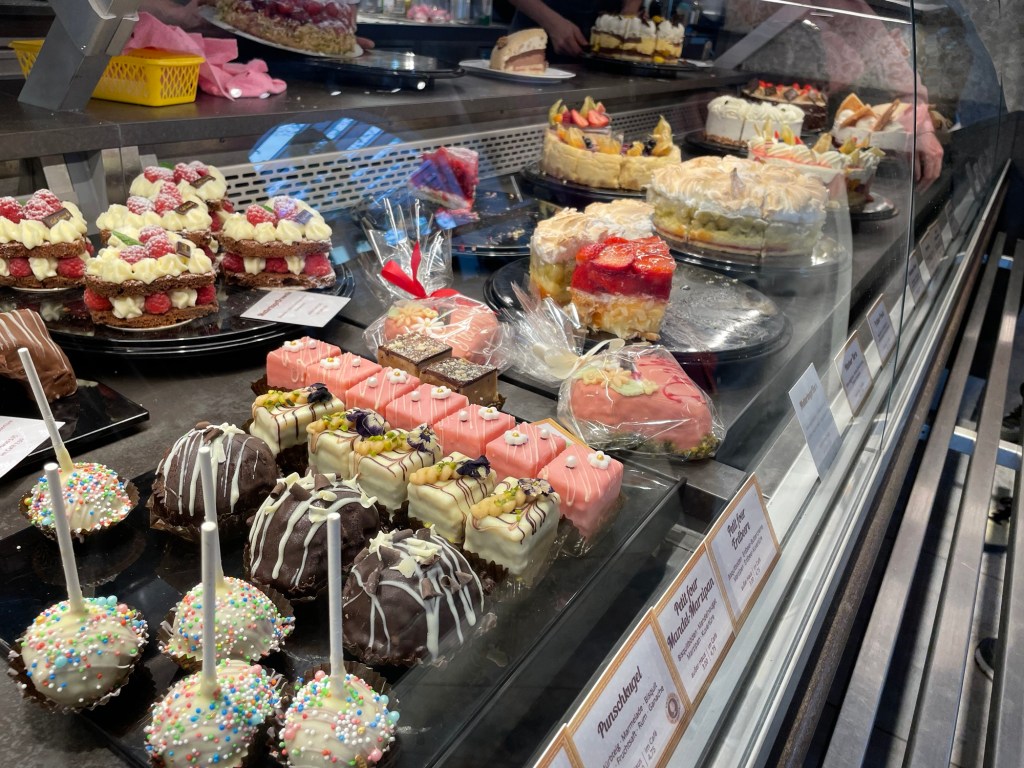
Living in Annemaries’s home gives me a glimpse of life as a resident in this frisky city of 185,000. Both tourists and residents enjoy active pedestrian shopping areas, numerous restaurants and cafes, and convenient transportation in the center of town. I can watch, hear and feel my tummy pulsate at each pit stop, whether it’s due to the frothy German pastries, cream coffees, or evening wine set precisely to the .11L mark that I snuck.

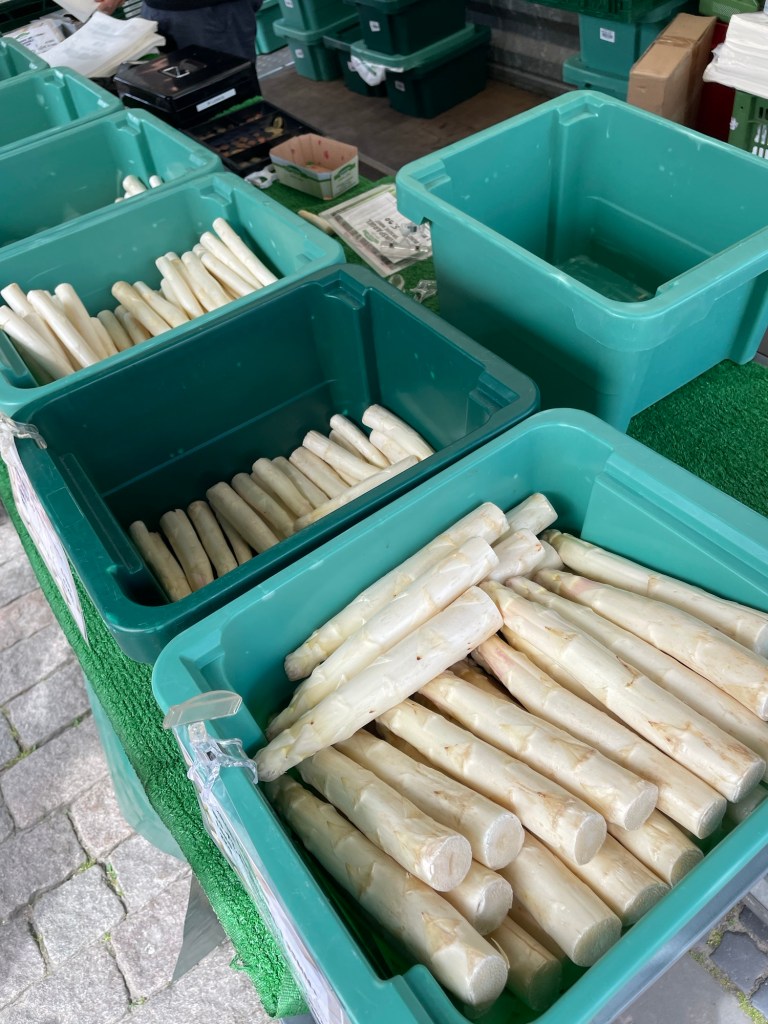
Spargel season is in full tilt so various thicknesses of the succulent stalks are batched and sold at the market. Solid German efficiency is evident in the display of Lovers’ locks packed along the river’s balustrade.

A industrial-strength iron at Annemarie’s assured me that I was going to get a permanent military-pressed fold on any piece of clothing or napkin.

I’m off to Berlin in the next few days for my fourth encounter of Wagner’s Ring Cycle, so stay tuned!

Art and Music in Dresden

The Military Museum, Dresden

From the Military Museum to the Frauenkirche, Dresden confronts its responsibility to teach the public about Germany’s history. The Military Museum uses its historical collection to explain the consequences of war, while the Frauenkirche church reused salvaged blackened stones from the bombing to show how much of its building was destroyed.

Traces of blackened stone reused for reconstruction of the Frauenkirche

Dresden’s Elbe Valley was delisted as a UNESCO World Heritage Site in 2009 because a bridge was proposed to be built over the Elbe. It would destroy the river’s original view. Practical needs determined the decision to proceed. So now the bridge is built.

Nevertheless, the view of the river and the city’s Baroque buildings continue to be appreciated by tourists and residents alike. Historic preservation and its lasting value were challenged and the loss was contemporary society’s gain.

Loschwitz, or Lost Wits

Loschwitz, a neighborhood to the east of Dresden possesses original Jugenstijl buildings that I call “buildiful” architecture (my new coin for what I consider worthy of being sought more than once). The delightful rooftop windows typical of the era are in pristine condition and proudly wink at us.

Local Dresdners Hanne and Jens joined us at Toscana, a local patisserie for afternoon coffee and cake.

The Semper Opera and Don Carlo

The Semper Oper appears somewhat clunky and clumsy from the exterior, and its public spaces are even more awkward. Yet the intimacy of the interior for only 1300 seats makes the opera experience superior to larger opera houses. Compared to the New York Met’s 3800 seats, there is no comparison. Opera stars can focus on their tone, quality, and pacing, rather than screaming to the back of the balcony.

Our first tier seats to the side of the stage were perfect for a close up view. The story of Don Carlo gave me a historical lesson on the Inquisition, its chilling reign of terror, and about complicated royal household politics. No one was protected, not even the king or his family members, from the obligation and wrath of the Church. Love or lack of it, betrayal, and fear were the stuff that made this Verdi opera a reliable choice. It was worth devoting nearly four hours of time to be in the room.

The hyper- dramatic music was well supported by strong performers and marathon musicians. A stellar multi-media introduction, combined with a modern dance interpretation and elegant costumes, fused the entire opera together for a memorable show.

Enter Annemarie

For those of you who have been following my world travels in the past, you will notice a new addition during this journey. Meet Annemarie. She has agreed to join me on this year’s forays to cities in Germany and beyond.

We met at the Elbphilharmonie in Hamburg a year ago during Anne Sophie-Mutter’s Virtuoso violin performance. Annemarie helped me through a lost wallet incident. In a short time, we have become close friends. I visited her in Lueneburg, her home town near Hamburg, and she has visited me in San Francisco. When I told her I was planning another opera and music trip to Germany, she agreed to join me. Combining a car trip to visit her “Heimat”, or homeland, at a 600 year-old farmhouse outside of Munich, we are packing in an ambitious itinerary.

What nerve do I have carting a native German through museums, opera houses, and historic treasures!?! I can somewhat justify my Rick Steve’s rips and having participated in numerous Goethe Institute’s extracurricular activities over the past ten years. Yet I am hardly the experienced guide.

But at Annemarie’s instigation, I am going to try delineating what works for me, at least from my Asian-American eyes.

Annemarie lived in the US for a good part of her early adult life and was busy raising a family after her return to Germany. Now, twenty years later, she is ready to take on the cultural world. I’m anxious to learn more about Annemarie’s roots, which initiated our conversation about traveling to her home village. Inevitably, we will share in our many life experiences and mutual interests along the way.

As we embark on this journey, I hope you will enjoy following our jabs into music and culture in Germany, Bulgaria, and Italy!

A puppet theater attached to a ferris wheel
Kitsch in Dresden’s Fruehjahrsmarkt

2024 The Next New Cultural Journey

Despite numerous trips over the past ten years, I continue to remain loyal to the arts and classical music scene in Germany. The familiarity with many event venues, the high quality of performers and performances, and reveling German efficiency over and over never tires. It’s still my go-to choice of travel.

This year, my German friend Annemarie joins me. We met last year at Hamburg’s Elbphilharmonie sitting next to each other in scalped seats and in awe over Anne Sophie-Mutter’s virtuoso violinists. I am now introducing Annemarie to some of Germany’s most popular events, venues and classical performers. These cultural activities are supported by the German government.

You will hear more about our seven-week journey as we plunder through Dresden, Lueneburg, Dortmund, Germany, and later through Sofia, Bulgaria, and Verona, Italy.

The Transatlantic Flight

The 10.5 hour trip getting to Europe is always a chore so I decided to take a business class flight direct to Frankfurt.

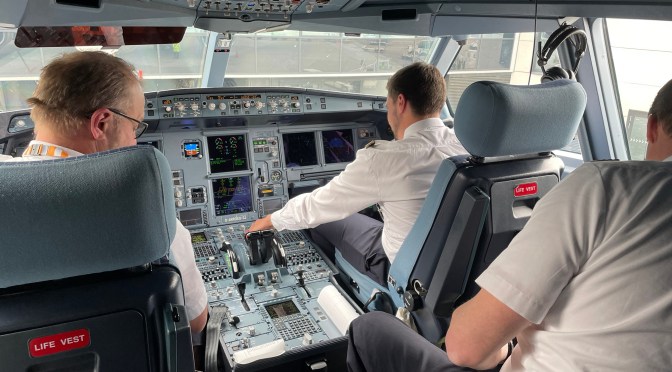
From the colorfully striped carrier to the comfy hang-out pod and delicious food, I was enticed by the extra effort being put into a memorable experience. The pilot crew even allowed me to take a photo of the flight deck on arrival in Germany!

How do bubbles rise from hell to heaven?

After meeting Annemarie at the Dresden airport, we had a big debate about the effervescence in the glass of Nicholas Feuillatte champagne. Were the bubbles instigated by something like a cube of sugar? After seeing the description “The juice is pale yellow with silver tinges, brilliant and crystal-clear, revealing a persistent ribbon of delicate bubbles,” (per Google), What do you think?

A long layover in Frankfurt gave me plenty of time to contemplate the automated baggage drop. I’m not sure Americans would be able to speed the process up with this robotic service.

Automated baggage drop at Frankfurt Airport

Goethe Haus, Frankfurt

Realizing that the glow from the business class flight was not going to sustain my nine-hour layover in Frankfurt, I resolved to find a city museum in between. The combined Goethe House and Romantic Museum seemed like an efficient way to kill two museums with one swipe

Goethe’s house displayed memorabilia by Germany’s beloved poet, philosopher and writer and with those who influenced him. There was an entire room connected to the Sorrows of Werther, the book that made Goethe wildly popular when he was only in his twenties.

Faust was yet another one of Goethe’s famous books (purportedly to have been written in Auerbach’s Keller in Leipzig) where a room in the museum was dedicated to the story and its inspirations.

Adjacent to the author’s house, the Romantic Museum connects many other artists, writers, and musicians that formed the romantic movement before, during and after Goethe’s lifetime.

A couple of architectural details caught my eye. The clever use of dots for lighting and steps in brass provided a coordinated balance to the subtle tile and wood finishes.

Die Walküre in Dresden

If you are not particularly tuned to being an opera junkie, just skip to the next section.

Our first performance at the KulturPalast was filled with cranky Wagnerians to hear a concert performance of die Walküre, the second opera of the Ring Cycle. Kent Nagano, a hometown Berkeley kind of guy, conducted brilliantly and led the four opera roles for Sigmund, Siegemunde, Wotan and Brünhilde.

Compared with a staged performance, the music rang exquisitely clear. The earlier lecture revealed that this performance was committed to the original wording and instruments from Wagner’s work. A jarring clash of wooden cymbals was noticeable, but other than that the rest seemed perfectly integrated for the modern ear.

Curtain call at the Kulturpalast of
Die Walküre led by Kent Nagano

Bad Schandau

Known as “Saxon Switzerland”, Bad Schandau is a spa town in the forested area along the Elbe River near the Czech border. An easy hour from Dresden, the multiple means of transport used to get there was more exciting than seeing the tall cliffs in the distance. Altogether, it took the train, a ferry and a vintage light rail train to see a trickling waterfall being repaired after dead trees from global warming blocked its path.

More tomorrow as we explore the Military Museum and the Loschwitz neighborhood. Don’t forget to write home!

No, Sydney is not just like San Francisco (Part II)

A week in Sydney has given me ample time to both enjoy and scrutinize this world-class city with objective consideration.Skeptical at first, I was quickly swayed by the Opera House and the infusion of Asian culture. A continuous palette of cultural activities couldn’t help but seal my positive opinion of this city.

In a way, Sydney doesn’t get the recognition it deserves. Respecting aboriginal rights, embracing multi-culturalism, good planning, and fortunate climate all contribute to this energetic outcome. Everyone should come and participate in this cultural experiment in the making, and perhaps, like I did, discover why other parts of the world are unlike it.

The Views, the Views, the Views

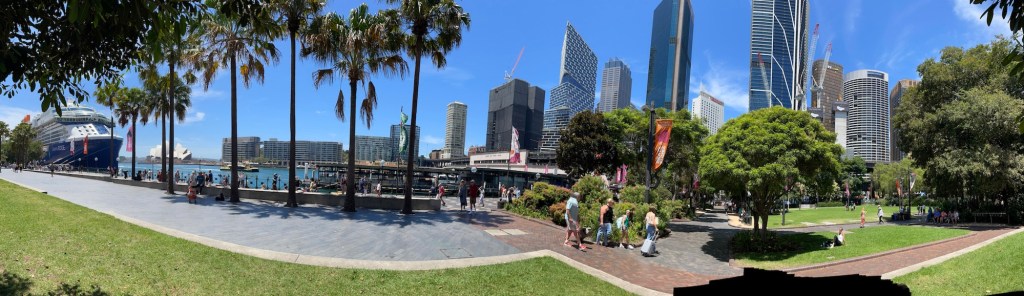
Compare the activity and views below to San Francisco’s Fisherman’s Wharf, the Cruise Ship Terminal, and the Ferry Building along the Embarcadero:

Wherever you live in Sydney, you get a good mental picture of the fact that you are located near water. Gently rising hills provide sneak peaks of the harbor and adjacent seaside locations.

The Australia Museum

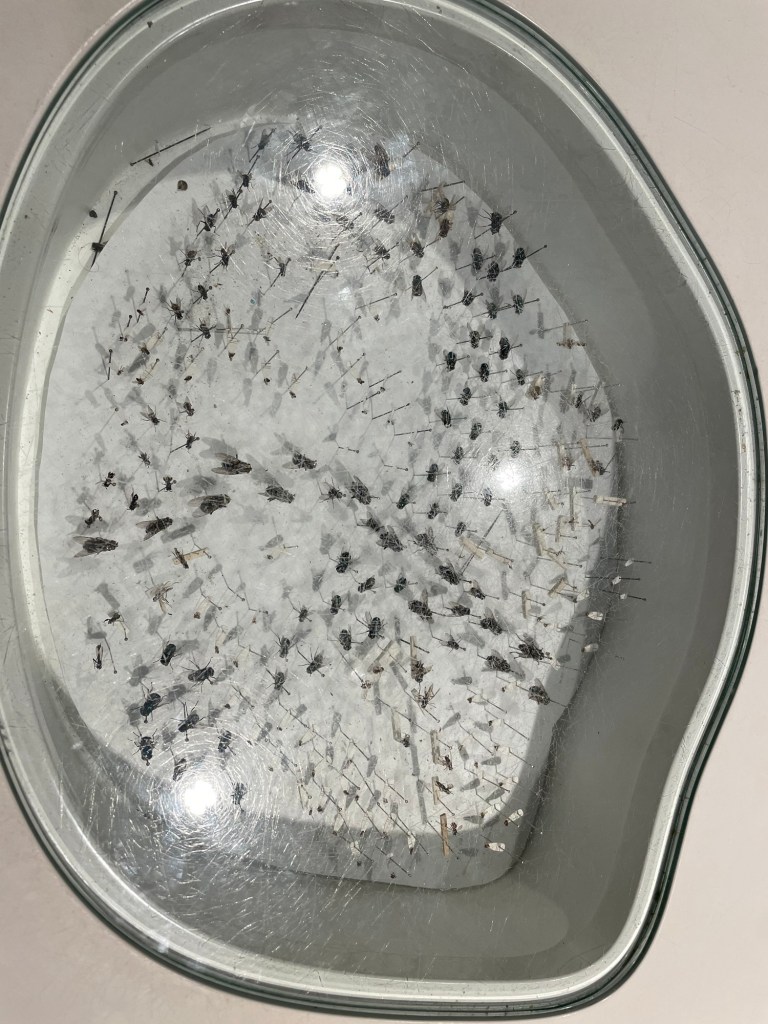
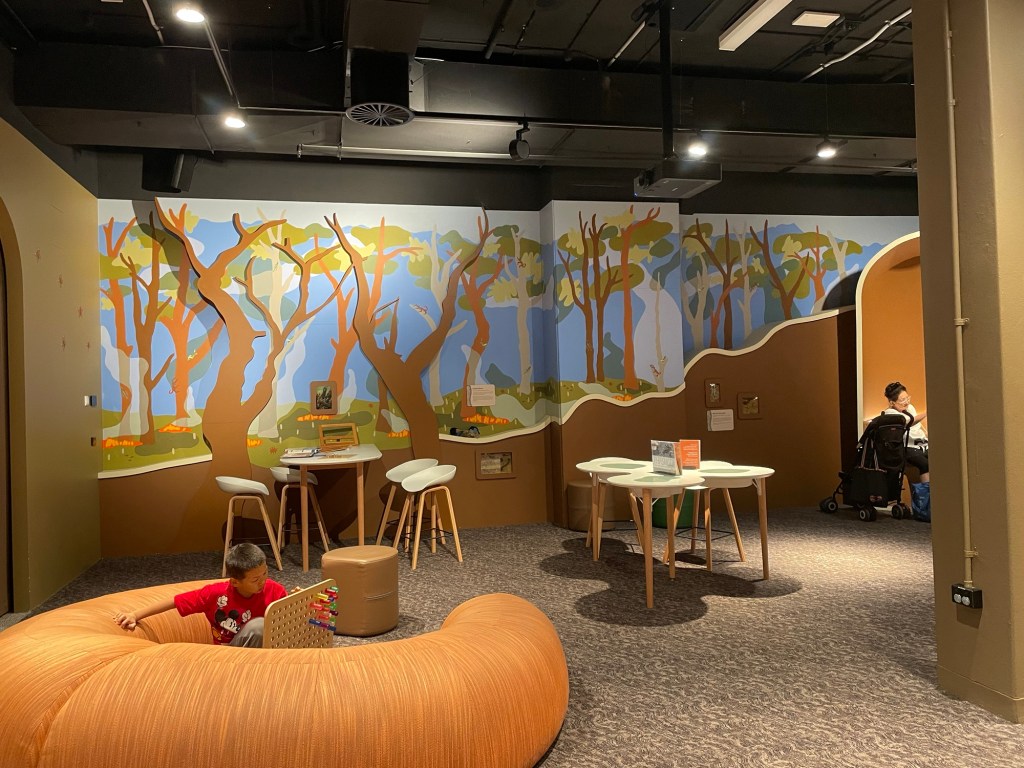
This national history museum offered interactive displays that were entertaining for both children and adults. The good old British tradition of documenting and researching the natural world is evident here, along with excellent communication and approaches to educating the public.

Captivating Video at the Australia Museum
Museum of Contemporary Art

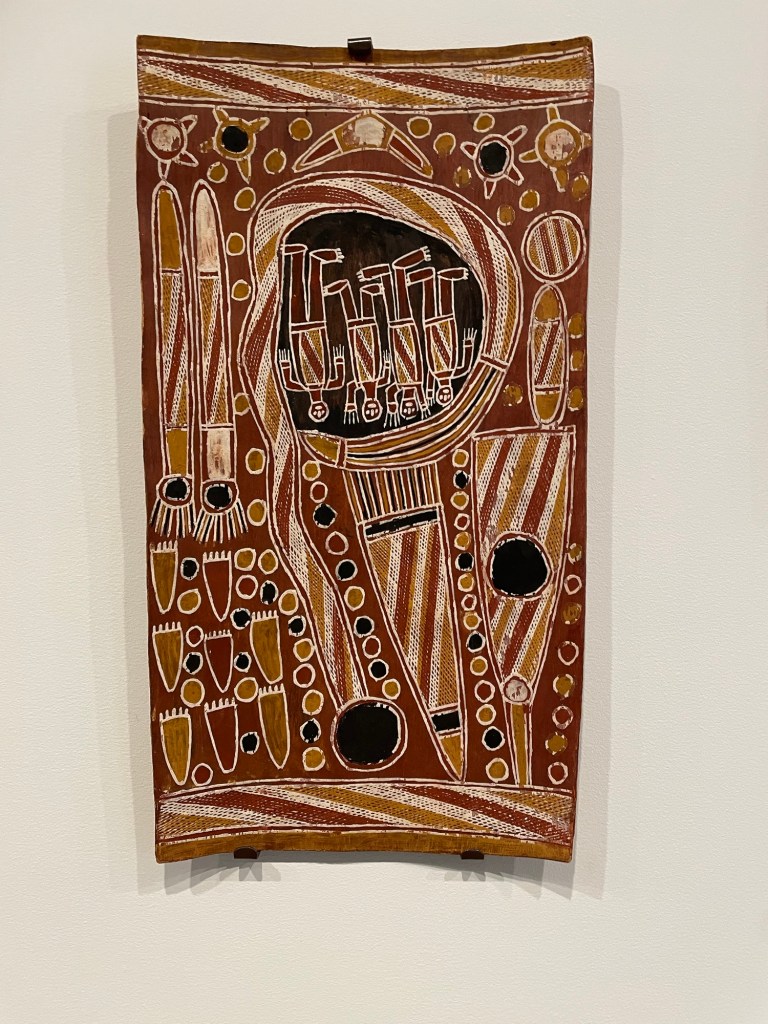
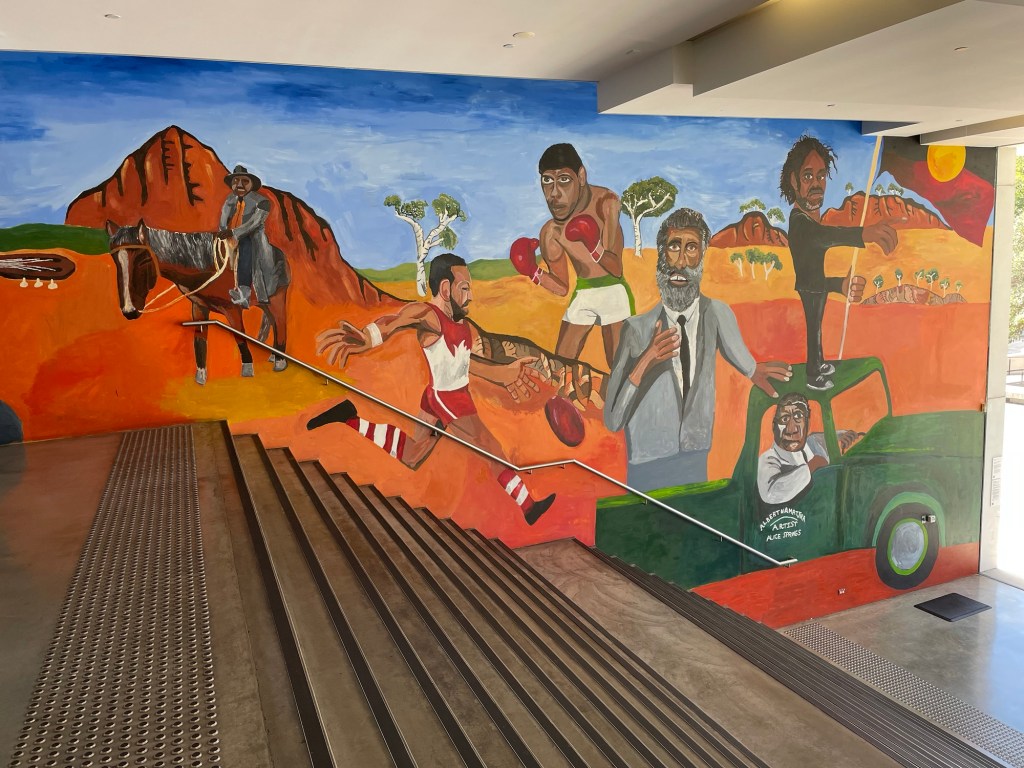
25% of the museum artwork is dedicated to aboriginal communities and their art. It was inspiring to learn about the original inhabitants alongside the latter day settlers as they form a context for artistic expression unique to Australia.

Conveniently located adjacent to the Cruise Ship Terminal and the Circular Quay, the MCA shared magnificent views of the Sydney Harbor Bridge and Opera House.

The Taronga Zoo

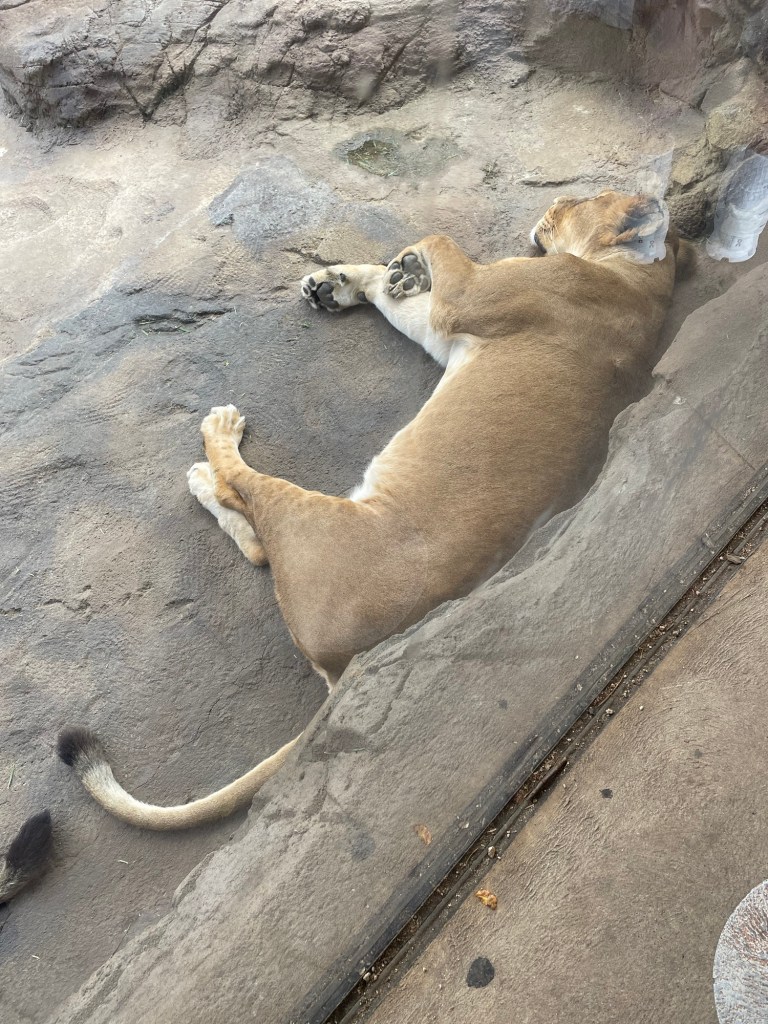
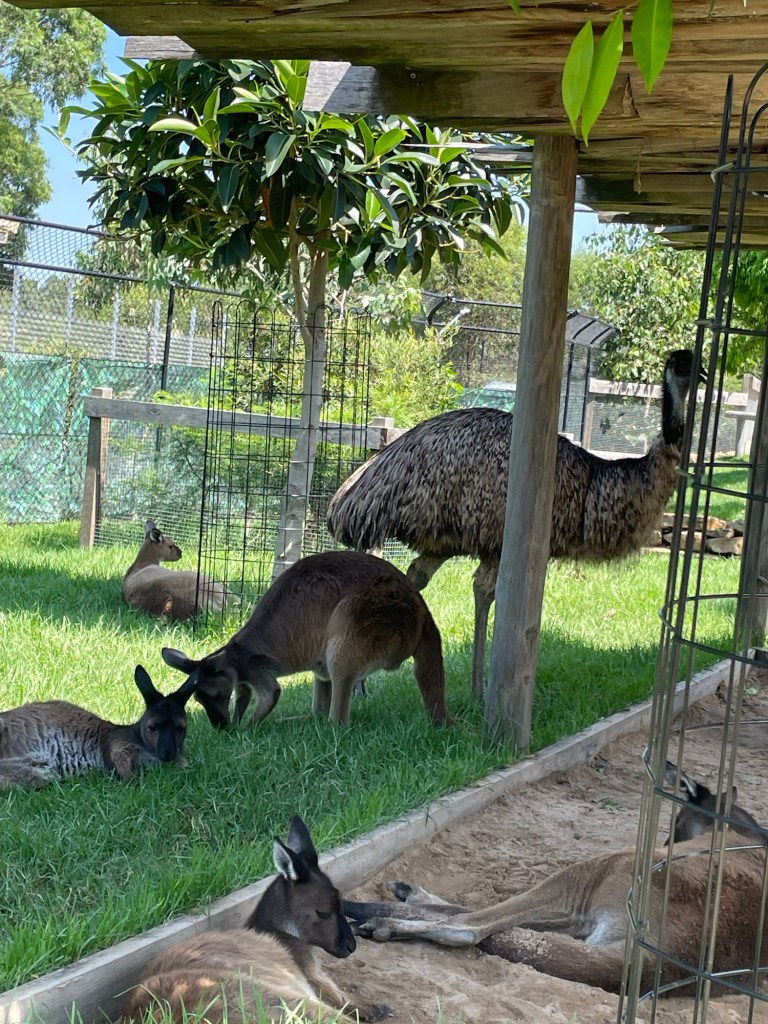
A quick 20-minute ferry ride to the Taronga Zoo made a perfect family outing. Elephants, giraffes, zebras are on display here, along with native animals such as the emu, kangaroos, and koalas

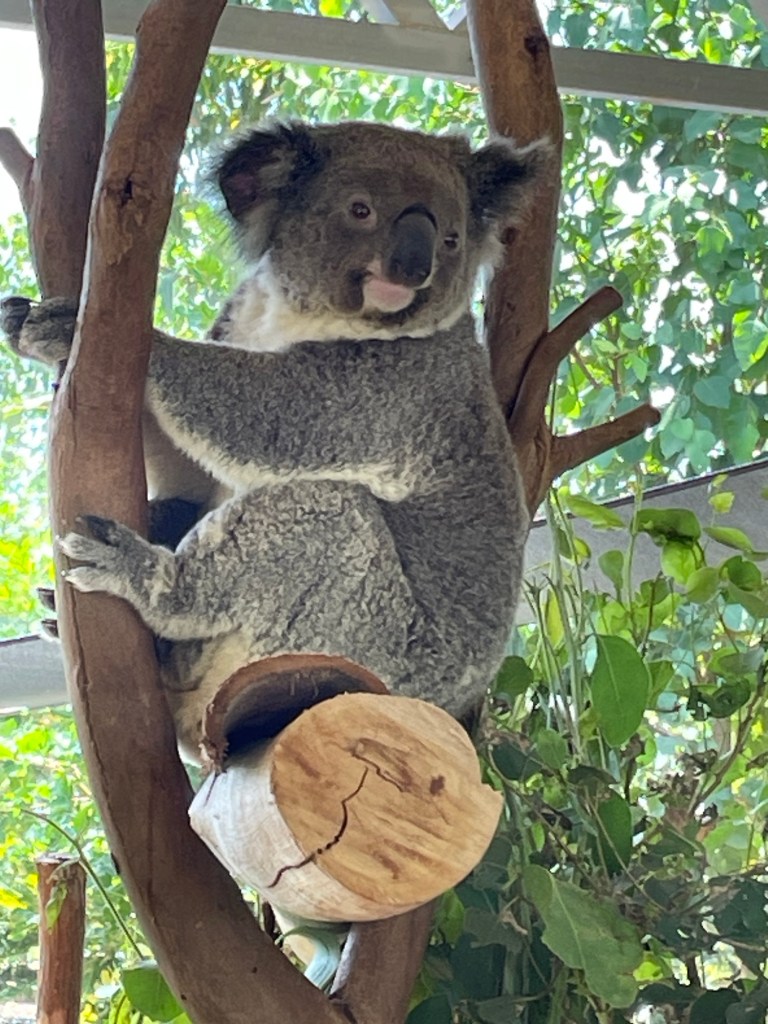
Naturally the koala bears were the first items on my agenda. I was still grateful that I took the extra two hours each way earlier in the week to visit the Ferndale Koalas outside of Sydney. The access to the male, female and baby koalas were more accessible, b ut I got my fix both ways. 

The zoo’s proximity to the water and views of the city from the ferry continuously compete with the venue’s main attractions. Visitors and residents alike form an intimate connection to all points of the city wherever they are. Even the animals got a view of downtown Sydney!

More irresistible views of the city and its landmark opera house from the Taronga Zoo ferry:

To top it off, walks through stately Hyde Park in the middle of the city will make you fall in love with the city:

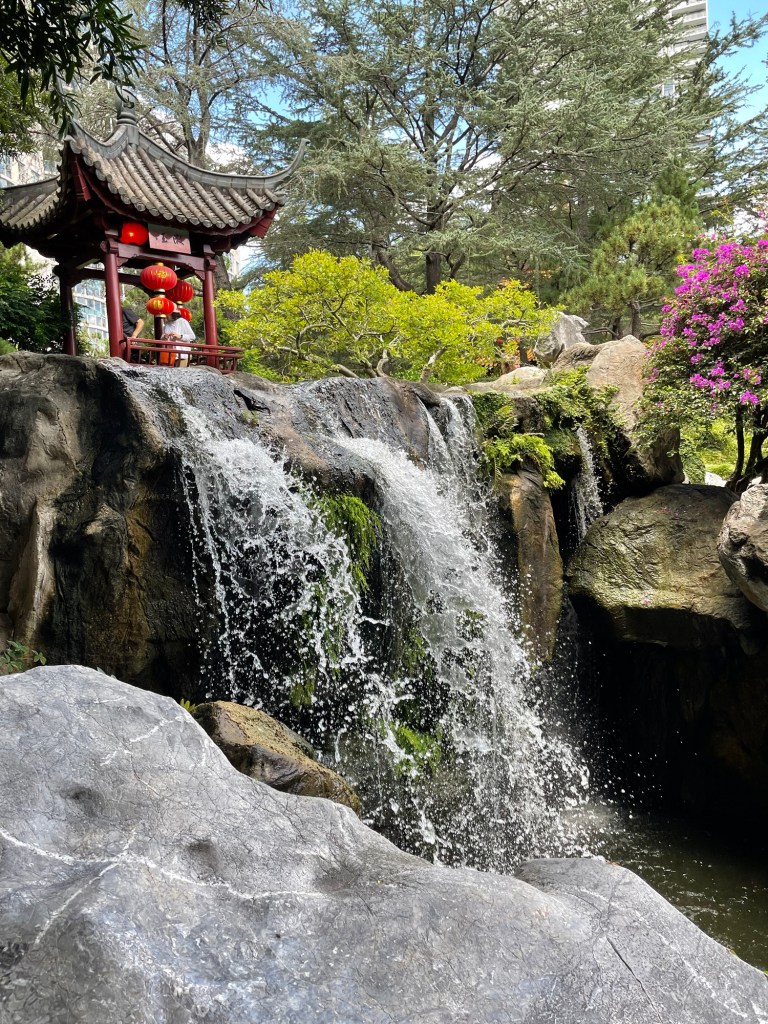
The Chinese Garden

Just footsteps from our hotel in the Central Business District was a beautifully designed Chinese Garden. We happened to be in town on Chinese New Year, and the festive atmosphere was supported by many children and even adults dressed in Chinese outfits. Being 20% Chinese, 20% White, and 16.5% Asian, the Asian influence is undeniable. At least in the downtown area, noodle shops and late-night retail services abound.

In the next neighborhood, Chinatown was hopping with tourists over the weekend. Festivities were topped by a fireworks display that was a fitting finale to our fascinating week in Sydney.

The difference in each Chinatown could be marked by its beginnings. The influx of Chinese in Sydney began in the Eighties. In comparison, Chinese immigrants who came illegally to San Francisco several generation before were primarily farmers and laborers. Exclusion laws, segregation and isolation dictated much of the history of San Francisco’s Chinatown.

Quirky Sydney

From photos above:

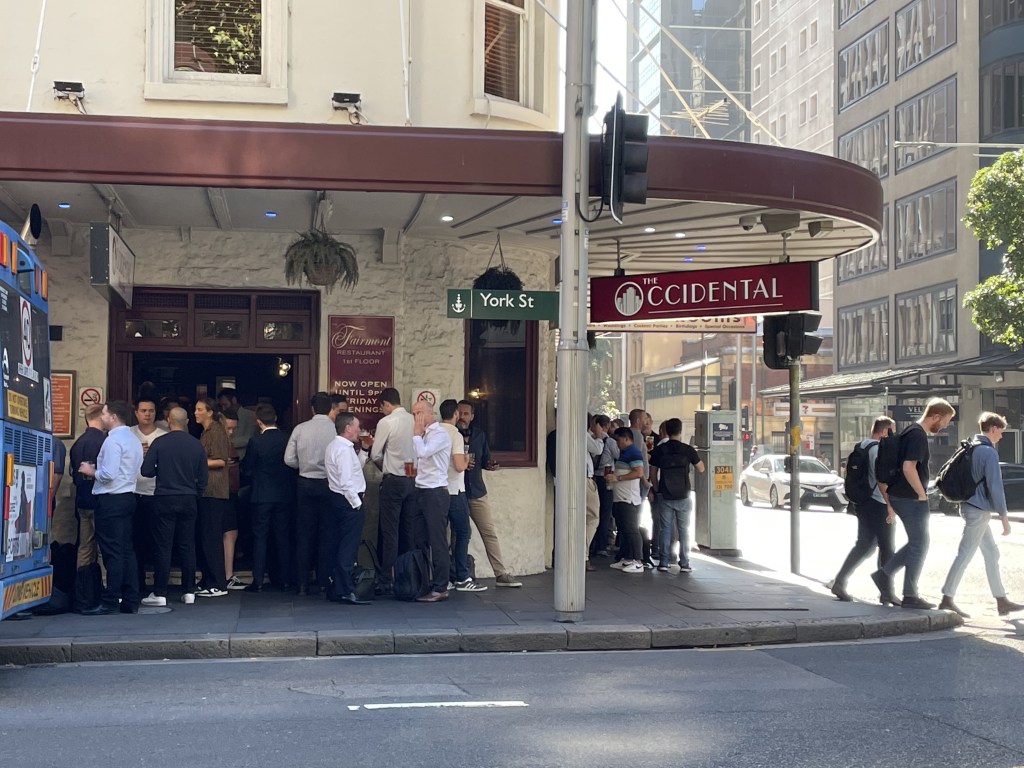
  1. He-man drinking is alive and well in Sydney.
  2. Not to forget Australia’s convict past, this building’s graffiti seemed to capture the mood of the country.
  3. A reminder of the gargantuan creatures that have inhabited this vast country.

Adventure programs galore on broadcast television. I was fascinated by HE-man energy shows. Ex-excavator operators used their skills to find gold in Africa, American yokels from different corners of the country yanked logs stuck in rivers, and of course love at first date programs added to the intrigue. Maybe all TV is like this, but watching it gave me a window into the world of the Australian mindset.

After a solid dose of these mesmerizing shows, I was wishing I could watch TV as I did when I was young. It felt strangely comforting to watch a screen flicker into the night and allow a machine control your brain and what you were about to see. I wasn’t stressing out over instagram posts, nor was I constantly checking for emails. The empty promotions for advertising or political campaigns could at least be avoided, and not in a better, but different way.

Who knows? Maybe we will all go back to TV one day, when AI programming is done for you on your phone. You no longer have to search The NY Times guides to 50 best Netflix or Max shows to watch before they disappear. You just turn it on and get given it on a bigger screen. Yikes.

“I Left my Head in Sydney”???

Despite many confident conclusions that Sydney is like San Francisco, that old saying is obsolete. In its early days, Sydney may have appeared to be a poor second cousin to the romantic image of the City by the Bay, and where Tony Bennett left his heart.

But no, Sydney is not just like San Francisco. True, it’s missing a romantic tune that everyone can sing. But that’s just about where the shortcoming stops. In a nutshell, Sydney seems to be more vibrant, safe and sane. At least in my opinion and after ten days here, traveling with myself and others.

If Sydney has 5 million people compared to San Francisco’s population of 750,000, Sydney should have more than five times the problems. Yet it feels like it has five times fewer problems. Why is that?

People work in Sydney! Tons of workers in the financial district dress smartly, rush to get their lattes before facing a day in the office. This is a city for crane-spotting, but they were too numerous to count. Maybe it, too, will reach a climax like San Francisco’s financial district. The pandemic didn’t affect Australia in the way it did in the U.S. But bad on us for what happened during that time.

San Francisco seems to be tired, shaken, and ailing. It’s crashing by its own success and in need of solving some major societal ailments. Lack of housing, income disparity, and political uncertainty contribute to the insecurity. But those are not just predicaments for the city of San Francisco. More people across the globe share the same disease that the American people are facing.

Things could change in either direction quickly, and my opinion may change accordingly. Until then, escape to Sydney. It has more hope for the future. If the problems are here, at least they are different. And seeing them photoshopped out of view, you have time to enjoy the scenery.

No, Sydney is not just like San Francisco (Pt. I)

It’s still a little unbelievable to think that I made this trip to another part of the earth so quickly after COVID pandemic. From 2020-2023 the world stopped and travel overseas was limited if not non-existent. Now, it seems like everyone has forgotten, or wants to forget about it. Time to get on with loving life and traveling.

Sydney has surprised me in many ways. Let’s start with an admission that it is more spectacular than San Francisco. What Horror!!!! I have never admitted that to anyone, primarily because I truly believed San Francisco could not be outdone. Until now, no other European or Chinese city could beat San Francisco, I could never confess that any city fared better for combined climate, culture, diversity, transportation, and environment.

I’ve changed my mind. The vibrancy, sheer beauty, summer weather, buzz, and thoughtful planning of Sydney have all contributed to my change of heart. The buses, light rail, underground systems work seamlessly. A debit card or Opal card, the equivalent of a Clipper card, is all you need to tap on for any trip. You just need to remember to do the same when you leave, or you get charged to the end destination.

Modern buildings are tucked into sites adjacent to old 19th Century buildings. Both are clean and well maintained. There are plenty of public toilets everywhere, another safety and cleanliness indicator in my book.

There seems to be little blight, at least in the city center, and little or no homelessness. Moreover, it feels safe. A big bottom line: GUN CONTROL.

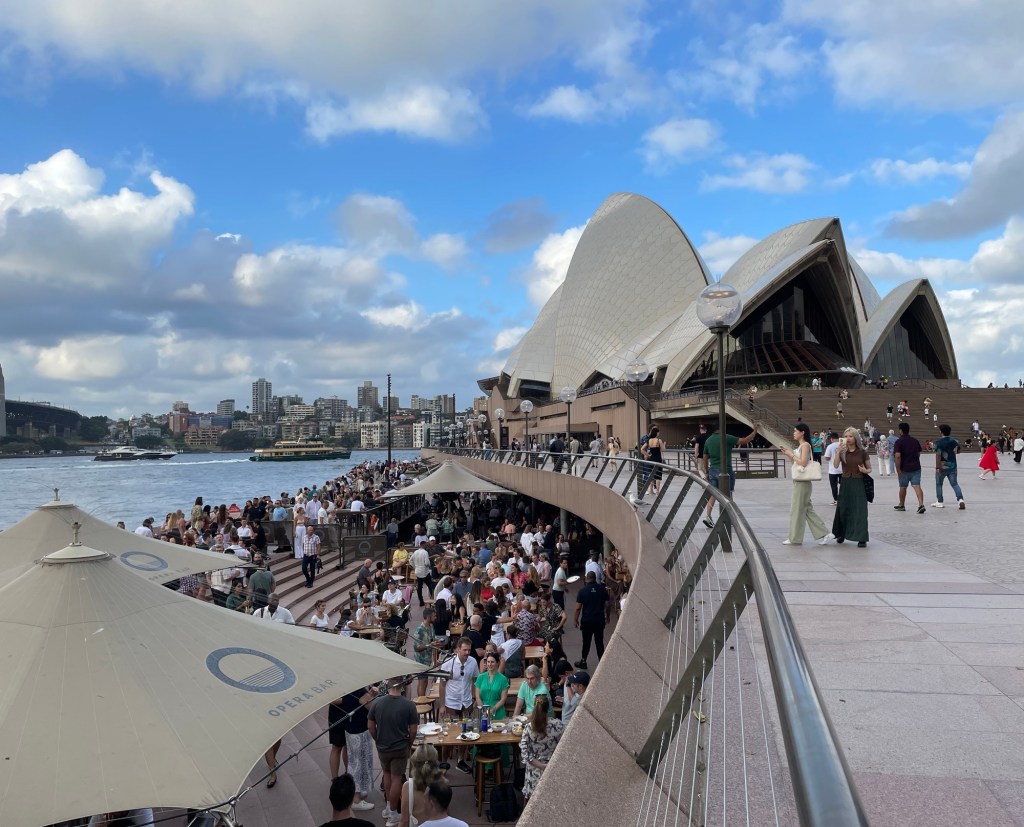
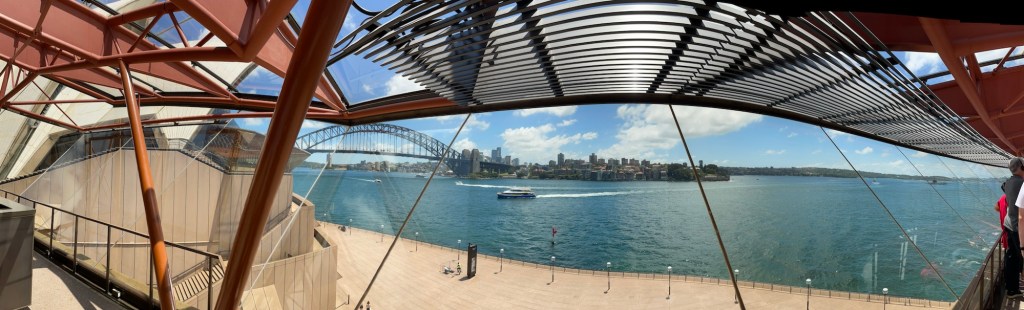
The harbor seems much more immediate in Sydney than in San Francisco. With active ferries scurrying back and forth, and the magnificent Sydney Opera House and Harbor Bridge looming on its edges, Sydney Harbor has so many drop-down gorgeous views that you’re exhausted by its sheer beauty.

People, particularly the women, are well dressed and attractive. That may be a bit of stretch in general, but my first impression is that they either look like Nicole Kidman or Survivor contestants. Bikinis or workout gear on public transport are the norm rather than the exception. I feel overdressed in my sleeveless, knee-length dress.

True, Sydney has a population of 5 million and San Francisco is a scrawny 750,000. But if I were to imaging San Francisco scaled up more than five times, I think the political system would collapse it before it crumbled under its own weight. Whatever the politicians and planners didn’t do to Sydney, we somehow haven’t figured it out, even on a minuscule scale.Let’s try BART for starters.

Sydney Opera House

It’s hard for an architect to ignore the stunning presence of the Opera House. I have read in-depth articles on the formation, process, and disaster that created this international structure. Everyone recognizes this iconic form.

Despite having seen this on a previous visit, it was less imposing than it is now. Maybe activities outside enhance and support the building. Its sheer size, based on a full concert hall, an opera house, and series of performance theaters make it one of the largest entertainment venues in the world. The proportions of the building are monumental, but in this case, very warranted.

Sold-out performances of Ludovico Einauldi in addition to an opera gala were held at the same time. The ample outdoor terraces provided overflow space for crowds and the staircases were sized appropriately. You never felt claustrophobic from the expansive bay views visible from every corner of the building.

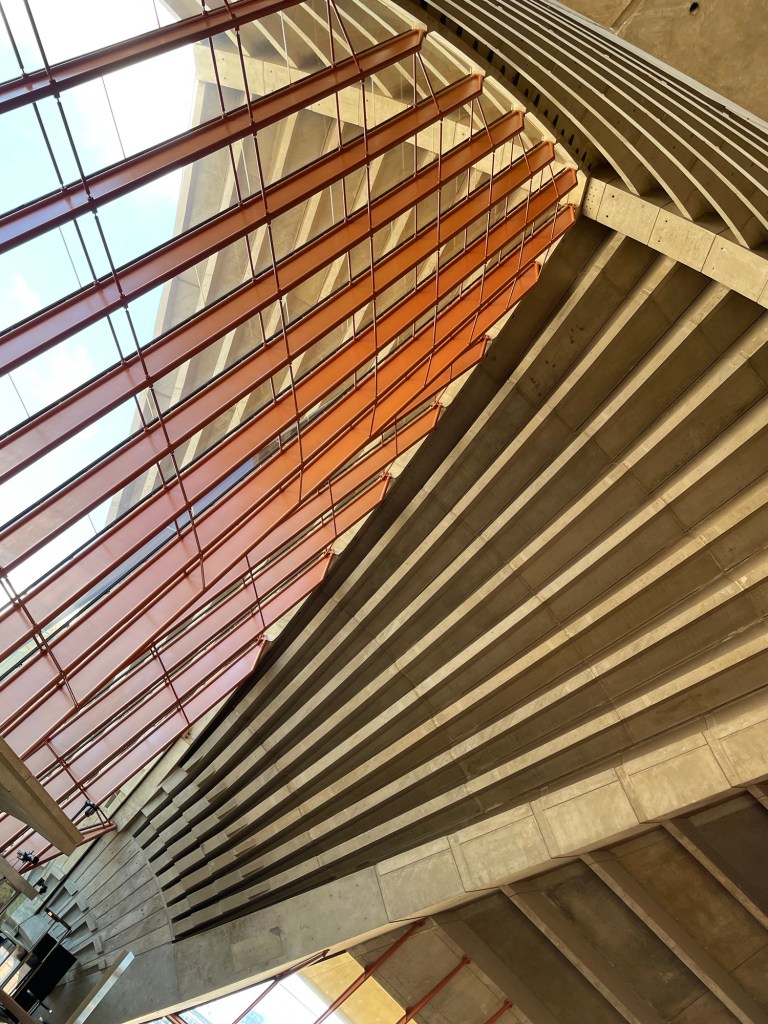
A one-hour tour was packed with information and details about the history of the building. The spherical shapes and combination of wood, concrete and steel were elegantly arranged, despite what seemed like random angles and inexplicable geometry.

Architect Jorn Utzon and the political will at the time were forces that delayed and promoted the project. In the end, it took 14 years of engineering ingenuity and construction to be completed. The project budget that was initially estimated at $7 million ended up costing $102 million, largely funded by a state lottery. Oh well. Sydney has probably been paid back for its world-class imagery. and reputation.

Ferndale Zoo

Just to put things in perspective, my first day trip was not to any museums or to attend a performance at the Sydney Opera House. Instead, my longing for seeing koala bears was fulfilled. It took two hours each way by public bus to the zoo in the outskirts of Sydney. The searing 40 degree weather did not daunt my determination to commute with the male, the females, and the joeys (babies), who were all segregated.

To be expected, most of them were sleeping, but I was happy to see a few munching on eucalyptus leaves or wandering along a branch. Like visiting a famous museum, I picked my battle by only focussing on the koalas and bypassed all the other zoo animals.

Perth—the Edge of the World?!?

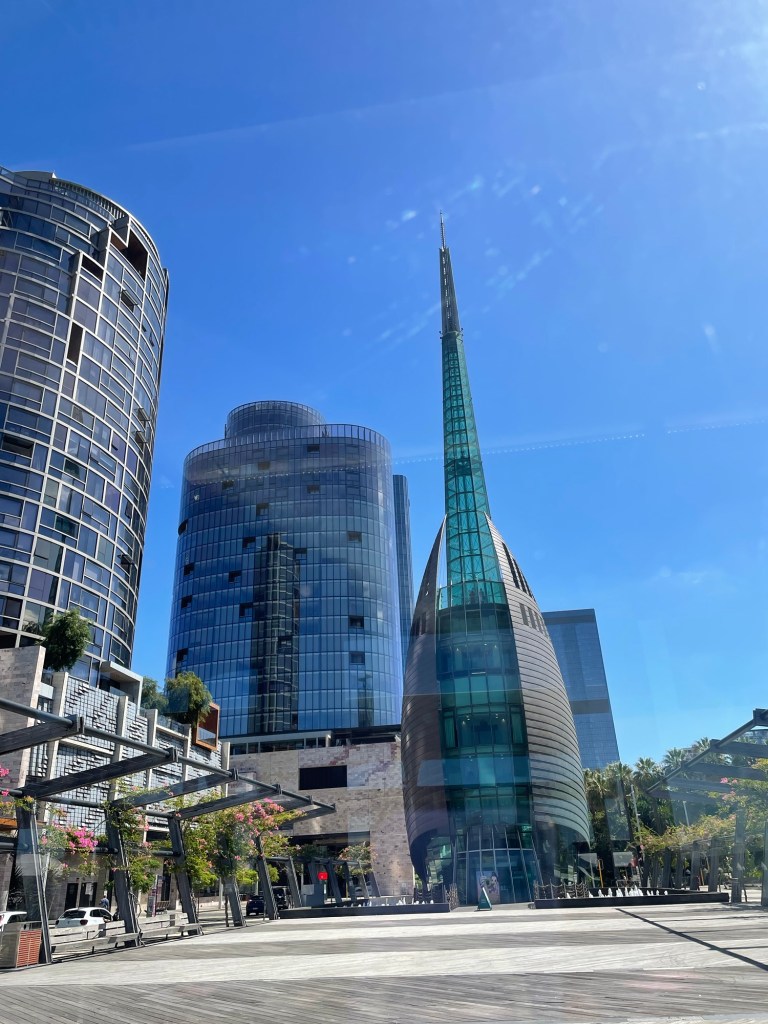
Perth appears to be the last major urban vestige of the world on a standard two-dimensional global map. As mentioned previously, I was reminded that it’s only five hours from Singapore. Australia is to us, a corner of the world, when it isn’t. Being here helps me to undo that bias.

The 35 degree heat, long sun-lit days from 5am to past 10pm and chokingly clear air are other mental adjustments. A brisk wind returns evenings to manageable temperatures. It reminds me of the hours when fog rolls into San Francisco around 3:30 in the afternoons.

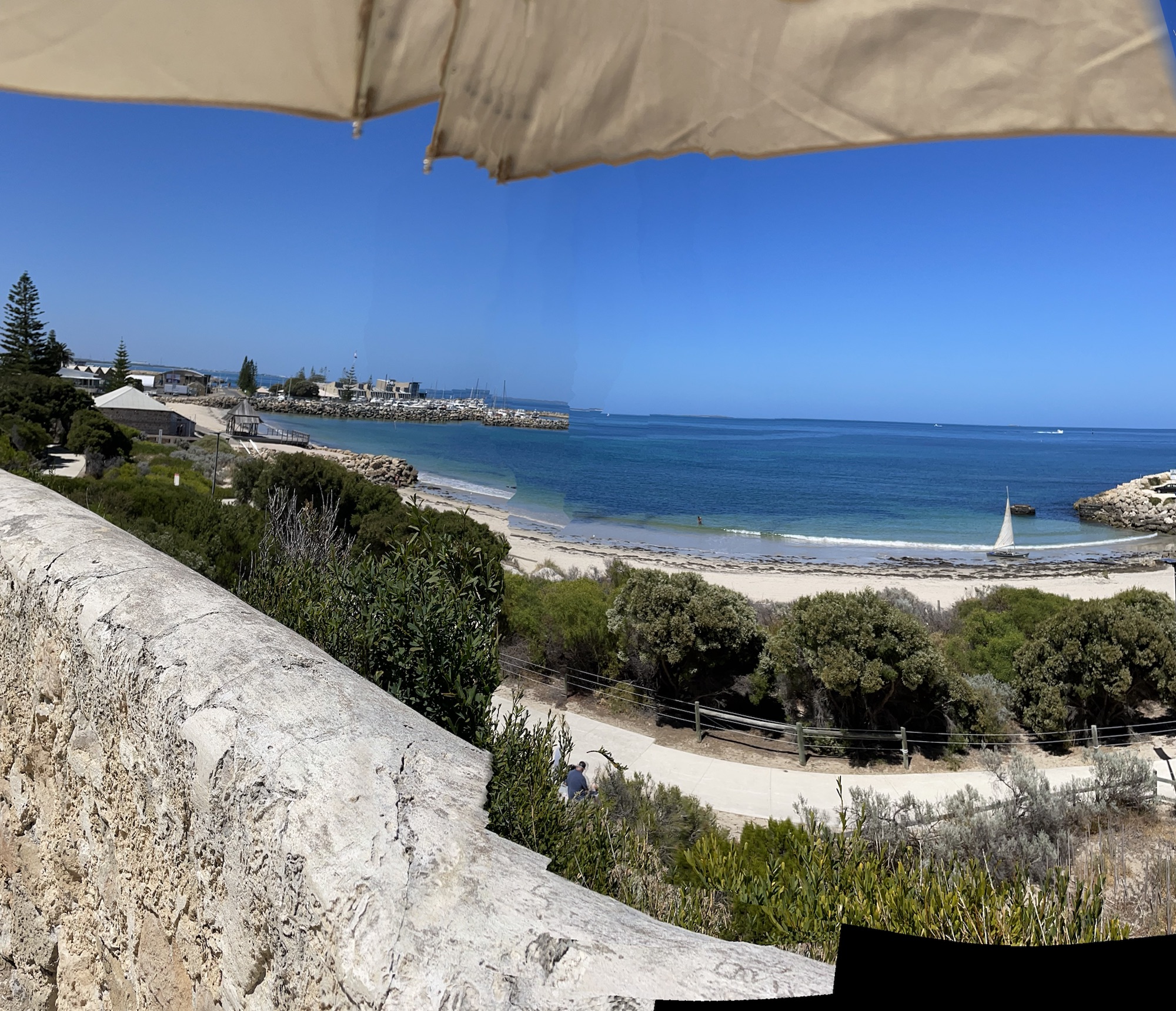
After four days in transit observing the Australian landscape with passive wonder, I am now actively challenged to interact with the environment and people. My first adventure was a one-hour side trip by train to Fremantle, a cozy little town on the coast of Western Australia.

Fremantle Prison

Known as the Mound, the octagonal building constructed in 1830 served as an outlook as well as the gallows for misbehaved convicts.

This prison preceded the larger Fremantle prison constructed in 1850.

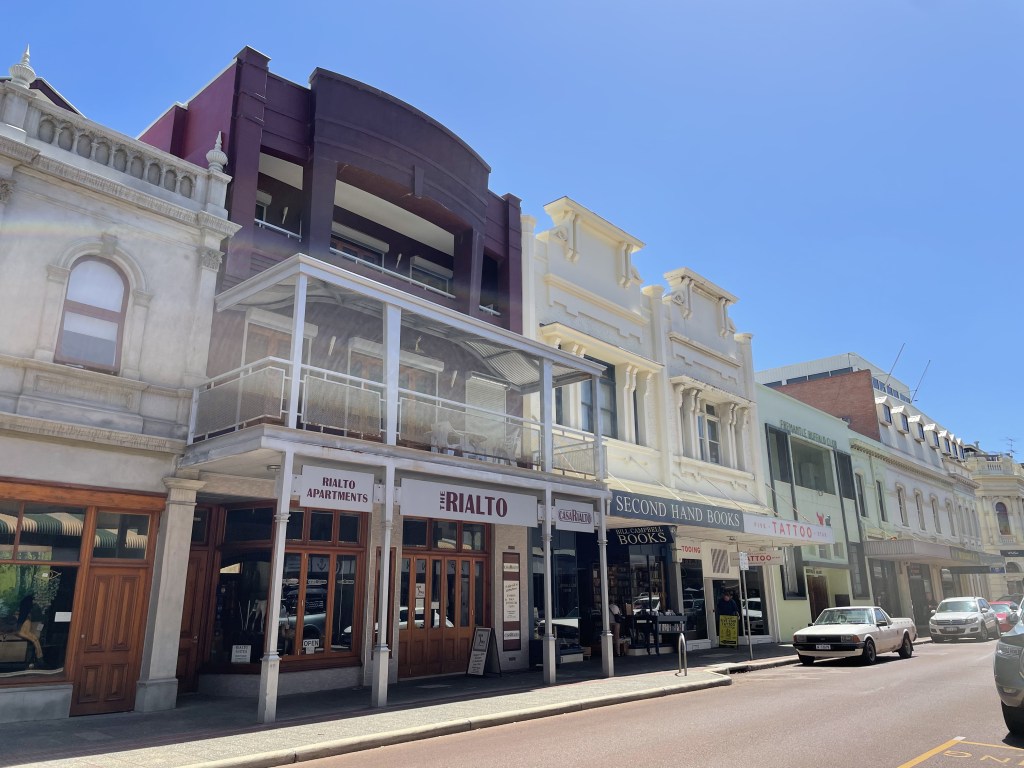
Fremantle offers an opportunity to escape the sprawling dreariness of Perth. The streets have a neighborhood feel with quaint shops, galleries and cafes.

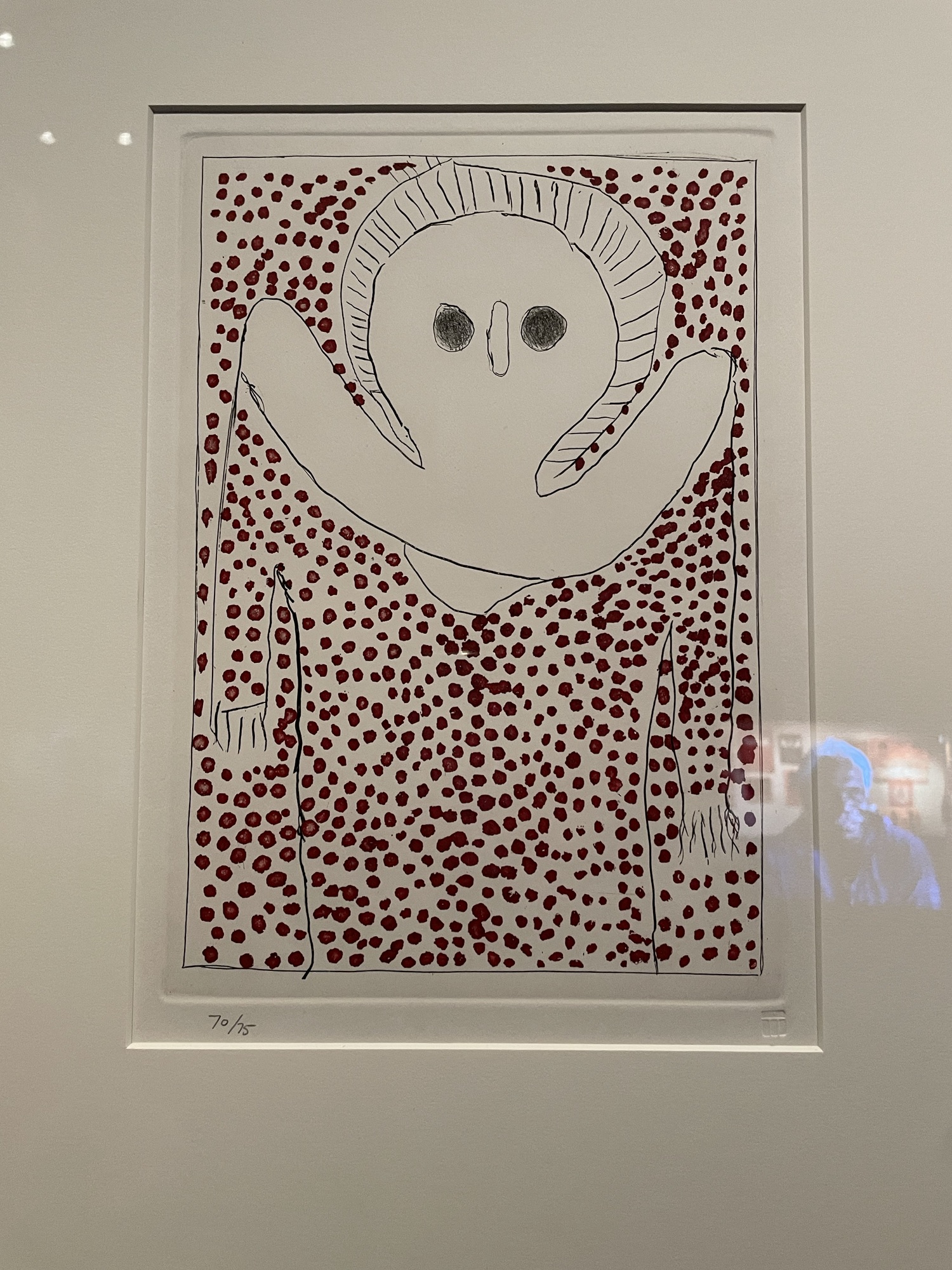
I wandered into a gallery and ended up purchasing an Aboriginal work. I was captivated by the history and subject matter of the artists represented in the gallery. The gallery manager gave me an unrushed introduction to Aboriginal women artists.

I took a break after a long walk in the seering heat for outdoor seating at Pasta Addiction. I also asked if I could charge my phone there. The more you use your blue dot on the phone, the faster you deplete its battery. On top of the 35 degree heat, I wondered if my remote brain wasn’t going to explode!

Perth Art Gallery

I’m not sure what the difference between an art gallery and a museum, but this gallery was monumental. The exhibitions of Aboriginal art were commendable, but I’m not sure the scale of the building warranted being built. The donors must have place a high value on the lasting nature of art, or it would not exist.

Perched in Perth, Australia

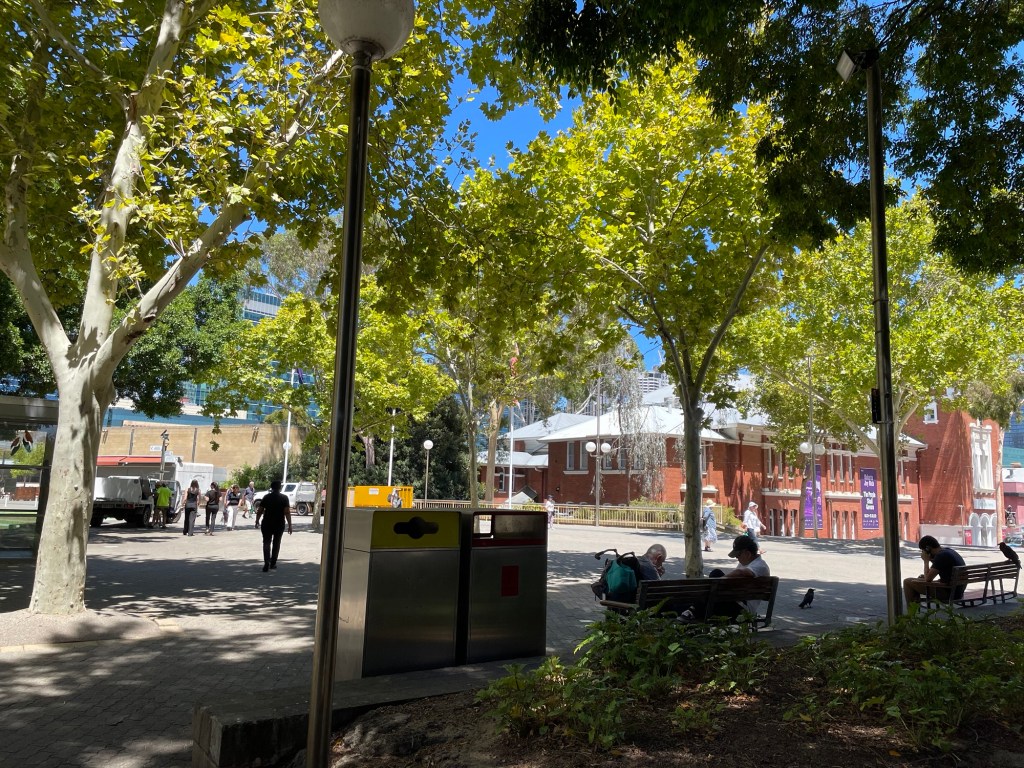
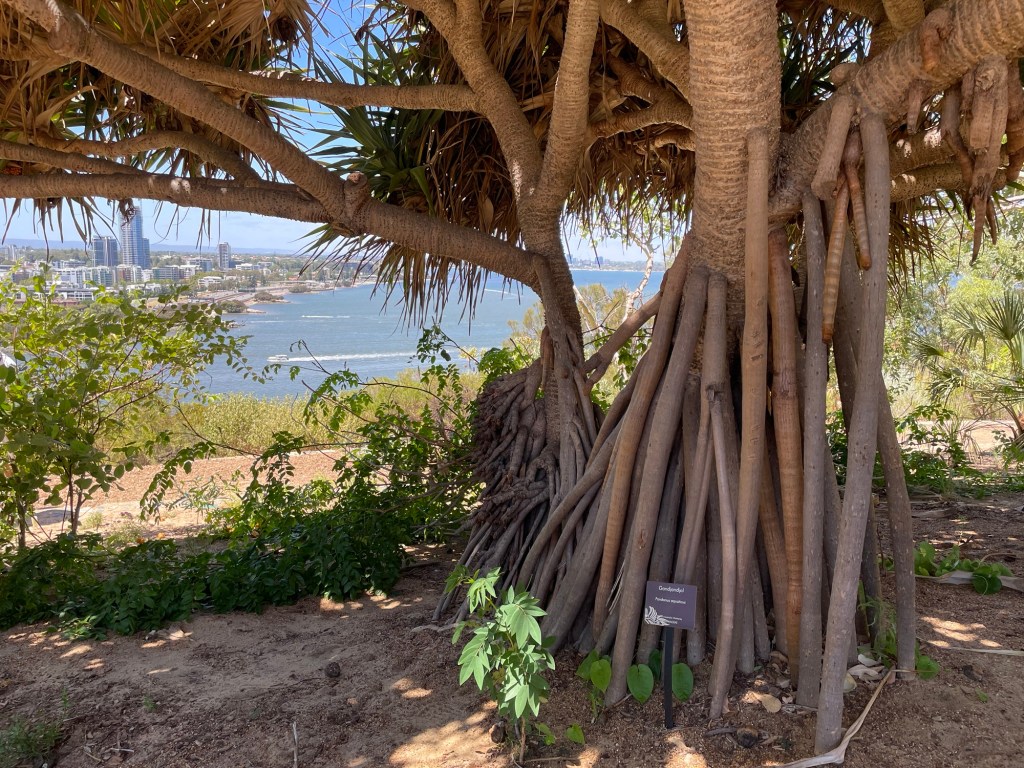
Advised by a local Perther from the transcontinental rail journey, I visited the Kings Garden and the Australian Botanical Garden in Perth. It is larger in size than Central Park! A lovely crystal clear day for enjoying the serenity of the park and its harbor views, despite a gaggle of chirpy birds in the trees!

A symphony of birds at mid day in King’s Park

My fellow traveler from Perth described the wildflowers that can be enjoyed at the Botanical Garden. Unfortunately, the peak period has passed, since we are in an alternate universe. The late spring period had the best display, where the flowers can be seen all over Perth. There were only a few to be found at the garden by time I arrived, but I’m sure they would have been magnificent in this beautiful seaside setting.

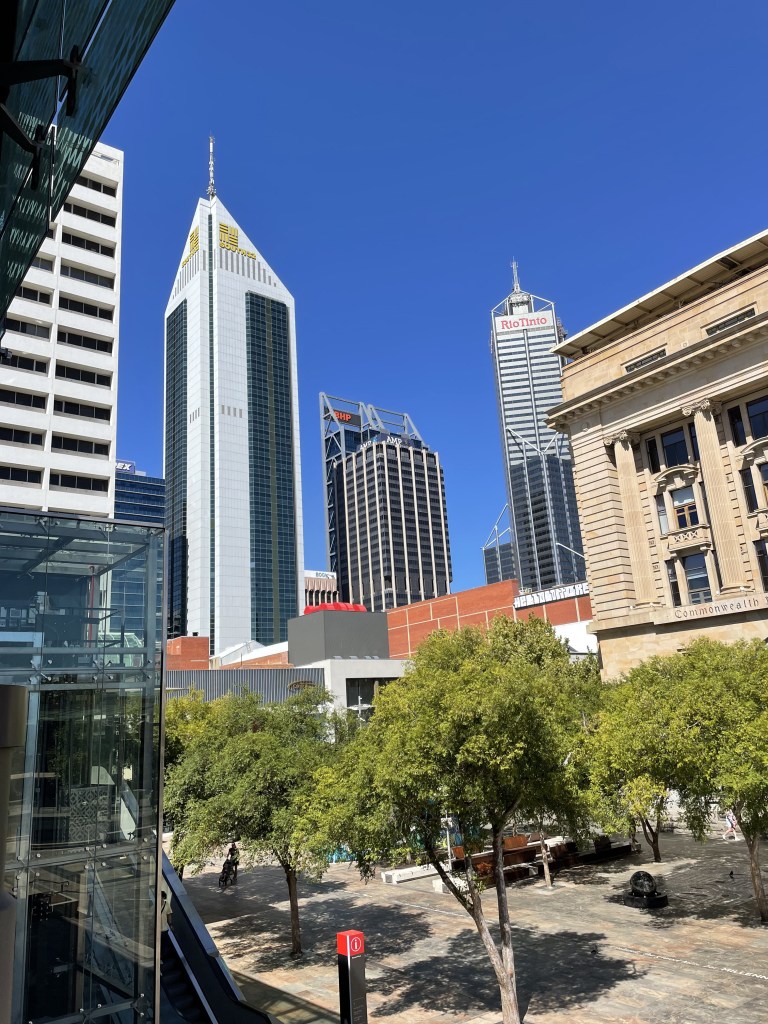
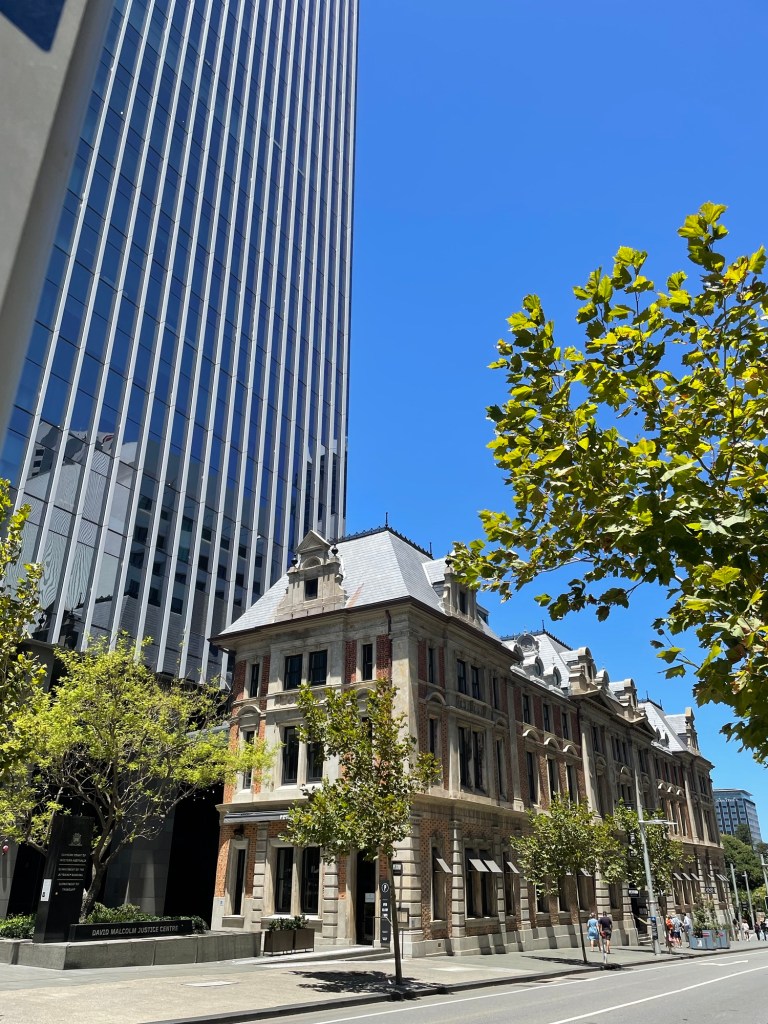
Perth’s urban environment felt very sprawling and left alot to be desired from the walkability standpoint. There are still vestiges of Australia’s colonial past to remind everyone, tucked in between the boom days of the seventies and modern nondescript high-rises. Huge blocks of high rises and bad low to midrise commercial buildings look half abandoned.

Huge bus and transit terminals seem so big and clustered together it’s difficult to find your way around. I did manage to catch a free bus to the park that seemed to loop around in numerous directions before reaching its final destination. I haven’t been able to crack the bus system yet. I must be losing the killer instinct or wearing down from too many years of being an old dog learning new tricks. Maybe my trip to Freemantle, about an hour away this morning, will prove to be a smooth and seamless experience.

Food in general in Australia has been innovative and tasty. In Perth, the hotel area where I am staying is laden with alot of bad ethnic fast food shops, from shawarma to Korean bbq to Indian to Chinese. You name it, they are here.

I did venture into a Chinese bakery that did seem to speak to outside the box thinking. They expanded their repertoire to include pork floss buns, salad trimmings, and meat mixed in pastry combinations. I indulged in a mini sesame rice ball and hors-d’oeurvre sized lo por being with cha sis inside.

Not really my thing, but the variety was impressive

After a few more days in the Perth area, I will be heading back to Sydney for a week before returning to San Francisco. Stay tuned!

Australian TransContinental

My inaugural trip of 2024 is a transcontinental train trip from Sydney to Perth, Australia. The Indian Pacific Journey by Rail takes 3 nights and 4 days and travels through vast stretches of the Australian outback, wheat fields and coal mining country.

I compare this to the Trans Siberian trip I took in 2017-18 (Beijing to Moscow 2017 followed by the Beijing to Vladivostok segment in 2018). While the Russian trips each took 7 days and 3 days respectively this Australian journey takes only 4 days.

The Trans Siberian required a leg due north through Ulan Bator in Mongolia to Irkutsk and Lake Baikal, accounting for the additional time. East-West Travel for both the TransContinental in Australia and Russia are similar in distance, dreariness and slowness. My lifelong love of trains compelled me to bank this journey after a two-week visit to New Zealand.

Australian Landscapes

No highrises, no towns, no people. Just flat horizontal images pass by, miles to the horizon line. Initially and intermittently, iron-rich clayey terra cotta soil seeps under the sage-blue brush, sometimes in curious circular colonies. Dry yellow-brown soil harvesting hay and wheat in the middle of the country give way to more lush outback, with taller trees that oscillate with the wind.

Spartan landscape in the eastern side of the South Australian Outback

In some ways, the changing patterns of movement are the appeal to me. The pace and scenery are therapeutically comforting and a time to reflect.

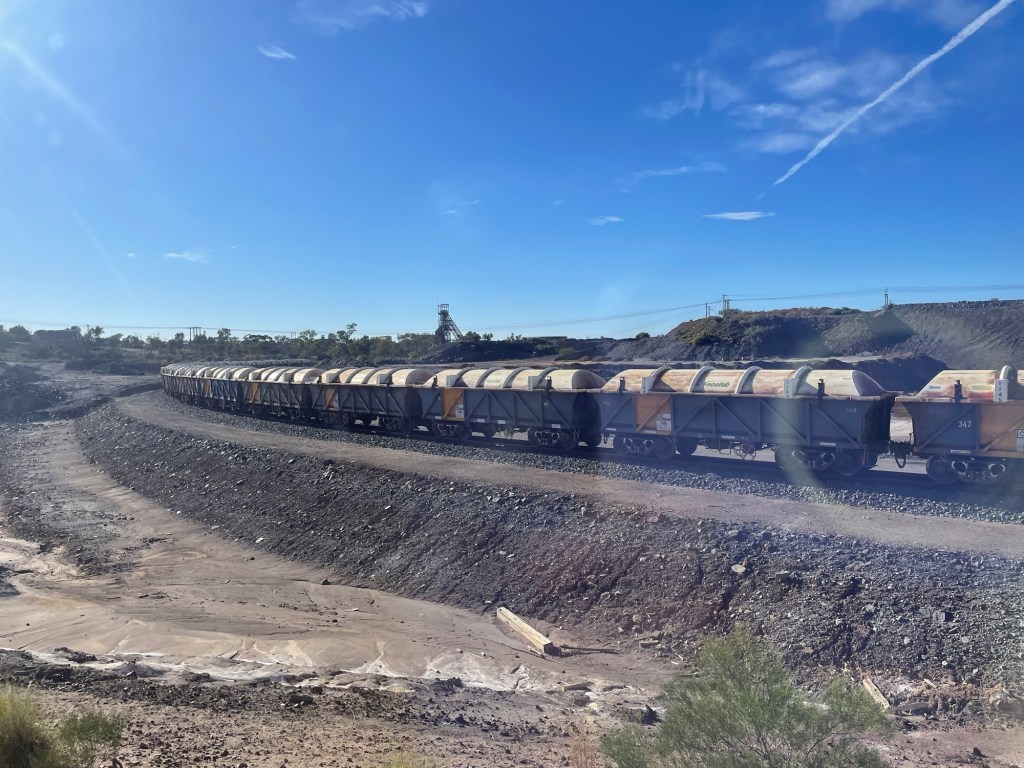
Run-down coal mining buildings occasionally appear. We get excited seeing a bulldozer and ponder how it got to its place in the wilderness. No signs of humanity ANYWHERE. While mining is alive and well in Australia, the activities along the rail line seem to reflect the aging industry from a by-gone era.

Two trivia facts: the longest stretch of continual road is in this part of Australia and can be seen from outer space. And the width of Australia is the widest country in the world (over my guess of Russia) and wider than the moon’s diameter.

Wheat fields in Australia!?! Like America’s breadbasket, Australia produces more wheat and hay than what its countrymen consume. So China and other Asian countries are the benefactors of these vast food and feed enterprises.

Denser growth in the western half of the Southern Australia outback

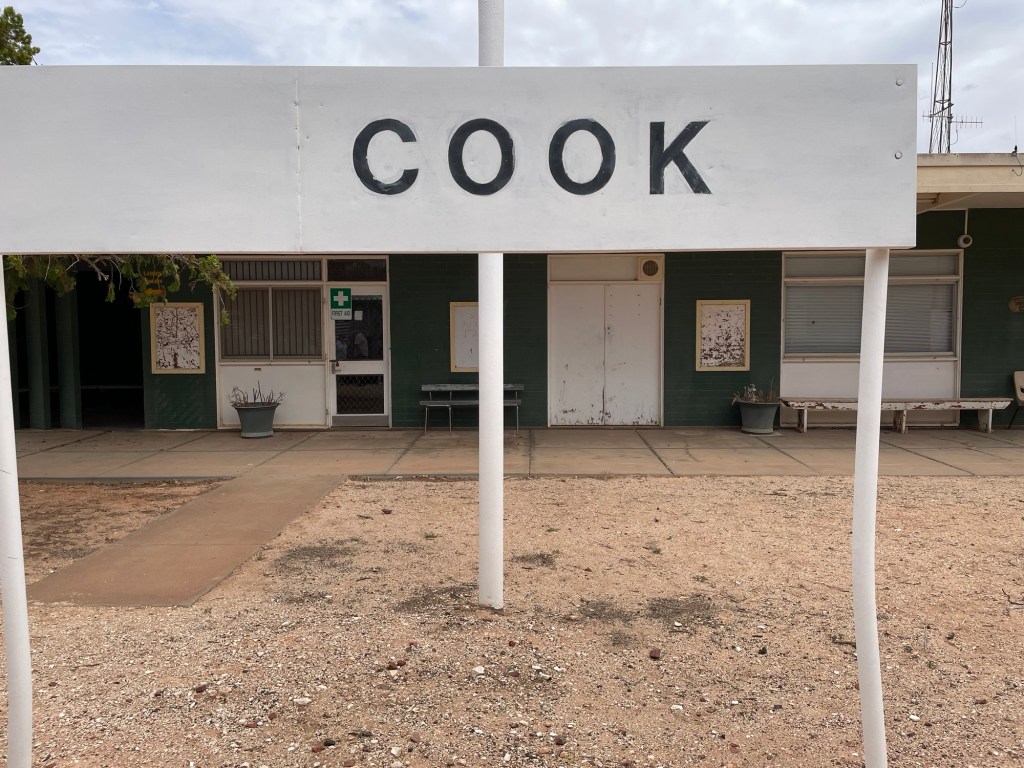
Our quick 20-minute pitstop in Cook provided the most cinematic opportunity, where the abandoned town left a ghostly reminder of by-gone efforts to settle and make roots.

Accommodations

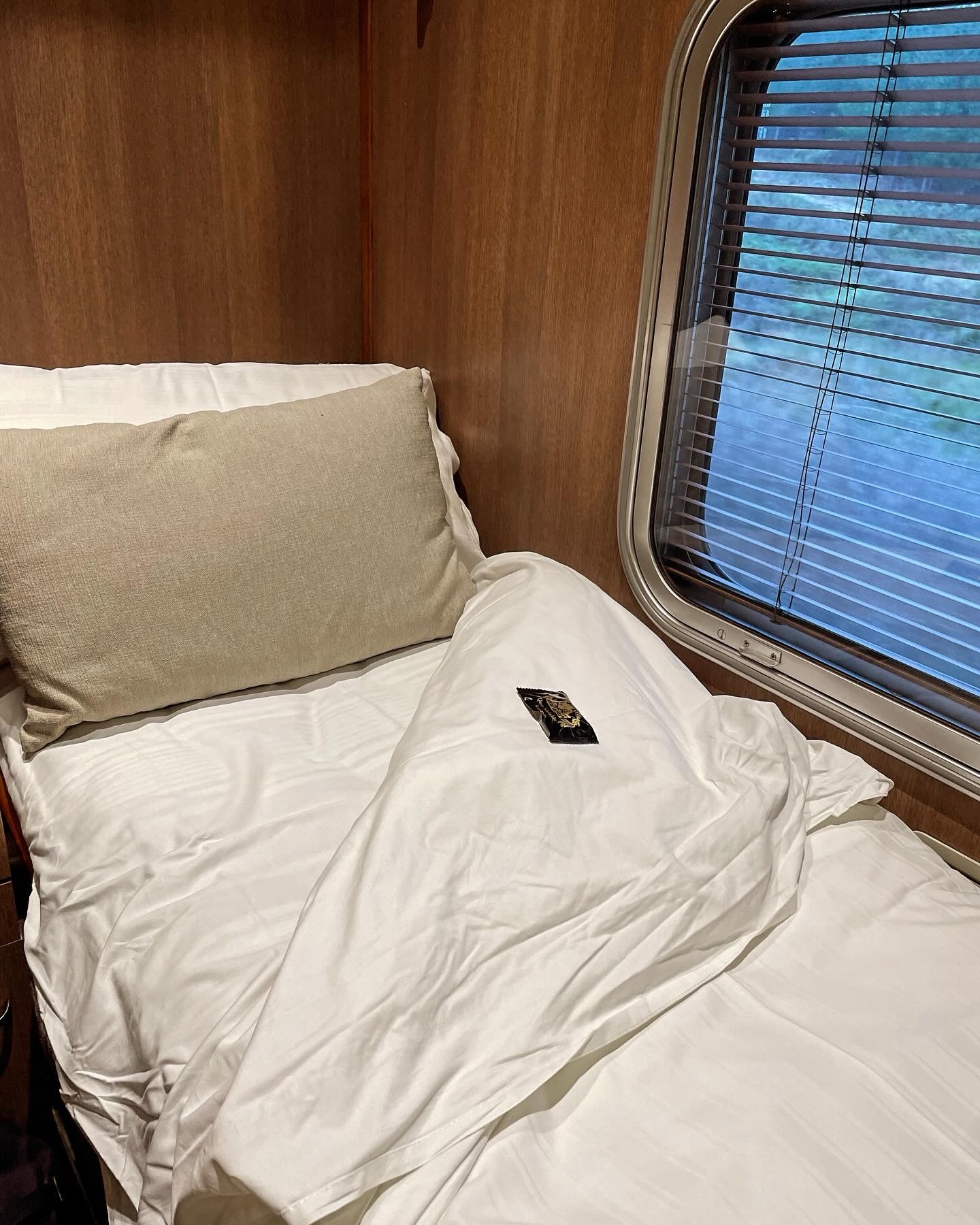
Compared with the Trans Siberian, accommodations in a single cabin are luxurious. While old and outdated, the design of the carriage was well thought out and the quality has been maintained.

What differentiates the Australian Railway system with that in Russia was the food service. The Chinese served the east-west direction, and the Russians the west-east direction of the line. Both were rudimentary, if not non-existent. No one attended the dining car.

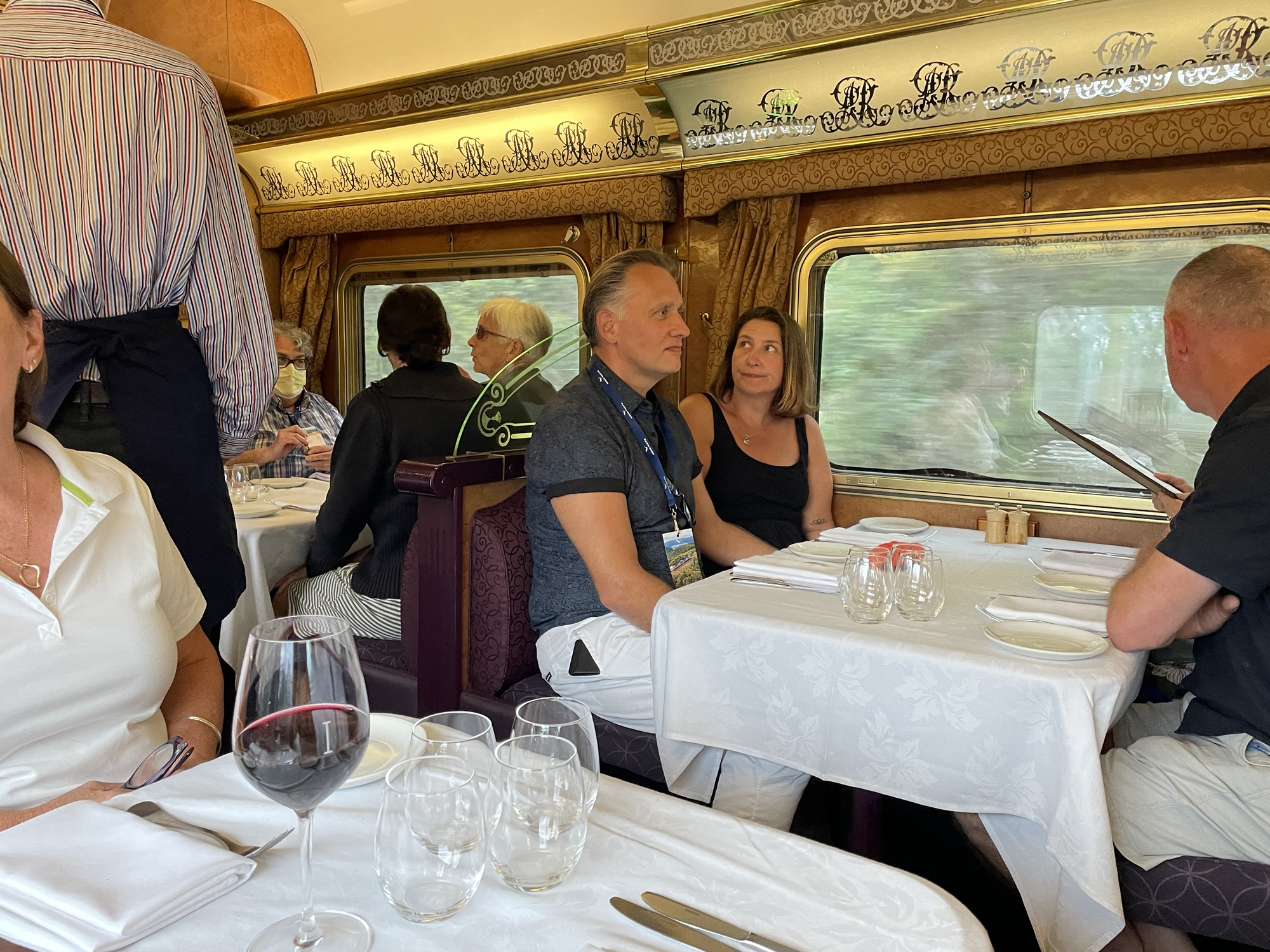
The food service on the Indian Pacific was superior, with an extensive wine list and well prepared meals. The dining car buzzed with activities and opportunities to meet other travelers. The host seated individuals, couples, and parties of four as groups arrived. Both the food service and cabin staff have been amazingly hospitable, kind and helpful.

Yes, intermittent internet access is frustrating. Time to throw the phone out the window and try living life as a normal person. What I do see is the difference between these two transcontinental trips eight years apart. Except for frantic postings at station stops across Russia where I was able to get off, I barely remember any need to check my phone when there was no service to speak of.

Despite intermittent service, the compulsion to check is relentless and uncontrollable. I am only reminded by a handful of Aussie matrons who could have cared less about flickering internet traffic noise.

Excursions

Although I had no idea where the planned excursions were, it didn’t matter. Two of the three planned activities were unavailable.

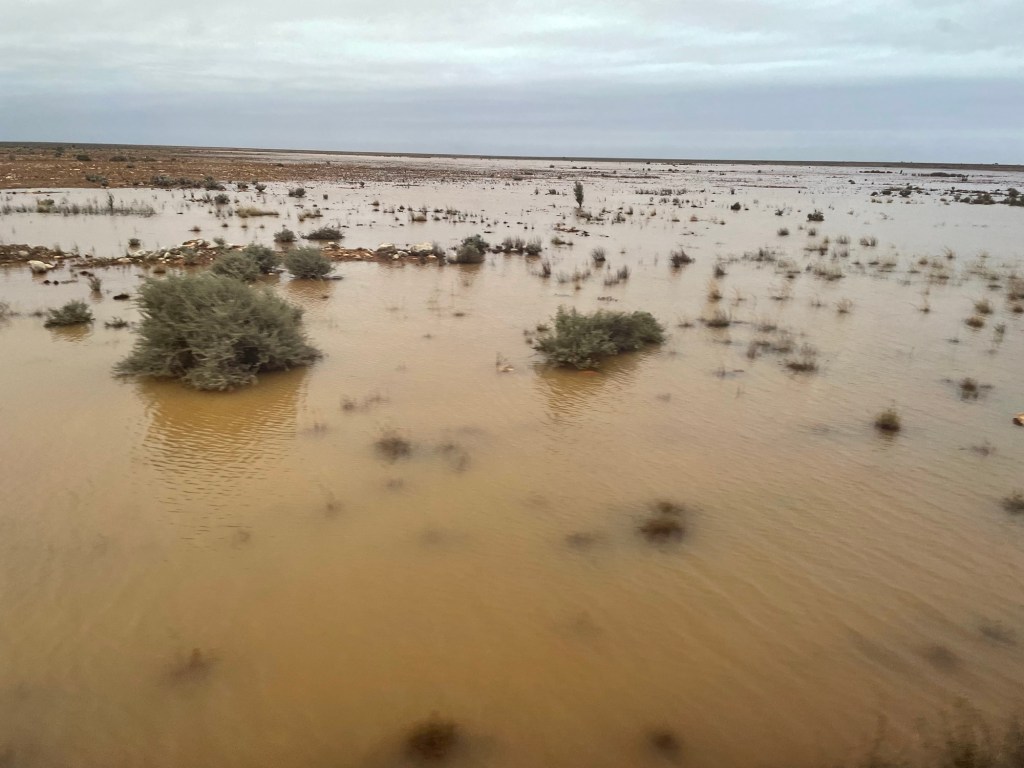
The first off-train experience to the mining town of Broken Hill was cancelled due to delays from freight traffic the night before. And a flood at the site of the final night out in Rawlings required a cancellation of a dinner under the stars.

A seven-hour day trip to Australia’s famous Barossa Wine Valley allowed us to set foot on land midway. The Sepplefeld Winery we visited was started by German Salesian immigrants in the 1820’s. Their entourage arrived in Australia with 13 workers and the wealthy couple subsequently had 13 children to carry on the family business.

Glimpse of vineyards

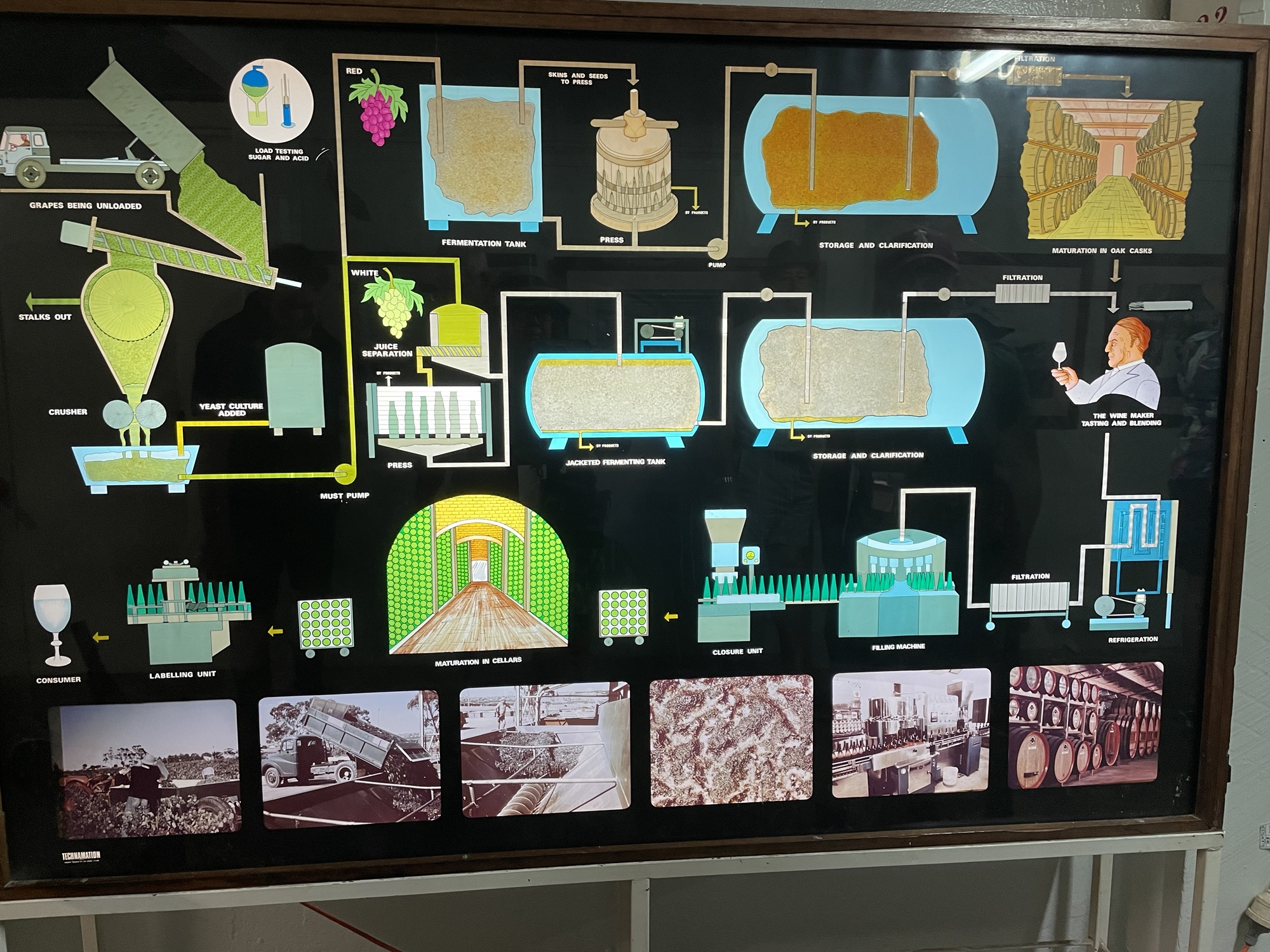
After a tour of the barreling room describing the wine making process, we were treated to an elaborate three-course meal with wine pairings. The dessert included a locally made port. Like restrictions on the use of “champagne”, the term “port” cannot be used as a wine designation. “Fortified wine” is used instead to identify wines enhanced with brandy or other alcoholic liquor.

The 7 hour journey was disappointing for the time invested, as an inordinate amount of time was devoted to marketing and shopping. More time could have been devoted to the wines produced.

Sydney–the start of the journey

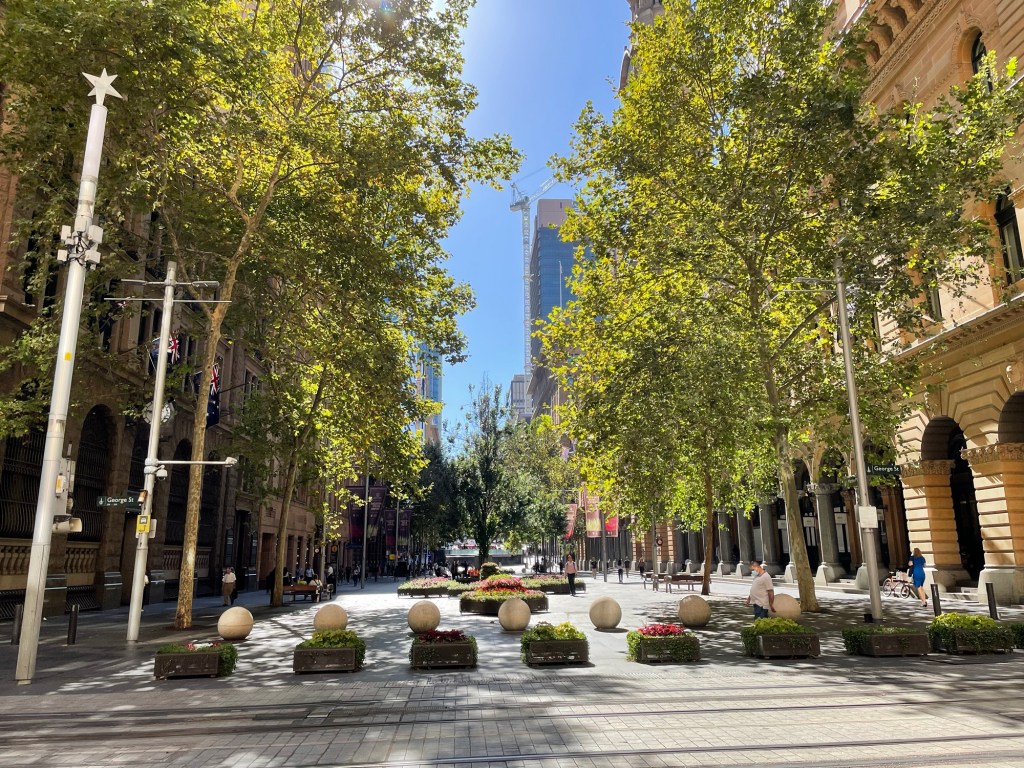
Attached photos describe the start of my journey in beautiful, dappled tree-laden Downtown Sydney and a quick walk to Sydney Harbor..

A panoramic view of Sydney Harbor and Opera House,
with a commentary on the indiginous people of Australia
Perth-end destination to follow

I hope you have enjoyed the account of this seldom traveled journey through Australia. Despite a few drawbacks, I recommend sturdy travelers to take it! I always thought of Perth as the edge of the world and was informed that it is only five hours from Singapore. That gave me a new perspective of the world! Please let me know if you have any questions or comments.

Real Time Creative and Independent World Travel