Traveling by car from Lüneburg to Bavaria gave us an opportunity to make an overnight stop in Nurnberg at the Hotel Drei Raben. I had stayed here a couple of years before on my trip to Bayreuth for the Ring.
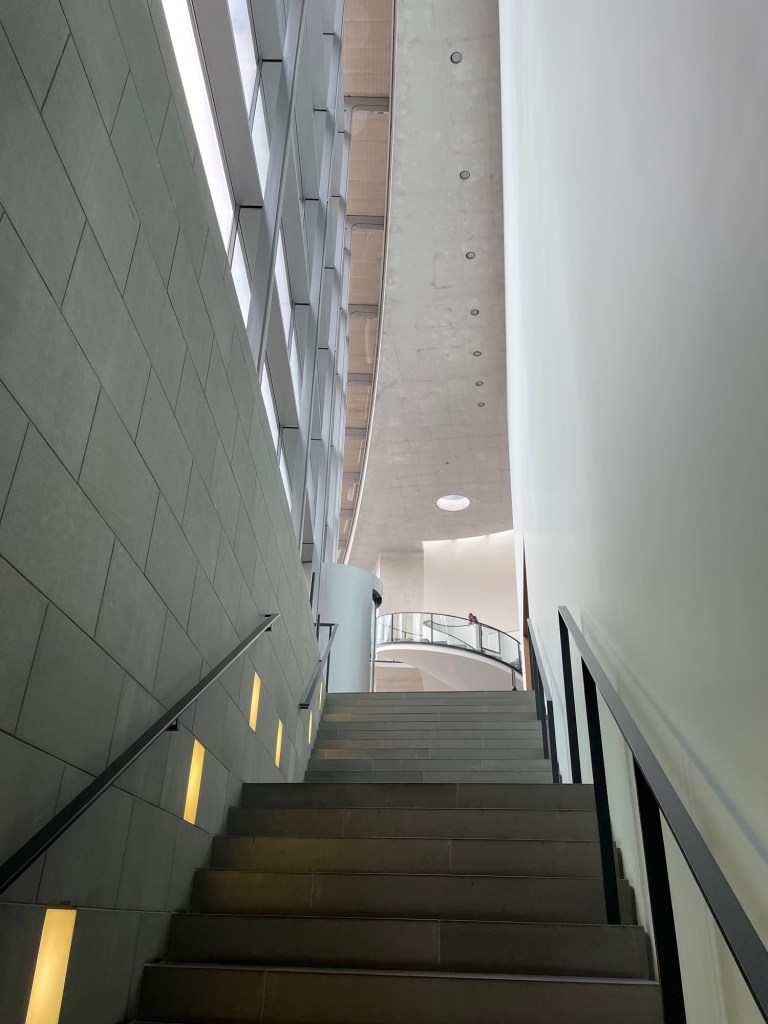
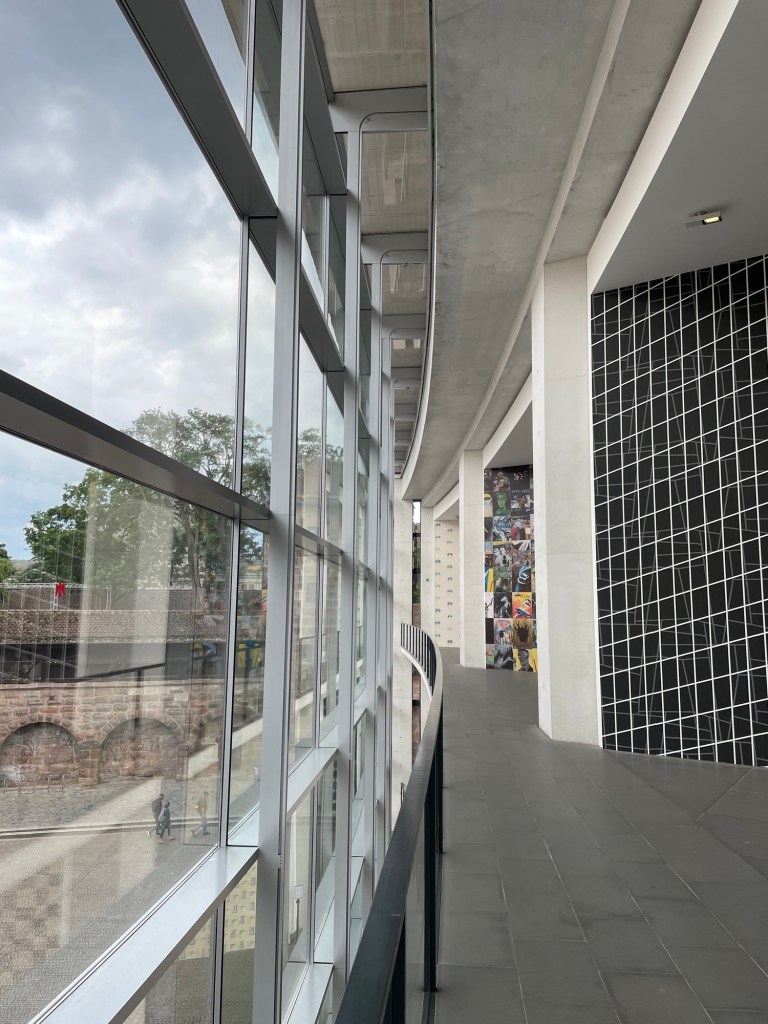
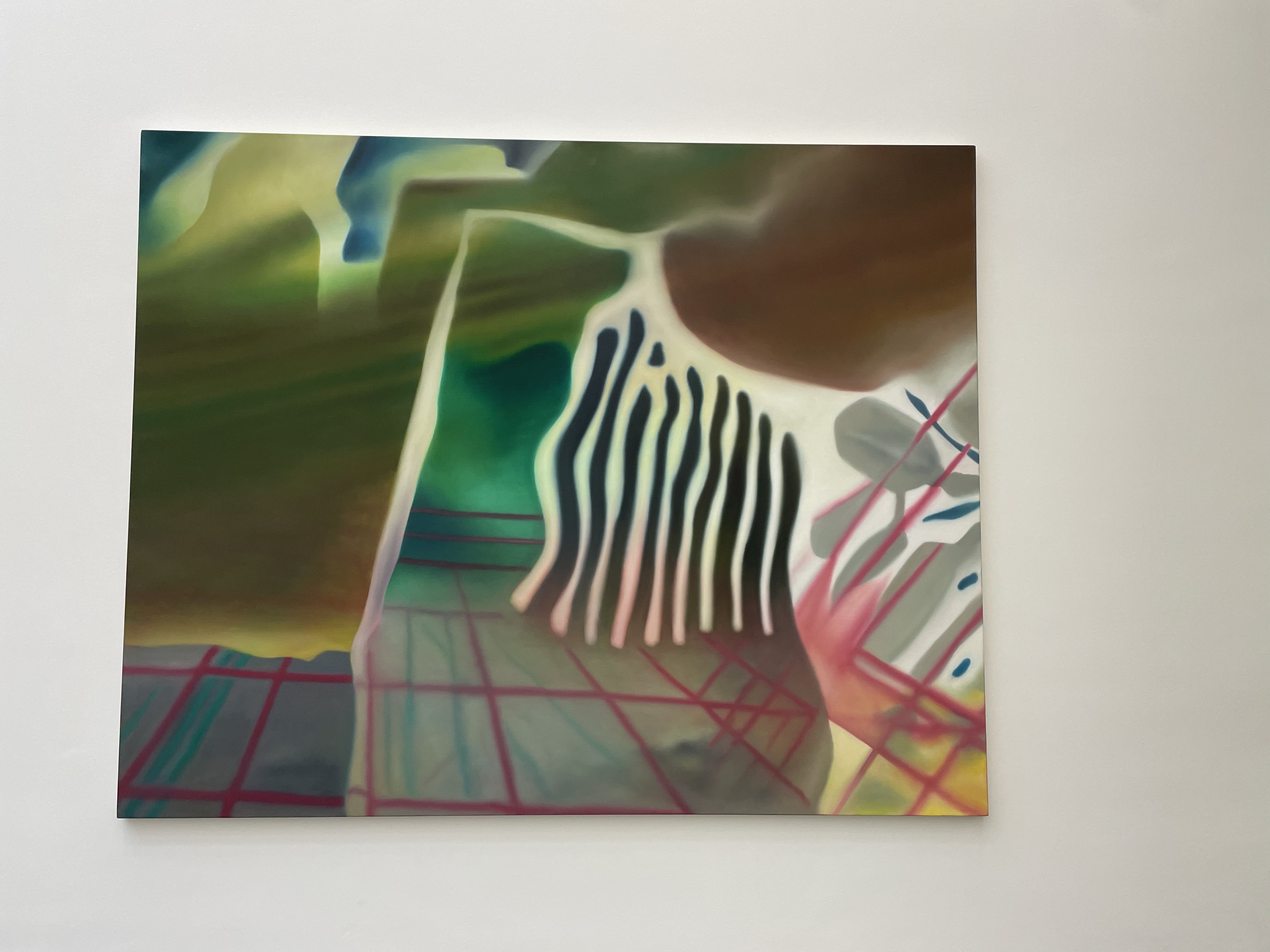
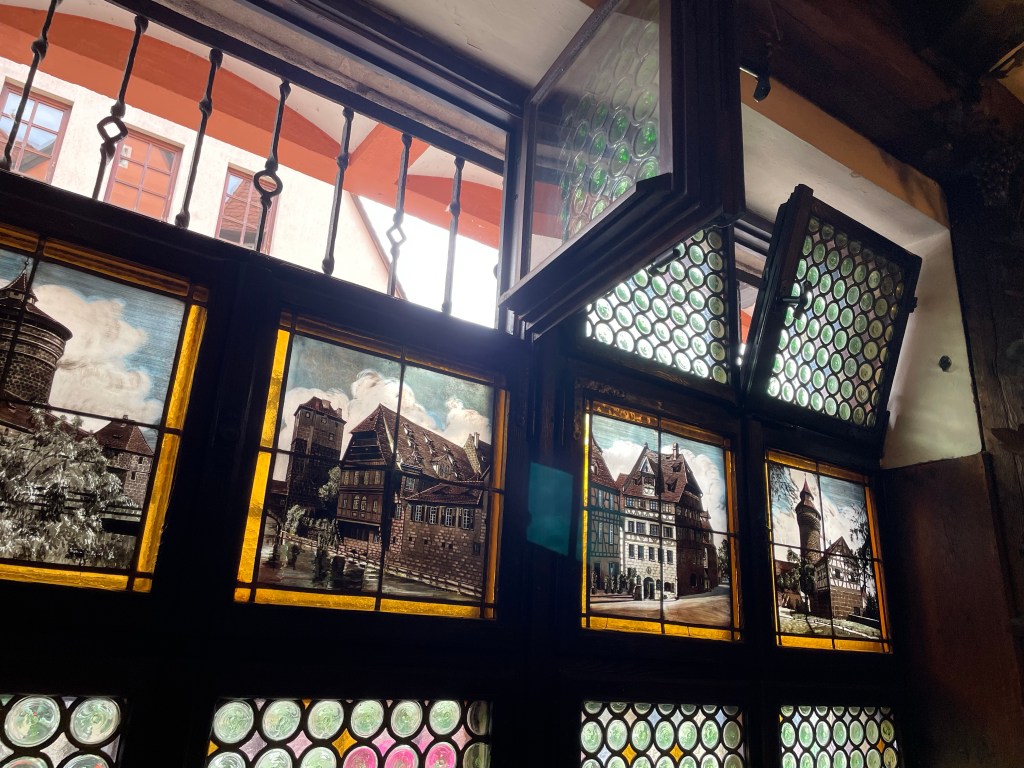
Just steps across the hotel in the historic pedestrian zone is the Neuses Museum. It was an unexpected find, with collection of Gerhard Richters and Bernard Luries. The museum’s widely swooped facade was a dramatic complement to the historic buildings surrounding the museum.
Inside, the whimsical staircase draws you immediately to the collections upstairs. The curved exterior wall contrasts intimate views of old buildings outside. It guides your eye along the entire length of the neighborhood. Generous community and additional gallery space are located in the level below.
The building was one of many numerous museum, school and research facilities designed by Staab Architects. Notable projects include the Albertinum in Dresden and the Max Planck Institute in Heidelberg.
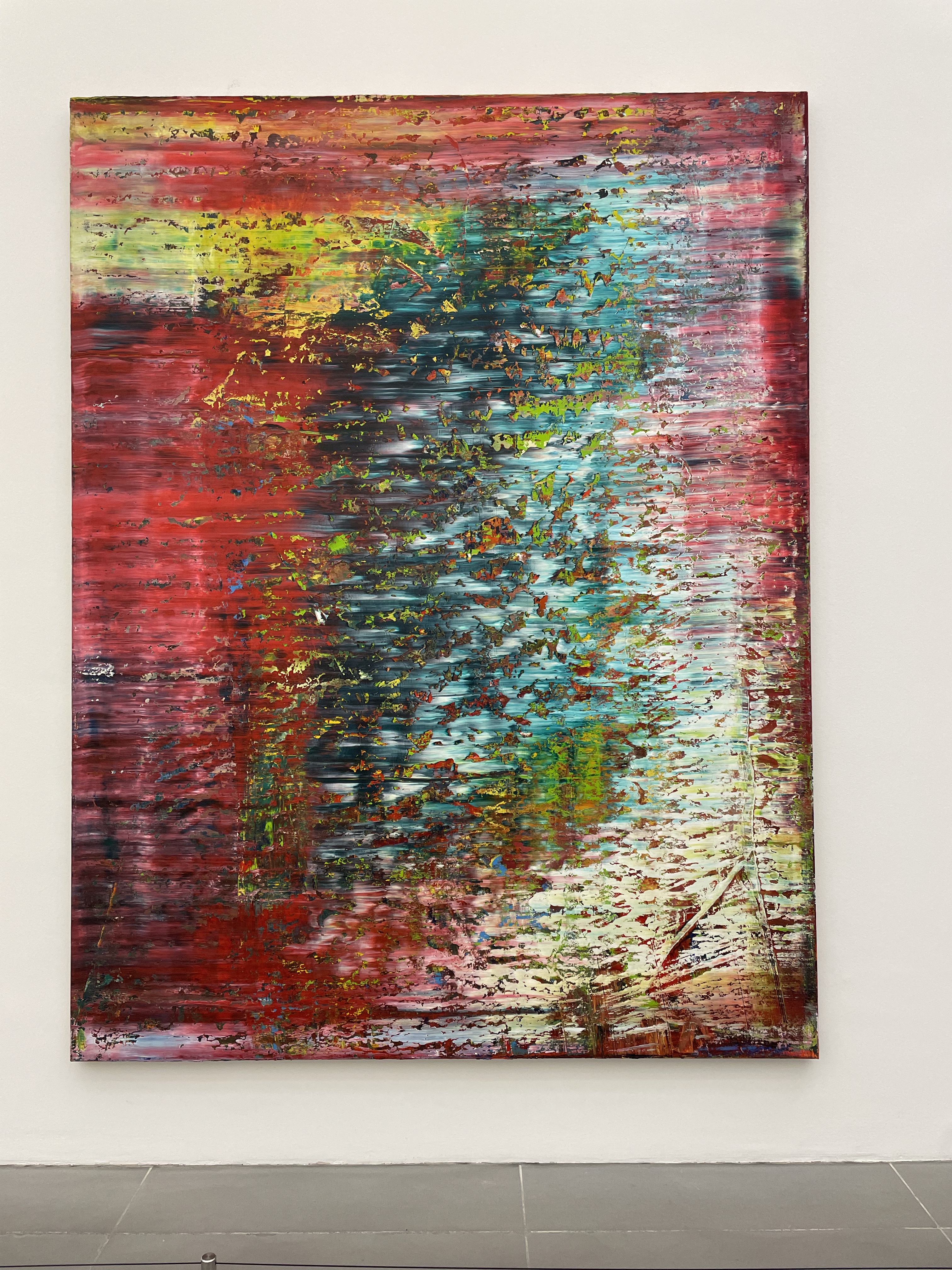
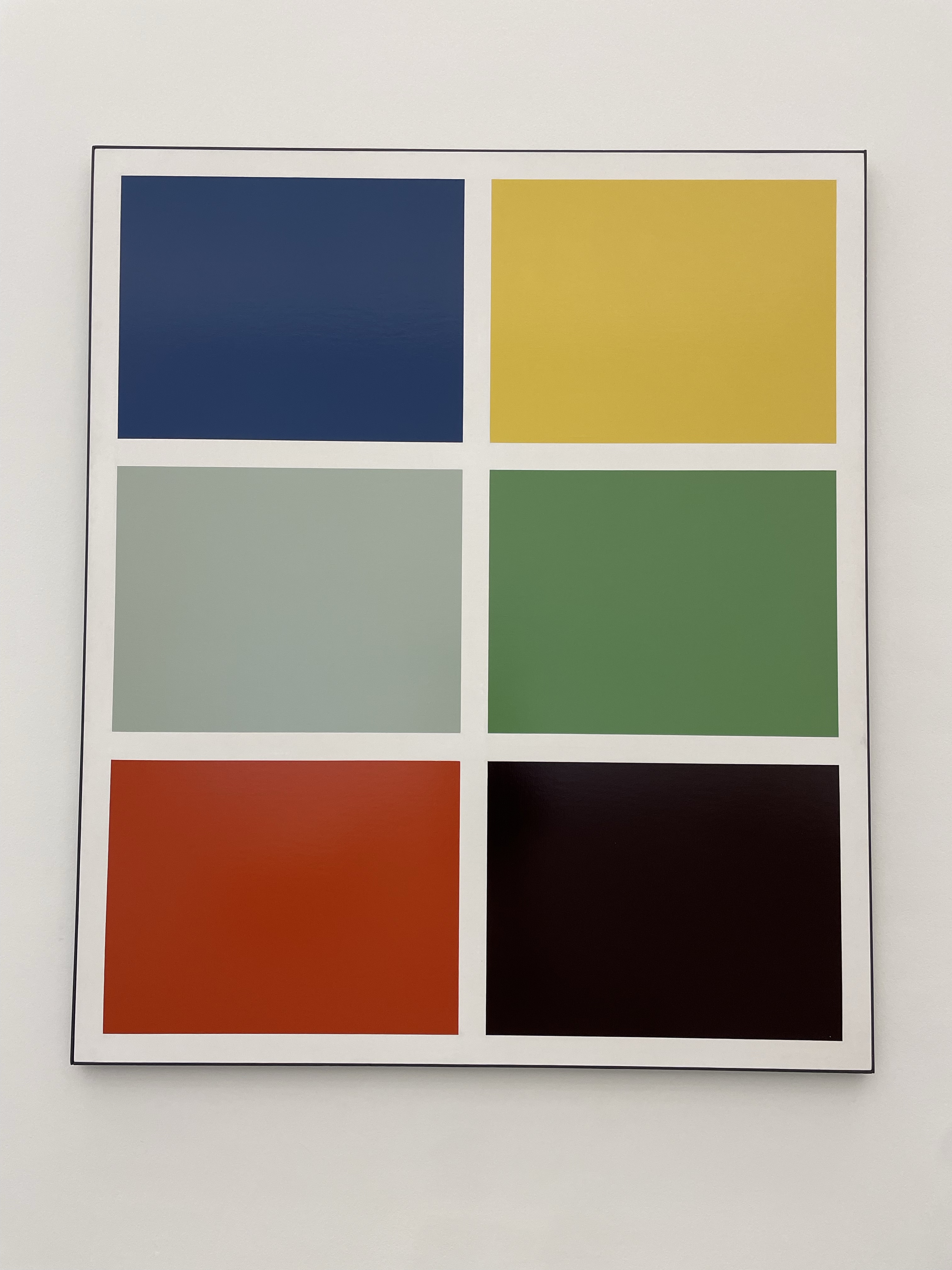
The Neues Museum proudly houses a permanent collection of Gerhard Richter paintings. Because Richter’s work imbeds a long span of both German and modern art history, his paintings are in high demand and sell for over $30 million at global auction houses.
Richter was born in Dresden and got his training at the Dresden Academy of Art. He later joined the Dusseldorf Academy and taught there. He designed the south window of Köln Cathedral in his signature pattern of colorful squares.
Richter uses horizontal brush strokes and dry brush techniques to obscure the subject matter. In doing so, he forces the viewer to question what is real. This insight helped me to appreciate the beauty of his work.
Bernard Lurie is another artist originally from Eastern Europe. He fled to Berlin during WW2 and then eventually made his way to the US. His sculpting of the human figure and graphic references to the human form appealed to me.
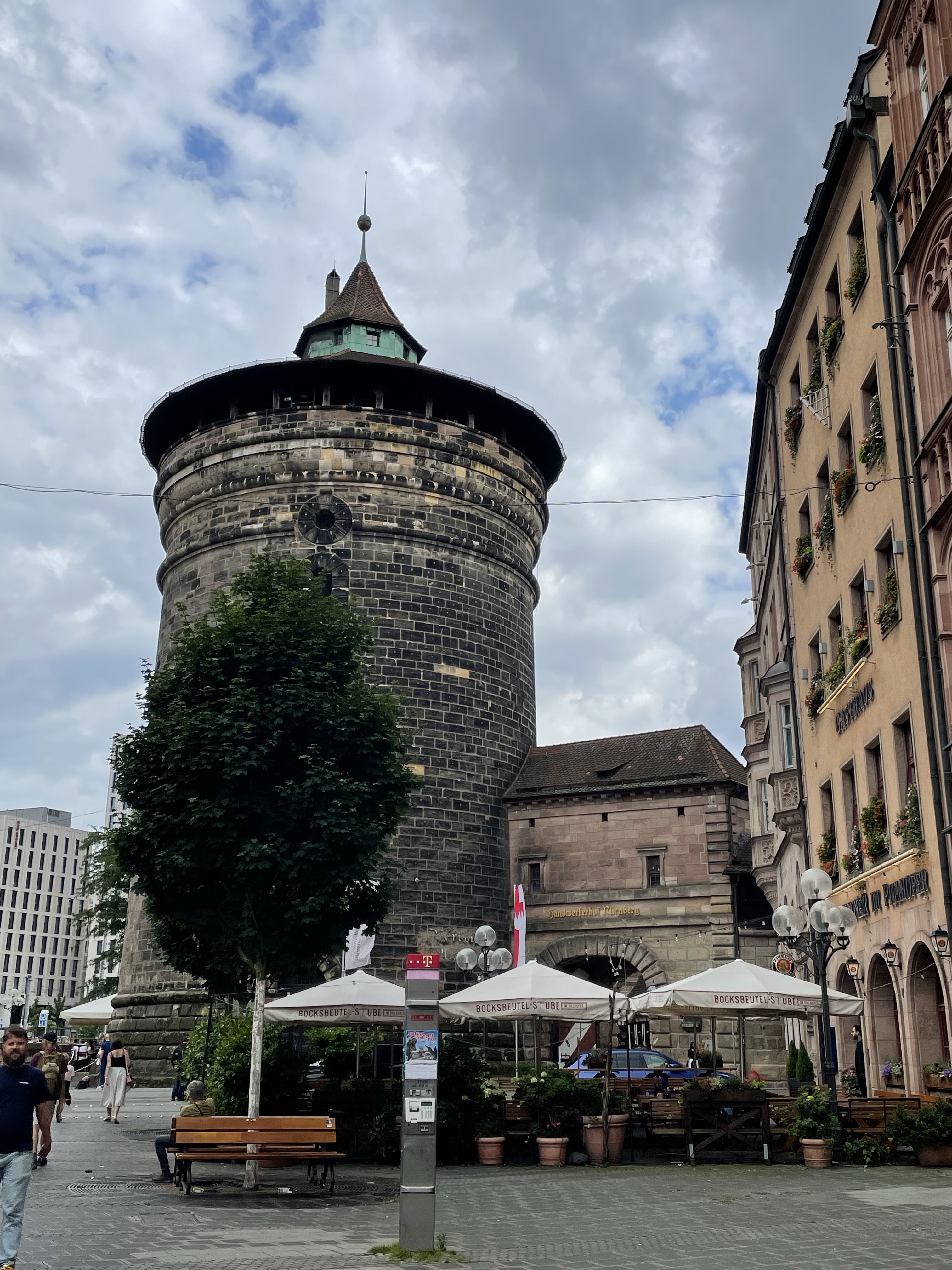
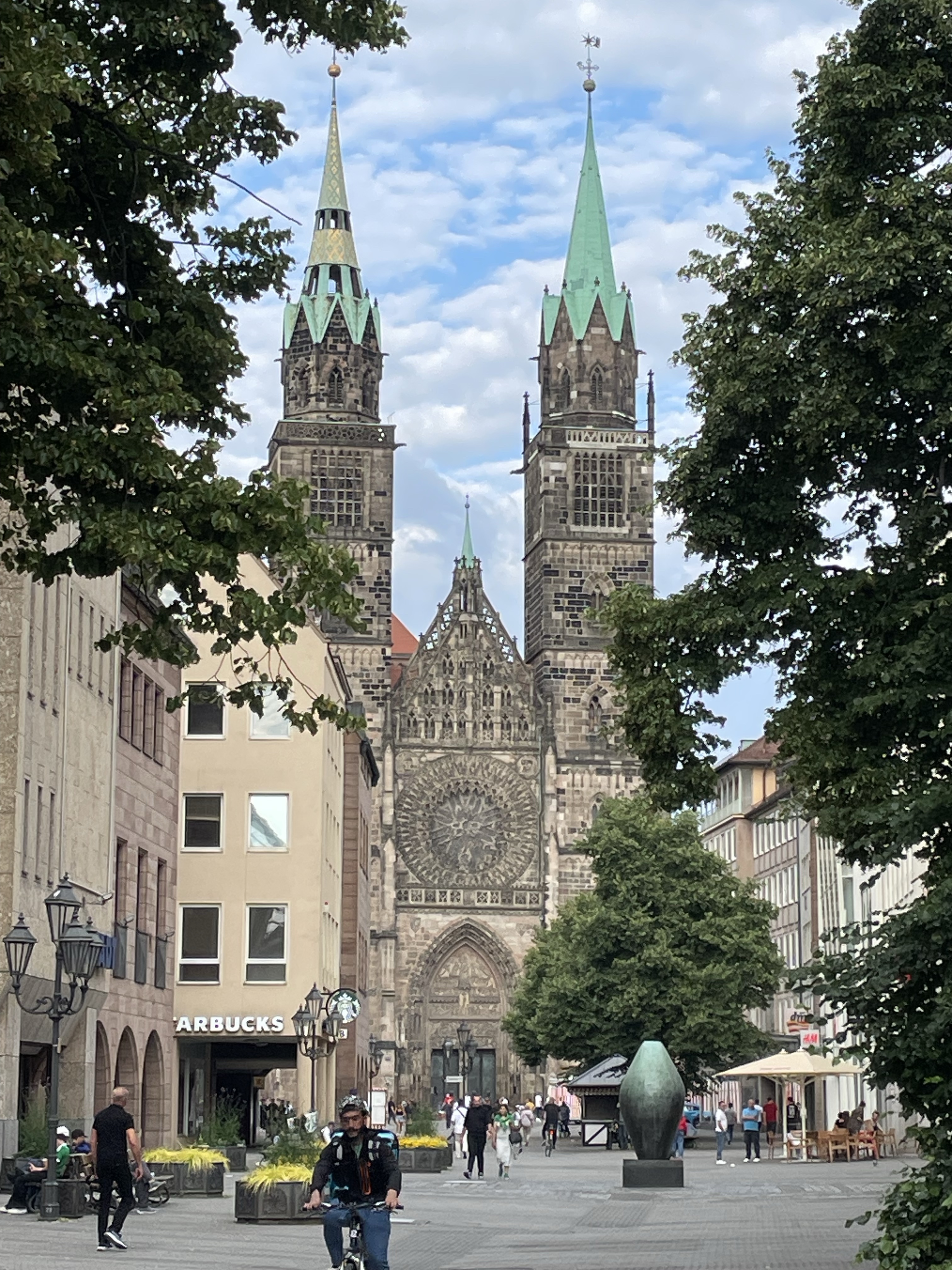
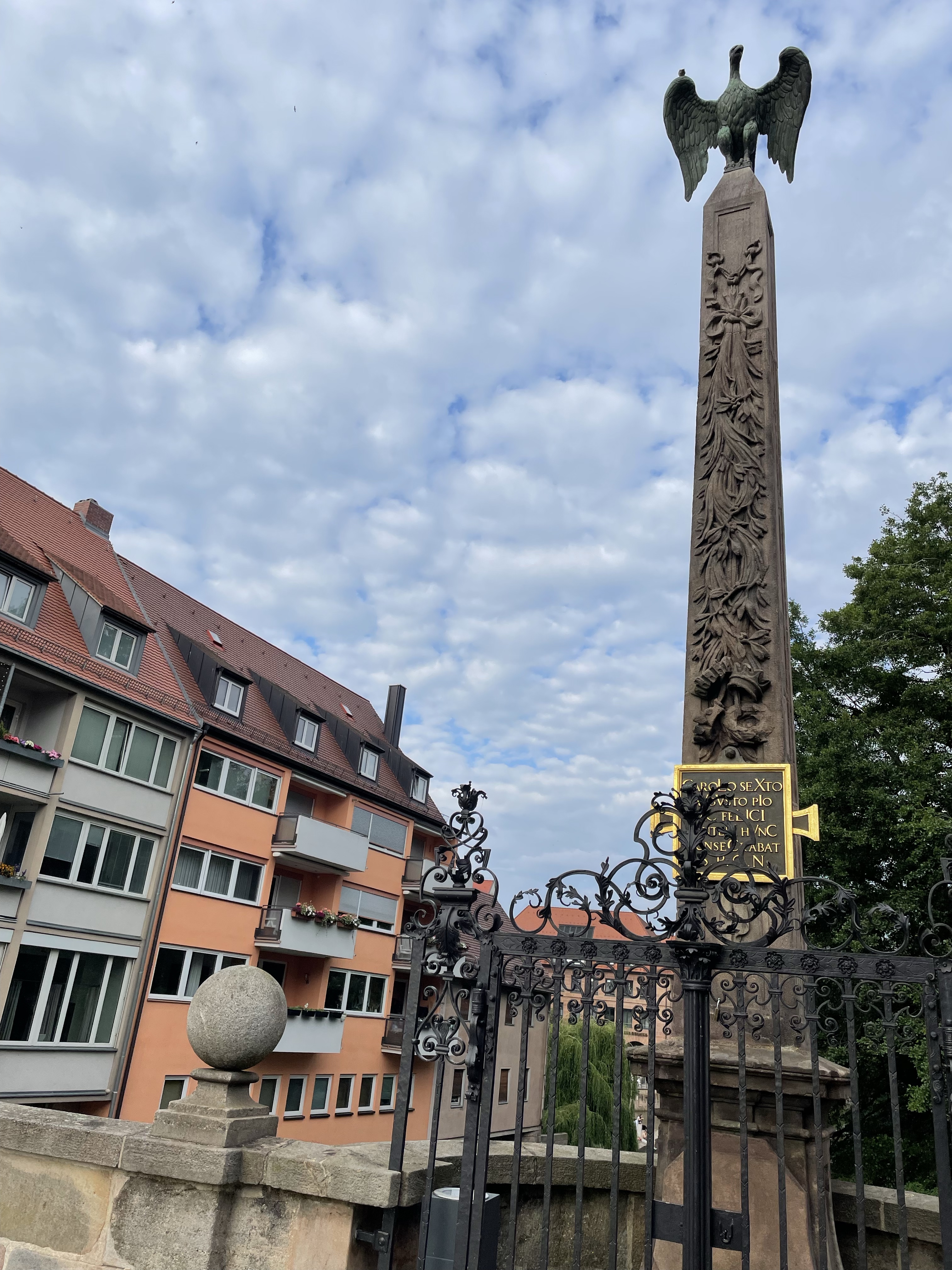
Nurnberg along the Pedestrian Zone
HandelwerkhofLorenkircheView from the FleischbruckeHotel Drei RabenDinner at the classic Trodelhaus Restaurant
Good Design Award
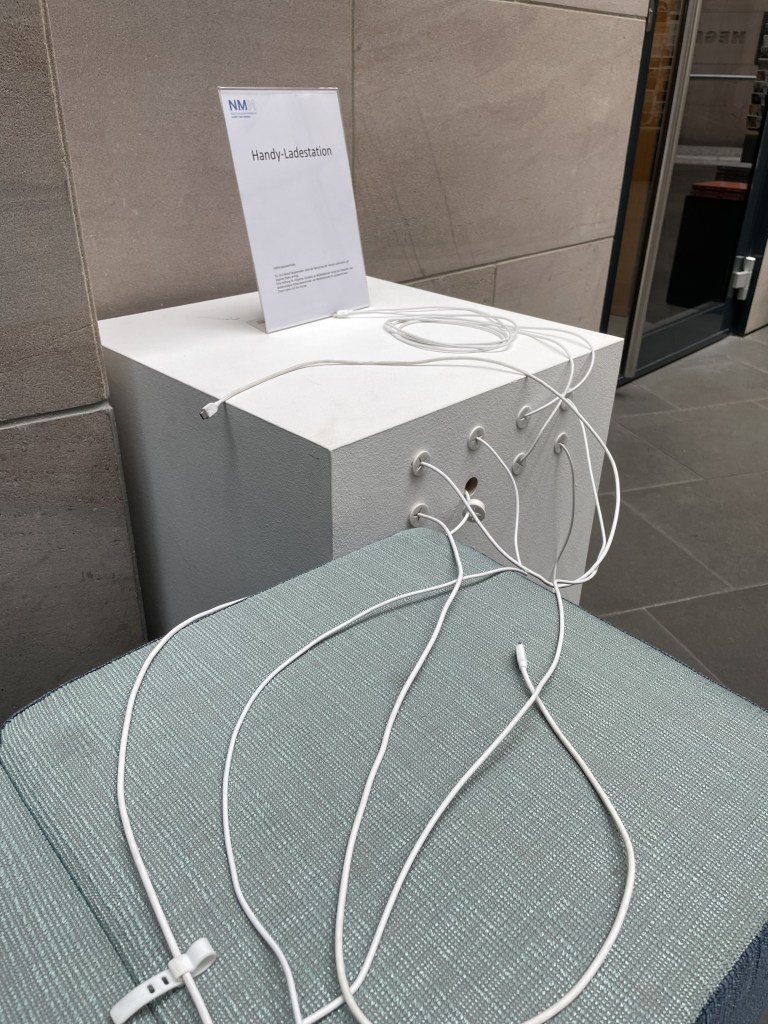
Look! A Charging Station! Also. storage for large carry-on bags for tourists schlepping from the nearby railway station makes this museum a top hit for me.
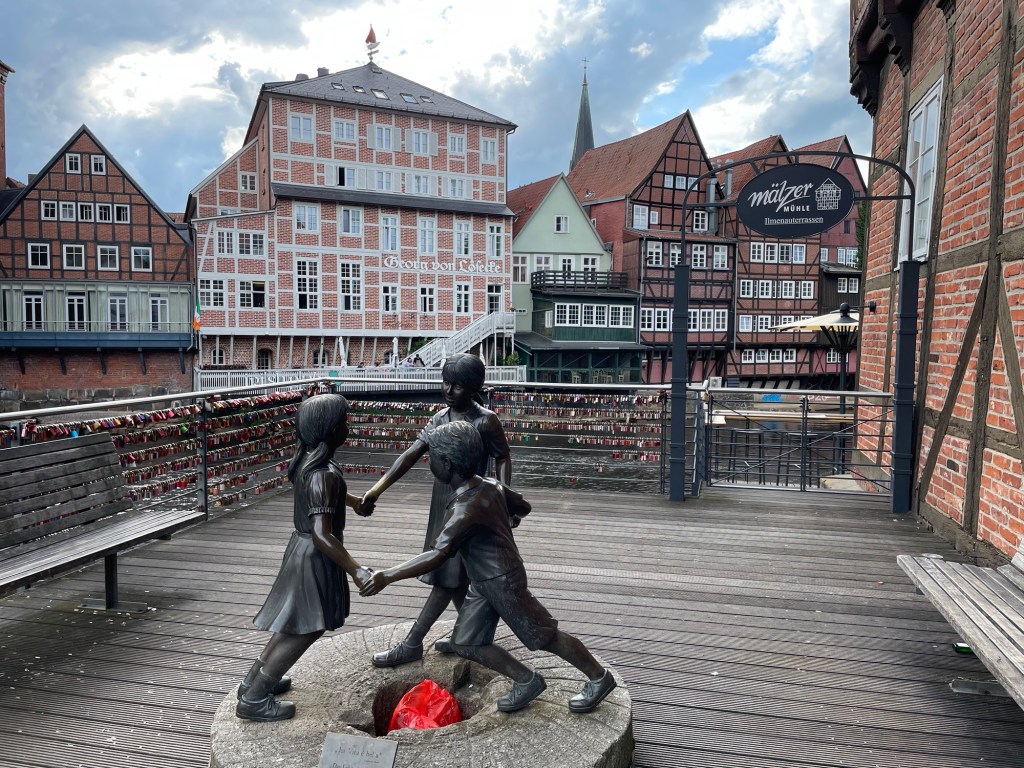
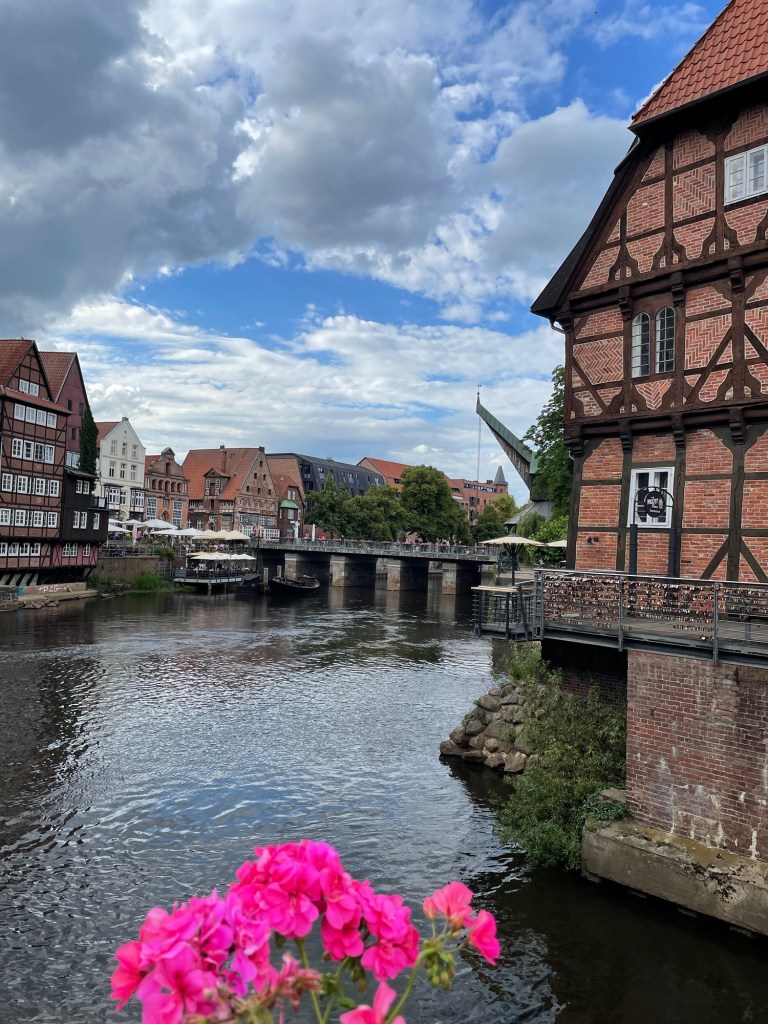
Having Luneburg, a charming small town outside of Hamburg Germany, as a base has been a delightful experience. Annemarie was kind enough to allow me to stay at her beautiful white-carpeted apartment just minutes from the train station and a short walk to all the cafes, shops, and services.
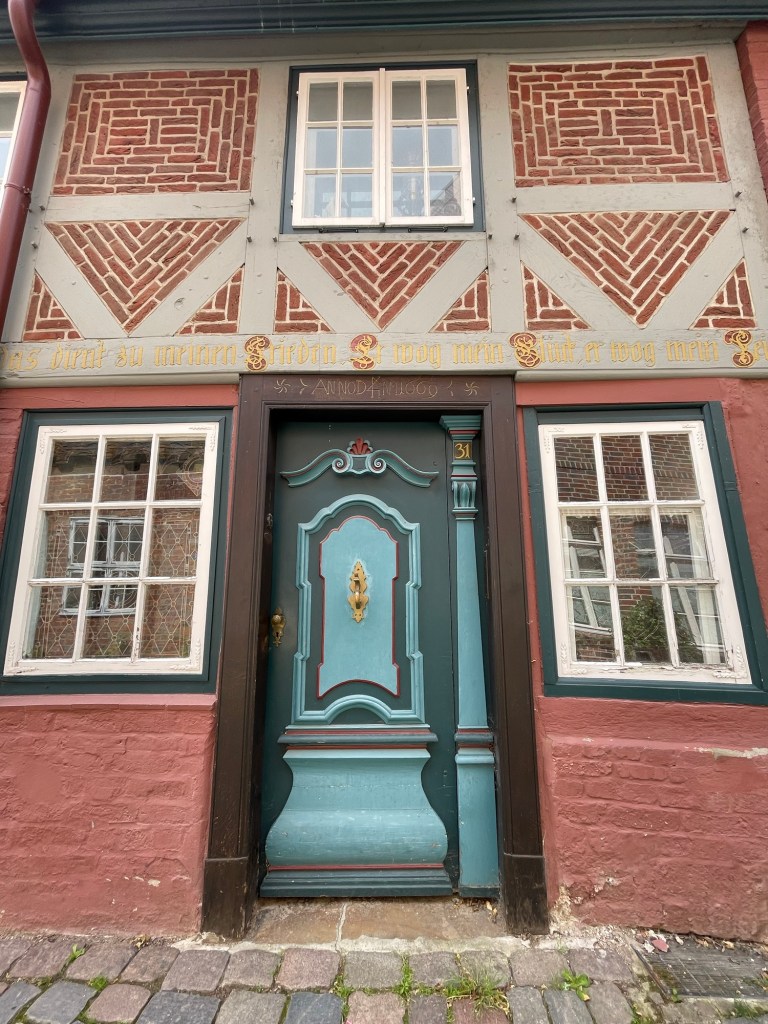
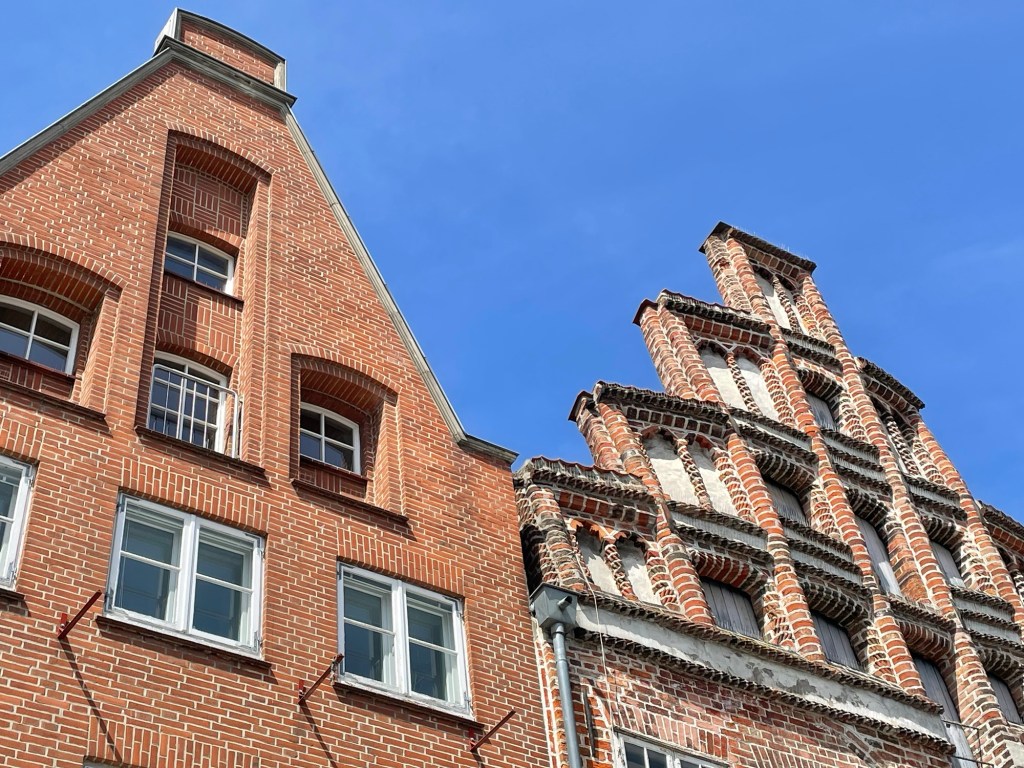
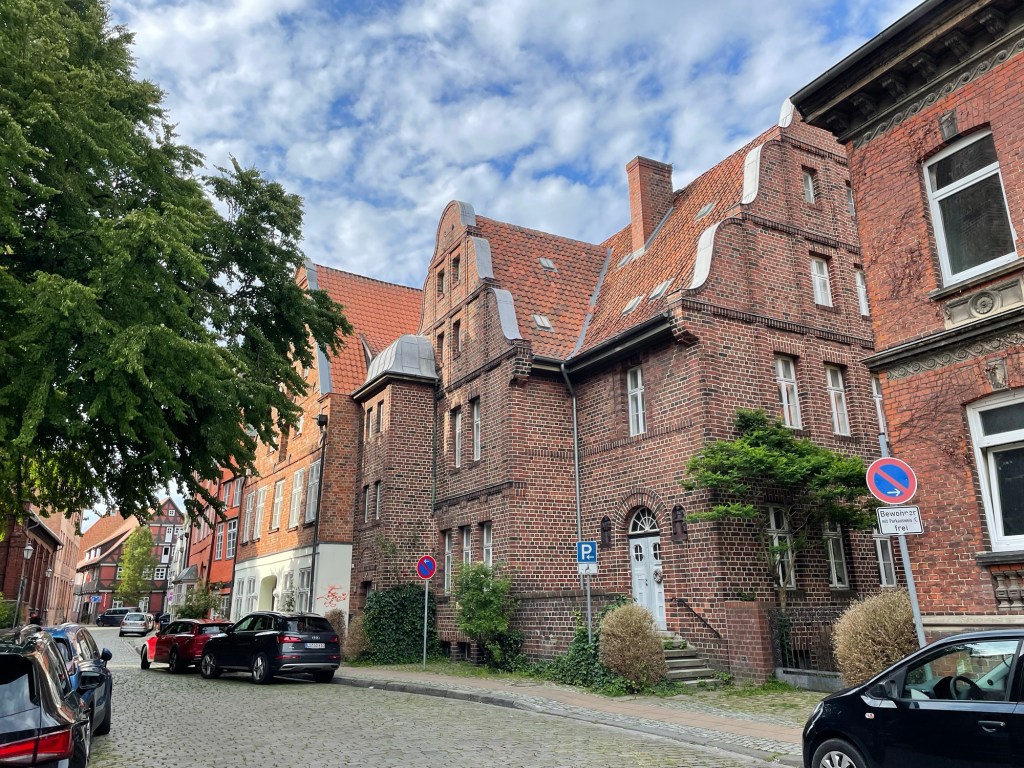
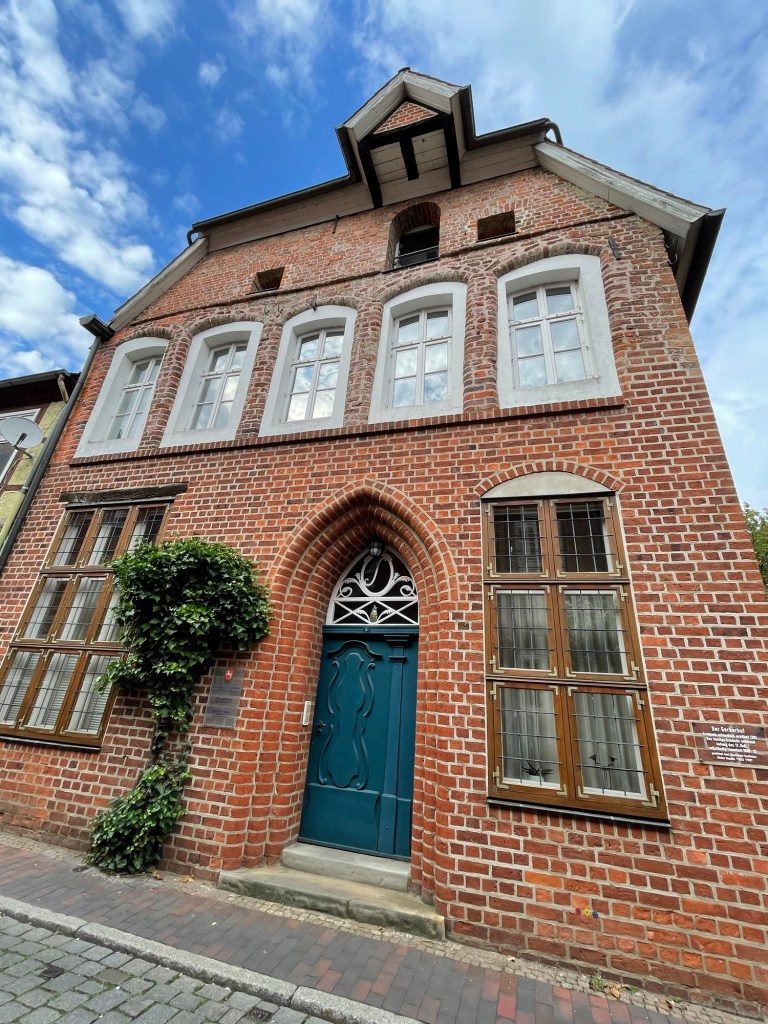
After a first week visiting the numerous museums in the city, I was ready to move into a quasi-resident mentality. With the fascinating history of this Hanseatic city under my belt, (See posting https://wordpress.com/post/travelswithmyselfandothers.com/28671), I was able to appreciate the razor-edged rooftops intentionally different from the next neighbors’. Many 16th C. buildings prominently display their beautiful brick facades along the narrow village paths.
Experiencing the natural pace of life in Luneburg was a joy. After the crazy opera-chasing from Dresden for Don Carlo, Berlin for the Ring Cycle, Dortmund for Pretty Yende, and to Bulgaria for Sonya Yoncheva’s Tosca, I savored the breath-catching week in this quaint and friendly little town.
Entertaining and Being Entertained
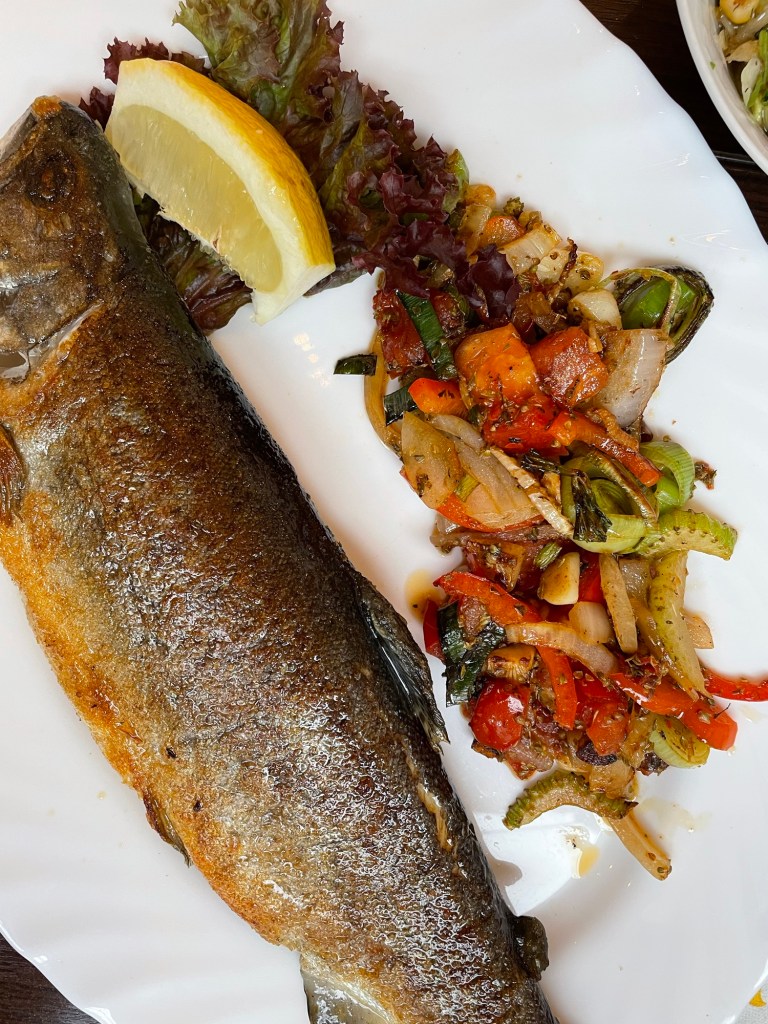
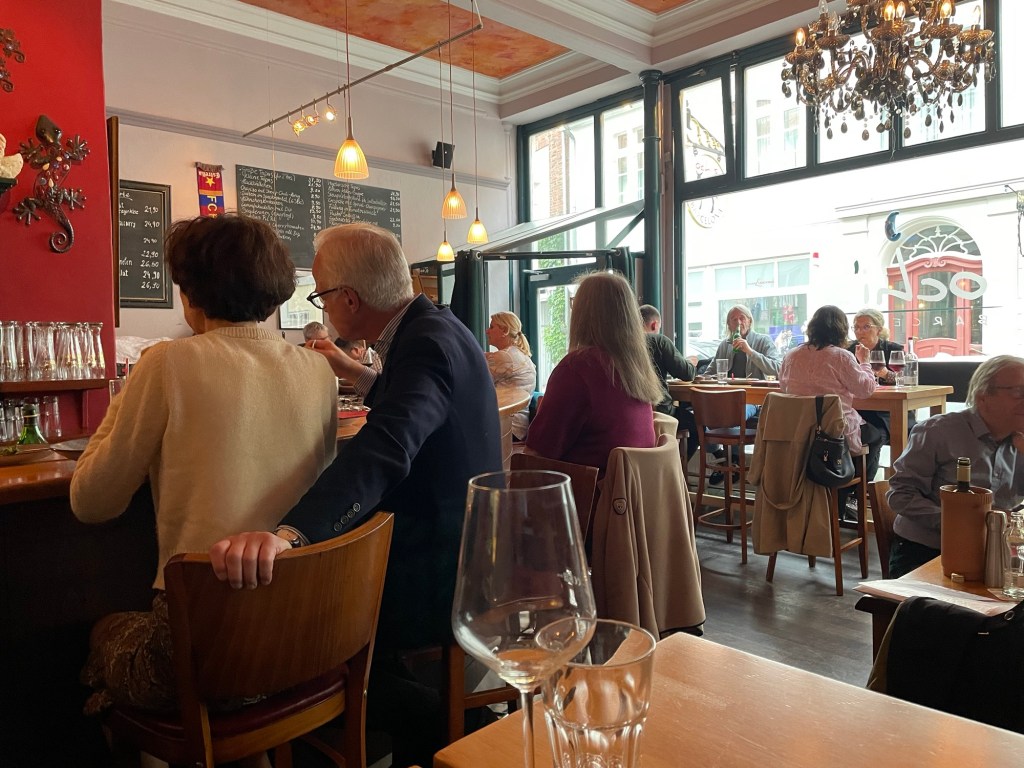
The many cafes and restaurants for tourists and locals reward all with excellent quality fish, Spanish food, and Mediterranean cuisine. Wednesday and Saturday markets offer all the necessities for quality at-home dining.
Whole Fish at Neptune’sOchi’sBreakfastBounty from Market Day
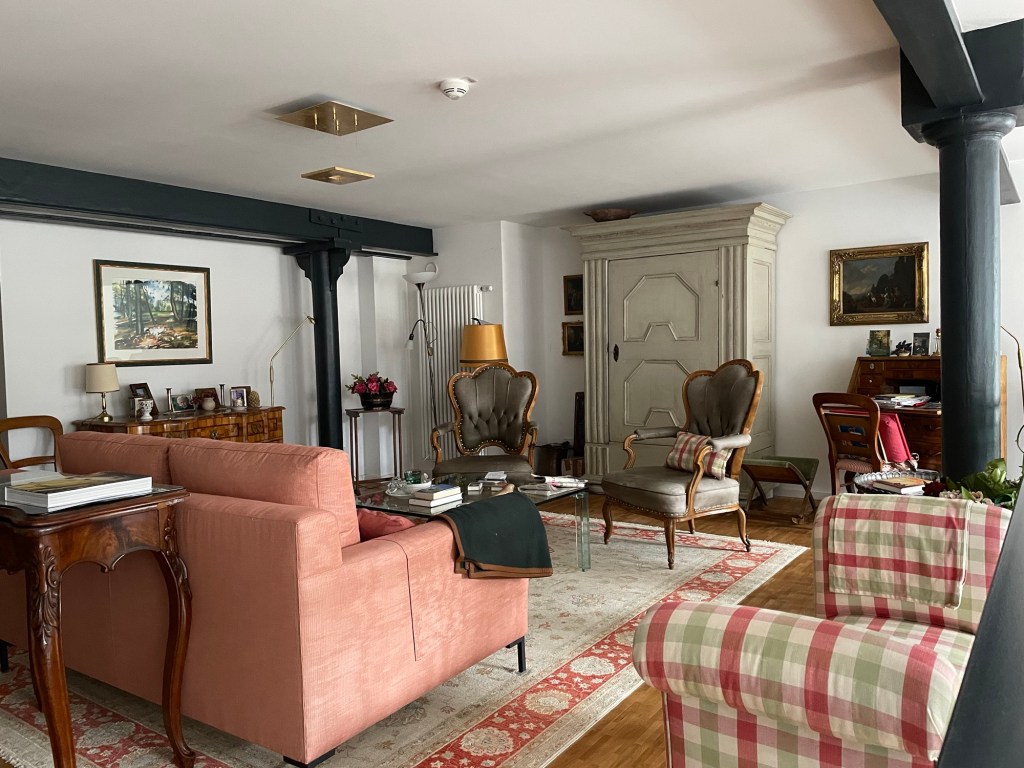
Historic Building Interior
A lunchtime invitation for seasonal spargel (asparagus) provided an opportunity to experience a lovely historical building interior with a worldly host, who provided insight on local family history.
Soccer Mania
The Euro Cup 2024 has descended on Germany. Games from 26 European countries are played in major German cities such as Munich, Hamburg, Dusseldorf, and Koln throughout the month. It’s hard not to get caught up in soccer fever, with national teams featuring famous soccer players from different clubs throughout Europe.
Germany vs. Scotland
Rod Stewart Competes for Opera Diversion
OK, so Opera isn’t my only obsession. Annemarie introduced me to Rod Stewart and converted me instantly. I struggled with my dual personality and bipolar disorder to maintain a semblance of normality. His mellow conversion to pop standards of past generations balanced his bad-boy image in a very digestible manner. I even forgot that I was in Germany after exiting the Barclay Arena humming “I Don’t Want to Talk About it.”.
Kickoff with “Addicted to Love”
In a couple of days, we’re off on a road trip due South to Munich, with stops in Bavaria to Annemarie’s heimat (home), Befreiungshalle, Walhalla, and Kloster Weltenburg. We’ll land in Verona for one final opera fix before I head home via Frankfurt.
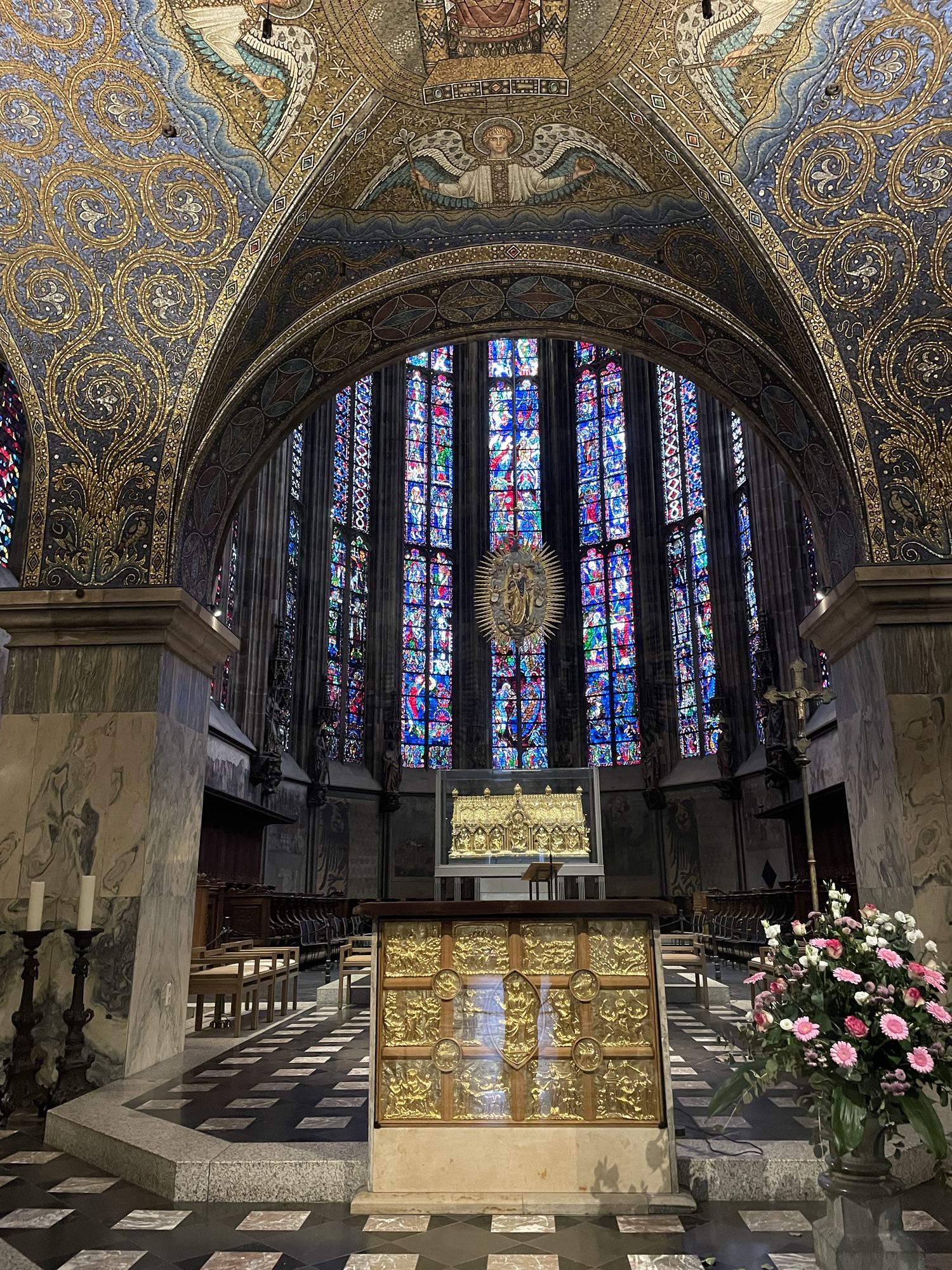
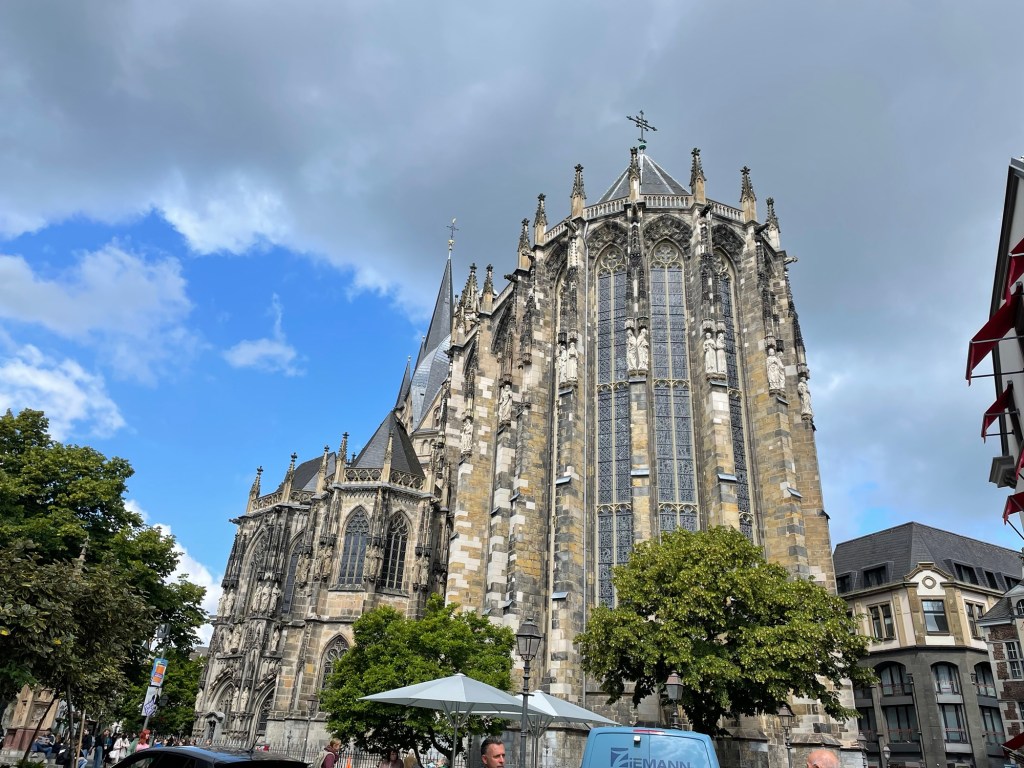
After our trip abroad to Bulgaria to see opera diva Sonya Yoncheva at the Ancient Theater in Plovdiv, we flew back to Frankfurt, Germany. I caught up with sketch buddy Hazel from Heidlberg to travel by train back to Luneburg, my base in Germany. We met in Cologne for a side trip to Aachen, a UNESCO world heritage site. While most architects would consider visiting the Cologne Cathedral in all its Gothic glory, the earlier Aachen Cathedral is equally, if not more, impressive.
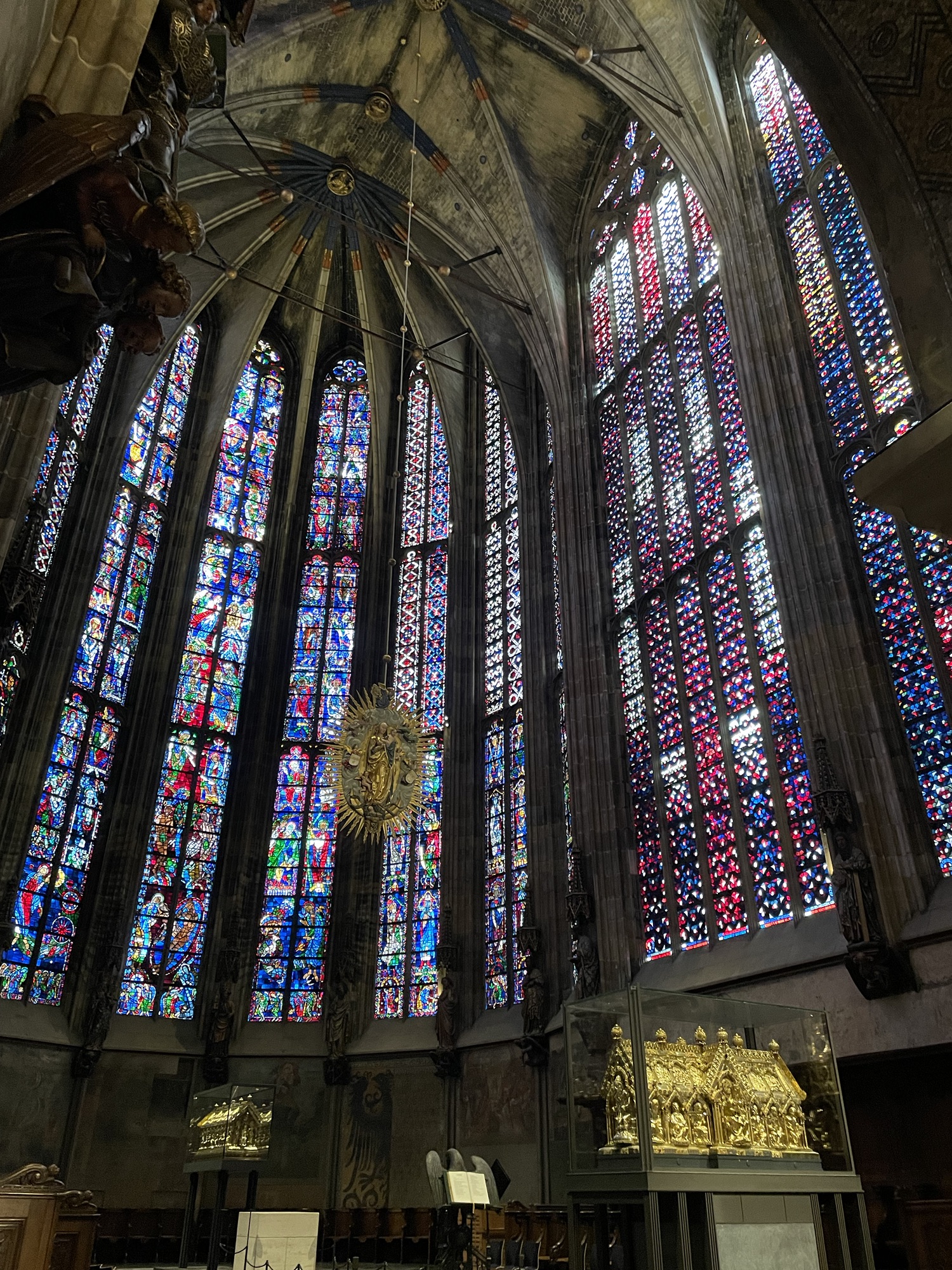
Aachen Cathedral, a UNESCO World Heritage Site
The history of Aachen is intimately tied to Charlemagne, Emperor of the Holy Roman Empire. Crowned in 800 on Christmas Day by Pope Leo III in Rome, Charlemagne is also known as Charles the Great or Karl Der Grosse. Having multiple names in different languages seems to obfuscate his fame and the fact that he is one and the same individual.
Charlemagne was a multi-tasker. As King of the Franks from 768, King of the Lombards from 774, and Emperor of what is now known as the Carolingian Empire, he conquered the Saxons, the Allemands, and the Moors. As the Holy Roman Emperor, he consolidated Christianity in Western Europe. He was considered “Frankish” but spoke a language similar to what is German today.
After his father and brother died, he controlled large swaths of Europe. He chose his palace in the old Roman settlement with natural mineral springs and rebuilt Aachen Cathedral over the previous site. Over thirty German kings were crowned in this chapel.
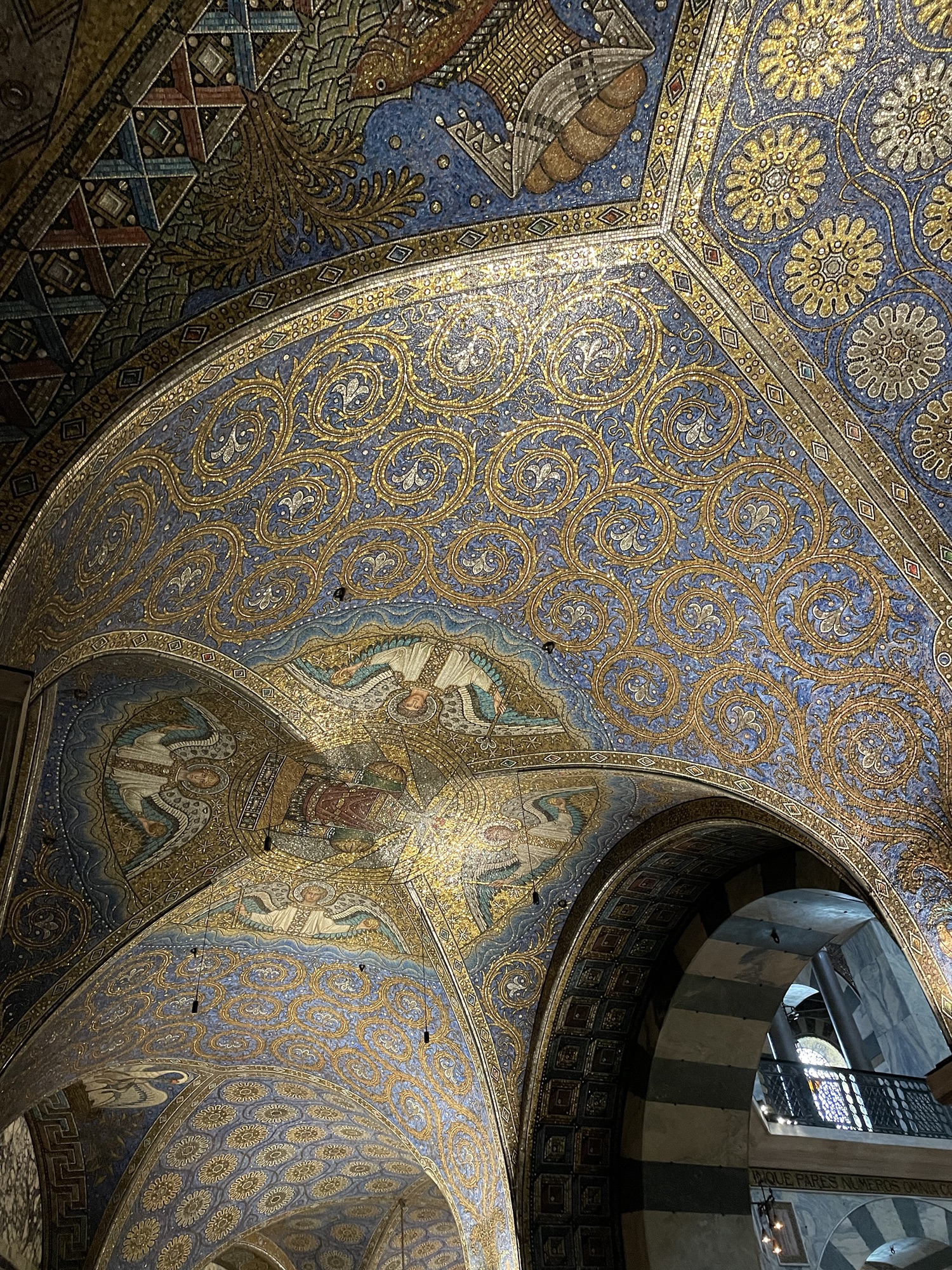
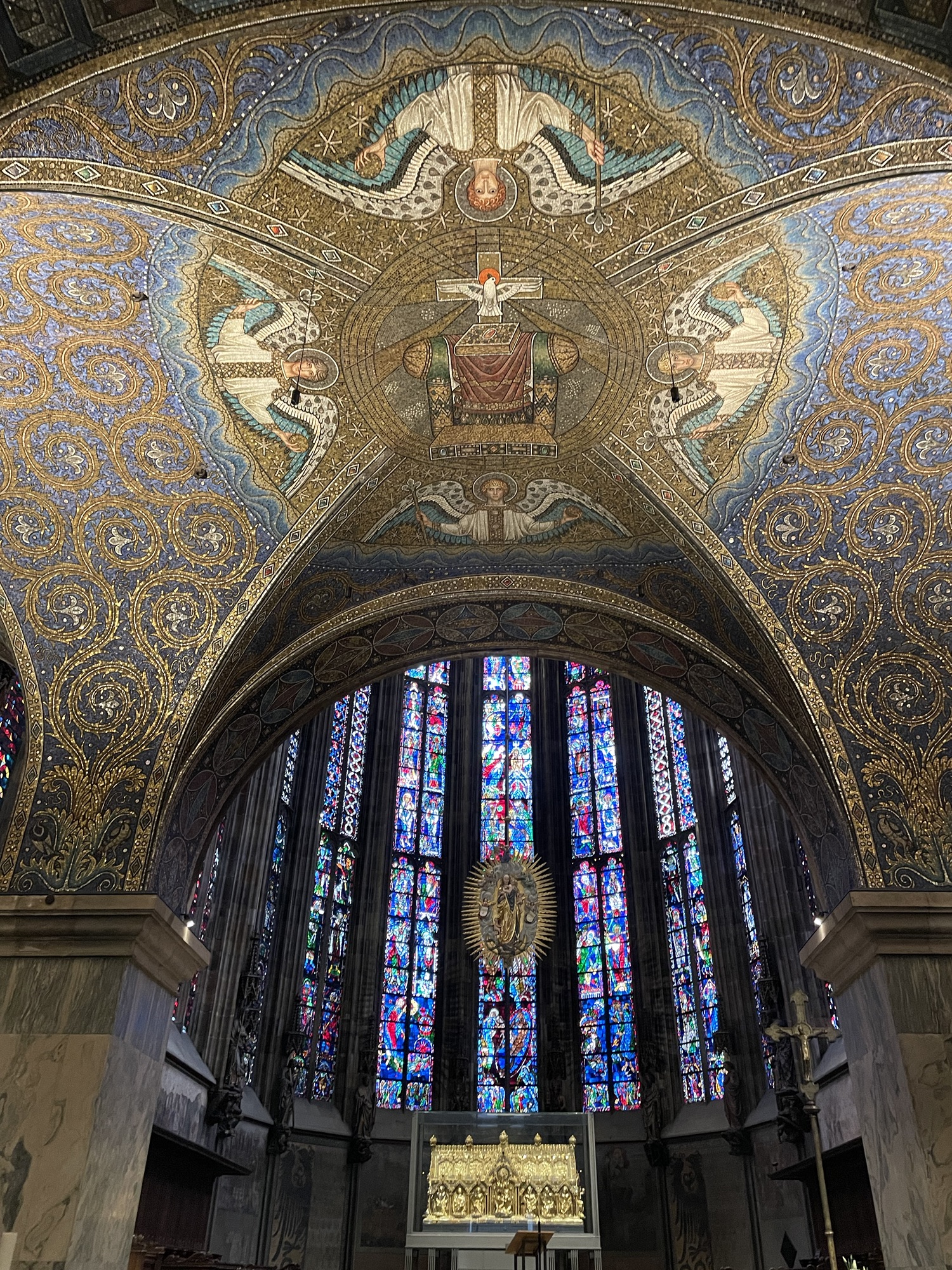
The exquisite beauty and high quality of this cathedral impressed me. The stained glass windows, perhaps recently cleaned and replaced, were the most vibrant colors I had seen of any, and the decorated ceilings and walls were laden with gold in a tasteful and restrained manner.
The octagonal layout reflects the Romanesque buildings in Italy that preceded the taller, reaching for the sky Gothic buildings. Its structure was among one of the first of its kind and helped to establish itself as a UNESCO World Heritage site. This unique and marvelous building is worth a special trip to see it for both architects and the general public.
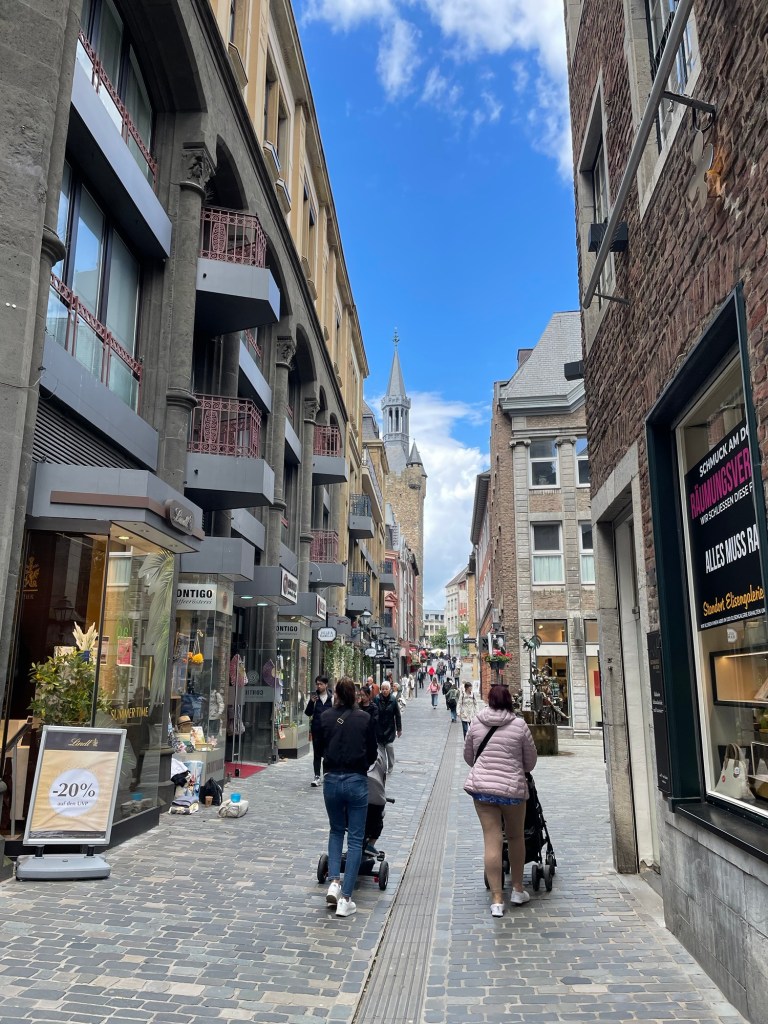
City of Aachen and Cathedral Exterior
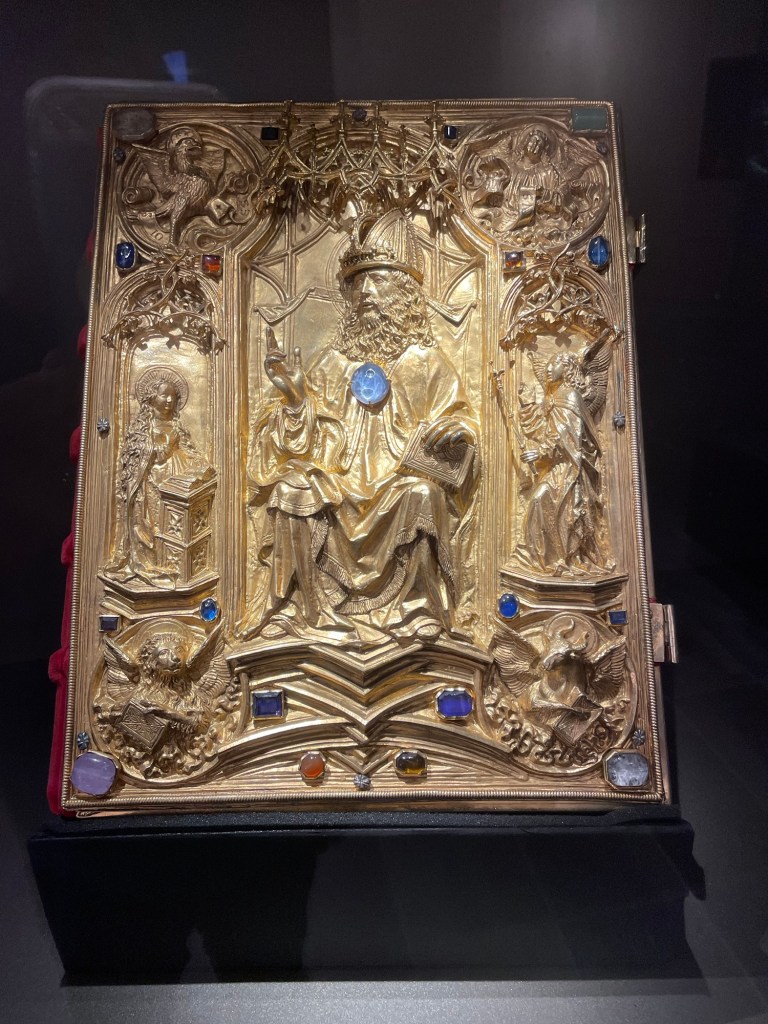
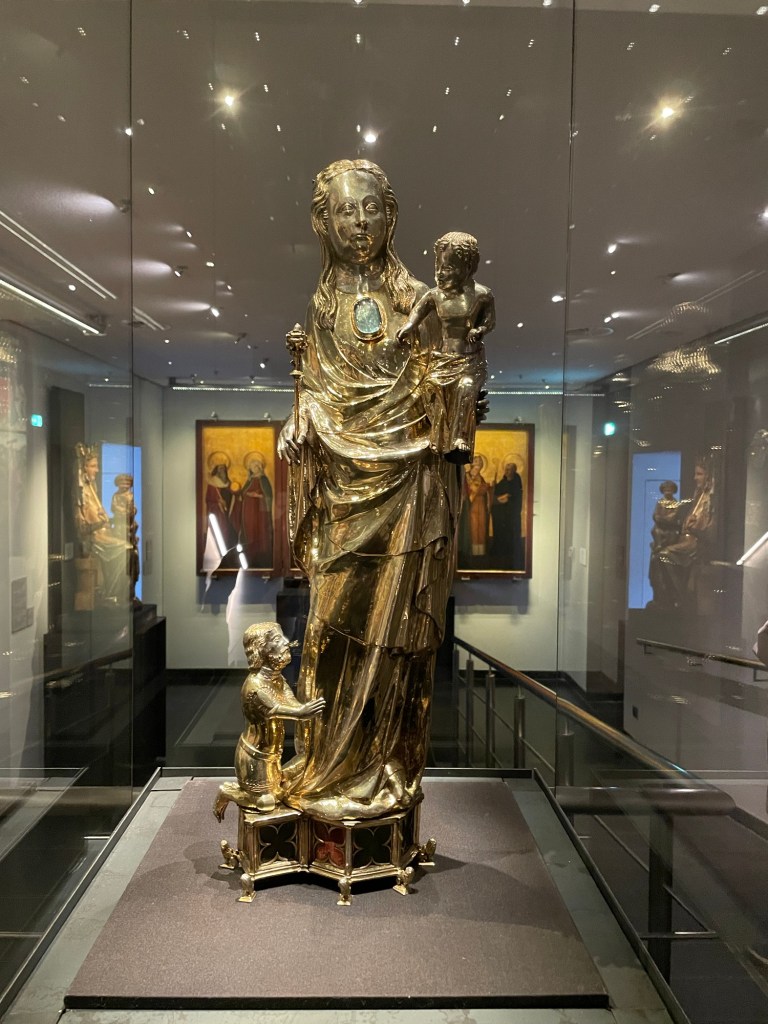
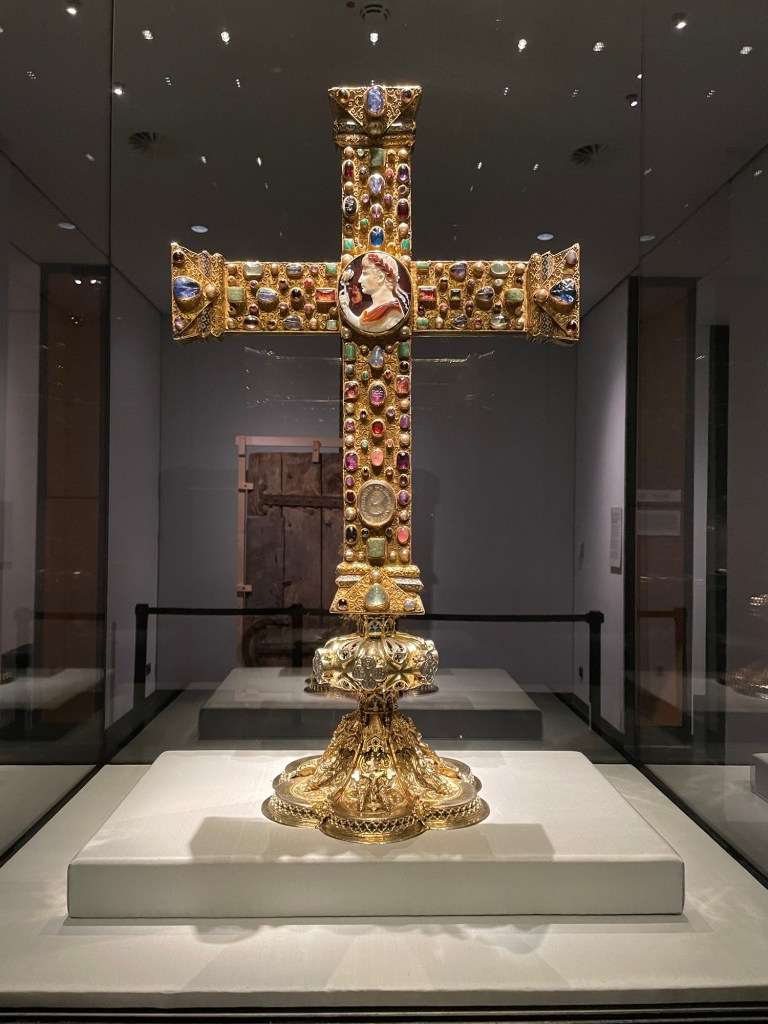
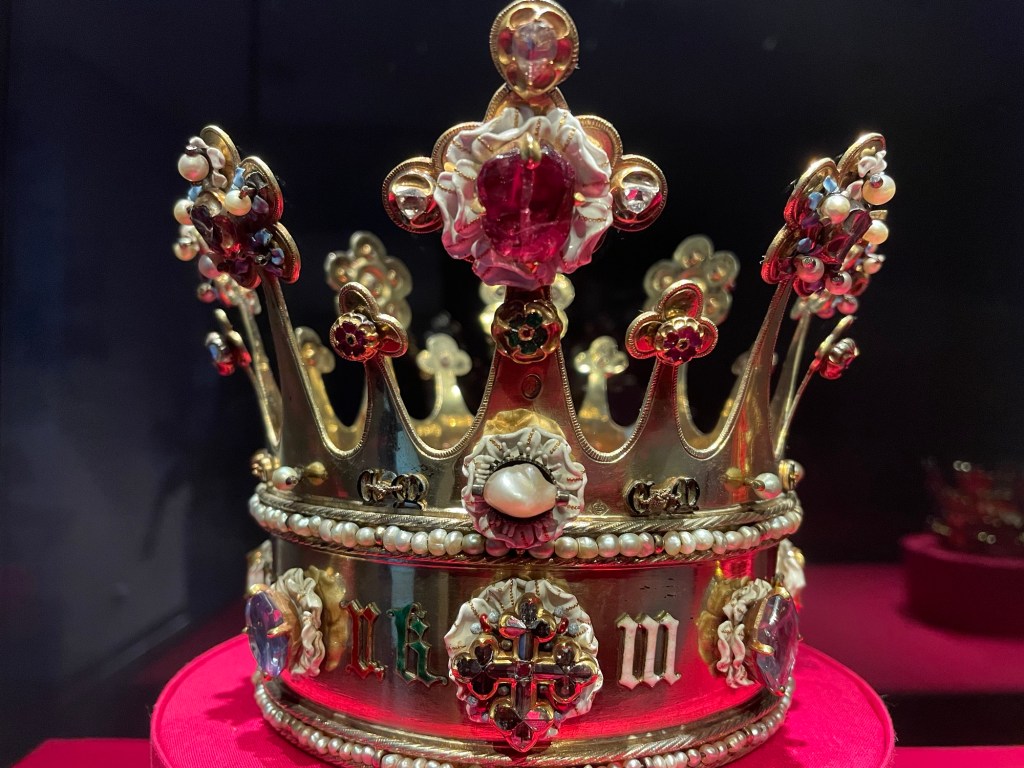
All that Glitters is Gold
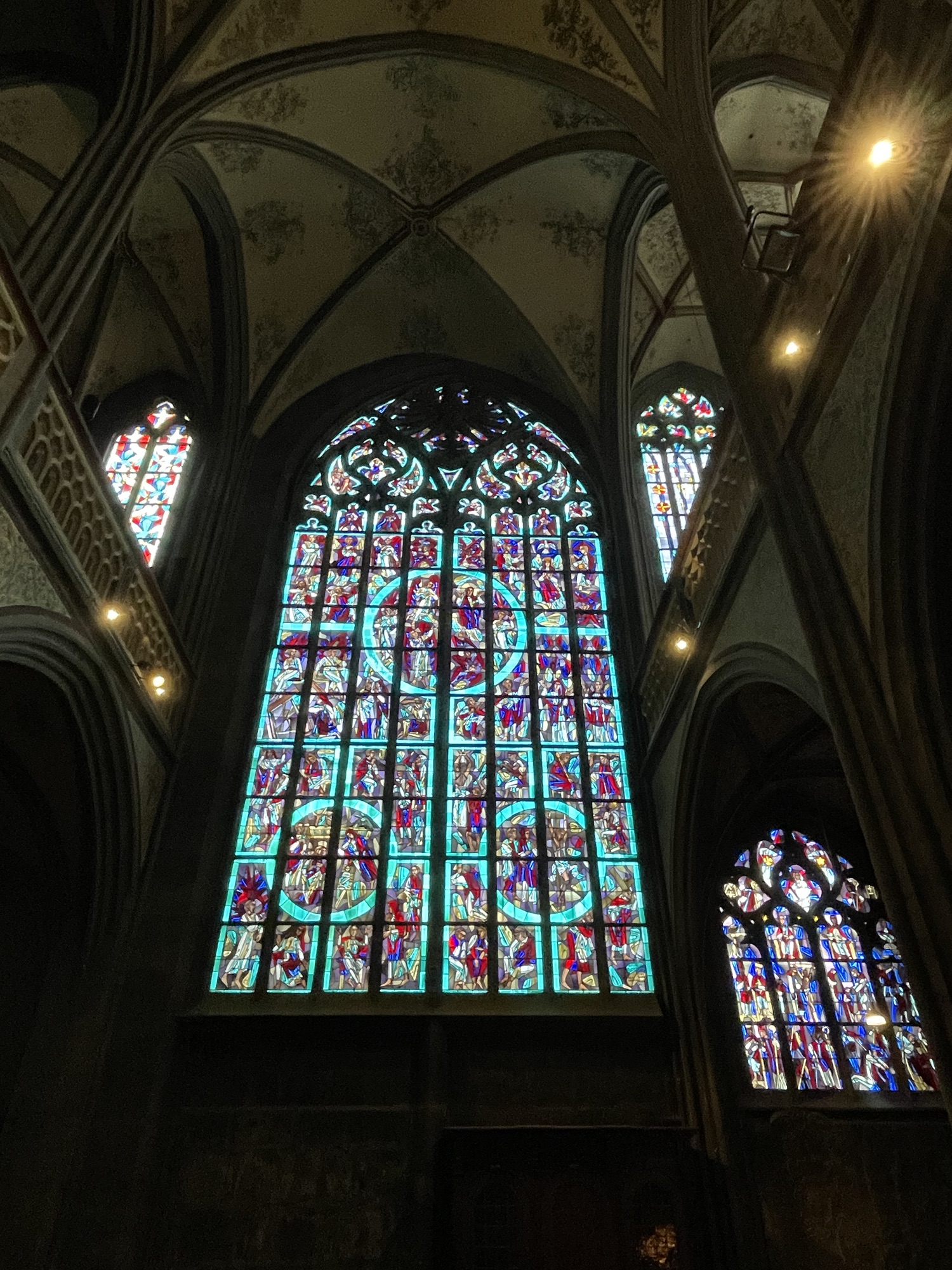
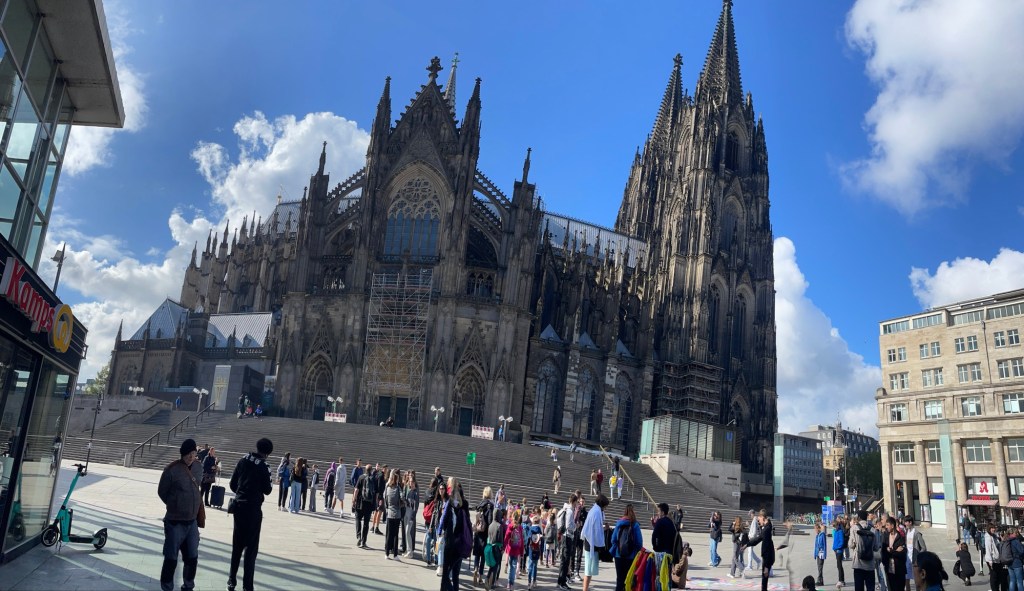
Cologne Cathedral
The later and better-known Gothic Cathedral in Cologne built around 1200 has its own magnificent place in architectural history. It is also a UNESCO World Heritage site. Compared with Aachen, Cologne is much more ornate from the exterior. Despite it being the largest and tallest Gothic churches in Northern Europe, Cologne’s twin towers seem short and buried into massive side supports. The towers do not appear as elegant as later Gothic structures.
Nevertheless, its interior is a sight to behold. The Biblical stories are clearly depicted in the stained glass windows. The mosaics contain more white background and allow more light into the interior but are less brilliant than the windows in Aachen.Gerhard Richter designed one of the stained glass windows in the chapel.
The structure was heavily damaged by Allied bombing in World War II, but it was restored by 1956. While this is the more famous cathedral that architects yearn to visit, the Aachen Cathedral is equally worthy of a visit.
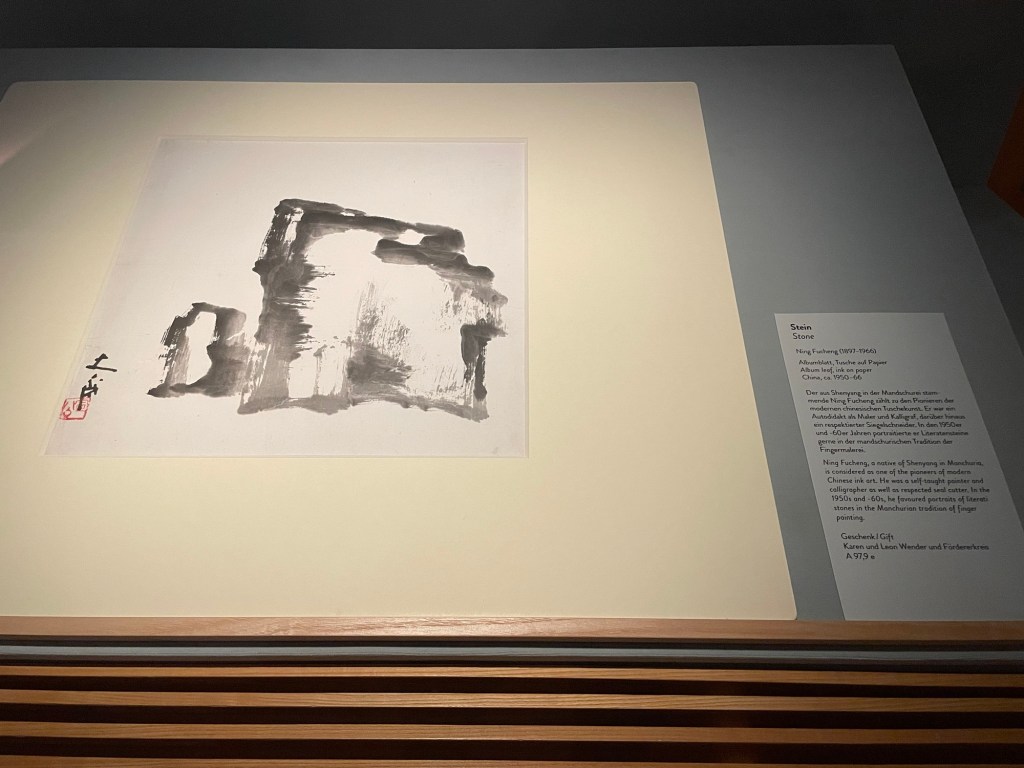
The East Asian Art Museum, Cologne
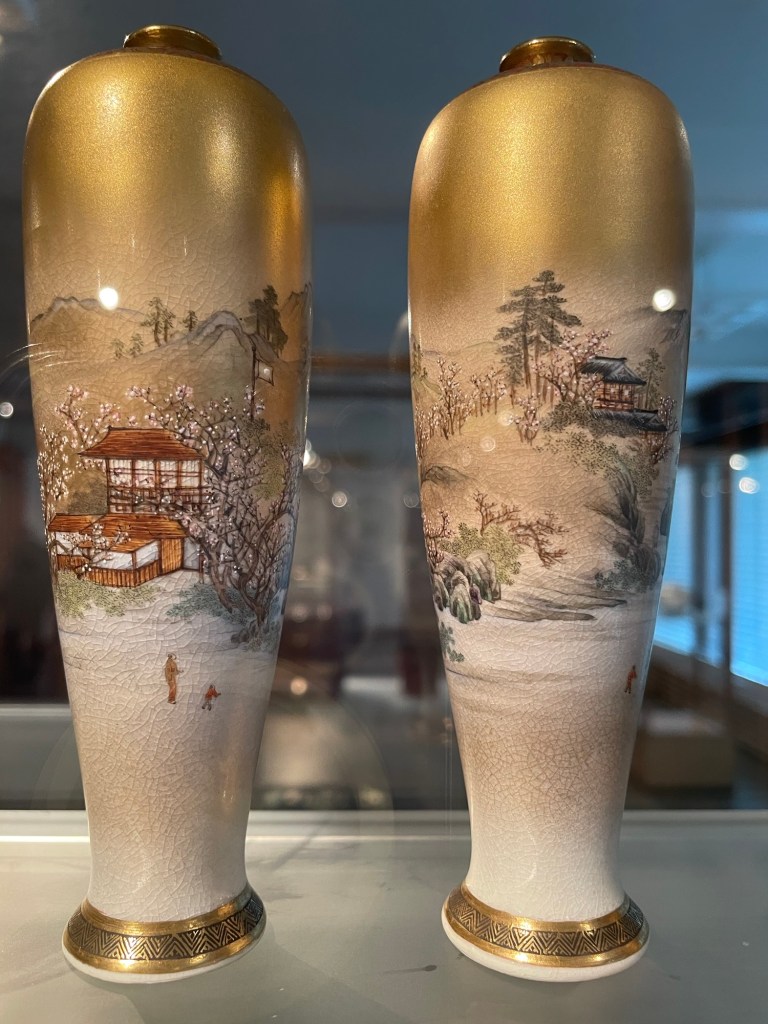
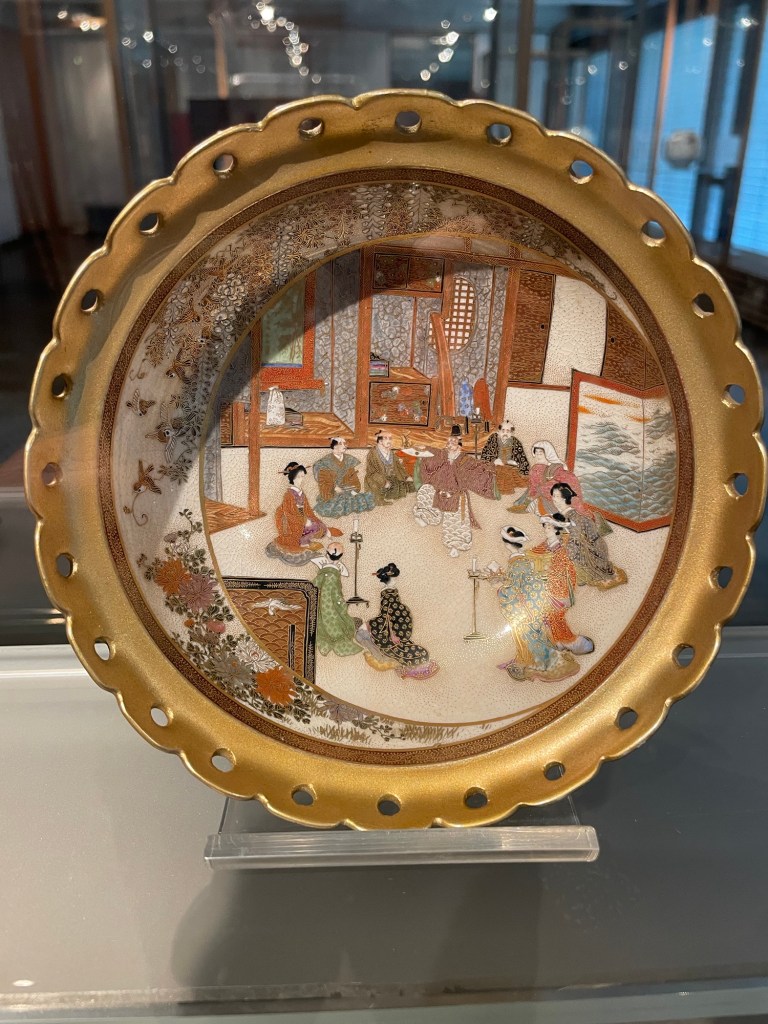
Wealthy collectors of East Asian Art in the early 20th Century became founders of this museum. They collected a wide spectrum of excellent examples of Japanese calligraphy, porcelain ware, early Chinese bronzes, and miniature rock sculpture.
Bronze ware
Japanese Calligraphy
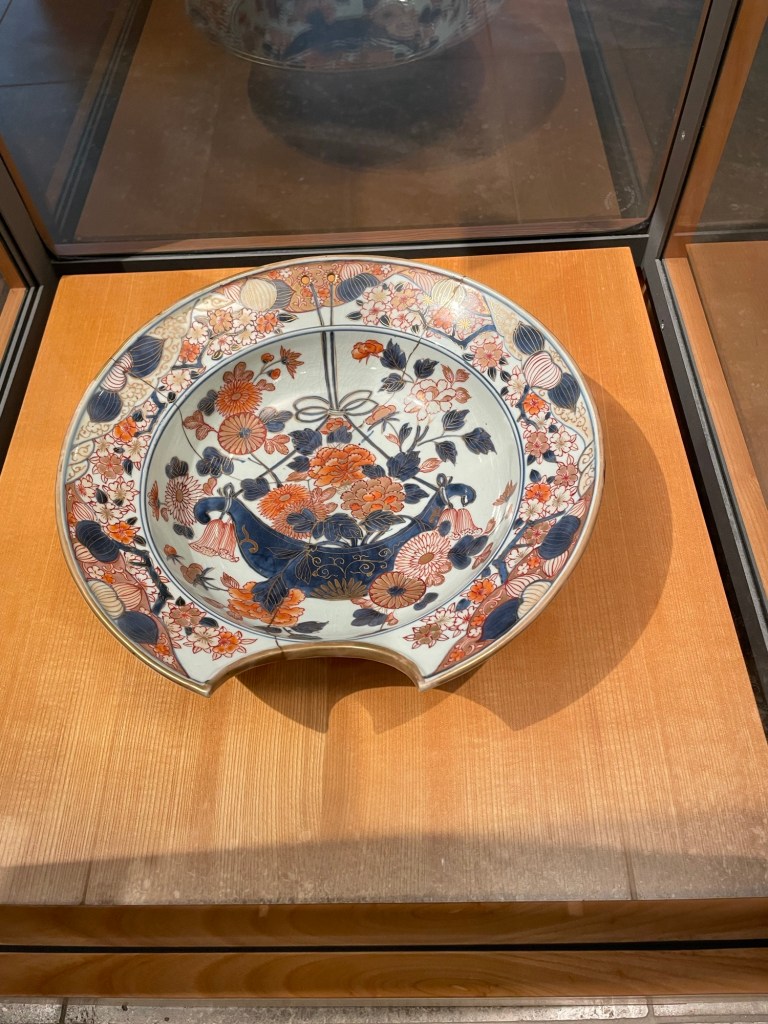
Netsuke wareImari ware used for barbers with head cutout Early Export PorcelainDetailed scenes in porcelainShang Dynasty Bronze Bells
After a long-awaited pause in Luneburg at Annemarie’s home, we are preparing for the final leg of our journey. We will be traveling by car from Luneburg due South to Verona, Italy, stopping in Annemarie’s birthplace and heimat outside Munich, Bavaria. Come join us for the rest of the trip!
A free walking tour of Plovdiv in English gave us plenty of food for thought about Bulgaria’s long, complicated history as well as insights on current trends in art, architecture and music.
Bulgaria’s Complex History
From the 6th to 3rd Centuries BC, Thracians (of Spartacus’ era), Persians, Celts, and Macedonians fought over rule of the Bulgarian land, until the Romans (Tremontium) conquered the region in 45 AD. Various tribes successfully ruled after the fall of the Roman Empire in the 6th and 7th Centuries until the Byzantine Empire granted Bulgarian rule in 681AD.
The Cyrillic Script developed by the Bulgarians and used today by the Russians helped to unify the Slavic and Balkan cultures.that then dominated the area. The Ottomans arrived in 1396 and ruled until 1918. After the Russo Turkish war of 1877-78, the Russians gained influence over the area until the fall of the Berlin Wall.
While an independent state, Bulgaria is a democracy with a market economy. It has seen its share of problems with stronger powers controlling the country, however. Local politicians, weak and intent on short term gain, plague the country today. Corruption, mafioso rule, and disorganization jeopardize Bulgaria’s stability. Zero population growth and mass migration to other EU countries have caused an undertow to the economy with little hope in sight for a recovery.
Roman Infrastructure and Urban Planning
As one of the two European Centers of Culture identified in 2019, Plovdiv intended to promote its cultural treasures to the rest of the world. It was listed as a candidate for a UNESCO World Heritage Center, until the reconstruction of historic houses contravened UNESCO restrictions.
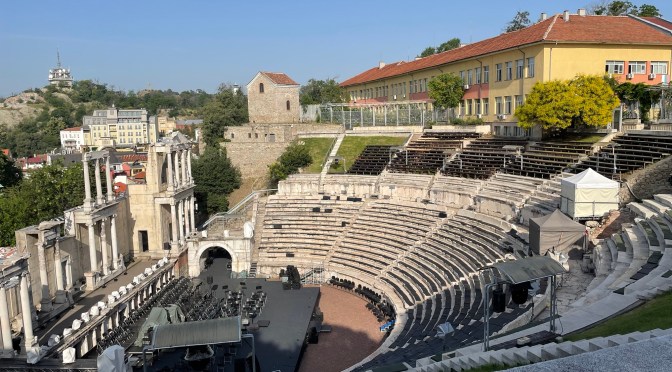
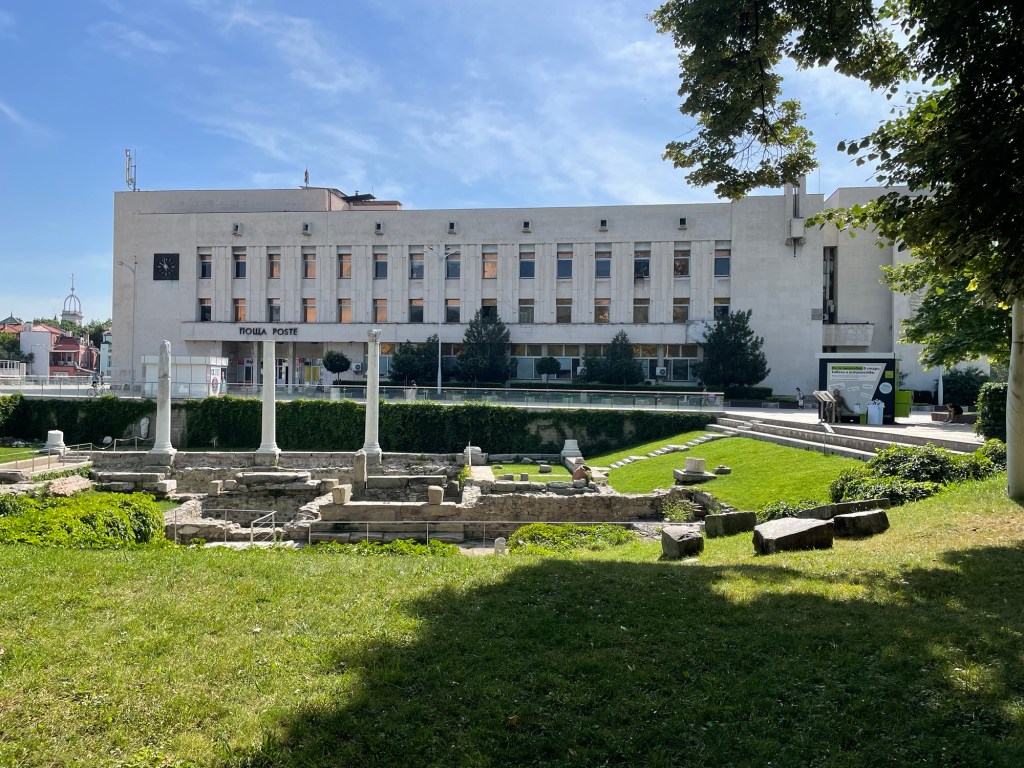
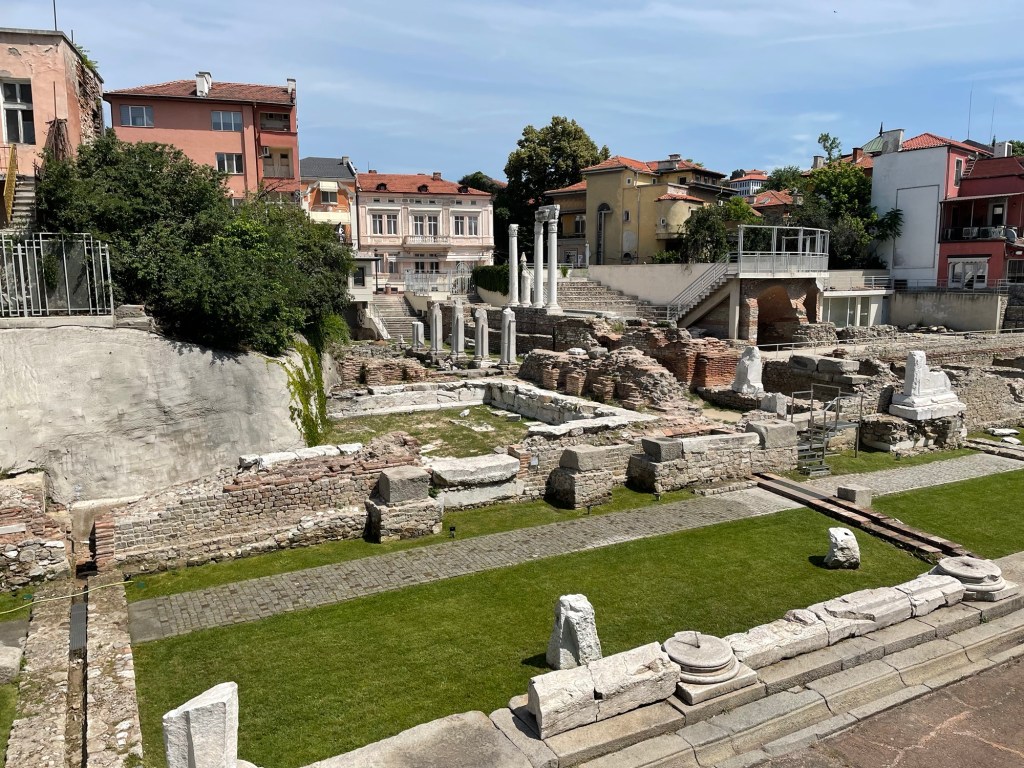
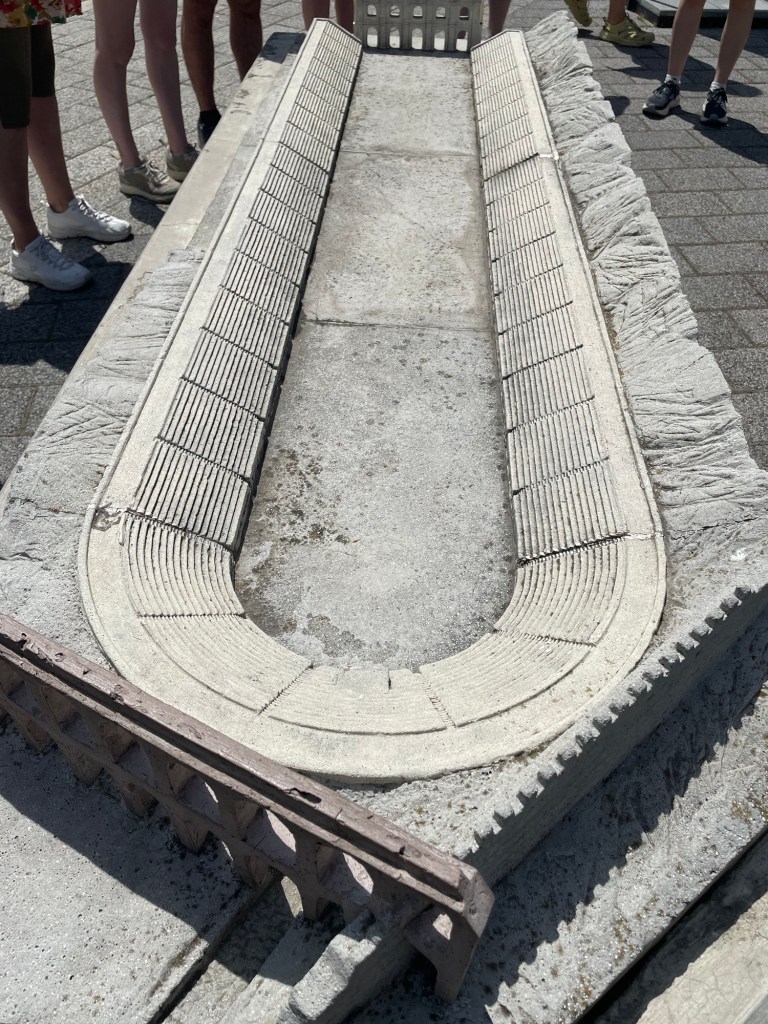
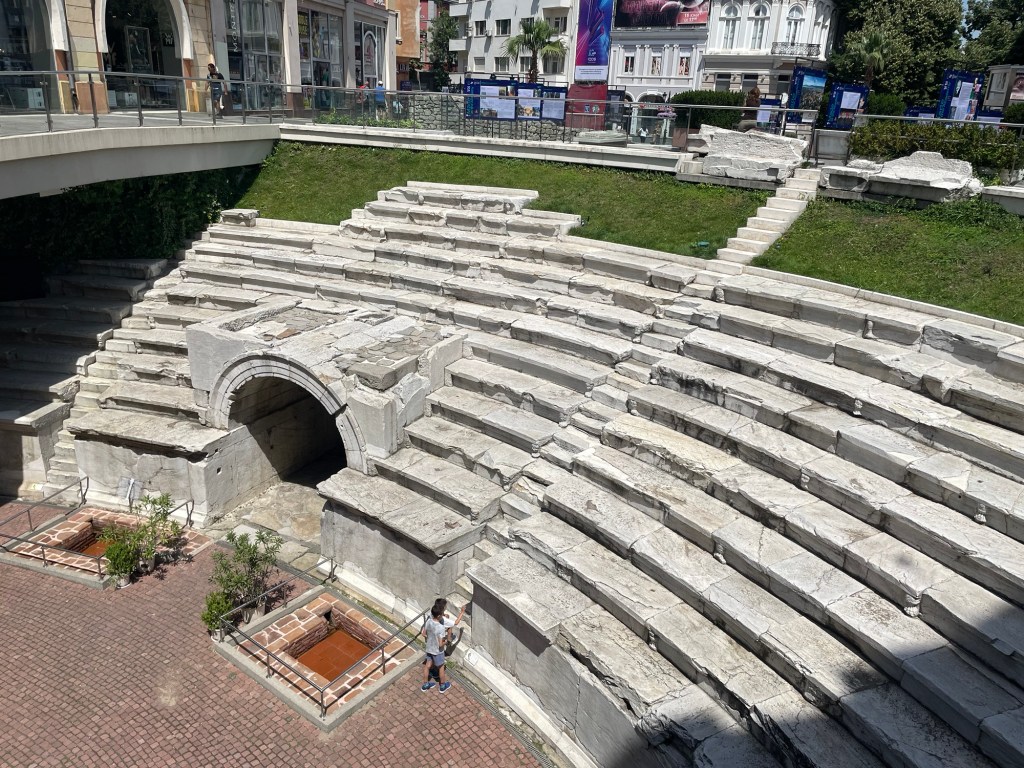
The Roman Ruins predetermined much of the city’s current layout. Aqueducts bringing water to the city from the mountains enabled Tremontium to thrive. A huge lozenge-shaped stadium, over 240 meters long, was erected for public events.
Eventually, as the stadium went into demise, a roadway and houses were built over the ruins. Only the small portion at the end has been excavated for public display.
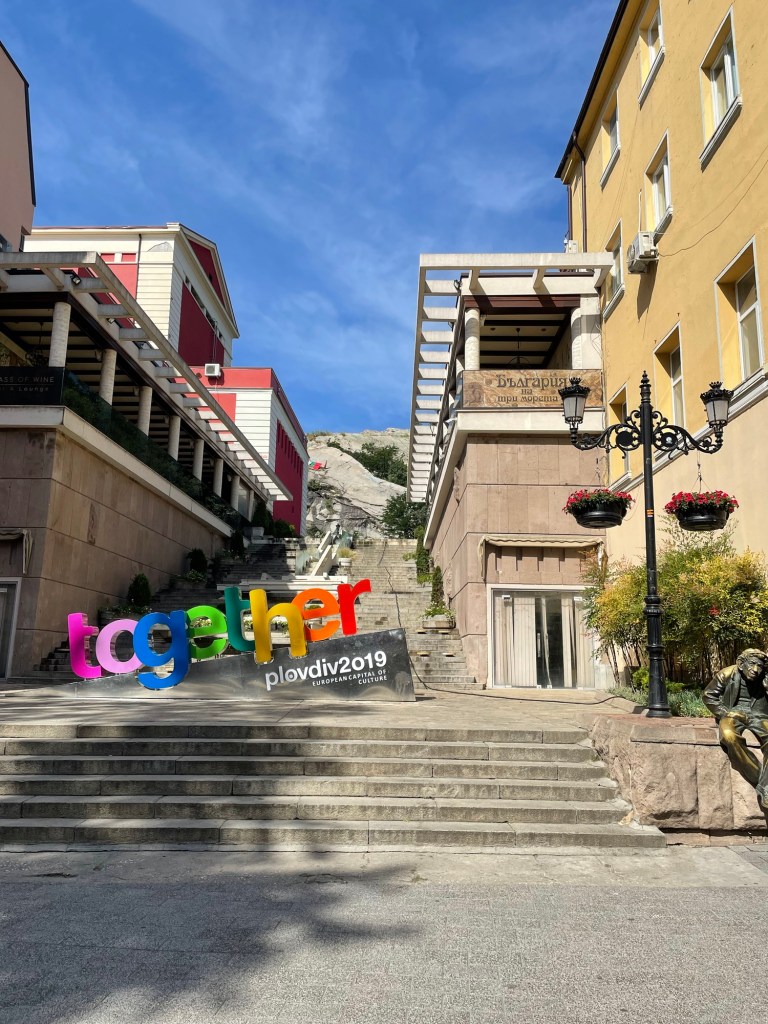
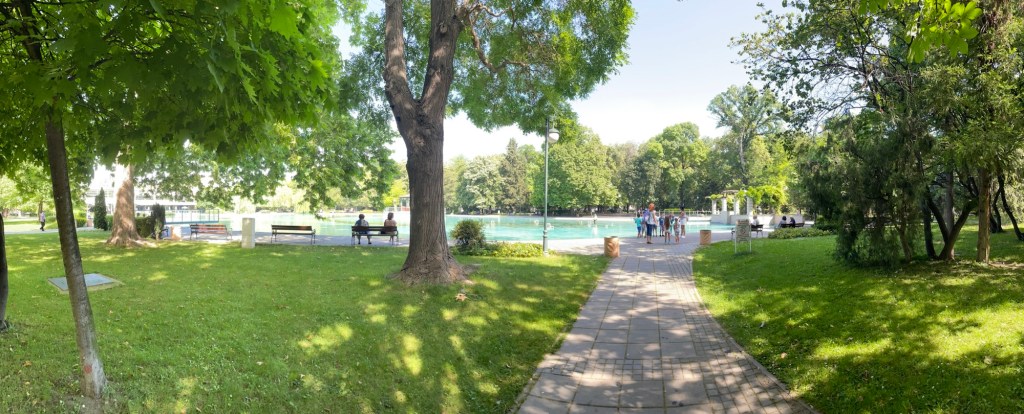
The Cultural City in 2019The Roman Forum and LibraryThe Roman Forum and LibraryA model of the stadiumThe City ParkThe stadium ruinsThe Stadium ruins
Ottoman Architecture
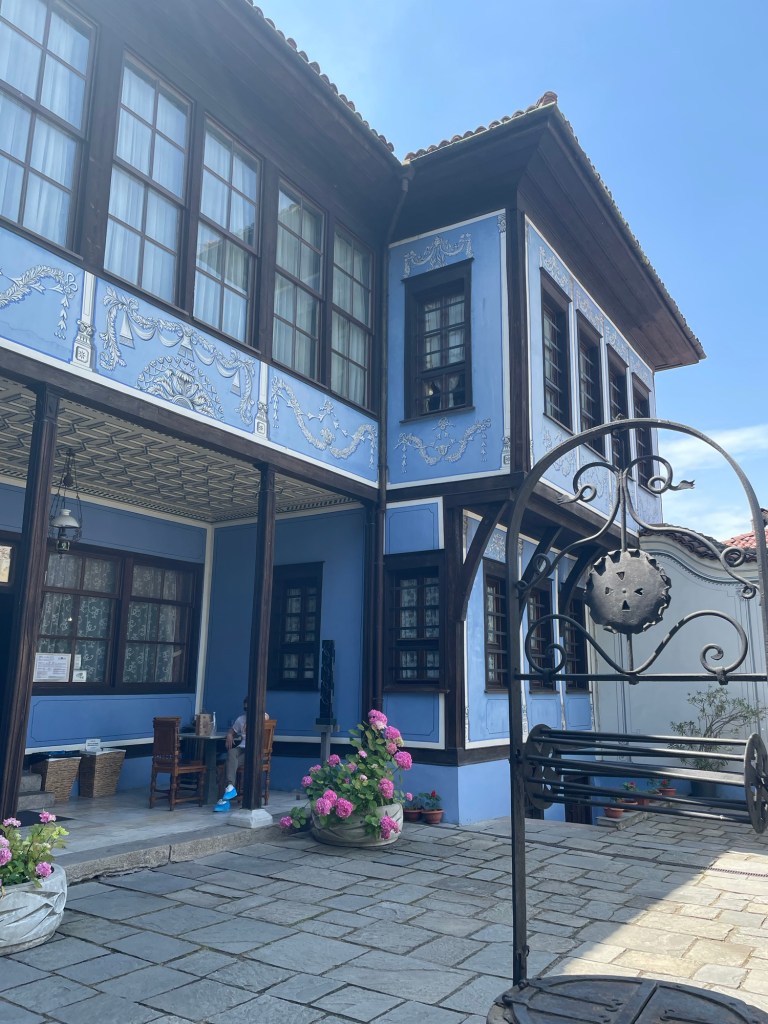
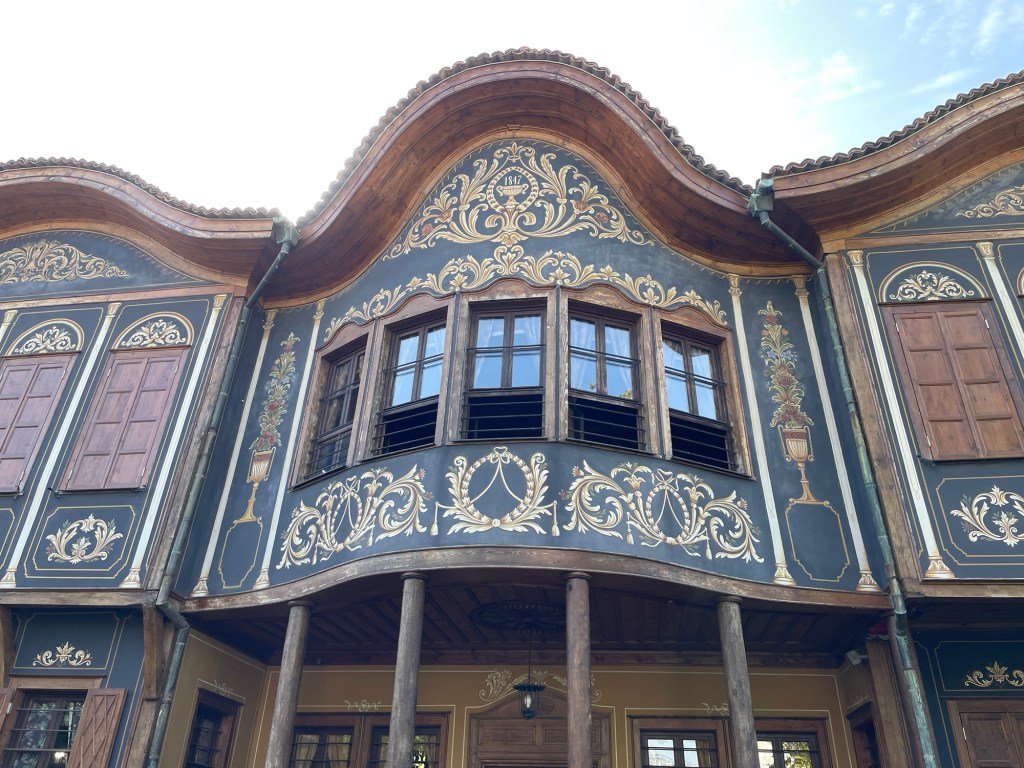
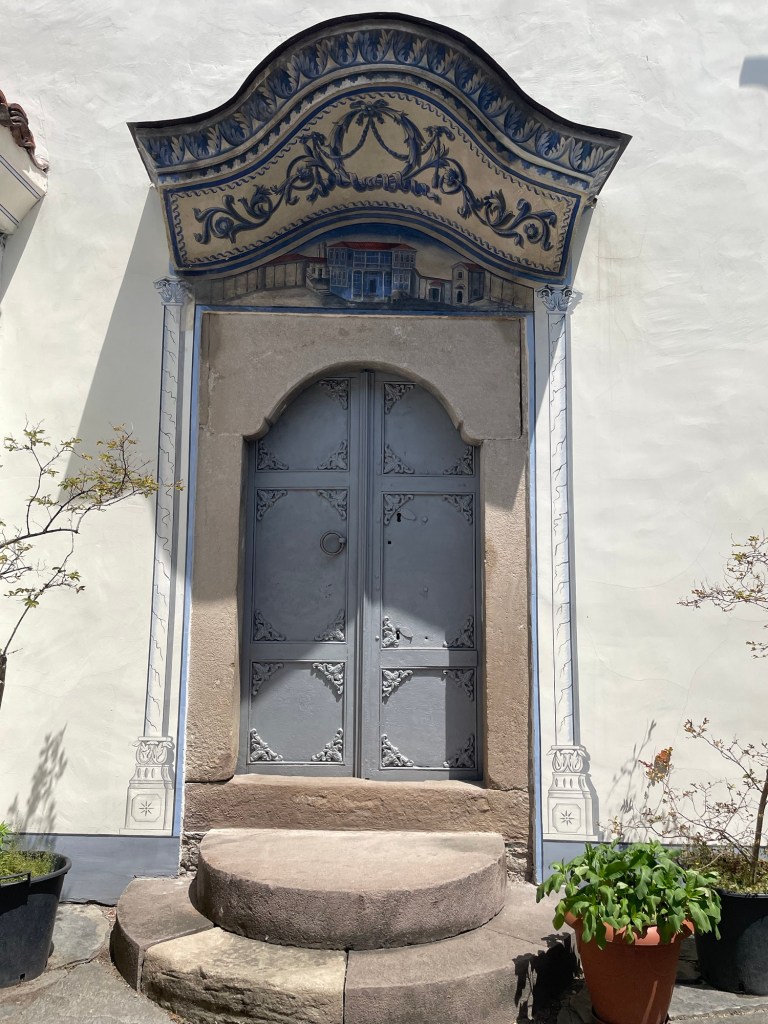
From around the late 19th to early 20th Centuries, wealthy residents of Plovdiv built fancy houses in the Ottoman style of architecture. The wood frame buildings and decoration have been preserved in the Old Town area near the Ancient Theater.
The proportions are tall with thin windows to restrict heat gain. Colorful exteriors and painted decoration exemplified the wealth of private patrician families.
The Ethnographic Museum
Much of Bulgaria’s history and culture is preserved in this family home in the Old Town.
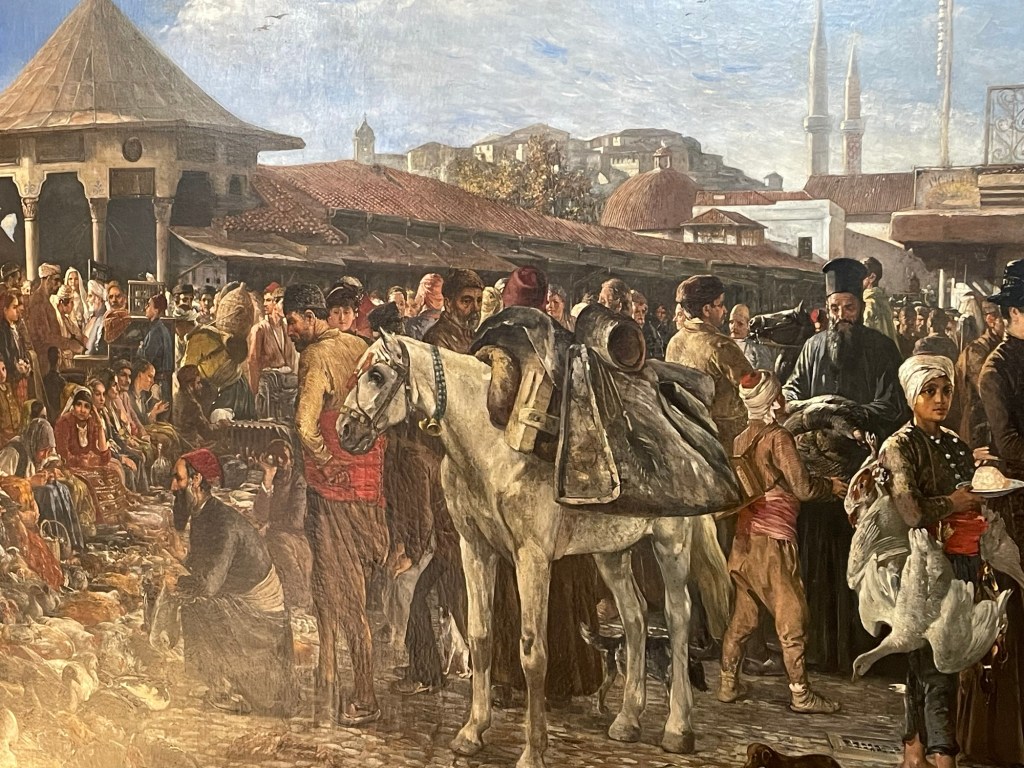
SeatingThe shaggiest bedcover everWooden String InstrumentsPainting showing a lively market scene
Many artifacts such as musical instruments, clothing, jewelry, and farm implements were displayed, as well as the handicrafts for metal forging, wool production and weaving.
Ethnographic Museum Interior
The Bachkovo Monastery
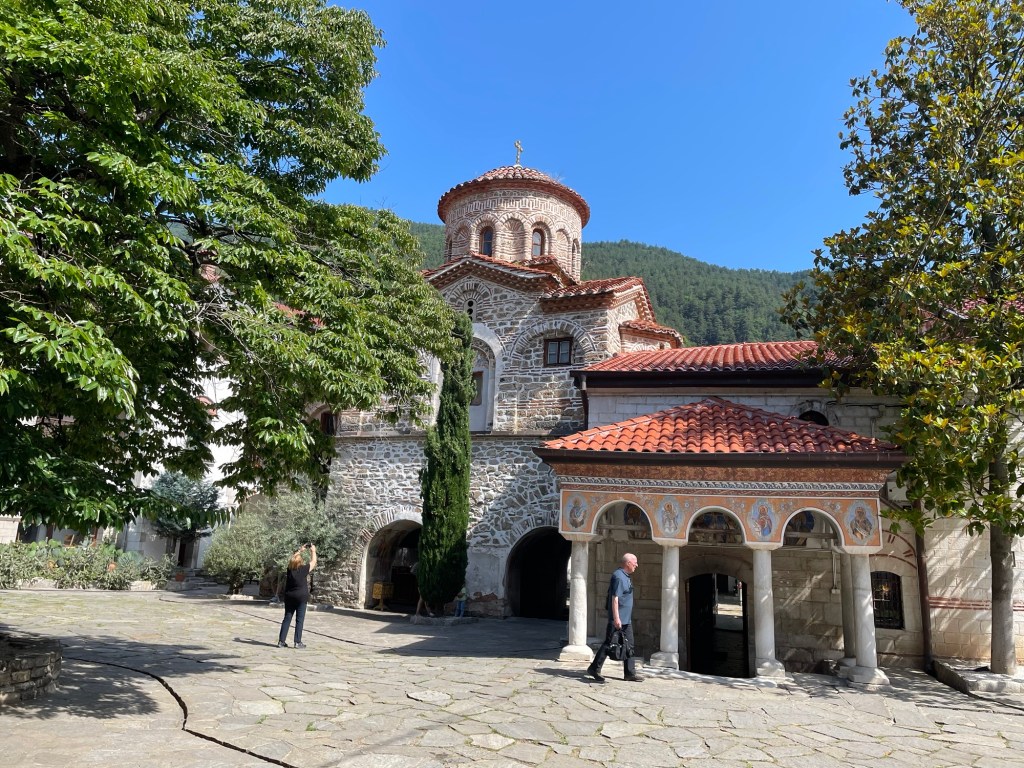
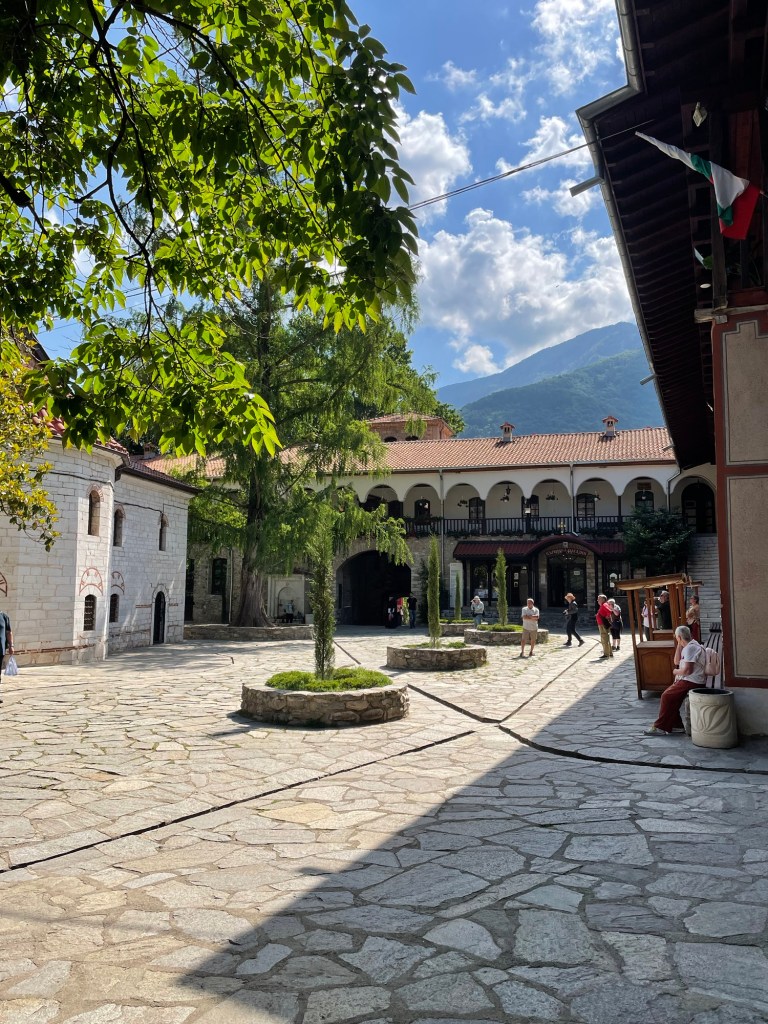
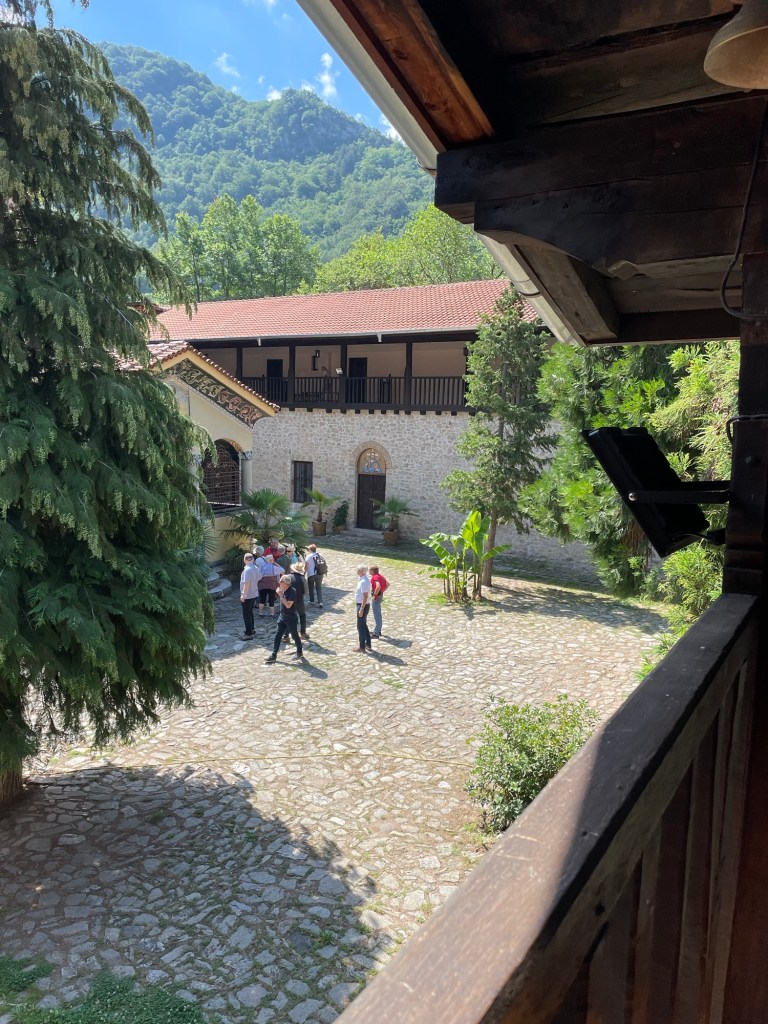
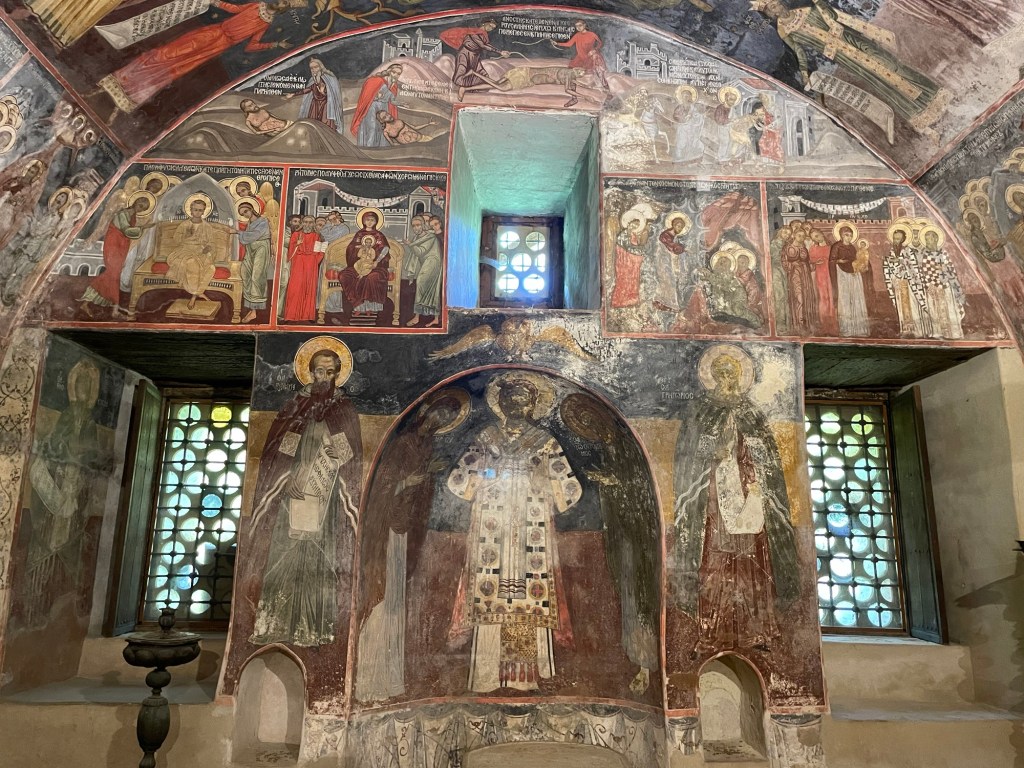
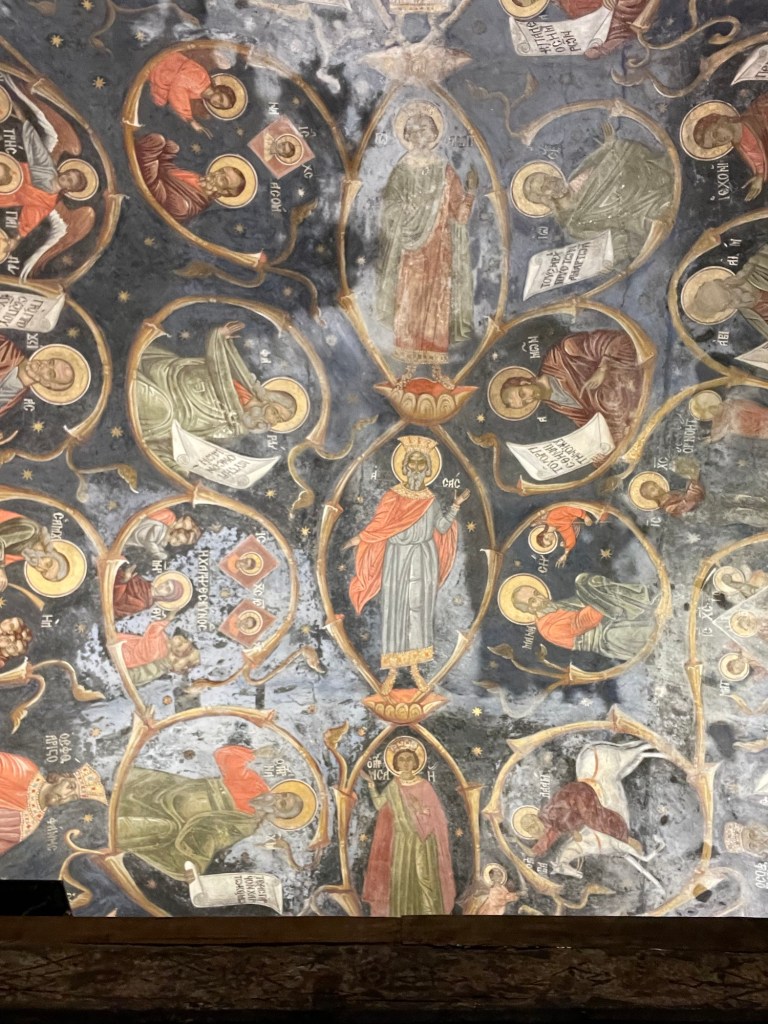
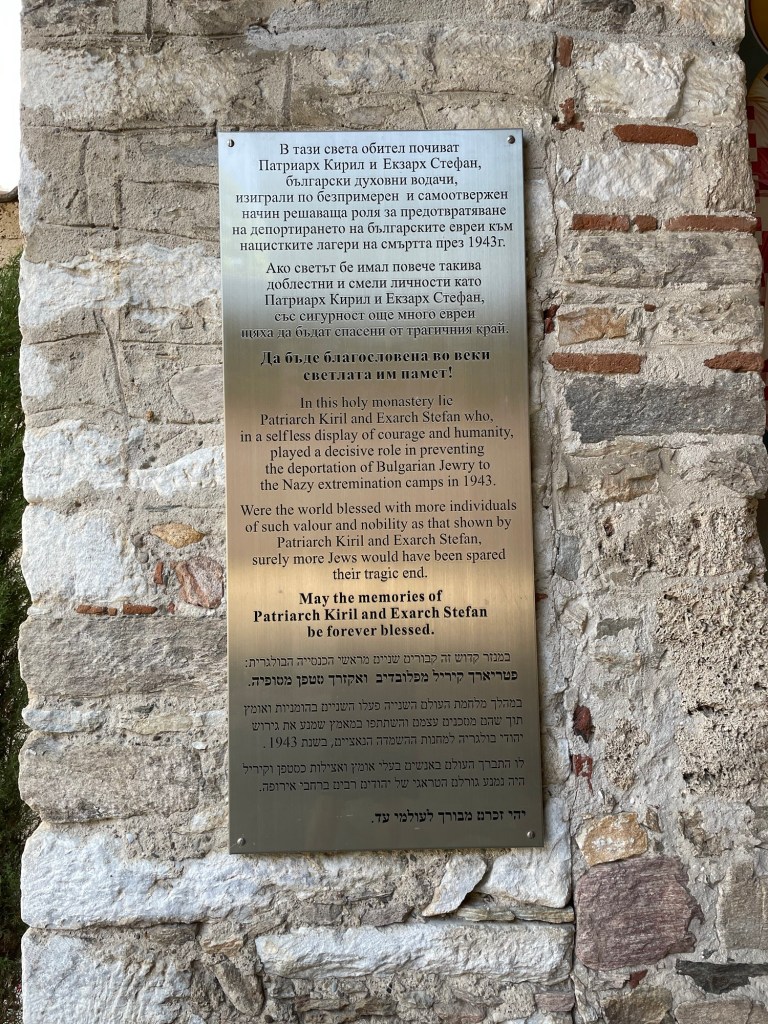
A side trip to the mountains beyond Plovdiv was a refreshing journey away from Plovdiv’s 90 degree Fahrenheit city heat. The Bachkovo Monastery and Refectory, founded in 1083, contained numerous frescoes from 1643 depicting Christian Orthodox history. The monastery was instrumental in saving many Jews from persecution camps in 1943. Historically, Bulgaria has embraced Christian, Jewish, and Muslim cultures.
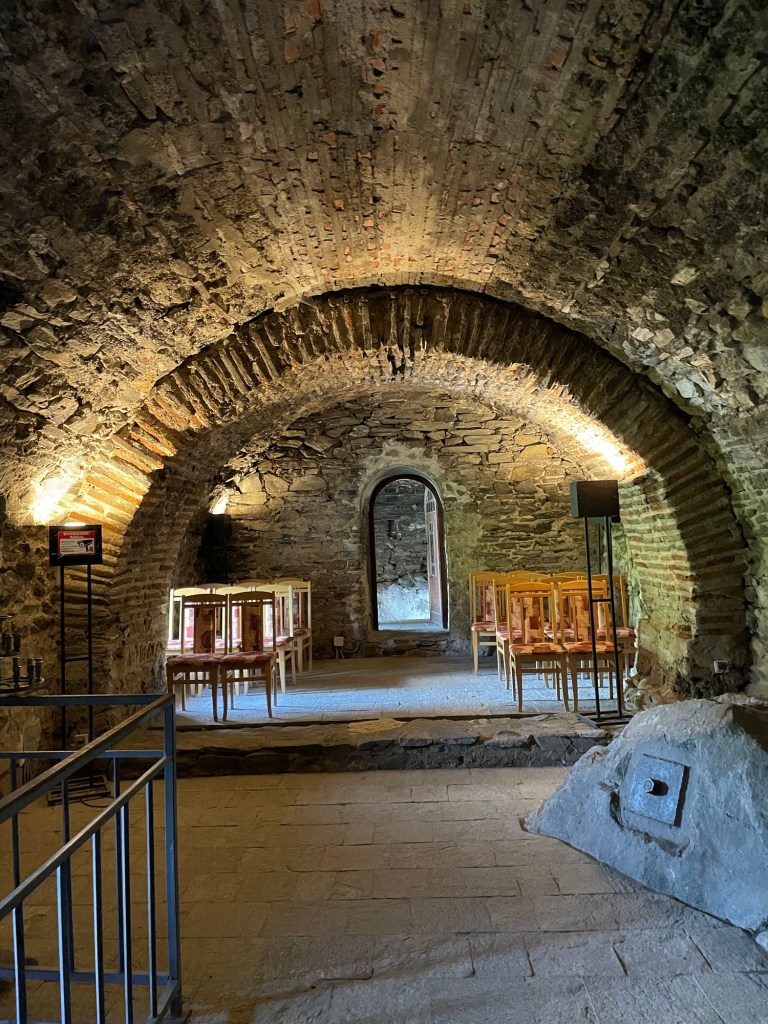
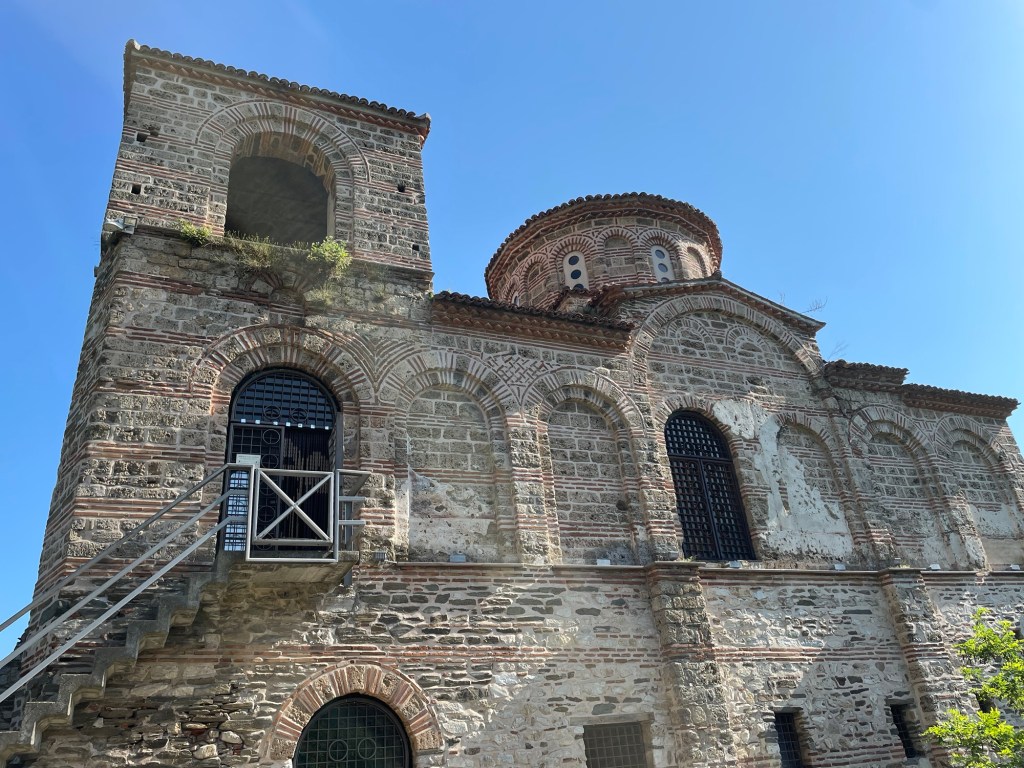
Asen Fortress
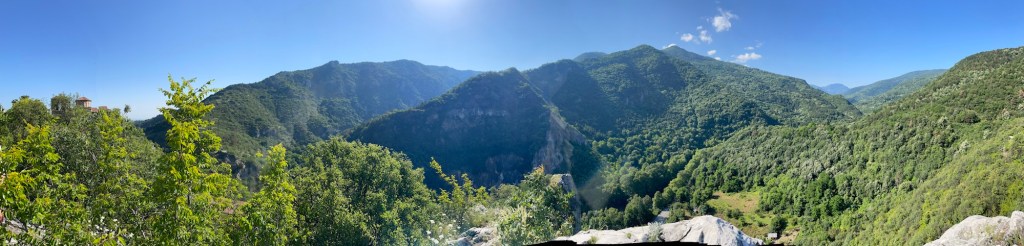
The Asan Fortress was built in the 13th Century as a defensive guard tower over the steep ravine. The location offers panoramic views of the Rhodope Mountains.
Italian Night I in the Ancient Theater
Our main purpose for traveling from Germany to Bulgaria was to attend a Tosca concert featuring Sonya Yoncheva. An opera diva born in Plovdiv, the city was excited to see their native daughter return with her stunning voice.
Dean Vatchkov as Scarpa
Ivan Mimorov as Caravadossi
Sonya Yoncheva as Tosca
No-Curtain Call
We were excited by the rare opportunity to film the performance with the backdrop of the ancient theater’s ruins.
Italian Night II in the Ancient Theater
While browsing, we noticed a poster promoting an Italian night performance in the Ancient Theater a couple of days later. We hadn’t heard of the performers, but we were excited by the chance to see more opera at the theater. Even though there was no translation for tickets or the performance, our Bulgarian friend Vladimir was able to help us purchase tickets online. We knew exactly where to go from the previous performance.
After a delicious dinner of beef tongue and grilled vegetables at a road-side outdoor restaurant, we made our way to the theater a short walk from our Air BNB. We chose our seats near the center along one of the designated marble rows in Section D. As the lights dimmed and the orchestra played a brief introduction, the lead singer appeared on stage and began singing.
We strained our ears to adjust to the music. Hmm, we didn’t recognize the opera aria at first. By the time a faint echo of a saxophone was heard along with wild audience applause, we realized that the singers were crooners and the music was contemporary pop music!
Annemarie and I looked at each other and realized that the “Italian night” was not for opera, but for schmaltzy Italian songs! The audience knew all the words and swayed to the music, from the days when Italian pop was at the top of all European charts.
We laughed at how we had misunderstood the meaning of “Italian Night”. Indeed, the term applied to pop music as well as opera music. Our minds were too intent on opera! We felt a little sheepish at the false assumption we had each made.
Nevertheless, we enjoyed the concert as much as Sonya Yoncheva’s classy performance. With 80 degree whiffs wafting through the stadium, delightful colored stage lighting, and a mellow Bulgarian audience, it was a memorable and romantic musical evening regardless.
Ramazotti Favorite
Nessun Dorma, an Italian opera favorite by all
The Volare Finale
The Dining Scene in Plovdiv and Sofia
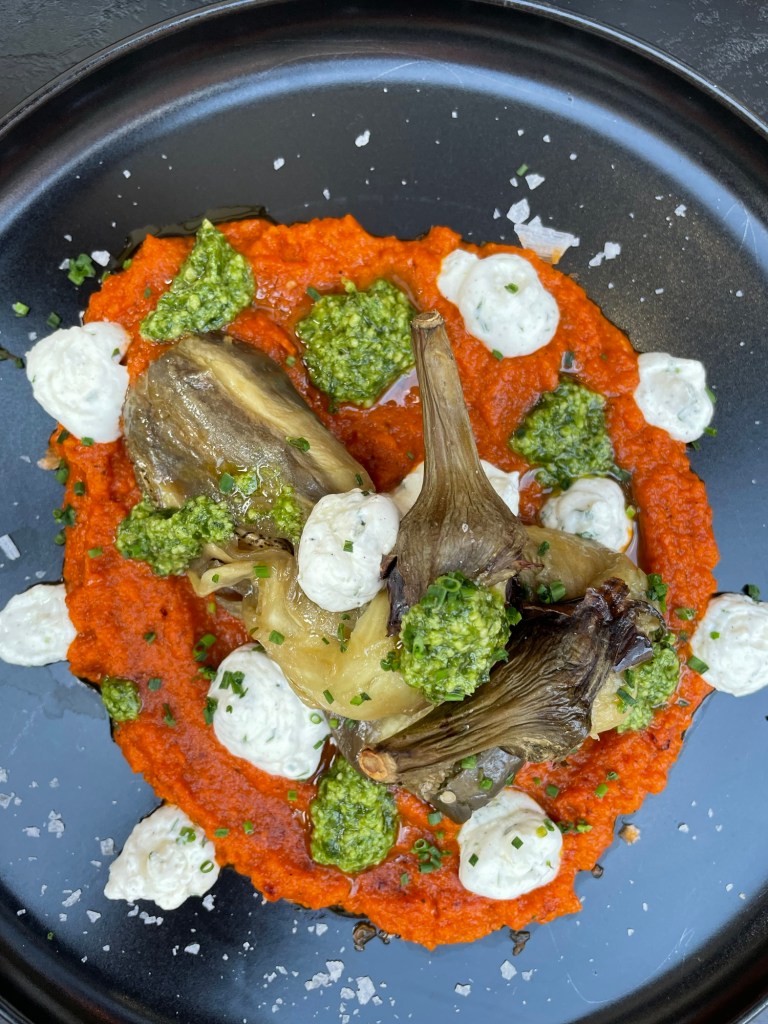
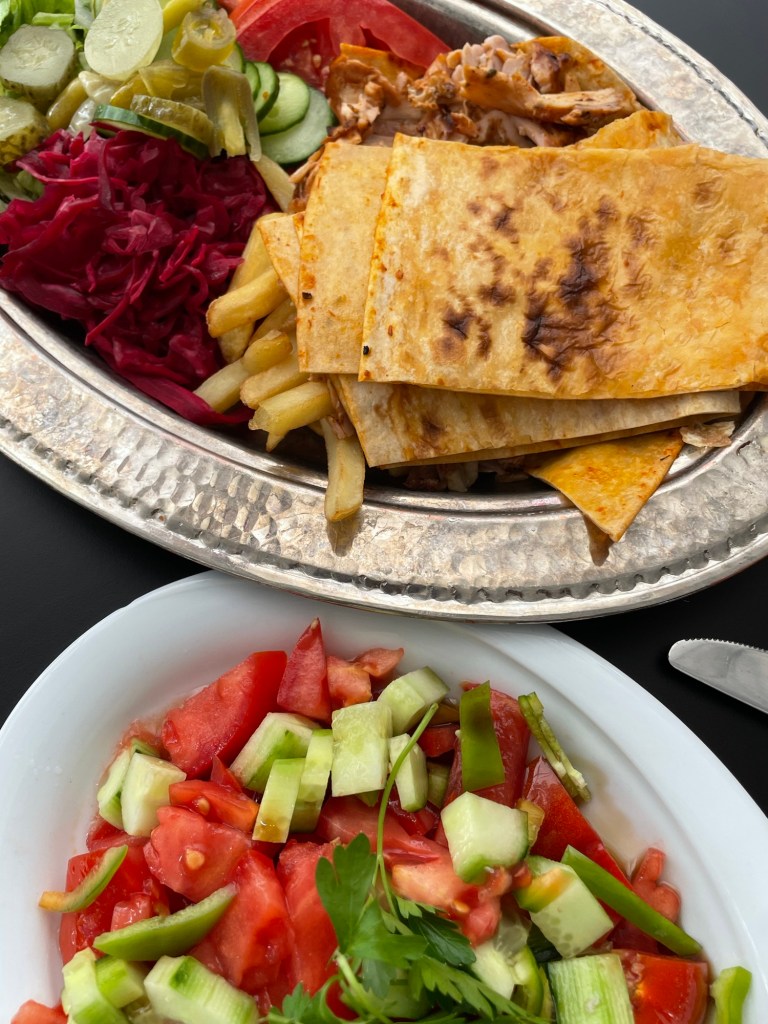
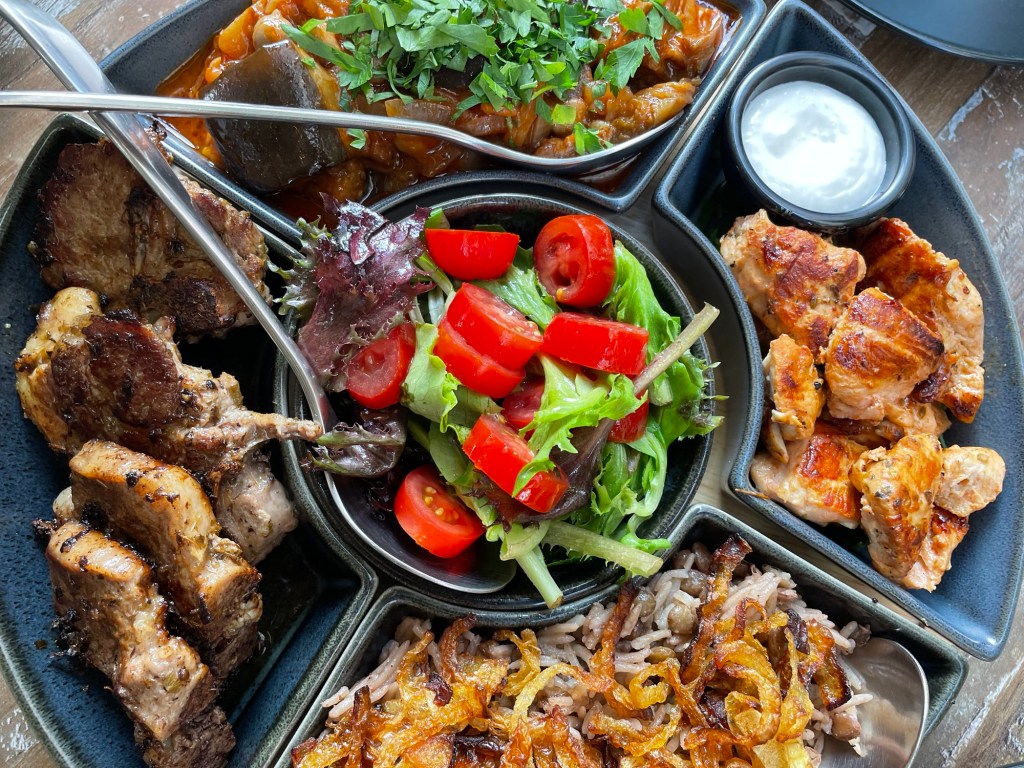
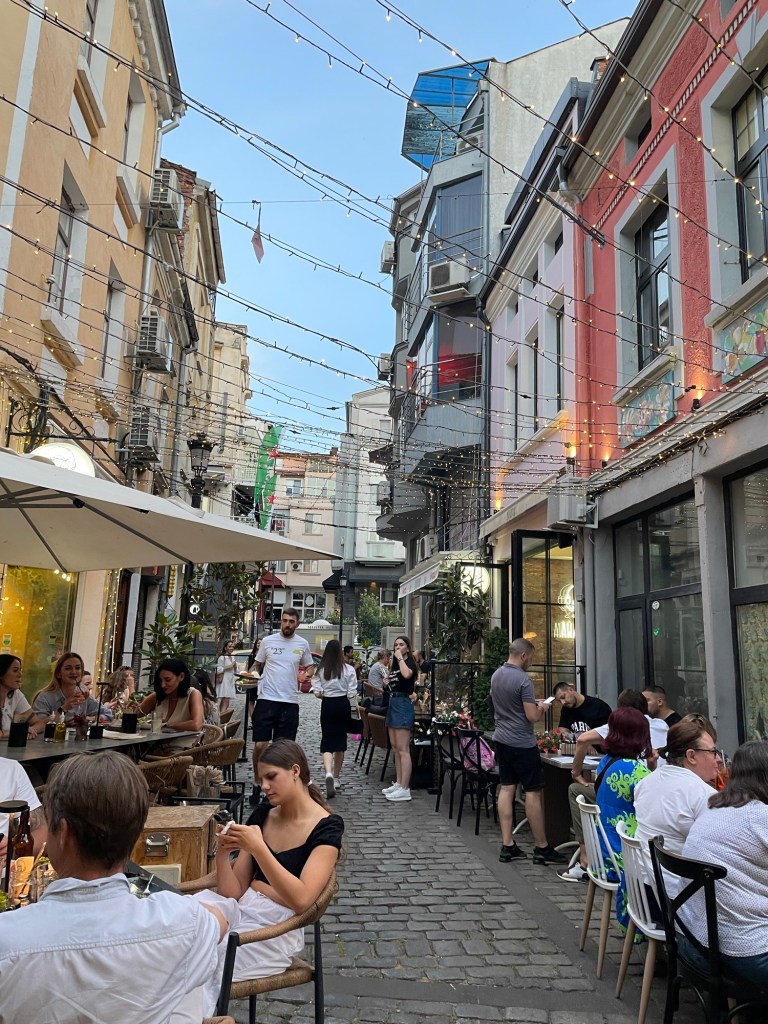
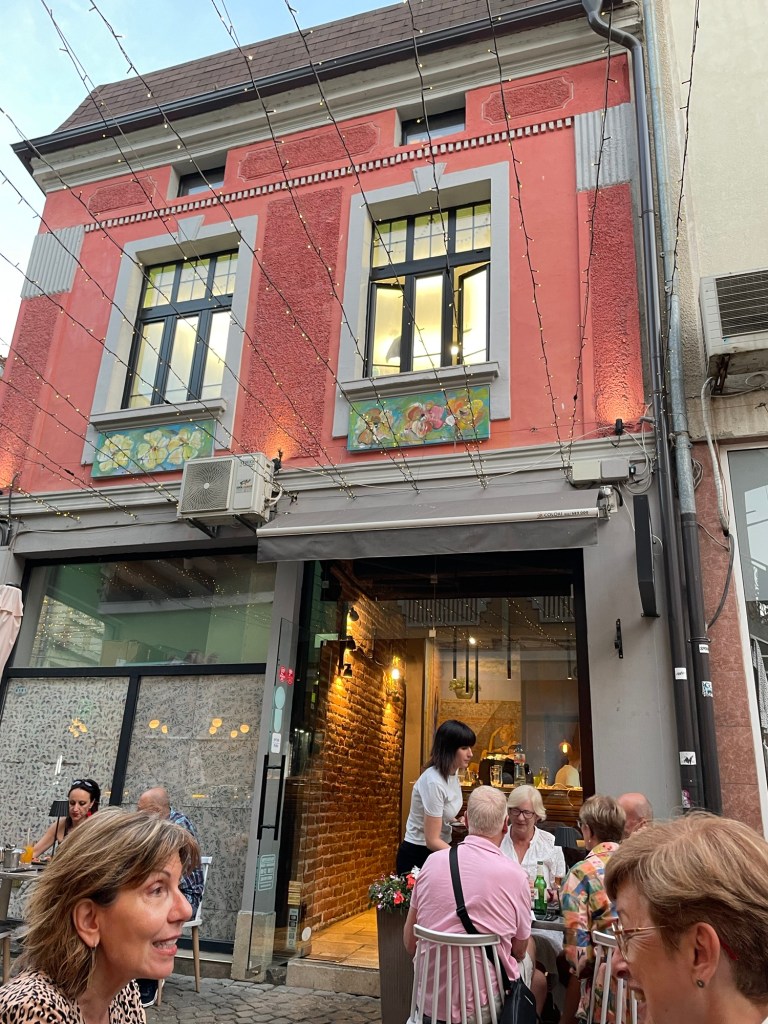
There were plenty of restaurants to soak up the tourist dollars, but even then everything was well prepared and dirt cheap. We especially enjoyed the eggplant and Turkish style mezze platters with tomato spread, pesto and burrata cheese. Cute outdoor restaurants in the Old Town area of Kapana were right outside our door and encouraged us to venture out and linger in the lively, 80-degree evenings.
Burrata, pesto and cheesePaellaCheese and eggplant spreadsClassic dishesMixed GrillKapana NeighborhoodKapana Neighborhood Dining
People of Bulgaria
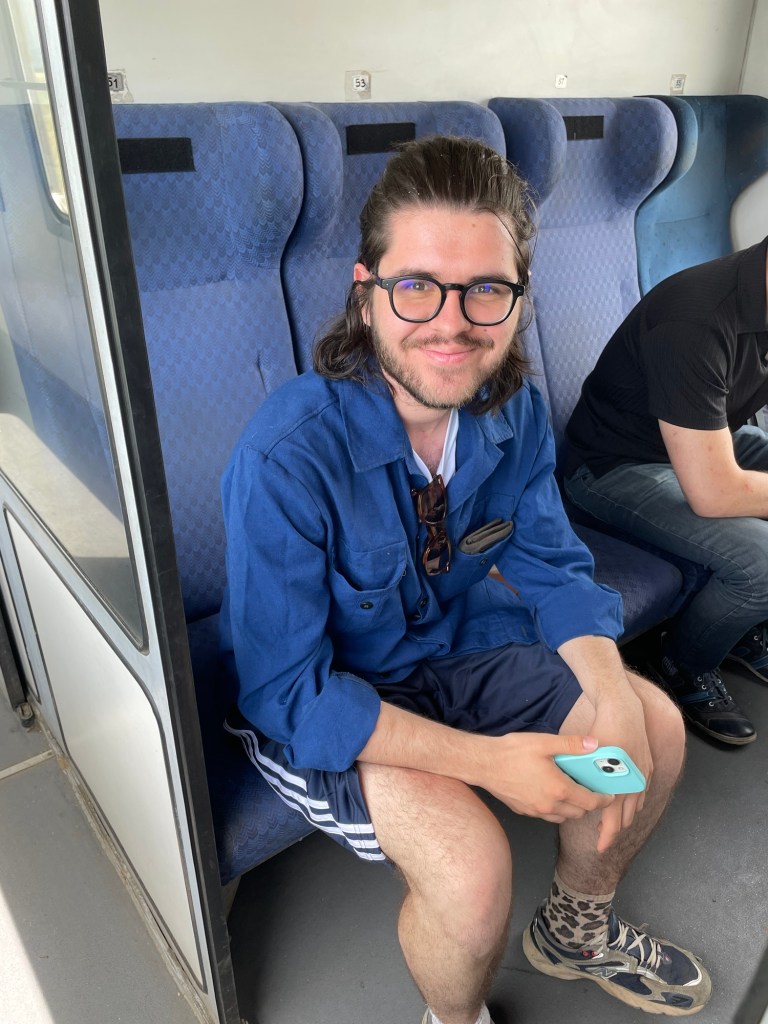
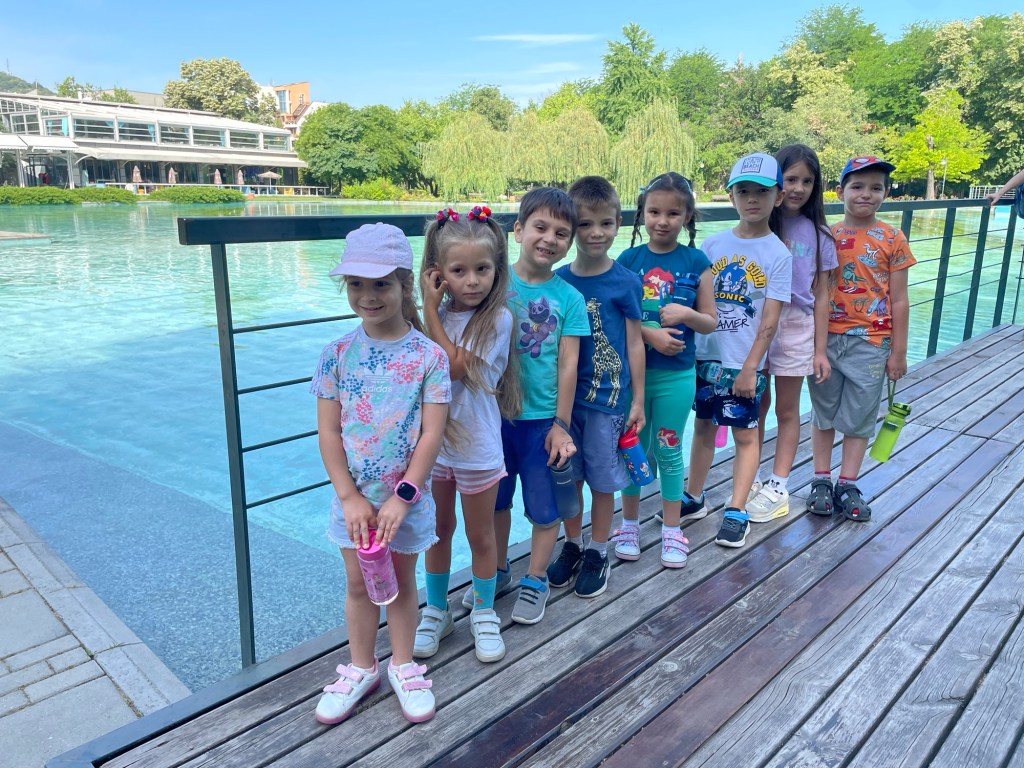
Here’s a collection of some people on the street, in the park, at the train station, and on the train:
Meeting the people in Bulgaria brings dimension and insight to the country. We look forward to coming back to learn more about Bulgaria’s rich and extensive cultural history (and more opera in the Ancient Theater!!!)



















































 travelswithmyselfandothers.com