Ich bin ein Berliner!

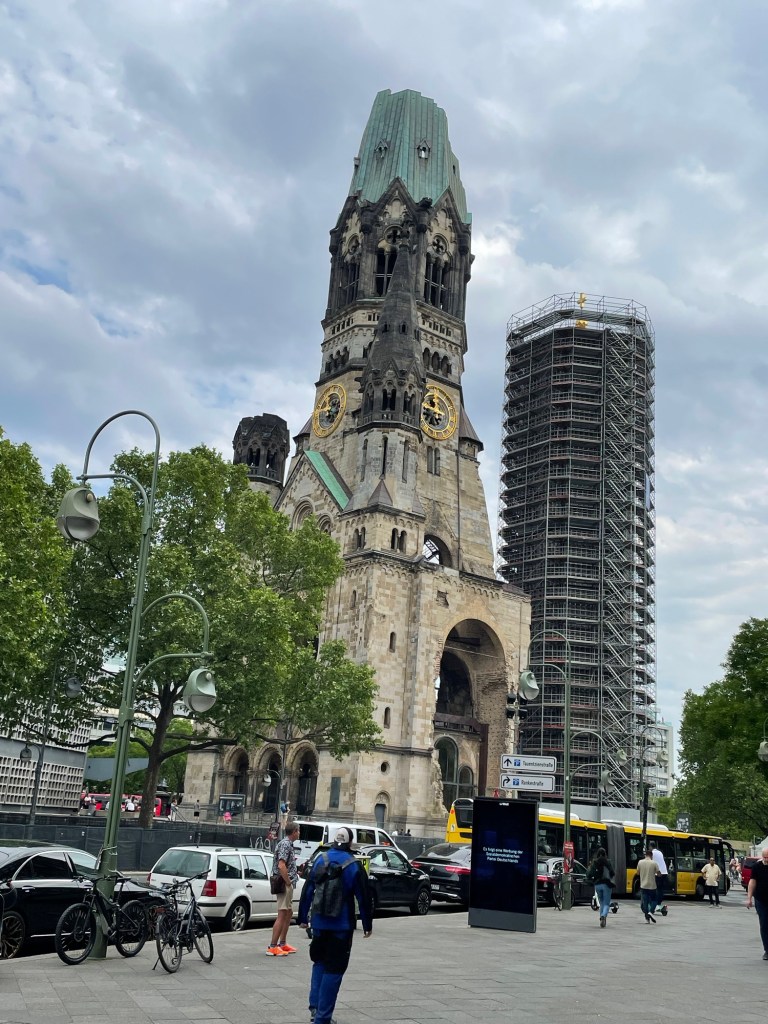
You may recognize some of the landmarks from previous posts, but I am including them as anchors for my day trip shopping in Kurfurstendamm. I seldom shop In San Francisco, but losing my lightweight jacket was a good excuse for a mile walk to the shopping district to replace it. First I passed the Kaiser Wilhelm Gedankniskirche, or Kaiser William Memorial, that caught on fire in 2020 and has yet to be restored.

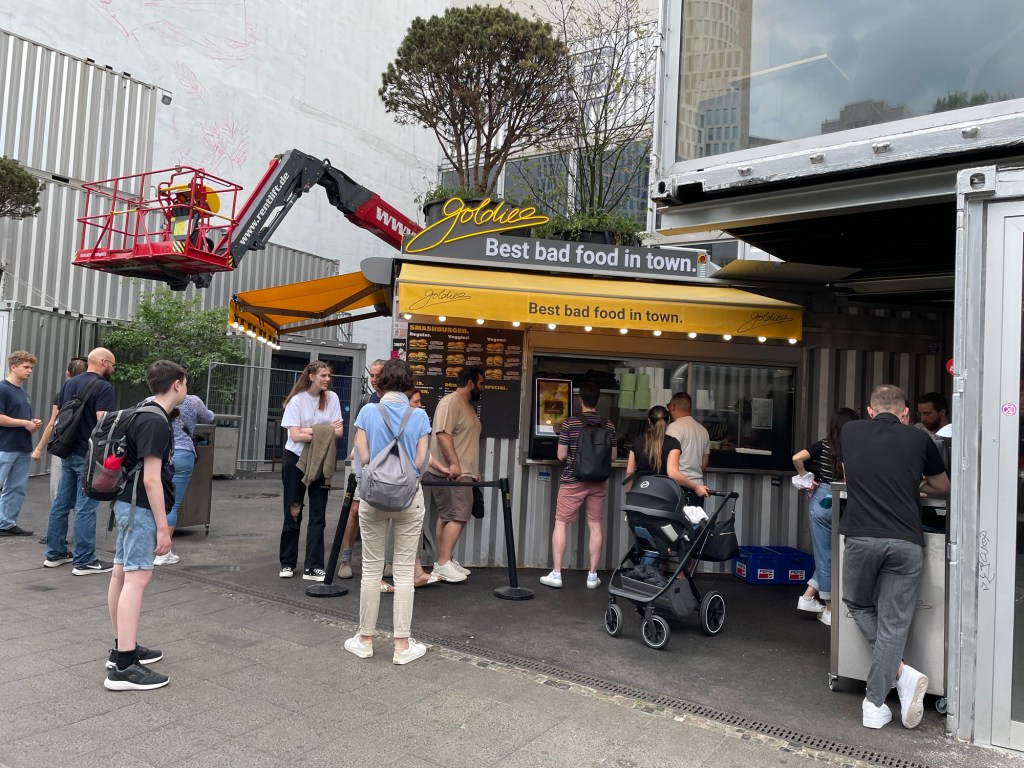
Walking down the street yielded two amusements. The “Worst Food in Berlin” with a long line in front would be the envy of any pop-up in San Francisco. And the street sculptor using sand to shape his bulldog and puppy was all in a day’s work for attention, admiration and a few coins.

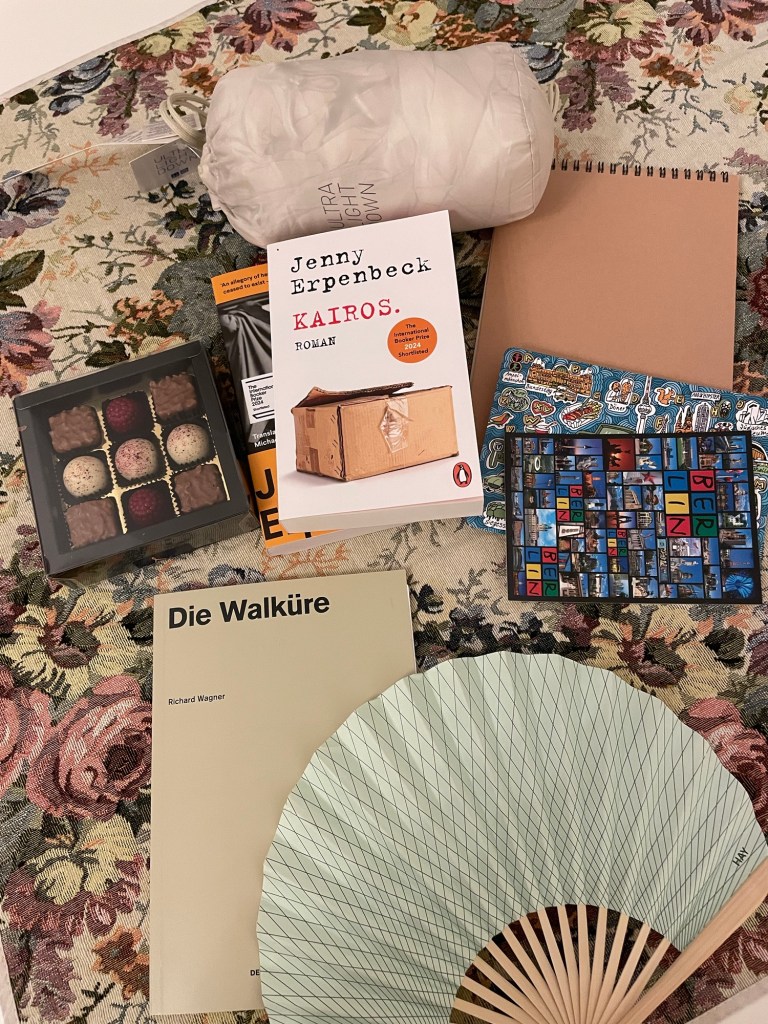
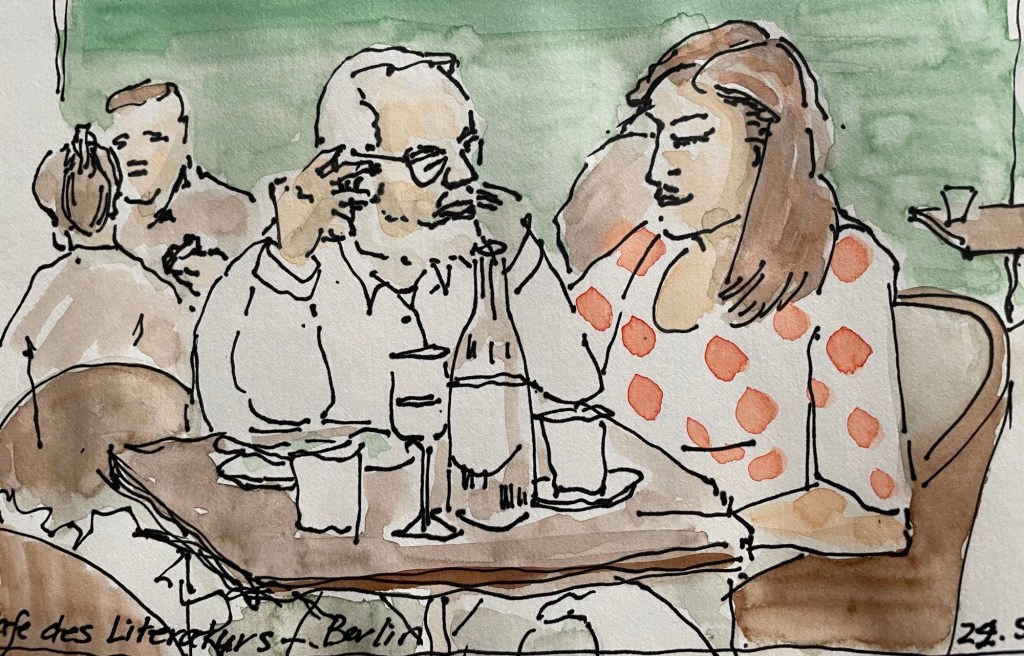
The Cafe Im Literaturhaus is another favorite haunt, where I went only last September to admire the patrons and the Belle Epoque villa style. The bookstore adjacent to the cafe sold me German and English versions of “Kairos” by Jennie Erpenbeck. The book won the International Booker Prize for 2024 and was Book of the Year in the Guardian.
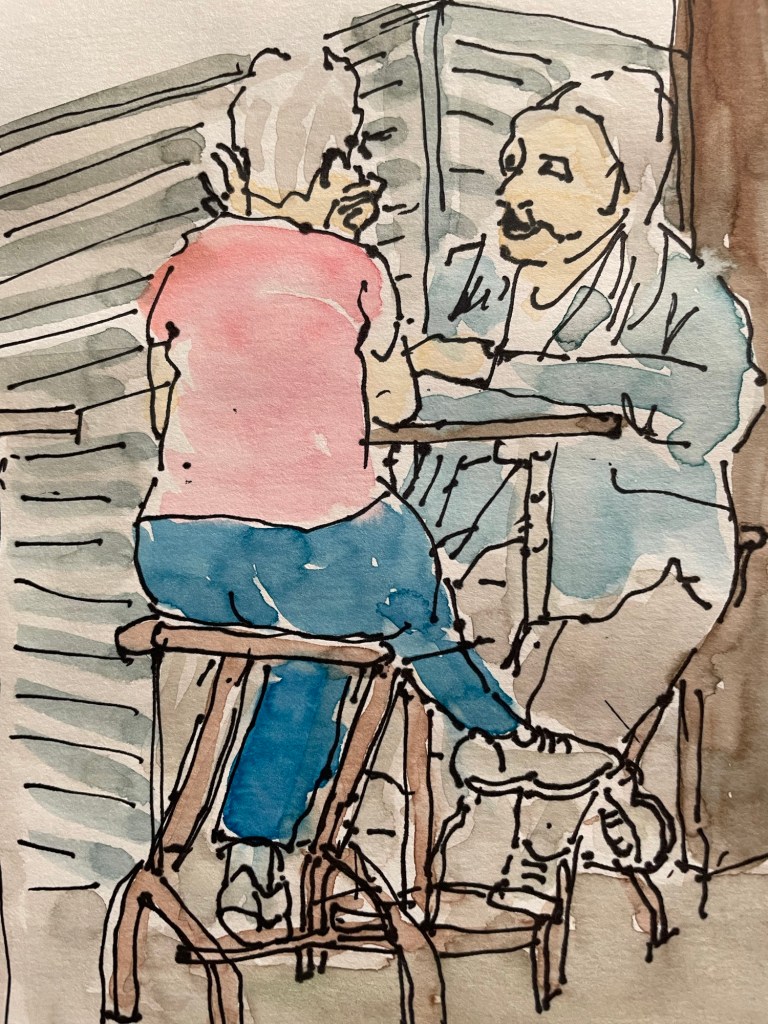
More goodies in the table display above capture the day’s finds included a badly needed sketchbook, Lindt chocolates, and the program to “die Walkure” (see Part II below for the opera that took place later that day).
Konzerthaus, Berlin

My favorite conductor these days is Joana Mallwitz, who is the new director of the Berlin Konzerthaus. She’s very dynamic and gives informal lectures before her performances to explain the musical material she presents. Former male conductors seem so formal compared to her. She makes sure to acknowledge the musicians who are featured after her own curtain call.

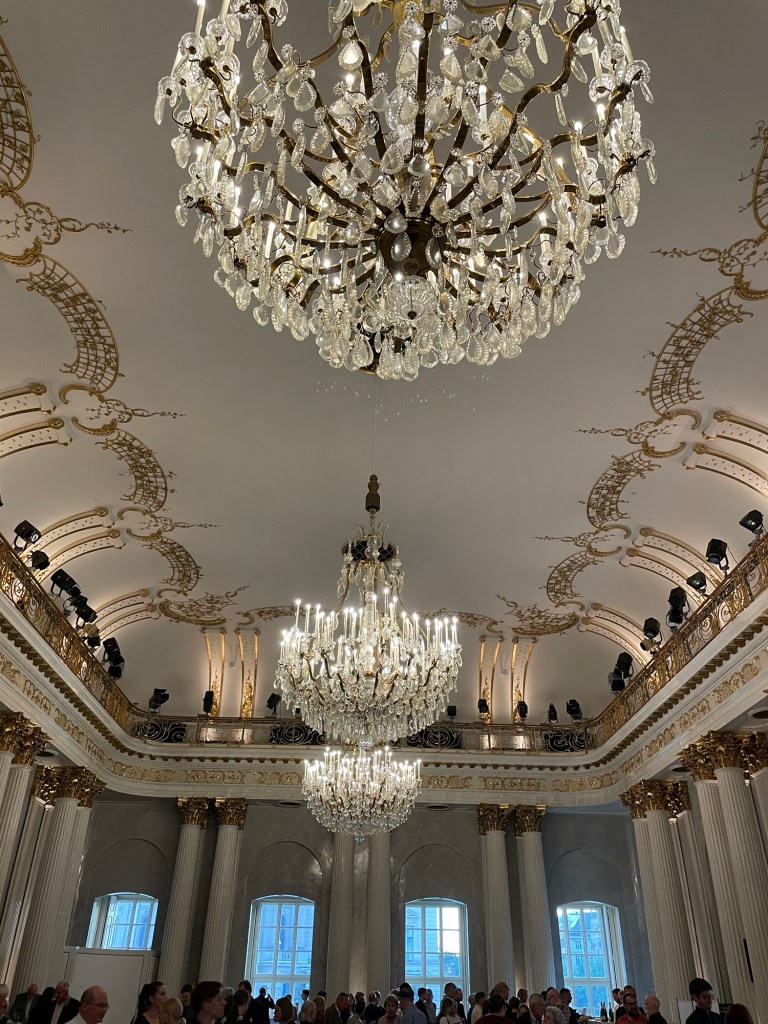
I sat two-thirds back near the center for a performance of Brahms’ Concert for Violin and Orchestra in D Major op. 77 and Beethoven’s Eroica. The acoustics were excellent despite my skepticism about rectilinear spaces. Of course the newly renovated interior provided over-the-top opulence and splendor to experience and enjoy.

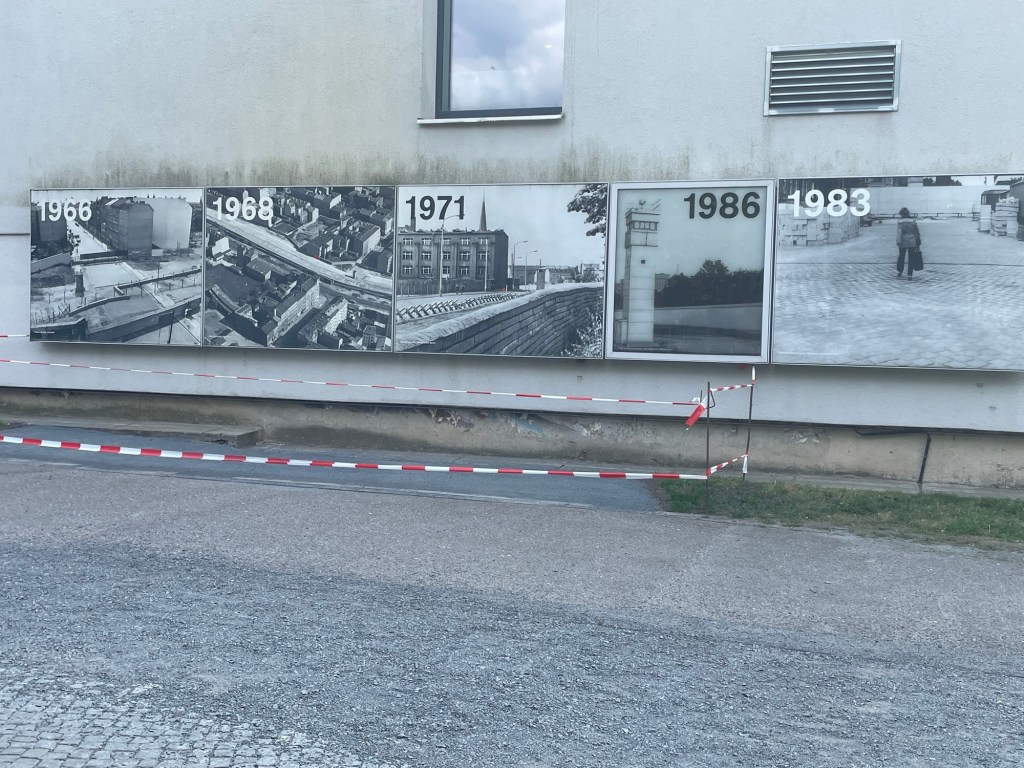
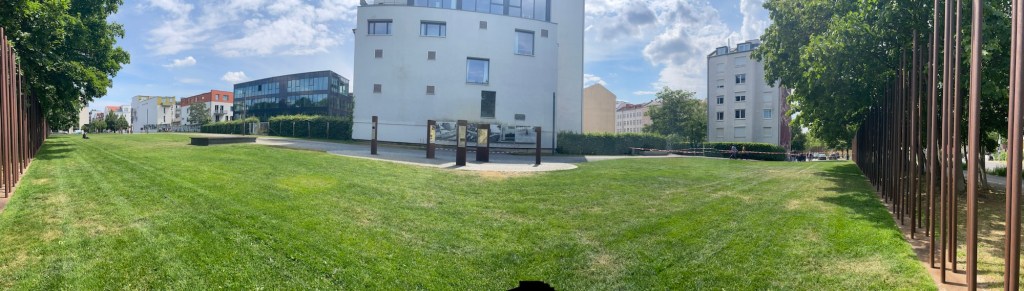
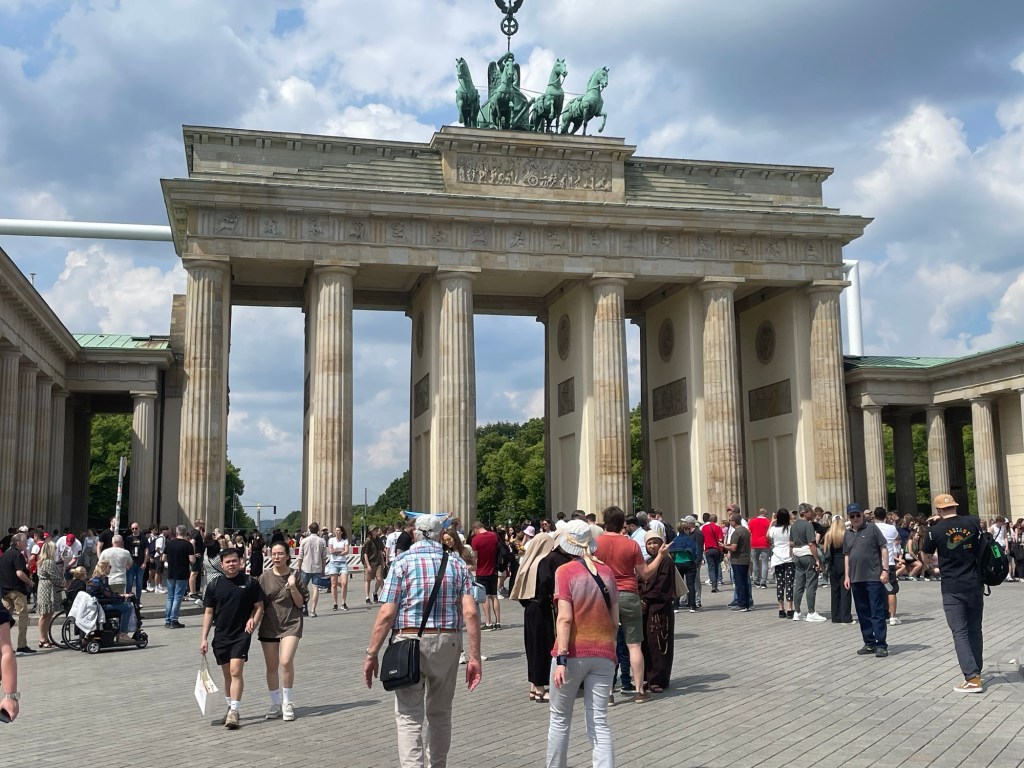
Fellow sketcher Kaori from Japan, Amsterdam and San Francisco arrived so I took her to the Brandenburg Gate and the Berlin Wall Park on Bernauer Strasse. The park was near where I used to live. In the eight years since taking my German class here in the summer of 2015, the former East Berlin neighborhood has been upgraded considerably. Hardly any vestige of what was East German blight in this area remains.
Part II–Ring Around Opera Fanatics Only

I am going to spare followers my opera obsession so I am putting the material in a Part II section in future posts. Truth be told, I came to Berlin specifically to see Wagner’s Ring. Heading into my fourth Ring (like my fourth Volvo), I was even more excited with this one than the first three. The story is intense and layered with ancient fairy tales and character flaws. It’s essential to see the series multiple times to appreciate Wagner’s brilliance. It’s a predecessor to the Lord of the Rings or Harry Potter Series, or any other modern day sagas you have managed to hook yourselves onto.

And yes, Wagner’s anti-semitism doesn’t go away. The controversy continues to rock the opera and classical world. I follow the opinions of musical professionals who regard the music beyond the individual creator and the universal timelessness of the work.

Night 2: Curtain Call for die Walkure
Night 3: Curtain Call for Siegfried, a 6 hour production
Deutsche Oper Break Time
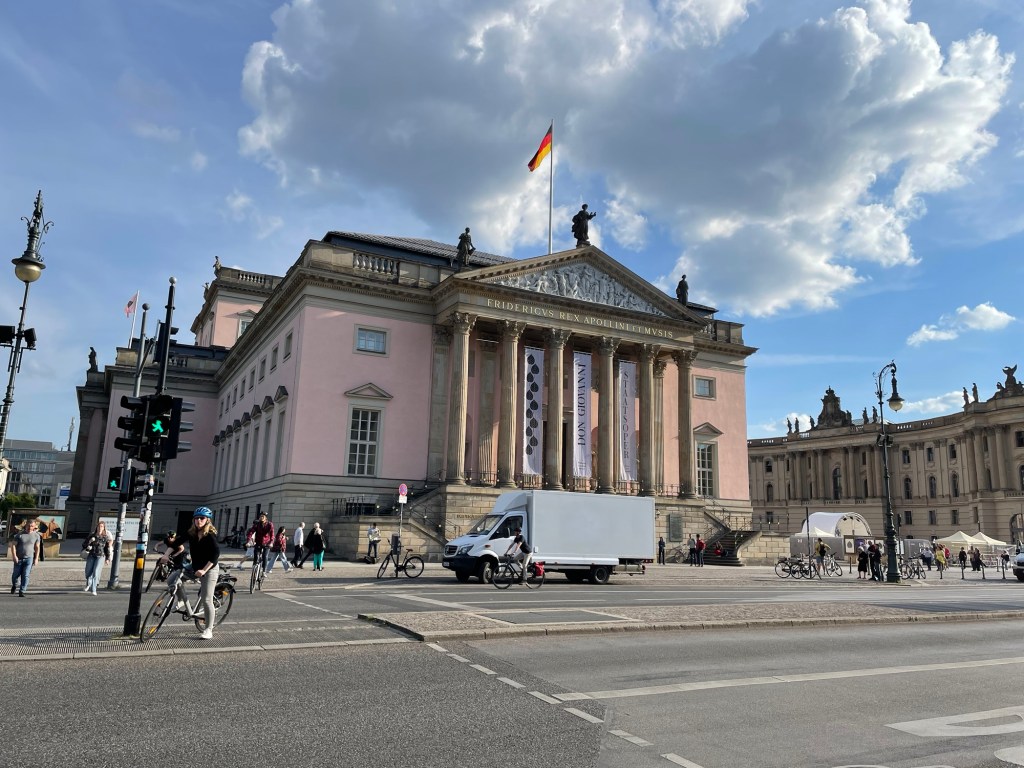
Berlin Staatsoper Under den Linden

This may seem like overkill, but for me it was a glutton’s delight to finally see a performance in the Staatsoper unten den Linden. It was closed or being renovated when I was in Berlin previously, so I was overjoyed at finally reveling in this magnificent interior.

The opera house itself had some fatal flaws, however. The sightlines were hopelessly overlooked, and nearly 1/2 of our view on a diagonal was blocked. Nevertheless, being an opera house junkie, I appreciated the refined details of the exquisitely appointed details. Make a point to come to a performance in Berlin. Supported by the German government, the events and venues are cultural treasures.
Berlin Staatsoper Under den Linden Opera House Interior

Lüneburg, a Hanseatic City

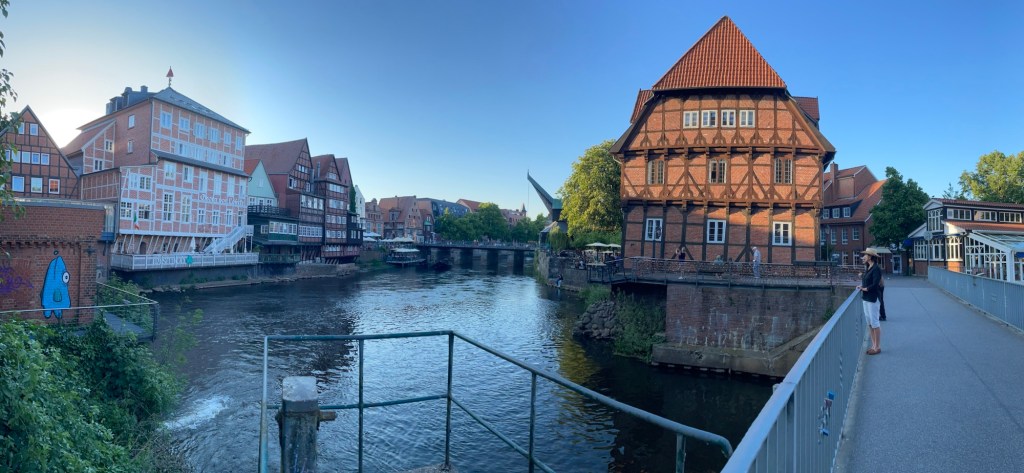
Located along the Ilmenau River, Lüneburg is conveniently located a half hour by train from Hamburg. This beautiful and wealthy Hanseatic city has a history founded on its salt deposits. Salt was coveted in Europe and was transported from this area along the river since its discovery.

We think of salt used at the table to flavor food, but it was also essential for food preservation. In fact, over 80 per cent is devoted to the production of building and plastic. Another small percentage is used to salt roads.

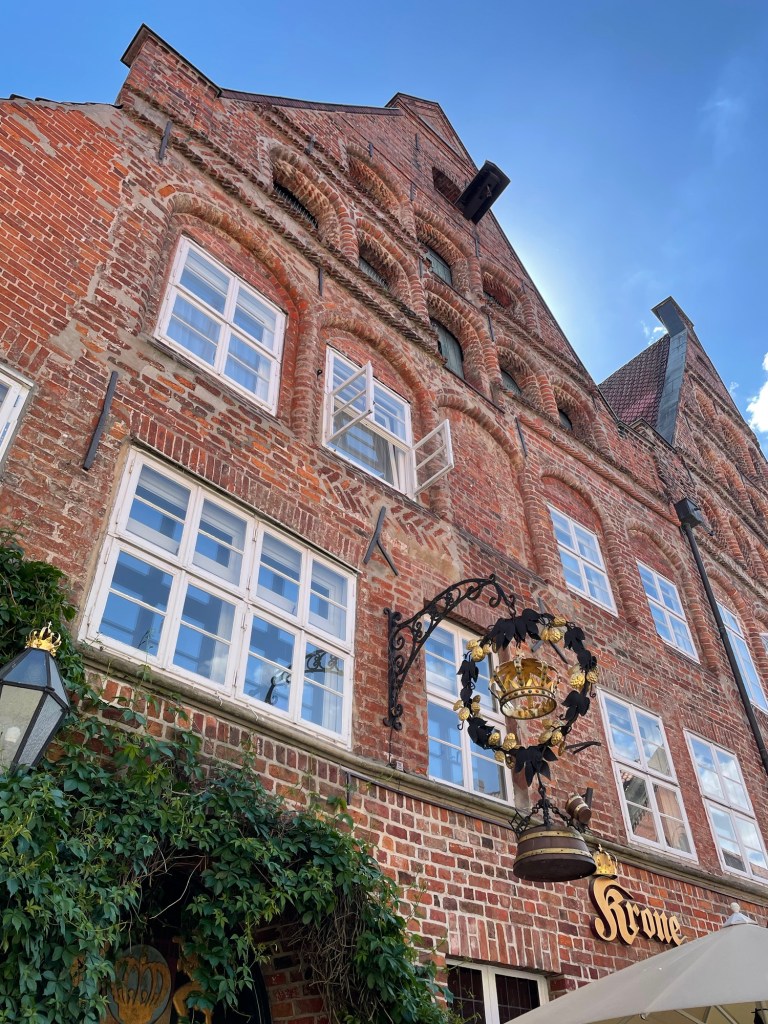
The merchants of Lüneburg built fancy homes and tall buildings. They consolidated power in the 16th Century and battled against the ducal regime to become a free state. The Lüneburg patricians are lesser known than the Venetians, but were just as wealthy and prominent.

Because of their proximity to the bog and Lüneburg Heath, a rise from the salt extraction, the earth was unstable. Many buildings subsided. The exteriors and local brick finishes are wavy gravy or look like leaning towers of Pisa, all sorrowfully showing their age and arduous future.

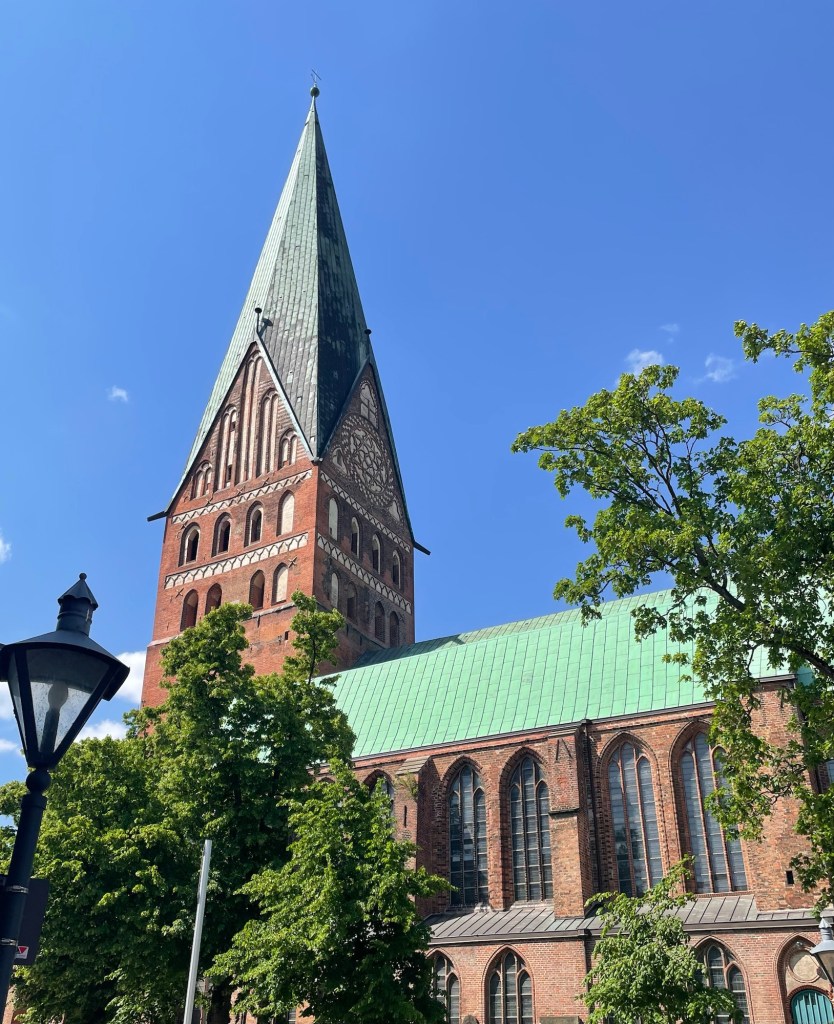
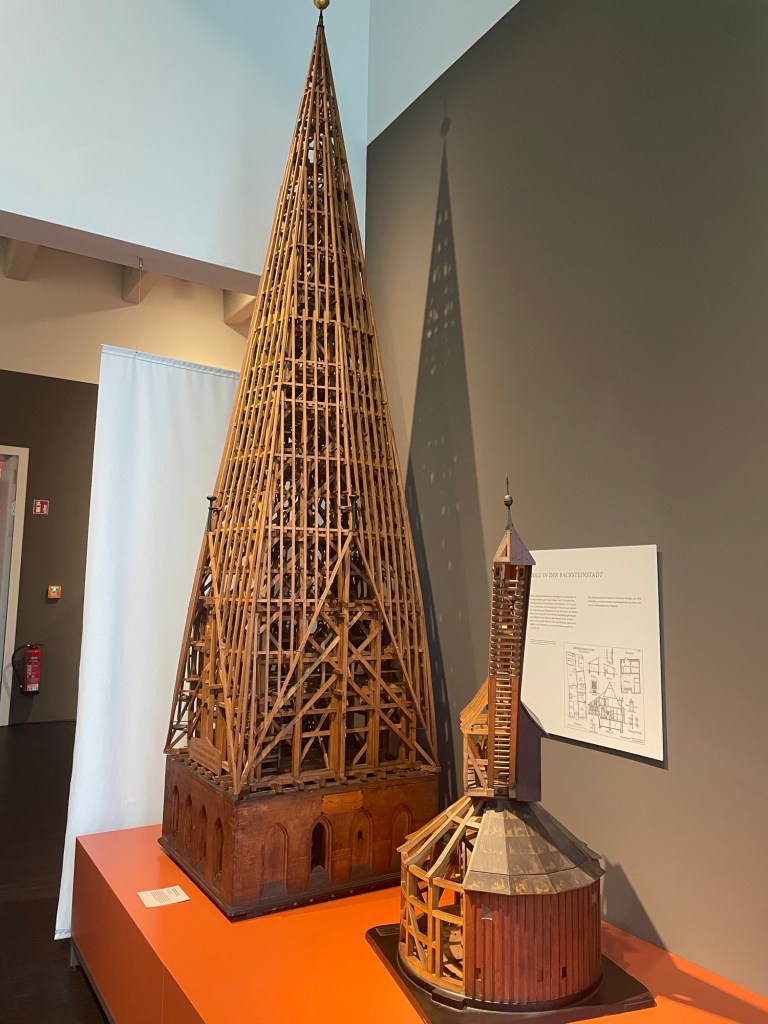
Copper roofing is prevalent throughout Luneburg, a further display of the city’s wealthy heritage. Local red brick was used for all the major buildings, including the St. John’s Lutheran Church. It was converted from a cathedral to a protestant church after the Reformation. A model of the spire is shown below.

The City Museum

A couple of displays in the City Museum showed architectural elements in buildings. The numerous windows and levels of an exposed timber structure would have been a child’s delight. The model depicting the steeple at St. John’s Church demonstrates the intricacy of the construction. The heavy assembly further added to the weight of the building and its impact on poor soil.

Excellent curated bilingual displays explained the paleontology, anthropological and contemporary history. Cess pits used to collect human waste were mined to yield household pottery, leather, and artifacts.

The East Prussian Museum

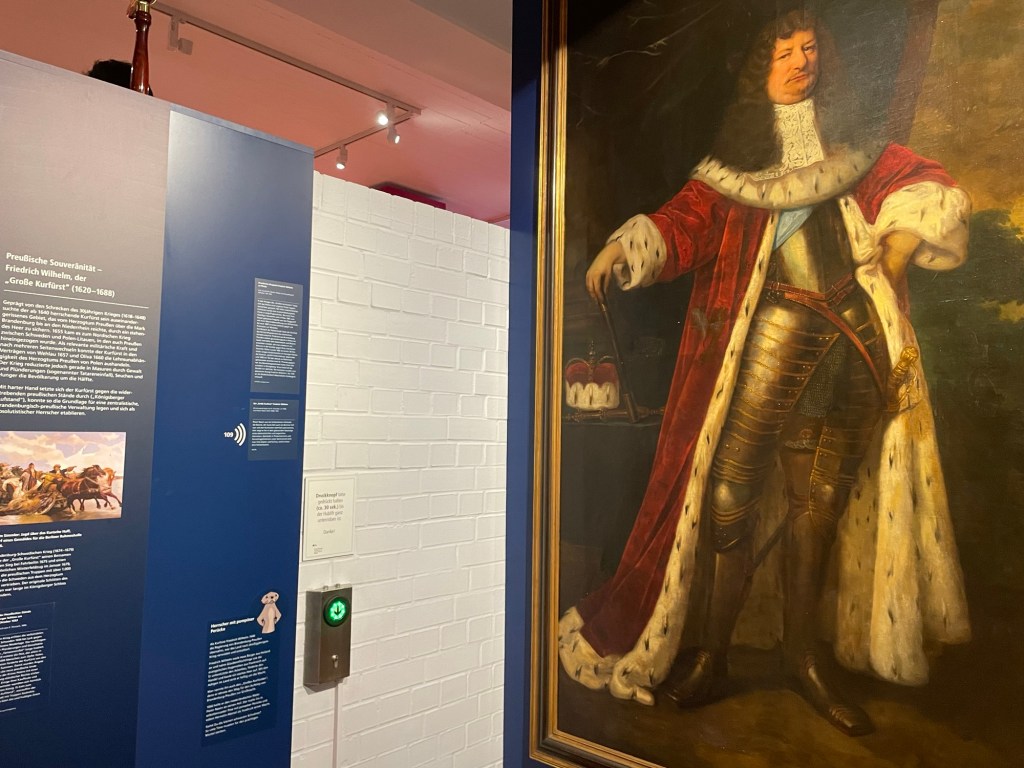
Another new museum in town connected alot of dots for me. In particular, where Prussia was located. Elector King Friedrich Wilhelm and the Hollenzollern family ruled over the area between Danzig and Königsberg (Kaliningrad), its capital. Dresden houses many of the treasures from the Prussian rulers.

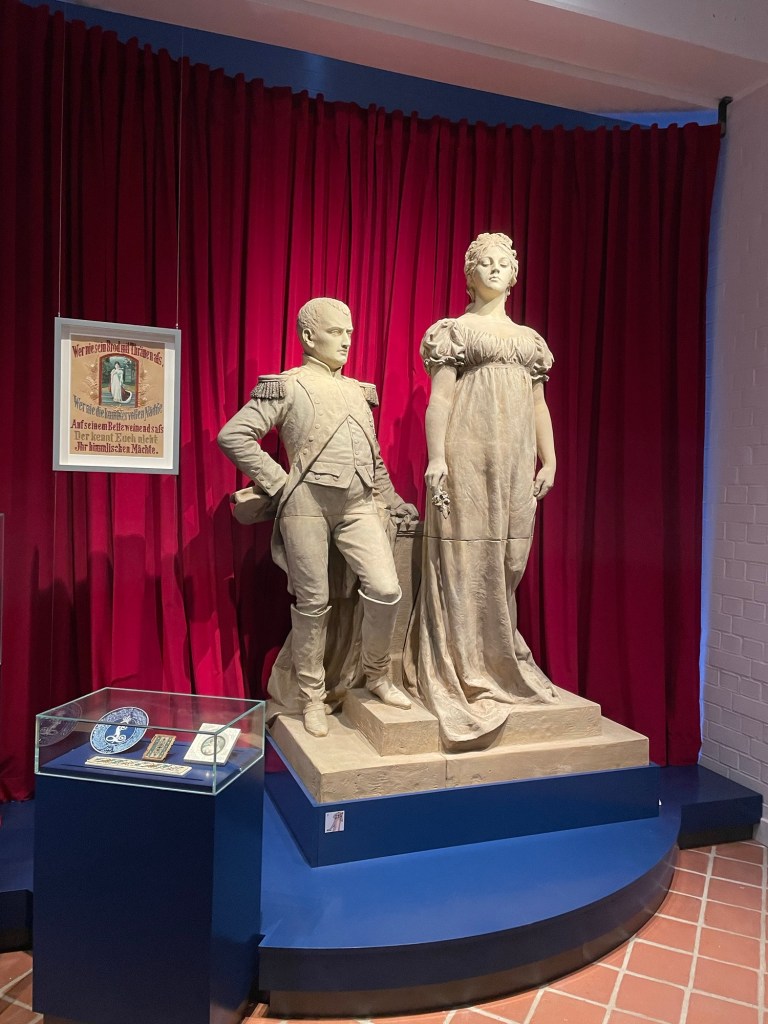
When Napoleon defeated Prussia in 1807, the queen of Prussia, Louise of Mecklenburg-Strelitz, tried to plead with Napoleon for favorable terms. Two completely different depictions of the unsuccessful meeting were displayed. One was a sculpture indicating the diminutive Napoleon next to the powerful queen, and the large painting showed a different perspective, with Napoleon confident and the Queen at his mercy.

The museum also presents the history of the refugees who were forced to flee after World War II.

Living in Lüneburg

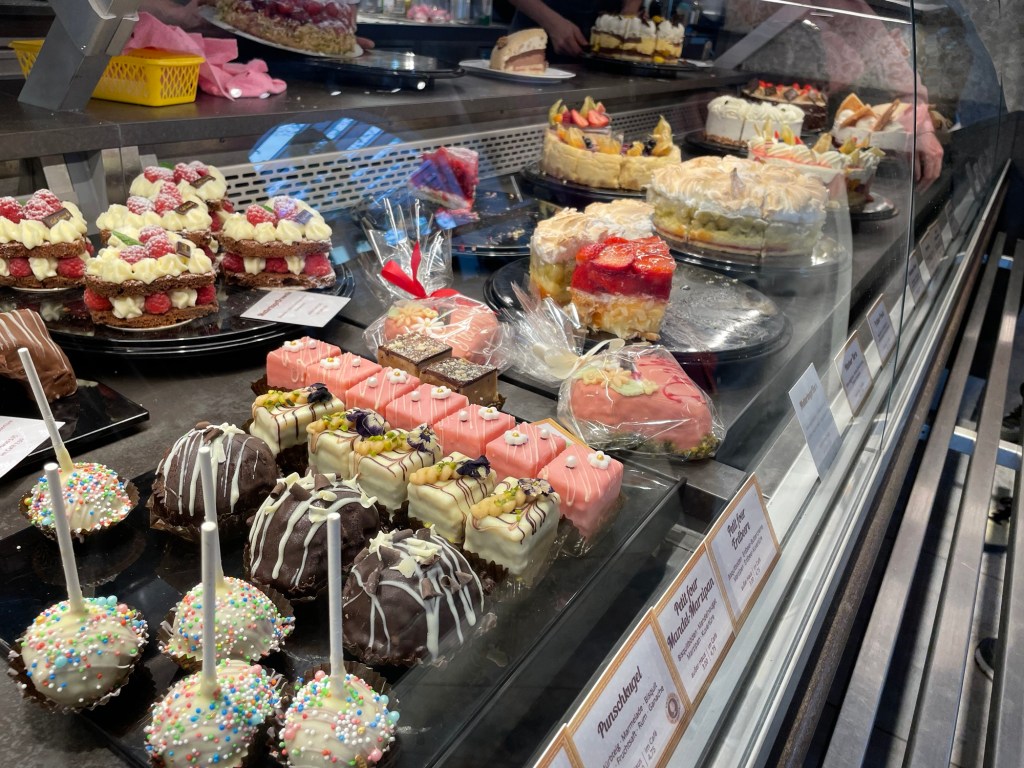
Living in Annemaries’s home gives me a glimpse of life as a resident in this frisky city of 185,000. Both tourists and residents enjoy active pedestrian shopping areas, numerous restaurants and cafes, and convenient transportation in the center of town. I can watch, hear and feel my tummy pulsate at each pit stop, whether it’s due to the frothy German pastries, cream coffees, or evening wine set precisely to the .11L mark that I snuck.

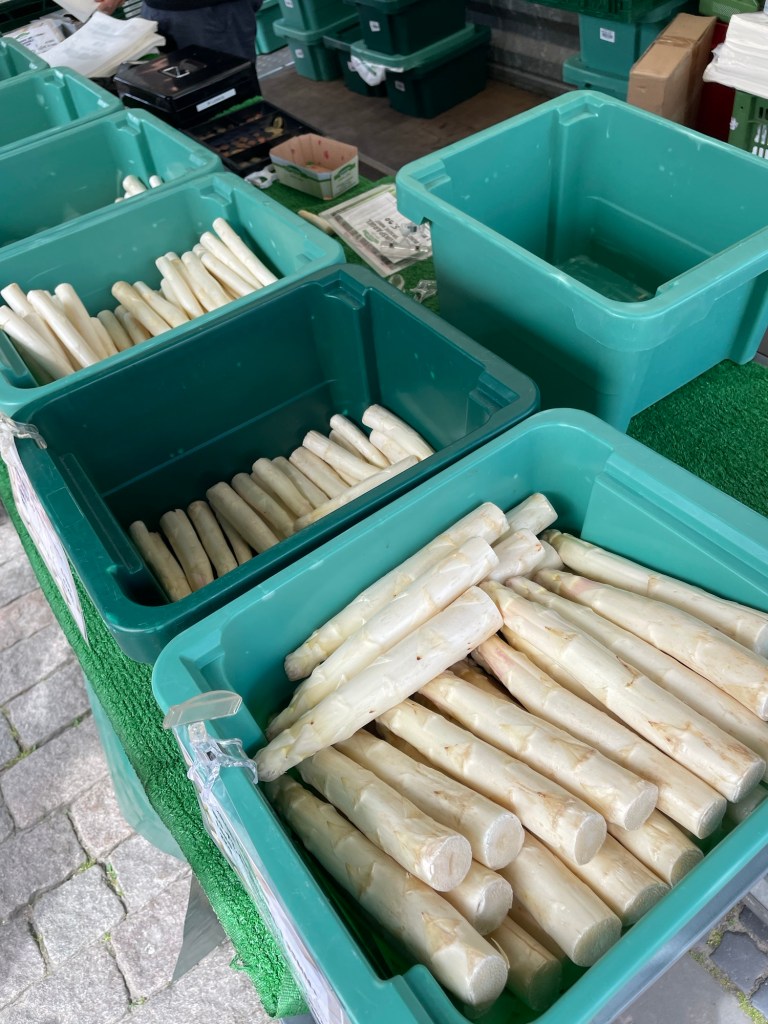
Spargel season is in full tilt so various thicknesses of the succulent stalks are batched and sold at the market. Solid German efficiency is evident in the display of Lovers’ locks packed along the river’s balustrade.

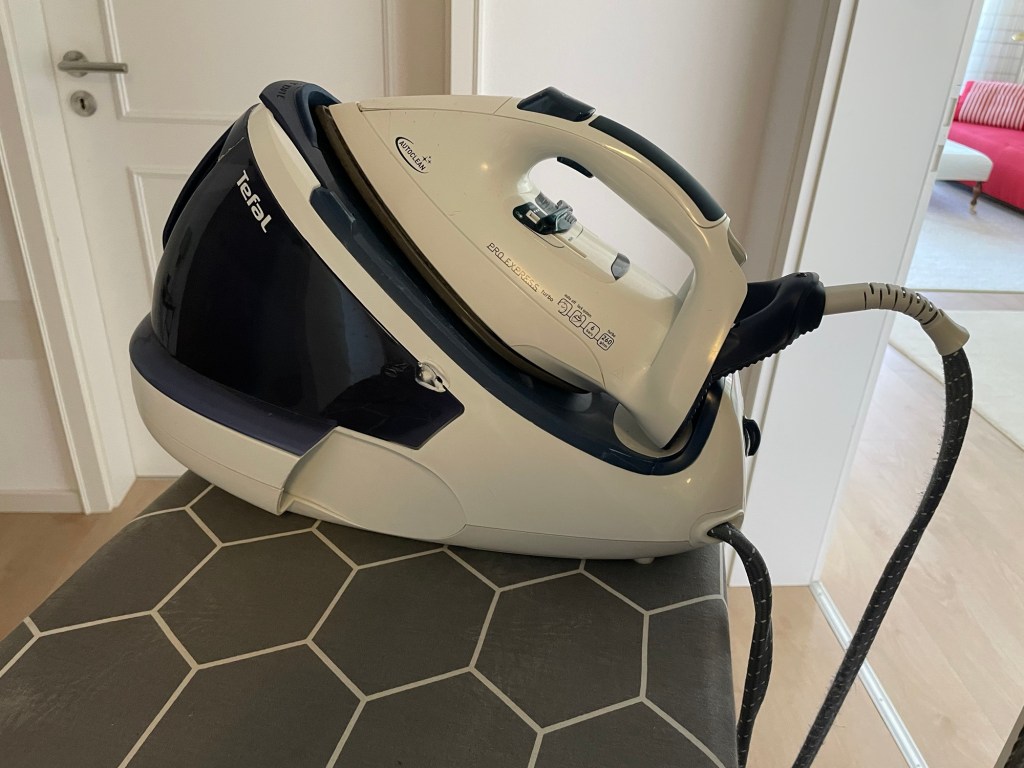
A industrial-strength iron at Annemarie’s assured me that I was going to get a permanent military-pressed fold on any piece of clothing or napkin.

I’m off to Berlin in the next few days for my fourth encounter of Wagner’s Ring Cycle, so stay tuned!

Art and Music in Dresden

The Military Museum, Dresden

From the Military Museum to the Frauenkirche, Dresden confronts its responsibility to teach the public about Germany’s history. The Military Museum uses its historical collection to explain the consequences of war, while the Frauenkirche church reused salvaged blackened stones from the bombing to show how much of its building was destroyed.

Traces of blackened stone reused for reconstruction of the Frauenkirche

Dresden’s Elbe Valley was delisted as a UNESCO World Heritage Site in 2009 because a bridge was proposed to be built over the Elbe. It would destroy the river’s original view. Practical needs determined the decision to proceed. So now the bridge is built.

Nevertheless, the view of the river and the city’s Baroque buildings continue to be appreciated by tourists and residents alike. Historic preservation and its lasting value were challenged and the loss was contemporary society’s gain.

Loschwitz, or Lost Wits

Loschwitz, a neighborhood to the east of Dresden possesses original Jugenstijl buildings that I call “buildiful” architecture (my new coin for what I consider worthy of being sought more than once). The delightful rooftop windows typical of the era are in pristine condition and proudly wink at us.

Local Dresdners Hanne and Jens joined us at Toscana, a local patisserie for afternoon coffee and cake.

The Semper Opera and Don Carlo

The Semper Oper appears somewhat clunky and clumsy from the exterior, and its public spaces are even more awkward. Yet the intimacy of the interior for only 1300 seats makes the opera experience superior to larger opera houses. Compared to the New York Met’s 3800 seats, there is no comparison. Opera stars can focus on their tone, quality, and pacing, rather than screaming to the back of the balcony.

Our first tier seats to the side of the stage were perfect for a close up view. The story of Don Carlo gave me a historical lesson on the Inquisition, its chilling reign of terror, and about complicated royal household politics. No one was protected, not even the king or his family members, from the obligation and wrath of the Church. Love or lack of it, betrayal, and fear were the stuff that made this Verdi opera a reliable choice. It was worth devoting nearly four hours of time to be in the room.

The hyper- dramatic music was well supported by strong performers and marathon musicians. A stellar multi-media introduction, combined with a modern dance interpretation and elegant costumes, fused the entire opera together for a memorable show.

Enter Annemarie

For those of you who have been following my world travels in the past, you will notice a new addition during this journey. Meet Annemarie. She has agreed to join me on this year’s forays to cities in Germany and beyond.

We met at the Elbphilharmonie in Hamburg a year ago during Anne Sophie-Mutter’s Virtuoso violin performance. Annemarie helped me through a lost wallet incident. In a short time, we have become close friends. I visited her in Lueneburg, her home town near Hamburg, and she has visited me in San Francisco. When I told her I was planning another opera and music trip to Germany, she agreed to join me. Combining a car trip to visit her “Heimat”, or homeland, at a 600 year-old farmhouse outside of Munich, we are packing in an ambitious itinerary.

What nerve do I have carting a native German through museums, opera houses, and historic treasures!?! I can somewhat justify my Rick Steve’s rips and having participated in numerous Goethe Institute’s extracurricular activities over the past ten years. Yet I am hardly the experienced guide.

But at Annemarie’s instigation, I am going to try delineating what works for me, at least from my Asian-American eyes.

Annemarie lived in the US for a good part of her early adult life and was busy raising a family after her return to Germany. Now, twenty years later, she is ready to take on the cultural world. I’m anxious to learn more about Annemarie’s roots, which initiated our conversation about traveling to her home village. Inevitably, we will share in our many life experiences and mutual interests along the way.

As we embark on this journey, I hope you will enjoy following our jabs into music and culture in Germany, Bulgaria, and Italy!

A puppet theater attached to a ferris wheel
Kitsch in Dresden’s Fruehjahrsmarkt

2024 The Next New Cultural Journey

Despite numerous trips over the past ten years, I continue to remain loyal to the arts and classical music scene in Germany. The familiarity with many event venues, the high quality of performers and performances, and reveling German efficiency over and over never tires. It’s still my go-to choice of travel.

This year, my German friend Annemarie joins me. We met last year at Hamburg’s Elbphilharmonie sitting next to each other in scalped seats and in awe over Anne Sophie-Mutter’s virtuoso violinists. I am now introducing Annemarie to some of Germany’s most popular events, venues and classical performers. These cultural activities are supported by the German government.

You will hear more about our seven-week journey as we plunder through Dresden, Lueneburg, Dortmund, Germany, and later through Sofia, Bulgaria, and Verona, Italy.

The Transatlantic Flight

The 10.5 hour trip getting to Europe is always a chore so I decided to take a business class flight direct to Frankfurt.

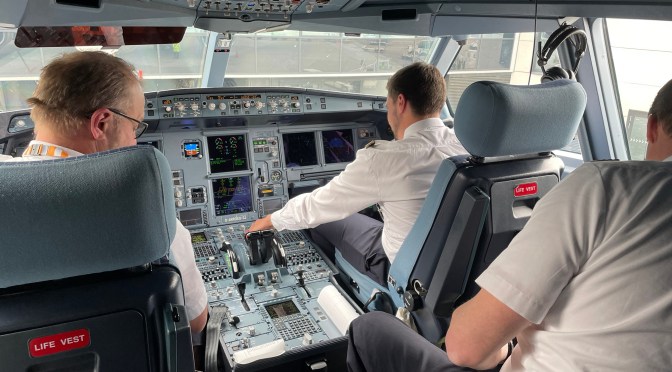
From the colorfully striped carrier to the comfy hang-out pod and delicious food, I was enticed by the extra effort being put into a memorable experience. The pilot crew even allowed me to take a photo of the flight deck on arrival in Germany!

How do bubbles rise from hell to heaven?

After meeting Annemarie at the Dresden airport, we had a big debate about the effervescence in the glass of Nicholas Feuillatte champagne. Were the bubbles instigated by something like a cube of sugar? After seeing the description “The juice is pale yellow with silver tinges, brilliant and crystal-clear, revealing a persistent ribbon of delicate bubbles,” (per Google), What do you think?

A long layover in Frankfurt gave me plenty of time to contemplate the automated baggage drop. I’m not sure Americans would be able to speed the process up with this robotic service.

Automated baggage drop at Frankfurt Airport

Goethe Haus, Frankfurt

Realizing that the glow from the business class flight was not going to sustain my nine-hour layover in Frankfurt, I resolved to find a city museum in between. The combined Goethe House and Romantic Museum seemed like an efficient way to kill two museums with one swipe

Goethe’s house displayed memorabilia by Germany’s beloved poet, philosopher and writer and with those who influenced him. There was an entire room connected to the Sorrows of Werther, the book that made Goethe wildly popular when he was only in his twenties.

Faust was yet another one of Goethe’s famous books (purportedly to have been written in Auerbach’s Keller in Leipzig) where a room in the museum was dedicated to the story and its inspirations.

Adjacent to the author’s house, the Romantic Museum connects many other artists, writers, and musicians that formed the romantic movement before, during and after Goethe’s lifetime.

A couple of architectural details caught my eye. The clever use of dots for lighting and steps in brass provided a coordinated balance to the subtle tile and wood finishes.

Die Walküre in Dresden

If you are not particularly tuned to being an opera junkie, just skip to the next section.

Our first performance at the KulturPalast was filled with cranky Wagnerians to hear a concert performance of die Walküre, the second opera of the Ring Cycle. Kent Nagano, a hometown Berkeley kind of guy, conducted brilliantly and led the four opera roles for Sigmund, Siegemunde, Wotan and Brünhilde.

Compared with a staged performance, the music rang exquisitely clear. The earlier lecture revealed that this performance was committed to the original wording and instruments from Wagner’s work. A jarring clash of wooden cymbals was noticeable, but other than that the rest seemed perfectly integrated for the modern ear.

Curtain call at the Kulturpalast of
Die Walküre led by Kent Nagano

Bad Schandau

Known as “Saxon Switzerland”, Bad Schandau is a spa town in the forested area along the Elbe River near the Czech border. An easy hour from Dresden, the multiple means of transport used to get there was more exciting than seeing the tall cliffs in the distance. Altogether, it took the train, a ferry and a vintage light rail train to see a trickling waterfall being repaired after dead trees from global warming blocked its path.

More tomorrow as we explore the Military Museum and the Loschwitz neighborhood. Don’t forget to write home!