
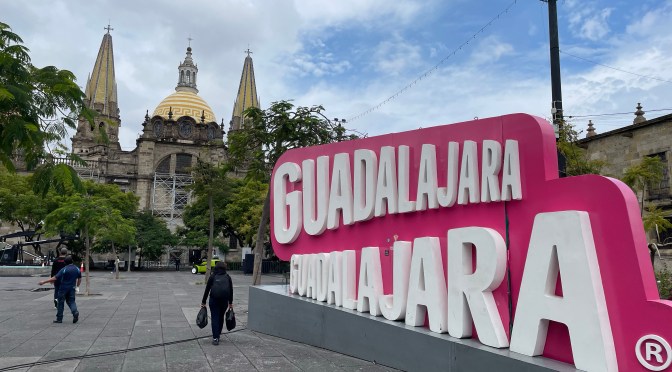
Despite my non-existent Spanish language training, I reveled in Guadalajara for a week earlier this month. Discovering works by Architect Luis Barragan and Muralist Jose Orozco were the highlights of this brief five-day trip.
Thanks to a personally curated set of guided tours, I was able to grasp the history and significance of Guadalajara. As the third largest metropolitan area of 5 million inhabitants in Mexico, Guadalajara has all the trappings of what city-seekers like me appreciate–a healthy dose of museums, historic buildings, music, and innovative food!
The York Times article I read a few weeks before my trip determined my destination. Unable to use a flight credit all year, I was down to the wire. My last gasp produced a Heimlich solution. I immediately choked out time, circumstance, and a course of action.
I first booked a central city walking tour to get oriented, combined with a visit to the artsy neighborhood of Tlaquepacque. I then planned a trip to the newly discovered pyramids outside the city near the tequila producing area. A final market and cooking class to learn how to make chicken mole added the finishing touch to my visit.
Large plazas linking different parts of the city helped me to get oriented. However, my total lack of Spanish language knowledge presented some challenges. Few people speak English in this interior city. This situation would be a blessing for those keen on speaking Spanish.
There were plenty of cathedrals and churches to visit in this Catholic dominated part of the world. I got into the flow and didn’t mind seeing the Church promoting itself with all its magnificent glories. The Mexican people continue to practice the Christian fait wholeheartedly.

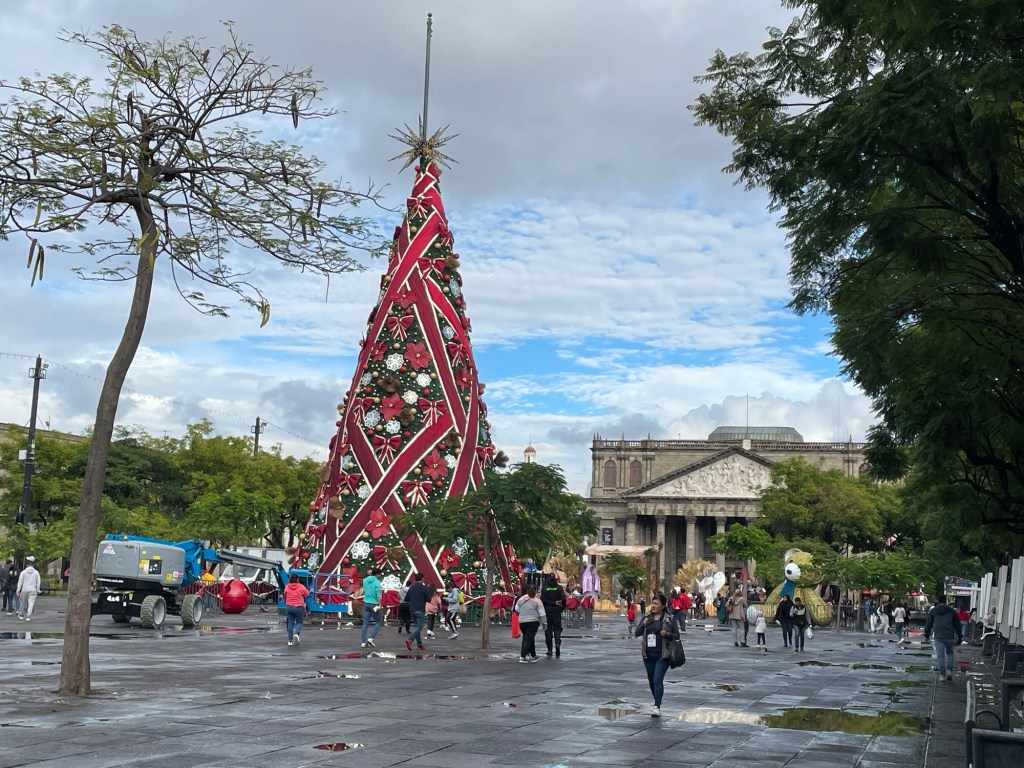

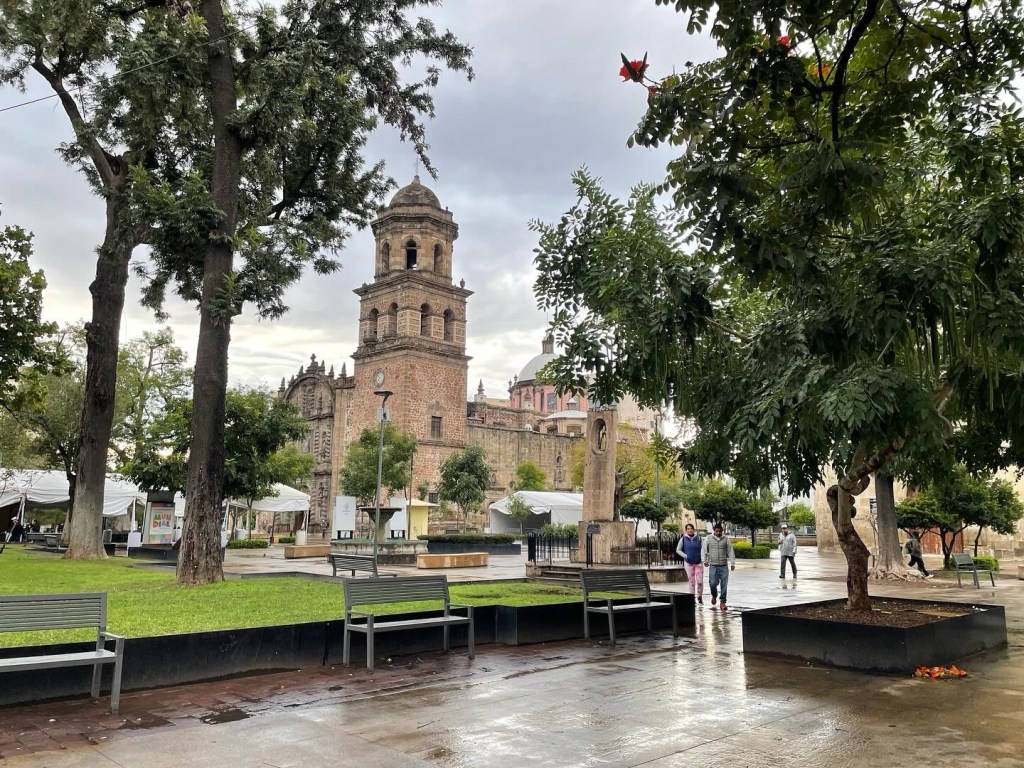

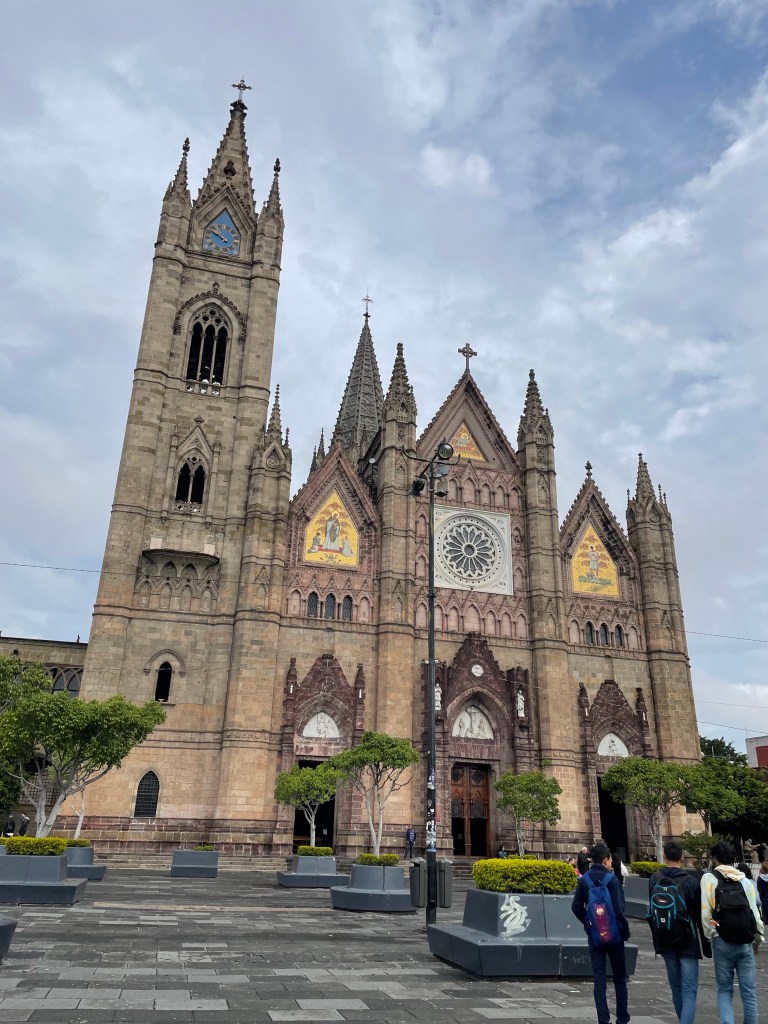
I was surprised that Guadalajara, and not Mexico City, was the cultural capital of Mexico. Much of the style and practices of architecture and buildings were adopted from European culture, while integrating indigenous Native American culture together. Guides reminded me that most of the American Southwest was at one time owned by Mexico.
Barragan and Orozco
A world-renown architect, Barragan was a native son of Guadalajara. Prior to the 19th Century, traditional adobe houses were built with a central courtyard. European industrial expansionists converted their home to gardens facing the street to display their wealth.
Barragan, known for his modern houses in the early 20th Century returned to the original adobe house layout with rooms surrounding an open courtyard. Concrete masses formed sculptural elements around gardens. He added decorative patterns on the walls as they were being built and offset doorways from traditional or symmetrical axes.
I was delighted and surprised to find Barragan’s early work so evident and proudly identified in the middle of this bustling city. Bronze monuments are placed at the front of each house to indicate the work of Barragan.


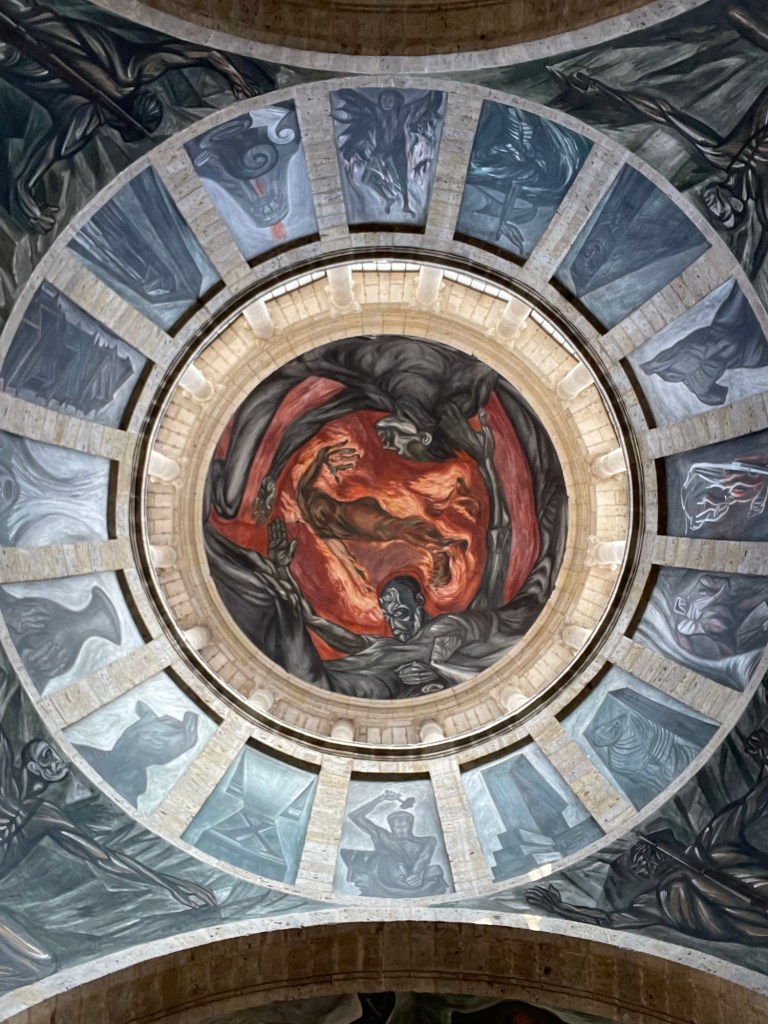
A visit to the Governor’s Palace was another startling surprise. I had only heard the name Orozco but was not familiar with his work. The technique for murals, placed on both walls and ceilings, were inspired by a trip he took to Italy to see Michelangelo’s Sistine Chapel. He mastered the art of fresco painting and used the best natural pigments available. Walls were painted quickly and skillfully before they dried. He painted in horizontal sections to control the amount of time he could apply the material.
The subject matter was philosophically arresting. Viewers of the murals are confronted with topics questioning the validity of politicians and religious leaders. He cautioned against capitalism, the possibility of industrial robotization , and deterioration of the human soul. He cautioned the role of the uneducated and the part they play in following orders unquestioningly.
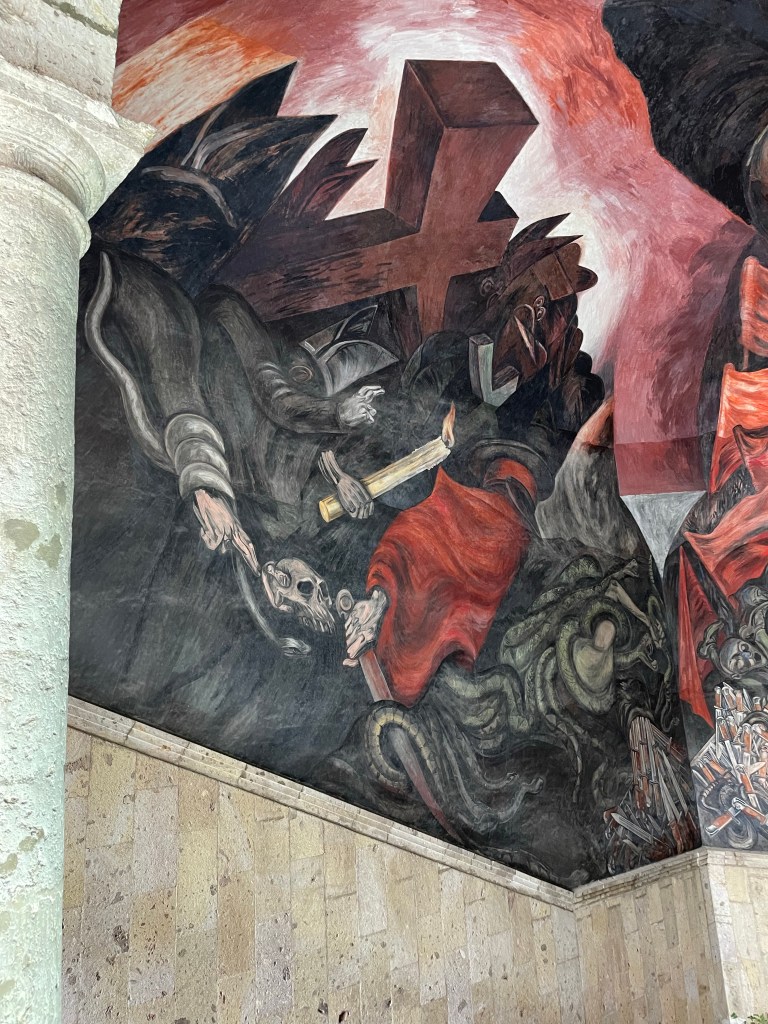


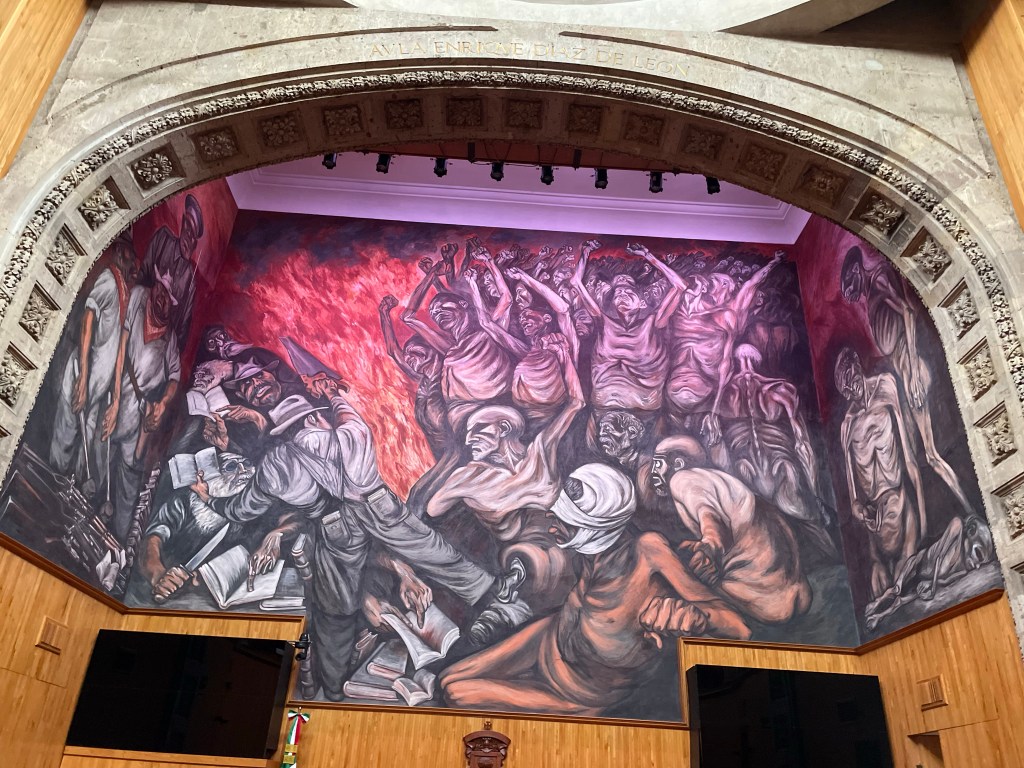


Orozco wrote contracts that gave him complete artistic freedom from his clients. As a result, his messages to the public were uncompromised. The images are stirring and disturbing. Each viewer is confronted with the mess that competing forces have created.
He was critical of his contemporary, Diego Rivera. Orozco considered Rivera’s kowtowing to Rockefeller a disgrace, when he agreed to change the mural he painted in New York City.
Orozco was also a native son of Jalisco, the state in which Guadalajara is located.. You can read a brief summary of Orozco here:
Cabanas Hospice Museum
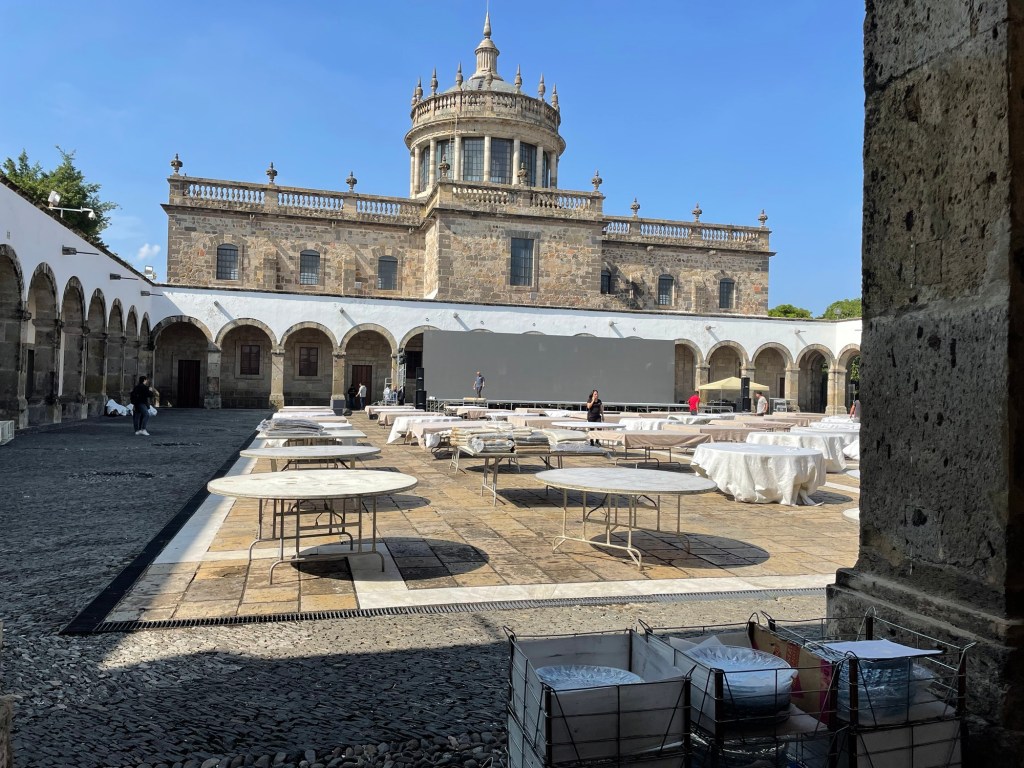
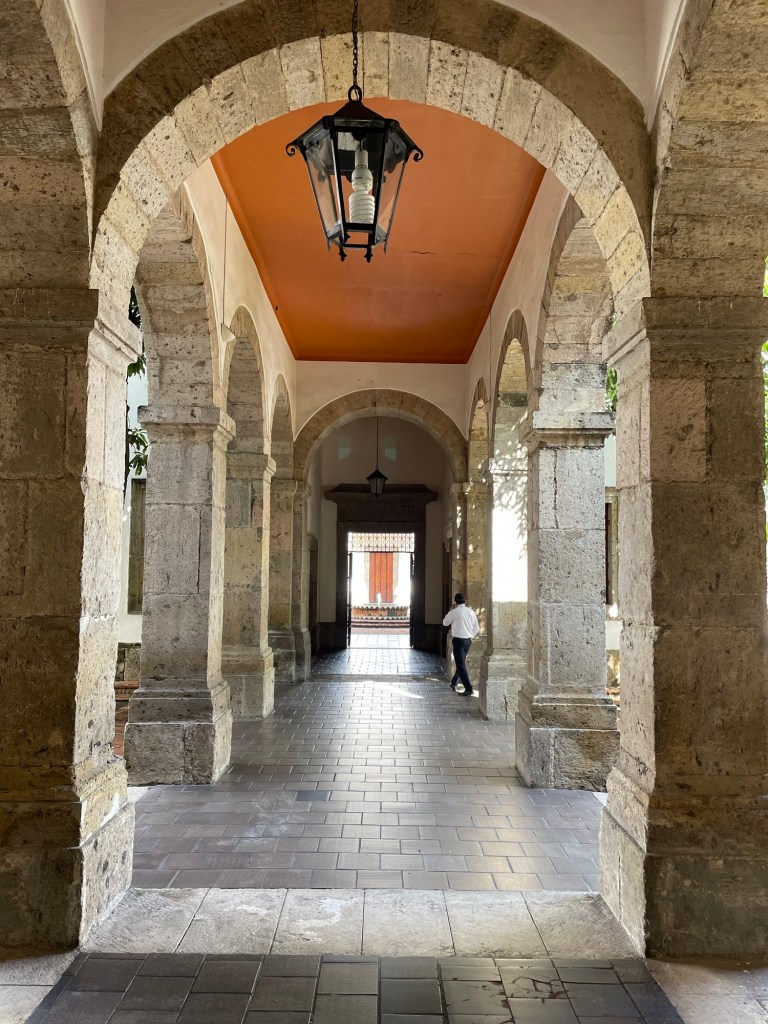
In a UNESCO world-heritage designated building displaying Orozco’s magnificent murals, the Cabanas Hospice was built in the early 19th Century by an ambitious Catholic priest as an orphanage. The Mexican Revolution wreaked havoc on the native population and resulted in many starving and homeless children.
At its time, the hospice building was the largest building second only in size to the Vatican. Modeled after the Vatican’s grand interior, the building represents the aspirations and influence of the Catholic Church in the New World. On completion, over 3,000 orphans filled the building’s rooms and corridors
When Orozco was commissioned to paint the interior of the building in 1930, it was in demise and accommodated only 200 orphans. The Neo-Classical building was converted to a museum with Orozco’s murals intended to be the highlight.



Tlaquepaque
The artist colony and pedestrian area of Tlaquepaque showcased whimsical outdoor sculptures reflecting their creators’ love of life. The spark of joy (and girth) is evident in the art.


The Delgollado Theater
The Neoclassical Delgollado Theatre, located a mile from my centrally-located historic hotel, inspired me to attend an evening performance. The local symphony did a pretty decent job of Beethoven’s Eroica Symphony. I was interested in experiencing a crowd who enjoys these cultural events.
The throngs of friends and families shopping and strolling sent a festive mood throughout the plazas, ablaze with Christmas displays. Walking was easier than taking a taxi to get around–the streets are narrow and congested with what seems like more cars per capita than people. The one mile distance to the theatre took 20 minutes by foot and 30 minutes by car….go figure!!!


Circular Pyramids
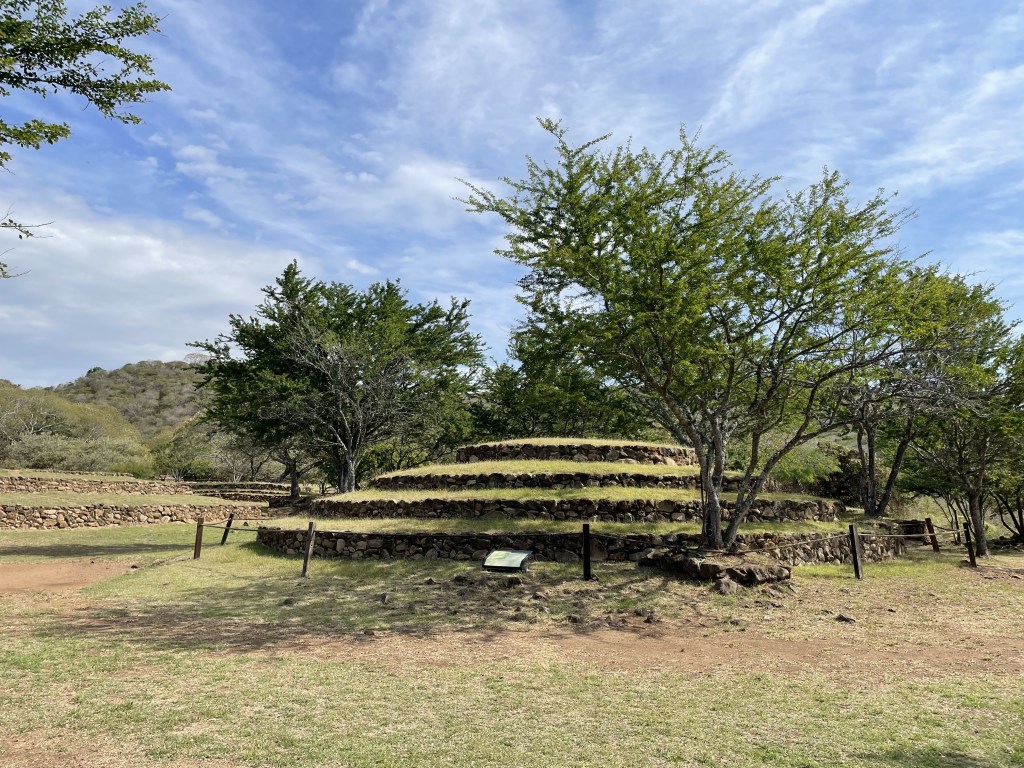
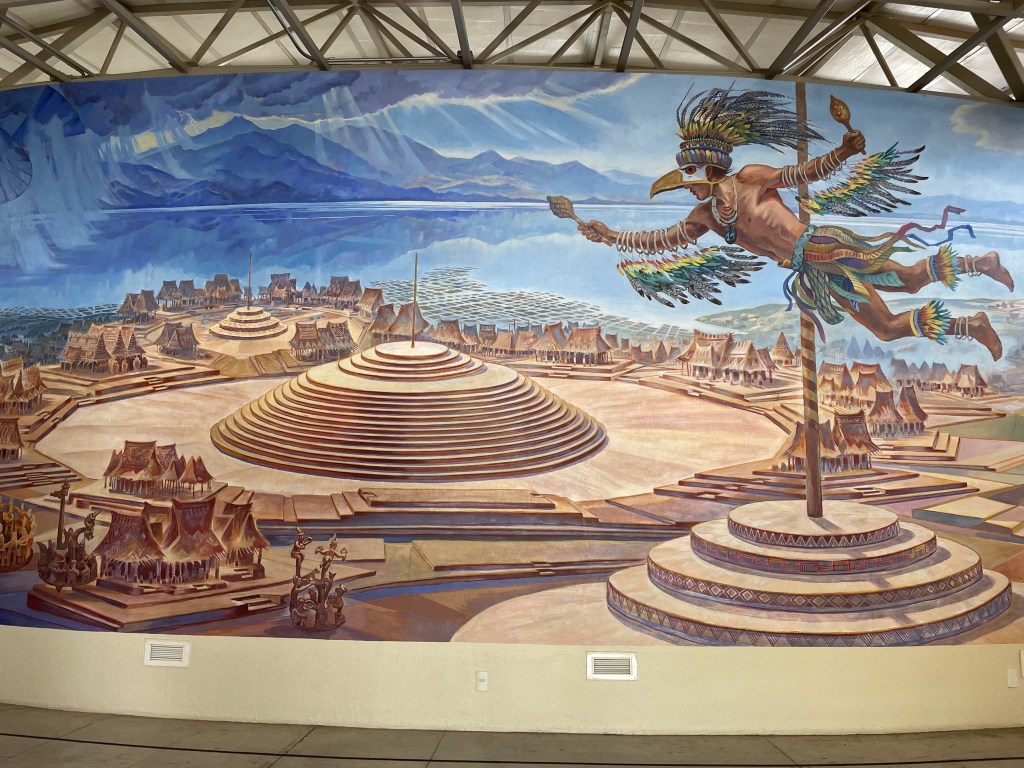
I took a side trip to Guachimonton, the circular pyramids about an hour and a half outside the city. It’s located on the other side of the mountain where Tequila is produced. Used as the main altar for burials, the mound is surrounded by a temple, patio, and a ball court. It is relatively unknown because it was only discovered in 1965 and excavations are still in process . The civilization thrived in the area from 300BC to 400AD.


Chicken Mole
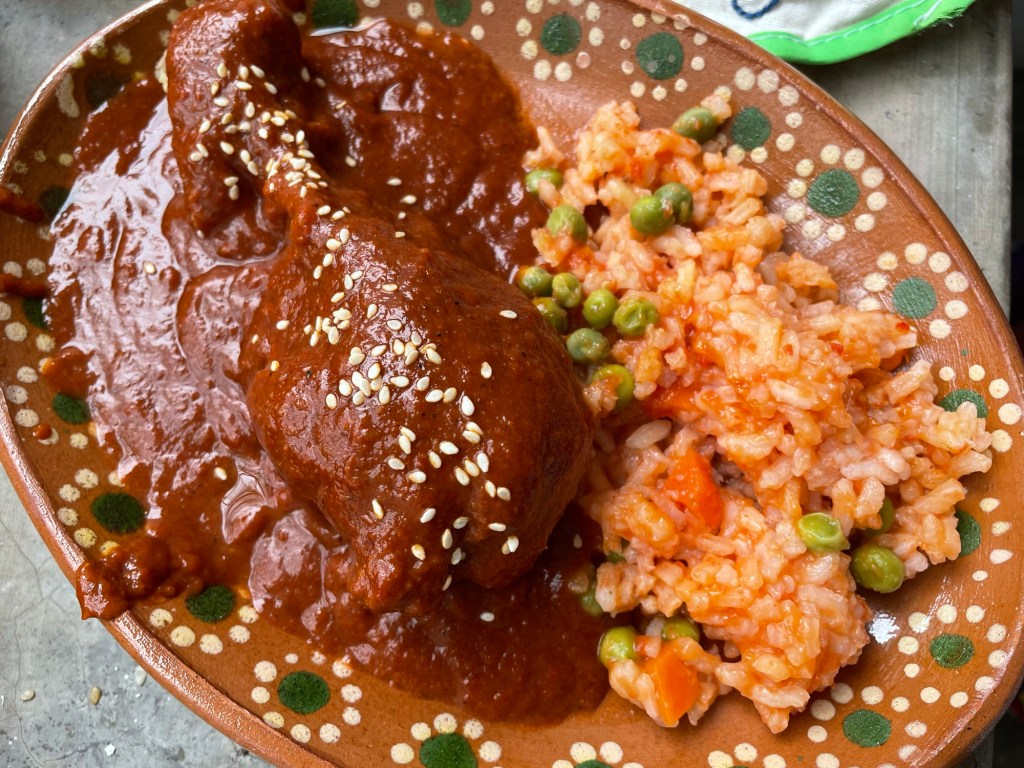
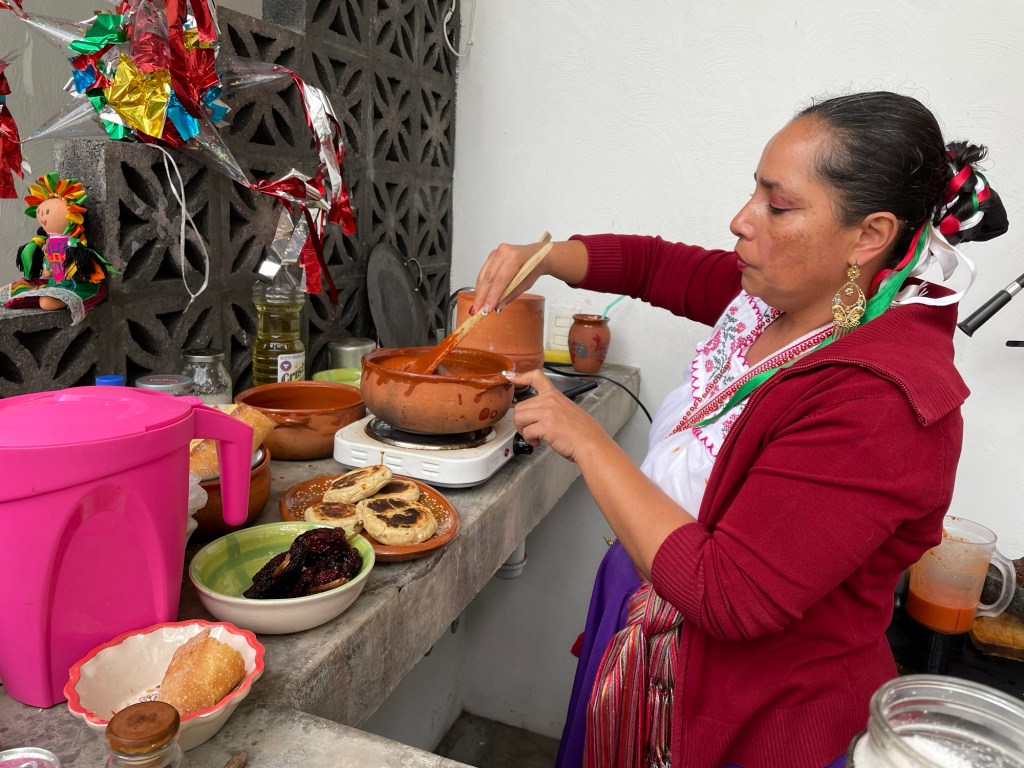
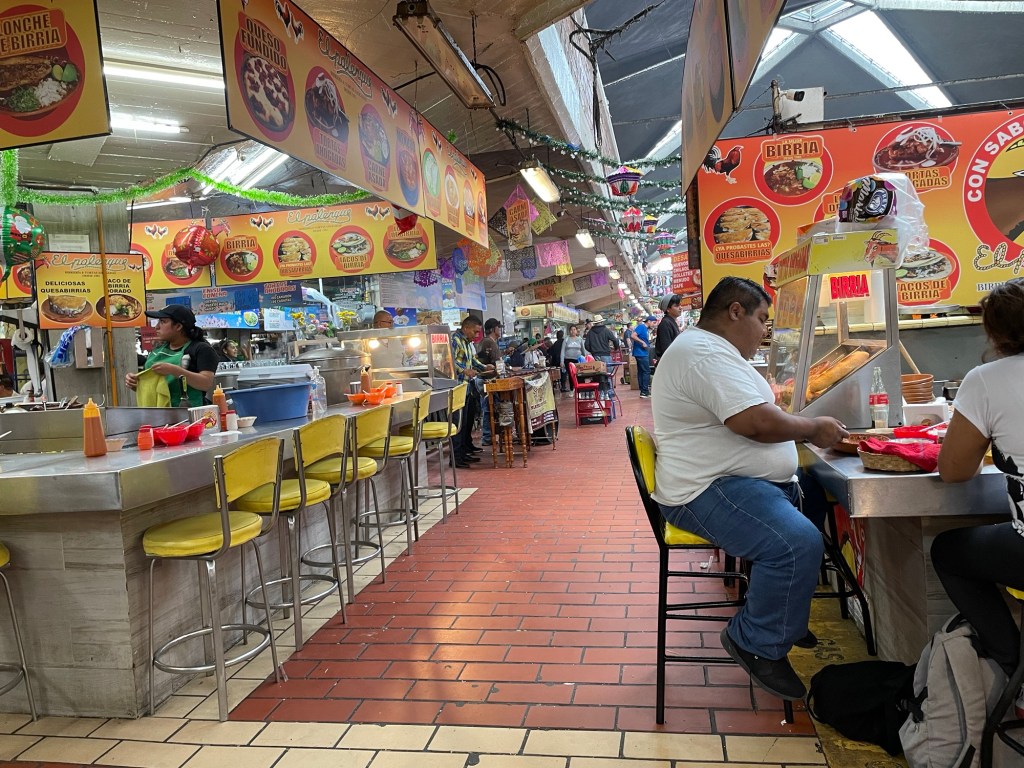
A rainy Friday gave me a good excuse to take a cooking class. With only one other student, the session became a semi-private lesson. We first went to the huge market to shop for ingredients and received a detailed lesson on the myriad types of chiles. We made an entire chicken mole meal from scratch, with rice supplemented by a delicious fruit drink.



Despite a couple of days of dreary weather, I was very glad to have ventured to this unknown part of Mexico. It is developing slowly despite its cultural attractions. It’s a good place to come if you want to avoid noisy obnoxious tourists, and I could barely find one to complain about. I was particularly delighted to see and learn about the Barragan houses and the Orozco murals. Yes, I would highly recommend coming to Guadalajara just for those two reasons alone.
News Flash!
I will be traveling again in 2024, so stay tuned to this website! I plan to travel to New Zealand and Australia next month, and then back to Germany and Bulgaria for more operatic and classical music events in the summer. The travel fever in me hasn’t quite worn off so let’s see what the next year brings….and don’t forget to send your comments and encouragement!
 travelswithmyselfandothers.com